Publisher, Rural Fiction Magazine; publisher, The Chamber Magazine; founder, the Farmington Writers Circle. I have written short stories and poetry for many years. In my careers as a Naval officer and in the federal government, I have written thousands of documents of many types. I am currently working on a second edition for my poetry collection and a few novels.
I have a copy of Click that is lying around collecting dust. If anyone would like to review it, I will send it to you via USPS.
Synopsis: Frank Martinez is a south Texas police officer, who has retreated to a small island to recover from the guilt of having killed an unarmed man while the incident is under review by the department. One night, after falling asleep in a lounge chair in the yard, he awakes to find two well-armed but unknown men sneaking onto the island to kill him, but he doesn’t know why. Unfortunately, his gun is in the bedroom. Now he must get it before they find him.
What can I say? Few people are not familiar with Poe’s tale of people trying to isolate themselves from a ravaging pandemic, a tale eerily appropriate for our time.
Once again, I thank Lucy for publishing another of my works. This was originally published in 2009 by Six Sentences, which challenges writers to tell a story in only six sentences. It is a wonderful exercise in being concise. I had written the story in another, much longer form a few years before that. I think that one was published somewhere, but I am not certain. This story is based on actual events. While I was in Egypt in 1989, I happened to meet an assistant agricultural attaché for Sudan. She relayed this story to me as having actually happened in Sudan. The witness to the event was not an oil worker though. That was my invention. When I wrote this version years later, I was in a hurry and couldn’t recall whether it happened in Sudan or Somalia, so I arbitrarily chose Somalia. The overall theme of the story remains the same in any event.
I just now found out that one of my favorite writers of all time has passed away: John le Carre, the famous spy novelist of the Cold War. His characters were rooted in realism, not like Ian Fleming’s flashy superspy James Bond. I will always remember le Carre’s protagonist Smiley as a down-to-earth working man, surviving the mundane English bureaucracy to solve the task at hand, while exhibiting the weaknesses of the average Joe.
Admittedly, I have not read one of his novels in years. For this, I feel ashamed. His works over the last several years I kept intending to read, but life and my exploration of other literary genres always postponed my catching up on his works. I shall definitely have to set aside time for that now. I shall always remember fondly The Spy Who Came in From the Cold and Tinker, Tailor, Soldier, Spy as two of the first books to spur my interest in serious literature when I was in my early teens.
All were crowding around M. Bermutier, the judge, who was giving his opinion about the Saint-Cloud mystery. For a month this in explicable crime had been the talk of Paris. Nobody could make head or tail of it.
M. Bermutier, standing with his back to the fireplace, was talking, citing the evidence, discussing the various theories, but arriving at no conclusion.
Some women had risen, in order to get nearer to him, and were standing with their eyes fastened on the clean-shaven face of the judge, who was saying such weighty things. They, were shaking and trembling, moved by fear and curiosity, and by the eager and insatiable desire for the horrible, which haunts the soul of every woman. One of them, paler than the others, said during a pause:
“It’s terrible. It verges on the supernatural. The truth will never be known.”
The judge turned to her:
“True, madame, it is likely that the actual facts will never be discovered. As for the word ‘supernatural’ which you have just used, it has nothing to do with the matter. We are in the presence of a very cleverly conceived and executed crime, so well enshrouded in mystery that we cannot disentangle it from the involved circumstances which surround it. But once I had to take charge of an affair in which the uncanny seemed to play a part. In fact, the case became so confused that it had to be given up.”
Several women exclaimed at once:
“Oh! Tell us about it!”
M. Bermutier smiled in a dignified manner, as a judge should, and went on:
“Do not think, however, that I, for one minute, ascribed anything in the case to supernatural influences. I believe only in normal causes. But if, instead of using the word ‘supernatural’ to express what we do not understand, we were simply to make use of the word ‘inexplicable,’ it would be much better. At any rate, in the affair of which I am about to tell you, it is especially the surrounding, preliminary circumstances which impressed me. Here are the facts:
“I was, at that time, a judge at Ajaccio, a little white city on the edge of a bay which is surrounded by high mountains.
“The majority of the cases which came up before me concerned vendettas. There are some that are superb, dramatic, ferocious, heroic. We find there the most beautiful causes for revenge of which one could dream, enmities hundreds of years old, quieted for a time but never extinguished; abominable stratagems, murders becoming massacres and almost deeds of glory. For two years I heard of nothing but the price of blood, of this terrible Corsican prejudice which compels revenge for insults meted out to the offending person and all his descendants and relatives. I had seen old men, children, cousins murdered; my head was full of these stories.
“One day I learned that an Englishman had just hired a little villa at the end of the bay for several years. He had brought with him a French servant, whom he had engaged on the way at Marseilles.
“Soon this peculiar person, living alone, only going out to hunt and fish, aroused a widespread interest. He never spoke to any one, never went to the town, and every morning he would practice for an hour or so with his revolver and rifle.
“Legends were built up around him. It was said that he was some high personage, fleeing from his fatherland for political reasons; then it was affirmed that he was in hiding after having committed some abominable crime. Some particularly horrible circumstances were even mentioned.
“In my judicial position I thought it necessary to get some information about this man, but it was impossible to learn anything. He called himself Sir John Rowell.
“I therefore had to be satisfied with watching him as closely as I could, but I could see nothing suspicious about his actions.
“However, as rumors about him were growing and becoming more widespread, I decided to try to see this stranger myself, and I began to hunt regularly in the neighborhood of his grounds.
“For a long time I watched without finding an opportunity. At last it came to me in the shape of a partridge which I shot and killed right in front of the Englishman. My dog fetched it for me, but, taking the bird, I went at once to Sir John Rowell and, begging his pardon, asked him to accept it.
“He was a big man, with red hair and beard, very tall, very broad, a kind of calm and polite Hercules. He had nothing of the so-called British stiffness, and in a broad English accent he thanked me warmly for my attention. At the end of a month we had had five or six conversations.
“One night, at last, as I was passing before his door, I saw him in the garden, seated astride a chair, smoking his pipe. I bowed and he invited me to come in and have a glass of beer. I needed no urging.
“He received me with the most punctilious English courtesy, sang the praises of France and of Corsica, and declared that he was quite in love with this country.
“Then, with great caution and under the guise of a vivid interest, I asked him a few questions about his life and his plans. He answered without embarrassment, telling me that he had travelled a great deal in Africa, in the Indies, in America. He added, laughing:
“‘I have had many adventures.’
“Then I turned the conversation on hunting, and he gave me the most curious details on hunting the hippopotamus, the tiger, the elephant and even the gorilla.
“I said:
“‘Are all these animals dangerous?’
“He smiled:
“‘Oh, no! Man is the worst.’
“And he laughed a good broad laugh, the wholesome laugh of a contented Englishman.
“‘I have also frequently been man-hunting.’
“Then he began to talk about weapons, and he invited me to come in and see different makes of guns.
“His parlor was draped in black, black silk embroidered in gold. Big yellow flowers, as brilliant as fire, were worked on the dark material.
“He said:
“‘It is a Japanese material.’
“But in the middle of the widest panel a strange thing attracted my attention. A black object stood out against a square of red velvet. I went up to it; it was a hand, a human hand. Not the clean white hand of a skeleton, but a dried black hand, with yellow nails, the muscles exposed and traces of old blood on the bones, which were cut off as clean as though it had been chopped off with an axe, near the middle of the forearm.
“Around the wrist, an enormous iron chain, riveted and soldered to this unclean member, fastened it to the wall by a ring, strong enough to hold an elephant in leash.
“I asked:
“‘What is that?’
“The Englishman answered quietly:
“‘That is my best enemy. It comes from America, too. The bones were severed by a sword and the skin cut off with a sharp stone and dried in the sun for a week.’
“I touched these human remains, which must have belonged to a giant. The uncommonly long fingers were attached by enormous tendons which still had pieces of skin hanging to them in places. This hand was terrible to see; it made one think of some savage vengeance.
“I said:
“‘This man must have been very strong.’
“The Englishman answered quietly:
“‘Yes, but I was stronger than he. I put on this chain to hold him.’
“I thought that he was joking. I said:
“‘This chain is useless now, the hand won’t run away.’
“Sir John Rowell answered seriously:
“‘It always wants to go away. This chain is needed.’
“I glanced at him quickly, questioning his face, and I asked myself:
“‘Is he an insane man or a practical joker?’
“But his face remained inscrutable, calm and friendly. I turned to other subjects, and admired his rifles.
“However, I noticed that he kept three loaded revolvers in the room, as though constantly in fear of some attack.
“I paid him several calls. Then I did not go any more. People had become used to his presence; everybody had lost interest in him.
“A whole year rolled by. One morning, toward the end of November, my servant awoke me and announced that Sir John Rowell had been murdered during the night.
“Half an hour later I entered the Englishman’s house, together with the police commissioner and the captain of the gendarmes. The servant, bewildered and in despair, was crying before the door. At first I suspected this man, but he was innocent.
“The guilty party could never be found.
“On entering Sir John’s parlor, I noticed the body, stretched out on its back, in the middle of the room.
“His vest was torn, the sleeve of his jacket had been pulled off, everything pointed to, a violent struggle.
“The Englishman had been strangled! His face was black, swollen and frightful, and seemed to express a terrible fear. He held something between his teeth, and his neck, pierced by five or six holes which looked as though they had been made by some iron instrument, was covered with blood.
“A physician joined us. He examined the finger marks on the neck for a long time and then made this strange announcement:
“‘It looks as though he had been strangled by a skeleton.’
“A cold chill seemed to run down my back, and I looked over to where I had formerly seen the terrible hand. It was no longer there. The chain was hanging down, broken.
“I bent over the dead man and, in his contracted mouth, I found one of the fingers of this vanished hand, cut–or rather sawed off by the teeth down to the second knuckle.
“Then the investigation began. Nothing could be discovered. No door, window or piece of furniture had been forced. The two watch dogs had not been aroused from their sleep.
“Here, in a few words, is the testimony of the servant:
“For a month his master had seemed excited. He had received many letters, which he would immediately burn.
“Often, in a fit of passion which approached madness, he had taken a switch and struck wildly at this dried hand riveted to the wall, and which had disappeared, no one knows how, at the very hour of the crime.
“He would go to bed very late and carefully lock himself in. He always kept weapons within reach. Often at night he would talk loudly, as though he were quarrelling with some one.
“That night, somehow, he had made no noise, and it was only on going to open the windows that the servant had found Sir John murdered. He suspected no one.
“I communicated what I knew of the dead man to the judges and public officials. Throughout the whole island a minute investigation was carried on. Nothing could be found out.
“One night, about three months after the crime, I had a terrible nightmare. I seemed to see the horrible hand running over my curtains and walls like an immense scorpion or spider. Three times I awoke, three times I went to sleep again; three times I saw the hideous object galloping round my room and moving its fingers like legs.
“The following day the hand was brought me, found in the cemetery, on the grave of Sir John Rowell, who had been buried there because we had been unable to find his family. The first finger was missing.
“Ladies, there is my story. I know nothing more.”
The women, deeply stirred, were pale and trembling. One of them exclaimed:
“But that is neither a climax nor an explanation! We will be unable to sleep unless you give us your opinion of what had occurred.”
The judge smiled severely:
“Oh! Ladies, I shall certainly spoil your terrible dreams. I simply believe that the legitimate owner of the hand was not dead, that he came to get it with his remaining one. But I don’t know how. It was a kind of vendetta.”
One of the women murmured:
“No, it can’t be that.”
And the judge, still smiling, said:
“Didn’t I tell you that my explanation would not satisfy you?”
The ad I uploaded recently was too small to work well with Pinterest. Therefore, I created this one. Let me know what you think. I also created a new feature image, which is at the bottom of the page.
The ad I uploaded recently was too small to work well with Pinterest. Therefore, I created this one. Let me know what you think. I also created a new feature image, which is at the bottom of the page. The feature image will be primarily for use on WordPress. Both are currently linked to Amazon. I designed it for maximum impact with the simplest possible design to evoke an emotional impact while getting across the most essential information. In the Internet age, anyone wanting to know more can Google the title or my name.
I am testing this to see how effective it might be if I used in marketing channels (keywords, links, etc.) other than the ones I have been using for it.
From Southwater, where he left the train, the road led due west. That he knew; for the rest he trusted to luck, being one of those born walkers who dislike asking the way. He had that instinct, and as a rule it served him well. “A mile or so due west along the sandy road till you come to a stile on the right; then across the fields. You’ll see the red house straight before you.” He glanced at the post-card’s instructions once again, and once again he tried to decipher the scratched-out sentence—without success. It had been so elaborately inked over that no word was legible. Inked-out sentences in a letter were always enticing. He wondered what it was that had to be so very carefully obliterated.
The afternoon was boisterous, with a tearing, shouting wind that blew from the sea, across the Sussex weald. Massive clouds with
Algernon Blackwood 1869-1951
rounded, piled-up edges, cannoned across gaping spaces of blue sky. Far away the line of Downs swept the horizon, like an arriving wave. Chanctonbury Ring rode their crest—a scudding ship, hull down before the wind. He took his hat off and walked rapidly, breathing great draughts of air with delight and exhilaration. The road was deserted; no horsemen, bicycles, or motors; not even a tradesman’s cart; no single walker. But anyhow he would never have asked the way. Keeping a sharp eye for the stile, he pounded along, while the wind tossed the cloak against his face, and made waves across the blue puddles in the yellow road. The trees showed their under leaves of white. The bracken and the high new grass bent all one way. Great life was in the day, high spirits and dancing everywhere. And for a Croydon surveyor’s clerk just out of an office this was like a holiday at the sea.
It was a day for high adventure, and his heart rose up to meet the mood of Nature. His umbrella with the silver ring ought to have been a sword, and his brown shoes should have been top-boots with spurs upon the heels. Where hid the enchanted Castle and the princess with the hair of sunny gold? His horse…
The stile came suddenly into view and nipped adventure in the bud. Everyday clothes took him prisoner again. He was a surveyor’s clerk, middle-aged, earning three pounds a week, coming from Croydon to see about a client’s proposed alterations in a wood—something to ensure a better view from the dining-room window. Across the fields, perhaps a mile away, he saw the red house gleaming in the sunshine; and resting on the stile a moment to get his breath he noticed a copse of oak and hornbeam on the right. “Aha,” he told himself “so that must be the wood he wants to cut down to improve the view? I’ll ’ave a look at it.” There were boards up, of course, but there was an inviting little path as well. “I’m not a trespasser,” he said; “it’s part of my business, this is.” He scrambled awkwardly over the gate and entered the copse. A little round would bring him to the field again.
But the moment he passed among the trees the wind ceased shouting and a stillness dropped upon the world. So dense was the growth that the sunshine only came through in isolated patches. The air was close. He mopped his forehead and put his green felt hat on, but a low branch knocked it off again at once, and as he stooped an elastic twig swung back and stung his face. There were flowers along both edges of the little path; glades opened on either side; ferns curved about in damper corners, and the smell of earth and foliage was rich and sweet. It was cooler here. What an enchanting little wood, he thought, turning down a small green glade where the sunshine flickered like silver wings. How it danced and fluttered and moved about! He put a dark blue flower in his buttonhole. Again his hat, caught by an oak branch as he rose, was knocked from his head, falling across his eyes. And this time he did not put it on again. Swinging his umbrella, he walked on with uncovered head, whistling rather loudly as he went. But the thickness of the trees hardly encouraged whistling, and something of his gaiety and high spirits seemed to leave him. He suddenly found himself treading circumspectly and with caution. The stillness in the wood was so peculiar.
There was a rustle among the ferns and leaves and something shot across the path ten yards ahead, stopped abruptly an instant with head cocked sideways to stare, then dived again beneath the underbrush with the speed of a shadow. He started like a frightened child, laughing the next second that a mere pheasant could have made him jump. In the distance he heard wheels upon the road, and wondered why the sound was pleasant. “Good old butcher’s cart,” he said to himself—then realised that he was going in the wrong direction and had somehow got turned round. For the road should be behind him, not in front.
And he hurriedly took another narrow glade that lost itself in greenness to the right. “That’s my direction, of course,” he said; “the trees has mixed me up a bit, it seems”—then found himself abruptly by the gate he had first climbed over. He had merely made a circle. Surprise became almost discomfiture then. And a man, dressed like a gamekeeper in browny green, leaned against the gate, hitting his legs with a switch. “I’m making for Mr. Lumley’s farm,” explained the walker. “This is his wood, I believe—” then stopped dead, because it was no man at all, but merely an effect of light and shade and foliage. He stepped back to reconstruct the singular illusion, but the wind shook the branches roughly here on the edge of the wood and the foliage refused to reconstruct the figure. The leaves all rustled strangely. And just then the sun went behind a cloud, making the whole wood look otherwise. Yet how the mind could be thus doubly deceived was indeed remarkable, for it almost seemed to him the man had answered, spoken—or was this the shuffling noise the branches made ?—and had pointed with his switch to the notice-board upon the nearest tree. The words rang on in his head, but of course he had imagined them: “No, it’s not his wood. It’s ours.” And some village wit, moreover, had changed the lettering on the weather-beaten board, for it read quite plainly, “Trespassers will be persecuted.”
And while the astonished clerk read the words and chuckled, he said to himself, thinking what a tale he’d have to tell his wife and children later—“The blooming wood has tried to chuck me out. But I’ll go in again. Why, it’s only a matter of a square acre at most. I’m bound to reach the fields on the other side if I keep straight on.” He remembered his position in the office. He had a certain dignity to maintain.
The cloud passed from below the sun, and light splashed suddenly in all manner of unlikely places. The man went straight on. He felt a touch of puzzling confusion somewhere; this way the copse had of shifting from sunshine into shadow doubtless troubled sight a little. To his relief at last, a new glade opened through the trees and disclosed the fields with a glimpse of the red house in the distance at the far end. But a little wicket gate that stood across the path had first to be climbed, and as he scrambled heavily over—for it would not open—he got the astonishing feeling that it slid off sideways beneath his weight, and towards the wood. Like the moving staircases at Harrod’s and Earl’s Court, it began to glide off with him. It was quite horrible. He made a violent effort to get down before it carried him into the trees, but his feet became entangled with the bars and umbrella, so that he fell heavily upon the farther side, arms spread across the grass and nettles, boots clutched between the first and second bars. He lay there a moment like a man crucified upside down, and while he struggled to get disentangled—feet, bars, and umbrella formed a regular net—he saw the little man in browny green go past him with extreme rapidity through the wood. The man was laughing. He passed across the glade some fifty yards away, and he was not alone this time. A companion like himself went with him. The clerk, now upon his feet again, watched them disappear into the gloom of green beyond. “They’re tramps, not gamekeepers,” he said to himself, half mortified, half angry. But his heart was thumping dreadfully, and he dared not utter all his thought.
He examined the wicket gate, convinced it was a trick gate somehow—then went hurriedly on again, disturbed beyond belief to see that the glade no longer opened into fields, but curved away to the right. What in the world had happened to him? His sight was so utterly at fault. Again the sun flamed out abruptly and lit the floor of the wood with pools of silver, and at the same moment a violent gust of wind passed shouting overhead. Drops fell clattering everywhere upon the leaves, making a sharp pattering as of many footsteps. The whole copse shuddered and went moving.
“Rain, by George,” thought the clerk, and feeling for his umbrella, discovered he had lost it. He turned back to the gate and found it lying on the farther side. To his amazement he saw the fields at the far end of the glade, the red house, too, ashine in the sunset. He laughed then, for, of course, in his struggle with the gate, he had somehow got turned round—had fallen back instead of forwards. Climbing over, this time quite easily, he retraced his steps. The silver band, he saw, had been torn from the umbrella. No doubt his foot, a nail, or something had caught in it and ripped it off. The clerk began to run; he felt extraordinarily dismayed.
But, while he ran, the entire wood ran with him, round him, to and fro, trees shifting like living things, leaves folding and unfolding, trunks darting backwards and forwards, and branches disclosing enormous empty spaces, then closing up again before he could look into them. There were footsteps everywhere, and laughing, crying voices, and crowds of figures gathering just behind his back till the glade, he knew, was thick with moving life. The wind in his ears, of course, produced the voices and the laughter, while sun and clouds, plunging the copse alternately in shadow and bright dazzling light, created the figures. But he did not like it, and went as fast as ever his sturdy legs could take him. He was frightened now. This was no story for his wife and children. He ran like the wind. But his feet made no sound upon the soft mossy turf.
Then, to his horror, he saw that the glade grew narrow, nettles and weeds stood thick across it, it dwindled down into a tiny path, and twenty yards ahead it stopped finally and melted off among the trees. What the trick gate had failed to achieve, this twisting glade accomplished easily—carried him in bodily among the dense and crowding trees.
There was only one thing to do—turn sharply and dash back again, run headlong into the life that followed at his back, followed so closely too that now it almost touched him, pushing him in. And with reckless courage this was what he did. It seemed a fearful thing to do. He turned with a sort of violent spring, head down and shoulders forward, hands stretched before his face. He made the plunge; like a hunted creature he charged full tilt the other way, meeting the wind now in his face.
Good Lord! The glade behind him had closed up as well; there was no longer any path at all. Turning round and round, like an animal at bay, he searched for an opening, a way of escape, searched frantically, breathlessly, terrified now in his bones. But foliage surrounded him, branches blocked the way; the trees stood close and still, unshaken by a breath of wind; and the sun dipped that moment behind a great black cloud. The entire wood turned dark and silent. It watched him.
Perhaps it was this final touch of sudden blackness that made him act so foolishly, as though he had really lost his head. At any rate, without pausing to think, he dashed headlong in among the trees again. There was a sensation of being stiflingly surrounded and entangled, and that he must break out at all costs—out and away into the open of the blessed fields and air. He did this ill-considered thing, and apparently charged straight into an oak that deliberately moved into his path to stop him. He saw it shift across a good full yard, and being a measuring man, accustomed to theodolite and chain, he ought to know. He fell, saw stars, and felt a thousand tiny fingers tugging and pulling at his hands and neck and ankles. The stinging nettles, no doubt, were responsible for this. He thought of it later. At the moment it felt diabolically calculated.
But another remarkable illusion was not so easily explained. For all in a moment, it seemed, the entire wood went sliding past him with a thick deep rustling of leaves and laughter, myriad footsteps, and tiny little active, energetic shapes; two men in browny green gave him a mighty hoist—and he opened his eyes to find himself lying in the meadow beside the stile where first his incredible adventure had begun. The wood stood in its usual place and stared down upon him in the sunlight. There was the red house in the distance as before. Above him grinned the weather-beaten notice-board: “Trespassers will be prosecuted.”
Dishevelled in mind and body, and a good deal shaken in his official soul, the clerk walked slowly across the fields. But on the way he glanced once more at the postcard of instructions, and saw with dull amazement that the inked-out sentence was quite legible after all beneath the scratches made across it: “There is a short cut through the wood—the wood I want cut down—if you care to take it.” Only “care” was so badly written, it looked more like another word; the “c” was uncommonly like “d.”
“That’s the copse that spoils my view of the Downs, you see,” his client explained to him later, pointing across the fields, and referring to the ordnance map beside him. “I want it cut down and a path made so and so.” His finger indicated direction on the map. “The Fairy Wood—it’s still called, and it’s far older than this house. Come now, if you’re ready, Mr. Thomas, we might go out and have a look at it. . .”
Yes, I am once again opening up The Chamber Magazine. Click on the photo or the link to go to its revamped homepage. Check out the submissions page for what I am seeking and details on publishing with The Chamber (they are long but they boil down to pretty much the same standard policy at most online magazines).
Please retweet and reblog this, so that I can reach the most people.
Here is an interesting micro fiction competition. Be sure to read the rules thoroughly. I wrote and submitted a piece entitled “UFO Computations”. IT’s sort of experimental. I hope the last line impacts the reader.
Lillian here. Delighted to host Prosery Monday at dVerse, the virtual pub for poets around the globe.
But FIRST: TWO IMPORTANT ANNONCEMENTS to all dVersers!
1) THURSDAY, DECEMBER 10, dVERSE WILL BE LIVE, hosted by Bjorn. If you’ve not done this before, it’s amazing! Just go to the dVerse site and read Bjorn’s message on December 10th. As always, post one poem of your choosing (there is no required prompt for OLN) and in Bjorn’s message, he will have a link to join everyone live (similar to Zoom). We are usually live from 3 to 5 PM, Boston time. It’s amazing to put faces with names and it’s truly like we’re in a real pub. Well, except for the drinking! Everyone who posts a poem and joins us live, is invited (but not required) to read their poem aloud. Come for the entire time or just drop in as…
Long story short, while surfing the Internet, I found something that took me to a competition on dVerse, a website for poets. It intrigued me. The competition requires that I write a bit of micro fiction of 144 words or less including this line from a poem: “Reading what I have just written, I now believe.”
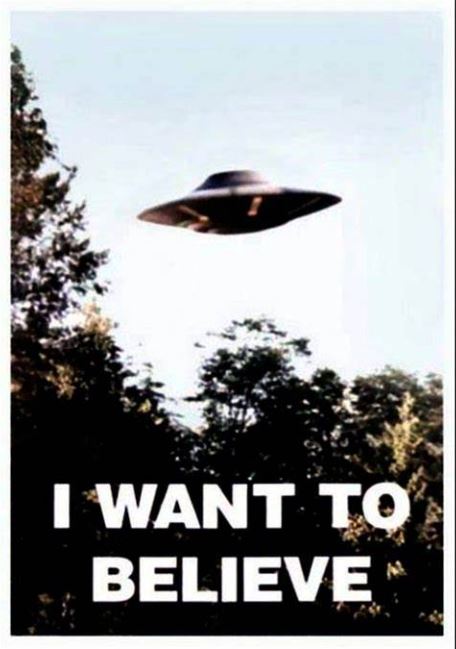
I have been mulling over a science fiction story/novella about someone inadvertently discovering a US government program covertly monitoring UFO’s in the solar system, though it denies their existence. There will probably even be a covert war. X-Files-ish I admit, but not derivative (as I perceive “derivative”). I intend to do something quite different. Therefore, I decided to use the challenge to draft out the basic idea for my story. Below is the result. I will probably use this in the opening for the story.
Let me know what you think.
UFO Computations
History
Crop circles first appear 1678; increasing since 1970’s.
UFO sightings increase since 1947 (Roswell).
Project Bluebook 1952-1970.
Venus missions commence 1961.
Mars missions commence 1962.
Arecibo observatory established 1963.
Moon landings 1969-1972
Voyager scouts planets, “explores” deep space 1977.
Comet missions commence 1978.
Search for Extraterrestrial Intelligence Institute (SETI) incorporated 1984.
Asteroid missions 1989
ʻOumuamua sighted 2017.
Covert “black programs” operate in background.
Reports indicating UFO presence on Earth:
99% discredited.
1% not discredited, government disparages.
Some sources of 1% reliable.
Theory: to monitor alien presence, install tracking stations as far out as possible on planets, asteroids, comets, etc. Historically, US military strategy supports this.
Theoretical cover: exploration for science, but great expense, little obvious reward.
“Reading what I have just written, I now believe.”
I have been watching some YouTube videos today about how to sell books on Amazon. The speaker showed the Amazon pages of authors who sell lots of books. While he talked about keywords (which are important) I looked at the page layout, colors, and number of books listed, which were a lot for each other. Long story short, I started thinking about how I can change some things on the website to sell more books. Rethinking keywords is just a part of the overall plan.
The obvious thing hit me a few minutes ago. I should check out the websites of famous authors and learn from them instead of assorted unknown hacks on YouTube. Don’t get me wrong. I love YouTube and watch it way more than any other channel and there are a lot of pros and artists on there, but I have been paying more attention to the hacks lately.
I checked out stephenking.com, danbrown.com, jkrowling.com, and jgrisham.com. Again the obvious hit me. First, unlike my website, theirs are not weblogs. Theirs are primarily about their books. But their websites are more than simple bookstores.
Each author’s works fall into a genre, a theme, or a certain atmosphere. In effect, each author builds his/her own universe. The websites, intentionally or not, draw the reader into that universe. For example, Stephen King’s universe is one of horror while J.K. Rowling’s is one of magic and youth. Dan Brown’s universe is one of mysterious symbols. Authors exist in parallel universes.
Therefore I need to do some literary navel-gazing and decide what my universe is and draw the reader into that. Each of my works is a doorway into that universe.
Anyway, those are my revelations for the night. I must go to bed. I know this is all very obvious, but sometimes the answer is in front of you all along and you have to bang your head into it accidentally in order to realize it’s there.
More to come. I will be revamping the website soon.
Being a Fourth Extract from the Legacy of the Late F. Purcell, P. P. of Drumcoolagh
“All this he told with some confusion and
Dismay, the usual consequence of dreams
Of the unpleasant kind, with none at hand
To expound their vain and visionary gleams.
I’ve known some odd ones which seemed really planned
Prophetically, as that which one deems
‘A strange coincidence,’ to use a phrase
By which such things are settled now-a-days.”
BYRON.
Dreams–What age, or what country of the world has not felt and acknowledged the mystery of their origin and end? I have thought not a little upon the subject, seeing it is one which has been often forced upon my attention, and sometimes strangely enough; and yet I have never arrived at any thing which at all appeared a satisfactory conclusion. It does appear that a mental phenomenon so extraordinary cannot be wholly without its use. We know, indeed, that in the olden times it has been made the organ of communication between the Deity and his creatures; and when, as I have seen, a dream produces upon a mind, to all appearance hopelessly reprobate and depraved, an effect so powerful and so lasting as to break down the
Joseph Thomas Sheridan Le Fanu 1814-1873
inveterate habits, and to reform the life of an abandoned sinner. We see in the result, in the reformation of morals, which appeared incorrigible in the reclamation of a human soul which seemed to be irretrievably lost, something more than could be produced by a mere chimaera of the slumbering fancy, something more than could arise from the capricious images of a terrified imagination; but once prevented, we behold in all these things, in the tremendous and mysterious results, the operation of the hand of God. And while Reason rejects as absurd the superstition which will read a prophecy in every dream, she may, without violence to herself, recognize, even in the wildest and most incongruous of the wanderings of a slumbering intellect, the evidences and the fragments of a language which may be spoken, which has been spoken to terrify, to warn, and to command. We have reason to believe too, by the promptness of action, which in the age of the prophets, followed all intimations of this kind, and by the strength of conviction and strange permanence of the effects resulting from certain dreams in latter times, which effects ourselves may have witnessed, that when this medium of communication has been employed by the Deity, the evidences of his presence have been unequivocal. My thoughts were directed to this subject, in a manner to leave a lasting impression upon my mind, by the events which I shall now relate, the statement of which, however extraordinary, is nevertheless accurately correct.
About the year l7– having been appointed to the living of C—-h, I rented a small house in the town, which bears the same name: one morning, in the month of November, I was awakened before my usual time, by my servant, who bustled into my bedroom for the purpose of announcing a sick call. As the Catholic Church holds her last rites to be totally indispensable to the safety of the departing sinner, no conscientious clergyman can afford a moment’s unnecessary delay, and in little more than five minutes I stood ready cloaked and booted for the road in the small front parlour, in which the messenger, who was to act as my guide, awaited my coming. I found a poor little girl crying piteously near the door, and after some slight difficulty I ascertained that her father was either dead, or just dying.
“And what may be your father’s name, my poor child?” said I. She held down her head, as if ashamed. I repeated the question, and the wretched little creature burst into floods of tears, still more bitter than she had shed before. At length, almost provoked by conduct which appeared to me so unreasonable, I began to lose patience, spite of the pity which I could not help feeling towards her, and I said rather harshly, “If you will not tell me the name of the person to whom you would lead me, your silence can arise from no good motive, and I might be justified in refusing to go with you at all.”
“Oh! don’t say that, don’t say that,” cried she. “Oh! sir, it was that I was afeard of when I would not tell you–I was afeard when you heard his name you would not come with me; but it is no use hidin’ it now–it’s Pat Connell, the carpenter, your honour.”
She looked in my face with the most earnest anxiety, as if her very existence depended upon what she should read there; but I relieved her at once. The name, indeed, was most unpleasantly familiar to me; but, however fruitless my visits and advice might have been at another time, the present was too fearful an occasion to suffer my doubts of their utility as my reluctance to re-attempting what appeared a hopeless task to weigh even against the lightest chance, that a consciousness of his imminent danger might produce in him a more docile and tractable disposition. Accordingly I told the child to lead the way, and followed her in silence. She hurried rapidly through the long narrow street which forms the great thoroughfare of the town. The darkness of the hour, rendered still deeper by the close approach of the old fashioned houses, which lowered in tall obscurity on either side of the way; the damp dreary chill which renders the advance of morning peculiarly cheerless, combined with the object of my walk, to visit the death-bed of a presumptuous sinner, to endeavour, almost against my own conviction, to infuse a hope into the heart of a dying reprobate–a drunkard, but too probably perishing under the consequences of some mad fit of intoxication; all these circumstances united served to enhance the gloom and solemnity of my feelings, as I silently followed my little guide, who with quick steps traversed the uneven pavement of the main street. After a walk of about five minutes she turned off into a narrow lane, of that obscure and comfortless class which are to be found in almost all small old fashioned towns, chill without ventilation, reeking with all manner of offensive effluviae, dingy, smoky, sickly and pent-up buildings, frequently not only in a wretched but in a dangerous condition.
“Your father has changed his abode since I last visited him, and, I am afraid, much for the worse,” said I.
“Indeed he has, sir, but we must not complain,” replied she; “we have to thank God that we have lodging and food, though it’s poor enough, it is, your honour.”
Poor child! thought I, how many an older head might learn wisdom from thee–how many a luxurious philosopher, who is skilled to preach but not to suffer, might not thy patient words put to the blush! The manner and language of this child were alike above her years and station; and, indeed, in all cases in which the cares and sorrows of life have anticipated their usual date, and have fallen, as they sometimes do, with melancholy prematurity to the lot of childhood, I have observed the result to have proved uniformly the same. A young mind, to which joy and indulgence have been strangers, and to which suffering and self-denial have been familiarised from the first, acquires a solidity and an elevation which no other discipline could have bestowed, and which, in the present case, communicated a striking but mournful peculiarity to the manners, even to the voice of the child. We paused before a narrow, crazy door, which she opened by means of a latch, and we forthwith began to ascend the steep and broken stairs, which led upwards to the sick man’s room. As we mounted flight after flight towards the garret floor, I heard more and more distinctly the hurried talking of many voices. I could also distinguish the low sobbing of a female. On arriving upon the uppermost lobby, these sounds became fully audible.
“This way, your honor,” said my little conductress, at the same time pushing open a door of patched and half rotten plank, she admitted me into the squalid chamber of death and misery. But one candle, held in the fingers of a scared and haggard-looking child, was burning in the room, and that so dim that all was twilight or darkness except within its immediate influence. The general obscurity, however, served to throw into prominent and startling relief the death-bed and its occupant. The light was nearly approximated to, and fell with horrible clearness upon, the blue and swollen features of the drunkard. I did not think it possible that a human countenance could look so terrific. The lips were black and drawn apart–the teeth were firmly set–the eyes a little unclosed, and nothing but the whites appearing–every feature was fixed and livid, and the whole face wore a ghastly and rigid expression of despairing terror such as I never saw equalled; his hands were crossed upon his breast, and firmly clenched, while, as if to add to the corpse-like effect of the whole, some white cloths, dipped in water, were wound about the forehead and temples. As soon as I could remove my eyes from this horrible spectacle, I observed my friend Dr. D—-, one of the most humane of a humane profession, standing by the bedside. He had been attempting, but unsuccessfully, to bleed the patient, and had now applied his finger to the pulse.
“Is there any hope?” I inquired in a whisper.
A shake of the head was the reply. There was a pause while he continued to hold the wrist; but he waited in vain for the throb of life, it was not there, and when he let go the hand it fell stiffly back into its former position upon the other.
“The man is dead,” said the physician, as he turned from the bed where the terrible figure lay.
Dead! thought I, scarcely venturing to look upon the tremendous and revolting spectacle–dead! without an hour for repentance, even a moment for reflection–dead! without the rites which even the best should have. Is there a hope for him? The glaring eyeball, the grinning mouth, the distorted brow–that unutterable look in which a painter would have sought to embody the fixed despair of the nethermost hell–these were my answer.
The poor wife sat at a little distance, crying as if her heart would break–the younger children clustered round the bed, looking, with wondering curiosity, upon the form of death, never seen before. When the first tumult of uncontrollable sorrow had passed away, availing myself of the solemnity and impressiveness of the scene, I desired the heart-stricken family to accompany me in prayer, and all knelt down, while I solemnly and fervently repeated some of those prayers which appeared most applicable to the occasion. I employed myself thus in a manner which, I trusted, was not unprofitable, at least to the living, for about ten minutes, and having accomplished my task, I was the first to arise. I looked upon the poor, sobbing, helpless creatures who knelt so humbly around me, and my heart bled for them. With a natural transition, I turned my eyes from them to the bed in which the body lay, and, great God! what was the revulsion, the horror which I experienced on seeing the corpse-like, terrific thing seated half upright before me–the white cloths, which had been wound about the head, had now partly slipped from their position, and were hanging in grotesque festoons about the face and shoulders, while the distorted eyes leered from amid them–
“A sight to dream of, not to tell.”
I stood actually rivetted to the spot. The figure nodded its head and lifted its arm, I thought with a menacing gesture. A thousand confused and horrible thoughts at once rushed upon my mind. I had often read that the body of a presumptuous sinner, who, during life, had been the willing creature of every satanic impulse, after the human tenant had deserted it, had been known to become the horrible sport of demoniac possession. I was roused from the stupefaction of terror in which I stood, by the piercing scream of the mother, who now, for the first time, perceived the change which had taken place. She rushed towards the bed, but, stunned by the shock and overcome by the conflict of violent emotions, before she reached it, she fell prostrate upon the floor. I am perfectly convinced that had I not been startled from the torpidity of horror in which I was bound, by some powerful and arousing stimulant, I should have gazed upon this unearthly apparition until I had fairly lost my senses. As it was, however, the spell was broken, superstition gave way to reason: the man whom all believed to have been actually dead, was living! Dr. D—- was instantly standing by the bedside, and, upon examination, he found that a sudden and copious flow of blood had taken place from the wound which the lancet had left, and this, no doubt, had effected his sudden and almost preternatural restoration to an existence from which all thought he had been for ever removed. The man was still speechless, but he seemed to understand the physician when he forbid his repeating the painful and fruitless attempts which he made to articulate, and he at once resigned himself quietly into his hands.
I left the patient with leeches upon his temples, and bleeding freely–apparently with little of the drowsiness which accompanies apoplexy; indeed, Dr. D—- told me that he had never before witnessed a seizure which seemed to combine the symptoms of so many kinds, and yet which belonged to none of the recognized classes; it certainly was not apoplexy, catalepsy, nor delirium tremens, and yet it seemed, in some degree, to partake of the properties of all–it was strange, but stranger things are coming.
During two or three days Dr. D—- would not allow his patient to converse in a manner which could excite or exhaust him, with any one; he suffered him merely, as briefly as possible, to express his immediate wants, and it was not until the fourth day after my early visit, the particulars of which I have just detailed, that it was thought expedient that I should see him, and then only because it appeared that his extreme importunity and impatience were likely to retard his recovery more than the mere exhaustion attendant upon a short conversation could possibly do; perhaps, too, my friend entertained some hope that if by holy confession his patient’s bosom were eased of the perilous stuff, which no doubt, oppressed it, his recovery would be more assured and rapid. It was, then, as I have said, upon the fourth day after my first professional call, that I found myself once more in the dreary chamber of want and sickness. The man was in bed, and appeared low and restless. On my entering the room he raised himself in the bed, and muttered twice or thrice–“Thank God! thank God.” I signed to those of his family who stood by, to leave the room, and took a chair beside the bed. So soon as we were alone, he said, rather doggedly–“There’s no use now in telling me of the sinfulness of bad ways–I know it all–I know where they lead to–I seen everything about it with my own eyesight, as plain as I see you.” He rolled himself in the bed, as if to hide his face in the clothes, and then suddenly raising himself, he exclaimed with startling vehemence–“Look, sir, there is no use in mincing the matter; I’m blasted with the fires of hell; I have been in hell; what do you think of that?–in hell–I’m lost for ever–I have not a chance–I am damned already–damned–damned–.” The end of this sentence he actually shouted; his vehemence was perfectly terrific; he threw himself back, and laughed, and sobbed hysterically. I poured some water into a tea-cup, and gave it to him. After he had swallowed it, I told him if he had anything to communicate, to do so as briefly as he could, and in a manner as little agitating to himself as possible; threatening at the same time, though I had no intention of doing so, to leave him at once, in case he again gave way to such passionate excitement. “It’s only foolishness,” he continued, “for me to try to thank you for coming to such a villain as myself at all; it’s no use for me to wish good to you, or to bless you; for such as me has no blessings to give.” I told him that I had but done my duty, and urged him to proceed to the matter which weighed upon his mind; he then spoke nearly as follows:–“I came in drunk on Friday night last, and got to my bed here, I don’t remember how; sometime in the night, it seemed to me, I wakened, and feeling unasy in myself, I got up out of the bed. I wanted the fresh air, but I would not make a noise to open the window, for fear I’d waken the crathurs. It was very dark, and throublesome to find the door; but at last I did get it, and I groped my way out, and went down as asy as I could. I felt quite sober, and I counted the steps one after another, as I was going down, that I might not stumble at the bottom. When I came to the first landing-place, God be about us always! the floor of it sunk under me, and I went down, down, down, till the senses almost left me. I do not know how long I was falling, but it seemed to me a great while. When I came rightly to myself at last, I was sitting at a great table, near the top of it; and I could not see the end of it, if it had any, it was so far off; and there was men beyond reckoning, sitting down, all along by it, at each side, as far as I could see at all. I did not know at first was it in the open air; but there was a close smothering feel in it, that was not natural, and there was a kind of light that my eyesight never saw before, red and unsteady, and I did not see for a long time where it was coming from, until I looked straight up, and then I seen that it came from great balls of blood-coloured fire, that were rolling high over head with a sort of rushing, trembling sound, and I perceived that they shone on the ribs of a great roof of rock that was arched overhead instead of the sky. When I seen this, scarce knowing what I did, I got up, and I said, ‘I have no right to be here; I must go,’ and the man that was sitting at my left hand, only smiled, and said, ‘sit down again, you can never leave this place,’ and his voice was weaker than any child’s voice I ever heerd, and when he was done speaking he smiled again. Then I spoke out very loud and bold, and I said–‘in the name of God, let me out of this bad place.’ And there was a great man, that I did not see before, sitting at the end of the table that I was near, and he was taller than twelve men, and his face was very proud and terrible to look at, and he stood up and stretched out his hand before him, and when he stood up, all that was there, great and small, bowed down with a sighing sound, and a dread came on my heart, and he looked at me, and I could not speak. I felt I was his own, to do what he liked with, for I knew at once who he was, and he said, ‘if you promise to return, you may depart for a season’; and the voice he spoke with was terrible and mournful, and the echoes of it went rolling and swelling down the endless cave, and mixing with the trembling of the fire overhead; so that, when he sate down, there was a sound after him, all through the place like the roaring of a furnace, and I said, with all the strength I had, ‘I promise to come back; in God’s name let me go,’ and with that I lost the sight and the hearing of all that was there, and when my senses came to me again, I was sitting in the bed with the blood all over me, and you and the rest praying around the room.” Here he paused and wiped away the chill drops of horror which hung upon his forehead.
I remained silent for some moments. The vision which he had just described struck my imagination not a little, for this was long before Vathek and the “Hall of Iblis” had delighted the world; and the description which he gave had, as I received it, all the attractions of novelty beside the impressiveness which always belongs to the narration of an eye-witness, whether in the body or in the spirit, of the scenes which he describes. There was something, too, in the stern horror with which the man related these things, and in the incongruity of his description, with the vulgarly received notions of the great place of punishment, and of its presiding spirit, which struck my mind with awe, almost with fear. At length he said, with an expression of horrible, imploring earnestness, which I shall never forget–“Well, sir, is there any hope; is there any chance at all? or, is my soul pledged and promised away for ever? is it gone out of my power? must I go back to the place?”
In answering him I had no easy task to perform; for however clear might be my internal conviction of the groundlessness of his fears, and however strong my scepticism respecting the reality of what he had described, I nevertheless felt that his impression to the contrary, and his humility and terror resulting from it, might be made available as no mean engines in the work of his conversion from profligacy, and of his restoration to decent habits, and to religious feeling. I therefore told him that he was to regard his dream rather in the light of a warning than in that of a prophecy; that our salvation depended not upon the word or deed of a moment, but upon the habits of a life; that, in fine, if he at once discarded his idle companions and evil habits, and firmly adhered to a sober, industrious, and religious course of life, the powers of darkness might claim his soul in vain, for that there were higher and firmer pledges than human tongue could utter, which promised salvation to him who should repent and lead a new life.
I left him much comforted, and with a promise to return upon the next day. I did so, and found him much more cheerful, and without any remains of the dogged sullenness which I suppose had arisen from his despair. His promises of amendment were given in that tone of deliberate earnestness, which belongs to deep and solemn determination; and it was with no small delight that I observed, after repeated visits, that his good resolutions, so far from failing, did but gather strength by time; and when I saw that man shake off the idle and debauched companions, whose society had for years formed alike his amusement and his ruin, and revive his long discarded habits of industry and sobriety, I said within myself, there is something more in all this than the operation of an idle dream. One day, sometime after his perfect restoration to health, I was surprised on ascending the stairs, for the purpose of visiting this man, to find him busily employed in nailing down some planks upon the landing place, through which, at the commencement of his mysterious vision, it seemed to him that he had sunk. I perceived at once that he was strengthening the floor with a view to securing himself against such a catastrophe, and could scarcely forbear a smile as I bid “God bless his work.”
He perceived my thoughts, I suppose, for he immediately said,
“I can never pass over that floor without trembling. I’d leave this house if I could, but I can’t find another lodging in the town so cheap, and I’ll not take a better till I’ve paid off all my debts, please God; but I could not be asy in my mind till I made it as safe as I could. You’ll hardly believe me, your honor, that while I’m working, maybe a mile away, my heart is in a flutter the whole way back, with the bare thoughts of the two little steps I have to walk upon this bit of a floor. So it’s no wonder, sir, I’d thry to make it sound and firm with any idle timber I have.”
I applauded his resolution to pay off his debts, and the steadiness with which he pursued his plans of conscientious economy, and passed on.
Many months elapsed, and still there appeared no alteration in his resolutions of amendment. He was a good workman, and with his better habits he recovered his former extensive and profitable employment. Every thing seemed to promise comfort and respectability. I have little more to add, and that shall be told quickly. I had one evening met Pat Connell, as he returned from his work, and as usual, after a mutual, and on his side respectful salutation, I spoke a few words of encouragement and approval. I left him industrious, active, healthy–when next I saw him, not three days after, he was a corpse. The circumstances which marked the event of his death were somewhat strange–I might say fearful. The unfortunate man had accidentally met an early friend, just returned, after a long absence, and in a moment of excitement, forgetting everything in the warmth of his joy, he yielded to his urgent invitation to accompany him into a public house, which lay close by the spot where the encounter had taken place. Connell, however, previously to entering the room, had announced his determination to take nothing more than the strictest temperance would warrant. But oh! who can describe the inveterate tenacity with which a drunkard’s habits cling to him through life. He may repent–he may reform–he may look with actual abhorrence upon his past profligacy; but amid all this reformation and compunction, who can tell the moment in which the base and ruinous propensity may not recur, triumphing over resolution, remorse, shame, everything, and prostrating its victim once more in all that is destructive and revolting in that fatal vice.
The wretched man left the place in a state of utter intoxication. He was brought home nearly insensible, and placed in his bed, where he lay in the deep calm lethargy of drunkenness. The younger part of the family retired to rest much after their usual hour; but the poor wife remained up sitting by the fire, too much grieved and shocked at the recurrence of what she had so little expected, to settle to rest; fatigue, however, at length overcame her, and she sunk gradually into an uneasy slumber. She could not tell how long she had remained in this state, when she awakened, and immediately on opening her eyes, she perceived by the faint red light of the smouldering turf embers, two persons, one of whom she recognized as her husband noiselessly gliding out of the room.
“Pat, darling, where are you going?” said she. There was no answer–the door closed after them; but in a moment she was startled and terrified by a loud and heavy crash, as if some ponderous body had been hurled down the stair. Much alarmed, she started up, and going to the head of the staircase, she called repeatedly upon her husband, but in vain. She returned to the room, and with the assistance of her daughter, whom I had occasion to mention before, she succeeded in finding and lighting a candle, with which she hurried again to the head of the staircase. At the bottom lay what seemed to be a bundle of clothes, heaped together, motionless, lifeless–it was her husband. In going down the stairs, for what purpose can never now be known, he had fallen helplessly and violently to the bottom, and coming head foremost, the spine at the neck had been dislocated by the shock, and instant death must have ensued. The body lay upon that landing-place to which his dream had referred. It is scarcely worth endeavouring to clear up a single point in a narrative where all is mystery; yet I could not help suspecting that the second figure which had been seen in the room by Connell’s wife on the night of his death, might have been no other than his own shadow. I suggested this solution of the difficulty; but she told me that the unknown person had been considerably in advance of the other, and on reaching the door, had turned back as if to communicate something to his companion–it was then a mystery. Was the dream verified?–whither had the disembodied spirit sped?–who can say? We know not. But I left the house of death that day in a state of horror which I could not describe. It seemed to me that I was scarce awake. I heard and saw everything as if under the spell of a nightmare. The coincidence was terrible.



 What can I say? Few people are not familiar with Poe’s tale of people trying to isolate themselves from a ravaging pandemic, a tale eerily appropriate for our time.








 Phil Slattery, Writer, Publisher