Slattery’s Tao of Writing, Part 2: the Allegory of the Stream

Thalia Muse of Comedy and Bucolic Poetry Illustration by Arash
Thalia
Muse of Comedy and Bucolic Poetry
Illustration by Arash


This is a reprint of a previous post from several years ago.

Once in a while, I come across some gem of the writer’s art that almost strikes me breathless with its beauty.  The poems of John Donne are one example.  The poignant first chapter of A Farewell to Arms is another.   Recently, I began reading Ray Bradbury’s The Martian Chronicles  and every time I pick it up, I am nearly struck breathless with his simple, understated eloquence that touches one’s very core.   Today I read a post at winebbler.wordpress.com and her simple, fun voice and flowing, relaxed style combined with playful use of the English language made for very entertaining and enjoyable reading beneath which I thought I could sense an undercurrent of growing artistic beauty.

That article made me start to think about what makes a work of writing aesthetically beautiful.  After some thought, I reached the conclusion that every work of literary beauty has the same qualities as a powerful but smoothly flowing mountain stream:  clarity, power, and an uninterrupted flow.  But unlike a stream, a work of literary beauty must also be reasonably brief.

In every literary work I consider beautiful,  the first universal characteristic that comes to mind is that the author uses a simple voice comprising simple, everyday words that anyone can understand.  Writing is communication.  Communication is one person disseminating ideas to others by using words, which are collections of sounds representing ideas.  By using simple words everyone understands easily, the writer makes his ideas easier to disseminate.  Why use a word that few can understand, when you can use a simpler word with the same meaning that everyone can understand?  Therefore, our stream must be crystal clear and free of mud or anything that would hinder insight and perception.

If ideas equate to the water in our allegorical mountain stream, the precision of the component ideas, the words, give the stream its force.  As I mentioned in my post “Slattery’s Tao of Writing, Part I”, words chosen for their precise meanings have power.   As I said earlier in this article, words are ideas.  Precise words are precise ideas.   Precise ideas are powerful ideas, powerful emotionally and intellectually.  Like all other forces in the universe, powerful ideas become more powerful if combined and organized with one idea leading logically, flowingly to the next.  This facilitates understanding and the reading experience.

When my stream of thought is uninterrupted and powerful, I become immersed in the work.  I can be swept away and can lose track of time and of everything happening around me.   To my mind, every writer should aspire to instill this experience into his readers.  When this happens, the writer has made an emotional and intellectual connection with his reader and the reader is grasping the writer’s ideas.

If organization is lacking, ideas are scattered like boulders in the stream and on the banks, creating rapids and breaking up the smooth flow. A powerful, disorganized stream is a torrent, destructive of everything along its banks, stiking out at random, benefiting no one.  In communication, disorganization is the source of misunderstanding, the antithesis of understanding.  The stream becomes destructive. 

If a writer uses words his readers do not understand and they have to turn to a dictionary to find out what the writer intends, the clarity of the ideas is lost and the reading experience is muddied.  Furthermore, the reading experience flows even less smoothly.   Even if the reader can reason out the meanings of the words from the context, the stream of thought is still disrupted and muddied, even if to a lesser degree.  The words will also lose much of their power, because the reader cannot appreciate the nuances of what he or she does not fully understand.

Lastly, every beautiful work has been reasonably brief.  Reading anything exasperatingly long becomes tiresome for everyone.   When readers become weary (word-weary so to speak), they can lose focus on what the writer is trying to communicate.  This detracts from the reading experience just as if someone who enjoys swimming in a mountain stream can no longer enjoy their swim if they become overly fatigued with exertion.

That said, I will now close tonight’s blog before I wear you out with my ramblings.

Thoughts?  Comments?

Slattery’s Tao of Writing, Part 1

Several years ago, I wrote a seven-part series on my own Tao of the art of writing and published it on my then nascent version of this website. Over the next several days I will be republishing it. I will probably end up adding at least a part 8. In addition, I intend to convert this series into a series of YouTube videos, once I work out some production details, to play on the website’s YouTube channel. Please let me know what you think of this series and how I can improve it for YouTube. 

A quick Google search reveals there are a lot of web articles entitled “The Tao of Writing”.   This is mine.  Let me begin by explaining what I perceive to be the Tao (others may view it differently and have equally valid perceptions).

The Chinese character above translates as Tao, the way, and is pronounced as “dow”, as in “The Dow-Jones Industrial Average”.  Taoism is an ancient Chinese religion rooted in the teachings of the legenday Chinese philosopher Lao Tzu (sometimes transliterated as “Lao Tze” or in a number of other ways) as expressed in his book, the Tao Teh Ching (The Book of the Way).   The Taoist religion, as I understand it, is far removed from Lao Tzu’s original philosophy, because the religion incorporates demons, gods, demigods, spirits, and other things that are not mentioned in the Tao Teh Ching or in the teachings of the original masters such as Lao Tzu, Chuang Tzu, or the Huainan Masters (at least in the translations I have read).

What the Tao is, is hard to express.  “The Way”, as I understand it, refers to the the way of the universe, basically how the universe works in a general sense.  In the American vernacular, we would probably express it as “the way things are”.    Some reader might respond to that as, “Sure.  I understand.  You’re saying the Tao is why toast always falls buttered side down.  Gotcha.”

No, I am talking about something a bit more profound.  It’s more like this:

You work hard at trying to find a publisher for a story and are consistently rejected by what you perceived to be all the most suitable choices.  So, one night when you are battling insomnia and have just started the first glass of your second bottle of wine, out of frustration you send it off as a shot in the dark to some big name magazine who will never accept it, and lo and behold it is accepted.  So, sometimes it seems that you work your butt off for something and get nowhere, but you give up trying and you succeed.  Basically, the Tao is then like learning the way the universe works, then learning to succeed by adapting to that way.  Confused yet?  Have I oversimplified my point or have I made it overly complex?

Understanding how the Tao works is not something anyone can express in words;  it is something one can understand only subjectively,  i.e., one must have a feel for it.  In fact, the first sentence of the Tao Teh Ching is “The Way that can be spoken is not the true Way.”  For most people, reading the Tao Teh Ching will probably be an exercise in confusion and frustration and contradiction.  In the Tao Teh Ching, nothing is exact; everything is metaphor and allusion, about how water flows into a valley and then the sea, how wood is shaped, the balance of the universe, and so on.

To complicate matters even more, because the Tao Teh Ching was written in Chinese about 2,500 years ago, and the translation of the original Chinese characters may have changed significantly since then, translation of the Tao Teh Ching into modern languages is frustratingly imprecise, often relying on traditional or customary translations as opposed to knowing exactly what Lao Tzu was saying.  For today’s modern, exact, Socratic-tradition-based society, this is maddening.  Our scholars argue about the meanings of works written in modern English, how are they going to agree on something as nebulous as the Tao Teh Ching?

So, what are the important ponts of the Tao that everyone should remember?

As I perceive the Tao, one critical aspect of existence is balance;  the universe consists of opposites that must balance out or problems arise.  At the same time, all existence arises from the conflict of opposites.  An example of this is the old Zen Buddhist rhetorical question of “what is the sound of one hand clapping?”  I do not know the official or traditional answer to this, but from my Taoist perception, the answer is that there is no sound.   The sound of  clapping is produced only when the opposing forces of the hands meet.  Thus it is with everything in the universe.  Two opposites have to come together to produce anything:  light and dark, man and woman, left and right, up and down,  hot and cold, etc.

Another critical aspect of existence is that emptiness can be as important as substance and non-action can be as important as action.  There are other aspects, of course, but I will stick to these for now and address those at a later date.

Take a look at your hand for an example of the first principle.  If there were no spaces between your fingers, you would not have a hand, you would have something else, maybe a flipper.    Likewise, a sculptor can create a sculpture only by cutting away pieces of material so that the now-empty spaces create a form.  So a sculpture, or any object for that matter, comprises both substance and emptiness.

For an example of the non-action versus action principle, think about problems you faced in the past.  Could you have solved any of them by simply doing nothing?  Not every problem can be solved by doing nothing, but some can.

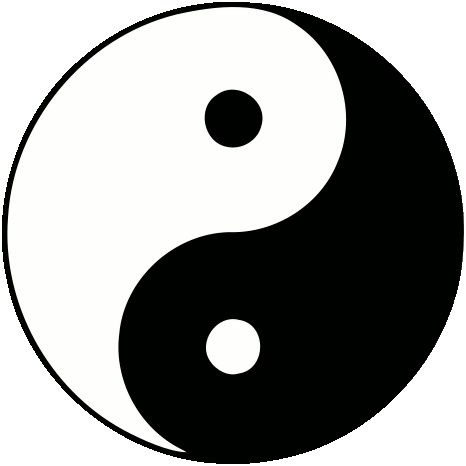
These principles are symbolized by what is know in our society as the Yin-Yang as shown here:

yinYang

In the yin-yang, as I perceive it, the eternal circle of the universe is formed by the interaction of opposites, here symbolized by light and dark, but while they are opposites, a little of each exists in the other.

For a very short book, the Tao Teh Ching is filled with incredible depth and meaning.  For me, in the few translations I have read, the Tao makes perfect sense, and I understand the world a little better each time I read it.    However, others may read it and just be confused or frustrated.   The Tao Teh Ching is something that will either speak to you personally and enlighten your world, or it will not.

But what has all this to do with writing?

I see the Tao at work whenever I write anything.  I see it in what I consider to be some of the basic principles of writing: less is more, what is not said is often more important than what is said, and so forth.  For me, this makes writing almost a form of magic, not in the sense of illusion, but true magic where one creates something  out of nothing by using as few components as possible, by making something complex by keeping everything as simple as possible.

I will give one example and then I will close this article for the day and pick it up when I can sometime in the hopefully near future.

One of the first principles of writing I learned was to use as few words as possible.  Strunk and White, in The Elements of Style, say to “Omit unnecessary words”, which in itself is a perfect example of omitting unnecessary words.  How much more concise can that one sentence be?  It contains absolutely no unnecessary words.  If one word is omitted, the sentence ceases to have meaning.   The virtue of this is that, if done properly, the work becomes much more powerful because each word carries more weight.

To do this, a writer needs to use words precisely.  Try to find a word that captures the exact meaning of the idea you are trying to express–and the shorter the word the better.  After all, you are trying to communicate an idea to the largest possible audience.  Why use big words that will send readers scurrying to the nearest dictionary, thus interrupting their chain of thought and perhaps tainting their reading experience, when you can use words that everyone understands and keep their experience free from interruptions?

An example of using words precisely would be revising the sentence “A man went quickly to the store.”

Now, shorten it by replacing “went quickly” with “ran”.  While you are at it, replace the other general terms with more precise ones.   The sentence becomes “John ran to Walmart.” Now, if you have had any background information on John, you know who he is, what he is like, his possible motivations, and that he is in a hurry for some reason to get something from Walmart, knowing the kind of products Walmart has, you may have an idea of why he is going there.   If we changed the sentence to “John ran to the Red Dot Liquor Store” we have an even better idea of his motivation.   If we said, “John sped to Red Dot Liquors in his brand-new corvette”, we know even more about John:  we know he can afford a brand-new corvette.   If you have ever been in Red Dot Liquors, you know something of the products they carry and that may say something to you about John’s decision to purchase them.

So, how much more excitement and power does the sentence “John sped to Red Dot Liquors in his brand-new corvette” have versus “a man went quickly to the store”.   The final version packs a lot more information in almost the same space.

So that is part of the magic of writing for me:  using as few words as possible to create a work.  On the surface, it seem to go against logic.  How can you build something by using as few components as possible and deleting the ones you do have whenever possible?

Try an experiment, take the first page of any run of the mill romance novel and draw a line through every word you consider unnecessary while keeping the meaning of the sentence.   Then take your final product and do it again.  Do it a third time if you like.  How much were you able to reduce without changing its meaning?

Now take the first page of a novel by Hemingway, someone known for his lean, muscular writing.  How far were you able to reduce it before changing the meaning?

Someone once said, “draw a line through every third word and you will be surprised at how much it improves your writing.”  I have tried that and it works wonderfully.  Of course, you can’t arbitrarily omit every third word, or the work may become nonsense, but it does cause one to question whether that word is necessary.

I have always marveled at the idea that one can write something by omitting words. It goes against my standard, American, public school education, where teachers give a mininum number of words to an assignment and one is forced to insert as many words as possible just to meet the requirement. But can you blame them? If you told the average American high school student to tell what he did over the summer in as few words as possible, he would say, “I had fun” or “I worked.” Good luck teaching him to write.

Anyway, I am rambling once again.  I will close for now and pick this up at some later date.

Thoughts?  Comments?
Slattery Trivia for the Day: Hotel Room Photo

<a title="Phil Slattery, CC BY-SA 3.0 , via Wikimedia Commons” href=”https://commons.wikimedia.org/wiki/File:Bed_in_hotel.JPG”&gt;Bed in hotel

I was doing some ego-surfing on the Internet last night, when I came across the photo above, which I took some years ago. I posted it to Wikimedia and now I occasionally run across it in an ad or article for a hotel. In this case, it is being used by Travel Triangle for an article entitled 22 Lavish Cottages In Munnar To Experience A Homelike Warmth, Luxury & Comfort In 2021! My photo is used for the 21st cottage “Aaron’s Cottage”. Please note that the photo was not taken in Munnar. Also note that Travel Triangle is not being deceptive in using my photo as it is clearly labeled “Image Credit: Phil Slattery for Wikimedia Disclaimer: The image is for representation purposes only“.

I took this photo when I was bored in a hotel room in Denver in January 2010, while on a business trip. I used to be a photographer and still have something of a love for it. If I couldn’t be a writer, I would most definitely be a photographer. Search the Internet for “Phil Slattery” or “Phillip Slattery” and photo/photographer or something similar and you will find a few of my published photos.

I took this photo on the spur of the moment when I was experimenting with the camera I had at the moment. Checking the Wikimedia file, I took this with a Vivicam (I don’t recall this camera by this name; it may have been a Kodak Easy Share) at 1/10 of a second, ISO 200, f/2.8. It was probably hand held.

I think want advertisers like about this photo is its warm, inviting color, its soft focus, and the clean look of the hotel room. For a simple photo, it packs a lot of subtle emotion. I didn’t use any filters and I didn’t use any photo manipulation software. The white spots are caused by overexposure and the orangeish glow by the incandescent light bulbs.

I may start experimenting with photography again. I have quite a few photos on Flickr, Instagram, and other social media websites. Of course, I use my own photography on this weblog occasionally.

Let me know your thoughts.

Photo of man wearing a coronavirus mask
Prevent the spread of Coronavirus/COVID-19 for the sake of yourself, your friends, and your family.

“The Terror” from the Wen Fu

Here is an interesting section/stanza from the ancient Chinese work Wen Fu (The Art of Writing).  It is entitled “The Terror”.

I worry that my ink well will run dry, that right words cannot be found ; I want to respond to the moment’s inspiration.

I work with what is given ; that which passes cannot be detained.

Things move into shadows & they vanish ; things return in the shape of an echo.

When Spring arrives, we understand that Nature has its own reason.

Thoughts are lifted from the heart on breezes, and language finds its speaker.

Yesterday’s buds are this morning’s blossoms which we draw with a brush on silk.

Every eye knows a pattern, every ear hears a distant music.

Wen Fu was written by Lu Chi (261 AD – 300 AD), who was a scholar, a military leader, and the the Literary Secretary in the the Emperor’s court.  It is very short and may take an average reader 15-20 minutes to complete.  The hardcopy  translation I have was written by Sam Hamill and published by Breitenbush Books in 1987.   A far more poetic version can be found at http://web.mnstate.edu/gracyk/courses/web%20publishing/LuChi.htm.

I like to peruse Wen Fu occasionally, because the language is simple yet mystical while the ideas are straightforward yet metaphorical.   What fascinates me most about the work is that the principles it expresses are eternal and universal.   The underlying principles that guided Lu Chi’s art are the same ones that underlie ours nearly two thousand years later and in a society (and language!) that would have been completely alien to Lu Chi.  What’s more, Lu Chi describes the experience of writing from a very intimate standpoint to which any author who is passionate about his art could relate.

What are your thoughts?  What principles of writing are eternal and universal?  What do you see in the stanza above?

Update on Today’s Giveaway of The Scent and Other Stories

As of 11:15 a.m. CDT, The Scent and Other Stories is #94 on Amazon’s list of free Best Sellers in Mystery, Thriller & Suspense Literary Fiction. What impact does the cover design have on sales?

As of 11:15 a.m. CDT, The Scent and Other Stories is #94 on Amazon’s list of free Best Sellers in Mystery, Thriller & Suspense Literary Fiction.

Ranking of The Scent... 16 October 2020

I am happy to see that people have an interest in it. I am looking forward to seeing the results of today’s giveaway after the numbers come in, which should be tomorrow morning, taking into account other time zones.

I have to ask myself if the new cover has anything to do with people’s interest in it. Looking at the diagram of today’s 100 best sellers in this category, the new cover makes it stand out from all the others. With a photograph of a young lady looking directly at the viewer on the cover, the book may have a subtle psychological effect on viewers, because the human mind has evolved to be attentive to faces and to remember intricate details in them. Her eyes are also big and open, which is characteristic of people who like or love someone they see. This may have an additional psychological impact, because the viewer finds himself/herself suddenly looking into the face of someone who likes him/her.

When I design covers in the future, I will try to orient them toward a photo of someone attractive who looks directly at the viewer and whose gaze says, “I like you.” I suspect people will tend to naturally remember this cover more versus covers of people looking away or not of a person.

I am considering putting out another edition of The Scent… just to change the title to make it pop up more often in search results. The primary place people search for keywords is in the title of a work. Ergo, critical keywords should be placed in the title. These should be keywords that reflect the intrinsic nature of the work. For The Scent… I am considering modifying the subtitle and swapping it out for the current title resulting in Stories from the Dark Side of Love: The Scent and Other Short Fiction. I will need to work on the subtitle more, but that’s an initial draft at least.

Let me know what you think.

Don’t forget to like, comment, and follow.

Hasta luego.

Cinefix on Dialogue; My Thoughts on Movies as Part of the Storytelling Art


Cinefx’s focus is, naturally, on movies vs. writing. However, I have seen this video at least three to four times and it is one of the best analyses of what dialogue is. Watching this for the first time was enlightening.

I learn a lot about how to write from studying movies. After all, movies are just another form of storytelling. While writing a novel does not involve concerns like camera angle or stagecraft or background, there are commonalities with film such as dialogue, character development, and plot.

Besides, I simply love movies. I have probably seen a lot more movies than I have read books. I love the experience of going into a theatre and being focused on an immense screen reacting to the scenes in unison with the rest of the audience. Unfortunately, I have not been able to make it to the movies much over the last few years and Coronavirus has not helped matters. I haven’t been to the movies at all since well before the Coronavirus pandemic began.

At Buzzard Beach, Arkansas

Streaming movies on your home TV is just not the same experience as watching them in a theater. Even if you have a screen that is fifty feet across and a completely dark room. Odds are you won’t have the same size audience. Imagine going to a football game and you are the only fan in the bleachers. It’s not the same experience as when the bleachers are filled. Humans are social animals. While we often appreciate solitude, being in the company of others is our natural state.

Movies are an interesting form of storytelling. It must be, without a doubt, challenging to tell a good story in less than two hours. If you own any audiobooks, check the play time on them. Unabridged audiobooks of novels last anywhere from seven to thirteen hours or more. This is undoubtedly why a lot of movies are based on short stories or novellas or plays. A really long play might last three hours. Even if someone tries to condense a novel like Roots or Don Quixote into a TV miniseries, the miniseries will still not be able to cover all the nuances of the novel, though a lot of the novel’s nuances may be covered by the actors’ performance and the scenery which can be shown vs. being described.

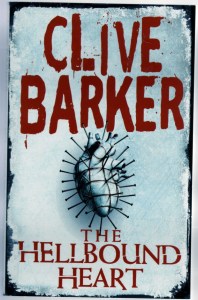
Cover of The Hellbound Heart
The movie “Hellraiser” was based on Clive Barker’s novel The Hellbound Heart. The movie does not veer too much from the novel, though there are significant differences in details. In the original novel Pinhead was a woman with diamond-capped pins in her head.

These are some of the reasons I love to watch Cinefix on YouTube. It really helps me with my art of storytelling. I see things from a different perspective.

One way to look at this is that when you read a story, you probably visualize the events in that story just as you would see them in a movie. Both deal with the images that form in your mind as you experience a story. While with a novel, you have to imagine how the events are depicted, with a movie you eliminate this step and the events are depicted for you–hopefully in accordance with how the underlying novel or play was written. Filmmakers are notorious for changing endings trying to improve the storyline or to develop their own art.

By the way, when you compare the cost of going to a movie that will last for two hours vs. the cost of buying a novel that will keep you entertained for ten, you can see the novel is the better deal economically.

But I digress.

Anyway, let me know your thoughts.

Don’t forget to like, comment, and subscribe.

Hasta luego.


Photo of man wearing a coronavirus mask
Prevent the spread of Coronavirus/COVID-19 for the sake of yourself, your friends, and your family.

Increasing your Story’s Tension

I found the following five tips from Inkandquills.com posted on Facebook:

  1. Don’t let your characters have what they want.
  2. Ask how you can make your character’s situation worse.
  3. Build flaws and conflict into your setting/story.
  4. Create conflict between your characters.
  5. Increase the consequences of failure for the hero.

Slattery


New Prose Poetry: “I am Assaulted.” by Larry Thacker

In constant struggle with some barely met
demon-god’s angels, just over my shoulders,
along the path of my spine, hovering near
my ears, observing every thought, watching
my faulty movements, keeping time on a watch
I hear ticking but have yet to find hidden
among my debris. Counting breaths. Whispering
their dreaded counting of days. Moving with me,
forever me. I have lost count of their faces.
Their choruses beg attention, un-focusing me,
in languages I’ve given up hope understanding,
an alien tongue lashing, familiar to maddening.
I catch only fragments of messages, tones,
inflections, infections. My struggle, a prayerful
resentment, to find a perfect key, my own
tabula meditatum psychonum. Something to eek
the translation toward wholeness – some gift to
weaken cracks into the sealed gate where they
stand hunched about, listening to my weakened
fists pounding on the other side. They command
my waking hours and somewhere in my dead
sleep, my dreams un-spared. They frighten
my inner workings, these messages, urgent.
I spot wings in the corners of my eyes, shadow-
wrapped in life’s clutter. I turn, they evade,
cleverly plunging from sight. This awful game
they insist upon. They distract me from my days,
a thirsty tick just out of reach, drawing my energies
almost too slowly to notice. Slowly, like the many
voices growing in the veins of ancient trees.
 I hear you, yes. Oh, by the gods I hear you…

### 

Larry D. Thacker is a writer and artist from Tennessee (US). His stories can be found in past issues of The Still Journal, Fried Chicken and Coffee, Dime Show Review and The Emancipator. His poetry can be found in journals and magazines such as The Still Journal, The Southern Poetry Anthology: Tennessee, Mojave River Review, Broad River Review, Harpoon Review, Rappahannock Review, and Appalachian Heritage. He is the author of Mountain Mysteries: The Mystic Traditions of Appalachia, the poetry chapbooks, Voice Hunting and Memory Train and the forthcoming full collection Drifting in Awe. He is presently taking his MFA in poetry and fiction at West Virginia Wesleyan College. More stuff at:www.larrydthacker.com

David’s Haunted Library: The Box Jumper

  A box Jumper is a magician’s assistant and one of Houdini’s box jumpers was Leona Derwatt. Leona came from a working class background and her father idolized Houdini. In 1919 she…

Source: David’s Haunted Library: The Box Jumper

Shareworthy Reading and Writing Links Mar 6

Don’t Lose Your Writing Groove This week I’ve been restarting my work-related writing engines. After a temporary slow down of client projects, the machine of my copywriting and marketin…

Source: Shareworthy Reading and Writing Links Mar 6

African American Folklore, Magical Realism and Horror in Toni Morrison novels

Toni Morrison, 2008 Photo by Angela Radulescu/Entheta

Source: African American Folklore, Magical Realism and Horror in Toni Morrison novels