Here is another interesting bit of trivia for Halloween. Maybe one of these is in your neighborhood: 11 “Real” Haunted Houses to Visit—If You Dare! | 11 “Real” Haunted Houses to Visit—If You Dare! – Yahoo Homes.
Tag: scary
Dictionary.com – Monsters of Literature and Folklore

as Count Dracula
1931
Here is an interesting bit of trivia: “8 Monsters of Literature and Folklore” at Dictionary.com – Free Online English Dictionary. You may have to wait a second or two for the slide show to pop up.
Edgar Allan Poe: Poet and Prophet | Interesting Literature

Here is a fascinating article about the founding father of modern horror: Edgar Allan Poe: Poet and Prophet | Interesting Literature. Interestingly, it states that the story about Edgar Allan Poe in his white belt and gloves at West Point, which I quoted in an earlier post from The Writer’s Home Companion, is urban legend. It goes on to state several fascinating bits of trivia about Poe including his involvement in the development of the detective story and the short story, the backgrounds of some of his most famous works, his passion for cryptography, his foreshadowing of the Big Bang Theory, criticisms of his work by William Butler Yeats and T.S. Eliot, and some insights on his personal and financial life.
The Real-Life Murderess Behind the American Horror Story: Coven Character | Mental Floss

Here’s an interesting bit of history with an influence on modern American horror:
The Real-Life Murderess Behind the American Horror Story: Coven Character | Mental Floss.
Five Reasons Everyone Should Know Sir Edward Bulwer-Lytton | Interesting Literature

Portrait by Henry William Pickersgill
Five Reasons Everyone Should Know Sir Edward Bulwer-Lytton | Interesting Literature.
I found this article at http://www.interestingliterature.wordpress.com just a few minutes ago. Though the article does not deal with horror per se, the article will be of interest to horror aficionados (especially horror-historians) because for a short time Sir Edward Bulwer-Lytton was one of the more famous writers of horror during the nineteenth century. His work of horror, “The House and the Brain”, is mentioned in Lovecraft’s famous essay “Supernatural Horror in Literature”. Lovecraft said of Bulwer-Lytton:
“At this time a wave of interest in spiritualistic charlatanry, mediumism, Hindoo theosophy, and such matters, much like that of the present day, was flourishing; so that the number of weird tales with a ‘psychic” or pseudoscientific basis became very considerable. For a number of these the prolific and popular Edward Bulwer-Lytton was responsible; and despite the large doses of turgid rhetoric and empty romanticism in his products, his success in the weaving of a certain kind of bizarre charm cannot be denied.”
Lovecraft goes on to discuss with some degree of praise three of Bulwer-Lytton’s works: the short story “The House and the Brain” and the novels Zanoni and A Strange Story. I read “The House and the Brain” some time back and found it an interesting story (though a little long) and even riveting in some parts. It is about a man who decides to spend the night in a haunted house where no one has been able to stay for very long because it is inhabited by terrifying apparitions. True to the style of many nineteenth-century stories, the intrepid protagonist finds something of a scientific explanation behind the haunting. It is definitely worth reading.
I have mentioned Bulwer-Lytton and some of the things for which he is famous in my previous post “The Best Literary Facts from the Twitterverse”, which was also reposted from http://www.interestingliterature.wordpress.com. You might want to check it out for a few additional facts.
Thoughts? Comments?
In A Glass Darkly by Sheridan Le Fanu
Here’s a good review of one of the forgotten masters: Joseph Sheridan Le Fanu. For more on Le Fanu, check out my previous post on him.


In A Glass Darkly
By Sheridan Le Fanu
Format: Paperback, 272 pages.
Publisher: Wordsworth Editions, 2007.
What are the chances of two horror novels being reviewed in the space of a couple of weeks with titles based on 1 Corinthians 13 (“For now we see through a glass, darkly”), kind of slim, but that’s the kind of joined up thinking you get at Highlanders Book Reviews (or pure jammy fluke as they say round these parts!). Perhaps what’s more fascinating is that without Sheridan Le Fanu’s misquote it is highly unlikely that we would have ever arrived at Bill Hussey’s Through A Glass Darkly despite the 136 year gap, let me explain.
Joseph Thomas Sheridan Le Fanu was an Irish writer who, during the 19th C, was one of the founders of the written ghost story. For a more detailed biography have a look here or here but bear…
View original post 505 more words
In Memory of Richard Matheson

Photo by JaSunni, 2008
On Monday, I learned of the death of Richard Matheson, one of the great horror writers of the twentieth century. As my tribute to him, here are a few quotations from and about him along with a few examples on how he generated his ideas. There were a lot, so I picked the ones that seemed most philosophical about writing and life in general in order to get a feel for the man behind the writing.
From Goodreads:
“What condemnation could possibly be more harsh than one’s own, when self-pretense is no longer possible?” ― Richard Matheson, What Dreams May Come
“We’ve forgotten much. How to struggle, how to rise to dizzy heights and sink to unparalleled depths. We no longer aspire to anything. Even the finer shades of despair are lost to us. We’ve ceased to be runners. We plod from structure to conveyance to employment and back again. We live within the boundaries that science has determined for us. The measuring stick is short and sweet. The full gamut of life is a brief, shadowy continuum that runs from gray to more gray. The rainbow is bleached. We hardly know how to doubt anymore. (“The Thing”)” ― Richard Matheson, Collected Stories, Vol. 1
“If men only felt about death as they do about sleep, all terrors would cease. . . Men sleep contentedly, assured that they will wake the following morning. They should feel the same about their lives.” ― Richard Matheson, What Dreams May Come
“In a world of monotonous horror there could be no salvation in wild dreaming.” ― Richard Matheson, I Am Legend
“Now when I die, I shall only be dead.” ― Richard Matheson, I am Legend and Other Stories
From Wikiquotes:
I think What Dreams May Come is the most important (read effective) book I’ve written. It has caused a number of readers to lose their fear of death — the finest tribute any writer could receive. … Somewhere In Time is my favorite novel.
“Ed Gorman Calling: We Talk to Richard Matheson” (2004).
From Uphillwriting.org:
If you go too far in fantasy and break the string of logic, and become nonsensical, someone will surely remind you of your dereliction…Pound for pound, fantasy makes a tougher opponent for the creative person.
– Richard Matheson
And here are a couple of quote about Matheson–also from Wikiquotes:
Matheson gets closer to his characters than anyone else in the field of fantasy today. … You don’t read a Matheson story — you experience it.
Robert Bloch, as quoted in an address by Anthony Boucher (29 August 1958), at the “Solacon”, the 1958 Worldcon
He has many … virtues, notably an unusual agility in trick prose and trick construction and a too-little-recognized (or exercised) skill on offtrail humor; but his great strength is his power to take a reader inside a character or a situation.
Anthony Boucher in an address at the “Solacon”, the1958 Worldcon (29 August 1958)
Wikipedia offers an interesting paragraph on how Matheson came up with the ideas for some of his more famous works:
Matheson cited specific inspirations for many of his works. Duel derived from an incident in which he and a friend, Jerry Sohl, were dangerously tailgated by a large truck on the same day as the Kennedy assassination. (However, there are similarities with William M. Robson’s script of the July 15, 1962 episode of the radio drama, Suspense, “Snow on 66”.[citation needed]) A scene from the 1953 movie Let’s Do It Again in which Aldo Ray and Ray Milland put on each other’s hats, one of which is far too big for the other, sparked the thought “what if someone put on his own hat and that happened,” which became The Shrinking Man. Bid Time Return began when Matheson saw a movie poster featuring a beautiful picture of Maude Adams and wondered what would happen if someone fell in love with such an old picture. In the introduction to Noir: 3 Novels of Suspense (1997), which collects three of his early books, Matheson said that the first chapter of his suspense novel Someone is Bleeding (1953) describes exactly his meeting with his wife Ruth, and that in the case of What Dreams May Come, “the whole novel is filled with scenes from our past.”
Thoughts? Comments?
12 Seconds of Horror
A friend of mine just posted this on Facebook. It is only twelve seconds in length, and it is apparently real, but it is a horror movie in the modern sense. To find this and others, search for “Amazing and Crazy Videos” on Facebook.
H.R. Giger’s Necronomicon

copyright 1998 by Dana Frank/NYC
from hrgiger.com
If you are not familiar with the works of Swiss artist Hans Rudolf Giger, you are probably familiar with movies that use his art: the Alien series, Poltergeist II, Batman Forever, and Prometheus among others. Though his works are considered surreal or of science fiction rather than horror, to me there seems to be something of an unstated horrific element to them and therefore I have included them as tonight’s post.
Perhaps a more tangible connection between Giger and the world of horror is that his book, upon which the original Alien design was based was entitled H.R. Giger’s Necronomicon, after, of course, the fictitious Necronomicon of H.P. Lovecraft. Here I quote a short article on it from Wikipedia:
“Necronomicon was the first major published compendium of images by Swiss artist H. R. Giger. Originally published in 1977, the book was given to director Ridley Scott during the pre-production of the film Alien, who then hired Giger to produce artwork and conceptual designs for the film.
“The book was originally published by Sphinx Verlag and was republished in 1993 by Morpheus International with additional artwork from Giger’s Alien designs. A subsequent collection of his images followed as H. R. Giger’s Necronomicon 2, printed in 1985 by Edition C of Switzerland.
“Giger’s Necronomicon is named for H. P. Lovecraft’s Necronomicon, a fictional grimoire Lovecraft invented and used as a plot device in his stories. Lovecraft’s Necronomicon was a compendium of pre-human lore compiled by the fictional mad Arab Abdul Alhazred, circa 700.[1]“
Giger’s works are a fascinating foray into the surreal, erotic, and horrifying possibilities of the world of biomechanics. A quick search in Google images for “Giger art” or a vist to hrgiger.com will prove quite rewarding. Here are a few examples to whet your appetite (please note that all images used in this post are copyrighted by the author/artist and are used here only under US “fair use” guidelines) .


by H.R. Giger

by H.R. Giger

by H.R. Giger
Thoughts? Comments?
Lovecraft on the Supernatural
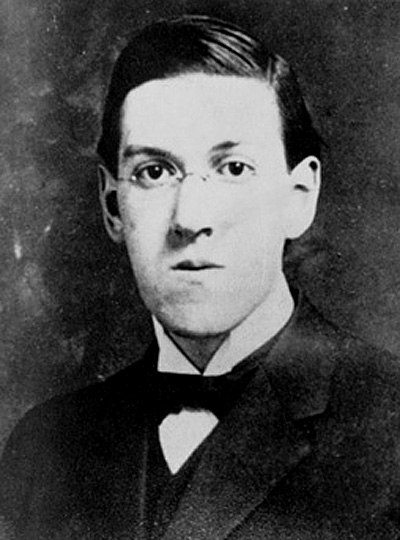
I was reading Lovecraft’s “Supernatural Horror in Literature” the other day when I came across this line concerning the nature of the “weird tale”:
“A certain atmosphere of breathless and unexplainable dread of outer, unknown forces must be present; and there must be a hint, expressed with a seriousness and protentiousness becoming its subject, of that most terrible conception of the human brain — a malign and particular suspension or defeat of those fixed laws of Nature which are our only daily safeguard against the assaults of chaos and the daemons of unplumbed space.”
With me, this idea hit home. I have always thought that the more realistic I could make a story, the more frightening it would be for the reader, because it could possibly happen. Lovecraft takes the complete opposite approach. In essence, he says let’s dispense with the chains of our preconceptions of reality then see what could happen. He is right. If anything can happen, the horrors that could happen to humanity are limitless and unimaginable.
Now let’s take this line of thought a step or two further philosophically. Perhaps our concept of reality is really a sort of protective shell, a defense mechanism created by our minds that shields us from being overwhelmed by the thousands of possible ways we could meet our ends. If a person tried to conceive of all the ways he/she might die at any moment, no matter how miniscule the odds, his/her mind might be overwhelmed and paralyzed by fear or destroyed by paranoia and madness. The only way the mind could survive would then be to limit the possibilities to only those with the greatest probability of happening at that moment, in essence, wrapping itself in a protective cocoon of denial.
If there are any philosophy majors out there reading this, please feel free to bring up this idea in class. I would love to hear the arguments for and against this.
Now, let’s go a step even further. If we start to see our perception of reality as only a concept, as only a protective shell in a much greater universe, as only one alternative among thousands or millions of possibilities, then the possibility of creatures like Cthulhu, Shoggoth, Nylarhotep, the “ancient ones”, and all the other monsters contained in Lovecraft’s vivid imagination becomes very real.
Lovecraft’s world of the “ancient ones” is frightening enough when we think it has no chance of happening, but it becomes truly terrifying if we think it has even the slightest chance of actually happening.
Thoughts? Comments?
Have a Walking Dead Easter!

(from Texas Toyz in Corpus Christi, TX)

(from Texas Toyz in Corpus Christi, TX)
Our friend Alyssa Milano from B&J’s Pizza in Corpus Christi, TX posted these on Facebook. They were too delicious not to share with the world. According to her the eggs were brought by the Zombie Easter Bunny. 🙂 Have a Walking Dead Easter!
Jorge Oscar Rossi’s “Archetypal Horror: H.P. Lovecraft and Carl Gustav Jung”
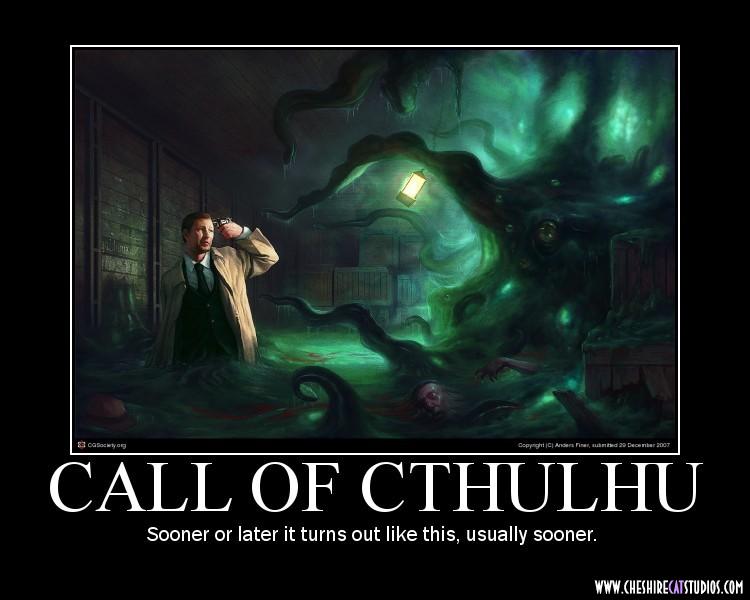
I ran across an interesting article today at http://www.quintadimension.com/article66.html, entitled “Archetypal Horror: H.P. Lovecraft and Carl Gustav Jung”. It was written by Jorge Oscar Rossi, an Argentinian writer of science fiction (and fantastic literature in general), and published on December, 8, 2000. Please note that the article and his autobiography are in Spanish.
I am no master of Spanish, having had only two years in college and some practical, albeit frequent, experience in Texas and Mexico over the last twenty years. However, Señor Rossi’s article is well-written and relatively easy reading, so that I feel I caught the gist of it, if not all the nuances.
His main point (and anyone with a better knowledge of Spanish than I, including Señor Rossi, may correct me if I am wrong) is that Lovecraft’s ancient gods of the Cthulhu mythos represent archetypal forms of horror in the Jungian sense of “archetype”.
If you have a basic comprehension of Spanish, the article is quite intriguing and worth taking a shot at reading.
If nothing esle, the article will help you view the poster above from another perspective: what is the meaning of the poster if the creature above symbolizes archetypal fears shared by everyone?
Thoughts? Comments?
Shades of Countess Bathory

I confess. I don’t know how to begin tonight’s article. It is just so weird that it boggles the mind.
If you are a fan of horror, you may know of Elizabeth, Countess Bathory, the infamous “Blood Countess” and the subject of many books and at least 2-3 movies. I happen to have a modicum of knowledge about the Countess, because some time back I researched her for a short story for which I am now trying to find a publisher. The Countess is alleged to have killed perhaps as many as 600 young women in what is now the Czech Republic from about 1604-1610 just to bathe in their blood in order to preserve her beauty. If you are not familiar with her, just Google “Elizabeth Bathory”. There are a lot of good articles on her and the one in Wikipedia is a good synopsis of her life.
Fast forward to 2012.
I am sitting at my desk, surfing the net while talking to my mom on the phone, and I come across an article on Yahoo News about Kim Kardashian having a blood facial!
Let me be the first to note that the major difference between the Countess’s and Kim’s blood treatments is that Kim uses her own blood (let me repeat that for the benefit of any unscrupulous lawyers looking for a case: the Yahoo article states that Kim Kardashian uses her own blood) and not the blood of innocents like the Countess is alleged to have done.
What more can I say? I could probably write an extensive article just on whether bathing in blood has any actual value as a beauty treatment or whether the charges of bathing in blood put forth by her accusers and detractors have any merit or if it was just a form of black magic practiced by the Countess, but, as fascinating a subject as it is, I unfortunately don’t have the time to pursue it. Please feel free to conduct your own research though. I found out some fascinating things during my own and put as many as I could into the aforementioned story. If and when it is published, I will announce it in this blog.
By the way, one thing I found out about the Countess is that while many people believe the worst about her, there are many who believe that she was innocent. Their opinion tends to be that the vicious stories about her were simply inventions of her enemies to justify their seizing of her land or they were written by gullible historians believing local legends a hundred or more years after her death. Usually I find the truth of any issue is somewhere between the two extremes of viewpoints.
If you would like an alternate view on the Countess, I would like to recommend a movie entitled “Bathory”, which stars Anna Friel and Karel Roden. I believe it is a Czech production. It gives a good, plausible alternative to the legends about the Countess, and in my humble opinion, is probably much closer to the truth than the usual blood-soaked splatterfests you may find.
Edward Lucas White
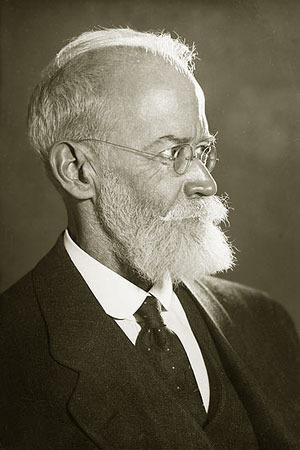
1866-1934
If you have never heard of Edward Lucas White (as I had not until recently), do yourself a favor and look up his short story “Lukundoo” (1925). This is probably one of the best and most terrifying horror stories I have ever read and it is the story for which White is best known. Probably his next best known story is “The House of Nightmare” (1906), though it is not nearly as good as ‘Luknudoo” and by today’s standards of horror would be considered more of a quaint tale told by children around a campfire than true horror. Nonetheless, Lovecraft considered White to be one of the masters of “weird fiction” and mentions him in his treatise “Supernatural Horror in Literature.”
One interesting aspect of White is that he based at least some of his stories on his nightmares, which is not uncommon among horror authors, but after reading “Lukundoo” I had to ask myself, “what was going on in this guy’s psyche?”
Do you base any of your works on dreams or nightmares? Write in and let us know.
George Romero on Horror

George Romero
Photo by Nicolas Genin
I found the following interesting quote at TheCabinet.com:
“I’ve always felt that the real horror is next door to us, that the scariest monsters are our neighbors.” –George Romero
I don’t think the scariest monsters are our neighbors, but what is scary is that our neighbors might be monsters.
What do you think?
 Phil Slattery, Writer, Publisher