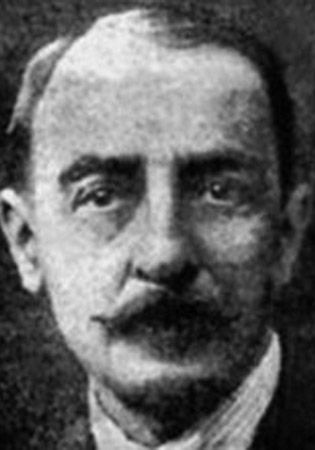
Maurice Level

Maurice Level 1875-1926
Maurice Level
1875-1926

I had never heard of Maurice Level (the pseudonym of Jeanne Mareteux-Level) before tonight, but after reading a couple of his short stories and a few critques of his work in general, I shall have to find more of his stories.

Level was a French writer known for his macabre stories, which were sometimes staged in the renown Theater of the Grand Guignol.    Wikipedia says this about him:

“…Level’s short stories may be weak in characterization and motivation, but they are strong on obsession and violence. Their surprise endings are reminiscent of the stories of Guy de Maupassant. Many of Level’s stories were translated into English in the magazine Weird Tales. [1] As editor John Robert Colombo noted in Stories of Fear and Fascination (2007), Battered Silicon Dispatch Box French critics see Level as the heir of the Symbolist writer Villiers de l’Isle-Adam; British critics, as the successor of Edgar Allan Poe; American critics, as the contemporary of H. P. Lovecraft. Of this fiction, Lovecraft himself observed in Supernatural Horror in Literature (1945), “This type, however, is less a part of the weird tradition than a class peculiar to itself–the so-called conte cruel, in which the wrenching of the emotions is accomplished through dramatic tantalizations, frustrations, and gruesome physical horrors.” Critic Philippe Gontier wrote, “We can only admire, now almost one hundred years later, the great artistry with which Maurice Level fabricated his plots, with what care he fashioned all the details of their unfolding and how with a master’s hand he managed the building of suspense.” Level’s stories, with their gratuitous acts and mindless brutality, may be seen as precursors of “thriller” fiction and “slasher” films.”

A few of Level’s works can be found on the Internet.   I read two tonight: “Under the Red Lamp” and “Last Kiss”.  They are quite brief and quite terrifying.  In my view, the Wikipedia article above provides a good assessment of what I have read so far.  Level begins a story with a first sentence that grabs your attention, then sustains the mystery throughout the tale, until you reach a sudden, horrifying, denouement.

I highly recommend investigating his works when you have the time.  He is an excellent writer that deserves more recognition than he has.

Here are a few places to start:

“The Last Kiss” at Moonlightstories.magick7.com  A husband, blinded and hideously deformed when his wife threw vitriol in his  face after he threatened to leave her, intervenes on her behalf when the case  comes to court, preventing her from receiving a long jail sentence. At his  request she pays him an emotional visit in which she begs his forgiveness and  somehow even manages to kiss him, whereupon … Well, not for nothing is Level  feted as a master practitioner of the conte cruel. (Synopsis from vaultofevil.proboards.com)

“In the Light of the Red Lamp” at amalgamatedspooks.com “In the first shock of grief, you sometimes have extraordinary ideas … can you  believe that I photographed her lying on her deathbed? I took my camera into the  white, silent room, and lit the magnesium wire. Yes, overwhelmed as I was with  grief, I did with the most scrupulous precaution and care things from which I  should shrink today, revolting things … yet it is a great consolation to know  she is there, that I shall be able to see her again as she looked that last  day.”  Now, six months after his beloved’s death, accompanied by the  narrator he prepares to develop the photographs of the dead woman. Slowly the  images appear – and a horrible tragedy is revealed.  (Synopsis from vaultofevil.proboards.com)

“The Grip of Fear” at Google Books  (I haven’t read this yet, but it looks interesting.)

Apparently, many of his works are still available only in French, but some (notably those mentioned above) are available in English.   His better known works are:  Those who Return, Tales of Mystery and Horror, Tales of the Grand Guignol, Les Portes de L’Enfer, The Grip of Fear, and L’Epouvante.

Thoughts?  Comments?
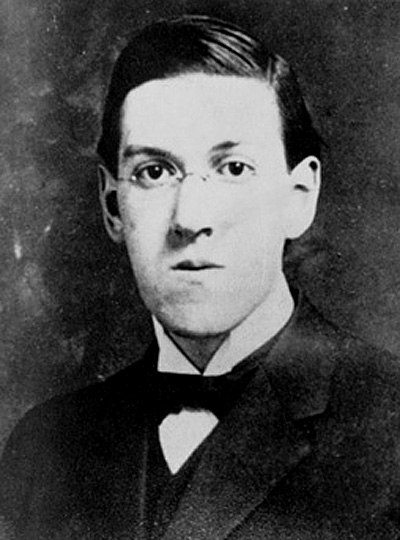
Lovecraft and “Berkeley Square”

H.P. Lovecraft, 1915

I was lazily drifting through the web tonight, when I came upon a bit of interesting trivia.   According to HPLovecraft.com, one of Lovecraft’s favorite films was “Berkeley Square”.   He is quoted as saying about it:

“But with all its defects this thing gave me an uncanny wallop. When I revisited it I saw it through twice – & I shall probably go again on its next return. It is the most weirdly perfect embodiment of my own moods & pseudo-memories that I have ever seen…” (to J. Vernon Shea, 4 February 1934)

According to the Internet Movie Database, the storyline is:  “A young American man is transported back to London in the time of the American Revolution and meets his ancestors.”

A review by “clementj” on the same page describes it as follows:

“This is a very amusing love story with a good dash of humor. Much of the humor centers around the culture clash between Standish and the 18th century family. Standish uses modern terms and slips when he reveals things that happen in the future. The culture clash is a cautionary tale for would be travelers. This film appealed to many women because Leslie Howard was a heart throb for many of them. My mother loved this film and could watch it over and over. She was so disappointed when late in her life it disappeared from the old movies shown on TV.

“It is currently not commercially available, but a number of vendors have poor quality CDs or tapes for sale. All of these were probably made from a VHS tape from a TV showing. The tape was deteriorated and possibly copied several times so there is a lot of instability and wiggling of the image. The original broadcast used extreme compression of the video and sound. As a result the noise level rises to become very loud until dialog causes the gain to be cut. As a result the dialog is sometimes very indistinct. The music which was originally soft also rises to match the level of the dialog. Once this is restored by hand, the film is fairly listenable. The complaint of another reviewer about the music being too loud may stem from watching a copy with similarly compressed sound. In addition the broadcast severely cropped the film and did not stabilize the jitter.

This is a film that deserves restoration from the existing prints, but when and if this happens is unknown. Until then buying one of the existing CDs may be the only way to view this fine film.”

On the message board at the bottom of that page is a post by aaronjv-1 that mentions that a brand new 35mm print was slated to play at the Lovecraft film festival in September, 2011.   He goes on to say about the film:

“The grandson of director Frank Lloyd will introduce the picture and talk about his granddad’s favorite, which was also H.P. Lovecraft’s favorite–he watched it four times, and it inspired him to write his own classic time-traveler possession tale, “The Shadow Out of Time”.

A quick search on Google reveals that the film is available on youtube at http://www.youtube.com/watch?v=Ge8Qn3pGE_E.

I hope to watch it tonight.   Please feel free to do the same and post your comments here.  I would love to hear what you have to say.

Lovecraft on the Supernatural

H.P. Lovecraft, 1915


I was reading Lovecraft’s “Supernatural Horror in Literature” the other day when I came across this line concerning the nature of  the “weird tale”:

“A certain atmosphere of breathless and unexplainable dread of outer, unknown forces must be present; and there must be a hint, expressed with a seriousness and protentiousness becoming its subject, of that most terrible conception of the human brain — a malign and particular suspension or defeat of those fixed laws of Nature which are our only daily safeguard against the assaults of chaos and the daemons of unplumbed space.”

With me, this idea hit home.  I have always thought that the more realistic I could make a story, the more frightening it would be for the reader, because it could possibly happen. Lovecraft takes the complete opposite approach.  In essence, he says let’s dispense with the chains of our preconceptions of reality then see what could happen.   He is right.  If anything can happen, the horrors that could happen to humanity are limitless and unimaginable.

Now let’s take this line of thought a step or two further philosophically.  Perhaps our concept of reality is really a sort of protective shell, a defense mechanism created by our minds that shields us from being overwhelmed by the thousands of possible ways we could meet our ends.  If a person tried to conceive of all the ways he/she might die at any moment, no matter how miniscule the odds, his/her mind might be overwhelmed and paralyzed by fear or destroyed by paranoia and madness.   The only way the mind could survive would then be to limit the possibilities to only those with the greatest probability of happening at that moment, in essence, wrapping itself in a protective cocoon of denial.

If there are any philosophy majors out there reading this, please feel free to bring up this idea in class.  I would love to hear the arguments for and against this.

Now, let’s go a step even further.   If we start to see our perception of reality as only a concept, as only a protective shell in a much greater universe, as only one alternative among thousands or millions of possibilities, then the possibility of creatures like Cthulhu, Shoggoth, Nylarhotep, the “ancient ones”, and all the other monsters contained in Lovecraft’s vivid imagination becomes very real.

Lovecraft’s world of the “ancient ones” is frightening enough when we think it has no chance of happening, but it becomes truly terrifying if we think it has even the slightest chance of actually happening.

Thoughts?  Comments?

The “Dracula” Conversation


I am a member of GoodReads.com as are several of my friends.  One, a gentleman named Tim Stamps, whom I have known since my college days at Eastern Kentucky University, recently posted a review of Dracula, on which I commented.  Thus began a brief conversation which I think you may find interesting for several reasons.   I have quoted it below, editing out any non-relevant personal matters (after having obtained Tim’s permission to post it).


Tim Stamps’s Reviews > Dracula

16399814

Tim Stamps‘s review

Apr 06, 13
I could only read this during the Winter months, when the weather is cloudy, dark and gloomy. When I read fiction I prefer the classics, to learn how people thought in earlier times. The actual character of Dracula was the most un-interesting of the characters in the book. It turns out that Stoker only knew Vlad’s Dracula name but knew nothing of his past, and the character is actually based more on Jack the Ripper.  Also it was interesting to read a book made up of supposed diary entries and newspaper articles – although most actual diaries and articles written by everyday people are nowhere near as long and detailed, especially back then when paper was scarce. I understand Mary Shelley wrote Frankenstein in the same format, and other books of that time did the same.  If you can find a copy, listen to the first half hour of this Coast to Coast show: http://www.coasttocoastam.com/show/20…
 message 1:      by      Phil          –            rated it 4 stars
Phil Slattery      Tim, if you like reading classic horror tales like Dracula, then you should definitely read Frankenstein. Others you may want to check out are The Strange Case of Dr. Jekyll and Mr. Hyde, The Picture of Dorian Gray, the works of Algernon Blackwood, Lord Dunsany, Arthur Machen, and Joseph Sheridan Le Fanu.  I have been writing horror lately and have established a blog on it that often discusses past writers of the horror genre. You may want to check it out at www.philslattery.wordpress.com.  You may find some of the authors I discuss of interest. One who is known more as a writer of science fiction than of horror (though the boundary is often indistinct at best) is H.G. Wells who wrote The Time Machine, War of the Worlds, The Island of Dr. Moreau, and others.
Tim Stamps      True, I definitely plan to read Frankenstein. Also have been planning on getting into Wuthering Heights and the Brönte sisters books. I’ve always been a fan of H.G. Wells, also Orwell’s dystopian works – still trying to get around to reading Huxley’s Brave New World (when I find my copy) – I can also add ebooks to a kindle, but the kindle doesn’t exactly replace paper.   I’ve depended on the movies too much – finding lots of extra details in the books that the films leave out. (I don’t really spend much time reading actually.) I’ll explore your site.. thanks! By the way, are there any horror films you really like?  Or gothic tales.  There don’t seem to be many recent ones that play into fears as well as the older ones. Some of the classics: “The Innocents” (version of Henry James’ “Turn of the Screw”), George Romero’s “Martin”, “The Exorcist”, even “The Shining” and the early “Halloween” pictures.  Recent films like “The Ring” and “the Sixth Sense” have potential.   I read in your blog that to be a great horror writer you need to understand the psychology and emotions of fear. Perhaps horror screenplay writers nowadays need to go back to the basics – just slashing people up and showing gruesome killings isn’t enough to heighten the sense of fear.  They seem to have forgotten Hitchcock and his methods of manipulating people’s emotions, although that was a time when people actually paid attention to dialog. I don’t know what it’s going to take to make a great horror movie today. Is it even possible?
Phil SlatteryTim wrote: “True, I definitely plan to read Frankenstein. Also have been planning on getting into Wuthering Heights and the Brönte sisters books. I’ve always been a fan of H.G. Wells, also Orwell’s dystopian w…”
Yes, you are right in all accounts, except that modern screenplay writers need to go back to the basics.  They cannot go back to someplace they have never been.   They need to learn the basics first. Stephen King identifies three types of horror:  horror, the gross-out, and terror (the exact lengthy quote can be found on GoodReads).  Modern, popular, mass-market screenplay writers use the gross-out form to excess. The great horror writers of the past (such as Lovecraft, Poe, Blackwood, etc.) never described anything gross.  Yet their tales are terrifying.   There is an art to horror, and Hitchcock’s concept of suspense (i.e. terror lies not in seeing something happen, but in knowing that something is about to happen) is one of the best means of achieving horror.
There are great horror movies today, but one has to veer away from the mass-market and Hollywood to find them.  Independent films and small companies are your best shot:  someone who cares about the art.  Netflix and Hulu TV are good for finding these (and finding them cheaply at that).  The series American Horror Story is quite entertaining, though it can be bloody at times. Foreign films can be an excellent source with Japan, Korea, England, Australia, and Spain coming immediately to mind. I noted that your profile says you are in the Seattle area now.  Lion’s Gate Films in Vancouver, BC makes some good films (outside of the horrifyingly gross-out Saw series).
I have seen some good horror films lately, but am having a hard time recalling their names, therefore I am reviewing some lists of top horror films on line, but of course that isn’t helping much as the lists are mass-market oriented.  One that pops out now is the original Swedish version of “Let the Right One In”.  “Dagon”, a Spanish film based somewhat loosely on a Lovecraft story (“The Shadow over Innsmouth”) is not bad. The New Zealand film “The Devil’s Island” has some interesting ideas behind it, though it is quite bloody.  That’s all I can think of on the spur of the moment.
Tim Stamps      hi Phil, Sorry about “Seattle” – don’t know how that happened (I must’ve not filled it in – the site just guessed or something.) Anyway, actually I am (still) in… I love watching foreign horror… for 70s-era foreign horror, Dario Argento comes to mind, although he leans toward the gross-out variety.  Lovecraft-written films are always great. I’ll check out these you mention (and any others you run across) – if you come up with a list of interesting foreign horror for the last 3 decades or so let me know. I have one plug: watch for “Nobody in Particular”, a crime-drama I helped out on, being re-edited – should be out sometime this year.
Thoughts?  Comments?

Have a Walking Dead Easter!

Walking Dead Easter Eggs (from Texas Toyz in Corpus Christi, TX)
Walking Dead Easter Eggs
(from Texas Toyz in Corpus Christi, TX)
 
Zombie Peeps(from Texas Toys in Corpus Christi, TX)
Zombie Peeps
(from Texas Toyz in Corpus Christi, TX)


Our friend Alyssa Milano from B&J’s Pizza in Corpus Christi, TX posted these on Facebook.  They were too delicious not to share with the world.  According to her the eggs were brought by the Zombie Easter Bunny. 🙂     Have a Walking Dead Easter!


Comments on “Murder by Plastic”

Since “Murder by Plastic” was published by Every Day Fiction on March 24, I have been getting some interesting comments on it:  some critical, some laudatory.   For those of you who haven’t had a chance to visit the site yet, here they are:

9 Responses to “MURDER BY PLASTIC • by Phil Slattery”

  1. lizardyoga Says: March 24th, 2013 at 2:54 amChilling and brilliantly economical
  2. Binnnie Dot Says: March 24th, 2013 at 4:21 amVery well-paced and intriguing. Well done.
  3. Paul A. Freeman Says: March 24th, 2013 at 4:22 amWekk written, but one huge pothole. How could Joey be certain Don Antonio Vespucci would not take the duct tape off?
  4. Tina Wayland Says: March 24th, 2013 at 6:52 amI can’t help feeling like this one needed another rewrite. The story shines through so wonderfully in spots, but it feels hidden beneath some predictable plot twists and un-careful writing. The repeated words, like “heartbeat,” got caught in the writing instead of really reverberating.That said, I think the story itself takes us by the hand and runs. And what a ride!
  5. Amanda Says: March 24th, 2013 at 10:04 amI think Joey may have been involved in a similar scenario before with Don Antonio and was aware of how it would play out. And, like the Don says, who wants to listen to a bunch of denials?Well written and enjoyable, but I also agree that repeated words took me out of the story a couple of times. The first line was brilliant, but the second reference to duct tape diminished the line’s impact.

    Overall, a very enjoyable read.

  6. Paul A. Freeman Says: March 24th, 2013 at 10:26 amBelieve it or not, I was perfectly sober when I posted #3.‘Wekk’; ‘potholes’? Maybe I should have loosened up with a drink or two before posting.
  7. JenM Says: March 24th, 2013 at 10:51 amFabulous story! Five stars!
  8. Michael Robertson Says: March 24th, 2013 at 12:48 pmI liked this. It was a good story. I agree with the rewrite comments. Overall an enjoyable read. Well, horrible read but that’s the point.
  9. john malone Says: March 27th, 2013 at 8:39 pma terrific read; i loved it. I was tensed up just like ‘Mr. Wilson’ throughout the story

Today, My Story “Murder by Plastic” Was Published.

My work of flash fiction, “Murder by Plastic”, was published today at www.everydayfiction.com.  Please read the story at your leisure and peruse the other literary works available at Every Day Fiction as well.  My heartfelt thanks go out to the very patient, professional staff at Every Day Fiction, who brought this story to you.  I hope you enjoy reading it as much as I enjoyed writing it.

Jorge Oscar Rossi’s “Archetypal Horror: H.P. Lovecraft and Carl Gustav Jung”

Cthulhu

I ran across an interesting article today at http://www.quintadimension.com/article66.html, entitled “Archetypal Horror:  H.P. Lovecraft and Carl Gustav Jung”.  It was written by Jorge Oscar Rossi, an Argentinian writer of science fiction (and fantastic literature in general), and published on December, 8, 2000.  Please note that the article and his autobiography are in Spanish.

I am no master of Spanish, having had only two years in college and some practical, albeit frequent, experience in Texas and Mexico over the last twenty years.   However, Señor Rossi’s article is well-written and relatively easy reading, so that I feel I caught the gist of it, if not all the nuances.

His main point (and anyone with a better knowledge of Spanish than I, including Señor Rossi, may correct me if I am wrong) is that Lovecraft’s ancient gods of the Cthulhu mythos represent archetypal forms of horror in the Jungian sense of “archetype”.

If you have a basic comprehension of Spanish, the article is quite intriguing and worth taking a shot at reading.

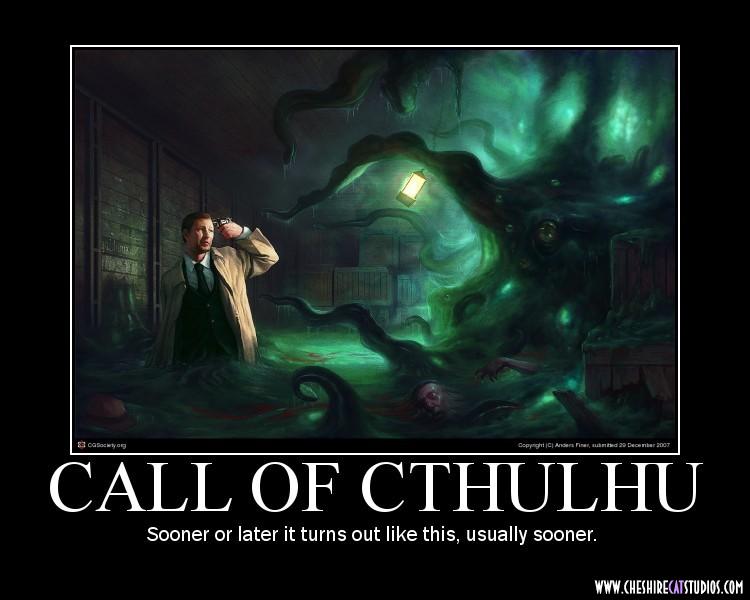
If nothing esle, the article will help you view the poster above from another perspective: what is the meaning of the poster if the creature above symbolizes archetypal fears shared by everyone?

Thoughts?  Comments?

Freud’s View of Fear

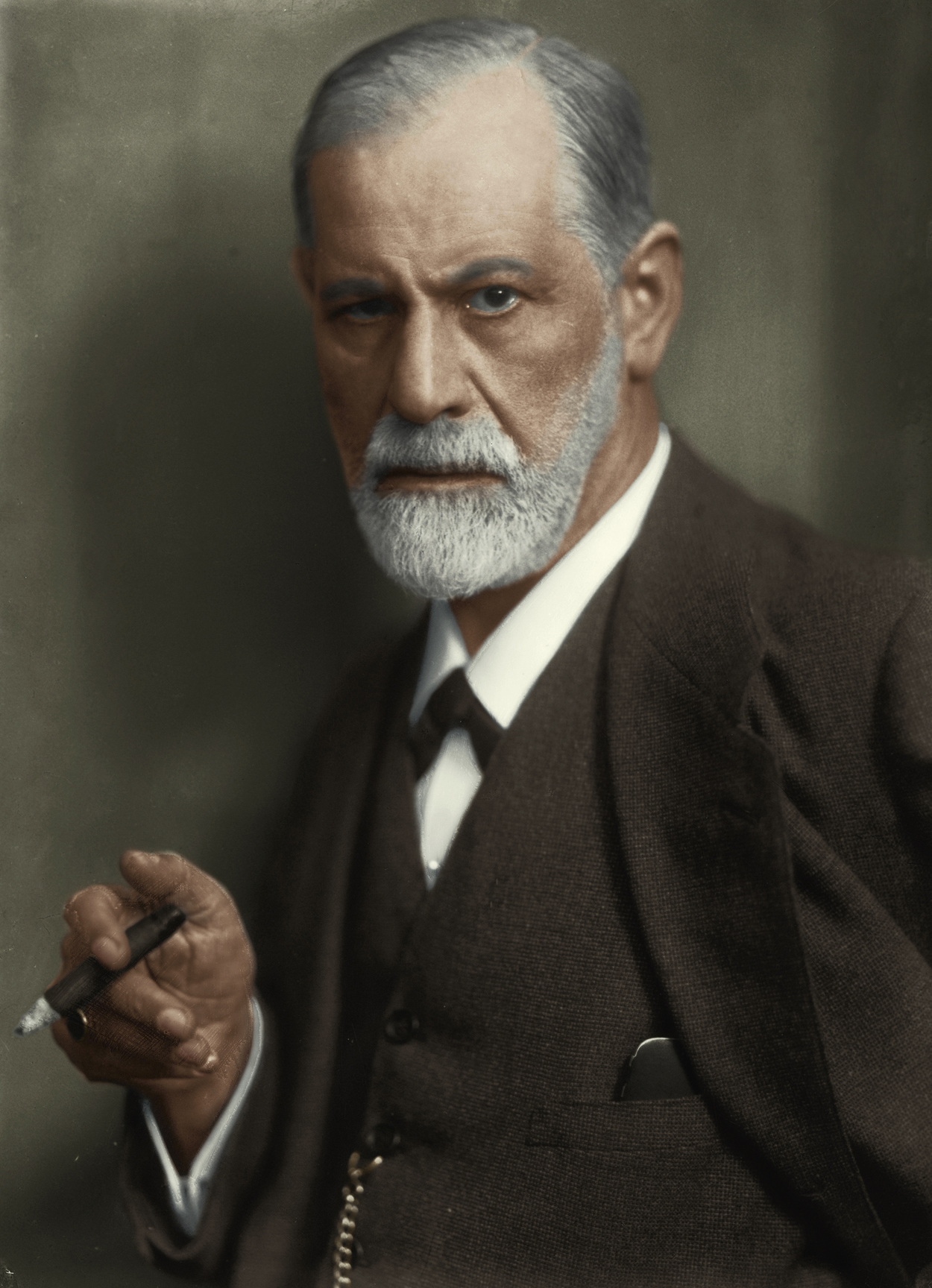
Sigmund FreudIllustration by FlyBit43
Sigmund Freud
Illustration by FlyBit43

While many people can write a horror story, those who have a profound understanding of the emotions associated with horror will have a greater chance of writing a truly great horror story.  With that in mind, as tonight’s post I offer a comment from Dr. C. George Boeree on Freud’s view of fear, which he termed “anxiety”.   This quote is part of a longer articles which can be found at http://webspace.ship.edu/cgboer/freud.html.  I like the quote, because it explains Freud’s concept in a straightforward, simple, clear way that I can grasp easily.   I also like the quote because it gives me three different types of fear to instill in my audience vicariously.  As I have mentioned in previous posts, when someone reads a story, they are experiencing the events of that story vicariously.  As writers of horror, one of the primary emotions we want to instill is fear.   In this short comment, Dr. Boeree provides us with three flavors of fear we can instill in our audiences.

“The ego — the “I” — sits at the center of some pretty powerful forces: reality; society, as represented by the superego; biology, as represented by the id. When these make conflicting demands upon the poor ego, it is understandable if it — if you — feel threatened, feel overwhelmed, feel as if it were about to collapse under the weight of it all. This feeling is called anxiety, and it serves as a signal to the ego that its survival, and with it the survival of the whole organism, is in jeopardy.

“Freud mentions three different kind of anxieties: The first is realistic anxiety, which you and I would call fear. Actually Freud did, too, in German. But his translators thought “fear” too mundane! Nevertheless, if I throw you into a pit of poisonous snakes, you might experience realistic anxiety.

“The second is moral anxiety. This is what we feel when the threat comes not from the outer, physical world, but from the internalized social world of the superego. It is, in fact, just another word for feelings like shame and guilt and the fear of punishment.

“The last is neurotic anxiety. This is the fear of being overwhelmed by impulses from the id. If you have ever felt like you were about to “lose it,” lose control, your temper, your rationality, or even your mind, you have felt neurotic anxiety. Neurotic is actually the Latin word for nervous, so this is nervous anxiety. It is this kind of anxiety that intrigued Freud most, and we usually just call it anxiety, plain and simple.”

Undoubtedly, Jung had his own views of fear, with which I am not familiar, and other psychiatrists have theirs, and Freud’s views may well be outdated, or even proven wrong.  However, if we are to understand the nature of fear, Freud is a good a place to start as any.

Thoughts?  Comments?

St. Patrick’s Day Fun

Bram Stoker1847-1912
Bram Stoker
1847-1912
Joseph Thomas Sheridan Le Fanu1814-1873
Joseph Thomas Sheridan Le Fanu
1814-1873

For St. Patrick’s Day, I thought I would bring up just a couple of tidbits.

First of all, the first two Irish horror authors who spring to mind are Joseph Thomas Sheridan Le Fanu (born at 45 Lower Dominick Street, Dublin, according to Wikipedia) and Bram Stoker (born in Clontarf, north of Dublim (also according to Wikipedia).   Follow the links to my articles on each.

Second, I did a quick search for “Irish horror humor” on Google and found reviews for Grabbers.  I haven’t seen the movie yet myself, but it looks like fun.  I will definitely check it out at my first opportunity and I recommend that you do too.

Third, never drink and blog.  If you have ever seen the movie Sideways starring Paul Giamatti and Thomas Haden Church, you know the dangers of drinking and dialing.  The dangers of drinking and blogging are similar, but on an international scale.   🙂

Conflict or Struggle?

Higuchi Jiro Kanemitsu on a wooded mountainside struggling with a giant Monkey which grips his sword-blade between its teeth. Painting by Utagawa Kuniyoshi, 1798 - 1861
Higuchi Jiro Kanemitsu on a wooded mountainside struggling with a giant Monkey which grips his sword-blade between its teeth. Painting by Utagawa Kuniyoshi, 1798 – 1861


If a work of fiction is to succeed in entertaining its audience, there must be conflict.  As this conflict pertains to the horror genre, it may be best to think of it as a struggle.

I think of a conflict as something that can happen over a very short to a very long period of time and may or may not contain any substantial action.  Conflict is a very broad term and can apply to any work of literature or film.   Conflict can apply to Tracy Chevalier’s mind-numbingly boring novel Girl with Pearl Earring as it can to Clive Barker’s The Hellbound Heart.   Struggle connotates not only a protracted conflict, which is necessary if the work (or anything involving conflict for that matter) is to have any subtantial length.  A boxing match that goes the full fifteen rounds is much more entertaining than one in which one contender is suddenly floored in the first half of the first round.

Struggle connotates action as well, which is as essential for any work of the horror genre as it is to boxing.  In the most entertaining works of horror that come to my mind, the struggle usually begins on or close to the first page and continues on to or close to the last page.  Usually the struggle is between two or more characters, though it can be against inanimate forces (such as surviving a storm) or it can be against inner drives or forces in which the protagonist struggles against himself.

What are your thoughts?  Which term is more suitable for the horror genre:  struggle or conflict?

Shades of Countess Bathory

Elizabeth, Countess Bathory

I confess.  I don’t know how to begin tonight’s article.  It is just so weird that it boggles the mind.

If you are a fan of horror, you may know of Elizabeth, Countess Bathory, the infamous “Blood Countess” and the subject of many books and at least 2-3 movies.   I happen to have a modicum of knowledge about the Countess, because some time back I researched her for a short story for which I am now trying to find a publisher.  The Countess is alleged to have killed perhaps as many as 600 young women in what is now the Czech Republic from about 1604-1610 just to bathe in their blood in order to preserve her beauty.  If you are not familiar with her, just Google “Elizabeth Bathory”.  There are a lot of good articles on her and the one in Wikipedia is a good synopsis of her life.

Fast forward to 2012.

I am sitting at my desk, surfing the net while talking to my mom on the phone, and I come across an article on Yahoo News about Kim Kardashian having a blood facial!

Let me be the first to note that the major difference between the Countess’s and Kim’s blood treatments is that Kim uses her own blood (let me repeat that for the benefit of any unscrupulous lawyers looking for a case:  the Yahoo article states that Kim Kardashian uses her own blood) and not the blood of innocents like the Countess is alleged to have done.

What more can I say?  I could probably write an extensive article just on whether bathing in blood has any actual value as a beauty treatment or whether the charges of bathing in blood put forth by her accusers and detractors have any merit or if it was just a form of black magic practiced by the Countess, but, as fascinating a subject as it is, I unfortunately don’t have the time to pursue it.  Please feel free to conduct your own research though.  I found out some fascinating things during my own and put as many as I could into the aforementioned story.   If and when it is published, I will announce it in this blog.

By the way, one thing I found out about the Countess is that while many people believe the worst about her, there are many who believe that she was innocent. Their opinion tends to be that the vicious stories about her were simply inventions of her enemies to justify their seizing of her land or they were written by gullible historians believing local legends a hundred or more years after her death.  Usually I find the truth of any issue is somewhere between the two extremes of viewpoints.

If you would like an alternate view on the Countess, I would like to recommend a movie entitled “Bathory”, which stars Anna Friel and Karel Roden.  I believe it is a Czech production.  It gives a good, plausible alternative to the legends about the Countess, and in my humble opinion, is probably much closer to the truth than the usual blood-soaked splatterfests you may find.

Horror Humor

From horrorhumor.com

As you have probably surmised by now, occasionally I like to surf the net looking for the humorous side of horror.  Today,  I found a website called appropriately horrorhumor.com.  From what I can see, they have only been up since February of this year and have only a few posts, but if you like the sample above, they are worth checking out.

Thoughts?  Comments?


Thoughts on Speculative Fiction

Lovecraft in the Agony of ContemplationIllustration by MirrorCradle
Lovecraft in the Agony of Contemplation
Illustration by MirrorCradle

As I was driving about town today, I started reflecting on the difference between mainstream, so-to-speak literary fiction and speculative fiction (usually defined as consisting of the science-fiction, fantasy, and horror genres).  I recall reading somewhere, years ago, in the submissions guidelines for a mainstream fiction magazine, that mainstream fiction consisted of whatever did not fit into a genre.  Then, I considered that accurate and reasonable;  now I consider it somewhat snobbish.  In fact, the more I think about it, the more short-sighted and narrow-minded that statement becomes.

Speculative fiction, including the horror genre, deals with fantastic, often surreal, situations.  Mainstream fiction, if you go by the definition above, deals with anything not fantastic, not surreal, i.e. the real, events that could happen in the real world.  It would seem to me that the truly gifted writer would be the one with the greater imagination, the one who can conjure entire civilizations and fantastic creatures out of his mind alone.  My favorite authors for many years have been, and continue to be, Hemingway and Fitzgerald, based on their styles and how their stories can touch me.  However, if had to state who had the greatest imagination out of the history of writers, Tolkien would be at the top, simply because he was able to create an entire world out of his imagination (granted most of the ideas were based in Nordic mythology) and make it and his characters believeable.  Lovecraft and his Cthulhu mythos would be a close second.

Reading the guidelines of horror publications, I find that many of them do not want werewolf/vampire/zombie (w/v/z)stories.  They want something different, original.   That is a difficult challenge.   I could dream up w/v/z stories all day long, but creating something out of thin air, like Stephen King or Clive Barker does,  and to do it consistenly, is truly admirable. I have written one or two stories along the w/v/z line, but now I am taking up the challenge of writing something truly imaginative.    I have no good ideas just yet, but I am examining how horror authors of the past came up with ideas and what were their inspirations.

So now here is a question of the night:  if you are trying to write material outside the w/v/z tradition, how are you coming up with ideas?  Have you put any new slant on horror?  Do your inspirations come from dreams or from looking at real-world object and then allowing yourself to explore the possibities if something about that scene was just a little bit different?

Thoughts?  Comments?