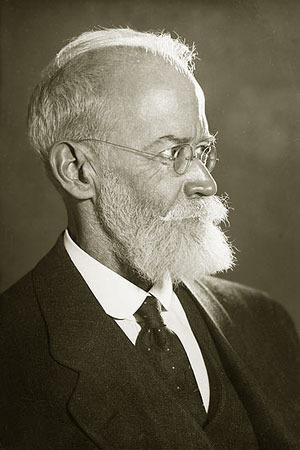
Edward Lucas White

Edward Lucas White 1866-1934
Edward Lucas White
1866-1934

If you have never heard of Edward Lucas White (as I had not until recently), do yourself a favor and look up his short story “Lukundoo” (1925).   This is probably one of the best and most terrifying horror stories I have ever read and it is the story for which White is best known.  Probably his next best known story is “The House of Nightmare” (1906), though it is not nearly as good as ‘Luknudoo” and by today’s standards of horror would be considered more of a quaint tale told by children around a campfire than true horror.  Nonetheless, Lovecraft considered White to be one of the masters of “weird fiction” and mentions him in his treatise “Supernatural Horror in Literature.”

One interesting aspect of White is that he based at least some of his stories on his nightmares, which is not uncommon among horror authors, but after reading “Lukundoo” I had to ask myself, “what was going on in this guy’s psyche?”

Do you base any of your works on dreams or nightmares?   Write in and let us know.

Fascinating Habits of Writers of Horror

GRACIN~2

Some writers have interesting habits.

I have always found one of the most interesting aspects of studying the lives of famous writers to be the personal habits they have while writing.   The habits show the writer’s personal side and perhaps give an insight into how their creativity is ingrained in their natures. Following are some examples of the better known habits of mainstream authors (the few examples I have collected of “horror habits” follow these).

Hemingway said that he, at least in his Paris years, wrote for four hours each day before going to work at the Kansas City Star office, he wrote using pencils and a spiral bound notebook, and he started each days writing by sharpening twenty pencis.

F. Scott Fitzgerald never rewrote anything less than nine times.

Thomas Mann was very disciplined and rose and dressed in a suit each day as if he were going to work at a bank (even though he was going only so far as his living room), started each day at the same time (I think 8:00 a.m.), wrote for four hours, broke for lunch for an hour, wrote for another four hours, and then ended his day, by going back to his bedroom and taking off his suit.

Hunter Thompson and Henry Miller were at the opposite end of the discipline scale and might write for days, then not write again for days or weeks, before going on another binge of writing.  Thompson might write some lines on a napkin while having lunch at a restaurant, then take the napkin and force it through a fax to get the work to his editors at Rolling Stone.

 Here are the tidbits on writing habits by authors of horror.

Thomas Cotterill, another WordPress member, wrote this interesting article on the habits of Stephen King.  I have read elsewhere that Stephen King normally writes a first draft, which he runs past his wife, Tabitha, makes some changes and then sends it out to friends for their inputs, and then writes a final draft, which he sends to the publisher.

I have yet to find anything detailed about Poe’s habits, but I did find this general description on the website of the Edgar Allan Poe Society of Baltimore.

“Edgar A. Poe, one of the Editors of the Broadway Journal. He never rests. There is a small steam-engine in his brain, which not only sets the cerebral mass in motion, but keeps the owner in hot water. His face is a fine one, and well gifted with intellectual beauty. Ideality, with the power of analysis, is shown in his very broad, high and massive forehead — a forehead which would have delighted Gall beyond measure. He would have have [[sic]] made a capital lawyer — not a very good advocate, perhaps, but a famous unraveller of all subtleties. He can thread his way through a labyrinth of absurdities, and pick out the sound thread of sense from the tangled skein with which it is connected. He means to be candid, and labours under the strange hallucination that he is so;  but he has strong prejudices, and, without the least intention of irreverence, would wage war with the Deity, if the divine canons militated against his notions. His sarcasm is subtle and searching. He can do nothing in the common way; and buttons his coat after a fashion peculiarly his own. If we ever caught him doing a thing like any body else, or found him reading a book any other way than upside down, we should implore his friends to send for a straitjacket, and a Bedlam doctor. He were mad, then, to a certtainty.”               — (Thomas Dunn English, “Notes About Men of Note,” The Aristidean, April 1845, p. 153. At this time, Poe and English were still friends, and the tone of this item is happy and jocular. In reviewing this issue of the Aristidean in his own Broadway Journal, for May 3, 1845, Poe comments “. . . the ‘Notes about Men of Note’ are amusing” (BJ, 1845, p. 285, col. 1).)

Dean Koontz says this about his own writing habits on his website:

“I work 10- and 11-hour days because in long sessions I fall away more completely into story and characters than I would in, say, a six-hour day. On good days, I might wind up with five or six pages of finished work; on bad days, a third of a page. Even five or six is not a high rate of production for a 10- or 11-hour day, but there are more good days than bad. And the secret is doing it day after day, committing to it and avoiding distractions. A month–perhaps 22 to 25 work days–goes by and, as a slow drip of water can fill a huge cauldron in a month, so you discover that you have 75 polished pages. The process is slow, but that’s a good thing. Because I don’t do a quick first draft and then revise it, I have plenty of time to let the subconscious work; therefore, I am led to surprise after surprise that enriches story and deepens character. I have a low boredom threshold, and in part I suspect I fell into this method of working in order to keep myself mystified about the direction of the piece–and therefore entertained. A very long novel, like FROM THE CORNER OF HIS EYE can take a year. A book like THE GOOD GUY, six months.”

Here is an interesting interview by M.R. Hunter with Richard Matheson in Lastheplace.com.  Apparently, Mr. Matheson does not have a computer, but writes everything in longhand and then has it typed up.

I have yet to find anything on Lovecraft’s writing habits, but here is a link to HPLovecraft.com that details his personal interests including his unusual dietary habits.

Lord Dunsany had the most eccentric habits of which I have heard.  The Wikipedia article on Lord Dunsany states:

“Dunsany’s writing habits were considered peculiar by some. Lady Beatrice said that “He always sat on a crumpled old hat while composing his tales.” (The hat was eventually stolen by a visitor to Dunsany Castle.) Dunsany almost never rewrote anything; everything he ever published was a first draft.[7] Much of his work was penned with quill pens, which he made himself; Lady Beatrice was usually the first to see the writings, and would help type them. It has been said that Lord Dunsany would sometimes conceive stories while hunting, and would return to the Castle and draw in his family and servants to re-enact his visions before he set them on paper.[citation needed]”

If you know of a source for information on the work habits of one or more horror writers, please share it.   If you are searching for a topic of an article to write, I would like to suggest writing on the work habits (or interests) of horror writers.  It would be fascinating to see if there is a common thread among them or if they vary from the habits of mainstream authors.  For example, I have found out that Algernon Blackwood, Arthur Machen, and Bram Stoker were members of the Hermetic Order of the Golden Dawn.

Anyway, I am now officially rambling.

If you have any thoughts or comments on this article, please share them.

Who influenced Edgar Allan Poe?

Edgar Allan Poe, circa 1849

Over the last couple of hours I have been wandering the Internet, searching for interesting tidbits about writers of horror to post on my blog.  I have been noting how Algernon Blackwood, Arthur Machen, Lord Dunsany, and M.R. James and a host of others influenced Lovecraft, who in turn influenced Stephen King along with generations of writers and film producers, and how Poe influenced them all.  Of course, the next question that came to me was “who influenced Poe?”

I did a quick, cursory search of the Internet and found no good answer.   A few speculated that he was influenced by the events of his life (duh, aren’t we all?), while a few others speculated that he was influenced by other prominent authors of his time (again:  duh, aren’t we all).   No one I found yet seems to be able to cite Poe’s influences like they can of Lovecraft, King, or others.

Does anyone know of a reliable source that cites the authors that Poe read?

Addendum:

(February 17, 2013) Here is the beginning of an answer to my question.  Follow this link to the article “The Influence of E.T.A. Hoffmann on the Tales of Edgar Allan Poe” by Palmer Cobb, in Volume III of Studies in Philology, The University Press, Chapel Hill, 1908.

Algernon Blackwood

Blackwood by Ianus

Algernon Blackwood

Illustration by Ianus

Algernon Blackwood (1869-1951) was a prolific writer and is probably one of the forgotten masters of the horror genre.  He was a favorite of H.P. Lovecraft as the three quotes below (from www.hplovecraft.com) illustrate:

“Aside from Poe, I think Algernon Blackwood touches me most closely—& this in spite of the oceans of unrelieved puerility which he so frequently pours forth. I am dogmatic enough to call The Willows the finest weird story I have ever read, & I find in the Incredible Adventures & John Silence material a serious & sympathetic understanding of the human illusion-weaving process which makes Blackwood rate far higher as a creative artist than many another craftsman of mountainously superior word-mastery & general technical ability…” (to Vincent Starrett, 6 December 1927)

“He actually analyses and reproduces faithfully the details of the persistent human illusion of—and out-reaching toward—a misty world of vari-coloured wonders, transcended natural laws, limitless possibilities, delighted discoveries, and ceaseless adventurous expentancy…. Of all Blackwood’s voluminous output, only a golden minimum represents him at his best—but that is such a marvellous best that we can well forgive him all his slush and prattle. It is my firm opinion that his longish short story The Willows is the greatest weird tale ever written. (with Machen’s The White People as a good second.) Little is said—everything is suggested!” (to Fritz Leiber, 9 November 1936)

“It is safe to say that Blackwood is the greatest living weirdist despite unevenness and a poor prose style.” (to Willis Conover, 10 January 1937)

Blackwood pursued a variety of jobs and careers during his lifetime, but based on the current Wikipedia article about him, his two main passions seem to have been writing and mysticism.  According to this article, Blackwood once wrote to Peter Penzoldt:

“My fundamental interest, I suppose, is signs and proofs of other powers that lie hidden in us all; the extension, in other words, of human faculty. So many of my stories, therefore, deal with extension of consciousness; speculative and imaginative treatment of possibilities outside our normal range of consciousness. … Also, all that happens in our universe is natural; under Law; but an extension of our so limited normal consciousness can reveal new, extra-ordinary powers etc., and the word “supernatural” seems the best word for treating these in fiction. I believe it possible for our consciousness to change and grow, and that with this change we may become aware of a new universe. A “change” in consciousness, in its type, I mean, is something more than a mere extension of what we already possess and know.”

His two best known stories are The Willows and The Wendigo.  I have not read The Wendigo yet, but I started The Willows two days ago and am into Chapter II currently.  So far, it is very well written with a beautiful description of a canoe trip down the Danube.  Towards the end of Chapter I, Blackwood begins to slowly bring out some eerie aspects of an island on which the narrator and his Swedish traveling companion have pitched camp for the night.  With the beginning of Chapter II, the supernatural element begins to build ominously in a way that somehow reminds me of Mussorgsky’s symphony “Night on Bald Mountain”.  If you are familiar with Mussorgsky’s opus, you know how I suspect the story will develop.    I look forward to finishing The Willows as soon as possible and beginning The Wendigo shortly thereafter.

Thoughts?  Comments?

Okay…just one more addendum to German Horror

Skinner

I saw another really cool post on the photos of the German Horror Writers Circle that I just had to share.   The book cover above is of the novel “Meeting with Skinner” by Harald A. Weissen posted on Facebook on May 7, 2010.  The accompanying summary reads:

“Imagine, that everything great that has occurred in the world since the beginning of time has been steered from a control room – discoveries, wars, political reversals, poverty, and prosperity.

Imagine that a single person has been sitting in this control room for several decades and the fortunes of the human collective has been influenced at his own discretion.

Imagine that the next person in this room is crazy.

The search for the control room draws together a traumatised young woman by the name of Laika, Elendes Biest, and Skinner , the last illusionist.”

I just think it’s an awesome post and a fascinating concept.  The artwork is great too.

Thoughts?  Comments?


Addendum to Post on German Horror

Die Schattenuhr

I have been exploring German horror on the web since my last post, particularly the photos of the German Horror Writers Circle on Facebook, where I found this really beautiful, really cool cover that I just had to share.  The post is by Nina Horvath and says “Cover zu ‘Die Schattenuhr’, erstellt von Mark Freier nach einem Werk von Zdzisław Beksiński” (Cover to ‘The Clock of Shadows’, published by Mark Freier after a work by Zdzisław Beksiński).  At the very top of the page, “Die Bizarre Welt des Edgar Allen Poe” translates to “The Bizarre World of Edgar Allen Poe”.  One thing I have already learned about horror in Germany is that American horror is very popular over there–in particular Lovecraft and Poe.

German Horror (Deutsche Horrorfilme und Horrorliteratur)

I was checking my blog stats today and found out that two recent views came from Germany.    I was a German major in college and therefore I begin to be curious about what is happening today in the horror genre for both German movies and literature, since I unfortunately know little about either.

I did a quick search on Google for “German horror” and found this interesting article on IMDb.  I did another search for “German horror fiction” and “German horror literature” and found almost nothing of interest.  I searched for “German horror writers” and found the German Horror Writers Circle on Facebook, which I might use as a starting point for further investigations.   Later, I may search in German, but today I confined my inquiries to what is available in English due to a lack of time inflicted by other pressing matters.

I have to admit I have read very little modern German literature compared to German lit of the 19th century, that I am woefully unfamiliar with most modern German writers, and  that I am completely unfamiliar with modern German horror writers.  I know that in the distant past, Germany and other German-speaking lands have produced excellent writers of horror such as E.T.A. Hoffmann (see my post about Hoffmann) and Jeremias Gotthelf (“The Black Spider”, 1842).    Given the dearth of information readily available on modern German horror (at least on Google), I think the IMDb article mentioned above may have a point that because of German history since 1933, Germany may have (understandably) lost its taste for horror.   I find that unfortunate, because now that my curiosity about German horror has been aroused, I would love to read some first-rate German horror or at least see one or two first-rate German horror films from the last decade or two.

Therefore, my question for you in this blog is:  if you are familiar with German horror, what films or books do you recommend as introductions to the world of German horror?

George Romero on Horror

George_Romero,_66ème_Festiv

George Romero

Photo by Nicolas Genin

I found the following interesting quote at TheCabinet.com: 

“I’ve always felt that the real horror is next door to us, that the scariest monsters are our neighbors.”  –George Romero

I don’t think the scariest monsters are our neighbors, but what is scary is that our neighbors might be monsters.

What do you think?


My Short Story “Dream Warrior” Has Been Published

The_Dream_Warrior_150_dpi-600x383

Illustration by Marge Simon

My short story “Dream Warrior” has been published in the February-April issue of Sorcerous Signals.  Please check it out via the link above and explore the rest of the magazine as well.   Please note that currently a typo in the contents page mistakenly identifies this issue as the Nov.-Jan issue.  

“Dream Warrior” will also appear in Sorcerous Signals’  print edition Mystic Signals.  Please look for Mystic Signals at your local newstand or bookstore.

The wonderful illustration above was drawn by artist Marge Simon of the Sorcerous Signals staff for “Dream Warrior”.   Please read the story to understand the significance of the jaguar and the sun. 

I am very appreciative to the Sorcerous Signals staff for all they have done and especially to editor Carol Hightshoe for her patience, professionalism, and diligence.

Joseph Thomas Sheridan Le Fanu

LeFanu

Joseph Thomas Sheridan Le Fanu

1814-1873

Over lunch, I was reading the Wikipedia article on horror fiction and came across a reference to Joseph Thomas Sheridan Le Fanu, of whom I had never heard.   I went to the article and found out some interesting things (granted, Wikipedia is not the most respected source, but if even half of this article is accurate, Le Fanu bears some investigating by avid horror aficionados).

Le Fanu was a respected writer of ghost stories and Gothic tales in the 19th century.   I read his “The Ghost and the Bonesetter” (1838), which Wikipedia describes as “his first-published and jocular story”.   For our generation, this is more humor than horror, but Le Fanu’s talent is patently obvious from this work.  I look forward to reading more.

It fascinates me that, as well-read as I am, I have never heard of Le Fanu, but then I have only recently begun to delve into the horror genre to any great degree.   Based on the Wikipedia article, he was very well-known in his time and influenced 19th and 20th century writers such as M.R. James, Bram Stoker, and James Joyce.   His best known works are the vampire novella Carmilla and The Purcell Papers (a collection of short stories).   Apparently, he has also had something of an influence on modern cinema, with movies still being made of his work occasionally (Le Fanu’s mystery novel “Uncle Silas” was made into a movie in 1947, and then remade, starring Peter O’Toole, as The Dark Angel in 1987).

Here is a paragraph from the Wikipedia article to whet your appetite for further investigation  of his work:

“Le Fanu worked in many genres but remains best known for his mystery and horror fiction. He was a meticulous craftsman and frequently reworked plots and ideas from his earlier writing in subsequent pieces. Many of his novels, for example, are expansions and refinements of earlier short stories. He specialised in tone and effect rather than “shock horror”, and liked to leave important details unexplained and mysterious. He avoided overt supernatural effects: in most of his major works, the supernatural is strongly implied but a “natural” explanation is also possible. The demonic monkey in “Green Tea” could be a delusion of the story’s protagonist, who is the only person to see it; in “The Familiar”, Captain Barton’s death seems to be supernatural, but is not actually witnessed, and the ghostly owl may be a real bird. This technique influenced later horror artists, both in print and on film (see, for example, the film producer Val Lewton‘s principle of “indirect horror”). Though other writers have since chosen less subtle techniques, Le Fanu’s best tales, such as the vampire novella “Carmilla“, remain some of the most powerful in the genre. He had enormous influence on the 20th century’s most important ghost story writer, M. R. James, and although his work fell out of favour in the early part of the 20th century, towards the end of the century interest in his work increased and remains comparatively strong.[1]

Thoughts?  Comments?

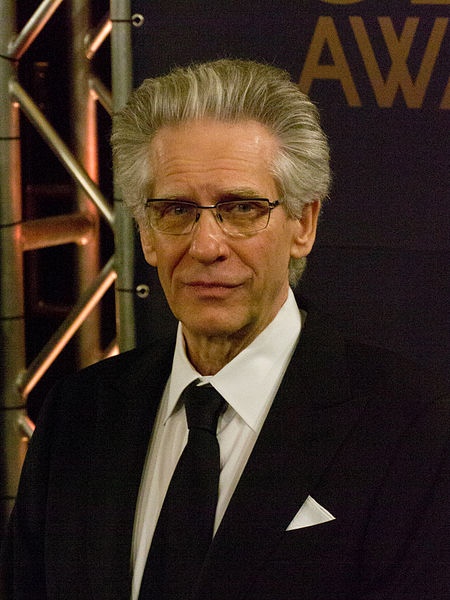
David Cronenberg on Art and Horror

450px-David_Cronenberg_-200

David Cronenberg, 2012

Photo by Alan Langford

“I think of horror films as art, as films of confrontation.  Films that make you confront aspects of your own life that are difficult to face.  Just because you’re making a horror film doesn’t mean you can’t make an artful film.”  

–David Cronenberg

I found the quote above at Quotationsbook.com.   I have linked David Cronenberg’s name to the Internet Movie Database for those of you not familiar with his works as a director of horror movies (The Fly, Scanners, etc.)

I think the statement is important for two reasons.

First, as I mentioned in my post on Carl Jung and the Creative Subconscious, authors do put something of themselves into their work.   Personally, I had never recognized this about my own writing until I had the conversation I described in my post, though I had always known that each work of art is a reflection of the artist in some way.   Therefore, up to that point, I cannot say I consciously confronted anything about myself.   Since then, though I do not intentionally orient my stories toward self-revelation, I do occasionally recognize some internal bone of contention in a way that could probably best be described as “confrontation”.    Writing then becomes a process of self-awareness, of self-knowledge, a type of self-therapy.

More importantly that the author’s own self-therapy, once these works are published, they become a sort of self-awarenes and therapy for the audience who can relate to them.   We are all human; we all have the same basic drives and desires.   If one individual experiences an internal confrontation, then many others have likely experienced it as well (perhaps this is the mechanism behnd living vicariously).   Then the process of confrontation and self-awareness for the author becomes a process of confrontation and self-awareness for his audience as well–whether on a conscious or subconscious level.   Then the horror genre  becomes  a form of self-therapy for society so that society can confront its dark side while experiencing our suppressed primal natures (as I mentioned in an earlier post).

The second important point about this statement is alluded to in the final sentence, that just because one is making a horror film, doesn’t mean one can’t make an artful film.   On its surface, this is obviously true.   There is no reason anyone cannot make a horror film with the same artistic feeling as David McLean did in Lawrence of Arabia or Stanley Kubrick did in 2001:  A Space Odyssey.    But beneath this surface lies another point.  In the first two sentences, Mr. Cronenberg defines horror films as films of self-confrontation.  In the last sentence he equates horror films with artful films.   He is equating artful films with being films of self-confrontation.   A=B=C.   Art equating to self-confrontation could easily be the subject of a thesis, if not of an exceptionally thick textbook.    Therefore, in my limited time and space available I will not even begin to delve into it here.  Please explore it on your own, however.  I think it would be a fascinating venture.

Any thoughts or comments?

Ginsberg’s Breath Units

Allen_Ginsberg_1978 by Ludwig Urning

Allen Ginsberg, 1978

Photo by Ludwig Urning

I saw the best minds of my generation destroyed by madness, starving hysterical naked,

dragging themselves through the negro streets at dawn looking for an angry fix,

Angel-headed hipsters burning for the ancient heavenly connection

to the starry dynamo in the machinery of night…

So run the opening lines of Allen Ginsberg’s “Howl, considered by many to be one greatest works of American literature.   One aspect of the poem that has always fascinated me is that Ginsberg wrote it in what are often called “breath units”, i.e. each line comprises the amount of words that should be spoken with one breath.   I have experimented with breath units or something similar in both prose and poetry.   One example is my poem “Faust“, which was published by the Hollins Critic in 1992.

I have found that when used in prose, breath units can be effective in breaking up rhythm in order to emphasize a point.   For example,  imagine a sentence as equivalent to a breath unit.  Write a very long sentence and try saying it in one breath.  It is as if you are trying to say something in a hurry.  Use that long sentence to describe fast-moving but extended action, such as a martial arts masters exchanging blows in a match.  To me, it seems as if I am in the fight while trying to describe it.  Now use three to four of these sentences to describe the entire match.  Then use a very short, indicative sentence to describe the final blow dropping the defeated master to the mat.

Here is an example of the use of my use of breath units in my story “A Tale of Hell” (published by Midnighttimes.com in 2006).  Note that here I start with two short sentences, then follow them with three long sentences, and then conclude with one short one for emphasis.

He wanted to make love. He did not want just sex. He was not interested in his own orgasm as much as he felt an overpowering desire for the smooth texture of Theresa’s skin; the velvety brush of her nipples across his face; the sight of the light playing upon the delicate, minute hair covering the back of her neck; the tickle of her breath as it flowed around the contours of his ear. Above all else, he wanted to hear her voice, that voice that sometimes changed into a shrill nag when he wasn’t paying attention to what she said, or when he forgot to pick up something at the store, or when he neglected to call and tell her he would be late for supper.  Now it dawned on him: over the years she had put up with a lot more crap than she should have. He wanted to apologize.

I have no doubt there are other technical names for this technique when used in prose, but I do not know them.   It is a technique  use occasionally.   To my mind, prose breath units should be used sparingly or they lose their impact.   I think they have a great potential in horror literature if used properly, because they can lead a reader very fast to a point that is suddenly emphasized by an unexpectedly abrupt hall–sort of like sprinting around a corner only to run face first into a brick wall.

So, I guess the question for tonight is:  are you familiar with this technique and do you know it by another name?

By the way, I had never thought of it before, but isn’t that first line of “Howl” very much in the horror vein?  I am wondering if “Howl” couldn’t be used as an example of horror in many ways, though it was almost certainly never intended to be viewed as a work of horror.


Carl Jung and the Creative Subconscious

Carl_Jung_(1912)

Carl Gustav Jung, 1912

Someone told me recently that the pyschologist Carl Jung believed the work reveals something about the author.  We discussed this idea for a few minutes before it hit home in a very scary fashion, because we were discussing my works of horror.  I realized that at least sometimes my own subconscious fears may influence, if not determine, the course of my stories.  Storylines reflecting the subconscious fears of the author makes a lot of sense, because, to my mind at least, dreams and nightmares also originate in and reflect the undercurrents of the subconscious.

So, what do you think?   Is the subconscious wellspring responsible for the creation of dreams the same one responsible for creative works?  What does this say about authors like Yann Martel who wrote “Life of Pi”?   What does it say about authors like Clive Barker and H.P. Lovecraft and even myself?

While we are at it, here are three quotes from Jung to provide additional food for thought.  What do they say about writers of horror?   I found them at The Painter’s Keys:  Art Quotes from Carl Gustav Jung.

“Often the hands will solve a mystery that the intellect has struggled with in vain.”

“The secret of artistic creation and the effectiveness of art is to be found in a return to the state of ‘participation mystique’ – to that level of experience at which it is man who lives, and not the individual…”

“The creation of something new is not accomplished by the intellect but by the play instinct acting from inner necessity. The creative mind plays with the objects it loves.”

“The Terror” from the Wen Fu

Here is an interesting section/stanza from the ancient Chinese work Wen Fu (The Art of Writing).  It is entitled “The Terror”.

I worry that my ink well will run dry, that right words cannot be found ; I want to respond to the moment’s inspiration.

I work with what is given ; that which passes cannot be detained.

Things move into shadows & they vanish ; things return in the shape of an echo.

When Spring arrives, we understand that Nature has its own reason.

Thoughts are lifted from the heart on breezes, and language finds its speaker.

Yesterday’s buds are this morning’s blossoms which we draw with a brush on silk.

Every eye knows a pattern, every ear hears a distant music.

Wen Fu was written by Lu Chi (261 AD – 300 AD), who was a scholar, a military leader, and the the Literary Secretary in the the Emperor’s court.  It is very short and may take an average reader 15-20 minutes to complete.  The hardcopy  translation I have was written by Sam Hamill and published by Breitenbush Books in 1987.   A far more poetic version can be found at http://web.mnstate.edu/gracyk/courses/web%20publishing/LuChi.htm.

I like to peruse Wen Fu occasionally, because the language is simple yet mystical while the ideas are straightforward yet metaphorical.   What fascinates me most about the work is that the principles it expresses are eternal and universal.   The underlying principles that guided Lu Chi’s art are the same ones that underlie ours nearly two thousand years later and in a society (and language!) that would have been completely alien to Lu Chi.  What’s more, Lu Chi describes the experience of writing from a very intimate standpoint to which any author who is passionate about his art could relate.

What are your thoughts?  What principles of writing are eternal and universal?  What do you see in the stanza above?

“Dream Warrior” to be Published

My short story “Dream Warrior” is currently slated to be published by the online magazine Sorcerous Signals  in their February, 2013 issue as well as their February, 2013 issue of Mystic Signals (a print edition combining Sorcerous Signals and The Lorelei Signal).

For my friends and relatives not familiar with the publishing industry:  please be advised that the story is only scheduled to be published in February and that I do not have an exact date yet.   The last edition was published on November 12, therefore it will probably be published about mid-February.  In my experience, stories appear on schedule about 90% of the time.   Occasionally, something happens and the story has to be delayed, but (again, in my experience) the story always appears.

I would like to thank the editor of Sorcerous Signals, Carol Hightshoe, for accepting my work.  I overlooked her letter of acceptance in my e-mail in October and was not aware of “Dream Warrior’s” acceptance until she diligently and professionally followed up and inquired about the story some time later.

The story is about a teenage boy in Corpus Christi, TX, who seeks revenge on the hoodlums responsible for the rape and death of his girlfriend.   After his first attempt fails and they threaten his life, he runs to Mexico to live with his great-grandfather, who teaches him the ways of the ancient Aztec sorcerers so that he can have his revenge.

I got the idea for the story while researching south Texas history for another (as yet unfinished) story and came across a website on Aztec sorcery.  Its author, whose name unfortunately escapes me at the moment, graciously responded to my inquiries and provided me with a wealth of fascinating information.  If I can find his name and website in my e-mails, I will publish them later.

I hope everyone enjoys “Dream Warrior”.    Please help me thank Carol and her staff by visiting the site often and encouraging everyone you know to do the same.   Check your local media outlets for Mystic Signals.