
 Source: Black Creators in Horror Comics
Tag: writing
Walking in Lovecraft’s Shadow
 Source: Walking in Lovecraft’s Shadow
The Saturday Night Special: “The Facts in the Case of M. Valdemar” by E.A. Poe (1845)
OF course I shall not pretend to consider it any matter for wonder, that the extraordinary case of M. Valdemar has excited discussion. It would have been a miracle had it not — especially under the circumstances. Through the desire of all parties concerned, to keep the affair from the public, at least for the present, or until we had farther opportunities for investigation — through our endeavors to effect this — a garbled or exaggerated account made its way into society, and became the source of many unpleasant misrepresentations; and, very naturally, of a great deal of disbelief.
It is now rendered necessary that I give the facts — as far as I comprehend them myself. They are, succinctly, these:
My attention, for the last three years, had been repeatedly drawn to the subject of Mesmerism; and, about nine months ago, it occurred to me, quite suddenly, that in the series of experiments made hitherto, there had been a very remarkable and most unaccountable omission: — no person had as yet been mesmerized in articulo mortis. It remained to be seen, first, whether, in such condition, there existed in the patient any susceptibility to the magnetic influence; secondly, whether, if any existed, it was impaired or increased by the condition; thirdly, to what extent, or for how long a period, the encroachments of Death might be arrested by the process. There were other points to be ascertained, but these most excited my curiosity — the last in especial, from the immensely important character of its consequences.
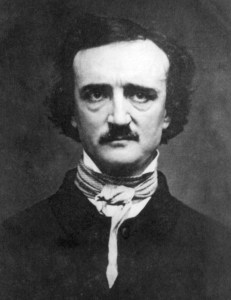
In looking around me for some subject by whose means I might test these particulars, I was brought to think of my friend, M. Ernest Valdemar, the well-known compiler of the “Bibliotheca Forensica,” and author (under the nom de plume of Issachar Marx) of the Polish versions of “Wallenstein” and “Gargantua.” M. Valdemar, who has resided principally at Harlem, N. Y., since the year 1839, is (or was) particularly noticeable for the extreme spareness of his person — his lower limbs much resembling those of John Randolph; and, also, for the whiteness of his whiskers, in violent contrast to the blackness of his hair — the latter, in consequence, being very generally mistaken for a wig. His temperament was markedly nervous, and rendered him a good subject for mesmeric experiment. On two or three occasions I had put him to sleep with little difficulty, but was disappointed in other results which his peculiar constitution had naturally led me to anticipate. His will was at no period positively, or thoroughly, under my control, and in regard to clairvoyance, I could accomplish with him nothing to be relied upon. I always attributed my failure at these points to the disordered state of his health. For some months previous to my becoming acquainted with him, his physicians had declared him in a confirmed phthisis. It was his custom, indeed, to speak calmly of his approaching dissolution, as of a matter neither to be avoided nor regretted.
When the ideas to which I have alluded first occurred to me, it was of course very natural that I should think of M. Valdemar. I knew the steady philosophy of the man too well to apprehend any scruples from him; and he had no relatives in America who would be likely to interfere. I spoke to him frankly upon the subject; and, to my surprise, his interest seemed vividly excited. I say to my surprise; for, although he had always yielded his person freely to my experiments, he had never before given me any tokens of sympathy with what I did. His disease was of that character which would admit of exact calculation in respect to the epoch of its termination in death; and it was finally arranged between us that he would send for me about twenty-four hours before the period announced by his physicians as that of his decease.
It is now rather more than seven months since I received, from M. Valdemar himself, the subjoined note:
“MY DEAR P——,
“You may as well come now. D—— and F—— are agreed that I cannot hold out beyond to-morrow midnight; and I think they have hit the time very nearly.
“VALDEMAR.”
I received this note within half an hour after it was written, and in fifteen minutes more I was in the dying man’s chamber. I had not seen him for ten days, and was appalled by the fearful alteration which the brief interval had wrought in him. His face wore a leaden hue; the eyes were utterly lustreless; and the emaciation was so extreme, that the skin had been broken through by the cheek-bones. His expectoration was excessive. The pulse was barely perceptible. He retained, nevertheless, in a very remarkable manner, both his mental power and a certain degree of physical strength. He spoke with distinctness — took some palliative medicines without aid — and, when I entered the room, was occupied in penciling memoranda in a pocket-book. He was propped up in the bed by pillows. Doctors D—— and F—— were in attendance.
After pressing Valdemar’s hand, I took these gentlemen aside, and obtained from them a minute account of the patient’s condition. The left lung had been for eighteen months in a semi-osseous or cartilaginous state, and was, of course, entirely useless for all purposes of vitality. The right, in its upper portion, was also partially, if not thoroughly, ossified, while the lower region was merely a mass of purulent tubercles, running one into another. Several extensive perforations existed; and, at one point, permanent adhesion to the ribs had taken place. These appearances in the right lobe were of comparatively recent date. The ossification had proceeded with very unusual rapidity; no sign of it had been discovered a month before, and the adhesion had only been observed during the three previous days. Independently of the phthisis, the patient was suspected of aneurism of the aorta; but on this point the osseous symptoms rendered an exact diagnosis impossible. It was the opinion of both physicians that M. Valdemar would die about midnight on the morrow (Sunday.) It was then seven o’clock on Saturday evening.
On quitting the invalid’s bed-side to hold conversation with myself, Doctors D—— and F —— had bidden him a final farewell. It had not been their intention to return; but, at my request, they agreed to look in upon the patient about ten the next night.
When they had gone, I spoke freely with M. Valdemar on the subject of his approaching dissolution, as well as, more particularly, of the experiment proposed. He still professed himself quite willing and even anxious to have it made, and urged me to commence it at once. A male and a female nurse were in attendance; but I did not feel myself altogether at liberty to engage in a task of this character with no more reliable witnesses than these people, in case of sudden accident, might prove. I therefore postponed operations until about eight the next night, when the arrival of a medical student, with whom I had some acquaintance, (Mr. Theodore L —— l,) relieved me from farther embarrassment. It had been my design, originally, to wait for the physicians; but I was induced to proceed, first, by the urgent entreaties of M. Valdemar, and secondly, by my conviction that I had not a moment to lose, as he was evidently sinking fast.
Mr. L —— l was so kind as to accede to my desire that he would take notes of all that occurred; and it is from his memoranda that what I now have to relate is, for the most part, either condensed or copied verbatim.
It wanted about five minutes of eight when, taking the patient’s hand, I begged him to state, as distinctly as he could, to Mr. L —— l, whether he (M. Valdemar,) was entirely willing that I should make the experiment of mesmerizing him in his then condition.
He replied feebly, yet quite audibly, “Yes, I wish to be mesmerized” — adding immediately afterwards, “I fear you have deferred it too long.”
While he spoke thus, I commenced the passes which I had already found most effectual in subduing him. He was evidently influenced with the first lateral stroke of my hand across his forehead; but although I exerted all my powers, no farther perceptible effect was induced until some minutes after ten o’clock, when Doctors D—— and F—— called, according to appointment. I explained to them, in a few words, what I designed, and as they opposed no objection, saying that the patient was already in the death agony, I proceeded without hesitation — exchanging, however, the lateral passes for downward ones, and directing my gaze entirely into the right eye of the sufferer.
By this time his pulse was imperceptible and his breathing was stertorious, and at intervals of half a minute.
This condition was nearly unaltered for a quarter of an hour. At the expiration of this period, however, a natural although a very deep sigh escaped the bosom of the dying man, and the stertorious breathing ceased — that is to say, its stertoriousness was no longer apparent; the intervals were undiminished. The patient’s extremities were of an icy coldness.
At five minutes before eleven, I perceived unequivocal signs of the mesmeric influence. The glassy roll of the eye was changed for that expression of uneasy inward examination which is never seen except in cases of sleep-waking, and which it is quite impossible to mistake. With a few rapid lateral passes I made the lids quiver, as in incipient sleep, and with a few more I closed them altogether. I was not satisfied, however, with this, but continued the manipulations vigorously, and with the fullest exertion of the will, until I had completely stiffened the limbs of the slumberer, after placing them in a seemingly easy position. The legs were at full length; the arms were nearly so, and reposed on the bed at a moderate distance from the loins. The head was very slightly elevated.
When I had accomplished this, it was fully midnight, and I requested the gentlemen present to examine M. Valdemar’s condition. After a few experiments, they admitted him to be in an unusually perfect state of mesmeric trance. The curiosity of both the physicians was greatly excited. Dr. D—— resolved at once to remain with the patient all night, while Dr. F—— took leave with a promise to return at daybreak. Mr. L —— l and the nurses remained.
We left M. Valdemar entirely undisturbed until about three o’clock in the morning, when I approached him and found him in precisely the same condition as when Dr. F—— went away — that is to say, he lay in the same position; the pulse was imperceptible; the breathing was gentle (scarcely noticeable, unless through the application of a mirror to the lips;) the eyes were closed naturally; and the limbs were as rigid and as cold as marble. Still, the general appearance was certainly not that of death.
As I approached M. Valdemar I made a kind of half effort to influence his right arm into pursuit of my own, as I passed the latter gently to and fro above his person. In such experiments with this patient, I had never perfectly succeeded before, and assuredly I had little thought of succeeding now; but to my astonishment, his arm very readily, although feebly, followed every direction I assigned it with mine. I determined to hazard a few words of conversation.
“M. Valdemar,” I said, “are you asleep?” He made no answer, but I perceived a tremor about the lips, and was thus induced to repeat the question, again and again. At its third repetition, his whole frame was agitated by a very slight shivering; the eye-lids unclosed themselves so far as to display a white line of a ball; the lips moved sluggishly, and from between them, in a barely audible whisper, issued the words:
“Yes; — asleep now. Do not wake me! — let me die so!”
I here felt the limbs and found them as rigid as ever. The right arm, as before, obeyed the direction of my hand. I questioned the sleep-waker again:
“Do you still feel pain in the breast, M. Valdemar?”
The answer now was immediate, but even less audible than before:
“No pain — I am dying.”
I did not think it advisable to disturb him farther just then, and nothing more was said or done until the arrival of Dr. F—— , who came a little before sunrise, and expressed unbounded astonishment at finding the patient still alive. After feeling the pulse and applying a mirror to the lips, he requested me to speak to the sleep-waker again. I did so, saying:
“M. Valdemar, do you still sleep?”
As before, some minutes elapsed ere a reply was made; and during the interval the dying man seemed to be collecting his energies to speak. At my fourth repetition of the question, he said very faintly, almost inaudibly:
“Yes; still asleep — dying.”
It was now the opinion, or rather the wish, of the physicians, that M. Valdemar should be suffered to remain undisturbed in his present apparently tranquil condition, until death should supervene — and this, it was generally agreed, must now take place within a few minutes. I concluded, however, to speak to him once more, and merely repeated my previous question.
While I spoke, there came a marked change over the countenance of the sleep-waker. The eyes rolled themselves slowly open, the pupils disappearing upwardly; the skin generally assumed a cadaverous hue, resembling not so much parchment as white paper; and the circular hectic spots which, hitherto, had been strongly defined in the centre of each cheek, went out at once. I use this expression, because the suddenness of their departure put me in mind of nothing so much as the extinguishment of a candle by a puff of the breath. The upper lip, at the same time, writhed itself away from the teeth, which it had previously covered completely; while the lower jaw fell with an audible jerk, leaving the mouth widely extended, and disclosing in full view the swollen and blackened tongue. I presume that no member of the party then present had been unaccustomed to death-bed horrors; but so hideous beyond conception was the appearance of M. Valdemar at this moment, that there was a general shrinking back from the region of the bed.
I now feel that I have reached a point of this narrative at which every reader will be startled into positive disbelief. It is my business, however, simply to proceed.
There was no longer the faintest sign of vitality in M. Valdemar; and concluding him to be dead, we were consigning him to the charge of the nurses, when a strong vibratory motion was observable in the tongue. This continued for perhaps a minute. At the expiration of this period, there issued from the distended and motionless jaws a voice — such as it would be madness in me to attempt describing. There are, indeed, two or three epithets which might be considered as applicable to it in part; I might say, for example, that the sound was harsh, and broken and hollow; but the hideous whole is indescribable, for the simple reason that no similar sounds have ever jarred upon the ear of humanity. There were two particulars, nevertheless, which I thought then, and still think, might fairly be stated as characteristic of the intonation — as well adapted to convey some idea of its unearthly peculiarity. In the first place, the voice seemed to reach our ears — at least mine — from a vast distance, or from some deep cavern within the earth. In the second place, it impressed me (I fear, indeed, that it will be impossible to make myself comprehended) as gelatinous or glutinous matters impress the sense of touch.
I have spoken both of “sound” and of “voice.” I mean to say that the sound was one of distinct — of even wonderfully, thrillingly distinct — syllibification. M. Valdemar spoke — obviously in reply to the question I had propounded to him a few minutes before. I had asked him, it will be remembered, if he still slept. He now said:
“Yes; — no; — I have been sleeping — and now — now — I am dead.”
No person present even affected to deny, or attempted to repress, the unutterable, shuddering horror which these few words, thus uttered, were so well calculated to convey. Mr. L —— l (the student) swooned. The nurses immediately left the chamber, and could not be induced to return. My own impressions I would not pretend to render intelligible to the reader. For nearly an hour, we busied ourselves, silently — without the utterance of a word — in endeavors to revive Mr. L —— l. When he came to himself, we addressed ourselves again to an investigation of M. Valdemar’s condition.
It remained in all respects as I have last described it, with the exception that the mirror no longer afforded evidence of respiration. An attempt to draw blood from the arm failed. I should mention, too, that this limb was no farther subject to my will. I endeavored in vain to make it follow the direction of my hand. The only real indication, indeed, of the mesmeric influence, was now found in the vibratory movement of the tongue, whenever I addressed M. Valdemar a question. He seemed to be making an effort to reply, but had no longer sufficient volition. To queries put to him by any other person than myself he seemed utterly insensible — although I endeavored to place each member of the company in mesmeric rapport with him. I believe that I have now related all that is necessary to an understanding of the sleep-waker’s state at this epoch. Other nurses were procured; and at ten o’clock I left the house in company with the two physicians and Mr. L —— l.
In the afternoon we all called again to see the patient. His condition remained precisely the same. We had now some discussion as to the propriety and feasibility of awakening him; but we had little difficulty in agreeing that no good purpose would be served by so doing. It was evident that, so far, death (or what is usually termed death) had been arrested by the mesmeric process. It seemed clear to us all that to awaken M. Valdemar would be merely to insure his instant, or at least his speedy dissolution.
From this period until the close of last week — an interval of nearly seven months — we continued to make daily calls at M. Valdemar’s house, accompanied, now and then, by medical and other friends. All this time the sleeper-waker remained exactly as I have last described him. The nurses’ attentions were continual.
It was on Friday last that we finally resolved to make the experiment of awakening, or attempting to awaken him; and it is the (perhaps) unfortunate result of this latter experiment which has given rise to so much discussion in private circles — to so much of what I cannot help thinking unwarranted popular feeling.
For the purpose of relieving M. Valdemar from the mesmeric trance, I made use of the customary passes. These, for a time, were unsuccessful. The first indication of revival was afforded by a partial descent of the iris. It was observed, as especially remarkable, that this lowering of the pupil was accompanied by the profuse out-flowing of a yellowish ichor (from beneath the lids) of a pungent and highly offensive odor.
It was now suggested that I should attempt to influence the patient’s arm, as heretofore. I made the attempt and failed. Dr. F—— then intimated a desire to have me put a question. I did so, as follows:
“M. Valdemar, can you explain to us what are your feelings or wishes now?”
There was an instant return of the hectic circles on the cheeks; the tongue quivered, or rather rolled violently in the mouth (although the jaws and lips remained rigid as before;) and at length the same hideous voice which I have already described, broke forth:
“For God’s sake! — quick! — quick! — put me to sleep — or, quick! — waken me! — quick! — I say to you that I am dead! “
I was thoroughly unnerved, and for an instant remained undecided what to do. At first I made an endeavor to re-compose the patient; but, failing in this through total abeyance of the will, I retraced my steps and as earnestly struggled to awaken him. In this attempt I soon saw that I should be successful — or at least I soon fancied that my success would be complete — and I am sure that all in the room were prepared to see the patient awaken.
For what really occurred, however, it is quite impossible that any human being could have been prepared.
As I rapidly made the mesmeric passes, amid ejaculations of “dead! dead!” absolutely bursting from the tongue and not from the lips of the sufferer, his whole frame at once — within the space of a single minute, or even less, shrunk — crumbled — absolutely rotted away beneath my hands. Upon the bed, before that whole company, there lay a nearly liquid mass of loathsome — of detestable putrescence.
###
This text is taken from http://www.eapoe.org/works/info/pt061.htm#worksg.
Weekend Edition – Accomplishing Your Writing Goals with the Eisenhower Decision Matrix

Mark Justice 1959-2016

The Saturday Night Special: “The Inn” by Guy de Maupassant

Resembling in appearance all the wooden hostelries of the High Alps situated at the foot of glaciers in the barren rocky gorges that intersect the summits of the mountains, the Inn of Schwarenbach serves as a resting place for travellers crossing the Gemini Pass.
It remains open for six months in the year and is inhabited by the family of Jean Hauser; then, as soon as the snow begins to fall and to fill the valley so as to make the road down to Loeche impassable, the father and his three sons go away and leave the house in charge of the old guide, Gaspard Hari, with the young guide, Ulrich Kunsi, and Sam, the great mountain dog.
The two men and the dog remain till the spring in their snowy prison, with nothing before their eyes except the immense white slopes of the Balmhorn, surrounded by light, glistening summits, and are shut in, blocked up and buried by the snow which rises around them and which envelops, binds and crushes the little house, which lies piled on the roof, covering the windows and blocking up the door.
It was the day on which the Hauser family were going to return to Loeche, as winter was approaching, and the descent was becoming dangerous. Three mules started first, laden with baggage and led by the three sons. Then the mother, Jeanne Hauser, and her daughter Louise mounted a fourth mule and set off in their turn and the father followed them, accompanied by the two men in charge, who were to escort the family as far as the brow of the descent. First of all they passed round the small lake, which was now frozen over, at the bottom of the mass of rocks which stretched in front of the inn, and then they followed the valley, which was dominated on all sides by the snow-covered summits.
A ray of sunlight fell into that little white, glistening, frozen desert and illuminated it with a cold and dazzling flame. No living thing appeared among this ocean of mountains. There was no motion in this immeasurable solitude and no noise disturbed the profound silence.
By degrees the young guide, Ulrich Kunsi, a tall, long-legged Swiss, left old man Hauser and old Gaspard behind, in order to catch up the mule which bore the two women. The younger one looked at him as he approached and appeared to be calling him with her sad eyes. She was a young, fairhaired little peasant girl, whose milk-white cheeks and pale hair looked as if they had lost their color by their long abode amid the ice. When he had got up to the animal she was riding he put his hand on the crupper and relaxed his speed. Mother Hauser began to talk to him, enumerating with the minutest details all that he would have to attend to during the winter. It was the first time that he was going to stay up there, while old Hari had already spent fourteen winters amid the snow, at the inn of Schwarenbach.
Ulrich Kunsi listened, without appearing to understand and looked incessantly at the girl. From time to time he replied: “Yes, Madame Hauser,” but his thoughts seemed far away and his calm features remained unmoved.

They reached Lake Daube, whose broad, frozen surface extended to the end of the valley. On the right one saw the black, pointed, rocky summits of the Daubenhorn beside the enormous moraines of the Lommern glacier, above which rose the Wildstrubel. As they approached the Gemmi pass, where the descent of Loeche begins, they suddenly beheld the immense horizon of the Alps of the Valais, from which the broad, deep valley of the Rhone separated them.
In the distance there was a group of white, unequal, flat, or pointed mountain summits, which glistened in the sun; the Mischabel with its two peaks, the huge group of the Weisshorn, the heavy Brunegghorn, the lofty and formidable pyramid of Mount Cervin, that slayer of men, and the Dent- Blanche, that monstrous coquette.
Then beneath them, in a tremendous hole, at the bottom of a terrific abyss, they perceived Loeche, where houses looked as grains of sand which had been thrown into that enormous crevice that is ended and closed by the Gemmi and which opens, down below, on the Rhone.
The mule stopped at the edge of the path, which winds and turns continually, doubling backward, then, fantastically and strangely, along the side of the mountain as far as the almost invisible little village at its feet. The women jumped into the snow and the two old men joined them. “Well,” father Hauser said, “good-by, and keep up your spirits till next year, my friends,” and old Hari replied: “Till next year.”
They embraced each other and then Madame Hauser in her turn offered her cheek, and the girl did the same.
When Ulrich Kunsi’s turn came, he whispered in Louise’s ear, “Do not forget those up yonder,” and she replied, “No,” in such a low voice that he guessed what she had said without hearing it. “Well, adieu,” Jean Hauser repeated, “and don’t fall ill.” And going before the two women, he commenced the descent, and soon all three disappeared at the first turn in the road, while the two men returned to the inn at Schwarenbach.
They walked slowly, side by side, without speaking. It was over, and they would be alone together for four or five months. Then Gaspard Hari began to relate his life last winter. He had remained with Michael Canol, who was too old now to stand it, for an accident might happen during that long solitude. They had not been dull, however; the only thing was to make up one’s mind to it from the first, and in the end one would find plenty of distraction, games and other means of whiling away the time.
Ulrich Kunsi listened to him with his eyes on the ground, for in his thoughts he was following those who were descending to the village. They soon came in sight of the inn, which was, however, scarcely visible, so small did it look, a black speck at the foot of that enormous billow of snow, and when they opened the door Sam, the great curly dog, began to romp round them.
“Come, my boy,” old Gaspard said, “we have no women now, so we must get our own dinner ready. Go and peel the potatoes.” And they both sat down on wooden stools and began to prepare the

The next morning seemed very long to Kunsi. Old Hari smoked and spat on the hearth, while the young man looked out of the window at the snow- covered mountain opposite the house.
In the afternoon he went out, and going over yesterday’s ground again, he looked for the traces of the mule that had carried the two women. Then when he had reached the Gemmi Pass, he laid himself down on his stomach and looked at Loeche.
The village, in its rocky pit, was not yet buried under the snow, from which it was sheltered by the pine woods which protected it on all sides. Its low houses looked like paving stones in a large meadow from above. Hauser’s little daughter was there now in one of those gray-colored houses. In which? Ulrich Kunsi was too far away to be able to make them out separately. How he would have liked to go down while he was yet able!
But the sun had disappeared behind the lofty crest of the Wildstrubel and the young man returned to the chalet. Daddy Hari was smoking, and when he saw his mate come in he proposed a game of cards to him, and they sat down opposite each other, on either side of the table. They played for a long time a simple game called brisque and then they had supper and went to bed.
The following days were like the first, bright and cold, without any fresh snow. Old Gaspard spent his afternoons in watching the eagles and other rare birds which ventured on those frozen heights, while Ulrich returned regularly to the Gemmi Pass to look at the village. Then they played cards, dice or dominoes and lost and won a trifle, just to create an interest in the game.
One morning Hari, who was up first, called his companion. A moving, deep and light cloud of white spray was falling on them noiselessly and was by degrees burying them under a thick, heavy coverlet of foam. That lasted four days and four nights. It was necessary to free the door and the windows, to dig out a passage and to cut steps to get over this frozen powder, which a twelve hours’ frost had made as hard as the granite of the moraines.
They lived like prisoners and did not venture outside their abode. They had divided their duties, which they performed regularly. Ulrich Kunsi undertook the scouring, washing and everything that belonged to cleanliness. He also chopped up the wood while Gaspard Hari did the cooking and attended to the fire. Their regular and monotonous work was interrupted by long games at cards or dice, and they never quarrelled, but were always calm and placid. They were never seen impatient or ill- humored, nor did they ever use hard words, for they had laid in a stock of patience for their wintering on the top of the mountain.

Sometimes old Gaspard took his rifle and went after chamois, and occasionally he killed one. Then there was a feast in the inn at Schwarenbach and they revelled in fresh meat. One morning he went out as usual. The thermometer outside marked eighteen degrees of frost, and as the sun had not yet risen, the hunter hoped to surprise the animals at the approaches to the Wildstrubel, and Ulrich, being alone, remained in bed until ten o’clock. He was of a sleepy nature, but he would not have dared to give way like that to his inclination in the presence of the old guide, who was ever an early riser. He breakfasted leisurely with Sam, who also spent his days and nights in sleeping in front of the fire; then he felt low-spirited and even frightened at the solitude, and was-seized by a longing for his daily game of cards, as one is by the craving of a confirmed habit, and so he went out to meet his companion, who was to return at four o’clock.
The snow had levelled the whole deep valley, filled up the crevasses, obliterated all signs of the two lakes and covered the rocks, so that between the high summits there was nothing but an immense, white, regular, dazzling and frozen surface. For three weeks Ulrich had not been to the edge of the precipice from which he had looked down on the village, and he wanted to go there before climbing the slopes which led to Wildstrubel. Loeche was now also covered by the snow and the houses could scarcely be distinguished, covered as they were by that white cloak.
Then, turning to the right, he reached the Loemmern glacier. He went along with a mountaineer’s long strides, striking the snow, which was as hard as a rock, with his ironpointed stick, and with his piercing eyes he looked for the little black, moving speck in the distance, on that enormous, white expanse.
When he reached the end of the glacier he stopped and asked himself whether the old man had taken that road, and then he began to walk along the moraines with rapid and uneasy steps. The day was declining, the snow was assuming a rosy tint, and a dry, frozen wind blew in rough gusts over its crystal surface. Ulrich uttered a long, shrill, vibrating call. His voice sped through the deathlike silence in which the mountains were sleeping; it reached the distance, across profound and motionless waves of glacial foam, like the cry of a bird across the waves of the sea. Then it died away and nothing answered him.
He began to walk again. The sun had sunk yonder behind the mountain tops, which were still purple with the reflection from the sky, but the depths of the valley were becoming gray, and suddenly the young man felt frightened. It seemed to him as if the silence, the cold, the solitude, the winter death of these mountains were taking possession of him, were going to stop and to freeze his blood, to make his limbs grow stiff and to turn him into a motionless and frozen object, and he set off running, fleeing toward his dwelling. The old man, he thought, would have returned during his absence. He had taken another road; he would, no doubt, be sitting before the fire, with a dead chamois at his feet. He soon came in sight of the inn, but no smoke rose from it. Ulrich walked faster and opened the door. Sam ran up to him to greet him, but Gaspard Hari had not returned. Kunsi, in his alarm, turned round suddenly, as if he had expected to find his comrade hidden in a corner. Then he relighted the fire and made the soup, hoping every moment to see the old man come in. From time to time he went out to see if he were not coming. It was quite night now, that wan, livid night of the mountains, lighted by a thin, yellow crescent moon, just disappearing behind the mountain tops.
Then the young man went in and sat down to warm his hands and feet, while he pictured to himself every possible accident. Gaspard might have broken a leg, have fallen into a crevasse, taken a false step and dislocated his ankle. And, perhaps, he was lying on the snow, overcome and stiff with the cold, in agony of mind, lost and, perhaps, shouting for help, calling with all his might in the silence of the night.. But where? The mountain was so vast, so rugged, so dangerous in places, especially at that time of the year, that it would have required ten or twenty guides to walk for a week in all directions to find a man in that immense space. Ulrich Kunsi, however, made up his mind to set out with Sam if Gaspard did not return by one in the morning, and he made his preparations.
He put provisions for two days into a bag, took his steel climbing iron, tied a long, thin, strong rope round his waist, and looked to see that his ironshod stick and his axe, which served to cut steps in the ice, were in order. Then he waited. The fire was burning on the hearth, the great dog was snoring in front of it, and the clock was ticking, as regularly as a heart beating, in its resounding wooden case. He waited, with his ears on the alert for distant sounds, and he shivered when the wind blew against the roof and the walls. It struck twelve and he trembled: Then, frightened and shivering, he put some water on the fire, so that he might have some hot coffee before starting, and when the clock struck one he got up, woke Sam, opened the door and went off in the direction of the Wildstrubel. For five hours he mounted, scaling the rocks by means of his climbing irons, cutting into the ice, advancing continually, and occasionally hauling up the dog, who remained below at the foot of some slope that was too steep for him, by means of the rope. It was about six o’clock when he reached one of the summits to which old Gaspard often came after chamois, and he waited till it should be daylight.
The sky was growing pale overhead, and a strange light, springing nobody could tell whence, suddenly illuminated the immense ocean of pale mountain summits, which extended for a hundred leagues around him. One might have said that this vague brightness arose from the snow itself and spread abroad in space. By degrees the highest distant summits assumed a delicate, pink flesh color, and the red sun appeared behind the ponderous giants of the Bernese Alps.
Ulrich Kunsi set off again, walking like a hunter, bent over, looking for tracks, and saying to his dog: “Seek, old fellow, seek!”
He was descending the mountain now, scanning the depths closely, and from time to time shouting, uttering aloud, prolonged cry, which soon died away in that silent vastness. Then he put his ear to the ground to listen. He thought he could distinguish a voice, and he began to run and shouted again, but he heard nothing more and sat down, exhausted and in despair. Toward midday he breakfasted and gave Sam, who was as tired as himself, something to eat also, and then he recommenced his search.
When evening came he was still walking, and he had walked more than thirty miles over the mountains. As he was too far away to return home and too tired to drag himself along any further, he dug a hole in the snow and crouched in it with his dog under a blanket which he had brought with him. And the man and the dog lay side by side, trying to keep warm, but frozen to the marrow nevertheless. Ulrich scarcely slept, his mind haunted by visions and his limbs shaking with cold.
Day was breaking when he got up. His legs were as stiff as iron bars and his spirits so low that he was ready to cry with anguish, while his heart was beating so that he almost fell over with agitation, when he thought he heard a noise.
Suddenly he imagined that he also was going to die of cold in the midst of this vast solitude, and the terror of such a death roused his energies and gave him renewed vigor. He was descending toward the inn, falling down and getting up again, and followed at a distance by Sam, who was limping on three legs, and they did not reach Schwarenbach until four o’clock in the afternoon. The house was empty and the young man made a fire, had something to eat and went to sleep, so worn out that he did not think of anything more.
He slept for a long time, for a very long time, an irresistible sleep. But suddenly a voice, a cry, a name, “Ulrich!” aroused him from his profound torpor and made him sit up in bed. Had he been dreaming? Was it one of those strange appeals which cross the dreams of disquieted minds? No, he heard it still, that reverberating cry-which had entered his ears and remained in his flesh-to the tips of his sinewy fingers. Certainly somebody had cried out and called “Ulrich!” There was somebody there near the house, there could be no doubt of that, and he opened the door and shouted, “Is it you, Gaspard?” with all the strength of his lungs. But there was no reply, no murmur, no groan, nothing. It was quite dark and the snow looked wan.
The wind had risen, that icy wind that cracks the rocks and leaves nothing alive on those deserted heights, and it came in sudden gusts, which were more parching and more deadly than the burning wind of the desert, and again Ulrich shouted: “Gaspard! Gaspard! Gaspard.” And then he waited again. Everything was silent on the mountain.
Then he shook with terror and with a bound he was inside the inn, when he shut and bolted the door, and then he fell into a chair trembling all over, for he felt certain that his comrade had called him at the moment he was expiring.
He was sure of that, as sure as one is of being alive or of eating a piece of bread. Old Gaspard Hari had been dying for two days and three nights somewhere, in some hole, in one of those deep, untrodden ravines whose whiteness is more sinister than subterranean darkness. He had been dying for two days and three nights and be had just then died, thinking of his comrade. His soul, almost before it was released, had taken its flight to the inn where Ulrich was sleeping, and it had called him by that terrible and mysterious power which the spirits of the dead have to haunt the living. That voiceless soul had cried to the worn-out soul of the sleeper; it had uttered its last farewell, or its reproach, or its curse on the man who had not searched carefully enough.
And Ulrich felt that it was there, quite close to him, behind the wall, behind the door which be had just fastened. It was wandering about, like a night bird which lightly touches a lighted window with his wings, and the terrified young man was ready to scream with horror. He wanted to run away, but did not dare to go out; he did not dare, and he should never dare to do it in the future, for that phantom would remain there day and night, round the inn, as long as the old man’s body was not recovered and had not been deposited in the consecrated earth of a churchyard.
When it was daylight Kunsi recovered some of his courage at the return of the bright sun. He prepared his meal, gave his dog some food and then remained motionless on a chair, tortured at heart as he thought of the old man lying on the snow, and then, as soon as night once more covered the mountains, new terrors assailed him. He now walked up and down the dark kitchen, which was scarcely lighted by the flame of one candle, and he walked from one end of it to the other with great strides, listening, listening whether the terrible cry of the other night would again break the dreary silence outside. He felt himself alone, unhappy man, as no man had ever been alone before! He was alone in this immense desert of Snow, alone five thousand feet above the inhabited earth, above human habitation, above that stirring, noisy, palpitating life, alone under an icy sky! A mad longing impelled him to run away, no matter where, to get down to Loeche by flinging himself over the precipice; but he did not even dare to open the door, as he felt sure that the other, the dead man, would bar his road, so that he might not be obliged to remain up there alone:
Toward midnight, tired with walking, worn out by grief and fear, he at last fell into a doze in his chair, for he was afraid of his bed as one is of a haunted spot. But suddenly the strident cry of the other evening pierced his ears, and it was so shrill that Ulrich stretched out his arms to repulse the ghost, and he fell backward with his chair.
Sam, who was awakened by the noise, began to howl as frightened dogs do howl, and he walked all about the house trying to find out where the danger came from. When he got to the door, he sniffed beneath it, smelling vigorously, with his coat bristling and his tail stiff, while he growled angrily. Kunsi, who was terrified, jumped up, and, holding his chair by one leg, he cried: “Don’t come in, don’t come in, or I shall kill you.” And the dog, excited by this threat, barked angrily at that invisible enemy who defied his master’s voice. By degrees, however, he quieted down and came back and stretched himself in front of the fire, but he was uneasy and kept his head up and growled between his teeth.
Ulrich, in turn, recovered his senses, but as he felt faint with terror, he went and got a bottle of brandy out of the sideboard, and he drank off several glasses, one after anther, at a gulp. His ideas became vague, his courage revived and a feverish glow ran through his veins.
He ate scarcely anything the next day and limited himself to alcohol, and so he lived for several days, like a drunken brute. As soon as he thought of Gaspard Hari, he began to drink again, and went on drinking until he fell to the ground, overcome by intoxication. And there he remained lying on his face, dead drunk, his limbs benumbed, and snoring loudly. But scarcely had he digested the maddening and burning liquor than the same cry, “Ulrich!” woke him like a bullet piercing his brain, and he got up, still staggering, stretching out his hands to save himself from falling, and calling to Sam to help him. And the dog, who appeared to be going mad like his master, rushed to the door, scratched it with his claws and gnawed it with his long white teeth, while the young man, with his head thrown back drank the brandy in draughts, as if it had been cold water, so that it might by and by send his thoughts, his frantic terror, and his memory to sleep again.
In three weeks he had consumed all his stock of ardent spirits. But his continual drunkenness only lulled his terror, which awoke more furiously than ever as soon as it was impossible for him to calm it. His fixed idea then, which had been intensified by a month of drunkenness, and which was continually increasing in his absolute solitude, penetrated him like a gimlet. He now walked about the house like a wild beast in its cage, putting his ear to the door to listen if the other were there and defying him through the wall. Then, as soon as he dozed, overcome by fatigue, he heard the voice which made him leap to his feet.
At last one night, as cowards do when driven to extremities, he sprang to the door and opened it, to see who was calling him and to force him to keep quiet, but such a gust of cold wind blew into his face that it chilled him to the bone, and he closed and bolted the door again immediately, without noticing that Sam had rushed out. Then, as he was shivering with cold, he threw some wood on the fire and sat down in front of it to warm himself, but suddenly he started, for somebody was scratching at the wall and crying. In desperation he called out: “Go away!” but was answered by another long, sorrowful wail.
Then all his remaining senses forsook him from sheer fright. He repeated: “Go away!” and turned round to try to find some corner in which to hide, while the other person went round the house still crying and rubbing against the wall. Ulrich went to the oak sideboard, which was full of plates and dishes and of provisions, and lifting it up with superhuman strength, he dragged it to the door, so as to form a barricade. Then piling up all the rest of the furniture, the mattresses, palliasses and chairs, he stopped up the windows as one does when assailed by an enemy.
But the person outside now uttered long, plaintive, mournful groans, to which the young man replied by similar groans, and thus days and nights passed without their ceasing to howl at each other. The one was continually walking round the house and scraped the walls with his nails so vigorously that it seemed as if he wished to destroy them, while the other, inside, followed all his movements, stooping down and holding his ear to the walls and replying to all his appeals with terrible cries. One evening, however, Ulrich heard nothing more, and he sat down, so overcome by fatigue, that he went to sleep immediately and awoke in the morning without a thought, without any recollection of what had happened, just as if his head had been emptied during his heavy sleep, but he felt hungry, and he ate.
The winter was over and the Gemmi Pass was practicable again, so the Hauser family started off to return to their inn. As soon as they had reached the top of the ascent the women mounted their mule and spoke about the two men whom they would meet again shortly. They were, indeed, rather surprised that neither of them had come down a few days before, as soon as the road was open, in order to tell them all about their long winter sojourn. At last, however, they saw the inn, still covered with snow, like a quilt. The door and the window were closed, but a little smoke was coming out of the chimney, which reassured old Hauser. On going up to the door, however, he saw the skeleton of an animal which had been torn to pieces by the eagles, a large skeleton lying on its side.
They all looked close at it and the mother said:
“That must be Sam,” and then she shouted: “Hi, Gaspard!” A cry from the interior of the house answered her and a sharp cry that one might have thought some animal had uttered it. Old Hauser repeated, “Hi, Gaspard!” and they heard another cry similar to the first.
Then the three men, the father and the two sons, tried to open the door, but it resisted their efforts. From the empty cow-stall they took a beam to serve as a battering-ram and hurled it against the door with all their might. The wood gave way and the boards flew into splinters. Then the house was shaken by a loud voice, and inside, behind the side board which was overturned, they saw a man standing upright, with his hair falling on his shoulders and a beard descending to his breast, with shining eyes, and nothing but rags to cover him. They did not recognize him, but Louise Hauser exclaimed:
“It is Ulrich, mother.” And her mother declared that it was Ulrich, although his hair was white.
He allowed them to go up to him and to touch him, but he did not reply to any of their questions, and they were obliged to take him to Loeche, where the doctors found that he was mad, and nobody ever found out what had become of his companion.
Little Louise Hauser nearly died that summer of decline, which the physicians attributed to the cold air of the mountains.
###
Text from http://www.eastoftheweb.com accessed on Feb. 14, 2016.
John Connolly ‘A Song of Shadows’ Review

Photo by Phil Slattery
circa 1995
S.K. Tremayne, Sarah Waters, and Creepy Kids

David’s Haunted Library: Midway and Mooner

THIRTEEN DAYS BY SUNSET BEACH BY RAMSEY CAMPBELL REVIEW

New Fiction by George Gad Economou: “It Was Raining…”

by Phil Slattery
It was raining, and it was night; I remember it perfectly, as if it was yesterday, although it was a long time ago. Or was it? I don’t know any longer. Time has stopped being important. I was sitting there in the mud, crying. No flowers, only a few trees, and it was gloomy. I had just buried her…for the third time. The sky mourned for her loss and for my soul. I wanted to open the grave, and bury myself next to her, but I couldn’t. Doing so would mean seeing her. I got up, wishing to run away.
#
How did I let it happen? I can’t even remember. It seems like yesterday I saw her for the very first time, but when time stops, everything is yesterday. There is no timeline. Her smile was so perfect, it warmed my heart. Just watching her smile, and I knew I would die a happy man. There was someone else enjoying her smile. I stayed, because we fell in love. When did it happen? Was it when we first kissed? Or was it before? She kissed me, because I was important. And then, something happened.
#
Her hand was raised from the ground. Again. She refused to stay down. Too much fight in her. I couldn’t move. The earth trembled–it always did. I saw her. She wasn’t smiling. She was furious. She stared at me, and despite the coldness of death, her dark eyes were still beautiful. She sat up, covered in wet dirt, rotting away. She got up, walked towards me. I was motionless, I couldn’t do it again. I was exhausted.
#
We said goodbye; I did nothing but cry and drink. For so long…yet it seems like a brief second. She returned to the life she knew, to what was familiar. And I cried. Then she returned. The gleam in her eyes. The promises in her kisses. I was alive. I was happy. I held her close in the nights. I offered her comfort. She warmed my heart. She made me smile. She left…again.
#
She was coming towards me. I raised the shovel. My tears mingled with the rain. I was covered in dirt. I hit her in the head. And she fell down. Stopped moving. She would get up again, I knew it. It wasn’t the first time. I dug the grave…a new one. She deserved a new place. Maybe there she’d finally rest. I started digging. The rain got worse. The wind was howling. I was all alone with her. It didn’t feel right.
#
She had regretted her decision; I wanted to rip my heart out and give it to her. It belonged to her, I had no use for my heart anymore. She didn’t want me in her life. There was living without her. I tried, but I couldn’t. The knife wasn’t so sharp, so I failed. She laughed at me. Was it then that it happened for the first time?
#
The grave was ready. I stood in the hole. Perhaps, I thought, I should lay myself down, and let her find me. She’d come and destroy me, just as I had destroyed her. I climbed out of the grave. I placed her carefully into the new resting place. I found a few flowers. She always loved flowers. I planted them above her. Maybe they’ll keep her company, I said to myself. I cried.
#
She didn’t laugh at me nor did she wish to say farewell. She wanted time to think. She thought it wrong, because she had left someone for me. And she couldn’t bear the guilt. I still wanted to give her my heart. I tried–no, I didn’t try to rip my heart out. I swallowed a lot of pills. Who saved me? I don’t remember who found me. I hate whoever he was, ’cause he didn’t let me die. If I had, she’d be alive.
#
I watched the flowers, they grew. With every visit, they’d get even bigger, even more beautiful. She didn’t get up again. Maybe, she needed a place to call home, and the flowers did the job. I returned every night; sometimes, I wished she’d get up, because I wanted to see her. She never did. I never saw her again. Only in dreams…and they would often turn into nightmares.
#
She came to see me. I was in a white room, and people in white robes were always talking to me. She cried, asked me why. I told her. She cried some more. I couldn’t cry, I had shed all the tears I had in me. She walked out when I asked her if she wanted my heart.
#
The Saturday Night Special: “In the Court of the Dragon” by Robert W. Chambers (1895)
“Oh, thou who burn’st in heart for those who burn
In Hell, whose fires thyself shall feed in turn;
How long be crying—’Mercy on them.’ God!
Why, who art thou to teach and He to learn?”
In the Church of St. Barnabé vespers were over; the clergy left the altar; the little choir-boys flocked across the chancel and settled in the stalls. A Suisse in rich uniform marched down the south aisle, sounding his staff at every fourth step on the stone pavement; behind him came that eloquent preacher and good man, Monseigneur C——.
My chair was near the chancel rail, I now turned toward the west end of the church. The other people between the altar and the pulpit turned too. There was a little scraping and rustling while the congregation seated itself again; the preacher mounted the pulpit stairs, and the organ voluntary ceased.
I had always found the organ-playing at St. Barnabé highly interesting. Learned and scientific it was, too much so for my small knowledge, but expressing a vivid if cold intelligence. Moreover, it possessed the French quality of taste: taste reigned supreme, self-controlled, dignified and reticent.
To-day, however, from the first chord I had felt a change for the worse, a sinister change. During vespers it had been chiefly the chancel organ which supported the beautiful choir, but now and again, quite wantonly as it seemed, from the west gallery where the great organ stands, a heavy hand had struck across the church at the serene peace of those clear voices. It was something more than harsh and dissonant, and it betrayed no lack of skill. As it recurred again and again, it set me thinking of what my architect’s books say about the custom in early times to consecrate the choir as soon as it was built, and that the nave, being finished sometimes half a century later, often did not get any blessing at all: I wondered idly if that had been the case at St. Barnabé, and whether something not usually supposed to be at home in a Christian church might have entered undetected and taken possession of the west gallery. I had read of such things happening, too, but not in works on architecture.
1903
Then I remembered that St. Barnabé was not much more than a hundred years old, and smiled at the incongruous association of mediaeval superstitions with that cheerful little piece of eighteenth-century rococo.
But now vespers were over, and there should have followed a few quiet chords, fit to accompany meditation, while we waited for the sermon. Instead of that, the discord at the lower end of the church broke out with the departure of the clergy, as if now nothing could control it.
I belong to those children of an older and simpler generation who do not love to seek for psychological subtleties in art; and I have ever refused to find in music anything more than melody and harmony, but I felt that in the labyrinth of sounds now issuing from that instrument there was something being hunted. Up and down the pedals chased him, while the manuals blared approval. Poor devil! whoever he was, there seemed small hope of escape!
My nervous annoyance changed to anger. Who was doing this? How dare he play like that in the midst of divine service? I glanced at the people near me: not one appeared to be in the least disturbed. The placid brows of the kneeling nuns, still turned towards the altar, lost none of their devout abstraction under the pale shadow of their white head-dress. The fashionable lady beside me was looking expectantly at Monseigneur C——. For all her face betrayed, the organ might have been singing an Ave Maria.
But now, at last, the preacher had made the sign of the cross, and commanded silence. I turned to him gladly. Thus far I had not found the rest I had counted on when I entered St. Barnabé that afternoon.
I was worn out by three nights of physical suffering and mental trouble: the last had been the worst, and it was an exhausted body, and a mind benumbed and yet acutely sensitive, which I had brought to my favourite church for healing. For I had been reading The King in Yellow.
“The sun ariseth; they gather themselves together and lay them down in their dens.” Monseigneur C—— delivered his text in a calm voice, glancing quietly over the congregation. My eyes turned, I knew not why, toward the lower end of the church. The organist was coming from behind his pipes, and passing along the gallery on his way out, I saw him disappear by a small door that leads to some stairs which descend directly to the street. He was a slender man, and his face was as white as his coat was black. “Good riddance!” I thought, “with your wicked music! I hope your assistant will play the closing voluntary.”
With a feeling of relief—with a deep, calm feeling of relief, I turned back to the mild face in the pulpit and settled myself to listen. Here, at last, was the ease of mind I longed for.
“My children,” said the preacher, “one truth the human soul finds hardest of all to learn: that it has nothing to fear. It can never be made to see that nothing can really harm it.”
“Curious doctrine!” I thought, “for a Catholic priest. Let us see how he will reconcile that with the Fathers.”
“Nothing can really harm the soul,” he went on, in, his coolest, clearest tones, “because——”
But I never heard the rest; my eye left his face, I knew not for what reason, and sought the lower end of the church. The same man was coming out from behind the organ, and was passing along the gallery the same way. But there had not been time for him to return, and if he had returned, I must have seen him. I felt a faint chill, and my heart sank; and yet, his going and coming were no affair of mine. I looked at him: I could not look away from his black figure and his white face. When he was exactly opposite to me, he turned and sent across the church straight into my eyes, a look of hate, intense and deadly: I have never seen any other like it; would to God I might never see it again! Then he disappeared by the same door through which I had watched him depart less than sixty seconds before.
I sat and tried to collect my thoughts. My first sensation was like that of a very young child badly hurt, when it catches its breath before crying out.
To suddenly find myself the object of such hatred was exquisitely painful: and this man was an utter stranger. Why should he hate me so?—me, whom he had never seen before? For the moment all other sensation was merged in this one pang: even fear was subordinate to grief, and for that moment I never doubted; but in the next I began to reason, and a sense of the incongruous came to my aid.
As I have said, St. Barnabé is a modern church. It is small and well lighted; one sees all over it almost at a glance. The organ gallery gets a strong white light from a row of long windows in the clerestory, which have not even coloured glass.
The pulpit being in the middle of the church, it followed that, when I was turned toward it, whatever moved at the west end could not fail to attract my eye. When the organist passed it was no wonder that I saw him: I had simply miscalculated the interval between his first and his second passing. He had come in that last time by the other side-door. As for the look which had so upset me, there had been no such thing, and I was a nervous fool.
I looked about. This was a likely place to harbour supernatural horrors! That clear-cut, reasonable face of Monseigneur C——, his collected manner and easy, graceful gestures, were they not just a little discouraging to the notion of a gruesome mystery? I glanced above his head, and almost laughed. That flyaway lady supporting one corner of the pulpit canopy, which looked like a fringed damask table-cloth in a high wind, at the first attempt of a basilisk to pose up there in the organ loft, she would point her gold trumpet at him, and puff him out of existence! I laughed to myself over this conceit, which, at the time, I thought very amusing, and sat and chaffed myself and everything else, from the old harpy outside the railing, who had made me pay ten centimes for my chair, before she would let me in (she was more like a basilisk, I told myself, than was my organist with the anaemic complexion): from that grim old dame, to, yes, alas! Monseigneur C—— himself. For all devoutness had fled. I had never yet done such a thing in my life, but now I felt a desire to mock.
As for the sermon, I could not hear a word of it for the jingle in my ears of
“The skirts of St. Paul has reached.
Having preached us those six Lent lectures,
More unctuous than ever he preached,”
keeping time to the most fantastic and irreverent thoughts.
It was no use to sit there any longer: I must get out of doors and shake myself free from this hateful mood. I knew the rudeness I was committing, but still I rose and left the church.
A spring sun was shining on the Rue St. Honoré, as I ran down the church steps. On one corner stood a barrow full of yellow jonquils, pale violets from the Riviera, dark Russian violets, and white Roman hyacinths in a golden cloud of mimosa. The street was full of Sunday pleasure-seekers. I swung my cane and laughed with the rest. Some one overtook and passed me. He never turned, but there was the same deadly malignity in his white profile that there had been in his eyes. I watched him as long as I could see him. His lithe back expressed the same menace; every step that carried him away from me seemed to bear him on some errand connected with my destruction.
I was creeping along, my feet almost refusing to move. There began to dawn in me a sense of responsibility for something long forgotten. It began to seem as if I deserved that which he threatened: it reached a long way back—a long, long way back. It had lain dormant all these years: it was there, though, and presently it would rise and confront me. But I would try to escape; and I stumbled as best I could into the Rue de Rivoli, across the Place de la Concorde and on to the Quai. I looked with sick eyes upon the sun, shining through the white foam of the fountain, pouring over the backs of the dusky bronze river-gods, on the far-away Arc, a structure of amethyst mist, on the countless vistas of grey stems and bare branches faintly green. Then I saw him again coming down one of the chestnut alleys of the Cours la Reine.
I left the river-side, plunged blindly across to the Champs Elysées and turned toward the Arc. The setting sun was sending its rays along the green sward of the Rond-point: in the full glow he sat on a bench, children and young mothers all about him. He was nothing but a Sunday lounger, like the others, like myself. I said the words almost aloud, and all the while I gazed on the malignant hatred of his face. But he was not looking at me. I crept past and dragged my leaden feet up the Avenue. I knew that every time I met him brought him nearer to the accomplishment of his purpose and my fate. And still I tried to save myself.
The last rays of sunset were pouring through the great Arc. I passed under it, and met him face to face. I had left him far down the Champs Elysées, and yet he came in with a stream of people who were returning from the Bois de Boulogne. He came so close that he brushed me. His slender frame felt like iron inside its loose black covering. He showed no signs of haste, nor of fatigue, nor of any human feeling. His whole being expressed one thing: the will, and the power to work me evil.
In anguish I watched him where he went down the broad crowded Avenue, that was all flashing with wheels and the trappings of horses and the helmets of the Garde Republicaine.
He was soon lost to sight; then I turned and fled. Into the Bois, and far out beyond it—I know not where I went, but after a long while as it seemed to me, night had fallen, and I found myself sitting at a table before a small café. I had wandered back into the Bois. It was hours now since I had seen him. Physical fatigue and mental suffering had left me no power to think or feel. I was tired, so tired! I longed to hide away in my own den. I resolved to go home. But that was a long way off.
I live in the Court of the Dragon, a narrow passage that leads from the Rue de Rennes to the Rue du Dragon.
It is an “impasse”; traversable only for foot passengers. Over the entrance on the Rue de Rennes is a balcony, supported by an iron dragon. Within the court tall old houses rise on either side, and close the ends that give on the two streets. Huge gates, swung back during the day into the walls of the deep archways, close this court, after midnight, and one must enter then by ringing at certain small doors on the side. The sunken pavement collects unsavoury pools. Steep stairways pitch down to doors that open on the court. The ground floors are occupied by shops of second-hand dealers, and by iron workers. All day long the place rings with the clink of hammers and the clang of metal bars.
Unsavoury as it is below, there is cheerfulness, and comfort, and hard, honest work above.
Five flights up are the ateliers of architects and painters, and the hiding-places of middle-aged students like myself who want to live alone. When I first came here to live I was young, and not alone.
I had to walk a while before any conveyance appeared, but at last, when I had almost reached the Arc de Triomphe again, an empty cab came along and I took it.
From the Arc to the Rue de Rennes is a drive of more than half an hour, especially when one is conveyed by a tired cab horse that has been at the mercy of Sunday fête-makers.
There had been time before I passed under the Dragon’s wings to meet my enemy over and over again, but I never saw him once, and now refuge was close at hand.
Before the wide gateway a small mob of children were playing. Our concierge and his wife walked among them, with their black poodle, keeping order; some couples were waltzing on the sidewalk. I returned their greetings and hurried in.
All the inhabitants of the court had trooped out into the street. The place was quite deserted, lighted by a few lanterns hung high up, in which the gas burned dimly.
My apartment was at the top of a house, halfway down the court, reached by a staircase that descended almost into the street, with only a bit of passage-way intervening, I set my foot on the threshold of the open door, the friendly old ruinous stairs rose before me, leading up to rest and shelter. Looking back over my right shoulder, I saw him, ten paces off. He must have entered the court with me.
He was coming straight on, neither slowly, nor swiftly, but straight on to me. And now he was looking at me. For the first time since our eyes encountered across the church they met now again, and I knew that the time had come.
Retreating backward, down the court, I faced him. I meant to escape by the entrance on the Rue du Dragon. His eyes told me that I never should escape.
It seemed ages while we were going, I retreating, he advancing, down the court in perfect silence; but at last I felt the shadow of the archway, and the next step brought me within it. I had meant to turn here and spring through into the street. But the shadow was not that of an archway; it was that of a vault. The great doors on the Rue du Dragon were closed. I felt this by the blackness which surrounded me, and at the same instant I read it in his face. How his face gleamed in the darkness, drawing swiftly nearer! The deep vaults, the huge closed doors, their cold iron clamps were all on his side. The thing which he had threatened had arrived: it gathered and bore down on me from the fathomless shadows; the point from which it would strike was his infernal eyes. Hopeless, I set my back against the barred doors and defied him.
There was a scraping of chairs on the stone floor, and a rustling as the congregation rose. I could hear the Suisse’s staff in the south aisle, preceding Monseigneur C—— to the sacristy.
The kneeling nuns, roused from their devout abstraction, made their reverence and went away. The fashionable lady, my neighbour, rose also, with graceful reserve. As she departed her glance just flitted over my face in disapproval.
Half dead, or so it seemed to me, yet intensely alive to every trifle, I sat among the leisurely moving crowd, then rose too and went toward the door.
I had slept through the sermon. Had I slept through the sermon? I looked up and saw him passing along the gallery to his place. Only his side I saw; the thin bent arm in its black covering looked like one of those devilish, nameless instruments which lie in the disused torture-chambers of mediaeval castles.
But I had escaped him, though his eyes had said I should not. Had I escaped him? That which gave him the power over me came back out of oblivion, where I had hoped to keep it. For I knew him now. Death and the awful abode of lost souls, whither my weakness long ago had sent him—they had changed him for every other eye, but not for mine. I had recognized him almost from the first; I had never doubted what he was come to do; and now I knew while my body sat safe in the cheerful little church, he had been hunting my soul in the Court of the Dragon.
I crept to the door: the organ broke out overhead with a blare. A dazzling light filled the church, blotting the altar from my eyes. The people faded away, the arches, the vaulted roof vanished. I raised my seared eyes to the fathomless glare, and I saw the black stars hanging in the heavens: and the wet winds from the lake of Hali chilled my face.
And now, far away, over leagues of tossing cloud-waves, I saw the moon dripping with spray; and beyond, the towers of Carcosa rose behind the moon.
Death and the awful abode of lost souls, whither my weakness long ago had sent him, had changed him for every other eye but mine. And now I heard his voice, rising, swelling, thundering through the flaring light, and as I fell, the radiance increasing, increasing, poured over me in waves of flame. Then I sank into the depths, and I heard the King in Yellow whispering to my soul: “It is a fearful thing to fall into the hands of the living God!”
Free Fiction Friday: Burning from the Inside (Envy) by Alex Johnson
Photo by Phil Slattery
2015
Source: Free Fiction Friday: Burning from the Inside (Envy) by Alex Johnson
Next Meeting of Farmington Writers Circle Set for Tonight, February 11, 2016

The next meeting of the Farmington Writers Circle is tonight, Thursday, February 11, 2016, at 7:00 p.m. at Hastings Hardback Café on 20th Street in Farmington, New Mexico. I will lead the discussion on establishing a blog and using it for publicity. Everyone is invited to attend. There is no charge and no membership requirements. Please contact me via this website if you have any questions. The Farmington Writers Circle is a group of local authors with an interest in publishing and marketing their works. Authors of all genres are welcome. If you would like to be on our electronic mailing list to be notified of upcoming meetings, please contact me.

 Phil Slattery, Writer, Publisher