
Tag: terror

The Saturday Night Special: “The Open Window” by Saki

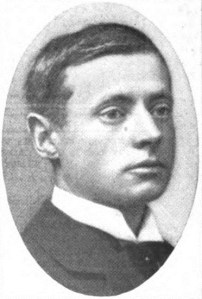
(Hector Hugh Munro)
1870-1916
“My aunt will be down presently, Mr. Nuttel,” said a very self-possessed young lady of fifteen; “in the meantime you must try and put up with me.”
Framton Nuttel endeavoured to say the correct something which should duly flatter the niece of the moment without unduly discounting the aunt that was to come. Privately he doubted more than ever whether these formal visits on a succession of total strangers would do much towards helping the nerve cure which he was supposed to be undergoing.
“I know how it will be,” his sister had said when he was preparing to migrate to this rural retreat; “you will bury yourself down there and not speak to a living soul, and your nerves will be worse than ever from moping. I shall just give you letters of introduction to all the people I know there. Some of them, as far as I can remember, were quite nice.”
Framton wondered whether Mrs. Sappleton, the lady to whom he was presenting one of the letters of introduction came into the nice division.
“Do you know many of the people round here?” asked the niece, when she judged that they had had sufficient silent communion.
“Hardly a soul,” said Framton. “My sister was staying here, at the rectory, you know, some four years ago, and she gave me letters of introduction to some of the people here.”
He made the last statement in a tone of distinct regret.
“Then you know practically nothing about my aunt?” pursued the self-possessed young lady.
“Only her name and address,” admitted the caller. He was wondering whether Mrs. Sappleton was in the married or widowed state. An undefinable something about the room seemed to suggest masculine habitation.
“Her great tragedy happened just three years ago,” said the child; “that would be since your sister’s time.”
“Her tragedy?” asked Framton; somehow in this restful country spot tragedies seemed out of place.
“You may wonder why we keep that window wide open on an October afternoon,” said the niece, indicating a large French window that opened on to a lawn.
“It is quite warm for the time of the year,” said Framton; “but has that window got anything to do with the tragedy?”
“Out through that window, three years ago to a day, her husband and her two young brothers went off for their day’s shooting. They never came back. In crossing the moor to their favourite snipe-shooting ground they were all three engulfed in a treacherous piece of bog. It had been that dreadful wet summer, you know, and places that were safe in other years gave way suddenly without warning. Their bodies were never recovered. That was the dreadful part of it.” Here the child’s voice lost its self-possessed note and became falteringly human. “Poor aunt always thinks that they will come back someday, they and the little brown spaniel that was lost with them, and walk in at that window just as they used to do. That is why the window is kept open every evening till it is quite dusk. Poor dear aunt, she has often told me how they went out, her husband with his white waterproof coat over his arm, and Ronnie, her youngest brother, singing ‘Bertie, why do you bound?’ as he always did to tease her, because she said it got on her nerves. Do you know, sometimes on still, quiet evenings like this, I almost get a creepy feeling that they will all walk in through that window – ”
She broke off with a little shudder. It was a relief to Framton when the aunt bustled into the room with a whirl of apologies for being late in making her appearance.
“I hope Vera has been amusing you?” she said.
“She has been very interesting,” said Framton.
“I hope you don’t mind the open window,” said Mrs. Sappleton briskly; “my husband and brothers will be home directly from shooting, and they always come in this way. They’ve been out for snipe in the marshes today, so they’ll make a fine mess over my poor carpets. So like you menfolk, isn’t it?”
She rattled on cheerfully about the shooting and the scarcity of birds, and the prospects for duck in the winter. To Framton it was all purely horrible. He made a desperate but only partially successful effort to turn the talk on to a less ghastly topic, he was conscious that his hostess was giving him only a fragment of her attention, and her eyes were constantly straying past him to the open window and the lawn beyond. It was certainly an unfortunate coincidence that he should have paid his visit on this tragic anniversary.
“The doctors agree in ordering me complete rest, an absence of mental excitement, and avoidance of anything in the nature of violent physical exercise,” announced Framton, who laboured under the tolerably widespread delusion that total strangers and chance acquaintances are hungry for the least detail of one’s ailments and infirmities, their cause and cure. “On the matter of diet they are not so much in agreement,” he continued.
“No?” said Mrs. Sappleton, in a voice which only replaced a yawn at the last moment. Then she suddenly brightened into alert attention – but not to what Framton was saying.
“Here they are at last!” she cried. “Just in time for tea, and don’t they look as if they were muddy up to the eyes!”
Framton shivered slightly and turned towards the niece with a look intended to convey sympathetic comprehension. The child was staring out through the open window with a dazed horror in her eyes. In a chill shock of nameless fear Framton swung round in his seat and looked in the same direction.
In the deepening twilight three figures were walking across the lawn towards the window, they all carried guns under their arms, and one of them was additionally burdened with a white coat hung over his shoulders. A tired brown spaniel kept close at their heels. Noiselessly they neared the house, and then a hoarse young voice chanted out of the dusk: “I said, Bertie, why do you bound?”
Framton grabbed wildly at his stick and hat; the hall door, the gravel drive, and the front gate were dimly noted stages in his headlong retreat. A cyclist coming along the road had to run into the hedge to avoid imminent collision.
“Here we are, my dear,” said the bearer of the white mackintosh, coming in through the window, “fairly muddy, but most of it’s dry. Who was that who bolted out as we came up?”
“A most extraordinary man, a Mr. Nuttel,” said Mrs. Sappleton; “could only talk about his illnesses, and dashed off without a word of goodby or apology when you arrived. One would think he had seen a ghost.”
“I expect it was the spaniel,” said the niece calmly; “he told me he had a horror of dogs. He was once hunted into a cemetery somewhere on the banks of the Ganges by a pack of pariah dogs, and had to spend the night in a newly dug grave with the creatures snarling and grinning and foaming just above him. Enough to make anyone lose their nerve.”
Romance at short notice was her speciality.
###
Text from www.eastoftheweb.com
For your added enjoyment, follow this link to a film adaptation of “The Open Window” on youtube starring a young Michael Sheen.
Adaptation Nation
 Source: Adaptation Nation
Here’s a brief article about books on the small screen.
*Abso-hallelujah-lutely: Infixes can’t be interjections (but what are they?)

Source: *Abso-hallelujah-lutely: Infixes can’t be interjections (but what are they?)
The Saturday Night Special: “One Summer Night” by Ambrose Bierce
The fact that Henry Armstrong was buried did not seem to him to prove that he was dead: he had always been a hard man to convince. That he really was buried, the testimony of his senses compelled him to admit. His posture — flat upon his back, with his hands crossed upon his stomach and tied with something that he easily broke without profitably altering the situation — the strict confinement of his entire person, the black darkness and profound silence, made a body of evidence impossible to controvert and he accepted it without cavil.
But dead — no; he was only very, very ill. He had, withal, the invalid’s apathy and did not greatly concern himself about the uncommon

October 7, 1892
fate that had been allotted to him. No philosopher was he — just a plain, commonplace person gifted, for the time being, with a pathological indifference: the organ that he feared consequences with was torpid. So, with no particular apprehension for his immediate future, he fell asleep and all was peace with Henry Armstrong.
But something was going on overhead. It was a dark summer night, shot through with infrequent shimmers of lightning silently firing a cloud lying low in the west and portending a storm. These brief, stammering illuminations brought out with ghastly distinctness the monuments and headstones of the cemetery and seemed to set them dancing. It was not a night in which any credible witness was likely to be straying about a cemetery, so the three men who were there, digging into the grave of Henry Armstrong, felt reasonably secure.
Two of them were young students from a medical college a few miles away; the third was a gigantic negro known as Jess. For many years Jess had been employed about the cemetery as a man-of-all-work and it was his favourite pleasantry that he knew ‘every soul in the place.’ From the nature of what he was now doing it was inferable that the place was not so populous as its register may have shown it to be.
Outside the wall, at the part of the grounds farthest from the public road, were a horse and a light wagon, waiting.
The work of excavation was not difficult: the earth with which the grave had been loosely filled a few hours before offered little resistance and was soon thrown out. Removal of the casket from its box was less easy, but it was taken out, for it was a perquisite of Jess, who carefully unscrewed the cover and laid it aside, exposing the body in black trousers and white shirt. At that instant the air sprang to flame, a cracking shock of thunder shook the stunned world and Henry Armstrong tranquilly sat up. With inarticulate cries the men fled in terror, each in a different direction. For nothing on earth could two of them have been persuaded to return. But Jess was of another breed.
In the grey of the morning the two students, pallid and haggard from anxiety and with the terror of their adventure still beating tumultuously in their blood, met at the medical college.
‘You saw it?’ cried one.
‘God! yes — what are we to do?’
They went around to the rear of the building, where they saw a horse, attached to a light wagon, hitched to a gatepost near the door of the dissecting-room. Mechanically they entered the room. On a bench in the obscurity sat the negro Jess. He rose, grinning, all eyes and teeth.
‘I’m waiting for my pay,’ he said.
Stretched naked on a long table lay the body of Henry Armstrong, the head defiled with blood and clay from a blow with a spade.
###
Text from www.eastoftheweb.com
It all goes south in the must see trailer for Southbound
 Source: It all goes south in the must see trailer for Southbound
No kidding! You have to see this terrific trailer for “Southbound” over at Missing Reel. Check it out now! “Southbound” opens in limited theaters on February 5 and then hits VOD February 9. I am looking forward to it.
“Wolfsheim” Has Been Re-Printed at Dark Fire Fiction

Just a quick note to mention that my short horror story “Wolfsheim” has been re-printed at Dark Fire Fiction. Many thanks to Karonda Barker and Dr. Jones for re-publishing this piece.
“Wolfsheim” appeared previously in Midnight Times in 2005. Jay Manning, editor of Midnight Times commented in its Spring, 2006 issue: “”Wolfsheim” is basically a traditional horror story that tells the tale of a small European village confronted by the threat of werewolves. If you like stories about lycans, you definitely need to check this one out. Great stuff.”
On another note, I love the colors they chose for their website. It makes reading the story a more pleasant experience.
Also, while there, check out their Links and Resources at the bottom left on their home page, which provides information on horror markets. While you’re at it, go to their “Share with Others” section on the right and rate their site at Spookysites. They have a beautiful little website, check it out often.
10 Awesome Short Films Based on Scary Stories to Tell in the Dark!

Thriller of the Day at Kindle Nation Daily: Night Sea Journey

The Saturday Night Special: “The Last Kiss” by Maurice Level
The Last Kiss
by Maurice Level
(1912)
The Project Gutenberg E-Text
This eBook is made available at no cost and with almost no restrictions
whatsoever. You may copy it, give it away or re-use it under the terms
of the Project Gutenberg of Australia License which may be viewed online at
http://gutenberg.net.au/licence.html
“Forgive me…Forgive me.”
His voice was less assured as he replied:
“Get up, dry your eyes. I, too, have a good deal to reproach myself with.”
“No, no,” she sobbed.
He shook his head.
“I ought never to have left you; you loved me. Just at first after it all happened…when I could still feel the fire of the vitriol burning my face, when I began to realize that I should never see again, that all my life I should be a thing of horror, of Death, certainly I wasn’t able to think of it like that. It isn’t possible to resign oneself all at once to such a fate…But living in this eternal darkness, a man’s thoughts pierce far below the surface and grow quiet like those of a person falling asleep, and gradually calm comes. To-day, no longer able to use my eyes, I see with my imagination. I see again our little house, our peaceful days, and your smile. I see your poor little face the night I said that last good-bye.”
“The judge couldn’t imagine any of that, could he? And it was only fair to try to explain, for they thought only of your action, the action that made me into…what I am. They were going to send you to prison where you would slowly have faded . . No years of such punishment for you could have given me back my eyes…When you saw me go into the witness-box you were

1875-1926
afraid, weren’t you? You believed that I would charge you, have you condemned? No, I could never have done that never…”
She was still crying. Her face buried in her hands.
“How good you are!…”
“I am just…”
In a voice that came in jerks she repeated:
“I repent, I repent; I have done the most awful thing to you that a woman could do, and you—you begged for my acquittal! And now you can even fid words of pity for me! What can I do to prove my sorrow? Oh, you are wonderful…wonderful…”
He let her go on talking and weeping; his head thrown back, his hands on the arms of his chair, he listened apparently without emotion. When she was calm again, he asked:
“What are you going to do now?”
“I don’t know…I shall rest for a few days…I am so tired hen I shall go back to work. I shall try to find a place in a shop or as a mannequin.”
His voice was a little stifled as he asked:
“You are still as pretty as ever?”
She did not reply.
“I want to know if you are as pretty as you used to be?”
She remained silent. With a slight shiver, he murmured: “It is dark now, isn’t it? Turn on the light. Though I can no longer see, I like to feel that there is light around me…Where are you?…Near the mantelpiece?…Stretch out your hand. You will find the switch there.”
No sense even of light could penetrate his eyelids, but from the sudden sound of horror she stifled, he knew that the lamp was on. For the first time she was able to see the result of her work, the terrifying face streaked with white swellings, seamed with red furrows, a narrow black band around the eyes. While he had pleaded for her in court, she had crouched on her seat weeping, not daring to look at him; now, before this abominable thing, she grew sick with a kind of disgust. But it was without any anger that he murmured:
“I am very different from the man you knew in the old days–I horrify you now, don’t I? You shrink from me?…”
She tried to keep her voice steady.
“Certainly not. I am here, in the same place…”
“Yes, now…and I want you to come still nearer. If you knew how the thought of your hands tempt me in my darkness. How I should love to feel their softness once again. But I dare not…And yet that is what I wanted to ask you: to let me feel your hand for a minute in mine. We, the blind, can get such marvelous memories from just a touch.”
Turning her head away, she held out her arm. Caressing her fingers, he murmured:
“Ah, how good. Don’t tremble. Let me try to imagine we are lovers again just as we used to be…but you are not wearing my ring. Why? I have not taken yours oft. Do you remember? You said, ‘It is our wedding-ring. Why have you taken it off?”
“I dare not wear it…”
“You must put it on again. You will wear it? Promise me.”
She stammered:
“I promise you.”
He was silent for a little while; then in a calmer voice:
“It must be quite dark now. How cold I am! If you only knew how cold it feels when one is blind. Your hands are warm; mine are frozen. I have not yet developed the fuller sense of touch.”
“It takes time, they say…At present I am like a little child learning.”
She let her fingers remain in his, sighing:
“Oh, Mon Dieu…Mon Dieu…”
Speaking like a man in a dream, he went on:
“How glad I am that you came. I wondered whether you would, and I felt I wanted to keep you with me for a long, long time: always…But that wouldn’t be possible. Life with me would be too sad. You see, little one, when people have memories like ours, they must be careful not to spoil them, and it must be horrible to look at me now, isn’t it?”
She tried to protest; what might have been a smile passed over his face.
“Why lie? I remember I once saw a man whose mistress had thrown vitriol over him. His face was not human. Women turned their heads away as they passed, while he, not being able to see and so not knowing, went on talking to the people who were shrinking away from him. I must be, I am like that poet wretch, am I not? Even you who knew me as I used to be, you tremble with disgust; I can feel it. For a long time you will be haunted by the remembrance of my face…it will come in between you and everything else…How the thought hurts…but don’t let us go on talking about me…You said just now that you were going back to work. Tell me your plans; come nearer, I don’t hear as well as I used to…Well?”
Their two armchairs were almost touching. She was silent. He sighed:
“Ah, I can smell your scent! How I have longed for it. I bought a bottle of the perfume you always used, but on me it didn’t smell the same. From you it comes mixed with the scent of your skin and hair. Come nearer, let me drink it in…You are going away, you will never come back again; let me draw in for the last time as much of you as I can…You shiver…am I then so horrible?”
She stammered:.”No…it is cold…”
“Why are you so lightly dressed? I don’t believe you brought a cloak. In November, too. It must be damp and dreary in the streets. How you tremble! How warm and comfortable it was in our little home…do you remember? You used to lay your face on my shoulder, and I used to hold you close to me. Who would want to sleep in my arms now? Come nearer. Give me your hand…There…What did you think when your lawyer told you I had asked to see you?”
“I thought I ought to come.”
“Do you still love me?”
Her voice was only a breath:
“Yes…”
Very slowly, his voice full of supplication, he said:
“I want to kiss you for the last time. I know it will be almost torture for you…Afterwards I Won’t ask anything more. You can go…May I?…Will you let me?…”
Involuntarily she shrank back; then, moved by shame and pity, not daring to refuse a joy to the poor wretch, she laid her head on his shoulder, held up her mouth and shut her eyes. He pressed her gently to him, silent, prolonging the happy moment. She opened her eyes, and seeing the terrible face so near, almost touching her own, for the second time she shivered with disgust and would have drawn sharply away. But he pressed her closer to him, passionately.
“You would go away so soon?…Stay a little longer…You haven’t seen enough of me…Look at me…and give me your mouth again…more of it than that…It is horrible, isn’t it?”
She moaned:
“You hurt me…”
“Oh, no,” he sneered, “I frighten you.”
She struggled.
“You hurt me! You hurt me!”
In a low voice he said:
“Sh-h. No noise; be quiet. I’ve got you now and I’ll keep you. For how many days have I waited for this moment…Keep still, I say, keep still! No nonsense! You know I am much stronger than you.”
He seized both her hands in one of his, took a little bottle from the pocket of his coat, drew out the stopper with his teeth, and went on in the same quiet voice:
“Yes, it is vitriol; bend your head…there…You will see; we are going to be incomparable lovers, made for each other…Ah, you tremble? Do you understand now why I had you acquitted, and why I made you come here to-day? Your pretty face will be exactly like mine. You will be a monstrous thing, and like me, blind!…Ah, yes, it hurts, hurts terribly.”
She opened her mouth to implore. He ordered:
“No! Not that! Shut your mouth! I don’t want to kill you, that would make it too easy for you.”
Gripping her in the bend of his arm, he pressed his hand on her mouth and poured the acid slowly over her forehead, her eyes, her cheeks. She struggled desperately, but he held her too firmly and kept on pouring as he talked:
“There…a little more…you bite, but that’s nothing…It hurts, doesn’t it? It is Hell. . .”
Suddenly he flung her away, crying:
“I am burning myself.”
She fell writhing on the floor. Already her face was nothing but a red rag.
Then he straightened himself, stumbled over her, felt about the wall to find the switch, and put out the light. And round them, as in them, was a great Darkness…
[Go to https://vimeo.com/65903388 to see a stage production of this work, one of the most popular of the Grand Guignol. Follow these links to articles on Slattery’s Art of Horror to find out more about Maurice Level, the Grand Guignol, and the Conte Cruel.]
CHRISTMAS HORROR READING LIST 2015
 Source: CHRISTMAS HORROR READING LIST 2015
Check out Horror Delve’s recommended reading for the holidays.
The Saturday Night Special: “The Monkey’s Paw”
The Monkey’s Paw
by W.W. Jacobs
(1902)
The Project Gutenberg E-text
This eBook is for the use of anyone anywhere at no cost and with
almost no restrictions whatsoever. You may copy it, give it away or
re-use it under the terms of the Project Gutenberg License included
with this eBook or online at http://www.gutenberg.net
I.
Without, the night was cold and wet, but in the small parlour of Laburnam Villa the blinds were drawn and the fire burned brightly. Father and son were at chess, the former, who possessed ideas about the game involving radical changes, putting his king into such sharp and unnecessary perils that it even provoked comment from the white-haired old lady knitting placidly by the fire.
“Hark at the wind,” said Mr. White, who, having seen a fatal mistake after it was too late, was amiably desirous of preventing his son from seeing it.
“I’m listening,” said the latter, grimly surveying the board as he stretched out his hand. “Check.”
“I should hardly think that he’d come to-night,” said his father, with his hand poised over the board.
(1903 or before)
“Mate,” replied the son.
“That’s the worst of living so far out,” bawled Mr. White, with sudden and unlooked-for violence; “of all the beastly, slushy, out-of-the-way places to live in, this is the worst. Pathway’s a bog, and the road’s a torrent. I don’t know what people are thinking about. I suppose because only two houses in the road are let, they think it doesn’t matter.”
“Never mind, dear,” said his wife, soothingly; “perhaps you’ll win the next one.”
Mr. White looked up sharply, just in time to intercept a knowing glance between mother and son. The words died away on his lips, and he hid a guilty grin in his thin grey beard.
“There he is,” said Herbert White, as the gate banged to loudly and heavy footsteps came toward the door.
The old man rose with hospitable haste, and opening the door, was heard condoling with the new arrival. The new arrival also condoled with himself, so that Mrs. White said, “Tut, tut!” and coughed gently as her husband entered the room, followed by a tall, burly man, beady of eye and rubicund of visage.
“Sergeant-Major Morris,” he said, introducing him.
The sergeant-major shook hands, and taking the proffered seat by the fire, watched contentedly while his host got out whiskey and tumblers and stood a small copper kettle on the fire.
At the third glass his eyes got brighter, and he began to talk, the little family circle regarding with eager interest this visitor from distant parts, as he squared his broad shoulders in the chair and spoke of wild scenes and doughty deeds; of wars and plagues and strange peoples.
“Twenty-one years of it,” said Mr. White, nodding at his wife and son. “When he went away he was a slip of a youth in the warehouse. Now look at him.”
“He don’t look to have taken much harm,” said Mrs. White, politely.
“I’d like to go to India myself,” said the old man, “just to look round a bit, you know.”
“Better where you are,” said the sergeant-major, shaking his head. He put down the empty glass, and sighing softly, shook it again.
“I should like to see those old temples and fakirs and jugglers,” said the old man. “What was that you started telling me the other day about a monkey’s paw or something, Morris?”
“Nothing,” said the soldier, hastily. “Leastways nothing worth hearing.”
“Monkey’s paw?” said Mrs. White, curiously.
“Well, it’s just a bit of what you might call magic, perhaps,” said the sergeant-major, offhandedly.
His three listeners leaned forward eagerly. The visitor absent-mindedly put his empty glass to his lips and then set it down again. His host filled it for him.
“To look at,” said the sergeant-major, fumbling in his pocket, “it’s just an ordinary little paw, dried to a mummy.”
He took something out of his pocket and proffered it. Mrs. White drew back with a grimace, but her son, taking it, examined it curiously.
“And what is there special about it?” inquired Mr. White as he took it from his son, and having examined it, placed it upon the table.
“It had a spell put on it by an old fakir,” said the sergeant-major, “a very holy man. He wanted to show that fate ruled people’s lives, and that those who interfered with it did so to their sorrow. He put a spell on it so that three separate men could each have three wishes from it.”
His manner was so impressive that his hearers were conscious that their light laughter jarred somewhat.
“Well, why don’t you have three, sir?” said Herbert White, cleverly.
The soldier regarded him in the way that middle age is wont to regard presumptuous youth. “I have,” he said, quietly, and his blotchy face whitened.
“And did you really have the three wishes granted?” asked Mrs. White.
“I did,” said the sergeant-major, and his glass tapped against his strong teeth.
“And has anybody else wished?” persisted the old lady.
“The first man had his three wishes. Yes,” was the reply; “I don’t know what the first two were, but the third was for death. That’s how I got the paw.”
His tones were so grave that a hush fell upon the group.
“If you’ve had your three wishes, it’s no good to you now, then, Morris,” said the old man at last. “What do you keep it for?”
The soldier shook his head. “Fancy, I suppose,” he said, slowly. “I did have some idea of selling it, but I don’t think I will. It has caused enough mischief already. Besides, people won’t buy. They think it’s a fairy tale; some of them, and those who do think anything of it want to try it first and pay me afterward.”
“If you could have another three wishes,” said the old man, eyeing him keenly, “would you have them?”
“I don’t know,” said the other. “I don’t know.”
He took the paw, and dangling it between his forefinger and thumb, suddenly threw it upon the fire. White, with a slight cry, stooped down and snatched it off.
“Better let it burn,” said the soldier, solemnly.
“If you don’t want it, Morris,” said the other, “give it to me.”
“I won’t,” said his friend, doggedly. “I threw it on the fire. If you keep it, don’t blame me for what happens. Pitch it on the fire again like a sensible man.”
The other shook his head and examined his new possession closely. “How do you do it?” he inquired.
“Hold it up in your right hand and wish aloud,” said the sergeant-major, “but I warn you of the consequences.”
“Sounds like the Arabian Nights,” said Mrs. White, as she rose and began to set the supper. “Don’t you think you might wish for four pairs of hands for me?”
Her husband drew the talisman from pocket, and then all three burst into laughter as the sergeant-major, with a look of alarm on his face, caught him by the arm.
“If you must wish,” he said, gruffly, “wish for something sensible.”
Mr. White dropped it back in his pocket, and placing chairs, motioned his friend to the table. In the business of supper the talisman was partly forgotten, and afterward the three sat listening in an enthralled fashion to a second instalment of the soldier’s adventures in India.
“If the tale about the monkey’s paw is not more truthful than those he has been telling us,” said Herbert, as the door closed behind their guest, just in time for him to catch the last train, “we sha’nt make much out of it.”
“Did you give him anything for it, father?” inquired Mrs. White, regarding her husband closely.
“A trifle,” said he, colouring slightly. “He didn’t want it, but I made him take it. And he pressed me again to throw it away.”
“Likely,” said Herbert, with pretended horror. “Why, we’re going to be rich, and famous and happy. Wish to be an emperor, father, to begin with; then you can’t be henpecked.”
He darted round the table, pursued by the maligned Mrs. White armed with an antimacassar.
Mr. White took the paw from his pocket and eyed it dubiously. “I don’t know what to wish for, and that’s a fact,” he said, slowly. “It seems to me I’ve got all I want.”
“If you only cleared the house, you’d be quite happy, wouldn’t you?” said Herbert, with his hand on his shoulder. “Well, wish for two hundred pounds, then; that ‘ll just do it.”
His father, smiling shamefacedly at his own credulity, held up the talisman, as his son, with a solemn face, somewhat marred by a wink at his mother, sat down at the piano and struck a few impressive chords.
“I wish for two hundred pounds,” said the old man distinctly.
A fine crash from the piano greeted the words, interrupted by a shuddering cry from the old man. His wife and son ran toward him.
“It moved,” he cried, with a glance of disgust at the object as it lay on the floor.
“As I wished, it twisted in my hand like a snake.”
“Well, I don’t see the money,” said his son as he picked it up and placed it on the table, “and I bet I never shall.”
“It must have been your fancy, father,” said his wife, regarding him anxiously.
He shook his head. “Never mind, though; there’s no harm done, but it gave me a shock all the same.”
They sat down by the fire again while the two men finished their pipes. Outside, the wind was higher than ever, and the old man started nervously at the sound of a door banging upstairs. A silence unusual and depressing settled upon all three, which lasted until the old couple rose to retire for the night.
“I expect you’ll find the cash tied up in a big bag in the middle of your bed,” said Herbert, as he bade them good-night, “and something horrible squatting up on top of the wardrobe watching you as you pocket your ill-gotten gains.”
He sat alone in the darkness, gazing at the dying fire, and seeing faces in it. The last face was so horrible and so simian that he gazed at it in amazement. It got so vivid that, with a little uneasy laugh, he felt on the table for a glass containing a little water to throw over it. His hand grasped the monkey’s paw, and with a little shiver he wiped his hand on his coat and went up to bed.
II.
In the brightness of the wintry sun next morning as it streamed over the breakfast table he laughed at his fears. There was an air of prosaic wholesomeness about the room which it had lacked on the previous night, and the dirty, shrivelled little paw was pitched on the sideboard with a carelessness which betokened no great belief in its virtues.
“I suppose all old soldiers are the same,” said Mrs. White. “The idea of our listening to such nonsense! How could wishes be granted in these days? And if they could, how could two hundred pounds hurt you, father?”
“Might drop on his head from the sky,” said the frivolous Herbert.
“Morris said the things happened so naturally,” said his father, “that you might if you so wished attribute it to coincidence.”
“Well, don’t break into the money before I come back,” said Herbert as he rose from the table. “I’m afraid it’ll turn you into a mean, avaricious man, and we shall have to disown you.”
His mother laughed, and following him to the door, watched him down the road; and returning to the breakfast table, was very happy at the expense of her husband’s credulity. All of which did not prevent her from scurrying to the door at the postman’s knock, nor prevent her from referring somewhat shortly to retired sergeant-majors of bibulous habits when she found that the post brought a tailor’s bill.
“Herbert will have some more of his funny remarks, I expect, when he comes home,” she said, as they sat at dinner.
“I dare say,” said Mr. White, pouring himself out some beer; “but for all that, the thing moved in my hand; that I’ll swear to.”
“You thought it did,” said the old lady soothingly.
“I say it did,” replied the other. “There was no thought about it; I had just—- What’s the matter?”
His wife made no reply. She was watching the mysterious movements of a man outside, who, peering in an undecided fashion at the house, appeared to be trying to make up his mind to enter. In mental connection with the two hundred pounds, she noticed that the stranger was well dressed, and wore a silk hat of glossy newness. Three times he paused at the gate, and then walked on again. The fourth time he stood with his hand upon it, and then with sudden resolution flung it open and walked up the path. Mrs. White at the same moment placed her hands behind her, and hurriedly unfastening the strings of her apron, put that useful article of apparel beneath the cushion of her chair.
She brought the stranger, who seemed ill at ease, into the room. He gazed at her furtively, and listened in a preoccupied fashion as the old lady apologized for the appearance of the room, and her husband’s coat, a garment which he usually reserved for the garden. She then waited as patiently as her sex would permit, for him to broach his business, but he was at first strangely silent.
“I—was asked to call,” he said at last, and stooped and picked a piece of cotton from his trousers. “I come from ‘Maw and Meggins.'”
The old lady started. “Is anything the matter?” she asked, breathlessly. “Has anything happened to Herbert? What is it? What is it?”
Her husband interposed. “There, there, mother,” he said, hastily. “Sit down, and don’t jump to conclusions. You’ve not brought bad news, I’m sure, sir;” and he eyed the other wistfully.
“I’m sorry—” began the visitor.
“Is he hurt?” demanded the mother, wildly.
The visitor bowed in assent. “Badly hurt,” he said, quietly, “but he is not in any pain.”
“Oh, thank God!” said the old woman, clasping her hands. “Thank God for that! Thank—”
She broke off suddenly as the sinister meaning of the assurance dawned upon her and she saw the awful confirmation of her fears in the other’s averted face. She caught her breath, and turning to her slower-witted husband, laid her trembling old hand upon his. There was a long silence.
“He was caught in the machinery,” said the visitor at length in a low voice.
“Caught in the machinery,” repeated Mr. White, in a dazed fashion, “yes.”
He sat staring blankly out at the window, and taking his wife’s hand between his own, pressed it as he had been wont to do in their old courting-days nearly forty years before.
“He was the only one left to us,” he said, turning gently to the visitor. “It is hard.”
The other coughed, and rising, walked slowly to the window. “The firm wished me to convey their sincere sympathy with you in your great loss,” he said, without looking round. “I beg that you will understand I am only their servant and merely obeying orders.”
There was no reply; the old woman’s face was white, her eyes staring, and her breath inaudible; on the husband’s face was a look such as his friend the sergeant might have carried into his first action.
“I was to say that ‘Maw and Meggins’ disclaim all responsibility,” continued the other. “They admit no liability at all, but in consideration of your son’s services, they wish to present you with a certain sum as compensation.”
Mr. White dropped his wife’s hand, and rising to his feet, gazed with a look of horror at his visitor. His dry lips shaped the words, “How much?”
“Two hundred pounds,” was the answer.
Unconscious of his wife’s shriek, the old man smiled faintly, put out his hands like a sightless man, and dropped, a senseless heap, to the floor.
III.
In the huge new cemetery, some two miles distant, the old people buried their dead, and came back to a house steeped in shadow and silence. It was all over so quickly that at first they could hardly realize it, and remained in a state of expectation as though of something else to happen —something else which was to lighten this load, too heavy for old hearts to bear.
But the days passed, and expectation gave place to resignation—the hopeless resignation of the old, sometimes miscalled, apathy. Sometimes they hardly exchanged a word, for now they had nothing to talk about, and their days were long to weariness.
It was about a week after that the old man, waking suddenly in the night, stretched out his hand and found himself alone. The room was in darkness, and the sound of subdued weeping came from the window. He raised himself in bed and listened.
“Come back,” he said, tenderly. “You will be cold.”
“It is colder for my son,” said the old woman, and wept afresh.
The sound of her sobs died away on his ears. The bed was warm, and his eyes heavy with sleep. He dozed fitfully, and then slept until a sudden wild cry from his wife awoke him with a start.
“The paw!” she cried wildly. “The monkey’s paw!”
He started up in alarm. “Where? Where is it? What’s the matter?”
She came stumbling across the room toward him. “I want it,” she said, quietly. “You’ve not destroyed it?”
“It’s in the parlour, on the bracket,” he replied, marvelling. “Why?”
She cried and laughed together, and bending over, kissed his cheek.
“I only just thought of it,” she said, hysterically. “Why didn’t I think of it before? Why didn’t you think of it?”
“Think of what?” he questioned.
“The other two wishes,” she replied, rapidly. “We’ve only had one.”
“Was not that enough?” he demanded, fiercely.
“No,” she cried, triumphantly; “we’ll have one more. Go down and get it quickly, and wish our boy alive again.”
The man sat up in bed and flung the bedclothes from his quaking limbs. “Good God, you are mad!” he cried, aghast.
“Get it,” she panted; “get it quickly, and wish—Oh, my boy, my boy!”
Her husband struck a match and lit the candle. “Get back to bed,” he said, unsteadily. “You don’t know what you are saying.”
“We had the first wish granted,” said the old woman, feverishly; “why not the second?”
“A coincidence,” stammered the old man.
“Go and get it and wish,” cried his wife, quivering with excitement.
The old man turned and regarded her, and his voice shook. “He has been dead ten days, and besides he—I would not tell you else, but—I could only recognize him by his clothing. If he was too terrible for you to see then, how now?”
“Bring him back,” cried the old woman, and dragged him toward the door. “Do you think I fear the child I have nursed?”
He went down in the darkness, and felt his way to the parlour, and then to the mantelpiece. The talisman was in its place, and a horrible fear that the unspoken wish might bring his mutilated son before him ere he could escape from the room seized upon him, and he caught his breath as he found that he had lost the direction of the door. His brow cold with sweat, he felt his way round the table, and groped along the wall until he found himself in the small passage with the unwholesome thing in his hand.
Even his wife’s face seemed changed as he entered the room. It was white and expectant, and to his fears seemed to have an unnatural look upon it. He was afraid of her.
“Wish!” she cried, in a strong voice.
“It is foolish and wicked,” he faltered.
“Wish!” repeated his wife.
He raised his hand. “I wish my son alive again.”
The talisman fell to the floor, and he regarded it fearfully. Then he sank trembling into a chair as the old woman, with burning eyes, walked to the window and raised the blind.
He sat until he was chilled with the cold, glancing occasionally at the figure of the old woman peering through the window. The candle-end, which had burned below the rim of the china candlestick, was throwing pulsating shadows on the ceiling and walls, until, with a flicker larger than the rest, it expired. The old man, with an unspeakable sense of relief at the failure of the talisman, crept back to his bed, and a minute or two afterward the old woman came silently and apathetically beside him.
Neither spoke, but lay silently listening to the ticking of the clock. A stair creaked, and a squeaky mouse scurried noisily through the wall. The darkness was oppressive, and after lying for some time screwing up his courage, he took the box of matches, and striking one, went downstairs for a candle.
At the foot of the stairs the match went out, and he paused to strike another; and at the same moment a knock, so quiet and stealthy as to be scarcely audible, sounded on the front door.
The matches fell from his hand and spilled in the passage. He stood motionless, his breath suspended until the knock was repeated. Then he turned and fled swiftly back to his room, and closed the door behind him. A third knock sounded through the house.

“What’s that?” cried the old woman, starting up.
“A rat,” said the old man in shaking tones—”a rat. It passed me on the stairs.”
His wife sat up in bed listening. A loud knock resounded through the house.
“It’s Herbert!” she screamed. “It’s Herbert!”
She ran to the door, but her husband was before her, and catching her by the arm, held her tightly.
“What are you going to do?” he whispered hoarsely.
“It’s my boy; it’s Herbert!” she cried, struggling mechanically. “I forgot it was two miles away. What are you holding me for? Let go. I must open the door.”
“For God’s sake don’t let it in,” cried the old man, trembling.
“You’re afraid of your own son,” she cried, struggling. “Let me go. I’m coming, Herbert; I’m coming.”
There was another knock, and another. The old woman with a sudden wrench broke free and ran from the room. Her husband followed to the landing, and called after her appealingly as she hurried downstairs. He heard the chain rattle back and the bottom bolt drawn slowly and stiffly from the socket. Then the old woman’s voice, strained and panting.
“The bolt,” she cried, loudly. “Come down. I can’t reach it.”
But her husband was on his hands and knees groping wildly on the floor in search of the paw. If he could only find it before the thing outside got in. A perfect fusillade of knocks reverberated through the house, and he heard the scraping of a chair as his wife put it down in the passage against the door. He heard the creaking of the bolt as it came slowly back, and at the same moment he found the monkey’s paw, and frantically breathed his third and last wish.
The knocking ceased suddenly, although the echoes of it were still in the house. He heard the chair drawn back, and the door opened. A cold wind rushed up the staircase, and a long loud wail of disappointment and misery from his wife gave him courage to run down to her side, and then to the gate beyond. The street lamp flickering opposite shone on a quiet and deserted road.
Monica J. O’Rourke and Wrath James White ‘Poisoning Eros’ Review
 Source: Monica J. O’Rourke and Wrath James White ‘Poisoning Eros’ Review
For Fans of extreme horror, this article from Horror Novel Reviews has something titillating for you.
Ramsey Campbell’s ‘Thirteen Novels on the Edge of Horror’
 Source: Ramsey Campbell’s ‘Thirteen Novels on the Edge of Horror’
In this fun, engaging article from Horror Novel Reviews, Ramsey Campbell lists thirteen thrilling novels from the last fifty years that should be on any horror enthusiast’s list of novels to read.
Wolf Creek – TV mini-series

Please respect the owner’s copyright.
Source: Wolf Creek – TV mini-series
The renown movie will be an Australian TV mini-series come mid-2016 and will star John Jarratt. Follow the link to the press release at Horrorpedia.com. Filming started October 19.
 Phil Slattery, Writer, Publisher