Slattery’s Tao of Writing, Part 2: the Allegory of the Stream

Thalia Muse of Comedy and Bucolic Poetry Illustration by Arash
Thalia
Muse of Comedy and Bucolic Poetry
Illustration by Arash

Once in a while, I come across some gem of the writer’s art that almost strikes me breathless with its beauty.  The poems of John Donne are one example.  The poignant first chapter of A Farewell to Arms is another.   Recently, I began reading Ray Bradbury’s The Martian Chronicles  and every time I pick it up, I am nearly struck breathless with his simple, understated eloquence that touches one’s very core.   Today I read a post at winebbler.wordpress.com and her simple, fun voice and flowing, relaxed style combined with playful use of the English language made for very entertaining and enjoyable reading beneath which I thought I could sense an undercurrent of growing artistic beauty.

That article made me start to think about what makes a work of writing aesthetically beautiful.  After some thought, I reached the conclusion that every work of literary beauty has the same qualities as a powerful but smoothly flowing mountain stream:  clarity, power, and an uninterrupted flow.  But unlike a stream, a work of literary beauty must also be reasonably brief.

In every literary work I consider beautiful,  the first universal characteristic that comes to mind is that the author uses a simple voice comprising simple, everyday words that anyone can understand.  Writing is communication.  Communication is one person disseminating ideas to others by using words, which are collections of sounds representing ideas.  By using simple words everyone understands easily, the writer makes his ideas easier to disseminate.  Why use a word that few can understand, when you can use a simpler word with the same meaning that everyone can understand?  Therefore, our stream must be crystal clear and free of mud or anything that would hinder insight and perception.

If ideas equate to the water in our allegorical mountain stream, the precision of the component ideas, the words, give the stream its force.  As I mentioned in my post “Slattery’s Tao of Writing, Part I”, words chosen for their precise meanings have power.   As I said earlier in this article, words are ideas.  Precise words are precise ideas.   Precise ideas are powerful ideas, powerful emotionally and intellectually.  Like all other forces in the universe, powerful ideas become more powerful if combined and organized with one idea leading logically, flowingly to the next.  This facilitates understanding and the reading experience.

When my stream of thought is uninterrupted and powerful, I become immersed in the work.  I can be swept away and can lose track of time and of everything happening around me.   To my mind, every writer should aspire to instill this experience into his readers.  When this happens, the writer has made an emotional and intellectual connection with his reader and the reader is grasping the writer’s ideas.

If organization is lacking, ideas are scattered like boulders in the stream and on the banks, creating rapids and breaking up the smooth flow. A powerful, disorganized stream is a torrent, destructive of everything along its banks, stiking out at random, benefiting no one.  In communication, disorganization is the source of misunderstanding, the antithesis of understanding.  The stream becomes destructive. 

If a writer uses words his readers do not understand and they have to turn to a dictionary to find out what the writer intends, the clarity of the ideas is lost and the reading experience is muddied.  Furthermore, the reading experience flows even less smoothly.   Even if the reader can reason out the meanings of the words from the context, the stream of thought is still disrupted and muddied, even if to a lesser degree.  The words will also lose much of their power, because the reader cannot appreciate the nuances of what he or she does not fully understand.

Lastly, every beautiful work has been reasonably brief.  Reading anything exasperatingly long becomes tiresome for everyone.   When readers become weary (word-weary so to speak), they can lose focus on what the writer is trying to communicate.  This detracts from the reading experience just as if someone who enjoys swimming in a mountain stream can no longer enjoy their swim if they become overly fatigued with exertion.

That said, I will now close tonight’s blog before I wear you out with my ramblings.

Thoughts?  Comments?

Slattery’s Tao of Writing, Part 1

tao3

A quick Google search reveals there are a lot of web articles entitled “The Tao of Writing”.   This is mine.  Let me begin by explaining what I perceive to be the Tao (others may view it differently and have equally valid perceptions).

The Chinese character above translates as Tao, the way, and is pronounced as “dow”, as in “The Dow-Jones Industrial Average”.  Taoism is an ancient Chinese religion rooted in the teachings of the legenday Chinese philosopher Lao Tzu (sometimes transliterated as “Lao Tze” or in a number of other ways) as expressed in his book, the Tao Teh Ching (The Book of the Way).   The Taoist religion, as I understand it, is far removed from Lao Tzu’s original philosophy, because the religion incorporates demons, gods, demigods, spirits, and other things that are not mentioned in the Tao Teh Ching or in the teachings of the original masters such as Lao Tzu, Chuang Tzu, or the Huainan Masters (at least in the translations I have read).

What the Tao is, is hard to express.  “The Way”, as I understand it, refers to the the way of the universe, basically how the universe works in a general sense.  In the American vernacular, we would probably express it as “the way things are”.    Some reader might respond to that as, “Sure.  I understand.  You’re saying the Tao is why toast always falls buttered side down.  Gotcha.” 

No, I am talking about something a bit more profound.  It’s more like this:

You work hard at trying to find a publisher for a story and are consistently rejected by what you perceived to be all the most suitable choices.  So, one night when you are battling insomnia and have just started the first glass of your second bottle of wine, out of frustration you send it off as a shot in the dark to some big name magazine who will never accept it, and lo and behold it is accepted.  So, sometimes it seems that you work your butt off for something and get nowhere, but you give up trying and you succeed.  Basically, the Tao is then like learning the way the universe works, then learning to succeed by adapting to that way.  Confused yet?  Have I oversimplified my point or have I made it overly complex? 

Understanding how the Tao works is not something anyone can express in words;  it is something one can understand only subjectively,  i.e., one must have a feel for it.  In fact, the first sentence of the Tao Teh Ching is “The Way that can be spoken is not the true Way.”  For most people, reading the Tao Teh Ching will probably be an exercise in confusion and frustration and contradiction.  In the Tao Teh Ching, nothing is exact; everything is metaphor and allusion, about how water flows into a valley and then the sea, how wood is shaped, the balance of the universe, and so on.  

To complicate matters even more, because the Tao Teh Ching was written in Chinese about 2,500 years ago, and the translation of the original Chinese characters may have changed significantly since then, translation of the Tao Teh Ching into modern languages is frustratingly imprecise, often relying on traditional or customary translations as opposed to knowing exactly what Lao Tzu was saying.  For today’s modern, exact, Socratic-tradition-based society, this is maddening.  Our scholars argue about the meanings of works written in modern English, how are they going to agree on something as nebulous as the Tao Teh Ching?

So, what are the important ponts of the Tao that everyone should remember?

As I perceive the Tao, one critical aspect of existence is balance;  the universe consists of opposites that must balance out or problems arise.  At the same time, all existence arises from the conflict of opposites.  An example of this is the old Zen Buddhist rhetorical question of “what is the sound of one hand clapping?”  I do not know the official or traditional answer to this, but from my Taoist perception, the answer is that there is no sound.   The sound of  clapping is produced only when the opposing forces of the hands meet.  Thus it is with everything in the universe.  Two opposites have to come together to produce anything:  light and dark, man and woman, left and right, up and down,  hot and cold, etc.

Another critical aspect of existence is that emptiness can be as important as substance and non-action can be as important as action.  There are other aspects, of course, but I will stick to these for now and address those at a later date.

Take a look at your hand for an example of the first principle.  If there were no spaces between your fingers, you would not have a hand, you would have something else, maybe a flipper.    Likewise, a sculptor can create a sculpture only by cutting away pieces of material so that the now-empty spaces create a form.  So a sculpture, or any object for that matter, comprises both substance and emptiness.

For an example of the non-action versus action principle, think about problems you faced in the past.  Could you have solved any of them by simply doing nothing?  Not every problem can be solved by doing nothing, but some can.

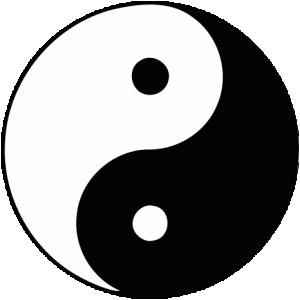
These principles are symbolized by what is know in our society as the Yin-Yang as shown here:
yinYang

In the yin-yang, as I perceive it, the eternal circle of the universe is formed by the interaction of opposites, here symbolized by light and dark, but while they are opposites, a little of each exists in the other.

For a very short book, the Tao Teh Ching is filled with incredible depth and meaning.  For me, in the few translations I have read, the Tao makes perfect sense, and I understand the world a little better each time I read it.    However, others may read it and just be confused or frustrated.   The Tao Teh Ching is something that will either speak to you personally and enlighten your world, or it will not.

But what has all this to do with writing?

I see the Tao at work whenever I write anything.  I see it in what I consider to be some of the basic principles of writing: less is more, what is not said is often more important than what is said, and so forth.  For me, this makes writing almost a form of magic, not in the sense of illusion, but true magic where one creates something  out of nothing by using as few components as possible, by making something complex by keeping everything as simple as possible.  

I will give one example and then I will close this article for the day and pick it up when I can sometime in the hopefully near future.

One of the first principles of writing I learned was to use as few words as possible.  Strunk and White, in The Elements of Style, say to “Omit unnecessary words”, which in itself is a perfect example of omitting unnecessary words.  How much more concise can that one sentence be?  It contains absolutely no unnecessary words.  If one word is omitted, the sentence ceases to have meaning.   The virtue of this is that, if done properly, the work becomes much more powerful because each word carries more weight.  

To do this, a writer needs to use words precisely.  Try to find a word that captures the exact meaning of the idea you are trying to express–and the shorter the word the better.  After all, you are trying to communicate an idea to the largest possible audience.  Why use big words that will send readers scurrying to the nearest dictionary, thus interrupting their chain of thought and perhaps tainting their reading experience, when you can use words that everyone understands and keep their experience free from interruptions?

An example of using words precisely would be revising the sentence “A man went quickly to the store.”

Now, shorten it by replacing “went quickly” with “ran”.  While you are at it, replace the other general terms with more precise ones.   The sentence becomes “John ran to Walmart.” Now, if you have had any background information on John, you know who he is, what he is like, his possible motivations, and that he is in a hurry for some reason to get something from Walmart, knowing the kind of products Walmart has, you may have an idea of why he is going there.   If we changed the sentence to “John ran to the Red Dot Liquor Store” we have an even better idea of his motivation.   If we said, “John sped to Red Dot Liquors in his brand-new corvette”, we know even more about John:  we know he can afford a brand-new corvette.   If you have ever been in Red Dot Liquors, you know something of the products they carry and that may say something to you about John’s decision to purchase them. 

So, how much more excitement and power does the sentence “John sped to Red Dot Liquors in his brand-new corvette” have versus “a man went quickly to the store”.   The final version packs a lot more information in almost the same space. 

So that is part of the magic of writing for me:  using as few words as possible to create a work.  On the surface, it seem to go against logic.  How can you build something by using as few components as possible and deleting the ones you do have whenever possible?

Try an experiment, take the first page of any run of the mill romance novel and draw a line through every word you consider unnecessary while keeping the meaning of the sentence.   Then take your final product and do it again.  Do it a third time if you like.  How much were you able to reduce without changing its meaning?

Now take the first page of a novel by Hemingway, someone known for his lean, muscular writing.  How far were you able to reduce it before changing the meaning?

Someone once said, “draw a line through every third word and you will be surprised at how much it improves your writing.”  I have tried that and it works wonderfully.  Of course, you can’t arbitrarily omit every third word, or the work may become nonsense, but it does cause one to question whether that word is necessary.

I have always marveled at the idea that one can write something by omitting words. It goes against my standard, American, public school education, where teachers give a mininum number of words to an assignment and one is forced to insert as many words as possible just to meet the requirement. But can you blame them? If you told the average American high school student to tell what he did over the summer in as few words as possible, he would say, “I had fun” or “I worked.” Good luck teaching him to write.

Anyway, I am rambling once again.  I will close for now and pick this up at some later date.

Thoughts?  Comments?

More on ETA Hoffmann

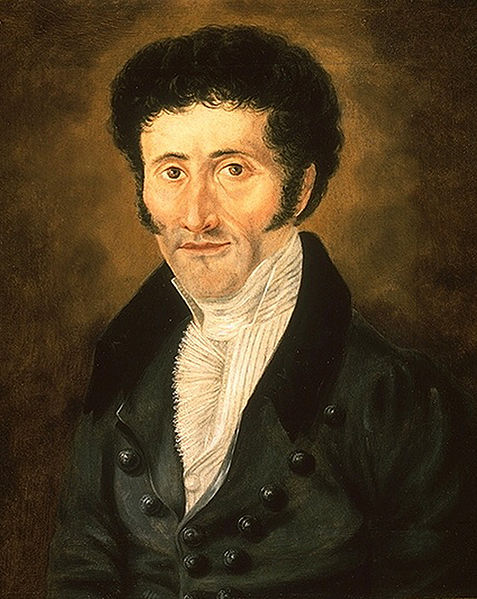
Ernst Theodor Amadeus Hoffmann1776-1822
Ernst Theodor Amadeus Hoffmann
1776-1822

I am up late tonight and thought I would just throw together a few additional tidbits on one of the earliest masters of horror:   ETA Hoffman.

Here is an interesting paragraph from The Literary Gothic:

24 January 1776 – 25 June 1822

You know the “Nutcracker” ballet, the one that every local ballet troupe is obligated to perform at Christmas?  This isn’t the guy — Tchaikovsky wrote that music in the 1890s, using the translation by Alexander Dumas (pere) rather than Hoffmann’s original.  But Hoffmann wrote the short story that lies behind it,  and it’s a short story that’s very unlike the charmingly sentimental puffery that little kids get dragged to every December.  Very unlike…  Hoffmann, a brilliant music critic and respectable composer as well as writer, is one of the major figures of German Romanticism, and  a powerful and disturbing writer — and disturbed, according to many; Sir Walter Scott, in his extended discussion of Hoffmann and literary supernaturalism, concludes that Hoffmann needs medical attention more than he needs literary criticism, and no less a student of dysfunctional minds (which I guess is just about everyone’s) than Sigmund Freud made Hoffman’s “The Sandman” the center of his essay on “The Uncanny.”  Hoffmann, although strongly influenced by Gothic literature, is probably best regarded as a fantasist rather than a “Gothic” or “horror” writer, although Freud’s term is perhaps the most apt.


This link leads to a rather lengthy article on Hoffmann and German Romanticism at theliterarylink.com.  I haven’t read it yet, but to a fan of German literature like myself, it looks fascinating.  I hope to find time to read it soon.

Here is a link to the text of “The Sandman“, one’s of Hoffmann’s most famous works.  Litgothic.com says about it:

“The classic — and widely anthologized — tale of a boy and his automaton — and, according to Freud, who discusses this work in his essay “The Uncanny,” castration anxiety.  Automata, by the way, were a happening phenomenon in the C19 — check out Edgar Allan Poe‘s “Maelzel’s Chess Player” and Hoffmann’s own “Automata” for other Gothic-tradition examples; for a general discussion of automata, check out The Automata Gallery or this History of Automata.”

Here is a link to the goodreads.com article on Hoffmann.   And from there here are two interesting quotes from Hoffmann:

Why should not a writer be permitted to make use of the levers of fear, terror and horror because some feeble soul here and there finds it more than it can bear? Shall there be no strong meat at table because there happen to be some guests there whose stomachs are weak, or who have spoiled their own digestions?”  ETA Hoffmann

“There are… otherwise quite decent people who are so dull of nature that they believe that they must attribute the swift flight of fancy to some illness of the psyche, and thus it happens that this or that writer is said to create not other than while imbibing intoxicating drink or that his fantasies are the result of overexcited nerves and resulting fever. But who can fail to know that, while a state of psychical excitement caused by the one or other stimulant may indeed generate some lucky and brilliant ideas, it can never produce a well-founded, substantial work of art that requires the utmost presence of mind.” 
―    E.T.A. Hoffmann,    Die Serapions Brüder: Gesammelte Erzählungen Und Märchen In Vier Bänden

Another link to another lengthy article on Hoffmann, but this one deals with Hoffmann’s treatment of “the uncanny”.

Another interesting summary of Hoffmann’s talent, this one from nndb.com:

“Hoffmann is one of the master novelists of the Romantic movement in Germany. He combined with a humor that reminds us of Jean Paul the warm sympathy for the artist’s standpoint towards life, which was enunciated by early Romantic leaders like Tieck and Wackenroder; but he was superior to all in the almost clairvoyant powers of his imagination. His works abound in grotesque and gruesome scenes — in this respect they mark a descent from the high ideals of the Romantic school; the gruesome was only one outlet for Hoffmann’s genius, and even here the secret of his power lay not in his choice of subjects, but in the wonderfully vivid and realistic presentation of them. Every line he wrote leaves the impression behind it that it expresses something felt or experienced; every scene, vision or character he described seems to have been real and living to him. It is this realism, in the best sense of the word, that made him the great artist he was, and gave him so extraordinary a power over his contemporaries.”

That’s it for tonight.  I am off to the land of dreams.

Edward Lucas White

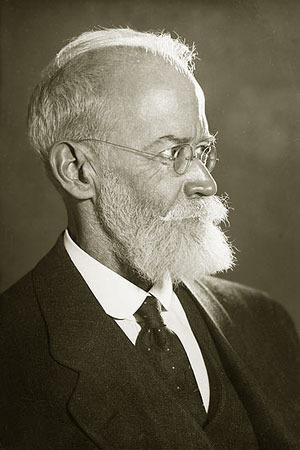
Edward Lucas White 1866-1934
Edward Lucas White
1866-1934

If you have never heard of Edward Lucas White (as I had not until recently), do yourself a favor and look up his short story “Lukundoo” (1925).   This is probably one of the best and most terrifying horror stories I have ever read and it is the story for which White is best known.  Probably his next best known story is “The House of Nightmare” (1906), though it is not nearly as good as ‘Luknudoo” and by today’s standards of horror would be considered more of a quaint tale told by children around a campfire than true horror.  Nonetheless, Lovecraft considered White to be one of the masters of “weird fiction” and mentions him in his treatise “Supernatural Horror in Literature.”

One interesting aspect of White is that he based at least some of his stories on his nightmares, which is not uncommon among horror authors, but after reading “Lukundoo” I had to ask myself, “what was going on in this guy’s psyche?”

Do you base any of your works on dreams or nightmares?   Write in and let us know.

Who influenced Edgar Allan Poe?

Edgar Allan Poe, circa 1849

Over the last couple of hours I have been wandering the Internet, searching for interesting tidbits about writers of horror to post on my blog.  I have been noting how Algernon Blackwood, Arthur Machen, Lord Dunsany, and M.R. James and a host of others influenced Lovecraft, who in turn influenced Stephen King along with generations of writers and film producers, and how Poe influenced them all.  Of course, the next question that came to me was “who influenced Poe?”

I did a quick, cursory search of the Internet and found no good answer.   A few speculated that he was influenced by the events of his life (duh, aren’t we all?), while a few others speculated that he was influenced by other prominent authors of his time (again:  duh, aren’t we all).   No one I found yet seems to be able to cite Poe’s influences like they can of Lovecraft, King, or others.

Does anyone know of a reliable source that cites the authors that Poe read?

Addendum:

(February 17, 2013) Here is the beginning of an answer to my question.  Follow this link to the article “The Influence of E.T.A. Hoffmann on the Tales of Edgar Allan Poe” by Palmer Cobb, in Volume III of Studies in Philology, The University Press, Chapel Hill, 1908.

Okay…just one more addendum to German Horror

Skinner

I saw another really cool post on the photos of the German Horror Writers Circle that I just had to share.   The book cover above is of the novel “Meeting with Skinner” by Harald A. Weissen posted on Facebook on May 7, 2010.  The accompanying summary reads:

“Imagine, that everything great that has occurred in the world since the beginning of time has been steered from a control room – discoveries, wars, political reversals, poverty, and prosperity.

Imagine that a single person has been sitting in this control room for several decades and the fortunes of the human collective has been influenced at his own discretion.

Imagine that the next person in this room is crazy.

The search for the control room draws together a traumatised young woman by the name of Laika, Elendes Biest, and Skinner , the last illusionist.”

I just think it’s an awesome post and a fascinating concept.  The artwork is great too.

Thoughts?  Comments?


German Horror (Deutsche Horrorfilme und Horrorliteratur)

I was checking my blog stats today and found out that two recent views came from Germany.    I was a German major in college and therefore I begin to be curious about what is happening today in the horror genre for both German movies and literature, since I unfortunately know little about either.

I did a quick search on Google for “German horror” and found this interesting article on IMDb.  I did another search for “German horror fiction” and “German horror literature” and found almost nothing of interest.  I searched for “German horror writers” and found the German Horror Writers Circle on Facebook, which I might use as a starting point for further investigations.   Later, I may search in German, but today I confined my inquiries to what is available in English due to a lack of time inflicted by other pressing matters.

I have to admit I have read very little modern German literature compared to German lit of the 19th century, that I am woefully unfamiliar with most modern German writers, and  that I am completely unfamiliar with modern German horror writers.  I know that in the distant past, Germany and other German-speaking lands have produced excellent writers of horror such as E.T.A. Hoffmann (see my post about Hoffmann) and Jeremias Gotthelf (“The Black Spider”, 1842).    Given the dearth of information readily available on modern German horror (at least on Google), I think the IMDb article mentioned above may have a point that because of German history since 1933, Germany may have (understandably) lost its taste for horror.   I find that unfortunate, because now that my curiosity about German horror has been aroused, I would love to read some first-rate German horror or at least see one or two first-rate German horror films from the last decade or two.

Therefore, my question for you in this blog is:  if you are familiar with German horror, what films or books do you recommend as introductions to the world of German horror?

Really, what is horror?

H_P__Lovecraft_by_MirrorCradle -- resized

H.P. Lovecraft by Mirror Cradle

I like the illustration above, not only because it shows Lovecraft in the throes of creation, but also because it can be a metaphor for anyone in the deepest and darkest of contemplations or beset with a multitude of woes.  For now, though, I will say that it represents Lovecraft contemplating today’s question which is:  forget everything you have ever read about horror, what is horror to you?

Stephen King made this comment (I found it on goodreads.com):

“The 3 types of terror: The Gross-out: the sight of a severed head tumbling down a flight of stairs, it’s when the lights go out and something green and slimy splatters against your arm. The Horror: the unnatural, spiders the size of bears, the dead waking up and walking around, it’s when the lights go out and something with claws grabs you by the arm. And the last and worse one: Terror, when you come home and notice everything you own had been taken away and replaced by an exact substitute. It’s when the lights go out and you feel something behind you, you hear it, you feel its breath against your ear, but when you turn around, there’s nothing there…”

To me, these seem to be the superficialities of terror and horror.   If we use disease as a metaphor for horror, then these are its symptoms.   The virus lying at the root of horror is man’s inhumanity to man.   Seeing a severed head tumbling down stairs is indeed horrible;  seeing the murderer sever the head would be even worse, but being able to look into the soul of the murderer and see that the motive for the act stems from the murderer’s complete indifference to the suffering of others would be even worse.   Perhaps even worse than that would be seeing that that indifference to others is not uncommon.

Many have speculated on what fascinates people about horror.   Why would anyone enjoy being frightened?   An article I read last night (I think from Wikipedia) says essentially (I am summarizing in my own words) that it is because the security our civilization our modern society affords us has eliminated the need for the primal fear that developed as a survival mechanism during the early days of evolution.    That may be true to some degree, but if society eliminated some fears, it instilled others.    How many have seen the movie “Candyman”?   How many have seen “I am Legend?” or “The Omega Man” (both derive from the novel “I am Legend” by Richard Matheson), which is only one example of post-apocalyptic literature that would have been inconceivable in primeval times.

Instead of some overreaching drive extending throughout mankind, it may be that the need simply stems from the fact that the adrenaline rush, the focus on the moment, the muscle tension, and all the other physical sensations experienced during fright are the same or very similar to those experienced during sex, but without the sexual arousal itself.   These are also similar to the sensations experienced during peaks of athletic activity.    I was in the martial arts for many years and I can testify that the adrenaline rush experienced during sparring matches or when one is performing at peak ability can be addicting.   Being frightened puts one on a similar level of physical and mental awareness, because it is an instinctual preparation to fight as if one is actually being threatened.  The great thing about horror though is that while one enjoys all the physical highs of one’s body revving up for action, there is no actual threat.  Everyone is safe.   Candyman is not actually going to come out of the screen and track you down (though your subsequent nightmares may tell you otherwise).

So, please put yourself in Mr. Lovecraft’s place in the illustration above and ask yourself, what is horror?

“The Terror” from the Wen Fu

Here is an interesting section/stanza from the ancient Chinese work Wen Fu (The Art of Writing).  It is entitled “The Terror”.

I worry that my ink well will run dry, that right words cannot be found ; I want to respond to the moment’s inspiration.

I work with what is given ; that which passes cannot be detained.

Things move into shadows & they vanish ; things return in the shape of an echo.

When Spring arrives, we understand that Nature has its own reason.

Thoughts are lifted from the heart on breezes, and language finds its speaker.

Yesterday’s buds are this morning’s blossoms which we draw with a brush on silk.

Every eye knows a pattern, every ear hears a distant music.

Wen Fu was written by Lu Chi (261 AD – 300 AD), who was a scholar, a military leader, and the the Literary Secretary in the the Emperor’s court.  It is very short and may take an average reader 15-20 minutes to complete.  The hardcopy  translation I have was written by Sam Hamill and published by Breitenbush Books in 1987.   A far more poetic version can be found at http://web.mnstate.edu/gracyk/courses/web%20publishing/LuChi.htm.

I like to peruse Wen Fu occasionally, because the language is simple yet mystical while the ideas are straightforward yet metaphorical.   What fascinates me most about the work is that the principles it expresses are eternal and universal.   The underlying principles that guided Lu Chi’s art are the same ones that underlie ours nearly two thousand years later and in a society (and language!) that would have been completely alien to Lu Chi.  What’s more, Lu Chi describes the experience of writing from a very intimate standpoint to which any author who is passionate about his art could relate.

What are your thoughts?  What principles of writing are eternal and universal?  What do you see in the stanza above?

ETA Hoffmann

477px-ETA_Hoffmann_3

Unless you are a literature/horror aficinado, you may never have heard of  Ernst Theodor Amadeus Hoffmann, a German writer from the late 18th century.  He predated Poe by almost half a century and in his time was probably as well known then as Stephen King and Clive Barker are today.   His stories were considered terrifying in his time.   Several of his stories were the basis for the well-known opera by Jacques Offenbach “Tales of Hoffmann”.  If you have never heard the music from this, it would be worthwhile to listen for it or to buy a CD of it.  It is very impressive.  As with the photo of Stoker, I obtained this image from Wikimedia Commons, where it is listed as being in the public domain.

The Unrecognized Masters of Horror

If they tried really hard, the majority of the public could perhaps name only four writers of horror:  Stephen King, H.P.Lovecraft, Edgar Allan Poe, and Clive Barker.   Fans of the horror genre could doubtlessly name many more with the number of the authors they could name reflecting the intensity of their interest.  For example, a person who can name fifteen authors of horror most likely has a more intense interest in the genre than someone who can name only five.

I would say that it is a safe bet that one or more of these authors are the topics in least 75% of all the conversations about horror literature going on at any one moment.  While we amateurs can  improve our skills from studying these four, I think we have a lot to learn from studying authors other than these four.

I recently read a compilation of stories that Lovecraft cites in his work “Supernatural Horror in Literature”.  Of course, only Poe appears among his cited predecessors.   Most of his influences are writers probably most of the modern public has never heard of (Lord Dunsany, Edward Lucas White, Arthur Machen, etc.) though they were as well known in their time as Dean Koontz and Peter Straub are today.

My question to you is:  who are the unrecognized masters of horror that the modern public should know but in all likelihood do not?  Whose name does not usually make it into any top ten list of masters of horror but should?