I have been exploring German horror on the web since my last post, particularly the photos of the German Horror Writers Circle on Facebook, where I found this really beautiful, really cool cover that I just had to share. The post is by Nina Horvath and says “Cover zu ‘Die Schattenuhr’, erstellt von Mark Freier nach einem Werk von Zdzisław Beksiński” (Cover to ‘The Clock of Shadows’, published by Mark Freier after a work by Zdzisław Beksiński). At the very top of the page, “Die Bizarre Welt des Edgar Allen Poe” translates to “The Bizarre World of Edgar Allen Poe”. One thing I have already learned about horror in Germany is that American horror is very popular over there–in particular Lovecraft and Poe.
Tag: horror
German Horror (Deutsche Horrorfilme und Horrorliteratur)
I was checking my blog stats today and found out that two recent views came from Germany. I was a German major in college and therefore I begin to be curious about what is happening today in the horror genre for both German movies and literature, since I unfortunately know little about either.
I did a quick search on Google for “German horror” and found this interesting article on IMDb. I did another search for “German horror fiction” and “German horror literature” and found almost nothing of interest. I searched for “German horror writers” and found the German Horror Writers Circle on Facebook, which I might use as a starting point for further investigations. Later, I may search in German, but today I confined my inquiries to what is available in English due to a lack of time inflicted by other pressing matters.
I have to admit I have read very little modern German literature compared to German lit of the 19th century, that I am woefully unfamiliar with most modern German writers, and that I am completely unfamiliar with modern German horror writers. I know that in the distant past, Germany and other German-speaking lands have produced excellent writers of horror such as E.T.A. Hoffmann (see my post about Hoffmann) and Jeremias Gotthelf (“The Black Spider”, 1842). Given the dearth of information readily available on modern German horror (at least on Google), I think the IMDb article mentioned above may have a point that because of German history since 1933, Germany may have (understandably) lost its taste for horror. I find that unfortunate, because now that my curiosity about German horror has been aroused, I would love to read some first-rate German horror or at least see one or two first-rate German horror films from the last decade or two.
Therefore, my question for you in this blog is: if you are familiar with German horror, what films or books do you recommend as introductions to the world of German horror?
George Romero on Horror
George Romero
Photo by Nicolas Genin
I found the following interesting quote at TheCabinet.com:
“I’ve always felt that the real horror is next door to us, that the scariest monsters are our neighbors.” –George Romero
I don’t think the scariest monsters are our neighbors, but what is scary is that our neighbors might be monsters.
What do you think?
My Short Story “Dream Warrior” Has Been Published
Illustration by Marge Simon
My short story “Dream Warrior” has been published in the February-April issue of Sorcerous Signals. Please check it out via the link above and explore the rest of the magazine as well. Please note that currently a typo in the contents page mistakenly identifies this issue as the Nov.-Jan issue.
“Dream Warrior” will also appear in Sorcerous Signals’ print edition Mystic Signals. Please look for Mystic Signals at your local newstand or bookstore.
The wonderful illustration above was drawn by artist Marge Simon of the Sorcerous Signals staff for “Dream Warrior”. Please read the story to understand the significance of the jaguar and the sun.
I am very appreciative to the Sorcerous Signals staff for all they have done and especially to editor Carol Hightshoe for her patience, professionalism, and diligence.
Joseph Thomas Sheridan Le Fanu
1814-1873
Over lunch, I was reading the Wikipedia article on horror fiction and came across a reference to Joseph Thomas Sheridan Le Fanu, of whom I had never heard. I went to the article and found out some interesting things (granted, Wikipedia is not the most respected source, but if even half of this article is accurate, Le Fanu bears some investigating by avid horror aficionados).
Le Fanu was a respected writer of ghost stories and Gothic tales in the 19th century. I read his “The Ghost and the Bonesetter” (1838), which Wikipedia describes as “his first-published and jocular story”. For our generation, this is more humor than horror, but Le Fanu’s talent is patently obvious from this work. I look forward to reading more.
It fascinates me that, as well-read as I am, I have never heard of Le Fanu, but then I have only recently begun to delve into the horror genre to any great degree. Based on the Wikipedia article, he was very well-known in his time and influenced 19th and 20th century writers such as M.R. James, Bram Stoker, and James Joyce. His best known works are the vampire novella Carmilla and The Purcell Papers (a collection of short stories). Apparently, he has also had something of an influence on modern cinema, with movies still being made of his work occasionally (Le Fanu’s mystery novel “Uncle Silas” was made into a movie in 1947, and then remade, starring Peter O’Toole, as The Dark Angel in 1987).
Here is a paragraph from the Wikipedia article to whet your appetite for further investigation of his work:
“Le Fanu worked in many genres but remains best known for his mystery and horror fiction. He was a meticulous craftsman and frequently reworked plots and ideas from his earlier writing in subsequent pieces. Many of his novels, for example, are expansions and refinements of earlier short stories. He specialised in tone and effect rather than “shock horror”, and liked to leave important details unexplained and mysterious. He avoided overt supernatural effects: in most of his major works, the supernatural is strongly implied but a “natural” explanation is also possible. The demonic monkey in “Green Tea” could be a delusion of the story’s protagonist, who is the only person to see it; in “The Familiar”, Captain Barton’s death seems to be supernatural, but is not actually witnessed, and the ghostly owl may be a real bird. This technique influenced later horror artists, both in print and on film (see, for example, the film producer Val Lewton‘s principle of “indirect horror”). Though other writers have since chosen less subtle techniques, Le Fanu’s best tales, such as the vampire novella “Carmilla“, remain some of the most powerful in the genre. He had enormous influence on the 20th century’s most important ghost story writer, M. R. James, and although his work fell out of favour in the early part of the 20th century, towards the end of the century interest in his work increased and remains comparatively strong.[1]“
Thoughts? Comments?
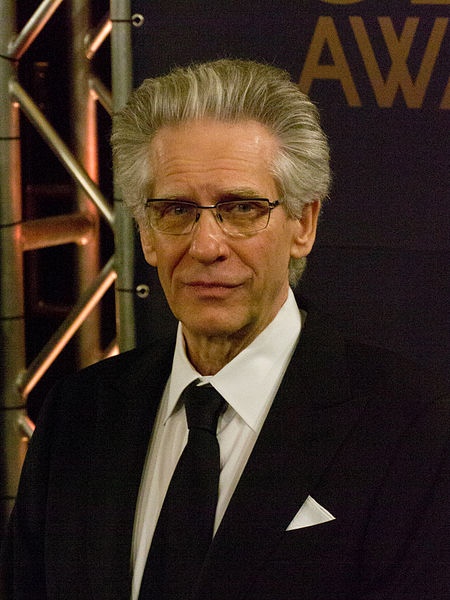
David Cronenberg on Art and Horror
David Cronenberg, 2012
Photo by Alan Langford
“I think of horror films as art, as films of confrontation. Films that make you confront aspects of your own life that are difficult to face. Just because you’re making a horror film doesn’t mean you can’t make an artful film.”
I found the quote above at Quotationsbook.com. I have linked David Cronenberg’s name to the Internet Movie Database for those of you not familiar with his works as a director of horror movies (The Fly, Scanners, etc.)
I think the statement is important for two reasons.
First, as I mentioned in my post on Carl Jung and the Creative Subconscious, authors do put something of themselves into their work. Personally, I had never recognized this about my own writing until I had the conversation I described in my post, though I had always known that each work of art is a reflection of the artist in some way. Therefore, up to that point, I cannot say I consciously confronted anything about myself. Since then, though I do not intentionally orient my stories toward self-revelation, I do occasionally recognize some internal bone of contention in a way that could probably best be described as “confrontation”. Writing then becomes a process of self-awareness, of self-knowledge, a type of self-therapy.
More importantly that the author’s own self-therapy, once these works are published, they become a sort of self-awarenes and therapy for the audience who can relate to them. We are all human; we all have the same basic drives and desires. If one individual experiences an internal confrontation, then many others have likely experienced it as well (perhaps this is the mechanism behnd living vicariously). Then the process of confrontation and self-awareness for the author becomes a process of confrontation and self-awareness for his audience as well–whether on a conscious or subconscious level. Then the horror genre becomes a form of self-therapy for society so that society can confront its dark side while experiencing our suppressed primal natures (as I mentioned in an earlier post).
The second important point about this statement is alluded to in the final sentence, that just because one is making a horror film, doesn’t mean one can’t make an artful film. On its surface, this is obviously true. There is no reason anyone cannot make a horror film with the same artistic feeling as David McLean did in Lawrence of Arabia or Stanley Kubrick did in 2001: A Space Odyssey. But beneath this surface lies another point. In the first two sentences, Mr. Cronenberg defines horror films as films of self-confrontation. In the last sentence he equates horror films with artful films. He is equating artful films with being films of self-confrontation. A=B=C. Art equating to self-confrontation could easily be the subject of a thesis, if not of an exceptionally thick textbook. Therefore, in my limited time and space available I will not even begin to delve into it here. Please explore it on your own, however. I think it would be a fascinating venture.
Any thoughts or comments?
Back to the Fun Side of Horror
Ginsberg’s Breath Units
Allen Ginsberg, 1978
Photo by Ludwig Urning
I saw the best minds of my generation destroyed by madness, starving hysterical naked,
dragging themselves through the negro streets at dawn looking for an angry fix,
Angel-headed hipsters burning for the ancient heavenly connection
to the starry dynamo in the machinery of night…
So run the opening lines of Allen Ginsberg’s “Howl“, considered by many to be one greatest works of American literature. One aspect of the poem that has always fascinated me is that Ginsberg wrote it in what are often called “breath units”, i.e. each line comprises the amount of words that should be spoken with one breath. I have experimented with breath units or something similar in both prose and poetry. One example is my poem “Faust“, which was published by the Hollins Critic in 1992.
I have found that when used in prose, breath units can be effective in breaking up rhythm in order to emphasize a point. For example, imagine a sentence as equivalent to a breath unit. Write a very long sentence and try saying it in one breath. It is as if you are trying to say something in a hurry. Use that long sentence to describe fast-moving but extended action, such as a martial arts masters exchanging blows in a match. To me, it seems as if I am in the fight while trying to describe it. Now use three to four of these sentences to describe the entire match. Then use a very short, indicative sentence to describe the final blow dropping the defeated master to the mat.
Here is an example of the use of my use of breath units in my story “A Tale of Hell” (published by Midnighttimes.com in 2006). Note that here I start with two short sentences, then follow them with three long sentences, and then conclude with one short one for emphasis.
He wanted to make love. He did not want just sex. He was not interested in his own orgasm as much as he felt an overpowering desire for the smooth texture of Theresa’s skin; the velvety brush of her nipples across his face; the sight of the light playing upon the delicate, minute hair covering the back of her neck; the tickle of her breath as it flowed around the contours of his ear. Above all else, he wanted to hear her voice, that voice that sometimes changed into a shrill nag when he wasn’t paying attention to what she said, or when he forgot to pick up something at the store, or when he neglected to call and tell her he would be late for supper. Now it dawned on him: over the years she had put up with a lot more crap than she should have. He wanted to apologize.
I have no doubt there are other technical names for this technique when used in prose, but I do not know them. It is a technique use occasionally. To my mind, prose breath units should be used sparingly or they lose their impact. I think they have a great potential in horror literature if used properly, because they can lead a reader very fast to a point that is suddenly emphasized by an unexpectedly abrupt hall–sort of like sprinting around a corner only to run face first into a brick wall.
So, I guess the question for tonight is: are you familiar with this technique and do you know it by another name?
By the way, I had never thought of it before, but isn’t that first line of “Howl” very much in the horror vein? I am wondering if “Howl” couldn’t be used as an example of horror in many ways, though it was almost certainly never intended to be viewed as a work of horror.

Quote for February 7, 2013
Theodor Adorno
by Aleandro Gonzalez de Leon
I found the following quotation from the German sociologist, philosopher, and musicologist Theodor Adorno at BrainyQuote.com and thought I might share it. I am often dubious of using a quote from a website, because I have seen a few that are obviously wrongly attributed, but whether or not Adorno actually said this, it is still interesting in its own right. However, if he did say it, which is quite likely, it becomes even more interesting because of his background as a sociologist and philosopher.
“Horror is beyond the reach of psychology.”
I admit I am not familiar with Adorno or his works, but in light of the pyschological bent of my previous posts, I am sure you will understand why I find it interesting. Please let me know your thoughts on the quotation, on Adorno, and on whether this is actually one of his statements.
Really, what is horror?
H.P. Lovecraft by Mirror Cradle
I like the illustration above, not only because it shows Lovecraft in the throes of creation, but also because it can be a metaphor for anyone in the deepest and darkest of contemplations or beset with a multitude of woes. For now, though, I will say that it represents Lovecraft contemplating today’s question which is: forget everything you have ever read about horror, what is horror to you?
Stephen King made this comment (I found it on goodreads.com):
“The 3 types of terror: The Gross-out: the sight of a severed head tumbling down a flight of stairs, it’s when the lights go out and something green and slimy splatters against your arm. The Horror: the unnatural, spiders the size of bears, the dead waking up and walking around, it’s when the lights go out and something with claws grabs you by the arm. And the last and worse one: Terror, when you come home and notice everything you own had been taken away and replaced by an exact substitute. It’s when the lights go out and you feel something behind you, you hear it, you feel its breath against your ear, but when you turn around, there’s nothing there…”
To me, these seem to be the superficialities of terror and horror. If we use disease as a metaphor for horror, then these are its symptoms. The virus lying at the root of horror is man’s inhumanity to man. Seeing a severed head tumbling down stairs is indeed horrible; seeing the murderer sever the head would be even worse, but being able to look into the soul of the murderer and see that the motive for the act stems from the murderer’s complete indifference to the suffering of others would be even worse. Perhaps even worse than that would be seeing that that indifference to others is not uncommon.
Many have speculated on what fascinates people about horror. Why would anyone enjoy being frightened? An article I read last night (I think from Wikipedia) says essentially (I am summarizing in my own words) that it is because the security our civilization our modern society affords us has eliminated the need for the primal fear that developed as a survival mechanism during the early days of evolution. That may be true to some degree, but if society eliminated some fears, it instilled others. How many have seen the movie “Candyman”? How many have seen “I am Legend?” or “The Omega Man” (both derive from the novel “I am Legend” by Richard Matheson), which is only one example of post-apocalyptic literature that would have been inconceivable in primeval times.
Instead of some overreaching drive extending throughout mankind, it may be that the need simply stems from the fact that the adrenaline rush, the focus on the moment, the muscle tension, and all the other physical sensations experienced during fright are the same or very similar to those experienced during sex, but without the sexual arousal itself. These are also similar to the sensations experienced during peaks of athletic activity. I was in the martial arts for many years and I can testify that the adrenaline rush experienced during sparring matches or when one is performing at peak ability can be addicting. Being frightened puts one on a similar level of physical and mental awareness, because it is an instinctual preparation to fight as if one is actually being threatened. The great thing about horror though is that while one enjoys all the physical highs of one’s body revving up for action, there is no actual threat. Everyone is safe. Candyman is not actually going to come out of the screen and track you down (though your subsequent nightmares may tell you otherwise).
So, please put yourself in Mr. Lovecraft’s place in the illustration above and ask yourself, what is horror?
Carl Jung and the Creative Subconscious
Carl Gustav Jung, 1912
Someone told me recently that the pyschologist Carl Jung believed the work reveals something about the author. We discussed this idea for a few minutes before it hit home in a very scary fashion, because we were discussing my works of horror. I realized that at least sometimes my own subconscious fears may influence, if not determine, the course of my stories. Storylines reflecting the subconscious fears of the author makes a lot of sense, because, to my mind at least, dreams and nightmares also originate in and reflect the undercurrents of the subconscious.
So, what do you think? Is the subconscious wellspring responsible for the creation of dreams the same one responsible for creative works? What does this say about authors like Yann Martel who wrote “Life of Pi”? What does it say about authors like Clive Barker and H.P. Lovecraft and even myself?
While we are at it, here are three quotes from Jung to provide additional food for thought. What do they say about writers of horror? I found them at The Painter’s Keys: Art Quotes from Carl Gustav Jung.
“Often the hands will solve a mystery that the intellect has struggled with in vain.”
“The secret of artistic creation and the effectiveness of art is to be found in a return to the state of ‘participation mystique’ – to that level of experience at which it is man who lives, and not the individual…”
“The creation of something new is not accomplished by the intellect but by the play instinct acting from inner necessity. The creative mind plays with the objects it loves.”
“Dream Warrior” to be Published
My short story “Dream Warrior” is currently slated to be published by the online magazine Sorcerous Signals in their February, 2013 issue as well as their February, 2013 issue of Mystic Signals (a print edition combining Sorcerous Signals and The Lorelei Signal).
For my friends and relatives not familiar with the publishing industry: please be advised that the story is only scheduled to be published in February and that I do not have an exact date yet. The last edition was published on November 12, therefore it will probably be published about mid-February. In my experience, stories appear on schedule about 90% of the time. Occasionally, something happens and the story has to be delayed, but (again, in my experience) the story always appears.
I would like to thank the editor of Sorcerous Signals, Carol Hightshoe, for accepting my work. I overlooked her letter of acceptance in my e-mail in October and was not aware of “Dream Warrior’s” acceptance until she diligently and professionally followed up and inquired about the story some time later.
The story is about a teenage boy in Corpus Christi, TX, who seeks revenge on the hoodlums responsible for the rape and death of his girlfriend. After his first attempt fails and they threaten his life, he runs to Mexico to live with his great-grandfather, who teaches him the ways of the ancient Aztec sorcerers so that he can have his revenge.
I got the idea for the story while researching south Texas history for another (as yet unfinished) story and came across a website on Aztec sorcery. Its author, whose name unfortunately escapes me at the moment, graciously responded to my inquiries and provided me with a wealth of fascinating information. If I can find his name and website in my e-mails, I will publish them later.
I hope everyone enjoys “Dream Warrior”. Please help me thank Carol and her staff by visiting the site often and encouraging everyone you know to do the same. Check your local media outlets for Mystic Signals.
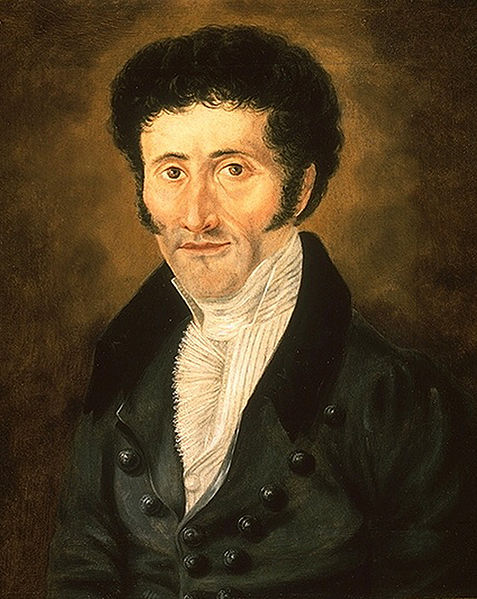
ETA Hoffmann
Unless you are a literature/horror aficinado, you may never have heard of Ernst Theodor Amadeus Hoffmann, a German writer from the late 18th century. He predated Poe by almost half a century and in his time was probably as well known then as Stephen King and Clive Barker are today. His stories were considered terrifying in his time. Several of his stories were the basis for the well-known opera by Jacques Offenbach “Tales of Hoffmann”. If you have never heard the music from this, it would be worthwhile to listen for it or to buy a CD of it. It is very impressive. As with the photo of Stoker, I obtained this image from Wikimedia Commons, where it is listed as being in the public domain.
Bram Stoker
Balance
Writing horror is a grim pastime. One spends many hours delving into the darkest aspects of the human soul. One’s mind is filled with murder, torture, violence, hatred, as well as characters, places, and situations that belong in the deepest pits of Dante’s Inferno. Granted, out of these depths often arise heroes who triumph over the evil surrounding them and thus bring out the highest and noblest aspects of the human spirit, which may provide psychological comfort and spiritual salvation to the author, but journeying into darkness periodically will take its toll on anyone to some degree. I have to ask myself how many authors of horror fall victim to depression and other maladies of the spirit.
But now, let us take this scenario and turn it about into something positive, something uplifting. Let me pose this question to you, my readership, in hopes that the answers I receive will benefit not only myself, but everyone else who reads them: how do you, writers of horror, find relief from the psychological toll encountered during your sojourns into darkness? How do you balance out your lives so that you continue to see the beauty of the world around you and do no not stay imprisoned in the worlds of evil you create? Do you watch comedies at the movies? Do you take long walks along a tranquil coast? Do you cuddle with your children and pets? Do you collect the artworks of Thomas Kinkade or someone else who paints idyllic scenes of light and earthly paradise? Please let me and my readers know so that we can find new avenues out of our horror-filled ruts and blood-stained dungeons.