The Saturday Night Special: “The Case of Lady Sannox”

The Case of Lady Sannox

by Sir Arthur Conan Doyle

(1922)

from Tales of Terror and Mystery

The Project Gutenberg E-text

This eBook is for the use of anyone anywhere at no cost and with
almost no restrictions whatsoever.  You may copy it, give it away or
re-use it under the terms of the Project Gutenberg License included
with this eBook or online at http://www.gutenberg.net


The relations between Douglas Stone and the notorious Lady Sannox were very well known both among the fashionable circles of which she was a brilliant member, and the scientific bodies which numbered him among their most illustrious confreres. There was naturally, therefore, a very widespread interest when it was announced one morning that the lady had absolutely and for ever taken the veil, and that the world would see her no more. When, at the very tail of this rumour, there came the assurance that the celebrated operating surgeon, the man of steel nerves, had been found in the morning by his valet, seated on one side of his bed, smiling pleasantly upon the universe, with both legs jammed into one side of his breeches and his great brain about as valuable as a cap full of porridge, the matter was strong enough to give quite a little thrill of interest to folk who had never hoped that their jaded nerves were capable of such a sensation.

Douglas Stone in his prime was one of the most remarkable men in England. Indeed, he could hardly be said to have
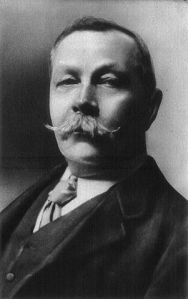
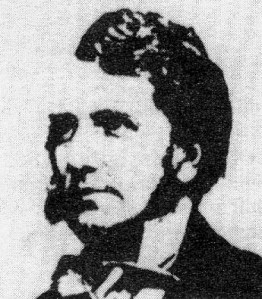
Sir Arthur Conan Doyle

ever reached his prime, for he was but nine-and-thirty at the time of this little incident. Those who knew him best were aware that famous as he was as a surgeon, he might have succeeded with even greater rapidity in any of a dozen lines of life. He could have cut his way to fame as a soldier, struggled to it as an explorer, bullied for it in the courts, or built it out of stone and iron as an engineer. He was born to be great, for he could plan what another man dare not do, and he could do what another man dare not plan. In surgery none could follow him. His nerve, his judgement, his intuition, were things apart. Again and again his knife cut away death, but grazed the very springs of life in doing it, until his assistants were as white as the patient. His energy, his audacity, his full-blooded self-confidence—does not the memory of them still linger to the south of Marylebone Road and the north of Oxford Street?

His vices were as magnificent as his virtues, and infinitely more picturesque. Large as was his income, and it was the third largest of all professional men in London, it was far beneath the luxury of his living. Deep in his complex nature lay a rich vein of sensualism, at the sport of which he placed all the prizes of his life. The eye, the ear, the touch, the palate, all were his masters. The bouquet of old vintages, the scent of rare exotics, the curves and tints of the daintiest potteries of Europe, it was to these that the quick-running stream of gold was transformed. And then there came his sudden mad passion for Lady Sannox, when a single interview with two challenging glances and a whispered word set him ablaze. She was the loveliest woman in London and the only one to him. He was one of the handsomest men in London, but not the only one to her. She had a liking for new experiences, and was gracious to most men who wooed her. It may have been cause or it may have been effect that Lord Sannox looked fifty, though he was but six-and-thirty.

He was a quiet, silent, neutral-tinted man, this lord, with thin lips and heavy eyelids, much given to gardening, and full of home-like habits. He had at one time been fond of acting, had even rented a theatre in London, and on its boards had first seen Miss Marion Dawson, to whom he had offered his hand, his title, and the third of a county. Since his marriage his early hobby had become distasteful to him. Even in private theatricals it was no longer possible to persuade him to exercise the talent which he had often showed that he possessed. He was happier with a spud and a watering-can among his orchids and chrysanthemums.

It was quite an interesting problem whether he was absolutely devoid of sense, or miserably wanting in spirit. Did he know his lady’s ways and condone them, or was he a mere blind, doting fool? It was a point to be discussed over the teacups in snug little drawing-rooms, or with the aid of a cigar in the bow windows of clubs. Bitter and plain were the comments among men upon his conduct. There was but one who had a good word to say for him, and he was the most silent member in the smoking-room. He had seen him break in a horse at the University, and it seemed to have left an impression upon his mind.

But when Douglas Stone became the favourite all doubts as to Lord Sannox’s knowledge or ignorance were set for ever at rest. There was no subterfuge about Stone. In his high-handed, impetuous fashion, he set all caution and discretion at defiance. The scandal became notorious. A learned body intimated that his name had been struck from the list of its vice-presidents. Two friends implored him to consider his professional credit. He cursed them all three, and spent forty guineas on a bangle to take with him to the lady. He was at her house every evening, and she drove in his carriage in the afternoons. There was not an attempt on either side to conceal their relations; but there came at last a little incident to interrupt them.

It was a dismal winter’s night, very cold and gusty, with the wind whooping in the chimneys and blustering against the window-panes. A thin spatter of rain tinkled on the glass with each fresh sough of the gale, drowning for the instant the dull gurgle and drip from the eaves. Douglas Stone had finished his dinner, and sat by his fire in the study, a glass of rich port upon the malachite table at his elbow. As he raised it to his lips, he held it up against the lamplight, and watched with the eye of a connoisseur the tiny scales of beeswing which floated in its rich ruby depths. The fire, as it spurted up, threw fitful lights upon his bald, clear-cut face, with its widely-opened grey eyes, its thick and yet firm lips, and the deep, square jaw, which had something Roman in its strength and its animalism. He smiled from time to time as he nestled back in his luxurious chair. Indeed, he had a right to feel well pleased, for, against the advice of six colleagues, he had performed an operation that day of which only two cases were on record, and the result had been brilliant beyond all expectation. No other man in London would have had the daring to plan, or the skill to execute, such a heroic measure.

But he had promised Lady Sannox to see her that evening and it was already half-past eight. His hand was outstretched to the bell to order the carriage when he heard the dull thud of the knocker. An instant later there was the shuffling of feet in the hall, and the sharp closing of a door.

“A patient to see you, sir, in the consulting room,” said the butler.

“About himself?”

“No, sir; I think he wants you to go out.”

“It is too late,” cried Douglas Stone peevishly. “I won’t go.”

“This is his card, sir.”

The butler presented it upon the gold salver which had been given to his master by the wife of a Prime Minister.

“‘Hamil Ali, Smyrna.’ Hum! The fellow is a Turk, I suppose.”

“Yes, sir. He seems as if he came from abroad, sir. And he’s in a terrible way.”

“Tut, tut! I have an engagement. I must go somewhere else. But I’ll see him. Show him in here, Pim.”

A few moments later the butler swung open the door and ushered in a small and decrepit man, who walked with a bent back and with the forward push of the face and blink of the eyes which goes with extreme short sight. His face was swarthy, and his hair and beard of the deepest black. In one hand he held a turban of white muslin striped with red, in the other a small chamois-leather bag.

“Good evening,” said Douglas Stone, when the butler had closed the door. “You speak English, I presume?”

“Yes, sir. I am from Asia Minor, but I speak English when I speak slow.”

“You wanted me to go out, I understand?”

“Yes, sir. I wanted very much that you should see my wife.”

“I could come in the morning, but I have an engagement which prevents me from seeing your wife tonight.”

The Turk’s answer was a singular one. He pulled the string which closed the mouth of the chamois-leather bag, and poured a flood of gold on to the table.

“There are one hundred pounds there,” said he, “and I promise you that it will not take you an hour. I have a cab ready at the door.”

Douglas Stone glanced at his watch. An hour would not make it too late to visit Lady Sannox. He had been there later. And the fee was an extraordinarily high one. He had been pressed by his creditors lately, and he could not afford to let such a chance pass. He would go.

“What is the case?” he asked.

“Oh, it is so sad a one! So sad a one! You have not, perhaps heard of the daggers of the Almohades?”

“Never.”

“Ah, they are Eastern daggers of a great age and of a singular shape, with the hilt like what you call a stirrup. I am a curiosity dealer, you understand, and that is why I have come to England from Smyrna, but next week I go back once more. Many things I brought with me, and I have a few things left, but among them, to my sorrow, is one of these daggers.”

“You will remember that I have an appointment, sir,” said the surgeon, with some irritation; “pray confine yourself to the necessary details.”

“You will see that it is necessary. Today my wife fell down in a faint in the room in which I keep my wares, and she cut her lower lip upon this cursed dagger of Almohades.”

“I see,” said Douglas Stone, rising. “And you wish me to dress the wound?”

“No, no, it is worse than that.”

“What then?”

“These daggers are poisoned.”

“Poisoned!”

“Yes, and there is no man, East or West, who can tell now what is the poison or what the cure. But all that is known I know, for my father was in this trade before me, and we have had much to do with these poisoned weapons.”

“What are the symptoms?”

“Deep sleep, and death in thirty hours.”

“And you say there is no cure. Why then should you pay me this considerable fee?”

“No drug can cure, but the knife may.”

“And how?”

“The poison is slow of absorption. It remains for hours in the wound.”

“Washing, then, might cleanse it?”

“No more than in a snake bite. It is too subtle and too deadly.”

“Excision of the wound, then?”

“That is it. If it be on the finger, take the finger off. So said my father always. But think of where this wound is, and that it is my wife. It is dreadful!”

But familiarity with such grim matters may take the finer edge from a man’s sympathy. To Douglas Stone this was already an interesting case, and he brushed aside as irrelevant the feeble objections of the husband.

“It appears to be that or nothing,” said he brusquely. “It is better to lose a lip than a life.”

“Ah, yes, I know that you are right. Well, well, it is kismet, and it must be faced. I have the cab, and you will come with me and do this thing.”

Douglas Stone took his case of bistouries from a drawer, and placed it with a roll of bandage and a compress of lint in his pocket. He must waste no more time if he were to see Lady Sannox.

“I am ready,” said he, pulling on his overcoat. “Will you take a glass of wine before you go out into this cold air?”

His visitor shrank away, with a protesting hand upraised.

“You forget that I am a Mussulman, and a true follower of the Prophet,” said he. “But tell me what is the bottle of green glass which you have placed in your pocket?”

“It is chloroform.”

“Ah, that also is forbidden to us. It is a spirit, and we make no use of such things.”

“What! You would allow your wife to go through an operation without an anaesthetic?”

“Ah! she will feel nothing, poor soul. The deep sleep has already come on, which is the first working of the poison. And then I have given her of our Smyrna opium. Come, sir, for already an hour has passed.”

As they stepped out into the darkness, a sheet of rain was driven in upon their faces, and the hall lamp, which dangled from the arm of a marble Caryatid, went out with a fluff. Pim, the butler, pushed the heavy door to, straining hard with his shoulder against the wind, while the two men groped their way towards the yellow glare which showed where the cab was waiting. An instant later they were rattling upon their journey.

“Is it far?” asked Douglas Stone.

“Oh, no. We have a very little quiet place off the Euston Road.”

The surgeon pressed the spring of his repeater and listened to the little tings which told him the hour. It was a quarter past nine. He calculated the distances, and the short time which it would take him to perform so trivial an operation. He ought to reach Lady Sannox by ten o’clock. Through the fogged windows he saw the blurred gas lamps dancing past, with occasionally the broader glare of a shop front. The rain was pelting and rattling upon the leathern top of the carriage, and the wheels swashed as they rolled through puddle and mud. Opposite to him the white headgear of his companion gleamed faintly through the obscurity. The surgeon felt in his pockets and arranged his needles, his ligatures and his safety-pins, that no time might be wasted when they arrived. He chafed with impatience and drummed his foot upon the floor.

But the cab slowed down at last and pulled up. In an instant Douglas Stone was out, and the Smyrna merchant’s toe was at his very heel.

“You can wait,” said he to the driver.

It was a mean-looking house in a narrow and sordid street. The surgeon, who knew his London well, cast a swift glance into the shadows, but there was nothing distinctive—no shop, no movement, nothing but a double line of dull, flat-faced houses, a double stretch of wet flagstones which gleamed in the lamplight, and a double rush of water in the gutters which swirled and gurgled towards the sewer gratings. The door which faced them was blotched and discoloured, and a faint light in the fan pane above, it served to show the dust and the grime which covered it. Above in one of the bedroom windows, there was a dull yellow glimmer. The merchant knocked loudly, and, as he turned his dark face towards the light, Douglas Stone could see that it was contracted with anxiety. A bolt was drawn, and an elderly woman with a taper stood in the doorway, shielding the thin flame with her gnarled hand.

“Is all well?” gasped the merchant.

“She is as you left her, sir.”

“She has not spoken?”

“No, she is in a deep sleep.”

The merchant closed the door, and Douglas Stone walked down the narrow passage, glancing about him in some surprise as he did so. There was no oil-cloth, no mat, no hat-rack. Deep grey dust and heavy festoons of cobwebs met his eyes everywhere. Following the old woman up the winding stair, his firm footfall echoed harshly through the silent house. There was no carpet.

The bedroom was on the second landing. Douglas Stone followed the old nurse into it, with the merchant at his heels. Here, at least, there was furniture and to spare. The floor was littered and the corners piled with Turkish cabinets, inlaid tables, coats of chain mail, strange pipes, and grotesque weapons. A single small lamp stood upon a bracket on the wall. Douglas Stone took it down, and picking his way among the lumber, walked over to a couch in the corner, on which lay a woman dressed in the Turkish fashion, with yashmak and veil. The lower part of the face was exposed, and the surgeon saw a jagged cut which zigzagged along the border of the under lip.

“You will forgive the yashmak,” said the Turk. “You know our views about women in the East.”

But the surgeon was not thinking about the yashmak. This was no longer a woman to him. It was a case. He stooped and examined the wound carefully.

“There are no signs of irritation,” said he. “We might delay the operation until local symptoms develop.”

The husband wrung his hands in uncontrollable agitation.

“Oh! sir, sir,” he cried. “Do not trifle. You do not know. It is deadly. I know, and I give you my assurance that an operation is absolutely necessary. Only the knife can save her.”

“And yet I am inclined to wait,” said Douglas Stone.

“That is enough,” the Turk cried, angrily. “Every minute is of importance, and I cannot stand here and see my wife allowed to sink. It only remains for me to give you my thanks for having come, and to call in some other surgeon before it is too late.”

Douglas Stone hesitated. To refund that hundred pounds was no pleasant matter. But of course if he left the case he must return the money. And if the Turk were right and the woman died, his position before a coroner might be an embarrassing one.

“You have had personal experience of this poison?” he asked.

“I have.”

“And you assure me that an operation is needful.”

“I swear it by all that I hold sacred.”

“The disfigurement will be frightful.”

“I can understand that the mouth will not be a pretty one to kiss.”

Douglas Stone turned fiercely upon the man. The speech was a brutal one. But the Turk has his own fashion of talk and of thought, and there was no time for wrangling. Douglas Stone drew a bistoury from his case, opened it and felt the keen straight edge with his forefinger. Then he held the lamp closer to the bed. Two dark eyes were gazing up at him through the slit in the yashmak. They were all iris, and the pupil was hardly to be seen.

“You have given her a very heavy dose of opium.”

“Yes, she has had a good dose.”

He glanced again at the dark eyes which looked straight at his own. They were dull and lustreless, but, even as he gazed, a little shifting sparkle came into them, and the lips quivered.

“She is not absolutely unconscious,” said he.

“Would it not be well to use the knife while it will be painless?”

The same thought had crossed the surgeon’s mind. He grasped the wounded lip with his forceps, and with two swift cuts he took out a broad V-shaped piece. The woman sprang up on the couch with a dreadful gurgling scream. Her covering was torn from her face. It was a face that he knew. In spite of that protruding upper lip and that slobber of blood, it was a face that he knew, She kept on putting her hand up to the gap and screaming. Douglas Stone sat down at the foot of the couch with his knife and his forceps. The room was whirling round, and he had felt something go like a ripping seam behind his ear. A bystander would have said that his face was the more ghastly of the two. As in a dream, or as if he had been looking at something at the play, he was conscious that the Turk’s hair and beard lay upon the table, and that Lord Sannox was leaning against the wall with his hand to his side, laughing silently. The screams had died away now, and the dreadful head had dropped back again upon the pillow, but Douglas Stone still sat motionless, and Lord Sannox still chuckled quietly to himself.

“It was really very necessary for Marion, this operation,” said he, “not physically, but morally, you know, morally.”

Douglas Stone stooped for yards and began to play with the fringe of the coverlet. His knife tinkled down upon the ground, but he still held the forceps and something more.

“I had long intended to make a little example,” said Lord Sannox, suavely. “Your note of Wednesday miscarried, and I have it here in my pocket-book. I took some pains in carrying out my idea. The wound, by the way, was from nothing more dangerous than my signet ring.”

He glanced keenly at his silent companion, and cocked the small revolver which he held in his coat pocket. But Douglas Stone was still picking at the coverlet.

“You see you have kept your appointment after all,” said Lord Sannox.

And at that Douglas Stone began to laugh. He laughed long and loudly. But Lord Sannox did not laugh now. Something like fear sharpened and hardened his features. He walked from the room, and he walked on tiptoe. The old woman was waiting outside.

“Attend to your mistress when she awakes,” said Lord Sannox.

Then he went down to the street. The cab was at the door, and the driver raised his hand to his hat.

“John,” said Lord Sannox, “you will take the doctor home first. He will want leading downstairs, I think. Tell his butler that he has been taken ill at a case.”

“Very good, sir.”

“Then you can take Lady Sannox home.”

“And how about yourself, sir?”

“Oh, my address for the next few months will be Hotel di Roma, Venice. Just see that the letters are sent on. And tell Stevens to exhibit all the purple chrysanthemums next Monday, and to wire me the result.”

Publication Announcement: “Faust” to appear in The Literary Hatchet

Faust--detail of an illustration by Friedrich Gustav Schlick
Faust–detail of an illustration by Friedrich Gustav Schlick

My horror poem “Faust” has been accepted by The Literary Hatchet and will appear in their next issue, which is slated for December 15.

“Faust” is my take on a moment in the story of Faust, the legendary professor and scientist of medieval Germany, who sold his soul to the devil in return for all knowledge.  I examine Faust’s feelings in that moment just after he has sold his soul and the devil (Mephisto) has vanished, when he is left to contemplate in solitude the consequences of his decision.

I would like to thank Stefani Koorey, Michael Brimbau, and the staff of The Literary Hatchet, for reprinting this, my favorite of all the poems I have written to date.  “Faust” has previously appeared in The Hollins Critic (1992) and Blood Moon Rising (2013).

Please feel free to visit The Literary Hatchet on December 15 or purchase a hard copy and check out “Faust” on December 15, or at any time for that matter.

Thoughts?  Comments?

Mad Love aka The Hands of Orlac

Source: Mad Love aka The Hands of Orlac

Here is a brief review of a long-forgotten Peter Lorre movie that sounds very interesting based upon critiques of the time and the modern-day reviews.  I will probably be seeking this one out.

The reviewer’s concise description of the plot is at the best inadequate.  He doesn’t mention what relation Stephen Orlac is to Yvonne Orlac (brother?  husband?)  and he doesn’t even allude to what Orlac does with his new-found ability with knives, though I suppose we are to guess that he uses them against Dr. Gogol in some fashion.  He probably could have done better.

J SHERIDAN LE FANU

Joseph Thomas Sheridan Le Fanu 1814-1873
Joseph Thomas Sheridan Le Fanu
1814-1873

Source: J SHERIDAN LE FANU

Good article from Horrordelve.com on Sheridan Le Fanu, Irish author of the mid-nineteenth century.  In his day, he was well-known for his ghost stories, some of which are described in this article.

The Saturday Night Special: “Lukundoo” by Edward Lucas White

I endeavor each Saturday to post a work of horror from its long past.  Horror, as a recognized genre, has existed less than a century.  Before that, it was known by several names or vague references, such asv”weird fiction” or “ghost stories” or “gothic tales”.  Many tales from these earlier eras are forgotten, but many are still well-known, having withstood the test of time, because they contained some element(s) that made them worthy of being remembered.    It is to our advantage to study these memorable works and to discern what it is about them that speaks to the human psyche so intensely that they are remembered.  However, just because a work is not well-known today, does not mean it does not merit study.  There are many tales that were popular or highly acclaimed in their time, that should be remembered today, but sadly are not.  We can learn much from these as well.

My intent is to bring to the world’s attention once again, stories that warrant study and remembrance.  Too often in our modern world we become so lost among fads, trends, sound bytes, and the often ill-advised advice of pundits and critics, that we lose sight of the entirety of our lives and of our art.  As someone once said, “when you’re up to your ass in alligators, it’s hard to remember your mission was to drain the swamp.”  Maintaining a good, solid overview of one’s art is one means of maintaining a good, solid perspective, and probably the most basic overview is the historical perspective.

For these reasons, every Saturday I would like to bring you a story from horror’s long past, one that is worthy of study and remembrance.  I shall try to keep them brief, but I will have to balance that with each one’s own merits.  I hope you enjoy them all.  This Saturday’s selection is:


Lukundoo

by Edward Lucas White

1907

(the Project Gutenberg Australia text)


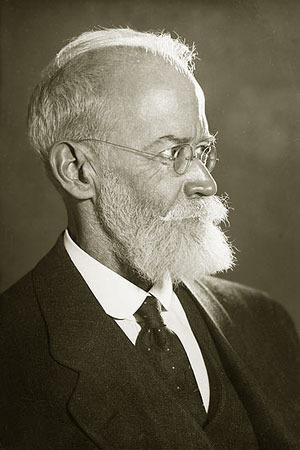
Edward Lucas White 1866-1934
Edward Lucas White
1866-1934

“It stands to reason,” said Twombly, “that a man must accept of his own eyes, and when eyes and ears agree, there can be no doubt. He has to believe what he has both seen and heard.”

“Not always,” put in Singleton, softly.

Every man turned toward Singleton. Twombly was standing on hearthrug, his back to the grate, his legs spread out, with his habitual air of dominating the room. Singleton, as usual, was as much as possible effaced in a corner. But when Singleton spoke he said something. We faced him in that flattering spontaneity of expectant silence which invites utterance.

“I was thinking,” he said, after an interval, “of something I both saw and heard in Africa.”

Now, if there was one thing we had found impossible, it had been to elicit from Singleton anything definite about his African experiences. As with the Alpinist in the story, who could tell only that he went up and came down, the sum of Singleton’s revelations had been that he went there and came away. His words now riveted our attention at once. Twombly faded from the hearthrug, but not one of us could ever recall having seen him go. The room readjusted itself, focused on Singleton, and there was some hasty and furtive lighting of fresh cigars. Singleton lit one also, but it went out immediately, and he never relit it.

Chapter I

We were in the Great Forest, exploring for pigmies. Van Rieten had a theory that the dwarfs found by Stanley and others were a mere cross-breed between ordinary negroes and the real pigmies. He hoped to discover a race of men three feet tall at most, or shorter. We had found no trace of any such beings.

Natives were few, game scarce; food, except game, there was none; and the deepest, dankest, drippingest forest all about. We were the only novelty in the country, no native we met had ever seen a white man before, most had never heard of white men. All of a sudden, late one afternoon, there came into our camp an Englishman, and pretty well used up he was, too. We had heard no rumor of him; he had not only heard of us but had made an amazing five-day march to reach us. His guide and two bearers were nearly as done up as he. Even though he was in tatters and had five days’ beard on, you could see he was naturally dapper and neat and the sort of man to shave daily. He was small, but wiry. His face was the sort of British face from which emotion has been so carefully banished that a foreigner is apt to think the wearer of the face incapable of any sort of feeling; the kind of face which, if it has any expression at all, expresses principally the resolution to go through the world decorously, without intruding upon or annoying anyone.

His name was Etcham. He introduced himself modestly, and ate with us so deliberately that we should never have suspected, if our bearers had not had it from his bearers, that he had had but three meals in the five days, and those small. After we had lit up he told us why he had come.

“My chief is ve’y seedy,” he said between puffs. “He is bound to go out if he keeps this way. I thought perhaps…”

He spoke quietly in a soft, even tone, but I could see little beads of sweat oozing out on his upper lip under his stubby mustache, and there was a tingle of repressed emotion in his tone, a veiled eagerness in his eye, a palpitating inward solicitude in his demeanor that moved me at once. Van Rieten had no sentiment in him; if he was moved he did not show it. But he listened. I was surprised at that. He was just the man to refuse at once. But he listened to Etcham’s halting, difficult hints. He even asked questions.

“Who is your chief?”

“Stone,” Etcham lisped.

That electrified both of us.

“Ralph Stone?” we ejaculated together.

Etcham nodded.

For some minutes Van Rieten and I were silent. Van Rieten had never seen him, but I had been a classmate of Stone’s, and Van Rieten and I had discussed him over many a campfire. We had heard of him two years before, south of Luebo in the Balunda country, which had been ringing with his theatrical strife against a Balunda witch-doctor, ending in the sorcerer’s complete discomfiture and the abasement of his tribe before Stone. They had even broken the fetish-man’s whistle and given Stone the pieces. It had been like the triumph of Elijah over the prophets of Baal, only more real to the Balunda.

We had thought of Stone as far off, if still in Africa at all, and here he turned up ahead of us and probably forestalling our quest.

Chapter II

Etcham’s naming of Stone brought back to us all his tantalizing story, his fascinating parents, their tragic death; the brilliance of his college days; the dazzle of his millions; the promise of his young manhood; his wide notoriety, so nearly real fame; his romantic elopement with the meteoric authoress whose sudden cascade of fiction had made her so great a name so young, whose beauty and charm were so much heralded; the frightful scandal of the breach-of-promise suit that followed; his bride’s devotion through it all; their sudden quarrel after it was all over; their divorce; the too much advertised announcement of his approaching marriage to the plaintiff in the breach-of-promise suit; his precipitate remarriage to his divorced bride; their second quarrel and second divorce; his departure from his native land; his advent in the dark continent. The sense of all this rushed over me and I believe Van Rieten felt it, too, as he sat silent.

Then he asked:

“Where is Werner?”

“Dead,” said Etcham. “He died before I joined Stone.”

“You were not with Stone above Luebo?”

“No,” said Etcham, “I joined him at Stanley Falls.”

“Who is with him?” Van Rieten asked.

“Only his Zanzibar servants and the bearers,” Etcham replied.

“What sort of bearers?” Van Rieten demanded.

“Mang-Battu men,” Etcham responded simply.

Now that impressed both Van Rieten and myself greatly. It bore out Stone’s reputation as a notable leader of men. For up to that time no one had been able to use Mang-Battu as bearers outside of their own country, or to hold them for long or difficult expeditions.

“Were you long among the Mang-Battu?” was Van Rieten’s next question.

“Some weeks,” said Etcham. “Stone was interested in them and made up a fair-sized vocabulary of their words and phrases. He had a theory that they are an offshoot of the Balunda and he found much confirmation in their customs.”

“What do you live on?” Van Rieten enquired.

“Game, mostly,” Etcham lisped.

“How long has Stone been laid up?” Van Rieten next asked.

“More than a month,” Etcham answered.

“And you have been hunting for the camp?” Van Rieten exclaimed.

Etcham’s face, burnt and flayed as it was, showed a flush.

“I missed some easy shots,” he admitted ruefully. “I’ve not felt ve’y fit myself.”

“What’s the matter with your chief?” Van Rieten enquired.

“Something like carbuncles,” Etcham replied.

“He ought to get over a carbuncle or two,” Van Rieten declared.

“They are not carbuncles,” Etcham explained. “Nor one or two. He has had dozens, sometimes five at once. If they had been carbuncles he would have been dead long ago. But in some ways they are not so bad, though in others they are worse.”

“How do you mean?” Van Rieten queried.

“Well,” Etcham hesitated, “they do not seem to inflame so deep nor so wide as carbuncles, nor to be so painful, nor to cause so much fever. But then they seem to be part of a disease that affects his mind. He let me help him dress the first, but the others he has hidden most carefully, from me and from the men. He keeps his tent when they puff up, and will not let me change the dressings or be with him at all.”

“Have you plenty of dressings?” Van Rieten asked.

“We have some,” said Etcham doubtfully. “But he won’t use them; he washes out the dressings and uses them over and over.”

“How is he treating the swellings?” Van Rieten enquired.

“He slices them off clean down to flesh level, with his razor.”

“What?” Van Rieten shouted.

Etcham made no answer but looked him steadily in the eyes.

“I beg pardon,” Van Rieten hastened to say. “You startled me. They can’t be carbuncles. He’d have been dead long ago.”

“I thought I had said they are not carbuncles,” Etcham lisped.

“But the man must be crazy!” Van Rieten exclaimed.

“Just so,” said Etcham. “He is beyond my advice or control.”

“How many has he treated that way?” Van Rieten demanded.

“Two, to my knowledge,” Etcham said.

“Two?” Van Rieten queried.

Etcham flushed again.

“I saw him,” he confessed, “through a crack in the hut. I felt impelled to keep a watch on him, as if he was not responsible.”

“I should think not,” Van Rieten agreed. “And you saw him do that twice?”

“I conjecture,” said Etcham, “that he did the like with all the rest.”

“How many has he had?” Van Rieten asked.

“Dozens,” Etcham lisped.

“Does he eat?” Van Rieten enquired.

“Like a wolf,” said Etcham. “More than any two bearers.”

“Can he walk?” Van Rieten asked.

“He crawls a bit, groaning,” said Etcham simply.

“Little fever, you say,” Van Rieten ruminated.

“Enough and too much,” Etcham declared.

“Has he been delirious?” Van Rieten asked.

“Only twice,” Etcham replied; “once when the first swelling broke, and once later. He would not let anyone come near him then. But we could hear him talking, talking steadily, and it scared the natives.

“Was he talking their patter in delirium?” Van Rieten demanded.

“No,” said Etcham, “but he was talking some similar lingo. Hamed Burghash said he was talking Balunda. I know too little Balunda. I do not learn languages readily. Stone learned more Mang-Battu in a week than I could have learned in a year. But I seemed to hear words like Mang-Battu words. Anyhow, the Mang-Battu bearers were scared.”

“Scared?” Van Rieten repeated, questioningly.

“So were the Zanzibar men, even Hamed Burghash, and so was I,” said Etcham, “only for a different reason. He talked in two voices.”

“In two voices,” Van Rieten reflected.

“Yes,” said Etcham, more excitedly than he had yet spoken. “In two voices, like a conversation. One was his own, one a small, thin, bleaty voice like nothing I ever heard. I seemed to make out, among the sounds the deep voice made, something like Mang-Battu words I knew, as nedru, metababa, and nedo, their terms for ‘head,’ ‘shoulder,’ ‘thigh,’ and perhaps kudra and nekere (‘speak’ and ‘whistle’); and among the noises of the shrill voice matomipa, angunzi, and kamomami (‘kill,’ ‘death,’ and ‘hate’). Hamed Burghash said he also heard those words. He knew Mang-Battu far better than I.”

“What did the bearers say?” Van Rieten asked.

“They said, ‘, Lukundoo!'” Etcham replied. “I did not know the word; Hamed Burghash said it was Mang-Battu for ‘leopard.'”

“It’s Mang-Battu for ‘witchcraft,'” said Van Rieten.

“I don’t wonder they thought so,” said Etcham. “It was enough to make one believe in sorcery to listen to those two voices.”

“One voice answering the other?” Van Rieten asked perfunctorily.

Etcham’s face went gray under his tan.

“Sometimes both at once,” he answered huskily.

“Both at once!” Van Rieten ejaculated.

“It sounded that way to the men, too,” said Etcham. “And that was not all.”

He stopped and looked helplessly at us for a moment.

“Could a man talk and whistle at the same time?” he asked.

“How do you mean?” Van Rieten queried.

“We could hear Stone talking away, his big, deep-cheated baritone rumbling along, and through it all we could hear a high, shrill whistle, the oddest, wheezy sound. You know, no matter how shrilly a grown man may whistle, the note has a different quality from the whistle of a boy or a woman or a little girl. They sound more treble, somehow. Well, if you can imagine the smallest girl who could whistle keeping it up tunelessly right along, that whistle was like that, only even more piercing, and it sounded right through Stone’s bass tones.”

“And you didn’t go to him?” Van Rieten cried.

“He is not given to threats,” Etcham disclaimed. “But he had threatened, not volubly, nor like a sick man, but quietly and firmly, that if any man of us (he lumped me in with the men) came near him while he was in his trouble, that man should die. And it was not so much his words as his manner. It was like a monarch commanding respected privacy for a deathbed. One simply could not transgress.”

“I see,” said Van Rieten shortly.

“He’s ve’y seedy,” Etcham repeated helplessly. “I thought perhaps….”

His absorbing affection for Stone, his real love for him, shone out through his envelope of conventional training. Worship of Stone was plainly his master passion.

Like many competent men, Van Rieten had a streak of hard selfishness in him. It came to the surface then. He said we carried our lives in our hands from day to day just as genuinely as Stone; that he did not forget the ties of blood and calling between any two explorers, but that there was no sense in imperiling one party for a very problematical benefit to a man probably beyond any help; that it was enough of a task to hunt for one party; that if two were united, providing food would be more than doubly difficult; that the risk of starvation was too great. Deflecting our march seven full days’ journey (he complimented Etcham on his marching powers) might ruin our expedition entirely.

Chapter III

Van Rieten had logic on his side and he had a way with him. Etcham sat there apologetic and deferential, like a fourth-form schoolboy before a head master. Van Rieten wound up.

“I am after pigmies, at the risk of my life. After pigmies I go.”

“Perhaps, then, these will interest you,” said Etcham, very quietly.

He took two objects out of the sidepocket of his blouse, and handed them to Van Rieten. They were round, bigger than big plums, and smaller than small peaches, about the right size to enclose in an average hand. They were black, and at first I did not see what they were.

“Pigmies!” Van Rieten exclaimed. “Pigmies, indeed! Why, they wouldn’t be two feet high! Do you mean to claim that these are adult heads?”

“I claim nothing,” Etcham answered evenly. “You can see for yourself.”

Van Rieten passed one of the heads to me. The sun was just setting and I examined it closely. A dried head it was, perfectly preserved, and the flesh as hard as Argentine jerked beef. A bit of a vertebra stuck out where the muscles of the vanished neck had shriveled into folds. The puny chin was sharp on a projecting jaw, the minute teeth white and even between the retracted lips, the tiny nose was flat, the little forehead retreating, there were inconsiderable clumps of stunted wool on the Lilliputian cranium. There was nothing babyish, childish or youthful about the head; rather it was mature to senility.

“Where did these come from?” Van Rieten enquired.

“I do not know,” Etcham replied precisely. “I found them among Stone’s effects while rummaging for medicines or drugs or anything that could help me to help him. I do not know where he got them. But I’ll swear he did not have them when we entered this district.”

“Are you sure?” Van Rieten queried, his eyes big and fixed on Etcham’s.

“Ve’y sure,” lisped Etcham.

“But how could he have come by them without your knowledge?” Van Rieten demurred.

“Sometimes we were apart ten days at a time hunting,” said Etcham. “Stone is not a talking man. He gave me no account of his doings, and Hamed Burghash keeps a still tongue and a tight hold on the men.”

“You have examined these heads?” Van Rieten asked.

“Minutely,” said Etcham.

Van Rieten took out his notebook. He was a methodical chap. He tore out a leaf, folded it and divided it equally into three pieces. He gave one to me and one to Etcham.

“Just for a test of my impressions,” he said, “I want each of us to write separately just what he is most reminded of by these heads. Then I want to compare the writings.”

I handed Etcham a pencil and he wrote. Then he handed the pencil back to me and I wrote.

“Read the three,” said Van Rieten, handing me his piece.

Van Rieten had written:

“An old Balunda witch-doctor.”

Etcham had written:

“An old Mang-Battu fetish-man.”

I had written:

“An old Katongo magician.”

“There!” Van Rieten exclaimed. “Look at that! There is nothing Wagabi or Batwa or Wambuttu or Wabotu about these heads. Nor anything pigmy either.”

“I thought as much,” said Etcham.

“And you say he did not have them before?”

“To a certainty he did not,” Etcham asserted.

“It is worth following up,” said Van Rieten. “I’ll go with you. And first of all, I’ll do my best to save Stone.”

He put out his hand and Etcham clasped it silently. He was grateful all over.

Chapter IV

Nothing but Etcham’s fever of solicitude could have taken him in five days over the track. It took him eight days to retrace with full knowledge of it and our party to help. We could not have done it in seven, and Etcham urged us on, in a repressed fury of anxiety, no mere fever of duty to his chief, but a real ardor of devotion, a glow of personal adoration for Stone which blazed under his dry conventional exterior and showed in spite of him.

We found Stone well cared for. Etcham had seen to a good, high thorn zareeba round the camp, the huts were well built, and thatched and Stone’s was as good as their resources would permit. Hamed Burghash was not named after two Seyyids for nothing. He had in him the making of a sultan. He had kept the Mang-Battu together, not a man had slipped off, and he had kept them in order. Also he was a deft nurse and a faithful servant.

The two other Zanzibaris had done some creditable hunting. Though all were hungry, the camp was far from starvation.

Stone was on a canvas cot and there was a sort of collapsible camp-stool-table, like a Turkish tabouret, by the cot. It had a water-bottle and some vials on it and Stone’s watch, also his razor in its case.

Stone was clean and not emaciated, but he was far gone; not unconscious, but in a daze; past commanding or resisting anyone. He did not seem to see us enter or to know we were there. I should have recognized him anywhere. His boyish dash and grace had vanished utterly, of course. But his head was even more leonine; his hair was still abundant, yellow and wavy; the close, crisped blond beard he had grown during his illness did not alter him. He was big and big-cheated yet. His eyes were dull and he mumbled and babbled mere meaningless syllables, not words.

Etcham helped Van Rieten to uncover him and look him over. He was in good muscle for a man so long bedridden. There were no scars on him except about his knees, shoulders and chest. On each knee and above it he had a full score of roundish cicatrices, and a dozen or more on each shoulder, all in front. Two or three were open wounds and four or five barely healed. He had no fresh swellings, except two, one on each side, on his pectoral muscles, the one on the left being higher up and farther out than the other. They did not look like boils or carbuncles, but as if something blunt and hard were being pushed up through the fairly healthy flesh and skin, not much inflamed.

“I should not lance those,” said Van Rieten, and Etcham assented.

They made Stone as comfortable as they could, and just before sunset we looked in at him again. He was lying on his back, and his chest showed big and massive yet, but he lay as if in a stupor. We left Etcham with him and went into the next hut, which Etcham had resigned to us. The jungle noises were no different than anywhere else for months past, and I was soon fast asleep.

Chapter V

Sometime in the pitch dark I found myself awake and listening. I could hear two voices, one Stone’s, the other sibilant and wheezy. I knew Stone’s voice after all the years that had passed since I heard it last. The other was like nothing I remembered. It had less volume than the wail of a new-born baby, yet there was an insistent carrying power to it, like the shrilling of an insect. As I listened I heard Van Rieten breathing near me in the dark; then he heard me and realized that I was listening, too. Like Etcham I knew little Balunda, but I could make out a word or two. The voices alternated, with intervals of silence between.

Then suddenly both sounded at once and fast. Stone’s baritone basso, full as if he were in perfect health, and that incredibly stridulous falsetto, both jabbering at once like the voices of two people quarreling and trying to talk each other down.

“I can’t stand this,” said Van Rieten. “Let’s have a look at him.”

He had one of those cylindrical electric night-candles. He fumbled about for it, touched the button and beckoned me to come with him. Outside the hut he motioned me to stand still, and instinctively turned off the light, as if seeing made listening difficult.

Except for a faint glow from the embers of the bearers’ fire we were in complete darkness, little starlight struggled through the trees, the river made but a faint murmur. We could hear the two voices together and then suddenly the creaking voice changed into a razor-edged, slicing whistle, indescribably cutting, continuing right through Stone’s grumbling torrent of croaking words.

“Good God!” exclaimed Van Rieten.

Abruptly he turned on the light.

We found Etcham utterly asleep, exhausted by his long anxiety and the exertions of his phenomenal march, and relaxed completely now that the load was in a sense shifted from his shoulders to Van Rieten’s. Even the light on his face did not wake him.

The whistle had ceased and the two voices now sounded together. Both came from Stone’s cot, where the concentrated white ray showed him lying just as we had left him, except that he had tossed his arms above his head and had torn the coverings and bandages from his chest.

The swelling on his right breast had broken. Van Rieten aimed the center line of the light at it and we saw it plainly. From his flesh, grown out of it, there protruded a head, such a head as the dried specimens Etcham had shown us, as if it were a miniature of the head of a Balunda fetish-man. It was black, shining black as the blackest African skin; it rolled the whites of its wicked, wee eyes and showed its microscopic teeth between lips repulsively negroid in their red fullness, even in so diminutive a face. It had crisp, fuzzy wool on its minikin skull, it turned malignantly from side to side and chittered incessantly in that inconceivable falsetto. Stone babbled brokenly against its patter.

Van Rieten turned from Stone and waked Etcham, with some difficulty. When he was awake and saw it all, Etcham stared and said not one word.

“You saw him slice off two swellings?” Van Rieten asked.

Etcham nodded, chokingly.

“Did he bleed much?” Van Rieten demanded.

“Ve’y little,” Etcham replied.

“You hold his arms,” said Van Rieten to Etcham.

He took up Stone’s razor and handed me the light. Stone showed no sign of seeing the light or of knowing we were there. But the little head mewled and screeched at us.

Van Rieten’s hand was steady, and the sweep of the razor even and true. Stone bled amazingly little and Van Rieten dressed the wound as if it had been a bruise or scrape.

Stone had stopped talking the instant the excrescent head was severed. Van Rieten did all that could be done for Stone and then fairly grabbed the light from me. Snatching up a gun he scanned the ground by the cot and brought the butt down once and twice, viciously.

We went back to our hut, but I doubt if I slept.

Chapter VI

Next day, near noon, in broad daylight, we heard the two voices from Stone’s hut. We found Etcham dropped asleep by his charge. The swelling on the left had broken, and just such another head was there miauling and spluttering. Etcham woke up and the three of us stood there and glared. Stone interjected hoarse vocables into the tinkling gurgle of the portent’s utterance.

Van Rieten stepped forward, took up Stone’s razor and knelt down by the cot. The atomy of a head squealed a wheezy snarl at him.

Then suddenly Stone spoke English.

“Who are you with my razor?”

Van Rieten started back and stood up.

Stone’s eyes were clear now and bright, they roved about the hut.

“The end,” he said; “I recognize the end. I seem to see Etcham, as if in life. But Singleton! Ah, Singleton! Ghosts of my boyhood come to watch me pass! And you, strange specter with the black beard and my razor! Aroint ye all!”

“I’m no ghost, Stone,” I managed to say. “I’m alive. So are Etcham and Van Rieten. We are here to help you.”

“Van Rieten!” he exclaimed. “My work passes on to a better man. Luck go with you, Van Rieten.”

Van Rieten went nearer to him.

“Just hold still a moment, old man,” he said soothingly. “It will be only one twinge.”

“I’ve held still for many such twinges,” Stone answered quite distinctly. “Let me be. Let me die in my own way. The hydra was nothing to this. You can cut off ten, a hundred, a thousand heads, but the curse you can not cut off, or take off. What’s soaked into the bone won’t come out of the flesh, any more than what’s bred there. Don’t hack me any more. Promise!”

His voice had all the old commanding tone of his boyhood and it swayed Van Rieten as it always had swayed everybody.

“I promise,” said Van Rieten.

Almost as he said the word Stone’s eyes filmed again.

Then we three sat about Stone and watched that hideous, gibbering prodigy grow up out of Stone’s flesh, till two horrid, spindling little black arms disengaged themselves. The infinitesimal nails were perfect to the barely perceptible moon at the quick, the pink spot on the palm was horridly natural. These arms gesticulated and the right plucked toward Stone’s blond beard.

“I can’t stand this,” Van Rieten exclaimed and took up the razor again.

Instantly Stone’s eyes opened, hard and glittering.

“Van Rieten break his word?” he enunciated slowly. “Never!”

“But we must help you,” Van Rieten gasped.

“I am past all help and all hurting,” said Stone. “This is my hour. This curse is not put on me; it grew out of me, like this horror here. Even now I go.”

His eyes closed and we stood helpless, the adherent figure spouting shrill sentences.

In a moment Stone spoke again.

“You speak all tongues?” he asked quickly.

And the mergent minikin replied in sudden English:

“Yea, verily, all that you speak,” putting out its microscopic tongue, writhing its lips and wagging its head from side to side. We could see the thready ribs on its exiguous flanks heave as if the thing breathed.

“Has she forgiven me?” Stone asked in a muffled strangle.

“Not while the moss hangs from the cypresses,” the head squeaked. “Not while the stars shine on Lake Pontchartrain will she forgive.”

And then Stone, all with one motion, wrenched himself over on his side. The next instant he was dead.

When Singleton’s voice ceased the room was hushed for a space. We could hear each other breathing. Twombly, the tactless, broke the silence.

“I presume,” he said, “you cut off the little minikin and brought it home in alcohol.”

Singleton turned on him a stern countenance.

“We buried Stone,” he said, “unmutilated as he died.”

“But,” said the unconscionable Twombly, “the whole thing is incredible.”

Singleton stiffened.

“I did not expect you to believe it,” he said; “I began by saying that although I heard and saw it, when I look back on it I cannot credit it myself.”

The Saturday Night Special: “The Damned Thing” by Ambrose Bierce

As a new feature, I will endeavor each Saturday to post a work of horror from its long past.  Horror, as a recognized genre, has existed less than a century.  Before that, it was known by several names or vague references, such asv”weird fiction” or “ghost stories” or “gothic tales”.  Many tales from these earlier eras are forgotten, but many are still well-known, having withstood the test of time, because they contained some element(s) that made them worthy of being remembered.    It is to our advantage to study these memorable works and to discern what it is about them that speaks to the human psyche so intensely that they are remembered.  However, just because a work is not well-known today, does not mean it does not merit study.  There are many tales that were popular or highly acclaimed in their time, that should be remembered today, but sadly are not.  We can learn much from these as well.

My intent with this new, (hopefully) regular feature is to bring to the world’s attention once again, stories that warrant study and remembrance.  Too often in our modern world we become so lost among fads, trends, sound bytes, and the often ill-advised advice of pundits and critics, that we lose sight of the entirety of our lives and of our art.  As someone once said, “when you’re up to your ass in alligators, it’s hard to remember your mission was to drain the swamp.”  Maintaining a good, solid overview of one’s art is one means of maintaining a good, solid perspective, and probably the most basic overview is the historical perspective.

For these reasons, every Saturday I would like to bring you a story from horror’s long past, one that is worthy of study and remembrance.  I shall try to keep them brief, but I will have to balance that with each one’s own merits.  I hope you enjoy them all.  This Saturday’s selection is:


The Damned Thing

by Ambrose Bierce

1898

(The Project Gutenberg Text)

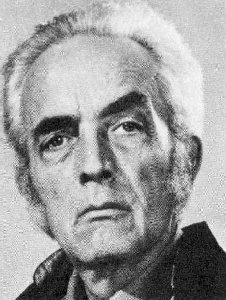
Ambrose Bierce October 7, 1892
Ambrose Bierce
October 7, 1892

By THE light of a tallow candle, which had been placed on one end of a rough table, a man was reading something written in a book. It was an old account book, greatly worn; and the writing was not, apparently, very legible, for the man sometimes held the page close to the flame of the candle to get a stronger light upon it. The shadow of the book would then throw into obscurity a half of the room, darkening a number of faces and figures; for besides the reader, eight other men were present. Seven of them sat against the rough log walls, silent and motionless, and, the room being small, not very far from the table. By extending an arm any one of them could have touched the eighth man, who lay on the table, face upward, partly covered by a sheet, his arms at his sides. He was dead.

The man with the book was not reading aloud, and no one spoke; all seemed to be waiting for something to occur; the dead man only was without expectation. From the blank darkness outside came in, through the aperture that served for a window, all the ever unfamiliar noises of night in the wilderness—the long, nameless note of a distant coyote; the stilly pulsing thrill of tireless insects in trees; strange cries of night birds, so different from those of the birds of day; the drone of great blundering beetles, and all that mysterious chorus of small sounds that seem always to have been but half heard when they have suddenly ceased, as if conscious of an indiscretion. But nothing of all this was noted in that company; its members were not overmuch addicted to idle interest in matters of no practical importance; that was obvious in every line of their rugged faces—obvious even in the dim light of the single candle. They were evidently men of the vicinity—farmers and woodmen.

The person reading was a trifle different; one would have said of him that he was of the world, worldly, albeit there was that in his attire which attested a certain fellowship with the organisms of his environment. His coat would hardly have passed muster in San Francisco: his footgear was not of urban origin, and the hat that lay by him on the floor (he was the only one uncovered) was such that if one had considered it as an article of mere personal adornment he would have missed its meaning. In countenance the man was rather prepossessing, with just a hint of sternness; though that he may have assumed or cultivated, as appropriate to one in authority. For he was a coroner. It was by virtue of his office that he had possession of the book in which he was reading; it had been found among the dead man’s effects—in his cabin, where the inquest was now taking place.

When the coroner had finished reading he put the book into his breast pocket. At that moment the door was pushed open and a young man entered. He, clearly, was not of mountain birth and breeding: he was clad as those who dwell in cities. His clothing was dusty, however, as from travel. He had, in fact, been riding hard to attend the inquest.

The coroner nodded; no one else greeted him.

“We have waited for you,” said the coroner. “It is necessary to have done with this business to-night.”

The young man smiled. “I am sorry to have kept you,” he said. “I went away, not to evade your summons, but to post to my newspaper an account of what I suppose I am called back to relate.”

The coroner smiled.

“The account that you posted to your newspaper,” he said, “differs probably from that which you will give here under oath.”

“That,” replied the other, rather hotly and with a visible flush, “is as you choose. I used manifold paper and have a copy of what I sent. It was not written as news, for it is incredible, but as fiction. It may go as a part of my testimony under oath.”

“But you say it is incredible.”

“That is nothing to you, sir, if I also swear that it is true.”

The coroner was apparently not greatly affected by the young man’s manifest resentment. He was silent for some moments, his eyes upon the floor. The men about the sides of the cabin talked in whispers, but seldom withdrew their gaze from the face of the corpse. Presently the coroner lifted his eyes and said: “We will resume the inquest.”

The men removed their hats. The witness was sworn.

“What is your name?” the coroner asked.

“William Harker.”

“Age?”

“Twenty-seven.”

“You knew the deceased, Hugh Morgan?”

“Yes.”

“You were with him when he died?”

“Near him.”

“How did that happen—your presence, I mean?”

“I was visiting him at this place to shoot and fish. A part of my purpose, however, was to study him, and his odd, solitary way of life. He seemed a good model for a character in fiction. I sometimes write stories.”

“I sometimes read them.”

“Thank you.”

“Stories in general—not yours.”

Some of the jurors laughed. Against a sombre background humor shows high lights. Soldiers in the intervals of battle laugh easily, and a jest in the death chamber conquers by surprise.

“Relate the circumstances of this man’s death,” said the coroner. “You may use any notes or memoranda that you please.”

The witness understood. Pulling a manuscript from his breast pocket he held it near the candle, and turning the leaves until he found the passage that he wanted, began to read.

II

“…The sun had hardly risen when we left the house. We were looking for quail, each with a shotgun, but we had only one dog. Morgan said that our best ground was beyond a certain ridge that he pointed out, and we crossed it by a trail through the chaparral. On the other side was comparatively level ground, thickly covered with wild oats. As we emerged from the chaparral, Morgan was but a few yards in advance. Suddenly, we heard, at a little distance to our right, and partly in front, a noise as of some animal thrashing about in the bushes, which we could see were violently agitated.

“‘We’ve started a deer,’ said. ‘I wish we had brought a rifle.’

“Morgan, who had stopped and was intently watching the agitated chaparral, said nothing, but had cocked both barrels of his gun, and was holding it in readiness to aim. I thought him a trifle excited, which surprised me, for he had a reputation for exceptional coolness, even in moments of sudden and imminent peril.

“‘O, come!’ I said. ‘You are not going to fill up a deer with quail-shot, are you?’

“Still he did not reply; but, catching a sight of his face as he turned it slightly toward me, I was struck by the pallor of it. Then I understood that we had serious business on hand, and my first conjecture was that we had ‘jumped’ a grizzly. I advanced to Morgan’s side, cocking my piece as I moved.

“The bushes were now quiet, and the sounds had ceased, but Morgan was as attentive to the place as before.

“‘What is it? What the devil is it?’ I asked.

“‘That Damned Thing!’ he replied, without turning his head. His voice was husky and unnatural. He trembled visibly.

“I was about to speak further, when I observed the wild oats near the place of the disturbance moving in the most inexplicable way. I can hardly describe it. It seemed as if stirred by a streak of wind, which not only bent it, but pressed it down—crushed it so that it did not rise, and this movement was slowly prolonging itself directly toward us.

“Nothing that I had ever seen had affected me so strangely as this unfamiliar and unaccountable phenomenon, yet I am unable to recall any sense of fear. I remember—and tell it here because, singularly enough, I recollected it then—that once, in looking carelessly out of an open window, I momentarily mistook a small tree close at hand for one of a group of larger trees at a little distance away. It looked the same size as the others, but, being more distinctly and sharply defined in mass and detail, seemed out of harmony with them. It was a mere falsification of the law of aerial perspective, but it startled, almost terrified me. We so rely upon the orderly operation of familiar natural laws that any seeming suspension of them is noted as a menace to our safety, a warning of unthinkable calamity. So now the apparently causeless movement of the herbage, and the slow, undeviating approach of the line of disturbance were distinctly disquieting. My companion appeared actually frightened, and I could hardly credit my senses when I saw him suddenly throw his gun to his shoulders and fire both barrels at the agitated grass! Before the smoke of the discharge had cleared away I heard a loud savage cry—a scream like that of a wild animal—and, flinging his gun upon the ground, Morgan sprang away and ran swiftly from the spot. At the same instant I was thrown violently to the ground by the impact of something unseen in the smoke—some soft, heavy substance that seemed thrown against me with great force.

“Before I could get upon my feet and recover my gun, which seemed to have been struck from my hands, I heard Morgan crying out as if in mortal agony, and mingling with his cries were such hoarse savage sounds as one hears from fighting dogs. Inexpressibly terrified, I struggled to my feet and looked in the direction of Morgan’s retreat; and may heaven in mercy spare me from another sight like that! At a distance of less than thirty yards was my friend, down upon one knee, his head thrown back at a frightful angle, hatless, his long hair in disorder and his whole body in violent movement from side to side, backward and forward. His right arm was lifted and seemed to lack the hand—at least, I could see none. The other arm was invisible. At times, as my memory now reports this extraordinary scene, I could discern but a part of his body; it was as if he had been partly blotted out—I can not otherwise express it—then a shifting of his position would bring it all into view again.

“All this must have occurred within a few seconds, yet in that time Morgan assumed all the postures of a determined wrestler vanquished by superior weight and strength. I saw nothing but him, and him not always distinctly. During the entire incident his shouts and curses were heard, as if through an enveloping uproar of such sounds of rage and fury as I had never heard from the throat of man or brute!

“For a moment only I stood irresolute, then, throwing down my gun, I ran forward to my friend’s assistance. I had a vague belief that he was suffering from a fit or some form of convulsion. Before I could reach his side he was down and quiet. All sounds had ceased, but, with a feeling of such terror as even these awful events had not inspired, I now saw the same mysterious movement of the wild oats prolonging itself from the trampled area about the prostrate man toward the edge of a wood. It was only when it had reached the wood that I was able to withdraw my eyes and look at my companion. He was dead.”

III

The coroner rose from his seat and stood beside the dead man. Lifting an edge of the sheet he pulled it away, exposing the entire body, altogether naked and showing in the candle light a clay-like yellow. It had, however, broad maculations of bluish-black, obviously caused by extravasated blood from contusions. The chest and sides looked as if they had been beaten with a bludgeon. There were dreadful lacerations; the skin was torn in strips and shreds.

The coroner moved round to the end of the table and undid a silk handkerchief, which had been passed under the chin and knotted on the top of the head. When the handkerchief was drawn away it exposed what had been the throat. Some of the jurors who had risen to get a better view repented their curiosity, and turned away their faces. Witness Harker went to the open window and leaned out across the sill, faint and sick. Dropping the handkerchief upon the dead man’s neck, the coroner stepped to an angle of the room, and from a pile of clothing produced one garment after another, each of which he held up a moment for inspection. All were torn, and stiff with blood. The jurors did not make a closer inspection. They seemed rather uninterested. They had, in truth, seen all this before; the only thing that was new to them being Harker’s testimony.

“Gentlemen,” the coroner said, “we have no more evidence, I think. Your duty has been already explained to you; if there is nothing you wish to ask you may go outside and consider your verdict.”

The foreman rose—a tall, bearded man of sixty, coarsely clad.

“I should like to ask one question, Mr. Coroner,” he said. “What asylum did this yer last witness escape from?”

“Mr. Harker,” said the coroner, gravely and tranquilly, “from what asylum did you last escape?”

Harker flushed crimson again, but said nothing, and the seven jurors rose and solemnly filed out of the cabin.

“If you have done insulting me, sir,” said Harker, as soon as he and the officer were left alone with the dead man, “I suppose I am at liberty to go?”

“Yes.”

Harker started to leave, but paused, with his hand on the door latch. The habit of his profession was strong in him—stronger than his sense of personal dignity. He turned about and said:

“The book that you have there—I recognize it as Morgan’s diary. You seemed greatly interested in it; you read in it while I was testifying. May I see it? The public would like—”

“The book will cut no figure in this matter,” replied the official, slipping it into his coat pocket; “all the entries in it were made before the writer’s death.”

As Harker passed out of the house the jury reentered and stood about the table on which the now covered corpse showed under the sheet with sharp definition. The foreman seated himself near the candle, produced from his breast pocket a pencil and scrap of paper, and wrote rather laboriously the following verdict, which with various degrees of effort all signed:

“We, the jury, do find that the remains come to their death at the hands of a mountain lion, but some of us thinks, all the same, they had fits.”

IV

In the diary of the late Hugh Morgan are certain interesting entries having, possibly, a scientific value as suggestions. At the inquest upon his body the book was not put in evidence; possibly the coroner thought it not worth while to confuse the jury. The date of the first of the entries mentioned can not be ascertained; the upper part of the leaf is torn away; the part of the entry remaining is as follows:

“… would run in a half circle, keeping his head turned always toward the centre and again he would stand still, barking furiously. At last he ran away into the brush as fast as he could go. I thought at first that he had gone mad, but on returning to the house found no other alteration in his manner than what was obviously due to fear of punishment.

“Can a dog see with his nose? Do odors impress some olfactory centre with images of the thing emitting them? . . .

“Sept 2.—Looking at the stars last night as they rose above the crest of the ridge east of the house, I observed them successively disappear—from left to right. Each was eclipsed but an instant, and only a few at the same time, but along the entire length of the ridge all that were within a degree or two of the crest were blotted out. It was as if something had passed along between me and them; but I could not see it, and the stars were not thick enough to define its outline. Ugh! I don’t like this. . . .”

Several weeks’ entries are missing, three leaves being torn from the book.

“Sept. 27.—It has been about here again—I find evidences of its presence every day. I watched again all of last night in the same cover, gun in hand, double-charged with buckshot. In the morning the fresh footprints were there, as before. Yet I would have sworn that I did not sleep—indeed, I hardly sleep at all. It is terrible, insupportable! If these amazing experiences are real I shall go mad; if they are fanciful I am mad already.

“Oct. 3.—I shall not go—it shall not drive me away. No, this is my house, my land. God hates a coward….

“Oct. 5.—I can stand it no longer; I have invited Harker to pass a few weeks with me—he has a level head. I can judge from his manner if he thinks me mad.

“Oct. 7.—I have the solution of the problem; it came to me last night—suddenly, as by revelation. How simple—how terribly simple!

“There are sounds that we can not hear. At either end of the scale are notes that stir no chord of that imperfect instrument, the human ear. They are too high or too grave. I have observed a flock of blackbirds occupying an entire treetop—the tops of several trees—and all in full song. Suddenly—in a moment—at absolutely the same instant—all spring into the air and fly away. How? They could not all see one another—whole treetops intervened. At no point could a leader have been visible to all. There must have been a signal of warning or command, high and shrill above the din, but by me unheard. I have observed, too, the same simultaneous flight when all were silent, among not only blackbirds, but other birds—quail, for example, widely separated by bushes—even on opposite sides of a hill.

“It is known to seamen that a school of whales basking or sporting on the surface of the ocean, miles apart, with the convexity of the earth between them, will sometimes dive at the same instant—all gone out of sight in a moment. The signal has been sounded—too grave for the ear of the sailor at the masthead and his comrades on the deck—who nevertheless feel its vibrations in the ship as the stones of a cathedral are stirred by the bass of the organ.

“As with sounds, so with colors. At each end of the solar spectrum the chemist can detect the presence of what are known as ‘actinic’ rays. They represent colors—integral colors in the composition of light—which we are unable to discern. The human eye is an imperfect instrument; its range is but a few octaves of the real ‘chromatic scale’ I am not mad; there are colors that we can not see.

“And, God help me! the Damned Thing is of such a color!”

Reading List: The Witching Hour from Longreads

Source: Reading List: The Witching Hour

“Even as Starbucks switches to its Red Cup holiday menu and the radio plays Christmas music, Halloween tugs at the coattails of my subconscious. To honor our dearly departed All Hallows’ Eve, here are four pieces about witchcraft in the United States and abroad.”   –Emily Perper in the Longreads article.

Follow the link to read two stories and two articles on the historical basis of our society’s concept of witches and witchcrafts re-posted through Longreads.    While you are there, like Emily’s article for doing a great job in selecting pieces.

Call for Submissions: Holiday Themed Horror

From Ottawahorror.com

I am looking for holiday-themed flash horror for the holiday season.  If you have a work of horror or a horror-related article suitable for publication on a specific holiday (whether it be Veterans’ Day, Thanksgiving, Christmas, New Year’s Day, Valentine’s Day, Kwanzaa, Hanukkah, President’s Day, Boxing Day, Australia Day, or any other officially recognized holiday) please feel free to submit it.  Please be sure to adhere to my Submissions Guidelines.

Thoughts?  Comments?

6 Horror Books Based On Real Events

Source: 6 Horror Books Based On Real Events

Check out these six books on events forming the basis for some well-known fictional horror.   Good recommendations for reading over the holidays, particularly Halloween.

The Dark Language

Working on a play in Hasting's Hardback Café, late evening, October 16, 2015.
Working on a play in Hasting’s Hardback Café, late evening, October 16, 2015.

As I was preparing to go to the local theatre this evening, I was thinking about how I can improve my writing and what distinguishes the great writers of horror.  Of course, the first two that came into my mind as being easily discernible from all others were Poe and Lovecraft.  Obviously, what distinguishes them is their use of language.  Both use very intense, muscular language with a distinctly archaic tone.   Not knowing if there a precise term already exists for this style, I decided to call it “the dark language”, because of its tight connection with the horror genre and with the horrifying in general.   For me, there seems to be something archetypal about this, arising out of the Jungian collective unconscious.   Perhaps it is just that Poe bound the Dark Language so intimately with scenes of horror, terror, and suspense, which is also bound with genres such as the Gothic novel, that the sound of it automatically brings forth societal memories of dread.

I need to finish dressing if I am to dine at my favorite local sushi restaurant before heading to the play.  Somehow, I just have the taste for something raw tonight.

Thoughts?  Comments?

The Art of Horror is Now on Facebook

Farmington, New Mexico, March 20, 2015

Just now, I created a facebook page for the Art of Horror at https://www.facebook.com/slatterysartofhorror.  Drop by, check it out, and friend me.  Posts from this blog should feed automatically to Facebook as well as from my Twitter account.

Submissions Now Being Considered

If you would like to submit an article or book/movie review on the art of writing horror fiction or just on the art of writing, please send it to horror@philslattery.com.   Everything must be submitted by e-mail either in the

With Iced Tea, Farmington, New Mexico, March 20, 2015

body of the e-mail or a Word document (.doc or .docx).  There is no pay for any submission at this time (maybe after I win the Pulitzer or Nobel, but probably not before then).

I am seeking:

  1. Articles under 1,000 words on the art of writing horror (fiction of any length, poetry, screenplays, etc.) or on writing in general, but material along the lines of horror is preferred.  Articles on foreign horror are encouraged.
  2. Book and movie reviews, the more recently published or distributed the better, but I will consider reviews of classics works such as those of Poe, Lovecraft, Blackwood, etc. all the way back to Walpole (and before if sufficiently interesting).   These must be under 1,000 words also.
  3. Articles on horror in other countries are encouraged.  These must also be under 1,000 words.
  4. Translations of articles, stories, or poems from French, German, or Spanish are considered, but the original article/story/poem and its translation must not exceed 2,000 words.
  5. Horror poetry (under 32 lines) or articles on horror in poetry.
  6. Flash horror fiction (i.e. under 1,000 words).

Guidelines

  1. Be professional.
  2. Use standard manuscript format.  The easier it is for me to simply copy and paste into the website, the more likely you are to be published.
  3. With submissions include your website, twitter handle, or any other social media identification you like.  A short bio of 100 words or less (including a list of previous publications) is nice, but not required.   Knowing your publication history won’t influence whether or not you are accepted, but it might be nice for the readership to know.  If you don’t want to include any social media contact info, don’t include it.  Pseudonyms are fine, but please state them as the byline and include your actual name and contact info in the top left of the first page of the submission per standard manuscript format.
  4. In the subject line of your e-mail state whether this is an article or review or poetry of fiction submission, your name, and the work’s title.  For example:  Article by Phil Slattery  “Poe’s Raven: an Analysis”
  5. No hardcopy submissions.  Everything must be submitted by e-mail either in the body of the e-mail or attached as a Word document (.doc or .docx).
  6. I would like to reach as large an audience as possible, so please keep profanity to an absolute minimum.
  7. I will try to respond to submissions as quickly as possible, but please allow at least a couple of weeks before querying about your article/story.
  8. There is no pay other than the honor of being published on this website.
  9. I am not taking multiple submissions or simultaneous submissions.  Once you have submitted one article/story, please wait about a week before submitting another.
  10. You may submit on piece of artwork or a photo to accompany your article/story.  I will edit it (mainly re-sizing) as needed to fit the space available.  I will not publish any form of what I deem pornography or in bad taste.  If you do not submit artwork or a photo, I may select something appropriate.  JPEGs, TIFs and other formats accepted by WordPress are okay, but keep the number of bytes to a minimum.  I have only a limited amount of space available.
  11. Artwork and photos may be submitted on their own and you must own the copyright to them.  There is no pay for these either.  If I do not use these right away, I may keep them until a use arises, but please let me know if this is okay.  If you no longer wish me to use them, please let me know as soon as possible.
  12. Do not send advertising (no matter how cleverly veiled it is).  It won’t be published.
  13. Gratuitous sex, extreme violence, violence to children, rape and anything else that offends my personal sensibilities will not be published.  Anything that seems to reflect an actual crime (past, present, or future) will be immediately turned over to the proper authorities.
  14. If I like your submission, I will publish it as soon as possible, probably within a week.  This will depend on the backlog of submissions and other factors.   Don’t ask for a timeframe.
  15. Reprints are okay, but you must tell me when and where the article/story/poem was first published.
  16. I do not want fan fiction.
  17. Always re-check the guidelines before submitting.  I may change them at any moment without prior notice.

I will update these guidelines as time allows and events warrant.  This page was last updated on October 15, 2015.

Please contact me via horror@philslattery.com with any questions.

Thoughts?  Comments?