
If I do not enjoy writing a story, how can I expect my readers to enjoy reading it?

If I do not enjoy writing a story, how can I expect my readers to enjoy reading it?

About 2:00 a.m. on December 6, on the drive home after visiting my sister and her husband, I was contemplating where I want to go with my current work-in-progress. I am loathe to give away the plot, so suffice it to say that it involves a scientist that travels to another planet and tours it with a fellow scientist from that planet. I have come to realize over the last few days that the original plot concept is boring, although in terms of literature it would be fairly intriguing, because of the internal struggles the main character would face and some social issues it would raise.
It occurred to me is that the critical question was not where to take the plot of the story, but where do I want the book to go in terms of its impact on the society/world. I am not so naïve as to think that it would have a earth-shattering impact like Dan Brown’s Da Vinci Code or be controversial like Henry Miller’s Tropic of Cancer or Aldous Huxley’s Brave New World or even break out like Stephen King’s Carrie, but no matter how it is received publically or critically, it will make an impact, even if it is negligible one. The best I reason that I can do, is to try to make as big a splash as possible on its release and hope that it brings me some measure of success or at least puts me on the road to success. But what can I do to create that splash? What have been the characteristics of other initial successes?
I don’t know how the analogy suddenly popped into my mind, but I realized that what the story needs is thunder. Perhaps it was that a light rain had fallen sporadically over the last few days and the land was still wet with shallow puddles still lingering on the road in spots on this near-freezing night. Somehow this struck a chord in my subconscious that stirred echoes of similar post-thunderstorm summer nights. As I look back on that moment, though I wasn’t even thinking of those novels, it occurs to me now that they each have an element I would describe as “thunder”, something that resounds across the land striking a nerve in the public consciousness.
For some novels, like The Da Vinci Code, the thunder is an aspect that touches on a sensitive nerve within a large number of the public. In The Da Vinci Code‘s instance, this was deeply ingrained religious beliefs that, like the foundation of a house, if disturbed, shake the entire house.
For novels like The Tropic of Cancer, the thunder is something that disturbs the public’s sense of decency, which could be argued to be the image of itself that the public wishes to project.
Brave New World did not make as great an impact on its initial reception as it did later, when many of the technologies and issues it describes actually started to come into being. Then it thundered greatly.
Carrie did not rock the literary or moral or religious foundations of society, but it was a great personal thunder for Stephen King and brought him suddenly into the public view.
There are undoubtedly other forms of thunder, but these are the ones that spring into mind initially.
Once I recognized that my goal as a writer is to thunder, the next question became what type of thunder do I want to have?
For me, I want to ask a profound question (or questions) that demand answers. As stated, I don’t want to give away the plot of the novel(la), so I will unfortunately have to leave you in suspense for now, but check back with my blog periodically and let’s see if I can achieve this. Wish me luck.
Thoughts? Comments?
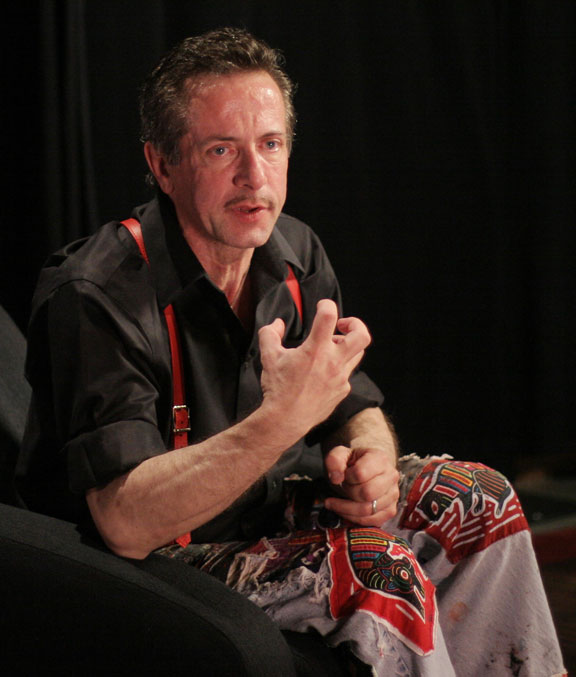
I finished reading The Hellbound Heart several weeks ago. As noted previously, it is a truly terrific read. I suggest reading it after seeing the movie (if you have somehow repeatedly missed your chances of seeing “Hellraiser” over the last twenty or so years). Reading it beforehand will just spoil the movie, whereas reading it afterwards may enlighten parts of the movie.
I don’t have much to add to what I have previously stated, except that, if you are a student of storytelling, the book warrants a detailed examination for narrative technique as it exhibits some basic techniques of storytelling that Mr. Barker carries out very well. I could go through the book page by page and expound on each ad nauseam, but instead I will focus now on one that sticks in my mind.
I do not recall if this is in the movie, but toward the end where Kirsty is trapped in the “damp room” by Frank, she slips on a bit of preserved ginger lying on the floor enabling Frank to catch her. The method by which Barker establishes why that ginger is on the floor fascinates me.
Although I have one or two dictionaries of literary terms, I do not recall the name for this technique and I think of it as simply setting the stage for a future scene. It shows the foresight, planning, and attention to detail that must go into any good story.
Earlier in the story, after Julia has released Frank from the Cenobite hell and he has regained enough flesh that he can once again eat, he asks Julia for a few of his favorite victuals, including preserved ginger. At the moment I read this, I thought it was simply a natural but insignificant detail. Of course, I could not know then that that bit of ginger would skyrocket the dramatic tension later on in one of the novel’s most important scenes.
Anyway, that’s my post for the day.
I have been very negligent in posting anything over the last months, my daytime job and personal matters consuming much more of my time than usual. I have recently come to find out though, that many more people in my home town of Frankfort, KY, were enjoying my postings than I had known or even believed possible and sorely missed it during this hiatus. For them and all the others who silently enjoy my works, I shall endeavor to pick up the thread.
I have not lost my desire to write fiction, however, and I am currently trying to finish a sci-fi/horror novella that I started sometime back. The work is going well, but I am having to change some of my original concept to make it more exciting. I would like to make it as gripping as some have found my “Murder by Plastic” (published at www.everydayfiction.com), but that will be quite difficult for something as long as a novella. The part I find most challenging is to coordinate the details much as Barker did in the example I give above. I would expound on the subject, but I do not want to give away the plot or run the risk of some unscrupulous cur stealing my idea and publishing it before I do–particularly as I am so close to finishing it. After this I have another three or four unfinished works to bring to a close. I could probably write eight hours a day like Thomas Mann and still not be finished by spring.
Thoughts? Comments?
I am just past the halfway point in Clive Barker’s The Hellbound Heart, the novella upon which the orginal “Hellraiser” movie was based. This is one really terrific read. It is one of those that is hard to put down, even though you know what happens next, because the movie, which you saw twenty years ago and have seen periodically since then, so closely resembles the book.
The prose is simple, but not Hemingway simple, and there are moments of actual narrative beauty (such as when Barker poignantly describes the passing of seasons in the beginning of one chapter) that seem to be glimpses of insight into a latent aspect of Barker’s immense talent: that he is able to write actually artistic prose that captures a moment, an emotion, or a sensation with a light touch that carries over to the reader. I have read the first two volumes (so far) of Barker’s Books of Blood and this quality seems to be lacking in them. In Books of Blood, he writes splendidly, but not beautifully, not poignantly.
I also love the way he keeps his characters to a minimum, so that seeing the complex relationships between them is easy.
Another fascinating aspect of Barker’s storytelling in this instance is that he can put his characters in horrifying situations, yet he does not try to be any more graphic than is necessary to invoke an emotional response in the ready. The few truly graphic scenes I have encountered so far are graphic, but not gratuitously graphic. An example would be when the recently-resurrected Frank starts to have sex with with brother’s wife Julia. He shows the act beginning and ends the chapter leaving what happens up to the reader’s imagination. Yes, this is an old trick straight out of made-for-TV movies, but do you really need to visualize every gory detail of a woman having sex with someone who is still half-corpse? I didn’t. And seeing that would not have helped the storytelling and if anything, it would have only detracted from it. Besides, if someone wants to visualize that unnerving scene for themselves, they are going to whether or not Barker describes it for them. All that is necessary to show the development of the characters and the plot is to show that they did have sex, because that act in itself shows something about them. About Frank it show how incredibly callous he is to Julia and how centered he is in the world of his own pleasure. About Julia, it shows her love for Frank is so self-sacrificing that she is willing to commit the most vile acts for him while taking obscene pleasure in them in her own way.
Anyway, those are just a few notes so far. I need to have dinner and do some housework and to read more of this fascinating work. Hopefully, I will be able to write more soon.
Thoughts? Comments?
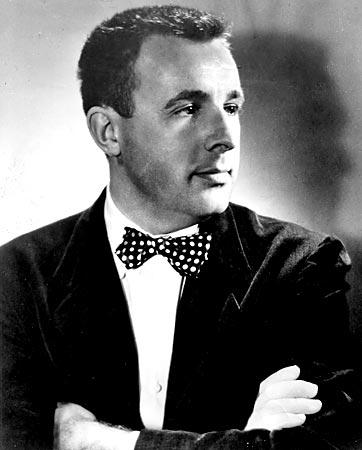
Someone once told Ray Bradbury that “The Martian Chronicles” was not prose, but poetry. Technically, he was probably wrong, but in spirit truer words were probably never spoken.
I have a habit of reading several books at once. I will pick up one, read a few pages (unless it is so engrossing that I cannot put it down), then later pick up another and read a few pages or so of it, then still later read a few pages of another and so forth until I may be reading half a dozen books a few pages at a time. Then I may finish one and pick up another, something like the juggler who keeps the china plates spinning on sticks.
I picked up “The Martian Chronicles” while on a trip to Santa Fe in December, 2012 at The Collected Works bookstore. Since then it has stayed in my suitcase and I pick it up and read more every time I travel.
I have not read much of late and have written less, but on trip last week, I made use of my relatively new Kindle for the first time and read three stories of Poe’s (“A Descent into the Maelstrom”, “The Facts in the Case of M. Valdemar”, and “The Imp of the Perverse”) along with the original German version of “Little Red Riding Hood” by the Brothers Grimm. This has started my interest in literature and writing to smoulder once again. After I returned home, I decided to take “The Martian Chronicles” out of the suitcase and reluctantly finish it.
I say “reluctantly” because, while reading it, it is one of those beautifully eloquent novels that you don’t want to put down much less ever see come to an end. On those nights I read a few chapters at a time in the comfort of a well-kept hotel, I never really wanted to put it down and only did so when the hour was late and I was struggling to stay awake after a long day, a good suppper, and a few glasses of wine.
The stories are always poignant, captivating, and sometimes heart-rending. The characters have a depth that draws you in as if you could step inside their bodies and see their world from their perspectives. Of course, your tendency is to side with the humans as they colonize the red planet, but at the same time you sympathize with the Martians as they watch their civilization dwindle and gradually vanish under the onslaught of alien explorers and settlers. However, what is the most beautiful facet of the novel is its use of English.
Bradbury’s nascent style (as I understand from one website, he had been writing seriously only seven years when he

published this, his first novel) uses simple, clear, easy-to-understand prose that highlights only enough important details to enable the reader to vicariously experience the story. The fact that the prose is very simple and lacking in needlessly ostentatious words helps the reader to see clearly the interaction of the characters and their mindsets and the underlying motivations and plots. For me, if a work is full of big words, I spend too much time either trying to decipher them or running to the dictionary that I lose the tenuous feeling for what is happening in the story. His use of language clarifies rather than obscures. The sentences are generally of medium length and this helps the story to flow without becoming monotonous.
The plots of the stories are deceptively simple in design, but most still manage to have an unexpected denouement that leaves the reader feeling like a simpleton that he did not see it coming. Some, though, have such completely unexpected endings that there is no way they could be anticipated but in retrospect the denouement is incredibly logical. The first chapters describing explorer’s first encounters with the Martians are wonderful examples of this while the story I read only last night, “The Off Season”, has such a brilliantly ironic twist that it has to be a prime example of Bradbury’s genius.
I suppose I could continue on for a while raving about Bradbury’s art, but it is getting late and I have had a long day and still have dinner and drinks awaiting my arrival at home.
But what has any of this admiration for a science-fiction writer’s skill have to do with the art of writing?
Beauty is beauty no matter what the genre. Skill in writing is skill in writing.
I wish I had at least a smidgen of Bradbury’s talent so that I could make use of it in the field of horror. What depths of emotion and terror could I then reach?
Having read “Fahrenheit 451” many years ago, next on my list of Bradbury works is “The Illustrated Man”. I can hardly wait, but will probably have to–having five or six other books that I am currently reading. Still…that hasn’t stopped me yet from picking up a novel to be explored.
Please, even if you are a diehard horror aficianado, read “The Martian Chronicles” to learn something about writing as an art that you can apply to your own endeavors. The experience will definitely be rewarding and perhaps even enlightening.
Thoughts? Comments?
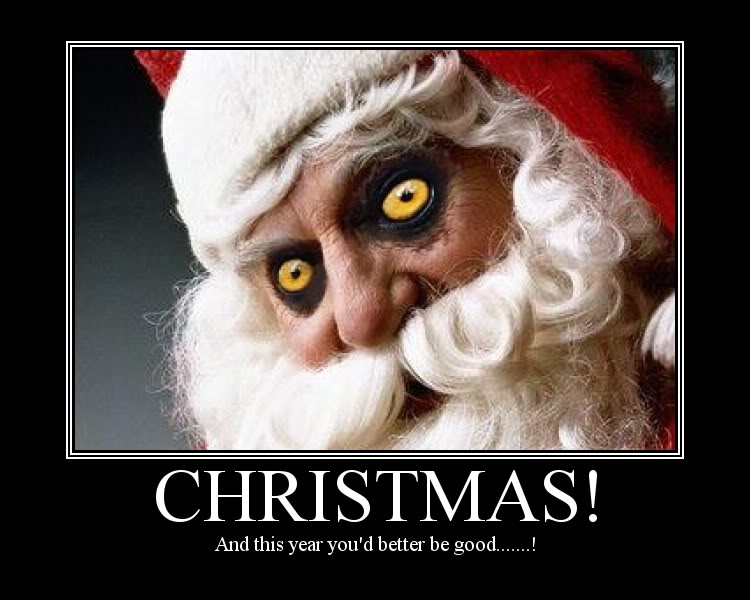
Just a little Christmas fun from Ottawahorror.com. Follow this link to their site and you can post this on Facebook, Twitter, Stumbleupon, and others.Check out the following note to be found on their About Us Page:
Started in 2008, we are a blog and portal dedicated to all things horror in our nation’s [Canada] capital. If you are a filmmaker, musician, artist, or fan, this is the place for you. Also, recruit minions! When we travel out of town, we bump into more people and artists from home than we do when we hang around the batcave. It’s kinda cool, but kinda creepy. While we appreciate finding you wherever you are, finding you here is easier… because then we can send reporters and photographers after you easier.
Here is a fascinating perspective on fiction by Neil Gaiman: ‘Face facts: we need fiction’ | Books | The Guardian.

Here is an interesting viewpoint on just what makes a horror film: MovieNews | Opinion: How to define a horror film – entertainment.ie.

The Works of Edgar Allan Poe, Volume 1. Yes, this link takes you to a collection of Poe’s works, but the reason I am mentioning it here is because the preface to this particular volume includes fascinating biographical notes and insight into the character of this master of horror that may help you understand the roots of his creative genius and how art sometimes came close to imitating life for Mr. Poe.
When you open the page, you may find yourself a little distance from the top of the article at the beginning of a section entitled “The Death of Edgar Allan Poe”. While this section is fascinating in its own right, scroll to the top for the entire preface. The works of Poe, beginning with the story of Hans Pfall, begin a bit down from “The Death…”

Purely for your entertainment, here are 28 Totally Relatable Quotes About Books. I know I can relate to a lot of them. I’m sure you will find a few for yourself. One reason I find these interesting is because many of them show me how intensely involved readers will become with a book. As I have mentioned in previous posts, I believe that people live a vicarious existence through a story. When we write, we are not just writing a book or a story, we are creating a universe in which people will hopefully want to, not just visit, but dwell. All of the writer’s art should therefore focus on creating a virtual reality for one’s readers. To do that, we need a good grounding in, or at least a good feel for, human psychology, because we have to shape our creations to fit the human psyche. How do thoughts come into being? How do they lead from one to another? How do images form in the mind? No, I am not saying that we need Ph.D.’s in psychology to be good writers, but I think we need some sort of archetypal insight into human nature if we are to be the great writers we hope to be. Darn. I’m rambling again. 🙂
Here is a fascinating article about the founding father of modern horror: Edgar Allan Poe: Poet and Prophet | Interesting Literature. Interestingly, it states that the story about Edgar Allan Poe in his white belt and gloves at West Point, which I quoted in an earlier post from The Writer’s Home Companion, is urban legend. It goes on to state several fascinating bits of trivia about Poe including his involvement in the development of the detective story and the short story, the backgrounds of some of his most famous works, his passion for cryptography, his foreshadowing of the Big Bang Theory, criticisms of his work by William Butler Yeats and T.S. Eliot, and some insights on his personal and financial life.

The other day I happened to find my copy of The Writer’s Home Companion (by James Charlton and Lisbeth Mark, 1987), which I had lost/forgotten some time back. I have been perusing it since and have found several anecdotes on various authors of horror, which had not captured my attention when I purchased the book, because I was not interested in writing horror at the time. I am quoting them below for your entertainment and consideration. They provide a few insights and lessons into the art and business of writing as well as into the lives of writers, if not in the art of horror specifically. If you would like to read more of the book, you can probably find a copy at your local library or half-price bookstore.
“Edgar Allan Poe opted to self-publish Tamerlane and Other Poems. He was able to sell only forty copies and made less than a dollar after expenses. Ironically, over a century later, one of his self-published copies sold at auction for over $11,000.”

“Stephen King sent his first novel to the editor of the suspense novel The Parallax View. William G. Thompson rejected that submission and several subsequent manuscripts until King sent along Carrie. Years later some of those earlier projects were published under King’s pseudonym Richard Bachmann, and one was affectionately dedicated to ‘W.G.T.'”
“Edgar Allan Poe perpetrated a successful hoax in the New York Sun with an article he wrote in the April 13, 1844 edition of the paper. He described the arrival, near Charleston, South Carolina, of a group of English ‘aeronauts’ who, as he told the story, had crossed the Atlantic in a dirigible in just seventy-five hours. Poe had cribbed most of his narrative from an account by Monck Mason of an actual balloon trip he and his companions had made from London to Germany in November 1836. Poe’s realistically detailed fabrication fooled everyone.”

“Robert Louis Stevenson was thrashing about in his bed one night, greatly alarming his wife. She woke him up, infuriating Stevenson, who yelled, ‘I was dreaming a fine bogey tale!’ The nightmare from which he had been unwillingly extracted was the premise for the story of Dr. Jekyll and Mr. Hyde.”
“Amiably discussing the validity of ghosts, Lord Byron and Percy Bysshe Shelley decided to try their poetic skills at writing the perfect horror story. While nothing came of their efforts, Shelley’s young wife, Mary Wollstonecroft, overheard the challenge and went about telling her own. It began ‘It was on a dreary night of November that I beheld the Accomplishment of my toils.’ Her work was published in 1818, when she was twenty-one, and was titled Frankenstein.”
“Edgar Allan Poe was expelled from West Point in 1831 for ‘gross neglect of duty’. The explanation for his dismissal had to do with his following, to the letter, with an order to appear on the parade grounds in parade dress, which, according to the West Point rule book, consisted of ‘white belt and gloves.’ Poe reportedly arrived with his rifle, dressed in his belt and gloves–and nothing else.”

“Traveling along the Italian Riviera, Lord Bulwer-Lytton, done up in an embarrassingly elaborate outfit, acknowledged the stares of passersby. Lady Lytton, amused at his vanity, suggested that it was not admiration, but ‘that ridiculous dress’ that caught people’s eyes. Lytton responded, ‘You think that people stare at my dress and not at me? I will give you the most absolute and convincing proof that your theory has no foundation.’ Keeping on only his hat and boots, Lytton removed every other article of clothing and rode in his open carriage for ten miles to prove his point.”
If you have anecdotes about your favorite authors that you would like to share, please do.
Questions? Comments?

If you would like a look at the influence of the historical Dracula, Vlad the Impaler, upon modern literature as well as upon Bram Stoker’s novel, here is your article. The author is Gemma Norman, a first-year PhD student in Ottoman studies at the University of Birmingham.
Guest Blog: Voivode vs. Vampire – Dracula in Modern Literature | Interesting Literature.
Here is another blog post that I happened across recently. You may find it of interest with regards to writing in general.
The Importance of Being Interesting | READ | Research in English at Durham.
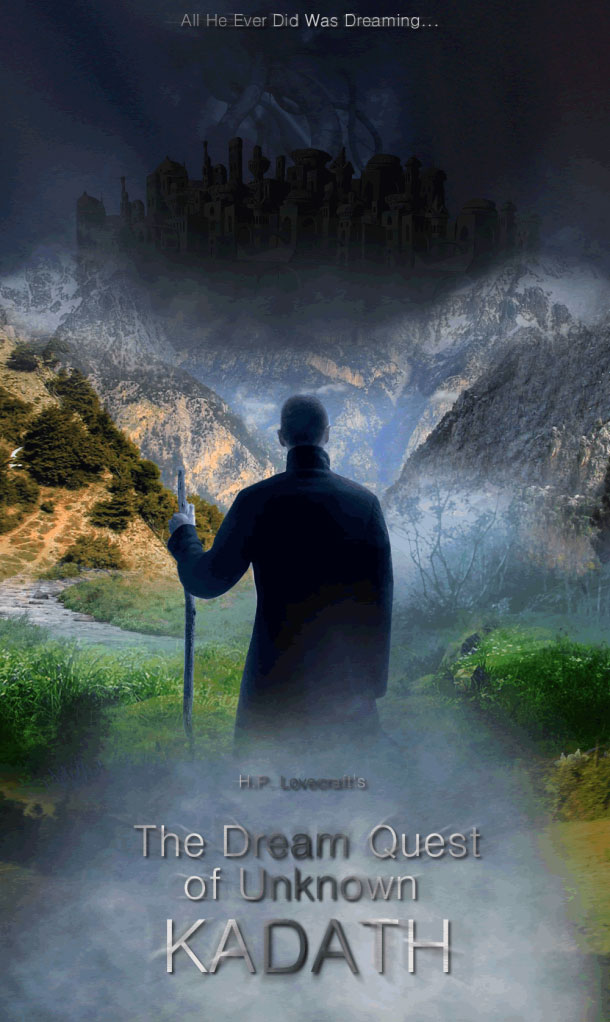
One of the several books I am reading currently is an anthology of Lovecraft’s dream cycle. Its story that I am reading now is “The Dream-Quest of the Unknown Kadath”. I wrote up my views on the work today for Goodreads.com and thought I would share them here as well (though in a slightly modified version):
I am a Lovecraft fan, but I find “The Dream-Quest…” very tough reading. I want to finish it, if for no other reason than to be able to say I managed to struggle my way through it and achieve my goal in spite of the hardships I encountered like the explorer of a literary Amazon.
The language is cumbersome and the plot is just Randolph Carter escaping one bad situation after another by luck. Still, I am only about half-way through, and the optimistic side of me keeps hoping it gets better. I don’t have much hope though, particularly after reading part of the Wikipedia article on it, which gives Lovecraft’s own views, which echo my own:
“Lovecraft himself declared that ‘it isn’t much good; but forms useful practice for later and more authentic attempts in the novel form.’ He expressed concern while writing it that ‘Randolph Carter’s adventures may have reached the point of palling on the reader; or that the very plethora of weird imagery may have destroyed the power of any one image to produce the desired impression of strangeness.”[8]
In the paragraph preceding this one in Wikipedia, Joanna Russ sums up the work nicely:
“The Dream-Quest has evoked a broad range of reactions, “some HPL enthusiasts finding it almost unreadable and others…comparing it to the Alice books and the fantasies of George MacDonald.[6] Joanna Russ referred to The Dream-Quest as “charming…but alas, never rewritten or polished”. [7]
Count me among the ones who find it almost unreadable, with its awkward, first-draft phrasing and its confused attempt to set a tone using an imagined scholarly, courtly language somewhere between Shakespeare and Poe.
However, I do love this awesome poster, which I found at http://gatostudio.wordpress.com/2009/03/21/the-dream-quest-of-unknown-kadath-poster/. Please visit this beautiful site. If you decide you would like to use this poster, please check with gatostudio and adhere to all copyright restrictions.
I just wish Lovecraft had written the story as masterfully as Mr. Gonzalez drew his poster and H.P. had lived up to the promise of the fantastic adventure to which the poster alludes. The poster really outshines the story. Given another two or three drafts, this story may have outshone all of Lovecraft’s other works.
Thoughts? Comments?
 Phil Slattery, Writer, Publisher