
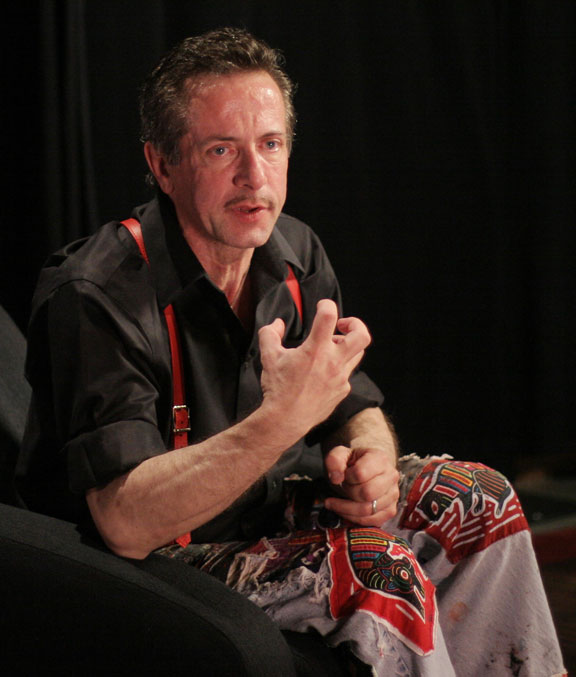
at Comicon, 2007
Photo by Penguino
http://www.businessinsider.com/stephen-king-on-how-to-write-2014-7
Follow the above link to advice on writing from Stephen King.

Comments about who are the recognized and unrecognized masters of literary horror.
http://www.businessinsider.com/stephen-king-on-how-to-write-2014-7
Follow the above link to advice on writing from Stephen King.
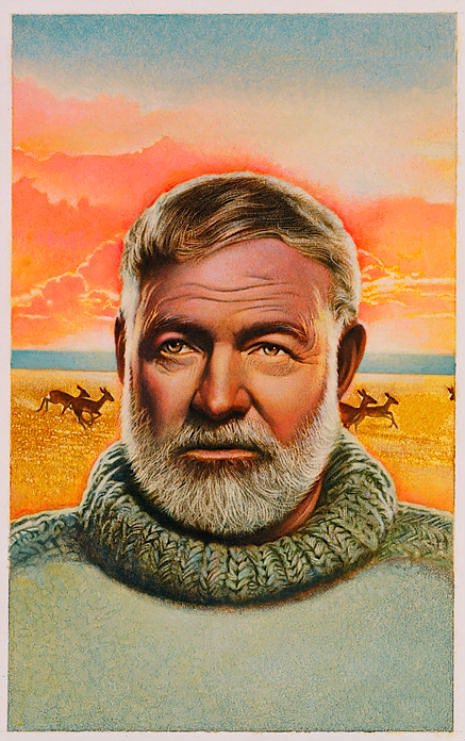
There is a story that Ernest Hemingway wrote the following to win a bet with other writers that he could write the shortest story:
“For sale: baby shoes. Never worn.”
Even a little research on the Internet shows that there is considerable doubt that Hemingway wrote this story, with the earliest reference to it as a Hemingway work not appearing until 1991. There is also considerable evidence that the story existed in various forms as early as 1910, when Hemingway was 11 and well before his writing career began. Whatever the facts, it is an extreme example of the lean, muscular writing for which Hemingway was famous.
In an interview with The Paris Review (see The Writer’s Chapbook, 1989, pp. 120-121), Hemingway did say:
“If it is any use to know it, I always try to write on the principle of the iceberg. There is seven-eighths of it underwater for every part that shows. Anything you know you can eliminate and it only strengthens your iceberg. It is the part that doesn’t show. If a writer omits something because he does not know it then there is a hole in the story…First I have tried to eliminate everything unnecessary to conveying experience to the reader so that after he or she has read something it will become a part of his or her experience and seem actually to have happened. This is very hard to do and I’ve worked at it very hard.”
So “Baby Shoes” is a good example of Hemingway’s iceberg principle, even if he didn’t write it.
“Baby Shoes” is also a good example of what I like to think of as the Tao of writing (see my earlier posts): creating a story by a careful, strategic use of what is not said. No where in the story does it state that a couple had apparently been expecting a baby, that they bought shoes for it, but then something happened to the baby to cause its death, and now the parents want to sell the shoes. None of that is stated. It is all implied, but yet we know what happened–or at least we have a good idea of what happened, even if we do not know the concrete facts of the matter.
There are also other facets of the story that we can infer, albeit tenuously. From the fact that they bought baby shoes we can infer that the parents were probably eager to have the child. From the fact that the parents want to sell the shoes we can infer that they probably don’t want them around any more as a remainder of a painful experience, but at the same time they may want to see someone else make good use of them or that they are hard up for money.
But one question I have that concerns human psychology is why is it that most people can read these same six words and come away with the same perception of what occurred? Does it have to do with Jungian Archetypes floating around in each of us or is it that each of us has had the same broad experience(s) so that we can interpret these six words in a very similar way?
In the art of sculpture, those areas of a work that are empty, yet give the work its form, are called “negative space”. An example is the space between each of your fingers. If there were no space, there would be no individual fingers. In that sense, a story like “Baby Shoes” makes maximum use of what might be termed “literary negative space”.
It is not really the words that give this story its power, but how we psychologically connect the ideas behind the words that fuel this extremely brief, but epic and poignant tale.
This is part of the magic of writing: conjuring worlds out of nothing.
Thoughts? Comments?

Guest Blog: ‘The Raven’ – Nevermore.
Interesting article, though I tend to disagree with his descriptions of what was going through Poe’s mind when he wrote this. Though I am not a skeptic, I tend to be skeptical when someone tells me in effect “yes, that is what he says, but this is what he meant…” Poe definitely hyped the bejeezus out of the poem (and his ego) by calling it the best poem ever written, but as for the rest…who knows?
Thoughts? Comments?
I was just sitting here trying to choose one of my many first drafts to work on for tonight, when I started thinking about the different “approaches” (for lack of a better term at the moment) to horror. By “approaches” I mean a very brief synopsis of a writer’s general outlook on or method of writing horror. Maybe a better way to express it would be to say the way the author approaches his genre (still not quite right, but I am getting closer to the idea).
An example would be to say that Poe’s approach was to bring out the horror in realistic situations (mostly, he did dabble in the fantastic occasionally). “The Black Cat” is about a murderer who unknowingly seals up a cat with the corpse of his victim. Nothing fantastic there. “The Tell-Tale Heart” is about a murderer whose conscience drives him to confession. “The Fall of the House of Usher” is about a family with an inherited genetic trait of hypersensitivity. So forth and so on.
Lovecraft’s approach was to spin tales of the fantastic, especially about a race of elder gods who once dominated the planet millions of years ago and of which mankind encounters remnants on rare occasion.
Stephen King’s approach is to plant an element of the fantastic among ordinary people in ordinary places and watch them react to it.
Clive Barker’s approach seems to be to take something that is fantastic, bloody, cruel, evil and gruesome and either drop it somewhere a single character can deal with it or bring it out of the shadows where a character can deal with it.
Seeing these different approaches in relation to each other makes me think about how do I want to approach an idea or a draft I have of a story. Do I want to drop the fantastic into the real or bring out the horror in the everyday or in realistic situations or can I come up with something else, my own approach, that is none of these? That is the challenge of creativity: to come up with something no one else has done. Maybe I can just go with the purely fantastic. Maybe I can try to find the real in the fantastic.
How many different ways are there to horrify an audience?
There is the real and the fantastic and all those subtle shades of gray in between the two. Can there be anything else?
Thoughts? Comments?
I just finished watching an episode of the X-Files entitled “Chinga” [note to Spanish-speakers out there: I don’t know who chose the title, so please forgive my language] from Season Five and I noticed that it was written by Stephen King and Chris Carter (the creator of the X-Files). The story’s antagonist is a talking doll that can force people to injure or kill themselves in gruesome ways. Like many, if not most, of King’s stories, there is no explanation of how the came to exist. All the viewer finds out about it is that a lobsterman pulled it up one night in a lobster trap and his daughter comes to possess it after he meets his own gruesome fate.
I find in my own writing that I like to provide an explanation or background as to how things originate. This is just my nature. I like to know the origins of things. However, I have come to believe of late that, in terms of horror, that is a very nineteenth century concept.
Lovecraft said in his essay “Supernatural Horror in Literature”:
“A certain atmosphere of breathless and unexplainable dread of outer, unknown forces must be present; and there must be a hint, expressed with a seriousness and protentiousness becoming its subject, of that most terrible conception of the human brain — a malign and particular suspension or defeat of those fixed laws of Nature which are our only daily safeguard against the assaults of chaos and the daemons of unplumbed space.”
For me, what Lovecraft is saying is that if the laws of nature are negated, then anything is possible and monsters like Cthulhu really could exist and are capable of doing us harm at any moment. Combine this with his statement that “The oldest and strongest emotion of mankind is fear and the oldest and strongest kind of fear is fear of the unknown” and it becomes apparent that stories like “Chinga” derive much of their horror effect from the fact that the origin of the threat to a story’s protagonist(s) is unknown or that there is no explanation for the threat.
This would mean that one of things that provides to “Chinga” the element of horror that it has, is the fact that origin of the doll is unknown. Therefore, any of us when we are fishing or scuba diving or swimming in any body of water, could discover a doll that would turn his/her life into a nightmare. That is a scary thought.
Of course, this means that Stephen King would be one of the greatest practitioners of this technique, which I believe he is.
I think I shall try to experiment with this in the near future.
Thoughts? Comments?
I happened across an excellent roundtable on Horror History 101 at the Horror Writer’s Association (http://horror.org/horror-roundtable-16-horror-history-101/) today while at lunch. Check it out. It has a great panel of experts and a wide-ranging discussion of the great horror writers of the past from the beginning of horror with Horace Walpole up to Lovecraft and more.

If you are an avid reader (of anything) and are not familiar with Project Gutenberg (http://www.gutenberg.org/wiki/Main_Page), you are doing yourself a great disservice. As they state on their homepage:
“Project Gutenberg offers over 46,000 free ebooks: choose among free epub books, free kindle books, download them or read them online.
We carry high quality ebooks: All our ebooks were previously published by bona fide publishers. We digitized and diligently proofread them with the help of thousands of volunteers.
No fee or registration is required, but if you find Project Gutenberg useful, we kindly ask you to donate a small amount so we can buy and digitize more books. Other ways to help include digitizing more books,recording audio books, or reporting errors.
Over 100,000 free ebooks are available through our Partners, Affiliates and Resources…Our ebooks may be freely used in the United States because most are not protected by U.S. copyright law, usually because their copyrights have expired. They may not be free of copyright in other countries. Readers outside of the United States must check the copyright laws of their countries before downloading or redistributing our ebooks. We also have a number of copyrighted titles, for which the copyright holder has given permission for unlimited non-commercial worldwide use.”
As they state, most of these books are available because their copyrights have expired, making them usually quite dated. However, for anyone with a bent for the historical, Project Gutenberg is a gold mine. I did a quick search for “horror” on their website and received 169 titles in response. For a few, the only relation to the horror genre was the word “horror” in the title (such as “Southern Horrors: Lynch Law in All its Phases–which is a horrible subject, but is non-fiction vs. horror fiction). However, many are the classics or founding works of the horror genre, such as Frankenstein by Mary Shelley, Dracula by Bram Stoker, The Vampyre: a Tale by John William Polidori, The Castle of Otranto by Horace Walpole, The Strange Case of Dr. Jekyll and Mr. Hyde by Robert Louis Stevenson, Fantome de’l Opera (Phantom of the Opera) by Gaston Leroux, many works by Edgar Allan Poe, The Great God Pan by Arthur Machen, The King in Yellow by Robert W. Chambers, The Shunned House by H.P. Lovecraft, and many others.
Please take the time to visit this treasure trove of literature and of the horror genre, and if you are so inclined, please consider making a donation (via their website) to support their worthy cause.
Thoughts? Comments?
I finished reading The Hellbound Heart several weeks ago. As noted previously, it is a truly terrific read. I suggest reading it after seeing the movie (if you have somehow repeatedly missed your chances of seeing “Hellraiser” over the last twenty or so years). Reading it beforehand will just spoil the movie, whereas reading it afterwards may enlighten parts of the movie.
I don’t have much to add to what I have previously stated, except that, if you are a student of storytelling, the book warrants a detailed examination for narrative technique as it exhibits some basic techniques of storytelling that Mr. Barker carries out very well. I could go through the book page by page and expound on each ad nauseam, but instead I will focus now on one that sticks in my mind.
I do not recall if this is in the movie, but toward the end where Kirsty is trapped in the “damp room” by Frank, she slips on a bit of preserved ginger lying on the floor enabling Frank to catch her. The method by which Barker establishes why that ginger is on the floor fascinates me.
Although I have one or two dictionaries of literary terms, I do not recall the name for this technique and I think of it as simply setting the stage for a future scene. It shows the foresight, planning, and attention to detail that must go into any good story.
Earlier in the story, after Julia has released Frank from the Cenobite hell and he has regained enough flesh that he can once again eat, he asks Julia for a few of his favorite victuals, including preserved ginger. At the moment I read this, I thought it was simply a natural but insignificant detail. Of course, I could not know then that that bit of ginger would skyrocket the dramatic tension later on in one of the novel’s most important scenes.
Anyway, that’s my post for the day.
I have been very negligent in posting anything over the last months, my daytime job and personal matters consuming much more of my time than usual. I have recently come to find out though, that many more people in my home town of Frankfort, KY, were enjoying my postings than I had known or even believed possible and sorely missed it during this hiatus. For them and all the others who silently enjoy my works, I shall endeavor to pick up the thread.
I have not lost my desire to write fiction, however, and I am currently trying to finish a sci-fi/horror novella that I started sometime back. The work is going well, but I am having to change some of my original concept to make it more exciting. I would like to make it as gripping as some have found my “Murder by Plastic” (published at www.everydayfiction.com), but that will be quite difficult for something as long as a novella. The part I find most challenging is to coordinate the details much as Barker did in the example I give above. I would expound on the subject, but I do not want to give away the plot or run the risk of some unscrupulous cur stealing my idea and publishing it before I do–particularly as I am so close to finishing it. After this I have another three or four unfinished works to bring to a close. I could probably write eight hours a day like Thomas Mann and still not be finished by spring.
Thoughts? Comments?
I am just past the halfway point in Clive Barker’s The Hellbound Heart, the novella upon which the orginal “Hellraiser” movie was based. This is one really terrific read. It is one of those that is hard to put down, even though you know what happens next, because the movie, which you saw twenty years ago and have seen periodically since then, so closely resembles the book.
The prose is simple, but not Hemingway simple, and there are moments of actual narrative beauty (such as when Barker poignantly describes the passing of seasons in the beginning of one chapter) that seem to be glimpses of insight into a latent aspect of Barker’s immense talent: that he is able to write actually artistic prose that captures a moment, an emotion, or a sensation with a light touch that carries over to the reader. I have read the first two volumes (so far) of Barker’s Books of Blood and this quality seems to be lacking in them. In Books of Blood, he writes splendidly, but not beautifully, not poignantly.
I also love the way he keeps his characters to a minimum, so that seeing the complex relationships between them is easy.
Another fascinating aspect of Barker’s storytelling in this instance is that he can put his characters in horrifying situations, yet he does not try to be any more graphic than is necessary to invoke an emotional response in the ready. The few truly graphic scenes I have encountered so far are graphic, but not gratuitously graphic. An example would be when the recently-resurrected Frank starts to have sex with with brother’s wife Julia. He shows the act beginning and ends the chapter leaving what happens up to the reader’s imagination. Yes, this is an old trick straight out of made-for-TV movies, but do you really need to visualize every gory detail of a woman having sex with someone who is still half-corpse? I didn’t. And seeing that would not have helped the storytelling and if anything, it would have only detracted from it. Besides, if someone wants to visualize that unnerving scene for themselves, they are going to whether or not Barker describes it for them. All that is necessary to show the development of the characters and the plot is to show that they did have sex, because that act in itself shows something about them. About Frank it show how incredibly callous he is to Julia and how centered he is in the world of his own pleasure. About Julia, it shows her love for Frank is so self-sacrificing that she is willing to commit the most vile acts for him while taking obscene pleasure in them in her own way.
Anyway, those are just a few notes so far. I need to have dinner and do some housework and to read more of this fascinating work. Hopefully, I will be able to write more soon.
Thoughts? Comments?
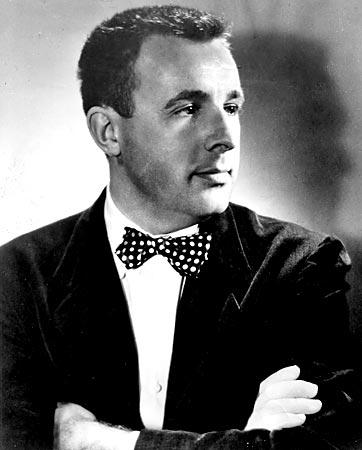
Someone once told Ray Bradbury that “The Martian Chronicles” was not prose, but poetry. Technically, he was probably wrong, but in spirit truer words were probably never spoken.
I have a habit of reading several books at once. I will pick up one, read a few pages (unless it is so engrossing that I cannot put it down), then later pick up another and read a few pages or so of it, then still later read a few pages of another and so forth until I may be reading half a dozen books a few pages at a time. Then I may finish one and pick up another, something like the juggler who keeps the china plates spinning on sticks.
I picked up “The Martian Chronicles” while on a trip to Santa Fe in December, 2012 at The Collected Works bookstore. Since then it has stayed in my suitcase and I pick it up and read more every time I travel.
I have not read much of late and have written less, but on trip last week, I made use of my relatively new Kindle for the first time and read three stories of Poe’s (“A Descent into the Maelstrom”, “The Facts in the Case of M. Valdemar”, and “The Imp of the Perverse”) along with the original German version of “Little Red Riding Hood” by the Brothers Grimm. This has started my interest in literature and writing to smoulder once again. After I returned home, I decided to take “The Martian Chronicles” out of the suitcase and reluctantly finish it.
I say “reluctantly” because, while reading it, it is one of those beautifully eloquent novels that you don’t want to put down much less ever see come to an end. On those nights I read a few chapters at a time in the comfort of a well-kept hotel, I never really wanted to put it down and only did so when the hour was late and I was struggling to stay awake after a long day, a good suppper, and a few glasses of wine.
The stories are always poignant, captivating, and sometimes heart-rending. The characters have a depth that draws you in as if you could step inside their bodies and see their world from their perspectives. Of course, your tendency is to side with the humans as they colonize the red planet, but at the same time you sympathize with the Martians as they watch their civilization dwindle and gradually vanish under the onslaught of alien explorers and settlers. However, what is the most beautiful facet of the novel is its use of English.
Bradbury’s nascent style (as I understand from one website, he had been writing seriously only seven years when he

published this, his first novel) uses simple, clear, easy-to-understand prose that highlights only enough important details to enable the reader to vicariously experience the story. The fact that the prose is very simple and lacking in needlessly ostentatious words helps the reader to see clearly the interaction of the characters and their mindsets and the underlying motivations and plots. For me, if a work is full of big words, I spend too much time either trying to decipher them or running to the dictionary that I lose the tenuous feeling for what is happening in the story. His use of language clarifies rather than obscures. The sentences are generally of medium length and this helps the story to flow without becoming monotonous.
The plots of the stories are deceptively simple in design, but most still manage to have an unexpected denouement that leaves the reader feeling like a simpleton that he did not see it coming. Some, though, have such completely unexpected endings that there is no way they could be anticipated but in retrospect the denouement is incredibly logical. The first chapters describing explorer’s first encounters with the Martians are wonderful examples of this while the story I read only last night, “The Off Season”, has such a brilliantly ironic twist that it has to be a prime example of Bradbury’s genius.
I suppose I could continue on for a while raving about Bradbury’s art, but it is getting late and I have had a long day and still have dinner and drinks awaiting my arrival at home.
But what has any of this admiration for a science-fiction writer’s skill have to do with the art of writing?
Beauty is beauty no matter what the genre. Skill in writing is skill in writing.
I wish I had at least a smidgen of Bradbury’s talent so that I could make use of it in the field of horror. What depths of emotion and terror could I then reach?
Having read “Fahrenheit 451” many years ago, next on my list of Bradbury works is “The Illustrated Man”. I can hardly wait, but will probably have to–having five or six other books that I am currently reading. Still…that hasn’t stopped me yet from picking up a novel to be explored.
Please, even if you are a diehard horror aficianado, read “The Martian Chronicles” to learn something about writing as an art that you can apply to your own endeavors. The experience will definitely be rewarding and perhaps even enlightening.
Thoughts? Comments?
On July 15, I posted an article on Irvin S. Cobb and his story “Fishhead”, which H.P. Lovecraft mentioned in “Supernatural Horror in Literature”. Today, I happened upon
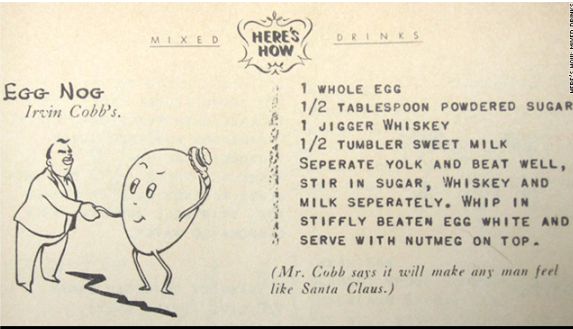
some selections I had copied a book published in 1941 that gave popular egg nog recipes of that year. One of them was Irvin Cobb’s. I am publishing it here today for your entertainment in light of the upcoming holidays. The copy is to the upper right, but if the print is too small, I am writing it out here:
1 whole egg
1/2 tablespoon powdered sugar
1 jigger whiskey
1/2 tumbler sweet milk
Separate yogurt and beat well, stir in sugar, whiskey and milk separately. Whip in stiffly beaten egg white and serve with nutmeg on top.
In parentheses and italics at the bottom the recipe notes: (Mr. Cobb says it will make any man feel like Santa Claus.)
Thoughts? Comments?
 Still more from The Horror Online: The Good, The Bad and The Terrible ; Zombies | The Horror Online.
Hopefully, I will find the time to sit down and write another extensive post, but unfortunately, these days I seem inundated with personal and professional tasks. I try to read when I have the opportunity. When I do have some time free, I have been watching horror films and I have several which I recommend and on which I hope to be writing posts before long. I also hope to establish a webpage for a nascent lexicon of horror.
Thoughts? Comments?

Another repost from The Horror Online: The Good, The Bad And The Terrible ; Vampires | The Horror Online. Good stuff.
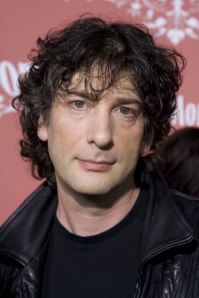
Here is a fascinating perspective on fiction by Neil Gaiman: ‘Face facts: we need fiction’ | Books | The Guardian.

Here is an interesting viewpoint on just what makes a horror film: MovieNews | Opinion: How to define a horror film – entertainment.ie.
 Phil Slattery, Writer, Publisher