A quick post on Connie Nielsen portraying Karen Blixen in an upcoming Danish mini-series.
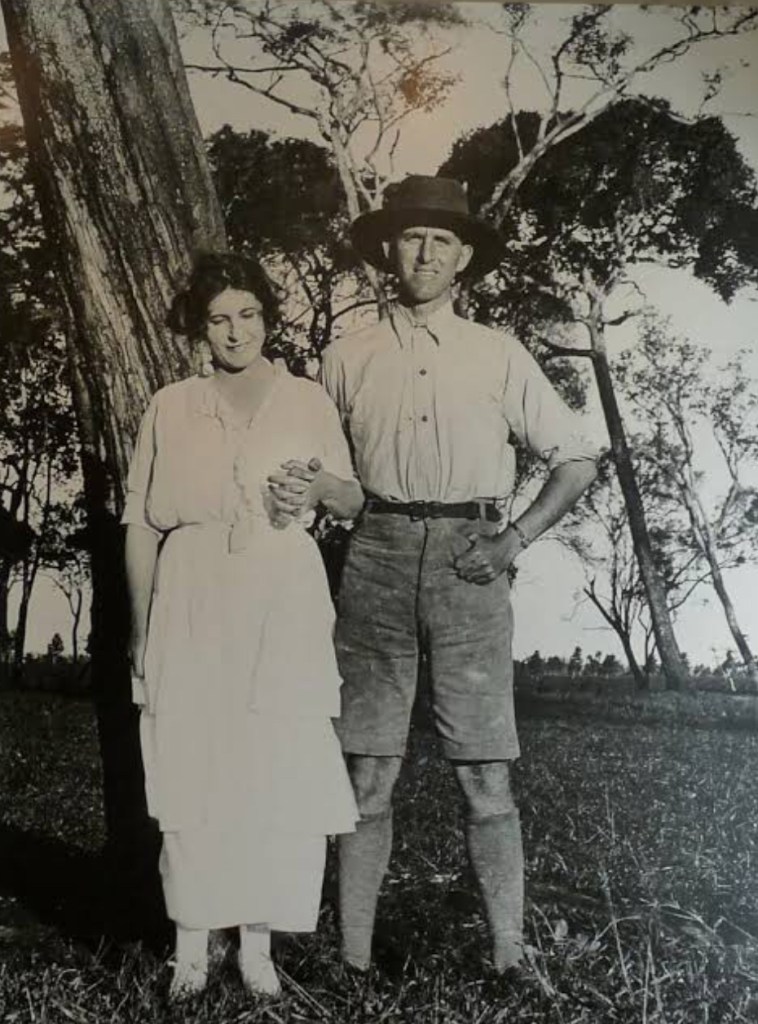
Karen Blixen and (possibly) Denys Finch-Hatton in the 1920’s
If you are a fan of the Danish actress Connie Nielsen or the Danish writer Karen Blixen (on whose experiences the movie Out of Africa was based, follow this link to an article, “MIPTV: Connie Nielsen on Becoming Karen Blixen in ‘The Dreamer'” by Scott Roxborough. The article discusses the challenges Nielsen faced in portraying Karen Blixen and how her portrayal differs radically from that by Meryl Streep in Out of Africa. Streep’s portrayal was of a young woman engaged in a passionate love affair, whereas Nielsen’s is that of a broken woman who has returned to Denmark penniless having lost her farm and her lover.
One note about the photo above: in trying to find a photo to accompany this article, I ran across this one. There are two copies of this photo on Wikimedia Commons. One identifies the man as Denys Finch-Hatton, (Blixen’s lover portrayed by Robert Redford in Out of Africa). Another identifies the man as Thomas Dinesen, Karen’s brother. Its source is supposed to be the Danish Royal Library. The source of the first is not identified. However, a quick search on Google resulted in a lot of photos of Denys Finch-Hatton, most of which (in my opinion) look like the man above. If you enjoy detective work, do the research and let me know what you come up with.
Of course, he was one of my favorite actors from the time I was a child. He is one of the first actors I remember from my childhood. Having been born in 1957, I grew up with 007. I dreamed of being a spy. It is therefore not surprising that later on in life, when I entered military service, I went into Naval Intelligence, though of course I had no delusions of becoming anything remotely like the flamboyant spy Sean Connery portrayed.
I have read only one James Bond novel, Casino Royale, which was a terrific, fun. I recommend it highly. The film starring Daniel Craig was as reasonably close to the book by Ian Fleming as films go. Forget the silly 1967 parody starring Peter Sellers. Fleming’s writing style is clear and concise, though not as abrupt and terse as Hemingway’s. This was a book designed (or at least so it seems to me) to be an enjoyable summer read on the beach.
When I get more time, I hope to read more of the bond novels.
As will millions of others, I feel the loss even though I haven’t seem him in a movie since 2003’s (unfortunately abysmal) League of Extraordinary Gentlemen.
About 3:00 I finished talking to my wife (in Texas) via Messenger intending to go to bed soon. But first, I thought, I will watch a little of a movie on Amazon. In all the times I have told myself that, it has never worked out as I planned.
I chose the 2016 horror flick “The Possession Experiment”, which is about a college student who starts out writing who intends to interview a priest who conducted and exorcism as part of a project for his theology class. However, he eventually decides to go much further and actually be possessed by a demon.
It is now 4:44 a.m. and although I am drawing close to the end of the movie, I paused to write down a few notes.
This is a good movie. It’s not great, but it is not bad and it is fun.
The movie, initially, has a lot of dramatic tension for the first two-thirds, but no gore. At the hour mark though, the gore and horror began and keep building.
The acting is good…for the most part. The actors playing Brandon (the protagonist), Clay (Brandon’s classmate), and Leda (a medical student they hire to monitor Brandon’s vital signs during the possession) all do well. I think Clay does the best though. One failing of the movie is that the lines written for Brandon’s dad sound like they were written by a drunken eight-year-old, though the rest of the writing is reasonably bood. It does not help though that the actor playing Brandon’s dad is terrible and is awkward in his delivery. He might do well at narrating corporate workplace safety videos, but that’s it.
I like the character of Brandon. The actor (I don’t know his name) does well portraying a college student who is a little “out there” to begin with and who becomes increasingly twisted as the story progresses. That said, I think the actor portraying Clay does better and the actress playing Leda (I disagree with the idea of calling all performers actors by negating their gender; I give credit where credit is due) does well also.
There is at least one major gaffe when the trio goes to the place for the exorcism and brings a woman with them, but who she is is not revealed (not even her name) until a few minutes later. I was startled to see an additional character following them into the spot chosen for the possession with no mention of her being made previously.
Nevertheless, this movie is worth watching.
The horror ramps up in the last half hour.
That’s all for now. I might write more later but felt I needed to get those thoughts down right away.
Hasta luego. Wear your mask.
UPDATE 1:47 p.m. October 25:
Of course, I finished watching the movie a few minutes after the last post. Suffice it to say that I enjoyed the ending. The horror and tension ramp up more and more the closer one comes to the ending.
I recommend watching this movie on Amazon as part of a subscription or renting it from Redbox or another low-cost source, but I wouldn’t buy the DVD or pay for a theater ticket.
I ran across this video on Twitter and just had to share it, though it has nothing to do with writing or literature. It would make a good story or even an Aesop’s fable. It has drama and is loaded with tension and suspense. Check it out.
This is a hell of a good movie. Though it is short, it packs a terrific punch. This is a true guy’s flick though about male bonding between a ham radio operator and a cosmonaut stranded in space in 1966. Although this isn’t horror, I felt it is good enough to let as many people as I can know about it. There is a lot of tension. This is well written. I hope you enjoy it as much as I did.
Cinefx’s focus is, naturally, on movies vs. writing. However, I have seen this video at least three to four times and it is one of the best analyses of what dialogue is. Watching this for the first time was enlightening.
I learn a lot about how to write from studying movies. After all, movies are just another form of storytelling. While writing a novel does not involve concerns like camera angle or stagecraft or background, there are commonalities with film such as dialogue, character development, and plot.
Besides, I simply love movies. I have probably seen a lot more movies than I have read books. I love the experience of going into a theatre and being focused on an immense screen reacting to the scenes in unison with the rest of the audience. Unfortunately, I have not been able to make it to the movies much over the last few years and Coronavirus has not helped matters. I haven’t been to the movies at all since well before the Coronavirus pandemic began.
At Buzzard Beach, Arkansas
Streaming movies on your home TV is just not the same experience as watching them in a theater. Even if you have a screen that is fifty feet across and a completely dark room. Odds are you won’t have the same size audience. Imagine going to a football game and you are the only fan in the bleachers. It’s not the same experience as when the bleachers are filled. Humans are social animals. While we often appreciate solitude, being in the company of others is our natural state.
Movies are an interesting form of storytelling. It must be, without a doubt, challenging to tell a good story in less than two hours. If you own any audiobooks, check the play time on them. Unabridged audiobooks of novels last anywhere from seven to thirteen hours or more. This is undoubtedly why a lot of movies are based on short stories or novellas or plays. A really long play might last three hours. Even if someone tries to condense a novel like Roots or Don Quixote into a TV miniseries, the miniseries will still not be able to cover all the nuances of the novel, though a lot of the novel’s nuances may be covered by the actors’ performance and the scenery which can be shown vs. being described.
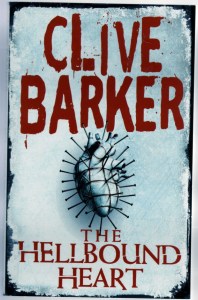
The movie “Hellraiser” was based on Clive Barker’s novel The Hellbound Heart. The movie does not veer too much from the novel, though there are significant differences in details. In the original novel Pinhead was a woman with diamond-capped pins in her head.
These are some of the reasons I love to watch Cinefix on YouTube. It really helps me with my art of storytelling. I see things from a different perspective.
One way to look at this is that when you read a story, you probably visualize the events in that story just as you would see them in a movie. Both deal with the images that form in your mind as you experience a story. While with a novel, you have to imagine how the events are depicted, with a movie you eliminate this step and the events are depicted for you–hopefully in accordance with how the underlying novel or play was written. Filmmakers are notorious for changing endings trying to improve the storyline or to develop their own art.
By the way, when you compare the cost of going to a movie that will last for two hours vs. the cost of buying a novel that will keep you entertained for ten, you can see the novel is the better deal economically.
But I digress.
Anyway, let me know your thoughts.
Don’t forget to like, comment, and subscribe.
Hasta luego.
Prevent the spread of Coronavirus/COVID-19 for the sake of yourself, your friends, and your family.
The Pool is a 2018 Thai (Thigh–if you are keeping up with current political events) horror movie about a man (Day) who find himself trapped in an empty, deep swimming pool with no way out. Things get considerably worse when his girlfriend (Koy) and then a crocodile become trapped with him. Things get very iffy very frequently for Day and Koy throughout the film. I found the film had a constant tension as to how Day and Koy would survive.
Thai Horror, 2018
The premise for the movie is that Day is given the job of cleaning a very deep pool in a natatorium in a remote location. Left on his own, he decides to take a nap on an inflatable raft, unaware that the pool is slowly draining. When he wakes up, he sees his girlfriend on the diving board about to dive into the pool and join him. Before he can tell her that the water is too low to get out, she dives but injures her head in the process. Thus the two are trapped. The water drains out leaving them to suffer from hunger and thirst for several days I don’t recall why this period is so long; it may be because the pool is closed for the season thus the need to drain it.
During this time, a crocodile manages to fall into the dry pool. How the crocodile falls in is a little contrived, but it does add a great and unexpected threat for Day and Koy. Now, Day must defend the unconscious Koy from the croc while trying to find a way out and trying to not to starve or die of thirst. All the while, Day suffers from terrible luck as there are several times he might be rescued, but somehow luck keeps him and Koy trapped. Of course, I won’t give away the ending, but it was very tense going.
This is a fun horror flick filled with constant tension and fear though not very much violence or gore. It might be better to describe this movie as a thriller than horror. I found it intriguing to think about how I would survive in a similar situation.
I saw on Imdb that a lot of reviewers called The Pool ridiculous and the situation ludicrous and contrived. I never felt that way at all. Day’s actions are logical though desperate and sometimes taken out of frustration. Luck, both good and bad, does figure greatly in the movie though.
I recommend seeing this movie. I saw it on Shudder, but it would worth the cost of Redbox at least to see it.
Last night, I managed (we live in a remote part of Arkansas) to hook up Roku to our bedroom TV and finally get a decent stream of TV into said bedroom. Now my wife, on summer vacation from teaching, has spent much of last night and today watching Shudder (I more than she having had a bout of insomnia). I expect this to continue for some time. She is a big horror fan, the more modern the better. However, she does enjoy some blasts from the past. She caught a glimpse of “Bram Stoker’s Dracula” from 1974, starring Jack Palance, and instantly proclaimed it a classic. This was immediately before succumbing to Mr. Snooze and Mr. Snore after imbibing our version of a Sea Breeze cocktail (1:1 Malibu Coconut Rum and Ocean Spray Cranberry juice, shaken and on the rocks). Shudder, by the way, is a fun, little Amazon Prime horror channel.
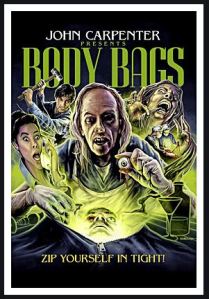
The first thing we watched together though was John Carpenter’s “Body Bags” from 1993. This is a cheesy film, but so cheesy that it is quite enjoyable. Wikipedia accurately describes it as “… a 1993 American horror comedy anthology television film originally made for television, featuring three unconnected stories, with bookend segments featuring John Carpenter, Tom Arnold and Tobe Hooper as deranged morgue attendees.” As Wikipedia also notes, it is most notable for its celebrity cameo appearances.
The three stories are fun for television horror of the early 90’s. My first thought on watching about the first five minutes was that John Carpenter must have gotten together with some of his horror director pals and done this on a drunken goof. The stories are not worthy of any directors
Mark Hamill in “Body Bags” (1993)
involved. They are rather silly and amateurish in terms of plot, etc. The first, “The Gas Station” involves a pretty girl pursued by a serial killer on her first night shift at a local gas station. The second story, “Hair”, has Stacy Keach as a vain executive type undergoing a radical hair growth technique and then discovering its horrifying consequences. The third story, “Eye”, has Mark Hamill as a baseball player who loses an eye in an automobile accident and then has it replaced (unknowingly, of course) with the eye of a serial killer. You can pretty much figure out where that one is headed from that brief description.
Now, on to the interesting part: the celebrity cameos. Note that I said in the above paragraph that this film is not worthy of any of the directors involved. That’s because this film has cameos from most of the most famous horror directors of that era: Tobe Hooper, John Carpenter, Sam Raimi, Roger Corman, and Wes Craven. If you are curious about what these guys are like in real life, this is your chance to find out. I won’t go into long, meticulous detail about each of their roles. It will be more fun for you to just watch the film and watch them pop out here and there, then watch the credits to see if you’re right.
There are also a few other non-horror celebrities making an appearance: Stacy Keach, Sheena Easton (for you younger set, she was very popular and very hot in every sense of the word in the early 90’s), and Charles Napier. One horror star that crops up is David Naughton of “An American Werewolf in London” fame.
Anyway, I won’t bore you with much else. I have some writing to do and a light supper to eat, so I must be signing off.
Bottom line: watch this movie just for fun. Don’t take it seriously. It was obviously made to be camp and silly. Just enjoy it for the silliness and the trivia value.
The witch from The Witch in the Window (2018), directed by Andy Mitton.
Last night/early this morning, my wife and I watched The Witch in the Window (2018, directed by Alex Mitton) on Shudder.
This is one movie that will keep you on the edge of your seat and has an ending that was disturbing yet somewhat comforting.
The movie involves a divorced father who takes his estranged 12-year-old son for a while so that they can work together on a house in Vermont in order to flip it. Naturally, as you can tell by the title, the story relates how the father and son are plagued by the ghost of a witch that was the house’s most recent inhabitant.
There is no blood or gore in this film, nor are there any jump scares, torture, or any of the other usual tropes or motifs found in most of today’s horror. Instead, this story focuses on the poignant relationship between the father and the son. The father cares deeply for his son and tries to help him with his problems and issues as best he can. The son takes his father’s advice to heart. This relationship is developed tenderly and carefully. Then the witch appears. What she does does not destroy or disrupt the tightening father-son bond, but makes the movie’s end heart-rending. If you liked The Witch, you will probably like The Witch in the Window (the two are not related in any sense so far as I could see).
If you want blood and guts, this movie is not for you. If you like to see carefully constructed character development and great acting and to actually feel something that reaches to your heart and soul instead of just turning your stomach or making your skin crawl, this movie is for you.
Shudder is becoming our favorite Amazon channel for horror.
Don’t forget to like this article and subscribe to this website.
Prevent the spread of the Coronavirus/COVID-19. Follow federal, state, and local guidelines. Use common sense when the guidelines are insufficient.
Anthony Hopkins in the eponymous role of Titus Andronicus
After I watched Equus on Sunday, I decided to ramp up the drama into horrific tragedy by watching Julie Taymor’s bizarre 1999 film version of Shakespeare’s Titus Andronicus.
This film is bloody enough in its own right, but it transcends the usual graphic horror found in Stephen King novels or teen slasher flicks by showering the innocent as well as the not-so-innocent with the soul-wrenching agony of parents watching their children and the children watching their siblings suffer horrible deaths and torture.
Think of Titus Andronicus as Shakespeare’s predecessor to Game of Thrones with the horror turned up a notch but without the mercy that occasionally pops up.
Wikipedia notes that Shakespeare wrote this to “to emulate the violent and bloody revenge plays of his contemporaries, which were extremely popular with audiences throughout the 16th century [per Joseph Quincy Adams’ Shakespeare’s Titus Andronicus: The First Quarto, 1594 published by Scribner’s Sons, 1936].
Shakespeare knew how to work with his audience’s emotion.
Unlike other Shakespeare plays, this one is not based on a historical character. It is set in an unspecified time in Rome after the reign of Julius Caesar. Titus is a general returning from a successful campaign against the Goths (who defeated the Romans at Adrianople in 378 CE followed by the Visigoths sacking Rome in 410 CE). He has brought with him the Goth queen Tamora and her three sons. To pay homage to the gods during the interment of 25 of his soldiers, Titus sacrifices the eldest son of Tamora, who begs for her son’s life. Titus continues with the sacrifice.
The emperor of Rome has died and just after the execution of Tamora’s son, the emperor’s son Satuninus ascends to the throne. Saturninus wants Titus’s daughter Lavinia for his bride and Titus gives her to him, even though she is in love with Bassanius. Just after Lavinia takes her place beside Saturninus, Titus gives him an additional gift of Tamora and her two remaining sons. Saturninus practically drools over Tamora. Lavinia immediately runs off with Bassianus, but Saturninus has the woman he craves, so he decides not to bother with Lavinia. This makes Tamora the empress of Rome. Things keep getting worse and worse for Titus and his family as only Shakespeare can do. Lots of gore and blood and screaming. If John Carpenter, David Cronenberg, George Romero, Dario Argento, and Guillermo de Toro could team up for a movie, this would be the movie they would make, but in King James English. Lots of limbs and heads coming off.
Julie Taymor sets this in a fantasy time, where swords and guns, horses and cars,, togas and suits are used with anachronistic abandon. From what the Wikipedia article on Titus Andronicus says, she did this to show the timelessness of violence. In one of the few obscenities I will use on this website, I will say NO SHIT, JULIE. VIOLENCE IS TIMELESS. TELL US SOMETHING WE DON’T KNOW.
But then, her production of Shakespeare’s The Tempest is also unusual including the gender of the wizard and main character, Prospero, is changed from a man to a woman. Still, If she hadn’t translated these films to cinema, who would have. I am grateful that I got to see them in whatever form, so long as they remain reasonably true to Shakespeare’s script. Setting a Shakespeare play in another time is not unusual. Kenneth Branagh did it with Hamlet and Baz Luhrmann did it with Romeo and Juliet.
Still, with Taymor the effect is still a tad weird. She starts out in the modern day with a boy of about 11 playing violent games with toys on his kitchen table. He is then whisked away to the fictional time and world of Titus Andronicus, where he spends several scenes loitering in the foreground and watching the main characters, before he becomes Titus’s grandson toward the end of the movie.
In my humble opinion, the movie could have done without the character of the modern boy. It’s too distracting from the story and the dialogue. I don’t mind so much the setting being in a fantasy time and world, but the boy is an unnecessary detail that adds nothing to the plot or to the overall story.
Personally, I would have preferred that the movie be more historically accurate, even though the characters are fictional. Julie should have just picked a post-Christ era of the Roman empire and ran with it.
Mel Gibson could have done it better.
Anyway, if you are into horror, like I am (though I don’t go for really graphic stuff), this may be the Shakespeare play for you.
Overall, it was a decent production and NOT BORING. I was definitely wide awake and pausing the movie when I had to take the dog out. I don’t do that for all films. The plot is intriguing and the characters sympathetic with good and evil in each, though often one outweighs the other.
As with all Shakespeare plays made into movies and sticking to the original script, the King James English is tricky to learn at first, but it can be done. I have watched several of these films and it takes a while to adapt, but it helps it you read the closed captions. Once you adapt to it, you will wonder what happened to the beauty of the English language over the centuries. There are some beautiful and incredibly poignant passages in the dialogues, made even more poignant when you understand the overall situation the speaking character is in.
I would write more, but I have a headache from being in the declining phase of a cold and will close it here. Maybe I will write more later. I have wanted to watch Titus Andronicus for a long time and finally got around to it today. I am glad I did.
I recommend this movie highly, especially for all Shakespeare aficionados.
On Sunday, I watched Equus (1977) starring Richard Burton and Peter Firth. This is a powerful movie.
When I first heard about Equus, I thought it would focus entirely on the character of Alan Strang, an English teenager who blinds six horses and is sent to a mental institution by the courts. However, the movie (I have not seen the play, though I have started reading its script) seems to focus more on the character or Dr. Dysart, the psychiatrist who analyzes Alan Strang to find out his motives for blinding the horses in the stables where he worked. In short, he was insane, but what made him insane?
I won’t go into a lot of detail about what Dr. Dysart finds or how he finds it, because that is the mystery to be solved. Watching how both these characters change is fascinating. The movie analyzes both, perhaps giving a bit more emphasis on Dr. Dysart. I think this is because Dr. Dysart represents an educated audience looking into the soul of Alan Strang. What Dysart finds effects him deeply just as I think it effects an audience deeply, because what Dr. Dysart finds makes him examine his own relationship to the world and to God as well as reflecting on his own existence. At one point, Dr. Dysart begins to so intensely understand Alan’s viewpoint that Ithe tells Mrs. Dysart that he actually envies Alan.
Both the movie and the play were written by Peter Shaffer, who won a Tony award for it and for his following play Amadeus, which was made into a much more successful movie than Equus.
The movie was directed by Sydney Lumet. An interesting difference between the movie and the play is that the movie is staged very realistically in offices, homes, a stable, etc. but the the play’s script has the stage set in a very minimalist, in a sense, abstract fashion. I would love to see a performance of Equus. The minimalism would keep the audiences mind(s) focused on the characters and their interrelationships and not on the set or on anything that is peripheral or tangential and of no importance to the narrative.
I have to wonder how Peter Shaffer developed the character of Alan Strang. He wrote an exceptional portrayal of a madman and how he became mad. I understand that he based the play on a news article he read about a young Englishman who blinded six horses and then started loo,king into that story. That character is brought to life vividly by Peter Firth. I have to ask myself as well how Peter Firth developed his portrayal of Alan Strang. The ideas of Shaffer and Firth on this character seemed to mesh wonderfully for an awe-inspiring performance.
It is interesting to note that, in one sense, this movies shows how the change in one man stimulated the change in another man.
I am no actor, but to me the acting in this movie was top-notch. Richard Burton gave a performance that on par with his performance in Who’s Afraid of Virginia Woolf? Peter Firth played Alan Strang.
All in all, this is a fascinating movie with strong performances that reach deeply into the characters’ souls and will very likely reach into the souls of the audience as well and cause them to reflect on their own existences just as Dr. Dysart does.











 On Sunday, I watched
  Phil Slattery, Writer, Publisher