Observations on the X-Files: Redrum, Season Eight, Episode 6

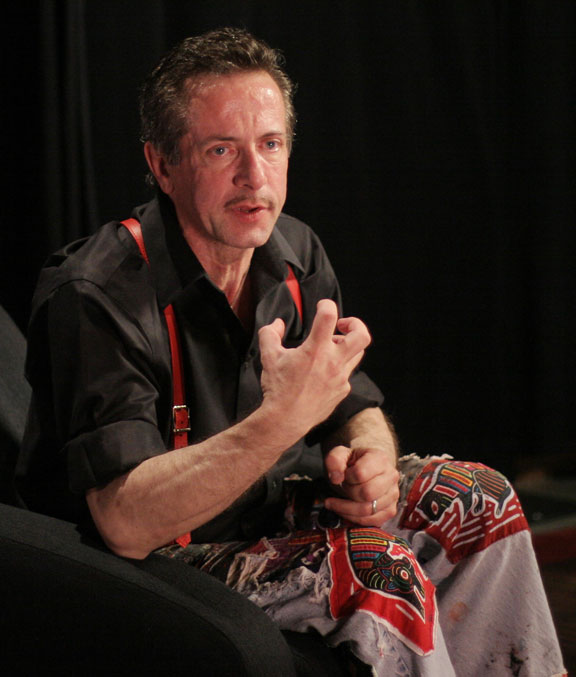
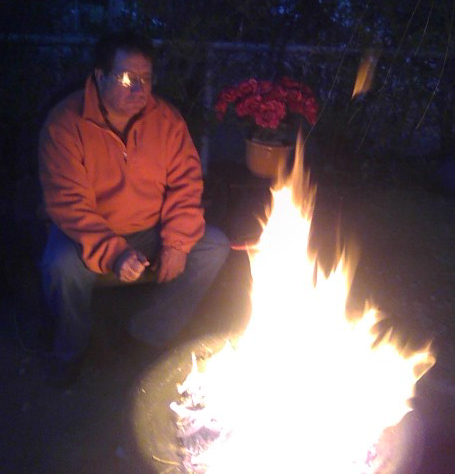
Relaxing by the front yard firepit on a chilly New Mexico evening circa 2013.

I recently purchased seasons  8 and 9 of the X-Files to complete my collection of the entire series.  As you can note above, I am up to episode 6 of season 8: Redrum.  No, it’s not based on The Shining or the famous line that sprang from there.   This is a completely original script and I think one of the best X-Files.   Why am I mentioning a Sci-Fi series in an article that should be about horror?  This article is about good writing, whatever the genre.

I will endeavor to avoid spoiling the story for you.

As we all know, “redrum” is murder spelled backwards.  This story is about a murder, but the alleged murderer finds himself traveling back in time to the day of the murder with the knowledge of how to prevent it.

I find the plot’s basic concept fascinating.  A prosecutor (and friend of Agent Doggett) wakes up one morning to find himself in prison for the murder of his wife, about which he remembers nothing.  As he is transferred to another facility for his safekeeping, he is assassinated.  However, at that point time starts to flow backwards for him.  Each morning he wakes up another day in the past (first he wakes up on Saturday, then on Friday, then on Thursday, etc.).  With each day he learns a bit more about his predicament until finally he wakes up on the day of the murder and he has an opportunity to prevent it.

Unexpectedly traveling back in time is not a common theme, but it’s not rare either.   I have to ask myself how Maeda and Arkin came up with the idea for this episode.  Maybe it was based on amnesia;  someone can’t recall his crime or immediate past and has to learn about it bit by bit, day by day, as the prosecutor does here.  Maybe it arose out of a philosophical question such as “if we could travel back in time, we could change our future but would the ultimate destination be the same and all we change is the route we take to get there?”   Maybe it was a thought that most stories show a protagonist going back in time to a certain point in time and then returning to the present; what if going back in time was not one big step, but several little steps.  How could we change our lives in that case?   What if as we traveled back in time, we knew as little about the past as we do about the future?  We wouldn’t be able to convince those around us that we are traveling back in time, because we wouldn’t know any history to prove our story.   They would believe us to be insane.

The whole scenario intrigues me.  One man goes back in time for unknown reasons while the rest of the world around him proceeds as normal.

I have to ask myself what their creative process was.

This scenario opens up so many questions and possibilities.   I love its originality.    If you haven’t seen it, I recommend renting it as soon as possible.

We never find out what causes the protagonist to travel back in time.  Like in a Stephen King novel, paranormal events happen out of the blue and at random.   But according to Lovecraft’s theories of weird fiction, not knowing the cause/origin of a horrible event, makes the event more horrifying, because the event could happen to any one of us at any time.

A common principle of writing is “to suspend belief” (some say “to suspend disbelief”).   In stories like this though, it is the natural laws of the universe that are suspended.    Everything else, all the world/universe surrounding the event. is quite believable, which emphasizes just how weird the event is.

The story was written by Steven Maeda and Daniel Arkin. A quick search in Imdb shows that Steven Maeda has an extensive list of credits as either a writer or producer for such television series as X-Files, Lost, CSI:Miami, Helix, Lie to Me, and many others.   Likewise Daniel Arkin has an extensive list of credits as a writer or producer for such shows as X-Files, Suits, Las Vegas, Alias, Medical Investigation, and others.  I will have to watch for more shows with which either one is involved.

Thoughts?  Comments?
“Summer Thunder” and the Horror of Tragedy

Relaxing by the front yard firepit on a chilly New Mexico evening circa 2013.

I picked up a copy of the latest issue of “Cemetery Dance” this evening and read the Stephen King short story “Summer Thunder”. This is a very interesting piece. I won’t spoil the ending for you, but the story is about a man, his dog, and his neighbor, who have survived a nuclear holocaust and are slowly succumbing to radiation poisoning.

This story was quite different from the other Stephen King stories I have read (which have been quite a few, though not all by any means). There is no supernatural factor in the story. There are also no twists or surprises. The story maintains the same pace throughout, just as the protagonists face the same things day in and day out until they die.

I would classify this story as horror-tragedy, because, even though it has very little of the blood and gore normally associated with the horror genre, it definitely has a horror “feel” to it, but that horror is subtle and understated. “Summer Thunder” sets up a tragic scenario and the horror finds its basis in watching these people suffer through no fault of their own. They were not involved in starting the war in any way; that was done by world leaders thousands of miles away. These are the common citizens, the “Everymen” that normally populate King’s works as protagonists, and who must pay the horrific price for their government’s actions. That is the tragedy and that is a large part of the horror.

What is also horrifying about the story is not the action described in it, but the scenario it describes, because this scenario is definitely one that could literally happen to each of us, should our government and/or other governments decide for whatever reason, to push the proverbial button. Each of us can (or perhaps should) see ourselves as the main character, who will be forced to watch his or her world disintegrate after a nuclear apocalypse.

That concept alone should be enough to bring the true horror of this story:  that this scenario is, and has been for a long time, a real possibility for each of us.

Thoughts?  Comments?

Just a few quick thoughts…

The blogger relaxing by the front yard firepit on a chilly New Mexico evening.

I was just sitting here trying to choose one of my many first drafts to work on for tonight, when I started thinking about the different “approaches” (for lack of a better term at the moment) to horror.  By “approaches” I mean a very brief synopsis of a writer’s general outlook on or method of writing horror.    Maybe a better way to express it would be to say the way the author approaches his genre (still not quite right, but I am getting closer to the idea).

An example would be to say that Poe’s approach was to bring out the horror in realistic situations (mostly, he did dabble in the fantastic occasionally).  “The Black Cat” is about a murderer who unknowingly seals up a cat with the corpse of his victim.  Nothing fantastic there.  “The Tell-Tale Heart” is about a murderer whose conscience drives him to confession.  “The Fall of the House of Usher” is about a family with an inherited genetic trait of hypersensitivity.   So forth and so on.

Lovecraft’s approach was to spin tales of the fantastic, especially about a race of elder gods who once dominated the planet millions of years ago and of which mankind encounters remnants on rare occasion.

Stephen King’s approach is to plant an element of the fantastic among ordinary people in ordinary places and watch them react to it.

Clive Barker’s approach seems to be to take something that is fantastic, bloody, cruel, evil and gruesome and either drop it somewhere a single character can deal with it or bring it out of the shadows where a character can deal with it.

Seeing these different approaches in relation to each other makes me think about how do I want to approach an idea or a draft I have of a story.  Do I want to drop the fantastic into the real or bring out the horror in the everyday or in realistic situations or can I come up with something else, my own approach, that is none of these?  That is the challenge of creativity:  to come up with something no one else has done.   Maybe I can just go with the purely fantastic.  Maybe I can try to find the real in the fantastic.

How many different ways are there to horrify an audience?

There is the real and the fantastic and all those subtle shades of gray in between the two.  Can there be anything else?

Thoughts?  Comments?

Stephen King, H.P. Lovecraft, and the X-files

mod 130419_0008I just finished watching an episode of the X-Files entitled “Chinga” [note to Spanish-speakers out there:  I don’t know who chose the title, so please forgive my language] from Season Five and I  noticed that it was written by Stephen King and Chris Carter (the creator of the X-Files).  The story’s antagonist is a talking doll that can force people to injure or kill themselves in gruesome ways.   Like many, if not most, of King’s stories, there is no explanation of how the came to exist.  All the viewer finds out about it is that a lobsterman pulled it up one night in a lobster trap and his daughter comes to possess it after he meets his own gruesome fate.

I find in my own writing that I like to provide an explanation or background as to how things originate.  This is just my nature.  I like to know the origins of things.  However, I have come to believe of late that, in terms of horror, that is a very nineteenth century  concept.

Lovecraft said in his essay “Supernatural Horror in Literature”:

“A certain atmosphere of breathless and unexplainable dread of outer, unknown forces must be present; and there must be a hint, expressed with a seriousness and protentiousness becoming its subject, of that most terrible conception of the human brain — a malign and particular suspension or defeat of those fixed laws of Nature which are our only daily safeguard against the assaults of chaos and the daemons of unplumbed space.”

For me, what Lovecraft is saying is that if the laws of nature are negated, then anything is possible and monsters like Cthulhu really could exist and are capable of doing us harm at any moment.  Combine this with his statement that “The oldest and strongest emotion of mankind is fear and the oldest and strongest kind of fear is fear of the unknown” and it becomes apparent that stories like “Chinga” derive much of their horror effect from the fact that the origin of the threat to a story’s protagonist(s) is unknown or that there is no explanation for the threat.

This would mean that one of  things that provides to “Chinga”  the element of horror that it has, is the fact that origin of the doll is unknown.  Therefore, any of us when we are fishing or scuba diving or swimming in any body of water, could discover a doll that would turn his/her life into a nightmare.   That is a scary thought.

Of course, this means that Stephen King would be one of the greatest practitioners of this technique, which I believe he is.

I think I shall try to experiment with this in the near future.

Thoughts?  Comments?


Horror at Project Gutenberg

100_1736
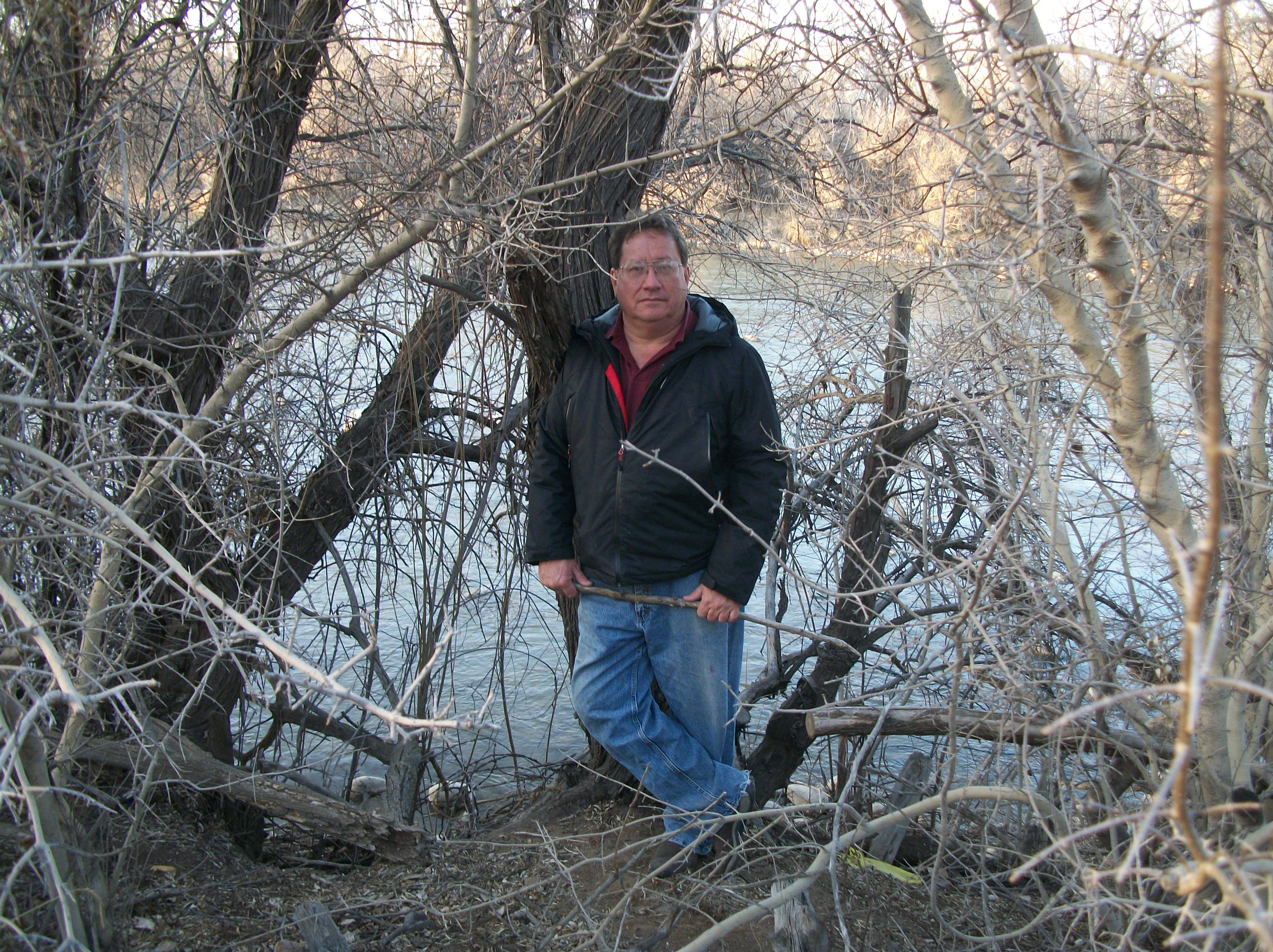
The blogger on the banks of the San Juan River, Farmington, New Mexico, 2013

If you are an avid reader (of anything) and are not familiar with Project Gutenberg (http://www.gutenberg.org/wiki/Main_Page), you are doing yourself a great disservice. As they state on their homepage:

Project Gutenberg offers over 46,000 free ebooks: choose among free epub books, free kindle books, download them or read them online.

We carry high quality ebooks: All our ebooks were previously published by bona fide publishers. We digitized and diligently proofread them with the help of thousands of volunteers.

No fee or registration is required, but if you find Project Gutenberg useful, we kindly ask you to donate a small amount so we can buy and digitize more books. Other ways to help include digitizing more books,recording audio books, or reporting errors.

Over 100,000 free ebooks are available through our Partners, Affiliates and ResourcesOur ebooks may be freely used in the United States because most are not protected by U.S. copyright law, usually because their copyrights have expired. They may not be free of copyright in other countries. Readers outside of the United States must check the copyright laws of their countries before downloading or redistributing our ebooks. We also have a number of copyrighted titles, for which the copyright holder has given permission for unlimited non-commercial worldwide use.”

As they state, most of these books are available because their copyrights have expired, making them usually quite dated.  However, for anyone with a bent for the historical, Project Gutenberg is a gold mine.  I did a quick search for “horror” on their website and received 169 titles in response.  For a few, the only relation to the horror genre was the word “horror” in the title (such as “Southern Horrors: Lynch Law in All its Phases–which is a horrible subject, but is non-fiction vs. horror fiction).  However, many are the classics or founding works of the horror genre, such as Frankenstein by Mary Shelley, Dracula by Bram Stoker, The Vampyre: a Tale by John William Polidori, The Castle of Otranto by Horace Walpole, The Strange Case of Dr. Jekyll and Mr. Hyde by Robert Louis Stevenson, Fantome de’l Opera (Phantom of the Opera) by Gaston Leroux, many works by Edgar Allan Poe,  The Great God Pan by Arthur Machen, The King in Yellow by Robert W. Chambers, The Shunned House by H.P. Lovecraft, and many others.

Please take the time to visit this treasure trove of literature and of the horror genre, and if you are so inclined, please consider making a donation (via their website) to support their worthy cause.

Thoughts?  Comments?

The Quick 10: 10 Unexpected Horror Writers

winston-221x300The Quick 10: 10 Unexpected Horror Writers.  Here is an interesting article  I ran across at Mentalfloss.com.   I would never have suspected most of these of ever having even an interest in horror.  Stacey Conradt wrote the article in 2009.

Notes on “The Hellbound Heart” Part 2 of 2

Clive Barker, Seattle, 2007 by Steven Friederich

I finished reading The Hellbound Heart several weeks ago.  As noted previously, it is a truly terrific read.    I suggest reading it after seeing the movie (if you have somehow repeatedly missed your chances of seeing “Hellraiser” over the last twenty or so years).   Reading it beforehand will just spoil the movie, whereas reading it afterwards may enlighten parts of the movie.

I don’t have much to add to what I have previously stated, except that, if you are a student of storytelling, the book warrants a detailed examination for narrative technique as it exhibits some basic techniques of storytelling that Mr. Barker carries out very well.   I could go through the book page by page and expound on each ad nauseam, but instead I will focus now on one that sticks in my mind.

I do not recall if this is in the movie, but toward the end where Kirsty is trapped in the “damp room” by Frank, she slips on a bit of preserved ginger lying on the floor enabling Frank to catch her.  The method by which Barker establishes why that ginger is on the floor fascinates me.

Although I have one or two dictionaries of literary terms, I do not recall the name for this technique and I think of it as simply setting the stage for a future scene.  It shows the foresight, planning, and attention to detail that must go into any good story.

Earlier in the story, after Julia has released Frank from the Cenobite hell and he has regained enough flesh that he can once again eat, he asks Julia for a few of his favorite victuals, including preserved ginger.   At the moment I read this, I thought it was simply a natural but insignificant detail.  Of course, I could not know then that that bit of ginger would  skyrocket the dramatic tension later on in one of the novel’s most important scenes.

Anyway, that’s my post for the day.

I have been very negligent in posting anything over the last months,  my daytime job and personal matters consuming much more of my time than usual.  I have recently come to find out though, that many more people in my home town of Frankfort, KY, were enjoying my postings than I had known or even believed possible and sorely missed it during this hiatus.  For them and all the others who silently enjoy my works, I shall endeavor to pick up the thread.

I have not lost my desire to write fiction, however, and I am currently trying to finish a sci-fi/horror novella that I started sometime back.  The work is going well, but I am having to change some of my original concept to make it more exciting.  I would like to make it as gripping as some have found my “Murder by Plastic” (published at www.everydayfiction.com), but that will be quite difficult for something as long as a novella.  The part I find most challenging is to coordinate the details much as Barker did in the example I give above.  I would expound on the subject, but I do not want to give away the plot or run the risk of some unscrupulous cur stealing my idea and publishing it before I do–particularly as I am so close to finishing it.  After this I have another three or four unfinished works to bring to a close.  I could probably write eight hours a day like Thomas Mann and still not be finished by spring.

Thoughts?  Comments?

Notes on Clive Barker’s “The Hellbound Heart”…so far….

I am just past the halfway point in Clive Barker’s The Hellbound Heart, the novella upon which the orginal “Hellraiser” movie was based. This is one really terrific read.  It is one of those that is hard to put down, even though you know what happens next, because the movie, which you saw twenty years ago and have seen periodically since then,  so closely resembles the book. 

Clive Barker, Seattle, 2007 by Steven Friederich

The prose is simple, but not Hemingway simple, and there are moments of actual narrative beauty (such as when Barker poignantly describes the passing of seasons in the beginning of one chapter) that seem to be glimpses of insight into a latent aspect of Barker’s immense talent:  that he is able to write actually artistic prose that captures a moment, an emotion, or a sensation with a light touch that carries over to the reader.  I have read the first two volumes (so far) of Barker’s Books of Blood and this quality seems to be lacking in them.  In Books of Blood, he writes splendidly, but not beautifully, not poignantly.  

I also love the way he keeps his characters to a minimum, so that seeing the complex relationships between them is easy.

Another fascinating aspect of Barker’s storytelling in this instance is that he can put his characters in horrifying situations, yet he does not try to be any more graphic than is necessary to invoke an emotional response in the ready.  The few truly graphic scenes I have encountered so far are graphic, but not gratuitously graphic.  An example would be when the recently-resurrected Frank starts to have sex with with brother’s wife Julia.  He shows the act beginning and ends the chapter leaving what happens up to the reader’s imagination.  Yes, this is an old trick straight out of made-for-TV movies, but do you really need to visualize every gory detail of a woman having sex with someone who is still half-corpse?  I didn’t.  And seeing that would not have helped the storytelling and if anything, it would have only detracted from it.   Besides, if someone wants to visualize that unnerving scene for themselves, they are going to whether or not Barker describes it for them.  All that is necessary to show the development of the characters and the plot is to show that they did have sex, because that act in itself shows something about them.  About Frank it show how incredibly callous he is to Julia and how centered he is in the world of his own pleasure.  About Julia, it shows her love for Frank is so self-sacrificing that she is willing to commit the most vile acts for him while taking obscene pleasure in them in her own way. 

Anyway, those are just a few notes so far.  I need to have dinner and do some housework and to read more of this fascinating work.   Hopefully, I will be able to write more soon.

Thoughts?  Comments?

‘Tis the Season to be Scared!

From Ottawahorror.com

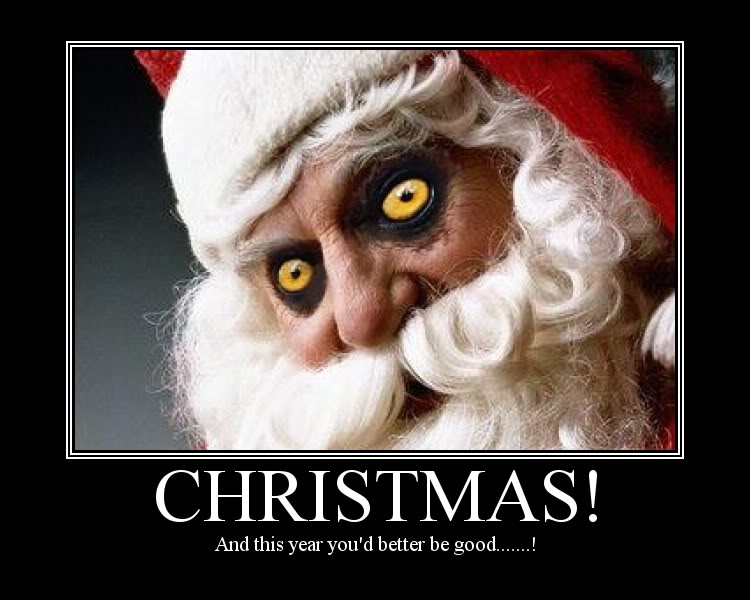
Just a little Christmas fun from Ottawahorror.com.  Follow this link to their site and you can post this on Facebook, Twitter, Stumbleupon, and others.Check out the following note to be found on their About Us Page:

Started in 2008, we are a blog and portal dedicated to all things horror in our nation’s [Canada] capital. If you are a filmmaker, musician, artist, or fan, this is the place for you. Also, recruit minions! When we travel out of town, we bump into more people and artists from home than we do when we hang around the batcave. It’s kinda cool, but kinda creepy. While we appreciate finding you wherever you are, finding you here is easier… because then we can send reporters and photographers after you easier.

Want to contribute? Check out the ‘submit’ page above. It’s new~
You can follow us on blogger, twitter, facebook or link to us with a groovy badge!
They accept submissions for their blog!  Maybe you have something you would like to contribute.  The site looks pretty cool.
Thoughts?  Comments?

The Good, The Bad and The Terrible ; Zombies | The Horror Online

130218_0002Still more from The Horror Online:  The Good, The Bad and The Terrible ; Zombies | The Horror Online.

Hopefully, I will find the time to sit down and write another extensive post, but unfortunately, these days I seem inundated with personal and professional tasks.  I try to read when I have the opportunity.  When I do have some time free, I have been watching horror films and I have several which I recommend and on which I hope to be writing posts before long.  I also hope to establish a webpage for a nascent lexicon of horror.

Thoughts?  Comments?

The Good, The Bad and The Terrible ; Werewolves | The Horror Online

Werewolf-1Here is an amusing article for fans of cinematic werewolves:  The Good, The Bad and The Terrible ; Werewolves | The Horror Online.

On a side note, I find werewolves a fascinating fictional creature with a lot of as yet unexplored literary possibilities.  I love them as a symbol of the dual nature of humanity:  civilized person under most circumstances, but with the possibility of releasing, whether willingly or not, a dark, inner animalistic nature and suddenly converting into a horrific, bloodthirsty monster.  I started a werewolf/lycanthrope novel of my own many years ago, and perhaps one day I will complete it.

Those of you unfamiliar with the distinction between a werewolf and a lycanthrope please note the following.  A werewolf is a man (or woman) that actually changes into a wolf.  Werewolves exist only in fiction.   A lycanthrope is a person who believes that he or she changes into a wolf.  These do exist, but are rare.  For more information on this condition, please visit the Wikipedia article on Clinical Lycanthropy.

Thoughts?  Comments?

Neil Gaiman: ‘Face facts: we need fiction’ | Books | The Guardian

Neil Gaiman at the 2007 Scream Awards Photo by pinguino k
Neil Gaiman
at the 2007 Scream Awards
Photo by pinguino k

Here is a fascinating perspective on fiction by Neil Gaiman: ‘Face facts: we need fiction’ | Books | The Guardian.

MovieNews | Opinion: How to define a horror film – entertainment.ie

Poster from Johannascheezburger.com via Halloween Mike's Horror Everyday on Facebook.
Poster from Johannascheezburger.com via Halloween Mike’s Horror Everyday on Facebook.

Here is an interesting viewpoint on just what makes a horror film:  MovieNews | Opinion: How to define a horror film – entertainment.ie.

Visit “The Works of Edgar Allan Poe, Volume 1” but not for the obvious reason.

Edgar Allan Poe, 1848

The Works of Edgar Allan Poe, Volume 1.  Yes, this link takes you to a collection of Poe’s works, but the reason I am mentioning it here is because the preface to this particular volume includes fascinating biographical notes and insight into the character of this master of horror that may help you understand the roots of his creative genius and how art sometimes came close to imitating life for Mr. Poe.

When you open the page, you may find yourself a little distance from the top of the article at the beginning of a section entitled “The Death of Edgar Allan Poe”.  While this section is fascinating in its own right, scroll to the top for the entire preface.  The works of Poe, beginning with the story of Hans Pfall, begin a bit down from “The Death…”