The Saturday Night Special: “What was it?” by Fitz-James O’Brien (1859)

It is, I confess, with considerable diffidence that I approach the strange narrative which I am about to relate. The events which I purpose detailing are of so extraordinary a character that I am quite prepared to meet with an unusual amount of incredulity and scorn. I accept all such beforehand. I have, I trust, the literary courage to face unbelief. I have, after mature consideration, resolved to narrate, in as simple and straightforward a manner as I can compass, some facts that passed under my observation, in the month of July last, and which, in the annals of the mysteries of physical science, are wholly unparalleled.

I live at No. — Twenty-sixth Street, in New York. The house is in some respects a curious one. It has enjoyed for the last two years the reputation of being haunted. It is a large and stately residence, surrounded by what was once a garden, but which is now only a green enclosure used for bleaching clothes. The dry basin of what has been a fountain, and a few fruit trees ragged and unpruned, indicate that this spot in past days was a pleasant, shady retreat, filled with fruits and flowers and the sweet murmur of waters.
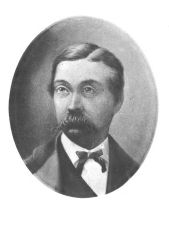
Fitz-James O'Brien 1828-1862
Fitz-James O’Brien
1828-1862

The house is very spacious. A hall of noble size leads to a large spiral staircase winding through its centre, while the various apartments are of imposing dimensions. It was built some fifteen or twenty years since by Mr. A——, the well-known New York merchant, who five years ago threw the commercial world into convulsions by a stupendous bank fraud. Mr. A——, as every one knows, escaped to Europe, and died not long after, of a broken heart. Almost immediately after the news of his decease reached this country and was verified, the report spread in Twenty-sixth Street that No. — was haunted. Legal measures had dispossessed the widow of its former owner, and it was inhabited merely by a caretaker and his wife, placed there by the house agent into whose hands it had passed for the purposes of renting or sale. These people declared that they were troubled with unnatural noises. Doors were opened without any visible agency. The remnants of furniture scattered through the various rooms were, during the night, piled one upon the other by unknown hands. Invisible feet passed up and down the stairs in broad daylight, accompanied by the rustle of unseen silk dresses, and the gliding of viewless hands along the massive balusters. The caretaker and his wife declared they would live there no longer. The house agent laughed, dismissed them, and put others in their place. The noises and supernatural manifestations continued. The neighbourhood caught up the story, and the house remained untenanted for three years. Several persons negotiated for it; but, somehow, always before the bargain was closed they heard the unpleasant rumours and declined to treat any further.

It was in this state of things that my landlady, who at that time kept a boarding-house in Bleecker Street, and who wished to move further up town, conceived the bold idea of renting No. — Twenty-sixth Street. Happening to have in her house rather a plucky and philosophical set of boarders, she laid her scheme before us, stating candidly everything she had heard respecting the ghostly qualities of the establishment to which she wished to remove us. With the exception of two timid persons,—a sea-captain and a returned Californian, who immediately gave notice that they would leave,—all of Mrs. Moffat’s guests declared that they would accompany her in her chivalric incursion into the abode of spirits.

Our removal was effected in the month of May, and we were charmed with our new residence. The portion of Twenty-sixth Street where our house is situated, between Seventh and Eighth avenues, is one of the pleasantest localities in New York. The gardens back of the houses, running down nearly to the Hudson, form, in the summer time, a perfect avenue of verdure. The air is pure and invigorating, sweeping, as it does, straight across the river from the Weehawken heights, and even the ragged garden which surrounded the house, although displaying on washing days rather too much clothesline, still gave us a piece of greensward to look at, and a cool retreat in the summer evenings, where we smoked our cigars in the dusk, and watched the fireflies flashing their dark lanterns in the long grass.

Of course we had no sooner established ourselves at No. — than we began to expect ghosts. We absolutely awaited their advent with eagerness. Our dinner conversation was supernatural. One of the boarders, who had purchased Mrs. Crowe’s “Night Side of Nature” for his own private delectation, was regarded as a public enemy by the entire household for not having bought twenty copies. The man led a life of supreme wretchedness while he was reading this volume. A system of espionage was established, of which he was the victim. If he incautiously laid the book down for an instant and left the room, it was immediately seized and read aloud in secret places to a select few. I found myself a person of immense importance, it having leaked out that I was tolerably well versed in the history of supernaturalism, and had once written a story the foundation of which was a ghost. If a table or a wainscot panel happened to warp when we were assembled in the large drawing-room, there was an instant silence, and every one was prepared for an immediate clanking of chains and a spectral form.

After a month of psychological excitement, it was with the utmost dissatisfaction that we were forced to acknowledge that nothing in the remotest degree approaching the supernatural had manifested itself. Once the black butler asseverated that his candle had been blown out by some invisible agency while he was undressing himself for the night; but as I had more than once discovered this coloured gentleman in a condition when one candle must have appeared to him like two, I thought it possible that, by going a step further in his potations, he might have reversed this phenomenon, and seen no candle at all where he ought to have beheld one.

Things were in this state when an accident took place so awful and inexplicable in its character that my reason fairly reels at the bare memory of the occurrence. It was the tenth of July. After dinner was over I repaired, with my friend Dr. Hammond, to the garden to smoke my evening pipe. Independent of certain mental sympathies which existed between the Doctor and myself, we were linked together by a vice. We both smoked opium. We knew each other’s secret, and respected it. We enjoyed together that wonderful expansion of thought, that marvellous intensifying of the perceptive faculties, that boundless feeling of existence when we seem to have points of contact with the whole universe,—in short, that unimaginable spiritual bliss, which I would not surrender for a throne, and which I hope you, reader, will never—never taste.

Those hours of opium happiness which the Doctor and I spent together in secret were regulated with a scientific accuracy. We did not blindly smoke the drug of paradise, and leave our dreams to chance. While smoking, we carefully steered our conversation through the brightest and calmest channels of thought. We talked of the East, and endeavoured to recall the magical panorama of its glowing scenery. We criticized the most sensuous poets,—those who painted life ruddy with health, brimming with passion, happy in the possession of youth and strength and beauty. If we talked of Shakespeare’s “Tempest,” we lingered over Ariel, and avoided Caliban. Like the Guebers, we turned our faces to the East, and saw only the sunny side of the world.

This skilful colouring of our train of thought produced in our subsequent visions a corresponding tone. The splendours of Arabian fairyland dyed our dreams. We paced the narrow strip of grass with the tread and port of kings. The song of the rana arborea, while he clung to the bark of the ragged plum-tree, sounded like the strains of divine musicians. Houses, walls, and streets melted like rain clouds, and vistas of unimaginable glory stretched away before us. It was a rapturous companionship. We enjoyed the vast delight more perfectly because, even in our most ecstatic moments, we were conscious of each other’s presence. Our pleasures, while individual, were still twin, vibrating and moving in musical accord.

On the evening in question, the tenth of July, the Doctor and myself drifted into an unusually metaphysical mood. We lit our large meerschaums, filled with fine Turkish tobacco, in the core of which burned a little black nut of opium, that, like the nut in the fairy tale, held within its narrow limits wonders beyond the reach of kings; we paced to and fro, conversing. A strange perversity dominated the currents of our thought. They would not flow through the sun-lit channels into which we strove to divert them. For some unaccountable reason, they constantly diverged into dark and lonesome beds, where a continual gloom brooded. It was in vain that, after our old fashion, we flung ourselves on the shores of the East, and talked of its gay bazaars, of the splendours of the time of Haroun, of harems and golden palaces. Black afreets continually arose from the depths of our talk, and expanded, like the one the fisherman released from the copper vessel, until they blotted everything bright from our vision. Insensibly, we yielded to the occult force that swayed us, and indulged in gloomy speculation. We had talked some time upon the proneness of the human mind to mysticism, and the almost universal love of the terrible, when Hammond suddenly said to me, “What do you consider to be the greatest element of terror?”

The question puzzled me. That many things were terrible, I knew. Stumbling over a corpse in the dark; beholding, as I once did, a woman floating down a deep and rapid river, with wildly lifted arms, and awful, upturned face, uttering, as she drifted, shrieks that rent one’s heart while we, spectators, stood frozen at a window which overhung the river at a height of sixty feet, unable to make the slightest effort to save her, but dumbly watching her last supreme agony and her disappearance. A shattered wreck, with no life visible, encountered floating listlessly on the ocean, is a terrible object, for it suggests a huge terror, the proportions of which are veiled. But it now struck me, for the first time, that there must be one great and ruling embodiment of fear,—a King of Terrors, to which all others must succumb. What might it be? To what train of circumstances would it owe its existence?

“I confess, Hammond,” I replied to my friend, “I never considered the subject before. That there must be one Something more terrible than any other thing, I feel. I cannot attempt, however, even the most vague definition.”

“I am somewhat like you, Harry,” he answered. “I feel my capacity to experience a terror greater than anything yet conceived by the human mind;—something combining in fearful and unnatural amalgamation hitherto supposed incompatible elements. The calling of the voices in Brockden Brown’s novel of ‘Wieland’ is awful; so is the picture of the Dweller of the Threshold, in Bulwer’s ‘Zanoni’; but,” he added, shaking his head gloomily, “there is something more horrible still than those.”

“Look here, Hammond,” I rejoined, “let us drop this kind of talk, for Heaven’s sake! We shall suffer for it, depend on it.”

“I don’t know what’s the matter with me tonight,” he replied, “but my brain is running upon all sorts of weird and awful thoughts. I feel as if I could write a story like Hoffman, tonight, if I were only master of a literary style.”

“Well, if we are going to be Hoffmanesque in our talk, I’m off to bed. Opium and nightmares should never be brought together. How sultry it is! Good night, Hammond.”

“Good night, Harry. Pleasant dreams to you.”

“To you, gloomy wretch, afreets, ghouls, and enchanters.”

We parted, and each sought his respective chamber. I undressed quickly and got into bed, taking with me, according to my usual custom, a book, over which I generally read myself to sleep. I opened the volume as soon as I had laid my head upon the pillow, and instantly flung it to the other side of the room. It was Goudon’s “History of Monsters,”—a curious French work, which I had lately imported from Paris, but which, in the state of mind I had then reached, was anything but an agreeable companion. I resolved to go to sleep at once; so, turning down my gas until nothing but a little blue point of light glimmered on the top of the tube, I composed myself to rest.

The room was in total darkness. The atom of gas that still remained alight did not illuminate a distance of three inches round the burner. I desperately drew my arm across my eyes, as if to shut out even the darkness, and tried to think of nothing. It was in vain. The confounded themes touched on by Hammond in the garden kept obtruding themselves on my brain. I battled against them. I erected ramparts of would-be blankness of intellect to keep them out. They still crowded upon me. While I was lying still as a corpse, hoping that by a perfect physical inaction I should hasten mental repose, an awful incident occurred. A Something dropped, as it seemed, from the ceiling, plumb upon my chest, and the next instant I felt two bony hands encircling my throat, endeavouring to choke me.

I am no coward, and am possessed of considerable physical strength. The suddenness of the attack, instead of stunning me, strung every nerve to its highest tension. My body acted from instinct, before my brain had time to realize the terrors of my position. In an instant I wound two muscular arms around the creature, and squeezed it, with all the strength of despair, against my chest. In a few seconds the bony hands that had fastened on my throat loosened their hold, and I was free to breathe once more. Then commenced a struggle of awful intensity. Immersed in the most profound darkness, totally ignorant of the nature of the Thing by which I was so suddenly attacked, finding my grasp slipping every moment, by reason, it seemed to me, of the entire nakedness of my assailant, bitten with sharp teeth in the shoulder, neck, and chest, having every moment to protect my throat against a pair of sinewy, agile hands, which my utmost efforts could not confine,—these were a combination of circumstances to combat which required all the strength, skill, and courage that I possessed.

At last, after a silent, deadly, exhausting struggle, I got my assailant under by a series of incredible efforts of strength. Once pinned, with my knee on what I made out to be its chest, I knew that I was victor. I rested for a moment to breathe. I heard the creature beneath me panting in the darkness, and felt the violent throbbing of a heart. It was apparently as exhausted as I was; that was one comfort. At this moment I remembered that I usually placed under my pillow, before going to bed, a large yellow silk pocket handkerchief. I felt for it instantly; it was there. In a few seconds more I had, after a fashion, pinioned the creature’s arms.

I now felt tolerably secure. There was nothing more to be done but to turn on the gas, and, having first seen what my midnight assailant was like, arouse the household. I will confess to being actuated by a certain pride in not giving the alarm before; I wished to make the capture alone and unaided.

Never losing my hold for an instant, I slipped from the bed to the floor, dragging my captive with me. I had but a few steps to make to reach the gas-burner; these I made with the greatest caution, holding the creature in a grip like a vice. At last I got within arm’s length of the tiny speck of blue light which told me where the gas-burner lay. Quick as lightning I released my grasp with one hand and let on the full flood of light. Then I turned to look at my captive.

I cannot even attempt to give any definition of my sensations the instant after I turned on the gas. I suppose I must have shrieked with terror, for in less than a minute afterward my room was crowded with the inmates of the house. I shudder now as I think of that awful moment. I saw nothing! Yes; I had one arm firmly clasped round a breathing, panting, corporeal shape, my other hand gripped with all its strength a throat as warm, as apparently fleshy, as my own; and yet, with this living substance in my grasp, with its body pressed against my own, and all in the bright glare of a large jet of gas, I absolutely beheld nothing! Not even an outline,—a vapour!

I do not, even at this hour, realize the situation in which I found myself. I cannot recall the astounding incident thoroughly. Imagination in vain tries to compass the awful paradox.

It breathed. I felt its warm breath upon my cheek. It struggled fiercely. It had hands. They clutched me. Its skin was smooth, like my own. There it lay, pressed close up against me, solid as stone,—and yet utterly invisible!

I wonder that I did not faint or go mad on the instant. Some wonderful instinct must have sustained me; for, absolutely, in place of loosening my hold on the terrible Enigma, I seemed to gain an additional strength in my moment of horror, and tightened my grasp with such wonderful force that I felt the creature shivering with agony.

Just then Hammond entered my room at the head of the household. As soon as he beheld my face—which, I suppose, must have been an awful sight to look at—he hastened forward, crying, “Great heaven, Harry! what has happened?”

“Hammond! Hammond!” I cried, “come here. O, this is awful! I have been attacked in bed by something or other, which I have hold of; but I can’t see it,—I can’t see it!”

Hammond, doubtless struck by the unfeigned horror expressed in my countenance, made one or two steps forward with an anxious yet puzzled expression. A very audible titter burst from the remainder of my visitors. This suppressed laughter made me furious. To laugh at a human being in my position! It was the worst species of cruelty. Now, I can understand why the appearance of a man struggling violently, as it would seem, with an airy nothing, and calling for assistance against a vision, should have appeared ludicrous. Then, so great was my rage against the mocking crowd that had I the power I would have stricken them dead where they stood.

“Hammond! Hammond!” I cried again, despairingly, “for God’s sake come to me. I can hold the—the thing but a short while longer. It is overpowering me. Help me! Help me!”

“Harry,” whispered Hammond, approaching me, “you have been smoking too much opium.”

“I swear to you, Hammond, that this is no vision,” I answered, in the same low tone. “Don’t you see how it shakes my whole frame with its struggles? If you don’t believe me, convince yourself. Feel it,—touch it.”

Hammond advanced and laid his hand in the spot I indicated. A wild cry of horror burst from him. He had felt it!

In a moment he had discovered somewhere in my room a long piece of cord, and was the next instant winding it and knotting it about the body of the unseen being that I clasped in my arms.

“Harry,” he said, in a hoarse, agitated voice, for, though he preserved his presence of mind, he was deeply moved, “Harry, it’s all safe now. You may let go, old fellow, if you’re tired. The Thing can’t move.”

I was utterly exhausted, and I gladly loosed my hold.

Hammond stood holding the ends of the cord that bound the Invisible, twisted round his hand, while before him, self-supporting as it were, he beheld a rope laced and interlaced, and stretching tightly around a vacant space. I never saw a man look so thoroughly stricken with awe. Nevertheless his face expressed all the courage and determination which I knew him to possess. His lips, although white, were set firmly, and one could perceive at a glance that, although stricken with fear, he was not daunted.

The confusion that ensued among the guests of the house who were witnesses of this extraordinary scene between Hammond and myself,—who beheld the pantomime of binding this struggling Something,—who beheld me almost sinking from physical exhaustion when my task of jailer was over,—the confusion and terror that took possession of the bystanders, when they saw all this, was beyond description. The weaker ones fled from the apartment. The few who remained clustered near the door and could not be induced to approach Hammond and his Charge. Still incredulity broke out through their terror. They had not the courage to satisfy themselves, and yet they doubted. It was in vain that I begged of some of the men to come near and convince themselves by touch of the existence in that room of a living being which was invisible. They were incredulous, but did not dare to undeceive themselves. How could a solid, living, breathing body be invisible, they asked. My reply was this. I gave a sign to Hammond, and both of us—conquering our fearful repugnance to touch the invisible creature—lifted it from the ground, manacled as it was, and took it to my bed. Its weight was about that of a boy of fourteen.

“Now, my friends,” I said, as Hammond and myself held the creature suspended over the bed, “I can give you self-evident proof that here is a solid, ponderable body, which, nevertheless, you cannot see. Be good enough to watch the surface of the bed attentively.”

I was astonished at my own courage in treating this strange event so calmly; but I had recovered from my first terror, and felt a sort of scientific pride in the affair, which dominated every other feeling.

The eyes of the bystanders were immediately fixed on my bed. At a given signal Hammond and I let the creature fall. There was a dull sound of a heavy body alighting on a soft mass. The timbers of the bed creaked. A deep impression marked itself distinctly on the pillow, and on the bed itself. The crowd who witnessed this gave a low cry, and rushed from the room. Hammond and I were left alone with our Mystery.

We remained silent for some time, listening to the low, irregular breathing of the creature on the bed, and watching the rustle of the bed-clothes as it impotently struggled to free itself from confinement. Then Hammond spoke.

“Harry, this is awful.”

“Ay, awful.”

“But not unaccountable.”

“Not unaccountable! What do you mean? Such a thing has never occurred since the birth of the world. I know not what to think, Hammond. God grant that I am not mad, and that this is not an insane fantasy!”

“Let us reason a little, Harry. Here is a solid body which we touch, but which we cannot see. The fact is so unusual that it strikes us with terror. Is there no parallel, though, for such a phenomenon? Take a piece of pure glass. It is tangible and transparent. A certain chemical coarseness is all that prevents its being so entirely transparent as to be totally invisible. It is not theoretically impossible, mind you, to make a glass which shall not reflect a single ray of light,—a glass so pure and homogeneous in its atoms that the rays from the sun will pass through it as they do through the air, refracted but not reflected. We do not see the air, and yet we feel it.”

“That’s all very well, Hammond, but these are inanimate substances. Glass does not breathe, air does not breathe. This thing has a heart that palpitates,—a will that moves it,—lungs that play, and inspire and respire.”

“You forget the phenomena of which we have so often heard of late,” answered the Doctor, gravely. “At the meetings called ‘spirit circles,’ invisible hands have been thrust into the hands of those persons round the table,—warm, fleshly hands that seemed to pulsate with mortal life.”

“What? Do you think, then, that this thing is——”

“I don’t know what it is,” was the solemn reply; “but please the gods I will, with your assistance, thoroughly investigate it.”

We watched together, smoking many pipes, all night long, by the bedside of the unearthly being that tossed and panted until it was apparently wearied out. Then we learned by the low, regular breathing that it slept.

The next morning the house was all astir. The boarders congregated on the landing outside my room, and Hammond and myself were lions. We had to answer a thousand questions as to the state of our extraordinary prisoner, for as yet not one person in the house except ourselves could be induced to set foot in the apartment.

The creature was awake. This was evidenced by the convulsive manner in which the bed-clothes were moved in its efforts to escape. There was something truly terrible in beholding, as it were, those second-hand indications of the terrible writhings and agonized struggles for liberty which themselves were invisible.

Hammond and myself had racked our brains during the long night to discover some means by which we might realize the shape and general appearance of the Enigma. As well as we could make out by passing our hands over the creature’s form, its outlines and lineaments were human. There was a mouth; a round, smooth head without hair; a nose, which, however, was little elevated above the cheeks; and its hands and feet felt like those of a boy. At first we thought of placing the being on a smooth surface and tracing its outlines with chalk, as shoemakers trace the outline of the foot. This plan was given up as being of no value. Such an outline would give not the slightest idea of its conformation.

A happy thought struck me. We would take a cast of it in plaster of Paris. This would give us the solid figure, and satisfy all our wishes. But how to do it? The movements of the creature would disturb the setting of the plastic covering, and distort the mould. Another thought. Why not give it chloroform? It had respiratory organs,—that was evident by its breathing. Once reduced to a state of insensibility, we could do with it what we would. Doctor X—— was sent for; and after the worthy physician had recovered from the first shock of amazement, he proceeded to administer the chloroform. In three minutes afterward we were enabled to remove the fetters from the creature’s body, and a modeller was busily engaged in covering the invisible form with the moist clay. In five minutes more we had a mould, and before evening a rough facsimile of the Mystery. It was shaped like a man,—distorted, uncouth, and horrible, but still a man. It was small, not over four feet and some inches in height, and its limbs revealed a muscular development that was unparalleled. Its face surpassed in hideousness anything I had ever seen. Gustav Doré, or Callot, or Tony Johannot, never conceived anything so horrible. There is a face in one of the latter’s illustrations to Un Voyage où il vous plaira, which somewhat approaches the countenance of this creature, but does not equal it. It was the physiognomy of what I should fancy a ghoul might be. It looked as if it was capable of feeding on human flesh.

Having satisfied our curiosity, and bound every one in the house to secrecy, it became a question what was to be done with our Enigma? It was impossible that we should keep such a horror in our house; it was equally impossible that such an awful being should be let loose upon the world. I confess that I would have gladly voted for the creature’s destruction. But who would shoulder the responsibility? Who would undertake the execution of this horrible semblance of a human being? Day after day this question was deliberated gravely. The boarders all left the house. Mrs. Moffat was in despair, and threatened Hammond and myself with all sorts of legal penalties if we did not remove the Horror. Our answer was, “We will go if you like, but we decline taking this creature with us. Remove it yourself if you please. It appeared in your house. On you the responsibility rests.” To this there was, of course, no answer. Mrs. Moffat could not obtain for love or money a person who would even approach the Mystery.

The most singular part of the affair was that we were entirely ignorant of what the creature habitually fed on. Everything in the way of nutriment that we could think of was placed before it, but was never touched. It was awful to stand by, day after day, and see the clothes toss, and hear the hard breathing, and know that it was starving.

Ten, twelve days, a fortnight passed, and it still lived. The pulsations of the heart, however, were daily growing fainter, and had now nearly ceased. It was evident that the creature was dying for want of sustenance. While this terrible life-struggle was going on, I felt miserable. I could not sleep. Horrible as the creature was, it was pitiful to think of the pangs it was suffering.

At last it died. Hammond and I found it cold and stiff one morning in the bed. The heart had ceased to beat, the lungs to inspire. We hastened to bury it in the garden. It was a strange funeral, the dropping of that viewless corpse into the damp hole. The cast of its form I gave to Doctor X——, who keeps it in his museum in Tenth Street.

As I am on the eve of a long journey from which I may not return, I have drawn up this narrative of an event the most singular that has ever come to my knowledge.

###

This eBook is for the use of anyone anywhere at no cost and with almost no restrictions whatsoever.  You may copy it, give it away or re-use it under the terms of the Project Gutenberg License included with this eBook or online at http://www.gutenberg.org

Our Vampires, Ourselves

The True Story of A Vampire by Count Eric Stanislaus Stenbock (Studies in Death, 1894) Tuesday’s Tale of Terror  May 10, 2016   Our vampires, ourselves. All vampires are alike, yes or no? Do w…

Source: Our Vampires, Ourselves

The Girl With The Hungry Eyes

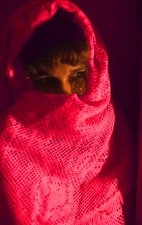
Laura in red Photo by Phil Slattery circa 1990
Laura in red
Photo by Phil Slattery
circa 1990

The Girl With the Hungry Eyes  by Fritz Leiber  (1949)  Tuesday’s Tale of Terror  April 12, 2016   Remember Rod Serling’s Night Gallery? He did a film adaptation of Fritz Leiber’s The Girl Wit…

Source: The Girl With The Hungry Eyes

The Saturday Night Special: “Ancient Lights” by Algernon Blackwood (1912)

From Southwater, where he left the train, the road led due west. That he knew; for the rest he trusted to luck, being one of those born walkers who dislike asking the way. He had that instinct, and as a rule it served him well. “A mile or so due west along the sandy road till you come to a stile onthe right; then across the fields. You’ll see the red house straight before you.” He glanced at the postcard’s instructions once again, and once again hetried to decipher the scratched-out sentence— without success. It had been so elaborately inked over that no word was legible. Inked-out sentences in a letter were always enticing. He wondered what it was that had to be so very carefully obliterated.

The afternoon was boisterous, with a tearing, shouting wind that blew from the sea, across the Sussex weald. Massive clouds with rounded, piled-up edges, cannoned across gaping spaces of bluesky. Far away the line of Downs swept the horizon, like an arriving wave. Chanctonbury Ring rode their crest—a scudding ship, hull down before the wind.  He took his hat off and walked rapidly, breathinggreat draughts of air with delight and exhilaration. The road was deserted; no horsemen, bicycles, or motors; not even a tradesman’s cart; no single walker. But anyhow he would never have asked the way. Keeping a sharp eye for the stile, he pounded along, while the wind tossed the cloak against his face, and made waves across the blue puddles in the yellow road. The trees showed their under leaves of white. The bracken and the high new grass bent all one way. Great life was in the day, high spirits and dancing everywhere. And for a Croydon surveyor’s clerk just out of an office this was like a holiday at the sea.
It was a day for high adventure, and his heart rose up to meet the mood of Nature. His umbrella with the silver ring ought to have been a sword, and his brown shoes should have been top-boots withspurs upon the heels. Where hid the enchanted Castle and the princess with the hair of sunny gold? His horse…
The stile came suddenly into view and nipped adventure in the bud. Everyday clothes took him prisoner again. He was a surveyor’s clerk, middle-aged, earning three pounds a week, coming  to see about a client’s proposed alterations in a wood—something to ensure a better view from the dining-room window. Across the fields, perhaps a mile away, he saw the red house gleaming in the sunshine; and resting on the stile a moment to get his breath he noticed a copse of oak and hornbeam on the right. “Aha,” he told himself “so that must bethe wood he wants to cut down to improve the view? I’ll ’ave a look at it.” There were boards up, of course, but there was an inviting little path as well.“I’m not a trespasser,” he said; “it’s part of my business, this is.” He scrambled awkwardly over the gate and entered the copse. A little round would bring him to the field again.
But the moment he passed among the trees the wind ceased shouting and a stillness dropped upon the world. So dense was the growth that the sunshine only came through in isolated patches.  was close. He mopped his forehead and put his green felt hat on, but a low branch knocked it off again at once, and as he stooped an elastic twig swung back and stung his face. There were flowers along both edges of the little path; glades opened on either side; ferns curved about in damper corners, and the smell of earth and foliage was rich and sweet. It was cooler here. What an enchanting little wood, he thought, turning down a small green glade where the sunshine flickered like silver wings. How it danced and fluttered and moved about! He put a dark blue flower in his buttonhole. Again his hat, caught by an oak branch as he rose, was knocked from his head, falling across his eyes. And this time he did not put it on again. Swinging his umbrella, he walked on with uncovered head, whistling rather loudly as he went. But the thick-ness of the trees hardly encouraged whistling, and something of his gaiety and high spirits seemed to leave him. He suddenly found himself treading circumspectly and with caution. The stillness in the wood was so peculiar.
There was a rustle among the ferns and leaves and something shot across the path ten yards ahead, stopped abruptly an instant with head cocked sideways to stare, then dived again beneath the under brush with the speed of a shadow. He started like a frightened child, laughing the next second that a mere pheasant could have made him jump. In the distance he heard wheels upon the road, and wondered why the sound was pleasant.“Good old butcher’s cart,” he said to himself—then realised that he was going in the wrong direction and had somehow got turned round. For the road should be behind him, not in front.
And he hurriedly took another narrow glade that lost itself in greenness to the right. “That’s my direction, of course,” he said; “the trees has mixed me up a bit, it seems”—then found himself abruptly by the gate he had first climbed over. He had merely made a circle. Surprise became almost discomfiture then. And a man, dressed like a game-keeper in browny green, leaned against the gate, hitting his legs with a switch. “I’m making for Mr.Lumley’s farm,” explained the walker. “This is his wood, I believe—” then stopped dead, because it was no man at all, but merely an effect of light andshade and foliage. He stepped back to reconstruct the singular illusion, but the wind shook the branches roughly here on the edge of the wood and the foliage refused to reconstruct the figure. The leaves all rustled strangely. And just then the sun went behind a cloud, making the whole wood look otherwise. Yet how the mind could be thus doubly deceived was indeed remarkable, for it almost seemed to him the man had answered, spoken—or was this the shuffling noise the branches made?—and had pointed with his switch to the notice-board upon the nearest tree. The words rang on in his head, but of course he had imagined them: “No, it’s not his wood. It’s ours.” And some village wit, moreover, had changed the lettering on the weather-beaten board, for it read quite plainly,“Trespassers will be persecuted.”
And while the astonished clerk read the words and chuckled, he said to himself, thinking what a tale he’d have to tell his wife and children later—“The blooming wood has tried to chuck me out. But I’ll go in again. Why, it’s only a matter of a square acre at most. I’m bound to reach the fields on the other side if I keep straight on.” He remembered his position in the office. He had a certain dignity to maintain.

The cloud passed from below the sun, and light splashed suddenly in all manner of unlikely places. The man went straight on. He felt a touch of puzzling confusion somewhere; this way the copse had of shifting from sunshine into shadow doubtless troubled sight a little. To his relief at last, a new glade opened through the trees and disclosed the fields with a glimpse of the red house in the distance at the far end. But a little wicket gate that stood across the path had first to be climbed, and as he scrambled heavily over—for it would not open—he got the astonishing feeling that it slid off sideways beneath his weight, and towards the wood. Like the moving staircases at Harrod’s and Earl’s Court, it began to glide off with him. It was quite horrible. He made a violent effort to get down before it carried him into the trees, but his feet became entangled with the bars and umbrella, so that he fell heavily upon the farther side,

Algernon Blackwood 1869-1951
Algernon Blackwood
1869-1951

arms spread across the grass and nettles, boots clutched between the first and second bars. He lay there  a moment like a man crucified upside down, and while he struggled to get disentangled—feet, bars,and umbrella formed a regular net—he saw the little man in browny green go past him with extreme rapidity through the wood. The man was laughing. He passed across the glade some fifty yards away, and he was not alone this time. A companion like himself went with him. The clerk, now upon his feet again, watched them disappear intothe gloom of green beyond. “They’re tramps, not gamekeepers,” he said to himself, half mortified, half angry. But his heart was thumping dreadfully ,and he dared not utter all his thought.

He examined the wicket gate, convinced it was a trick gate somehow—then went hurriedly on again, disturbed beyond belief to see that the glade no longer opened into fields, but curved away to the right. What in the world had happened to him? His sight was so utterly at fault.  Again the sunflamed out abruptly and lit the floor of the wood with pools of silver, and at the same moment a violent gust of wind passed shouting overhead. Drops fell clattering everywhere upon the leaves, making asharp pattering as of many footsteps. The whole copse shuddered and went moving.
“Rain, by George,” thought the clerk, and feelingfor his umbrella, discovered he had lost it. He turned back to the gate and found it lying on thefarther side. To his amazement he saw the fields at the far end of the glade, the red house, too, ashine in the sunset. He laughed then, for, of course, in his struggle with the gate, he had somehow got turnedround—had fallen back instead of forwards. Climbing over, this time quite easily, he retraced hissteps. The silver band, he saw, had been torn from the umbrella. No doubt his foot, a nail, or something had caught in it and ripped it off. The clerk began to run; he felt extraordinarily dismayed.
But, while he ran, the entire wood ran with him, round him, to and fro, trees shifting like living things, leaves folding and unfolding, trunks darting backwards and forwards, and branches disclosing enormous empty spaces, then closing up again before he could look into them. There were foot-steps everywhere, and laughing, crying voices, andcrowds of figures gathering just behind his back tillthe glade, he knew, was thick with moving life. The wind in his ears, of course, produced the voices andthe laughter, while sun and clouds, plunging thecopse alternately in shadow and bright dazzlinglight, created the figures. But he did not like it, and went as fast as ever his sturdy legs could take him.He was frightened now. This was no story for his wife and children. He ran like the wind. But his feetmade no sound upon the soft mossy turf.
Then, to his horror, he saw that the glade grew narrow, nettles and weeds stood thick across it, itdwindled down into a tiny path, and twenty yards ahead it stopped finally and melted off among the trees. What the trick gate had failed to achieve, this twisting glade accomplished easily—carried him inbodily among the dense and crowding trees.
There was only one thing to do—turn sharply and dash back again, run headlong into the life that followed at his back, followed so closely too that now it almost touched him, pushing him in. And with reckless courage this was what he did. Itseemed a fearful thing to do. He turned with a sortof violent spring, head down and shoulders for- ward, hands stretched before his face. He made theplunge; like a hunted creature he charged full tiltthe other way, meeting the wind now in his face.
Good Lord! The glade behind him had closed upas well; there was no longer any path at all. Turninground and round, like an animal at bay, he searched for an opening, a way of escape, searched frantically, breathlessly, terrified now in his bones. But foliage surrounded him, branches blocked the way; the trees stood close and still, unshaken by a breath of wind; and the sun dipped that moment behind agreat black cloud. The entire wood turned dark andsilent. It watched him.
Perhaps it was this final touch of sudden blackness that made him act so foolishly, as though he had really lost his head. At any rate, without pausing to think, he dashed headlong in among the trees again. There was a sensation of being stiflingly surrounded and entangled, and that he must break out at all costs—out and away into the open of the blessed fields and air. He did this ill-considered thing, and apparently charged straight into an oak that deliberately moved into his path to stop him.He saw it shift across a good full yard, and being ameasuring man, accustomed to theodolite and chain, he ought to know. He fell, saw stars, and felta thousand tiny fingers tugging and pulling at his hands and neck and ankles. The stinging nettles, no doubt, were responsible for this. He thought of it later. At the moment it felt diabolically calculated.
But another remarkable illusion was not so easily explained. For all in a moment, it seemed, the entire wood went sliding past him with a thick deep rustling of leaves and laughter, myriad footsteps,and tiny little active, energetic shapes; two men inbrowny green gave him a mighty hoist—and heopened his eyes to find himself lying in the meadow beside the stile where first his incredible adventure had begun. The wood stood in its usual place and stared down upon him in the sunlight. There wasthe red house in the distance as before. Above himgrinned the weather-beaten notice-board: “Trespassers will be prosecuted.”
Dishevelled in mind and body, and a good deal shaken in his official soul, the clerk walked slowly across the fields. But on the way he glanced once more at the postcard of instructions, and saw with dull amazement that the inked-out sentence was quite legible after all beneath the scratches madeacross it: “There is a short cut through the wood—the wood I want cut down—if you care to take it.”Only “care” was so badly written, it looked more like another word; the “c” was uncommonly like “d.”
“That’s the copse that spoils my view of the Downs, you see,” his client explained to him later, pointing across the fields, and referring to the ordnance map beside him. “I want it cut down and a path made so and so.” His finger indicated directionon the map. “The Fairy Wood—it’s still called, and it’s far older than this house. Come now, if you’re ready, Mr. Thomas, we might go out and have alook at it. . .”

Trees Bathed in Blood

A View of the Woods  by Flannery O’Connor  (1957)  Tuesday’s Tale of Terror    March 29, 2016   We don’t normally think of Flannery O’Connor when we want to read a mystery. A View of the Woods…

Source: Trees Bathed in Blood

Press Release: Kevin Lucia’s Devourer of Souls from Crystal Lake Publishing

Press Release: Kevin Lucia’s Devourer of Souls from Crystal Lake Publishing   Kevin Lucia’s third installment of the Clifton Height Saga Welcome back to Clifton Heights.   In Kevin …

Source: Press Release: Kevin Lucia’s Devourer of Souls from Crystal Lake Publishing

The Saturday Night Special: “Lost in a Pyramid or The Mummy’s Curse” by Louisa May Alcott (1869)

I

“And what are these, Paul?” asked Evelyn, opening a tarnished gold box
and examining its contents curiously.

“Seeds of some unknown Egyptian plant,” replied Forsyth, with a sudden
shadow on his dark face, as he looked down at the three scarlet grains
lying in the white hand lifted to him.

“Where did you get them?” asked the girl.

“That is a weird story, which will only haunt you if I tell it,” said
Forsyth, with an absent expression that strongly excited the girl’s
curiosity.

Piramida Cheopsa Photo by Janusz Reclaw, 2000
Piramida Cheopsa
Photo by
Janusz Reclaw, 2000

“Please tell it, I like weird tales, and they never trouble me. Ah, do  tell it; your stories are always so interesting,” she cried, looking up with such a pretty blending of entreaty and command in her charming face, that refusal was impossible.

“You’ll be sorry for it, and so shall I, perhaps; I warn you
beforehand, that harm is foretold to the possessor of those mysterious seeds,” said Forsyth, smiling, even while he knit his black brows, and regarded the blooming creature before him with a fond yet foreboding glance.

“Tell on, I’m not afraid of these pretty atoms,” she answered, with an
imperious nod.

“To hear is to obey. Let me read the facts, and then I will begin,”
returned Forsyth, pacing to and fro with the far-off look of one who
turns the pages of the past.

Evelyn watched him a moment, and then returned to her work, or play,
rather, for the task seemed well suited to the vivacious little
creature, half-child, half-woman.

“While in Egypt,” commenced Forsyth, slowly, “I went one day with my
guide and Professor Niles, to explore the Cheops. Niles had a mania
for antiquities of all sorts, and forgot time, danger and fatigue in
the ardor of his pursuit. We rummaged up and down the narrow passages,
half choked with dust and close air; reading inscriptions on the
walls, stumbling over shattered mummy-cases, or coming face to face
with some shriveled specimen perched like a hobgoblin on the little
shelves where the dead used to be stowed away for ages. I was
desperately tired after a few hours of it, and begged the professor to
return. But he was bent on exploring certain places, and would not
desist. We had but one guide, so I was forced to stay; but Jumal, my
man, seeing how weary I was, proposed to us to rest in one of the
larger passages, while he went to procure another guide for Niles. We
consented, and assuring us that we were perfectly safe, if we did not
quit the spot, Jumal left us, promising to return speedily. The
professor sat down to take notes of his researches, and stretching my
self on the soft sand, I fell asleep.

“I was roused by that indescribable thrill which instinctively warns
us of danger, and springing up, I found myself alone. One torch burned
faintly where Jumal had struck it, but Niles and the other light were
gone. A dreadful sense of loneliness oppressed me for a moment; then I
collected myself and looked well about me. A bit of paper was pinned
to my hat, which lay near me, and on it, in the professor’s writing
were these words:

“‘I’ve gone back a little to refresh my memory on certain points.
Don’t follow me till Jumal comes. I can find my way back to you, for I
have a clue. Sleep well, and dream gloriously of the Pharaohs. N N.’

“I laughed at first over the old enthusiast, then felt anxious then
restless, and finally resolved to follow him, for I discovered a
strong cord fastened to a fallen stone, and knew that this was the
clue he spoke of. Leaving a line for Jumal, I took my torch and
retraced my steps, following the cord along the winding ways. I often
shouted, but received no reply, and pressed on, hoping at each turn to
see the old man poring over some musty relic of antiquity. Suddenly
the cord ended, and lowering my torch, I saw that the footsteps had
gone on.

“‘Rash fellow, he’ll lose himself, to a certainty,’ I thought, really
alarmed now.

“As I paused, a faint call reached me, and I answered it, waited,
shouted again, and a still fainter echo replied.

“Niles was evidently going on, misled by the reverberations of the low
passages. No time was to be lost, and, forgetting myself, I stuck my
torch in the deep sand to guide me back to the clue, and ran down the
straight path before me, whooping like a madman as I went. I did not
mean to lose sight of the light, but in my eagerness to find Niles I
turned from the main passage, and, guided by his voice, hastened on.
His torch soon gladdened my eyes, and the clutch of his trembling
hands told me what agony he had suffered.

“‘Let us get out of this horrible place at once,’ he said, wiping the
great drops off his forehead.

“‘Come, we’re not far from the clue. I can soon reach it, and then we
are safe’; but as I spoke, a chill passed over me, for a perfect
labyrinth of narrow paths lay before us.

“Trying to guide myself by such land-marks as I had observed in my
hasty passage, I followed the tracks in the sand till I fancied we
must be near my light. No glimmer appeared, however, and kneeling down
to examine the footprints nearer, I discovered, to my dismay, that I
had been following the wrong ones, for among those marked by a deep
boot-heel, were prints of bare feet; we had had no guide there, and
Jumal wore sandals.

“Rising, I confronted Niles, with the one despairing word, ‘Lost!’ as
I pointed from the treacherous sand to the fast-waning light.

“I thought the old man would be overwhelmed but, to my surprise, he
grew quite calm and steady, thought a moment, and then went on,
saying, quietly:

“‘Other men have passed here before us; let us follow their steps,
for, if I do not greatly err, they lead toward great passages, where
one’s way is easily found.’

“On we went, bravely, till a misstep threw the professor violently to
the ground with a broken leg, and nearly extinguished the torch. It
was a horrible predicament, and I gave up all hope as I sat beside the
poor fellow, who lay exhausted with fatigue, remorse and pain, for I
would not leave him.

“‘Paul,’ he said suddenly, ‘if you will not go on, there is one more
effort we can make. I remember hearing that a party lost as we are,
saved themselves by building a fire. The smoke penetrated further than
sound or light, and the guide’s quick wit understood the unusual mist;
he followed it, and rescued the party. Make a fire and trust to
Jumal.’

“‘A fire without wood?’ I began; but he pointed to a shelf behind me,
which had escaped me in the gloom; and on it I saw a slender mummy-
case. I understood him, for these dry cases, which lie about in
hundreds, are freely used as firewood. Reaching up, I pulled it down,
believing it to be empty, but as it fell, it burst open, and out
rolled a mummy. Accustomed as I was to such sights, it startled me a
little, for danger had unstrung my nerves. Laying the little brown
chrysalis aside, I smashed the case, lit the pile with my torch, and
soon a light cloud of smoke drifted down the three passages which
diverged from the cell-like place where we had paused.

“While busied with the fire, Niles, forgetful of pain and peril, had
dragged the mummy nearer, and was examining it with the interest of a
man whose ruling passion was strong even in death.

“‘Come and help me unroll this. I have always longed to be the first
to see and secure the curious treasures put away among the folds of
these uncanny winding-sheets. This is a woman, and we may find
something rare and precious here,’ he said, beginning to unfold the
outer coverings, from which a strange aromatic odor came.

“Reluctantly I obeyed, for to me there was something sacred in the
bones of this unknown woman. But to beguile the time and amuse the
poor fellow, I lent a hand, wondering as I worked, if this dark, ugly
thing had ever been a lovely, soft-eyed Egyptian girl.

“From the fibrous folds of the wrappings dropped precious gums and
spices, which half intoxicated us with their potent breath, antique
coins, and a curious jewel or two, which Niles eagerly examined.

“All the bandages but one were cut off at last, and a small head laid
bare, round which still hung great plaits of what had once been
luxuriant hair. The shriveled hands were folded on the breast, and
clasped in them lay that gold box.”

“Ah!” cried Evelyn, dropping it from her rosy palm with a shudder.

“Nay; don’t reject the poor little mummy’s treasure. I never have
quite forgiven myself for stealing it, or for burning her,” said
Forsyth, painting rapidly, as if the recollection of that experience
lent energy to his hand.

“Burning her! Oh, Paul, what do you mean?” asked the girl, sitting up
with a face full of excitement.

“I’ll tell you. While busied with Madame la Momie, our fire had burned
low, for the dry case went like tinder. A faint, far-off sound made
our hearts leap, and Niles cried out: ‘Pile on the wood; Jumal is
tracking us; don’t let the smoke fail now or we are lost!’

“‘There is no more wood; the case was very small, and is all gone,’ I
answered, tearing off such of my garments as would burn readily, and
piling them upon the embers.

“Niles did the same, but the light fabrics were quickly consumed, and
made no smoke.

“‘Burn that!’ commanded the professor, pointing to the mummy.

“I hesitated a moment. Again came the faint echo of a horn. Life was
dear to me. A few dry bones might save us, and I obeyed him in
silence.

“A dull blaze sprung up, and a heavy smoke rose from the burning
mummy, rolling in volumes through the low passages, and threatening to
suffocate us with its fragrant mist. My brain grew dizzy, the light
danced before my eyes, strange phantoms seemed to people the air, and,
in the act of asking Niles why he gasped and looked so pale, I lost
consciousness.”

Evelyn drew a long breath, and put away the scented toys from her lap
as if their odor oppressed her.

Forsyth’s swarthy face was all aglow with the excitement of his story,
and his black eyes glittered as he added, with a quick laugh:

“That’s all; Jumal found and got us out, and we both forswore pyramids
for the rest of our days.”

“But the box: how came you to keep it?” asked Evelyn, eyeing it
askance as it lay gleaming in a streak of sunshine.

“Oh, I brought it away as a souvenir, and Niles kept the other
trinkets.”

“But you said harm was foretold to the possessor of those scarlet
seeds,” persisted the girl, whose fancy was excited by the tale, and
who fancied all was not told.

“Among his spoils, Niles found a bit of parchment, which he
deciphered, and this inscription said that the mummy we had so
ungallantly burned was that of a famous sorceress who bequeathed her
curse to whoever should disturb her rest. Of course I don’t believe
that curse has anything to do with it, but it’s a fact that Niles
never prospered from that day. He says it’s because he has never
recovered from the fall and fright and I dare say it is so; but I
sometimes wonder if I am to share the curse, for I’ve a vein of
superstition in me, and that poor little mummy haunts my dreams
still.”

A long silence followed these words. Paul painted mechanically and
Evelyn lay regarding him with a thoughtful face. But gloomy fancies
were as foreign to her nature as shadows are to noonday, and presently
she laughed a cheery laugh, saying as she took up the box again:

“Why don’t you plant them, and see what wondrous flower they will
bear?”

“I doubt if they would bear anything after lying in a mummy’s hand for
centuries,” replied Forsyth, gravely.

“Let me plant them and try. You know wheat has sprouted and grown that
was taken from a mummy’s coffin; why should not these pretty seeds? I
should so like to watch them grow; may I, Paul?”

“No, I’d rather leave that experiment untried. I have a queer feeling
about the matter, and don’t want to meddle myself or let anyone I love
meddle with these seeds. They may be some horrible poison, or possess
some evil power, for the sorceress evidently valued them, since she
clutched them fast even in her tomb.”

“Now, you are foolishly superstitious, and I laugh at you. Be
generous; give me one seed, just to learn if it will grow. See I’ll
pay for it,” and Evelyn, who now stood beside him, dropped a kiss on
his forehead as she made her request, with the most engaging air.

But Forsyth would not yield. He smiled and returned the embrace with
lover-like warmth, then flung the seeds into the fire, and gave her
back the golden box, saying, tenderly:

“My darling, I’ll fill it with diamonds or bonbons, if you please, but
I will not let you play with that witch’s spells. You’ve enough of
your own, so forget the ‘pretty seeds’ and see what a Light of the
Harem I’ve made of you.”

Evelyn frowned, and smiled, and presently the lovers were out in the
spring sunshine reveling in their own happy hopes, untroubled by one
foreboding fear.

II

“I have a little surprise for you, love,” said Forsyth, as he greeted
his cousin three months later on the morning of his wedding day.

“And I have one for you,” she answered, smiling faintly.

“How pale you are, and how thin you grow! All this bridal bustle is
too much for you, Evelyn.” he said, with fond anxiety, as he watched
the strange pallor of her face, and pressed the wasted little hand in his.

“I am so tired,” she said, and leaned her head wearily on her lover’s
breast. “Neither sleep, food, nor air gives me strength, and a curious
mist seems to cloud my mind at times. Mamma says it is the heat, but I
shiver even in the sun, while at night I burn with fever. Paul, dear,
I’m glad you are going to take me away to lead a quiet, happy life
with you, but I’m afraid it will be a very short one.”

“My fanciful little wife! You are tired and nervous with all this
worry, but a few weeks of rest in the country will give us back our
blooming Eve again. Have you no curiosity to learn my surprise?” he
asked, to change her thoughts.

The vacant look stealing over the girl’s face gave place to one of
interest, but as she listened it seemed to require an effort to fix
her mind on her lover’s words.

“You remember the day we rummaged in the old cabinet?”

“Yes,” and a smile touched her lips for a moment.

“And how you wanted to plant those queer red seeds I stole from the
mummy?”

“I remember,” and her eyes kindled with sudden fire.

“Well, I tossed them into the fire, as I thought, and gave you the
box. But when I went back to cover up my picture, and found one of
those seeds on the rug, a sudden fancy to gratify your whim led me to
send it to Niles and ask him to plant and report on its progress.
Today I hear from him for the first time, and he reports that the seed
has grown marvelously, has budded, and that he intends to take the
first flower, if it blooms in time, to a meeting of famous scientific
men, after which he will send me its true name and the plant itself.
From his description, it must be very curious, and I’m impatient to
see it.”

“You need not wait; I can show you the flower in its bloom,” and
Evelyn beckoned with the mechante smile so long a stranger to her
lips.

Much amazed, Forsyth followed her to her own little boudoir, and
there, standing in the sunshine, was the unknown plant. Almost rank in
their luxuriance were the vivid green leaves on the slender purple
stems, and rising from the midst, one ghostly-white flower, shaped
like the head of a hooded snake, with scarlet stamens like forked
tongues, and on the petals glittered spots like dew.

“A strange, uncanny flower! Has it any odor?” asked Forsyth, bending
to examine it, and forgetting, in his interest, to ask how it came
there.

“None, and that disappoints me, I am so fond of perfumes,” answered
the girl, caressing the green leaves which trembled at her touch,
while the purple stems deepened their tint.

“Now tell me about it,” said Forsyth, after standing silent for
several minutes.

“I had been before you, and secured one of the seeds, for two fell on
the rug. I planted it under a glass in the richest soil I could find,
watered it faithfully, and was amazed at the rapidity with which it
grew when once it appeared above the earth. I told no-one, for I meant
to surprise you with it; but this bud has been so long in blooming, I
have had to wait. It is a good omen that it blossoms today, and as it
is nearly white, I mean to wear it, for I’ve learned to love it,
having been my pet for so long.”

“I would not wear it, for, in spite of its innocent color, it is an
evil-looking plant, with its adder’s tongue and unnatural dew. Wait
till Niles tells us what it is, then pet it if it is harmless.”

“Perhaps my sorceress cherished it for some symbolic beauty–those old
Egyptians were full of fancies. It was very sly of you to turn the
tables on me in this way. But I forgive you, since in a few hours, I
shall chain this mysterious hand forever. How cold it is! Come out
into the garden and get some warmth and color for tonight, my love.”

But when night came, no-one could reproach the girl with her pallor,
for she glowed like a pomegranate-flower, her eyes were full of fire,
her lips scarlet, and all her old vivacity seemed to have returned. A
more brilliant bride never blushed under a misty veil, and when her
lover saw her, he was absolutely startled by the almost unearthly
beauty which transformed the pale, languid creature of the morning
into this radiant woman.

They were married, and if love, many blessings, and all good gifts
lavishly showered upon them could make them happy, then this young
pair were truly blest. But even in the rapture of the moment that made
her his, Forsyth observed how icy cold was the little hand he held,
how feverish the deep color on the soft cheek he kissed, and what a
strange fire burned in the tender eyes that looked so wistfully at
him.

Blithe and beautiful as a spirit, the smiling bride played her part in
all the festivities of that long evening, and when at last light, life
and color began to fade, the loving eyes that watched her thought it
but the natural weariness of the hour. As the last guest departed,
Forsyth was met by a servant, who gave him a letter marked “Haste.”
Tearing it open, he read these lines, from a friend of the
professor’s:

“DEAR SIR–Poor Niles died suddenly two days ago, while at the
Scientific Club, and his last words were: ‘Tell Paul Forsyth to beware
of the Mummy’s Curse, for this fatal flower has killed me.’ The
circumstances of his death were so peculiar, that I add them as a
sequel to this message. For several months, as he told us, he had been
watching an unknown plant, and that evening he brought us the flower
to examine. Other matters of interest absorbed us till a late hour,
and the plant was forgotten. The professor wore it in his buttonhole–
a strange white, serpent-headed blossom, with pale glittering spots,
which slowly changed to a glittering scarlet, till the leaves looked
as if sprinkled with blood. It was observed that instead of the pallor
and feebleness which had recently come over him, that the professor
was unusually animated, and seemed in an almost unnatural state of
high spirits. Near the close of the meeting, in the midst of a lively
discussion, he suddenly dropped, as if smitten with apoplexy. He was
conveyed home insensible, and after one lucid interval, in which he
gave me the message I have recorded above, he died in great agony,
raving of mummies, pyramids, serpents, and some fatal curse which had
fallen upon him.

“After his death, livid scarlet spots, like those on the flower,
appeared upon his skin, and he shriveled like a withered leaf. At my
desire, the mysterious plant was examined, and pronounced by the best
authority one of the most deadly poisons known to the Egyptian
sorceresses. The plant slowly absorbs the vitality of whoever
cultivates it, and the blossom, worn for two or three hours, produces
either madness or death.”

Down dropped the paper from Forsyth’s hand; he read no further, but
hurried back into the room where he had left his young wife. As if
worn out with fatigue, she had thrown herself upon a couch, and lay
there motionless, her face half-hidden by the light folds of the veil,
which had blown over it.

“Evelyn, my dearest! Wake up and answer me. Did you wear that strange
flower today?” whispered Forsyth, putting the misty screen away.

There was no need for her to answer, for there, gleaming spectrally on
her bosom, was the evil blossom, its white petals spotted now with
flecks of scarlet, vivid as drops of newly spilt blood.

But the unhappy bridegroom scarcely saw it, for the face above it
appalled him by its utter vacancy. Drawn and pallid, as if with some
wasting malady, the young face, so lovely an hour ago, lay before him
aged and blighted by the baleful influence of the plant which had
drunk up her life. No recognition in the eyes, no word upon the lips,
no motion of the hand–only the faint breath, the fluttering pulse,
and wide-opened eyes, betrayed that she was alive.

Alas for the young wife! The superstitious fear at which she had
smiled had proved true: the curse that had bided its time for ages was
fulfilled at last, and her own hand wrecked her happiness for ever.
Death in life was her doom, and for years Forsyth secluded himself to
tend with pathetic devotion the pale ghost, who never, by word or
look, could thank him for the love that outlived even such a fate as
this.

###

This eBook is made available at no cost and with almost no restrictions
whatsoever. You may copy it, give it away or re-use it under the terms
of the Project Gutenberg of Australia License which may be viewed online at
http://gutenberg.net.au/licence.html

Is Stephen King Really the Greatest Horror Contributor of All Time?

Written by: Matt Molgaard The horror genre can be an interesting and fickle animal. Do right by your fans and play faithful to terror and the obsessed viewer will walk with you through Hell, whethe…

Source: Is Stephen King Really the Greatest Horror Contributor of All Time?

Mike Mignola, Christopher Golden, Patric Reynolds, Dave Stewart “Joe Golem, Occult Detective #5: The Sunken Dead Part 2”

Written by Cedric G! Bacon The grand conclusion to Joe’s next adventure, it doesn’t quite build on the tension as the first issue illustrated. In this case, the problem could be that th…

Source: Mike Mignola, Christopher Golden, Patric Reynolds, Dave Stewart “Joe Golem, Occult Detective #5: The Sunken Dead Part 2”

Hauntings at Ockram Hall

The Dead Smile   by Francis Marion Crawford  (1899) Tuesday’s Tale of Terror   March 15, 2015   Let’s go to Ireland for the month of March as we near St. Patrick’s Day. Come to this Irish cas…

Source: Hauntings at Ockram Hall

The Saturday Night Special: “The Mezzotint” by M.R. James (1904)

SOME time ago I believe I had the pleasure of telling you the story of an adventure which happened to a friend of mine by the name of Dennistoun, during his pursuit of objects of art for the museum at Cambridge.

He did not publish his experiences very widely upon his return to England; but they could not fail

M.R. James 1900
M.R. James
1900

to become known to a good many of his friends, and among others to the gentleman who at that time presided over an art museum at another University. It was to be expected that the story should make a considerable impression on the mind of a man whose vocation lay in lines similar to Dennistoun’s, and that he should be eager to catch at any explanation of the matter which tended to make it seem improbable that he should ever be called upon to deal with so agitating an emergency. It was, indeed, somewhat consoling to him to reflect that he was not expected to acquire ancient MSS. for his institution; that was the business of the Shelburnian Library. The authorities of that might, if they pleased, ransack obscure corners of the Continent for such matters. He was glad to be obliged at the moment to confine his attention to enlarging the already unsurpassed collection of English topographical drawings and engravings possessed by his museum. Yet, as it turned out, even a department so homely and familiar as this may have its dark corners, and to one of these Mr. Williams was unexpectedly introduced.

Those who have taken even the most limited interest in the acquisition of topographical pictures are aware that there is one London dealer whose aid is indispensable to their researches. Mr. J.W. Britnell publishes at short intervals very admirable catalogues of a large and constantly changing stock of engravings, plans, and old sketches of mansions, churches, and towns in England and Wales. These catalogues were, of course, the ABC of his subject to Mr. Williams: but as his museum already contained an enormous accumulation of topographical pictures, he was a regular, rather than a copious, buyer; and he rather looked to Mr. Britnell to fill up gaps in the rank and file of his collection than to supply him with rarities.

Now, in February of last year there appeared upon Mr. Williams’s desk at the museum a catalogue from Mr. Britnell’s emporium, and accompanying it was a typewritten communication from the dealer himself. This latter ran as follows:

DEAR SIR,–

We beg to call your attention to No. 978 in our accompanying catalogue, which we shall be glad to send on approval.

Yours faithfully,

J. W. BRITNELL.

To turn to No. 978 in the accompanying catalogue was with Mr. Williams (as he observed to himself) the work of a moment, and in the place indicated he found the following entry:

“978.–Unknown. Interesting mezzotint: View of a manor-house, early part of the century. 15 by 10 inches; black frame. £2 2s.

It was not specially exciting, and the price seemed high. However, as Mr. Britnell, who knew his business and his customer, seemed to set store by it, Mr. Williams wrote a postcard asking for the article to be sent on approval, along with some other engravings and sketches which appeared in the same catalogue. And so he passed without much excitement of anticipation to the ordinary labours of the day.

A parcel of any kind always arrives a day later than you expect it, and that of Mr. Britnell proved, as I believe the right phrase goes, no exception to the rule. It was delivered at the museum by the afternoon post of Saturday, after Mr. Williams had left his work, and it was accordingly brought round to his rooms in college by the attendant, in order that he might not have to wait over Sunday before looking through it and returning such of the contents as he did not propose to keep. And here he found it when he came in to tea, with a friend.

The only item with which I am concerned was the rather large, black-framed mezzotint of which I have already quoted the short description given in Mr. Britnell’s catalogue. Some more details of it will have to be given, though I cannot hope to put before you the look of the picture as clearly as it is present to my own eye. Very nearly the exact duplicate of it may be seen in a good many old inn parlours, or in the passages of undisturbed country mansions at the present moment. It was a rather indifferent mezzotint, and an indifferent mezzotint is, perhaps, the worst form of engraving known. It presented a full-face view of a not very large manor-house of the last century, with three rows of plain sashed windows with rusticated masonry about them, a parapet with balls or vases at the angles, and a small portico in the centre. On either side were trees, and in front a considerable expanse of lawn. The legend “A.W.F. sculpsit” was engraved on the narrow margin; and there was no further inscription. The whole thing gave the impression that it was the work of an amateur. What in the world Mr. Britnell could mean by affixing the price of £2 2s. to such an object was more than Mr. Williams could imagine. He turned it over with a good deal of contempt; upon the back was a paper label, the left-hand half of which had been torn off. All that remained were the ends of two lines of writing: the first had the letters –ngley Hall; the second, –ssex.

It would, perhaps, be just worth while to identify the place represented, which he could easily do with the help of a gazetteer, and then he would send it back to Mr. Britnell, with some remarks reflecting upon the judgment of that gentleman.

He lighted the candles, for it was now dark, made the tea, and supplied the friend with whom he had been playing golf (for I believe the authorities of the University I write of indulge in that pursuit by way of relaxation); and tea was taken to the accompaniment of a discussion which golfing persons can imagine for themselves, but which the conscientious writer has no right to inflict upon any non-golfing persons.

The conclusion arrived at was that certain strokes might have been better, and that in certain emergencies neither player had experienced that amount of luck which a human being has a right to expect. It was now that the friend–let us call him Professor Binks–took up the framed engraving, and said:

“What’s this place, Williams?”

“Just what I am going to try to find out,” said Williams, going to the shelf for a gazetteer. “Look at the back. Somethingley Hall, either in Sussex or Essex. Half the name’s gone, you see. You don’t happen to know it, I suppose?”

“It’s from that man Britnell, I suppose, isn’t it?” said Binks. “Is it for the museum?”

“Well, I think I should buy it if the price was five shillings,” said Williams; “but for some unearthly reason he wants two guineas for it. I can’t conceive why. It’s a wretched engraving, and there aren’t even any figures to give it life.”

“It’s not worth two guineas, I should think,” said Binks; “but I don’t think it’s so badly done. The moonlight seems rather good to me; and I should have thought there were figures, or at least a figure just on the edge in front.”

“Let’s look,” said Williams. “Well, it’s true the light is rather cleverly given. Where’s your figure? Oh yes! Just the head, in the very front of the picture.”

And indeed there was–hardly more than a black blot on the extreme edge of the engraving–the head of a man or woman, a good deal muffled up, the back turned to the spectator, and looking towards the house.

Williams had not noticed it before.

“Still,” he said, “though it’s a cleverer thing than I thought, I can’t spend two guineas of museum money on a picture of a place I don’t know.”

Professor Binks had his work to do, and soon went; and very nearly up to Hall time Williams was engaged in a vain attempt to identify the subject of his picture. “If the vowel before the ng had only been left, it would have been easy enough,” he thought; “but as it is, the name may be anything from Guestingley to Langley, and there are many more names ending like this than I thought; and this rotten book has no index of terminations.”

Hall in Mr. Williams’s college was at seven. It need not be dwelt upon; the less so as he met there colleagues who had been playing golf during the afternoon, and words with which we have no concern were freely bandied across the table–merely golfing words, I would hasten to explain.

I suppose an hour or more to have been spent in what is called common-room after dinner. Later in the evening some few retired to Williams’s rooms, and I have little doubt that whist was played and tobacco smoked. During a lull in these operations Williams picked up the mezzotint from the table without looking at it, and handed it to a person mildly interested in art, telling him where it had come from, and the other particulars which we already know.

The gentleman took it carelessly, looked at it, then said, in a tone of some interest:

“It’s really a very good piece of work, Williams; it has quite a feeling of the romantic period. The light is admirably managed, it seems to me, and the figure, though it’s rather too grotesque, is somehow very impressive.”

“Yes, isn’t it?” said Williams, who was just then busy giving whisky-and-soda to others of the company, and was unable to come across the room to look at the view again.

It was by this time rather late in the evening, and the visitors were on the move. After they went Williams was obliged to write a letter or two and clear up some odd bits of work. At last, some time past midnight, he was disposed to turn in, and he put out his lamp after lighting his bedroom candle. The picture lay face upwards on the table where the last man who looked at it had put it, and it caught his eye as he turned the lamp down. What he saw made him very nearly drop the candle on the floor, and he declares now that if he had been left in the dark at that moment he would have had a fit. But, as that did not happen he was able to put down the light on the table and take a good look at the picture. It was indubitable–rankly impossible, no doubt, but absolutely certain. In the middle of the lawn in front of the unknown house there was a figure where no figure had been at five o’clock that afternoon. It was crawling on all-fours towards the house, and it was muffled in a strange black garment with a white cross on the back.

I do not know what is the ideal course to pursue in a situation of this kind. I can only tell you what Mr. Williams did. He took the picture by one corner and carried it across the passage to a second set of rooms which he possessed. There he locked it up in a drawer, sported the doors of both sets of rooms, and retired to bed; but first he wrote out and signed an account of the extraordinary change which the picture had undergone since it had come into his possession.

Sleep visited him rather late; but it was consoling to reflect that the behaviour of the picture did not depend upon his own unsupported testimony. Evidently the man who had looked at it the night before had seen something of the same kind as he had, otherwise he might have been tempted to think that something gravely wrong was happening either to his eyes or his mind. This possibility being fortunately precluded, two matters awaited him on the morrow. He must take stock of the picture very carefully, and call in a witness for the purpose, and he must make a determined effort to ascertain what house it was that was represented. He would therefore ask his neighbour Nisbet to breakfast with him, and he would subsequently spend a morning over the gazetteer.

Nisbet was disengaged, and arrived about 9.30. His host was not quite dressed, I am sorry to say, even at this late hour. During breakfast nothing was said about the mezzotint by Williams, save that he had a picture on which he wished for Nisbet’s opinion. But those who are familiar with University life can picture for themselves the wide and delightful range of subjects over which the conversation of two Fellows of Canterbury College is likely to extend during a Sunday morning breakfast. Hardly a topic was left unchallenged, from golf to lawn-tennis. Yet I am bound to say that Williams was rather distraught; for his interest naturally centred in that very strange picture which was now reposing, face downwards, in the drawer in the room opposite.

The morning pipe was at last lighted, and the moment had arrived for which he looked. With very considerable–almost tremulous–excitement, he ran across, unlocked the drawer, and, extracting the picture–still face downwards–ran back, and put it into Nisbet’s hands.

“Now,” he said, “Nisbet, I want you to tell me exactly what you see in that picture. Describe it, if you don’t mind, rather minutely. I’ll tell you why afterwards.”

“Well,” said Nisbet, “I have here a view of a country-house–English, I presume–by moonlight.

“Moonlight? You’re sure of that?”

“Certainly. The moon appears to be on the wane, if you wish for details, and there are clouds in the sky.”

“All right. Go on. I’ll swear,” added Williams in an aside, “there was no moon when I saw it first.”

“Well, there’s not much more to be said,” Nisbet continued. “The house has one–two–three rows of windows, five in each row, except at the bottom, where there’s a porch instead of the middle one, and—-”

“But what about figures?” said Williams, with marked interest.

“There aren’t any,” said Nisbet; “but—-”

“What! No figure on the grass in front?”

“Not a thing.”

“You’ll swear to that?”

“Certainly I will. But there’s just one other thing.”

“What?”

“Why, one of the windows on the ground-floor–left of the door–is open.”

“Is it really? My goodness! he must have got in,” said Williams, with great excitement; and he hurried to the back of the sofa on which Nisbet was sitting, and, catching the picture from him, verified the matter for himself.

It was quite true. There was no figure, and there was the open window. Williams, after a moment of speechless surprise, went to the writing-table and scribbled for a short time. Then he brought two papers to Nisbet, and asked him first to sign one–it was his own description of the picture, which you have just heard–and then to read the other which was Williams’s statement written the night before.

“What can it all mean?” said Nisbet.

“Exactly,” said Williams. “Well, one thing I must do–or three things, now I think of it. I must find out from Garwood”–this was his last night’s visitor–“what he saw, and then I must get the thing photographed before it goes further, and then I must find out what the place is.”

“I can do the photographing myself,” said Nisbet, “and I will. But, you know, it looks very much as if we were assisting at the working out of a tragedy somewhere. The question is, Has it happened already, or is it going to come off? You must find out what the place is. Yes,” he said, looking at the picture again, “I expect you’re right: he has got in. And if I don’t mistake there’ll be the devil to pay in one of the rooms upstairs.”

“I’ll tell you what,” said Williams: “I’ll take the picture across to old Green” (this was the senior Fellow of the College, who had been Bursar for many years). “It’s quite likely he’ll know it. We have property in Essex and Sussex, and he must have been over the two counties a lot in his time.”

“Quite likely he will,” said Nisbet; “but just let me take my photograph first. But look here, I rather think Green isn’t up to-day. He wasn’t in Hall last night, and I think I heard him say he was going down for the Sunday.”

“That’s true, too,” said Williams; “I know he’s gone to Brighton. Well, if you’ll photograph it now, I’ll go across to Garwood and get his statement, and you keep an eye on it while I’m gone. I’m beginning to think two guineas is not a very exorbitant price for it now.”

In a short time he had returned, and brought Mr. Garwood with him. Garwood’s statement was to the effect that the figure, when he had seen it, was clear of the edge of the picture, but had not got far across the lawn. He remembered a white mark on the back of its drapery, but could not have been sure it was a cross. A document to this effect was then drawn up and signed, and Nisbet proceeded to photograph the picture.

“Now what do you mean to do?” he said. “Are you going to sit and watch it all day?”

“Well, no, I think not,” said Williams. “I rather imagine we’re meant to see the whole thing. You see, between the time I saw it last night and this morning there was time for lots of things to happen, but the creature only got into the house. It could easily have got through its business in the time and gone to its own place again; but the fact of the window being open, I think, must mean that it’s in there now. So I feel quite easy about leaving it. And, besides, I have a kind of idea that it wouldn’t change much, if at all, in the daytime. We might go out for a walk this afternoon, and come in to tea, or whenever it gets dark. I shall leave it out on the table here, and sport the door. My skip can get in, but no one else.”

The three agreed that this would be a good plan; and, further, that if they spent the afternoon together they would be less likely to talk about the business to other people; for any rumour of such a transaction as was going on would bring the whole of the Phasmatological Society about their ears.

We may give them a respite until five o’clock.

At or near that hour the three were entering Williams’s staircase. They were at first slightly annoyed to see that the door of his rooms was unsported; but in a moment it was remembered that on Sunday the skips came for orders an hour or so earlier than on week-days. However, a surprise was awaiting them. The first thing they saw was the picture leaning up against a pile of books on the table, as it had been left, and the next thing was Williams’s skip, seated on a chair opposite, gazing at it with undisguised horror. How was this? Mr. Filcher (the name is not my own invention) was a servant of considerable standing, and set the standard of etiquette to all his own college and to several neighbouring ones, and nothing could be more alien to his practice than to be found sitting on his master’s chair, or appearing to take any particular notice of his master’s furniture or pictures. Indeed, he seemed to feel this himself. He started violently when the three men came into the room, and got up with a marked effort. Then he said:

“I ask your pardon, sir, for taking such a freedom as to set down.”

“Not at all, Robert,” interposed Mr. Williams. “I was meaning to ask you some time what you thought of that picture.”

“Well, sir, of course I don’t set up my opinion again yours, but it ain’t the pictur I should ‘ang where my little girl could see it, sir.”

“Wouldn’t you, Robert? Why not?”

“No, sir. Why, the pore child, I recollect once she see a Door Bible, with pictures not ‘alf what that is, and we ‘ad to set up with her three or four nights afterwards, if you’ll believe me; and if she was to ketch a sight of this skelinton here, or whatever it is, carrying off the pore baby, she would be in a taking. You know ‘ow it is with children; ‘ow nervish they git with a little thing and all. But what I should say, it don’t seem a right pictur to be laying about, sir, not where anyone that’s liable to be startled could come on it. Should you be wanting anything this evening sir? Thank you, sir.”

With these words the excellent man went to continue the round of his masters, and you may be sure the gentlemen whom he left lost no time in gathering round the engraving. There was the house, as before, under the waning moon and the drifting clouds. The window that had been open was shut, and the figure was once more on the lawn: but not this time crawling cautiously on hands and knees. Now it was erect and stepping swiftly, with long strides, towards the front of the picture. The moon was behind it, and the black drapery hung down over its face so that only hints of that could be seen, and what was visible made the spectators profoundly thankful that they could see no more than a white dome-like forehead and a few straggling hairs. The head was bent down, and the arms were tightly clasped over an object which could be dimly seen and identified as a child, whether dead or living it was not possible to say. The legs of the appearance alone could be plainly discerned, and they were horribly thin.

From five to seven the three companions sat and watched the picture by turns. But it never changed. They agreed at last that it would be safe to leave it, and that they would return after Hall and await further developments.

When they assembled again, at the earliest possible moment, the engraving was there, but the figure was gone, and the house was quiet under the moonbeams. There was nothing for it but to spend the evening over gazetteers and guide-books. Williams was the lucky one at last, and perhaps he deserved it. At 11.30 p.m. he read from Murray’s Guide to Essex the following lines:

“16½ miles, Anningley. The church has been an interesting building of Norman date, but was extensively classicized in the last century. It contains the tombs of the family of Francis, whose mansion, Anningley Hall, a solid Queen Anne house, stands immediately beyond the churchyard in a park of about 80 acres. The family is now extinct, the last heir having disappeared mysteriously in infancy in the year 1802. The father, Mr. Arthur Francis, was locally known as a talented amateur engraver in mezzotint. After his son’s disappearance he lived in complete retirement at the Hall, and was found dead in his studio on the third anniversary of the disaster, having just completed an engraving of the house, impressions of which are of considerable rarity.”

This looked like business, and, indeed, Mr. Green on his return at once identified the house as Anningley Hall.

“Is there any kind of explanation of the figure Green?” was the question which Williams naturally asked.

“I don’t know, I’m sure, Williams. What used to be said in the place when I first knew it, which was before I came up here, was just this: old Francis was always very much down on these poaching fellows, and whenever he got a chance he used to get a man whom he suspected of it turned off the estate, and by degrees he got rid of them all but one. Squires could do a lot of things then that they daren’t think of now. Well, this man that was left was what you find pretty often in that country–the last remains of a very old family. I believe they were Lords of the Manor at one time. I recollect just the same thing in my own parish.”

“What, like the man in Tess of the D’Urbervilles?” Williams put in.

“Yes, I dare say; it’s not a book I could ever read myself. But this fellow could show a row of tombs in the church there that belonged to his ancestors, and all that went to sour him a bit; but Francis, they said, could never get at him–he always kept just on the right side of the law–until one night the keepers found him at it in a wood right at the end of the estate. I could show you the place now; it marches with some land that used to belong to an uncle of mine. And you can imagine there was a row; and this man Gawdy (that was the name, to be sure–Gawdy; I thought I should get it–Gawdy), he was unlucky enough, poor chap! to shoot a keeper. Well, that was what Francis wanted, and grand juries–you know what they would have been then–and poor Gawdy was strung up in double-quick time; and I’ve been shown the place he was buried in, on the north side of the church–you know the way in that part of the world: anyone that’s been hanged or made away with themselves, they bury them that side. And the idea was that some friend of Gawdy’s–not a relation, because he had none, poor devil! he was the last of his line: kind of spes ultima gentis–must have planned to get hold of Francis’s boy and put an end to his line, too. I don’t know–it’s rather an out-of-the-way thing for an Essex poacher to think of–but, you know, I should say now it looks more as if old Gawdy had managed the job himself. Booh! I hate to think of it! have some whisky, Williams!”

The facts were communicated by Williams to Dennistoun, and by him to a mixed company, of which I was one, and the Sadducean Professor of Ophiology another. I am sorry to say that the latter when asked what he thought of it, only remarked: “Oh, those Bridgeford people will say anything”– a sentiment which met with the reception it deserved.

I have only to add that the picture is now in the Ashleian Museum; that it has been treated with a view to discovering whether sympathetic ink has been used in it, but without effect; that Mr. Britnell knew nothing of it save that he was sure it was uncommon; and that, though carefully watched, it has never been known to change again.

Snow Beings and Witchery

The Glamour of Snow  by Algernon Blackwood Tuesday’s Tale of Terror  March 1, 2016   Is it still winter? Are glittery snowflakes falling outside your window? Softy passing, softly gathering. L…

Source: Snow Beings and Witchery