This is making the rounds on Facebook. It’s from EMGN.com and is captioned: “Stuck for a Halloween costume, how about Edgar Allan Ho?

(from EMGN.com)

This is making the rounds on Facebook. It’s from EMGN.com and is captioned: “Stuck for a Halloween costume, how about Edgar Allan Ho?

Guest Blog: ‘The Raven’ – Nevermore.
Interesting article, though I tend to disagree with his descriptions of what was going through Poe’s mind when he wrote this. Though I am not a skeptic, I tend to be skeptical when someone tells me in effect “yes, that is what he says, but this is what he meant…” Poe definitely hyped the bejeezus out of the poem (and his ego) by calling it the best poem ever written, but as for the rest…who knows?
Thoughts? Comments?
I was just sitting here trying to choose one of my many first drafts to work on for tonight, when I started thinking about the different “approaches” (for lack of a better term at the moment) to horror. By “approaches” I mean a very brief synopsis of a writer’s general outlook on or method of writing horror. Maybe a better way to express it would be to say the way the author approaches his genre (still not quite right, but I am getting closer to the idea).
An example would be to say that Poe’s approach was to bring out the horror in realistic situations (mostly, he did dabble in the fantastic occasionally). “The Black Cat” is about a murderer who unknowingly seals up a cat with the corpse of his victim. Nothing fantastic there. “The Tell-Tale Heart” is about a murderer whose conscience drives him to confession. “The Fall of the House of Usher” is about a family with an inherited genetic trait of hypersensitivity. So forth and so on.
Lovecraft’s approach was to spin tales of the fantastic, especially about a race of elder gods who once dominated the planet millions of years ago and of which mankind encounters remnants on rare occasion.
Stephen King’s approach is to plant an element of the fantastic among ordinary people in ordinary places and watch them react to it.
Clive Barker’s approach seems to be to take something that is fantastic, bloody, cruel, evil and gruesome and either drop it somewhere a single character can deal with it or bring it out of the shadows where a character can deal with it.
Seeing these different approaches in relation to each other makes me think about how do I want to approach an idea or a draft I have of a story. Do I want to drop the fantastic into the real or bring out the horror in the everyday or in realistic situations or can I come up with something else, my own approach, that is none of these? That is the challenge of creativity: to come up with something no one else has done. Maybe I can just go with the purely fantastic. Maybe I can try to find the real in the fantastic.
How many different ways are there to horrify an audience?
There is the real and the fantastic and all those subtle shades of gray in between the two. Can there be anything else?
Thoughts? Comments?
I happened across an excellent roundtable on Horror History 101 at the Horror Writer’s Association (http://horror.org/horror-roundtable-16-horror-history-101/) today while at lunch. Check it out. It has a great panel of experts and a wide-ranging discussion of the great horror writers of the past from the beginning of horror with Horace Walpole up to Lovecraft and more.

If you are an avid reader (of anything) and are not familiar with Project Gutenberg (http://www.gutenberg.org/wiki/Main_Page), you are doing yourself a great disservice. As they state on their homepage:
“Project Gutenberg offers over 46,000 free ebooks: choose among free epub books, free kindle books, download them or read them online.
We carry high quality ebooks: All our ebooks were previously published by bona fide publishers. We digitized and diligently proofread them with the help of thousands of volunteers.
No fee or registration is required, but if you find Project Gutenberg useful, we kindly ask you to donate a small amount so we can buy and digitize more books. Other ways to help include digitizing more books,recording audio books, or reporting errors.
Over 100,000 free ebooks are available through our Partners, Affiliates and Resources…Our ebooks may be freely used in the United States because most are not protected by U.S. copyright law, usually because their copyrights have expired. They may not be free of copyright in other countries. Readers outside of the United States must check the copyright laws of their countries before downloading or redistributing our ebooks. We also have a number of copyrighted titles, for which the copyright holder has given permission for unlimited non-commercial worldwide use.”
As they state, most of these books are available because their copyrights have expired, making them usually quite dated. However, for anyone with a bent for the historical, Project Gutenberg is a gold mine. I did a quick search for “horror” on their website and received 169 titles in response. For a few, the only relation to the horror genre was the word “horror” in the title (such as “Southern Horrors: Lynch Law in All its Phases–which is a horrible subject, but is non-fiction vs. horror fiction). However, many are the classics or founding works of the horror genre, such as Frankenstein by Mary Shelley, Dracula by Bram Stoker, The Vampyre: a Tale by John William Polidori, The Castle of Otranto by Horace Walpole, The Strange Case of Dr. Jekyll and Mr. Hyde by Robert Louis Stevenson, Fantome de’l Opera (Phantom of the Opera) by Gaston Leroux, many works by Edgar Allan Poe, The Great God Pan by Arthur Machen, The King in Yellow by Robert W. Chambers, The Shunned House by H.P. Lovecraft, and many others.
Please take the time to visit this treasure trove of literature and of the horror genre, and if you are so inclined, please consider making a donation (via their website) to support their worthy cause.
Thoughts? Comments?
Someone once told Ray Bradbury that “The Martian Chronicles” was not prose, but poetry. Technically, he was probably wrong, but in spirit truer words were probably never spoken.
I have a habit of reading several books at once. I will pick up one, read a few pages (unless it is so engrossing that I cannot put it down), then later pick up another and read a few pages or so of it, then still later read a few pages of another and so forth until I may be reading half a dozen books a few pages at a time. Then I may finish one and pick up another, something like the juggler who keeps the china plates spinning on sticks.
I picked up “The Martian Chronicles” while on a trip to Santa Fe in December, 2012 at The Collected Works bookstore. Since then it has stayed in my suitcase and I pick it up and read more every time I travel.
I have not read much of late and have written less, but on trip last week, I made use of my relatively new Kindle for the first time and read three stories of Poe’s (“A Descent into the Maelstrom”, “The Facts in the Case of M. Valdemar”, and “The Imp of the Perverse”) along with the original German version of “Little Red Riding Hood” by the Brothers Grimm. This has started my interest in literature and writing to smoulder once again. After I returned home, I decided to take “The Martian Chronicles” out of the suitcase and reluctantly finish it.
I say “reluctantly” because, while reading it, it is one of those beautifully eloquent novels that you don’t want to put down much less ever see come to an end. On those nights I read a few chapters at a time in the comfort of a well-kept hotel, I never really wanted to put it down and only did so when the hour was late and I was struggling to stay awake after a long day, a good suppper, and a few glasses of wine.
The stories are always poignant, captivating, and sometimes heart-rending. The characters have a depth that draws you in as if you could step inside their bodies and see their world from their perspectives. Of course, your tendency is to side with the humans as they colonize the red planet, but at the same time you sympathize with the Martians as they watch their civilization dwindle and gradually vanish under the onslaught of alien explorers and settlers. However, what is the most beautiful facet of the novel is its use of English.
Bradbury’s nascent style (as I understand from one website, he had been writing seriously only seven years when he

published this, his first novel) uses simple, clear, easy-to-understand prose that highlights only enough important details to enable the reader to vicariously experience the story. The fact that the prose is very simple and lacking in needlessly ostentatious words helps the reader to see clearly the interaction of the characters and their mindsets and the underlying motivations and plots. For me, if a work is full of big words, I spend too much time either trying to decipher them or running to the dictionary that I lose the tenuous feeling for what is happening in the story. His use of language clarifies rather than obscures. The sentences are generally of medium length and this helps the story to flow without becoming monotonous.
The plots of the stories are deceptively simple in design, but most still manage to have an unexpected denouement that leaves the reader feeling like a simpleton that he did not see it coming. Some, though, have such completely unexpected endings that there is no way they could be anticipated but in retrospect the denouement is incredibly logical. The first chapters describing explorer’s first encounters with the Martians are wonderful examples of this while the story I read only last night, “The Off Season”, has such a brilliantly ironic twist that it has to be a prime example of Bradbury’s genius.
I suppose I could continue on for a while raving about Bradbury’s art, but it is getting late and I have had a long day and still have dinner and drinks awaiting my arrival at home.
But what has any of this admiration for a science-fiction writer’s skill have to do with the art of writing?
Beauty is beauty no matter what the genre. Skill in writing is skill in writing.
I wish I had at least a smidgen of Bradbury’s talent so that I could make use of it in the field of horror. What depths of emotion and terror could I then reach?
Having read “Fahrenheit 451” many years ago, next on my list of Bradbury works is “The Illustrated Man”. I can hardly wait, but will probably have to–having five or six other books that I am currently reading. Still…that hasn’t stopped me yet from picking up a novel to be explored.
Please, even if you are a diehard horror aficianado, read “The Martian Chronicles” to learn something about writing as an art that you can apply to your own endeavors. The experience will definitely be rewarding and perhaps even enlightening.
Thoughts? Comments?
The Works of Edgar Allan Poe, Volume 1. Yes, this link takes you to a collection of Poe’s works, but the reason I am mentioning it here is because the preface to this particular volume includes fascinating biographical notes and insight into the character of this master of horror that may help you understand the roots of his creative genius and how art sometimes came close to imitating life for Mr. Poe.
When you open the page, you may find yourself a little distance from the top of the article at the beginning of a section entitled “The Death of Edgar Allan Poe”. While this section is fascinating in its own right, scroll to the top for the entire preface. The works of Poe, beginning with the story of Hans Pfall, begin a bit down from “The Death…”
Still another fascinating bit of trivia: 23 Famous Authors’ Last Words. Alas, there are only a few horror authors included.
This is cute. See some of your favorite horror-lit authors and characters on jack-o-lanterns: 18 Literary Pumpkins For A Bookish Halloween.
Here is a fascinating article about the founding father of modern horror: Edgar Allan Poe: Poet and Prophet | Interesting Literature. Interestingly, it states that the story about Edgar Allan Poe in his white belt and gloves at West Point, which I quoted in an earlier post from The Writer’s Home Companion, is urban legend. It goes on to state several fascinating bits of trivia about Poe including his involvement in the development of the detective story and the short story, the backgrounds of some of his most famous works, his passion for cryptography, his foreshadowing of the Big Bang Theory, criticisms of his work by William Butler Yeats and T.S. Eliot, and some insights on his personal and financial life.

The other day I happened to find my copy of The Writer’s Home Companion (by James Charlton and Lisbeth Mark, 1987), which I had lost/forgotten some time back. I have been perusing it since and have found several anecdotes on various authors of horror, which had not captured my attention when I purchased the book, because I was not interested in writing horror at the time. I am quoting them below for your entertainment and consideration. They provide a few insights and lessons into the art and business of writing as well as into the lives of writers, if not in the art of horror specifically. If you would like to read more of the book, you can probably find a copy at your local library or half-price bookstore.
“Edgar Allan Poe opted to self-publish Tamerlane and Other Poems. He was able to sell only forty copies and made less than a dollar after expenses. Ironically, over a century later, one of his self-published copies sold at auction for over $11,000.”

“Stephen King sent his first novel to the editor of the suspense novel The Parallax View. William G. Thompson rejected that submission and several subsequent manuscripts until King sent along Carrie. Years later some of those earlier projects were published under King’s pseudonym Richard Bachmann, and one was affectionately dedicated to ‘W.G.T.'”
“Edgar Allan Poe perpetrated a successful hoax in the New York Sun with an article he wrote in the April 13, 1844 edition of the paper. He described the arrival, near Charleston, South Carolina, of a group of English ‘aeronauts’ who, as he told the story, had crossed the Atlantic in a dirigible in just seventy-five hours. Poe had cribbed most of his narrative from an account by Monck Mason of an actual balloon trip he and his companions had made from London to Germany in November 1836. Poe’s realistically detailed fabrication fooled everyone.”

“Robert Louis Stevenson was thrashing about in his bed one night, greatly alarming his wife. She woke him up, infuriating Stevenson, who yelled, ‘I was dreaming a fine bogey tale!’ The nightmare from which he had been unwillingly extracted was the premise for the story of Dr. Jekyll and Mr. Hyde.”
“Amiably discussing the validity of ghosts, Lord Byron and Percy Bysshe Shelley decided to try their poetic skills at writing the perfect horror story. While nothing came of their efforts, Shelley’s young wife, Mary Wollstonecroft, overheard the challenge and went about telling her own. It began ‘It was on a dreary night of November that I beheld the Accomplishment of my toils.’ Her work was published in 1818, when she was twenty-one, and was titled Frankenstein.”
“Edgar Allan Poe was expelled from West Point in 1831 for ‘gross neglect of duty’. The explanation for his dismissal had to do with his following, to the letter, with an order to appear on the parade grounds in parade dress, which, according to the West Point rule book, consisted of ‘white belt and gloves.’ Poe reportedly arrived with his rifle, dressed in his belt and gloves–and nothing else.”

“Traveling along the Italian Riviera, Lord Bulwer-Lytton, done up in an embarrassingly elaborate outfit, acknowledged the stares of passersby. Lady Lytton, amused at his vanity, suggested that it was not admiration, but ‘that ridiculous dress’ that caught people’s eyes. Lytton responded, ‘You think that people stare at my dress and not at me? I will give you the most absolute and convincing proof that your theory has no foundation.’ Keeping on only his hat and boots, Lytton removed every other article of clothing and rode in his open carriage for ten miles to prove his point.”
If you have anecdotes about your favorite authors that you would like to share, please do.
Questions? Comments?
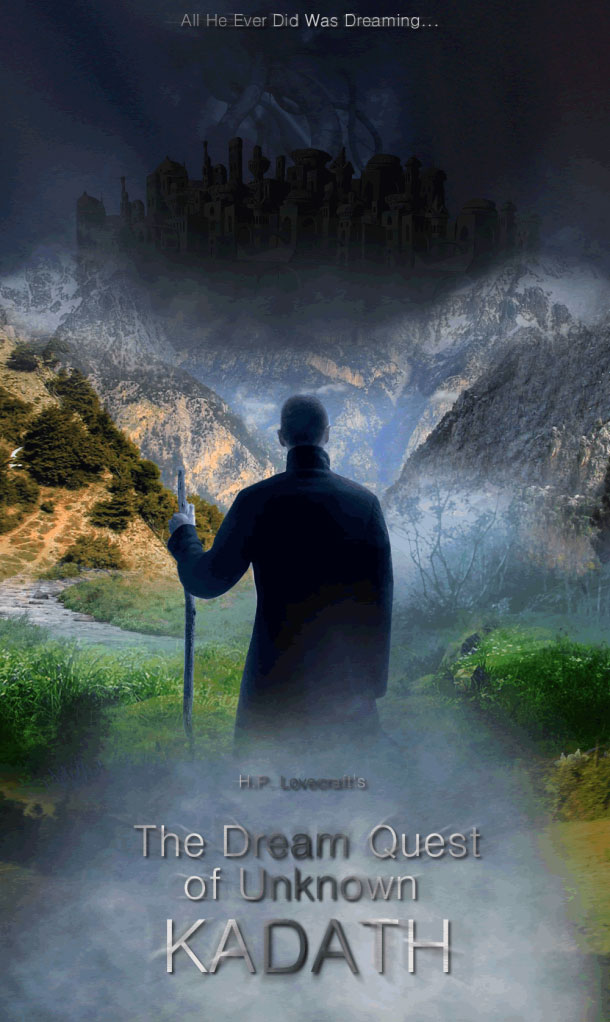
One of the several books I am reading currently is an anthology of Lovecraft’s dream cycle. Its story that I am reading now is “The Dream-Quest of the Unknown Kadath”. I wrote up my views on the work today for Goodreads.com and thought I would share them here as well (though in a slightly modified version):
I am a Lovecraft fan, but I find “The Dream-Quest…” very tough reading. I want to finish it, if for no other reason than to be able to say I managed to struggle my way through it and achieve my goal in spite of the hardships I encountered like the explorer of a literary Amazon.
The language is cumbersome and the plot is just Randolph Carter escaping one bad situation after another by luck. Still, I am only about half-way through, and the optimistic side of me keeps hoping it gets better. I don’t have much hope though, particularly after reading part of the Wikipedia article on it, which gives Lovecraft’s own views, which echo my own:
“Lovecraft himself declared that ‘it isn’t much good; but forms useful practice for later and more authentic attempts in the novel form.’ He expressed concern while writing it that ‘Randolph Carter’s adventures may have reached the point of palling on the reader; or that the very plethora of weird imagery may have destroyed the power of any one image to produce the desired impression of strangeness.”[8]
In the paragraph preceding this one in Wikipedia, Joanna Russ sums up the work nicely:
“The Dream-Quest has evoked a broad range of reactions, “some HPL enthusiasts finding it almost unreadable and others…comparing it to the Alice books and the fantasies of George MacDonald.[6] Joanna Russ referred to The Dream-Quest as “charming…but alas, never rewritten or polished”. [7]
Count me among the ones who find it almost unreadable, with its awkward, first-draft phrasing and its confused attempt to set a tone using an imagined scholarly, courtly language somewhere between Shakespeare and Poe.
However, I do love this awesome poster, which I found at http://gatostudio.wordpress.com/2009/03/21/the-dream-quest-of-unknown-kadath-poster/. Please visit this beautiful site. If you decide you would like to use this poster, please check with gatostudio and adhere to all copyright restrictions.
I just wish Lovecraft had written the story as masterfully as Mr. Gonzalez drew his poster and H.P. had lived up to the promise of the fantastic adventure to which the poster alludes. The poster really outshines the story. Given another two or three drafts, this story may have outshone all of Lovecraft’s other works.
Thoughts? Comments?
http://interestingliterature.wordpress.com/2013/09/06/the-best-literary-facts-from-the-twitterverse/
Follow the link above for some fascinating literary tidbits. If you don’t have the time to wade through all for the horror triva, here they are:
Bram Stoker’s wife, Florence Balcombe, was previously suitored by Oscar Wilde. (@l0lhey)
In 1862, Sir Edward Bulwer-Lytton was offered the chance to be King of Greece. (@LeighaMcR)
Dickens & Poe were friends. 3 letters between them survive (alas, letters don’t mention of the death of Dickens’ pet raven). (@LauraShovan)
Sir Edward Bulwer-Lytton, for those of you not into horror esoterica, was a well-known writer of the nineteenth century who dabbled in a variety of genres. H.P. Lovecraft thought highly of his story “The House and the Brain”, which is included in the collection The World’s Greatest Horror Stories (2004, edited by Stephen Jones and Dave Carson). According to Wikipedia, Bulwer-Lytton was the originator of some very famous and very frequently coined phrases that are still around: “the pen is mightier than the sword”, “the great unwashed”, and “the almighty dollar”. Bulwer-Lytton also invented that well-known line with which Snoopy invariably starts his novel in “Peanuts”: “it was a dark and stormy night…”
Thoughts? Comments?
Last night I finished The World’s Greatest Horror Stories, published in 2004 by Magpie Books and edited by Stephen Jones and Dave Carson. This is a collection of stories mentioned in Lovecraft’s essay “Supernatural Horror in Literature”, which is included in the collection. Reading this book gives one a good foundation in the history of the horror genre up to Lovecraft’s time. It includes such masterworks as Poe’s “The Fall of the House of Usher”, Machen’s “The Great God Pan”, M.R. James’s “Count Magnus”, Charles Dickens’s “The Signalman”, Guy de Maupassant’s “The Horla”, Rudyard Kipling’s “The Mark of the Beast”, and Robert Louis Stevenson’s “The Bodysnatcher” along with many others.
Though a couple may be a little long-winded by today’s standards, overall these are wonderful stories, classic supernatural tales demonstrating what horror should be that were lauded by none other than the father of modern supernatural horror himself! I highly recommend this to anyone with an interest in literature in general though particularly of course to those with an interest in the horror genre. The beauty of these tales is their ability to keep the reader in edge-of-your-seat suspense,terrified and spellbound, without resorting to the more-often-than-not overdone and too often appalling gimmicks of gore and shock. These tales show that grisly details are not needed to enthrall an audience, but that imagination and craftsmanship are.
Thoughts? Comments?
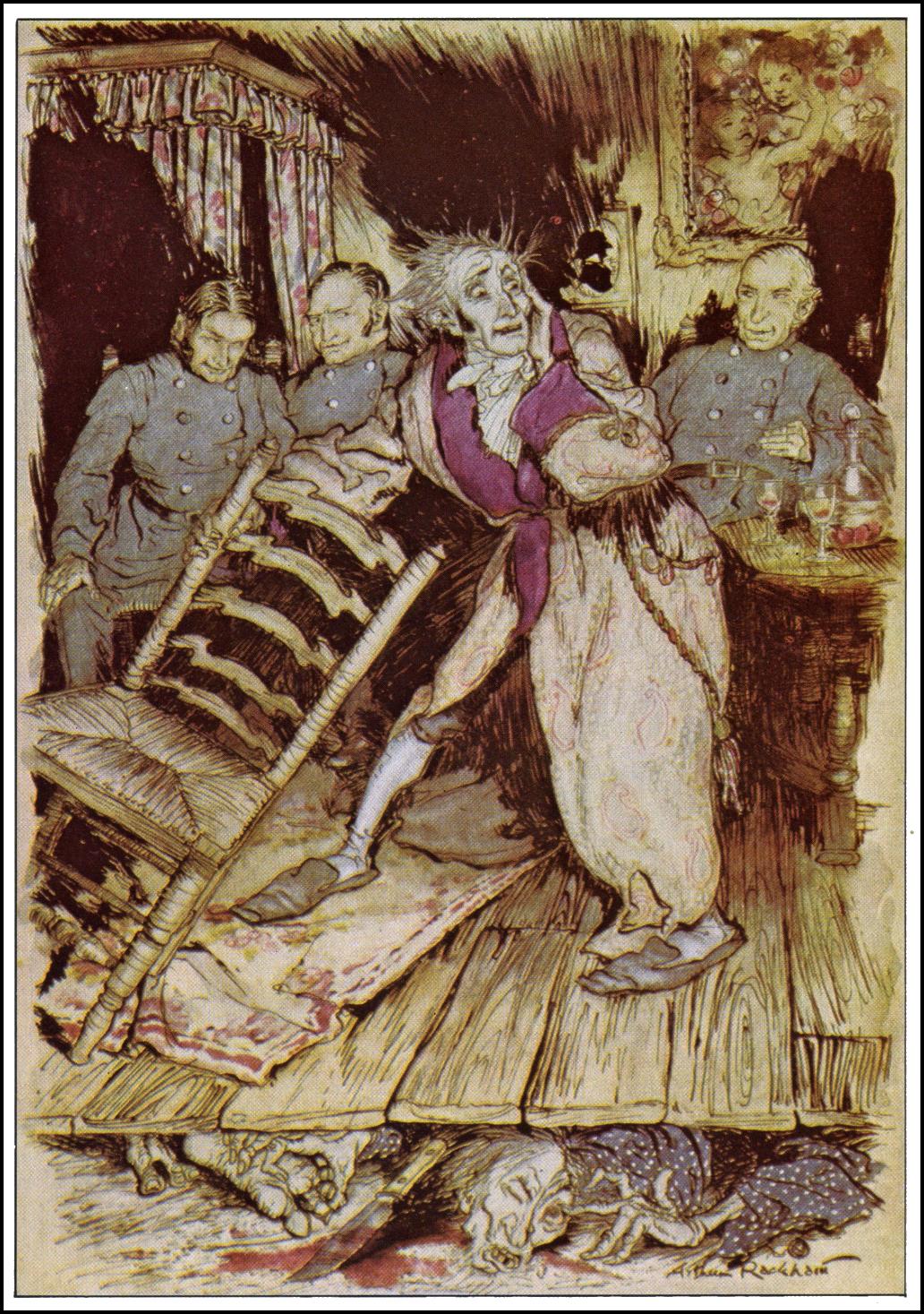
I was just musing that if a canon of horror literature could be developed, what should it include? This would be a collection of say ten works that define horror literature and that everyone seriously interested in horror should read if he/she they wish to learn what horror is and should be. This would not be a collection of the most popular works (whether novel, short story, essay, screenplay, theater, etc.) of horror, which would change constantly, but ten works which would define horror now and forever as the Bible does Christianity, as the Koran does Islam, and as the Analects of Confucius do Confucianism. These should be eternal works that at the end of time, after the Zombie Apocalypse when no more books are written, the few remaining survivors of humanity can review all the literary works of all time and say, “These ten defined the horror genre.” Of course, this canon will be forever debated, but lively, engaged discussion is the fun of a list like this.
To start off this conversation, here are my initial ten recommendations (subject to change as my reading progresses). I will keep this list to one work from each of ten authors so that works by one author do not overwhelm the list. This is not in any order of priority or preference–just as they pop into my mind. Although these reflect my own reading (which tends to the past more than the present), I have added one or two authors I haven’t read, but from what I understand, have made significant contributions to the horror genre.
 Phil Slattery, Writer, Publisher