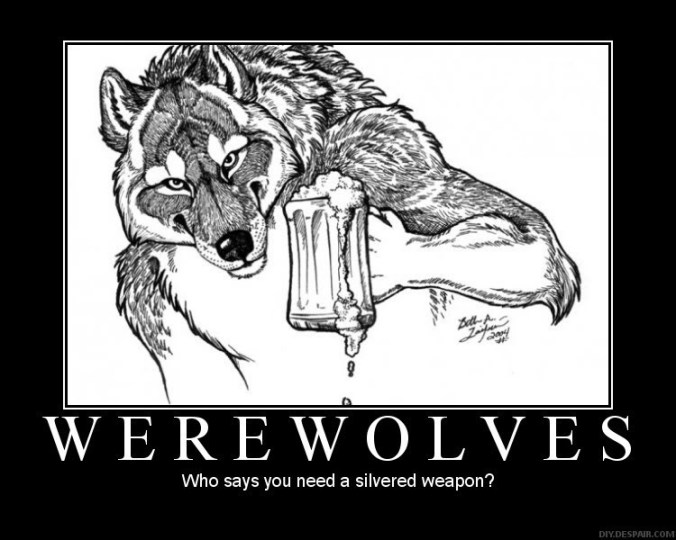
Lycanthrope: Update of April 5, 2022

An update on my progress with Lycanthrope.

One theoretical cover

I have finally broken through the barrier that has kept me from adding more to Lycanthrope. I still have more to go, but I am probably at about 67,000 of a desired 80,000+ words. I am coming up with some good ideas, but I must jot them down quickly or I forget them. Hopefully, I will be finished before long. I am focused on finishing this finally. It has been a long journey and the storyline is radically different from the original I imagined nearly thirty years ago when I was in the Navy and living in Bremerton, Washington.

I find that the best way to come up with ideas is by sitting down in the chair at the computer and just staring into the distance until an idea surfaces. A lot of times though, the trick seems to be to go to bed after having thought about the story throughout the day or at least just before going to bed. The ideas seem to just leap into my head at moments like those. Then I scrounge up some scrap paper or an old envelope on the shelves next to the bed and jot down all I can. Sometimes, to get paper and pen, I have to go into the adjacent living room. A lot of times, this seems to happen when I am tired. Sometimes, I just act out what the character is doing or maybe I just take a break and do something out of the norm and then I can imagine the character doing the same. For example, I took a break from writing late one night and, after grabbing a bottle of vodka, walked out to the empty highway running through the woods in front of my house. I live in a remote area, so I didn’t have to worry about any traffic at all. I then walked up and down the centerline looking at the moon and stars and sometimes going into the pitch dark section of the road running under the canopy of the woods. I had one or two swigs out of the bottle, but nothing to even give me a buzz. It was a neat moment and I did see a few shooting stars. However, when I got back to the house, I had the protagonist do the same, but I embellished it considerably as he thought of the nature of the world and universe while getting quite drunk. Trying to find his way back to his house, he bumps into a tree and falls to the ground, where he sleeps until his girlfriend comes looking for him and drags him back to the house, scolding him all the way. I think this scene turned out to be a very nice passage and I think I wrote it quite beautifully and poignantly.

When I first started writing the story in Bremerton, I envisioned the story as something much more conventional than I have now. Set in the forests and hamlets surrounding Bremerton, the idea was about a man who had become a werewolf and was the narrator as he watched the police get ever closer to finding out who he was. There is a lot of magick and fantasy added to the current story and it is set in another state. I am hoping the story ends up a lot more intense than my original concept.

I will write more updates as time permits. Now, I need to go grab some supper and get to writing again.

Hasta luego.
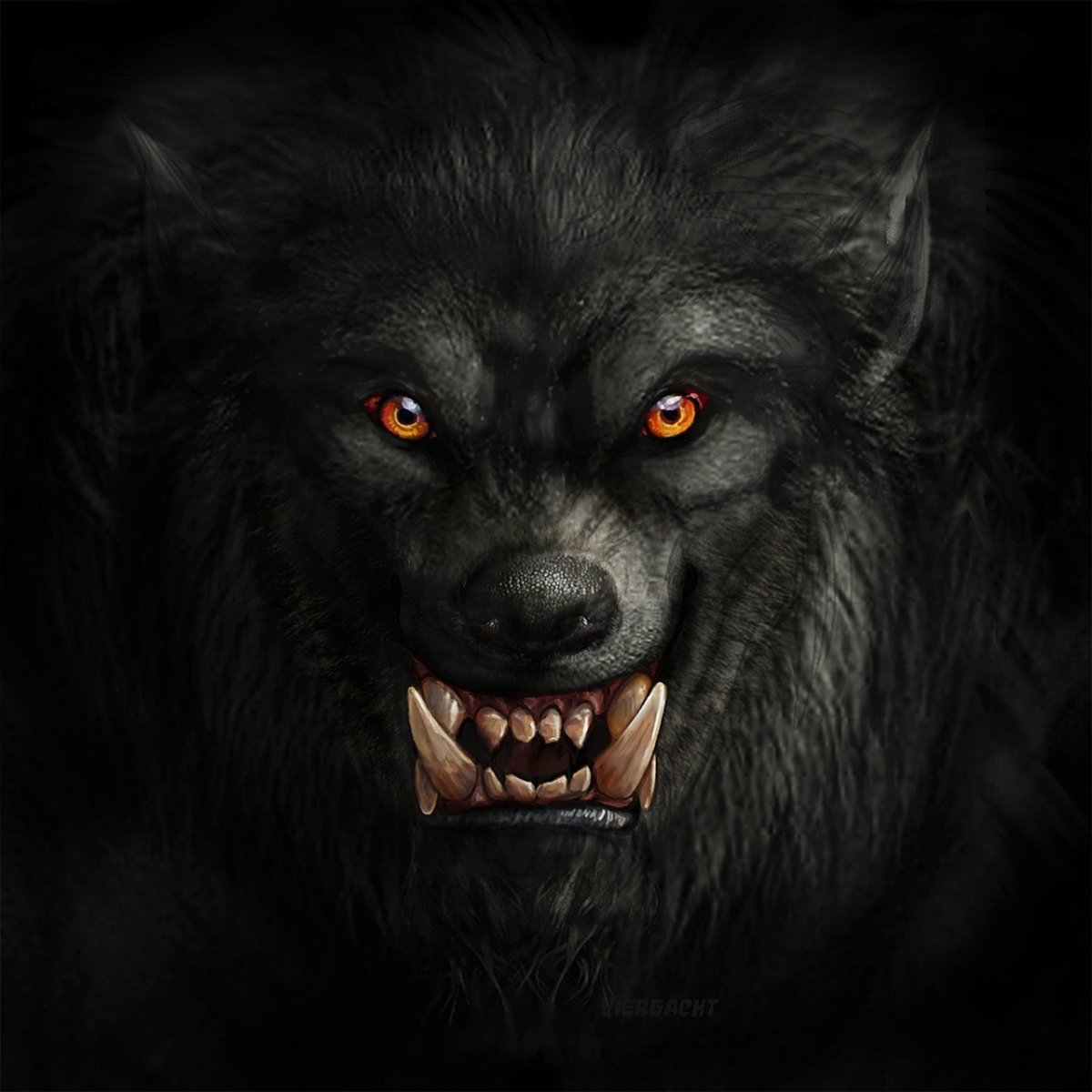
Werewolf in Action (Theoretically)

I found this while surfing Twitter today. I dare say that this is the closest you will ever come to seeing an actual werewolf in action. Now, you understand why the peoples of 16th-17th century Europe feared wolves and were terrified at the thought of werewolves.

Thoughts on Werewolves and Lycanthropy

As two of my published stories, “Shapeshifter” and “Wolfsheim”, concern werewolves, I thought I would write a post expressing my thoughts on werewolves and lycanthropy. This is not a scholarly article. It is just a summary of the conclusions I have reached over the years having researched the topic to a small degree as the basis for a novel (not yet written) involving a werewolf.

First and most importantly: I do not believe actual werewolves exist nor have they ever existed. It is simply impossible for person to change into an animal or into some sort of human-animal hybrid.

However, to paraphrase Nietzsche, what people believe is more important than fact.

I do believe there are people who believe they can become a wolf or another animal. The scientific name for this is lycanthropy.

Wikipedia, for better or worse, defines lycanthropy thus:

Clinical lycanthropy is defined as a rare psychiatric syndrome that involves a delusion that the affected person can transform into, has transformed into, or is, an animal. Its name is associated with the mythical condition of lycanthropy, a supernatural affliction in which humans are said to physically shapeshift into wolves. It is purported to be a rare disorder.” [“https://en.wikipedia.org/wiki/Clinical_lycanthropy” accessed December 15, 2020]

I feel that is a simple and straightforward summary based on everything else I have read. I am not familiar with the source, which Wikipedia states as “Degroot, J.J.M. (2003). Religious System of China. Kessinger Publishing. p. 484.”

An internet search for “clinical lycanthropy” will find many well-researched articles on lycanthropy as a psychiatric disorder.

Undoubtedly, it was the occasional case of clinical lycanthropy that gave rise to werewolf stories throughout history, before the science of psychiatry (or any science for that matter) arose, when people were more likely to take rumor as proverbial gospel and legends and myths as history. That people with this disorder confessed (often under torture) to being a wolf ingrained a belief in shapeshifting into an uneducated populace.

Someone who believes his/herself to be a wolf will act on those beliefs, which could, and I feel certain often did, result in crimes of extreme violence according to what that individual believes a wolf would do. Whether that belief is an accurate portrayal of what a wolf would actually do does not matter. The individual will act in accordance with his/her beliefs, whatever those beliefs are. This would, of course, have been the reason behind at least some of the infamous werewolves who were executed during the infamous werewolf trials of the sixteenth and seventeenth centuries.

Another reason is that, for whatever reason, a person wanted to become a werewolf and therefore found a way to chemically induce that hallucination. Quite often in the historical record one will find that several people who wanted to change into a werewolf wore a belt that had a mixture of herbs and fat smeared on it. Some of these herbs, like nightshade, are quite poisonous. I believe that applying some of these poisonous herbs to the skin in a salve would allow a minute portion to soak through the skin and induce hallucinations. If a person wanted to become a wolf, for whatever reason, then he/she could actually induce the hallucination of being a wolf. Two of the most infamous cases of werewolfery involved use of a belt to become a wolf: Peter Stumpp and Gilles Garnier.

It is possible that someone might commit one or more brutal murders and then try to avoid responsibility for his/her actions by claiming to have been a wolf at the time and therefore not in his/her right mind. I sincerely doubt the likelihood of this defense succeeding in past centuries. In 2020, claiming not to be responsible for a murder because you were a wolf at the time would probably get you several years in a mental facility. However, in 1620, you would probably have been burned at the stake.

From a literary perspective, what fascinates me the most is the use of a werewolf as a symbol of human versus the most primitive animal nature, the superego/ego versus the id. Similar symbolism crops up in mythology, legends, and history repeatedly in one form or another. The Strange Case of Dr Jekyll and Mr Hyde by Robert Louis Stevenson is one example in literature. One example from Greek/Roman mythology is the centaur, half human and half horse, educated, intelligent, and refined but susceptible to animalistic drives and impulses.

That’s all the time I have for this today. I have errands calling me. Perhaps I can pick this up at a later date in more detail and with my sources cited.

Thoughts? Comments?

On se protege
Protect yourself.

The Good, The Bad and The Terrible ; Werewolves | The Horror Online

Werewolf-1Here is an amusing article for fans of cinematic werewolves:  The Good, The Bad and The Terrible ; Werewolves | The Horror Online.

On a side note, I find werewolves a fascinating fictional creature with a lot of as yet unexplored literary possibilities.  I love them as a symbol of the dual nature of humanity:  civilized person under most circumstances, but with the possibility of releasing, whether willingly or not, a dark, inner animalistic nature and suddenly converting into a horrific, bloodthirsty monster.  I started a werewolf/lycanthrope novel of my own many years ago, and perhaps one day I will complete it.

Those of you unfamiliar with the distinction between a werewolf and a lycanthrope please note the following.  A werewolf is a man (or woman) that actually changes into a wolf.  Werewolves exist only in fiction.   A lycanthrope is a person who believes that he or she changes into a wolf.  These do exist, but are rare.  For more information on this condition, please visit the Wikipedia article on Clinical Lycanthropy.

Thoughts?  Comments?