
Follow this link to a Paris Review article from 2014 entitled “Ghosts on the Nog” relating five forgotten Christmas horror stories. Authors include E.F. Benson, Algernon Blackwood, J.H. Riddell, Sir Andrew Caldecott, and A.M. Burrage.

Follow this link to a Paris Review article from 2014 entitled “Ghosts on the Nog” relating five forgotten Christmas horror stories. Authors include E.F. Benson, Algernon Blackwood, J.H. Riddell, Sir Andrew Caldecott, and A.M. Burrage.
In 1830, only a few miles away from what is now the great city of Cincinnati, lay an immense and almost unbroken forest. The whole region was sparsely settled by people of the frontier–restless souls who no sooner had hewn fairly habitable homes out of the wilderness and attained to that degree of prosperity which today we should call indigence, than, impelled by some mysterious impulse of their nature, they abandoned all and pushed farther westward, to encounter new perils and privations in the effort to regain the meager comforts which they had voluntarily renounced. Many of them had already forsaken that region for the remoter settlements, but among those remaining was one who had been of those first arriving. He lived alone in a house of logs surrounded on all sides by the great forest, of whose gloom and silence he seemed a part, for no one had ever known him to smile nor speak a needless word. His simple wants were supplied by the sale or barter of skins of wild animals in the river town, for not a thing did he grow upon the land which, if needful, he might have claimed by right of undisturbed possession. There were evidences of “improvement”–a few acres of ground immediately about the house had once been cleared of its trees, the decayed stumps of which were half concealed by the new growth that had been suffered to repair the ravage wrought by the ax. Apparently the man’s zeal for agriculture had burned with a failing flame, expiring in penitential ashes.
The little log house, with its chimney of sticks, its roof of warping clapboards weighted with traversing poles and its “chinking” of clay, had a single door and, directly opposite, a window. The latter, however, was boarded up–nobody could remember a time when it was not. And none knew why it was so closed; certainly not because of the occupant’s dislike of light and air, for on those rare occasions when a hunter had passed that lonely spot the recluse had commonly been seen sunning himself on his doorstep if heaven had provided sunshine for his need. I fancy there are few persons living today who ever knew the secret of that window, but I am one, as you shall see.

The man’s name was said to be Murlock. He was apparently seventy years old, actually about fifty. Something besides years had had a hand in his aging. His hair and long, full beard were white, his gray, lusterless eyes sunken, his face singularly seamed with wrinkles which appeared to belong to two intersecting systems. In figure he was tall and spare, with a stoop of the shoulders–a burden bearer. I never saw him; these particulars I learned from my grandfather, from whom also I got the man’s story when I was a lad. He had known him when living near by in that early day.
One day Murlock was found in his cabin, dead. It was not a time and place for coroners and newspapers, and I suppose it was agreed that he had died from natural causes or I should have been told, and should remember. I know only that with what was probably a sense of the fitness of things the body was buried near the cabin, alongside the grave of his wife, who had preceded him by so many years that local tradition had retained hardly a hint of her existence. That closes the final chapter of this true story–excepting, indeed, the circumstance that many years afterward, in company with an equally intrepid spirit, I penetrated to the place and ventured near enough to the ruined cabin to throw a stone against it, and ran away to avoid the ghost which every well-informed boy thereabout knew haunted the spot. But there is an earlier chapter–that supplied by my grandfather.
When Murlock built his cabin and began laying sturdily about with his ax to hew out a farm–the rifle, meanwhile, his means of support–he was young, strong and full of hope. In that eastern country whence he came he had married, as was the fashion, a young woman in all ways worthy of his honest devotion, who shared the dangers and privations of his lot with a willing spirit and light heart. There is no known record of her name; of her charms of mind and person tradition is silent and the doubter is at liberty to entertain his doubt; but God forbid that I should share it! Of their affection and happiness there is abundant assurance in every added day of the man’s widowed life; for what but the magnetism of a blessed memory could have chained that venturesome spirit to a lot like that?
One day Murlock returned from gunning in a distant part of the forest to find his wife prostrate with fever, and delirious. There was no physician within miles, no neighbor; nor was she in a condition to be left, to summon help. So he set about the task of nursing her back to health, but at the end of the third day she fell into unconsciousness and so passed away, apparently, with never a gleam of returning reason.
From what we know of a nature like his we may venture to sketch in some of the details of the outline picture drawn by my grandfather. When convinced that she was dead, Murlock had sense enough to remember that the dead must be prepared for burial. In performance of this sacred duty he blundered now and again, did certain things incorrectly, and others which he did correctly were done over and over. His occasional failures to accomplish some simple and ordinary act filled him with astonishment, like that of a drunken man who wonders at the suspension of familiar natural laws. He was surprised, too, that he did not weep–surprised and a little ashamed; surely it is unkind not to weep for the dead. “Tomorrow,” he said aloud, “I shall have to make the coffin and dig the grave; and then I shall miss her, when she is no longer in sight; but now–she is dead, of course, but it is all right–it must be all right, somehow. Things cannot be so bad as they seem.”
He stood over the body in the fading light, adjusting the hair and putting the finishing touches to the simple toilet, doing all mechanically, with soulless care. And still through his consciousness ran an undersense of conviction that all was right–that he should have her again as before, and everything explained. He had had no experience in grief; his capacity had not been enlarged by use. His heart could not contain it all, nor his imagination rightly conceive it. He did not know he was so hard struck; that knowledge would come later, and never go. Grief is an artist of powers as various as the instruments upon which he plays his dirges for the dead, evoking from some the sharpest, shrillest notes, from others the low, grave chords that throb recurrent like the slow beating of a distant drum. Some natures it startles; some it stupefies. To one it comes like the stroke of an arrow, stinging all the sensibilities to a keener life; to another as the blow of a bludgeon, which in crushing benumbs. We may conceive Murlock to have been that way affected, for and here we are upon surer ground than that of conjecture no sooner had he finished his pious work than, sinking into a chair by the side of the table upon which the body lay, and noting how white the profile showed in the deepening gloom, he laid his arms upon the table’s edge, and dropped his face into them, tearless yet and unutterably weary. At that moment came in through the open window a long, wailing sound like the cry of a lost child in the far deeps of the darkening woods! But the man did not move. Again, and nearer than before, sounded that unearthly cry upon his failing sense. Perhaps it was a wild beast; perhaps it was a dream. For Murlock was asleep.
Some hours later, as it afterward appeared, this unfaithful watcher awoke and lifting his head from his arms intently listened–he knew not why. There in the black darkness by the side of the dead, recalling all without a shock, he strained his eyes to see–he knew not what. His senses were all alert, his breath was suspended, his blood had stilled its tides as if to assist the silence. Who–what had waked him, and where was it?
Suddenly the table shook beneath his arms, and at the same moment he heard, or fancied that he heard, a light, soft step–another–sounds as of bare feet upon the floor!
He was terrified beyond the power to cry out or move. Perforce he waited–waited there in the darkness through seeming centuries of such dread as one may know, yet live to tell. He tried vainly to speak the dead woman’s name, vainly to stretch forth his hand across the table to learn if she were there. His throat was powerless, his arms and hands were like lead. Then occurred something most frightful. Some heavy body seemed hurled against the table with an impetus that pushed it against his breast so sharply as nearly to overthrow him, and at the same instant he heard and felt the fall of something upon the floor with so violent a thump that the whole house was shaken by the impact. A scuffling ensued, and a confusion of sounds impossible to describe. Murlock had risen to his feet. Fear had by excess forfeited control of his faculties. He flung his hands upon the table. Nothing was there!
There is a point at which terror may turn to madness; and madness incites to action. With no definite intent, from no motive but the wayward impulse of a madman, Murlock sprang to the wall, with a little groping seized his loaded rifle, and without aim discharged it. By the flash which lit up the room with a vivid illumination, he saw an enormous panther dragging the dead woman toward the window, its teeth fixed in her throat! Then there were darkness blacker than before, and silence; and when he returned to consciousness the sun was high and the wood vocal with songs of birds.
The body lay near the window, where the beast had left it when frightened away by the flash and report of the rifle. The clothing was deranged, the long hair in disorder, the limbs lay anyhow. From the throat, dreadfully lacerated, had issued a pool of blood not yet entirely coagulated. The ribbon with which he had bound the wrists was broken; the hands were tightly clenched. Between the teeth was a fragment of the animal’s ear

Please go to amazon.com/author/philslattery or Goodreads or any other social media to leave a review.
Jack Thurston is a retired professor of medieval literature and history. He is also a widower and father and a retired sorcerer who has returned to the black arts to exact revenge for the death of his wife, daughter, and brother. He has an intriguing position in the universe at a focal point of life, the afterlife, logic and reason, anger and hatred, the ancient and the modern worlds, grief and his attempts to escape grief through self-destruction. Though he wants to have the peace he once found with his wife, Agatha, he is pulled in many directions by circumstance and by his powerful negative emotions.
I am a fan of the old school horror practiced by such authors as H.P. Lovecraft, Poe, Edward Lucas White, and Arthur Machen. I endeavor to make a story as terrifying and suspenseful for the reader as possible without resorting to gratuitous blood and gore for a simple shock or quick feeling of disgust.
This collection of three short tales is perfect for those who have only a few short breaks to escape into the hidden world of horror, black magic, sorcery, and anger-fueled revenge.
You can find this and other works at my Amazon author’s page: www.amazon.com/author/philslattery.
Currently, Jack has a Twitter account (@jthurston666), where he has attracted a small following and where it has only recently been revealed that he is fictional. Jack has his own blog at jackthurstonblog.wordpress.com (a work in progress) and his own e-mail at jackthurston666@gmail.com.
Information on more social media accounts and other characters (as they are developed) can be found at: philslattery.wordpress.com. Please interact with him at any of his social media accounts as you would with a real person.
Show your appreciation for these stories by leaving a review on Amazon, Goodreads, or other social media.
If you enjoy horror, check out my collection of horror short stories A Tale of Hell and Other Works of Horror: Stories of wizards, werewolves, serial killers, alien worlds, and the damned, which includes these stories.

Tonight I was toying with Pixler (the photo-editing software) and an image I downloaded from Pixabay (or was it Pexels?) What do you think? Would this image make a good Jack Thurston from my story collection “Diabolical: Three Tales of Vengeance and the Sorcerer Jack Thurston”? Jack is a retired medievalist, who gave up black magic for a good woman, but lost her to cancer and is now returning to sorcery to avenge the death of his daughter and her baby. Does this guy look like he could inflict a seriously twisted act of revenge on someone? To find out more about his revenge, pick up a copy of Diabolical on Amazon. To find out what else I have written, visit my main Amazon page while you’re at it: amazon.com/author/philslattery.
Hasta luego.
Please go to amazon.com/author/philslattery or Goodreads or any other social media to leave a review.
Jack Thurston is a retired professor of medieval literature and history. He is also a widower and father and a retired sorcerer who has returned to the black arts to exact revenge for the death of his wife, daughter, and brother. He has an intriguing position in the universe at a focal point of life, the afterlife, logic and reason, anger and hatred, the ancient and the modern worlds, grief and his attempts to escape grief through self-destruction. Though he wants to have the peace he once found with his wife, Agatha, he is pulled in many directions by circumstance and by his powerful negative emotions.
I am a fan of the old school horror practiced by such authors as H.P. Lovecraft, Poe, Edward Lucas White, and Arthur Machen. I endeavor to make a story as terrifying and suspenseful for the reader as possible without resorting to gratuitous blood and gore for a simple shock or quick feeling of disgust.
This collection of three short tales is perfect for those who have only a few short breaks to escape into the hidden world of horror, black magic, sorcery, and anger-fueled revenge.
You can find this and other works at my Amazon author’s page: www.amazon.com/author/philslattery.
Currently, Jack has a Twitter account (@jthurston666), where he has attracted a small following and where it has only recently been revealed that he is fictional. Jack has his own blog at jackthurstonblog.wordpress.com (a work in progress) and his own e-mail at jackthurston666@gmail.com.
Information on more social media accounts and other characters (as they are developed) can be found at: philslattery.wordpress.com. Please interact with him at any of his social media accounts as you would with a real person.
Show your appreciation for these stories by leaving a review on Amazon, Goodreads, or other social media.
If you enjoy horror, check out my collection of horror short stories A Tale of Hell and Other Works of Horror: Stories of wizards, werewolves, serial killers, alien worlds, and the damned, which includes these stories.
Please go to amazon.com/author/philslattery or Goodreads or any other social media to leave a review.
Jack Thurston is a retired professor of medieval literature and history. He is also a widower and father and a retired sorcerer who has returned to the black arts to exact revenge for the death of his wife, daughter, and brother. He has an intriguing position in the universe at a focal point of life, the afterlife, logic and reason, anger and hatred, the ancient and the modern worlds, grief and his attempts to escape grief through self-destruction. Though he wants to have the peace he once found with his wife, Agatha, he is pulled in many directions by circumstance and by his powerful negative emotions.
I am a fan of the old school horror practiced by such authors as H.P. Lovecraft, Poe, Edward Lucas White, and Arthur Machen. I endeavor to make a story as terrifying and suspenseful for the reader as possible without resorting to gratuitous blood and gore for a simple shock or quick feeling of disgust.
This collection of three short tales is perfect for those who have only a few short breaks to escape into the hidden world of horror, black magic, sorcery, and anger-fueled revenge.
You can find this and other works at my Amazon author’s page: www.amazon.com/author/philslattery.
Currently, Jack has a Twitter account (@jthurston666), where he has attracted a small following and where it has only recently been revealed that he is fictional. Jack has his own blog at jackthurstonblog.wordpress.com (a work in progress) and his own e-mail at jackthurston666@gmail.com.
Information on more social media accounts and other characters (as they are developed) can be found at: philslattery.wordpress.com. Please interact with him at any of his social media accounts as you would with a real person.
Show your appreciation for these stories by leaving a review on Amazon, Goodreads, or other social media.
If you enjoy horror, check out my collection of horror short stories A Tale of Hell and Other Works of Horror: Stories of wizards, werewolves, serial killers, alien worlds, and the damned, which includes these stories.
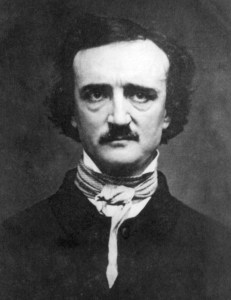
THE “Red Death” had long devastated the country. No pestilence had ever been so fatal, or so hideous. Blood was its Avator and its seal — the redness and the horror of blood. There were sharp pains, and sudden dizziness, and then profuse bleeding at the pores, with dissolution. The scarlet stains upon the body and especially upon the face of the victim, were the pest ban which shut him out from the aid and from the sympathy of his fellow-men. And the whole seizure, progress and termination of the disease, were the incidents of half an hour.
But the Prince Prospero was happy and dauntless and sagacious. When his dominions were half depopulated, he
summoned to his presence a thousand hale and light-hearted friends from among the knights and dames of his court, and with these retired to the deep seclusion of one of his castellated abbeys. This was an extensive and magnificent structure, the creation of the prince’s own eccentric yet august taste. A strong and lofty wall girdled it in. This wall had gates of iron. The courtiers, having entered, brought furnaces and massy hammers and welded the bolts. They resolved to leave means neither of ingress or egress to the sudden impulses of despair or of frenzy from within. The abbey was amply provisioned. With such precautions the courtiers might bid defiance to contagion. The external world could take care of itself. In the meantime it was folly to grieve, or to think. The prince had provided all the appliances of pleasure. There were buffoons, there were improvisatori, there were ballet-dancers, there were musicians, there was Beauty, there was wine. All these and security were within. Without was the “Red Death.”
It was toward the close of the fifth or sixth month of his seclusion, and while the pestilence raged most furiously abroad, that the Prince Prospero entertained his thousand friends at a masked ball of the most unusual magnificence.
It was a voluptuous scene, that masquerade. But first let me tell of the rooms in which it was held. There were seven — an imperial suite. In many palaces, however, such suites form a long and straight vista, while the folding doors slide back nearly to the walls on either hand, so that the view of the whole extent is scarcely impeded. Here the case was very different; as might have been expected from the duke’s love of the bizarre. The apartments were so irregularly disposed that the vision embraced but little more than one at a time. There was a sharp turn at every twenty or thirty yards, and at each turn a novel effect. To the right and left, in the middle of each wall, a tall and narrow Gothic window looked out upon a closed corridor which pursued the windings of the suite. These windows were of stained glass whose color varied in accordance with the prevailing hue of the decorations of the chamber into which it opened. That at the eastern extremity was hung, for example, in blue — and vividly blue were its windows. The second chamber was purple in its ornaments and tapestries, and here the panes were purple. The third was green throughout, and so were the casements. The fourth was furnished and lighted with orange — the fifth with white — the sixth with violet. The seventh apartment was closely shrouded in black velvet tapestries that hung all over the ceiling and down the walls, falling in heavy folds upon a carpet of the same material and hue. But in this chamber only, the color of the windows failed to correspond with the decorations. The panes here were scarlet — a deep blood color. Now in no one of the seven apartments was there any lamp or candelabrum, amid the profusion of golden ornaments that lay scattered to and fro or depended from the roof. There was no light of any kind emanating from lamp or candle within the suite of chambers. But in the corridors that followed the suite, there stood, opposite to each window, a heavy tripod, bearing a brazier of fire, that projected its rays through the tinted glass and so glaringly illumined the room. And thus were produced a multitude of gaudy and fantastic appearances. But in the western or black chamber the effect of the fire-light that streamed upon the dark hangings through the blood-tinted panes, was ghastly in the extreme, and produced so wild a look upon the countenances of those who entered, that there were few of the company bold enough to set foot within its precincts at all.
It was in this apartment, also, that there stood against the western wall, a gigantic clock of ebony. Its pendulum swung to and fro with a dull, heavy, monotonous clang; and when the minute-hand made the circuit of the face, and the hour was to be stricken, there came from the brazen lungs of the clock a sound which was clear and loud and deep and exceedingly musical, but of so peculiar a note and emphasis that, at each lapse of an hour, the musicians of the orchestra were constrained to pause, momentarily, in their performance, to harken to the sound; and thus the waltzers perforce ceased their evolutions; and there was a brief disconcert of the whole gay company; and, while the chimes of the clock yet rang, it was observed that the giddiest grew pale, and the more aged and sedate passed their hands over their brows as if in confused revery or meditation. But when the echoes had fully ceased, a light laughter at once pervaded the assembly; the musicians looked at each other and smiled as if at their own nervousness and folly, and made whispering vows, each to the other, that the next chiming of the clock should produce in them no similar emotion; and then, after the lapse of sixty minutes, (which embrace three thousand and six hundred seconds of the Time that flies,) there came yet another chiming of the clock, and then were the same disconcert and tremulousness and meditation as before.
But, in spite of these things, it was a gay and magnificent revel. The tastes of the duke were peculiar. He had a fine eye for colors and effects. He disregarded the decora of mere fashion. His plans were bold and fiery, and his conceptions glowed with barbaric lustre. There are some who would have thought him mad. His followers felt that he was not. It was necessary to hear and see and touch him to be sure that he was not.
He had directed, in great part, the moveable embellishments of the seven chambers, upon occasion of this great fete; and it was his own guiding taste which had given character to the masqueraders. Be sure they were grotesque. There were much glare and glitter and piquancy and phantasm — much of what has been since seen in “Hernani.” There were arabesque figures with unsuited limbs and appointments. There were delirious fancies such as the madman fashions. There were much of the beautiful, much of the wanton, much of the bizarre, something of the terrible, and not a little of that which might have excited disgust. To and fro in the seven chambers there stalked, in fact, a multitude of dreams. And these — the dreams — writhed in and about, taking hue from the rooms, and causing the wild music of the orchestra to seem as the echo of their steps. And, anon, there strikes the ebony clock which stands in the hall of the velvet. And then, for a moment, all is still, and all is silent save the voice of the clock. The dreams are stiff-frozen as they stand. But the echoes of the chime die away — they have endured but an instant — and a light, half-subdued laughter floats after them as they depart. And now again the music swells, and the dreams live, and writhe to and fro more merrily than ever, taking hue from the many tinted windows through which stream the rays from the tripods. But to the chamber which lies most westwardly of the seven, there are now none of the maskers who venture; for the night is waning away; and there flows a ruddier light through the blood-colored panes; and the blackness of the sable drapery appals; and to him whose foot falls upon the sable carpet, there comes from the near clock of ebony a muffled peal more solemnly emphatic than any which reaches their ears who indulge in the more remote gaieties of the other apartments.
But these other apartments were densely crowded, and in them beat feverishly the heart of life. And the revel went whirlingly on, until at length there commenced the sounding of midnight upon the clock. And then the music ceased, as I have told; and the evolutions of the waltzers were quieted; and there was an uneasy cessation of all things as before. But now there were twelve strokes to be sounded by the bell of the clock; and thus it happened, perhaps that more of thought crept, with more of time, into the meditations of the thoughtful among those who revelled. And thus too, it happened, perhaps, that before the last echoes of the last chime had utterly sunk into silence, there were many individuals in the crowd who had found leisure to become aware of the presence of a masked figure which had arrested the attention of no single individual before. And the rumor of this new presence having spread itself whisperingly around, there arose at length from the whole company a buzz, or murmur, expressive of disapprobation and surprise — then, finally, of terror, of horror, and of disgust.
In an assembly of phantasms such as I have painted, it may well be supposed that no ordinary appearance could have excited such sensation. In truth the masquerade license of the night was nearly unlimited; but the figure in question had out-Heroded Herod, and gone beyond the bounds of even the prince’s indefinite decorum. There are chords in the hearts of the most reckless which cannot be touched without emotion. Even with the utterly lost, to whom life and death are equally jests, there are matters of which no jest can be made. The whole company, indeed, seemed now deeply to feel that in the costume and bearing of the stranger neither wit nor propriety existed. The figure was tall and gaunt, and shrouded from head to foot in the habiliments of the grave. The mask which concealed the visage was made so nearly to resemble the countenance of a stiffened corpse that the closest scrutiny must have had difficulty in detecting the cheat. And yet all this might have been endured, if not approved, by the mad revellers around. But the mummer had gone so far as to assume the type of the Red Death. His vesture was dabbled in blood — and his broad brow, with all the features of the face, was besprinkled with the scarlet horror.
When the eyes of Prince Prospero fell upon this spectral image (which with a slow and solemn movement, as if more fully to sustain its role, stalked to and fro among the waltzers) he was seen to be convulsed, in the first moment with a strong shudder either of terror or distaste; but, in the next, his brow reddened with rage.
“Who dares?” he demanded hoarsely of the courtiers who stood near him — “who dares insult us with this blasphemous mockery? Seize him and unmask him — that we may know whom we have to hang at sunrise, from the battlements!”
It was in the eastern or blue chamber in which stood the Prince Prospero as he uttered these words. They rang throughout the seven rooms loudly and clearly — for the prince was a bold and robust man, and the music had become hushed at the waving of his hand.
It was in the blue room where stood the prince, with a group of pale courtiers by his side. At first, as he spoke, there was a slight rushing movement of this group in the direction of the intruder, who, at the moment was also near at hand, and now, with deliberate and stately step, made closer approach to the speaker. But from a certain nameless awe with which the mad assumptions of the mummer had inspired the whole party, there were found none who put forth hand to seize him; so that, unimpeded, he passed within a yard of the prince’s person; and, while the vast assembly, as if with one impulse, shrank from the centres of the rooms to the walls, he made his way uninterruptedly, but with the same solemn and measured step which had distinguished him from the first, through the blue chamber to the purple — through the purple to the green — through the green to the orange — through this again to the white — and even thence to the violet, ere a decided movement had been made to arrest him. It was then, however, that the Prince Prospero, maddening with rage and the shame of his own momentary cowardice, rushed hurriedly through the six chambers, while none followed him on account of a deadly terror that had seized upon all. He bore aloft a drawn dagger, and had approached, in rapid impetuosity, to within three or four feet of the retreating figure, when the latter, having attained the extremity of the velvet apartment, turned suddenly and confronted his pursuer. There was a sharp cry — and the dagger dropped gleaming upon the sable carpet, upon which, instantly afterwards, fell prostrate in death the Prince Prospero. Then, summoning the wild courage of despair, a throng of the revellers at once threw themselves into the black apartment, and, seizing the mummer, whose tall figure stood erect and motionless within the shadow of the ebony clock, gasped in unutterable horror at finding the grave cerements and corpse-like mask which they handled with so violent a rudeness, untenanted by any tangible form.
And now was acknowledged the presence of the Red Death. He had come like a thief in the night. And one by one dropped the revellers in the blood-bedewed halls of their revel, and died each in the despairing posture of his fall. And the life of the ebony clock went out with that of the last of the gay. And the flames of the tripods expired. And Darkness and Decay and the Red Death held illimitable dominion over all.
T
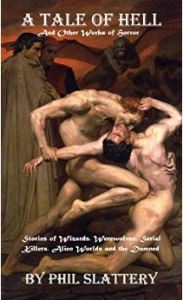
My e-book collection of horror shorts A Tale of Hell and Other Works of Horror” is available on Amazon Kindle. For your copy, go to my Amazon author’s page (amazon.com/author/philslattery) where you can find links to my other works as well.
In this collection of published and previously unpublished stories of horror, I offer a look into the minds of people who perpetrate horrors, from acts of stupidity with unintended results to cold-hearted revenge to pure enjoyment to complete indifference. Settings range from 17th-century France in the heart of the werewolf trials to the resurrection of the Aztec black arts to a medicine man’s revenge in the Old West to the depths of Hell to mob vengeance and modern day necromancy to sociopathic serial killers and on to alien worlds in the distant future.
Don’t forget to show your appreciation for these tales by leaving a review on Amazon, Goodreads, or other social media.
P.S. Winn gave the collection four stars on Amazon, calling it “Great variety”, and commented: “The author has given readers a fantastic collection of varied horror stories. Short stories, flash fiction and even shorter micro fiction tales are included in a collection that might have readers keeping their lights on. I have read other books by this author and love the writing style and the way his words draw one into the tales.”
Comments on previously published stories (which are only a part of those in this collection) include:
Jay Manning, editor of Midnight Times commented in its Spring, 2006 issue: “Wolfsheim” is basically a traditional horror story that tells the tale of a small European village confronted by the threat of werewolves. If you like stories about lycans, you definitely need to check this one out. Great stuff.”
Publisher Charlie Fish of Fiction on the Web summarizes A “Tale of Hell” as a “… chilling vision of hell”. Other comments on “A Tale of Hell” from readers of Fiction on the Web:
“An intense and well paced story, cleverly leading the reader up a number of garden paths before Jack’s reality finally clarifies and appears in all its horror. The writing is focused and spare as Jack’s malevolent characteristics and idiosyncrasies manifest themselves…Overall a strong tale that lingers in the imagination…”
“brilliantly descriptive piece on man´s apparently unstoppable descent, literally into hell,…”
” Enjoyed this story. I thought it was nicely written. Started with a familiar vision of hell, but added several unique treatments; kept me interested in how it all would end. Thanks”
Publisher Charlie Fish of Fiction on the Web summarizes “Dream Warrior” as a “…powerful revenge epic about a man who visits his Mexican grandfather for spiritual guidance after a violent crime results in the death if his fiancée”. Fiction on the Web readers commented:
“quite literally a rite of passage, mystical and with an interesting payoff, one which Miguel may have to reckon with in time. some very good writing and characterisation. well done”
“…this is a rite of passage, complex and rich with significance. The cultural invocations are vivid and intense, the work of a writer in his/her full stride. The future for Miguel, who knows? The readers interest is fully engaged with what is to come…”
“Really enjoyed the story-kept me up past my bedtime reading it!”
“I loved the concept, was fascinated by the almost hallucinatory detail of legend with its fatal shadowlands.”
Reader comments on “Murder by Plastic” include:
“Chilling and brilliantly economical”
“Very well-paced and intriguing”
“Fabulous story! Five stars!”
Follow me using the link on the homepage or check back frequently for updates.
Don’t forget to leave a review on Amazon, Goodreads, or on other social media.

Just now, I finished adding Amazon’s new service, X-Ray, to my short story collection Diabolical: Three Tales of Jack Thurston and Revenge. X-Ray inserts links into a Amazon Kindle text which lead either to a Wikipedia article or to comments by the author on a character or term in the text. It’s easy to use. I like it, because in a work like Diabolical, there are many obscure terms which may need clarification to some readers. I feel this will help the reader enjoy the work more, because he/she will not need to run to a dictionary, encyclopedia, or to a search engine to find out the background on a character or term, especially if they are historical. For example, in these tales I use the names of several demons which are cited in historical works. Probably very few people would recognize the names of these demons (such as Azazel or Belial) and would need to do at least a little research to find out their significance.
This also helps with marketing my other works in which some of these characters may be mentioned. In my own comments on a character or term, I can mention in what other works that character appear and how to find and purchase those works.
Yesterday, I added X-Ray to my short story collection The Scent and Other Stories. Go to amazon.com/author/philslattery to learn more about each book and to purchase one or both.
Please go to amazon.com/author/philslattery or Goodreads or any other social media to leave a review.
Jack Thurston is a retired professor of medieval literature and history. He is also a widower and father and a retired sorcerer who has returned to the black arts to exact revenge for the death of his wife, daughter, and brother. He has an intriguing position in the universe at a focal point of life, the afterlife, logic and reason, anger and hatred, the ancient and the modern worlds, grief and his attempts to escape grief through self-destruction. Though he wants to have the peace he once found with his wife, Agatha, he is pulled in many directions by circumstance and by his powerful negative emotions.
I am a fan of the old school horror practiced by such authors as H.P. Lovecraft, Poe, Edward Lucas White, and Arthur Machen. I endeavor to make a story as terrifying and suspenseful for the reader as possible without resorting to gratuitous blood and gore for a simple shock or quick feeling of disgust.
This collection of three short tales is perfect for those who have only a few short breaks to escape into the hidden world of horror, black magic, sorcery, and anger-fueled revenge.
You can find this and other works at my Amazon author’s page: www.amazon.com/author/philslattery.
Currently, Jack has a Twitter account (@jthurston666), where he has attracted a small following and where it has only recently been revealed that he is fictional. Jack has his own blog at jackthurstonblog.wordpress.com (a work in progress) and his own e-mail at jackthurston666@gmail.com.
Information on more social media accounts and other characters (as they are developed) can be found at: philslattery.wordpress.com. Please interact with him at any of his social media accounts as you would with a real person.
Show your appreciation for these stories by leaving a review on Amazon, Goodreads, or other social media.
If you enjoy horror, check out my collection of horror short stories A Tale of Hell and Other Works of Horror: Stories of wizards, werewolves, serial killers, alien worlds, and the damned, which includes these stories.
My e-book collection of horror shorts A Tale of Hell and Other Works of Horror” is available on Amazon Kindle. For your copy, go to my Amazon author’s page (amazon.com/author/philslattery) where you can find links to my other works as well.
In this collection of published and previously unpublished stories of horror, I offer a look into the minds of people who perpetrate horrors, from acts of stupidity with unintended results to cold-hearted revenge to pure enjoyment to complete indifference. Settings range from 17th-century France in the heart of the werewolf trials to the resurrection of the Aztec black arts to a medicine man’s revenge in the Old West to the depths of Hell to mob vengeance and modern day necromancy to sociopathic serial killers and on to alien worlds in the distant future.
Don’t forget to show your appreciation for these tales by leaving a review on Amazon, Goodreads, or other social media.
P.S. Winn gave the collection four stars on Amazon, calling it “Great variety”, and commented: “The author has given readers a fantastic collection of varied horror stories. Short stories, flash fiction and even shorter micro fiction tales are included in a collection that might have readers keeping their lights on. I have read other books by this author and love the writing style and the way his words draw one into the tales.”
Comments on previously published stories (which are only a part of those in this collection) include:
Jay Manning, editor of Midnight Times commented in its Spring, 2006 issue: “Wolfsheim” is basically a traditional horror story that tells the tale of a small European village confronted by the threat of werewolves. If you like stories about lycans, you definitely need to check this one out. Great stuff.”
Publisher Charlie Fish of Fiction on the Web summarizes A “Tale of Hell” as a “… chilling vision of hell”. Other comments on “A Tale of Hell” from readers of Fiction on the Web:
“An intense and well paced story, cleverly leading the reader up a number of garden paths before Jack’s reality finally clarifies and appears in all its horror. The writing is focused and spare as Jack’s malevolent characteristics and idiosyncrasies manifest themselves…Overall a strong tale that lingers in the imagination…”
“brilliantly descriptive piece on man´s apparently unstoppable descent, literally into hell,…”
” Enjoyed this story. I thought it was nicely written. Started with a familiar vision of hell, but added several unique treatments; kept me interested in how it all would end. Thanks”
Publisher Charlie Fish of Fiction on the Web summarizes “Dream Warrior” as a “…powerful revenge epic about a man who visits his Mexican grandfather for spiritual guidance after a violent crime results in the death if his fiancée”. Fiction on the Web readers commented:
“quite literally a rite of passage, mystical and with an interesting payoff, one which Miguel may have to reckon with in time. some very good writing and characterisation. well done”
“…this is a rite of passage, complex and rich with significance. The cultural invocations are vivid and intense, the work of a writer in his/her full stride. The future for Miguel, who knows? The readers interest is fully engaged with what is to come…”
“Really enjoyed the story-kept me up past my bedtime reading it!”
“I loved the concept, was fascinated by the almost hallucinatory detail of legend with its fatal shadowlands.”
Reader comments on “Murder by Plastic” include:
“Chilling and brilliantly economical”
“Very well-paced and intriguing”
“Fabulous story! Five stars!”
Follow me using the link on the homepage or check back frequently for updates.
Don’t forget to leave a review on Amazon, Goodreads, or on other social media.
From Southwater, where he left the train, the road led due west. That he knew; for the rest he trusted to luck, being one of those born walkers who dislike asking the way. He had that instinct, and as a rule it served him well. “A mile or so due west along the sandy road till you come to a stile on the right; then across the fields. You’ll see the red house straight before you.” He glanced at the post-card’s instructions once again, and once again he tried to decipher the scratched-out sentence—without success. It had been so elaborately inked over that no word was legible. Inked-out sentences in a letter were always enticing. He wondered what it was that had to be so very carefully obliterated.
The afternoon was boisterous, with a tearing, shouting wind that blew from the sea, across the Sussex weald. Massive clouds with

rounded, piled-up edges, cannoned across gaping spaces of blue sky. Far away the line of Downs swept the horizon, like an arriving wave. Chanctonbury Ring rode their crest—a scudding ship, hull down before the wind. He took his hat off and walked rapidly, breathing great draughts of air with delight and exhilaration. The road was deserted; no horsemen, bicycles, or motors; not even a tradesman’s cart; no single walker. But anyhow he would never have asked the way. Keeping a sharp eye for the stile, he pounded along, while the wind tossed the cloak against his face, and made waves across the blue puddles in the yellow road. The trees showed their under leaves of white. The bracken and the high new grass bent all one way. Great life was in the day, high spirits and dancing everywhere. And for a Croydon surveyor’s clerk just out of an office this was like a holiday at the sea.
It was a day for high adventure, and his heart rose up to meet the mood of Nature. His umbrella with the silver ring ought to have been a sword, and his brown shoes should have been top-boots with spurs upon the heels. Where hid the enchanted Castle and the princess with the hair of sunny gold? His horse…
The stile came suddenly into view and nipped adventure in the bud. Everyday clothes took him prisoner again. He was a surveyor’s clerk, middle-aged, earning three pounds a week, coming from Croydon to see about a client’s proposed alterations in a wood—something to ensure a better view from the dining-room window. Across the fields, perhaps a mile away, he saw the red house gleaming in the sunshine; and resting on the stile a moment to get his breath he noticed a copse of oak and hornbeam on the right. “Aha,” he told himself “so that must be the wood he wants to cut down to improve the view? I’ll ’ave a look at it.” There were boards up, of course, but there was an inviting little path as well. “I’m not a trespasser,” he said; “it’s part of my business, this is.” He scrambled awkwardly over the gate and entered the copse. A little round would bring him to the field again.
But the moment he passed among the trees the wind ceased shouting and a stillness dropped upon the world. So dense was the growth that the sunshine only came through in isolated patches. The air was close. He mopped his forehead and put his green felt hat on, but a low branch knocked it off again at once, and as he stooped an elastic twig swung back and stung his face. There were flowers along both edges of the little path; glades opened on either side; ferns curved about in damper corners, and the smell of earth and foliage was rich and sweet. It was cooler here. What an enchanting little wood, he thought, turning down a small green glade where the sunshine flickered like silver wings. How it danced and fluttered and moved about! He put a dark blue flower in his buttonhole. Again his hat, caught by an oak branch as he rose, was knocked from his head, falling across his eyes. And this time he did not put it on again. Swinging his umbrella, he walked on with uncovered head, whistling rather loudly as he went. But the thickness of the trees hardly encouraged whistling, and something of his gaiety and high spirits seemed to leave him. He suddenly found himself treading circumspectly and with caution. The stillness in the wood was so peculiar.
There was a rustle among the ferns and leaves and something shot across the path ten yards ahead, stopped abruptly an instant with head cocked sideways to stare, then dived again beneath the underbrush with the speed of a shadow. He started like a frightened child, laughing the next second that a mere pheasant could have made him jump. In the distance he heard wheels upon the road, and wondered why the sound was pleasant. “Good old butcher’s cart,” he said to himself—then realised that he was going in the wrong direction and had somehow got turned round. For the road should be behind him, not in front.
And he hurriedly took another narrow glade that lost itself in greenness to the right. “That’s my direction, of course,” he said; “the trees has mixed me up a bit, it seems”—then found himself abruptly by the gate he had first climbed over. He had merely made a circle. Surprise became almost discomfiture then. And a man, dressed like a gamekeeper in browny green, leaned against the gate, hitting his legs with a switch. “I’m making for Mr. Lumley’s farm,” explained the walker. “This is his wood, I believe—” then stopped dead, because it was no man at all, but merely an effect of light and shade and foliage. He stepped back to reconstruct the singular illusion, but the wind shook the branches roughly here on the edge of the wood and the foliage refused to reconstruct the figure. The leaves all rustled strangely. And just then the sun went behind a cloud, making the whole wood look otherwise. Yet how the mind could be thus doubly deceived was indeed remarkable, for it almost seemed to him the man had answered, spoken—or was this the shuffling noise the branches made ?—and had pointed with his switch to the notice-board upon the nearest tree. The words rang on in his head, but of course he had imagined them: “No, it’s not his wood. It’s ours.” And some village wit, moreover, had changed the lettering on the weather-beaten board, for it read quite plainly, “Trespassers will be persecuted.”
And while the astonished clerk read the words and chuckled, he said to himself, thinking what a tale he’d have to tell his wife and children later—“The blooming wood has tried to chuck me out. But I’ll go in again. Why, it’s only a matter of a square acre at most. I’m bound to reach the fields on the other side if I keep straight on.” He remembered his position in the office. He had a certain dignity to maintain.
The cloud passed from below the sun, and light splashed suddenly in all manner of unlikely places. The man went straight on. He felt a touch of puzzling confusion somewhere; this way the copse had of shifting from sunshine into shadow doubtless troubled sight a little. To his relief at last, a new glade opened through the trees and disclosed the fields with a glimpse of the red house in the distance at the far end. But a little wicket gate that stood across the path had first to be climbed, and as he scrambled heavily over—for it would not open—he got the astonishing feeling that it slid off sideways beneath his weight, and towards the wood. Like the moving staircases at Harrod’s and Earl’s Court, it began to glide off with him. It was quite horrible. He made a violent effort to get down before it carried him into the trees, but his feet became entangled with the bars and umbrella, so that he fell heavily upon the farther side, arms spread across the grass and nettles, boots clutched between the first and second bars. He lay there a moment like a man crucified upside down, and while he struggled to get disentangled—feet, bars, and umbrella formed a regular net—he saw the little man in browny green go past him with extreme rapidity through the wood. The man was laughing. He passed across the glade some fifty yards away, and he was not alone this time. A companion like himself went with him. The clerk, now upon his feet again, watched them disappear into the gloom of green beyond. “They’re tramps, not gamekeepers,” he said to himself, half mortified, half angry. But his heart was thumping dreadfully, and he dared not utter all his thought.
He examined the wicket gate, convinced it was a trick gate somehow—then went hurriedly on again, disturbed beyond belief to see that the glade no longer opened into fields, but curved away to the right. What in the world had happened to him? His sight was so utterly at fault. Again the sun flamed out abruptly and lit the floor of the wood with pools of silver, and at the same moment a violent gust of wind passed shouting overhead. Drops fell clattering everywhere upon the leaves, making a sharp pattering as of many footsteps. The whole copse shuddered and went moving.
“Rain, by George,” thought the clerk, and feeling for his umbrella, discovered he had lost it. He turned back to the gate and found it lying on the farther side. To his amazement he saw the fields at the far end of the glade, the red house, too, ashine in the sunset. He laughed then, for, of course, in his struggle with the gate, he had somehow got turned round—had fallen back instead of forwards. Climbing over, this time quite easily, he retraced his steps. The silver band, he saw, had been torn from the umbrella. No doubt his foot, a nail, or something had caught in it and ripped it off. The clerk began to run; he felt extraordinarily dismayed.
But, while he ran, the entire wood ran with him, round him, to and fro, trees shifting like living things, leaves folding and unfolding, trunks darting backwards and forwards, and branches disclosing enormous empty spaces, then closing up again before he could look into them. There were footsteps everywhere, and laughing, crying voices, and crowds of figures gathering just behind his back till the glade, he knew, was thick with moving life. The wind in his ears, of course, produced the voices and the laughter, while sun and clouds, plunging the copse alternately in shadow and bright dazzling light, created the figures. But he did not like it, and went as fast as ever his sturdy legs could take him. He was frightened now. This was no story for his wife and children. He ran like the wind. But his feet made no sound upon the soft mossy turf.
Then, to his horror, he saw that the glade grew narrow, nettles and weeds stood thick across it, it dwindled down into a tiny path, and twenty yards ahead it stopped finally and melted off among the trees. What the trick gate had failed to achieve, this twisting glade accomplished easily—carried him in bodily among the dense and crowding trees.
There was only one thing to do—turn sharply and dash back again, run headlong into the life that followed at his back, followed so closely too that now it almost touched him, pushing him in. And with reckless courage this was what he did. It seemed a fearful thing to do. He turned with a sort of violent spring, head down and shoulders forward, hands stretched before his face. He made the plunge; like a hunted creature he charged full tilt the other way, meeting the wind now in his face.
Good Lord! The glade behind him had closed up as well; there was no longer any path at all. Turning round and round, like an animal at bay, he searched for an opening, a way of escape, searched frantically, breathlessly, terrified now in his bones. But foliage surrounded him, branches blocked the way; the trees stood close and still, unshaken by a breath of wind; and the sun dipped that moment behind a great black cloud. The entire wood turned dark and silent. It watched him.
Perhaps it was this final touch of sudden blackness that made him act so foolishly, as though he had really lost his head. At any rate, without pausing to think, he dashed headlong in among the trees again. There was a sensation of being stiflingly surrounded and entangled, and that he must break out at all costs—out and away into the open of the blessed fields and air. He did this ill-considered thing, and apparently charged straight into an oak that deliberately moved into his path to stop him. He saw it shift across a good full yard, and being a measuring man, accustomed to theodolite and chain, he ought to know. He fell, saw stars, and felt a thousand tiny fingers tugging and pulling at his hands and neck and ankles. The stinging nettles, no doubt, were responsible for this. He thought of it later. At the moment it felt diabolically calculated.
But another remarkable illusion was not so easily explained. For all in a moment, it seemed, the entire wood went sliding past him with a thick deep rustling of leaves and laughter, myriad footsteps, and tiny little active, energetic shapes; two men in browny green gave him a mighty hoist—and he opened his eyes to find himself lying in the meadow beside the stile where first his incredible adventure had begun. The wood stood in its usual place and stared down upon him in the sunlight. There was the red house in the distance as before. Above him grinned the weather-beaten notice-board: “Trespassers will be prosecuted.”
Dishevelled in mind and body, and a good deal shaken in his official soul, the clerk walked slowly across the fields. But on the way he glanced once more at the postcard of instructions, and saw with dull amazement that the inked-out sentence was quite legible after all beneath the scratches made across it: “There is a short cut through the wood—the wood I want cut down—if you care to take it.” Only “care” was so badly written, it looked more like another word; the “c” was uncommonly like “d.”
“That’s the copse that spoils my view of the Downs, you see,” his client explained to him later, pointing across the fields, and referring to the ordnance map beside him. “I want it cut down and a path made so and so.” His finger indicated direction on the map. “The Fairy Wood—it’s still called, and it’s far older than this house. Come now, if you’re ready, Mr. Thomas, we might go out and have a look at it. . .”

If you have followed my website, you know that I usually post a short horror story from the nineteenth or early twentieth century on Saturday nights. I call it “The Saturday Night Special”. I have accumulated somewhere around 36+ stories, all of which are in the public domain. I have decided to collect these into a volume and publish them on Kindle. I have not decided what the title will be. It’s probably going to be Slattery’s Classic Tales of Horror or something similar. Until last night, I had only two stories and no front or back matter or even a basic framework. Last night, while watching Netflix with the family, I started going back into my posts and putting them in the new collection, arranging them in chronological order. I wrote a draft title in Algerian font and a preface (Times New Roman like the rest of the text). I picked a quotation from Shakespeare for the quotation page :”What’s past is prologue.” I now have fourteen stories and poems from the likes of Edgar Allan Poe (naturally), Algernon Blackwood, Joseph Sheridan Le Fanu, Louisa May Alcott (yes, the author of Little Women did write at least one ghost story), M.R. James, Wilkie Collins, and several others. If a story has some notes that I published with the story originally, I am including them. I will probably include a photo or drawing of the author with each story, as I did originally.
Having the stories arranged chronologically will be good so that the reader can see the progression of horror over the decades. You will be able to see how writing styles developed on a nationwide level as well as the development of the English language and the American dialect.
I have no completion date set, but if I can continue as I did last night (and taking into the account that I have to work a day job), I may be finished in a month or two.
Today, Diabolical is free today in celebration of the festival of Hecate Trivia.
Wikipedia says of Hecate:
Hecate or Hekate (/ˈhɛkətiː/; Ancient Greek: Ἑκάτη, Hekátē) is a goddess in ancient Greek religion and mythology, most often shown holding a pair of torches or a key and in later periods depicted in triple form. She is variously associated with crossroads, entrance-ways, light, magic, witchcraft, knowledge of herbs and poisonous plants, ghosts, necromancy, and sorcery. She appears in the Homeric Hymn to Demeter and in Hesiod‘s Theogony, where she is promoted strongly as a great goddess. The place of origin of her following is uncertain, but it is thought that she had popular followings in Thrace.
Hecate was one of the main deities worshipped in Athenian households as a protective goddess and one who bestowed prosperity and daily blessings on the family. In the post-Christian writings of the Chaldean Oracles (2nd–3rd century CE) she was regarded with (some) rulership over earth, sea, and sky, as well as a more universal role as Saviour (Soteira), Mother of Angels and the Cosmic World Soul. Regarding the nature of her cult, it has been remarked, “she is more at home on the fringes than in the centre of Greek polytheism. Intrinsically ambivalent and polymorphous, she straddles conventional boundaries and eludes definition.”
Go to amazon.com/author/philslattery or Goodreads or any other social media to leave a review.
Jack Thurston is a retired professor of medieval literature and history. He is also a widower and father and a retired sorcerer who has returned to the black arts to exact revenge for the death of his wife, daughter, and brother. He has an intriguing position in the universe at a focal point of life, the afterlife, logic and reason, anger and hatred, the ancient and the modern worlds, grief and his attempts to escape grief through self-destruction. Though he wants to have the peace he once found with his wife, Agatha, he is pulled in many directions by circumstance and by his powerful negative emotions.
Reader Edward Z says about these three tales:
“Three of the stories feature a sorcerer named Jack Thurston, who is a really well done evil sort of character and the best of the bunch in my opinion. The author methodically goes through his rather complicated and gross preparations for the spells and it adds a bit more weight to them then usually found in these kinds of stories.”
Reader Tabs says about this collection of three tales:
“I very much enjoyed this short read. It was interesting and allowed for me to develop great imagery. Will recommend to friends.”
This collection of three short tales is perfect for those who have only a few short breaks to escape into the hidden world of horror, black magic, sorcery, and anger-fueled revenge.
I am a fan of the old school horror practiced by such authors as H.P. Lovecraft, Poe, Edward Lucas White, and Arthur Machen. I endeavor to make a story as terrifying and suspenseful for the reader as possible without resorting to gratuitous blood and gore for a simple shock or quick feeling of disgust.
You can find this and other works at my Amazon author’s page: www.amazon.com/author/philslattery.
Currently, Jack has a Twitter account (@jthurston666), where he has attracted a small following.
Information on more social media accounts and other characters (as they are developed) can be found at: philslattery.wordpress.com.
Show your appreciation for these stories by leaving a review on Amazon, Goodreads, or other social media.
If you enjoy horror, check out my collection of horror short stories A Tale of Hell and Other Works of Horror: Stories of wizards, werewolves, serial killers, alien worlds, and the damned, which includes these stories.

On Friday, November 29 (Black Friday) I will have four of my works free on Amazon Kindle: Click; A Tale of Hell and Other Works of Horror; The Scent and Other Stories; and Nocturne: Poems of Love, Distance, and the Night, a callous and disinterested lover.
I am doing this primary as an experiment in marketing and publicity. Yesterday, I offered the same four books as free and I got more takers than usual.
If you noticed, I have new covers for three except The Scent and Other Stories. I hope to have a new cover for it by Friday the 29th, however. This is another marketing tactic. Because I love black and white photography and often find it captivating and powerful, I have used it for most of my covers, trying to express something I see in each book. But I see that most, more experienced authors use full color, flashy covers to grab the buyer’s attention. So I decided to give that a shot and see if sales pick up. I tried to make each cover grab the attention of a passing buyer by making it not only in full color, but also expressing something powerful and exciting about the experience I hope to get across in my book. I would like readers, not to judge my books by their covers, but maybe get a taste of

my books from their covers.
Anyway, I have included the three new covers in this article. If you would like to find out more about each, please go to my Amazon author’s blog. You can sign up for updates there or go to philslattery.wordpress.com and follow me there.
Oh, by the way, if you’re wondering where I got the covers, I downloaded some royalty-free public domain images from Pixabay (and maybe Pexels) and manipulated them in Pixlr. Each one took a few hours to make.
Hasta luego.
I am sitting here right now (Saturday night, 8:47 pm CST, at home in Arkansas Post, listening to Carlos Nakai. It sort of makes me homesick for New Mexico. Beautiful, slow, peaceful, Native American flute music that sounds like it’s coming across a mesa or from some Anasazi ruins. If you ever need to seriously relax I recommend listening to Carlos.
 Phil Slattery, Writer, Publisher