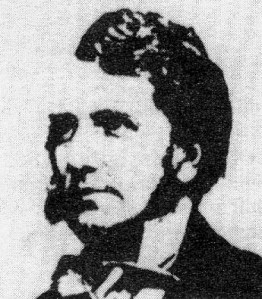
1814-1873
Source: J SHERIDAN LE FANU
Good article from Horrordelve.com on Sheridan Le Fanu, Irish author of the mid-nineteenth century. In his day, he was well-known for his ghost stories, some of which are described in this article.

Source: J SHERIDAN LE FANU
Good article from Horrordelve.com on Sheridan Le Fanu, Irish author of the mid-nineteenth century. In his day, he was well-known for his ghost stories, some of which are described in this article.
I endeavor each Saturday to post a work of horror from its long past. Horror, as a recognized genre, has existed less than a century. Before that, it was known by several names or vague references, such asv”weird fiction” or “ghost stories” or “gothic tales”. Many tales from these earlier eras are forgotten, but many are still well-known, having withstood the test of time, because they contained some element(s) that made them worthy of being remembered. It is to our advantage to study these memorable works and to discern what it is about them that speaks to the human psyche so intensely that they are remembered. However, just because a work is not well-known today, does not mean it does not merit study. There are many tales that were popular or highly acclaimed in their time, that should be remembered today, but sadly are not. We can learn much from these as well.
My intent is to bring to the world’s attention once again, stories that warrant study and remembrance. Too often in our modern world we become so lost among fads, trends, sound bytes, and the often ill-advised advice of pundits and critics, that we lose sight of the entirety of our lives and of our art. As someone once said, “when you’re up to your ass in alligators, it’s hard to remember your mission was to drain the swamp.” Maintaining a good, solid overview of one’s art is one means of maintaining a good, solid perspective, and probably the most basic overview is the historical perspective.
For these reasons, every Saturday I would like to bring you a story from horror’s long past, one that is worthy of study and remembrance. I shall try to keep them brief, but I will have to balance that with each one’s own merits. I hope you enjoy them all. This Saturday’s selection is:
1911
(the Gaslight e-text)

IT GOES past the powers of my pen to try to describe Reelfoot Lake for you so that you, reading this, will get the picture of it in your mind as I have it in mine.
For Reelfoot Lake is like no other lake that I know anything about. It is an after-thought of Creation.
The rest of this continent was made and had dried in the sun for thousands of years-millions of years, for all I know-before Reelfoot came to be. It’s the newest big thing in nature on this hemisphere, probably, for it was formed by the great earthquake of 1811.
That earthquake of 1811 surely altered the face of the earth on the then far frontier of this country.
It changed the course of rivers, it converted hills into what are now the sunk lands of three states, and it turned the solid ground to jelly and made it roll in waves like the sea.
And in the midst of the retching of the land and the vomiting of the waters it depressed to varying depths a section of the earth crust sixty miles long, taking it down — trees, hills, hollows, and all, and a crack broke through to the Mississippi River so that for three days the river ran up stream, filling the hole.
The result was the largest lake south of the Ohio, lying mostly in Tennessee, but extending up across what is now the Kentucky line, and taking its name from a fancied resemblance in its outline to the splay, reeled foot of a cornfield negro. Niggerwool Swamp, not so far away, may have got its name from the same man who christened Reelfoot: at least so it sounds.
Reelfoot is, and has always been, a lake of mystery.
In places it is bottomless. Other places the skeletons of the cypress-trees that went down when the earth sank, still stand upright so that if the sun shines from the right quarter, and the water is less muddy than common, a man, peering face downward into its depths, sees, or thinks he sees, down below him the bare top-limbs upstretching like drowned men’s fingers, all coated with the mud of years and bandaged with pennons of the green lake slime.
In still other places the lake is shallow for long stretches, no deeper than breast high to a man, but dangerous because of the weed growths and the sunken drifts which entangle a swimmer’s limbs. Its banks are mainly mud, its waters are *muddled, too, being a rich coffee color in the spring and a copperish yellow in the summer, and the trees along its shore are mud colored clear up their lower limbs after the spring floods, when the dried sediment covers their trunks with a thick, scrofulous-looking coat.
There are stretches of unbroken woodland around it, and slashes where the cypress knees rise countlessly like headstones and footstones for the dead snags that rot in the soft ooze.
There are deadenings with the lowland corn growing high and rank below and the bleached, fire-blackened girdled trees rising above, barren of leaf and limb.
There are long, dismal flats where in the spring the clotted frog- spawn cling like patches of white mucus among the weed-stalks, and at night the turtles crawl out to lay clutches of perfectly, round, white eggs with tough, rubbery shells in the sand.
There are bayous leading off to nowhere, and sloughs that wind aimlessly, like great, blind worms, to finally join the big river that rolls its semi-liquid torrents a few miles to the westward.
So Reelfoot lies there, flat in the bottoms, freezing lightly in the winter, steaming torridly in the summer, swollen in the spring when the woods have turned a vivid green and the buffalo-gnats by the million and the billion fill the flooded hollows with their pestilential buzzing, and in the fall, ringed about gloriously with all the colors which the first frost brings-gold of hickory, yellow-russet of sycamore, red of dogwood and ash, and purple-black of sweet-gum.
But the Reelfoot country has its uses. It is the best game and fish country, natural or artificial, that is left in the South today.
In their appointed seasons the duck and the geese flock in, and even semi-tropical birds, like the brown pelican and the Florida snake-bird, have been known to come there to nest.
Pigs, gone back to wildness, range the ridges, each razor-backed drove captained by a gaunt, savage, slab-sided old boar. By night the bullfrogs, inconceivably big and tremendously vocal, bellow under the banks.
It is a wonderful place for fish — bass and crappie, and perch, and the snouted buffalo fish.
How these edible sorts live to spawn, and how their spawn in turn live to spawn again is a marvel, seeing how many of the big fish-eating cannibal-fish there are in Reelfoot.
Here, bigger than anywhere else, you find the garfish, all bones and appetite and horny plates, with a snout like an alligator, the nearest link, naturalists say, between the animal life of today and the animal life of the Reptilian Period.
The shovel-nose cat, really a deformed kind of fresh-water sturgeon, with a great fan-shaped membranous plate jutting out from his nose like a bowsprit, jumps all day in the quiet places with mighty splashing sounds, as though a horse had fallen into the water.
On every stranded log the huge snapping turtles lie on sunny days in groups of four and six, baking their shells black in the sun, with their little snaky heads raised watchfully, ready to slip noiselessly off at the first sound of oars grating in the row-locks. But the biggest of them all are the catfish!
These are monstrous creatures, these catfish of Reelfoot — scaleless,slick things, with corpsy, dead eyes and poisonous fins, like javelins, and huge whiskers dangling from the sides of their cavernous heads.
Six and seven feet long they grow to be, and weigh 200 pounds or more, and they have mouths wide enough to take in a man’s foot or a man’s fist, and strong enough to break any hook save the strongest, and greedy enough to eat anything, living or dead or putrid, that the horny jaws can master.
Oh, but they are wicked things, and they tell wicked tales of them down there. They call them man-eaters, and compare them, in certain of their habits, to sharks.
Fishhead was of a piece with this setting.
He fitted into it as an acorn fits its cup. All his life he had lived on Reelfoot, always in the one place, at the mouth of a certain slough.
He had been born there, of a negro father and a half-breed Indian mother, both of them now dead, and the story was that before his birth his mother was frightened by one of the big fish, so that the child came into the world most hideously marked.
Anyhow, Fishhead was a human monstrosity, the veritable embodiment of nightmare!
He had the body of a man — a short, stocky sinewy body — but his face was as near to being the face of a great fish as any face could be and yet retain some trace of human aspect.
His skull sloped back so abruptly that he could hardly be said to have a have a forehead at all; his chin slanted off right into nothing. His eyes were small and round with shallow, glazed, pale-yellow pupils, and they were set wide apart in his head, and they were unwinking and staring, like a fish’s eyes.
His nose was no more than a pair of tiny slits in the middle of the yellow mask. His mouth was the worst of all. It was the awful mouth of a catfish, lipless and almost inconceivably wide, stretching from side to side.
Also when Fishhead became a man grown his likeness to a fish increased, for the hair upon his face grew out into two tightly kinked slender pendants that drooped down either side of the mouth like the beards of a fish!
If he had another name than Fishhead, none excepting he knew it. As Fishhead he was known, and as Fishhead he answered. Because he knew the waters and the woods of Reelfoot better than any other man there, he was valued as a guide by the city men who came every year to hunt or fish; but there were few such jobs that Fishhead would take.
Mainly he kept to himself, tending his corn patch, netting the lake, trapping a little, and in season pot hunting for the city markets. His neighbors, ague-bitten whites and malaria-proof negroes alike, left him to himself
Indeed, for the most part they had a superstitious fear of him. So he lived alone, with no kith nor kin, nor even a friend, shunning his kind and shunned by them.
His cabin stood just below the State line, where Mud Slough runs into the lake. It was a shack of logs, the only human habitation for four miles up or down.
Behind it the thick timber came shouldering right up to the edge of Fishhead’s small truck patch, enclosing it in thick shade except when the sun stood just overhead.
He cooked his food in a primitive fashion, outdoors, over a hole in the soggy earth or upon the rusted red ruin of an old cookstove, and he drank the saffron water of the lake out of a dipper made of a gourd, faring and fending for himself, a master hand at skiff and net, competent with duck gun and fishspear, yet a creature of affliction and loneliness, part savage, almost amphibious, set apart from his fellows, silent and suspicious.
In front of his cabin jutted out a long fallen cottonwood trunk, lying half in and half out of the water, its top side burnt by the sun and worn by the friction of Fishhead’s bare feet until it showed countless patterns of tiny scrolled lines, its underside black and rotted, and lapped at unceasingly by little waves like tiny licking tongues.
Its farther end reached deep water. And it was a part of Fishhead, for no matter how far his fishing and trapping might take him in the daytime, sunset would find him back there, his boat drawn up on the bank, and he on the other end of this log.
From a distance men had seen him there many times, sometimes squatted motionless as the big turtles that would crawl upon its dipping tip in his absence, sometimes erect and motionless like a creek crane, his misshapen yellow form outlined against the yellow sun, the yellow water, the yellow banks — all of them yellow together.
If the Reelfooters shunned Fishhead by day they feared him by night and avoided him as a plague, dreading even the chance of a casual meeting. For there were ugly stories about Fishhead — stories which all the negroes and some of the whites believed.
They said that a cry which had been heard just before dusk and just after, skittering across the darkened waters, was his calling cry to the big cats, and at his bidding they came trooping in, and that in their company he swam in the lake on moonlight nights, sporting with them, diving with them, even feeding with them on what manner of unclean things they fed.
The cry had been heard many times, that much was certain, and it was certain also that the big fish were noticeably thick at the mouth of Fishhead’s slough. No native Reelfooter, white or black, would willingly wet a leg or an arm there.
Here Fishhead had lived, and here he was going to die. The Baxters were going to kill him, and this day in late summer was to be the time of the killing.
The two Baxters — Jake and Joel — were coming in their dugout to do it!
This murder had been a long time in the making. The Baxters had to brew their hate over a slow fire for months before it reached the pitch of action.
They were poor whites, poor in everything, repute, and worldly goods, and standing — a pair of fever-ridden squatters who lived on whiskey and tobacco when they could get it, and on fish and cornbread when they couldn’t.
The feud itself was of months’ standing. Meeting Fishhead one day, in the spring on the spindly scaffolding of the skiff landing at Walnut Log, and being themselves far overtaken in liquor and vainglorious with a bogus alcoholic substitute for courage, the brothers had accused him, wantonly and without proof, of running their trout-line and stripping it of the hooked catch — an unforgivable sin among the water dwellers and the shanty boaters of the South.
Seeing that he bore this accusation in silence, only eyeing them steadfastly, they had been emboldened then to slap his face, whereupon he turned and gave them both the beating of their lives — bloodying their noses and bruising their lips with hard blows against their front teeth, and finally leaving them, mauled and prone, in the dirt.
Moreover, in the onlookers a sense of the everlasting fitness of things had triumphed over race prejudice and allowed them — two freeborn, sovereign whites — to be licked *by, a nigger! Therefore they were going to get the nigger!
The whole thing had been planned out amply. They were going to kill him on his log at sundown. There would be no witnesses to see it, no retribution to follow after it. The very ease of the undertaking made them forget even their inborn fear of the place of Fishhead’s habitation.
For more than an hour they had been coming from their shack across a deeply indented arm of the lake.
Their dugout, fashioned by fire and adz and draw-knife from the bole of a gum-tree, moved through the water as noiselessly as a swimming mallard, leaving behind it a long, wavy trail on the stilled waters.
Jake, the better oarsman, sat flat in the stern of the round-bottomed craft, paddling with quick, splashless strokes, Joel, the better shot, was squatted forward. There was a heavy, rusted duck gun between his knees.
Though their spying upon the victim had made them certain sure he would not be about the shore for hours, a doubled sense of caution led them to hug closely the weedy banks. They slid along the shore like shadows, moving so swiftly and in such silence that the watchful mudturtles barely turned their snaky heads as they passed.
So, a full hour before the time, they came slipping around the mouth of the slough and made for a natural ambuscade which the mixed-breed had left within a stone’s jerk of his cabin to his own undoing.
Where the slough’s flow joined deeper water a partly uprooted tree was stretched, prone from shore, at the top still thick and green with leaves that drew nourishment from the earth in which the half uncovered roots yet held, and twined about with an exuberance of trumpet vines and wild fox-grapes. All about was a huddle of drift — last year’s cornstalks, shreddy strips of bark, chunks of rotted weed, all the riffle and dunnage of a quiet eddy.
Straight into this green clump glided the dugout and swung, broadside on, against the protecting trunk of the tree, hidden from the inner side by the intervening curtains of rank growth, just as the Baxters had intended it should be hidden when days before in their scouting they marked this masked place of waiting and included it, then and there, in the scope of their plans.
There had been no hitch or mishap. No one had been abroad in the late afternoon to mark their movements — and in a little while Fishhead ought to be due. Jake’s woodman’s eye followed the downward swing of the sun speculatively.
The shadows, thrown shoreward, lengthened and slithered on the small ripples. The small noises of the day died out; the small noises of the coming night began to multiply.
The green-bodied flies went away and big mosquitoes with speckled gray legs, came to take the places of the flies.
The sleepy lake sucked at the mud banks with small mouthing sounds, as though it found the taste of the raw mud agreeable. A monster crawfish, big as a chicken lobster, crawled out of the top of his dried mud chimney and perched himself there, an armored sentinel on the watchtower.
Bull bats began to flitter back and forth, above the tops of the trees. A pudgy muskrat, swimming with head up, was moved to sidle off briskly as he met a cotton-mouth moccasin snake, so fat and swollen with summer poison that it looked almost like a legless lizard as it moved along the surface of the water in a series of slow torpid S’s. Directly above the head of either of the waiting assassins a compact little swarm of midges hung, holding to a sort of kite-shaped formation.
A little more time passed and Fishhead came out of the woods at the back, walking swiftly, with a sack over his shoulder.
For a few seconds his deformities showed in the clearing, then the black inside of the cabin swallowed him up.
By now the sun was almost down. Only the red nub of it showed above the timber line across the lake, and the shadows lay inland a long way. Out beyond, the big cats were stirring, and the great smacking sounds as their twisting bodies leaped clear and fell back in the water, came shoreward in a chorus.
But the two brothers, in their green covert, gave heed to nothing except the one thing upon which their hearts were set and their nerves tensed. Joel gently shoved his gun barrels across the log, cuddling the stock to his shoulder and slipping two fingers caressingly back and forth upon the triggers. Jake held the narrow dugout steady by a grip upon a fox-grape tendril.
A little wait and then the finish came!
Fishhead emerged from the cabin door and came down the narrow footpath to the water and out upon the water on his log.
He was barefooted and bareheaded, his cotton shirt open down the front to show his yellow neck and breast, his dungaree trousers held about his waist by a twisted tow string.
His broad splay feet, with the prehensile toes outspread, gripped the polished curve of the log as he moved along its swaying, dipping surface until he came to its outer end, and stood there erect, his chest filling, his chinless face lifted up, and something of mastership and dominion in his poise.
And then — his eye caught what another’s eyes might have missed — the round, twin ends of the gun barrels, the fixed gleam of Joel’s eyes, aimed at him through the green tracery! In that swift passage of time, too swift almost to be measured by seconds, realization flashed all through him, and he threw his head still higher and opened wide his shapeless trap of a mouth, and out across the lake he sent skittering and rolling his cry.
And in his cry was the laugh of a loon, and the croaking bellow of a frog, and the bay of a hound, all the compounded night noises of the lake. And in it, too, was a farewell, and a defiance, and an appeal!
The heavy roar of the duck gun came!
At twenty yards the double charge tore the throat out of him. He came down, face forward, upon the log and clung there, his trunk twisting distortedly, his legs twitching and kicking like the legs of a speared frog; his shoulders hunching and lifting spasmodically as the life ran out of him all in one swift coursing flow.
His head canted up between the heaving shoulders, his eyes looked full on the staring face of his murderer, and then the blood came out of his mouth, and Fishhead, in death still as much fish as man, slid, flopping, head first, off the end of the log, and sank, face downward slowly, his limbs all extended out.
One after another a string of big bubbles came up to burst in the middle of a widening reddish stain on the coffee-colored water.
The brothers watched this, held by the horror of the thing they had done, and the cranky dugout, having been tipped far over by the recoil of the gun, took water steadily across its gunwale; and now there was a sudden stroke from below upon its careening bottom and it went over and they were in the lake.
But shore was only twenty feet away, the trunk of the uprooted tree only five. Joel, still holding fast to his shot gun, made for the log, gaining it with one stroke. He threw his free arm over it and clung there, treading water, as he shook his eyes free.
Something gripped him — some great, sinewy, unseen thing gripped him fast by the thigh, crushing down on his flesh!
He uttered no cry, but his eyes popped out, and his mouth set in a square shape of agony, and his fingers gripped into the bark of the tree like grapples. He was pulled down and down, by steady jerks, not rapidly but steadily, so steadily, and as he went his fingernails tore four little white strips in the tree-bark. His mouth went under, next his popping eyes, then his erect hair, and finally his clawing, clutching hand, and that was the end of him.
Jake’s fate was harder still, for he lived longer — long enough to see Joel’s finish. He saw it through the water that ran down his face, and with a great surge of his whole body, he literally flung himself across the log and jerked his legs up high into the air to save them. He flung himself too far, though, for his face and chest hit the water on the far side.
And out of this water rose the head of a great fish, with the lake slime of years on its flat, black head, its whiskers bristling, its corpsy eyes alight. Its horny jaws closed and clamped in the front of Jake’s flannel shirt. His hand struck out wildly and was speared on a poisoned fin, and, unlike Joel, he went from sight with a great yell, and a whirling and churning of the water that made the cornstalks circle on the edges of a small whirlpool.
But the whirlpool soon thinned away, into widening rings of ripples, and the corn stalks quit circling and became still again, and only the multiplying night noises sounded about the mouth of the slough.
The bodies of all three came ashore on the same day near the same place. Except for the gaping gunshot wound where the neck met the chest, Fishhead’s body was unmarked.
But the bodies of the two Baxters were so marred and mauled that the Reelfooters buried them together on the bank without ever knowing which might be Jake’s and which might be Joel’s
Interesting article: Dan Shewan writes about the business of exorcism for Pacific Standard.
Source: Exorcism and the Catholic Church
No, it’s not Saturday night already and this isn’t one of my “Saturday Night Specials”. I was posting a comment on another website some time back and I used this story as an example of how to use nature in a suspense/horror story/weird tale. I really enjoyed reading this some time back and it has lingered in my memory since. It is definitely one of the classics of horror genre. I want to share its beauty and chills with you, my readership. An interesting note about its author, Ralph Adams Cram, is that he was not a writer by profession, but a famous and respected architect of the early twentieth century. Check him out in Wikipedia.
1895
I have a friend, Olof Ehrensvaerd, a Swede by birth, who yet, by reason of a strange and melancholy mischance of his early boyhood, has thrown his lot with that of the New World. It is a curious story of a headstrong boy and a proud and relentless family: the details do not matter here, but they are sufficient to weave a web of romance around the tall yellow-bearded man with the sad eyes and the voice that gives itself perfectly to plaintive little Swedish songs remembered out of childhood. In the winter evenings we play chess together, he and I, and after some close, fierce battle has been fought to a finish–usually with my own defeat–we fill our pipes again, and Ehrensvaerd tells me stories of the far, half-remembered days in the fatherland, before he went to sea: stories that grow very strange and incredible as the night deepens and the fire falls together, but stories that, nevertheless, I fully believe.
One of them made a strong impression on me, so I set it down here, only regretting that I cannot reproduce the curiously perfect English

and the delicate accent which to me increased the fascination of the tale. Yet, as best I can remember it, here it is.
“I never told you how Nils and I went over the hills to Hallsberg, and how we found the Dead Valley, did I? Well, this is the way it happened. I must have been about twelve years old, and Nils Sjoeberg, whose father’s estate joined ours, was a few months younger. We were inseparable just at that time, and whatever we did, we did together.
“Once a week it was market day in Engelholm, and Nils and I went always there to see the strange sights that the market gathered from all the surrounding country. One day we quite lost our hearts, for an old man from across the Elfborg had brought a little dog to sell, that seemed to us the most beautiful dog in all the world. He was a round, woolly puppy, so funny that Nils and I sat down on the ground and laughed at him, until he came and played with us in so jolly a way that we felt that there was only one really desirable thing in life, and that was the little dog of the old man from across the hills. But alas! we had not half money enough wherewith to buy him, so we were forced to beg the old man not to sell him before the next market day, promising that we would bring the money for him then. He gave us his word, and we ran home very fast and implored our mothers to give us money for the little dog.
“We got the money, but we could not wait for the next market day. Suppose the puppy should be sold! The thought frightened us so that we begged and implored that we might be allowed to go over the hills to Hallsberg where the old man lived, and get the little dog ourselves, and at last they told us we might go. By starting early in the morning we should reach Hallsberg by three o’clock, and it was arranged that we should stay there that night with Nils’s aunt, and, leaving by noon the next day, be home again by sunset.
“Soon after sunrise we were on our way, after having received minute instructions as to just what we should do in all possible and impossible circumstances, and finally a repeated injunction that we should start for home at the same hour the next day, so that we might get safely back before nightfall.
“For us, it was magnificent sport, and we started off with our rifles, full of the sense of our very great importance: yet the journey was simple enough, along a good road, across the big hills we knew so well, for Nils and I had shot over half the territory this side of the dividing ridge of the Elfborg. Back of Engelholm lay a long valley, from which rose the low mountains, and we had to cross this, and then follow the road along the side of the hills for three or four miles, before a narrow path branched off to the left, leading up through the pass.
“Nothing occurred of interest on the way over, and we reached Hallsberg in due season, found to our inexpressible joy that the little dog was not sold, secured him, and so went to the house of Nils’s aunt to spend the night.
“Why we did not leave early on the following day, I can’t quite remember; at all events, I know we stopped at a shooting range just outside of the town, where most attractive pasteboard pigs were sliding slowly through painted foliage, serving so as beautiful marks. The result was that we did not get fairly started for home until afternoon, and as we found ourselves at last pushing up the side of the mountain with the sun dangerously near their summits, I think we were a little scared at the prospect of the examination and possible punishment that awaited us when we got home at midnight.
“Therefore we hurried as fast as possible up the mountain side, while the blue dusk closed in about us, and the light died in the purple sky. At first we had talked hilariously, and the little dog had leaped ahead of us with the utmost joy. Latterly, however, a curious oppression came on us; we did not speak or even whistle, while the dog fell behind, following us with hesitation in every muscle.
“We had passed through the foothills and the low spurs of the mountains, and were almost at the top of the main range, when life seemed to go out of everything, leaving the world dead, so suddenly silent the forest became, so stagnant the air. Instinctively we halted to listen.
“Perfect silence,–the crushing silence of deep forests at night; and more, for always, even in the most impenetrable fastnesses of the wooded mountains, is the multitudinous murmur of little lives, awakened by the darkness, exaggerated and intensified by the stillness of the air and the great dark: but here and now the silence seemed unbroken even by the turn of a leaf, the movement of a twig, the note of night bird or insect. I could hear the blood beat through my veins; and the crushing of the grass under our feet as we advanced with hesitating steps sounded like the falling of trees.
“And the air was stagnant,–dead. The atmosphere seemed to lie upon the body like the weight of sea on a diver who has ventured too far into its awful depths. What we usually call silence seems so only in relation to the din of ordinary experience. This was silence in the absolute, and it crushed the mind while it intensified the senses, bringing down the awful weight of inextinguishable fear.
“I know that Nils and I stared towards each other in abject terror, listening to our quick, heavy breathing, that sounded to our acute senses like the fitful rush of waters. And the poor little dog we were leading justified our terror. The black oppression seemed to crush him even as it did us. He lay close on the ground, moaning feebly, and dragging himself painfully and slowly closer to Nils’s feet. I think this exhibition of utter animal fear was the last touch, and must inevitably have blasted our reason–mine anyway; but just then, as we stood quaking on the bounds of madness, came a sound, so awful, so ghastly, so horrible, that it seemed to rouse us from the dead spell that was on us.
“In the depth of the silence came a cry, beginning as a low, sorrowful moan, rising to a tremulous shriek, culminating in a yell that seemed to tear the night in sunder and rend the world as by a cataclysm. So fearful was it that I could not believe it had actual existence: it passed previous experience, the powers of belief, and for a moment I thought it the result of my own animal terror, an hallucination born of tottering reason.
“A glance at Nils dispelled this thought in a flash. In the pale light of the high stars he was the embodiment of all possible human fear, quaking with an ague, his jaw fallen, his tongue out, his eyes protruding like those of a hanged man. Without a word we fled, the panic of fear giving us strength, and together, the little dog caught close in Nils’s arms, we sped down the side of the cursed mountains,–anywhere, goal was of no account: we had but one impulse–to get away from that place.
“So under the black trees and the far white stars that flashed through the still leaves overhead, we leaped down the mountain side, regardless of path or landmark, straight through the tangled underbrush, across mountain streams, through fens and copses, anywhere, so only that our course was downward.
“How long we ran thus, I have no idea, but by and by the forest fell behind, and we found ourselves among the foothills, and fell exhausted on the dry short grass, panting like tired dogs.
“It was lighter here in the open, and presently we looked around to see where we were, and how we were to strike out in order to find the path that would lead us home. We looked in vain for a familiar sign. Behind us rose the great wall of black forest on the flank of the mountain: before us lay the undulating mounds of low foothills, unbroken by trees or rocks, and beyond, only the fall of black sky bright with multitudinous stars that turned its velvet depth to a luminous gray.
“As I remember, we did not speak to each other once: the terror was too heavy on us for that, but by and by we rose simultaneously and started out across the hills.
“Still the same silence, the same dead, motionless air–air that was at once sultry and chilling: a heavy heat struck through with an icy chill that felt almost like the burning of frozen steel. Still carrying the helpless dog, Nils pressed on through the hills, and I followed close behind. At last, in front of us, rose a slope of moor touching the white stars. We climbed it wearily, reached the top, and found ourselves gazing down into a great, smooth valley, filled half way to the brim with–what?
“As far as the eye could see stretched a level plain of ashy white, faintly phosphorescent, a sea of velvet fog that lay like motionless water, or rather like a floor of alabaster, so dense did it appear, so seemingly capable of sustaining weight. If it were possible, I think that sea of dead white mist struck even greater terror into my soul than the heavy silence or the deadly cry–so ominous was it, so utterly unreal, so phantasmal, so impossible, as it lay there like a dead ocean under the steady stars. Yet through that mist we must go! there seemed no other way home, and, shattered with abject fear, mad with the one desire to get back, we started down the slope to where the sea of milky mist ceased, sharp and distinct around the stems of the rough grass.
“I put one foot into the ghostly fog. A chill as of death struck through me, stopping my heart, and I threw myself backward on the slope. At that instant came again the shriek, close, close, right in our ears, in ourselves, and far out across that damnable sea I saw the cold fog lift like a water-spout and toss itself high in writhing convolutions towards the sky. The stars began to grow dim as thick vapor swept across them, and in the growing dark I saw a great, watery moon lift itself slowly above the palpitating sea, vast and vague in the gathering mist.
“This was enough: we turned and fled along the margin of the white sea that throbbed now with fitful motion below us, rising, rising, slowly and steadily, driving us higher and higher up the side of the foothills.
“It was a race for life; that we knew. How we kept it up I cannot understand, but we did, and at last we saw the white sea fall behind us as we staggered up the end of the valley, and then down into a region that we knew, and so into the old path. The last thing I remember was hearing a strange voice, that of Nils, but horribly changed, stammer brokenly, ‘The dog is dead!’ and then the whole world turned around twice, slowly and resistlessly, and consciousness went out with a crash.
“It was some three weeks later, as I remember, that I awoke in my own room, and found my mother sitting beside the bed. I could not think very well at first, but as I slowly grew strong again, vague flashes of recollection began to come to me, and little by little the whole sequence of events of that awful night in the Dead Valley came back. All that I could gain from what was told me was that three weeks before I had been found in my own bed, raging sick, and that my illness grew fast into brain fever. I tried to speak of the dread things that had happened to me, but I saw at once that no one looked on them save as the hauntings of a dying frenzy, and so I closed my mouth and kept my own counsel.
“I must see Nils, however, and so I asked for him. My mother told me that he also had been ill with a strange fever, but that he was now quite well again. Presently they brought him in, and when we were alone I began to speak to him of the night on the mountain. I shall never forget the shock that struck me down on my pillow when the boy denied everything: denied having gone with me, ever having heard the cry, having seen the valley, or feeling the deadly chill of the ghostly fog. Nothing would shake his determined ignorance, and in spite of myself I was forced to admit that his denials came from no policy of concealment, but from blank oblivion.
“My weakened brain was in a turmoil. Was it all but the floating phantasm of delirium? Or had the horror of the real thing blotted Nils’s mind into blankness so far as the events of the night in the Dead Valley were concerned? The latter explanation seemed the only one, else how explain the sudden illness which in a night had struck us both down? I said nothing more, either to Nils or to my own people, but waited, with a growing determination that, once well again, I would find that valley if it really existed.
“It was some weeks before I was really well enough to go, but finally, late in September, I chose a bright, warm, still day, the last smile of the dying summer, and started early in the morning along the path that led to Hallsberg. I was sure I knew where the trail struck off to the right, down which we had come from the valley of dead water, for a great tree grew by the Hallsberg path at the point where, with a sense of salvation, we had found the home road. Presently I saw it to the right, a little distance ahead.
“I think the bright sunlight and the clear air had worked as a tonic to me, for by the time I came to the foot of the great pine, I had quite lost faith in the verity of the vision that haunted me, believing at last that it was indeed but the nightmare of madness. Nevertheless, I turned sharply to the right, at the base of the tree, into a narrow path that led through a dense thicket. As I did so I tripped over something. A swarm of flies sung into the air around me, and looking down I saw the matted fleece, with the poor little bones thrusting through, of the dog we had bought in Hallsberg.
“Then my courage went out with a puff, and I knew that it all was true, and that now I was frightened. Pride and the desire for adventure urged me on, however, and I pressed into the close thicket that barred my way. The path was hardly visible: merely the worn road of some small beasts, for, though it showed in the crisp grass, the bushes above grew thick and hardly penetrable. The land rose slowly, and rising grew clearer, until at last I came out on a great slope of hill, unbroken by trees or shrubs, very like my memory of that rise of land we had topped in order that we might find the dead valley and the icy fog. I looked at the sun; it was bright and clear, and all around insects were humming in the autumn air, and birds were darting to and fro. Surely there was no danger, not until nightfall at least; so I began to whistle, and with a rush mounted the last crest of brown hill.
“There lay the Dead Valley! A great oval basin, almost as smooth and regular as though made by man. On all sides the grass crept over the brink of the encircling hills, dusty green on the crests, then fading into ashy brown, and so to a deadly white, this last color forming a thin ring, running in a long line around the slope. And then? Nothing. Bare, brown, hard earth, glittering with grains of alkali, but otherwise dead and barren. Not a tuft of grass, not a stick of brushwood, not even a stone, but only the vast expanse of beaten clay.
“In the midst of the basin, perhaps a mile and a half away, the level expanse was broken by a great dead tree, rising leafless and gaunt into the air. Without a moment’s hesitation I started down into the valley and made for this goal. Every particle of fear seemed to have left me, and even the valley itself did not look so very terrifying. At all events, I was driven by an overwhelming curiosity, and there seemed to be but one thing in the world to do,–to get to that Tree! As I trudged along over the hard earth, I noticed that the multitudinous voices of birds and insects had died away. No bee or butterfly hovered through the air, no insects leaped or crept over the dull earth. The very air itself was stagnant.
“As I drew near the skeleton tree, I noticed the glint of sunlight on a kind of white mound around its roots, and I wondered curiously. It was not until I had come close that I saw its nature.
“All around the roots and barkless trunk was heaped a wilderness of little bones. Tiny skulls of rodents and of birds, thousands of them, rising about the dead tree and streaming off for several yards in all directions, until the dreadful pile ended in isolated skulls and scattered skeletons. Here and there a larger bone appeared,–the thigh of a sheep, the hoofs of a horse, and to one side, grinning slowly, a human skull.
“I stood quite still, staring with all my eyes, when suddenly the dense silence was broken by a faint, forlorn cry high over my head. I looked up and saw a great falcon turning and sailing downward just over the tree. In a moment more she fell motionless on the bleaching bones.
“Horror struck me, and I rushed for home, my brain whirling, a strange numbness growing in me. I ran steadily, on and on. At last I glanced up. Where was the rise of hill? I looked around wildly. Close before me was the dead tree with its pile of bones. I had circled it round and round, and the valley wall was still a mile and a half away.
“I stood dazed and frozen. The sun was sinking, red and dull, towards the line of hills. In the east the dark was growing fast. Was there still time? Time! It was not that I wanted, it was will! My feet seemed clogged as in a nightmare. I could hardly drag them over the barren earth. And then I felt the slow chill creeping through me. I looked down. Out of the earth a thin mist was rising, collecting in little pools that grew ever larger until they joined here and there, their currents swirling slowly like thin blue smoke. The western hills halved the copper sun. When it was dark I should hear that shriek again, and then I should die. I knew that, and with every remaining atom of will I staggered towards the red west through the writhing mist that crept clammily around my ankles, retarding my steps.
“And as I fought my way off from the Tree, the horror grew, until at last I thought I was going to die. The silence pursued me like dumb ghosts, the still air held my breath, the hellish fog caught at my feet like cold hands.
“But I won! though not a moment too soon. As I crawled on my hands and knees up the brown slope, I heard, far away and high in the air, the cry that already had almost bereft me of reason. It was faint and vague, but unmistakable in its horrible intensity. I glanced behind. The fog was dense and pallid, heaving undulously up the brown slope. The sky was gold under the setting sun, but below was the ashy gray of death. I stood for a moment on the brink of this sea of hell, and then leaped down the slope. The sunset opened before me, the night closed behind, and as I crawled home weak and tired, darkness shut down on the Dead Valley.”
I endeavor each Saturday to post a work of horror from its long past. Horror, as a recognized genre, has existed less than a century. Before that, it was known by several names or vague references, such asv”weird fiction” or “ghost stories” or “gothic tales”. Many tales from these earlier eras are forgotten, but many are still well-known, having withstood the test of time, because they contained some element(s) that made them worthy of being remembered. It is to our advantage to study these memorable works and to discern what it is about them that speaks to the human psyche so intensely that they are remembered. However, just because a work is not well-known today, does not mean it does not merit study. There are many tales that were popular or highly acclaimed in their time, that should be remembered today, but sadly are not. We can learn much from these as well.
My intent is to bring to the world’s attention once again, stories that warrant study and remembrance. Too often in our modern world we become so lost among fads, trends, sound bytes, and the often ill-advised advice of pundits and critics, that we lose sight of the entirety of our lives and of our art. As someone once said, “when you’re up to your ass in alligators, it’s hard to remember your mission was to drain the swamp.” Maintaining a good, solid overview of one’s art is one means of maintaining a good, solid perspective, and probably the most basic overview is the historical perspective.
For these reasons, every Saturday I would like to bring you a story from horror’s long past, one that is worthy of study and remembrance. I shall try to keep them brief, but I will have to balance that with each one’s own merits. I hope you enjoy them all. This Saturday’s selection is:
1907
(the Project Gutenberg Australia text)
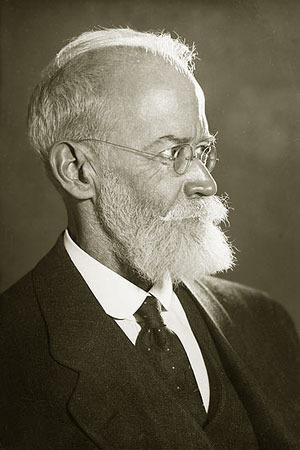
“It stands to reason,” said Twombly, “that a man must accept of his own eyes, and when eyes and ears agree, there can be no doubt. He has to believe what he has both seen and heard.”
“Not always,” put in Singleton, softly.
Every man turned toward Singleton. Twombly was standing on hearthrug, his back to the grate, his legs spread out, with his habitual air of dominating the room. Singleton, as usual, was as much as possible effaced in a corner. But when Singleton spoke he said something. We faced him in that flattering spontaneity of expectant silence which invites utterance.
“I was thinking,” he said, after an interval, “of something I both saw and heard in Africa.”
Now, if there was one thing we had found impossible, it had been to elicit from Singleton anything definite about his African experiences. As with the Alpinist in the story, who could tell only that he went up and came down, the sum of Singleton’s revelations had been that he went there and came away. His words now riveted our attention at once. Twombly faded from the hearthrug, but not one of us could ever recall having seen him go. The room readjusted itself, focused on Singleton, and there was some hasty and furtive lighting of fresh cigars. Singleton lit one also, but it went out immediately, and he never relit it.
We were in the Great Forest, exploring for pigmies. Van Rieten had a theory that the dwarfs found by Stanley and others were a mere cross-breed between ordinary negroes and the real pigmies. He hoped to discover a race of men three feet tall at most, or shorter. We had found no trace of any such beings.
Natives were few, game scarce; food, except game, there was none; and the deepest, dankest, drippingest forest all about. We were the only novelty in the country, no native we met had ever seen a white man before, most had never heard of white men. All of a sudden, late one afternoon, there came into our camp an Englishman, and pretty well used up he was, too. We had heard no rumor of him; he had not only heard of us but had made an amazing five-day march to reach us. His guide and two bearers were nearly as done up as he. Even though he was in tatters and had five days’ beard on, you could see he was naturally dapper and neat and the sort of man to shave daily. He was small, but wiry. His face was the sort of British face from which emotion has been so carefully banished that a foreigner is apt to think the wearer of the face incapable of any sort of feeling; the kind of face which, if it has any expression at all, expresses principally the resolution to go through the world decorously, without intruding upon or annoying anyone.
His name was Etcham. He introduced himself modestly, and ate with us so deliberately that we should never have suspected, if our bearers had not had it from his bearers, that he had had but three meals in the five days, and those small. After we had lit up he told us why he had come.
“My chief is ve’y seedy,” he said between puffs. “He is bound to go out if he keeps this way. I thought perhaps…”
He spoke quietly in a soft, even tone, but I could see little beads of sweat oozing out on his upper lip under his stubby mustache, and there was a tingle of repressed emotion in his tone, a veiled eagerness in his eye, a palpitating inward solicitude in his demeanor that moved me at once. Van Rieten had no sentiment in him; if he was moved he did not show it. But he listened. I was surprised at that. He was just the man to refuse at once. But he listened to Etcham’s halting, difficult hints. He even asked questions.
“Who is your chief?”
“Stone,” Etcham lisped.
That electrified both of us.
“Ralph Stone?” we ejaculated together.
Etcham nodded.
For some minutes Van Rieten and I were silent. Van Rieten had never seen him, but I had been a classmate of Stone’s, and Van Rieten and I had discussed him over many a campfire. We had heard of him two years before, south of Luebo in the Balunda country, which had been ringing with his theatrical strife against a Balunda witch-doctor, ending in the sorcerer’s complete discomfiture and the abasement of his tribe before Stone. They had even broken the fetish-man’s whistle and given Stone the pieces. It had been like the triumph of Elijah over the prophets of Baal, only more real to the Balunda.
We had thought of Stone as far off, if still in Africa at all, and here he turned up ahead of us and probably forestalling our quest.
Etcham’s naming of Stone brought back to us all his tantalizing story, his fascinating parents, their tragic death; the brilliance of his college days; the dazzle of his millions; the promise of his young manhood; his wide notoriety, so nearly real fame; his romantic elopement with the meteoric authoress whose sudden cascade of fiction had made her so great a name so young, whose beauty and charm were so much heralded; the frightful scandal of the breach-of-promise suit that followed; his bride’s devotion through it all; their sudden quarrel after it was all over; their divorce; the too much advertised announcement of his approaching marriage to the plaintiff in the breach-of-promise suit; his precipitate remarriage to his divorced bride; their second quarrel and second divorce; his departure from his native land; his advent in the dark continent. The sense of all this rushed over me and I believe Van Rieten felt it, too, as he sat silent.
Then he asked:
“Where is Werner?”
“Dead,” said Etcham. “He died before I joined Stone.”
“You were not with Stone above Luebo?”
“No,” said Etcham, “I joined him at Stanley Falls.”
“Who is with him?” Van Rieten asked.
“Only his Zanzibar servants and the bearers,” Etcham replied.
“What sort of bearers?” Van Rieten demanded.
“Mang-Battu men,” Etcham responded simply.
Now that impressed both Van Rieten and myself greatly. It bore out Stone’s reputation as a notable leader of men. For up to that time no one had been able to use Mang-Battu as bearers outside of their own country, or to hold them for long or difficult expeditions.
“Were you long among the Mang-Battu?” was Van Rieten’s next question.
“Some weeks,” said Etcham. “Stone was interested in them and made up a fair-sized vocabulary of their words and phrases. He had a theory that they are an offshoot of the Balunda and he found much confirmation in their customs.”
“What do you live on?” Van Rieten enquired.
“Game, mostly,” Etcham lisped.
“How long has Stone been laid up?” Van Rieten next asked.
“More than a month,” Etcham answered.
“And you have been hunting for the camp?” Van Rieten exclaimed.
Etcham’s face, burnt and flayed as it was, showed a flush.
“I missed some easy shots,” he admitted ruefully. “I’ve not felt ve’y fit myself.”
“What’s the matter with your chief?” Van Rieten enquired.
“Something like carbuncles,” Etcham replied.
“He ought to get over a carbuncle or two,” Van Rieten declared.
“They are not carbuncles,” Etcham explained. “Nor one or two. He has had dozens, sometimes five at once. If they had been carbuncles he would have been dead long ago. But in some ways they are not so bad, though in others they are worse.”
“How do you mean?” Van Rieten queried.
“Well,” Etcham hesitated, “they do not seem to inflame so deep nor so wide as carbuncles, nor to be so painful, nor to cause so much fever. But then they seem to be part of a disease that affects his mind. He let me help him dress the first, but the others he has hidden most carefully, from me and from the men. He keeps his tent when they puff up, and will not let me change the dressings or be with him at all.”
“Have you plenty of dressings?” Van Rieten asked.
“We have some,” said Etcham doubtfully. “But he won’t use them; he washes out the dressings and uses them over and over.”
“How is he treating the swellings?” Van Rieten enquired.
“He slices them off clean down to flesh level, with his razor.”
“What?” Van Rieten shouted.
Etcham made no answer but looked him steadily in the eyes.
“I beg pardon,” Van Rieten hastened to say. “You startled me. They can’t be carbuncles. He’d have been dead long ago.”
“I thought I had said they are not carbuncles,” Etcham lisped.
“But the man must be crazy!” Van Rieten exclaimed.
“Just so,” said Etcham. “He is beyond my advice or control.”
“How many has he treated that way?” Van Rieten demanded.
“Two, to my knowledge,” Etcham said.
“Two?” Van Rieten queried.
Etcham flushed again.
“I saw him,” he confessed, “through a crack in the hut. I felt impelled to keep a watch on him, as if he was not responsible.”
“I should think not,” Van Rieten agreed. “And you saw him do that twice?”
“I conjecture,” said Etcham, “that he did the like with all the rest.”
“How many has he had?” Van Rieten asked.
“Dozens,” Etcham lisped.
“Does he eat?” Van Rieten enquired.
“Like a wolf,” said Etcham. “More than any two bearers.”
“Can he walk?” Van Rieten asked.
“He crawls a bit, groaning,” said Etcham simply.
“Little fever, you say,” Van Rieten ruminated.
“Enough and too much,” Etcham declared.
“Has he been delirious?” Van Rieten asked.
“Only twice,” Etcham replied; “once when the first swelling broke, and once later. He would not let anyone come near him then. But we could hear him talking, talking steadily, and it scared the natives.
“Was he talking their patter in delirium?” Van Rieten demanded.
“No,” said Etcham, “but he was talking some similar lingo. Hamed Burghash said he was talking Balunda. I know too little Balunda. I do not learn languages readily. Stone learned more Mang-Battu in a week than I could have learned in a year. But I seemed to hear words like Mang-Battu words. Anyhow, the Mang-Battu bearers were scared.”
“Scared?” Van Rieten repeated, questioningly.
“So were the Zanzibar men, even Hamed Burghash, and so was I,” said Etcham, “only for a different reason. He talked in two voices.”
“In two voices,” Van Rieten reflected.
“Yes,” said Etcham, more excitedly than he had yet spoken. “In two voices, like a conversation. One was his own, one a small, thin, bleaty voice like nothing I ever heard. I seemed to make out, among the sounds the deep voice made, something like Mang-Battu words I knew, as nedru, metababa, and nedo, their terms for ‘head,’ ‘shoulder,’ ‘thigh,’ and perhaps kudra and nekere (‘speak’ and ‘whistle’); and among the noises of the shrill voice matomipa, angunzi, and kamomami (‘kill,’ ‘death,’ and ‘hate’). Hamed Burghash said he also heard those words. He knew Mang-Battu far better than I.”
“What did the bearers say?” Van Rieten asked.
“They said, ‘, Lukundoo!'” Etcham replied. “I did not know the word; Hamed Burghash said it was Mang-Battu for ‘leopard.'”
“It’s Mang-Battu for ‘witchcraft,'” said Van Rieten.
“I don’t wonder they thought so,” said Etcham. “It was enough to make one believe in sorcery to listen to those two voices.”
“One voice answering the other?” Van Rieten asked perfunctorily.
Etcham’s face went gray under his tan.
“Sometimes both at once,” he answered huskily.
“Both at once!” Van Rieten ejaculated.
“It sounded that way to the men, too,” said Etcham. “And that was not all.”
He stopped and looked helplessly at us for a moment.
“Could a man talk and whistle at the same time?” he asked.
“How do you mean?” Van Rieten queried.
“We could hear Stone talking away, his big, deep-cheated baritone rumbling along, and through it all we could hear a high, shrill whistle, the oddest, wheezy sound. You know, no matter how shrilly a grown man may whistle, the note has a different quality from the whistle of a boy or a woman or a little girl. They sound more treble, somehow. Well, if you can imagine the smallest girl who could whistle keeping it up tunelessly right along, that whistle was like that, only even more piercing, and it sounded right through Stone’s bass tones.”
“And you didn’t go to him?” Van Rieten cried.
“He is not given to threats,” Etcham disclaimed. “But he had threatened, not volubly, nor like a sick man, but quietly and firmly, that if any man of us (he lumped me in with the men) came near him while he was in his trouble, that man should die. And it was not so much his words as his manner. It was like a monarch commanding respected privacy for a deathbed. One simply could not transgress.”
“I see,” said Van Rieten shortly.
“He’s ve’y seedy,” Etcham repeated helplessly. “I thought perhaps….”
His absorbing affection for Stone, his real love for him, shone out through his envelope of conventional training. Worship of Stone was plainly his master passion.
Like many competent men, Van Rieten had a streak of hard selfishness in him. It came to the surface then. He said we carried our lives in our hands from day to day just as genuinely as Stone; that he did not forget the ties of blood and calling between any two explorers, but that there was no sense in imperiling one party for a very problematical benefit to a man probably beyond any help; that it was enough of a task to hunt for one party; that if two were united, providing food would be more than doubly difficult; that the risk of starvation was too great. Deflecting our march seven full days’ journey (he complimented Etcham on his marching powers) might ruin our expedition entirely.
Van Rieten had logic on his side and he had a way with him. Etcham sat there apologetic and deferential, like a fourth-form schoolboy before a head master. Van Rieten wound up.
“I am after pigmies, at the risk of my life. After pigmies I go.”
“Perhaps, then, these will interest you,” said Etcham, very quietly.
He took two objects out of the sidepocket of his blouse, and handed them to Van Rieten. They were round, bigger than big plums, and smaller than small peaches, about the right size to enclose in an average hand. They were black, and at first I did not see what they were.
“Pigmies!” Van Rieten exclaimed. “Pigmies, indeed! Why, they wouldn’t be two feet high! Do you mean to claim that these are adult heads?”
“I claim nothing,” Etcham answered evenly. “You can see for yourself.”
Van Rieten passed one of the heads to me. The sun was just setting and I examined it closely. A dried head it was, perfectly preserved, and the flesh as hard as Argentine jerked beef. A bit of a vertebra stuck out where the muscles of the vanished neck had shriveled into folds. The puny chin was sharp on a projecting jaw, the minute teeth white and even between the retracted lips, the tiny nose was flat, the little forehead retreating, there were inconsiderable clumps of stunted wool on the Lilliputian cranium. There was nothing babyish, childish or youthful about the head; rather it was mature to senility.
“Where did these come from?” Van Rieten enquired.
“I do not know,” Etcham replied precisely. “I found them among Stone’s effects while rummaging for medicines or drugs or anything that could help me to help him. I do not know where he got them. But I’ll swear he did not have them when we entered this district.”
“Are you sure?” Van Rieten queried, his eyes big and fixed on Etcham’s.
“Ve’y sure,” lisped Etcham.
“But how could he have come by them without your knowledge?” Van Rieten demurred.
“Sometimes we were apart ten days at a time hunting,” said Etcham. “Stone is not a talking man. He gave me no account of his doings, and Hamed Burghash keeps a still tongue and a tight hold on the men.”
“You have examined these heads?” Van Rieten asked.
“Minutely,” said Etcham.
Van Rieten took out his notebook. He was a methodical chap. He tore out a leaf, folded it and divided it equally into three pieces. He gave one to me and one to Etcham.
“Just for a test of my impressions,” he said, “I want each of us to write separately just what he is most reminded of by these heads. Then I want to compare the writings.”
I handed Etcham a pencil and he wrote. Then he handed the pencil back to me and I wrote.
“Read the three,” said Van Rieten, handing me his piece.
Van Rieten had written:
“An old Balunda witch-doctor.”
Etcham had written:
“An old Mang-Battu fetish-man.”
I had written:
“An old Katongo magician.”
“There!” Van Rieten exclaimed. “Look at that! There is nothing Wagabi or Batwa or Wambuttu or Wabotu about these heads. Nor anything pigmy either.”
“I thought as much,” said Etcham.
“And you say he did not have them before?”
“To a certainty he did not,” Etcham asserted.
“It is worth following up,” said Van Rieten. “I’ll go with you. And first of all, I’ll do my best to save Stone.”
He put out his hand and Etcham clasped it silently. He was grateful all over.
Nothing but Etcham’s fever of solicitude could have taken him in five days over the track. It took him eight days to retrace with full knowledge of it and our party to help. We could not have done it in seven, and Etcham urged us on, in a repressed fury of anxiety, no mere fever of duty to his chief, but a real ardor of devotion, a glow of personal adoration for Stone which blazed under his dry conventional exterior and showed in spite of him.
We found Stone well cared for. Etcham had seen to a good, high thorn zareeba round the camp, the huts were well built, and thatched and Stone’s was as good as their resources would permit. Hamed Burghash was not named after two Seyyids for nothing. He had in him the making of a sultan. He had kept the Mang-Battu together, not a man had slipped off, and he had kept them in order. Also he was a deft nurse and a faithful servant.
The two other Zanzibaris had done some creditable hunting. Though all were hungry, the camp was far from starvation.
Stone was on a canvas cot and there was a sort of collapsible camp-stool-table, like a Turkish tabouret, by the cot. It had a water-bottle and some vials on it and Stone’s watch, also his razor in its case.
Stone was clean and not emaciated, but he was far gone; not unconscious, but in a daze; past commanding or resisting anyone. He did not seem to see us enter or to know we were there. I should have recognized him anywhere. His boyish dash and grace had vanished utterly, of course. But his head was even more leonine; his hair was still abundant, yellow and wavy; the close, crisped blond beard he had grown during his illness did not alter him. He was big and big-cheated yet. His eyes were dull and he mumbled and babbled mere meaningless syllables, not words.
Etcham helped Van Rieten to uncover him and look him over. He was in good muscle for a man so long bedridden. There were no scars on him except about his knees, shoulders and chest. On each knee and above it he had a full score of roundish cicatrices, and a dozen or more on each shoulder, all in front. Two or three were open wounds and four or five barely healed. He had no fresh swellings, except two, one on each side, on his pectoral muscles, the one on the left being higher up and farther out than the other. They did not look like boils or carbuncles, but as if something blunt and hard were being pushed up through the fairly healthy flesh and skin, not much inflamed.
“I should not lance those,” said Van Rieten, and Etcham assented.
They made Stone as comfortable as they could, and just before sunset we looked in at him again. He was lying on his back, and his chest showed big and massive yet, but he lay as if in a stupor. We left Etcham with him and went into the next hut, which Etcham had resigned to us. The jungle noises were no different than anywhere else for months past, and I was soon fast asleep.
Sometime in the pitch dark I found myself awake and listening. I could hear two voices, one Stone’s, the other sibilant and wheezy. I knew Stone’s voice after all the years that had passed since I heard it last. The other was like nothing I remembered. It had less volume than the wail of a new-born baby, yet there was an insistent carrying power to it, like the shrilling of an insect. As I listened I heard Van Rieten breathing near me in the dark; then he heard me and realized that I was listening, too. Like Etcham I knew little Balunda, but I could make out a word or two. The voices alternated, with intervals of silence between.
Then suddenly both sounded at once and fast. Stone’s baritone basso, full as if he were in perfect health, and that incredibly stridulous falsetto, both jabbering at once like the voices of two people quarreling and trying to talk each other down.
“I can’t stand this,” said Van Rieten. “Let’s have a look at him.”
He had one of those cylindrical electric night-candles. He fumbled about for it, touched the button and beckoned me to come with him. Outside the hut he motioned me to stand still, and instinctively turned off the light, as if seeing made listening difficult.
Except for a faint glow from the embers of the bearers’ fire we were in complete darkness, little starlight struggled through the trees, the river made but a faint murmur. We could hear the two voices together and then suddenly the creaking voice changed into a razor-edged, slicing whistle, indescribably cutting, continuing right through Stone’s grumbling torrent of croaking words.
“Good God!” exclaimed Van Rieten.
Abruptly he turned on the light.
We found Etcham utterly asleep, exhausted by his long anxiety and the exertions of his phenomenal march, and relaxed completely now that the load was in a sense shifted from his shoulders to Van Rieten’s. Even the light on his face did not wake him.
The whistle had ceased and the two voices now sounded together. Both came from Stone’s cot, where the concentrated white ray showed him lying just as we had left him, except that he had tossed his arms above his head and had torn the coverings and bandages from his chest.
The swelling on his right breast had broken. Van Rieten aimed the center line of the light at it and we saw it plainly. From his flesh, grown out of it, there protruded a head, such a head as the dried specimens Etcham had shown us, as if it were a miniature of the head of a Balunda fetish-man. It was black, shining black as the blackest African skin; it rolled the whites of its wicked, wee eyes and showed its microscopic teeth between lips repulsively negroid in their red fullness, even in so diminutive a face. It had crisp, fuzzy wool on its minikin skull, it turned malignantly from side to side and chittered incessantly in that inconceivable falsetto. Stone babbled brokenly against its patter.
Van Rieten turned from Stone and waked Etcham, with some difficulty. When he was awake and saw it all, Etcham stared and said not one word.
“You saw him slice off two swellings?” Van Rieten asked.
Etcham nodded, chokingly.
“Did he bleed much?” Van Rieten demanded.
“Ve’y little,” Etcham replied.
“You hold his arms,” said Van Rieten to Etcham.
He took up Stone’s razor and handed me the light. Stone showed no sign of seeing the light or of knowing we were there. But the little head mewled and screeched at us.
Van Rieten’s hand was steady, and the sweep of the razor even and true. Stone bled amazingly little and Van Rieten dressed the wound as if it had been a bruise or scrape.
Stone had stopped talking the instant the excrescent head was severed. Van Rieten did all that could be done for Stone and then fairly grabbed the light from me. Snatching up a gun he scanned the ground by the cot and brought the butt down once and twice, viciously.
We went back to our hut, but I doubt if I slept.
Next day, near noon, in broad daylight, we heard the two voices from Stone’s hut. We found Etcham dropped asleep by his charge. The swelling on the left had broken, and just such another head was there miauling and spluttering. Etcham woke up and the three of us stood there and glared. Stone interjected hoarse vocables into the tinkling gurgle of the portent’s utterance.
Van Rieten stepped forward, took up Stone’s razor and knelt down by the cot. The atomy of a head squealed a wheezy snarl at him.
Then suddenly Stone spoke English.
“Who are you with my razor?”
Van Rieten started back and stood up.
Stone’s eyes were clear now and bright, they roved about the hut.
“The end,” he said; “I recognize the end. I seem to see Etcham, as if in life. But Singleton! Ah, Singleton! Ghosts of my boyhood come to watch me pass! And you, strange specter with the black beard and my razor! Aroint ye all!”
“I’m no ghost, Stone,” I managed to say. “I’m alive. So are Etcham and Van Rieten. We are here to help you.”
“Van Rieten!” he exclaimed. “My work passes on to a better man. Luck go with you, Van Rieten.”
Van Rieten went nearer to him.
“Just hold still a moment, old man,” he said soothingly. “It will be only one twinge.”
“I’ve held still for many such twinges,” Stone answered quite distinctly. “Let me be. Let me die in my own way. The hydra was nothing to this. You can cut off ten, a hundred, a thousand heads, but the curse you can not cut off, or take off. What’s soaked into the bone won’t come out of the flesh, any more than what’s bred there. Don’t hack me any more. Promise!”
His voice had all the old commanding tone of his boyhood and it swayed Van Rieten as it always had swayed everybody.
“I promise,” said Van Rieten.
Almost as he said the word Stone’s eyes filmed again.
Then we three sat about Stone and watched that hideous, gibbering prodigy grow up out of Stone’s flesh, till two horrid, spindling little black arms disengaged themselves. The infinitesimal nails were perfect to the barely perceptible moon at the quick, the pink spot on the palm was horridly natural. These arms gesticulated and the right plucked toward Stone’s blond beard.
“I can’t stand this,” Van Rieten exclaimed and took up the razor again.
Instantly Stone’s eyes opened, hard and glittering.
“Van Rieten break his word?” he enunciated slowly. “Never!”
“But we must help you,” Van Rieten gasped.
“I am past all help and all hurting,” said Stone. “This is my hour. This curse is not put on me; it grew out of me, like this horror here. Even now I go.”
His eyes closed and we stood helpless, the adherent figure spouting shrill sentences.
In a moment Stone spoke again.
“You speak all tongues?” he asked quickly.
And the mergent minikin replied in sudden English:
“Yea, verily, all that you speak,” putting out its microscopic tongue, writhing its lips and wagging its head from side to side. We could see the thready ribs on its exiguous flanks heave as if the thing breathed.
“Has she forgiven me?” Stone asked in a muffled strangle.
“Not while the moss hangs from the cypresses,” the head squeaked. “Not while the stars shine on Lake Pontchartrain will she forgive.”
And then Stone, all with one motion, wrenched himself over on his side. The next instant he was dead.
When Singleton’s voice ceased the room was hushed for a space. We could hear each other breathing. Twombly, the tactless, broke the silence.
“I presume,” he said, “you cut off the little minikin and brought it home in alcohol.”
Singleton turned on him a stern countenance.
“We buried Stone,” he said, “unmutilated as he died.”
“But,” said the unconscionable Twombly, “the whole thing is incredible.”
Singleton stiffened.
“I did not expect you to believe it,” he said; “I began by saying that although I heard and saw it, when I look back on it I cannot credit it myself.”
As a new feature, I will endeavor each Saturday to post a work of horror from its long past. Horror, as a recognized genre, has existed less than a century. Before that, it was known by several names or vague references, such asv”weird fiction” or “ghost stories” or “gothic tales”. Many tales from these earlier eras are forgotten, but many are still well-known, having withstood the test of time, because they contained some element(s) that made them worthy of being remembered. It is to our advantage to study these memorable works and to discern what it is about them that speaks to the human psyche so intensely that they are remembered. However, just because a work is not well-known today, does not mean it does not merit study. There are many tales that were popular or highly acclaimed in their time, that should be remembered today, but sadly are not. We can learn much from these as well.
My intent with this new, (hopefully) regular feature is to bring to the world’s attention once again, stories that warrant study and remembrance. Too often in our modern world we become so lost among fads, trends, sound bytes, and the often ill-advised advice of pundits and critics, that we lose sight of the entirety of our lives and of our art. As someone once said, “when you’re up to your ass in alligators, it’s hard to remember your mission was to drain the swamp.” Maintaining a good, solid overview of one’s art is one means of maintaining a good, solid perspective, and probably the most basic overview is the historical perspective.
For these reasons, every Saturday I would like to bring you a story from horror’s long past, one that is worthy of study and remembrance. I shall try to keep them brief, but I will have to balance that with each one’s own merits. I hope you enjoy them all. This Saturday’s selection is:
1898
(The Project Gutenberg Text)

By THE light of a tallow candle, which had been placed on one end of a rough table, a man was reading something written in a book. It was an old account book, greatly worn; and the writing was not, apparently, very legible, for the man sometimes held the page close to the flame of the candle to get a stronger light upon it. The shadow of the book would then throw into obscurity a half of the room, darkening a number of faces and figures; for besides the reader, eight other men were present. Seven of them sat against the rough log walls, silent and motionless, and, the room being small, not very far from the table. By extending an arm any one of them could have touched the eighth man, who lay on the table, face upward, partly covered by a sheet, his arms at his sides. He was dead.
The man with the book was not reading aloud, and no one spoke; all seemed to be waiting for something to occur; the dead man only was without expectation. From the blank darkness outside came in, through the aperture that served for a window, all the ever unfamiliar noises of night in the wilderness—the long, nameless note of a distant coyote; the stilly pulsing thrill of tireless insects in trees; strange cries of night birds, so different from those of the birds of day; the drone of great blundering beetles, and all that mysterious chorus of small sounds that seem always to have been but half heard when they have suddenly ceased, as if conscious of an indiscretion. But nothing of all this was noted in that company; its members were not overmuch addicted to idle interest in matters of no practical importance; that was obvious in every line of their rugged faces—obvious even in the dim light of the single candle. They were evidently men of the vicinity—farmers and woodmen.
The person reading was a trifle different; one would have said of him that he was of the world, worldly, albeit there was that in his attire which attested a certain fellowship with the organisms of his environment. His coat would hardly have passed muster in San Francisco: his footgear was not of urban origin, and the hat that lay by him on the floor (he was the only one uncovered) was such that if one had considered it as an article of mere personal adornment he would have missed its meaning. In countenance the man was rather prepossessing, with just a hint of sternness; though that he may have assumed or cultivated, as appropriate to one in authority. For he was a coroner. It was by virtue of his office that he had possession of the book in which he was reading; it had been found among the dead man’s effects—in his cabin, where the inquest was now taking place.
When the coroner had finished reading he put the book into his breast pocket. At that moment the door was pushed open and a young man entered. He, clearly, was not of mountain birth and breeding: he was clad as those who dwell in cities. His clothing was dusty, however, as from travel. He had, in fact, been riding hard to attend the inquest.
The coroner nodded; no one else greeted him.
“We have waited for you,” said the coroner. “It is necessary to have done with this business to-night.”
The young man smiled. “I am sorry to have kept you,” he said. “I went away, not to evade your summons, but to post to my newspaper an account of what I suppose I am called back to relate.”
The coroner smiled.
“The account that you posted to your newspaper,” he said, “differs probably from that which you will give here under oath.”
“That,” replied the other, rather hotly and with a visible flush, “is as you choose. I used manifold paper and have a copy of what I sent. It was not written as news, for it is incredible, but as fiction. It may go as a part of my testimony under oath.”
“But you say it is incredible.”
“That is nothing to you, sir, if I also swear that it is true.”
The coroner was apparently not greatly affected by the young man’s manifest resentment. He was silent for some moments, his eyes upon the floor. The men about the sides of the cabin talked in whispers, but seldom withdrew their gaze from the face of the corpse. Presently the coroner lifted his eyes and said: “We will resume the inquest.”
The men removed their hats. The witness was sworn.
“What is your name?” the coroner asked.
“William Harker.”
“Age?”
“Twenty-seven.”
“You knew the deceased, Hugh Morgan?”
“Yes.”
“You were with him when he died?”
“Near him.”
“How did that happen—your presence, I mean?”
“I was visiting him at this place to shoot and fish. A part of my purpose, however, was to study him, and his odd, solitary way of life. He seemed a good model for a character in fiction. I sometimes write stories.”
“I sometimes read them.”
“Thank you.”
“Stories in general—not yours.”
Some of the jurors laughed. Against a sombre background humor shows high lights. Soldiers in the intervals of battle laugh easily, and a jest in the death chamber conquers by surprise.
“Relate the circumstances of this man’s death,” said the coroner. “You may use any notes or memoranda that you please.”
The witness understood. Pulling a manuscript from his breast pocket he held it near the candle, and turning the leaves until he found the passage that he wanted, began to read.
“…The sun had hardly risen when we left the house. We were looking for quail, each with a shotgun, but we had only one dog. Morgan said that our best ground was beyond a certain ridge that he pointed out, and we crossed it by a trail through the chaparral. On the other side was comparatively level ground, thickly covered with wild oats. As we emerged from the chaparral, Morgan was but a few yards in advance. Suddenly, we heard, at a little distance to our right, and partly in front, a noise as of some animal thrashing about in the bushes, which we could see were violently agitated.
“‘We’ve started a deer,’ said. ‘I wish we had brought a rifle.’
“Morgan, who had stopped and was intently watching the agitated chaparral, said nothing, but had cocked both barrels of his gun, and was holding it in readiness to aim. I thought him a trifle excited, which surprised me, for he had a reputation for exceptional coolness, even in moments of sudden and imminent peril.
“‘O, come!’ I said. ‘You are not going to fill up a deer with quail-shot, are you?’
“Still he did not reply; but, catching a sight of his face as he turned it slightly toward me, I was struck by the pallor of it. Then I understood that we had serious business on hand, and my first conjecture was that we had ‘jumped’ a grizzly. I advanced to Morgan’s side, cocking my piece as I moved.
“The bushes were now quiet, and the sounds had ceased, but Morgan was as attentive to the place as before.
“‘What is it? What the devil is it?’ I asked.
“‘That Damned Thing!’ he replied, without turning his head. His voice was husky and unnatural. He trembled visibly.
“I was about to speak further, when I observed the wild oats near the place of the disturbance moving in the most inexplicable way. I can hardly describe it. It seemed as if stirred by a streak of wind, which not only bent it, but pressed it down—crushed it so that it did not rise, and this movement was slowly prolonging itself directly toward us.
“Nothing that I had ever seen had affected me so strangely as this unfamiliar and unaccountable phenomenon, yet I am unable to recall any sense of fear. I remember—and tell it here because, singularly enough, I recollected it then—that once, in looking carelessly out of an open window, I momentarily mistook a small tree close at hand for one of a group of larger trees at a little distance away. It looked the same size as the others, but, being more distinctly and sharply defined in mass and detail, seemed out of harmony with them. It was a mere falsification of the law of aerial perspective, but it startled, almost terrified me. We so rely upon the orderly operation of familiar natural laws that any seeming suspension of them is noted as a menace to our safety, a warning of unthinkable calamity. So now the apparently causeless movement of the herbage, and the slow, undeviating approach of the line of disturbance were distinctly disquieting. My companion appeared actually frightened, and I could hardly credit my senses when I saw him suddenly throw his gun to his shoulders and fire both barrels at the agitated grass! Before the smoke of the discharge had cleared away I heard a loud savage cry—a scream like that of a wild animal—and, flinging his gun upon the ground, Morgan sprang away and ran swiftly from the spot. At the same instant I was thrown violently to the ground by the impact of something unseen in the smoke—some soft, heavy substance that seemed thrown against me with great force.
“Before I could get upon my feet and recover my gun, which seemed to have been struck from my hands, I heard Morgan crying out as if in mortal agony, and mingling with his cries were such hoarse savage sounds as one hears from fighting dogs. Inexpressibly terrified, I struggled to my feet and looked in the direction of Morgan’s retreat; and may heaven in mercy spare me from another sight like that! At a distance of less than thirty yards was my friend, down upon one knee, his head thrown back at a frightful angle, hatless, his long hair in disorder and his whole body in violent movement from side to side, backward and forward. His right arm was lifted and seemed to lack the hand—at least, I could see none. The other arm was invisible. At times, as my memory now reports this extraordinary scene, I could discern but a part of his body; it was as if he had been partly blotted out—I can not otherwise express it—then a shifting of his position would bring it all into view again.
“All this must have occurred within a few seconds, yet in that time Morgan assumed all the postures of a determined wrestler vanquished by superior weight and strength. I saw nothing but him, and him not always distinctly. During the entire incident his shouts and curses were heard, as if through an enveloping uproar of such sounds of rage and fury as I had never heard from the throat of man or brute!
“For a moment only I stood irresolute, then, throwing down my gun, I ran forward to my friend’s assistance. I had a vague belief that he was suffering from a fit or some form of convulsion. Before I could reach his side he was down and quiet. All sounds had ceased, but, with a feeling of such terror as even these awful events had not inspired, I now saw the same mysterious movement of the wild oats prolonging itself from the trampled area about the prostrate man toward the edge of a wood. It was only when it had reached the wood that I was able to withdraw my eyes and look at my companion. He was dead.”
The coroner rose from his seat and stood beside the dead man. Lifting an edge of the sheet he pulled it away, exposing the entire body, altogether naked and showing in the candle light a clay-like yellow. It had, however, broad maculations of bluish-black, obviously caused by extravasated blood from contusions. The chest and sides looked as if they had been beaten with a bludgeon. There were dreadful lacerations; the skin was torn in strips and shreds.
The coroner moved round to the end of the table and undid a silk handkerchief, which had been passed under the chin and knotted on the top of the head. When the handkerchief was drawn away it exposed what had been the throat. Some of the jurors who had risen to get a better view repented their curiosity, and turned away their faces. Witness Harker went to the open window and leaned out across the sill, faint and sick. Dropping the handkerchief upon the dead man’s neck, the coroner stepped to an angle of the room, and from a pile of clothing produced one garment after another, each of which he held up a moment for inspection. All were torn, and stiff with blood. The jurors did not make a closer inspection. They seemed rather uninterested. They had, in truth, seen all this before; the only thing that was new to them being Harker’s testimony.
“Gentlemen,” the coroner said, “we have no more evidence, I think. Your duty has been already explained to you; if there is nothing you wish to ask you may go outside and consider your verdict.”
The foreman rose—a tall, bearded man of sixty, coarsely clad.
“I should like to ask one question, Mr. Coroner,” he said. “What asylum did this yer last witness escape from?”
“Mr. Harker,” said the coroner, gravely and tranquilly, “from what asylum did you last escape?”
Harker flushed crimson again, but said nothing, and the seven jurors rose and solemnly filed out of the cabin.
“If you have done insulting me, sir,” said Harker, as soon as he and the officer were left alone with the dead man, “I suppose I am at liberty to go?”
“Yes.”
Harker started to leave, but paused, with his hand on the door latch. The habit of his profession was strong in him—stronger than his sense of personal dignity. He turned about and said:
“The book that you have there—I recognize it as Morgan’s diary. You seemed greatly interested in it; you read in it while I was testifying. May I see it? The public would like—”
“The book will cut no figure in this matter,” replied the official, slipping it into his coat pocket; “all the entries in it were made before the writer’s death.”
As Harker passed out of the house the jury reentered and stood about the table on which the now covered corpse showed under the sheet with sharp definition. The foreman seated himself near the candle, produced from his breast pocket a pencil and scrap of paper, and wrote rather laboriously the following verdict, which with various degrees of effort all signed:
“We, the jury, do find that the remains come to their death at the hands of a mountain lion, but some of us thinks, all the same, they had fits.”
In the diary of the late Hugh Morgan are certain interesting entries having, possibly, a scientific value as suggestions. At the inquest upon his body the book was not put in evidence; possibly the coroner thought it not worth while to confuse the jury. The date of the first of the entries mentioned can not be ascertained; the upper part of the leaf is torn away; the part of the entry remaining is as follows:
“… would run in a half circle, keeping his head turned always toward the centre and again he would stand still, barking furiously. At last he ran away into the brush as fast as he could go. I thought at first that he had gone mad, but on returning to the house found no other alteration in his manner than what was obviously due to fear of punishment.
“Can a dog see with his nose? Do odors impress some olfactory centre with images of the thing emitting them? . . .
“Sept 2.—Looking at the stars last night as they rose above the crest of the ridge east of the house, I observed them successively disappear—from left to right. Each was eclipsed but an instant, and only a few at the same time, but along the entire length of the ridge all that were within a degree or two of the crest were blotted out. It was as if something had passed along between me and them; but I could not see it, and the stars were not thick enough to define its outline. Ugh! I don’t like this. . . .”
Several weeks’ entries are missing, three leaves being torn from the book.
“Sept. 27.—It has been about here again—I find evidences of its presence every day. I watched again all of last night in the same cover, gun in hand, double-charged with buckshot. In the morning the fresh footprints were there, as before. Yet I would have sworn that I did not sleep—indeed, I hardly sleep at all. It is terrible, insupportable! If these amazing experiences are real I shall go mad; if they are fanciful I am mad already.
“Oct. 3.—I shall not go—it shall not drive me away. No, this is my house, my land. God hates a coward….
“Oct. 5.—I can stand it no longer; I have invited Harker to pass a few weeks with me—he has a level head. I can judge from his manner if he thinks me mad.
“Oct. 7.—I have the solution of the problem; it came to me last night—suddenly, as by revelation. How simple—how terribly simple!
“There are sounds that we can not hear. At either end of the scale are notes that stir no chord of that imperfect instrument, the human ear. They are too high or too grave. I have observed a flock of blackbirds occupying an entire treetop—the tops of several trees—and all in full song. Suddenly—in a moment—at absolutely the same instant—all spring into the air and fly away. How? They could not all see one another—whole treetops intervened. At no point could a leader have been visible to all. There must have been a signal of warning or command, high and shrill above the din, but by me unheard. I have observed, too, the same simultaneous flight when all were silent, among not only blackbirds, but other birds—quail, for example, widely separated by bushes—even on opposite sides of a hill.
“It is known to seamen that a school of whales basking or sporting on the surface of the ocean, miles apart, with the convexity of the earth between them, will sometimes dive at the same instant—all gone out of sight in a moment. The signal has been sounded—too grave for the ear of the sailor at the masthead and his comrades on the deck—who nevertheless feel its vibrations in the ship as the stones of a cathedral are stirred by the bass of the organ.
“As with sounds, so with colors. At each end of the solar spectrum the chemist can detect the presence of what are known as ‘actinic’ rays. They represent colors—integral colors in the composition of light—which we are unable to discern. The human eye is an imperfect instrument; its range is but a few octaves of the real ‘chromatic scale’ I am not mad; there are colors that we can not see.
“And, God help me! the Damned Thing is of such a color!”
 Source: November: Dark Fairytales
Follow the link to Horroraddicts.net for an interesting perspective on the dark side of fairytales and how they continue to exist in today’s dark literature, using Japan’s Hell Girl as a prime example.
I find this a fascinating article with a lot of excellent points, however there is one point that seems a bit superficial:
“Stories like this have taught us how to treat each other for centuries, but they have also taught us some very dangerous ideas:
Well…as we know living in the real world is not so easy…”
While these are the obvious lessons that fairy tales instill in children, and we, as adults, know the world is not so easy, it is important to look at their origins in history. Fairy tales arose a few centuries ago when survival was much more difficult than today. Medicine was primitive. Laws were essentially the will of the emperor/king/local despot or the accepted religion (e.g. the Inquisition) enforced by his soldiers or officials. No professional organizations or entities existed to investigate even the most mundane crimes, or if they did, the investigators were rank amateurs or hobbyists by today’s standards. No organizations existed to ensure the quality of food or of water or the safe disposal of wastes. Duels and violent, personal retribution for offenses were not uncommon. Life was often, as someone once said, “brutal, nasty, and short”.
In this type of environment, fairy tales gave hope to children and adults alike that they could survive the trials, tribulations, and horrors that existed beyond their doorstep and that some form of justice was woven into the ethereal fabric of the universe, that would right the wrongs they experienced or saw being done to others.
Today, the need to believe in fairy tales no longer exists, though it, no doubt, does among the very young and, by our modern standards, the very desperate. The ancient fairy tales have not changed, though the times and environment have. New ones have arisen reflecting the mentality, for better or worse, of our modern world.
Thoughts? Comments?
 Source: Reading List: The Witching Hour
“Even as Starbucks switches to its Red Cup holiday menu and the radio plays Christmas music, Halloween tugs at the coattails of my subconscious. To honor our dearly departed All Hallows’ Eve, here are four pieces about witchcraft in the United States and abroad.” –Emily Perper in the Longreads article.
Follow the link to read two stories and two articles on the historical basis of our society’s concept of witches and witchcrafts re-posted through Longreads. While you are there, like Emily’s article for doing a great job in selecting pieces.

Today I finished reading “The Vampyre” by John William Polidori. Polidori was a friend of Lord Byron and wrote this story during the famous writing contest between Byron, Polidori, Percy Bysshe Shelley, and Mary Shelley, in which Mary Shelley wrote the initial draft of “Frankenstein” (see my post on Polidori and “The Vampyre” dated July 12, 2013). Tonight I wrote up a quick review for Goodreads, which I have pasted here for your enjoyment. I gave the story three stars out of five.
“The action was somewhat fast moving and the ending unexpected, but the plot is rather simple and the narration is hampered by a lack of dialog. There are probably less than five lines of dialog in the entire story of 9,223 words (I copied and pasted the story from the Project Gutenberg version minus the “Extract of a Letter from Geneva” and the “Extract of a Letter Containing an Account of Lord Byron’s Residence in the Island of Mitylene” into Word then used their word count feature). One interesting aspect of Lord Ruthven’s (the vampire) character is that he cannot survive on just anyone’s blood; he has to feed only on the blood of those he loves. That would make an interesting twist to any vampire tale. As the Goodreads summary notes, this is also the start of the motif of the vampire as aristocratic seducer. While this story is probably of mediocre quality at best for today’s literary audiences, it is interesting from the perspective of literary history as the origin of today’s vampire stories and all the cultural offshoots that have sprung from those (such as the Goth movement). Bottom line: it’s worth taking the time to read, especially if one has an interest in the historical basis for today’s horror literature and the vampire subculture.”
Thoughts? Comments?
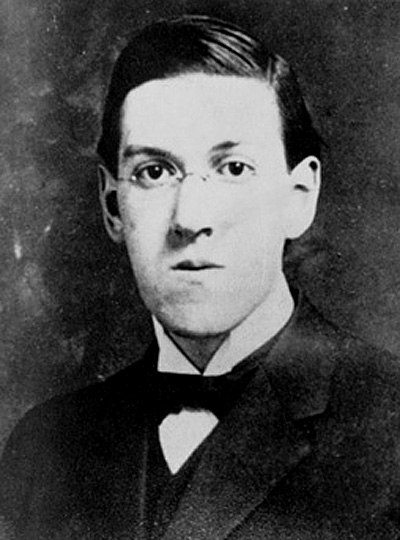
I was sitting on my sofa just now, contemplating various matters, one of which reminded me of Lovecraft’s “Shadow over Innsmouth”. I started thinking about how Lovecraft describe it and all his locations eerily. It occurred to me that he lived almost his entire life in Providence and seldom went out of its vicinity. In fact, most of the settings for his stories occur relatively near to Rhode Island. Apparently, he did not travel or often from his home. I started thinking that if he traveled little and only to nearby areas and if he saw the few places he went as spooky or eerie (which would explain why he could describe places so eerily), then maybe he was uncomfortable or had a fear of going outside his physical comfort zone. From what little I know of his day-to-day life, I have the impression that he probably did not leave his home very often and probably spent his time in his room writing or editing stories and writing tons of correspondence to his friends and colleagues.
This makes me wonder if Lovecraft had at least a touch of agoraphobia, a fear of public places.
He seems to have been fascinated with architecture and is very descriptive of it, but I have to wonder if that isn’t because if he was fascinated with it because it frightened him. If something frightens me, I watch it very closely and find out what I can about it in order to alleviate my fears.
I have never read anything about Lovecraft having agoraphobia and I am no psychologist. If anyone knows of an article on this subject, please let me know. I would also love to hear your thoughts and comments on this topic.

Guest Blog: ‘The Raven’ – Nevermore.
Interesting article, though I tend to disagree with his descriptions of what was going through Poe’s mind when he wrote this. Though I am not a skeptic, I tend to be skeptical when someone tells me in effect “yes, that is what he says, but this is what he meant…” Poe definitely hyped the bejeezus out of the poem (and his ego) by calling it the best poem ever written, but as for the rest…who knows?
Thoughts? Comments?
 I just finished watching an episode of the X-Files entitled “Chinga” [note to Spanish-speakers out there: I don’t know who chose the title, so please forgive my language] from Season Five and I noticed that it was written by Stephen King and Chris Carter (the creator of the X-Files). The story’s antagonist is a talking doll that can force people to injure or kill themselves in gruesome ways. Like many, if not most, of King’s stories, there is no explanation of how the came to exist. All the viewer finds out about it is that a lobsterman pulled it up one night in a lobster trap and his daughter comes to possess it after he meets his own gruesome fate.
I find in my own writing that I like to provide an explanation or background as to how things originate. This is just my nature. I like to know the origins of things. However, I have come to believe of late that, in terms of horror, that is a very nineteenth century concept.
Lovecraft said in his essay “Supernatural Horror in Literature”:
“A certain atmosphere of breathless and unexplainable dread of outer, unknown forces must be present; and there must be a hint, expressed with a seriousness and protentiousness becoming its subject, of that most terrible conception of the human brain — a malign and particular suspension or defeat of those fixed laws of Nature which are our only daily safeguard against the assaults of chaos and the daemons of unplumbed space.”
For me, what Lovecraft is saying is that if the laws of nature are negated, then anything is possible and monsters like Cthulhu really could exist and are capable of doing us harm at any moment. Combine this with his statement that “The oldest and strongest emotion of mankind is fear and the oldest and strongest kind of fear is fear of the unknown” and it becomes apparent that stories like “Chinga” derive much of their horror effect from the fact that the origin of the threat to a story’s protagonist(s) is unknown or that there is no explanation for the threat.
This would mean that one of things that provides to “Chinga” the element of horror that it has, is the fact that origin of the doll is unknown. Therefore, any of us when we are fishing or scuba diving or swimming in any body of water, could discover a doll that would turn his/her life into a nightmare. That is a scary thought.
Of course, this means that Stephen King would be one of the greatest practitioners of this technique, which I believe he is.
I think I shall try to experiment with this in the near future.
Thoughts? Comments?
I happened across an excellent roundtable on Horror History 101 at the Horror Writer’s Association (http://horror.org/horror-roundtable-16-horror-history-101/) today while at lunch. Check it out. It has a great panel of experts and a wide-ranging discussion of the great horror writers of the past from the beginning of horror with Horace Walpole up to Lovecraft and more.

If you are an avid reader (of anything) and are not familiar with Project Gutenberg (http://www.gutenberg.org/wiki/Main_Page), you are doing yourself a great disservice. As they state on their homepage:
“Project Gutenberg offers over 46,000 free ebooks: choose among free epub books, free kindle books, download them or read them online.
We carry high quality ebooks: All our ebooks were previously published by bona fide publishers. We digitized and diligently proofread them with the help of thousands of volunteers.
No fee or registration is required, but if you find Project Gutenberg useful, we kindly ask you to donate a small amount so we can buy and digitize more books. Other ways to help include digitizing more books,recording audio books, or reporting errors.
Over 100,000 free ebooks are available through our Partners, Affiliates and Resources…Our ebooks may be freely used in the United States because most are not protected by U.S. copyright law, usually because their copyrights have expired. They may not be free of copyright in other countries. Readers outside of the United States must check the copyright laws of their countries before downloading or redistributing our ebooks. We also have a number of copyrighted titles, for which the copyright holder has given permission for unlimited non-commercial worldwide use.”
As they state, most of these books are available because their copyrights have expired, making them usually quite dated. However, for anyone with a bent for the historical, Project Gutenberg is a gold mine. I did a quick search for “horror” on their website and received 169 titles in response. For a few, the only relation to the horror genre was the word “horror” in the title (such as “Southern Horrors: Lynch Law in All its Phases–which is a horrible subject, but is non-fiction vs. horror fiction). However, many are the classics or founding works of the horror genre, such as Frankenstein by Mary Shelley, Dracula by Bram Stoker, The Vampyre: a Tale by John William Polidori, The Castle of Otranto by Horace Walpole, The Strange Case of Dr. Jekyll and Mr. Hyde by Robert Louis Stevenson, Fantome de’l Opera (Phantom of the Opera) by Gaston Leroux, many works by Edgar Allan Poe, The Great God Pan by Arthur Machen, The King in Yellow by Robert W. Chambers, The Shunned House by H.P. Lovecraft, and many others.
Please take the time to visit this treasure trove of literature and of the horror genre, and if you are so inclined, please consider making a donation (via their website) to support their worthy cause.
Thoughts? Comments?

I am having troubling sleeping tonight and thought I would continue with our tour of the world’s horror locales. [I am not having nightmares about H.H. Holmes, if that is what you are thinking or even about any other horror topic.]
One of America’s first and most prolific serial killers was Herman Webster Mudgett, who went by his now better known alias of H.H. Holmes (1861-1896). Although his life has been recently documented in a few films and books, Holmes is still perhaps one of America’s lesser known serial killers. Most of the following information is taken from the Wikipedia article on Holmes, which supports my previous readings on Holmes in several sources. Please go to Wikipedia for more details than my brief synopsis provides. It is a well-written article and I rely on it here, only because I wish to provide a brief introduction to Holmes to support the photos and visual record I am providing.
Holmes started his criminal career while attending the University of Michigan Medical School, where he would steal cadavers from the laboratory, disfigure them, and then try to collect on insurance policies he had taken out on them after claiming they had been killed in accidents. After graduation, Mudgett moved to Chicago to pursue a career in pharmaceuticals, but also began conducting many shady business deals while being a bigamist and philanderer in his private life.
After moving to Chicago in 1886, Holmes took a job at Dr. Elizabeth Holton’s drugstore. After her husband’s death, Holmes

bought the business and the lot across the street at 601-603 West 63rd Street. [I had not noticed this before, but if one takes the first digit in each number of the address and combines them, the result is 666.] In the lot he built what would become known as his murder castle.
Wikipedia provides a nice synopsis of what happened there:
“Holmes purchased a lot across from the drugstore where he built his three-story, block-long “castle” as it was dubbed by those in the neighborhood. The address of the Castle was 601-603 W. 63rd St.[16] It was called the World’s Fair Hotel and opened as a hostelry for the World’s Columbian Exposition in 1893, with part of the structure devoted to commercial space. The ground floor of the Castle contained Holmes’ own relocated drugstore and various shops, while the upper two floors contained his personal office and a maze of over 100 windowless rooms with doorways opening to brick walls, oddly-angled hallways, stairways to nowhere, doors openable only from the outside, and a host of other strange and labyrinthine constructions. Holmes repeatedly changed builders during the construction of the Castle, so only he fully understood the design of the house.[3]
“During the period of building construction in 1889, Holmes met Benjamin Pitezel, a carpenter with a past of lawbreaking, whom Holmes exploited as a stooge for his criminal schemes. A district attorney later described Pitezel as Holmes’ “tool… his creature.”[17]
“After the completion of the hotel, Holmes selected mostly female victims from among his employees (many of whom were required as a condition of employment to take out life insurance policies, for which Holmes would pay the premiums but was also the beneficiary), as well as his lovers and hotel guests, whom he would later kill.[14] Some were locked in soundproof bedrooms fitted with gas lines that let him asphyxiate them at any time. Other victims were locked in a huge soundproof bank vault near his office, where they were left to suffocate.[8] The victims’ bodies were dropped by secret chute to the basement,[3] where some were meticulously dissected, stripped of flesh, crafted into skeleton models, and then sold to medical schools. Holmes also cremated some of the bodies or placed them in lime pits for destruction. Holmes had two giant furnaces as well as pits of acid, bottles of various poisons, and even a stretching rack.[3] Through the connections he had gained in medical school, he sold skeletons and organs with little difficulty.”
After the World’s Columbian Exposition ended, Holmes moved out of Chicago to evade creditors and continued pursuing his

various nefarious trades throughout the country. Eventually, he was arrested by the Pinkertons for an insurance scam. While Holmes was in prison awaiting trial, authorities interviewed the former janitor at Holmes’s castle and found out that he had never been allowed entry to the upper floors. Upon further investigation, the real purpose behind Holmes’s castle was discovered.
Estimates of the number of Holmes’s victims range from 20-200, with 27 being the only number verified by any means. Most of his victims were women, though a few were men and children. Holmes confessed to murdering thirty people in Chicago, Indianapolis, and Toronto, though some of the people he claimed to have killed were later found to still be alive.
Holmes was put on trial for the murder of his partner-in-crime, Benjamin Pitezel, in October, 1895. He was hanged in Philadelphia’s Moyamensing Prison on May 7, 1896, for Pitezel’s murder. Holmes’s castle was mysteriously gutted by fire in August, 1895, two months before his trial began. The building was finally razed in 1938.

The site is now the location of the US Post Office’s Englewood Branch.
I have included a few photos of the castle and the Englewood Post Office for your viewing pleasure.
By coincidence, while gathering photos for this article, I found a statement on Cragin Spring’s Flickr page that a movie on Holmes called “Devil in the White City” was due out in 2013 and was to star Leonardo DiCaprio. A Wikipedia article on it states that it is based on a 2003 book by Erik Larson and Leonardo DiCaprio bought the film rights in 2010. Imdb states only that it is in development.

Thoughts? Comments?
 Phil Slattery, Writer, Publisher