
Here is an interesting viewpoint on just what makes a horror film: MovieNews | Opinion: How to define a horror film – entertainment.ie.

Here is an interesting viewpoint on just what makes a horror film: MovieNews | Opinion: How to define a horror film – entertainment.ie.
Note the few horror movies on this list: 15 Fictional Movies Inspired By Unbelievable Real Life Events.
More interesting trivia: Kevin Bacon – Happy Halloween! Stars who got their start in horror flicks – NY Daily News.
This is cute. See some of your favorite horror-lit authors and characters on jack-o-lanterns: 18 Literary Pumpkins For A Bookish Halloween.

In Barrio Tales, two well-off American college students (perhaps recent college grads) head into the Mexican border town of Barrio one night to buy cheap drugs from a man named Pedro, whom they have never met. While they wait in the desert, a really creepy man comes up to their car and tells them he can take them to Pedro. They head to a shack where they sit around a campfire and the stranger tells them three horrific stories of Mexicans in the U.S. while the students impatiently wait. The stories are entitled “Maria”, “Uncle Tio’s Taco Truck”, and “El Monstruo” (The Monster). The stories, while they can keep your attention, are not great horror. Perhaps the best way to sum up the movie is as an above-average, low-intensity slasher flick.
“Maria” is the story of the vengeance wreaked by the grandmother of a beautiful young woman who comes to work in the US as a maid at a billionaire’s home. While the billionaire and his wife are vacationing in the Turks and Caicos, their son comes home from his college graduation to find the new maid and the $15,000 his parents have left him for the summer. He immediately calls three friends over, including one who is hiding his Mexican heritage from the others (this enables him to be the only one who can communicate decently with Maria). Another, the lead jerk, is hot for the maid and tries to seduce her with marijuana, which she refuses. Later that evening, the friends have some girls over for a pool party involving cocaine and other drugs. When Maria cannot sleep and comes to the party in her house robe (I assume she is going to ask them to keep the noise down, though she never gets the chance to say why she came down), the lead jerk tries to coerce her into taking off her clothes. When she doesn’t comply, he playfully tosses her into the pool. Unfortunately, she strikes her head on the side of the pool and dies. The group panics and buries her body. However, the girl had an apparently intensely mystical connection with her grandmother, who casts a spell that causes each boy to die an excruciatingly gruesome death.
Uncle Tio is a popular man with the teenagers and working people of his southern California neighborhood. He runs a taco truck and serves delicious tacos, sometimes giving them away. What makes his tacos so delicious is his secret ingredient: neighborhood teenagers. Can you see where this one is going already?
El Monstruo is a local legendary monster that kills illegal immigrants crossing the border. In the reality of this story, El Monstruo turns out to be a particularly monstrous man and his family of serial killers, who lure groups of Mexicans crossing the border to their ranch, where they dispatch them with a variety of cruel means. Unfortunately for the family, one of the latest group of victims escapes, who, unknown to the family, is the group’s “coyote” (the trafficker who leads the group across the border). The coyote fetches his brother and a friend to exact vengeance on El Monstruo and his twisted offspring.
There is not a lot of suspense here. This movie probably won’t keep you on the edge of your seat, but it is kind of entertaining. The most interesting facet of the movie is that the cinematography is well done for something this low budget. Although the movie was produced in 2012, it has a gritty feel you find in early 70’s pulp horror,. The characters are well-drawn and the college students are more three-dimensional and realistic than what you find in most slasher films where the actors are simply two-dimensional targets that speak empty-headed lines when they are not screaming in terror. The acting was above-average and actually showed some degree of depth.
My main complaint about the film is just that the basic premise was just not imaginative. The film probably would have been a lot better if the screenwriter, director, and producer had gotten together and done something to fire up their imaginations — like using some of the drugs they talk about in the movie. The feeling I get from this movie is that the director and producer took care of the details, but somehow they missed maintaining a good line of suspense and let the film become all too predictable .
The director and producer also let at least two details slip. Maria’s grandmother casts a spell to kill Maria’s murderers, yet earlier she insists to one that her grandmother is not a witch. Meanwhile, the law apparently never gets wind of the accident and no one, even the parents, ever finds out in spite of the fact that there were several students at the party in addition to the four main malefactors. Maybe I am being overly picayunish, but it just would have been a bit tighter story line if the director could have at least had someone mention that somebody’s parents had paid off a judge or tied up the case in court or something to cover that gap. This is all I noticed. It wouldn’t surprise me if there were several more.
Did you think I forgot about the two guys waiting in the desert for Pedro? You can probably guess the outcome of their story.
The best time to see this film is late night on Netflix while having a few beers or during an attack of insomnia. Were this still in theatres, I would say that it is worth the price of a matinee, but I wouldn’t spend any more than that. Do go see it dollar movie night though, especially if you have had a few drinks and need to sober up, just to see it on the big screen if for no other reason.
Thoughts? Comments?
http://interestingliterature.wordpress.com/2013/09/06/the-best-literary-facts-from-the-twitterverse/
Follow the link above for some fascinating literary tidbits. If you don’t have the time to wade through all for the horror triva, here they are:
Bram Stoker’s wife, Florence Balcombe, was previously suitored by Oscar Wilde. (@l0lhey)
In 1862, Sir Edward Bulwer-Lytton was offered the chance to be King of Greece. (@LeighaMcR)
Dickens & Poe were friends. 3 letters between them survive (alas, letters don’t mention of the death of Dickens’ pet raven). (@LauraShovan)
Sir Edward Bulwer-Lytton, for those of you not into horror esoterica, was a well-known writer of the nineteenth century who dabbled in a variety of genres. H.P. Lovecraft thought highly of his story “The House and the Brain”, which is included in the collection The World’s Greatest Horror Stories (2004, edited by Stephen Jones and Dave Carson). According to Wikipedia, Bulwer-Lytton was the originator of some very famous and very frequently coined phrases that are still around: “the pen is mightier than the sword”, “the great unwashed”, and “the almighty dollar”. Bulwer-Lytton also invented that well-known line with which Snoopy invariably starts his novel in “Peanuts”: “it was a dark and stormy night…”
Thoughts? Comments?
I watched “The ABC’s of Death” about a couple of weeks ago on Netflix. This is a bizarre, mind-blowing film that is not for the squeamish and definitely not for children. Though I had to turn my face a couple of times when the gore and violence becaume more than I could stomach, I found it a fun, fascinating film to watch late on a Saturday night particularly as Halloween approaches.
The link above to the Internet Movie Database (IMDb)will give you the vital details, including the following excellent synopsis:
The ABC’s OF DEATH is an ambitious anthology film featuring segments directed by over two dozen of the world’s leading talents in contemporary genre film. Inspired by children’s educational ABC books, the motion picture is comprised of 26 individual chapters, each helmed by a different director assigned a letter of the alphabet. The directors were then given free reign in choosing a word to create a story involving death. Provocative, shocking, funny and ultimately confrontational; THE ABC’s OF DEATH is the definitive snapshot of the diversity of modern horror. Drafthouse Films, Magnet Pictures and Timpson Films are proud to present this alphabetical arsenal of destruction orchestrated by what Fangoria calls “a stunning roll call of some of the most exciting names in horror across the world.” Written byAnonymous
No matter what your favorite horror subgenre, I would wager there is something in this film for you: from suspense to gore to horror with an outlandish fantasy twist to shock to nudity to humor to…whatever.
One of the most entertaining aspects to me was to see how a director, once given a letter, used his/her creativity to develop a story based around that letter. On the surface, this is easy when one is dealing with a common letter like “M” (murder of course springs to mind immediately or mayhem) or “H” (for hell, horror, etc.), but what do you do with “Q” (“Q is for Quack” was my favorite) or “Z” ? Just watching creative genius at work was a blast for me.
Though I watched it on Netflix, if it was out at theatres, I would say pay full price on a Saturday night to see this. It is a great date movie–so long as your date has a taste for the bizarre.
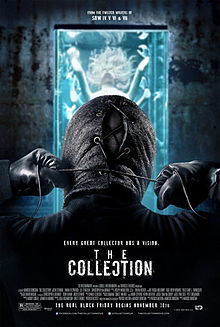
For a long time I have thought it would be fun to do movie reviews. With this post I will start doing them occasionally for this blog. My rating system is quite simple: is the movie worth (a) the full price of admission, (b) the price of a matinee, (c) wait until it comes out on DVD, (d) wait until it comes out on Netflix or some other free venue, or (d) don’t bother.
The Collection has been out for a while and I saw it on Netflix, but this would have been worth the price of full admission on a Saturday night on its release weekend.
This is a tense, edge-of-your-seat, full-throttle horror adventure almost from the opening credits. While the plot is your basic protagonists-venture-into-the-evil-guy’s-lair-and-fight-their-way-out, this has a lot of tense action and some unexpected twists that make it worthwhile. There is some gore, but proportionately, it is not as much as in the recent remake of Evil Dead, though there are quite a few bodies that have been turned into gross insect-like creatures by “the collector” that might cause those without strong stomachs to leave the room for a few minutes. The ending has a nice, little twist that gives the viewer a nice sense of closure to the whole event.
If you are deeply into serious horror as literature or films and sit around with your friends discussing trends in horror literature since the time of Horace Walpole, don’t see this expected to find unbroken ground or new motifs or anything of a high-brow nature. See this for the pure adrenalin rush that enthralls and takes you beyond the veil of this humdrum reality for a couple of eye-popping hours.
Thoughts? Comments?
I watched “Cabin in the Woods” last night for the first time and found it to be a terrific movie. If you haven’t seen it, I highly recommend it.
The acting is good as is the cinematography, and the action is almost non-stop with wonderfully executed surprises and a reasonable amount of gore that isn’t overdone (as in the recent “Evil Dead” remake).
But what truly fascinated me is the way the director and screenwriter (whose names I unfortunately don’t recall) masterfully intertwined at least three of the most popular horror themes into an incredibly imaginative plot.
The first is that of five teenagers undergoing a variety of horrors and torments at a secluded cabin in the woods much as in the aforementioned “Evil Dead”. By the way, the cabin in “Cabin in the Woods” looks a lot like the cabin in the original “Evil Dead” so I have to wonder if they used the same set or simply copied it as a sort of cinematic nod to the horror subgenre of teens in an isolated cabin.
The second theme I think is more commonly seen in science fiction than horror, but it occurs there too: a covert society of “puppeteers” watches and controls society. In this case, they are controlling what happens to the teenagers in the cabin for the purpose of sacrificing them to an oligarchy of ancient, evil gods who live below ground.
The oligarchy of ancient, evil gods is the third theme and its best-known incarnation in the horror genre is as the Cthulhu mythos of H.P. Lovecraft, though there have been others, most often derived from Lovecraft’s works, though a few pre-date H.P.
By all means, take the time to view “Cabin in the Woods” for the sheer delight of watching it, if for nothing else. But if you have a serious interest in the horror genre, be prepared to be swept up in some fascinating analysis. A lot goes on in this film and anyone well-read in horror will probably be able to spot tons of subtleties that escaped my novice’s eye.
Thoughts? Comments?

On Monday, I learned of the death of Richard Matheson, one of the great horror writers of the twentieth century. As my tribute to him, here are a few quotations from and about him along with a few examples on how he generated his ideas. There were a lot, so I picked the ones that seemed most philosophical about writing and life in general in order to get a feel for the man behind the writing.
From Goodreads:
“What condemnation could possibly be more harsh than one’s own, when self-pretense is no longer possible?” ― Richard Matheson, What Dreams May Come
“We’ve forgotten much. How to struggle, how to rise to dizzy heights and sink to unparalleled depths. We no longer aspire to anything. Even the finer shades of despair are lost to us. We’ve ceased to be runners. We plod from structure to conveyance to employment and back again. We live within the boundaries that science has determined for us. The measuring stick is short and sweet. The full gamut of life is a brief, shadowy continuum that runs from gray to more gray. The rainbow is bleached. We hardly know how to doubt anymore. (“The Thing”)” ― Richard Matheson, Collected Stories, Vol. 1
“If men only felt about death as they do about sleep, all terrors would cease. . . Men sleep contentedly, assured that they will wake the following morning. They should feel the same about their lives.” ― Richard Matheson, What Dreams May Come
“In a world of monotonous horror there could be no salvation in wild dreaming.” ― Richard Matheson, I Am Legend
“Now when I die, I shall only be dead.” ― Richard Matheson, I am Legend and Other Stories
From Wikiquotes:
I think What Dreams May Come is the most important (read effective) book I’ve written. It has caused a number of readers to lose their fear of death — the finest tribute any writer could receive. … Somewhere In Time is my favorite novel.
“Ed Gorman Calling: We Talk to Richard Matheson” (2004).
From Uphillwriting.org:
If you go too far in fantasy and break the string of logic, and become nonsensical, someone will surely remind you of your dereliction…Pound for pound, fantasy makes a tougher opponent for the creative person.
– Richard Matheson
And here are a couple of quote about Matheson–also from Wikiquotes:
Matheson gets closer to his characters than anyone else in the field of fantasy today. … You don’t read a Matheson story — you experience it.
Robert Bloch, as quoted in an address by Anthony Boucher (29 August 1958), at the “Solacon”, the 1958 Worldcon
He has many … virtues, notably an unusual agility in trick prose and trick construction and a too-little-recognized (or exercised) skill on offtrail humor; but his great strength is his power to take a reader inside a character or a situation.
Anthony Boucher in an address at the “Solacon”, the1958 Worldcon (29 August 1958)
Wikipedia offers an interesting paragraph on how Matheson came up with the ideas for some of his more famous works:
Matheson cited specific inspirations for many of his works. Duel derived from an incident in which he and a friend, Jerry Sohl, were dangerously tailgated by a large truck on the same day as the Kennedy assassination. (However, there are similarities with William M. Robson’s script of the July 15, 1962 episode of the radio drama, Suspense, “Snow on 66”.[citation needed]) A scene from the 1953 movie Let’s Do It Again in which Aldo Ray and Ray Milland put on each other’s hats, one of which is far too big for the other, sparked the thought “what if someone put on his own hat and that happened,” which became The Shrinking Man. Bid Time Return began when Matheson saw a movie poster featuring a beautiful picture of Maude Adams and wondered what would happen if someone fell in love with such an old picture. In the introduction to Noir: 3 Novels of Suspense (1997), which collects three of his early books, Matheson said that the first chapter of his suspense novel Someone is Bleeding (1953) describes exactly his meeting with his wife Ruth, and that in the case of What Dreams May Come, “the whole novel is filled with scenes from our past.”
Thoughts? Comments?
A friend of mine just posted this on Facebook. It is only twelve seconds in length, and it is apparently real, but it is a horror movie in the modern sense. To find this and others, search for “Amazing and Crazy Videos” on Facebook.

The first paragraph of the Wikipedia article (as of April 17, 2013) gives a good, very basic introduction to Hanns Ewers:
“Hanns Heinz Ewers (3 November 1871 in Düsseldorf – 12 June 1943 in Berlin) was a German actor, poet, philosopher, and writer of short stories and novels. While he wrote on a wide range of subjects, he is now known mainly for his works of horror, particularly his trilogy of novels about the adventures of Frank Braun, a character modeled on himself. The best known of these is Alraune (1911).[1][2]“
The article continues on to describe some of his literary achievements:
“This was followed in 1911 by Alraune, a reworking of the Frankenstein myth, in which Braun collaborates in creating a female homunculus or android by impregnating a prostitute with the semen from an executed murderer. The result is a young woman without morals, who commits numerous monstrous acts. Alraune was influenced by the ideas of the eugenics movement, especially the book Degeneration by Max Nordau.[4] Alraune has been generally well received by historians of the horror genre; Mary Ellen Snodgrass describes Alraune as “Ewers’ decadent masterwork”,[2] Brian Stableford argues Alraune “deserves recognition as the most extreme of all “femme fatale” stories” [4] and E.F. Bleiler states the scenes in Alraune set in the Berlin underworld as among the best parts of the novel.[3] The novel was filmed several times, most recently by Erich von Stroheim in 1952.
Bleiler notes “Both Alraune and The Sorcerer’s Apprentice are remarkable for the emotion the author can arouse” and that Ewers’ writing is, at its best, “very effective”. However, Bleiler also argues Ewers’ work is marred by “annoying pretentiousness, vulgarity, and a very obtrusive and unpleasant author’s personality”.[3]“
So far I have read only two of Ewers’ short stories: “The Spider”, described as his “most anthologized work”, and “Fairyland”. I will need to read more of his works to be able to speak with some degree of confidence that I know what I am talking about, but my first impression of Ewers’ works is one of disappointment.
I read both works in English (though I speak German with moderate fluency), and his command of composition, organization, language, clarity, and suspense are competent enough, but at least the stories noted above seem to fall apart at having a comprehensible denouement, and in the area of having good taste.
“The Spider” starts off well enough with a great opening paragraph that sets the stage for suspense:
“When the student of medicine, Richard Bracquemont, decided to move
into room #7 of the small Hotel Stevens, Rue Alfred Stevens (Paris 6),
three persons had already hanged themselves from the cross-bar of the
window in that room on three successive Fridays.”
As the story develops, Bracquemont volunteers to work with the police in finding out why the three previous residents killed themselves by reporting what he sees during his stay. He records his observations in a diary. Over the next three or so weeks, Bracquemont begins observing a girl in another room across the street, who constantly spins at an old-fashioned spinning wheel. He begins to be attracted to her, he waves to her, they develop games to play over the distance (mimicking each other, etc.), he becomes infatuated with her, and obsession sets in all the while there are subtle hints of analogies between her and a female spider luring her mate to its death. I will not spoil the ending for you, if you want to read it (I read the version at Project Gutenberg Australia), but I will say that the story seemed rather drawn out and the ending was confusing with no real explanation as to why the story ends as it does. I suppose one could say it was “black magic”, as one critic noted, but there is nothing alluding to black magic anywhere previously in the story. The ending is sort of deus ex machina and very unsatisfying.
“Fairyland” is worse. It’s only virtue is that it is very short. It is the story of a cute little girl on a tramp steamer in Port-au-Prince who is the darling of the crew and who tells them of wonderful monsters she has seen ashore, monsters with enormous heads and limbs and scales. She offers to show them to the crew and the crew agrees to go along wondering what she has found. Not far from the docks, she shows them the local beggars who have enormous limbs from having contracted elephantiasis or scales from leprosy or a similar skin disease. While the crew is obviously overcome with disgust, the little girl prattles on about how cute the monsters are.
I am not one to berate anyone else over a lack of taste, but whoever published this deserved a good horsewhipping for deciding to put this atrocity in the public view. It is one of the more tasteless things I have ever seen. However, I will discourage anyone from reading it. After all, it is a matter of taste and we are dealing with matters of horror.
So far, Ewers is the one author of horror I have been most disappointed by. Still I will read at least a few more of his works before I solidify my opinion. At some point I may read Alraune only because it is his best known work, but from what I have seen of its reviews, it may be a struggle for me to wade through horrors which only the Marquis de Sade would appreciate.
Perhaps Ewers does deserve his accolades. I will only know by exploring his works further. So far though, I am not looking forward to the journey, which I make only out of intellectual curiosity.
There is one interesting sidelight about Ewers for fans of cinematic horror. One reviewer commented somewhere (I forget where) that Alraune was the original inspiration for genetically-mutated femme fatales like the alien in the Species trilogy.
Thoughts? Comments?
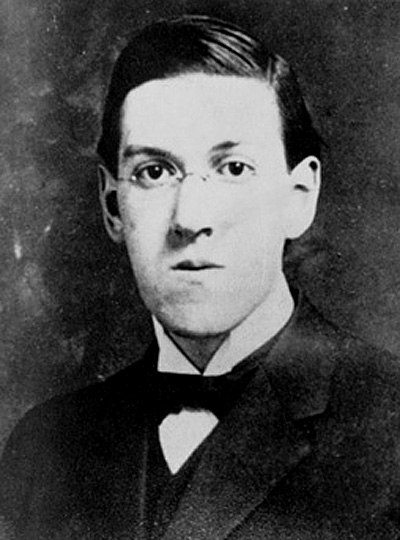
I was lazily drifting through the web tonight, when I came upon a bit of interesting trivia. According to HPLovecraft.com, one of Lovecraft’s favorite films was “Berkeley Square”. He is quoted as saying about it:
“But with all its defects this thing gave me an uncanny wallop. When I revisited it I saw it through twice – & I shall probably go again on its next return. It is the most weirdly perfect embodiment of my own moods & pseudo-memories that I have ever seen…” (to J. Vernon Shea, 4 February 1934)
According to the Internet Movie Database, the storyline is: “A young American man is transported back to London in the time of the American Revolution and meets his ancestors.”
A review by “clementj” on the same page describes it as follows:
“This is a very amusing love story with a good dash of humor. Much of the humor centers around the culture clash between Standish and the 18th century family. Standish uses modern terms and slips when he reveals things that happen in the future. The culture clash is a cautionary tale for would be travelers. This film appealed to many women because Leslie Howard was a heart throb for many of them. My mother loved this film and could watch it over and over. She was so disappointed when late in her life it disappeared from the old movies shown on TV.
“It is currently not commercially available, but a number of vendors have poor quality CDs or tapes for sale. All of these were probably made from a VHS tape from a TV showing. The tape was deteriorated and possibly copied several times so there is a lot of instability and wiggling of the image. The original broadcast used extreme compression of the video and sound. As a result the noise level rises to become very loud until dialog causes the gain to be cut. As a result the dialog is sometimes very indistinct. The music which was originally soft also rises to match the level of the dialog. Once this is restored by hand, the film is fairly listenable. The complaint of another reviewer about the music being too loud may stem from watching a copy with similarly compressed sound. In addition the broadcast severely cropped the film and did not stabilize the jitter.
This is a film that deserves restoration from the existing prints, but when and if this happens is unknown. Until then buying one of the existing CDs may be the only way to view this fine film.”
On the message board at the bottom of that page is a post by aaronjv-1 that mentions that a brand new 35mm print was slated to play at the Lovecraft film festival in September, 2011. He goes on to say about the film:
“The grandson of director Frank Lloyd will introduce the picture and talk about his granddad’s favorite, which was also H.P. Lovecraft’s favorite–he watched it four times, and it inspired him to write his own classic time-traveler possession tale, “The Shadow Out of Time”.
A quick search on Google reveals that the film is available on youtube at http://www.youtube.com/watch?v=Ge8Qn3pGE_E.
I hope to watch it tonight. Please feel free to do the same and post your comments here. I would love to hear what you have to say.
I am a member of GoodReads.com as are several of my friends. One, a gentleman named Tim Stamps, whom I have known since my college days at Eastern Kentucky University, recently posted a review of Dracula, on which I commented. Thus began a brief conversation which I think you may find interesting for several reasons. I have quoted it below, editing out any non-relevant personal matters (after having obtained Tim’s permission to post it).

 Tim, if you like reading classic horror tales like Dracula, then you should definitely read Frankenstein. Others you may want to check out are The Strange Case of Dr. Jekyll and Mr. Hyde, The Picture of Dorian Gray, the works of Algernon Blackwood, Lord Dunsany, Arthur Machen, and Joseph Sheridan Le Fanu. I have been writing horror lately and have established a blog on it that often discusses past writers of the horror genre. You may want to check it out at www.philslattery.wordpress.com. You may find some of the authors I discuss of interest. One who is known more as a writer of science fiction than of horror (though the boundary is often indistinct at best) is H.G. Wells who wrote The Time Machine, War of the Worlds, The Island of Dr. Moreau, and others.
 True, I definitely plan to read Frankenstein. Also have been planning on getting into Wuthering Heights and the Brönte sisters books. I’ve always been a fan of H.G. Wells, also Orwell’s dystopian works – still trying to get around to reading Huxley’s Brave New World (when I find my copy) – I can also add ebooks to a kindle, but the kindle doesn’t exactly replace paper. I’ve depended on the movies too much – finding lots of extra details in the books that the films leave out. (I don’t really spend much time reading actually.) I’ll explore your site.. thanks! By the way, are there any horror films you really like? Or gothic tales. There don’t seem to be many recent ones that play into fears as well as the older ones. Some of the classics: “The Innocents” (version of Henry James’ “Turn of the Screw”), George Romero’s “Martin”, “The Exorcist”, even “The Shining” and the early “Halloween” pictures. Recent films like “The Ring” and “the Sixth Sense” have potential. I read in your blog that to be a great horror writer you need to understand the psychology and emotions of fear. Perhaps horror screenplay writers nowadays need to go back to the basics – just slashing people up and showing gruesome killings isn’t enough to heighten the sense of fear. They seem to have forgotten Hitchcock and his methods of manipulating people’s emotions, although that was a time when people actually paid attention to dialog. I don’t know what it’s going to take to make a great horror movie today. Is it even possible?Tim wrote: “True, I definitely plan to read Frankenstein. Also have been planning on getting into Wuthering Heights and the Brönte sisters books. I’ve always been a fan of H.G. Wells, also Orwell’s dystopian w…” hi Phil, Sorry about “Seattle” – don’t know how that happened (I must’ve not filled it in – the site just guessed or something.) Anyway, actually I am (still) in… I love watching foreign horror… for 70s-era foreign horror, Dario Argento comes to mind, although he leans toward the gross-out variety. Lovecraft-written films are always great. I’ll check out these you mention (and any others you run across) – if you come up with a list of interesting foreign horror for the last 3 decades or so let me know. I have one plug: watch for “Nobody in Particular”, a crime-drama I helped out on, being re-edited – should be out sometime this year.
I was checking my blog stats today and found out that two recent views came from Germany. I was a German major in college and therefore I begin to be curious about what is happening today in the horror genre for both German movies and literature, since I unfortunately know little about either.
I did a quick search on Google for “German horror” and found this interesting article on IMDb. I did another search for “German horror fiction” and “German horror literature” and found almost nothing of interest. I searched for “German horror writers” and found the German Horror Writers Circle on Facebook, which I might use as a starting point for further investigations. Later, I may search in German, but today I confined my inquiries to what is available in English due to a lack of time inflicted by other pressing matters.
I have to admit I have read very little modern German literature compared to German lit of the 19th century, that I am woefully unfamiliar with most modern German writers, and that I am completely unfamiliar with modern German horror writers. I know that in the distant past, Germany and other German-speaking lands have produced excellent writers of horror such as E.T.A. Hoffmann (see my post about Hoffmann) and Jeremias Gotthelf (“The Black Spider”, 1842). Given the dearth of information readily available on modern German horror (at least on Google), I think the IMDb article mentioned above may have a point that because of German history since 1933, Germany may have (understandably) lost its taste for horror. I find that unfortunate, because now that my curiosity about German horror has been aroused, I would love to read some first-rate German horror or at least see one or two first-rate German horror films from the last decade or two.
Therefore, my question for you in this blog is: if you are familiar with German horror, what films or books do you recommend as introductions to the world of German horror?
 Phil Slattery, Writer, Publisher