The Value of Discussing Catcher in the Rye Beyond the Classroom

I believe it [Catcher in the Rye] should be taught in high school because these are the issues teens face or will face once they go to college, just as Holden did. Once in college, students will learn how phony the world is, if they haven’t already.

[The following is a comment I made today to a post on Catcher in the Rye made by Colorless Wonderland published four years ago.]

Excellent presentation and discussion! I am going to play the age card here and say that I recently turned 68 (born in 1957, 6 years after Catcher in the Rye was first published). The culture I grew up in was only a few years after the culture shown in Catcher, ergo, not much difference. I disagree with your opinion that Catcher should not be taught in high school. It definitely should be taught in high school, but not for the usual reasons that communities have for banning this book or for the reasons you state.

I believe it [Catcher in the Rye] should be taught in high school because these are the issues teens face or will face once they go to college, just as Holden did. Once in college, students will learn how phony the world is, if they haven’t already.

This is a coming-of-age novel, at a point in which many teens START discovering the phoniness of the world. However (somewhat in agreement with you), high school teachers should not be the ones discussing Catcher with students. Teachers will only teach what the local school board says they should teach or they put their jobs on the line, and a lot of communities still, even in 2025, want to teach the idealized American Dream, which is a textbook example of phoniness.

The people with which students should be discussing Catcher are a) other students or b) their parents (ideally). High school students need to prepare themselves for encountering the phoniness that lies ahead for them and which they will be encountering for the rest of their lives, as I have for 68 years. Of course, many parents will just try to teach the ideal American Dream or sugar-coat the future, but the honest ones, the good parents (or friends) will honestly prepare their children for what lies ahead. So, while the “teachers” may present the local school board’s view of what teens should learn, the student’s friends and family will teach the down-to-earth, worthwhile lessons.

The great thing about literature which is most valuable for the reader is not reading something and then discussing it with the teacher the community hired to teach its values, but discussing the material with classmates, family, and others, i.e. getting a lot of opinions and then having to decide, based on experience, which are the opinions worth considering, which are the most valuable, which are the most truthful and accurate, and deciding what one should take from them to help oneself prepare for the coming future.

Update: November 21, 2025

I have been feeling the need to resurrect Rural Fiction Magazine. I have been thinking about this a lot and there is something I love about publishing, particularly publishing something that is intended to help people, and RFM is intended to help people relax and avoid stress during these trying times for not only the US but also for nations around the globe.

I have been feeling the need to resurrect Rural Fiction Magazine. I have been thinking about this a lot and there is something I love about publishing, particularly publishing something that is intended to help people, and RFM is intended to help people relax and avoid stress during these trying times for not only the US but also for nations around the globe.

Publishing RFM is something I really love to do.

I will need to find a way to make money from it, and that is not easy for a literary magazine whether just in print or online. But, as I have learned so often in life, I will just have to (as Clint Eastwood said in one of his movies – I forget the name – in it he was a Marine gunnery sergeant invading Grenada in the 80’s. “…Improvise, adapt, and overcome”, which actually is sort of an unspoken principle of the Navy, where I spent my time in the Service. It is a very good principle and is actually reflected back throughout military history as far back as Sun Tzu’s The Art of War in the fifth century B.C.E.

So, I may not resurrect RFM soon; this will require substantial planning, but I think in the long run it will be worthwhile, if not financially, then perhaps spiritually, because it is something my subconscious demands of me.

If my writing seems erratic, itis because I am on my third White Lady (equal parts gin (in this instance Tanqueray), orange liquor (in this instance Cointreau), and freshly squeezed lemon juice.

In any case, please follow the leader’s guidance (unclorius) , and subscribe to our channel and like our videos. When Friend look we are peformane

Stay tuned as this story develops…

I have some ideas to oldearmacy

as to how to bath.

[Addendum: the first few paragraphs above are honest opinion, the ones after the word “gin” — well, what can I say other than White Ladies are really good? Updated December 3, 2025 at 1:20 am (CST) after a couple of gin and tonics.]

Samples of My Writing

Looking over my website tonight, I realized that … there are no samples of my fiction on this site. Ergo, I decided to correct that.

Looking over my website tonight, I realized that although I mention on my Published Works page where to find the few small books I have self-published so far, other than the non-fiction articles I write for this website, there are no samples of my fiction on this site. Instead, I recommend on my Published Works page that you can easily find them by Googling my name and “fiction”. Making you go that extra mile is not fair to you.

Therefore, I have developed this page as a quick shortcut to some of my works online at Fiction on the Web, a site located in England. Charlie Fish, the publisher and editor of Fiction on the Web has been gracious enough to publish several of my stories. Although the site does not pay, I do like to be published there, because Charlie’s readers are good about commenting on stories published there, and I have received some excellent comments on my works.

Here are links to each of my stories at Fiction on the Web. Instead of writing up my own synopsis of each, I will use each of Charlie’s taglines to entice you into reading each. These are in italics. I will also make a brief comment following each of Charlie’s taglines each of which will be followed by my initials thus: -PS.

The Scent

Phil Slattery’s lyrical vignette about the scent of an absent lover.

I based this story on an actual experience I had one evening, which is described almost exactly as it happened sometime around 2000. -PS

Murder by Plastic

Alan Patterson wakes up to find past indiscretions have caught up with him in Phil Slattery’s crime short.

I based this bit of flash fiction on a report that I once heard about a mobster’s (maybe John Gotti) son who was killed accidentally by a hit and run driver. Sometime later two big guys pulled up alongside him in a van one day, rushed him into the van, and he was never seen again. This is my fictitious account of what followed, but I also add a twist. -PS

Letters

An exchange of letters between a man and a woman who had an intense relationship two decades ago, and have not seen each other since; by Phil Slattery.

I had been reading something about the definition of the literary subgenre of dark romance and decided to try my hand at it. -PS

Bye-Bye

A former naval officer tells a stranger a story of young love from his time on Aircraft Carrier USS Enterprise; by Phil Slattery.

This is based on something I witnessed on the docks at the French port of Toulon when I was on board the USS Enterprise for a deployment in 1986. I took what I witnessed and carried a few steps further to what this couple’s future may have held. -PS

The Slightest of Indiscretions

A national park guide in New Mexico has lustful urges for a Vietnamese visitor with a domineering husband; by Phil Slattery.

Once again this is based on something I witnessed. This happened when I was working at Gila Cliff Dwellings National Monument in New Mexico during the summer of 2002. Once again, I expand this story into what might have happened. -PS

Decision

In early 1970s rural Kentucky, Travis, son of a cruelly racist mill worker, is forced into a moral dilemma.

I grew up in a time and area of Kentucky where there was some bigotry and prejudice against African-Americans, though nothing on the scale of what is described here. -PS

A Tale of Hell

Phill Slattery’s chilling vision of hell.

I was once thrown out of a bar in a situation similar to this. Again, I postulate what might have happened had the situation turned extreme. Don’t worry. I never saw the bartender again after I left the bar that night and, so far as I know, the jerk is still alive and kicking. -PS

Dream Warrior

Phil Slattery’s powerful revenge epic about a man who visits his Mexican grandfather for spiritual guidance after a violent crime results in the death if his fiancée.

I once read about how Aztec sorcerers believed they could kill people by entering their dreams somewhat like Freddy Krueger, but 500 years earlier. So, I developed a scenario showing how this might be done today. -PS

A Good Man

On the day before her death from lung cancer, Christopher’s mother tells him a secret about his father that may change his perception of his parents forever; by Phil Slattery.

It always fascinated me how someone could be a kindly grandfather, like my own, and yet have a dark past. Note this is pure fiction and my own grandfather was never in such a situation as far as I know. -PS

Please let me know what you think of each of these stories and maybe provide a brief critique in the comments, if you would. I am open to criticism. I believe just and fair criticism helps a writer grow.

I have collected a few of these along with others of the horror genre into A Tale of Hell and Other Works of Horror. It is available through print-on-demand from any major bookstore along with a few of my smaller collections.

Until next time, take care and stay grounded.

Slattery’s Tao of Writing, Part 2: the Allegory of the Stream

Thalia Muse of Comedy and Bucolic Poetry Illustration by Arash
Thalia
Muse of Comedy and Bucolic Poetry
Illustration by Arash


This is a reprint of a previous post from several years ago.

Once in a while, I come across some gem of the writer’s art that almost strikes me breathless with its beauty.  The poems of John Donne are one example.  The poignant first chapter of A Farewell to Arms is another.   Recently, I began reading Ray Bradbury’s The Martian Chronicles  and every time I pick it up, I am nearly struck breathless with his simple, understated eloquence that touches one’s very core.   Today I read a post at winebbler.wordpress.com and her simple, fun voice and flowing, relaxed style combined with playful use of the English language made for very entertaining and enjoyable reading beneath which I thought I could sense an undercurrent of growing artistic beauty.

That article made me start to think about what makes a work of writing aesthetically beautiful.  After some thought, I reached the conclusion that every work of literary beauty has the same qualities as a powerful but smoothly flowing mountain stream:  clarity, power, and an uninterrupted flow.  But unlike a stream, a work of literary beauty must also be reasonably brief.

In every literary work I consider beautiful,  the first universal characteristic that comes to mind is that the author uses a simple voice comprising simple, everyday words that anyone can understand.  Writing is communication.  Communication is one person disseminating ideas to others by using words, which are collections of sounds representing ideas.  By using simple words everyone understands easily, the writer makes his ideas easier to disseminate.  Why use a word that few can understand, when you can use a simpler word with the same meaning that everyone can understand?  Therefore, our stream must be crystal clear and free of mud or anything that would hinder insight and perception.

If ideas equate to the water in our allegorical mountain stream, the precision of the component ideas, the words, give the stream its force.  As I mentioned in my post “Slattery’s Tao of Writing, Part I”, words chosen for their precise meanings have power.   As I said earlier in this article, words are ideas.  Precise words are precise ideas.   Precise ideas are powerful ideas, powerful emotionally and intellectually.  Like all other forces in the universe, powerful ideas become more powerful if combined and organized with one idea leading logically, flowingly to the next.  This facilitates understanding and the reading experience.

When my stream of thought is uninterrupted and powerful, I become immersed in the work.  I can be swept away and can lose track of time and of everything happening around me.   To my mind, every writer should aspire to instill this experience into his readers.  When this happens, the writer has made an emotional and intellectual connection with his reader and the reader is grasping the writer’s ideas.

If organization is lacking, ideas are scattered like boulders in the stream and on the banks, creating rapids and breaking up the smooth flow. A powerful, disorganized stream is a torrent, destructive of everything along its banks, stiking out at random, benefiting no one.  In communication, disorganization is the source of misunderstanding, the antithesis of understanding.  The stream becomes destructive. 

If a writer uses words his readers do not understand and they have to turn to a dictionary to find out what the writer intends, the clarity of the ideas is lost and the reading experience is muddied.  Furthermore, the reading experience flows even less smoothly.   Even if the reader can reason out the meanings of the words from the context, the stream of thought is still disrupted and muddied, even if to a lesser degree.  The words will also lose much of their power, because the reader cannot appreciate the nuances of what he or she does not fully understand.

Lastly, every beautiful work has been reasonably brief.  Reading anything exasperatingly long becomes tiresome for everyone.   When readers become weary (word-weary so to speak), they can lose focus on what the writer is trying to communicate.  This detracts from the reading experience just as if someone who enjoys swimming in a mountain stream can no longer enjoy their swim if they become overly fatigued with exertion.

That said, I will now close tonight’s blog before I wear you out with my ramblings.

Thoughts?  Comments?

Slattery’s Tao of Writing, Part 1

Several years ago, I wrote a seven-part series on my own Tao of the art of writing and published it on my then nascent version of this website. Over the next several days I will be republishing it. I will probably end up adding at least a part 8. In addition, I intend to convert this series into a series of YouTube videos, once I work out some production details, to play on the website’s YouTube channel. Please let me know what you think of this series and how I can improve it for YouTube. 

A quick Google search reveals there are a lot of web articles entitled “The Tao of Writing”.   This is mine.  Let me begin by explaining what I perceive to be the Tao (others may view it differently and have equally valid perceptions).

The Chinese character above translates as Tao, the way, and is pronounced as “dow”, as in “The Dow-Jones Industrial Average”.  Taoism is an ancient Chinese religion rooted in the teachings of the legenday Chinese philosopher Lao Tzu (sometimes transliterated as “Lao Tze” or in a number of other ways) as expressed in his book, the Tao Teh Ching (The Book of the Way).   The Taoist religion, as I understand it, is far removed from Lao Tzu’s original philosophy, because the religion incorporates demons, gods, demigods, spirits, and other things that are not mentioned in the Tao Teh Ching or in the teachings of the original masters such as Lao Tzu, Chuang Tzu, or the Huainan Masters (at least in the translations I have read).

What the Tao is, is hard to express.  “The Way”, as I understand it, refers to the the way of the universe, basically how the universe works in a general sense.  In the American vernacular, we would probably express it as “the way things are”.    Some reader might respond to that as, “Sure.  I understand.  You’re saying the Tao is why toast always falls buttered side down.  Gotcha.”

No, I am talking about something a bit more profound.  It’s more like this:

You work hard at trying to find a publisher for a story and are consistently rejected by what you perceived to be all the most suitable choices.  So, one night when you are battling insomnia and have just started the first glass of your second bottle of wine, out of frustration you send it off as a shot in the dark to some big name magazine who will never accept it, and lo and behold it is accepted.  So, sometimes it seems that you work your butt off for something and get nowhere, but you give up trying and you succeed.  Basically, the Tao is then like learning the way the universe works, then learning to succeed by adapting to that way.  Confused yet?  Have I oversimplified my point or have I made it overly complex?

Understanding how the Tao works is not something anyone can express in words;  it is something one can understand only subjectively,  i.e., one must have a feel for it.  In fact, the first sentence of the Tao Teh Ching is “The Way that can be spoken is not the true Way.”  For most people, reading the Tao Teh Ching will probably be an exercise in confusion and frustration and contradiction.  In the Tao Teh Ching, nothing is exact; everything is metaphor and allusion, about how water flows into a valley and then the sea, how wood is shaped, the balance of the universe, and so on.

To complicate matters even more, because the Tao Teh Ching was written in Chinese about 2,500 years ago, and the translation of the original Chinese characters may have changed significantly since then, translation of the Tao Teh Ching into modern languages is frustratingly imprecise, often relying on traditional or customary translations as opposed to knowing exactly what Lao Tzu was saying.  For today’s modern, exact, Socratic-tradition-based society, this is maddening.  Our scholars argue about the meanings of works written in modern English, how are they going to agree on something as nebulous as the Tao Teh Ching?

So, what are the important ponts of the Tao that everyone should remember?

As I perceive the Tao, one critical aspect of existence is balance;  the universe consists of opposites that must balance out or problems arise.  At the same time, all existence arises from the conflict of opposites.  An example of this is the old Zen Buddhist rhetorical question of “what is the sound of one hand clapping?”  I do not know the official or traditional answer to this, but from my Taoist perception, the answer is that there is no sound.   The sound of  clapping is produced only when the opposing forces of the hands meet.  Thus it is with everything in the universe.  Two opposites have to come together to produce anything:  light and dark, man and woman, left and right, up and down,  hot and cold, etc.

Another critical aspect of existence is that emptiness can be as important as substance and non-action can be as important as action.  There are other aspects, of course, but I will stick to these for now and address those at a later date.

Take a look at your hand for an example of the first principle.  If there were no spaces between your fingers, you would not have a hand, you would have something else, maybe a flipper.    Likewise, a sculptor can create a sculpture only by cutting away pieces of material so that the now-empty spaces create a form.  So a sculpture, or any object for that matter, comprises both substance and emptiness.

For an example of the non-action versus action principle, think about problems you faced in the past.  Could you have solved any of them by simply doing nothing?  Not every problem can be solved by doing nothing, but some can.

These principles are symbolized by what is know in our society as the Yin-Yang as shown here:

yinYang

In the yin-yang, as I perceive it, the eternal circle of the universe is formed by the interaction of opposites, here symbolized by light and dark, but while they are opposites, a little of each exists in the other.

For a very short book, the Tao Teh Ching is filled with incredible depth and meaning.  For me, in the few translations I have read, the Tao makes perfect sense, and I understand the world a little better each time I read it.    However, others may read it and just be confused or frustrated.   The Tao Teh Ching is something that will either speak to you personally and enlighten your world, or it will not.

But what has all this to do with writing?

I see the Tao at work whenever I write anything.  I see it in what I consider to be some of the basic principles of writing: less is more, what is not said is often more important than what is said, and so forth.  For me, this makes writing almost a form of magic, not in the sense of illusion, but true magic where one creates something  out of nothing by using as few components as possible, by making something complex by keeping everything as simple as possible.

I will give one example and then I will close this article for the day and pick it up when I can sometime in the hopefully near future.

One of the first principles of writing I learned was to use as few words as possible.  Strunk and White, in The Elements of Style, say to “Omit unnecessary words”, which in itself is a perfect example of omitting unnecessary words.  How much more concise can that one sentence be?  It contains absolutely no unnecessary words.  If one word is omitted, the sentence ceases to have meaning.   The virtue of this is that, if done properly, the work becomes much more powerful because each word carries more weight.

To do this, a writer needs to use words precisely.  Try to find a word that captures the exact meaning of the idea you are trying to express–and the shorter the word the better.  After all, you are trying to communicate an idea to the largest possible audience.  Why use big words that will send readers scurrying to the nearest dictionary, thus interrupting their chain of thought and perhaps tainting their reading experience, when you can use words that everyone understands and keep their experience free from interruptions?

An example of using words precisely would be revising the sentence “A man went quickly to the store.”

Now, shorten it by replacing “went quickly” with “ran”.  While you are at it, replace the other general terms with more precise ones.   The sentence becomes “John ran to Walmart.” Now, if you have had any background information on John, you know who he is, what he is like, his possible motivations, and that he is in a hurry for some reason to get something from Walmart, knowing the kind of products Walmart has, you may have an idea of why he is going there.   If we changed the sentence to “John ran to the Red Dot Liquor Store” we have an even better idea of his motivation.   If we said, “John sped to Red Dot Liquors in his brand-new corvette”, we know even more about John:  we know he can afford a brand-new corvette.   If you have ever been in Red Dot Liquors, you know something of the products they carry and that may say something to you about John’s decision to purchase them.

So, how much more excitement and power does the sentence “John sped to Red Dot Liquors in his brand-new corvette” have versus “a man went quickly to the store”.   The final version packs a lot more information in almost the same space.

So that is part of the magic of writing for me:  using as few words as possible to create a work.  On the surface, it seem to go against logic.  How can you build something by using as few components as possible and deleting the ones you do have whenever possible?

Try an experiment, take the first page of any run of the mill romance novel and draw a line through every word you consider unnecessary while keeping the meaning of the sentence.   Then take your final product and do it again.  Do it a third time if you like.  How much were you able to reduce without changing its meaning?

Now take the first page of a novel by Hemingway, someone known for his lean, muscular writing.  How far were you able to reduce it before changing the meaning?

Someone once said, “draw a line through every third word and you will be surprised at how much it improves your writing.”  I have tried that and it works wonderfully.  Of course, you can’t arbitrarily omit every third word, or the work may become nonsense, but it does cause one to question whether that word is necessary.

I have always marveled at the idea that one can write something by omitting words. It goes against my standard, American, public school education, where teachers give a mininum number of words to an assignment and one is forced to insert as many words as possible just to meet the requirement. But can you blame them? If you told the average American high school student to tell what he did over the summer in as few words as possible, he would say, “I had fun” or “I worked.” Good luck teaching him to write.

Anyway, I am rambling once again.  I will close for now and pick this up at some later date.

Thoughts?  Comments?

A Tale of Hell Now Available at Your Local Bookstore by Print on Demand.

As of October 23, 2020, A Tale of Hell and Other Works of Horror is being printed and distributed by IngramSpark. With their immense distribution network of over 39,000 retailers, A Tale of Hell and Other Works of Horror is now available by print on demand. Be sure to ask for it at your local book retailer. It will continue to be sold via Amazon in Kindle and in print (though the IngramSpark version will be much nicer).

In this collection of published and previously unpublished stories of horror, I take you on a journey into the minds of people who perpetrate horrors, from acts of stupidity with unintended results to cold-hearted revenge to pure enjoyment to complete indifference. Settings range from 17th-century France in the heart of the werewolf trials to the Old West to the present and on to alien worlds in the distant future. Order yours today!

Connie Nielsen as Karen Blixen in Upcoming Danish Mini-Series”The Dreamer”

A quick post on Connie Nielsen portraying Karen Blixen in an upcoming Danish mini-series.

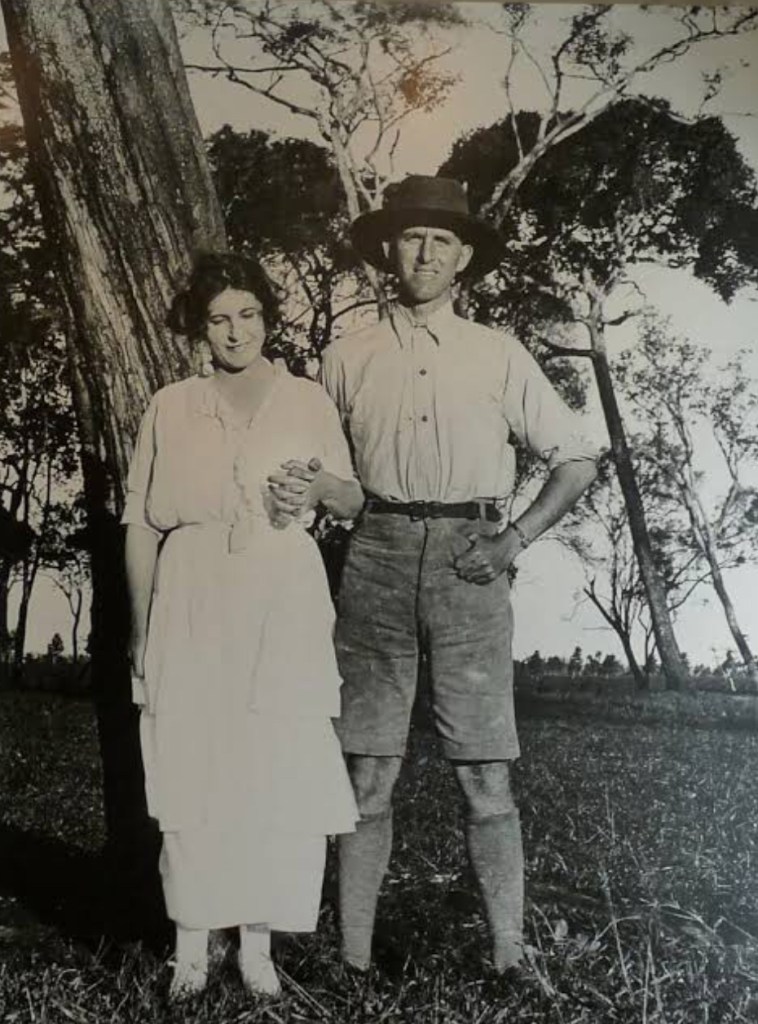
Karen Blixen and (possibly) Denys Finch-Hatton in the 1920’s

If you are a fan of the Danish actress Connie Nielsen or the Danish writer Karen Blixen (on whose experiences the movie Out of Africa was based, follow this link to an article, “MIPTV: Connie Nielsen on Becoming Karen Blixen in ‘The Dreamer'” by Scott Roxborough. The article discusses the challenges Nielsen faced in portraying Karen Blixen and how her portrayal differs radically from that by Meryl Streep in Out of Africa. Streep’s portrayal was of a young woman engaged in a passionate love affair, whereas Nielsen’s is that of a broken woman who has returned to Denmark penniless having lost her farm and her lover.

One note about the photo above: in trying to find a photo to accompany this article, I ran across this one. There are two copies of this photo on Wikimedia Commons. One identifies the man as Denys Finch-Hatton, (Blixen’s lover portrayed by Robert Redford in Out of Africa). Another identifies the man as Thomas Dinesen, Karen’s brother. Its source is supposed to be the Danish Royal Library. The source of the first is not identified. However, a quick search on Google resulted in a lot of photos of Denys Finch-Hatton, most of which (in my opinion) look like the man above. If you enjoy detective work, do the research and let me know what you come up with.

Hasta luego.

Lycanthrope: Update of April 5, 2022

An update on my progress with Lycanthrope.

One theoretical cover

I have finally broken through the barrier that has kept me from adding more to Lycanthrope. I still have more to go, but I am probably at about 67,000 of a desired 80,000+ words. I am coming up with some good ideas, but I must jot them down quickly or I forget them. Hopefully, I will be finished before long. I am focused on finishing this finally. It has been a long journey and the storyline is radically different from the original I imagined nearly thirty years ago when I was in the Navy and living in Bremerton, Washington.

I find that the best way to come up with ideas is by sitting down in the chair at the computer and just staring into the distance until an idea surfaces. A lot of times though, the trick seems to be to go to bed after having thought about the story throughout the day or at least just before going to bed. The ideas seem to just leap into my head at moments like those. Then I scrounge up some scrap paper or an old envelope on the shelves next to the bed and jot down all I can. Sometimes, to get paper and pen, I have to go into the adjacent living room. A lot of times, this seems to happen when I am tired. Sometimes, I just act out what the character is doing or maybe I just take a break and do something out of the norm and then I can imagine the character doing the same. For example, I took a break from writing late one night and, after grabbing a bottle of vodka, walked out to the empty highway running through the woods in front of my house. I live in a remote area, so I didn’t have to worry about any traffic at all. I then walked up and down the centerline looking at the moon and stars and sometimes going into the pitch dark section of the road running under the canopy of the woods. I had one or two swigs out of the bottle, but nothing to even give me a buzz. It was a neat moment and I did see a few shooting stars. However, when I got back to the house, I had the protagonist do the same, but I embellished it considerably as he thought of the nature of the world and universe while getting quite drunk. Trying to find his way back to his house, he bumps into a tree and falls to the ground, where he sleeps until his girlfriend comes looking for him and drags him back to the house, scolding him all the way. I think this scene turned out to be a very nice passage and I think I wrote it quite beautifully and poignantly.

When I first started writing the story in Bremerton, I envisioned the story as something much more conventional than I have now. Set in the forests and hamlets surrounding Bremerton, the idea was about a man who had become a werewolf and was the narrator as he watched the police get ever closer to finding out who he was. There is a lot of magick and fantasy added to the current story and it is set in another state. I am hoping the story ends up a lot more intense than my original concept.

I will write more updates as time permits. Now, I need to go grab some supper and get to writing again.

Hasta luego.

“A Tale of Hell…” Nice Write-up on Barnes & Noble

Barnes & Noble has a nice write-up on A Tale of Hell and Other Works of Horror.

I was surfing the Internet tonight and I was pleasantly surprised to find that Barnes & Noble has done a nice write-up on A Tale of Hell and Other Works of Horror. They apparently went to a little effort to nicely copy the Overview, Editorial Reviews, and even my bio notes from the information I provided to IngramSpark and format them beautifully. I haven’t garnered any reviews of it on Barnes & Noble yet, so if you have read ATOH, please provide one either on the Barnes & Noble site or somewhere on the Internet. Visit the Barnes & Noble page when you can.

Rural Fiction Magazine is Now Accepting Submissions

If you dabble in writing mainstream/literary stories and poems (or of any genre) that have a rural setting or concern rural themes, please consider submitting them to RFM. Currently, RFM is not accepting stories of over 5,000 words. There is no pay, but the author does retain all rights. Guidelines are on the website and closely resemble those of The Chamber.

Rural Fiction Magazine was established to explore the beauty and drama of rural America.

Rural Fiction Magazine seeks primarily mainstream/literary stories and poetry set in the rural US. Although it may take occasional forays into other genres (such as horror, fantasy, science fiction, etc.), all works it publishes will be related in some fashion to rural America. Therefore, the mainstream and literary genres seem most suitable for our mission.

I intend to start out by publishing a few stories either weekly or monthly, depending on the amount of submissions we receive. I am capping the word limit at 5,000. All submissions must be in standard manuscript format (you can find out the details of this on Google). Response time may range from a day to a month, but will most likely be within a week. Send all submissions and inquiries to slatterypublishing@gmail.com.

RFM will publish interviews with notable writers and poets. This may be sporadic initially. This will be by invitation only

I hope to see your work there soon.

Rural Fiction Magazine is Now Accepting Submissions

Phil Slattery portrait
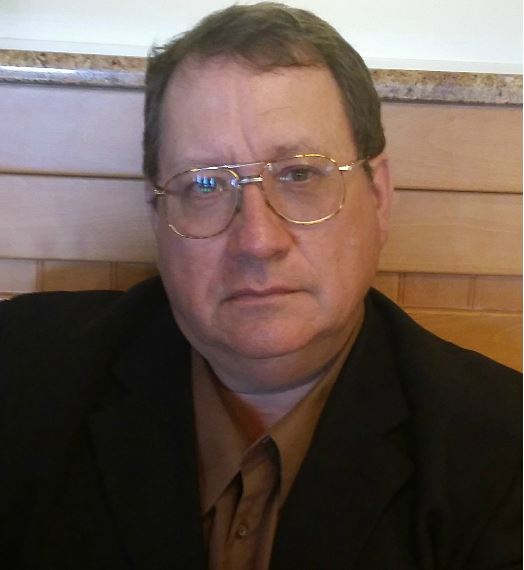
Phil Slattery March, 2015

This is a reprint of an article that originally appeared on August 25, 2021.

Because I currently live in a rural area, I have decided to experiment with opening another magazine: Rural Fiction Magazine. The idea came to me while I was driving to the pharmacy in the nearby (about 17 miles from my residence) town of Dumas.

While I enjoy immensely working with The Chamber Magazine, it does have a disadvantage or two. The primary disadvantage is that the local populace does not seem to be made up of the type of people that are drawn to dark fiction. But then, can you name a community that is drawn to dark fiction? To me, they seem more the type of people who would be drawn to mainstream or literary fiction, particularly that with a bent toward farm life, agriculture, hunting, etc.

Yes, I am living in the Bible belt. The nearby (five miles from my residence) town of Gillett has a population of 700 and five rather nice churches. I don’t expect a lot of horror and thriller fans live there.

Then it struck me that maybe I should try to start a magazine centered around farm life.

I grew up in a rural area in Kentucky, so I have the background for it. I am not a big farming enthusiast however. My family had small farms as sidelines back in the day to bolster the income from their standard, 40 hours/week, blue collar jobs.

Besides working with my dad and occasionally relatives in their gardens and fields, I have little experience in farming. The closest I ever came to being a farmer is when my folks wanted me to join the Future Farmers of America when I was in the sixth grade and I had to write a very boring paper on soil and erosion in order to meet the requirements. I never went to any meetings or gatherings.

Then it occurred to me that the stories in the magazine wouldn’t have to be about farming per se, but the rural life and the beauty and drama it holds. After all, all stories are first about people then about the genre. People living in rural areas have the same dramas, love stories, hopes, dreams, nightmares, and complex relationships the rest of the world does. So, the magazine would ultimately be about the same plots, but with different settings.

Later, I did a quick search of Google to see what extant magazines deal with fiction set on farms. I found nothing “farm fiction” per se. Then I had another idea and set for “rural” and “fiction”. Apparently, there is such a genre as “rural fiction”, but there doesn’t seem (at least in my quick, superficial scan) a magazine with a title anything like “rural fiction” or even specializing in it, though short rural fiction pops up here and there in various magazines. There seems to be a niche open.

Thus, I have a name for my new project: Rural Fiction Magazine (RFM).

I took a WordPress website that I had that wasn’t going anywhere and changed it rather quickly and completely into Rural Fiction Magazine. I developed a quick business plan and put up a submissions page. I am now hoping and waiting for the first submission. I am also developing a marketing and publicity plan.

Hopefully, I will be able to drum up some community support for RFM and maybe draw in a few community dollars in the form of advertising when that time comes. For now, the only sources of cash flow from this magazine I have at the moment are in the Gifts page and a few affiliate links. I hope to expand on this soon and find other ways to fund this endeavor.

Bottom line: Rural Fiction Magazine is up and running though without any stories or poems. Hopefully, they will come soon as I expand my marketing campaign.

If you dabble in writing mainstream/literary stories and poems (or of any genre) that have a rural setting or concern rural themes, please consider submitting them to RFM. Currently, RFM is not accepting stories of over 5,000 words. There is no pay, but the author does retain all rights. Guidelines are on the website.

Rural Fiction Magazine is Now Accepting Submissions

Phil Slattery portrait
Phil Slattery March, 2015

Because I currently live in a rural area, I have decided to experiment with opening another magazine: Rural Fiction Magazine. The idea came to me while I was driving to the pharmacy in the nearby (about 17 miles from my residence) town of Dumas.

While I enjoy immensely working with The Chamber Magazine, it does have a disadvantage or two. The primary disadvantage is that the local populace does not seem to be made up of the type of people that are drawn to dark fiction. But then, can you name a community that is drawn to dark fiction? To me, they seem more the type of people who would be drawn to mainstream or literary fiction, particularly that with a bent toward farm life, agriculture, hunting, etc.

Yes, I am living in the Bible belt. The nearby (five miles from my residence) town of Gillett has a population of 700 and five rather nice churches. I don’t expect a lot of horror and thriller fans live there.

Then it struck me that maybe I should try to start a magazine centered around farm life.

I grew up in a rural area in Kentucky, so I have the background for it. I am not a big farming enthusiast however. My family had small farms as sidelines back in the day to bolster the income from their standard, 40 hours/week, blue collar jobs.

Besides working with my dad and occasionally relatives in their gardens and fields, I have little experience in farming. The closest I ever came to being a farmer is when my folks wanted me to join the Future Farmers of America when I was in the sixth grade and I had to write a very boring paper on soil and erosion in order to meet the requirements. I never went to any meetings or gatherings.

Then it occurred to me that the stories in the magazine wouldn’t have to be about farming per se, but the rural life and the beauty and drama it holds. After all, all stories are first about people then about the genre. People living in rural areas have the same dramas, love stories, hopes, dreams, nightmares, and complex relationships the rest of the world does. So, the magazine would ultimately be about the same plots, but with different settings.

Later, I did a quick search of Google to see what extant magazines deal with fiction set on farms. I found nothing “farm fiction” per se. Then I had another idea and set for “rural” and “fiction”. Apparently, there is such a genre as “rural fiction”, but there doesn’t seem (at least in my quick, superficial scan) a magazine with a title anything like “rural fiction” or even specializing in it, though short rural fiction pops up here and there in various magazines. There seems to be a niche open.

Thus, I have a name for my new project: Rural Fiction Magazine (RFM).

I took a WordPress website that I had that wasn’t going anywhere and changed it rather quickly and completely into Rural Fiction Magazine. I developed a quick business plan and put up a submissions page. I am now hoping and waiting for the first submission. I am also developing a marketing and publicity plan.

Hopefully, I will be able to drum up some community support for RFM and maybe draw in a few community dollars in the form of advertising when that time comes. For now, the only sources of cash flow from this magazine I have at the moment are in the Gifts page and a few affiliate links. I hope to expand on this soon and find other ways to fund this endeavor.

Bottom line: Rural Fiction Magazine is up and running though without any stories or poems. Hopefully, they will come soon as I expand my marketing campaign.

If you dabble in writing mainstream/literary stories and poems (or of any genre) that have a rural setting or concern rural themes, please consider submitting them to RFM. Currently, RFM is not accepting stories of over 5,000 words. There is no pay, but the author does retain all rights. Guidelines are on the website.

Update: The Chamber Gift Shop and Cover Art

Yesterday, I remodeled, so to speak, the Chamber Gift shop by eliminating all the dozens of individual items and installing six collections, which is a feature Zazzle has, in which merchandise is grouped around a theme…

Yesterday, I remodeled, so to speak, the Chamber Gift shop by eliminating all the dozens of individual items and installing six collections, which is a feature Zazzle has, in which merchandise is grouped around a theme. Now instead of having to scroll though scores of individual objects, a reader can choose one of the six collections (The Chamber Magazine Collection, Famous Authors Collection, Quotes from the Darkness Collection, Cyberpunk Collection, Steampunk Collection, and The Dark Collection) and go directly to the page for that them. Alternatively, he/she can just follow the link in read above the collections to the homepage of the The Chamber’s Zazzle page and peruse everything.

I also added a block below the collections to my books (both fiction and blank notebooks/ journals) on Pinterest. Clicking on a book will take you to the Pinterest entry on that book. Click on the Pinterest image and you will be taken to the Amazon page for that book, where it can be purchased. This is just a short, easy way for visitors to see the works available and to go to Amazon while I develop something a little grander and easier to use.

I also took all of The Chamber’s cover art, which is that widget in the upper right of the website, and collected it onto another page. Although I have fun creating these covers, it does take some time and effort and I hate to see each of these viewed by the public for only a week or two and then to disappear forever. So, I put them all in one page, which I will update periodically. I also linked this page to The Chamber, so they can be found there also.

Hopefully, I will be making a few more changes soon.

A Tale of Hell Now Available at Your Local Bookstore by Print on Demand.

As of October 23, 2020, A Tale of Hell and Other Works of Horror is being printed and distributed by IngramSpark. With their immense distribution network of over 39,000 retailers, A Tale of Hell and Other Works of Horror is now available by print on demand. Be sure to ask for it at your local book retailer. It will continue to be sold via Amazon in Kindle and in print (though the IngramSpark version will be much nicer).

In this collection of published and previously unpublished stories of horror, I take you on a journey into the minds of people who perpetrate horrors, from acts of stupidity with unintended results to cold-hearted revenge to pure enjoyment to complete indifference. Settings range from 17th-century France in the heart of the werewolf trials to the Old West to the present and on to alien worlds in the distant future. Order yours today!

A Tale of Hell Now Available at Your Local Bookstore by Print on Demand.

As of October 23, 2020, A Tale of Hell and Other Works of Horror is being printed and distributed by IngramSpark. With their immense distribution network of over 39,000 retailers, A Tale of Hell and Other Works of Horror is now available by print on demand. Be sure to ask for it at your local book retailer. It will continue to be sold via Amazon in Kindle and in print (though the IngramSpark version will be much nicer).

In this collection of published and previously unpublished stories of horror, I take you on a journey into the minds of people who perpetrate horrors, from acts of stupidity with unintended results to cold-hearted revenge to pure enjoyment to complete indifference. Settings range from 17th-century France in the heart of the werewolf trials to the Old West to the present and on to alien worlds in the distant future. Order yours today!