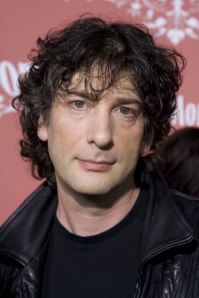
Neil Gaiman at the 2007 Scream Awards Photo by pinguino k
Here’s the second batch of writing tips from Open Culture. They include tidbits from Neil Gaiman, Henry Miller, Elmore Leonard, George Orwell, and Margaret Atwood. Enjoy.
Great article. Over the next week I hope to post more writing tips from great authors as they appeared in Open Culture. They have a wealth of good advice that I would like to share.
Interesting article, though I tend to disagree with his descriptions of what was going through Poe’s mind when he wrote this. Though I am not a skeptic, I tend to be skeptical when someone tells me in effect “yes, that is what he says, but this is what he meant…” Poe definitely hyped the bejeezus out of the poem (and his ego) by calling it the best poem ever written, but as for the rest…who knows?
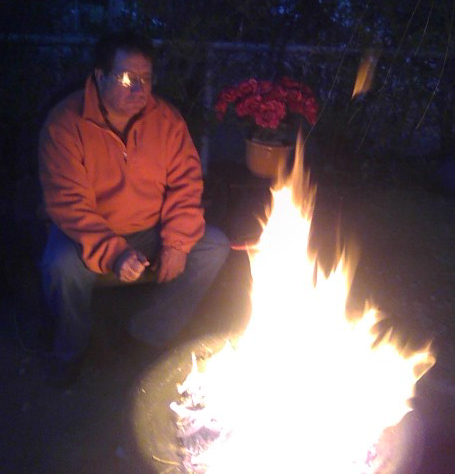
The blogger relaxing by the front yard firepit on a chilly New Mexico evening.
I was just sitting here trying to choose one of my many first drafts to work on for tonight, when I started thinking about the different “approaches” (for lack of a better term at the moment) to horror. By “approaches” I mean a very brief synopsis of a writer’s general outlook on or method of writing horror. Maybe a better way to express it would be to say the way the author approaches his genre (still not quite right, but I am getting closer to the idea).
An example would be to say that Poe’s approach was to bring out the horror in realistic situations (mostly, he did dabble in the fantastic occasionally). “The Black Cat” is about a murderer who unknowingly seals up a cat with the corpse of his victim. Nothing fantastic there. “The Tell-Tale Heart” is about a murderer whose conscience drives him to confession. “The Fall of the House of Usher” is about a family with an inherited genetic trait of hypersensitivity. So forth and so on.
Lovecraft’s approach was to spin tales of the fantastic, especially about a race of elder gods who once dominated the planet millions of years ago and of which mankind encounters remnants on rare occasion.
Stephen King’s approach is to plant an element of the fantastic among ordinary people in ordinary places and watch them react to it.
Clive Barker’s approach seems to be to take something that is fantastic, bloody, cruel, evil and gruesome and either drop it somewhere a single character can deal with it or bring it out of the shadows where a character can deal with it.
Seeing these different approaches in relation to each other makes me think about how do I want to approach an idea or a draft I have of a story. Do I want to drop the fantastic into the real or bring out the horror in the everyday or in realistic situations or can I come up with something else, my own approach, that is none of these? That is the challenge of creativity: to come up with something no one else has done. Maybe I can just go with the purely fantastic. Maybe I can try to find the real in the fantastic.
How many different ways are there to horrify an audience?
There is the real and the fantastic and all those subtle shades of gray in between the two. Can there be anything else?
I just finished watching an episode of the X-Files entitled “Chinga” [note to Spanish-speakers out there: I don’t know who chose the title, so please forgive my language] from Season Five and I noticed that it was written by Stephen King and Chris Carter (the creator of the X-Files). The story’s antagonist is a talking doll that can force people to injure or kill themselves in gruesome ways. Like many, if not most, of King’s stories, there is no explanation of how the came to exist. All the viewer finds out about it is that a lobsterman pulled it up one night in a lobster trap and his daughter comes to possess it after he meets his own gruesome fate.
I find in my own writing that I like to provide an explanation or background as to how things originate. This is just my nature. I like to know the origins of things. However, I have come to believe of late that, in terms of horror, that is a very nineteenth century concept.
Lovecraft said in his essay “Supernatural Horror in Literature”:
“A certain atmosphere of breathless and unexplainable dread of outer, unknown forces must be present; and there must be a hint, expressed with a seriousness and protentiousness becoming its subject, of that most terrible conception of the human brain — a malign and particular suspension or defeat of those fixed laws of Nature which are our only daily safeguard against the assaults of chaos and the daemons of unplumbed space.”
For me, what Lovecraft is saying is that if the laws of nature are negated, then anything is possible and monsters like Cthulhu really could exist and are capable of doing us harm at any moment. Combine this with his statement that “The oldest and strongest emotion of mankind is fear and the oldest and strongest kind of fear is fear of the unknown” and it becomes apparent that stories like “Chinga” derive much of their horror effect from the fact that the origin of the threat to a story’s protagonist(s) is unknown or that there is no explanation for the threat.
This would mean that one of things that provides to “Chinga” the element of horror that it has, is the fact that origin of the doll is unknown. Therefore, any of us when we are fishing or scuba diving or swimming in any body of water, could discover a doll that would turn his/her life into a nightmare. That is a scary thought.
Of course, this means that Stephen King would be one of the greatest practitioners of this technique, which I believe he is.
I think I shall try to experiment with this in the near future.
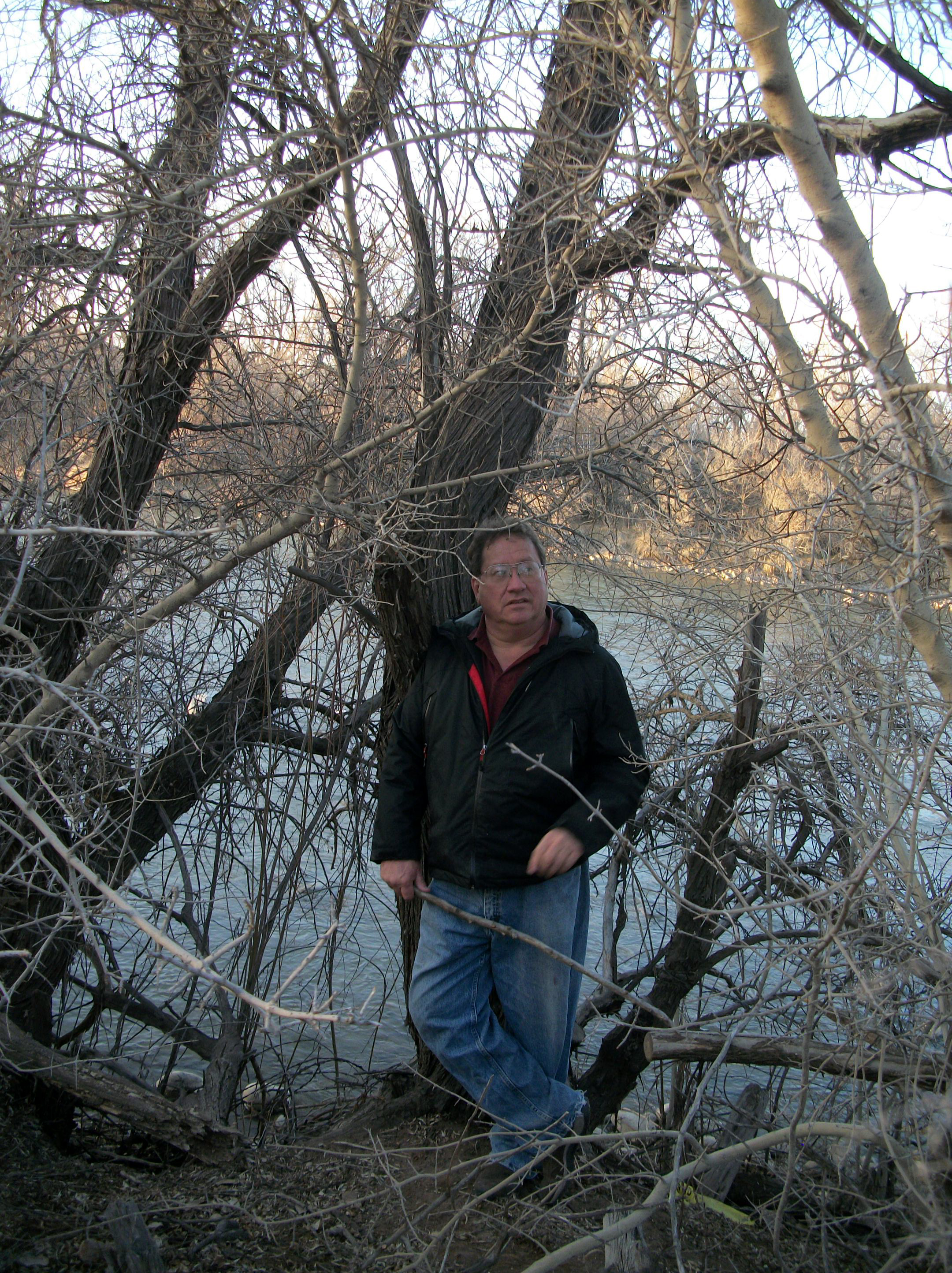
The blogger standing on the bank of the San Juan River in Farmington, NM.
I was searching for a market for one of my stories today, when I came across “Strange Horizons”‘s list of stories they see too often (http://www.strangehorizons.com/guidelines/fiction-common.shtml). This is an interesting and entertaining article on (in my humble opinion) not only the types of fiction that “Strange Horizons” prefers not to see, but also the types of stories not to submit to any quality magazine: the tired, the clichéd, the preaching, the didactic, the sugary-sweet, the unprofessional, the polemic, the ranting, and the diatribes among a host of others. The list is so extensive, one could almost create a list of the characteristics of good literature by simply listing the antitheses of the types listed here. Yes, this list is oriented toward sci-fi writers, but if one were to replace the sci-fi specific terms with those of another genre, one would have a list of examples of mediocre to poor writing for that genre. Of course, neither this list nor any other can be completely exhaustive of all examples of either good or bad writing, but it would be an interesting mental exercise.
About 2:00 a.m. on December 6, on the drive home after visiting my sister and her husband, I was contemplating where I want to go with my current work-in-progress. I am loathe to give away the plot, so suffice it to say that it involves a scientist that travels to another planet and tours it with a fellow scientist from that planet. I have come to realize over the last few days that the original plot concept is boring, although in terms of literature it would be fairly intriguing, because of the internal struggles the main character would face and some social issues it would raise.
It occurred to me is that the critical question was not where to take the plot of the story, but where do I want the book to go in terms of its impact on the society/world. I am not so naïve as to think that it would have a earth-shattering impact like Dan Brown’s Da Vinci Code or be controversial like Henry Miller’s Tropic of Cancer or Aldous Huxley’s Brave New World or even break out like Stephen King’s Carrie, but no matter how it is received publically or critically, it will make an impact, even if it is negligible one. The best I reason that I can do, is to try to make as big a splash as possible on its release and hope that it brings me some measure of success or at least puts me on the road to success. But what can I do to create that splash? What have been the characteristics of other initial successes?
I don’t know how the analogy suddenly popped into my mind, but I realized that what the story needs is thunder. Perhaps it was that a light rain had fallen sporadically over the last few days and the land was still wet with shallow puddles still lingering on the road in spots on this near-freezing night. Somehow this struck a chord in my subconscious that stirred echoes of similar post-thunderstorm summer nights. As I look back on that moment, though I wasn’t even thinking of those novels, it occurs to me now that they each have an element I would describe as “thunder”, something that resounds across the land striking a nerve in the public consciousness.
For some novels, like The Da Vinci Code, the thunder is an aspect that touches on a sensitive nerve within a large number of the public. In The Da Vinci Code‘s instance, this was deeply ingrained religious beliefs that, like the foundation of a house, if disturbed, shake the entire house.
For novels like The Tropic of Cancer, the thunder is something that disturbs the public’s sense of decency, which could be argued to be the image of itself that the public wishes to project.
Brave New World did not make as great an impact on its initial reception as it did later, when many of the technologies and issues it describes actually started to come into being. Then it thundered greatly.
Carrie did not rock the literary or moral or religious foundations of society, but it was a great personal thunder for Stephen King and brought him suddenly into the public view.
There are undoubtedly other forms of thunder, but these are the ones that spring into mind initially.
Once I recognized that my goal as a writer is to thunder, the next question became what type of thunder do I want to have?
For me, I want to ask a profound question (or questions) that demand answers. As stated, I don’t want to give away the plot of the novel(la), so I will unfortunately have to leave you in suspense for now, but check back with my blog periodically and let’s see if I can achieve this. Wish me luck.
I finished reading The Hellbound Heart several weeks ago. As noted previously, it is a truly terrific read. I suggest reading it after seeing the movie (if you have somehow repeatedly missed your chances of seeing “Hellraiser” over the last twenty or so years). Reading it beforehand will just spoil the movie, whereas reading it afterwards may enlighten parts of the movie.
I don’t have much to add to what I have previously stated, except that, if you are a student of storytelling, the book warrants a detailed examination for narrative technique as it exhibits some basic techniques of storytelling that Mr. Barker carries out very well. I could go through the book page by page and expound on each ad nauseam, but instead I will focus now on one that sticks in my mind.
I do not recall if this is in the movie, but toward the end where Kirsty is trapped in the “damp room” by Frank, she slips on a bit of preserved ginger lying on the floor enabling Frank to catch her. The method by which Barker establishes why that ginger is on the floor fascinates me.
Although I have one or two dictionaries of literary terms, I do not recall the name for this technique and I think of it as simply setting the stage for a future scene. It shows the foresight, planning, and attention to detail that must go into any good story.
Earlier in the story, after Julia has released Frank from the Cenobite hell and he has regained enough flesh that he can once again eat, he asks Julia for a few of his favorite victuals, including preserved ginger. At the moment I read this, I thought it was simply a natural but insignificant detail. Of course, I could not know then that that bit of ginger would skyrocket the dramatic tension later on in one of the novel’s most important scenes.
Anyway, that’s my post for the day.
I have been very negligent in posting anything over the last months, my daytime job and personal matters consuming much more of my time than usual. I have recently come to find out though, that many more people in my home town of Frankfort, KY, were enjoying my postings than I had known or even believed possible and sorely missed it during this hiatus. For them and all the others who silently enjoy my works, I shall endeavor to pick up the thread.
I have not lost my desire to write fiction, however, and I am currently trying to finish a sci-fi/horror novella that I started sometime back. The work is going well, but I am having to change some of my original concept to make it more exciting. I would like to make it as gripping as some have found my “Murder by Plastic” (published at www.everydayfiction.com), but that will be quite difficult for something as long as a novella. The part I find most challenging is to coordinate the details much as Barker did in the example I give above. I would expound on the subject, but I do not want to give away the plot or run the risk of some unscrupulous cur stealing my idea and publishing it before I do–particularly as I am so close to finishing it. After this I have another three or four unfinished works to bring to a close. I could probably write eight hours a day like Thomas Mann and still not be finished by spring.
I am just past the halfway point in Clive Barker’s The Hellbound Heart, the novella upon which the orginal “Hellraiser” movie was based. This is one really terrific read. It is one of those that is hard to put down, even though you know what happens next, because the movie, which you saw twenty years ago and have seen periodically since then, so closely resembles the book.
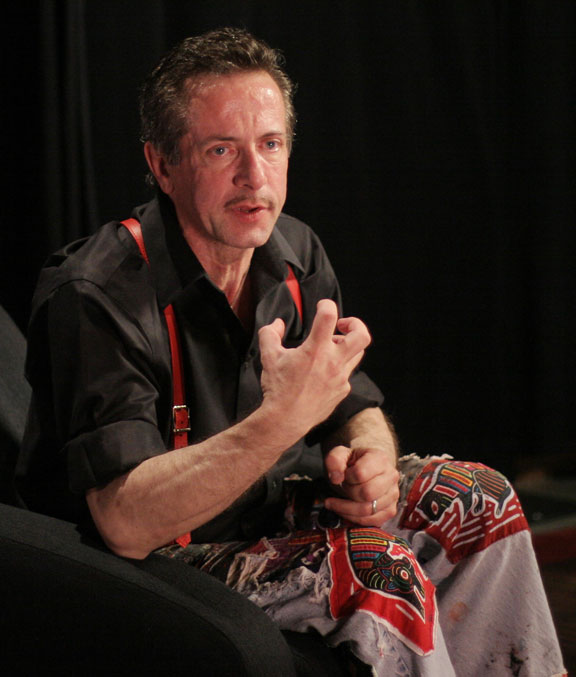
Clive Barker, Seattle, 2007 by Steven Friederich
The prose is simple, but not Hemingway simple, and there are moments of actual narrative beauty (such as when Barker poignantly describes the passing of seasons in the beginning of one chapter) that seem to be glimpses of insight into a latent aspect of Barker’s immense talent: that he is able to write actually artistic prose that captures a moment, an emotion, or a sensation with a light touch that carries over to the reader. I have read the first two volumes (so far) of Barker’s Books of Blood and this quality seems to be lacking in them. In Books of Blood, he writes splendidly, but not beautifully, not poignantly.
I also love the way he keeps his characters to a minimum, so that seeing the complex relationships between them is easy.
Another fascinating aspect of Barker’s storytelling in this instance is that he can put his characters in horrifying situations, yet he does not try to be any more graphic than is necessary to invoke an emotional response in the ready. The few truly graphic scenes I have encountered so far are graphic, but not gratuitously graphic. An example would be when the recently-resurrected Frank starts to have sex with with brother’s wife Julia. He shows the act beginning and ends the chapter leaving what happens up to the reader’s imagination. Yes, this is an old trick straight out of made-for-TV movies, but do you really need to visualize every gory detail of a woman having sex with someone who is still half-corpse? I didn’t. And seeing that would not have helped the storytelling and if anything, it would have only detracted from it. Besides, if someone wants to visualize that unnerving scene for themselves, they are going to whether or not Barker describes it for them. All that is necessary to show the development of the characters and the plot is to show that they did have sex, because that act in itself shows something about them. About Frank it show how incredibly callous he is to Julia and how centered he is in the world of his own pleasure. About Julia, it shows her love for Frank is so self-sacrificing that she is willing to commit the most vile acts for him while taking obscene pleasure in them in her own way.
Anyway, those are just a few notes so far. I need to have dinner and do some housework and to read more of this fascinating work. Hopefully, I will be able to write more soon.
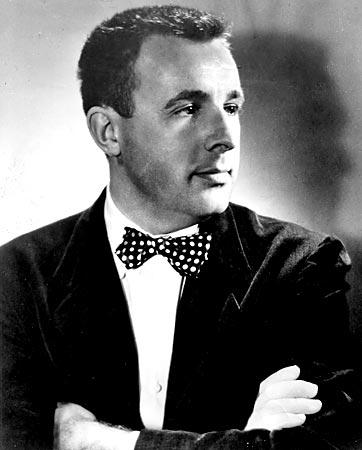
Ray Bradbury in 1950 (age 30), the year he published “The Martian Chronicles”
Someone once told Ray Bradbury that “The Martian Chronicles” was not prose, but poetry. Technically, he was probably wrong, but in spirit truer words were probably never spoken.
I have a habit of reading several books at once. I will pick up one, read a few pages (unless it is so engrossing that I cannot put it down), then later pick up another and read a few pages or so of it, then still later read a few pages of another and so forth until I may be reading half a dozen books a few pages at a time. Then I may finish one and pick up another, something like the juggler who keeps the china plates spinning on sticks.
I picked up “The Martian Chronicles” while on a trip to Santa Fe in December, 2012 at The Collected Works bookstore. Since then it has stayed in my suitcase and I pick it up and read more every time I travel.
I have not read much of late and have written less, but on trip last week, I made use of my relatively new Kindle for the first time and read three stories of Poe’s (“A Descent into the Maelstrom”, “The Facts in the Case of M. Valdemar”, and “The Imp of the Perverse”) along with the original German version of “Little Red Riding Hood” by the Brothers Grimm. This has started my interest in literature and writing to smoulder once again. After I returned home, I decided to take “The Martian Chronicles” out of the suitcase and reluctantly finish it.
I say “reluctantly” because, while reading it, it is one of those beautifully eloquent novels that you don’t want to put down much less ever see come to an end. On those nights I read a few chapters at a time in the comfort of a well-kept hotel, I never really wanted to put it down and only did so when the hour was late and I was struggling to stay awake after a long day, a good suppper, and a few glasses of wine.
The stories are always poignant, captivating, and sometimes heart-rending. The characters have a depth that draws you in as if you could step inside their bodies and see their world from their perspectives. Of course, your tendency is to side with the humans as they colonize the red planet, but at the same time you sympathize with the Martians as they watch their civilization dwindle and gradually vanish under the onslaught of alien explorers and settlers. However, what is the most beautiful facet of the novel is its use of English.
Bradbury’s nascent style (as I understand from one website, he had been writing seriously only seven years when he
Ray Bradbury by Lou Romano
published this, his first novel) uses simple, clear, easy-to-understand prose that highlights only enough important details to enable the reader to vicariously experience the story. The fact that the prose is very simple and lacking in needlessly ostentatious words helps the reader to see clearly the interaction of the characters and their mindsets and the underlying motivations and plots. For me, if a work is full of big words, I spend too much time either trying to decipher them or running to the dictionary that I lose the tenuous feeling for what is happening in the story. His use of language clarifies rather than obscures. The sentences are generally of medium length and this helps the story to flow without becoming monotonous.
The plots of the stories are deceptively simple in design, but most still manage to have an unexpected denouement that leaves the reader feeling like a simpleton that he did not see it coming. Some, though, have such completely unexpected endings that there is no way they could be anticipated but in retrospect the denouement is incredibly logical. The first chapters describing explorer’s first encounters with the Martians are wonderful examples of this while the story I read only last night, “The Off Season”, has such a brilliantly ironic twist that it has to be a prime example of Bradbury’s genius.
I suppose I could continue on for a while raving about Bradbury’s art, but it is getting late and I have had a long day and still have dinner and drinks awaiting my arrival at home.
But what has any of this admiration for a science-fiction writer’s skill have to do with the art of writing?
Beauty is beauty no matter what the genre. Skill in writing is skill in writing.
I wish I had at least a smidgen of Bradbury’s talent so that I could make use of it in the field of horror. What depths of emotion and terror could I then reach?
Having read “Fahrenheit 451” many years ago, next on my list of Bradbury works is “The Illustrated Man”. I can hardly wait, but will probably have to–having five or six other books that I am currently reading. Still…that hasn’t stopped me yet from picking up a novel to be explored.
Please, even if you are a diehard horror aficianado, read “The Martian Chronicles” to learn something about writing as an art that you can apply to your own endeavors. The experience will definitely be rewarding and perhaps even enlightening.
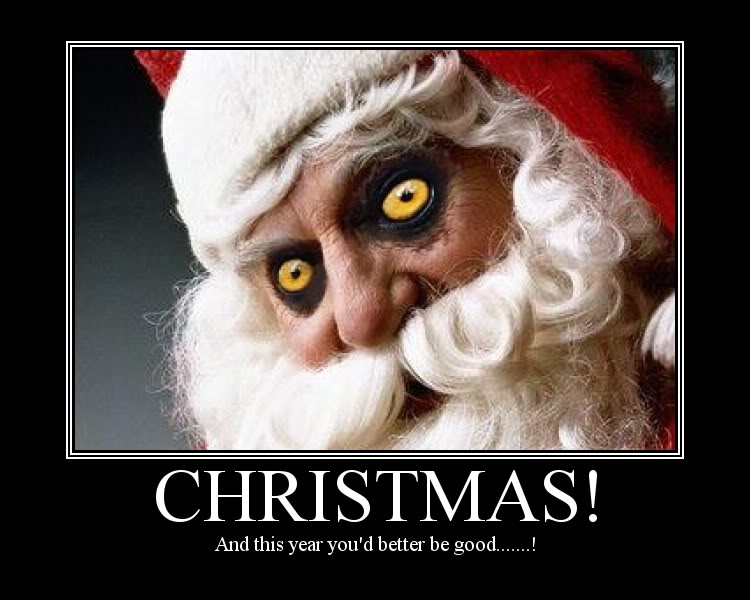
Just a little Christmas fun from Ottawahorror.com. Follow this link to their site and you can post this on Facebook, Twitter, Stumbleupon, and others.Check out the following note to be found on their About Us Page:
Started in 2008, we are a blog and portal dedicated to all things horror in our nation’s [Canada] capital. If you are a filmmaker, musician, artist, or fan, this is the place for you. Also, recruit minions! When we travel out of town, we bump into more people and artists from home than we do when we hang around the batcave. It’s kinda cool, but kinda creepy. While we appreciate finding you wherever you are, finding you here is easier… because then we can send reporters and photographers after you easier.
Want to contribute? Check out the ‘submit’ page above. It’s new~
You can follow us on blogger, twitter, facebook or link to us with a groovy badge!
They accept submissions for their blog! Maybe you have something you would like to contribute. The site looks pretty cool.
The Works of Edgar Allan Poe, Volume 1. Yes, this link takes you to a collection of Poe’s works, but the reason I am mentioning it here is because the preface to this particular volume includes fascinating biographical notes and insight into the character of this master of horror that may help you understand the roots of his creative genius and how art sometimes came close to imitating life for Mr. Poe.
When you open the page, you may find yourself a little distance from the top of the article at the beginning of a section entitled “The Death of Edgar Allan Poe”. While this section is fascinating in its own right, scroll to the top for the entire preface. The works of Poe, beginning with the story of Hans Pfall, begin a bit down from “The Death…”




 Phil Slattery, Writer, Publisher