“Behind the Curtain” at Jersey Devil Press

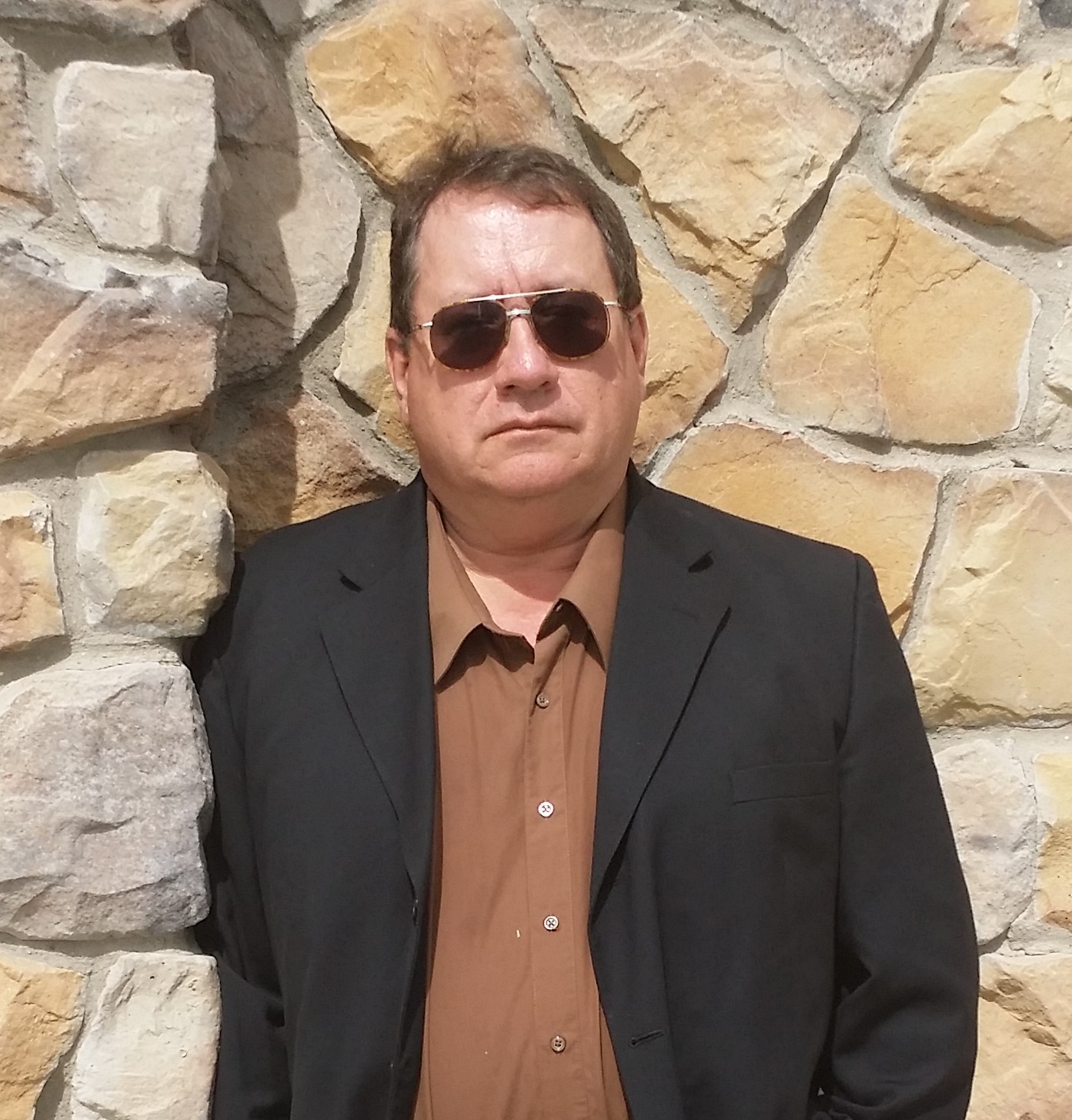
At "A Literary Affair" charity dinner in Farmington, NM, as Herbert West, September 12, 2015.
At “A Literary Affair” charity dinner in Farmington, NM, as Herbert West, September 12, 2015.

This I share with you tonight for entertainment and because it addresses one or two issues affecting writers in general.

I was searching for somewhere to publish a very short work (probably nanofiction) of mine tonight and I came across the submission guidelines at Jersey Devil Press.  I love guidelines that show a sense of humor and a free spirit while being straightforward and honest and theirs does just that.   They also offered more detailed guidelines, which I found a quite enjoyable read.  I also found that these guidelines do not provide just good advice for their own publication, they provide good advice that any author submitting to any publication would be wise to heed:  advice on formatting, staying away from overused topics, good taste, sensitive subjects, etc.  As they use at least one or two examples that touch on horror, I thought I would post the part on their selection process tonight for your perusal.   If you have a chance and the time, check out their guidelines on their website and the rest of the publication as well…and maybe submit something as well…and maybe give them a pat on the back for a job well done.

By the way, I ended up not submitting to them, because my story did not meet a requirement.  That’s why I read guidelines.

Thoughts?  Comments?


Behind the Curtain

We thought we’d take a moment to shore up our submissions guidelines and give you a little peek into our selection process.

First, our goal: To publish stories non-writers would actually want to read. We prefer funny, weird, and, above all, entertaining; sober melodramas generally don’t fly so well with us. There are certainly exceptions, but that’s largely because they’re exceptional.

Second, previously published works: We accept them, but we want to clarify that a bit. By “previously,” we literally mean “previously.” If it’s currently published, i.e. something that is available online elsewhere, or if it’s part of the book you just released, that seems a little greedy to us. If it’s only on your own personal website or a forum or something, though, don’t sweat it.

Accepting and rejecting story submissions is, by nature, subjective. Short of grading them entirely on quantifiable variables, like the number of adverbs or something, there’s not much we can do to change that. So, to level the playing field a bit, we thought we’d give you a little heads up regarding our own personal peeves and predilections.

Also, a pre-emptive apology to anyone who thinks we’re singling out their story: We’re not. Not a single theme mentioned below is a one-off. These are all popular, repeat offenders that we’re simply not that fond of.

Eirik’s list of things that should be stopped forever:

Vampires. I think Twilight is stupid. I’m sorry, but I haven’t been even moderately interested in vampires since “Angel” got cancelled.

Mob stories. If the entire story is just two guys talking in “goomba” speak, please don’t. I’ve met people with mob ties in real life and they’re generally assholes. And, honestly, you’re never going to out-Soprano the Sopranos.

College professors seducing/being seduced by young, nubile co-eds. What college did you go to where this was actually happening? In general, any regularly used plot line in a porno is a no-no.

Thinly veiled drug metaphors. You think drugs are bad. We get it. We don’t care. At the very least get a thicker veil.

Monica’s justifiable grounds for homicide:

Male writers writing female narrators. While it’s not impossible to do this, the vast majority of men writing women don’t seem to have ever talked to a woman before in their life. If your female narrator is shallow, stupid, and unable to do anything in her life that does not revolve around men, don’t send it.

And if you’re reading this thinking, “Well, of course she’d think this, she’s a woman,” then YOU’RE THE FUCKING PROBLEM. You can keep trying, though, if you really want to. Interesting side note, Monica once stared at a man with such disdain that he actually BURST INTO FLAMES. Don’t say you weren’t warned.

Stereotypical minority characters. This kind of goes hand in hand with the above. If you’re writing a black man, try actually talking to one. It’s 2010, people. We shouldn’t be getting offended anywhere near as often as we do by the way people are treating characters of various backgrounds.

Unanimously awful topics:

Erotica. Actually, this one doesn’t bother us, but we’re never going to publish it. If you want to keep sending it though, for our own personal amusement, knock yourself out.

Rape. No. Bad. We don’t really need there to be any more rape in the world than there already is. Monica would also like to clarify that any sort of sexual act perpetrated without both parties’ consent is rape. Again, we’re surprised how often people don’t seem to know what the fuck they’re writing.

Relationship drama. While this seems to be a staple of literature, it is also very often boring as all hell. If your story’s just two people moping around, maybe find somewhere else to send it. If they’re doing it while juggling cats, though, you’ve got our attention.

On the flip side, here are a few things we wouldn’t mind seeing more of:

Strong female voices. We know you’re out there.

A light-hearted view of the world. Fiction does not have to be so God damned grim.

Truly bat-shit insane fiction. If you’re worried that what you just wrote is too ridiculous to be published, send it.

Again, please don’t take any of the above personally. We’re simply giving you a glimpse into our own tastes. We’re not saying that the themes mentioned above are bad or shouldn’t be written about (well, we’re not saying it about most of them anyway), but simply that we’re really not that interested in them. Your story about a bunch of mobsters being raped by vampires may very well be the best story about mobsters getting raped by vampires ever written. It may deserve to win the Nobel Prize for Literature. And we may even say as much. But it doesn’t mean we have to like it.

Besides, there are plenty of other fish in the sea. Of course, you better make damn sure you read THEIR submission guidelines before you start sending shit. I don’t want to get blamed for a rash of vampire stories getting sent to a site looking for memoirs and poetry.

But if your heart’s still set on submitting to JDP, head on over to submishmash
Physical Descriptions and the Atmosphere of the Mind

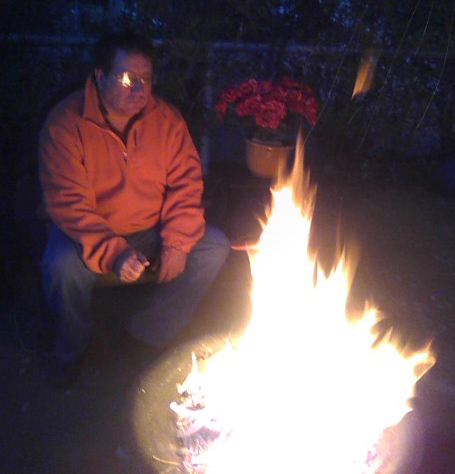
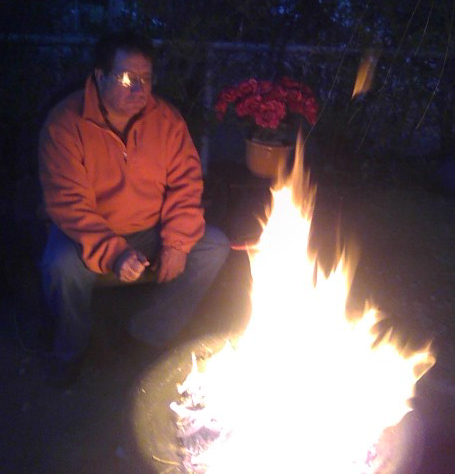
Relaxing by the front yard firepit on a chilly New Mexico evening circa 2013.

I was sitting here writing a short story when it occurred to me that most characters in classic fiction seldom have detailed descriptions of their physical characteristics.  In fact, many have none at all.   If they are described, it is usually in a broad, general way, unless there is some detail the author wants to bring out that reveals something about the character.   While this is a good technique for lean, muscular writing, it also has the benefit of not limiting how the character appears in the reader’s mind.   For example, here is the initial description of Victor Frankenstein when the narrator’s ship rescues him in the arctic in letter 4 (which functions in essence as part of a preface):

“Upon hearing this he appeared satisfied and consented to come on board. Good God! Margaret, if you had seen the man who thus capitulated for his safety, your surprise would have been boundless. His limbs were nearly frozen, and his body dreadfully emaciated by fatigue and suffering. I never saw a man in so wretched a condition. We attempted to carry him into the cabin, but as soon as he had quitted the fresh air he fainted. We accordingly brought him back to the deck and restored him to animation by rubbing him with brandy and forcing him to swallow a small quantity. As soon as he showed signs of life we wrapped him up in blankets and placed him near the chimney of the kitchen stove. By slow degrees he recovered and ate a little soup, which restored him wonderfully.

“Two days passed in this manner before he was able to speak, and I often feared that his sufferings had deprived him of understanding. When he had in some measure recovered, I removed him to my own cabin and attended on him as much as my duty would permit. I never saw a more interesting creature: his eyes have generally an expression of wildness, and even madness, but there are moments when, if anyone performs an act of kindness towards him or does him any the most trifling service, his whole countenance is lighted up, as it were, with a beam of benevolence and sweetness that I never saw equalled. But he is generally melancholy and despairing, and sometimes he gnashes his teeth, as if impatient of the weight of woes that oppresses him.”

Very little is said about Frankenstein’s physical state except where it reveals something about his state of mind or gives an idea of the hardships he has suffered in pursuit of his creation.    Because the physical description is so minimal,  the reader may envision Frankenstein in any physical form that he wants or whatever is easiest for him to envision (there is a difference between what we may want to envision and what is easiest or most natural for us to envision).  Frankenstein could be short and dark-haired and dark-complected or tall and blonde and sunburned.  Later on, we learn his family is from Geneva, therefore the reader could envision him as whatever his stereotype of a Swiss man from Geneva happens to be.

Using minimal physical description is therefore an advantage to the author, because it allows the reader to more easily visualize and thus more easily experience the story vicariously, i.e., it allows the reader to more easily immerse himself in the story.  We have all experienced the feeling of being completely immersed in the world of a novel, what Henry James called “the atmosphere of the mind” (see the definition in the Lexicon of Horror) and that is a feeling I want my readers to experience.

Thoughts?  Comments?

The Guardian’s “Comment is Free” on Horror Movies

mod 130419_0008I was surfing the Internet just now, looking for websites where I can comment, and came across The Guardian’s “Comment is Free” section filtered down to their comments on horror movies (http://www.theguardian.com/commentisfree/commentisfree+film/horror).   They seem to produce an article on horror films about every 5-10 months, but the articles are interesting and are worth checking out for a different perspective than what one usually encounters (at least in the articles I read).   The two articles I read today from The Guardian are “Why Zombies are the Coldest Comfort” by Catherine Shoard and “Why the Human Centipede II bugs me” by Sarah Ditum.  Unfortunately, the replies for both were closed, so I will state my opinions here.

As a novice writer of horror and as someone who has read a considerable amount of what might be termed “classic horror tales” back to its beginnings as a genre, Shoard’s article puzzles me.  She seems to take the viewpoint that what makes a horror movie enjoyable is that we can feel safe while watching it.  She states near the beginning of her article:

Zombies are a threat it’s easy to rationalise. They are unlikely. For this reason, plus issues with speed and intelligence, they are not especially scary. They are essentially a pest control problem with metaphor potential. Even squirrels run quicker… So their presence as a backdrop in a soap such as The Walking Dead provides just the right boost in tension for viewers to convince themselves they’re a long way from Emmerdale (or whatever the Mexican equivalent might be). The Walking Dead is a show that – like Pret a Manger – innovates exactly the right amount within a set formula.

Later, she adds:

More even than with comedy, the director encourages the audience into a specific response; if they don’t elicit it, they have failed. So those who are best at scaring us also make us feel we’re in a safe pair of hands.

And then there’s her conclusion:

Life is frightening. Horror works because it gives us something quantifiable to battle: you know where you are with a zombie.

It seems that Ms. Shoard is saying that the reason we can enjoy zombie movies is because we can feel safe in watching them, because zombies obviously don’t exist and are therefore not a threat and because we are so far removed from them.   The second statement is perplexing as well when she states “that those who are best at scaring us also make us feel we’re in a safe pair of hands.”

Ms. Shoard doesn’t seem to understand that one of the basic principles of horror according to H.P. Lovecraft, a universally recognized master of horror of the last 200 years is “The oldest and strongest emotion of mankind is fear, and the oldest and strongest kind of fear is fear of the unknown.”   This is a consistent theme in the horror genre since the days Horace Walpole and the beginnings of the gothic novel.  What makes for great horror is a blending of suspense and fear.  A writer of horror, be it short story or novel or a movie, does not want his audience to feel safe.  He wants them to feel that if they put down the book and walk out of the building, they may be snatched up by Cthulhu or encounter their former neighbors rising from their graves with a ravenous hunger for the living.  It’s been a long time since I have read an article this inane.  I hope it is a long time before I read another.

I will agree with her on one point:  more than with comedy, the director does encourage the audience into a specific response and if they don’t elicit it, they have failed. However, Ms. Shoard doesn’t seem to know what that response is or how to go about achieving it.

I could go on deconstructing this article ad nauseum and reducing it ad absurdam, but I have better things to do with my morning than to antagonize Ms. Shoard.  I have nothing against her personally; I just find her opinion in this instance to be off-base and out of touch with the basics of the horror genre.

The second article I read was Sarah Ditum’s “Why the Human Centipede II bugs me”.  The teaser to this article sums up the paradox Ms. Ditums explores nicely:

The horror-porn sequel dampens my anti-censorship urges, but banning such films risks losing more intelligent offerings.

I could go into an extensive examination of this article line by line, but, as much as I would love to do that, as I said earlier I have other things I have to accomplish today.  However, I encourage everyone with an interest in or an opinion on the extremes of gore and bad taste in horror films today to read this article.  It is quite well-written and it does a good job of getting to the essence of the problem:  yes, there are films out there today that are so vile and repulsive that we would be better off to ban them for the good of society, but by limiting what is available to the public, we run the risk of losing more intelligent fare that has to deal with these issues.

Personally, I have never seen any of the human centipede films, because the concept is so obscene that I cannot bring myself to watch them and I cannot see any reward or point in forcing myself to do so.  As anyone who reads my blog with any regularity  knows, I am not a fan of gore for its own sake and I am not a fan of anything tasteless.  A lot of people would probably see a vague hypocrisy in this, but those people are ones who perceive horror only as sensationalist, teenage slasher films and do not have a profound knowledge of its history and of its breadth or of the underlying, eternal principles of great horror as in the quotation above from Lovecraft.   But that is my taste in what I feed to my mind via my eyes.   I will not apologize for it, because I have nothing for which to apologize.

Contemplating what I said in the previous paragraph brings me to another interesting perspective.  Perhaps examining the wide range of opinions and viewpoints on this controversial topic reveals something about human psychology.  I am not sure of what that would be, but I am sure it would make for an interesting thesis for someone’s Master’s degree.  A line and motif from one of my favorite TV shows of all time, “Millennium” (starring Lance Henriksen, ran from about 1998-2000) is “This is who we are.”  Somehow, thinking about the ongoing discussion on this controversial topic, I get a subjective feeling that, for better or worse, this is who we are.

The bottom line for this portion of today’s blog is that I find myself of the same viewpoint as Ms. Ditum and I encourage everyone to read her article, whatever your viewpoint on gore in modern cinema (whether of the horror genre or not).  It may just broaden your perspective.

Thoughts?  Comments?

The Simple and the Complex

Farmington, New Mexico, March 20, 2015

I was just sitting here contemplating a couple of my stories and how I could improve them before I send them out for publication once again, when something occurred to me.  At the moment I was thinking about what makes a satisfactory ending to a story for the general public.  A story can be either simple or complex (in characterization, plot, backstory, all of the aforementioned, or whatever) and it can have either a simple or complex ending.  How they are paired determines how the reader emotionally and intellectually responds to the story.

A simple story with a simple ending is probably the least satisfactory type of story.  It is no challenge to most people and is not likely to stimulate interest.  It is boring.

A simple story with a complex ending is probably not entertaining or satisfactory to most people, but it will stimulate the interest of a few.   Not many people like or tolerate complex solutions to simple problems.

A complex story with a complex ending is satisfactory to some people, i.e. those intellectuals or faux intellectuals who enjoy complex matters, but these won’t be the majority.

A complex story with a simple denouement is probably the most satisfactory to most people.  It stimulates the mind and enlightens the reader, helping him/her to see reality or the problems of reality in a new light.  I have written often about a reader enjoying the vicarious experience of a story.  It is the same with a complex story with a simple ending.   The reader experiences the story vicariously; he/she feels the vicarious joy of having solved the problem along with the protagonist and any other characters accompanying the protagonist through the story.

Anyway, that’s my tirade for the night.

Thoughts?  Comments?

Fiction on the Web will publish my short story “A Tale of Hell”

Relaxing by the front yard firepit on a chilly New Mexico evening circa 2013.

I just received word that my short horror story “A Tale of Hell” will be published by Fiction on the Web (www.fictionontheweb.co.uk) on May 24.   Please check it out.  “A Tale of Hell” is about a man who has a vivid dream of being in hell, but then strange things start to happen.  Many thanks to Charlie Fish and all the other staff at Fiction on the Web who made this happen.  “A Tale of Hell” was originally published by Midnight Times in 2006.

Recommendations from “The Ray Bradbury Theatre”

Relaxing by the front yard firepit on a chilly New Mexico evening circa 2013.

I was in the Navy for the entire time “The Ray Bradbury Theatre” ran in syndication (1985-1992).   I happened to pick up a collection of 65 of its episodes yesterday while at the Hastings bookstore in Farmington.  I have watched less than a dozen of its first episodes (circa 1986) so far, but two I recommend highly for their suspense and general spookiness:  “The Banshee” starring Charles Martin Smith and Peter O’Toole and “The Town Where No One Got Off” starring Jeff Goldblum.  I particularly enjoyed the latter where Jeff Goldblum disembarks a train in a town where the train normally does not stop and finds himself in a sticky situation, which he manages to resolve quite cleverly.   Check them out if you get the chance.

Thoughts?  Comments?

Gogol

Portrait of Nikolai Gogol circa 1840 from Wikipedia

This morning I have been going through all the daily updates I have been getting from Goodreads, but have not read. Here’s an interesting one.

“I am fated to journey hand in hand with my strange heroes and to survey the surging immensity of life, to survey it through the laughter that all can see and through the tears unseen and unknown by anyone.”   –Nikolai Gogol

Goodreads notes:  “Novelist and playwright Nikolai Gogol (born March 31, 1809) feared being buried alive. When his grave was exhumed, his body was lying face down, giving rise to the rumor that the author’s greatest fear had come to pass.” I read some of Gogol’s most famous works as an undergraduate and loved them.  I need to re-read them just for the sheer pleasure of reading them. Gogol was an eccentric Russian (though born in the Ukraine) author/satirist of the early nineteenth century and is best known for his unfinished novel “Dead Souls” about a man who travels through the country buying up the dead.   He is also known for his short stories, particularly “The Nose” a fantasy about a nose that detaches itself from its owner one day and takes on a life of its own and “The Overcoat”, a story about an impoverished government clerk (copyist, if I recall correctly), whose prize possession is a beautiful overcoat and who comes back from the dead to find it.   He was known for being a satirist, rather than a writer of horror, but a few of his most famous works verge on what might be termed ghost stories or fantasy as can be seen above.  He is a master author, however, and his works bear checking out no matter what your preferred modern genre is. Wikipedia has this to say about his style:

D.S. Mirsky characterized Gogol’s universe as “one of the most marvellous, unexpected – in the strictest sense, original[28] – worlds ever created by an artist of words.”[29] The other main characteristic of Gogol’s writing is his impressionist vision of reality and people. He saw the outer world romantically metamorphosed, a singular gift particularly evident from the fantastic spatial transformations in his Gothic stories, A Terrible Vengeance and A Bewitched Place. His pictures of nature are strange mounds of detail heaped on detail, resulting in an unconnected chaos of things. His people are caricatures, drawn with the method of the caricaturist – which is to exaggerate salient features and to reduce them to geometrical pattern. But these cartoons have a convincingness, a truthfulness, and inevitability – attained as a rule by slight but definitive strokes of unexpected reality – that seems to beggar the visible world itself.[30] The aspect under which the mature Gogol sees reality is expressed by the Russian word poshlost’, which means something similar to “triviality, banality, inferiority”, moral and spiritual, widespread in some group or society. Like Sterne before him, Gogol was a great destroyer of prohibitions and romantic illusions. It was he who undermined Russian Romanticism by making vulgarity reign where only the sublime and the beautiful had reigned.[31] “Characteristic of Gogol is a sense of boundless superfluity that is soon revealed as utter emptiness and a rich comedy that suddenly turns into metaphysical horror.”[32] His stories often interweave pathos and mockery, while “The Tale of How Ivan Ivanovich Quarreled with Ivan Nikiforovich” begins as a merry farce and ends with the famous dictum, “It is dull in this world, gentlemen!”

Thoughts?  Comments?

Clive Barker ‘The Scarlet Gospels’ Advance Review

100_1736Good review:  Clive Barker ‘The Scarlet Gospels’ Advance Review.   As you can see in my comments, the review sounds fair, honest, and straightforward.  Also,  I enjoyed his comments on Barker’s other works.  Unfortunately, I have read only The Hellbound Heart and Books of Blood, but I want to read the others as soon as I can dedicate the time to each.  However, I already have a couple of dozen works on my “to read” list including those on my Goodreads “to read” list.  It is unfortunate that Mr. Barker may be going through a down period, but many, if not most, authors and artists of all types do.  What is important is how long the down turn lasts.

Writing between the Lines

mod 130419_0008A thought occurred to me tonight as I was watching another episode of the X-Files.  I was “reading between the lines”  of a dialog between Scully and Mulder, when it dawned on me that part of the art of writing is to write between the lines, i.e. to construct a dialog so that the reader will be able to read between the lines what you want him/her to read.   I always think of Hemingway’s short story “Hills Like White Elephants” when I think about talking around something or reading between the lines, because is the classic example.   One of my earlier posts, “Talking about Dogs” is on this same subject, when I say that part of the art of writing is like talking about a dog, without using the word “dog”.    Anyway, that’s my thought for the night.

Thoughts?  Comments?

Observations on the X-Files: Redrum, Season Eight, Episode 6

Relaxing by the front yard firepit on a chilly New Mexico evening circa 2013.

I recently purchased seasons  8 and 9 of the X-Files to complete my collection of the entire series.  As you can note above, I am up to episode 6 of season 8: Redrum.  No, it’s not based on The Shining or the famous line that sprang from there.   This is a completely original script and I think one of the best X-Files.   Why am I mentioning a Sci-Fi series in an article that should be about horror?  This article is about good writing, whatever the genre.

I will endeavor to avoid spoiling the story for you.

As we all know, “redrum” is murder spelled backwards.  This story is about a murder, but the alleged murderer finds himself traveling back in time to the day of the murder with the knowledge of how to prevent it.

I find the plot’s basic concept fascinating.  A prosecutor (and friend of Agent Doggett) wakes up one morning to find himself in prison for the murder of his wife, about which he remembers nothing.  As he is transferred to another facility for his safekeeping, he is assassinated.  However, at that point time starts to flow backwards for him.  Each morning he wakes up another day in the past (first he wakes up on Saturday, then on Friday, then on Thursday, etc.).  With each day he learns a bit more about his predicament until finally he wakes up on the day of the murder and he has an opportunity to prevent it.

Unexpectedly traveling back in time is not a common theme, but it’s not rare either.   I have to ask myself how Maeda and Arkin came up with the idea for this episode.  Maybe it was based on amnesia;  someone can’t recall his crime or immediate past and has to learn about it bit by bit, day by day, as the prosecutor does here.  Maybe it arose out of a philosophical question such as “if we could travel back in time, we could change our future but would the ultimate destination be the same and all we change is the route we take to get there?”   Maybe it was a thought that most stories show a protagonist going back in time to a certain point in time and then returning to the present; what if going back in time was not one big step, but several little steps.  How could we change our lives in that case?   What if as we traveled back in time, we knew as little about the past as we do about the future?  We wouldn’t be able to convince those around us that we are traveling back in time, because we wouldn’t know any history to prove our story.   They would believe us to be insane.

The whole scenario intrigues me.  One man goes back in time for unknown reasons while the rest of the world around him proceeds as normal.

I have to ask myself what their creative process was.

This scenario opens up so many questions and possibilities.   I love its originality.    If you haven’t seen it, I recommend renting it as soon as possible.

We never find out what causes the protagonist to travel back in time.  Like in a Stephen King novel, paranormal events happen out of the blue and at random.   But according to Lovecraft’s theories of weird fiction, not knowing the cause/origin of a horrible event, makes the event more horrifying, because the event could happen to any one of us at any time.

A common principle of writing is “to suspend belief” (some say “to suspend disbelief”).   In stories like this though, it is the natural laws of the universe that are suspended.    Everything else, all the world/universe surrounding the event. is quite believable, which emphasizes just how weird the event is.

The story was written by Steven Maeda and Daniel Arkin. A quick search in Imdb shows that Steven Maeda has an extensive list of credits as either a writer or producer for such television series as X-Files, Lost, CSI:Miami, Helix, Lie to Me, and many others.   Likewise Daniel Arkin has an extensive list of credits as a writer or producer for such shows as X-Files, Suits, Las Vegas, Alias, Medical Investigation, and others.  I will have to watch for more shows with which either one is involved.

Thoughts?  Comments?

From Rare Horror: 5 Awesome Horror Book Covers

from Rare Horror
from Rare Horror

Check out the cool covers in this article from the folks over at Rare Horror.  These remind me of ones I see going through those second-rate, family-run,  second-hand bookstores that you find in side streets and back alleys (if you are lucky enough to find ones with the covers intact and not torn off):   5 Awesome Horror Book Covers.

“Summer Thunder” and the Horror of Tragedy

Relaxing by the front yard firepit on a chilly New Mexico evening circa 2013.

I picked up a copy of the latest issue of “Cemetery Dance” this evening and read the Stephen King short story “Summer Thunder”. This is a very interesting piece. I won’t spoil the ending for you, but the story is about a man, his dog, and his neighbor, who have survived a nuclear holocaust and are slowly succumbing to radiation poisoning.

This story was quite different from the other Stephen King stories I have read (which have been quite a few, though not all by any means). There is no supernatural factor in the story. There are also no twists or surprises. The story maintains the same pace throughout, just as the protagonists face the same things day in and day out until they die.

I would classify this story as horror-tragedy, because, even though it has very little of the blood and gore normally associated with the horror genre, it definitely has a horror “feel” to it, but that horror is subtle and understated. “Summer Thunder” sets up a tragic scenario and the horror finds its basis in watching these people suffer through no fault of their own. They were not involved in starting the war in any way; that was done by world leaders thousands of miles away. These are the common citizens, the “Everymen” that normally populate King’s works as protagonists, and who must pay the horrific price for their government’s actions. That is the tragedy and that is a large part of the horror.

What is also horrifying about the story is not the action described in it, but the scenario it describes, because this scenario is definitely one that could literally happen to each of us, should our government and/or other governments decide for whatever reason, to push the proverbial button. Each of us can (or perhaps should) see ourselves as the main character, who will be forced to watch his or her world disintegrate after a nuclear apocalypse.

That concept alone should be enough to bring the true horror of this story:  that this scenario is, and has been for a long time, a real possibility for each of us.

Thoughts?  Comments?