
More interesting trivia: Kevin Bacon – Happy Halloween! Stars who got their start in horror flicks – NY Daily News.
Category: Trivia
23 Famous Authors’ Last Words
Still another fascinating bit of trivia: 23 Famous Authors’ Last Words. Alas, there are only a few horror authors included.
18 Literary Pumpkins For A Bookish Halloween
This is cute. See some of your favorite horror-lit authors and characters on jack-o-lanterns: 18 Literary Pumpkins For A Bookish Halloween.
11 “Real” Haunted Houses to Visit—If You Dare! | 11 “Real” Haunted Houses to Visit—If You Dare! – Yahoo Homes
Here is another interesting bit of trivia for Halloween. Maybe one of these is in your neighborhood: 11 “Real” Haunted Houses to Visit—If You Dare! | 11 “Real” Haunted Houses to Visit—If You Dare! – Yahoo Homes.
Interesting Literary Facts for Halloween | Interesting Literature
Here is some fun information for the season: Interesting Literary Facts for Halloween | Interesting Literature.
Dictionary.com – Seven Spooky Words
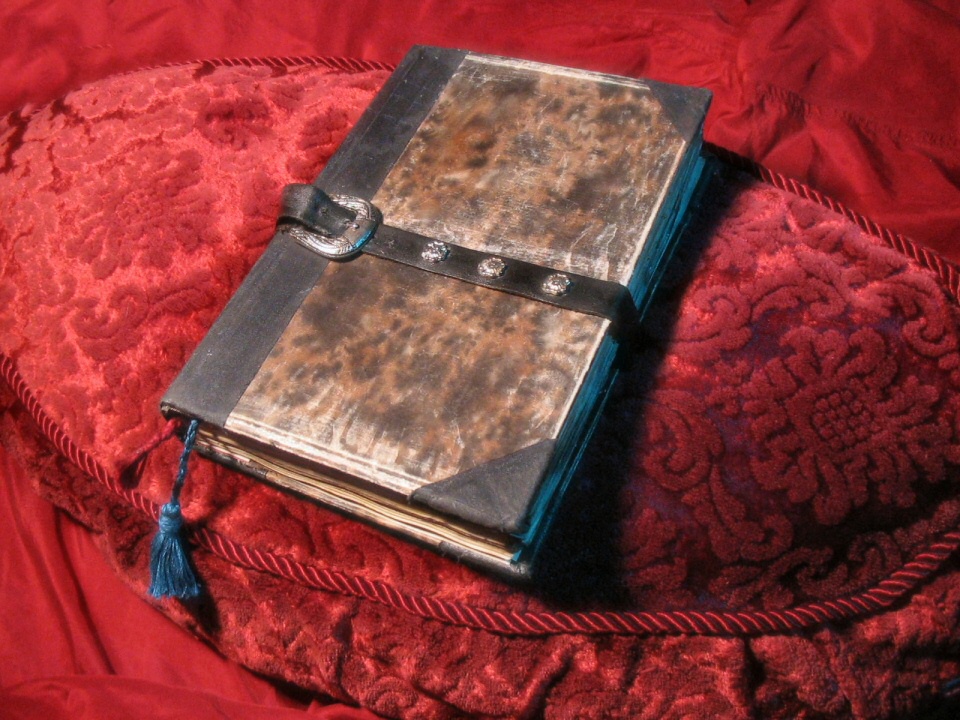
Here are a few more words for your horror vocabulary: “Seven Spooky Words for Halloween” at Dictionary.com – Free Online English Dictionary.
I apologize for the glitch, but apparently you cannot get to the Seven Spooky Words without having to flip through the Monsters of Literature and Folklore slide show. Both slide shows are enjoyable and quick, so I recommend visiting both anyway.
Dictionary.com – Monsters of Literature and Folklore

as Count Dracula
1931
Here is an interesting bit of trivia: “8 Monsters of Literature and Folklore” at Dictionary.com – Free Online English Dictionary. You may have to wait a second or two for the slide show to pop up.
Slattery’s Vocabulary of Horror
Here are some intriguing words that may be of interest to writers of horror or to writers in general. Most come from Dictionary.com. I hope to be posting more from time to time. Every field has its own jargon. The writing of horror should have its own. I have taken these from two or three sources.
hadal: adjective: 1. of or pertaining to the greatest ocean depths, below approximately 20,000 feet (6500 meters). 2. of or pertaining to the biogeographic region of the ocean bottom below the abyssal zone. Hadal entered English in the mid-1900s, and comes from the name Hades, the Greek god of the underworld.
de profundis adverb: out of the depths (of sorrow, despair, etc.). De profundis means “out of the depths” in Latin. It is the opening of Latin translation of Psalm 130 which continues “Out of the depths I cry to you.” Today the term can be used as a phrase to convey sadness or as an adverb.
isolato noun: a person who is spiritually isolated from or out of sympathy with his or her times or society.
mordacious adjective: 1. sharp or caustic in style, tone, etc. 2. biting or given to biting.
topos noun: a convention or motif, especially in a literary work; a rhetorical convention.
Anacoluthon (an-uh-kuh-LOO-thon) noun: 1. A construction involving a break in grammatical sequence, as It makes me so—I just get angry. 2. An instance of anacoluthia.
Catachresis (kat-uh-KREE-sis) noun: Misuse or strained use of words, as in a mixed metaphor, occurring either in error or for rhetorical effect.
Apophasis (uh-POF-uh-sis), noun: Denial of one’s intention to speak of a subject that is at the same time named or insinuated, as “I shall not mention Caesar’s avarice, nor his cunning, nor his morality.”
Palter (PAWL-ter) verb: 1. To talk or act insincerely or deceitfully; lie or use trickery. 2. To bargain with; haggle. 3. To act carelessly; trifle.
Questions? Comments?
Edgar Allan Poe: Poet and Prophet | Interesting Literature

Here is a fascinating article about the founding father of modern horror: Edgar Allan Poe: Poet and Prophet | Interesting Literature. Interestingly, it states that the story about Edgar Allan Poe in his white belt and gloves at West Point, which I quoted in an earlier post from The Writer’s Home Companion, is urban legend. It goes on to state several fascinating bits of trivia about Poe including his involvement in the development of the detective story and the short story, the backgrounds of some of his most famous works, his passion for cryptography, his foreshadowing of the Big Bang Theory, criticisms of his work by William Butler Yeats and T.S. Eliot, and some insights on his personal and financial life.
Selections from The Writer’s Home Companion

The other day I happened to find my copy of The Writer’s Home Companion (by James Charlton and Lisbeth Mark, 1987), which I had lost/forgotten some time back. I have been perusing it since and have found several anecdotes on various authors of horror, which had not captured my attention when I purchased the book, because I was not interested in writing horror at the time. I am quoting them below for your entertainment and consideration. They provide a few insights and lessons into the art and business of writing as well as into the lives of writers, if not in the art of horror specifically. If you would like to read more of the book, you can probably find a copy at your local library or half-price bookstore.
“Edgar Allan Poe opted to self-publish Tamerlane and Other Poems. He was able to sell only forty copies and made less than a dollar after expenses. Ironically, over a century later, one of his self-published copies sold at auction for over $11,000.”

at Comicon, 2007
Photo by Penguino
“Stephen King sent his first novel to the editor of the suspense novel The Parallax View. William G. Thompson rejected that submission and several subsequent manuscripts until King sent along Carrie. Years later some of those earlier projects were published under King’s pseudonym Richard Bachmann, and one was affectionately dedicated to ‘W.G.T.'”
“Edgar Allan Poe perpetrated a successful hoax in the New York Sun with an article he wrote in the April 13, 1844 edition of the paper. He described the arrival, near Charleston, South Carolina, of a group of English ‘aeronauts’ who, as he told the story, had crossed the Atlantic in a dirigible in just seventy-five hours. Poe had cribbed most of his narrative from an account by Monck Mason of an actual balloon trip he and his companions had made from London to Germany in November 1836. Poe’s realistically detailed fabrication fooled everyone.”

Portrait by Girolamo Nerli
(1860-1926)
“Robert Louis Stevenson was thrashing about in his bed one night, greatly alarming his wife. She woke him up, infuriating Stevenson, who yelled, ‘I was dreaming a fine bogey tale!’ The nightmare from which he had been unwillingly extracted was the premise for the story of Dr. Jekyll and Mr. Hyde.”
“Amiably discussing the validity of ghosts, Lord Byron and Percy Bysshe Shelley decided to try their poetic skills at writing the perfect horror story. While nothing came of their efforts, Shelley’s young wife, Mary Wollstonecroft, overheard the challenge and went about telling her own. It began ‘It was on a dreary night of November that I beheld the Accomplishment of my toils.’ Her work was published in 1818, when she was twenty-one, and was titled Frankenstein.”
“Edgar Allan Poe was expelled from West Point in 1831 for ‘gross neglect of duty’. The explanation for his dismissal had to do with his following, to the letter, with an order to appear on the parade grounds in parade dress, which, according to the West Point rule book, consisted of ‘white belt and gloves.’ Poe reportedly arrived with his rifle, dressed in his belt and gloves–and nothing else.”

Portrait by Henry William Pickersgill
“Traveling along the Italian Riviera, Lord Bulwer-Lytton, done up in an embarrassingly elaborate outfit, acknowledged the stares of passersby. Lady Lytton, amused at his vanity, suggested that it was not admiration, but ‘that ridiculous dress’ that caught people’s eyes. Lytton responded, ‘You think that people stare at my dress and not at me? I will give you the most absolute and convincing proof that your theory has no foundation.’ Keeping on only his hat and boots, Lytton removed every other article of clothing and rode in his open carriage for ten miles to prove his point.”
If you have anecdotes about your favorite authors that you would like to share, please do.
Questions? Comments?
Is someone not telling me something?
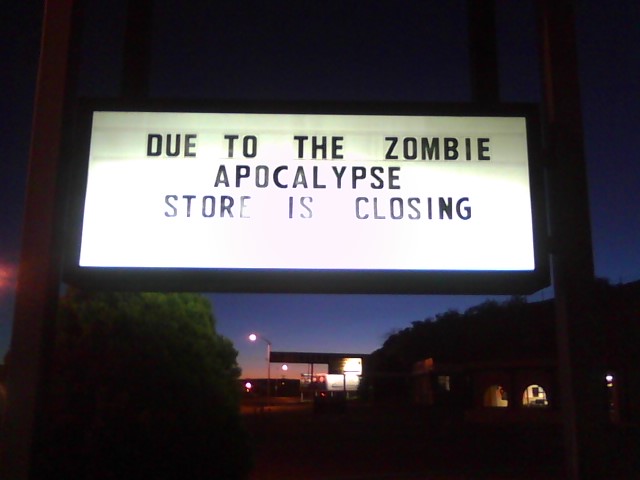 Over the last few days I have noticed this sign in front of a sporting goods store in Farmington, New Mexico. This is the same town where I saw the Zombie response vehicle several months ago (if you didn’t see the post, I have included one of the photos below). My question is: does everyone else know something I don’t? 🙂
Here’s the car I saw several months ago a mile or two from where the sign is located. It seems Farmington is getting ready for something. Maybe Farmington is expecting to be the zombie capitol of New Mexico. 
The Real-Life Murderess Behind the American Horror Story: Coven Character | Mental Floss

Here’s an interesting bit of history with an influence on modern American horror:
The Real-Life Murderess Behind the American Horror Story: Coven Character | Mental Floss.
Assure or Ensure or Insure?
Yesterday, I happened across a good article at Vocabulary.com that cleared up something for me and so I thought I would pass along the info. Have you ever wondered about the difference between assure, ensure, and insure? Here is the answer: Assure/Ensure/Insure.
The Importance of Being Interesting | READ | Research in English at Durham
Here is another blog post that I happened across recently. You may find it of interest with regards to writing in general.
The Importance of Being Interesting | READ | Research in English at Durham.
The Best Anecdotes Featuring Oscar Wilde

Here are a few delightful bits about the author of The Picture of Dorian Gray.
 Phil Slattery, Writer, Publisher