Slattery’s Tao of Writing, Part 2: the Allegory of the Stream

Thalia Muse of Comedy and Bucolic Poetry Illustration by Arash
Thalia
Muse of Comedy and Bucolic Poetry
Illustration by Arash


This is a reprint of a previous post from several years ago.

Once in a while, I come across some gem of the writer’s art that almost strikes me breathless with its beauty.  The poems of John Donne are one example.  The poignant first chapter of A Farewell to Arms is another.   Recently, I began reading Ray Bradbury’s The Martian Chronicles  and every time I pick it up, I am nearly struck breathless with his simple, understated eloquence that touches one’s very core.   Today I read a post at winebbler.wordpress.com and her simple, fun voice and flowing, relaxed style combined with playful use of the English language made for very entertaining and enjoyable reading beneath which I thought I could sense an undercurrent of growing artistic beauty.

That article made me start to think about what makes a work of writing aesthetically beautiful.  After some thought, I reached the conclusion that every work of literary beauty has the same qualities as a powerful but smoothly flowing mountain stream:  clarity, power, and an uninterrupted flow.  But unlike a stream, a work of literary beauty must also be reasonably brief.

In every literary work I consider beautiful,  the first universal characteristic that comes to mind is that the author uses a simple voice comprising simple, everyday words that anyone can understand.  Writing is communication.  Communication is one person disseminating ideas to others by using words, which are collections of sounds representing ideas.  By using simple words everyone understands easily, the writer makes his ideas easier to disseminate.  Why use a word that few can understand, when you can use a simpler word with the same meaning that everyone can understand?  Therefore, our stream must be crystal clear and free of mud or anything that would hinder insight and perception.

If ideas equate to the water in our allegorical mountain stream, the precision of the component ideas, the words, give the stream its force.  As I mentioned in my post “Slattery’s Tao of Writing, Part I”, words chosen for their precise meanings have power.   As I said earlier in this article, words are ideas.  Precise words are precise ideas.   Precise ideas are powerful ideas, powerful emotionally and intellectually.  Like all other forces in the universe, powerful ideas become more powerful if combined and organized with one idea leading logically, flowingly to the next.  This facilitates understanding and the reading experience.

When my stream of thought is uninterrupted and powerful, I become immersed in the work.  I can be swept away and can lose track of time and of everything happening around me.   To my mind, every writer should aspire to instill this experience into his readers.  When this happens, the writer has made an emotional and intellectual connection with his reader and the reader is grasping the writer’s ideas.

If organization is lacking, ideas are scattered like boulders in the stream and on the banks, creating rapids and breaking up the smooth flow. A powerful, disorganized stream is a torrent, destructive of everything along its banks, stiking out at random, benefiting no one.  In communication, disorganization is the source of misunderstanding, the antithesis of understanding.  The stream becomes destructive. 

If a writer uses words his readers do not understand and they have to turn to a dictionary to find out what the writer intends, the clarity of the ideas is lost and the reading experience is muddied.  Furthermore, the reading experience flows even less smoothly.   Even if the reader can reason out the meanings of the words from the context, the stream of thought is still disrupted and muddied, even if to a lesser degree.  The words will also lose much of their power, because the reader cannot appreciate the nuances of what he or she does not fully understand.

Lastly, every beautiful work has been reasonably brief.  Reading anything exasperatingly long becomes tiresome for everyone.   When readers become weary (word-weary so to speak), they can lose focus on what the writer is trying to communicate.  This detracts from the reading experience just as if someone who enjoys swimming in a mountain stream can no longer enjoy their swim if they become overly fatigued with exertion.

That said, I will now close tonight’s blog before I wear you out with my ramblings.

Thoughts?  Comments?

Slattery’s Tao of Writing, Part 1

Several years ago, I wrote a seven-part series on my own Tao of the art of writing and published it on my then nascent version of this website. Over the next several days I will be republishing it. I will probably end up adding at least a part 8. In addition, I intend to convert this series into a series of YouTube videos, once I work out some production details, to play on the website’s YouTube channel. Please let me know what you think of this series and how I can improve it for YouTube. 

A quick Google search reveals there are a lot of web articles entitled “The Tao of Writing”.   This is mine.  Let me begin by explaining what I perceive to be the Tao (others may view it differently and have equally valid perceptions).

The Chinese character above translates as Tao, the way, and is pronounced as “dow”, as in “The Dow-Jones Industrial Average”.  Taoism is an ancient Chinese religion rooted in the teachings of the legenday Chinese philosopher Lao Tzu (sometimes transliterated as “Lao Tze” or in a number of other ways) as expressed in his book, the Tao Teh Ching (The Book of the Way).   The Taoist religion, as I understand it, is far removed from Lao Tzu’s original philosophy, because the religion incorporates demons, gods, demigods, spirits, and other things that are not mentioned in the Tao Teh Ching or in the teachings of the original masters such as Lao Tzu, Chuang Tzu, or the Huainan Masters (at least in the translations I have read).

What the Tao is, is hard to express.  “The Way”, as I understand it, refers to the the way of the universe, basically how the universe works in a general sense.  In the American vernacular, we would probably express it as “the way things are”.    Some reader might respond to that as, “Sure.  I understand.  You’re saying the Tao is why toast always falls buttered side down.  Gotcha.”

No, I am talking about something a bit more profound.  It’s more like this:

You work hard at trying to find a publisher for a story and are consistently rejected by what you perceived to be all the most suitable choices.  So, one night when you are battling insomnia and have just started the first glass of your second bottle of wine, out of frustration you send it off as a shot in the dark to some big name magazine who will never accept it, and lo and behold it is accepted.  So, sometimes it seems that you work your butt off for something and get nowhere, but you give up trying and you succeed.  Basically, the Tao is then like learning the way the universe works, then learning to succeed by adapting to that way.  Confused yet?  Have I oversimplified my point or have I made it overly complex?

Understanding how the Tao works is not something anyone can express in words;  it is something one can understand only subjectively,  i.e., one must have a feel for it.  In fact, the first sentence of the Tao Teh Ching is “The Way that can be spoken is not the true Way.”  For most people, reading the Tao Teh Ching will probably be an exercise in confusion and frustration and contradiction.  In the Tao Teh Ching, nothing is exact; everything is metaphor and allusion, about how water flows into a valley and then the sea, how wood is shaped, the balance of the universe, and so on.

To complicate matters even more, because the Tao Teh Ching was written in Chinese about 2,500 years ago, and the translation of the original Chinese characters may have changed significantly since then, translation of the Tao Teh Ching into modern languages is frustratingly imprecise, often relying on traditional or customary translations as opposed to knowing exactly what Lao Tzu was saying.  For today’s modern, exact, Socratic-tradition-based society, this is maddening.  Our scholars argue about the meanings of works written in modern English, how are they going to agree on something as nebulous as the Tao Teh Ching?

So, what are the important ponts of the Tao that everyone should remember?

As I perceive the Tao, one critical aspect of existence is balance;  the universe consists of opposites that must balance out or problems arise.  At the same time, all existence arises from the conflict of opposites.  An example of this is the old Zen Buddhist rhetorical question of “what is the sound of one hand clapping?”  I do not know the official or traditional answer to this, but from my Taoist perception, the answer is that there is no sound.   The sound of  clapping is produced only when the opposing forces of the hands meet.  Thus it is with everything in the universe.  Two opposites have to come together to produce anything:  light and dark, man and woman, left and right, up and down,  hot and cold, etc.

Another critical aspect of existence is that emptiness can be as important as substance and non-action can be as important as action.  There are other aspects, of course, but I will stick to these for now and address those at a later date.

Take a look at your hand for an example of the first principle.  If there were no spaces between your fingers, you would not have a hand, you would have something else, maybe a flipper.    Likewise, a sculptor can create a sculpture only by cutting away pieces of material so that the now-empty spaces create a form.  So a sculpture, or any object for that matter, comprises both substance and emptiness.

For an example of the non-action versus action principle, think about problems you faced in the past.  Could you have solved any of them by simply doing nothing?  Not every problem can be solved by doing nothing, but some can.

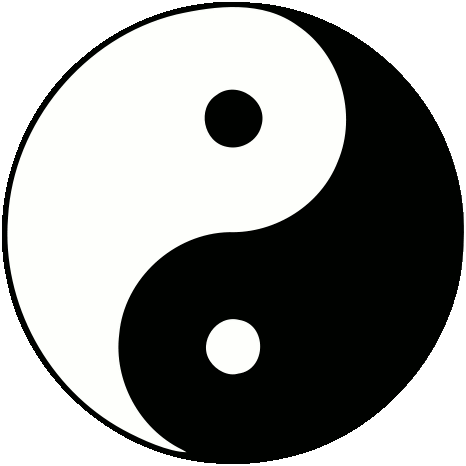
These principles are symbolized by what is know in our society as the Yin-Yang as shown here:

yinYang

In the yin-yang, as I perceive it, the eternal circle of the universe is formed by the interaction of opposites, here symbolized by light and dark, but while they are opposites, a little of each exists in the other.

For a very short book, the Tao Teh Ching is filled with incredible depth and meaning.  For me, in the few translations I have read, the Tao makes perfect sense, and I understand the world a little better each time I read it.    However, others may read it and just be confused or frustrated.   The Tao Teh Ching is something that will either speak to you personally and enlighten your world, or it will not.

But what has all this to do with writing?

I see the Tao at work whenever I write anything.  I see it in what I consider to be some of the basic principles of writing: less is more, what is not said is often more important than what is said, and so forth.  For me, this makes writing almost a form of magic, not in the sense of illusion, but true magic where one creates something  out of nothing by using as few components as possible, by making something complex by keeping everything as simple as possible.

I will give one example and then I will close this article for the day and pick it up when I can sometime in the hopefully near future.

One of the first principles of writing I learned was to use as few words as possible.  Strunk and White, in The Elements of Style, say to “Omit unnecessary words”, which in itself is a perfect example of omitting unnecessary words.  How much more concise can that one sentence be?  It contains absolutely no unnecessary words.  If one word is omitted, the sentence ceases to have meaning.   The virtue of this is that, if done properly, the work becomes much more powerful because each word carries more weight.

To do this, a writer needs to use words precisely.  Try to find a word that captures the exact meaning of the idea you are trying to express–and the shorter the word the better.  After all, you are trying to communicate an idea to the largest possible audience.  Why use big words that will send readers scurrying to the nearest dictionary, thus interrupting their chain of thought and perhaps tainting their reading experience, when you can use words that everyone understands and keep their experience free from interruptions?

An example of using words precisely would be revising the sentence “A man went quickly to the store.”

Now, shorten it by replacing “went quickly” with “ran”.  While you are at it, replace the other general terms with more precise ones.   The sentence becomes “John ran to Walmart.” Now, if you have had any background information on John, you know who he is, what he is like, his possible motivations, and that he is in a hurry for some reason to get something from Walmart, knowing the kind of products Walmart has, you may have an idea of why he is going there.   If we changed the sentence to “John ran to the Red Dot Liquor Store” we have an even better idea of his motivation.   If we said, “John sped to Red Dot Liquors in his brand-new corvette”, we know even more about John:  we know he can afford a brand-new corvette.   If you have ever been in Red Dot Liquors, you know something of the products they carry and that may say something to you about John’s decision to purchase them.

So, how much more excitement and power does the sentence “John sped to Red Dot Liquors in his brand-new corvette” have versus “a man went quickly to the store”.   The final version packs a lot more information in almost the same space.

So that is part of the magic of writing for me:  using as few words as possible to create a work.  On the surface, it seem to go against logic.  How can you build something by using as few components as possible and deleting the ones you do have whenever possible?

Try an experiment, take the first page of any run of the mill romance novel and draw a line through every word you consider unnecessary while keeping the meaning of the sentence.   Then take your final product and do it again.  Do it a third time if you like.  How much were you able to reduce without changing its meaning?

Now take the first page of a novel by Hemingway, someone known for his lean, muscular writing.  How far were you able to reduce it before changing the meaning?

Someone once said, “draw a line through every third word and you will be surprised at how much it improves your writing.”  I have tried that and it works wonderfully.  Of course, you can’t arbitrarily omit every third word, or the work may become nonsense, but it does cause one to question whether that word is necessary.

I have always marveled at the idea that one can write something by omitting words. It goes against my standard, American, public school education, where teachers give a mininum number of words to an assignment and one is forced to insert as many words as possible just to meet the requirement. But can you blame them? If you told the average American high school student to tell what he did over the summer in as few words as possible, he would say, “I had fun” or “I worked.” Good luck teaching him to write.

Anyway, I am rambling once again.  I will close for now and pick this up at some later date.

Thoughts?  Comments?

Baltasar Gracian on Expressing Yourself

GRACIN~2

Baltasar Gracian y Morales (1601-1658)

I have a small book entitled The Art of Worldly Wisdom:  A collection of Aphorisms from the Works of Baltasar Gracian (translated by Martin Fischer, published by Barnes and Noble, 1993).  Baltasar Gracian y Morales (1601-1658) was a Spanish Jesuit scholar and writer of Baroque prose.  The Art of Worldly Wisdom is perhaps his most famous work.   It is a collection of three hundred paragraphs from his works on how to live in what we would consider the practical world of human relations as these first lines from five randomly-chosen paragraphs show:

  • Because an ass once, not twice.
  • Watch him who works by indirection.
  • Know how to put fire into your subordinates.
  • Know how to pretend ignorance.
  • Discover each man’s thumbscrew.
  • Choose an occupation that brings distinction.

Clearly, the drift of the works is more towards the earthly than the spritual, more towards Machivelli and Marcus Aurelius than Solomon and Lao Tzu.   With that in mind, I have quoted paragraph 216, the one that seems to bear the most relation to the art of writing.   Please let me know your thoughts on the value of Gracian’s advice.

“Be able to express yourself, not only clearly, but with charm.  Some conceive easily, but have a hard delivery; yet without pains, these children of the spirit, our thoughts and our judgments, are not rightly born; others are like those vessels that hold much but yield little;  while conversely others pour forth more than was anticipated;  what resolution is to the will, exposition is to the mind, and both are great attributes;  clear heads are much praised, but those balmy may be venerated because not understood;  wherefore at times be not too clear, in order not to seem too ordinary;  yet how can a world get a concept of what it hears, if the speaker himself has no clear notion of what he is talking about?”

“The Terror” from the Wen Fu

Here is an interesting section/stanza from the ancient Chinese work Wen Fu (The Art of Writing).  It is entitled “The Terror”.

I worry that my ink well will run dry, that right words cannot be found ; I want to respond to the moment’s inspiration.

I work with what is given ; that which passes cannot be detained.

Things move into shadows & they vanish ; things return in the shape of an echo.

When Spring arrives, we understand that Nature has its own reason.

Thoughts are lifted from the heart on breezes, and language finds its speaker.

Yesterday’s buds are this morning’s blossoms which we draw with a brush on silk.

Every eye knows a pattern, every ear hears a distant music.

Wen Fu was written by Lu Chi (261 AD – 300 AD), who was a scholar, a military leader, and the the Literary Secretary in the the Emperor’s court.  It is very short and may take an average reader 15-20 minutes to complete.  The hardcopy  translation I have was written by Sam Hamill and published by Breitenbush Books in 1987.   A far more poetic version can be found at http://web.mnstate.edu/gracyk/courses/web%20publishing/LuChi.htm.

I like to peruse Wen Fu occasionally, because the language is simple yet mystical while the ideas are straightforward yet metaphorical.   What fascinates me most about the work is that the principles it expresses are eternal and universal.   The underlying principles that guided Lu Chi’s art are the same ones that underlie ours nearly two thousand years later and in a society (and language!) that would have been completely alien to Lu Chi.  What’s more, Lu Chi describes the experience of writing from a very intimate standpoint to which any author who is passionate about his art could relate.

What are your thoughts?  What principles of writing are eternal and universal?  What do you see in the stanza above?

Update October 26, 2020: Book Covers and Progress on Shadows and Stars

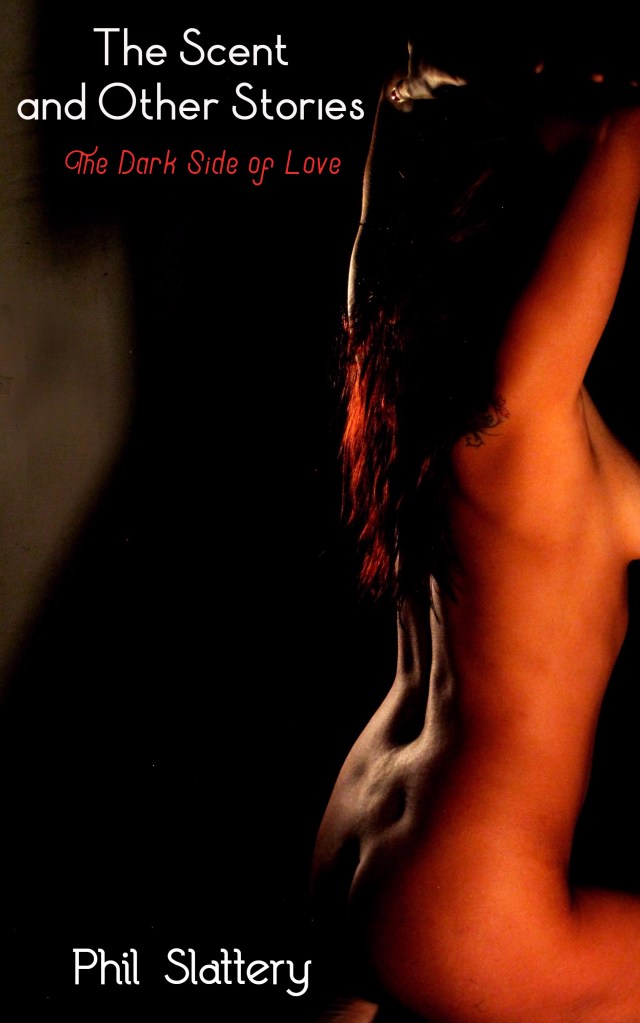
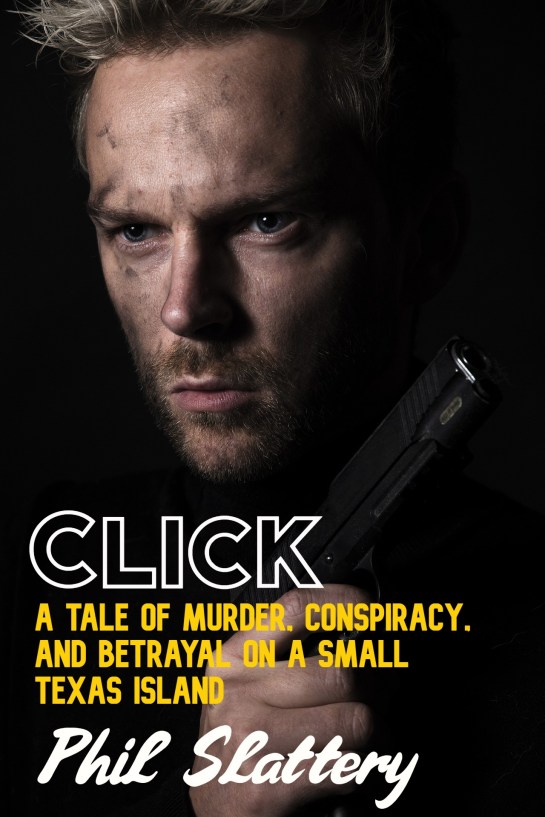
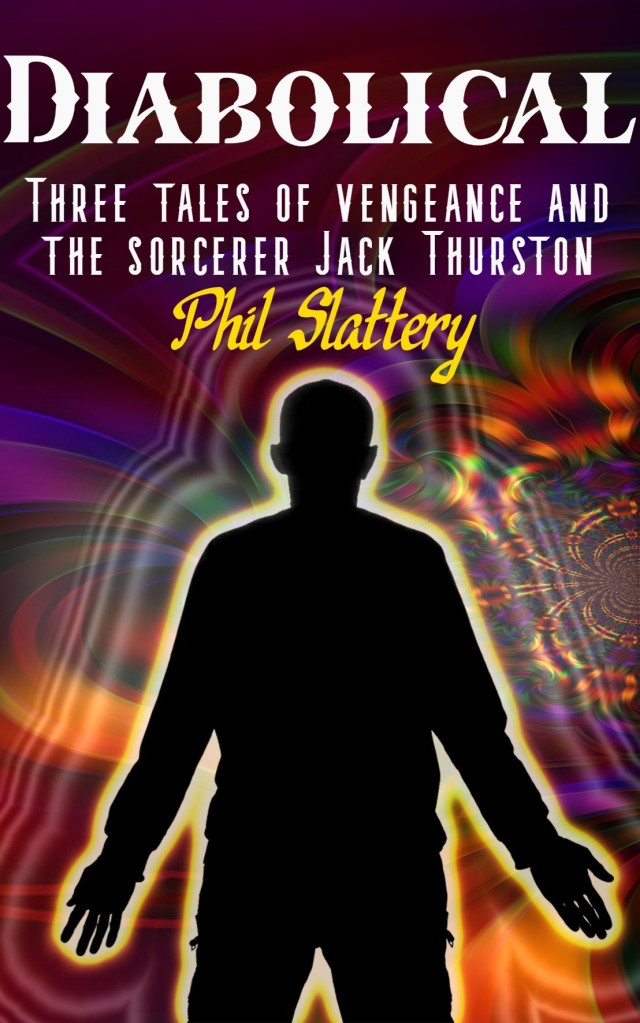
I was going through my electronic files tonight and came across a couple of alternate covers for a couple of my works. I thought I would post them up just to show them off. I don’t think I have posted them before, but I might have. Let me know what you think of them.

Of course, once they are posted here, I will post them on Pinterest, thus generating a smidgen more publicity for the works shown.

Also, I have been working steadily on Shadows and Stars over the weekend. I am making some good progress. I am editing it page by page trying to get a reasonably complete draft. I think I will make it, but I don’t know when I will have it done. Right now, I am on page 71 of about 300. I really like what I have accomplished over the last week or so. I am trying to refine it down to a gnat’s ass with supporting details, clues as to what will happen (but not foreshadowing per se). Tonight I have been working on describing an alien carnival. I have to use my imagination to show things that set the stage for future events while saying something about the nature of the alien society. It’s quite an interesting journey. I get to visit a fiesta on another world–at least in my mind.

Take care and hasta luego. Wear your mask.

Let me know what you think of the covers. I might use them some day.

Update on Status of Click

I was surprised today to run across today’s Amazon ratings for Click and find out this:

First of all, these are probably the highest day-to-day ratings that Click has earned. It seems to be growing in popularity.

Second, I was surprised that it ranked out in LGBT Action and Adventure. In the story, only two minor characters are LGBT. Still, I am glad to have the rating. It’s always interesting to see what parts of a story readers will key on.

Follow this link to find Click on Amazon.

Don’t forget to like, comment, and follow.

Hasta luego.

Update of October 4, 2020: Return Trip from Midland

About an hour and a half ago, I got home from a trip to Midland, Texas to visit my wife for reasons I shall not disclose here. I will say that all is well in Slattery-world now.

At Buzzard Beach, Arkansas

What has now become my custom is to spend a night en route either at my stepdaughter’s apartment in Fort Worth or at a La Quinta in Garland (for more on Garland see the opening scene in Zombieland). Last night I chose the former. I drove on to Gillett today taking about eight hours including two side-stops at two Half-Price Books, one in Ft. Worth and the other in Garland) plus lunch at Torchy’s Tacos in Fort Worth. Terrific tacos by the way.

I will make this short, because I need to go to bed soon. I had almost no sleep last night. That is a common, long standing issue with me and has nothing to do with my stepdaughter’s apartment. I also stayed at her place en route Midland, but slept well that night.

For a good part of the journeys to Midland and back, I listened to an audiobook of Joseph Conrad’s Nostromo. Though of course it is beautifully and masterfully written, this is one of the most boring books I have read in a long time. I chose it because the spaceship in “Alien” is the Nostromo and I thought I might find a clue as to why that name was chosen. I also wanted to read something of Conrad’s besides Heart of Darkness.

The first seven chapters are Conred describing the geography, people, and upper class of Costaguana. I am up to chapter three of the Second Part and the character Nostromo is mentioned only a few times, but each time with increasing detail. Sometimes Conrad gets into somewhat exciting passages when describing revolutions or other conflict, but mostly, to this point, the book is more like a travelogue. Conrad really doesn’t get too much in depth about the characters except for Mr. and Mrs. Charles Gould, the owner of the San Tome silver mine and some of the figures of the Costaguana government. It seem that Conrad is going into great detail about the country to set up something to come later. I suspect this might be an affair between Mrs. Gould and Nostromo. I have not read the Wikipedia summary so that I can avoid any spoilers it may have.

Joseph Conrad, 1857-1924

This audiobook is about 19 hours long, and I am about a quarter of the way through. I will hang in there to study Conrad’s descriptions of the land and people, if for no other reason. They are very well done, and there is a lot I can learn from them.

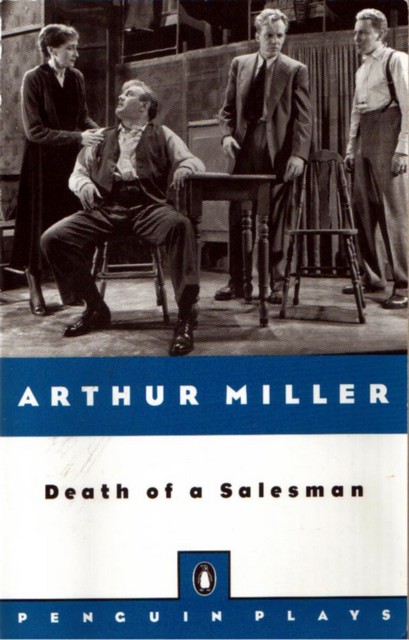
Today, at the Half-Price Books on Hulen in Fort Worth, I picked up a radio dramatization of “Death of a Salesman” (abridged) by Arthur Miller. It’s only about 1.5 hours in length, so I listened to it between Garland and Texarkana.

Damn, this is a powerful work. I really loved it

I have never seen a performance of this on stage or on TV, but I will have to search one out now. I would love to find a video of one of the original productions, so that I can study the staging, etc. This probably hit me hard, because in it Willy Loman is 63 and I’m 62.

For such a short work, there is a hell of a lot going on it in terms of character development, revelation, interaction, disillusionment, the American dream and on and on and on.

I will try to write more about this later, but for now, I must go to bed.

Hasta luego.

Don’t forget to like, comment, and follow.

Book Review: A Deadly Education by Naomi Novik — The BiblioSanctum

I received a review copy from the publisher. This does not affect the contents of my review and all opinions are my own. A Deadly Education by Naomi Novik Mogsy’s Rating: 3.5 of 5 stars Genre: Fantasy Series: Book 1 of Scholomance Publisher: Del Rey (September 29, 2020) Length: 336 pages Author Information: Website | Twitter Truly, A Deadly […]

Book Review: A Deadly Education by Naomi Novik — The BiblioSanctum

Update September 25, 2020: Dead Souls

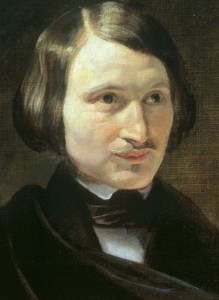
Nikolai Gogol
1809-1852

I finished reading Nikolai Gogol‘s Dead Souls today. This is actually the second time. I first read it for a Russian literature class circa 1979. I always remembered the ending of the first book as the protagonist Chichikov rides across the majestic, endless Russian landscape in his carriage off to who know what future for its beauty, drama, and keeping the reader on the edge of his/her seat as to what lay ahead.

I remember that my Russian professor (who was actually Ukrainian), Dr. Wowk (pronounced as “woke”) had us read only the first book. Dead Souls was originally intended to be what we now call a trilogy, but Gogol never wrote the third book, because he became a religious fanatic, as Dr. Wowk said (and as I recall), and fasted himself to death. Compared to the Wikipedia article, this is at the least oversimplified. My memory, though, is not what it used to be.

If you read my previous update on Dead Souls, you recall that I consider the first book a masterpiece of Russian literature. I can see now why he did not have us read the second book. It is not nearly as entertaining as the first and is rather boring. It doesn’t have the action or dramatic satire of the first book and the characters are not nearly as interesting. Gogol also grows increasingly pedantic, in a somewhat less that subtle way. His characters sometimes drone on about the nature of the Russian character or how one should go about becoming wealthy or any number of other things. In one instance, Gogol goes into great detail about how and why Chichikov chose a particular fabric to buy so that he could have a suit made from it later. This struck me as odd, because in the first book, he shunned unnecessary details and gave an example of how some writers write giving ridiculously unnecessary details rather than writing in “broad strokes” as he phrased it, which he tended to do. This change in writing style with its focus more on how to live a better life and how to make a decent living while being of benefit to one’s nation and to others made me realize that the value in reading the second part is not for the story per se, but in watching how Gogo’s attitude toward life and his mind changes as he becomes more religious/spiritual as he falls under the spell of Matvey Konstatinovsky. It is tragic, but also fascinating, to see this brilliant mind morph as it subtly devolves.

Would I recommend Dead Souls? Absolutely! I recommend the first book to everyone. It is a hugely entertaining satire that reaches across the centuries and across peoples. You see elements of human nature that are common to all people. You will probably even recognize some of the types Gogol exhibits here in people you know.

The second book though, I would recommend to scholars of Russian literature, primarily, but I would also recommend it to people who have an interest in psychology and how one’s mind can slowly deteriorate with the introduction of questionable ideas and philosophies.

I have a long trip to make tomorrow. I will probably start listening to Joseph Conrad’s Nostromo.

Thoughts? Comments?

Don’t forget to like, comments, and follow.


Photo of international social distance emblem.
Keep your social distance. Stay at least two meters (six feet) apart when possible.


Daylight Come: A new novel by Diana McAulay — Repeating Islands

It is 2084. Climate change has made life on the Caribbean island of Bajacu a gruelling ordeal. The sun is so hot that people must sleep in the day and live and work at night, all the time under brutal Domin rule. Food is scarce, and people over forty are expendable. Sorrel can take no […]

Daylight Come: A new novel by Diana McAulay — Repeating Islands

September 20, 2020: Progress on Shadows and Stars, Tangents, and Internet Marketing

Shadows and Stars cover 2
Coming hopefully soon.

Contrary to what are probably well established principles of writing, I will start this article off with a side note, which I foresee as setting the tone for this morning. It’s 11:46 and while I wait for the oven to heat up so that I can bake my croissants (small ones from Pillsbury with black tea–my favorite breakfast of late), I am watching Better Than Food.

If you are not familiar with it, Better Than Food is a book review channel on YouTube that is hosted by Clifford Lee Sergeant. He reviews books from all periods of history. I enjoy his reviews a lot because he is passionate about them and can discuss the book’s structure, plot, characters, everything a writer would need to know to select the best books to read. Today, Clifford is reviewing The Sound and the Fury, which he says is one of his favorite books.

I started reading The Sound and the Fury a few years back, but, even though I was enjoying it, became distracted and wandered off onto others. Based on the little I read, which was probably ten pages at most, it is beautifully written. I have wanted to go back to it since, but haven’t sat down long enough to focus on it as it deserves. I have a print copy and have been into audiobooks for some time, which I can listen to in my car. Right now, I have Gogol’s Dead Souls, in my car, which I am not far from finishing, but the second book is not as entertaining as the first, so it is difficult to focus on it.

So much for the side note/tangent.

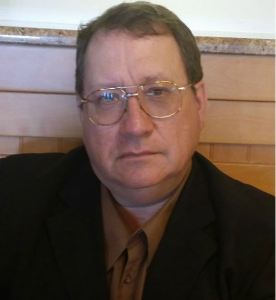
Phil Slattery portrait
Phil Slattery
March, 2015

Back to the tangent. I took a break from writing this to have breakfast.

The last time I made croissants, I added about half a teaspoon of ricotta cheese to a couple of them before I rolled them up. I did it today with most of the croissants. The cheese becomes hot but does not melt (350 degrees at nine minutes). I eat the croissants with butter and just a little grape jelly. Combined with black tea this is a nice way to start a Sunday morning.

Why am I mentioning all this? Answer: marketing.

I am finally coming to realize that the Internet is a vast library where one searches not for books but for words. If I write a book that is stocked by a library, people come in and search for a topic the book covers. But with the Internet, they may search for a word (or phrase) and be led to a lot of books, which may not be what they were looking for, but which they might find interesting anyway.

Ergo, an avid reader of science fiction, let’s say, may be searching for a new filling for her croissants. Then she comes across this page and finds out about an upcoming sci-fi novel called Shadows and Stars. She decides to follow me and keep up with the updates on Shadows and Stars. She also finds out that I have written other stories, including sci-fi ones, and buys one or two to check out my writing style. If all goes well, I have a new fan that will pre-order Shadows and Stars when it comes out.

What are your thoughts on this strategy?

But, finally, on to the brief note about Shadows and Stars that I originally set out to write.

By the way, this is how I get onto tangents and why I haven’t finished reading The Sound and the Fury yet.

I am at 148,517 words for Shadows and Stars at this moment. I finished filling out a chapter yesterday that has been bugging me for a while. There are some other plot holes I hope to fill in today.

I want to finish this up asap without making it read as if I finished this up asap.  So, from here on, I am going to focus on removing as much as I can to bring the final draft down to about 100,000-125,000 words if possible. If I can’t bring it down that far, Shadows and Stars will be concise and tightly written with an intricate plot and good character development if nothing else. Filling out the plot holes will probably add at least 1,000-2,000 words, so I will have a lot of cutting to do. Let’s see if I can pull this off.

Don’t forget to like, comment, and follow.


Photoshopped painting of the Mona Lisa by Leonardo Da Vinci wearing a medical face mask to prevent spreading COVID-19/Coronavirus
Prevent the spread of the Coronavirus/COVID-19.


Novel editing: How to fix a boring chapter — Chris The Story Reading Ape’s Blog

Originally posted on Uninspired Writers: I try to keep each weekly blog post relevant to my own writing journey. This week, I struggled through the heart crushing moment of realising one of your chapters is BORING. It’s tough to admit. I tried playing it down at first, but eventually I held up my hands. Because…

Novel editing: How to fix a boring chapter — Chris The Story Reading Ape’s Blog

Play The Part You’re Given: Epictetus, Teles, and Shakespeare — SENTENTIAE ANTIQUAE

Epictetus, Encheiridion, 17 “Remember that you are an actor in a drama, whatever kind the playwright desires. If he wishes it to be short, it is short. If he wants it to be long, it is long. If he wants you to act as a beggar, act even that part seriously. And the same if…

Play The Part You’re Given: Epictetus, Teles, and Shakespeare — SENTENTIAE ANTIQUAE

Chapter 13 of the Unbound Realm is UP! — Dirty Sci-Fi Buddha

Chapter 13 of the Unbound Realm, my work-in-process YA fantasy series, is UP!  Jon learns about the Wayfarer Advance, a network of wandering adventurers that served as warrior-scouts in the Crimson Wars.  Then he meets Princess Eralindiany of the Delaeni Fair Folk, a buttkicking half-elf who looks suspiciously similar to Taylor Swift!  Here’s the link: […]

Chapter 13 of the Unbound Realm is UP! — Dirty Sci-Fi Buddha