
The Intersection of Faith and Reason: My Views on God

As some of my works have Christianity or at least some type of vague spirituality or metaphysics lurking in the backstory or surfacing here or there in a plot or in a character, I thought it would be a good idea to clarify just what my religious vs. spiritual beliefs are.

As some of my works have Christianity or at least some type of vague spirituality or metaphysics lurking in the backstory or surfacing here or there in a plot or in a character, I thought it would be a good idea to clarify just what my religious vs. spiritual beliefs are.

Let me summarize my beliefs (yes, this is a summary; my beliefs are somewhat intricate), however haphazardly organized they are. I am writing these off the top of my head as they occur. I edit as I go along.

Cogito ergo sum (I think therefore I am). As did Rene Descartes, I believe that all I can be sure of is that I exist. My perception of everything else might be in error. This is true for everyone. Some interesting concepts can be derived from this. For example, in the movie The Matrix, nearly all humans are being kept in cells and used as energy sources while the images of the false world they know are fed to them. When Neo was in his cell, all he could be certain of is that he alone existed and that only because he was thinking. All else was an illusion.

If my perceptions are dubious, then everyone else’s is in doubt as well, assuming that other humans exist. If they only exist in my mind, then my perception of what they perceive is in doubt. If others do exist, then everyone’s perception is in doubt.

Now if I am the only being in existence, then who created me? There must be another entity to create me and another to create my parent entity, and so forth, and so on. My recollection of my perceptions tells me that I have existed for only a finite amount of time. In that case, death is when I pass out of existence. How does that work if I am the only entity that exists? Do I pass on to another existence? I think that if I exist, then at least one other entity exists in order to have created me. Perhaps my reality is only the madness of someone who has existed in solitude too long.

Based on my experience, I believe subjectively that God exists. In that case, whoever created me and the being that created Him and so on ad infinitum, is God. So, if I exist, God, being my creator, must exist in some form.

If my perception of reality is correct, meaning it is actual reality for all of us, where did it originate? The best explanation science has to offer is that it was created in “the Big Bang”. What caused the Big Bang? No one knows at this point in our scientific evolution. My inclination is to say God, but then God is a ready, go-to explanation for everything beyond the limits of our scientific knowledge.

I am a Christian, though I do not cling to any one denomination. I believe in most of the principles that Christ taught. The only way to know these for certain is to look at the actual words of Christ. This leads to problems, because how do we know that the words Christ reportedly said were not carefully selected when the New Testament was put together to meet one or more agendas? While in college, I took two years of New Testament Greek and had a GPA in it of about 3.9-4.0. During these two years, the way we learned was by translating the Gospel of Mark. My professor was a Lutheran Minister whose father and brother (I think it was a brother) were Lutheran ministers, and I attended his church for a while. I was also a member of a Christian fellowship for a few years and often discussed religion and philosophy with friends. After these experiences I am increasingly suspicious that the teachings of Christ as they stand in the four gospels were probably carefully vetted before inclusion. I don’t have the space at the moment to discuss this, but I hope to write an article about it in the future.

I do believe in the overall message of Christ as I perceive it, which is to love one another and to love God. I honestly believe that if people could do this, most of our problems would disappear, but most people are incapable of doing this.

I don’t think most people understand just how radical Christ’s message (λογος in the Koine Greek of the New Testament) was for those times. Then, most people believed in multiple fickle gods and goddesses, to whom they had to offered sacrifices to have prayers answered and which, to my rudimentary knowledge of ancient polytheism, did not provide moral guidance or establish laws per se. Only Judaism had a single god. Then Christ came along and said this single god loves everyone and wants everyone to love each other and to love Him. What a truly radical thought! Over time, that idea would change the way we think on a global basis. Christ was right. If we could truly love God and each other (ἀγάπη and φιλία in the New Testament), all hatred and desire to damage or destroy each other in any sense would disappear. You can’t intentionally harm someone if you truly love them. But most of us can’t love each other as we should, which is heartbreaking.

Recently, I read Nietzsche’s The Antichrist, his last work before going mad and being confined to an “asylum”, as mental institutions were known then. I have read parts of his other works and I have read a little biographical info on him. I would like to read a lot more of them. Interestingly, Nietzsche’s father was a Lutheran minister and his grandfather a theologian. I agree with a lot, but not everything, of what Nietzsche says about the Church and about how Christianity can foster weakness. I think what must be taken into consideration though is Nietzsche’s perspective based on his life experience. I suspect that his constant suffering from a variety of ailments undoubtedly soured him on what belief in God can do for oneself. I think also that his strong negative views on society led him to state that “God is dead”, meaning that the world treats God as if he were dead.

Many people cite the evil people have done in God’s name (e.g. the Crusades) as a reason not to believe in God. This is one reason I say that people confuse God, the Church, and the laity. Because people, in order to achieve their own goals, say God ordained them (whether they actually believe it or not) to do such and such, does not mean that He did. They may actually believe they are doing the work of God, but if they are not living in accordance with Christ’s teachings, they are not doing the work of God.

Despite the evil that has been done in the name of God and the Church, belief in the teachings of Jesus has accomplished a lot of good from the establishment of charitable and nursing programs and hospitals to innumerable cases of individual healing, feeding the poor, and mercy for the weak and what we would term today “the underprivileged”. Unfortunately, these acts are not exciting and consequently do not make headlines as do acts of violence, betrayal, etc.

Who has examined the the words Christ actually spoke according to the four gospels? Here are a few websites reporting what Jesus said: ElDoradoweather.com; Walking with Jesus Ministries; Sacredtexts.com; etc

I am not what many people would consider a religious man. I do believe in God (Father, Son, and Holy Ghost) and I consider myself a Christian, though not a good one by any stretch of the imagination. Am I worried about going to Heaven or Hell? Not really. What will be, will be. But then there is what Heinrich Heine reportedly said on his deathbed when asked if he was worried about getting into Heaven: Gott wird mir verzeihen. Das is sein Beruf. [God will pardon me. That is his business.]

For decades, I prayed regularly in private usually every day, whether I was in a crisis or not and I rarely attended church from about 1980 to 2024. Within the past year, I have begun attending church regularly.

Sometime last spring, the solitude of having lived in a remote area of Arkansas for five years began to take its toll on me. I needed people, but in this rural area there are very few bars (and I don’t drive after any alcohol consumption anyway), few restaurants stay open past 9:00 (and those that do usually have few customers), and there are no social hotspots. My solution was to do what the pioneers did and go to church. I tried several but almost all taught the traditional views, lessons, and sermons. Then I found a church, whose name I won’t mention, that I thought my wife, who teaches in west Texas most of the year (at that time; she lives in the Dallas area now — a long story), would enjoy. I was right and we began attending regularly when she came home over Christmas break.

Now that she is back in Texas, I still attend it every Sunday and usually on Wednesdays as well while she attends a church she found in her town. I do enjoy the sermons, and the congregants are good people who sincerely believe. Occasionally, I may disagree with something stated in a sermon, but overall I believe it is a good experience and it does strengthen my faith in God and humanity as well and I put a nominal amount in the offering bucket every Sunday, because I believe it will be put to good use.

Nonetheless, I do not claim to be of any denomination or sect currently, though I was brought up in a Church of Christ. I have not applied to be a member of my current church and I do not intend to do so in the foreseeable future. I have nothing against joining any church. I just prefer to think of myself as still a member of the church where I grew up though I haven’t seen it in decades.

Nonetheless, I do not take the Bible on blind faith. I see the Bible as an anthology of writings by men who were perhaps divinely inspired but were still as fallible and as subject to misperception as any other human. I see the Bible as a hodgepodge of history, myth, and law overlapping the bronze and early iron ages. While some things in the Bible may be taken literally, much of it should be taken metaphorically. The Bible should be studied meticulously just as another other important work of ancient literature should be studied–with a critical, discerning, perspicacious eye seeking truth, not searching for justification for nefarious acts past, present, or future.

The best Sunday school I ever attended was while I was in college in the late 1970s’. I was a member of Intervarsity Christian Fellowship at the time, and I was trying to find a suitable church for me in Richmond, KY, where my alma mater of Eastern Kentucky University is located. My professor of Koine Greek (see above), his father, and, I believe, another relative were pastors at a Lutheran church that met in the Baptist Student Union building just off campus. Instead of teaching the usual Bible stories, they brought in textbooks and studied the archaeology supporting the Bible. Many of the small congregation, as I recall, were professors at the university. It was a fascinating experience.

I also suspect that parts of the Biblical texts, especially the New Testament, may have been occasionally manipulated, intentionally or unintentionally, to suit the politics of the time.

I know that many experts vehemently deny that the content of the New Testament was manipulated to suit the political problems Emperor Constantine was facing at the time and that there is no evidence to that effect. However, I look at the frequent number of times that Christ advises his followers to obey their rulers and then my doubts arise.

What are the actual teachings of Christ? In the several verses where Jesus is quoted, what does he actually say we should do to follow him? For now, please research this on your own. I may write a post on it later, but this one is already much, much longer than I originally intended. Besides, I think it is important that you read exactly what Jesus said, come to your own conclusions, and not rely on my interpretation or anyone else’s.

The Christian church (any Christian church) seems constructed to be manipulated by someone. Here’s the problem: there are three parts in the communications between God and the laity: 1) God, 2) the clergy, 3) the laity. To know what God teaches, the laity relies on the clergy. We must therefore trust the clergy to teach about God and His desires and instructions for us. But there are two problems: we trust the clergy to know what they’re doing (they are human after all and subject to errors); and they are also susceptible to their own political currents and the political currents of the world around them. This is not even to mention which of them might have their own private agendas. In short, the clergy is human, flesh as it were. As in John 1:14, “and the word became flesh…” My Greek professor (see above) explained the meaning of flesh in this context as the word of God became flesh with all its weaknesses and failings.

There is also the fact that the concepts of a heaven for true followers and a hell for non-believers and sinners make for one incredible carrot-and-stick combination. It’s as if the clergy is saying: do as we say and you go to heaven; don’t do what we say and go to hell; but we also have the power to forgive sins, so you might get into heaven despite those sins, but you have to do as we say.

At the same time, I do not automatically decry any belief of any faith. I try to judge each with a measure of disinterest.

My personal beliefs align best with the thought expressed on a small, wooden plaque I picked up in Germany in the distant past and now keep in my office:

“Ihr glaubt der Jager sei ein Sunder, weil er selten zur Kirche geht, im grunen Wald ein Blick zum Himmel ist besser als ein falsch Gebet.”

You (all) believe the hunter to be a sinner, because he seldom goes to church, in the green forest a glance to the sky is better than a false prayer.

Anonymous

I do have a spiritual side. I sometimes think I feel the presence of God when I see a truly awe-inspiring sight such as when I saw the Grand Canyon for the first time or when I have gazed at the myriad stars on a moonless night at sea hundreds of miles from land.

Where my beliefs depart from those of many Christians, is that I do not perceive God, “the Church”, and the Laity as one entity. I believe that confusing the three is a serious failing of many people, both believers and non-believers. God is spirit; “the Church” (in my view and as I shall use it in this writing) is the clerical organization of any and all Christian denominations; the Laity is the community of non-clerical adherents of any and all Christian denominations.

The Nature of God

I shall use the traditional pronoun of He/Him/His for ease of reference, though any spirit should technically be referred to as “it”, because it is neither male nor female. However, one’s perception of God, including mine, is often exceptionally personal, and using a non-personal pronoun might be construed as offensive, irreverent, or even blasphemous. As the majority of people probably still perceive God as male, I shall refer to God as male in this text.

I shall do that also because that is my perception and my tradition and the traditional perception in which I grew up. Using the pronoun she is just as inaccurate as using he, but if someone perceives God as female, that perception should be respected just as perceiving God as a male should be respected. If someone wants to refer to God as it, that view should also be respected. No one knows the actual nature of God and whether God is male, female, or neither is a matter of perception and tradition. For that matter, in my view, all perceptions of God should be respected including those that deny or doubt His/Her/Its existence.

Probably the one thing about God that most people can agree upon, whether they believe in one God or many, is that God is spirit. The definition of spirit, however, is perhaps as vague as the definition of God. Spirit, in general terms, can be a metaphysical entity or sense that runs through one person or through all people or through all living things, like the Asian concept of chi or the similar though fictional concept of the Force in the Star Wars movie franchise.

Spirit, in my experience with the modern lay/vernacular usage, is something that only living things have. Rocks do not have spirit. Dirt does not have spirit. Trees and other plants might be perceived as having spirit. However, in animistic beliefs, inanimate objects have a spirit of their own or a spirit associated with them.

Spirit can be good or evil or anywhere on the spectrum between them. It seems to be the abstract/invisible part of a person of all people or of all living things that animates them and drives their decision-making. It is a combination of emotions and reasoning and perception that drives the actions of one person or of a people or of all living things or of all things, depending on one’s beliefs. A soul then is a person’s personal, individual spirit or part of the universal spirit.

A good way to understand the connection between breath/air and spirit is to remember that the ancient Greek word for spirit is pneuma (πνεῦμα), which is also the word for breath or air (cf. modern English pneumatic). According to my professor of Koine Greek at university, the Greeks associated breath/air with spirit, because when a person dies, both their breath and their spirit leave them.

Spirit is a part of God, but God is more than that. God seems to be not only the spirit that permeates all things but more than that: the spirit that created the universe, drives it, and that one day will destroy it. This divine spirit is usually not considered haphazard. It is often perceived as intelligent, omniscient, and omnipotent. Depending upon one’s perception of fortune, it is often imbued with human characteristics, such as being good or evil, merciful or merciless, loving or cruel or with any other human trait. It is easy, therefore, to understand why the ancient Greeks and Romans believed in many gods. Everything seems to take on human characteristics at one point or the other.

Perhaps we perceive God with human qualities because we have trouble understanding each other’s actions and motivations. We see the actions of each other, particularly of those far removed from our daily lives, as fickle, mysterious, and inscrutable. Therefore, we see the actions of universe as fickle, mysterious, and inscrutable.

My perception is that God is the intelligent, overarching spirit that guides the universe, but to what degree He guides the universe is debatable to say the least. Many believe that He concerns Himself only with major events and not with the mundane, day-to-day lives of His followers. Others believe that since He is omniscient and omnipotent that He is involved in every occurrence no matter how trivial or esoteric.

The Nature of The Church

What I am calling The Church is the administrative organization that supports the clergy and clerical operations of a belief system. This is similar to the corporate structure of a business. It is composed of people who are usually paid in some fashion for their work for the organization, though the Church does have numerous volunteers working for it. As an organization, it has its established procedures, protocol, and goals. It functions via collaborative thinking and decision making or by supporting the guidance of an individual.

The Nature of the Laity

The laity are the unpaid followers of a belief system. They are people who believe in the faith’s goals and teachings and contribute to its success through contributing work or finances or tangible items to support the Church and its operations. The Laity is the source of the Clergy.

The Nature of the Afterlife

No one can offer concrete proof of an afterlife. People may use logic and reason and stories of personal experience to convince themselves or others that there is an afterlife, but how could one offer anything concrete to prove beyond a reasonable doubt that there is an afterlife?

If life ends in nothingness, what would it be like? How can one visualize it? One could think of an overcast night at sea when there is only blackness in literally every direction, and one seems to be floating in a black void with no up or down or left or right and nothing visible to indicate the passage of time. However, there would still be one’s heartbeat and one could still taste and smell the salt air and feel the tropical heat or arctic cold on one’s skin.

The best visualization of nothingness would probably be to visualize existence not before one’s birth but before one’s conception. Then it would be logical to return to that void after death.

Some faiths tell of past lives while some people speak of recollections from past lives. While there can probably never be concrete evidence of past lives or of God, does that mean that past lives and God do not exist? Does lack of evidence mean something never existed? No, it just means that it cannot be proven to exist or to have existed. Sciences such as archaeology, paleontology, and paleoanthropology continue to uncover new evidence of the world’s prehistory that was previously considered to be myth or legend. At the same time, given the nebulous nature of human perception and recollection, simply because someone seems to recall a past experience does not mean that experience actually took place. Any criminal defense or prosecuting attorney, psychiatrist, or psychologist or other mental health professional should be able to speak to this.

The oldest and strongest emotion of mankind is fear, and the oldest and strongest kind of fear is fear of the unknown.

H.P. Lovecraft, “Supernatural Horror in Literature”, 1927

Having one’s followers believe in an afterlife is a useful tool in keeping one’s followers in line with the organizational doctrine. This is the classic aforementioned “carrot and stick” method of convincing others to believe and do one’s bidding: if one does as the Church demands, after death one will spend eternity in a very pleasant place with friends and family. If one does not do as the Church requests, one will spend eternity in torment.

Do I believe in an afterlife? I hope there is an afterlife. To quote the poster behind Fox Mulder’s desk in The X-Files: “I want to believe”. The idea that life should end in nothingness is depressing and abhorrent. If one believes in souls and spirit, it is illogical that life should end in a void.

The Nature of the Bible

The Old Testament is a collection of manuscripts written over a period of roughly 1,200 years by (presumably) men who are lost to time. The authors of some manuscripts cannot be verified, while the authors of others are unknown, and the authors of others are only a name about whom literally nothing is known. Most of the manuscripts are known only second-hand, i.e. no original text exists and its contents are known only by being quoted in other manuscripts.

The New Testament is likewise a collection of manuscripts whose authors generally cannot be verified and which was written over a period of about 100-200 years. Also like the Old Testament, none of its texts are original but are known only through being quoted in other texts.

A history professor at almost any university would probably fail a student who used sources this dubious. A hypothetical conversation between the two might go something like this:

“Johnny, who is your source for saying Jesus was the product of Mary and the Holy Spirit?”

“Matthew, Professor Quisquam.”

“And who is Matthew?”

“I really don’t know. He was probably one of Jesus’s disciples. They say he knew Jesus personally.”

“Where did Matthew get his information?”

“They say he might have gotten it from Mark, but Jesus might have told him too.”

“And who is this Mark?”

“Well, uh…”

Does this mean that the Bible is useless as a spiritual guide? Not really. Scholars, clergy, and the Laity have gained valuable insight and life lessons from it for millennia. Parts of it are the bedrock for laws and nations worldwide. And while zealous devotion to the Bible has been the source of conflict from college debating teams to brutal crusades and oppressive regimes, much good has arisen from scholarly study of it ranging from anonymous personal acts of forgiveness and mercy to the founding of global charitable institutions, hospitals, and universities.

The Bible seldom states life lessons as explicitly as The Analects of Confucius or The Meditations of Marcus Aurelius. Most of its lessons must be learned through interpretation of its passages just as one would interpret a novel. And while there are traditional interpretations of probably every passage, sometimes they are interpreted in unusual or even bizarre ways that can lead to conflict with other Christians and particularly with non-Christians.

Of course, the mutability of the interpretation of the Bible also makes it easily susceptible to intentional or unintentional misinterpretation.

Another complex problem arises when one considers that at some point what texts should be included in the Bible had to be decided. Most, particularly in the Old Testament, are included probably out of tradition. In my humble opinion, the New Testament is more problematic.

There are some instances where Jesus gave straightforward spiritual guidance, particularly in the Sermon on the Mount or in Matthew 22: 37-40, when He said, ” Love the Lord your God with all your heart and with all your soul and with all your mind. This is the first and greatest commandment. And the second is like it: Love your neighbor as yourself.”

After that, much of what Jesus said was to tell people to not be afraid and that they should follow him, because He is the only way to God.

Some of the remaining teachings He gave concerned obeying the established authorities.

Jesus says about obedience:

“If you love Me, you will obey what I command.”

John 14:15

“Whoever has My commands and obeys them, he is the one who loves Me…”

John 14:21

“Jesus replied, ‘If anyone loves Me, he will obey My teaching.’”

John 14:23

“You are my friends if you do what I command you. “

John 15:14

“Remind them to be subject to rulers and authorities, to obey, to be ready for every good work, to speak evil of no one, to be peaceable, gentle, showing all humility to all men.”

Titus 3:1-2 NKJV

“Obey those who rule over you, and be submissive, for they watch out for your souls, as those who must give account. Let them do so with joy and not with grief, for that would be unprofitable for you.”

Hebrews 13:17 NKJV

These statements were made to people who probably had only a simple understanding of government, which was to either obey the authorities, the king, and the emperor or suffer the consequences, which would quite often be a slow, agonizing death.

Then there is Romans 13, verses 1-7, are quoted here from the New International Version of the New Testament:

Let everyone be subject to the governing authorities, for there is no authority except that which God has established. The authorities that exist have been established by God. Consequently, whoever rebels against the authority is rebelling against what God has instituted, and those who do so will bring judgment on themselves. For rulers hold no terror for those who do right, but for those who do wrong. Do you want to be free from fear of the one in authority? Then do what is right and you will be commended. For the one in authority is God’s servant for your good. But if you do wrong, be afraid, for rulers do not bear the sword for no reason. They are God’s servants, agents of wrath to bring punishment on the wrongdoer. Therefore, it is necessary to submit to the authorities, not only because of possible punishment but also as a matter of conscience. This is also why you pay taxes, for the authorities are God’s servants, who give their full time to governing. Give to everyone what you owe them: If you owe taxes, pay taxes; if revenue, then revenue; if respect, then respect; if honor, then honor.

This was written by Paul the apostle in 55-58 CE (formerly AD). According to Wikipedia, Nero was Emperor of Rome from 13 October 54 CE to 9 June 68 CE.

The path to life after death as described in the New Testament is essentially: a) The only way to life after death is through God b) the only way to God is through Jesus c) obeying Jesus will give someone eternal life d) disobedience will land one in Hell. This is the ultimate carrot-and-stick of persuasion: either do what I say and spend eternity in bliss or disobey me and spend eternity in Hell.

But once Jesus left this plane of existence, who was to tell the people what guidance was coming from Jesus? Only the lay leaders and the clergy could. That gave them an incredible amount of power.

Power tends to corrupt, and absolute power corrupts absolutely.

Lord Acton
The Nature of Good and Evil

“For there is nothing either good or bad, but thinking makes it so.”

William Shakespeare (Hamlet, Act II, Scene 2)

Is a gun good or evil? Place a pistol on a table and leave it there, without touching it. It performs no actions on its own, therefore it cannot be either good or evil. Use it to shoot someone, and it is evil–usually. What if you used it to shoot an assailant, thereby saving another person’s life. In the eyes of the person saved, that pistol was used for good. To the now (perhaps mortally) wounded assailant, that pistol was used for evil. If someone uses a rifle to shoot a deer to feed his/her family, that rifle is used for good. To the deer’s mate, that rifle was used for evil.

Irreconcilable Problems of Belief

The question I have trouble reconciling with my belief in God, is where was God when the Jews (who believe they are his “chosen people”) and millions of other non-Jews when the Nazis shipped them to concentration camps or murdered them en masse? Undoubtedly, many of all faiths prayed fervently to be freed when they were being used as slave labor. Likewise, where is God when innocent young women are tortured to death by a serial killer?

Why then do I continue to believe in God? I have no choice. That God exists is more than my perception. It seems to be an innate part of my being. At times, particularly when facing some incredible spectacle of the natural world, I can no more deny God’s existence than I can deny my own. At other times, some stroke of fortune, good or bad, seems to be more than a coincidence or simple luck; it seems to be of deliberate design. Perhaps when I view a scene that affects me spiritually, there is a certain combination of endorphins and related biochemicals released that create the feeling of a spiritual experience or it could be a genuine spiritual experience. All I can do is understand the moment as I perceive it.

“Ich kan nicht anderst, hie[r] stehe ich, Gott helff mir, Amen.”

I cannot do otherwise, here I stand, God help me, Amen.

Martin Luther before the Diet of Worms, 17 April 1521

One interesting catchphrase used repeatedly on the television show Lost was “do not mistake coincidence for fate.”

God is often used as the reason for things beyond our comprehension, for things that science has not yet found a way to explain.

I believe that science does not and can never know everything. If science knew everything, there would be nothing left to discover. Science is exploration of the unknown. It is egotistical for anyone to argue that science has uncovered all the answers to everything. This argument has probably made since at least the Enlightenment. Each generation since has probably believed that they are at the pinnacle of science and all knowledge, yet the next generation with its own advances and refutations of past beliefs, believes the same. Many in this year of 2025 undoubtedly believe humanity now knows everything and there is nothing more to learn, but people in 2125 will believe the same as will people in 2225, etc. ad infinitum. The same can be said for the people of 1425, 1525, 1625, and 1725. Science is constantly tearing down old concepts and building new ones. As recently as the 1940’s it was believed that it would be impossible to break the sound barrier. The first exoplanets were not confirmed until 1992.

But God is always just beyond the horizon of our knowledge.

Perhaps because I am a visually oriented person, perceiving God as an invisible spirit is difficult. I find it easier to understand things if I can visualize them. Because comprehending something may be easier if it can be visualized, might be the reason ancient peoples built idols and conceived of God as a person (or persons).

“God does not play dice with the universe.”

Albert Einstein

At this point, in the interest of time I shall end this rambling essay by saying that, as you can see, I try to take everything with a healthy dose of salt. For most of my spiritual beliefs, I cannot quote sources or cite passages from obscure texts. I base my beliefs on subjective experience and analysis rooted in a cold logic (as one friend described it). But this all seems right to me, which is all anyone could ask of themselves.

Slattery’s Tao of Writing, Part 2: the Allegory of the Stream

Thalia Muse of Comedy and Bucolic Poetry Illustration by Arash
Thalia
Muse of Comedy and Bucolic Poetry
Illustration by Arash


This is a reprint of a previous post from several years ago.

Once in a while, I come across some gem of the writer’s art that almost strikes me breathless with its beauty.  The poems of John Donne are one example.  The poignant first chapter of A Farewell to Arms is another.   Recently, I began reading Ray Bradbury’s The Martian Chronicles  and every time I pick it up, I am nearly struck breathless with his simple, understated eloquence that touches one’s very core.   Today I read a post at winebbler.wordpress.com and her simple, fun voice and flowing, relaxed style combined with playful use of the English language made for very entertaining and enjoyable reading beneath which I thought I could sense an undercurrent of growing artistic beauty.

That article made me start to think about what makes a work of writing aesthetically beautiful.  After some thought, I reached the conclusion that every work of literary beauty has the same qualities as a powerful but smoothly flowing mountain stream:  clarity, power, and an uninterrupted flow.  But unlike a stream, a work of literary beauty must also be reasonably brief.

In every literary work I consider beautiful,  the first universal characteristic that comes to mind is that the author uses a simple voice comprising simple, everyday words that anyone can understand.  Writing is communication.  Communication is one person disseminating ideas to others by using words, which are collections of sounds representing ideas.  By using simple words everyone understands easily, the writer makes his ideas easier to disseminate.  Why use a word that few can understand, when you can use a simpler word with the same meaning that everyone can understand?  Therefore, our stream must be crystal clear and free of mud or anything that would hinder insight and perception.

If ideas equate to the water in our allegorical mountain stream, the precision of the component ideas, the words, give the stream its force.  As I mentioned in my post “Slattery’s Tao of Writing, Part I”, words chosen for their precise meanings have power.   As I said earlier in this article, words are ideas.  Precise words are precise ideas.   Precise ideas are powerful ideas, powerful emotionally and intellectually.  Like all other forces in the universe, powerful ideas become more powerful if combined and organized with one idea leading logically, flowingly to the next.  This facilitates understanding and the reading experience.

When my stream of thought is uninterrupted and powerful, I become immersed in the work.  I can be swept away and can lose track of time and of everything happening around me.   To my mind, every writer should aspire to instill this experience into his readers.  When this happens, the writer has made an emotional and intellectual connection with his reader and the reader is grasping the writer’s ideas.

If organization is lacking, ideas are scattered like boulders in the stream and on the banks, creating rapids and breaking up the smooth flow. A powerful, disorganized stream is a torrent, destructive of everything along its banks, stiking out at random, benefiting no one.  In communication, disorganization is the source of misunderstanding, the antithesis of understanding.  The stream becomes destructive. 

If a writer uses words his readers do not understand and they have to turn to a dictionary to find out what the writer intends, the clarity of the ideas is lost and the reading experience is muddied.  Furthermore, the reading experience flows even less smoothly.   Even if the reader can reason out the meanings of the words from the context, the stream of thought is still disrupted and muddied, even if to a lesser degree.  The words will also lose much of their power, because the reader cannot appreciate the nuances of what he or she does not fully understand.

Lastly, every beautiful work has been reasonably brief.  Reading anything exasperatingly long becomes tiresome for everyone.   When readers become weary (word-weary so to speak), they can lose focus on what the writer is trying to communicate.  This detracts from the reading experience just as if someone who enjoys swimming in a mountain stream can no longer enjoy their swim if they become overly fatigued with exertion.

That said, I will now close tonight’s blog before I wear you out with my ramblings.

Thoughts?  Comments?

RFM’s Rising Popularity Among Sri Lankan Readers

RFM has had a significant uptick in the number of views it has been receiving from Sri Lanka. I don’t know what is driving this, but I appreciate it very much and I hope that our Sri Lankan readers find and enjoy whatever they are seeking in RFM.

RFM has had a significant uptick in the number of views it has been receiving from Sri Lanka. I don’t know what is driving this, but I appreciate it very much and I hope that our Sri Lankan readers find and enjoy whatever they are seeking in RFM.

If you are not familiar with Sri Lankan literature, here is a link to the Wikipedia page on Sri Lankan literature. Also, here is a link to the list of popular Sri Lankan Literature books on Goodreads.

I was surprised to find out that Michael Ondaatje is a Sri Lankan-Canadian author. Perhaps his best known work, The English Patient, came out in 1992 and was made into a popular movie in 1996. I have read the book and have seen the movie. I found both fascinating and the movie helped my visualization of the book immensely. However, the ending of the film varies from that of the book, which I thought was a great ending, but I can see how capturing it on film in 1996 might have been difficult.

I thought the book was beautifully written and I recommend it highly to anyone who enjoys good literature that transcends genres. It is poignant and intricately woven. Ralph Fiennes stars as Almasy, the lead actor and Kristin Scott Thomas as Katherine Clifton, his love interest. Wikipedia sums up the film thus:

The eponymous protagonist [Almasy], a man burned beyond recognition who speaks with an English accent, recalls his history in a series of flashbacks, revealing to the audience his true identity and the love affair in which he was involved before the war. The film ends with a definitive onscreen statement that it is a highly fictionalized account of László Almásy (died 1951) and other historical figures and events. The film received widespread critical acclaim and emerged as a major commercial success at the box-office.

I recommend highly that you read the novel and watch the film in that order.

–Phil Slattery, Publisher, RFM


Image generated by AI. Please let me know if this does not capture Sri Lankan culture accurately.

RFM Call for Submissions: Stories Set in Coffee and Tea Farming Regions Around the World

Rural Fiction Magazine is (RFM) seeking short fiction and poetry that involve coffee and tea farming or are set in coffee and tea farming areas…

Rural Fiction Magazine is (RFM) seeking short fiction and poetry that involve coffee and tea farming or are set in coffee and tea farming areas. Please see RFM’s Submissions page for details on how to submit stories and poetry for publication. Of course, as always, there is no pay for any stories or poems except exposure to the English-speaking, especially American and British, markets.

RFM believes strongly that all stories are ultimately about people and that genre is secondary. Likewise any story submitted that involves coffee and tea farming should be primarily about people and human interaction and not about production methods or strategies or any technical aspect of coffee and tea farming.

These stories may be of any genre but the mainstream and literary genres stand a better chance of being accepted than experimental stories.

These stories may also be from any nation but stories from coffee and tea producing nations will be especially appreciated.

If you have questions or would like to query RFM about a possible submission, contact RFM through the Contact page or via ruralfictionmagazine@gmail.com.


Image generated by AI

Stories vs. Story Lines

An idea occurred to me just now. I was scheduling the story “A Finger in the Stream of Time” by Mike Lee to appear later today in The Chamber. In one phase of the story, the main character and others are shooting pool. I used a photo of a pool player lining up a shot of the eight-ball into a corner pocket as the usual illustration. I was thinking about stories and time and how the balls bounce around on a pool table. Then something occurred to me.

Imagine our lives as balls bouncing around on a pool table as shown by the squiggly lines in the diagram above. A story is a section removed from that diagram (the red box) showing where the lives (or story lines) of the characters intersect.

In many instances, the trick of an excellent story is to show how the lives inside the box connect to their courses and their progression outside the box.

Too simplistic? Granted, I have only just now come up with this idea, but some vague feeling in the back of my head intuitively tells me that the more one thinks about it, the more profound it will become. For example, how would you connect the events in the left end of the purple line to the events in the right end of the dark blue line without leaving the confines of the red box? How would you connect the events in the right end of the cyan line to the events in the right end of the brown line? That would be a parallel storyline, right? But you must stay within the confines of your story in the red box.

Confused? I am too. But I have a nagging feeling that there is more to this than meets the eye. So, I had to get it out of my system and write it up.

Of course, maybe all this means is that I haven’t had enough coffee this morning or enough sleep last night.

What do you think? What ideas does this diagram stimulate in your head?

My Current Thoughts on Bladerunner

Here are a couple of thoughts I had tonight about Ridley Scott’s classic sci-fi/ cyberpunk movie, Bladerunner and what I see as a theme behind it.

This is one of my favorite Bladerunner/cyberpunk ambience videos. It sets the mood for this post of a solitary man on a balcony as he contemplates and gazes out over a futuristic, cyberpunk cityscape.


Just now I finished watching Ridley Scott’s Bladerunner for like…the umpteenth time. Not to be morbid or overly dark (though, as you know, I am a fan of dark stories and poetry), but since I turned 60, I have been thinking of death a lot more. As I am now 65 and have a shorter life ahead of me than behind me, and being at an age where my generation is dying off at an ever faster pace, I think about it even more. Sometimes, though I am in relatively good health compared to many of my age, I am absolutely terrified of it.

Last night, I started watching Bladerunner just to chill and get my mind off things, but I went to bed before it finished. Tonight, after work, I still needed to get my mind off some things and to chill, so I returned to watching Bladerunner. But this time, I saw a theme in it that I had never recognized before, especially when I was younger.

That theme is how the attitude with which we approach death and how we live our lives accordingly. I don’t know how blind or how big a fool I could have been not to have noticed this previously. I suppose it was just that I was enthralled by the action and the love story of Deckard and Rachel. Once you recognize the theme, the story seems more like a myth out of ancient times.

Look at it as if Roy and the replicants were people in some ancient myth. Here’s a incredibly brief summary of the plot.

Two men and two women, who know they are going to die soon, undertake a pilgrimage to find their maker and persuade him to extend their lives. Ironically, an assassin is sent to kill them, because they should not be on the same world as their maker (whom I see as their metaphorical god). This potentially shortens their lives even more. One man and one woman are killed, but the other two manage to find their maker, Tyrell. He tells them that he made them as well as he could, but he could not find a way to lengthen their lives though he tried. He tries to comfort them by mentioning all the wonderful things they have seen and saying that “the life that shines twice as bright, burns for half as long”. The man, in frustration and anger at the maker/god for not being able to extend his life, kills him. The assassin now shows up and kills the woman. Then the man chases the assassin with the intent of killing him. But, all the while he is chasing the assassin, the man is dying. When he finally catches up with the assassin, being at the point of death himself, instead of killing the assassin, the man sits down with him and speaks of all the marvelous things he has witnessed and that “all these moments in time will be lost like tears in the rain” (a beautiful analogy, by the way). Then he dies. Then the assassin runs away with a replicant with whom he is in love and who happens to have a longer lifespan than the others.

Are we not in a parallel situation as the replicants? Our lives are short and we want them to be longer, but (so far as we know) our god could not make them longer. It is what it is. Our lifespans are what they are unless they are shortened even more by some external force. If we could, how many of us would try to find our maker/god and try to convince him to prolong our lives? But if He could not prolong them, would He try to comfort us by reminding us of all the things we have seen and experienced?

The theme seems to be that we should accept death as inevitable and our lives as too short, but we should also comfort ourselves with remembering all the good things we have experienced.

There are a lot more subtleties that I could extrapolate on, but to me this is the essence of the Bladerunner story.

Am I on the mark or off base? Is this being simplistic? Drop your thoughts into the comment box below.


“Invictus” Poem by William Ernest Henley

Phil’s note: This is one of my favorite poems of all time. Incredibly powerful. It’s said that Nelson Mandela used to recite it to other prisoners when he was incarcerated at Robben Island to give them strength…

William Ernext Henley (1849-1903)
Out of the night that covers me,
      Black as the pit from pole to pole,
I thank whatever gods may be
      For my unconquerable soul.

In the fell clutch of circumstance
      I have not winced nor cried aloud.
Under the bludgeonings of chance
      My head is bloody, but unbowed.

Beyond this place of wrath and tears
      Looms but the Horror of the shade,
And yet the menace of the years
      Finds and shall find me unafraid.

It matters not how strait the gate,
      How charged with punishments the scroll,
I am the master of my fate,
      I am the captain of my soul.

Phil’s note: This is one of my favorite poems of all time. Incredibly powerful. It’s said that Nelson Mandela used to recite it to other prisoners when he was incarcerated at Robben Island to give them strength.


William Ernest Henley (23 August 1849 – 11 July 1903) was an English poet, writer, critic and editor. Though he wrote several books of poetry, Henley is remembered most often for his 1875 poem “Invictus“. A fixture in London literary circles, the one-legged Henley might have been the inspiration for Robert Louis Stevenson‘s character Long John Silver (Treasure Island, 1883), while his young daughter Margaret Henley inspired J. M. Barrie‘s choice of the name Wendy for the heroine of his play Peter Pan (1904).[1][2] [from Wikipedia]

Here is a particularly interesting snippet from the Wikipedia article: “From the age of 12, Henley had tuberculosis of the bone that resulted in the amputation of his left leg below the knee in 1868–69.[4]: 35 [1][7] The early years of Henley’s life were punctuated by periods of extreme pain due to the draining of his tuberculosis abscesses. However, Henley’s younger brother Joseph recalled how after draining his joints the young Henley would “Hop about the room, laughing loudly and playing with zest to pretend he was beyond the reach of pain”.[8] According to Robert Louis Stevenson‘s letters, the idea for the character of Long John Silver was inspired by Stevenson’s real-life friend Henley.[3] In a letter to Henley after the publication of Treasure Island (1883), Stevenson wrote, “I will now make a confession: It was the sight of your maimed strength and masterfulness that begot Long John Silver … the idea of the maimed man, ruling and dreaded by the sound, was entirely taken from you.”[9] Stevenson’s stepson, Lloyd Osbourne, described Henley as “… a great, glowing, massive-shouldered fellow with a big red beard and a crutch; jovial, astoundingly clever, and with a laugh that rolled like music; he had an unimaginable fire and vitality; he swept one off one’s feet.”[10]:


Historical Accuracy in Works of Fiction

Historical Accuracy in Works of Fiction--PhilSlattery.org

A week or so ago, a contributor submitted a work of historical fiction that had an error in it that was obvious to me, though it probably wasn’t to a lot of readers. I replied that I would reconsider the work (it was nicely written and had a good plot and ending) if he would change that error into something more plausible, which he did and I accepted his work.

I feel it is necessary to be as historically accurate as possible in the details of a work, even if the entire point of the plot is a theoretical scenario, as in Quentin Tarantino’s Inglourious Basterds, in which Hitler and his retinue are assassinated in a French theatre in 1944. Although this premise is fantasy, details as to uniforms, equipment, accents, were meticulous. The one detail that impressed me the most was when toward the end of the movie, two of the Basterds (Donowitz and Utivich) kill the guards outside Hitler’s theatre box. Utivich (the “little man” as he is called elsewhere) uses a glove-gun, which is a single-shot .22 caliber pistol attached to the back of a leather glove and fired by punching someone. This was a little known assassination weapon used during WWII. I happen to know, because during summer breaks at college, I worked at the Kentucky Military History Museum, which happened to have one identical to the one Utivich uses. To know that Tarantino watched his details to such a meticulous degree, helped me enjoy the movie.

On the other hand, I have often gone to movies with friends who could not enjoy the movie because some detail was inconsistent. For example, the patches on Tom Cruise’s flight jacket in Top Gun were not ones a true Naval aviator would wear. I know because I used to wear a flight jacket when I served in an A-6 squadron (VA-95, the Green Lizards) aboard the Enterprise as did most of my squadron mates, and I, as everyone else did, had lots of patches on my jacket to commemorate various operations or units I was in. This kind of inconsistency can ruin a movie for a lot of meticulous people, which is bad for the movie.

Another movie that is guilty of this and with which I have an indirect connection is An Officer and a Gentleman, in which a young man (Richard Gere) goes through naval aviator basic training at the Navy’s Aviation Officer Candidate School (AOCS). The movie was released in 1982 and I graduated from AOCS in May 1985. It sometimes annoys me that the movie received as much critical acclaim as it did, even though much of what occurred was preposterous. For example, AOCS, when I attended it, was in Pensacola, Florida. The movie was set in Port Townsend, Washington. I know because my first duty station, once out of training, was at Whidbey Island, Washington, a few miles across Puget Sound from Port Townsend. I would go drinking occasionally in Port Townsend and I have a t-shirt from the bar where Richard Gere had a fight with the locals. I have passed by the hotel where Gere’s friend hung himself several times, and I once went up to the Coast Guard station a few miles north, where the base scenes were filmed. Combined with the other errors in the film, for me watching An Officer and a Gentleman is more comedy than drama.

The magic of writing a story is to have the reader become so immersed in it that they mentally and emotionally become part of the story. They lose themselves in the story. This cannot happen if some detail is out of sync with the rest of the story. I don’t want this to happen in any of the stories I write, and I don’t want it to happen in any of the stories I publish. If I were to make a lot of mistakes in my details, I would garner a reputation as a sloppy, careless author which might inhibit me from being published in finer magazines or in having a book published. I can no more afford to neglect the details in my stories (or in those of my contributors) than I can in my grammar, spelling, or punctuation.

Here is an example of the lengths to which I like to go to ensure my stories cover their details and are as meticulously crafted as I can make them. Several years ago, I wrote a story called “Shapeshifter” about an alleged werewolf in early 17th century France. When I finished the final draft of the story, I sent it to a friend of mine who is well-read in history. In one scene the protagonist, a wolf falsely accused of being a werewolf, hides in a cathedral. He enters through an open door, runs down the aisle between the pews, and hides in the choir box. On reading this, my friend asked, “did they have pews in France at that time?” This is something I had never thought of. I researched it and found that by the time the story was set, pews had been appearing in churches for about fifty years.

I learned a lesson from that experience, because I always want to be taken seriously as a writer and no one will take me seriously, if I am careless about details. The more careless I am, the less seriously they will take me, but the more careful I am, the more seriously they will take me. This is true of any endeavor.

Thank you for taking the time to read this and I hope that you enjoyed reading it as much as I enjoyed writing it.

Hasta luego.

Please leave any comments or questions below.


If you enjoyed this article, you might enjoy some of my stories, which can be found around the Internet and on this page.

Rights and the Small Publisher

Rights and the Small Publisher

Last night, I posted a rather lengthy comment to a post in Lit Mag News about rights and reprints. It was so long that I thought it would be a shame for it to be seen only there and so I thought I would post an expanded and refined version here for your enjoyment and possibly enlightenment.

***

I publish one small online magazine (thechambermagazine.com) that has been online since December 2020 and am toying with maybe starting one or two more. I see rights as being important if the author being published is well known.

If I publish one of my stories (one that I authored) for the first time anywhere, the general reaction from the reading public will be to the effect of “who cares?”. If Stephen King publishes a new story in, let’s say, the New Yorker, then it’s a big deal. Everyone and his brother will want to read the new Stephen King story the moment it is out and will be willing to pay whatever it takes to read that story. And the way for the New Yorker to maximize their profits on that story is to ensure they are the only ones to have it for a certain period. That is where rights come into play.

But for most writers, even if they are paid at pro rates, they don’t stand to make a lot of money off short stories. The money has been in novels for a long time. The only real value in a short story for a writer is exposure. It keeps that author’s name and talent in front of the public, so they don’t forget him when his novel comes out. They can also help expand the writer’s readership by introducing that writer to a part of the public who has never seen his work.

The key to the entire writing game is exposure. The bigger the readership an author has, the bigger his income is. So, when authors submit stories to my magazine knowing that I cannot pay for them, they do know they will get exposure and another publication credit, and their reputation is bolstered a little for being published among other high-quality authors.

Do I care if a story I publish is a reprint? No. Like someone said elsewhere in the comments, having a previous publication credit is a sign the story is of decent quality (depending on the mag of course). I like publishing a story by a well-known author for the first time, but it’s not critical to me. Anything I print, so long as it is quality material, builds my mag’s reputation and draws more attention to the magazine and ergo increases my readership, who will hopefully come to the website and buy something or make a donation.

Do I care if a story printed somewhere else the next day? No. There are thousands of magazines out there in the literary ether and odds are slim that someone who read a story in my mag (The Chamber Magazine) will read it in another mag the next day. Besides, would seeing a story you know is previously published and is a reprint stop you from reading the mag that reprinted it? Probably not. There will probably be a lot of other stories in that mag that you haven’t read. If someone were copying my magazine issues story by story and publishing them under a different name, that would be another matter, but I have never heard of anyone doing that.

All this would change for me if my circulation were to jump to over 500,000 next week. Then I would want to be a magazine in which all the stories were by nationally known authors and were all being printed for the first time. That would draw a huge readership and involve a lot of money. Rights would be everything then. But in my current very low position on the literary totem pole, rights just don’t mean a lot. I just need good-quality stories that will draw an audience whether or not they already been published. Besides, if a well-known author (we’ll use Stephen King again as a theoretical example) wanted me to reprint one of his short stories, I would say “HELL, YEAH!” Because I need to build my mag’s reputation and place in the public view and having Stephen King listed among my authors would garner me a much larger audience. When an author is printed in a magazine, that story will attract that author’s readership to that mag.

I could go on like this for a while, but I think you get the idea that I am trying to get across. Rights are primarily important if you are publishing a lot of well-known authors whose followers/fanbase want to read his/her stories the instant one is out. Then you want to have a stranglehold on the exposure for all those stories for at least a little while, so that everyone will buy your mag to read those stories they can read nowhere else. But at my low level, it’s a different world.


This was only a first draft (the only difference between what is above and the original is that I corrected one unintended omission and maybe a couple of typos), which will probably raise more questions than it answers. Because I was just commenting on someone else’s post and there were a lot of other comments, I tried to keep my response reasonably brief, which left out a lot of perspectives I would have preferred to address. For that reason, please feel free to ask questions or to comment below. Maybe at some point in the not-too-distant future, I will be able to expand this into the discussion I feel it should be.


Returned to Rohwer War Relocation Center Today

Rohwer Relocation Center Monument, Photo by Phil Slattery, July 5, 2020
,

I have been trying lately to create my own YouTube videos and develop The Chamber’s (and mine) YouTube channel to a greater degree to attract an audience. Over the last few nights, I have made a few videos utilizing my iPhone and a photographer’s tripod. This combination makes excellent videos. However, I do have a problem uploading them to YouTube, but I am hoping to work that out soon.

Today, I thought I would make a video on how to submit a story or poem to The Chamber. I pondering this on my return to Gillett from Dumas today, where I had picked up a few groceries, medicine, etc. early this afternoon. When I started to pass the turn-off to Rohwer, it occurred to me that there is no place better suited to discuss a magazine of dark literature than at a location where a dark chapter of American History took place: Rohwer War Relocation Center National Historic Landmark.

Update November 8, 2022: I am finally returning to this post after having let it slip my mind for about two months. I did go down to Rohwer and set up my iPhone on a tripod and attempted to record a video on submitting stories to The Chamber. Setting up the camera (because of my background in photography) was simple but getting my voice to be fluent and near flawless proved difficult. I stumbled over words like I do in my daily speech, but any miniscule mistake or flaw shows up like a flare in the final cut. This is why I rarely do videos of myself–even though people who have heard me interview on the radio tell me that I have a voice for radio. I still don’t like the sound of it personally. Hearing my own recorded voice makes me feel awkward.

Rohwer War Relocation Center is an interesting place to visit. Now it is a little speck of park in the center of what seems to be nearly endless cotton fields. It is hard to imagine living in this camp and working in the cotton fields during hot summer days and then returning to the spartan conditions at the camp at the end of the day. You should drop by if you are ever in the area, which is kind of remote and off a back road northeast of McGehee, Arkansas. There are some monuments to the Japanese-Americans who served the US during WWII, a small cemetery, and several wayside exhibits describing life at the camp. A couple of miles farther south is the old train stop/ end of the line, where the prisoners got off the train. It is well preserved and has a couple of wayside exhibits. In McGehee, there is a whole museum to the camp, but my lousy timing hasn’t allowed me to get to it when it’s open yet.

I will probably go back for a third visit and take some serious photos to put in the Wikipedia article or maybe try another shot at a video for the YouTube page.

Take care.

My Short Story “Letters” to be Published in Fiction on the Web on January 13

Just now, I received word that my short story “Letters” will appear in Fiction on the Web, a UK online magazine published by Charlie Fish, on January 13. Charlie has some impressive writing credentials (see the Fiction on the Web About page) and I am always honored to be published by him.

Just now, I received word that my short story “Letters” will appear in Fiction on the Web, a UK online magazine published by Charlie Fish, on January 13. Charlie has some impressive writing credentials (see the Fiction on the Web About page) and I am always honored to be published by him.

“Letters” is dark sort of love story, but I won’t say more than that or I will ruin the story for you. It is rather short (1,424 words), but I think it is powerful. I decided last week that I needed to publish a short story and while I was trying to decide which of my many drafts I wanted to finish, I hit upon the idea for “Letters” and wrote it in an evening. What you will see is the one and only draft. Had I gone back over it a few times, I could have improved the phrasing and details of the vocabulary, but I was eager to have something published. This is the first story I have had published in a long time.

I chose to publish it in Fiction on the Web, because Charlie Fish has been gracious enough to publish eight of my stories since 2015, and I thought this might be a good fit for Fiction on the Web. If you would like to read my other stories that have been published on Fiction on the Web, just go to the website and punch my name into the search bar.

What I like about being published on Fiction on the Web is the amount of comments I receive on my works. I have received several with each story and they all seem honest and straightforward and almost all are very positive. I have always enjoyed reading them, and I have learned a few things from their constructive criticism.

Thanks for taking the time to read my brief note and I hope you will return from time to time.

You might also want to check out my own online magazine The Chamber. The Chamber publishes a new issue on the first Friday of every month. It appears to be growing in popularity. As of October, The Chamber had had more views and visitors than in all of 2021.

Currently, I strive to publish at least 40,000 words of prose with each issue, so that each month my audience receives the equivalent of a small novel. I don’t include poetry in that word count. So, any poems are over and above whatever the prose count is for that issue.

Take care. Hasta luego.

Few Changes Made to The Chamber

I just want to drop a quick note that I made some changes to The Chamber today and I have more planned…

I just want to drop a quick note that I made some changes to The Chamber today and I have more planned.

I added widgets to go to The Chamber’s Instagram and YouTube pages. I should have thought of this long ago. While the YouTube link goes directly to the YouTube Channel, the Instagram link goes to another page on the website, where the latest thirty posts are shown. Then another, prominent link will take you to the Instagram page. I could have just set up a link like the one to the YouTube channel, that takes one directly to the Instagram page. However, WordPress has a feature where one can show as many of his/her Instagram posts on one page as he/she wants, which may actually be better than the official Instagram page, because it is limited in how many posts you can show at one time. A person can go to The Chamber’s Instagram page and quickly get a good overview of what is on the Instagram page.

I also put a link to the Bookshop.org twitter feed in the sidebar. Note that it is next to the widget that takes one to the Bookshop. I also changed the name on the widget from “Bookstore” to “Bookshop.org” and I changed the photo on the widget. The twitter feed is large and prominent. People can’t help but see it and then, hopefully, see the Bookshop widget next to it. Maybe this will result in a few sales.

I also removed four of the links to Zazzle products, so that I could insert the Bookshop Twitter feed and not have the sidebar extend past the “Like This” buttons, which I thought would look unprofessional.

I am working a lot with Instagram and YouTube these days to develop decent videos and posts that will attract more viewers. The Instagram post at the top is an example.

I am considering changing the overall theme of the website, so that I have more room for links, widgets, ads, and what have you. But I will think that through thoroughly first.

That’s all for now.

Hasta luego.

You are Invited to The Chamber Magazine’s Commemoration of Jack the Ripper’s Murder Spree (August 31-November 9)

In the spirit of the horror and true crime genres, over the next several weeks in its blog, The Chamber is commemorating the horrific murder spree of the infamous Jack the Ripper during the late summer and early fall of 1888.

Une rue de Whitechapel Le dernier crime de Jack l'Éventreur

In the spirit of the horror and true crime genres, over the next several weeks in its blog, The Chamber is commemorating the horrific murder spree of the infamous Jack the Ripper during the late summer and early fall of 1888. At 10:00 a.m. (US Central Time) on the anniversary of each of the five “canonical” murders (August 31, September 8, September 30, and November 9) , The Chamber will run a documentary on Jack the Ripper from YouTube along with a few other esoteric tidbits of information. So grab the tea or coffee of you choice and a light breakfast and join us for should be four intense yet fascinating mornings.

You are Invited to The Chamber Magazine’s Commemoration of Jack the Ripper’s Murder Spree (August 31-November 9)

In the spirit of the horror and true crime genres, over the next several weeks in its blog, The Chamber is commemorating the horrific murder spree of the infamous Jack the Ripper during the late summer and early fall of 1888.

Une rue de Whitechapel Le dernier crime de Jack l'Éventreur

In the spirit of the horror and true crime genres, over the next several weeks in its blog, The Chamber is commemorating the horrific murder spree of the infamous Jack the Ripper during the late summer and early fall of 1888. At 10:00 a.m. (US Central Time) on the anniversary of each of the five “canonical” murders (August 31, September 8, September 30, and November 9) , The Chamber will run a documentary on Jack the Ripper from YouTube along with a few other esoteric tidbits of information. So grab the tea or coffee of you choice and a light breakfast and join us for should be four intense yet fascinating mornings.

Connie Nielsen as Karen Blixen in Upcoming Danish Mini-Series”The Dreamer”

A quick post on Connie Nielsen portraying Karen Blixen in an upcoming Danish mini-series.

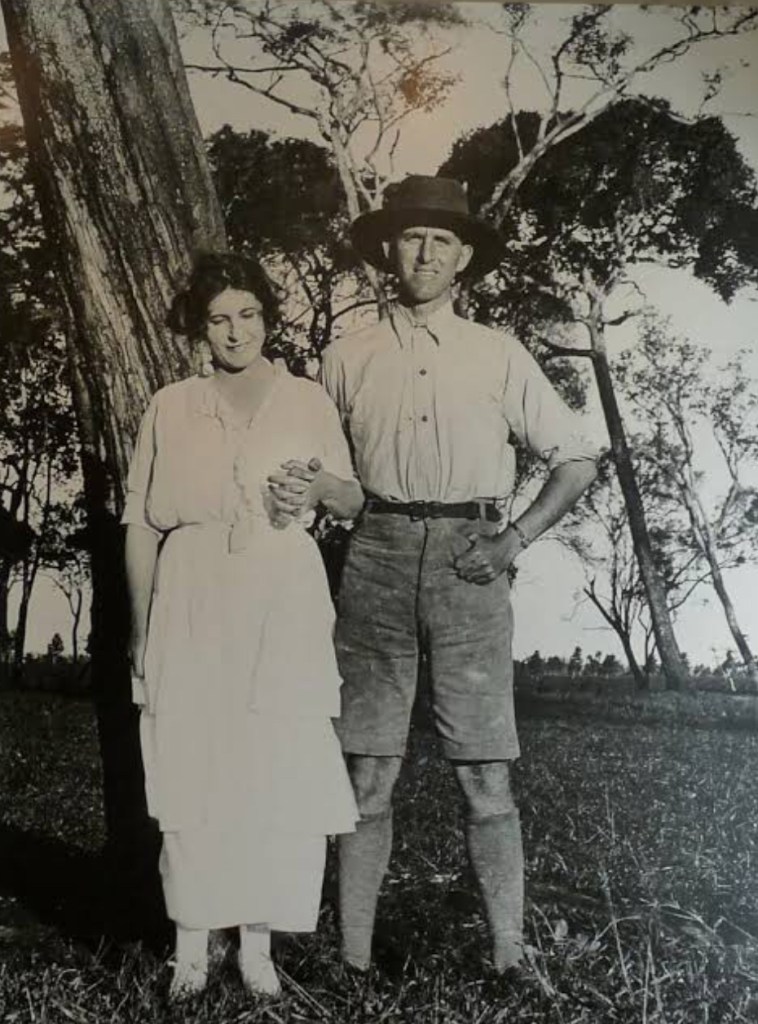
Karen Blixen and (possibly) Denys Finch-Hatton in the 1920’s

If you are a fan of the Danish actress Connie Nielsen or the Danish writer Karen Blixen (on whose experiences the movie Out of Africa was based, follow this link to an article, “MIPTV: Connie Nielsen on Becoming Karen Blixen in ‘The Dreamer'” by Scott Roxborough. The article discusses the challenges Nielsen faced in portraying Karen Blixen and how her portrayal differs radically from that by Meryl Streep in Out of Africa. Streep’s portrayal was of a young woman engaged in a passionate love affair, whereas Nielsen’s is that of a broken woman who has returned to Denmark penniless having lost her farm and her lover.

One note about the photo above: in trying to find a photo to accompany this article, I ran across this one. There are two copies of this photo on Wikimedia Commons. One identifies the man as Denys Finch-Hatton, (Blixen’s lover portrayed by Robert Redford in Out of Africa). Another identifies the man as Thomas Dinesen, Karen’s brother. Its source is supposed to be the Danish Royal Library. The source of the first is not identified. However, a quick search on Google resulted in a lot of photos of Denys Finch-Hatton, most of which (in my opinion) look like the man above. If you enjoy detective work, do the research and let me know what you come up with.

Hasta luego.