A Virtual Journey through the World’s Horror Spots, Stop 1

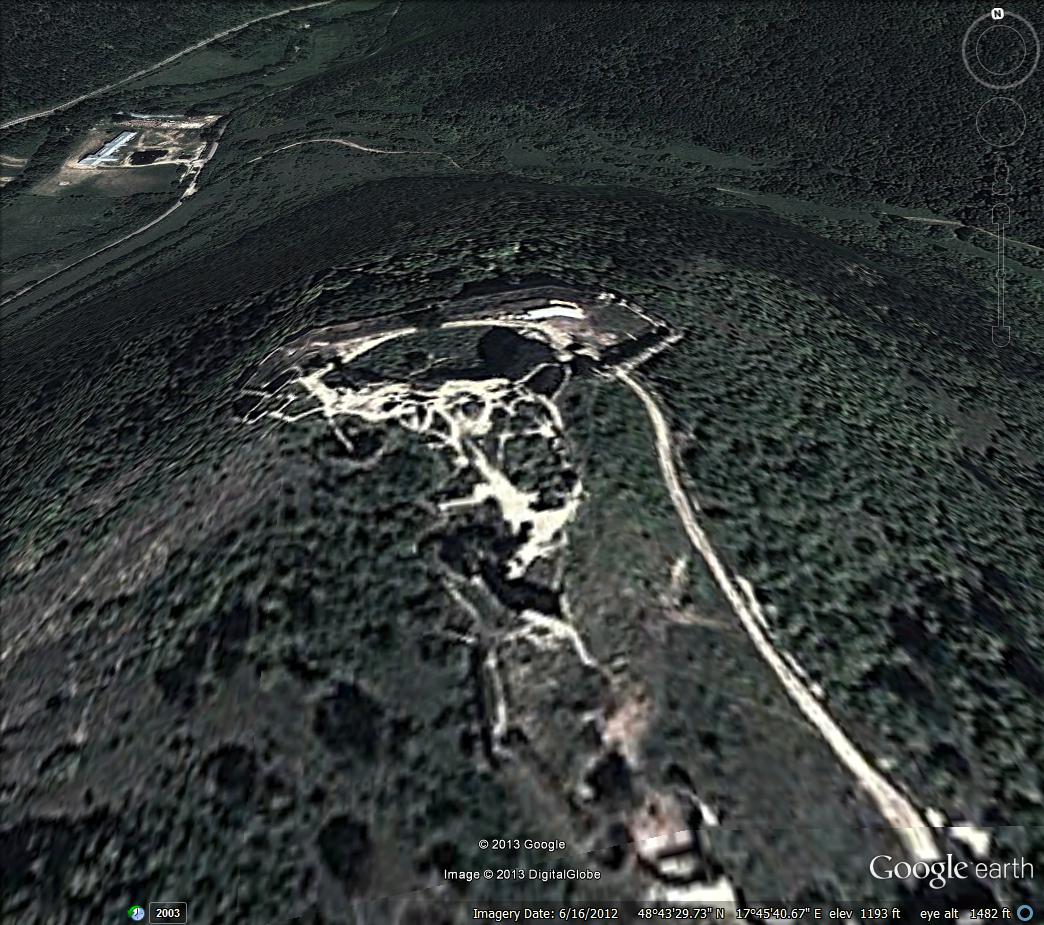
Cachtice Castle, home of Elizabeth Bathory, "the Blood Countess" from Google Earth Dec. 2013
Cachtice Castle, home of Elizabeth Bathory, “the Blood Countess”
from Google Earth Dec. 2013

A few days ago, I was just relaxing after a heavy meal and was starting to surf Google Earth, when I hit upon an idea that might be entertaining to my followers in the blogosphere.  Why not visit the locations of famous horror novels or historical figures via Google Earth?   I would only be trying to fool myself and you if I were to say that I would do this with any regularity.  I can say that I shall do it as the spirit moves me, which may or not be frequently.   Let me know what you think of the idea.  I encourage you to try the same with the horror locations that you know.   My first stop is at Cachtice (pronounced Chahk-teet-se) Castle, in present-day Slovakia, which was the home of the “Blood Countess”, Elizabeth Bathory, who is said to have tortured and murdered around 650 young girls circa 1600-1610.   I won’t go into a detailed biography of her here.  I have mentioned her in at least a couple of posts already and her biography can easily be found by surfing the Internet.  I do caution you to try to find good, authoritative sources of information about her.   Unfortunately, crap is pervasive throughout the “net” and a legendary figure from 400 years ago is apt to have more than the average share of strange ideas, rumors, falsehoods, mistakes, and outright lies. The Google image above is not of the highest quality.  I think this one has recently replaced one that was much better.  For a better view of the castle, I am providing this terrific view by Civertan from Wikimedia Commons:

Cachtice Castle From Wikimedia Commons Photo by Civertan
Cachtice Castle
From Wikimedia Commons
Photo by Civertan

The advantage of Google Earth though is that you can view a location from an infinite number of angles and even from street level (unfortunately this option is not available for Cachtice) and view photos visitors have taken of the location.  To find Cachtice, you will, of course, have to search for “Cachtice”.  This will take you to the village of Cachtice.  Look to the Northwest and you will find a smaller village called “Visnove”.  Just southeast of Visnove is a hill with a castle. That’s it.   See the diagram I have attached below for more details.

I hope you enjoy your virtual visit to one the world’s more infamous hellholes.

cachtice-annotated

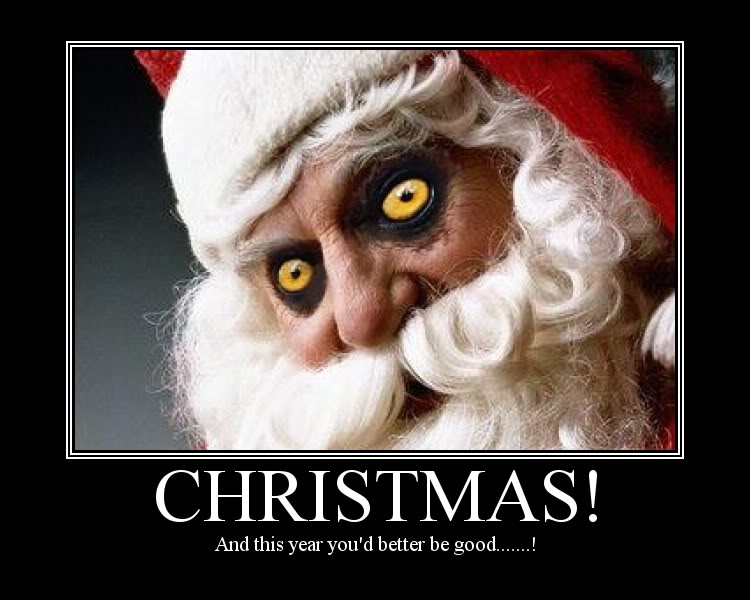
‘Tis the Season to be Scared!

From Ottawahorror.com

Just a little Christmas fun from Ottawahorror.com.  Follow this link to their site and you can post this on Facebook, Twitter, Stumbleupon, and others.Check out the following note to be found on their About Us Page:

Started in 2008, we are a blog and portal dedicated to all things horror in our nation’s [Canada] capital. If you are a filmmaker, musician, artist, or fan, this is the place for you. Also, recruit minions! When we travel out of town, we bump into more people and artists from home than we do when we hang around the batcave. It’s kinda cool, but kinda creepy. While we appreciate finding you wherever you are, finding you here is easier… because then we can send reporters and photographers after you easier.

Want to contribute? Check out the ‘submit’ page above. It’s new~
You can follow us on blogger, twitter, facebook or link to us with a groovy badge!
They accept submissions for their blog!  Maybe you have something you would like to contribute.  The site looks pretty cool.
Thoughts?  Comments?

Trivia: Irvin Cobb’s Egg Nog

On July 15, I posted an article on Irvin S. Cobb and his story “Fishhead”, which H.P. Lovecraft mentioned in “Supernatural Horror in Literature”.  Today, I happened upon

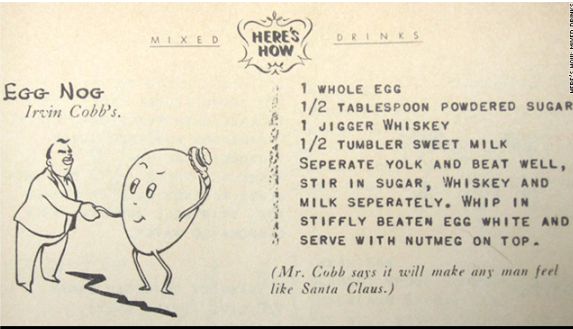
Irvin Cobb's Egg Nog Recipe circa 1941
Irvin Cobb’s Egg Nog Recipe circa 1941

some selections I had copied a book published in 1941 that gave popular egg nog recipes of that year.  One of them was Irvin Cobb’s.    I am publishing it here today for your entertainment in light of the upcoming holidays.  The copy is to the upper right, but if the print is too small, I am writing it out here:

1 whole egg

1/2 tablespoon powdered sugar

1 jigger whiskey

1/2 tumbler sweet milk

Separate yogurt and beat well, stir in sugar, whiskey and milk separately.  Whip in stiffly beaten egg white and serve with nutmeg on top.

In parentheses and italics at the bottom the recipe notes:  (Mr. Cobb says it will make any man feel like Santa Claus.)

Thoughts?  Comments?

The Good, The Bad and The Terrible ; Zombies | The Horror Online

130218_0002Still more from The Horror Online:  The Good, The Bad and The Terrible ; Zombies | The Horror Online.

Hopefully, I will find the time to sit down and write another extensive post, but unfortunately, these days I seem inundated with personal and professional tasks.  I try to read when I have the opportunity.  When I do have some time free, I have been watching horror films and I have several which I recommend and on which I hope to be writing posts before long.  I also hope to establish a webpage for a nascent lexicon of horror.

Thoughts?  Comments?

NaNoWriMo: Classic Novels Written in a Month | Interesting Literature

Robert Louis Stevenson Portrait by Girolamo Nerli  (1860-1926)
Robert Louis Stevenson
Portrait by Girolamo Nerli
(1860-1926)

If you are having problems meeting a deadline or dealing with the demon of writer’s block the following article may help you feel not so alone.  Some, if not all, of the world’s most famous had to deal with one or both and often did so in novel ways:   NaNoWriMo: Classic Novels Written in a Month | Interesting Literature.

Note, horror fans, that of the authors mentioned here only one was an author of horror.  Of course, I mean the gentleman to the left, the author of Dr. Jekyll and Mr. Hyde, which he apparently drafted at the Nineteenth century equivalent of warp speed.

Thoughts?  Comments?

The Good, The Bad and The Terrible ; Werewolves | The Horror Online

Werewolf-1Here is an amusing article for fans of cinematic werewolves:  The Good, The Bad and The Terrible ; Werewolves | The Horror Online.

On a side note, I find werewolves a fascinating fictional creature with a lot of as yet unexplored literary possibilities.  I love them as a symbol of the dual nature of humanity:  civilized person under most circumstances, but with the possibility of releasing, whether willingly or not, a dark, inner animalistic nature and suddenly converting into a horrific, bloodthirsty monster.  I started a werewolf/lycanthrope novel of my own many years ago, and perhaps one day I will complete it.

Those of you unfamiliar with the distinction between a werewolf and a lycanthrope please note the following.  A werewolf is a man (or woman) that actually changes into a wolf.  Werewolves exist only in fiction.   A lycanthrope is a person who believes that he or she changes into a wolf.  These do exist, but are rare.  For more information on this condition, please visit the Wikipedia article on Clinical Lycanthropy.

Thoughts?  Comments?

Neil Gaiman: ‘Face facts: we need fiction’ | Books | The Guardian

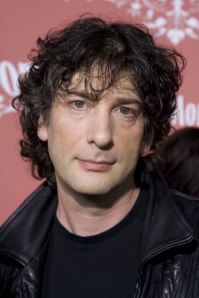
Neil Gaiman at the 2007 Scream Awards Photo by pinguino k
Neil Gaiman
at the 2007 Scream Awards
Photo by pinguino k

Here is a fascinating perspective on fiction by Neil Gaiman: ‘Face facts: we need fiction’ | Books | The Guardian.

MovieNews | Opinion: How to define a horror film – entertainment.ie

Poster from Johannascheezburger.com via Halloween Mike's Horror Everyday on Facebook.
Poster from Johannascheezburger.com via Halloween Mike’s Horror Everyday on Facebook.

Here is an interesting viewpoint on just what makes a horror film:  MovieNews | Opinion: How to define a horror film – entertainment.ie.

Visit “The Works of Edgar Allan Poe, Volume 1” but not for the obvious reason.

Edgar Allan Poe, 1848

The Works of Edgar Allan Poe, Volume 1.  Yes, this link takes you to a collection of Poe’s works, but the reason I am mentioning it here is because the preface to this particular volume includes fascinating biographical notes and insight into the character of this master of horror that may help you understand the roots of his creative genius and how art sometimes came close to imitating life for Mr. Poe.

When you open the page, you may find yourself a little distance from the top of the article at the beginning of a section entitled “The Death of Edgar Allan Poe”.  While this section is fascinating in its own right, scroll to the top for the entire preface.  The works of Poe, beginning with the story of Hans Pfall, begin a bit down from “The Death…”

28 Totally Relatable Quotes About Books

Detail of Madonna des Kanonikus Georg van der Paele by Jan van Eyck, 1436
Detail of Madonna des Kanonikus Georg van der Paele
by Jan van Eyck, 1436

Purely for your entertainment, here are 28 Totally Relatable Quotes About Books.  I know I can relate to a lot of them.  I’m sure you will find a few for yourself.  One reason I find these interesting is because many of them show me how intensely involved readers will become with a book.  As I have mentioned in previous posts, I believe that people live a vicarious existence through a story.  When we write, we are not just writing a book or a story, we are creating a universe in which people will hopefully want to, not just visit, but dwell.  All of the writer’s art should therefore focus on creating a virtual reality for one’s readers.  To do that, we need a good  grounding in, or at least a good feel for, human psychology, because we have to shape our creations to fit the human psyche.  How do thoughts come into being?  How do they lead from one to another?  How do images form in the mind?  No, I am not saying that we need Ph.D.’s in psychology to be good writers, but I think we need some sort of archetypal insight into human nature if we are to be the great writers we hope to be.  Darn.  I’m rambling again.  🙂