 If mountains had eyes, what would they see? Ghosts? Have you ever met a mountain ghost? Ghosts associated with Mt. Greylock are still the fascination of many hikers and nature lovers. And also for …
Source: Ghosts on Mt. Greylock
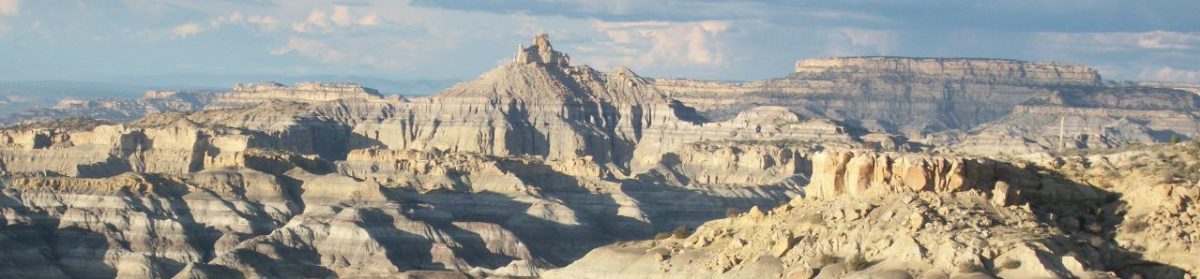
If mountains had eyes, what would they see? Ghosts? Have you ever met a mountain ghost? Ghosts associated with Mt. Greylock are still the fascination of many hikers and nature lovers. And also for …
Source: Ghosts on Mt. Greylock
(Wait. Is that how the song goes?)
I’ve neglected this blog, the antho (off and on), writing, and other things for the past couple of weeks. Work. Busy. Timing. That stuff. Not as many students this term thanks to a schedule that mainly consists of 12 week classes and two of them in the afternoon (NOTE: afternoon classes aren’t particularly popular when the local Chick Fil-A — or fill in the blank with other appropriate regional chain saturated in its own religopolitics — isn’t that far from school).
I’ve still managed to keep apprised of a few things and am quickly learning more about my aging self than I could ever expect:
View original post 310 more words
I WAS SITTING on the porch when my grandfather hobbled out and sank down on his favorite chair with the cushioned seat, and began to stuff tobacco in his old corncob-pipe.
“I thought you’d be goin’ to the dance,” he said.
“I’m waiting for Doc Blaine,” I answered. “I’m going over to old man Garfield’s with him.”
My grandfather sucked at his pipe awhile before he spoke again.
“Old Jim purty bad off?”
“Doc says he hasn’t a chance.”
“Who’s takin’ care of him?”
“Joe Braxton—against Garfield’s wishes. But somebody had to stay with him.”
My grandfather sucked his pipe noisily, and watched the heat lightning playing away off up in the hills; then he said: “You think old Jim’s the biggest liar in this county, don’t you?”
“He tells some pretty tall tales,” I admitted. “Some of the things he claimed he took part in, must have happened before he was born.”
“I came from Tennesee to Texas in 1870,” my grandfather said abruptly. “I saw this town of Lost Knob grow up from nothin’. There wasn’t even a log-hut store here when I came. But old Jim Garfield was here, livin’ in the same place he lives now, only then it was a log cabin. He don’t look a day older now than he did the first time I saw him.”
“You never mentioned that before,” I said in some surprise.
“I knew you’d put it down to an old man’s maunderin’s,” he answered. “Old Jim was the first white man to settle in this country. He built his cabin a good fifty miles west of the frontier. God knows how he done it, for these hills swarmed with Comanches then.
“I remember the first time I ever saw him. Even then everybody called him ‘old Jim.’
“I remember him tellin’ me the same tales he’s told you—how he was at the battle of San Jacinto when he was a youngster, and how he’d rode with Ewen Cameron and Jack Hayes. Only I believe him, and you don’t.”
“That was so long ago—” I protested.

“The last Indian raid through this country was in 1874,” said my grandfather, engrossed in his own reminiscences. “I was in on that fight, and so was old Jim. I saw him knock old Yellow Tail off his mustang at seven hundred yards with a buffalo rifle.
“But before that I was with him in a fight up near the head of Locust Creek. A band of Comanches came down Mesquital, lootin’ and burnin’, rode through the hills and started back up Locust Creek, and a scout of us were hot on their heels. We ran on to them just at sundown in a mesquite flat. We killed seven of them, and the rest skinned out through the brush on foot. But three of our boys were killed, and Jim Garfield got a thrust in the breast with a lance.
“It was an awful wound. He lay like a dead man, and it seemed sure nobody could live after a wound like that. But an old Indian came out of the brush, and when we aimed our guns at him, he made the peace sign and spoke to us in Spanish. I don’t know why the boys didn’t shoot him in his tracks, because our blood was heated with the fightin’ and killin’, but somethin’ about him made us hold our fire. He said he wasn’t a Comanche, but was an old friend of Garfield’s, and wanted to help him. He asked us to carry Jim into a clump of mesquite, and leave him alone with him, and to this day I don’t know why we did, but we did. It was an awful time—the wounded moanin’ and callin’ for water, the starin’ corpses strewn about the camp, night comin’ on, and no way of knowin’ that the Indians wouldn’t return when dark fell.
“We made camp right there, because the horses were fagged out, and we watched all night, but the Comanches didn’t come back. I don’t know what went on out in the mesquite where Jim Garfield’s body lay, because I never saw that strange Indian again; but durin’ the night I kept hearin’ a weird moanin’ that wasn’t made by the dyin’ men, and an owl hooted from midnight till dawn.
“And at sunrise Jim Garfield came walkin’ out of the mesquite, pale and haggard, but alive, and already the wound in his breast had closed and begun to heal. And since then he’s never mentioned that wound, nor that fight, nor the strange Indian who came and went so mysteriously. And he hasn’t aged a bit; he looks now just like he did then—a man of about fifty.”
In the silence that followed, a car began to purr down the road, and twin shafts of light cut through the dusk.
“That’s Doc Blaine,” I said. “When I come back I’ll tell you how Garfield is.”
Doc Blaine was prompt with his predictions as we drove the three miles of post-oak covered hills that lay between Lost Knob and the Garfield farm.
“I’ll be surprised to find him alive,” he said, “smashed up like he is. A man his age ought to have more sense than to try to break a young horse.”
“He doesn’t look so old,” I remarked.
“I’ll be fifty, my next birthday,” answered Doc Blaine. “I’ve known him all my life, and he must have been at least fifty the first time I ever saw him. His looks are deceiving.”
Old Garfield’s dwelling-place was reminiscent of the past. The boards of the low squat house had never known paint. Orchard fence and corrals were built of rails.
Old Jim lay on his rude bed, tended crudely but efficiently by the man Doc Blaine had hired over the old man’s protests. As I looked at him, I was impressed anew by his evident vitality. His frame was stooped but unwithered, his limbs rounded out with springy muscles. In his corded neck and in his face, drawn though it was with suffering, was apparent an innate virility. His eyes, though partly glazed with pain, burned with the same unquenchable element.
“He’s been ravin’,” said Joe Braxton stolidly.
“First white man in this country,” muttered old Jim, becoming intelligible. “Hills no white man ever set foot in before. Gettin’ too old. Have to settle down. Can’t move on like I used to. Settle down here. Good country before it filled up with cow-men and squatters. Wish Ewen Cameron could see this country. The Mexicans shot him. Damn ’em!”
Doc Blaine shook his head. “He’s all smashed up inside. He won’t live till daylight.”
Garfield unexpectedly lifted his head and looked at us with clear eyes.
“Wrong, Doc,” he wheezed, his breath whistling with pain. “I’ll live. What’s broken bones and twisted guts? Nothin’! It’s the heart that counts. Long as the heart keeps pumpin’, a man can’t die. My heart’s sound. Listen to it! Feel of it!”
He groped painfully for Doc Blaine’s wrist, dragged his hand to his bosom and held it there, staring up into the doctor’s face with avid intensity.
“Regular dynamo, ain’t it?” he gasped. “Stronger’n a gasoline engine!”
Blaine beckoned me. “Lay your hand here,” he said, placing my hand on the old man’s bare breast. “He does have a remarkable heart action.”
I noted, in the light of the coal-oil lamp, a great livid scar in the gaunt arching breast—such a scar as might be made by a flint-headed spear. I laid my hand directly on this scar, and an exclamation escaped my lips.
Under my hand old Jim Garfield’s heart pulsed, but its throb was like no other heart action I have ever observed. Its power was astounding; his ribs vibrated to its steady throb. It felt more like the vibrating of a dynamo than the action of a human organ. I could feel its amazing vitality radiating from his breast, stealing up into my hand and up my arm, until my own heart seemed to speed up in response.
“I can’t die,” old Jim gasped. “Not so long as my heart’s in my breast. Only a bullet through the brain can kill me. And even then I wouldn’t be rightly dead, as long as my heart beats in my breast. Yet it ain’t rightly mine, either. It belongs to Ghost Man, the Lipan chief. It was the heart of a god the Lipans worshipped before the Comanches drove ’em out of their native hills.
“I knew Ghost Man down on the Rio Grande, when I was with Ewen Cameron. I saved his life from the Mexicans once. He tied the string of ghost wampum between him and me—the wampum no man but me and him can see or feel. He came when he knowed I needed him, in that fight up on the headwaters of Locust Creek, when I got this scar.
“I was dead as a man can be. My heart was sliced in two, like the heart of a butchered beef steer.
“All night Ghost Man did magic, callin’ my ghost back from spirit-land. I remember that flight, a little. It was dark, and gray-like, and I drifted through gray mists and heard the dead wailin’ past me in the mist. But Ghost Man brought me back.
“He took out what was left of my mortal heart, and put the heart of the god in my bosom. But it’s his, and when I’m through with it, he’ll come for it. It’s kept me alive and strong for the lifetime of a man. Age can’t touch me. What do I care if these fools around here call me an old liar? What I know, I know. But hark’ee!”
His fingers became claws, clamping fiercely on Doc Blaine’s wrist. His old eyes, old yet strangely young, burned fierce as those of an eagle under his bushy brows.
“If by some mischance I should die, now or later, promise me this! Cut into my bosom and take out the heart Ghost Man lent me so long ago! It’s his. And as long as it beats in my body, my spirit’ll be tied to that body, though my head be crushed like an egg underfoot! A livin’ thing in a rottin’ body! Promise!”
“All right, I promise,” replied Doc Blaine, to humor him, and old Jim Garfield sank back with a whistling sigh of relief.
He did not die that night, nor the next, nor the next. I well remember the next day, because it was that day that I had the fight with Jack Kirby.
People will take a good deal from a bully, rather than to spill blood. Because nobody had gone to the trouble of killing him, Kirby thought the whole countryside was afraid of him.
He had bought a steer from my father, and when my father went to collect for it, Kirby told him that he had paid the money to me—which was a lie. I went looking for Kirby, and came upon him in a bootleg joint, boasting of his toughness, and telling the crowd that he was going to beat me up and make me say that he had paid me the money, and that I had stuck it into my own pocket. When I heard him say that, I saw red, and ran in on him with a stockman’s knife, and cut him across the face, and in the neck, side, breast and belly, and the only thing that saved his life was the fact that the crowd pulled me off.
There was a preliminary hearing, and I was indicted on a charge of assault, and my trial was set for the following term of court. Kirby was as tough-fibered as a post-oak country bully ought to be, and he recovered, swearing vengeance, for he was vain of his looks, though God knows why, and I had permanently impaired them.
And while Jack Kirby was recovering, old man Garfield recovered too, to the amazement of everybody, especially Doc Blaine.
I well remember the night Doc Blaine took me again out to old Jim Garfield’s farm. I was in Shifty Corlan’s joint, trying to drink enough of the slop he called beer to get a kick out of it, when Doc Blaine came in and persuaded me to go with him.
As we drove along the winding old road in Doc’s car, I asked: “Why are you insistent that I go with you this particular night? This isn’t a professional call, is it?”
“No,” he said. “You couldn’t kill old Jim with a post-oak maul. He’s completely recovered from injuries that ought to have killed an ox. To tell the truth, Jack Kirby is in Lost Knob, swearing he’ll shoot you on sight.”
“Well, for God’s sake!” I exclaimed angrily. “Now everybody’ll think I left town because I was afraid of him. Turn around and take me back, damn it!”
“Be reasonable,” said Doc. “Everybody knows you’re not afraid of Kirby. Nobody’s afraid of him now. His bluff’s broken, and that’s why he’s so wild against you. But you can’t afford to have any more trouble with him now, and your trial only a short time off.”
I laughed and said: “Well, if he’s looking for me hard enough, he can find me as easily at old Garfield’s as in town, because Shifty Corlan heard you say where we were going. And Shifty’s hated me ever since I skinned him in that horse-swap last fall. He’ll tell Kirby where I went.”
“I never thought of that,” said Doc Blaine, worried.
“Hell, forget it,” I advised. “Kirby hasn’t got guts enough to do anything but blow.”
But I was mistaken. Puncture a bully’s vanity and you touch his one vital spot.
Old Jim had not gone to bed when we got there. He was sitting in the room opening on to his sagging porch, the room which was at once living-room and bedroom, smoking his old cob pipe and trying to read a newspaper by the light of his coal-oil lamp. All the windows and doors were wide open for the coolness, and the insects which swarmed in and fluttered around the lamp didn’t seem to bother him.
We sat down and discussed the weather—which isn’t so inane as one might suppose, in a country where men’s livelihood depends on sun and rain, and is at the mercy of wind and drouth. The talk drifted into other kindred channels, and after some time, Doc Blaine bluntly spoke of something that hung in his mind.
“Jim,” he said, “that night I thought you were dying, you babbled a lot of stuff about your heart, and an Indian who lent you his. How much of that was delirium?”
“None, Doc,” said Garfield, pulling at his pipe. “It was gospel truth. Ghost Man, the Lipan priest of the Gods of Night, replaced my dead, torn heart with one from somethin’ he worshipped. I ain’t sure myself just what that somethin’ is—somethin’ from away back and a long way off, he said. But bein’ a god, it can do without its heart for awhile. But when I die—if I ever get my head smashed so my consciousness is destroyed—the heart must be given back to Ghost Man.”
“You mean you were in earnest about cutting out your heart?” demanded Doc Blaine.
“It has to be,” answered old Garfield. “A livin’ thing in a dead thing is opposed to nat’er. That’s what Ghost Man said.”
“Who the devil was Ghost Man?”
“I told you. A witch-doctor of the Lipans, who dwelt in this country before the Comanches came down from the Staked Plains and drove ’em south across the Rio Grande. I was a friend to ’em. I reckon Ghost Man is the only one left alive.”
“Alive? Now?”
“I dunno,” confessed old Jim. “I dunno whether he’s alive or dead. I dunno whether he was alive when he came to me after the fight on Locust Creek, or even if he was alive when I knowed him in the southern country. Alive as we understand life, I mean.”
“What balderdash is this?” demanded Doc Blaine uneasily, and I felt a slight stirring in my hair. Outside was stillness, and the stars, and the black shadows of the post-oak woods. The lamp cast old Garfield’s shadow grotesquely on the wall, so that it did not at all resemble that of a human, and his words were strange as words heard in a nightmare.
“I knowed you wouldn’t understand,” said old Jim. “I don’t understand myself, and I ain’t got the words to explain them things I feel and know without understandin’. The Lipans were kin to the Apaches, and the Apaches learnt curious things from the Pueblos. Ghost Man was—that’s all I can say—alive or dead, I don’t know, but he was. What’s more, he is.”
“Is it you or me that’s crazy?” asked Doc Blaine.
“Well,” said old Jim, “I’ll tell you this much—Ghost Man knew Coronado.”
“Crazy as a loon!” murmured Doc Blaine. Then he lifted his head. “What’s that?”
“Horse turning in from the road,” I said. “Sounds like it stopped.”
I stepped to the door, like a fool, and stood etched in the light behind me. I got a glimpse of a shadowy bulk I knew to be a man on a horse; then Doc Blaine yelled: “Look out!” and threw himself against me, knocking us both sprawling. At the same instant I heard the smashing report of a rifle, and old Garfield grunted and fell heavily.
“Jack Kirby!” screamed Doc Blaine. “He’s killed Jim!”
I scrambled up, hearing the clatter of retreating hoofs, snatched old Jim’s shotgun from the wall, rushed recklessly out on to the sagging porch and let go both barrels at the fleeing shape, dim in the starlight. The charge was too light to kill at that range, but the bird-shot stung the horse and maddened him. He swerved, crashed headlong through a rail fence and charged across the orchard, and a peach tree limb knocked his rider out of the saddle. He never moved after he hit the ground. I ran out there and looked down at him. It was Jack Kirby, right enough, and his neck was broken like a rotten branch.
I let him lie, and ran back to the house. Doc Blaine had stretched old Garfield out on a bench he’d dragged in from the porch, and Doc’s face was whiter than I’d ever seen it. Old Jim was a ghastly sight; he had been shot with an old-fashioned .45-70, and at that range the heavy ball had literally torn off the top of his head. His features were masked with blood and brains. He had been directly behind me, poor old devil, and he had stopped the slug meant for me.
Doc Blaine was trembling, though he was anything but a stranger to such sights.
“Would you pronounce him dead?” he asked.
“That’s for you to say.” I answered. “But even a fool could tell that he’s dead.
“He is dead,” said Doc Blaine in a strained unnatural voice. “Rigor mortis is already setting in. But feel his heart!”
I did, and cried out. The flesh was already cold and clammy; but beneath it that mysterious heart still hammered steadily away, like a dynamo in a deserted house. No blood coursed through those veins; yet the heart pounded, pounded, pounded, like the pulse of Eternity.
“A living thing in a dead thing,” whispered Doc Blaine, cold sweat on his face. “This is opposed to nature. I am going to keep the promise I made him. I’ll assume full responsibility. This is too monstrous to ignore.”
Our implements were a butcher-knife and a hack-saw. Outside only the still stars looked down on the black post-oak shadows and the dead man that lay in the orchard. Inside, the old lamp flickered, making strange shadows move and shiver and cringe in the corners, and glistened on the blood on the floor, and the red-dabbled figure on the bench. The only sound inside was the crunch of the saw-edge in bone; outside an owl began to hoot weirdly.
Doc Blaine thrust a red-stained hand into the aperture he had made, and drew out a red, pulsing object that caught the lamplight. With a choked cry he recoiled, and the thing slipped from his fingers and fell on the table. And I too cried out involuntarily. For it did not fall with a soft meaty thud, as a piece of flesh should fall. It thumped hard on the table.
Impelled by an irresistible urge, I bent and gingerly picked up old Garfield’s heart. The feel of it was brittle, unyielding, like steel or stone, but smoother than either. In size and shape it was the duplicate of a human heart, but it was slick and smooth, and its crimson surface reflected the lamplight like a jewel more lambent than any ruby; and in my hand it still throbbed mightily, sending vibratory radiations of energy up my arm until my own heart seemed swelling and bursting in response. It was cosmic power, beyond my comprehension, concentrated into the likeness of a human heart.
The thought came to me that here was a dynamo of life, the nearest approach to immortality that is possible for the destructible human body, the materialization of a cosmic secret more wonderful than the fabulous fountain sought for by Ponce de Leon. My soul was drawn into that unterrestrial gleam, and I suddenly wished passionately that it hammered and thundered in my own bosom in place of my paltry heart of tissue and muscle.
Doc Blaine ejaculated incoherently. I wheeled.
The noise of his coming had been no greater than the whispering of a night wind through the corn. There in the doorway he stood, tall, dark, inscrutable—an Indian warrior, in the paint, war bonnet, breech-clout and moccasins of an elder age. His dark eyes burned like fires gleaming deep under fathomless black lakes. Silently he extended his hand, and I dropped Jim Garfield’s heart into it. Then without a word he turned and stalked into the night. But when Doc Blaine and I rushed out into the yard an instant later, there was no sign of any human being. He had vanished like a phantom of the night, and only something that looked like an owl was flying, dwindling from sight, into the rising moon.
###
“Old Garfield’s Heart” was first published in Weird Tales in December, 1933.
This eBook is made available at no cost and with almost no restrictions
whatsoever. You may copy it, give it away or re-use it under the terms
of the Project Gutenberg of Australia License which may be viewed online at
http://gutenberg.net.au/licence.html. To contact Project Gutenberg of Australia go to http://gutenberg.net.au
The Mouth of the Mountain
by Michael Gormley
October 27th, 1912
The luminescent moon shone brightly through the clouds as I descended my usual mountain path. When finally, the moon was admitted a gasp of air from the clouds, a ring of white light formed around it, and reverberated so viciously that my eyes became strained. My head pounded as brutally as the pulsations.
My evening strolls to the wooded top was a nightly adventure, and it was not until as of late that the trip had actually become adventurous. Prior to the past few weeks my late walks were nothing more than routine. After dinner, Edgar – my seven-year-old Weimaraner, a retired hunting dog – and I would head into the mountain’s path, blanketed by conifers and limber pines. The entrance to the woods was decorated with a few weeping willows that were now fading as the…
View original post 3,034 more words
 The next meeting of the Farmington Writers Circle will be on Thursday, March 10, at 7:00 pm at Hastings Hardback Café on 20th Street in Farmington, NM. The topic will be a continuation of the February topic on how to set up a blog and will be led by Phil Slattery, owner of this blog. The discussion at the last meeting concentrated on a broad strategy behind setting up a blog followed by some work on individual websites as well as questions and answers. Everyone is welcome to attend. There is no charge. The March session will concentrate on more details involving the use of WordPress as a blogging platform. You may want to bring your own laptop, though this is not a requirement for attendance. Please contact me via this website with any questions.
 Reblogged on WordPress.com
Source: Courting the Devil

Today, my short story, “A Good Man”, was published at http://www.fictionontheweb.co.uk. Many thanks to Charlie Fish at Fiction on the Web for publishing this, one of my best stories. “A Good Man” is not horror, but a modern crime drama. Mr. Fish describes the story thus: “On the day before her death from lung cancer, Christopher’s mother tells him a secret about his father that may change his perception of his parents forever…” Doug Hawley, in the first comment on the story notes: “Lots of detail examining an old question of how do you judge a person’s life. It left me wondering.”
Please drop by Fiction on the Web any time and check out “A Good Man”.
Nice story for being so concise.

By Alyson Faye
I was on the run. From her and my old life. I landed up in a rather grimy hotel on the Norfolk coast. Booking a coach trip with an outfit called ‘Pioneer’ (that was me now), I requested a wake up call, hit the bar and then bed.
The phone rang, “It’s time Sir.”
“Huh?”
“Your time Sir. It’s come.”
Disorientated, I staggered up, tripped and fell into the carpet’s embrace. To stay.
Emerging at dinner the receptionist apologized; she’d forgotten to ring.
Unconcerned, I took the local rag from her and read ‘Pioneer Coach Crash on A11, 5 Dead.’
 By Andrea Jarrell After 30 years of sitting at a desk, making my living as a writer, I truly appreciate how physical writing is: pushing pen across paper, fingers tapping a keyboard, the trapezius …

Source: African American Folklore, Magical Realism and Horror in Toni Morrison novels
Conradin was ten years old, and the doctor had pronounced his professional opinion that the boy would not live another five years. The doctor was silky and effete, and counted for little, but his opinion was endorsed by Mrs. De Ropp, who

counted for nearly everything. Mrs. De Ropp was Conradin’s cousin and guardian, and in his eyes she represented those three-fifths of the world that are necessary and disagreeable and real; the other two-fifths, in perpetual antagonism to the foregoing, were summed up in himself and his imagination. One of these days Conradin supposed he would succumb to the mastering pressure of wearisome necessary things—such as illnesses and coddling restrictions and drawn-out dullness. Without his imagination, which was rampant under the spur of loneliness, he would have succumbed long ago.
Mrs. De Ropp would never, in her honestest moments, have confessed to herself that she disliked Conradin, though she might have been dimly aware that thwarting him “for his good” was a duty which she did not find particularly irksome. Conradin hated her with a desperate sincerity which he was perfectly able to mask. Such few pleasures as he could contrive for himself gained an added relish from the likelihood that they would be displeasing to his guardian, and from the realm of his imagination she was locked out—an unclean thing, which should find no entrance.
In the dull, cheerless garden, overlooked by so many windows that were ready to open with a message not to do this or that, or a reminder that medicines were due, he found little attraction. The few fruit-trees that it contained were set jealously apart from his plucking, as though they were rare specimens of their kind blooming in an arid waste; it would probably have been difficult to find a market-gardener who would have offered ten shillings for their entire yearly produce. In a forgotten corner, however, almost hidden behind a dismal shrubbery, was a disused tool-shed of respectable proportions, and within its walls Conradin found a haven, something that took on the varying aspects of a playroom and a cathedral. He had peopled it with a legion of familiar phantoms, evoked partly from fragments of history and partly from his own brain, but it also boasted two inmates of flesh and blood. In one corner lived a ragged-

plumaged Houdan hen, on which the boy lavished an affection that had scarcely another outlet. Further back in the gloom stood a large hutch, divided into two compartments, one of which was fronted with close iron bars. This was the abode of a large polecat-ferret, which a friendly butcher-boy had once smuggled, cage and all, into its present quarters, in exchange for a long-secreted hoard of small silver. Conradin was dreadfully afraid of the lithe, sharp-fanged beast, but it was his most treasured possession. Its very presence in the tool-shed was a secret and fearful joy, to be kept scrupulously from the knowledge of the Woman, as he privately dubbed his cousin. And one day, out of Heaven knows what material, he spun the beast a wonderful name, and from that moment it grew into a god and a religion. The Woman indulged in religion once a week at a church near by, and took Conradin with her, but to him the church service was an alien rite in the House of Rimmon. Every Thursday, in the dim and musty silence of the tool-shed, he worshipped with mystic and elaborate ceremonial before the wooden hutch where dwelt Sredni Vashtar, the great

ferret. Red flowers in their season and scarlet berries in the winter-time were offered at his shrine, for he was a god who laid some special stress on the fierce impatient side of things, as opposed to the Woman’s religion, which, as far as Conradin could observe, went to great lengths in the contrary direction. And on great festivals powdered nutmeg was strewn in front of his hutch, an important feature of the offering being that the nutmeg had to be stolen. These festivals were of irregular occurrence, and were chiefly appointed to celebrate some passing event. On one occasion, when Mrs. De Ropp suffered from acute toothache for three days, Conradin kept up the festival during the entire three days, and almost succeeded in persuading himself that Sredni Vashtar was personally responsible for the toothache. If the malady had lasted for another day the supply of nutmeg would have given out.
The Houdan hen was never drawn into the cult of Sredni Vashtar. Conradin had long ago settled that she was an Anabaptist. He did not pretend to have the remotest knowledge as to what an Anabaptist was, but he privately hoped that it was dashing and not very respectable. Mrs. De Ropp was the ground plan on which he based and detested all respectability.
After a while Conradin’s absorption in the tool-shed began to attract the notice of his guardian. “It is not good for him to be pottering down there in all weathers,” she promptly decided, and at breakfast one morning she announced that the Houdan hen had been sold and taken away overnight. With her short-sighted eyes she peered at Conradin, waiting for an outbreak of rage and sorrow, which she was ready to rebuke with a flow of excellent precepts and reasoning. But Conradin said nothing: there was nothing to be said. Something perhaps in his white set face gave her a momentary qualm, for at tea that afternoon there was toast on the table, a delicacy which she usually banned on the ground that it was bad for him; also because the making of it “gave trouble,” a deadly offence in the middle-class feminine eye.
“I thought you liked toast,” she exclaimed, with an injured air, observing that he did not touch it.
“Sometimes,” said Conradin.
In the shed that evening there was an innovation in the worship of the hutch-god. Conradin had been wont to chant his praises, tonight be asked a boon.
“Do one thing for me, Sredni Vashtar.”
The thing was not specified. As Sredni Vashtar was a god he must be supposed to know. And choking back a sob as he looked at that other empty comer, Conradin went back to the world he so hated.
And every night, in the welcome darkness of his bedroom, and every evening in the dusk of the tool-shed, Conradin’s bitter litany went up: “Do one thing for me, Sredni Vashtar.”
Mrs. De Ropp noticed that the visits to the shed did not cease, and one day she made a further journey of inspection.
“What are you keeping in that locked hutch?” she asked. “I believe it’s guinea-pigs. I’ll have them all cleared away.”
Conradin shut his lips tight, but the Woman ransacked his bedroom till she found the carefully hidden key, and forthwith marched down to the shed to complete her discovery. It was a cold afternoon, and Conradin had been bidden to keep to the house. From the furthest window of the dining-room the door of the shed could just be seen beyond the corner of the shrubbery, and there Conradin stationed himself. He saw the Woman enter, and then be imagined her opening the door of the sacred hutch and peering down with her short-sighted eyes into the thick straw bed where his god lay hidden. Perhaps she would prod at the straw in her clumsy impatience. And Conradin fervently breathed his prayer for the last time. But he knew as he prayed that he did not believe. He knew that the Woman would come out presently with that pursed smile he loathed so well on her face, and that in an hour or two the gardener would carry away his wonderful god, a god no longer, but a simple brown ferret in a hutch. And he knew that the Woman would triumph always as she triumphed now, and that he would grow ever more sickly under her pestering and domineering and superior wisdom, till one day nothing would matter much more with him, and the doctor would be proved right. And in the sting and misery of his defeat, he began to chant loudly and defiantly the hymn of his threatened idol:
Sredni Vashtar went forth,
His thoughts were red thoughts and his teeth were white,
His enemies called for peace, but he brought them death.
Sredni Vashtar the beautiful.
And then of a sudden he stopped his chanting and drew closer to the window-pane. The door of the shed still stood ajar as it had been left, and the minutes were slipping by. They were long minutes, but they slipped by nevertheless. He watched the starlings running and flying in little parties across the lawn; he counted them over and over again, with one eye always on that swinging door. A sour-faced maid came in to lay the table for tea, and still Conradin stood and waited and watched. Hope had crept by inches into his heart, and now a look of triumph began to blaze in his eyes that had only known the wistful patience of defeat. Under his breath, with a furtive exultation, he began once again the pæan of victory and devastation. And presently his eyes were rewarded: out through that doorway came a long, low, yellow-and-brown beast, with eyes a-blink at the waning daylight, and dark wet stains around the fur of jaws and throat. Conradin dropped on his knees. The great polecat-ferret made its way down to a small brook at the foot of the garden, drank for a moment, then crossed a little plank bridge and was lost to sight in the bushes. Such was the passing of Sredni Vashtar.
“Tea is ready,” said the sour-faced maid; “where is the mistress?” “She went down to the shed some time ago,” said Conradin. And while the maid went to summon her mistress to tea, Conradin fished a toasting-fork out of the sideboard drawer and proceeded to toast himself a piece of bread. And during the toasting of it and the buttering of it with much butter and the slow enjoyment of eating it, Conradin listened to the noises and silences which fell in quick spasms beyond the dining-room door. The loud foolish screaming of the maid, the answering chorus of wondering ejaculations from the kitchen region, the scuttering footsteps and hurried embassies for outside help, and then, after a lull, the scared sobbings and the shuffling tread of those who bore a heavy burden into the house.
“Whoever will break it to the poor child? I couldn’t for the life of me!” exclaimed a shrill voice. And while they debated the matter among themselves, Conradin made himself another piece of toast.
 Source: Tananarive Due’s Work in Horror


 Phil Slattery, Writer, Publisher