The Farmington Writers Circle Meets Next on October 13, 2016

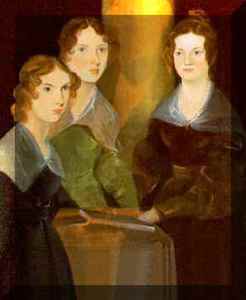
Anne, Emily, and Charlotte Bronte by Patrick Branwell Bronte circa 1834
Anne, Emily, and Charlotte Bronte
by Patrick Branwell Bronte
circa 1834

The Farmington Writers Circle will meet again on October 13, 2016 at 7:00 p.m.   at Starbuck’s at 4337 East Main, #101 (near the intersection with 30th Street).  The evening’s topic has not been determined.

The Farmington Writers Circle is nascent organization of Farmington-area writers who are interested in finding or developing innovative ways of publicizing and marketing their works.   Meetings are usually round-table discussions, although occasionally a member will lead the discussion when it deals with an area of the member’s expertise.  There are no fees or requirements to attend meetings.  Writers of any and all genres, regardless of writing experience, and non-writers with an interest in the art are welcome.  Previous topics have included establishing a website to maximize the use of social media in publicizing works, writers’ conferences,  and finding an agent among other topics.   Meetings generally run for two hours.  For more information, contact me via this website.

New Fiction by George Gad Economou: “Sounds of the Night”

 There’s nothing extraordinary about hearing the toilet flushing in the middle of the night; unless, of course, if you live alone.

At 3 am, the flushing startled me. It had been a long time since anyone had slept over at my place. I was trying to sleep off three bottles of wine.  My head was heavy and my body numb. I didn’t jump off the sofa, as perhaps I should have, instead I raised my head from the soft pillow and peered into the darkness.

The darkness looked back.  I saw the familiar ghosts that have been surrounding me for years and the known whispers still lingered in the air.  There was, at the same time, something new, a fresh breeze of evil that froze everything in the room. If I could have, I would have run, but in my hazy state all I could do was observe. The bathroom door creaked as it opened and closed.  I saw the shadow standing in the kitchen.

I was still trying to figure out whether I was dreaming, while still staring befuddled at the shadow lighting a cigarette in the kitchen; the blue smoke arose quickly and evaporated. There was no other sound but of the crackling of the burning cigarette while the clouds did not allow the pale light of the moon to illuminate the room.

The shadow seemed all too familiar. I froze, lying face down on the couch, glaring intensely at it from underneath the blanket. The shadow began talking, but despite the perfect stillness I could not hear its voice. Alas, I recognized the words used, as they were the same words I often uttered while standing at the kitchen having a quick smoke: “just one more sip, just one more drag, and I’m coming to bed”.

A pile of dirty clothes hid the bed, not having being used in months; not since the final whispering ghost exited my life for good. Still on the couch, safe underneath the heavy covers, I heard the words of the shadow echoing in my head, even though no sound reached my ears.

The empty bottles laid on the floor, amidst the layers of dust, stale tobacco, and wasted blow, and yet, there was nothing I could do. The faintest light penetrating the loosely sitting blinds on the window reflected on the glass and hit my eyes, bringing forth memories of better times; of nights, where my bed was occupied and I drank and smoked my life away in the kitchen, wishing to be alone.

Suddenly, I was all alone, with no one to call and ask how I am doing, and I wished for the past to become the present and for the future to be different than the blanket made of snow that was waiting for me in the corner. The shadow in the kitchen put out the cigarette in an ashtray that shouldn’t be on the counter and walked in the main room with confident steps.

I still could not discern its features; I could not tell the identity of the night intruder. I couldn’t move, I was numb, both from the drink and the fear, and the shadow idly sat at my desk chair, its fingers hovering over the keyboard.  A shiver ran through my spine, I wanted to react but was helpless.

I heard the keys being pressed rhythmically creating music I had long forgotten, and my heart sank. The shadow had taken my place, while I was still suffering from a headache that could kill even the most savage dinosaur.  More voices echoed in my head, words long ago uttered by lips, memories erased by drink.

It all came back, as the shadow typed purposelessly, the keyboard suffering under the brutal writing and smoke began filling the small room. There was no oxygen and I was suffocating slowly, while the shadow seemed unfazed by the ever-changing environment. I sat up, finally, ignoring the tremendously violent jolts of pain that shot through my body. My head on the verge of exploding, barely able to hold my eyes open, I looked around and I was all alone. The smoke had evaporated, the shadow vanished.

Only the bottles on the floor indicated the reality of the situation, and I looked about in complete bewilderment. Once more alone, the voices in my head had ceased and the perfect quietness of the night was reigning. It didn’t feel good, even the shadow was a pleasant change of rhythm and I laid back on the soft pillow, as I observed the room spin around me while fighting my urge to vomit.

I was determined to start afresh; quit the bad habits and become a new person. I sat up, struggling to ignore the horrific pain that arose in every inch of my suffering body, and filled my glass pipe with some freshly-cooked ice. It was time to stay awake, fight for the dreams I had betrayed.

The first cloud of blue smoke arose in front of me and I saw thousands of faces arising from within it; faces long forgotten, eyes once adored, lips once tasted.

Another puff was dragged and the crackling of the pipe was the only sound that violated the peace of the night, overshadowed abruptly by the flushing of the toilet.


Increasing your Story’s Tension

I found the following five tips from Inkandquills.com posted on Facebook:

  1. Don’t let your characters have what they want.
  2. Ask how you can make your character’s situation worse.
  3. Build flaws and conflict into your setting/story.
  4. Create conflict between your characters.
  5. Increase the consequences of failure for the hero.

Slattery


The Farmington Writers Circle Meets Next on October 13, 2016

doctorsleeppromoThe Farmington Writers Circle will meet again on October 13, 2016 at 7:00 p.m.   at Starbuck’s at 4337 East Main, #101 (near the intersection with 30th Street).  The evening’s topic has not been determined.

The Farmington Writers Circle is nascent organization of Farmington-area writers who are interested in finding or developing innovative ways of publicizing and marketing their works.   Meetings are usually round-table discussions, although occasionally a member will lead the discussion when it deals with an area of the member’s expertise.  There are no fees or requirements to attend meetings.  Writers of any and all genres, regardless of writing experience, and non-writers with an interest in the art are welcome.  Previous topics have included establishing a website to maximize the use of social media in publicizing works, writers’ conferences,  and finding an agent among other topics.   Meetings generally run for two hours.  For more information, contact me via this website.

Announcing the Advent of “The Chamber” Magazine

Phil Slattery Self-portrait, August, 2016
Phil Slattery
Self-portrait, August, 2016

Beginning in January 1, 2017, this will be the location of a new on-line quarterly magazine for short stories, poetry, and other short works of the horror genre.  You can find the guidelines for submissions on my current Submissions and Announcements page, which will remain the same, with the only exception being that the word limit for submissions for “The Chamber” will increase from 1,000 to 2,000 words.

I am creating this magazine primarily because it is not fair to my contributors to submit a work for publication, when that work will be at the top of my blog posts for only a day, and then that author and his readers will have to wade through a morass of unrelated blogs to find that one post.  To remedy this, I will create a separate page on my blog for my new magazine, “The Chamber”, where each quarter’s selections will appear on a separate page for eternity (or until WordPress folds, or until I give it all up and wander off to buy a bar in Key West or etc.)  Issue 1 will appear on January 1st.  Cut-off date for submissions will be November 30 (I don’t want to work over Christmas).  Selections will probably be made by December 15.   Send submissions per the Submissions and Announcements guidelines, but specify Submission for “The Chamber” in the subject line, if you want your work published in The Chamber, or Submission for The Blog, if you want to be published in the regular blog.  I will continue to publish submissions in my regular blog until December 31.

Why call it “The Chamber”?  The word chamber has numerous sinister and macabre connotations: a chamber of horrors, a torture chamber, one chambers a round into a rifle, etc.  A chamber can also be where a sorcerer, an alchemist, or a member of the Inquisition stores his library.  It is with this last connotation in mind that I am developing my Chamber for the storage of my selection of sinister and macabre works from the best up and coming authors that seek to contribute to my blog.

So, start editing your best, most powerful material and see where this new venture takes us!  I want powerful, hard-hitting material that leaves its readers gasping and awe-struck at the end.

The Farmington Writers Circle Meets Next on October 13, 2016

GRACIN~2The Farmington Writers Circle will meet again on October 13, 2016 at 7:00 p.m.   at Starbuck’s at 4337 East Main, #101 (near the intersection with 30th Street).  The evening’s topic has not been determined.

The Farmington Writers Circle is nascent organization of Farmington-area writers who are interested in finding or developing innovative ways of publicizing and marketing their works.   Meetings are usually round-table discussions, although occasionally a member will lead the discussion when it deals with an area of the member’s expertise.  There are no fees or requirements to attend meetings.  Writers of any and all genres, regardless of writing experience, and non-writers with an interest in the art are welcome.  Previous topics have included establishing a website to maximize the use of social media in publicizing works, writers’ conferences,  and finding an agent among other topics.   Meetings generally run for two hours.  For more information, contact me via this website.

“Write Drunk. Edit Sober.” from Live to Write – Write to Live

Here is some good advice, but be sure to read the entire article.  “Suddenly Jamie” is not advocating boozing as a means of opening the doors of perception (as the Beat Generation and others tried long ago),  but attaining a certain mindset, a certain perspective, without altering the senses chemically.

Personally, I have tried writing while drinking, and for me it doesn’t work.  I can’t focus on ideas for very long.   My coordination is off making  typing impossible.   My handwriting (my first drafts and initial ideas are usually by hand) becomes increasingly sloppy.  And I soon fall asleep.   I do get ideas, but I can manage little more than to jot them down on a cocktail napkin.

For me, writing requires clarity of mind and I do my best work while sitting in a coffee shop in a hard chair at a table while drinking black coffee or soda or iced black tea and writing in a notebook. Sometimes, I write well, as today, on my laptop at home with the TV off, but sometimes I become distracted or my mind wanders.   Sometimes, not as often as I should though, I take some time to simply contemplate where I want to take a story and go smoke a pipe of good tobacco under the tree in my front yard or at the picnic table in the back, depending on where the shade is best.   Those places and non-alcoholic beverages I find help my mindset, but coffee shops (like at the Barnes and Noble in Midland, TX, or at the now defunct Hastings in Farmington, NM) tend to be my favorites.  Anyway, I digress.  I will let you get on with the article.

###

Blogging can be scary. Some days, it feels like you’ve been pushed on stage and asked to do stand-up. The guy who was on before you totally killed it. The crowd was laughing in the aisles and peopl…

Source: Write Drunk. Edit Sober.

“Nightmare Fuel – The Dybbuk Box” from Horror Addicts

Hello Addicts, EBay has long been an auction mecca for everything imaginable.  You can buy vehicles, whole towns, and even a ghost in a bottle.  For one such item, the website became the birth of a…

Source: Nightmare Fuel – The Dybbuk Box

The Saturday Night Special: “The Phantom Coach” by Amelia B. Edwards (1864)

The circumstances I am about to relate to you have truth to recommend them. They happened to myself, and my recollection of them is as vivid as if they had taken place only yesterday. Twenty years, however, have gone by since that night. During those twenty years I have told the story to but one other person. I tell it now with a reluctance which I find it difficult to overcome. All I entreat, meanwhile, is that you will abstain from forcing your own conclusions upon me. I want nothing explained away. I desire no arguments. My mind on this subject is quite made up, and, having the testimony of my own senses to rely upon, I prefer to abide by it.

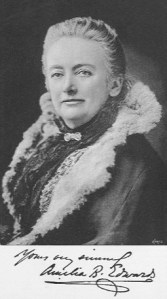
Amelia B. Edwards, 1890

Well! It was just twenty years ago, and within a day or two of the end of the grouse season. I had been out all day with my gun, and had had no sport to speak of. The wind was due east; the month, December; the place, a bleak wide moor in the far north of England. And I had lost my way. It was not a pleasant place in which to lose one’s way, with the first feathery flakes of a coming snowstorm just fluttering down upon the heather, and the leaden evening closing in all around. I shaded my eyes with my hand, and staled anxiously into the gathering darkness, where the purple moorland melted into a range of low hills, some ten or twelve miles distant. Not the faintest smoke-wreath, not the tiniest cultivated patch, or fence, or sheep-track, met my eyes in any direction. There was nothing for it but to walk on, and take my chance of finding what shelter I could, by the way. So I shouldered my gun again, and pushed wearily forward; for I had been on foot since an hour after daybreak, and had eaten nothing since breakfast.

Meanwhile, the snow began to come down with ominous steadiness, and the wind fell. After this, the cold became more intense, and the night came rapidly up. As for me, my prospects darkened with the darkening sky, and my heart grew heavy as I thought how my young wife was already watching for me through the window of our little inn parlour, and thought of all the suffering in store for her throughout this weary night. We had been married four months, and, having spent our autumn in the Highlands, were now lodging in a remote little village situated just on the verge of the great English moorlands. We were very much in love, and, of course, very happy. This morning, when we parted, she had implored me to return before dusk, and I had promised her that I would. What would I not have given to have kept my word!

Even now, weary as I was, I felt that with a supper, an hour’s rest, and a guide, I might still get back to her before midnight, if only guide and shelter could be found.

And all this time, the snow fell and the night thickened. I stopped and shouted every now and then, but my shouts seemed only to make the silence deeper. Then a vague sense of uneasiness came upon me, and I began to remember stories of travellers who had walked on and on in the falling snow until, wearied out, they were fain to lie down and sleep their lives away. Would it be possible, I asked myself, to keep on thus through all the long dark night? Would there not come a time when my limbs must fail, and my resolution give way? When I, too, must sleep the sleep of death. Death! I shuddered. How hard to die just now, when life lay all so bright before me! How hard for my darling, whose whole loving heart but that thought was not to be borne! To banish it, I shouted again, louder and longer, and then listened eagerly. Was my shout answered, or did I only fancy that I heard a far-off cry? I halloed again, and again the echo followed. Then a wavering speck of light came suddenly out of the dark, shifting, disappearing, growing momentarily nearer and brighter. Running towards it at full speed, I found myself, to my great joy, face to face with an old man and a lantern.

“Thank God!” was the exclamation that burst involuntarily from my lips.

Blinking and frowning, he lifted his lantern and peered into my face.

“What for?” growled he, sulkily.

“Well — for you. I began to fear I should be lost in the snow.”

“Eh, then, folks do get cast away hereabouts fra’ time to time, an’ what’s to hinder you from bein’ cast away likewise, if the Lord’s so minded?”

“If the Lord is so minded that you and I shall be lost together, friend, we must submit,” I replied; “but I don’t mean to be lost without you. How far am I now from Dwolding?”

“A gude twenty mile, more or less.”

“And the nearest village?”

“The nearest village is Wyke, an’ that’s twelve mile t’other side.”

“Where do you live, then?”

“Out yonder,” said he, with a vague jerk of the lantern.

“You’re going home, I presume?”

“Maybe I am.”

“Then I’m going with you.”

The old man shook his head, and rubbed his nose reflectively with the handle of the lantern.

“It ain’t o’ no use,” growled he. “He ‘ont let you in — not he.”

“We’ll see about that,” I replied, briskly. “Who is He?”

“The master.”

“Who is the master?”

“That’s nowt to you,” was the unceremonious reply.

“Well, well; you lead the way, and I’ll engage that the master shall give me shelter and a supper to-night.”

“Eh, you can try him!” muttered my reluctant guide; and, still shaking his head, he hobbled, gnome-like, away through the falling snow. A large mass loomed up presently out of the darkness, and a huge dog rushed out, barking furiously.

“Is this the house?” I asked.

“Ay, it’s the house. Down, Bey!” And he fumbled in his pocket for the key.

 I drew up close behind him, prepared to lose no chance of entrance, and saw in the little circle of light shed by the lantern that the door was heavily studded with iron nails, like the door of a prison. In another minute he had turned the key and I had pushed past him into the house.

 Once inside, I looked round with curiosity, and found myself in a great raftered hall, which served, apparently, a variety of uses. One end was piled to the roof with corn, like a barn. The other was stored with flour-sacks, agricultural implements, casks, and all kinds of miscellaneous lumber; while from the beams overhead hung rows of hams, flitches, and bunches of dried herbs for winter use. In the centre of the floor stood some huge object gauntly dressed in a dingy wrapping-cloth, and reaching half way to the rafters. Lifting a corner of this cloth, I saw, to my surprise, a telescope of very considerable size, mounted on a rude movable platform, with four small wheels. The tube was made of painted wood, bound round with bands of metal rudely fashioned; the speculum, so far as I could estimate its size in the dim light, measured at least fifteen inches in diameter. While I was yet examining the instrument, and asking myself whether it was not the work of some self-taught optician, a bell rang sharply.

“That’s for you,” said my guide, with a malicious grin. “Yonder’s his room.”

He pointed to a low black door at the opposite side of the hall. I crossed over, rapped somewhat loudly, and went in, without waiting for an invitation. A huge, white-haired old man rose from a table covered with books and papers, and confronted me sternly.

“Who are you?” said he. “How came you here? What do you want?”

“James Murray, barrister-at-law. On foot across the moor. Meat, drink, and sleep.”

He bent his bushy brows into a portentous frown.

“Mine is not a house of entertainment,” he said, haughtily. “Jacob, how dared you admit this stranger?”
 “I didn’t admit him,” grumbled the old man. “He followed me over the muir, and shouldered his way in before me. I’m no match for six foot two.”

“And pray, sir, by what right have you forced an entrance into my house?”

“The same by which I should have clung to your boat, if I were drowning. The right of self-preservation.”

“Self-preservation?”

“There’s an inch of snow on the ground already,” I replied, briefly; “and it would be deep enough to cover my body before daybreak.”

He strode to the window, pulled aside a heavy black curtain, and looked out.

“It is true,” he said. “You can stay, if you choose, till morning. Jacob, serve the supper.”

With this he waved me to a seat, resumed his own, and became at once absorbed in the studies from which I had disturbed him.

I placed my gun in a corner, drew a chair to the hearth, and examined my quarters at leisure. Smaller and less incongruous in its arrangements than the hall, this room contained, nevertheless, much to awaken my curiosity. The floor was carpetless. The whitewashed walls were in parts scrawled over with strange diagrams, and in others covered with shelves crowded with philosophical instruments, the uses of many of which were unknown to me. On one side of the fireplace, stood a bookcase filled with dingy folios; on the other, a small organ, fantastically decorated with painted carvings of medieval saints and devils. Through the half-opened door of a cupboard at the further end of the room, I saw a long array of geological specimens, surgical preparations, crucibles, retorts, and jars of chemicals; while on the mantelshelf beside me, amid a number of small objects, stood a model of the solar system, a small galvanic battery, and a microscope. Every chair had its burden. Every corner was heaped high with books. The very floor was littered over with maps, casts, papers, tracings, and learned lumber of all conceivable kinds.

 I stared about me with an amazement increased by every fresh object upon which my eyes chanced to rest. So strange a room I had never seen; yet seemed it stranger still, to find such a room in a lone farmhouse amid those wild and solitary moors! Over and over again, I looked from my host to his surroundings, and from his surroundings back to my host, asking myself who and what he could be? His head was singularly fine; but it was more the head of a poet than of a philosopher. Broad in the temples, prominent over the eyes, and clothed with a rough profusion of perfectly white hair, it had all the ideality and much of the ruggedness that characterises the head of Louis von Beethoven. There were the same deep lines about the mouth, and the same stern furrows in the brow. There was the same concentration of expression. While I was yet observing him, the door opened, and Jacob brought in the supper. His master then closed his book, rose, and with more courtesy of manner than he had yet shown, invited me to the table.
A dish of ham and eggs, a loaf of brown bread, and a bottle of admirable sherry, were placed before me.

“I have but the homeliest farmhouse fare to offer you, sir,” said my entertainer. “Your appetite, I trust, will make up for the deficiencies of our larder.”

I had already fallen upon the viands, and now protested, with the enthusiasm of a starving sportsman, that I had never eaten anything so delicious.

He bowed stiffly, and sat down to his own supper, which consisted, primitively, of a jug of milk and a basin of porridge. We ate in silence, and, when we had done, Jacob removed the tray. I then drew my chair back to the fireside. My host, somewhat to my surprise, did the same, and turning abruptly towards me, said:

“Sir, I have lived here in strict retirement for three-and-twenty years. During that time, I have not seen as many strange faces, and I have not read a single newspaper. You are the first stranger who has crossed my threshold for more than four years. Will you favour me with a few words of information respecting that outer world from which I have parted company so long?”

 “Pray interrogate me,” I replied. “I am heartily at your service.”

He bent his head in acknowledgment; leaned forward, with his elbows resting on his knees and his chin supported in the palms of his hands; stared fixedly into the fire; and proceeded to question me.

His inquiries related chiefly to scientific matters, with the later progress of which, as applied to the practical purposes of life, he was almost wholly unacquainted. No student of science myself, I replied as well as my slight information permitted; but the task was far from easy, and I was much relieved when, passing from interrogation to discussion, he began pouring forth his own conclusions upon the facts which I had been attempting to place before him. He talked, and I listened spellbound. He talked till I believe he almost forgot my presence, and only thought aloud. I had never heard anything like it then; I have never heard anything like it since. Familiar with all systems of all philosophies, subtle in analysis, bold in generalisation, he poured forth his thoughts in an uninterrupted stream, and, still leaning forward in the same moody attitude with his eyes fixed upon the fire, wandered from topic to topic, from speculation to speculation, like an inspired dreamer. From practical science to mental philosophy; from electricity in the wire to electricity in the nerve; from Watts to Mesmer, from Mesmer to Reichenbach, from Reichenbach to Swedenborg, Spinoza, Condillac, Descartes, Berkeley, Aristotle, Plato, and the Magi and mystics of the East, were transitions which, however bewildering in their variety and scope, seemed easy and harmonious upon his lips as sequences in music. By-and-by — I forget now by what link of conjecture or illustration — he passed on to that field which lies beyond the boundary line of even conjectural philosophy, and reaches no man knows whither. He spoke of the soul and its aspirations; of the spirit and its powers; of second sight; of prophecy; of those phenomena which, under the names of ghosts, spectres, and supernatural appearances, have been denied by the sceptics and attested by the credulous, of all ages.

“The world,” he said, “grows hourly more and more sceptical of all that lies beyond its own narrow radius; and our men of science foster the fatal tendency. They condemn as fable all that resists experiment. They reject as false all that cannot be brought to the test of the laboratory or the dissecting-room. Against what superstition have they waged so long and obstinate a war, as against the belief in apparitions? And yet what superstition has maintained its hold upon the minds of men so long and so firmly? Show me any fact in physics, in history, in archæology, which is supported by testimony so wide and so various. Attested by all races of men, in all ages, and in all climates, by the soberest sages of antiquity, by the rudest savage of to-day, by the Christian, the Pagan, the Pantheist, the Materialist, this phenomenon is treated as a nursery tale by the philosophers of our century. Circumstantial evidence weighs with them as a feather in the balance. The comparison of causes with effects, however valuable in physical science, is put aside as worthless and unreliable. The evidence of competent witnesses, however conclusive in a court of justice, counts for nothing. He who pauses before he pronounces, is condemned as a trifler. He who believes, is a dreamer or a fool.”

He spoke with bitterness, and, having said thus, relapsed for some minutes into silence. Presently he raised his head from his hands, and added, with an altered voice and manner, “I, sir, paused, investigated, believed, and was not ashamed to state my convictions to the world. I, too, was branded as a visionary, held up to ridicule by my contemporaries, and hooted from that field of science in which I had laboured with honour during all the best years of my life. These things happened just three-and-twenty years ago. Since then, I have lived as you see me living now, and the world has forgotten me, as I have forgotten the world. You have my history.”

“It is a very sad one,” I murmured, scarcely knowing what to answer.

“It is a very common one,” he replied. “I have only suffered for the truth, as many a better and wiser man has suffered before me.”

He rose, as if desirous of ending the conversation, and went over to the window.

“It has ceased snowing,” he observed, as he dropped the curtain, and came back to the fireside.

“Ceased!” I exclaimed, starting eagerly to my feet. “Oh, if it were only possible — but no! it is hopeless. Even if I could find my way across the moor, I could not walk twenty miles to-night.”

“Walk twenty miles to-night!” repeated my host. “What are you thinking of?”

“Of my wife,” I replied, impatiently. “Of my young wife, who does not know that I have lost my way, and who is at this moment breaking her heart with suspense and terror.”

“Where is she?”

“At Dwolding, twenty miles away.”

“At Dwolding,” he echoed, thoughtfully. “Yes, the distance, it is true, is twenty miles; but — are you so very anxious to save the next six or eight hours?”

“So very, very anxious, that I would give ten guineas at this moment for a guide and a horse.”

 “Your wish can be gratified at a less costly rate,” said he, smiling. “The night mail from the north, which changes horses at Dwolding, passes within five miles of this spot, and will be due at a certain cross-road in about an hour and a quarter. If Jacob were to go with you across the moor, and put you into the old coach-road, you could find your way, I suppose, to where it joins the new one?”

“Easily — gladly.”

He smiled again, rang the bell, gave the old servant his directions, and, taking a bottle of whisky and a wineglass from the cupboard in which he kept his chemicals, said:

“The snow lies deep, and it will be difficult walking to-night on the moor. A glass of usquebaugh before you start?”

I would have declined the spirit, but he pressed it on me, and I drank it. It went down my throat like liquid flame, and almost took my breath away.

“It is strong,” he said; “but it will help to keep out the cold. And now you have no moments to spare. Good night!”

I thanked him for his hospitality, and would have shaken hands, but that he had turned away before I could finish my sentence. In another minute I had traversed the hall, Jacob had locked the outer door behind me, and we were out on the wide white moor.

Although the wind had fallen, it was still bitterly cold. Not a star glimmered in the black vault overhead. Not a sound, save the rapid crunching of the snow beneath our feet, disturbed the heavy stillness of the night. Jacob, not too well pleased with his mission, shambled on before in sullen silence, his lantern in his hand, and his shadow at his feet. I followed, with my gun over my shoulder, as little inclined for conversation as himself. My thoughts were full of my late host. His voice yet rang in my ears. His eloquence yet held my imagination captive. I remember to this day, with surprise, how my over-excited brain retained whole sentences and parts of sentences, troops of brilliant images, and fragments of splendid reasoning, in the very words in which he had uttered them. Musing thus over what I had heard, and striving to recall a lost link here and there, I strode on at the heels of my guide, absorbed and unobservant. Presently — at the end, as it seemed to me, of only a few minutes — he came to a sudden halt, and said:

“Yon’s your road. Keep the stone fence to your right hand, and you can’t fail of the way.”

 “This, then, is the old coach-road?”

“Ay, ’tis the old coach-road.”

“And how far do I go, before I reach the cross-roads?”

“Nigh upon three mile.”

I pulled out my purse, and he became more communicative.

“The road’s a fair road enough,” said he, “for foot passengers; but ’twas over steep and narrow for the northern traffic. You’ll mind where the parapet’s broken away, close again the sign-post. It’s never been mended since the accident.”

“What accident?”

“Eh, the night mail pitched right over into the valley below — a gude fifty feet an’ more — just at the worst bit o’ road in the whole county.”

“Horrible! Were many lives lost?”

“All. Four were found dead, and t’other two died next morning.”

“How long is it since this happened?”

“Just nine year.”

“Near the sign-post, you say? I will bear it in mind. Good night.”

“Gude night, sir, and thankee.” Jacob pocketed his half-crown, made a faint pretence of touching his hat, and trudged back by the way he had come.

I watched the light of his lantern till it quite disappeared, and then turned to pursue my way alone. This was no longer matter of the slightest difficulty, for, despite the dead darkness overhead, the line of stone fence showed distinctly enough against the pale gleam of the snow. How silent it seemed now, with only my footsteps to listen to; how silent and how solitary! A strange disagreeable sense of loneliness stole over me. I walked faster. I hummed a fragment of a tune. I cast up enormous sums in my head, and accumulated them at compound interest. I did my best, in short, to forget the startling speculations to which I had but just been listening, and, to some extent, I succeeded.

Meanwhile the night air seemed to become colder and colder, and though I walked fast I found it impossible to keep myself warm. My feet were like ice. I lost sensation in my hands, and grasped my gun mechanically. I even breathed with difficulty, as though, instead of traversing a quiet north country highway, I were scaling the uppermost heights of some gigantic Alp. This last symptom became presently so distressing, that I was forced to stop for a few minutes, and lean against the stone fence. As I did so, I chanced to look back up the road, and there, to my infinite relief, I saw a distant point of light, like the gleam of an approaching lantern. I at first concluded that Jacob had retraced his steps and followed me; but even as the conjecture presented itself, a second light flashed into sight — a light evidently parallel with the first, and approaching at the same rate of motion. It needed no second thought to show me that these must be the carriage-lamps of some private vehicle, though it seemed strange that any private vehicle should take a road professedly disused and dangerousThere could be no doubt, however, of the fact, for the lamps grew larger and brighter every moment, and I even fancied I could already see the dark outline of the carriage between them. It was coming up very fast, and quite noiselessly, the snow being nearly a foot deep under the wheels.

And now the body of the vehicle became distinctly visible behind the lamps. It looked strangely lofty. A sudden suspicion flashed upon me. Was it possible that I had passed the cross-roads in the dark without observing the sign-post, and could this be the very coach which I had come to meet?

No need to ask myself that question a second time, for here it came round the bend of the road, guard and driver, one outside passenger, and four steaming greys, all wrapped in a soft haze of light, through which the lamps blazed out, like a pair of fiery meteors.

I jumped forward, waved my hat, and shouted. The mail came down at full speed, and passed me. For a moment I feared that I had not been seen or heard, but it was only for a moment. The coachman pulled up; the guard, muffled to the eyes in capes and comforters, and apparently sound asleep in the rumble, neither answered my hail nor made the slightest effort to dismount; the outside passenger did not even turn his head. I opened the door for myself, and looked in. There were but three travellers inside, so I stepped in, shut the door, slipped into the vacant corner, and congratulated myself on my good fortune.

The atmosphere of the coach seemed, if possible, colder than that of the outer air, and was pervaded by a singularly damp and disagreeable smell. I looked round at my fellow-passengers. They were all three, men, and all silent. They did not seem to be asleep, but each leaned back in his corner of the vehicle, as if absorbed in his own reflections. I attempted to open a conversation.

“How intensely cold it is to-night,” I said, addressing my opposite neighbour.

He lifted his head, looked at me, but made no reply.

“The winter,” I added, “seems to have begun in earnest.”

Although the corner in which he sat was so dim that I could distinguish none of his features very clearly, I saw that his eyes were still turned full upon me. And yet he answered never a word.

At any other time I should have felt, and perhaps expressed, some annoyance, but at the moment I felt too ill to do either. The icy coldness of the night air had struck a chill to my very marrow, and the strange smell inside the coach was affecting me with an intolerable nausea. I shivered from head to foot, and, turning to my left-hand neighbour, asked if he had any objection to an open window?

He neither spoke nor stirred.

I repeated the question somewhat more loudly, but with the same result. Then I lost patience, and let the sash down. As I did so, the leather strap broke in my hand, and I observed that the glass was covered with a thick coat of mildew, the accumulation, apparently, of years. My attention being thus drawn to the condition of the coach, I examined it more narrowly, and saw by the uncertain light of the outer lamps that it was in the last stage of dilapidation. Every part of it was not only out of repair, but in a condition of decay. The sashes splintered at a touch. The leather fittings were crusted over with mould, and literally rotting from the woodwork. The floor was almost breaking away beneath my feet. The whole machine, in short, was foul with damp, and had evidently been dragged from some outhouse in which it had been mouldering away for years, to do another day or two of duty on the road.

I turned to the third passenger, whom I had not yet addressed, and hazarded one more remark.

“This coach,” I said, “is in a deplorable condition. The regular mail, I suppose, is under repair?”

He moved his head slowly, and looked me in the face, without speaking a word. I shall never forget that look while I live. I turned cold at heart under it. I turn cold at heart even now when I recall it. His eyes glowed with a fiery unnatural lustre. His face was livid as the face of a corpse. His bloodless lips were drawn back as if in the agony of death, and showed the gleaming teeth between.

The words that I was about to utter died upon my lips, and a strange horror — a dreadful horror — came upon me. My sight had by this time become used to the gloom of the coach, and I could see with tolerable distinctness. I turned to my opposite neighbour. He, too, was looking at me, with the same startling pallor in his face, and the same stony glitter in his eyes. I passed my hand across my brow. I turned to the passenger on the seat beside my own, and saw — oh Heaven! how shall I describe what I saw? I saw that he was no living man — that none of them were living men, like myself! A pale phosphorescent light — the light of putrefaction — played upon their awful faces; upon their hair, dank with the dews of the grave; upon their clothes, earth-stained and dropping to pieces; upon their hands, which were as the hands of corpses long buried. Only their eyes, their terrible eyes, were living; and those eyes were all turned menacingly upon me!

A shriek of terror, a wild unintelligible cry for help and mercy; burst from my lips as I flung myself against the door, and strove in vain to open it.

 In that single instant, brief and vivid as a landscape beheld in the flash of summer lightning, I saw the moon shining down through a rift of stormy cloud — the ghastly sign-post rearing its warning finger by the wayside — the broken parapet — the plunging horses — the black gulf below. Then, the coach reeled like a ship at sea. Then, came a mighty crash — a sense of crushing pain — and then, darkness.

It seemed as if years had gone by when I awoke one morning from a deep sleep, and found my wife watching by my bedside I will pass over the scene that ensued, and give you, in half a dozen words, the tale she told me with tears of thanksgiving. I had fallen over a precipice, close against the junction of the old coach-road and the new, and had only been saved from certain death by lighting upon a deep snowdrift that had accumulated at the foot of the rock beneath. In this snowdrift I was discovered at daybreak, by a couple of shepherds, who carried me to the nearest shelter, and brought a surgeon to my aid. The surgeon found me in a state of raving delirium, with a broken arm and a compound fracture of the skull. The letters in my pocket-book showed my name and address; my wife was summoned to nurse me; and, thanks to youth and a fine constitution, I came out of danger at last. The place of my fall, I need scarcely say, was precisely that at which a frightful accident had happened to the north mail nine years before.

I never told my wife the fearful events which I have just related to you. I told the surgeon who attended me; but he treated the whole adventure as a mere dream born of the fever in my brain. We discussed the question over and over again, until we found that we could discuss it with temper no longer, and then we dropped it. Others may form what conclusions they please — I know that twenty years ago I was the fourth inside passenger in that Phantom Coach.
Announcing the Advent of “The Chamber” Magazine

Phil Slattery Self-portrait, August, 2016
Phil Slattery
Self-portrait, August, 2016

Beginning in January 1, 2017, this will be the location of a new on-line quarterly magazine for short stories, poetry, and other short works of the horror genre.  Please feel free to start submitting as of September 9, 2016.  You can find the guidelines for submissions on my current Submissions and Announcements page, which will remain the same, with the only exception being that the word limit for submissions for “The Chamber” will increase from 1,000 to 2,000 words.

I am creating this magazine primarily because it is not fair to my contributors to submit a work for publication, when that work will be at the top of my blog posts for only a day, and then that author and his readers will have to wade through a morass of unrelated blogs to find that one post.  To remedy this, I will create a separate page on my blog for my new magazine, “The Chamber”, where each quarter’s selections will appear on a separate page for eternity (or until WordPress folds, or until I give it all up and wander off to buy a bar in Key West or etc.)  Issue 1 will appear on January 1st.  Cut-off date for submissions will be November 30 (I don’t want to work over Christmas).  Selections will probably be made by December 15.   Send submissions per the Submissions and Announcements guidelines, but specify Submission for “The Chamber” in the subject line, if you want your work published in The Chamber, or Submission for The Blog, if you want to be published in the regular blog.  I will continue to publish submissions in my regular blog until December 31.

Why call it “The Chamber”?  The word chamber has numerous sinister and macabre connotations: a chamber of horrors, a torture chamber, one chambers a round into a rifle, etc.  A chamber can also be where a sorcerer, an alchemist, or a member of the Inquisition stores his library.  It is with this last connotation in mind that I am developing my Chamber for the storage of my selection of sinister and macabre works from the best up and coming authors that seek to contribute to my blog.

So, start editing your best, most powerful material and see where this new venture takes us!  I want powerful, hard-hitting material that leaves its readers gasping and awe-struck at the end.

The Farmington Writers Circle Meets Tonight, September 8, 2016

William Shakespeare
William Shakespeare

The Farmington Writers Circle meets tonight on September 8, 2016 at 7:00 p.m.   Because of the closing of Hasting’s Hardback Cafe, the Writers Circle will now meet at Starbuck’s at 4337 East Main, #101 (near the intersection with 30th Street) until further notice.  The evening’s topic has not been determined.

The Farmington Writers Circle is nascent organization of Farmington-area writers who are interested in finding or developing innovative ways of publicizing and marketing their works.   Meetings are usually round-table discussions, although occasionally a member will lead the discussion when it deals with an area of the member’s expertise.  There are no fees or requirements to attend meetings.  Writers of any and all genres, regardless of writing experience, and non-writers with an interest in the art are welcome.  Previous topics have included establishing a website to maximize the use of social media in publicizing works, writers’ conferences,  and finding an agent among other topics.   Meetings generally run for two hours.  For more information, contact me via this website.

Grammar-ease: Passed vs Past and Other Confusing Words

In my editing endeavors recently I’ve encountered a lot of words that spellcheck doesn’t always catch and so it prompted me to share a few of them with you. Passed (verb) vs Past (prepo…

Source: Grammar-ease: Passed vs Past and Other Confusing Words

Slattery’s Art of Horror Now Takes Submissions and Announcements

Writing at Hasting's Hardback Café, October, 2015
Writing at Hasting’s Hardback Café, October, 2015

If you have a bit of horror flash fiction or poetry you would like to see published on this blog, go to my submissions page for guidelines.  I would like to see more original fiction and poetry published here in any short form from narratives to any type of poetry (including the experimental and off-beat) to short plays or whatever.  I would like to showcase as wide a range possible of works of horror.  If in doubt, send it.  This is not to say that I will publish anything that comes along.  Whatever I publish will have to meet my own aesthetic standards and tastes, but I do want to see anything you have (so long as it meets the minimal standards expressed on my submissions page).  We have had some very good authors and poets recently and I am eager to see more.

In addition, I will now start taking announcements about works of horror.  If you are a horror author with a book-signing coming up or you will be giving a public talk somewhere or you have a book (or film) with a definite release date, announce it here.  If you have anything related to a creative work in the horror genre that you would like to publicize, draft an announcement and send it in.  I reserve all editorial rights however to make any needed changes for clarity, etc, and to ask questions if the announcement isn’t clear on some point.  There will be no charge for this, at least initially, but I do reserve the right to charge fees later, if a lot of announcements do start to flood my inbox.

However, note that I will not do advertising for any product.  I want to publicize creative works and to help authors, poets, film makers, and others jump start their careers.  I am not a merchant.  As to where the line is between advertising a product and publicizing a work, that will be my subjective decision.  So if you want to sell pens, notebooks, software, or any other concrete product, try Amazon.com.

The Saturday Night Special: “Annabel Lee” by Edgar Allan Poe (1849)

It was many and many a year ago,
   In a kingdom by the sea,
That a maiden there lived whom you may know
   By the name of Annabel Lee;
And this maiden she lived with no other thought
   Than to love and be loved by me.
I was a child and she was a child,
   In this kingdom by the sea,
But we loved with a love that was more than love—
   I and my Annabel Lee—
With a love that the wingèd seraphs of Heaven
   Coveted her and me.
And this was the reason that, long ago,
   In this kingdom by the sea,
A wind blew out of a cloud, chilling
   My beautiful Annabel Lee;
So that her highborn kinsmen came
   And bore her away from me,
To shut her up in a sepulchre
   In this kingdom by the sea.
The angels, not half so happy in Heaven,
   Went envying her and me—
Yes!—that was the reason (as all men know,
   In this kingdom by the sea)
That the wind came out of the cloud by night,
   Chilling and killing my Annabel Lee.
But our love it was stronger by far than the love
   Of those who were older than we—
   Of many far wiser than we—
And neither the angels in Heaven above
   Nor the demons down under the sea
Can ever dissever my soul from the soul
   Of the beautiful Annabel Lee;
For the moon never beams, without bringing me dreams
   Of the beautiful Annabel Lee;
And the stars never rise, but I feel the bright eyes
   Of the beautiful Annabel Lee;
And so, all the night-tide, I lie down by the side
   Of my darling—my darling—my life and my bride,
   In her sepulchre there by the sea—
   In her tomb by the sounding sea.
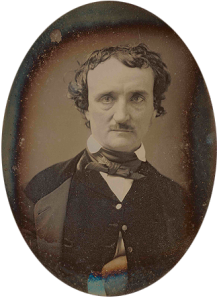
Edgar Allan Poe, circa 1849