Here is a brief review of a long-forgotten Peter Lorre movie that sounds very interesting based upon critiques of the time and the modern-day reviews. I will probably be seeking this one out.
The reviewer’s concise description of the plot is at the best inadequate. He doesn’t mention what relation Stephen Orlac is to Yvonne Orlac (brother? husband?) and he doesn’t even allude to what Orlac does with his new-found ability with knives, though I suppose we are to guess that he uses them against Dr. Gogol in some fashion. He probably could have done better.
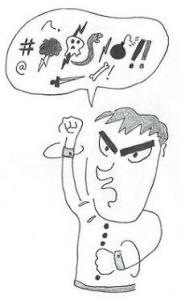
Here’s an interesting with an interesting perspective. It discusses all the non-verbal obscenities that appear in film, such as obscenities on t-shirts or in graffiti in the background. I am not a prude by any stretch of the imagination, but I believe that too much obscenity turns off a certain portion of a writer’s readership. On the other hand, sometimes a scene is of such intensity that it demands obscenities just to keep it plausible (e.g. some of the stories I am working on are set in hell, where obscenity-littered speech would be the norm). As is said in Ecclesiastes: “For everything there is a season.”
What this article inspires in me though, is not half-assed prudery or some type of literary caution or self-imposed censorship, but it opens up my mind to subtle places where I might place obscenities to express some subtlety of meaning or atmosphere.
I received this writing prompt from The Daily Post on November 8: “What’s the date today? Write it down, remove all dashes and slashes, and write a post that mentions that number.”
I started to write a glib response about numerology, but then a bell went off in the back of my mind.
While I don’t believe in numerology, I do like to toy with things like this in my writing for the enjoyment of people who do. Having been a graduate student at one time, I know how grad students and other literati like to analyze a text to the nth degree, searching for hidden but profound meaning in every nuanced word or misplaced comma. I seldom do this with the intent of relaying some arcane theme (people will interpret stories however best fits their worldview anyway), but just so the literati will have some fun analyzing and arguing about the story. For me, this is part of the fun of writing. But the more practical side of me also sees it as a way to build up a readership.
One way for a story to become known is via word of mouth. They will discuss the book if they find it interesting or they find something in it to argue about with their colleagues in the English Department or with friends at work or with like-minded enthusiasts at the local book club. So I give them something to debate.
Mostly, the understated connections I use are meaningless. For example, I have been working on a sci-fi short story in which I wanted to mention a sidearm astronauts 200 years from now might carry, but I did not want to use a type of space weapon that has become a cliché in the sci-fi world like a Star Trek phaser or a Star Wars blaster or a Flash Gordon ray gun. I named it the Hawking S-505 Black Particle sidearm. Hawking, obviously, for Stephen Hawking, who I am sure will have tons of scientific stuff named for him in the future including spaceports and starships. “Black Particle” as a form of dark energy relating to dark matter, which is cutting edge science these days, but will probably be trite in two centuries. S-550: the “S” is for sidearm; 550 is a US highway that runs through the town where I live currently. If I need a number, such as a serial number, I often use an old phone number or my birthdate or some other useless bit of trivia. As the original post from The Daily Post suggested, I might use a form of today’s date or some other date with meaning in my life. If the subject relates to magic(k), I might consult a book on numerology and choose/compose something appropriate. For example, in one horror story I have been writing for a long time, the protagonist walks through a tunnel under a dilapidated castle, where black magick was once practiced. The sides of the tunnel are covered in symbols and numbers including the number “4”, which symbolizes evil in some traditions.
For the names of characters, I frequently glance at the bookshelf to the right of my easy chair, where I write on my laptop, and combine the names of two authors to produce a name that has the right “sound” for the character or I might combine names from history or art or some other field. For example, I see I have one book by Bill Moyers and another by George Plimpton. I might name a character Bill Plimpton. In another sci-fi work (yet to be published) I needed the names for a nine man reconnaissance team to go aboard a derelict starship. I went to Google Translate and took the word for “warrior” from nine languages ranging from Gaelic to Swahili, so none would be immediately recognizable as a word for warrior (at least in the US), yet the names would express the cultural diversity of the crew.
Anyway, for me that is part of the fun of writing. How do you have fun with your writing?
Writing at Starbuck’s in Farmington, circa October 12, 2015.
Here’s a link to an neat, entertaining article on Timothy McSweeney’s Internet Tendency about some good, sound,basic advice on how to write anything better. I recommend printing these out and sticking them on your refrigerator, stapling them to your forehead, or tattooing them to your forearm.
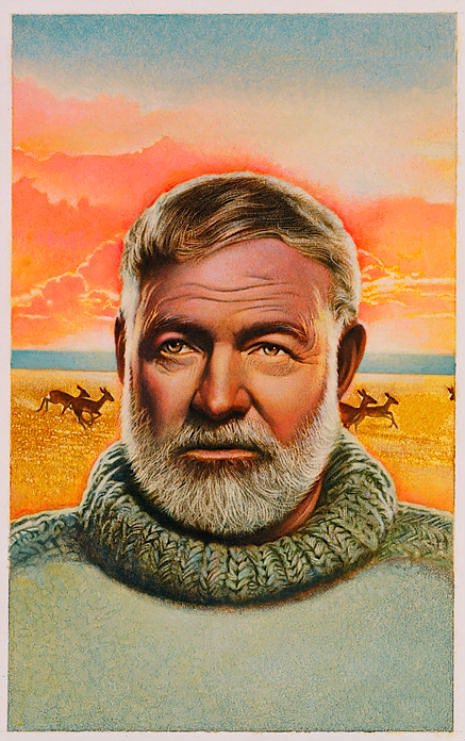
Ernest Hemingway Thought I do not know who the creator of this work is, I must ask that you respect their copyright.
The primary influences on my writing have always been Hemingway and Fitzgerald. Based on what I have read, neither was a fan of metaphors. Somewhere in the back of my mind I seem to recall Hemingway once calling metaphors “the weakest of animals” or “the “weakest of literary devices” or something like that (I have searched for this quote and haven’t found it yet). Ergo, I have always shied away from metaphors and I have found that it has helped my writing immensely by forcing me to be creative in my comparisons and analogies. While searching in vain for Hemingway’s quotation on metaphors tonight, I ran across this quotation from George Orwell which makes a few good points:
“By using stale metaphors, similes and idioms, you save much mental effort, at the cost of leaving your meaning vague, not only for your reader but for yourself. This is the significance of mixed metaphors. The sole aim of a metaphor is to call up a visual image. When these images dash [sic] … it can be taken as certain that the writer is not seeing a mental image of the objects he is naming; in other words he is not really thinking.”
Metaphors are a bridge to another idea; they take the reader onto a tangent. If I say, “The hunter stumbled through the woods like a wounded bear,” I am shifting the reader’s visual image from that of the hunter to that of a bear. Yes, I give the reader a concise description of how the hunter was stumbling, and the reader can probably visualize the stumbling rather accurately, but wouldn’t the reader become more involved with the hunter and be able to visualize the scene more precisely if the hunter is described as if he were a wounded bear stumbling. Wouldn’t it also be a bit more of an intriguing psychological puzzle for the reader to solve and come to his own sudden epiphany of something like “Oh, he’s moving like a wounded bear!” For example:
The hunter, half-dazed from a blow to the head, his dark eyes fixed on some point on the dim horizon, staggered back and forth, bumping into trees, sometimes leaning against them to keep from collapsing into the hard-packed snow, dropping to one knee then rising slowly, painfully catching his breath, limping, often groaning, sometimes bellowing out in a desperate hope that someone passing through the distant shadows might come to his aid.
Isn’t that more dramatic? Doesn’t that involve the reader more into the actions and situation of the main character? Yes, it’s considerably longer, but now the reader can visualize precisely the hunter’s agonizing movements. Now, instead of having to visualize a bear, all attention is focused entirely on visualizing the hunter. Now you are forced to be creative, to use something other than Orwell’s “stale metaphors, similes and idioms” and have to use something more dynamic. No one can accuse you of not really thinking or of being lazy in your descriptions.
In short, if I want to compare two objects, I describe one using the characteristics and attributes of the other. If I have done it well, the reader will see the likeness between the two, but will still remained focused, and maybe even more intensely, on the subject.
Painting of a Dog by Kim Duryang Sapsalgae, 1743
I have used this method for some time now, and I believe it has strengthened my works considerably.
Working on a play in Hasting’s Hardback Café, late evening, October 16, 2015.
As I was preparing to go to the local theatre this evening, I was thinking about how I can improve my writing and what distinguishes the great writers of horror. Of course, the first two that came into my mind as being easily discernible from all others were Poe and Lovecraft. Obviously, what distinguishes them is their use of language. Both use very intense, muscular language with a distinctly archaic tone. Not knowing if there a precise term already exists for this style, I decided to call it “the dark language”, because of its tight connection with the horror genre and with the horrifying in general. For me, there seems to be something archetypal about this, arising out of the Jungian collective unconscious. Perhaps it is just that Poe bound the Dark Language so intimately with scenes of horror, terror, and suspense, which is also bound with genres such as the Gothic novel, that the sound of it automatically brings forth societal memories of dread.
I need to finish dressing if I am to dine at my favorite local sushi restaurant before heading to the play. Somehow, I just have the taste for something raw tonight.
Just now, I created a facebook page for the Art of Horror at https://www.facebook.com/slatterysartofhorror. Drop by, check it out, and friend me. Posts from this blog should feed automatically to Facebook as well as from my Twitter account.
At “A Literary Affair” charity dinner in Farmington, NM, as Herbert West, September 12, 2015.
This I share with you tonight for entertainment and because it addresses one or two issues affecting writers in general.
I was searching for somewhere to publish a very short work (probably nanofiction) of mine tonight and I came across the submission guidelines at Jersey Devil Press. I love guidelines that show a sense of humor and a free spirit while being straightforward and honest and theirs does just that. They also offered more detailed guidelines, which I found a quite enjoyable read. I also found that these guidelines do not provide just good advice for their own publication, they provide good advice that any author submitting to any publication would be wise to heed: advice on formatting, staying away from overused topics, good taste, sensitive subjects, etc. As they use at least one or two examples that touch on horror, I thought I would post the part on their selection process tonight for your perusal. If you have a chance and the time, check out their guidelines on their website and the rest of the publication as well…and maybe submit something as well…and maybe give them a pat on the back for a job well done.
By the way, I ended up not submitting to them, because my story did not meet a requirement. That’s why I read guidelines.
Thoughts? Comments?
Behind the Curtain
We thought we’d take a moment to shore up our submissions guidelines and give you a little peek into our selection process.
First, our goal: To publish stories non-writers would actually want to read. We prefer funny, weird, and, above all, entertaining; sober melodramas generally don’t fly so well with us. There are certainly exceptions, but that’s largely because they’re exceptional.
Second, previously published works: We accept them, but we want to clarify that a bit. By “previously,” we literally mean “previously.” If it’s currently published, i.e. something that is available online elsewhere, or if it’s part of the book you just released, that seems a little greedy to us. If it’s only on your own personal website or a forum or something, though, don’t sweat it.
Accepting and rejecting story submissions is, by nature, subjective. Short of grading them entirely on quantifiable variables, like the number of adverbs or something, there’s not much we can do to change that. So, to level the playing field a bit, we thought we’d give you a little heads up regarding our own personal peeves and predilections.
Also, a pre-emptive apology to anyone who thinks we’re singling out their story: We’re not. Not a single theme mentioned below is a one-off. These are all popular, repeat offenders that we’re simply not that fond of.
Eirik’s list of things that should be stopped forever:
Vampires. I think Twilight is stupid. I’m sorry, but I haven’t been even moderately interested in vampires since “Angel” got cancelled.
Mob stories. If the entire story is just two guys talking in “goomba” speak, please don’t. I’ve met people with mob ties in real life and they’re generally assholes. And, honestly, you’re never going to out-Soprano the Sopranos.
College professors seducing/being seduced by young, nubile co-eds. What college did you go to where this was actually happening? In general, any regularly used plot line in a porno is a no-no.
Thinly veiled drug metaphors. You think drugs are bad. We get it. We don’t care. At the very least get a thicker veil.
Monica’s justifiable grounds for homicide:
Male writers writing female narrators. While it’s not impossible to do this, the vast majority of men writing women don’t seem to have ever talked to a woman before in their life. If your female narrator is shallow, stupid, and unable to do anything in her life that does not revolve around men, don’t send it.
And if you’re reading this thinking, “Well, of course she’d think this, she’s a woman,” then YOU’RE THE FUCKING PROBLEM. You can keep trying, though, if you really want to. Interesting side note, Monica once stared at a man with such disdain that he actually BURST INTO FLAMES. Don’t say you weren’t warned.
Stereotypical minority characters. This kind of goes hand in hand with the above. If you’re writing a black man, try actually talking to one. It’s 2010, people. We shouldn’t be getting offended anywhere near as often as we do by the way people are treating characters of various backgrounds.
Unanimously awful topics:
Erotica. Actually, this one doesn’t bother us, but we’re never going to publish it. If you want to keep sending it though, for our own personal amusement, knock yourself out.
Rape. No. Bad. We don’t really need there to be any more rape in the world than there already is. Monica would also like to clarify that any sort of sexual act perpetrated without both parties’ consent is rape. Again, we’re surprised how often people don’t seem to know what the fuck they’re writing.
Relationship drama. While this seems to be a staple of literature, it is also very often boring as all hell. If your story’s just two people moping around, maybe find somewhere else to send it. If they’re doing it while juggling cats, though, you’ve got our attention.
On the flip side, here are a few things we wouldn’t mind seeing more of:
Strong female voices. We know you’re out there.
A light-hearted view of the world. Fiction does not have to be so God damned grim.
Truly bat-shit insane fiction. If you’re worried that what you just wrote is too ridiculous to be published, send it.
Again, please don’t take any of the above personally. We’re simply giving you a glimpse into our own tastes. We’re not saying that the themes mentioned above are bad or shouldn’t be written about (well, we’re not saying it about most of them anyway), but simply that we’re really not that interested in them. Your story about a bunch of mobsters being raped by vampires may very well be the best story about mobsters getting raped by vampires ever written. It may deserve to win the Nobel Prize for Literature. And we may even say as much. But it doesn’t mean we have to like it.
Besides, there are plenty of other fish in the sea. Of course, you better make damn sure you read THEIR submission guidelines before you start sending shit. I don’t want to get blamed for a rash of vampire stories getting sent to a site looking for memoirs and poetry.
But if your heart’s still set on submitting to JDP, head on over to submishmash
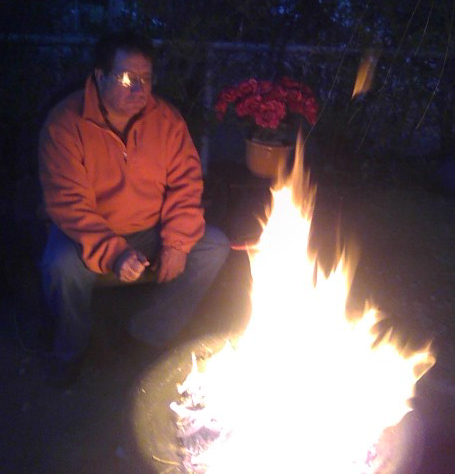
Relaxing by the front yard firepit on a chilly New Mexico evening circa 2013.
I was sitting here writing a short story when it occurred to me that most characters in classic fiction seldom have detailed descriptions of their physical characteristics. In fact, many have none at all. If they are described, it is usually in a broad, general way, unless there is some detail the author wants to bring out that reveals something about the character. While this is a good technique for lean, muscular writing, it also has the benefit of not limiting how the character appears in the reader’s mind. For example, here is the initial description of Victor Frankenstein when the narrator’s ship rescues him in the arctic in letter 4 (which functions in essence as part of a preface):
“Upon hearing this he appeared satisfied and consented to come on board. Good God! Margaret, if you had seen the man who thus capitulated for his safety, your surprise would have been boundless. His limbs were nearly frozen, and his body dreadfully emaciated by fatigue and suffering. I never saw a man in so wretched a condition. We attempted to carry him into the cabin, but as soon as he had quitted the fresh air he fainted. We accordingly brought him back to the deck and restored him to animation by rubbing him with brandy and forcing him to swallow a small quantity. As soon as he showed signs of life we wrapped him up in blankets and placed him near the chimney of the kitchen stove. By slow degrees he recovered and ate a little soup, which restored him wonderfully.
“Two days passed in this manner before he was able to speak, and I often feared that his sufferings had deprived him of understanding. When he had in some measure recovered, I removed him to my own cabin and attended on him as much as my duty would permit. I never saw a more interesting creature: his eyes have generally an expression of wildness, and even madness, but there are moments when, if anyone performs an act of kindness towards him or does him any the most trifling service, his whole countenance is lighted up, as it were, with a beam of benevolence and sweetness that I never saw equalled. But he is generally melancholy and despairing, and sometimes he gnashes his teeth, as if impatient of the weight of woes that oppresses him.”
Very little is said about Frankenstein’s physical state except where it reveals something about his state of mind or gives an idea of the hardships he has suffered in pursuit of his creation. Because the physical description is so minimal, the reader may envision Frankenstein in any physical form that he wants or whatever is easiest for him to envision (there is a difference between what we may want to envision and what is easiest or most natural for us to envision). Frankenstein could be short and dark-haired and dark-complected or tall and blonde and sunburned. Later on, we learn his family is from Geneva, therefore the reader could envision him as whatever his stereotype of a Swiss man from Geneva happens to be.
Using minimal physical description is therefore an advantage to the author, because it allows the reader to more easily visualize and thus more easily experience the story vicariously, i.e., it allows the reader to more easily immerse himself in the story. We have all experienced the feeling of being completely immersed in the world of a novel, what Henry James called “the atmosphere of the mind” (see the definition in the Lexicon of Horror) and that is a feeling I want my readers to experience.
With Iced Tea, Farmington, New Mexico, March 20, 2015
As you may already know, I am on Goodreads quote of the day mailing list. Today’s I found particularly interesting on a couple of levels:
“Atticus told me to delete the adjectives and I’d have the facts.” Harper Lee
First, there is the literary perspective. Eliminating the adjectives and other modifiers from a story leaves you with the simple, cold hard facts, the bones, of the story. I have read several bits of writing advice that advocate keeping modifiers to a minimum and using nouns and verbs to their fullest by using them precisely, trying to match the exact word to its underlying concept. To my mind, that leaves one with the essence of the story.
Second, there is the deeper, philosophical perspective. Like with the literary perspective above, if you observe or learn of an event, if you cut away all the extraneous opinions and descriptors and other crap, you will have the cold, hard facts of the matter. This is echoed in Hannibal Lecter’s famous quote from Marcus Aurelius (though this is actually a paraphrase…at least in my copy of Meditations of Marcus Aurelius): “Read Marcus Aurelius. Of each particular thing ask: what is it in itself? What is its nature?”. It is also echoed in Hemingway’s remark made during an interview in The Paris Review: “The most essential gift for a good writer is a built-in, shockproof, shit detector.”
The article is brief, but I won’t copy it here, because everyone with an interest in the art of writing should watch the accompanying five minute video of Steinbeck’s profound acceptance speech of the 1962 Nobel Prize. I will, however, copy below a short paragraph immediately preceding his six tips (I also highly recommend following the link to an entertaining and insightful Paris Review article on his observations on the art of fiction):
And for insights into how Steinbeck reached that pinnacle, you can read a collection of his observations on the art of fiction from the Fall, 1975 edition of The Paris Review, including six writing tips jotted down in a letter to a friend the same year he won the Nobel Prize. “The following,” Steinbeck writes, “are some of the things I have had to do to keep from going nuts.”
In earlier posts I mentioned that if one is to learn the art of writing, one must study the masters–regardless of genre. Writing well is writing well whether in mainstream literature, horror, romance, mystery, or whatever. After the basics of writing are mastered, then one can tailor stories to the accepted practices and traditions of his/her chosen genre. That is why I have been posting these articles with advice from horror and non-horror writers. Most of what they say is as applicable to horror as it is to mainstream literature or any other genre.
Tonight’s post is from Ray Bradbury. If you have not read The Martian Chronicles, run out and buy a copy or download one before you finish reading this article. You will find that it contains some of the most beautiful, poignant writing that you will ever encounter. I wish I could develop the skill that Bradbury shows and apply it to anything I write, whether it be a horror novel or a shopping list. Although this article will not help you do that, it will show you some of the important lessons that Mr. Bradbury learned in the school of literary hard knocks. The focus of the Open Culture article is a fifty-four minute video. The author of the article, Colin Marshall, summarizes the video into twelve points immediately below the video. I recommend watching the entire video before reading the twelve points, because you may or may not agree with Mr. Marshall’s summary.
 Source: From creative writers to creative readers: Why it takes two to build a “hydrogen jukebox”
Source: Mad Love aka The Hands of Orlac
 Source: Visual swears in film



 I added verbocrap, verism, logorrhoea, macrology, the Vice, ficelle, and several others.


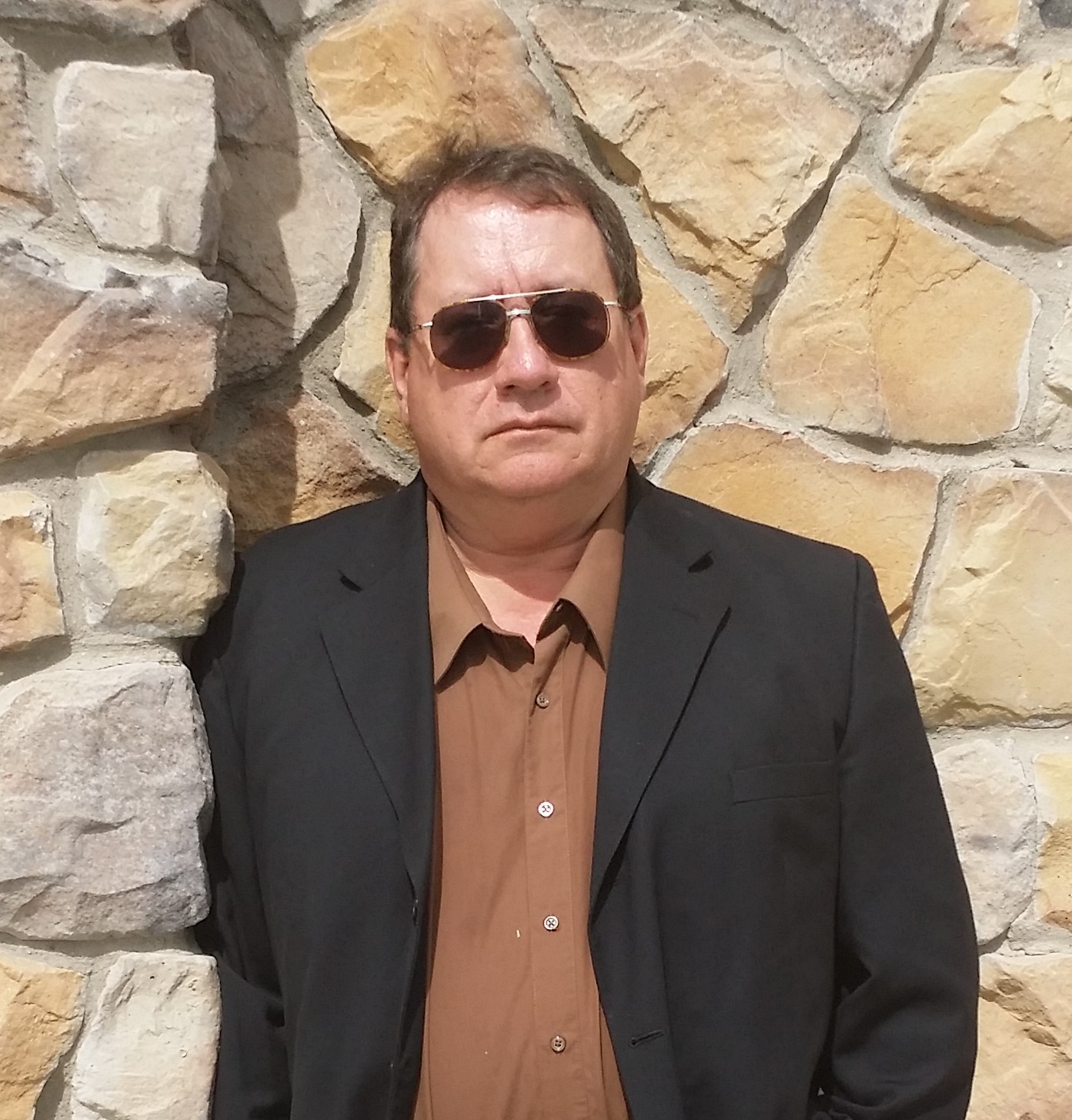
 Phil Slattery, Writer, Publisher