The Good, The Bad and The Terrible ; Zombies | The Horror Online

130218_0002Still more from The Horror Online:  The Good, The Bad and The Terrible ; Zombies | The Horror Online.

Hopefully, I will find the time to sit down and write another extensive post, but unfortunately, these days I seem inundated with personal and professional tasks.  I try to read when I have the opportunity.  When I do have some time free, I have been watching horror films and I have several which I recommend and on which I hope to be writing posts before long.  I also hope to establish a webpage for a nascent lexicon of horror.

Thoughts?  Comments?

NaNoWriMo: Classic Novels Written in a Month | Interesting Literature

Robert Louis Stevenson Portrait by Girolamo Nerli  (1860-1926)
Robert Louis Stevenson
Portrait by Girolamo Nerli
(1860-1926)

If you are having problems meeting a deadline or dealing with the demon of writer’s block the following article may help you feel not so alone.  Some, if not all, of the world’s most famous had to deal with one or both and often did so in novel ways:   NaNoWriMo: Classic Novels Written in a Month | Interesting Literature.

Note, horror fans, that of the authors mentioned here only one was an author of horror.  Of course, I mean the gentleman to the left, the author of Dr. Jekyll and Mr. Hyde, which he apparently drafted at the Nineteenth century equivalent of warp speed.

Thoughts?  Comments?

The Good, The Bad and The Terrible ; Werewolves | The Horror Online

Werewolf-1Here is an amusing article for fans of cinematic werewolves:  The Good, The Bad and The Terrible ; Werewolves | The Horror Online.

On a side note, I find werewolves a fascinating fictional creature with a lot of as yet unexplored literary possibilities.  I love them as a symbol of the dual nature of humanity:  civilized person under most circumstances, but with the possibility of releasing, whether willingly or not, a dark, inner animalistic nature and suddenly converting into a horrific, bloodthirsty monster.  I started a werewolf/lycanthrope novel of my own many years ago, and perhaps one day I will complete it.

Those of you unfamiliar with the distinction between a werewolf and a lycanthrope please note the following.  A werewolf is a man (or woman) that actually changes into a wolf.  Werewolves exist only in fiction.   A lycanthrope is a person who believes that he or she changes into a wolf.  These do exist, but are rare.  For more information on this condition, please visit the Wikipedia article on Clinical Lycanthropy.

Thoughts?  Comments?

Neil Gaiman: ‘Face facts: we need fiction’ | Books | The Guardian

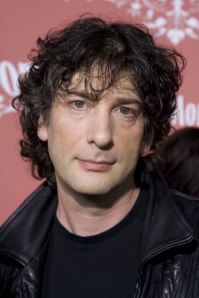
Neil Gaiman at the 2007 Scream Awards Photo by pinguino k
Neil Gaiman
at the 2007 Scream Awards
Photo by pinguino k

Here is a fascinating perspective on fiction by Neil Gaiman: ‘Face facts: we need fiction’ | Books | The Guardian.

MovieNews | Opinion: How to define a horror film – entertainment.ie

Poster from Johannascheezburger.com via Halloween Mike's Horror Everyday on Facebook.
Poster from Johannascheezburger.com via Halloween Mike’s Horror Everyday on Facebook.

Here is an interesting viewpoint on just what makes a horror film:  MovieNews | Opinion: How to define a horror film – entertainment.ie.

Visit “The Works of Edgar Allan Poe, Volume 1” but not for the obvious reason.

Edgar Allan Poe, 1848

The Works of Edgar Allan Poe, Volume 1.  Yes, this link takes you to a collection of Poe’s works, but the reason I am mentioning it here is because the preface to this particular volume includes fascinating biographical notes and insight into the character of this master of horror that may help you understand the roots of his creative genius and how art sometimes came close to imitating life for Mr. Poe.

When you open the page, you may find yourself a little distance from the top of the article at the beginning of a section entitled “The Death of Edgar Allan Poe”.  While this section is fascinating in its own right, scroll to the top for the entire preface.  The works of Poe, beginning with the story of Hans Pfall, begin a bit down from “The Death…”

28 Totally Relatable Quotes About Books

Detail of Madonna des Kanonikus Georg van der Paele by Jan van Eyck, 1436
Detail of Madonna des Kanonikus Georg van der Paele
by Jan van Eyck, 1436

Purely for your entertainment, here are 28 Totally Relatable Quotes About Books.  I know I can relate to a lot of them.  I’m sure you will find a few for yourself.  One reason I find these interesting is because many of them show me how intensely involved readers will become with a book.  As I have mentioned in previous posts, I believe that people live a vicarious existence through a story.  When we write, we are not just writing a book or a story, we are creating a universe in which people will hopefully want to, not just visit, but dwell.  All of the writer’s art should therefore focus on creating a virtual reality for one’s readers.  To do that, we need a good  grounding in, or at least a good feel for, human psychology, because we have to shape our creations to fit the human psyche.  How do thoughts come into being?  How do they lead from one to another?  How do images form in the mind?  No, I am not saying that we need Ph.D.’s in psychology to be good writers, but I think we need some sort of archetypal insight into human nature if we are to be the great writers we hope to be.  Darn.  I’m rambling again.  🙂

Dictionary.com – Seven Spooky Words

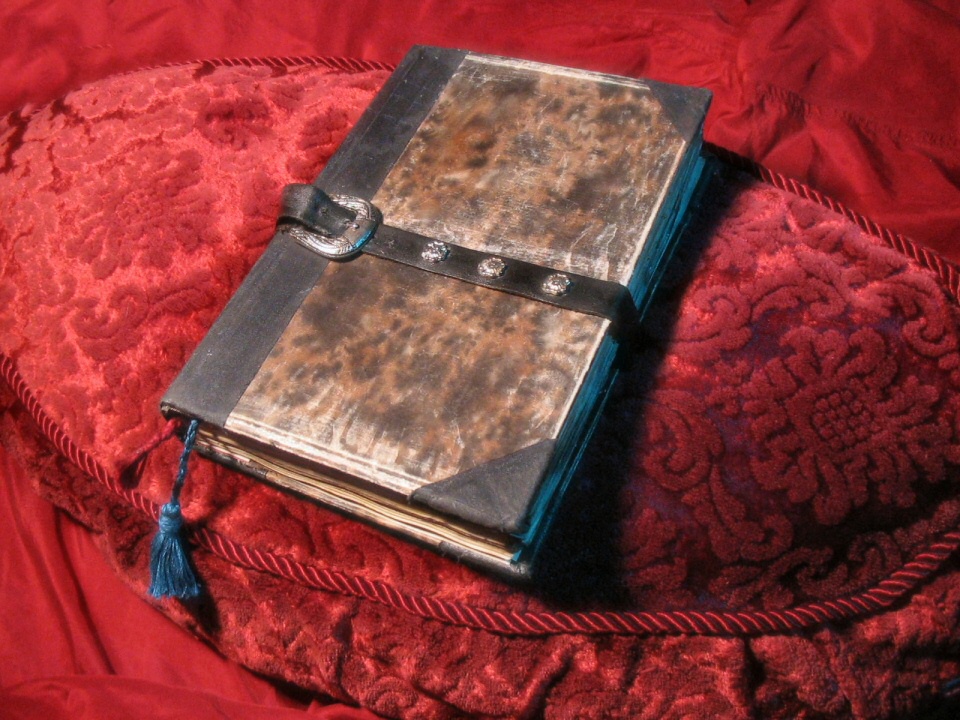
A mock-up of Lovecraft's fictional Necronomicon
A mock-up of Lovecraft’s fictional Necronomicon

Here are a few more words for your horror vocabulary:  “Seven Spooky Words for Halloween”  at Dictionary.com – Free Online English Dictionary.

I apologize for the glitch, but apparently you cannot get to the Seven Spooky Words without having to flip through the Monsters of Literature and Folklore slide show.   Both slide shows are enjoyable and quick, so I recommend visiting both anyway.

Dictionary.com – Monsters of Literature and Folklore

Bela Lugosi as Count Dracula 1931
Bela Lugosi
as Count Dracula
1931

Here is an interesting bit of trivia:  “8 Monsters of Literature and Folklore” at Dictionary.com – Free Online English Dictionary.  You may have to wait a second or two for the slide show to pop up.

Slattery’s Vocabulary of Horror

Here are some intriguing words that may be of interest to writers of horror or to writers in general.   Most come from Dictionary.com.   I hope to be posting more from time to time.  Every field has its own jargon.  The writing of horror should have its own.  I have taken these from two or three sources.


hadal:  adjective:  1. of or pertaining to the greatest ocean depths, below approximately 20,000 feet (6500 meters).   2. of or pertaining to the biogeographic region of the ocean bottom below the abyssal zone.   Hadal entered English in the mid-1900s, and comes from the name Hades, the Greek god of the underworld.


de profundis  adverb:  out of the depths (of sorrow, despair, etc.).  De profundis means “out of the depths” in Latin. It is the opening of Latin translation of Psalm 130 which continues “Out of the depths I cry to you.” Today the term can be used as a phrase to convey sadness or as an adverb.


isolato  noun:  a person who is spiritually isolated from or out of sympathy with his or her times or society.


mordacious adjective:  1. sharp or caustic in style, tone, etc.  2. biting or given to biting.


topos  noun:  a convention or motif, especially in a literary work; a rhetorical convention.


Anacoluthon (an-uh-kuh-LOO-thon) noun: 1. A construction involving a break in grammatical sequence, as It makes me so—I just get angry. 2. An instance of anacoluthia.


Catachresis (kat-uh-KREE-sis) noun: Misuse or strained use of words, as in a mixed metaphor, occurring either in error or for rhetorical effect.


Apophasis (uh-POF-uh-sis), noun: Denial of one’s intention to speak of a subject that is at the same time named or insinuated, as “I shall not mention Caesar’s avarice, nor his cunning, nor his morality.”


Palter (PAWL-ter) verb: 1. To talk or act insincerely or deceitfully; lie or use trickery. 2. To bargain with; haggle.  3. To act carelessly; trifle.


 Questions?  Comments?


Edgar Allan Poe: Poet and Prophet | Interesting Literature

Edgar Allan Poe, 1848

Here is a fascinating article about the founding father of modern horror:  Edgar Allan Poe: Poet and Prophet | Interesting Literature.  Interestingly, it states that the story about Edgar Allan Poe in his white belt and gloves at West Point, which I quoted in an earlier post from The Writer’s Home Companion, is urban legend.   It goes on to state several fascinating bits of trivia about Poe including his involvement in the development of the detective story and the short story, the backgrounds of some of his most famous works, his passion for cryptography, his foreshadowing of the Big Bang Theory, criticisms of his work by William Butler Yeats and T.S. Eliot, and some insights on his personal and financial life.