In Memory of Richard Matheson

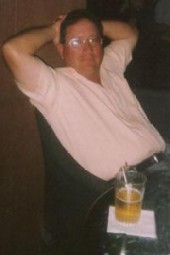
Richard Matheson Photo by JaSunni, 2008
Richard Matheson
Photo by JaSunni, 2008

On Monday, I learned of the death of Richard Matheson, one of the great horror writers of the twentieth century.   As my tribute to him, here are a few quotations from and about him along with a few examples on how he generated his ideas.  There were a lot, so I picked the ones that seemed most philosophical about writing and life in general in order to get a feel for the man behind the writing.

From Goodreads:

“What condemnation could possibly be more harsh than one’s own, when self-pretense is no longer possible?” ― Richard Matheson, What Dreams May Come

“We’ve forgotten much. How to struggle, how to rise to dizzy heights and sink to unparalleled depths. We no longer aspire to anything. Even the finer shades of despair are lost to us. We’ve ceased to be runners. We plod from structure to conveyance to employment and back again. We live within the boundaries that science has determined for us. The measuring stick is short and sweet. The full gamut of life is a brief, shadowy continuum that runs from gray to more gray. The rainbow is bleached. We hardly know how to doubt anymore. (“The Thing”)” ― Richard Matheson, Collected Stories, Vol. 1    

“If men only felt about death as they do about sleep, all terrors would cease. . . Men sleep contentedly, assured that they will wake the following morning. They should feel the same about their lives.” ― Richard Matheson, What Dreams May Come

“In a world of monotonous horror there could be no salvation in wild dreaming.” ― Richard Matheson, I Am Legend    

“Now when I die, I shall only be dead.” ― Richard Matheson, I am Legend and Other Stories

 From Wikiquotes:

I think What Dreams May Come is the most important (read effective) book I’ve written. It has caused a number of readers to lose their fear of death — the finest tribute any writer could receive. … Somewhere In Time is my favorite novel.

“Ed Gorman Calling: We Talk to Richard Matheson” (2004).

From Uphillwriting.org:

If you go too far in fantasy and break the string of logic, and become nonsensical, someone will surely remind you of your dereliction…Pound for pound, fantasy makes a tougher opponent for the creative person.

Richard Matheson

And here are a couple of quote about Matheson–also from Wikiquotes:

Matheson gets closer to his characters than anyone else in the field of fantasy today. … You don’t read a Matheson story — you experience it.

Robert Bloch, as quoted in an address by Anthony Boucher (29 August 1958), at the “Solacon”, the 1958 Worldcon

He has many … virtues, notably an unusual agility in trick prose and trick construction and a too-little-recognized (or exercised) skill on offtrail humor; but his great strength is his power to take a reader inside a character or a situation.

Anthony Boucher in an address at the “Solacon”, the1958 Worldcon (29 August 1958)

Wikipedia offers an interesting paragraph on how Matheson came up with the ideas for some of his more famous works:

Matheson cited specific inspirations for many of his works. Duel derived from an incident in which he and a friend, Jerry Sohl, were dangerously tailgated by a large truck on the same day as the Kennedy assassination. (However, there are similarities with William M. Robson’s script of the July 15, 1962 episode of the radio drama, Suspense, “Snow on 66”.[citation needed]) A scene from the 1953 movie Let’s Do It Again in which Aldo Ray and Ray Milland put on each other’s hats, one of which is far too big for the other, sparked the thought “what if someone put on his own hat and that happened,” which became The Shrinking Man. Bid Time Return began when Matheson saw a movie poster featuring a beautiful picture of Maude Adams and wondered what would happen if someone fell in love with such an old picture. In the introduction to Noir: 3 Novels of Suspense (1997), which collects three of his early books, Matheson said that the first chapter of his suspense novel Someone is Bleeding (1953) describes exactly his meeting with his wife Ruth, and that in the case of What Dreams May Come, “the whole novel is filled with scenes from our past.”

Thoughts?  Comments?

Crazy Accordion Skills and the Art of Writing

I just saw this video on a man with Crazy Accordion Skills on Amazing and Crazy Videos on Facebook and it started me thinking.  If literature is living vicariously for both writer and audience, how could I describe the experience this gentleman is having so that my readers live it?  What is he feeling emotionally, psychologically, and physically?  What drives him to spend long hours at practice so that he can perform like this?  What does it feel like for his hands and fingers to fly up and down the keyboard?  There are probably a thousand questions like this that I could ask, but you get the idea.    How could you describe something like this and make it seem as magical as this performance?

Thoughts?  Comments?

The Canon of Horror

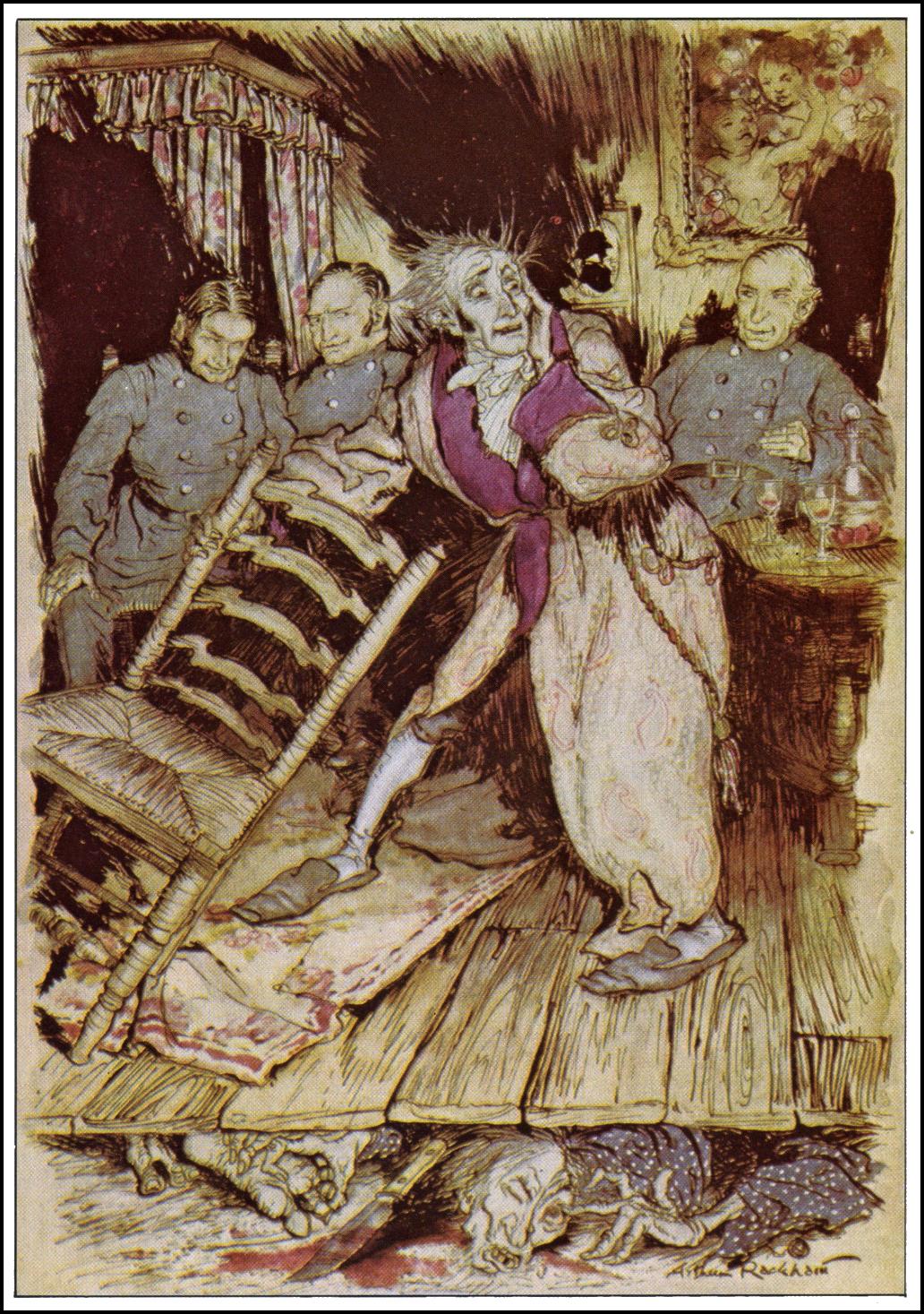
"The Tell-Tale Heart" Illustration by Arthur Rackham, 1935
“The Tell-Tale Heart”
Illustration by Arthur Rackham, 1935

I was just musing that if a canon of horror literature could be developed, what should it include?   This would be a collection of say ten works that define horror literature and that everyone seriously interested in horror should read if he/she they wish to learn what horror is and should be.   This would not be a collection of the most popular works (whether novel, short story, essay, screenplay, theater, etc.) of horror, which would change constantly, but ten works which would define horror now and forever as the Bible does Christianity, as the Koran does Islam, and as the Analects of Confucius do Confucianism.   These should be eternal works that at the end of time, after the Zombie Apocalypse when no more books are written, the few remaining survivors of humanity can review all the literary works of all time and say, “These ten defined the horror genre.”  Of course, this canon will be forever debated, but lively, engaged discussion is the fun of a list like this.

To start off this conversation, here are my initial ten recommendations (subject to change as my reading progresses).  I will keep this list to one work from each of ten authors so that works by one author do not overwhelm the list.  This is not in any order of priority or preference–just as they pop into my mind.   Although these reflect my own reading (which tends to the past more than the present), I have added one or two authors I haven’t read, but from what I understand, have made significant contributions to the horror genre.

  1. “The Tell-Tale Heart” by Edgar Allen Poe
  2. Books of Blood by Clive Barker
  3. Carrie by Stephen King
  4. Frankenstein by Mary Shelley
  5. “The Shadow over Innsmouth” by H.P. Lovecraft
  6. “Lukundoo” by Edward Lucas White
  7. “The Sandman” by E.T. A. Hoffmann
  8. Dracula by Bram Stoker
  9. “The Willows” by Algernon Blackwood
  10. Psycho by Robert Bloch
  11. I am Legend by Richard Matheson

Recommendation: The Popular Uncanny

I found a fascinating article just now that I highly recommend visiting:  “Winter Chills with Mike Arnzen”.  You can find it at http://nonhorrorreadersurvey.wordpress.com/2010/12/21/winter-chills-with-mike-arnzen/.  It is a fascinating look into how Freud’s concept of the Uncanny can be found in modern horror and in popular culture.    It is worth checking out.

Comments on “Murder by Plastic”

Since “Murder by Plastic” was published by Every Day Fiction on March 24, I have been getting some interesting comments on it:  some critical, some laudatory.   For those of you who haven’t had a chance to visit the site yet, here they are:

9 Responses to “MURDER BY PLASTIC • by Phil Slattery”

  1. lizardyoga Says: March 24th, 2013 at 2:54 amChilling and brilliantly economical
  2. Binnnie Dot Says: March 24th, 2013 at 4:21 amVery well-paced and intriguing. Well done.
  3. Paul A. Freeman Says: March 24th, 2013 at 4:22 amWekk written, but one huge pothole. How could Joey be certain Don Antonio Vespucci would not take the duct tape off?
  4. Tina Wayland Says: March 24th, 2013 at 6:52 amI can’t help feeling like this one needed another rewrite. The story shines through so wonderfully in spots, but it feels hidden beneath some predictable plot twists and un-careful writing. The repeated words, like “heartbeat,” got caught in the writing instead of really reverberating.That said, I think the story itself takes us by the hand and runs. And what a ride!
  5. Amanda Says: March 24th, 2013 at 10:04 amI think Joey may have been involved in a similar scenario before with Don Antonio and was aware of how it would play out. And, like the Don says, who wants to listen to a bunch of denials?Well written and enjoyable, but I also agree that repeated words took me out of the story a couple of times. The first line was brilliant, but the second reference to duct tape diminished the line’s impact.

    Overall, a very enjoyable read.

  6. Paul A. Freeman Says: March 24th, 2013 at 10:26 amBelieve it or not, I was perfectly sober when I posted #3.‘Wekk’; ‘potholes’? Maybe I should have loosened up with a drink or two before posting.
  7. JenM Says: March 24th, 2013 at 10:51 amFabulous story! Five stars!
  8. Michael Robertson Says: March 24th, 2013 at 12:48 pmI liked this. It was a good story. I agree with the rewrite comments. Overall an enjoyable read. Well, horrible read but that’s the point.
  9. john malone Says: March 27th, 2013 at 8:39 pma terrific read; i loved it. I was tensed up just like ‘Mr. Wilson’ throughout the story

Today, My Story “Murder by Plastic” Was Published.

My work of flash fiction, “Murder by Plastic”, was published today at www.everydayfiction.com.  Please read the story at your leisure and peruse the other literary works available at Every Day Fiction as well.  My heartfelt thanks go out to the very patient, professional staff at Every Day Fiction, who brought this story to you.  I hope you enjoy reading it as much as I enjoyed writing it.

Slattery’s Tao of Writing, Part 6: Profanity

Profanity

“There is a time for everything,  and a season for every activity under the heavens:..”  Ecclesiastes 3:1 (New International Version)

So when is the right time for profanity in literature?  I have my beliefs, but I thought it would be interesting in finding some quotations from more respected writers (and entertainers) other than myself, so I went quote-shopping through BrainyQuotes.com and Goodreads.com.

“Under certain circumstances, profanity provides a relief denied even to prayer.”   –Mark Twain

“I’ve tried to reduce profanity but I reduced so much profanity when writing the book that I’m afraid not much could come out. Perhaps we will have to consider it simply as a profane book and hope that the next book will be less profane or perhaps more sacred.”  –Ernest Hemingway

“There was certainly less profanity in the Godfather than in the Sopranos. There was a kind of respect. It’s not that I totally agreed with it, but it was a great piece of art.”  –Danny Aiello

“profanity and obscenity entitle people who don’t want unpleasant information to close their ears and eyes to you.”  ― Kurt Vonnegut, Hocus Pocus

“Never use a big word when a little filthy one will do.” ― Johnny Carson

“What I’m saying might be profane, but it’s also profound.” ― Richard Pryor, Pryor Convictions: and Other Life Sentences

All make excellent points.

My personal belief is best summarized by Ecclesiastes 3:1 above, with the following addenda:

  1. A  word is either the expression of an idea or of an emotion and should be used accordingly.  Profanity is therefore the expression of profane ideas or of intense emotions and should be used accordingly.
  2. Profanity is by nature shocking to most of the general public.  If used too frequently, it loses its effect and becomes tiresome.  I have known people who have used profanity to excess and although they shock and offend on first meeting, they quickly become tiresome and annoying and their limited vocabulary quickly shows their narrow intellect (with few exceptions–I have heard some respected authors have had colorful vocabularies).    Thus profanity is useful as a literary device only if it is used to show a person of that low character or to indicate irony.   An example of the latter would be a person who is superficially of low character, but on closer examination is more profound and intelligent than expected–there are a few people like that.   If profanity is to retain its shock value within a story, its use must be limited (the more limited the better), otherwise the story becomes tiresome and annoying.
  3. Vonnegut makes an excellent point above.   The more profanity one uses in a story, the less readers one will have–for whatever reason.  This parallels Stephen Hawking’s experience as a writer.  In the introduction of A Brief History of Time, Hawking says that someone told him that for every number used in a book, he would lose one reader.  Therefore, in A Brief History of Time Hawking uses only one number in describing one of the most profound and complex scientific theories of history.   An example from cinema would be the single profanity used in Gone with the Wind.  That profanity was used at a critical moment and because it expressed so much at the right time, it was memorable and powerful.  That moment would have lost much of its impact, if the movie had been as laced with profanity as Pulp Fiction (admittedly, I am a big fan of Pulp Fiction).  For those reasons, I believe profanity in literature should be kept to an absolute minimum.  
  4. When used, profanity should have a definite purpose:  to say something about a character, their emotional state, their state of mind, or their environment (e.g. in my story “A Tale of Hell”, the main character has problems with intense anger and actually ends up in hell.  Profanity is part of his character on earth and part of his surroundings in hell, where, understandably, it would be constant and ubiquitous.  
  5. Profanity has only been commonly accepted in literature since the early Twentieth Century at best.  Probably the foremost example of this would be Henry Miller’s Tropic of Cancer, which was first published in France in 1934, but which was banned in the U.S.   Its publication by Grove Press in 1961 led to a series of obscenity trials ending in the Supreme Court finally declaring it non-obscene in 1964.   Many, if not most, of the recognized masters of the horror genre wrote around or prior to 1934 and never used a single profanity, e.g. Lovecraft, Poe, Machen, Lord Dunsany, M.R. James, Sheridan Le Fanu, Blackwood, Ambrose Bierce, et cetera.  Profanity is not necessary to achieve a horrifying effect.  In fact, it becomes more of an artistic challenge to write something horrifying without profanity.  Shock may be part of horror, but horror is much more than shock.

The upshot of all this for the contemporary writer is that, like everything else, profanity has its place, but its use must be balanced against what the author wishes to achieve while bearing in mind that its careless overuse can severely damage the reader’s experience and taint that reader’s perception of the author.

Thoughts?  Comments?

Notes on “I am Legend”

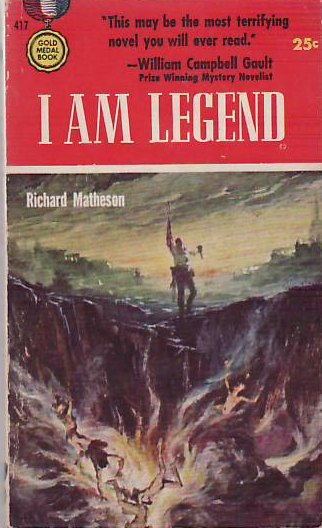
Cover of First Edition, 1954(Please note that this cover is protected by copyright; please refer to Wikipedia for details on permissible use)
Cover of First Edition, 1954
(Please note that this cover is protected by copyright; please refer to Wikipedia for details on permissible use)

I have been reading Richard Matheson’s I am Legend recently whenever I have the opportunity.  I would not say it is a fascinating book, but it is interesting.   One particularly interesting aspect is that the book is not just about one man’s fight against zombies (which he terms “vampires”, but which fit better into the modern concept of zombies) , but that it also deals extensively with his fight against depression and loneliness in a post-apocalyptic future.   Today, I happened to look up the work on Wikipedia and found the following interesting review written by Dan Schneider of International Writers Magazine:  Book Review n 2005:

“…despite having vampires in it, [the novel] is not a novel on vampires, nor even a horror nor sci-fi novel at all, in the deepest sense. Instead, it is perhaps the greatest novel written on human loneliness. It far surpasses Daniel Defoe’s Robinson Crusoe in that regard. Its insights into what it is to be human go far beyond genre, and is all the more surprising because, having read his short stories – which range from competent but simplistic, to having classic Twilight Zone twists (he was a major contributor to the original TV series) there is nothing within those short stories that suggests the supreme majesty of the existential masterpiece I Am Legend was aborning.”

Mr. Schneider may very well be right that it may be the greatest novel written on human loneliness.  If it is not, it is very close to the top.  I have read Robinson Crusoe and my impression is that I am Legend surpasses that in describing the mental and emotional anguish of loneliness and bringing that inner struggle home to the modern reader.

In my view, one reason I am Legend is important to the horror genre, is because it shows another aspect of horror: personal, inner anguish and turmoil, which probably should be classified as a form of horror, if no one has done so yet.  Anyone who has suffered extreme inner turmoil would probably agree that it is worthy of being termed horror.  It may even be the most common form of real-life horror.  I do not know the statistics for how many people are tortured at the hands of serial killers or executioners or other true-to-life monsters, but I would guess that it is far less than the number of people experiencing extreme negative emotions without actually having been physically tormented.

This aspect of inner horror can add another dimension to the otherwise average horror novel or movie, which, based on what I have seen, tends to emphasize physical violence or the threat of physical violence.   In those works, the inner horror of the protagonists is usually assumed, but not examined in detail.   Examining the inner emotions of protagonists and antagonists will help form empathy and sympathy for the characters within readers, particularly in those who have experienced a similar emotion, and will help form a tighter emotional connection between work and audience.  

I recommend reading the Wikipedia article on I am Legend.  It is quite fascinating.  However, do not do as I have done and read it before completing the book.  You will only spoil the ending for yourself.

Thoughts?  Comments?

Update on Publication of “Murder by Plastic”

Last night I received an e-mail from the editors at Every Day Fiction.  Among other items, they mentioned that “Murder by Plastic” would be published on March 24th.   Please look for it on their website about that time.   Don’t forget, however, that sometimes the unexpected happens and publication may have to be delayed.

Slattery’s Tao of Writing, Part 5: Illumination of the Particular

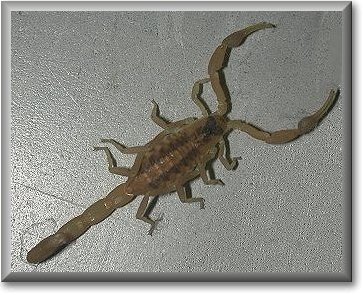
ScorpionPhoto by Phil Slattery
Scorpion
Photo by Phil Slattery

Someone once said that poetry is the “illumination of the particular”.

In 1992, when I was enamored of poetry and was striving to become a serious poet, I took that advice to heart and wrote the poem “Faust“, which describes the thoughts of the infamous Dr. Faust immediately after signing over his soul to Mephistopholes  in exchange for all knowledge.  What I describe there is everything that is going through Faust’s mind in a few seconds, the amount of time it takes to actually read the poem.   The hardest part for me was to choose the right moment to illuminate.  I could have chosen the moment before signing or a moment a year later or the moment when he first met Mephistopholes or an infinite amount of others. But that second seemed the most pregnant with meaning, because it is the moment realizes that what he has done can never be undone and that he has lost everything meaningful as a result.   After that I just had to work out the details of what he had lost, the sensations he was experiencing, the future consequences, and the wording, all of  which took about a solid eight hours.   Choosing the particular moment to illuminate was the critical decision in construction of the poem.

Good prose is often compared to poetry.  When Ray Bradbury was introduced to Aldous Huxley at tea after publication of The Martian Chronicles in 1950, Huxley leaned forward and asked Bradbury, “do you know what you are?  You are a poet.”  “I’ll be damned,” responded Bradbury.

I believe that good writing (both prose and poetry) is like good photography: it illuminates the particulars in the subject so that the viewer sees them in their abundant wonder for the first time, though he may have seen that scene a thousand times before.  Take the photo at the top of the page for example.  I happened to see a scorpion crawling across a floor one day (when I was heavy into nature and wildlife photography), grabbed the nearest camera, lined up the shot as best I could, and snapped it.   To my surprise, the focus and lighting came off better than I had planned, and thousands of details popped out in the photo that I had never anticipated.   I had walked across that floor tile I do not know how many thousands of times previously and I had never noticed the texture in its surface.   I had never been as close to a scorpion before either and I was amazed at the details that popped out in it.

Great writers seem to have an innate sense for the proper amount of details and how to use them.   Among writers of horror, Poe springs to mind immediately as a master of detail with “The Tell-Tale Heart” as a prime example of how he used details.  Poe seems to string together a series of moments (describing the old man’s eye, creeping through the door to the old man’s bed, killing him, listening to the heart as it beats beneath his floorboards) and illuminates the details in each to produce a story of tremendous power.  But among all these, is there a single, superfluous detail that does not heighten the drama?  No.  Poe knew which details to illuminate and how to illuminate the details in each of those.

Several years ago, I saw a biography of Napoleon Bonaparte on A&E.  One of the speakers was an instructor at the U.S. Military Academy at West Point.  He said that one thing Bonaparte recognized was that “while details are important, not all details are important.”  I found this a fascinating point as the speaker went on to point out that Bonaparte had a incredible memory for details.   For example, every two weeks he had the roster of the entire French army (about 200,000 troops) read out to him.  He could remember from sitting to sitting who was sick, dead, missing, and so forth.  He could ask detailed questions about the state of repair of equipment such as “last time the second gun of the third battery at Cherbourg had broken spokes in its left wheel, has that been fixed yet?”

I try to remember that these days as I write, so that I weed out the important details from the unimportant ones.

“But which details are important?” you ask.  I wish I could give a quick and easy answer on that.  At this point in my development as a writer (I may give a completely different answer years from now when my learning has progressed further), I would say:  (1) details that help the reader live the story vicariously, such as sensations, (2) details that help the reader understand the current situation and its implications, and (3) details to help the reader understand the characters, their thoughts, their perspectives, and their reactions, (4) details that tie the parts of the story together, such as a motif, and create unity, and (5) details that point toward a denouement.

Details can be critical in writing, but as with all other things, there must be a balance.    Drown the reader in details and the story becomes tedious.  Provide too few details, and the story becomes monotonous.   Choose the wrong details, and the story is boring.  Choose the right details and the reader can step into another world.

Thoughts?  Comments?

“Murder by Plastic” To Be Published


Today, I received an e-mail from the folks at Every Day Fiction saying that they will publish my story “Murder by Plastic”  either next month or the following month.  Please watch the table of contents on their site for when it appears.   I will post an update on my blog as soon as they notify me that it is up.

“Murder by Plastic” is flash fiction (about 998 words) that I can most accurately describe as on the border between crime thriller and horror.   Please watch for it and visit Every Day Fiction often.

Slattery’s Tao of Writing, Part 3: Talking About Dogs

Painting of a Dog by Kim Duryang Sapsalgae, 1743
Painting of a Dog
by Kim Duryang Sapsalgae, 1743

Some time back I was writing a story, thinking about how to be more mysterious in my writing, how to be less direct, yet provide more details in my narrative, when it occurred to me that (probably because I am a “dog person”) writing is often like talking about a dog without saying that you are talking about a dog.

Often, I have an idea or a feeling that I want to express, but if I try to express it directly and concisely, the reader will probably not apprehend the nuances I see in the idea.  At the same time, much of the enjoyment in reading is trying to perceive the meaning behind the author’s words while experiencing the world of the work’s narrator vicariously.   Therefore, as a writer, I want to get my ideas across without being so direct that the reader loses much of the fun of reading.   For example, look at the first chapter of Hemingway’s A Farewell to Arms.  Hemingway was known for his lean, muscular style, so you know he isn’t going to use any more words than necessary to express his ideas. 

In the first chapter, he describes soldiers marching off to the front over the course of several months as he views them from a nearby house.   As he watches the soldiers, the leaves fall from the trees, the vineyards dry up, the mountains turn brown and bare, and the dust the soldiers kick up turn everything bare and white–the color of bone.  All these hint at death.   Hemingway could have said simply, “Frederic Henry [the main character] watched the soldiers march off to their deaths”, but the reader would have lost the experience of living that time with  Frederic and he would have lost sharing Frederic’s experience of witnessing an event and puzzling out its greater meaning for himself.    All the artistic beauty of that chapter would have been lost.

I recall reading somewhere several years ago this idea described as the principle of contraction and expansion.  That is no doubt true.  Yet, to describe it so unemotionally as “contraction and expansion”  seems aesthetically too clinical, too sterile, too confining a term for an idea concerning the breadth and depth of literary intellectual and emotional perception.

I think I prefer to think of this idea in terms of a dog, a living, breathing being full of warmth, love, loyalty, joy, anger, fear, tenderness, intelligence, stupidity, pain, and all the other abstract qualities sentient creatures have.  Yes, I can simply say “dog” and hope my readers see all the nuances of a dog’s existence that I do, but they might not and I would be depriving them of the experience of sharing my perception and all the intimated nuances and emotions that come with it.  So sometimes it is best just to describe the nuances of a dog’s life and let my readers enjoy drawing their own conclusions and along with these conclusions enjoy the subsequent discussions and debates among them as to who was right, who was wrong, who knew what he was talking about, who did not, and so on.

There are times when it is necessary to be concise, to pick a single word you hope is as pregnant with meaning for the reader as it is for you, but those times must be balanced against the times when the reader needs to experience an event and all its nuances. The writer, as artist, must decide how to balance out those moments.  The writer strives to achieve a balance of ideas and perceptions. Balance is part of the art of writing.  Balance is part of the Tao of writing. 

Sometimes it is best to simply say “dog.”  At other times it is best to talk about a dog without actually saying that you are talking about a dog.

Thoughts?  Comments?

Slattery’s Tao of Writing, Part 2: the Allegory of the Stream

Thalia Muse of Comedy and Bucolic Poetry Illustration by Arash
Thalia
Muse of Comedy and Bucolic Poetry
Illustration by Arash

Once in a while, I come across some gem of the writer’s art that almost strikes me breathless with its beauty.  The poems of John Donne are one example.  The poignant first chapter of A Farewell to Arms is another.   Recently, I began reading Ray Bradbury’s The Martian Chronicles  and every time I pick it up, I am nearly struck breathless with his simple, understated eloquence that touches one’s very core.   Today I read a post at winebbler.wordpress.com and her simple, fun voice and flowing, relaxed style combined with playful use of the English language made for very entertaining and enjoyable reading beneath which I thought I could sense an undercurrent of growing artistic beauty.

That article made me start to think about what makes a work of writing aesthetically beautiful.  After some thought, I reached the conclusion that every work of literary beauty has the same qualities as a powerful but smoothly flowing mountain stream:  clarity, power, and an uninterrupted flow.  But unlike a stream, a work of literary beauty must also be reasonably brief.

In every literary work I consider beautiful,  the first universal characteristic that comes to mind is that the author uses a simple voice comprising simple, everyday words that anyone can understand.  Writing is communication.  Communication is one person disseminating ideas to others by using words, which are collections of sounds representing ideas.  By using simple words everyone understands easily, the writer makes his ideas easier to disseminate.  Why use a word that few can understand, when you can use a simpler word with the same meaning that everyone can understand?  Therefore, our stream must be crystal clear and free of mud or anything that would hinder insight and perception.

If ideas equate to the water in our allegorical mountain stream, the precision of the component ideas, the words, give the stream its force.  As I mentioned in my post “Slattery’s Tao of Writing, Part I”, words chosen for their precise meanings have power.   As I said earlier in this article, words are ideas.  Precise words are precise ideas.   Precise ideas are powerful ideas, powerful emotionally and intellectually.  Like all other forces in the universe, powerful ideas become more powerful if combined and organized with one idea leading logically, flowingly to the next.  This facilitates understanding and the reading experience.

When my stream of thought is uninterrupted and powerful, I become immersed in the work.  I can be swept away and can lose track of time and of everything happening around me.   To my mind, every writer should aspire to instill this experience into his readers.  When this happens, the writer has made an emotional and intellectual connection with his reader and the reader is grasping the writer’s ideas.

If organization is lacking, ideas are scattered like boulders in the stream and on the banks, creating rapids and breaking up the smooth flow. A powerful, disorganized stream is a torrent, destructive of everything along its banks, stiking out at random, benefiting no one.  In communication, disorganization is the source of misunderstanding, the antithesis of understanding.  The stream becomes destructive. 

If a writer uses words his readers do not understand and they have to turn to a dictionary to find out what the writer intends, the clarity of the ideas is lost and the reading experience is muddied.  Furthermore, the reading experience flows even less smoothly.   Even if the reader can reason out the meanings of the words from the context, the stream of thought is still disrupted and muddied, even if to a lesser degree.  The words will also lose much of their power, because the reader cannot appreciate the nuances of what he or she does not fully understand.

Lastly, every beautiful work has been reasonably brief.  Reading anything exasperatingly long becomes tiresome for everyone.   When readers become weary (word-weary so to speak), they can lose focus on what the writer is trying to communicate.  This detracts from the reading experience just as if someone who enjoys swimming in a mountain stream can no longer enjoy their swim if they become overly fatigued with exertion.

That said, I will now close tonight’s blog before I wear you out with my ramblings.

Thoughts?  Comments?

Slattery’s Tao of Writing, Part 1

tao3

A quick Google search reveals there are a lot of web articles entitled “The Tao of Writing”.   This is mine.  Let me begin by explaining what I perceive to be the Tao (others may view it differently and have equally valid perceptions).

The Chinese character above translates as Tao, the way, and is pronounced as “dow”, as in “The Dow-Jones Industrial Average”.  Taoism is an ancient Chinese religion rooted in the teachings of the legenday Chinese philosopher Lao Tzu (sometimes transliterated as “Lao Tze” or in a number of other ways) as expressed in his book, the Tao Teh Ching (The Book of the Way).   The Taoist religion, as I understand it, is far removed from Lao Tzu’s original philosophy, because the religion incorporates demons, gods, demigods, spirits, and other things that are not mentioned in the Tao Teh Ching or in the teachings of the original masters such as Lao Tzu, Chuang Tzu, or the Huainan Masters (at least in the translations I have read).

What the Tao is, is hard to express.  “The Way”, as I understand it, refers to the the way of the universe, basically how the universe works in a general sense.  In the American vernacular, we would probably express it as “the way things are”.    Some reader might respond to that as, “Sure.  I understand.  You’re saying the Tao is why toast always falls buttered side down.  Gotcha.” 

No, I am talking about something a bit more profound.  It’s more like this:

You work hard at trying to find a publisher for a story and are consistently rejected by what you perceived to be all the most suitable choices.  So, one night when you are battling insomnia and have just started the first glass of your second bottle of wine, out of frustration you send it off as a shot in the dark to some big name magazine who will never accept it, and lo and behold it is accepted.  So, sometimes it seems that you work your butt off for something and get nowhere, but you give up trying and you succeed.  Basically, the Tao is then like learning the way the universe works, then learning to succeed by adapting to that way.  Confused yet?  Have I oversimplified my point or have I made it overly complex? 

Understanding how the Tao works is not something anyone can express in words;  it is something one can understand only subjectively,  i.e., one must have a feel for it.  In fact, the first sentence of the Tao Teh Ching is “The Way that can be spoken is not the true Way.”  For most people, reading the Tao Teh Ching will probably be an exercise in confusion and frustration and contradiction.  In the Tao Teh Ching, nothing is exact; everything is metaphor and allusion, about how water flows into a valley and then the sea, how wood is shaped, the balance of the universe, and so on.  

To complicate matters even more, because the Tao Teh Ching was written in Chinese about 2,500 years ago, and the translation of the original Chinese characters may have changed significantly since then, translation of the Tao Teh Ching into modern languages is frustratingly imprecise, often relying on traditional or customary translations as opposed to knowing exactly what Lao Tzu was saying.  For today’s modern, exact, Socratic-tradition-based society, this is maddening.  Our scholars argue about the meanings of works written in modern English, how are they going to agree on something as nebulous as the Tao Teh Ching?

So, what are the important ponts of the Tao that everyone should remember?

As I perceive the Tao, one critical aspect of existence is balance;  the universe consists of opposites that must balance out or problems arise.  At the same time, all existence arises from the conflict of opposites.  An example of this is the old Zen Buddhist rhetorical question of “what is the sound of one hand clapping?”  I do not know the official or traditional answer to this, but from my Taoist perception, the answer is that there is no sound.   The sound of  clapping is produced only when the opposing forces of the hands meet.  Thus it is with everything in the universe.  Two opposites have to come together to produce anything:  light and dark, man and woman, left and right, up and down,  hot and cold, etc.

Another critical aspect of existence is that emptiness can be as important as substance and non-action can be as important as action.  There are other aspects, of course, but I will stick to these for now and address those at a later date.

Take a look at your hand for an example of the first principle.  If there were no spaces between your fingers, you would not have a hand, you would have something else, maybe a flipper.    Likewise, a sculptor can create a sculpture only by cutting away pieces of material so that the now-empty spaces create a form.  So a sculpture, or any object for that matter, comprises both substance and emptiness.

For an example of the non-action versus action principle, think about problems you faced in the past.  Could you have solved any of them by simply doing nothing?  Not every problem can be solved by doing nothing, but some can.

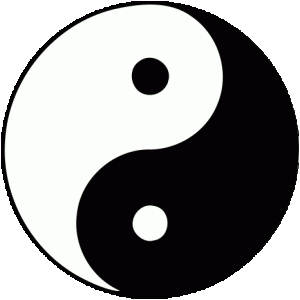
These principles are symbolized by what is know in our society as the Yin-Yang as shown here:
yinYang

In the yin-yang, as I perceive it, the eternal circle of the universe is formed by the interaction of opposites, here symbolized by light and dark, but while they are opposites, a little of each exists in the other.

For a very short book, the Tao Teh Ching is filled with incredible depth and meaning.  For me, in the few translations I have read, the Tao makes perfect sense, and I understand the world a little better each time I read it.    However, others may read it and just be confused or frustrated.   The Tao Teh Ching is something that will either speak to you personally and enlighten your world, or it will not.

But what has all this to do with writing?

I see the Tao at work whenever I write anything.  I see it in what I consider to be some of the basic principles of writing: less is more, what is not said is often more important than what is said, and so forth.  For me, this makes writing almost a form of magic, not in the sense of illusion, but true magic where one creates something  out of nothing by using as few components as possible, by making something complex by keeping everything as simple as possible.  

I will give one example and then I will close this article for the day and pick it up when I can sometime in the hopefully near future.

One of the first principles of writing I learned was to use as few words as possible.  Strunk and White, in The Elements of Style, say to “Omit unnecessary words”, which in itself is a perfect example of omitting unnecessary words.  How much more concise can that one sentence be?  It contains absolutely no unnecessary words.  If one word is omitted, the sentence ceases to have meaning.   The virtue of this is that, if done properly, the work becomes much more powerful because each word carries more weight.  

To do this, a writer needs to use words precisely.  Try to find a word that captures the exact meaning of the idea you are trying to express–and the shorter the word the better.  After all, you are trying to communicate an idea to the largest possible audience.  Why use big words that will send readers scurrying to the nearest dictionary, thus interrupting their chain of thought and perhaps tainting their reading experience, when you can use words that everyone understands and keep their experience free from interruptions?

An example of using words precisely would be revising the sentence “A man went quickly to the store.”

Now, shorten it by replacing “went quickly” with “ran”.  While you are at it, replace the other general terms with more precise ones.   The sentence becomes “John ran to Walmart.” Now, if you have had any background information on John, you know who he is, what he is like, his possible motivations, and that he is in a hurry for some reason to get something from Walmart, knowing the kind of products Walmart has, you may have an idea of why he is going there.   If we changed the sentence to “John ran to the Red Dot Liquor Store” we have an even better idea of his motivation.   If we said, “John sped to Red Dot Liquors in his brand-new corvette”, we know even more about John:  we know he can afford a brand-new corvette.   If you have ever been in Red Dot Liquors, you know something of the products they carry and that may say something to you about John’s decision to purchase them. 

So, how much more excitement and power does the sentence “John sped to Red Dot Liquors in his brand-new corvette” have versus “a man went quickly to the store”.   The final version packs a lot more information in almost the same space. 

So that is part of the magic of writing for me:  using as few words as possible to create a work.  On the surface, it seem to go against logic.  How can you build something by using as few components as possible and deleting the ones you do have whenever possible?

Try an experiment, take the first page of any run of the mill romance novel and draw a line through every word you consider unnecessary while keeping the meaning of the sentence.   Then take your final product and do it again.  Do it a third time if you like.  How much were you able to reduce without changing its meaning?

Now take the first page of a novel by Hemingway, someone known for his lean, muscular writing.  How far were you able to reduce it before changing the meaning?

Someone once said, “draw a line through every third word and you will be surprised at how much it improves your writing.”  I have tried that and it works wonderfully.  Of course, you can’t arbitrarily omit every third word, or the work may become nonsense, but it does cause one to question whether that word is necessary.

I have always marveled at the idea that one can write something by omitting words. It goes against my standard, American, public school education, where teachers give a mininum number of words to an assignment and one is forced to insert as many words as possible just to meet the requirement. But can you blame them? If you told the average American high school student to tell what he did over the summer in as few words as possible, he would say, “I had fun” or “I worked.” Good luck teaching him to write.

Anyway, I am rambling once again.  I will close for now and pick this up at some later date.

Thoughts?  Comments?