
I was in the Farmington public library yesterday trying to pull together some ideas for a story, but I could not concentrate long enough to formulate many good thoughts, because I felt more in a mood to receive information rather than to transmit.
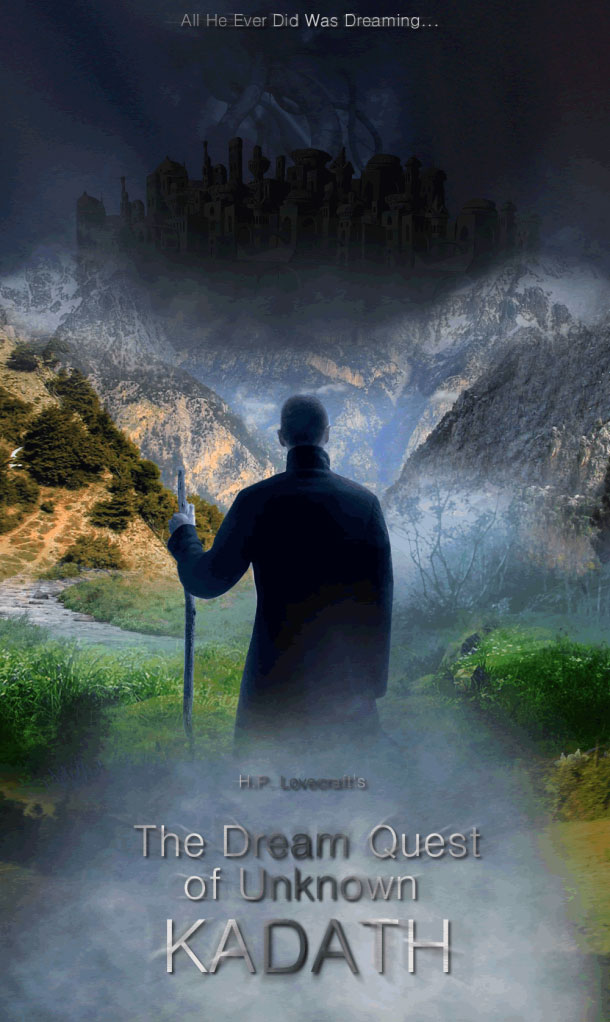
Within the last few days I have started reading a collection of Lovecraft stories entitled The Dream Cycle of H.P. Lovecraft: Dreams of Terror and Death (an excellent work; read it if you get the chance), edited by Neil Gaiman. While wandering through the stacks, I pulled out a copy of Stephen King’s From a Buick 8 and took it back to my seat. I had started reading it several years ago, but never finished it. I thought I would review it and maybe start on it again soon. As I read it, I noticed an interesting difference between King’s style and Lovecraft’s. Lovecraft gives a lot more of the backstory of a work in a few pages than King does.
As it so happens, I had also passed by the John Updike section a little earlier in the library and I have a few of his novels, which I have never read. I went back and picked up his Rabbit, Run for comparison. I thought about the differences between these three and a couple of other famous writers and came up with what I consider to be an interesting observation (though it might bore those of you who are more advanced in the craft of writing than I am): it is fascinating to see how much information about a work’s backstory or the larger setting of a story an author can put in the first 2-3 pages or so of a work. For what it’s worth, here are my initial subjective impressions of the five writers under consideration yesterday.
In the first few pages of Rabbit, Run Updike details how Rabbit Angstrom happens to walk upon a basketball game among six kids in an alleyway (circa 1960). He watches and then joins the game, and impresses them with his basketball prowess, having been a high school basketball star about 8-9 years earlier. He then goes home to where his wife is contemplating cooking dinner. Updike takes us through this step by step and we don’t learn a lot other than Rabbit was a basketball star in high school several years back and at 26 he has a middle class life now with a job for which he wears a suit to work. I know that Updike is a very respected writer with two Pulitzers to his credit, but this story gets off to a very slow start for me and I learn very little about Rabbit Angstrom in the opening pages. There is also very little emotional pull in these opening pages to draw me into the story.
In the opening chapter of A Farewell to Arms, Hemingway describes the scene from the window of an Italian house used as a hospital as troops pass en route to the Austrian front over the course of about a year. He also describes how the leaves fall from a nearby tree and how the dust during the summers turns everything bone white, both of which (to me) symbolize the deaths of myriad troops on the front. In maybe 2-3 pages, Hemingway not only gives us the overall setting of being at the Italo-Austrian front, he also draws us in with considerable emotional impact of the tragedy of the watching thousands of weary troops slogging through rain and mud or trudging through dust and heat on their way to their deaths.
In Quiet Flows the Don (1940), Soviet author Mikhail Sholokhov (winner of the 1965 Nobel prize for literature) describes the lives of Don Cossacks from before the First World War up to the Russian Revolution. In its first few pages, Sholokhov describes life in a village of Cossacks, describes the relationship between father and son, shows how the son is having an affair with another Cossack’s wife, and shows the history and underlying peccadilloes of the family back for circa 200 years. While his style is non-emotional, one cannot help but to feel for the family and to be drawn into the story. It is a hard book to put down.
In From a Buick 8, Stephen King tells the story of a mysterious car that is kept in storage at a Pennsylvania State Troopers’ post. In his first few pages, King describes the main characters and how they interrelate and how they all fit into the world of that post. King makes the reader feel as if he were seeing the post from the perspective from one of its members. You know the same things about all the members of that tight-knit community as if you were one of them. Though the opening is not on the grand scale of A Farewell to Arms or Quiet Flows the Don, one feels the story on a much more intimate level while on a larger scale than in Rabbit, Run. In the opening pages of From a Buick 8, King makes the reader feel as if he were part of a small community, while Sholokhov makes the reader feel as if he were part of a village, and Hemingway makes the reader feel a part of an entire battle front.
Dreams of Terror and Death is a collection of short stories, but in it the unfinished tale “The Descendant” stands out as an example of Lovecraft’s ability to an enormous backstory/setting into a few pages. In these few pages, Lovecraft describes how a young man brings a copy of the dread Necronomicon to an aging scholar and how the scholar begins to relate the history of a millennia-old castle on the Yorkshire coast that hides the entrance to the elder world. The story, even in its few pages touches on black magic; ancient, forgotten civilizations; other dimensions; and probably a dozen other mysterious subjects that instill the sort of eerie curiosity into a reader that compels a person into the black recesses of an unexplored cave. You sense something dangerous is lurking just out of sight, but you cannot contain the urge to find out what it is.
The instilling of this eerie curiosity that keeps one on the edge of the movie theater seat or turning the pages of the novel is a hallmark of all good horror and of all good horror writers.
Thoughts? Comments?




 Phil Slattery, Writer, Publisher