Jack Thurston is a retired professor of medieval literature and history. He is also a widower and father and a retired sorcerer who has returned to the black arts to exact revenge for the death of his wife, daughter, and brother. He has an intriguing position in the universe at a focal point of life, the afterlife, logic and reason, anger and hatred, the ancient and the modern worlds, grief and his attempts to escape grief through self-destruction. Though he wants to have the peace he once found with his wife, Agatha, he is pulled in many directions by circumstance and by his powerful negative emotions.
I am a fan of the old school horror practiced by such authors as H.P. Lovecraft, Poe, Edward Lucas White, and Arthur Machen. I endeavor to make a story as terrifying and suspenseful for the reader as possible without resorting to gratuitous blood and gore for a simple shock or quick feeling of disgust.
This collection of three short tales is perfect for those who have only a few short breaks to escape into the hidden world of horror, black magic, sorcery, and anger-fueled revenge.
Currently, Jack has a Twitter account (@jthurston666), where he has attracted a small following and where it has only recently been revealed that he is fictional. Jack has his own blog at jackthurstonblog.wordpress.com (a work in progress) and his own e-mail at jackthurston666@gmail.com.
Information on more social media accounts and other characters (as they are developed) can be found at: philslattery.wordpress.com. Please interact with him at any of his social media accounts as you would with a real person.
Show your appreciation for these stories by leaving a review on Amazon, Goodreads, or other social media.
If you enjoy horror, check out my collection of horror short stories A Tale of Hell and Other Works of Horror: Stories of wizards, werewolves, serial killers, alien worlds, and the damned, which includes these stories.
The sky is lead and our faces are red,
And the gates of Hell are opened and riven,
And the winds of Hell are loosened and driven,
And the dust flies up in the face of Heaven,
And the clouds come down in a fiery sheet,
Heavy to raise and hard to be borne.
And the soul of man is turned from his meat,
Turned from the trifles for which he has striven
Sick in his body, and heavy hearted,
And his soul flies up like the dust in the sheet
Breaks from his flesh and is gone and departed,
As the blasts they blow on the cholera-horn.
Himalayan
Four men, each entitled to ‘life, liberty, and the pursuit of happiness’, sat at a table playing whist. The thermometer marked—for them—one hundred and one degrees of heat. The room was darkened till it was only just possible to distinguish the pips of the cards and the very white faces of the players. A tattered, rotten punkah of whitewashed calico was puddling the hot air and whining dolefully at each stroke. Outside lay gloom of a November day in London. There was neither sky, sun, nor horizon—nothing but a brown purple haze of heat. It was as though the earth were dying of apoplexy.From time to time clouds of tawny dust rose from the ground without wind or warning, flung themselves tablecloth-wise among the tops of the parched trees, and came down again. Then a-whirling dust-devil would scutter across the plain for a couple of miles, break, and fall outward, though there was nothing to check its flight save a long low line of piled railway-sleepers white with the dust, a cluster of huts made of mud, condemned rails, and canvas, and the one squat four-roomed bungalow that belonged to the assistant engineer in charge of a section of the Gaudhari State line then under construction.
Rudyard Kipling, circa 1915
The four, stripped to the thinnest of sleeping-suits, played whist crossly, with wranglings as to leads and returns. It was not the best kind of whist, but they had taken some trouble to arrive at it. Mottram of the Indian Survey had ridden thirty and railed one hundred miles from his lonely post in the desert since the night before; Lowndes of the Civil Service, on special duty in the political department, had come as far to escape for an instant the miserable intrigues of an impoverished native State whose king alternately fawned and blustered for more money from the pitiful revenues contributed by hard-wrung peasants and despairing camel-breeders; Spurstow, the doctor of the line, had left a cholera-stricken camp of coolies to look after itself for forty-eight hours while he associated with white men once more. Hummil, the assistant engineer, was the host. He stood fast and received his friends thus every Sunday if they could come in. When one of them failed to appear, he would send a telegram to his last address, in order that he might know whether the defaulter were dead or alive. There are very many places in the East where it is not good or kind to let your acquaintances drop out of sight even for one short week.
The players were not conscious of any special regard for each other. They squabbled whenever they met; but they ardently desired to meet, as men without water desire to drink. They were lonely folk who understood the dread meaning of loneliness. They were all under thirty years of age—which is too soon for any man to possess that knowledge.
‘Pilsener?’ said Spurstow, after the second rubber, mopping his forehead.
‘Beer’s out, I’m sorry to say, and there’s hardly enough soda-water for tonight,’ said Hummil.
‘What filthy bad management!’ Spurstow snarled.
‘Can’t help it. I’ve written and wired; but the trains don’t come through regularly yet. Last week the ice ran out—as Lowndes knows.’
‘Glad I didn’t come. I could ha’ sent you some if I had known, though. Phew! it’s too hot to go on playing bumblepuppy.’ This with a savage scowl at Lowndes, who only laughed. He was a hardened offender.
Mottram rose from the table and looked out of a chink in the shutters.
‘What a sweet day!’ said he.
The company yawned all together and betook themselves to an aimless investigation of all Hummil’s possessions—guns, tattered novels, saddlery, spurs, and the like. They had fingered them a score of times before, but there was really nothing else to do.
‘Got anything fresh?’ said Lowndes.
‘Last week’s Gazette of India, and a cutting from a home paper. My father sent it out. It’s rather amusing.’
‘One of those vestrymen that call ’emselves M.P.s again, is it?’ said Spurstow, who read his newspapers when he could get them.
‘Yes. Listen to this. It’s to your address, Lowndes. The man was making a speech to his constituents, and he piled it on. Here’s a sample, “And I assert unhesitatingly that the Civil Service in India is the preserve—the pet preserve—of the aristocracy of England. What does the democracy—what do the masses—get from that country, which we have step by step fraudulently annexed? I answer, nothing whatever. It is farmed with a single eye to their own interests by the scions of the aristocracy. They take good care to maintain their lavish scale of incomes, to avoid or stifle any inquiries into the nature and conduct of their administration, while they themselves force the unhappy peasant to pay with the sweat of his brow for all the luxuries in which they are lapped.”’ Hummil waved the cutting above his head. ‘’Ear! ’ear!’ said his audience.
Then Lowndes, meditatively, ‘I’d give—I’d give three months’ pay to have that gentleman spend one month with me and see how the free and independent native prince works things. Old Timbersides’—this was his flippant title for an honoured and decorated feudatory prince—‘has been wearing my life out this week past for money. By Jove, his latest performance was to send me one of his women as a bribe!’
‘Good for you! Did you accept it?’ said Mottram.
‘No. I rather wish I had, now. She was a pretty little person, and she yarned away to me about the horrible destitution among the king’s women-folk. The darlings haven’t had any new clothes for nearly a month, and the old man wants to buy a new drag from Calcutta—solid silver railings and silver lamps, and trifles of that kind. I’ve tried to make him understand that he has played the deuce with the revenues for the last twenty years and must go slow. He can’t see it.’
‘But he has the ancestral treasure-vaults to draw on. There must be three millions at least in jewels and coin under his palace,’ said Hummil.
‘Catch a native king disturbing the family treasure! The priests forbid it except as the last resort. Old Timbersides has added something like a quarter of a million to the deposit in his reign.’
‘Where the mischief does it all come from?’ said Mottram.
‘The country. The state of the people is enough to make you sick. I’ve known the taxmen wait by a milch-camel till the foal was born and then hurry off the mother for arrears. And what can I do? I can’t get the court clerks to give me any accounts; I can’t raise anything more than a fat smile from the commander-in-chief when I find out the troops are three months in arrears; and old Timbersides begins to weep when I speak to him. He has taken to the King’s Peg heavily, liqueur brandy for whisky, and Heidsieck for soda-water.’
‘That’s what the Rao of Jubela took to. Even a native can’t last long at that,’ said Spurstow. ‘He’ll go out.’
‘And a good thing, too. Then I suppose we’ll have a council of regency, and a tutor for the young prince, and hand him back his kingdom with ten years’ accumulations.’
‘Whereupon that young prince, having been taught all the vices of the English, will play ducks and drakes with the money and undo ten years’ work in eighteen months. I’ve seen that business before,’ said Spurstow. ‘I should tackle the king with a light hand if I were you, Lowndes. They’ll hate you quite enough under any circumstances.
‘That’s all very well. The man who looks on can talk about the light hand; but you can’t clean a pig-sty with a pen dipped in rose-water. I know my risks; but nothing has happened yet. My servant’s an old Pathan, and he cooks for me. They are hardly likely to bribe him, and I don’t accept food from my true friends, as they call themselves. Oh, but it’s weary work! I’d sooner be with you, Spurstow. There’s shooting near your camp.’
‘Would you? I don’t think it. About fifteen deaths a day don’t incite a man to shoot anything but himself. And the worst of it is that the poor devils look at you as though you ought to save them. Lord knows, I’ve tried everything. My last attempt was empirical, but it pulled an old man through. He was brought to me apparently past hope, and I gave him gin and Worcester sauce with cayenne. It cured him; but I don’t recommend it.’
‘How do the cases run generally?’ said Hummil.
‘Very simply indeed. Chlorodyne, opium pill, chlorodyne, collapse, nitre, bricks to the feet, and then—the burning-ghaut. The last seems to be the only thing that stops the trouble. It’s black cholera, you know. Poor devils! But, I will say, little Bunsee Lal, my apothecary, works like a demon. I’ve recommended him for promotion if he comes through it all alive.’
‘And what are your chances, old man?’ said Mottram.
‘Don’t know; don’t care much; but I’ve sent the letter in. What are you doing with yourself generally?’
‘Sitting under a table in the tent and spitting on the sextant to keep it cool,’ said the man of the survey. ‘Washing my eyes to avoid ophthalmia, which I shall certainly get, and trying to make a sub-surveyor understand that an error of five degrees in an angle isn’t quite so small as it looks. I’m altogether alone, y’ know, and shall be till the end of the hot weather.’
‘Hummil’s the lucky man,’ said Lowndes, flinging himself into a long chair. ‘He has an actual roof-torn as to the ceiling-cloth, but still a roof-over his head. He sees one train daily. He can get beer and soda-water and ice ’em when God is good. He has books, pictures—they were torn from the Graphic—and the society of the excellent sub-contractor Jevins, besides the pleasure of receiving us weekly.’
Hummil smiled grimly. ‘Yes, I’m the lucky man, I suppose. Jevins is luckier.’
‘How? Not——’
‘Yes. Went out. Last Monday.’
‘By his own hand?’ said Spurstow quickly, hinting the suspicion that was in everybody’s mind. There was no cholera near Hummil’s section. Even fever gives a man at least a week’s grace, and sudden death generally implied self-slaughter.
‘I judge no man this weather,’ said Hummil. ‘He had a touch of the sun, I fancy; for last week, after you fellows had left, he came into the verandah and told me that he was going home to see his wife, in Market Street, Liverpool, that evening.
‘I got the apothecary in to look at him, and we tried to make him lie down. After an hour or two he rubbed his eyes and said he believed he had had a fit, hoped he hadn’t said anything rude. Jevins had a great idea of bettering himself socially. He was very like Chucks in his language.’
‘Well?’
‘Then he went to his own bungalow and began cleaning a rifle. He told the servant that he was going to shoot buck in the morning. Naturally he fumbled with the trigger, and shot himself through the head—accidentally. The apothecary sent in a report to my chief; and Jevins is buried somewhere out there. I’d have wired to you, Spurstow, if you could have done anything.’
‘You’re a queer chap,’ said Mottram. ‘If you’d killed the man yourself you couldn’t have been more quiet about the business.’
‘Good Lord! what does it matter?’ said Hummil calmly. ‘I’ve got to do a lot of his overseeing work in addition to my own. I’m the only person that suffers. Jevins is out of it, by pure accident, of course, but out of it. The apothecary was going to write a long screed on suicide. Trust a babu to drivel when he gets the chance.’
‘Why didn’t you let it go in as suicide?’ said Lowndes.
‘No direct proof. A man hasn’t many privileges in his country, but he might at least be allowed to mishandle his own rifle. Besides, some day I may need a man to smother up an accident to myself. Live and let live. Die and let die.’
‘You take a pill,’ said Spurstow, who had been watching Hummil’s white face narrowly. ‘Take a pill, and don’t be an ass. That sort of talk is skittles. Anyhow, suicide is shirking your work. If I were Job ten times over, I should be so interested in what was going to happen next that I’d stay on and watch.’
‘Ah! I’ve lost that curiosity,’ said Hummil.
‘Liver out of order?’ said Lowndes feelingly.
‘No. Can’t sleep. That’s worse.’
‘By Jove, it is!’ said Mottram. ‘I’m that way every now and then, and the fit has to wear itself out. What do you take for it?’
‘Nothing. What’s the use? I haven’t had ten minutes’ sleep since Friday morning.’
‘Poor chap! Spurstow, you ought to attend to this,’ said Mottram. ‘Now you mention it, your eyes are rather gummy and swollen.’
Spurstow, still watching Hummil, laughed lightly. ‘I’ll patch him up, later on. Is it too hot, do you think, to go for a ride?’
‘Where to?’ said Lowndes wearily. ‘We shall have to go away at eight, and there’ll be riding enough for us then. I hate a horse when I have to use him as a necessity. Oh, heavens! what is there to do?’
‘Begin whist again, at chick points [‘a chick’ is supposed to be eight shillings] and a gold mohur on the rub,’ said Spurstow promptly.
‘Poker. A month’s pay all round for the pool—no limit—and fifty-rupee raises. Somebody would be broken before we got up,’ said Lowndes.
‘Can’t say that it would give me any pleasure to break any man in this company,’ said Mottram. ‘There isn’t enough excitement in it, and it’s foolish.’ He crossed over to the worn and battered little camp-piano—wreckage of a married household that had once held the bungalow—and opened the case.
‘It’s used up long ago,’ said Hummil. ‘The servants have picked it to pieces.’
The piano was indeed hopelessly out of order, but Mottram managed to bring the rebellious notes into a sort of agreement, and there rose from the ragged keyboard something that might once have been the ghost of a popular music-hall song. The men in the long chairs turned with evident interest as Mottram banged the more lustily.
‘That’s good!’ said Lowndes. ‘By Jove! the last time I heard that song was in ’79, or thereabouts, just before I came out.’
‘Ah!’ said Spurstow with pride, ‘I was home in ‘80.’ And he mentioned a song of the streets popular at that date.
Mottram executed it roughly. Lowndes criticized and volunteered emendations. Mottram dashed into another ditty, not of the music-hall character, and made as if to rise.
‘Sit down,’ said Hummil. ‘I didn’t know that you had any music in your composition. Go on playing until you can’t think of anything more. I’ll have that piano tuned up before you come again. Play something festive.’
Very simple indeed were the tunes to which Mottram’s art and the limitations of the piano could give effect, but the men listened with pleasure, and in the pauses talked all together of what they had seen or heard when they were last at home. A dense dust-storm sprung up outside, and swept roaring over the house, enveloping it in the choking darkness of midnight, but Mottram continued unheeding, and the crazy tinkle reached the ears of the listeners above the flapping of the tattered ceiling-cloth.
In the silence after the storm he glided from the more directly personal songs of Scotland, half humming them as he played, into the Evening Hymn.
‘Sunday,’ said he, nodding his head.
‘Go on. Don’t apologize for it,’ said Spurstow.
Hummil laughed long and riotously. ‘Play it, by all means. You’re full of surprises today. I didn’t know you had such a gift of finished sarcasm. How does that thing go?’
Mottram took up the tune.
‘Too slow by half. You miss the note of gratitude,’ said Hummil. ‘It ought to go to the “Grasshopper’s Polka”—this way.’ And he chanted, prestissimo,
‘Glory to thee, my God, this night, For all the blessings of the light.
That shows we really feel our blessings. How does it go on?—
If in the night I sleepless lie, My soul with sacred thoughts supply; May no ill dreams disturb my rest,—
Quicker, Mottram!—
Or powers of darkness me molest!’
‘Bah! what an old hypocrite you are!’
‘Don’t be an ass,’ said Lowndes. ‘You are at full liberty to make fun of anything else you like, but leave that hymn alone. It’s associated in my mind with the most sacred recollections——’
‘Summer evenings in the country, stained-glass window, light going out, and you and she jamming your heads together over one hymnbook,’ said Mottram.
‘Yes, and a fat old cockchafer hitting you in the eye when you walked home. Smell of hay, and a moon as big as a bandbox sitting on the top of a haycock; bats, roses, milk and midges,’ said Lowndes.
‘Also mothers. I can just recollect my mother singing me to sleep with that when I was a little chap,’ said Spurstow.
The darkness had fallen on the room. They could hear Hummil squirming in his chair.
‘Consequently,’ said he testily, ‘you sing it when you are seven fathom deep in Hell! It’s an insult to the intelligence of the Deity to pretend we’re anything but tortured rebels.’
‘Take two pills,’ said Spurstow; ‘that’s tortured liver.’
‘The usually placid Hummil is in a vile bad temper. I’m sorry for his coolies tomorrow,’ said Lowndes, as the servants brought in the lights and prepared the table for dinner.
As they were settling into their places about the miserable goat-chops, and the smoked tapioca pudding, Spurstow took occasion to whisper to Mottram, ‘Well done, David!’
‘Look after Saul, then,’ was the reply.
‘What are you two whispering about?’ said Hummil suspiciously.
‘Only saying that you are a damned poor host. This fowl can’t be cut,’ returned Spurstow with a sweet smile. ‘Call this a dinner?’
‘I can’t help it. You don’t expect a banquet, do you?’
Throughout that meal Hummil contrived laboriously to insult directly and pointedly all his guests in succession, and at each insult Spurstow kicked the aggrieved persons under the table; but he dared not exchange a glance of intelligence with either of them. Hummil’s face was white and pinched, while his eyes were unnaturally large. No man dreamed for a moment of resenting his savage personalities, but as soon as the meal was over they made haste to get away.
‘Don’t go. You’re just getting amusing, you fellows. I hope I haven’t said anything that annoyed you. You’re such touchy devils.’ Then, changing the note into one of almost abject entreaty, Hummil added, ‘I say, you surely aren’t going?’
‘In the language of the blessed Jorrocks, where I dines I sleeps,’ said Spurstow. ‘I want to have a look at your coolies tomorrow, if you don’t mind. You can give me a place to lie down in, I suppose?’
The others pleaded the urgency of their several duties next day, and, saddling up, departed together, Hummil begging them to come next Sunday. As they jogged off, Lowndes unbosomed himself to Mottram—
‘. . . And I never felt so like kicking a man at his own table in my life. He said I cheated at whist, and reminded me I was in debt! ’Told you you were as good as a liar to your face! You aren’t half indignant enough over it.’
‘Not I,’ said Mottram. ‘Poor devil! Did you ever know old Hummy behave like that before or within a hundred miles of it?’
‘That’s no excuse. Spurstow was hacking my shin all the time, so I kept a hand on myself. Else I should have—’
‘No, you wouldn’t. You’d have done as Hummy did about Jevins; judge no man this weather. By Jove! the buckle of my bridle is hot in my hand! Trot out a bit, and ‘ware rat-holes.’ Ten minutes’ trotting jerked out of Lowndes one very sage remark when he pulled up, sweating from every pore—
“Good thing Spurstow’s with him tonight.’
‘Ye-es. Good man, Spurstow. Our roads turn here. See you again next Sunday, if the sun doesn’t bowl me over.’
‘S’pose so, unless old Timbersides’ finance minister manages to dress some of my food. Goodnight, and—God bless you!’
‘What’s wrong now?’
‘Oh, nothing.’ Lowndes gathered up his whip, and, as he flicked Mottram’s mare on the flank, added, ‘You’re not a bad little chap, that’s all.’ And the mare bolted half a mile across the sand, on the word.
In the assistant engineer’s bungalow Spurstow and Hummil smoked the pipe of silence together, each narrowly watching the other. The capacity of a bachelor’s establishment is as elastic as its arrangements are simple. A servant cleared away the dining-room table, brought in a couple of rude native bedsteads made of tape strung on a light wood frame, flung a square of cool Calcutta matting over each, set them side by side, pinned two towels to the punkah so that their fringes should just sweep clear of the sleeper’s nose and mouth, and announced that the couches were ready.
The men flung themselves down, ordering the punkah-coolies by all the powers of Hell to pull. Every door and window was shut, for the outside air was that of an oven. The atmosphere within was only 104 degrees, as the thermometer bore witness, and heavy with the foul smell of badly-trimmed kerosene lamps; and this stench, combined with that of native tobacco, baked brick, and dried earth, sends the heart of many a strong man down to his boots, for it is the smell of the Great Indian Empire when she turns herself for six months into a house of torment. Spurstow packed his pillows craftily so that he reclined rather than lay, his head at a safe elevation above his feet. It is not good to sleep on a low pillow in the hot weather if you happen to be of thick-necked build, for you may pass with lively snores and gugglings from natural sleep into the deep slumber of heat-apoplexy.
‘Pack your pillows,’ said the doctor sharply, as he saw Hummil preparing to lie down at full length.
The night-light was trimmed; the shadow of the punkah wavered across the room, and the ‘flick ‘ of the punkah-towel and the soft whine of the rope through the wall-hole followed it. Then the punkah flagged, almost ceased. The sweat poured from Spurstow’s brow. Should he go out and harangue the coolie? It started forward again with a savage jerk, and a pin came out of the towels. When this was replaced, a tomtom in the coolie-lines began to beat with the steady throb of a swollen artery inside some brain-fevered skull. Spurstow turned on his side and swore gently. There was no movement on Hummil’s part. The man had composed himself as rigidly as a corpse, his hands clinched at his sides. The respiration was too hurried for any suspicion of sleep. Spurstow looked at the set face. The jaws were clinched, and there was a pucker round the quivering eyelids.
‘He’s holding himself as tightly as ever he can,’ thought Spurstow. ‘What in the world is the matter with him?—Hummil!’
‘Yes,’ in a thick constrained voice.
‘Can’t you get to sleep?’
‘No.’
‘Head hot? Throat feeling bulgy? or how?’
‘Neither, thanks. I don’t sleep much, you know.’
‘’Feel pretty bad?’
‘Pretty bad, thanks. There is a tomtom outside, isn’t there? I thought it was my head at first…. Oh, Spurstow, for pity’s sake give me something that will put me asleep, sound asleep, if it’s only for six hours!’ He sprang up, trembling from head to foot. ‘I haven’t been able to sleep naturally for days, and I can’t stand it! I can’t stand it!’
‘Poor old chap!’
‘That’s no use. Give me something to make me sleep. I tell you I’m nearly mad. I don’t know what I say half my time. For three weeks I’ve had to think and spell out every word that has come through my lips before I dared say it. Isn’t that enough to drive a man mad? I can’t see things correctly now, and I’ve lost my sense of touch. My skin aches—my skin aches! Make me sleep. Oh, Spurstow, for the love of God make me sleep sound. It isn’t enough merely to let me dream. Let me sleep!’
‘All right, old man, all right. Go slow; you aren’t half as bad as you think.’
The flood-gates of reserve once broken, Hummil was clinging to him like a frightened child. ‘You’re pinching my arm to pieces.’
‘I’ll break your neck if you don’t do something for me. No, I didn’t mean that. Don’t be angry, old fellow.’ He wiped the sweat off himself as he fought to regain composure. ‘I’m a bit restless and off my oats, and perhaps you could recommend some sort of sleeping mixture—bromide of potassium.’
‘Bromide of skittles! Why didn’t you tell me this before? Let go of my arm, and I’ll see if there’s anything in my cigarette-case to suit your complaint.’ Spurstow hunted among his day-clothes, turned up the lamp, opened a little silver cigarette-case, and advanced on the expectant Hummil with the daintiest of fairy squirts.
‘The last appeal of civilization,’ said he, ’and a thing I hate to use. Hold out your arm. Well, your sleeplessness hasn’t ruined your muscle; and what a thick hide it is! Might as well inject a buffalo subcutaneously. Now in a few minutes the morphia will begin working. Lie down and wait.’
A smile of unalloyed and idiotic delight began to creep over Hummil’s face. ‘I think,’ he whispered,—‘I think I’m going off now. Gad! it’s positively heavenly! Spurstow, you must give me that case to keep; you——’ The voice ceased as the head fell back.
‘Not for a good deal,’ said Spurstow to the unconscious form. ‘And now, my friend, sleeplessness of your kind being very apt to relax the moral fibre in little matters of life and death, I’ll just take the liberty of spiking your guns.’
He paddled into Hummil’s saddle-room in his bare feet and uncased a twelve-bore rifle, an express, and a revolver. Of the first he unscrewed the nipples and hid them in the bottom of a saddlery-case; of the second he abstracted the lever, kicking it behind a big wardrobe. The third he merely opened, and knocked the doll-head bolt of the grip up with the heel of a riding-boot.
‘That’s settled,’ he said, as he shook the sweat off his hands. ‘These little precautions will at least give you time to turn. You have too much sympathy with gun-room accidents.’
And as he rose from his knees, the thick muffled voice of Hummil cried in the doorway, ‘You fool!’
Such tones they use who speak in the lucid intervals of delirium to their friends a little before they die.
Spurstow started, dropping the pistol. Hummil stood in the doorway, rocking with helpless laughter.
‘That was awf’ly good of you, I’m sure,’ he said, very slowly, feeling for his words. ‘I don’t intend to go out by my own hand at present. I say, Spurstow, that stuff won’t work. What shall I do? What shall I do?’ And panic terror stood in his eyes.
‘Lie down and give it a chance. Lie down at once.’
‘I daren’t. It will only take me half-way again, and I shan’t be able to get away this time. Do you know it was all I could do to come out just now? Generally I am as quick as lightning; but you had clogged my feet. I was nearly caught.’
‘Oh yes, I understand. Go and lie down.’
‘No, it isn’t delirium; but it was an awfully mean trick to play on me. Do you know I might have died?’
As a sponge rubs a slate clean, so some power unknown to Spurstow had wiped out of Hummil’s face all that stamped it for the face of a man, and he stood at the doorway in the expression of his lost innocence. He had slept back into terrified childhood.
‘Is he going to die on the spot?’ thought Spurstow. Then, aloud, ‘All right, my son. Come back to bed, and tell me all about it. You couldn’t sleep; but what was all the rest of the nonsense?’
‘A place, a place down there,’ said Hummil, with simple sincerity. The drug was acting on him by waves, and he was flung from the fear of a strong man to the fright of a child as his nerves gathered sense or were dulled.
‘Good God! I’ve been afraid of it for months past, Spurstow. It has made every night hell to me; and yet I’m not conscious of having done anything wrong.’
‘Be still, and I’ll give you another dose. We’ll stop your nightmares, you unutterable idiot!’
‘Yes, but you must give me so much that I can’t get away. You must make me quite sleepy, not just a little sleepy. It’s so hard to run then.’
‘I know it; I know it. I’ve felt it myself. The symptoms are exactly as you describe.’
‘Oh, don’t laugh at me, confound you! Before this awful sleeplessness came to me I’ve tried to rest on my elbow and put a spur in the bed to sting me when I fell back. Look!’
‘By Jove! the man has been rowelled like a horse! Ridden by the nightmare with a vengeance! And we all thought him sensible enough. Heaven send us understanding! You like to talk, don’t you?’
‘Yes, sometimes. Not when I’m frightened. Then I want to run. Don’t you?’
‘Always. Before I give you your second dose try to tell me exactly what your trouble is.’
Hummil spoke in broken whispers for nearly ten minutes, whilst Spurstow looked into the pupils of his eyes and passed his hand before them once or twice.
At the end of the narrative the silver cigarette-case was produced, and the last words that Hummil said as he fell back for the second time were, ‘Put me quite to sleep; for if I’m caught I die, I die!’
‘Yes, yes; we all do that sooner or later, thank Heaven who has set a term to our miseries,’ said Spurstow, settling the cushions under the head. ‘It occurs to me that unless I drink something I shall go out before my time. I’ve stopped sweating, and—I wear a seventeen-inch collar.’ He brewed himself scalding hot tea, which is an excellent remedy against heat-apoplexy if you take three or four cups of it in time. Then he watched the sleeper.
‘A blind face that cries and can’t wipe its eyes, a blind face that chases him down corridors! H’m! Decidedly, Hummil ought to go on leave as soon as possible; and, sane or otherwise, he undoubtedly did rowel himself most cruelly. Well, Heaven send us understanding!’
At mid-day Hummil rose, with an evil taste in his mouth, but an unclouded eye and a joyful heart.
‘I was pretty bad last night, wasn’t I?’ said he.
‘I have seen healthier men. You must have had a touch of the sun. Look here: if I write you a swinging medical certificate, will you apply for leave on the spot?’
‘No.’
‘Why not? You want it.’
‘Yes, but I can hold on till the weather’s a little cooler.’
‘Why should you, if you can get relieved on the spot?’
‘Burkett is the only man who could be sent; and he’s a born fool.’
‘Oh, never mind about the line. You aren’t so important as all that. Wire for leave, if necessary.’
Hummil looked very uncomfortable.
‘I can hold on till the Rains,’ he said evasively.
‘You can’t. Wire to headquarters for Burkett.’
‘I won’t. If you want to know why, particularly, Burkett is married, and his wife’s just had a kid, and she’s up at Simla, in the cool, and Burkett has a very nice billet that takes him into Simla from Saturday to Monday. That little woman isn’t at all well. If Burkett was transferred she’d try to follow him. If she left the baby behind she’d fret herself to death. If she came—and Burkett’s one of those selfish little beasts who are always talking about a wife’s place being with her husband—she’d die. It’s murder to bring a woman here just now. Burkett hasn’t the physique of a rat. If he came here he’d go out; and I know she hasn’t any money, and I’m pretty sure she’d go out too. I’m salted in a sort of way, and I’m not married. Wait till the Rains, and then Burkett can get thin down here. It’ll do him heaps of good.’
‘Do you mean to say that you intend to face—what you have faced, till the Rains break?’
‘Oh, it won’t be so bad, now you’ve shown me a way out of it. I can always wire to you. Besides, now I’ve once got into the way of sleeping, it’ll be all right. Anyhow, I shan’t put in for leave. That’s the long and the short of it.’
‘My great Scott! I thought all that sort of thing was dead and done with.’
‘Bosh! You’d do the same yourself. I feel a new man, thanks to that cigarette-case. You’re going over to camp now, aren’t you?’
‘Yes; but I’ll try to look you up every other day, if I can.’
‘I’m not bad enough for that. I don’t want you to bother. Give the coolies gin and ketchup.’
‘Then you feel all right?’
‘Fit to fight for my life, but not to stand out in the sun talking to you. Go along, old man, and bless you!’
Hummil turned on his heel to face the echoing desolation of his bungalow, and the first thing he saw standing in the verandah was the figure of himself. He had met a similar apparition once before, when he was suffering from overwork and the strain of the hot weather.
‘This is bad—already,’ he said, rubbing his eyes. ‘If the thing slides away from me all in one piece, like a ghost, I shall know it is only my eyes and stomach that are out of order. If it walks—my head is going.’
He approached the figure, which naturally kept at an unvarying distance from him, as is the use of all spectres that are born of overwork. It slid through the house and dissolved into swimming specks within the eyeball as soon as it reached the burning light of the garden. Hummil went about his business till even. When he came in to dinner he found himself sitting at the table. The vision rose and walked out hastily. Except that it cast no shadow it was in all respects real.
No living man knows what that week held for Hummil. An increase of the epidemic kept Spurstow in camp among the coolies, and all he could do was to telegraph to Mottram, bidding him go to the bungalow and sleep there. But Mottram was forty miles away from the nearest telegraph, and knew nothing of anything save the needs of the survey till he met, early on Sunday morning, Lowndes and Spurstow heading towards Hummil’s for the weekly gathering.
‘Hope the poor chap’s in a better temper,’ said the former, swinging himself off his horse at the door. ‘I suppose he isn’t up yet.’
‘I’ll just have a look at him,’ said the doctor. ‘If he’s asleep there’s no need to wake him.’
And an instant later, by the tone of Spurstow’s voice calling upon them to enter, the men knew what had happened. There was no need to wake him.
The punkah was still being pulled over the bed, but Hummil had departed this life at least three hours.
The body lay on its back, hands clinched by the side, as Spurstow had seen it lying seven nights previously. In the staring eyes was written terror beyond the expression of any pen.
Mottram, who had entered behind Lowndes, bent over the dead and touched the forehead lightly with his lips. ‘Oh, you lucky, lucky devil!’ he whispered.
But Lowndes had seen the eyes, and withdrew shuddering to the other side of the room.
‘Poor chap! poor old chap! And the last time I met him I was angry. Spurstow, we should have watched him. Has he——?’
Deftly Spurstow continued his investigations, ending by a search round the room.
‘No, he hasn’t,’ he snapped. ‘There’s no trace of anything. Call the servants.’
They came, eight or ten of them, whispering and peering over each other’s shoulders.
‘When did your Sahib go to bed?’ said Spurstow.
‘At eleven or ten, we think,’ said Hummil’s personal servant.
‘He was well then? But how should you know?’
‘He was not ill, as far as our comprehension extended. But he had slept very little for three nights. This I know, because I saw him walking much, and specially in the heart of the night.’
As Spurstow was arranging the sheet, a big straight-necked hunting-spur tumbled on the ground. The doctor groaned. The personal servant peeped at the body.
‘What do you think, Chuma?’ said Spurstow, catching the look on the dark face.
‘Heaven-born, in my poor opinion, this that was my master has descended into the Dark Places, and there has been caught because he was not able to escape with sufficient speed. We have the spur for evidence that he fought with Fear. Thus have I seen men of my race do with thorns when a spell was laid upon them to overtake them in their sleeping hours and they dared not sleep.’
‘Chuma, you’re a mud-head. Go out and prepare seals to be set on the Sahib’s property.’
‘God has made the Heaven-born. God has made me. Who are we, to enquire into the dispensations of God? I will bid the other servants hold aloof while you are reckoning the tale of the Sahib’s property. They are all thieves, and would steal.’
‘As far as I can make out, he died from—oh, anything; stoppage of the heart’s action, heat-apoplexy, or some other visitation,’ said Spurstow to his companions. ‘We must make an inventory of his effects, and so on.’
‘He was scared to death,’ insisted Lowndes. ‘Look at those eyes! For pity’s sake don’t let him be buried with them open!’
‘Whatever it was, he’s clear of all the trouble now,’ said Mottram softly.
Spurstow was peering into the open eyes.
‘Come here,’ said he. ‘Can you see anything there?’
‘I can’t face it!’ whimpered Lowndes. ‘Cover up the face! Is there any fear on earth that can turn a man into that likeness? It’s ghastly. Oh, Spurstow, cover it up!’
‘No fear—on earth,’ said Spurstow. Mottram leaned over his shoulder and looked intently.
‘I see nothing except some grey blurs in the pupil. There can be nothing there, you know.’
‘Even so. Well, let’s think. It’ll take half a day to knock up any sort of coffin; and he must have died at midnight. Lowndes, old man, go out and tell the coolies to break ground next to Jevins’s grave. Mottram, go round the house with Chuma and see that the seals are put on things. Send a couple of men to me here, and I’ll arrange.’
The strong-armed servants when they returned to their own kind told a strange story of the doctor Sahib vainly trying to call their master back to life by magic arts—to wit, the holding of a little green box that clicked to each of the dead man’s eyes, and of a bewildered muttering on the part of the doctor Sahib, who took the little green box away with him.
The resonant hammering of a coffin-lid is no pleasant thing to hear, but those who have experience maintain that much more terrible is the soft swish of the bed-linen, the reeving and unreeving of the bed-tapes, when he who has fallen by the roadside is apparelled for burial, sinking gradually as the tapes are tied over, till the swaddled shape touches the floor and there is no protest against the indignity of hasty disposal.
At the last moment Lowndes was seized with scruples of conscience. ‘Ought you to read the service, from beginning to end?’ said he to Spurstow.
‘I intend to. You’re my senior as a civilian. You can take it if you like.’
‘I didn’t mean that for a moment. I only thought if we could get a chaplain from somewhere, I’m willing to ride anywhere, and give poor Hummil a better chance. That’s all.’
‘Bosh!’ said Spurstow, as he framed his lips to the tremendous words that stand at the head of the burial service.
After breakfast they smoked a pipe in silence to the memory of the dead. Then Spurstow said absently—
‘Tisn’t medical science.’
‘What?’
‘Things in a dead man’s eye.’
‘For goodness’ sake leave that horror alone!’ said Lowndes. ‘I’ve seen a native die of pure fright when a tiger chivied him. I know what killed Hummil.’
‘The deuce you do! I’m going to try to see.’ And the doctor retreated into the bathroom with a Kodak camera. After a few minutes there was the sound of something being hammered to pieces, and he emerged, very white indeed.
‘Have you got a picture?’ said Mottram. ‘What does the thing look like?’
‘It was impossible, of course. You needn’t look, Mottram. I’ve torn up the films. There was nothing there. It was impossible.’
‘That,’ said Lowndes, very distinctly, watching the shaking hand striving to relight the pipe, ‘is a damned lie.’
Mottram laughed uneasily. ‘Spurstow’s right,’ he said. ‘We’re all in such a state now that we’d believe anything. For pity’s sake let’s try to be rational.’
There was no further speech for a long time. The hot wind whistled without, and the dry trees sobbed. Presently the daily train, winking brass, burnished steel, and spouting steam, pulled up panting in the intense glare. ‘We’d better go on that,’ said Spurstow. ‘Go back to work. I’ve written my certificate. We can’t do any more good here, and work’ll keep our wits together. Come on.’
No one moved. It is not pleasant to face railway journeys at mid-day in June. Spurstow gathered up his hat and whip, and, turning in the doorway, said—
‘There may be Heaven—there must be Hell.Meantime, there is our life here. We-ell?’
Neither Mottram nor Lowndes had any answer to the question.
Jack Thurston is a retired professor of medieval literature and history. He is also a widower and father and a retired sorcerer who has returned to the black arts to exact revenge for the death of his wife, daughter, and brother. He has an intriguing position in the universe at a focal point of life, the afterlife, logic and reason, anger and hatred, the ancient and the modern worlds, grief and his attempts to escape grief through self-destruction. Though he wants to have the peace he once found with his wife, Agatha, he is pulled in many directions by circumstance and by his powerful negative emotions.
I am a fan of the old school horror practiced by such authors as H.P. Lovecraft, Poe, Edward Lucas White, and Arthur Machen. I endeavor to make a story as terrifying and suspenseful for the reader as possible without resorting to gratuitous blood and gore for a simple shock or quick feeling of disgust.
This collection of three short tales is perfect for those who have only a few short breaks to escape into the hidden world of horror, black magic, sorcery, and anger-fueled revenge.
Currently, Jack has a Twitter account (@jthurston666), where he has attracted a small following and where it has only recently been revealed that he is fictional. Jack has his own blog at jackthurstonblog.wordpress.com (a work in progress) and his own e-mail at jackthurston666@gmail.com.
Information on more social media accounts and other characters (as they are developed) can be found at: philslattery.wordpress.com. Please interact with him at any of his social media accounts as you would with a real person.
Show your appreciation for these stories by leaving a review on Amazon, Goodreads, or other social media.
If you enjoy horror, check out my collection of horror short stories A Tale of Hell and Other Works of Horror: Stories of wizards, werewolves, serial killers, alien worlds, and the damned, which includes these stories.
It was the design of Angelo Ricci and Joe Czanek and Manuel Silva to call on the Terrible Old Man. This old man dwells all alone in a very ancient house on Water Street near the sea, and is reputed to be both exceedingly rich and exceedingly feeble; which forms a situation very attractive to men of the profession of Messrs. Ricci, Czanek, and Silva, for that profession was nothing less dignified than robbery. The inhabitants of Kingsport say and think many things about the Terrible Old Man which generally keep him safe from the attention of gentlemen like Mr. Ricci and his colleagues, despite the almost certain fact that he hides a fortune ofH.P. Lovecraft, 1915
indefinite magnitude somewhere about his musty and venerable abode. He is, in truth, a very strange person, believed to have been a captain of East India clipper ships in his day; so old that no one can remember when he was young, and so taciturn that few know his real name. Among the gnarled trees in the front yard of his aged and neglected place he maintains a strange collection of large stones, oddly grouped and painted so that they resemble the idols in some obscure Eastern temple. This collection frightens away most of the small boys who love to taunt the Terrible Old Man about his long white hair and beard, or to break the small-paned windows of his dwelling with wicked missiles; but there are other things which frighten the older and more curious folk who sometimes steal up to the house to peer in through the dusty panes. These folk say that on a table in a bare room on the ground floor are many peculiar bottles, in each a small piece of lead suspended pendulum-wise from a string. And they say that the Terrible Old Man talks to these bottles, addressing them by such names as Jack, Scar-Face, Long Tom, Spanish Joe, Peters, and Mate Ellis, and that whenever he speaks to a bottle the little lead pendulum within makes certain definite vibrations as if in answer. Those who have watched the tall, lean, Terrible Old Man in these peculiar conversations, do not watch him again. But Angelo Ricci and Joe Czanek and Manuel Silva were not of Kingsport blood; they were of that new and heterogeneous alien stock which lies outside the charmed circle of New England life and traditions, and they saw in the Terrible Old Man merely a tottering, almost helpless greybeard, who could not walk without the aid of his knotted cane, and whose thin, weak hands shook pitifully. They were really quite sorry in their way for the lonely, unpopular old fellow, whom everybody shunned, and at whom all the dogs barked singularly. But business is business, and to a robber whose soul is in his profession, there is a lure and a challenge about a very old and very feeble man who has no account at the bank, and who pays for his few necessities at the village store with Spanish gold and silver minted two centuries ago. Messrs. Ricci, Czanek, and Silva selected the night of April 11th for their call. Mr. Ricci and Mr. Silva were to interview the poor old gentleman, whilst Mr. Czanek waited for them and their presumable metallic burden with a covered motor-car in Ship Street, by the gate in the tall rear wall of their host’s grounds. Desire to avoid needless explanations in case of unexpected police intrusions prompted these plans for a quiet and unostentatious departure. As prearranged, the three adventurers started out separately in order to prevent any evil-minded suspicions afterward. Messrs. Ricci and Silva met in Water Street by the old man’s front gate, and although they did not like the way the moon shone down upon the painted stones through the budding branches of the gnarled trees, they had more important things to think about than mere idle superstition. They feared it might be unpleasant work making the Terrible Old Man loquacious concerning his hoarded gold and silver, for aged sea-captains are notably stubborn and perverse. Still, he was very old and very feeble, and there were two visitors. Messrs. Ricci and Silva were experienced in the art of making unwilling persons voluble, and the screams of a weak and exceptionally venerable man can be easily muffled. So they moved up to the one lighted window and heard the Terrible Old Man talking childishly to his bottles with pendulums. Then they donned masks and knocked politely at the weather-stained oaken door. Waiting seemed very long to Mr. Czanek as he fidgeted restlessly in the covered motor-car by the Terrible Old Man’s back gate in Ship Street. He was more than ordinarily tender-hearted, and he did not like the hideous screams he had heard in the ancient house just after the hour appointed for the deed. Had he not told his colleagues to be as gentle as possible with the pathetic old sea-captain? Very nervously he watched that narrow oaken gate in the high and ivy-clad stone wall. Frequently he consulted his watch, and wondered at the delay. Had the old man died before revealing where his treasure was hidden, and had a thorough search become necessary? Mr. Czanek did not like to wait so long in the dark in such a place. Then he sensed a soft tread or tapping on the walk inside the gate, heard a gentle fumbling at the rusty latch, and saw the narrow, heavy door swing inward. And in the pallid glow of the single dim street-lamp he strained his eyes to see what his colleagues had brought out of that sinister house which loomed so close behind. But when he looked, he did not see what he had expected; for his colleagues were not there at all, but only the Terrible Old Man leaning quietly on his knotted cane and smiling hideously. Mr. Czanek had never before noticed the colour of that man’s eyes; now he saw that they were yellow. Little things make considerable excitement in little towns, which is the reason that Kingsport people talked all that spring and summer about the three unidentifiable bodies, horribly slashed as with many cutlasses, and horribly mangled as by the tread of many cruel boot-heels, which the tide washed in. And some people even spoke of things as trivial as the deserted motor-car found in Ship Street, or certain especially inhuman cries, probably of a stray animal or migratory bird, heard in the night by wakeful citizens. But in this idle village gossip the Terrible Old Man took no interest at all. He was by nature reserved, and when one is aged and feeble one’s reserve is doubly strong. Besides, so ancient a sea-captain must have witnessed scores of things much more stirring in the far-off days of his unremembered youth.
###
A short, animated version of “The Terrible Old Man” can be found on Youtube at https://www.youtube.com/watch?v=XHpuAAnHdEc. Four minutes, eighteen seconds in length, it is an abbreviated version of Lovecraft’s 1,200 word story. It cuts out a lot of the descriptive text and adds a couple of minor touches of its own, but, as far as horror and Lovecraft go, it is a relatively charming tale. I find the story more enjoyable because of Lovecraft’s unique narrative style.
Today, Diabolical is free to commemorate the birth of John Dee, Scientist and Practitioner of the Black Arts, on this date in 1527.
“John Dee was an English/Welsh mathematician, astronomer, astrologer, occult philosopher, and adviser to Queen Elizabeth I. He devoted much of his life to the study of alchemy, divination, and Hermetic philosophy.” –Wikipedia
Jack Thurston is a retired professor of medieval literature and history. He is also a widower and father and a retired sorcerer who has returned to the black arts to exact revenge for the death of his wife, daughter, and brother. He has an intriguing position in the universe at a focal point of life, the afterlife, logic and reason, anger and hatred, the ancient and the modern worlds, grief and his attempts to escape grief through self-destruction. Though he wants to have the peace he once found with his wife, Agatha, he is pulled in many directions by circumstance and by his powerful negative emotions.
I am a fan of the old school horror practiced by such authors as H.P. Lovecraft, Poe, Edward Lucas White, and Arthur Machen. I endeavor to make a story as terrifying and suspenseful for the reader as possible without resorting to gratuitous blood and gore for a simple shock or quick feeling of disgust.
This collection of three short tales is perfect for those who have only a few short breaks to escape into the hidden world of horror, black magic, sorcery, and anger-fueled revenge.
Currently, Jack has a Twitter account (@jthurston666), where he has attracted a small following and where it has only recently been revealed that he is fictional. Jack has his own blog at jackthurstonblog.wordpress.com (a work in progress) and his own e-mail at jackthurston666@gmail.com.
Information on more social media accounts and other characters (as they are developed) can be found at: philslattery.wordpress.com. Please interact with him at any of his social media accounts as you would with a real person.
Show your appreciation for these stories by leaving a review on Amazon, Goodreads, or other social media.
If you enjoy horror, check out my collection of horror short stories A Tale of Hell and Other Works of Horror: Stories of wizards, werewolves, serial killers, alien worlds, and the damned, which includes these stories.
Jack Thurston is a retired professor of medieval literature and history. He is also a widower and father and a retired sorcerer who has returned to the black arts to exact revenge for the death of his wife, daughter, and brother. He has an intriguing position in the universe at a focal point of life, the afterlife, logic and reason, anger and hatred, the ancient and the modern worlds, grief and his attempts to escape grief through self-destruction. Though he wants to have the peace he once found with his wife, Agatha, he is pulled in many directions by circumstance and by his powerful negative emotions.
I am a fan of the old school horror practiced by such authors as H.P. Lovecraft, Poe, Edward Lucas White, and Arthur Machen. I endeavor to make a story as terrifying and suspenseful for the reader as possible without resorting to gratuitous blood and gore for a simple shock or quick feeling of disgust.
This collection of three short tales is perfect for those who have only a few short breaks to escape into the hidden world of horror, black magic, sorcery, and anger-fueled revenge.
Currently, Jack has a Twitter account (@jthurston666), where he has attracted a small following and where it has only recently been revealed that he is fictional. Jack has his own blog at jackthurstonblog.wordpress.com (a work in progress) and his own e-mail at jackthurston666@gmail.com.
Information on more social media accounts and other characters (as they are developed) can be found at: philslattery.wordpress.com. Please interact with him at any of his social media accounts as you would with a real person.
Show your appreciation for these stories by leaving a review on Amazon, Goodreads, or other social media.
If you enjoy horror, check out my collection of horror short stories A Tale of Hell and Other Works of Horror: Stories of wizards, werewolves, serial killers, alien worlds, and the damned, which includes these stories.
Jack Thurston is a retired professor of medieval literature and history. He is also a widower and father and a retired sorcerer who has returned to the black arts to exact revenge for the death of his wife, daughter, and brother. He has an intriguing position in the universe at a focal point of life, the afterlife, logic and reason, anger and hatred, the ancient and the modern worlds, grief and his attempts to escape grief through self-destruction. Though he wants to have the peace he once found with his wife, Agatha, he is pulled in many directions by circumstance and by his powerful negative emotions.
I am a fan of the old school horror practiced by such authors as H.P. Lovecraft, Poe, Edward Lucas White, and Arthur Machen. I endeavor to make a story as terrifying and suspenseful for the reader as possible without resorting to gratuitous blood and gore for a simple shock or quick feeling of disgust.
This collection of three short tales is perfect for those who have only a few short breaks to escape into the hidden world of horror, black magic, sorcery, and anger-fueled revenge.
Currently, Jack has a Twitter account (@jthurston666), where he has attracted a small following and where it has only recently been revealed that he is fictional. Jack has his own blog at jackthurstonblog.wordpress.com (a work in progress) and his own e-mail at jackthurston666@gmail.com.
Information on more social media accounts and other characters (as they are developed) can be found at: philslattery.wordpress.com. Please interact with him at any of his social media accounts as you would with a real person.
Show your appreciation for these stories by leaving a review on Amazon, Goodreads, or other social media.
If you enjoy horror, check out my collection of horror short stories A Tale of Hell and Other Works of Horror: Stories of wizards, werewolves, serial killers, alien worlds, and the damned, which includes these stories.
Jack Thurston is a retired professor of medieval literature and history. He is also a widower and father and a retired sorcerer who has returned to the black arts to exact revenge for the death of his wife, daughter, and brother. He has an intriguing position in the universe at a focal point of life, the afterlife, logic and reason, anger and hatred, the ancient and the modern worlds, grief and his attempts to escape grief through self-destruction. Though he wants to have the peace he once found with his wife, Agatha, he is pulled in many directions by circumstance and by his powerful negative emotions.
I am a fan of the old school horror practiced by such authors as H.P. Lovecraft, Poe, Edward Lucas White, and Arthur Machen. I endeavor to make a story as terrifying and suspenseful for the reader as possible without resorting to gratuitous blood and gore for a simple shock or quick feeling of disgust.
This collection of three short tales is perfect for those who have only a few short breaks to escape into the hidden world of horror, black magic, sorcery, and anger-fueled revenge.
Currently, Jack has a Twitter account (@jthurston666), where he has attracted a small following and where it has only recently been revealed that he is fictional. Jack has his own blog at jackthurstonblog.wordpress.com (a work in progress) and his own e-mail at jackthurston666@gmail.com.
Information on more social media accounts and other characters (as they are developed) can be found at: philslattery.wordpress.com. Please interact with him at any of his social media accounts as you would with a real person.
Show your appreciation for these stories by leaving a review on Amazon, Goodreads, or other social media.
If you enjoy horror, check out my collection of horror short stories A Tale of Hell and Other Works of Horror: Stories of wizards, werewolves, serial killers, alien worlds, and the damned, which includes these stories.
I TOOK a large room, far up Broadway, in a huge old building whose upper stories had been wholly unoccupied for years, until I came. The place had long been given up to dust and cobwebs, to solitude and silence. I seemed groping among the tombs and invading the privacy of the dead, that first night I climbed up to my quarters. For the first time in my life a superstitious dread came over me; and as I turned a dark angle of the stairway and an invisible cobweb swung its lazy woof in my face and clung there, I shuddered as one who had encountered a phantom.
I was glad enough when I reached my room and locked out the mould and the darkness. A cheery fire was burning in the grate, and I sat down before it with a comforting sense of relief. For two hours I sat there, thinking of bygone times; recalling old scenes, and summoning half-forgotten faces out of the mists of the past; listening, in fancy, to voices that long ago grew silent for all time, and to once familiar songs that nobody sings now. And as my reverie softened down to a sadder and sadder pathos, the shrieking of the winds outside softened to a wail, the angry beating of the rain against the panes diminished to a tranquil patter, and one by one the noises in the street subsided, until the hurrying foot-steps of the last belated straggler died away in the distance and left no sound behind.
The fire had burned low. A sense of loneliness crept over me. I arose and undressed, moving on tiptoe about the room, doing stealthily what I had to do, as if I were environed by sleeping enemies whose slumbers it would be fatal to break. I covered up in bed, and lay listening to the rain and wind and the faint creaking of distant shutters, till they lulled me to sleep.
I slept profoundly, but how long I do not know. All at once I found myself awake, and filled with a shuddering expectancy. All was still. All but my own heart — I could hear it beat. Presently the bed-clothes began to slip away slowly toward the foot of the bed, as if some one were pulling them! I could not stir; I could not speak. Still the blankets slipped deliberately away, till my breast was uncovered. Then with a great effort I seized them and drew them over my head. I waited, listened, waited.
Once more that steady pull began, and once more I lay torpid a century of dragging seconds till my breast was naked again. At last I roused my energies and snatched the covers back to their place and held them with a strong grip. I waited. By and by I felt a faint tug, and took a fresh grip. The tug strengthened to a steady strain — it grew stronger and stronger. My hold parted, and for the third time the blankets slid away. I groaned.
An answering groan came from the foot of the bed! Beaded drops of sweat stood upon my forehead. I was more dead than alive. Presently I heard a heavy footstep in my room — the step of an elephant, it seemed to me — it was not like anything human. But it was moving FROM me — there was relief in that. I heard it approach the door — pass out without moving bolt or lock — and wander away among the dismal corridors, straining the floors and joists till they creaked again as it passed — and then silence reigned once more.
When my excitement had calmed, I said to myself, “This is a dream — simply a hideous dream.” And so I lay thinking it over until I convinced myself that it WAS a dream, and then a comforting laugh relaxed my lips and I was happy again. I got up and struck a light; and when I found that the locks and bolts were just as I had left them, another soothing laugh welled in my heart and rippled from my lips. I took my pipe and lit it, and was just sitting down before the fire, when — down went the pipe out of my nerveless fingers, the blood forsook my cheeks, and my placid breathing was cut short with a gasp! In the ashes on the hearth, side by side with my own bare footprint, was another, so vast that in comparison mine was but an infant’s’! Then I had HAD a visitor, and the elephant tread was explained.
I put out the light and returned to bed, palsied with fear. I lay a long time, peering into the darkness, and listening. Then I heard a grating noise overhead, like the dragging of a heavy body across the floor; then the throwing down of the body, and the shaking of my windows in response to the concussion. In distant parts of the building I heard the muffled slamming of doors. I heard, at intervals, stealthy footsteps creeping in and out among the corridors, and up and down the stairs. Sometimes these noises approached my door, hesitated, and went away again. I heard the clanking of chains faintly, in remote passages, and listened while the clanking grew nearer — while it wearily climbed the stairways, marking each move by the loose surplus of chain that fell with an accented rattle upon each succeeding step as the goblin that bore it advanced. I heard muttered sentences; half-uttered screams that seemed smothered violently; and the swish of invisible garments, the rush of invisible wings. Then I became conscious that my chamber was invaded — that I was not alone. I heard sighs and breathings about my bed, and mysterious whisperings. Three little spheres of soft phosphorescent light appeared on the ceiling directly over my head, clung and glowed there a moment, and then dropped — two of them upon my face and one upon the pillow. They spattered, liquidly, and felt warm.
Intuition told me they had turned to gouts of blood as they fell — I needed no light to satisfy myself of that. Then I saw pallid faces, dimly luminous, and white uplifted hands, floating bodiless in the air — floating a moment and then disappearing. The whispering ceased, and the voices and the sounds, and a solemn stillness followed. I waited and listened. I felt that I must have light or die. I was weak with fear. I slowly raised myself toward a sitting posture, and my face came in contact with a clammy hand! All strength went from me apparently, and I fell back like a stricken invalid. Then I heard the rustle of a garment — it seemed to pass to the door and go out.
When everything was still once more, I crept out of bed, sick and feeble, and lit the gas with a hand that trembled as if it were aged with a hundred years. The light brought some little cheer to my spirits. I sat down and fell into a dreamy contemplation of that great footprint in the ashes. By and by its outlines began to waver and grow dim. I glanced up and the broad gas flame was slowly wilting away. In the same moment I heard that elephantine tread again. I noted its approach, nearer and nearer, along the musty halls, and dimmer and dimmer the light waned. The tread reached my very door and paused — the light had dwindled to a sickly blue, and all things about me lay in a spectral twilight. The door did not open, and yet I felt a faint gust of air fan my cheek, and presently was conscious of a huge, cloudy presence before me. I watched it with fascinated eyes. A pale glow stole over the Thing; gradually its cloudy folds took shape — an arm appeared, then legs, then a body, and last a great sad face looked out of the vapor. Stripped of its filmy housings, naked, muscular and comely, the majestic Cardiff Giant loomed above me!
All my misery vanished — for a child might know that no harm could come with that benignant countenance. My cheerful spirits returned at once, and in sympathy with them the gas flamed up brightly again. Never a lonely outcast was so glad to welcome company as I was to greet the friendly giant. I said:
“Why, is it nobody but you? Do you know, I have been scared to death for the last two or three hours? I am most honestly glad to see you. I wish I had a chair — Here, here, don’t try to sit down in that thing!
But it was too late. He was in it before I could stop him, and down he went — I never saw a chair shivered so in my life. “Stop, stop, You’ll ruin ev–”
Too late again. There was another crash, and another chair was resolved into its original elements.
“Confound it, haven’t you got any judgment at all? Do you want to ruin all the furniture on the place? Here, here, you petrified fool–”
But it was no use. Before I could arrest him he had sat down on the bed, and it was a melancholy ruin.
“Now what sort of a way is that to do? First you come lumbering about the place bringing a legion of vagabond goblins along with you to worry me to death, and then when I overlook an indelicacy of costume which would not be tolerated anywhere by cultivated people except in a respectable theater, and not even there if the nudity were of YOUR sex, you repay me by wrecking all the furniture you can find to sit down on. And why will you? You damage yourself as much as you do me. You have broken off the end of your spinal column, and littered up the floor with chips of your hams till the place looks like a marble yard. You ought to be ashamed of yourself — you are big enough to know better.”
“Well, I will not break any more furniture. But what am I to do? I have not had a chance to sit down for a century.” And the tears came into his eyes.
“Poor devil,” I said, “I should not have been so harsh with you. And you are an orphan, too, no doubt. But sit down on the floor here — nothing else can stand your weight — and besides, we cannot be sociable with you away up there above me; I want you down where I can perch on this high counting-house stool and gossip with you face to face.”
So he sat down on the floor, and lit a pipe which I gave him, threw one of my red blankets over his shoulders, inverted my sitz-bath on his head, helmet fashion, and made himself picturesque and comfortable. Then he crossed his ankles, while I renewed the fire, and exposed the flat, honey-combed bottoms of his prodigious feet to the grateful warmth.
“What is the matter with the bottom of your feet and the back of your legs, that they are gouged up so?”
“Infernal chillblains — I caught them clear up to the back of my head, roosting out there under Newell’s farm. But I love the place; I love it as one loves his old home. There is no peace for me like the peace I feel when I am there.”
We talked along for half an hour, and then I noticed that he looked tired, and spoke of it. “Tired?” he said. “Well, I should think so. And now I will tell you all about it, since you have treated me so well. I am the spirit of the Petrified Man that lies across the street there in the Museum. I am the ghost of the Cardiff Giant. I can have no rest, no peace, till they have given that poor body burial again. Now what was the most natural thing for me to do, to make men satisfy this wish? Terrify them into it! — haunt the place where the body lay! So I haunted the museum night after night. I even got other spirits to help me. But it did no good, for nobody ever came to the museum at midnight. Then it occurred to me to come over the way and haunt this place a little. I felt that if I ever got a hearing I must succeed, for I had the most efficient company that perdition could furnish. Night after night we have shivered around through these mildewed halls, dragging chains, groaning, whispering, tramping up and down stairs, till, to tell you the truth, I am almost worn out. But when I saw a light in your room to-night I roused my energies again and went at it with a deal of the old freshness. But I am tired out — entirely fagged out. Give me, I beseech you, give me some hope!”
I lit off my perch in a burst of excitement, and exclaimed:
“This transcends everything — everything that ever did occur! Why you poor blundering old fossil, you have had all your trouble for nothing — you have been haunting a PLASTER CAST of your- self — the real Cardiff Giant is in Albany!
[Footnote by Twain: A fact. The original fraud was ingeniously and fraudfully duplicated, and exhibited in New York as the “only genuine” Cardiff Giant (to the unspeakable disgust of the owners of the real colossus) at the very same time that the latter was drawing crowds at a museum in Albany.]
Confound it, don’t you know your own remains?”
I never saw such an eloquent look of shame, of pitiable humiliation, overspread a countenance before.
The Petrified Man rose slowly to his feet, and said:
“Honestly, IS that true?”
“As true as I am sitting here.”
He took the pipe from his mouth and laid it on the mantel, then stood irresolute a moment (unconsciously, from old habit, thrusting his hands where his pantaloons pockets should have been, and meditatively dropping his chin on his breast), and finally said:
“Well — I NEVER felt so absurd before. The Petrified Man has sold everybody else, and now the mean fraud has ended by selling its own ghost! My son, if there is any charity left in your heart for a poor friendless phantom like me, don’t let this get out. Think how YOU would feel if you had made such an ass of yourself.”
I heard his, stately tramp die away, step by step down the stairs and out into the deserted street, and felt sorry that he was gone, poor fellow — and sorrier still that he had carried off my red blanket and my bath tub.
Jack Thurston is a retired professor of medieval literature and history. He is also a widower and father and a retired sorcerer who has returned to the black arts to exact revenge for the death of his wife, daughter, and brother. He has an intriguing position in the universe at a focal point of life, the afterlife, logic and reason, anger and hatred, the ancient and the modern worlds, grief and his attempts to escape grief through self-destruction. Though he wants to have the peace he once found with his wife, Agatha, he is pulled in many directions by circumstance and by his powerful negative emotions.
I am a fan of the old school horror practiced by such authors as H.P. Lovecraft, Poe, Edward Lucas White, and Arthur Machen. I endeavor to make a story as terrifying and suspenseful for the reader as possible without resorting to gratuitous blood and gore for a simple shock or quick feeling of disgust.
This collection of three short tales is perfect for those who have only a few short breaks to escape into the hidden world of horror, black magic, sorcery, and anger-fueled revenge.
Currently, Jack has a Twitter account (@jthurston666), where he has attracted a small following and where it has only recently been revealed that he is fictional. Jack has his own blog at jackthurstonblog.wordpress.com (a work in progress) and his own e-mail at jackthurston666@gmail.com.
Information on more social media accounts and other characters (as they are developed) can be found at: philslattery.wordpress.com. Please interact with him at any of his social media accounts as you would with a real person.
Show your appreciation for these stories by leaving a review on Amazon, Goodreads, or other social media.
If you enjoy horror, check out my collection of horror short stories A Tale of Hell and Other Works of Horror: Stories of wizards, werewolves, serial killers, alien worlds, and the damned, which includes these stories.
Today, Diabolical is free to commemorate the birthday in 1956 of author Scott Cunningham, the author of several books on Wicca, including [per Wikipedia] “Wicca: A Guide for the Solitary Practitioner, one of the most successful books on Wicca ever published”.
Go to amazon.com/author/philslattery (where you can read a sample of Diabolical) or Goodreads or any other social media to leave a review of Diabolical or of Wicca: A Guide for the Solitary Practitioner.
Jack Thurston is a retired professor of medieval literature and history. He is also a widower and father and a retired sorcerer who has returned to the black arts to exact revenge for the death of his wife, daughter, and brother. He has an intriguing position in the universe at a focal point of life, the afterlife, logic and reason, anger and hatred, the ancient and the modern worlds, grief and his attempts to escape grief through self-destruction. Though he wants to have the peace he once found with his wife, Agatha, he is pulled in many directions by circumstance and by his powerful negative emotions.
I am a fan of the old school horror practiced by such authors as H.P. Lovecraft, Poe, Edward Lucas White, and Arthur Machen. I endeavor to make a story as terrifying and suspenseful for the reader as possible without resorting to gratuitous blood and gore for a simple shock or quick feeling of disgust.
This collection of three short tales is perfect for those who have only a few short breaks to escape into the hidden world of horror, black magic, sorcery, and anger-fueled revenge.
Currently, Jack has a Twitter account (@jthurston666), where he has attracted a small following and where it has only recently been revealed that he is fictional. Jack has his own blog at jackthurstonblog.wordpress.com (a work in progress) and his own e-mail at jackthurston666@gmail.com.
Information on more social media accounts and other characters (as they are developed) can be found at: philslattery.wordpress.com. Please interact with him at any of his social media accounts as you would with a real person.
Show your appreciation for these stories by leaving a review on Amazon, Goodreads, or other social media.
If you enjoy horror, check out my collection of horror short stories A Tale of Hell and Other Works of Horror: Stories of wizards, werewolves, serial killers, alien worlds, and the damned, which includes these stories.
Jack Thurston is a retired professor of medieval literature and history. He is also a widower and father and a retired sorcerer who has returned to the black arts to exact revenge for the death of his wife, daughter, and brother. He has an intriguing position in the universe at a focal point of life, the afterlife, logic and reason, anger and hatred, the ancient and the modern worlds, grief and his attempts to escape grief through self-destruction. Though he wants to have the peace he once found with his wife, Agatha, he is pulled in many directions by circumstance and by his powerful negative emotions.
I am a fan of the old school horror practiced by such authors as H.P. Lovecraft, Poe, Edward Lucas White, and Arthur Machen. I endeavor to make a story as terrifying and suspenseful for the reader as possible without resorting to gratuitous blood and gore for a simple shock or quick feeling of disgust.
This collection of three short tales is perfect for those who have only a few short breaks to escape into the hidden world of horror, black magic, sorcery, and anger-fueled revenge.
Currently, Jack has a Twitter account (@jthurston666), where he has attracted a small following and where it has only recently been revealed that he is fictional. Jack has his own blog at jackthurstonblog.wordpress.com (a work in progress) and his own e-mail at jackthurston666@gmail.com.
Information on more social media accounts and other characters (as they are developed) can be found at: philslattery.wordpress.com. Please interact with him at any of his social media accounts as you would with a real person.
Show your appreciation for these stories by leaving a review on Amazon, Goodreads, or other social media.
If you enjoy horror, check out my collection of horror short stories A Tale of Hell and Other Works of Horror: Stories of wizards, werewolves, serial killers, alien worlds, and the damned, which includes these stories.
The following story is found in the Gretla, an Icelandic Saga, composed in the thirteenth century, or that comes to us in the form then given to it; but it is a redaction of a Saga of much earlier date. Most of it is thoroughly historical, and its statements are corroborated by other Sagas. The following incident was introduced to account for the fact that the outlaw Gretter would run any risk rather than spend the long winter nights alone in the dark.
At the beginning of the eleventh century there stood, a little way up the Valley of Shadows in the north of Iceland, a small farm, occupied by a worthy bonder, named Thorhall, and his wife. The farmer was not exactly a chieftain, but he was well enough connected to be considered respectable; to back up his gentility he possessed numerous flocks of sheep and a goodly drove of oxen. Thorhall would have been a happy man but for one circumstance—his sheepwalks were haunted.
Not a herdsman would remain with him; he bribed, he threatened, entreated, all to no purpose; one shepherd after another left his service, and things came to such a pass that he determined on asking advice at the next annual council. Thorhall saddled his horses, adjusted his packs, provided himself with hobbles, cracked his long Icelandic whip, and cantered along the road, and in due time reached Thingvellir.
Skapti Thorodd’s son was lawgiver at that time, and as everyone considered him a man of the utmost prudence and able to give the best advice, our friend from the Vale of Shadows made straight for his booth.
“An awkward predicament, certainly—to have large droves of sheep and no one to look after them,” said Skapti, nibbling the nail of his thumb, and shaking his wise head—a head as stuffed with law as a ptarmigan’s crop is stuffed with blaeberries. “Now I’ll tell you what— as you have asked my advice, I will help you to a shepherd; a character in his way, a man of dull intellect, to be sure, but strong as a bull.”
“I do not care about his wits so long as he can look after sheep,” answered Thorhall.
“You may rely on his being able to do that,” said Skapti. “He is a stout, plucky fellow; a Swede from Sylgsdale, if you know where that is.”
Towards the break-up of the council—“Thing” they call it in Iceland—two greyish-white horses belonging to Thorhall slipped their hobbles and strayed; so the good man had to hunt after them himself which shows how short of servants he was. He crossed Sletha-asi, thence he bent his way to Armann’s-fell, and just by the Priest’s Wood he met a strange-looking man driving before him a horse laden with faggots. The fellow was tall and stalwart; his face involuntarily attracted Thorhall’s attention, for the eyes, of an ashen grey, were large and staring, the powerful jaw was furnished with very white protruding teeth, and around the low forehead hung bunches of coarse wolf-grey hair.
“Pray, what is your name, my man?” asked the farmer, pulling up. “Glámr, an please you,” replied the wood-cutter.
Thorhall stared; then, with a preliminary cough, he asked how Glámr liked faggot-picking.
“Not much,” was the answer; “I prefer shepherd life.”
“Will you come with me?” asked Thorhall; “Skapti has handed you over to me, and I want a shepherd this winter uncommonly.”
“If I serve you, it is on the understanding that I come or go as it pleases me. I tell you I am a bit truculent if things do not go just to my thinking.”
“I shall not object to this,” answered the bonder. “So I may count on your services?”
“Wait a moment! You have not told me whether there be any drawback.”
“I must acknowledge that there is one,” said Thorhall; “in fact, the sheepwalks have got a bad name for bogies.”
“Pshaw! I’m not the man to be scared at shadows,” laughed Glámr; “so here’s my hand to it; I’ll be with you at the beginning of the winter night.”
Well, after this they parted, and presently the farmer found his ponies. Having thanked Skapti for his advice and assistance, he got his horses together and trotted home.
Summer, and then autumn passed, but not a word about the new shepherd reached the Valley of Shadows. The winter storms began to bluster up the glen, driving the flying snow-flakes and massing the white drifts at every winding of the vale. Ice formed in the shallows of the river; and the streams, which in summer trickled down the ribbed scarps, were now transmuted into icicles.
One gusty night a violent blow at the door startled all in the farm. In another moment Glámr, tall as a troll, stood in the hall glowering out of his wild eyes, his grey hair matted with frost, his teeth rattling and snapping with cold, his face blood-red in the glare of the fire which smouldered in the centre of the hall. Thorhall jumped up and greeted him warmly, but the housewife was too frightened to be very cordial.
Weeks passed, and the new shepherd was daily on the moors with his flock; his loud and deep- toned voice was often borne down on the blast as he shouted to the sheep driving them into fold. His presence in the house always produced gloom, and if he spoke it sent a thrill through the women, who openly proclaimed their aversion for him.
There was a church near the byre, but Glámr never crossed the threshold; he hated psalmody; apparently he was an indifferent Christian. On the vigil of the Nativity Glámr rose early and shouted for meat.
“Meat!” exclaimed the housewife; “no man calling himself a Christian touches flesh to-day. To-morrow is the holy Christmas Day, and this is a fast.”
“All superstition!” roared Glámr. “As far as I can see, men are no better now than they were in the bonny heathen time. Bring me meat, and make no more ado about it.”
“You may be quite certain,” protested the good wife, “if Church rule be not kept, ill-luck will follow.”
Glámr ground his teeth and clenched his hands. “Meat! I will have meat, or—” In fear and trembling the poor woman obeyed.
The day was raw and windy; masses of grey vapour rolled up from the Arctic Ocean, and hung in piles about the mountain-tops. Now and then a scud of frozen fog, composed of minute particles of ice, swept along the glen, covering bar and beam with feathery hoar-frost. As the day declined, snow began to fall in large flakes like the down of the eider-duck. One moment there was a lull in the wind, and then the deep-toned shout of Glámr, high up the moor slopes, was heard distinctly by the congregation assembling for the first vespers of Christmas Day. Darkness came on, deep as that in the rayless abysses of the caverns under the lava, and still the snow fell thicker. The lights from the church windows sent a yellow haze far out into the night, and every flake burned golden as it swept within the ray. The bell in the lych-gate clanged for evensong, and the wind puffed the sound far up the glen; perhaps it reached the herdsman’s ear. Hark! Someone caught a distant sound or shriek, which it was he could not tell, for the wind muttered and mumbled about the church eaves, and then with a fierce whistle scudded over the graveyard fence. Glámr had not returned when the service was over. Thorhall suggested a search, but no man would accompany him; and no wonder! it was not a night for a dog to be out in; besides, the tracks were a foot deep in snow. The family sat up all night, waiting, listening, trembling; but no Glámr came home. Dawn broke at last, wan and blear in the south. The clouds hung down like great sheets, full of snow, almost to bursting.
A party was soon formed to search for the missing man. A sharp scramble brought them to high land, and the ridge between the two rivers which join in Vatnsdalr was thoroughly examined. Here and there were found the scattered sheep, shuddering under an icicled rock, or half buried in a snow-drift. No trace yet of the keeper. A dead ewe lay at the bottom of a crag; it had staggered over in the gloom, and had been dashed to pieces.
Presently the whole party were called together about a trampled spot in the heath, where evidently a death-struggle had taken place, for earth and stone were tossed about, and the snow was blotched with large splashes of blood. A gory track led up the mountain, and the farm-servants were following it, when a cry, almost of agony, from one of the lads, made them turn. In looking behind a rock, the boy had come upon the corpse of the shepherd; it was livid and swollen to the size of a bullock. It lay on its back with the arms extended. The snow had been scrabbled up by the puffed hands in the death-agony, and the staring glassy eyes gazed out of the ashen-grey, upturned face into the vaporous canopy overhead. From the purple lips lolled the tongue, which in the last throes had been bitten through by the white fangs, and a discoloured stream which had flowed from it was now an icicle.
With trouble the dead man was raised on a litter, and carried to a gill-edge, but beyond this he could not be borne; his weight waxed more and more, the bearers toiled beneath their burden, their foreheads became beaded with sweat; though strong men they were crushed to the ground. Consequently, the corpse was left at the ravine-bead, and the men returned to the farm. Next day their efforts to lift Glámr’s bloated carcass, and remove it to consecrated ground, were unavailing. On the third day a priest accompanied them, but the body was nowhere to be found. Another expedition without the priest was made, and on this occasion the corpse was discovered; so a cairn was raised over the spot.
Two nights after this one of the thralls who had gone after the cows burst into the hall with a face blank and scared; he staggered to a seat and fainted. On recovering his senses, in a broken voice he assured all who crowded about him that he had seen Glámr walking past him as he left the door of the stable, On the following evening a houseboy was found in a fit under the farmyard wall, and he remained an idiot to his dying day. Some of the women next saw a face which, though blown out and discoloured, they recognised as that of Glámr, looking in upon them through a window of the dairy. In the twilight, Thorhall himself met the dead man, who stood and glowered at him, but made no attempt to injure his master. The haunting did not end there. Nightly a heavy tread was heard around the house, and a hand feeling along the walls, sometimes thrust in at the windows, at others clutching the woodwork, and breaking it to splinters. However, when the spring came round the disturbances lessened, and as the sun obtained full power, ceased altogether.
That summer a vessel from Norway dropped anchor in the nearest bay. Thorhall visited it, and found on board a man named Thorgaut, who was in search of work.
“What do you say to being my shepherd?” asked the bonder.
“I should very much like the office,” answered Thorgaut. “I am as strong as two ordinary men, and a handy fellow to boot.”
“I will not engage you without forewarning you of the terrible things you may have to encounter during the winter night.”
“Pray, what may they be?”
“Ghosts and hobgoblins,” answered the farmer; “a fine dance they lead me, I can promise you.”
“I fear them not,” answered Thorgaut; “I shall be with you at cattle-slaughtering time.” At the appointed season the man came, and soon established himself as a favourite in the house; he romped with the children, chucked the maidens under the chin, helped his fellow-servants, gratified the housewife by admiring her curd, and was just as much liked as his predecessor had been detested. He was a devil-may-care fellow, two, and made no bones of his contempt for the ghost, expressing hopes of meeting him face to face, which made his master look grave, and his mistress shudderingly cross herself. As the winter came on, strange sights and sounds began to alarm the folk, but these never frightened Thorgaut; he slept too soundly at night to hear the tread of feet about the door, and was too short-sighted to catch glimpses of a grizzly monster striding up and down, in the twilight, before its cairn.
At last Christmas Eve came round, and Thorgaut went out as usual with his sheep. “Have a care, man,” urged the bonder; “go not near to the gill-head, where Glámr lies.”
“Tut, tut! fear not for me. I shall be back by vespers.”
“God grant it,” sighed the housewife; “but ’tis not a day for risks, to be sure. Twilight came on: a feeble light hung over the south, one white streak above the heath land to the south. Far off in southern lands it was still day, but here the darkness gathered in apace, and men came from Vatnsdalr for evensong, to herald in the night when Christ was born. Christmas Eve! How different in Saxon England! There the great ashen faggot is rolled along the hall with torch and taper; the mummers dance with their merry jingling bells; the boar’s head, with gilded tusks, “bedecked with holly and rosemary,” is brought in by the steward to a flourish of trumpets.
How different, too, where the Varanger cluster round the imperial throne in the mighty church of the Eternal Wisdom at this very hour. Outside, the air is soft from breathing over the Bosphorus, which flashes tremulously beneath the stars. The orange and laurel leaves in the palace gardens are still exhaling fragrance in the hush of the Christmas night.
But it is different here. The wind is piercing as a two-edged sword; blocks of ice crash and grind along the coast, and the lake waters are congealed to stone. Aloft, the Aurora flames crimson, flinging long streamers to the zenith, and then suddenly dissolving into a sea of pale green light. The natives are waiting round the churchdoor, but no Thorgaut has returned.
They find him next morning, lying across Glámr’s cairn, with his spine, his leg, and arm-bones shattered. He is conveyed to the churchyard, and a cross is set up at his head. He sleeps peacefully. Not so Glámr; he becomes more furious than ever. No one will remain with Thorhall now, except an old cowherd who has always served the family, and who had long ago dandled his present master on his knee.
“All the cattle will be lost if I leave,” said the carle; “it shall never be told of me that I deserted Thorhall from fear of a spectre.”
Matters grew rapidly worse. Outbuildings were broken into of. a night, and their woodwork was rent and shattered; the house door was violently shaken, and great pieces of it were torn away; the gables of the house were also pulled furiously to and fro.
One morning before dawn, the old man went to the stable. An hour later, his mistress arose, and taking her milking pails, followed him. As she reached the door of the stable, a terrible
sound from within—the bellowing of the cattle, mingled with the deep notes of an unearthly voice—sent her back shrieking to the house. Thorhall leaped out of bed, caught up a weapon, and hastened to the cow-house. On opening the door, he found the cattle goring each other. Slung across the stone that separated the stalls was something. Thorhall stepped up to it, felt it, looked close; it was the cowherd, perfectly dead, his feet on one side of the slab, his head on the other, and his spine snapped in twain. The bonder now moved with his family to Tunga, another farm owned by him lower down the valley; it was too venturesome living during the midwinter night at the haunted farm; and it was not till the sun had returned as a bridegroom out of his chamber, and had dispelled night with its phantoms, that he went back to the Vale of Shadows. In the meantime, his little girl’s health had given way under the repeated alarms of the winter; she became paler every day; with the autumn flowers she faded, and was laid beneath the mould of the churchyard in time for the first snows to spread a virgin pall over her small grave.
At this time Grettir—a hero of great fame, and a native of the north of the island—was in Iceland, and as the hauntings of this vale were matters of gossip throughout the district, he inquired about them, and resolved on visiting the scene. So Grettir busked himself for a cold ride, mounted his horse, and in due course of time drew rein at the door of Thorhall’s farm with the request that he might be accommodated there for the night.
“Ahem!” coughed the bonder; “perhaps you are not aware—”
“I am perfectly aware of all. I want to catch sight of the troll.”
“But your horse is sure to be killed.”
“I will risk it. Glámr I must meet, so there’s an end of it.”
“I am delighted to see you,” spoke the bonder; “at the same time, should mischief befall you, don’t lay the blame at my door.”
“Never fear, man.”
So they shook hands; the horse was put into the strongest stable, Thorhall made Grettir as good cheer as be was able, and then, as the visitor was sleepy, all retired to rest.
The night passed quietly, and no sounds indicated the presence of a restless spirit. The horse, moreover, was found next morning in good condition, enjoying his hay.
“This is unexpected!” exclaimed the bonder, gleefully. “Now, where’s the saddle? We’ll clap it on, and then good-bye, and a merry journey to you.”
“Good-bye!” echoed Grettir; “I am going to stay here another night.”
“You had best be advised,” urged Thorhall; “if misfortune should overtake you, I know that all your kinsmen would visit it on my head.”
“I have made up my mind to stay,” said Grettir, and he looked so dogged that Thorhall opposed him no more.
All was quiet next night; not a sound roused Grettir from his slumber. Next morning he went with the farmer to the stable. The strong wooden door was shivered and driven in. They stepped across it; Grettir called to his horse, but there was no responsive whinny.
“I am afraid—” began Thorhall. Grettir leaped in, and found the poor brute dead, and with its neck broken.
“Now,” said Thorhall quickly, “I’ve got a capital horse—a skewbald—down by Tunga, I shall not be many hours in fetching it; your saddle is here, I think, and then you will just have time to reach—”
“I stay here another night,” interrupted Grettir. “I implore you to depart,” said Thorhall.
“My horse is slain!”
“But I will provide you with another.”
“Friend,” answered Grettir, turning so sharply round that the farmer jumped back, half frightened, “no man ever did me an injury without rueing it. Now, your demon herdsman has been the death of my horse. He must be taught a lesson.”
“Would that he were!” groaned Thorhall; “but mortal must not face him. Go in peace and receive compensation from me for what has happened.”
“I must revenge my horse.”
“An obstinate man will have his own way! But if you run your head against a stone wall, don’t be angry because you get a broken pate.”
Night came on; Grettir ate a hearty supper and was right jovial; not so Thorhall, who had his misgivings. At bedtime the latter crept into his crib, which, in the manner of old Icelandic beds, opened out of the hail, as berths do out of a cabin. Grettir, however, determined on remaining up; so he flung himself on a bench with his feet against the posts of the high seat, and his back against Thorhall’s crib; then he wrapped one lappet of his fur coat round his feet, the other about his head, keeping the neck-opening in front of his face, so that he could look through into the hall.
There was a fire burning on the hearth, a smouldering heap of red embers; every now and then a twig flared up and crackled, giving Grettir glimpses of the rafters, as he lay with his eyes wandering among the mysteries of the smoke-blackened roof. The wind whistled softly overhead. The clerestory windows, covered with the amnion of sheep, admitted now and then a sickly yellow glare from the full moon, which, however, shot a beam of pure silver through the smoke- hole in the roof. A dog without began to howl; the cat, which had long been sitting demurely watching the fire, stood up with raised back and bristling tail, then darted behind some chests in a corner. The hall door was in a sad plight. It had been so riven by the spectre that it was made firm by wattles only, and the moon glinted athwart the crevices. Soothingly the river, not yet frozen over, prattled over its shingly bed as it swept round the knoll on which stood the farm. Grettir heard the breathing of the sleeping women in the adjoining chamber, and the sigh of the housewife as she turned in her bed.
Click! click!—It is only the frozen turf on the roof cracking with the cold. The wind lulls completely. The night is very still without. Hark! a heavy tread, beneath which the snow yields. Every footfall goes straight to Grettir’s heart. A crash on the turf overhead! By all the saints in paradise! The monster is treading on the roof. For one moment the chimney-gap is completely darkened: Glámr is looking down it; the flash of the red ash is reflected in the two lustreless eyes. Then the moon glances sweetly in once more, and the heavy tramp of Glámr is audibly moving towards the farther end of the hall. A thud—he has leaped down. Grettir feels the board at his back quivering, for Thorhall is awake and is trembling in his bed. The steps pass round to the back of the house, and then the snapping of the wood shows that the creature is destroying some of the outhouse doors. He tires of this apparently, for his footfall comes clear towards the main entrance to the hail. The moon is veiled behind a watery cloud, and by the uncertain glimmer Grettir fancies that he sees two dark hands thrust in above the door. His apprehensions are verified, for, with a loud snap, a long strip of panel breaks, and light is admitted. Snap— snap! another portion gives way, and the gap becomes larger. Then the wattles slip from their places, and a dark arm rips them out in bunches, and flings them away. There is a cross-beam to the door, holding a bolt which slides into a stone groove. Against the grey light, Grettir sees a huge black figure heaving itself over the bar. Crack! that has given way, and the rest of the door falls in shivers to the earth.
“Oh, heavens above!” exclaims the bonder.
Stealthily the dead man creeps on, feeling at the beams as he comes; then he stands in the hall, with the firelight on him. A fearful sight; the tall figure distended with the corruption of the grave, the nose fallen off, the wandering, vacant eyes, with the glaze of death on them, the sallow flesh patched with green masses of decay; the wolf-grey hair and beard have grown in the tomb, and hang matted about the shoulders and breast; the nails, too, they have grown. It is a sickening sight—a thing to shudder at, not to see.
Motionless, with no nerve quivering now, Thorhall and Grettir held their breath. Glámr’s lifeless glance strayed round the chamber; it rested on the shaggy bundle by the high seat. Cautiously he stepped towards it. Grettir felt him groping about the lower lappet and pulling at it. The cloak did not give way. Another jerk; Grettir kept his feet firmly pressed against the posts, so that the rug was not pulled off. The vampire seemed puzzled, he plucked at the upper flap and tugged. Grettir held to the bench and bed-board, so that he was not moved, but the cloak was rent in twain, and the corpse staggered back, holding half in its hands, and gazing wonderingly at it. Before it had done examining the shred, Grettir started to his feet, bowed his body, flung his arms about the carcass, and, driving his head into the chest, strove to bend it backward and snap the spine. A vain attempt! The cold hands came down on Grettir’s arms with diabolical force, riving them from their hold. Grettir clasped them about the body again; then the arms closed round him, and began dragging him along. The brave man clung by his feet to benches and posts, but the strength of the vampire was the greater; posts gave way, benches were heaved from their places, and the wrestlers at each moment neared the door. Sharply writhing loose, Grettir flung his hands round a roof-beam. He was dragged from his feet; the numbing arms clenched him round the waist, and tore at him; every tendon in his breast was strained; the strain under his shoulders became excruciating, the muscles stood out in knots. Still he held on; his fingers were bloodless; the pulses of his temples throbbed in jerks; the breath came in a whistle through his rigid nostrils. All the while, too, the long nails of the dead man cut into his side, and Grettir could feel them piercing like knives between his ribs. Then at once his hands gave way, and the monster bore him reeling towards the porch, crashing over the broken fragments of the door. Hard as the battle had gone with him indoors, Grettir knew that it would go worse outside, so he gathered up all his remaining strength for one final desperate struggle. The door had been shut with a swivel into a groove; this groove was in a stone, which formed the jamb on one side, and there was a similar block on the other, into which the hinges had been driven. As the wrestlers neared the opening, Grettir planted both his feet against the stone posts, holding Glámr by the middle. He had the advantage now. The dead man writhed in his arms, drove his talons into Grettir’s back, and tore up great ribbons of flesh, but the stone jambs held firm.
“Now,” thought Grettir, “I can break his back,” and thrusting his head under the chin, so that the grizzly beard covered his eyes, he forced the face from him, and the back was bent as a hazel-rod.
“If I can but hold on,” thought Grettir, and he tried to shout for Thorhall, but his voice was muffled in the hair of the corpse.
Suddenly one or both of the door-posts gave way. Down crashed the gable trees, ripping beams and rafters from their beds; frozen clods of earth rattled from the roof and thumped into the snow, Glámr fell on his back, and Grettir staggered down on top of him. The moon was at her full; large white clouds chased each other across the sky, and as they swept before her disk she looked through them with a brown halo round her. The snow-cap of Jorundarfell, however, glowed like a planet, then the white mountain ridge was kindled, the light ran down the hillside, the bright disk stared out of the veil and flashed at this moment full on the vampire’s face. Grettir’s strength was failing him, his hands quivered in the snow, and he knew that he could not support himself from dropping flat on the dead man’s face, eye to eye, lip to lip. The eyes of the corpse were fixed on him, lit with the cold glare of the moon. His head swam as his heart sent a hot stream to his brain. Then a voice from the grey lips said—
“Thou hast acted madly in seeking to match thyself with me. Now learn that henceforth ill-luck shall constantly attend thee; that thy strength shall never exceed what it now is, and that by night these eyes of mine shall stare at thee through the darkness till thy dying day, so that for very horror thou shalt not endure to be alone.”
Grettir at this moment noticed that his dirk had slipped from its sheath during the fall, and that it now lay conveniently near his hand. The giddiness which had oppressed him passed away, he clutched at the sword-haft, and with a blow severed the vampire’s throat. Then, kneeling on the breast, he hacked till the head came off.
Thorhall appeared now, his face blanched with terror, but when he saw how the fray had terminated he assisted Grettir gleefully to roll the corpse on the top of a pile of faggots, which had been collected for winter fuel. Fire was applied, and soon far down the valley the flames of the pyre startled people, and made them wonder what new horror was being enacted in the upper portion of the Vale of Shadows.
Next day the charred bones were conveyed to a spot remote from the habitations of men, and were there buried.
What Glámr had predicted came to pass. Never after did Grettir dare to be alone in the dark.
Jack Thurston is a retired professor of medieval literature and history. He is also a widower and father and a retired sorcerer who has returned to the black arts to exact revenge for the death of his wife, daughter, and brother. He has an intriguing position in the universe at a focal point of life, the afterlife, logic and reason, anger and hatred, the ancient and the modern worlds, grief and his attempts to escape grief through self-destruction. Though he wants to have the peace he once found with his wife, Agatha, he is pulled in many directions by circumstance and by his powerful negative emotions.
I am a fan of the old school horror practiced by such authors as H.P. Lovecraft, Poe, Edward Lucas White, and Arthur Machen. I endeavor to make a story as terrifying and suspenseful for the reader as possible without resorting to gratuitous blood and gore for a simple shock or quick feeling of disgust.
This collection of three short tales is perfect for those who have only a few short breaks to escape into the hidden world of horror, black magic, sorcery, and anger-fueled revenge.
Currently, Jack has a Twitter account (@jthurston666), where he has attracted a small following and where it has only recently been revealed that he is fictional. Jack has his own blog at jackthurstonblog.wordpress.com (a work in progress) and his own e-mail at jackthurston666@gmail.com.
Information on more social media accounts and other characters (as they are developed) can be found at: philslattery.wordpress.com. Please interact with him at any of his social media accounts as you would with a real person.
Show your appreciation for these stories by leaving a review on Amazon, Goodreads, or other social media.
If you enjoy horror, check out my collection of horror short stories A Tale of Hell and Other Works of Horror: Stories of wizards, werewolves, serial killers, alien worlds, and the damned, which includes these stories.
Jack Thurston is a retired professor of medieval literature and history. He is also a widower and father and a retired sorcerer who has returned to the black arts to exact revenge for the death of his wife, daughter, and brother. He has an intriguing position in the universe at a focal point of life, the afterlife, logic and reason, anger and hatred, the ancient and the modern worlds, grief and his attempts to escape grief through self-destruction. Though he wants to have the peace he once found with his wife, Agatha, he is pulled in many directions by circumstance and by his powerful negative emotions.
I am a fan of the old school horror practiced by such authors as H.P. Lovecraft, Poe, Edward Lucas White, and Arthur Machen. I endeavor to make a story as terrifying and suspenseful for the reader as possible without resorting to gratuitous blood and gore for a simple shock or quick feeling of disgust.
This collection of three short tales is perfect for those who have only a few short breaks to escape into the hidden world of horror, black magic, sorcery, and anger-fueled revenge.
Currently, Jack has a Twitter account (@jthurston666), where he has attracted a small following and where it has only recently been revealed that he is fictional. Jack has his own blog at jackthurstonblog.wordpress.com (a work in progress) and his own e-mail at jackthurston666@gmail.com.
Information on more social media accounts and other characters (as they are developed) can be found at: philslattery.wordpress.com. Please interact with him at any of his social media accounts as you would with a real person.
Show your appreciation for these stories by leaving a review on Amazon, Goodreads, or other social media.
If you enjoy horror, check out my collection of horror short stories A Tale of Hell and Other Works of Horror: Stories of wizards, werewolves, serial killers, alien worlds, and the damned, which includes these stories.

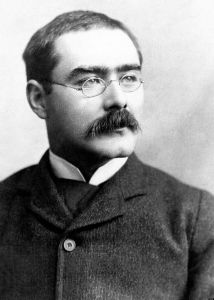
 The inhabitants of Kingsport say and think many things about the Terrible Old Man which generally keep him safe from the attention of gentlemen like Mr. Ricci and his colleagues, despite the almost certain fact that he hides a fortune of


 Phil Slattery, Writer, Publisher