You feel it closing in all around you. It’s down the hallway with the slanted floorboards with their warped bulbs of hardwood. You can feel it as you jiggle the handle of the doors to your daughter’s room and it jiggles in your hand like a loose tooth. There it is, all around her.
“Oppression” by Isabella Quintana October 21, 2014
Your daughter is the picture of innocence, rocking in a tiny chair, hugging her Barbie close. You think of the way she cried when she brought Barbie into the bath and the doll’s hair clumped and pulled off at the scalp when she tried to brush it and how happy she was when you spent the next week switching that Barbie out for other’s with more hair so your daughter thought that Barbie’s hair was growing back. When you looked again, the original’s hair was longer and fuller, and the others bald. You didn’t tell your daughter, but you switched it back.
How could this thing be in her?
But as you get close you feel the air around your daughter and it’s cold, like stepping into a freezer on a summer day.
You rip the Barbie out of her hand. She cries out. You tell her this is for her own good, and see the tears in her eyes. She is too young to understand. You snap the doll over your knee, and for a second you believe your daughter is safe.
There’s a static in the way it comes out of the Barbie into you. It adjusts to its new home, in a way that you never adjusted to yours. It is you now.
###
Ryan C. Bradley has previously published fiction in The Gothic Blue Book V, apt, Pinball, and others. His nonfiction regularly appears in Wicked Horror, Dread Central, and Diabolique. In 2015, he won the 2015 JP Reads Flash Fiction Contest. His first novel, Friday the Furteenth, is being serialized at Channillo.com. You can learn more about him at https://ryancbradleyblog.wordpress.com/.
Ardus Publications, Sybaritic Press, Prolific Press, and some others published the poems of Marieta Maglas in anthologies like Tanka Journal, edited by Glenn Lyvers, The Aquillrelle Wall of Poetry, edited by Yossi Faybish, A Divine Madness: An Anthology of Modern Love Poetry, edited by
Marieta Maglas
John Patrick Boutilier, Near Kin:A Collection of Words and Art Inspired by Octavia Estelle Butler, edited by Marie Lecrivain, Three Line Poetry #25, edited by Glenn Lyvers, ENCHANTED – Love Poems and Abstract Art, edited by Gabrielle de la Fair, and Intercontinental Anthology of Poetry on Universal Peace and Love, edited by Madan Gandhi.
Ardus Publications, Sybaritic Press, Prolific Press, and some others published the poems of Marieta Maglas in anthologies like Tanka Journal,
Marieta Maglas
edited by Glenn Lyvers, The Aquillrelle Wall of Poetry, edited by Yossi Faybish, A Divine Madness: An Anthology of Modern Love Poetry, edited by John Patrick Boutilier, Near Kin:A Collection of Words and Art Inspired by Octavia Estelle Butler, edited by Marie Lecrivain, Three Line Poetry #25, edited by Glenn Lyvers, ENCHANTED – Love Poems and Abstract Art, edited by Gabrielle de la Fair, and Intercontinental Anthology of Poetry on Universal Peace and Love, edited by Madan Gandhi.
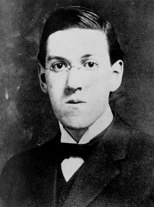
In my tortured ears there sounds unceasingly a nightmare whirring and flapping, and a faint distant baying as of some gigantic hound. It is not dream – it is not, I fear, even madness – for too much has already happened to give me these merciful doubts.
St John is a mangled corpse; I alone know why, and such is my knowledge that I am about to blow out my brains for fear I shall be mangled in the same way. Down unlit and illimitable corridors of eldrith phantasy sweeps the black, shapeless Nemesis that drives me to self-annihilation.
H.P. Lovecraft, 1915
May heaven forgive the folly and morbidity which led us both to so monstrous a fate! Wearied with the commonplaces of a prosaic world; where even the joys of romance and adventure soon grow stale, St John and I had followed enthusiastically every aesthetic and intellectual movement which promised respite from our devastating ennui. The enigmas of the symbolists and the ecstasies of the pre-Raphaelites all were ours in their time, but each new mood was drained too soon, of its diverting novelty and appeal.
Only the somber philosophy of the decadents could help us, and this we found potent only by increasing gradually the depth and diabolism of our penetrations. Baudelaire and Huysmans were soon exhausted of thrills, till finally there remained for us only the more direct stimuli of unnatural personal experiences and adventures. It was this frightful emotional need which led us eventually to that detestable course which even in my present fear I mention with shame and timidity – that hideous extremity of human outrage, the abhorred practice of grave-robbing.
I cannot reveal the details of our shocking expeditions, or catalogue even partly the worst of the trophies adorning the nameless museum we prepared in the great stone house where we jointly dwelt, alone and servantless. Our museum was a blasphemous, unthinkable place, where with the satanic taste of neurotic virtuosi we had assembled an universe of terror and decay to excite our jaded sensibilities. It was a secret room, far, far, underground; where huge winged daemons carven of basalt and onyx vomited from wide grinning mouths weird green and orange light, and hidden pneumatic pipes ruffled into kaleidoscopic dances of death the lines of red charnel things hand in hand woven in voluminous black hangings. Through these pipes came at will the odors our moods most craved; sometimes the scent of pale funeral lilies; sometimes the narcotic incense of imagined Eastern shrines of the kingly dead, and sometimes – how I shudder to recall it! – the frightful, soul-upheaving stenches of the uncovered-grave.
Around the walls of this repellent chamber were cases of antique mummies alternating with comely, lifelike bodies perfectly stuffed and cured by the taxidermist’s art, and with headstones snatched from the oldest churchyards of the world. Niches here and there contained skulls of all shapes, and heads preserved in various stages of dissolution. There one might find the rotting, bald pates of famous noblemen, and the fresh and radiantly golden heads of new-buried children.
Statues and paintings there were, all of fiendish subjects and some executed by St John and myself. A locked portfolio, bound in tanned human skin, held certain unknown and unnameable drawings which it was rumored Goya had perpetrated but dared not acknowledge. There were nauseous musical instruments, stringed, brass, and wood-wind, on which St John and I sometimes produced dissonances of exquisite morbidity and cacodaemoniacal ghastliness; whilst in a multitude of inlaid ebony cabinets reposed the most incredible and unimaginable variety of tomb-loot ever assembled by human madness and perversity. It is of this loot in particular that I must not speak – thank God I had the courage to destroy it long before I thought of destroying myself!
The predatory excursions on which we collected our unmentionable treasures were always artistically memorable events. We were no vulgar ghouls, but worked only under certain conditions of mood, landscape, environment, weather, season, and moonlight. These pastimes were to us the most exquisite form of aesthetic expression, and we gave their details a fastidious technical care. An inappropriate hour, a jarring lighting effect, or a clumsy manipulation of the damp sod, would almost totally destroy for us that ecstatic titillation which followed the exhumation of some ominous, grinning secret of the earth. Our quest for novel scenes and piquant conditions was feverish and insatiate – St John was always the leader, and he it was who led the way at last to that mocking, accursed spot which brought us our hideous and inevitable doom.
By what malign fatality were we lured to that terrible Holland churchyard? I think it was the dark rumor and legendry, the tales of one buried for five centuries, who had himself been a ghoul in his time and had stolen a potent thing from a mighty sepulchre. I can recall the scene in these final moments – the pale autumnal moon over the graves, casting long horrible shadows; the grotesque trees, drooping sullenly to meet the neglected grass and the crumbling slabs; the vast legions of strangely colossal bats that flew against the moon; the antique ivied church pointing a huge spectral finger at the livid sky; the phosphorescent insects that danced like death-fires under the yews in a distant corner; the odors of mould, vegetation, and less explicable things that mingled feebly with the night-wind from over far swamps and seas; and, worst of all, the faint deep-toned baying of some gigantic hound which we could neither see nor definitely place. As we heard this suggestion of baying we shuddered, remembering the tales of the peasantry; for he whom we sought had centuries before been found in this self same spot, torn and mangled by the claws and teeth of some unspeakable beast.
I remember how we delved in the ghoul’s grave with our spades, and how we thrilled at the picture of ourselves, the grave, the pale watching moon, the horrible shadows, the grotesque trees, the titanic bats, the antique church, the dancing death-fires, the sickening odors, the gently moaning night-wind, and the strange, half-heard directionless baying of whose objective existence we could scarcely be sure.
Then we struck a substance harder than the damp mould, and beheld a rotting oblong box crusted with mineral deposits from the long undisturbed ground. It was incredibly tough and thick, but so old that we finally pried it open and feasted our eyes on what it held.
Much – amazingly much – was left of the object despite the lapse of five hundred years. The skeleton, though crushed in places by the jaws of the thing that had killed it, held together with surprising firmness, and we gloated over the clean white skull and its long, firm teeth and its eyeless sockets that once had glowed with a charnel fever like our own. In the coffin lay an amulet of curious and exotic design, which had apparently been worn around the sleeper’s neck. It was the oddly conventionalised figure of a crouching winged hound, or sphinx with a semi-canine face, and was exquisitely carved in antique Oriental fashion from a small piece of green jade. The expression of its features was repellent in the extreme, savoring at once of death, bestiality and malevolence. Around the base was an inscription in characters which neither St John nor I could identify; and on the bottom, like a maker’s seal, was graven a grotesque and formidable skull.
Immediately upon beholding this amulet we knew that we must possess it; that this treasure alone was our logical pelf from the centuried grave. Even had its outlines been unfamiliar we would have desired it, but as we looked more closely we saw that it was not wholly unfamiliar. Alien it indeed was to all art and literature which sane and balanced readers know, but we recognized it as the thing hinted of in the forbidden Necronomicon of the mad Arab Abdul Alhazred; the ghastly soul-symbol of the corpse-eating cult of inaccessible Leng, in Central Asia. All too well did we trace the sinister lineaments described by the old Arab daemonologist; lineaments, he wrote, drawn from some obscure supernatural manifestation of the souls of those who vexed and gnawed at the dead.
Seizing the green jade object, we gave a last glance at the bleached and cavern-eyed face of its owner and closed up the grave as we found it. As we hastened from the abhorrent spot, the stolen amulet in St John’s pocket, we thought we saw the bats descend in a body to the earth we had so lately rifled, as if seeking for some cursed and unholy nourishment. But the autumn moon shone weak and pale, and we could not be sure.
So, too, as we sailed the next day away from Holland to our home, we thought we heard the faint distant baying of some gigantic hound in the background. But the autumn wind moaned sad and wan, and we could not be sure.
Less than a week after our return to England, strange things began to happen. We lived as recluses; devoid of friends, alone, and without servants in a few rooms of an ancient manor-house on a bleak and unfrequented moor; so that our doors were seldom disturbed by the knock of the visitor.
Now, however, we were troubled by what seemed to be a frequent fumbling in the night, not only around the doors but around the windows also, upper as well as lower. Once we fancied that a large, opaque body darkened the library window when the moon was shining against it, and another time we thought we heard a whirring or flapping sound not far off. On each occasion investigation revealed nothing, and we began to ascribe the occurrences to imagination which still prolonged in our ears the faint far baying we thought we had heard in the Holland churchyard. The jade amulet now reposed in a niche in our museum, and sometimes we burned a strangely scented candle before it. We read much in Alhazred’s Necronomicon about its properties, and about the relation of ghosts’ souls to the objects it symbolized; and were disturbed by what we read.
Then terror came.
On the night of September 24, 19–, I heard a knock at my chamber door. Fancying it St John’s, I bade the knocker enter, but was answered only by a shrill laugh. There was no one in the corridor. When I aroused St John from his sleep, he professed entire ignorance of the event, and became as worried as I. It was the night that the faint, distant baying over the moor became to us a certain and dreaded reality.
Four days later, whilst we were both in the hidden museum, there came a low, cautious scratching at the single door which led to the secret library staircase. Our alarm was now divided, for, besides our fear of the unknown, we had always entertained a dread that our grisly collection might be discovered. Extinguishing all lights, we proceeded to the door and threw it suddenly open; whereupon we felt an unaccountable rush of air, and heard, as if receding far away, a queer combination of rustling, tittering, and articulate chatter. Whether we were mad, dreaming, or in our senses, we did not try to determine. We only realized, with the blackest of apprehensions, that the apparently disembodied chatter was beyond a doubt in the Dutch language.
After that we lived in growing horror and fascination. Mostly we held to the theory that we were jointly going mad from our life of unnatural excitements, but sometimes it pleased us more to dramatize ourselves as the victims of some creeping and appalling doom. Bizarre manifestations were now too frequent to count. Our lonely house was seemingly alive with the presence of some malign being whose nature we could not guess, and every night that daemoniac baying rolled over the wind-swept moor, always louder and louder. On October 29 we found in the soft earth underneath the library window a series of footprints utterly impossible to describe. They were as baffling as the hordes of great bats which haunted the old manor-house in unprecedented and increasing numbers.
The horror reached a culmination on November 18, when St John, walking home after dark from the dismal railway station, was seized by some frightful carnivorous thing and torn to ribbons. His screams had reached the house, and I had hastened to the terrible scene in time to hear a whir of wings and see a vague black cloudy thing silhouetted against the rising moon.
My friend was dying when I spoke to him, and he could not answer coherently. All he could do was to whisper, “The amulet – that damned thing -”
Then he collapsed, an inert mass of mangled flesh.
I buried him the next midnight in one of our neglected gardens, and mumbled over his body one of the devilish rituals he had loved in life. And as I pronounced the last daemoniac sentence I heard afar on the moor the faint baying of some gigantic hound. The moon was up, but I dared not look at it. And when I saw on the dim-lighted moor a wide-nebulous shadow sweeping from mound to mound, I shut my eyes and threw myself face down upon the ground. When I arose, trembling, I know not how much later, I staggered into the house and made shocking obeisances before the enshrined amulet of green jade.
Being now afraid to live alone in the ancient house on the moor, I departed on the following day for London, taking with me the amulet after destroying by fire and burial the rest of the impious collection in the museum. But after three nights I heard the baying again, and before a week was over felt strange eyes upon me whenever it was dark. One evening as I strolled on Victoria Embankment for some needed air, I saw a black shape obscure one of the reflections of the lamps in the water. A wind, stronger than the night-wind, rushed by, and I knew that what had befallen St John must soon befall me.
The next day I carefully wrapped the green jade amulet and sailed for Holland. What mercy I might gain by returning the thing to its silent, sleeping owner I knew not; but I felt that I must try any step conceivably logical. What the hound was, and why it had pursued me, were questions still vague; but I had first heard the baying in that ancient churchyard, and every subsequent event including St John’s dying whisper had served to connect the curse with the stealing of the amulet. Accordingly I sank into the nethermost abysses of despair when, at an inn in Rotterdam, I discovered that thieves had despoiled me of this sole means of salvation.
The baying was loud that evening, and in the morning I read of a nameless deed in the vilest quarter of the city. The rabble were in terror, for upon an evil tenement had fallen a red death beyond the foulest previous crime of the neighborhood. In a squalid thieves’ den an entire family had been torn to shreds by an unknown thing which left no trace, and those around had heard all night a faint, deep, insistent note as of a gigantic hound.
So at last I stood again in the unwholesome churchyard where a pale winter moon cast hideous shadows and leafless trees drooped sullenly to meet the withered, frosty grass and cracking slabs, and the ivied church pointed a jeering finger at the unfriendly sky, and the night-wind howled maniacally from over frozen swamps and frigid seas. The baying was very faint now, and it ceased altogether as I approached the ancient grave I had once violated, and frightened away an abnormally large horde of bats which had been hovering curiously around it.
I know not why I went thither unless to pray, or gibber out insane pleas and apologies to the calm white thing that lay within; but, whatever my reason, I attacked the half frozen sod with a desperation partly mine and partly that of a dominating will outside myself. Excavation was much easier than I expected, though at one point I encountered a queer interruption; when a lean vulture darted down out of the cold sky and pecked frantically at the grave-earth until I killed him with a blow of my spade. Finally I reached the rotting oblong box and removed the damp nitrous cover. This is the last rational act I ever performed.
For crouched within that centuried coffin, embraced by a closepacked nightmare retinue of huge, sinewy, sleeping bats, was the bony thing my friend and I had robbed; not clean and placid as we had seen it then, but covered with caked blood and shreds of alien flesh and hair, and leering sentiently at me with phosphorescent sockets and sharp ensanguined fangs yawning twistedly in mockery of my inevitable doom. And when it gave from those grinning jaws a deep, sardonic bay as of some gigantic hound, and I saw that it held in its gory filthy claw the lost and fateful amulet of green jade, I merely screamed and ran away idiotically, my screams soon dissolving into peals of hysterical laughter.
Madness rides the star-wind… claws and teeth sharpened on centuries of corpses… dripping death astride a bacchanale of bats from nigh-black ruins of buried temples of Belial… Now, as the baying of that dead fleshless monstrosity grows louder and louder, and the stealthy whirring and flapping of those accursed web-wings closer and closer, I shall seek with my revolver the oblivion which is my only refuge from the unnamed and unnameable.
Francene Kilgore (l) and I on the set with Alrenzo Black (r) and 2tk (center) of Darksomnia Productions, August 6, 2016
My fiancée (Francene Kilgore) and I are teaming with Darksomnia Productions of Farmington, NM to produce a documentary/dramatization of a haunting that occurred in south Texas from about 2006-2010. Filming is taking place. Parts of the documentary will be dramatized by actors while my fiancee and I appear discussing the events. The video should be completed within 1-2 months. More details to come.
Darksomnia Productions
Alrenzo Black (l) and 2tk (r) of CEO’s and co-founders of Darksomnia Productions.
Last week I received my hardcopy of Creepy Campfire Quarterly #3 containing my short story “Sorcerer”. My sincere thanks to Jennifer Word and her staff for publishing this story, which is one of my favorite works, but which has been long in finding a home. “Sorcerer” is the story of a former sorcerer, who has given up his wizard’s life for the love of a woman, but who comes out of retirement to wreak a novel but horrific vengeance on the callous, young womanizer he holds responsible for the death of his daughter and his infant grandson during childbirth. I am currently seeking a publisher for its sequel entitled “Under the Willow”. Run out today and buy a copy wherever you can find Creepy Campfire Quarterly or visit their website at http://www.emppublishing.com/creepy-campfire-quarterly.html. You can also find them at Amazon and Kindle and they have a Facebook page as well.
From Southwater, where he left the train, the road led due west. That he knew; for the rest he trusted to luck, being one of those born walkers who dislike asking the way. He had that instinct, and as a rule it served him well. “A mile or so due west along the sandy road till you come to a stile on the right; then across the fields. You’ll see the red house straight before you.” He glanced at the post-card’s instructions once again, and once again he tried to decipher the scratched-out sentence—without success. It had been so elaborately inked over that no word was legible. Inked-out sentences in a letter were always enticing. He wondered what it was that had to be so very carefully obliterated.
The afternoon was boisterous, with a tearing, shouting wind that blew from the sea, across the Sussex weald. Massive clouds with
Algernon Blackwood 1869-1951
rounded, piled-up edges, cannoned across gaping spaces of blue sky. Far away the line of Downs swept the horizon, like an arriving wave. Chanctonbury Ring rode their crest—a scudding ship, hull down before the wind. He took his hat off and walked rapidly, breathing great draughts of air with delight and exhilaration. The road was deserted; no horsemen, bicycles, or motors; not even a tradesman’s cart; no single walker. But anyhow he would never have asked the way. Keeping a sharp eye for the stile, he pounded along, while the wind tossed the cloak against his face, and made waves across the blue puddles in the yellow road. The trees showed their under leaves of white. The bracken and the high new grass bent all one way. Great life was in the day, high spirits and dancing everywhere. And for a Croydon surveyor’s clerk just out of an office this was like a holiday at the sea.
It was a day for high adventure, and his heart rose up to meet the mood of Nature. His umbrella with the silver ring ought to have been a sword, and his brown shoes should have been top-boots with spurs upon the heels. Where hid the enchanted Castle and the princess with the hair of sunny gold? His horse…
The stile came suddenly into view and nipped adventure in the bud. Everyday clothes took him prisoner again. He was a surveyor’s clerk, middle-aged, earning three pounds a week, coming from Croydon to see about a client’s proposed alterations in a wood—something to ensure a better view from the dining-room window. Across the fields, perhaps a mile away, he saw the red house gleaming in the sunshine; and resting on the stile a moment to get his breath he noticed a copse of oak and hornbeam on the right. “Aha,” he told himself “so that must be the wood he wants to cut down to improve the view? I’ll ’ave a look at it.” There were boards up, of course, but there was an inviting little path as well. “I’m not a trespasser,” he said; “it’s part of my business, this is.” He scrambled awkwardly over the gate and entered the copse. A little round would bring him to the field again.
But the moment he passed among the trees the wind ceased shouting and a stillness dropped upon the world. So dense was the growth that the sunshine only came through in isolated patches. The air was close. He mopped his forehead and put his green felt hat on, but a low branch knocked it off again at once, and as he stooped an elastic twig swung back and stung his face. There were flowers along both edges of the little path; glades opened on either side; ferns curved about in damper corners, and the smell of earth and foliage was rich and sweet. It was cooler here. What an enchanting little wood, he thought, turning down a small green glade where the sunshine flickered like silver wings. How it danced and fluttered and moved about! He put a dark blue flower in his buttonhole. Again his hat, caught by an oak branch as he rose, was knocked from his head, falling across his eyes. And this time he did not put it on again. Swinging his umbrella, he walked on with uncovered head, whistling rather loudly as he went. But the thickness of the trees hardly encouraged whistling, and something of his gaiety and high spirits seemed to leave him. He suddenly found himself treading circumspectly and with caution. The stillness in the wood was so peculiar.
There was a rustle among the ferns and leaves and something shot across the path ten yards ahead, stopped abruptly an instant with head cocked sideways to stare, then dived again beneath the underbrush with the speed of a shadow. He started like a frightened child, laughing the next second that a mere pheasant could have made him jump. In the distance he heard wheels upon the road, and wondered why the sound was pleasant. “Good old butcher’s cart,” he said to himself—then realised that he was going in the wrong direction and had somehow got turned round. For the road should be behind him, not in front.
And he hurriedly took another narrow glade that lost itself in greenness to the right. “That’s my direction, of course,” he said; “the trees has mixed me up a bit, it seems”—then found himself abruptly by the gate he had first climbed over. He had merely made a circle. Surprise became almost discomfiture then. And a man, dressed like a gamekeeper in browny green, leaned against the gate, hitting his legs with a switch. “I’m making for Mr. Lumley’s farm,” explained the walker. “This is his wood, I believe—” then stopped dead, because it was no man at all, but merely an effect of light and shade and foliage. He stepped back to reconstruct the singular illusion, but the wind shook the branches roughly here on the edge of the wood and the foliage refused to reconstruct the figure. The leaves all rustled strangely. And just then the sun went behind a cloud, making the whole wood look otherwise. Yet how the mind could be thus doubly deceived was indeed remarkable, for it almost seemed to him the man had answered, spoken—or was this the shuffling noise the branches made ?—and had pointed with his switch to the notice-board upon the nearest tree. The words rang on in his head, but of course he had imagined them: “No, it’s not his wood. It’s ours.” And some village wit, moreover, had changed the lettering on the weather-beaten board, for it read quite plainly, “Trespassers will be persecuted.”
And while the astonished clerk read the words and chuckled, he said to himself, thinking what a tale he’d have to tell his wife and children later—“The blooming wood has tried to chuck me out. But I’ll go in again. Why, it’s only a matter of a square acre at most. I’m bound to reach the fields on the other side if I keep straight on.” He remembered his position in the office. He had a certain dignity to maintain.
The cloud passed from below the sun, and light splashed suddenly in all manner of unlikely places. The man went straight on. He felt a touch of puzzling confusion somewhere; this way the copse had of shifting from sunshine into shadow doubtless troubled sight a little. To his relief at last, a new glade opened through the trees and disclosed the fields with a glimpse of the red house in the distance at the far end. But a little wicket gate that stood across the path had first to be climbed, and as he scrambled heavily over—for it would not open—he got the astonishing feeling that it slid off sideways beneath his weight, and towards the wood. Like the moving staircases at Harrod’s and Earl’s Court, it began to glide off with him. It was quite horrible. He made a violent effort to get down before it carried him into the trees, but his feet became entangled with the bars and umbrella, so that he fell heavily upon the farther side, arms spread across the grass and nettles, boots clutched between the first and second bars. He lay there a moment like a man crucified upside down, and while he struggled to get disentangled—feet, bars, and umbrella formed a regular net—he saw the little man in browny green go past him with extreme rapidity through the wood. The man was laughing. He passed across the glade some fifty yards away, and he was not alone this time. A companion like himself went with him. The clerk, now upon his feet again, watched them disappear into the gloom of green beyond. “They’re tramps, not gamekeepers,” he said to himself, half mortified, half angry. But his heart was thumping dreadfully, and he dared not utter all his thought.
He examined the wicket gate, convinced it was a trick gate somehow—then went hurriedly on again, disturbed beyond belief to see that the glade no longer opened into fields, but curved away to the right. What in the world had happened to him? His sight was so utterly at fault. Again the sun flamed out abruptly and lit the floor of the wood with pools of silver, and at the same moment a violent gust of wind passed shouting overhead. Drops fell clattering everywhere upon the leaves, making a sharp pattering as of many footsteps. The whole copse shuddered and went moving.
“Rain, by George,” thought the clerk, and feeling for his umbrella, discovered he had lost it. He turned back to the gate and found it lying on the farther side. To his amazement he saw the fields at the far end of the glade, the red house, too, ashine in the sunset. He laughed then, for, of course, in his struggle with the gate, he had somehow got turned round—had fallen back instead of forwards. Climbing over, this time quite easily, he retraced his steps. The silver band, he saw, had been torn from the umbrella. No doubt his foot, a nail, or something had caught in it and ripped it off. The clerk began to run; he felt extraordinarily dismayed.
But, while he ran, the entire wood ran with him, round him, to and fro, trees shifting like living things, leaves folding and unfolding, trunks darting backwards and forwards, and branches disclosing enormous empty spaces, then closing up again before he could look into them. There were footsteps everywhere, and laughing, crying voices, and crowds of figures gathering just behind his back till the glade, he knew, was thick with moving life. The wind in his ears, of course, produced the voices and the laughter, while sun and clouds, plunging the copse alternately in shadow and bright dazzling light, created the figures. But he did not like it, and went as fast as ever his sturdy legs could take him. He was frightened now. This was no story for his wife and children. He ran like the wind. But his feet made no sound upon the soft mossy turf.
Then, to his horror, he saw that the glade grew narrow, nettles and weeds stood thick across it, it dwindled down into a tiny path, and twenty yards ahead it stopped finally and melted off among the trees. What the trick gate had failed to achieve, this twisting glade accomplished easily—carried him in bodily among the dense and crowding trees.
There was only one thing to do—turn sharply and dash back again, run headlong into the life that followed at his back, followed so closely too that now it almost touched him, pushing him in. And with reckless courage this was what he did. It seemed a fearful thing to do. He turned with a sort of violent spring, head down and shoulders forward, hands stretched before his face. He made the plunge; like a hunted creature he charged full tilt the other way, meeting the wind now in his face.
Good Lord! The glade behind him had closed up as well; there was no longer any path at all. Turning round and round, like an animal at bay, he searched for an opening, a way of escape, searched frantically, breathlessly, terrified now in his bones. But foliage surrounded him, branches blocked the way; the trees stood close and still, unshaken by a breath of wind; and the sun dipped that moment behind a great black cloud. The entire wood turned dark and silent. It watched him.
Perhaps it was this final touch of sudden blackness that made him act so foolishly, as though he had really lost his head. At any rate, without pausing to think, he dashed headlong in among the trees again. There was a sensation of being stiflingly surrounded and entangled, and that he must break out at all costs—out and away into the open of the blessed fields and air. He did this ill-considered thing, and apparently charged straight into an oak that deliberately moved into his path to stop him. He saw it shift across a good full yard, and being a measuring man, accustomed to theodolite and chain, he ought to know. He fell, saw stars, and felt a thousand tiny fingers tugging and pulling at his hands and neck and ankles. The stinging nettles, no doubt, were responsible for this. He thought of it later. At the moment it felt diabolically calculated.
But another remarkable illusion was not so easily explained. For all in a moment, it seemed, the entire wood went sliding past him with a thick deep rustling of leaves and laughter, myriad footsteps, and tiny little active, energetic shapes; two men in browny green gave him a mighty hoist—and he opened his eyes to find himself lying in the meadow beside the stile where first his incredible adventure had begun. The wood stood in its usual place and stared down upon him in the sunlight. There was the red house in the distance as before. Above him grinned the weather-beaten notice-board: “Trespassers will be prosecuted.”
Dishevelled in mind and body, and a good deal shaken in his official soul, the clerk walked slowly across the fields. But on the way he glanced once more at the postcard of instructions, and saw with dull amazement that the inked-out sentence was quite legible after all beneath the scratches made across it: “There is a short cut through the wood—the wood I want cut down—if you care to take it.” Only “care” was so badly written, it looked more like another word; the “c” was uncommonly like “d.”
“That’s the copse that spoils my view of the Downs, you see,” his client explained to him later, pointing across the fields, and referring to the ordnance map beside him. “I want it cut down and a path made so and so.” His finger indicated direction on the map. “The Fairy Wood—it’s still called, and it’s far older than this house. Come now, if you’re ready, Mr. Thomas, we might go out and have a look at it. . .”
I have two anthologies that I want to talk about and they have one thing in common. They both include a story from Horror Addicts hostess Emerian Rich. The First book is Shadow People and Cursed Ob…
The gypsy, pale olive skin and glossy black hair stared at me with dark eyes that seemed to look right through me. “You and your lady friend come inside,” she said. I hesitated. “What are you afraid of?” She reached up and touched my face with her fingers. A scent of peppermint and sage filled my nostrils and made me giddy. “You afraid I seduce your boy friend?” She asked Jane. Just then a policeman walked by and the young gypsy woman stepped back away from me. The policeman glared at her and she disappeared back inside her tent.
I listened for an instant and I could hear the strains of violin coming from within. Sweet and sorrowful it played. We stepped inside and quietly slipped off our shoes before we crossed the plush purple carpet. Suddenly there was a loud creak and when we turned around there was a large gypsy man with a brown felt hat pulled low on his forehead standing in the doorway. “It’s alright papa,” she said. He just looked away and then stepped back into the shadows.
Sleep eluded me that night. I lay in the darkness upstairs in the old farm house that my Grandmother owned. Our family had lived on this land for four generations and when I was thrown out of my Mother’s house by her new husband my Grandmother had insisted that I come to stay with her. She told me, “Nicky I’m tired of rambling around this huge house all alone.”
Why not I thought? I still had my senior year in high school to go through before joining the Army why not spend it with Grandma. That was one month ago. It was August and that was fair time in Rhinebeck.
I laid in the darkness trying to empty my head of troubling thoughts, carnival gypsies and fortune tellers. It seemed to be impossible though I couldn’t get her out of my head. I could still smell the peppermint and sage that had lingered on her finger tips.
Jane had noticed it and was annoyed by it even though we were just friends. She had mentioned it on the way home. “You’re awful quiet.” She had said in the car.
“Bone tired that’s all,” I had said.
Jane lived next door to my Grandmother and since she was around my age like all Grandmothers she tried to hook us up. I had no interest in Jane except for a friend. It was nice to have someone to hang out with. I was a stranger in a strange land being from the city and it was nice to have a guide. When school started I was quite sure we would drift apart each to our own crowds.
Now I was wide awake again and thinking of my gypsy angel. All my senses were in high gear a heightened sense of awareness. I strained to catch any untoward sound in the house, a creak here and a drip there, my Grandmother in her room next door as she coughed and then turned another page in her magazine.
What was it like in her world? She was around my age my gypsy angel. What was it like on the carnival midway when all the people were gone and you were alone with the spinning tea-cups and the mad-mouse, when the lights were off and the music silenced.
It must be ominous the silence. That’s was what I kept thinking about and what I wanted to know. It was where I wanted to be with her. It was where my heart had wandered off to on this warm summer night as the scent of the carnival lingered on the breeze.
I could see the glow of the lights outside my window and they drew me on like a moth to a flame. I stood at my window and sucked in the smell of grease paint and diesel fuel with just a hint of danger and intrigue mixed in.
After turning on the light on my bedside table I sat on the edge of my bed torn between the world I knew and the world I wanted to know better. It was truly the calm before the storm. I got up slowly and took my pants and shirt off the chair. It was time to decide.
Despite my sense of urgency about the need to be over there and with her right now I moved slowly, carefully down the staircase going to great lengths to avoid the squeaky steps. I silently slipped the chain off the top lock and closed the door softly behind me. I closed my eyes and took in a deep breath I was free.
The magnitude of what I was about to do sent goose bumps down my spine. I crossed the road there wasn’t a car in sight and the only sounds I could hear were the sounds of the generators running at the fairgrounds.
It was a tight squeeze but I snuck under the wire fence where the kids snuck in. It was an absolutely balmy night. There had never been a better night to get wild and crazy and as I walked along the midway I felt like I belonged there.
There was one snack-wagon still open and there were a couple of guys sitting out on a picnic table having a beer. My heart froze what if they said something? I felt beads of sweat pop out on my forehead and my hands felt cold and clammy. They’ll know I thought. They’ll see right through the guise and know I’m not one of them. As they looked my way I started to panic but they just smiled and said, “crazy night.” I smiled back and nodded as they went back to their conversation.
I glided by like a ghost haunting the midway, the center joint, the line joints, and the stick joints were all my play ground, and who will win the rag in a bag I thought. I know, I know, but I couldn’t sleep I had a premonition that something…no everything starts tonight. I was born again to the smell of cotton candy and fried dough. Like drugs they coursed through my veins. Then there she was sitting in front of a sign that said, “DARE TO KNOW THE FUTURE.”
I stared at her I couldn’t help myself. She shook her head and said. ”You’ve come back to me they all do once I’ve laid hands on them they wear the stain of passion on their souls and the scent drives them mad with lust.”
I nodded and took a deep breath the scent of peppermint and sage filled my head and made me tipsy. “Okay, so what do we do?” I replied half in a trance.
“You want to be with me.” She said. “You want to be here when the darkness comes, you want to be in the middle of it all.”
“That’s why I’m here,” I replied.
“No, you are here because I placed a spell on you. Do you have nerves of steel? Are you strong enough to be my lover? I think not go home little boy.”
“Bitch,” I cried as I lunged at her wrapping my fingers in her long black hair and yanking her head around so her lips were just inches from mine. She just stared up at me defiantly. I knew that danger didn’t scare her she thumbed her nose at it. I let her go and fished in my pocket for my pack of Newport. As I lit one up she took it gently from my fingers. “I don’t even know your name,” I said.
“Aishe,” she whispered.
“I’m Peter,” I said.
“I know who you are Peter you have been chosen just for me.” She whispered as she placed her lips to my ear. Then in one motion she spun around me like in a dance and said. “Come with me.”
All my strength suddenly seemed to ebb away and I was entirely at her mercy. I followed her down the darkened midway like a puppy. With a click of her fingers and a wave of her hands the lights came on and the carnival came alive. Invisible hands worked the rides each one longer then the next and ghosts called from the joints promising untold riches if we popped the balloons or made a basket. “Win a prize for the little woman,”a ghostly voices whispered.
Things seemed to be moving faster and faster as Pink Floyd’s Money thundered out of huge speakers all around us. “Perhaps something earth-shaking is happening here.” She laughed. “World shattering, mind bending,” she screamed hysterically as the Tea cups spun faster and faster.
I wanted her now more than ever I took her by the hand and led her off the midway out of the bright lights and on to the soft green grass. She put her hands on my shoulders and closed her eyes. I felt her strong yet sensitive hands work the tension out of my muscles as her fingers probed deeper and deeper. My senses were reeling, I felt high and drunk all at the same time. We tumbled into each other’s arms and I knew that our coming together was right, it was the destiny that I was born for and then reborn to.
I was fully aroused my body shaking as I plunged deeper and deeper inside her. My tongue and fingers centered fully on her ecstasy. Her whispered voice changed to moans and then animal grunts and hisses as her passion grew. Her nails ripped through my shirt and raked my back just before my sweet release.
Suddenly there was a flurry of motion and the man with the brown felt hat yanked me off her. “Watch out boy,” he cried as he raised his rifle and fired three times. On the ground where Aishe and I had made passionate love was a dead Bengal Tiger. The man with the felt hat just shook his head as a single tear ran down his cheek. “She knew she was cursed with the mark of the tiger upon her but she wanted to know love just one time.”
###
Timothy Wilkie is a writer/artist living in upstate New York. His short stories “Ossuary”, “The Flaw”, and “The Cell Phone” have been published in The Horror-zine and his story “Sweet Meat” has been published by Massacre Magazine. His art has been featured in The Horror-zine and Arabian Nights. Twice he has received the Golden Poets Award from the American Poetry Association.
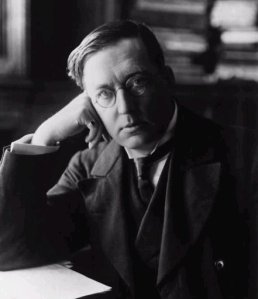
It was, as far as I can ascertain, in September of the year 1811 that a post-chaise drew up before the door of Aswarby Hall, in the heart of Lincolnshire. The little boy who was the only passenger in the chaise, and who jumped out as soon as it had stopped, looked about him with the keenest curiosity during the short interval that elapsed between the ringing of the bell and the opening of the hall door. He saw a tall, square, red-brick house, built in the reign of Anne; a stone-pillared porch had been added in the purer classical style of 1790; the windows of the house were many, tall and narrow, with small panes and thick white woodwork. A pediment, pierced with a round window, crowned the front. There were wings to right and left, connected by curious glazed galleries, supported by colonnades, with the central block. These wings plainly contained the stables and offices of the house. Each was surmounted by an ornamental cupola with a gilded vane.
M.R. James 1900
An evening light shone on the building, making the window-panes glow like so many fires. Away from the Hall in front stretched a flat park studded with oaks and fringed with firs, which stood out against the sky. The clock in the church-tower, buried in trees on the edge of the park, only its golden weather-cock catching the light, was striking six, and the sound came gently beating down the wind. It was altogether a pleasant impression, though tinged with the sort of melancholy appropriate to an evening in early autumn, that was conveyed to the mind of the boy who was standing in the porch waiting for the door to open to him.
The post-chaise had brought him from Warwickshire, where, some six months before, he had been left an orphan. Now, owing to the generous offer of his elderly cousin, Mr Abney, he had come to live at Aswarby. The offer was unexpected, because all who knew anything of Mr Abney looked upon him as a somewhat austere recluse, into whose steady-going household the advent of a small boy would import a new and, it seemed, incongruous element. The truth is that very little was known of Mr Abney’s pursuits or temper. The Professor of Greek at Cambridge had been heard to say that no one knew more of the religious beliefs of the later pagans than did the owner of Aswarby. Certainly his library contained all the then available books bearing on the Mysteries, the Orphic poems, the worship of Mithras, and the Neo–Platonists. In the marble-paved hall stood a fine group of Mithras slaying a bull, which had been imported from the Levant at great expense by the owner. He had contributed a description of it to the Gentleman’s Magazine , and he had written a remarkable series of articles in the Critical Museum on the superstitions of the Romans of the Lower Empire. He was looked upon, in fine, as a man wrapped up in his books, and it was a matter of great surprise among his neighbours that he should ever have heard of his orphan cousin, Stephen Elliott, much more that he should have volunteered to make him an inmate of Aswarby Hall.
Whatever may have been expected by his neighbours, it is certain that Mr Abney — the tall, the thin, the austere — seemed inclined to give his young cousin a kindly reception. The moment the front-door was opened he darted out of his study, rubbing his hands with delight.
‘How are you, my boy?— how are you? How old are you?’ said he —‘that is, you are not too much tired, I hope, by your journey to eat your supper?’
‘No, thank you, sir,’ said Master Elliott; ‘I am pretty well.’
‘That’s a good lad,’ said Mr Abney. ‘And how old are you, my boy?’
It seemed a little odd that he should have asked the question twice in the first two minutes of their acquaintance.
‘I’m twelve years old next birthday, sir,’ said Stephen.
‘And when is your birthday, my dear boy? Eleventh of September, eh? That’s well — that’s very well. Nearly a year hence, isn’t it? I like — ha, ha!— I like to get these things down in my book. Sure it’s twelve? Certain?’
‘Yes, quite sure, sir.’
‘Well, well! Take him to Mrs Bunch’s room, Parkes, and let him have his tea — supper — whatever it is.’
‘Yes, sir,’ answered the staid Mr Parkes; and conducted Stephen to the lower regions.
Mrs Bunch was the most comfortable and human person whom Stephen had as yet met at Aswarby. She made him completely at home; they were great friends in a quarter of an hour: and great friends they remained. Mrs Bunch had been born in the neighbourhood some fifty-five years before the date of Stephen’s arrival, and her residence at the Hall was of twenty years’ standing. Consequently, if anyone knew the ins and outs of the house and the district, Mrs Bunch knew them; and she was by no means disinclined to communicate her information.
Certainly there were plenty of things about the Hall and the Hall gardens which Stephen, who was of an adventurous and inquiring turn, was anxious to have explained to him. ‘Who built the temple at the end of the laurel walk? Who was the old man whose picture hung on the staircase, sitting at a table, with a skull under his hand?’ These and many similar points were cleared up by the resources of Mrs Bunch’s powerful intellect. There were others, however, of which the explanations furnished were less satisfactory.
One November evening Stephen was sitting by the fire in the housekeeper’s room reflecting on his surroundings.
‘Is Mr Abney a good man, and will he go to heaven?’ he suddenly asked, with the peculiar confidence which children possess in the ability of their elders to settle these questions, the decision of which is believed to be reserved for other tribunals.
‘Good?— bless the child!’ said Mrs Bunch. ‘Master’s as kind a soul as ever I see! Didn’t I never tell you of the little boy as he took in out of the street, as you may say, this seven years back? and the little girl, two years after I first come here?’
‘No. Do tell me all about them, Mrs Bunch — now, this minute!’
‘Well,’ said Mrs Bunch, ‘the little girl I don’t seem to recollect so much about. I know master brought her back with him from his walk one day, and give orders to Mrs Ellis, as was housekeeper then, as she should be took every care with. And the pore child hadn’t no one belonging to her — she telled me so her own self — and here she lived with us a matter of three weeks it might be; and then, whether she were somethink of a gipsy in her blood or what not, but one morning she out of her bed afore any of us had opened a eye, and neither track nor yet trace of her have I set eyes on since. Master was wonderful put about, and had all the ponds dragged; but it’s my belief she was had away by them gipsies, for there was singing round the house for as much as an hour the night she went, and Parkes, he declare as he heard them a-calling in the woods all that afternoon. Dear, dear! a hodd child she was, so silent in her ways and all, but I was wonderful taken up with her, so domesticated she was — surprising.’
‘And what about the little boy?’ said Stephen.
‘Ah, that pore boy!’ sighed Mrs Bunch. ‘He were a foreigner — Jevanny he called hisself — and he come a-tweaking his ‘urdy-gurdy round and about the drive one winter day, and master ‘ad him in that minute, and ast all about where he came from, and how old he was, and how he made his way, and where was his relatives, and all as kind as heart could wish. But it went the same way with him. They’re a hunruly lot, them foreign nations, I do suppose, and he was off one fine morning just the same as the girl. Why he went and what he done was our question for as much as a year after; for he never took his ‘urdy-gurdy, and there it lays on the shelf.’
The remainder of the evening was spent by Stephen in miscellaneous cross-examination of Mrs Bunch and in efforts to extract a tune from the hurdy-gurdy.
That night he had a curious dream. At the end of the passage at the top of the house, in which his bedroom was situated, there was an old disused bathroom. It was kept locked, but the upper half of the door was glazed, and, since the muslin curtains which used to hang there had long been gone, you could look in and see the lead-lined bath affixed to the wall on the right hand, with its head towards the window.
On the night of which I am speaking, Stephen Elliott found himself, as he thought, looking through the glazed door. The moon was shining through the window, and he was gazing at a figure which lay in the bath.
His description of what he saw reminds me of what I once beheld myself in the famous vaults of St Michan’s Church in Dublin, which possesses the horrid property of preserving corpses from decay for centuries. A figure inexpressibly thin and pathetic, of a dusty leaden colour, enveloped in a shroud-like garment, the thin lips crooked into a faint and dreadful smile, the hands pressed tightly over the region of the heart.
As he looked upon it, a distant, almost inaudible moan seemed to issue from its lips, and the arms began to stir. The terror of the sight forced Stephen backwards and he awoke to the fact that he was indeed standing on the cold boarded floor of the passage in the full light of the moon. With a courage which I do not think can be common among boys of his age, he went to the door of the bathroom to ascertain if the figure of his dreams were really there. It was not, and he went back to bed.
Mrs Bunch was much impressed next morning by his story, and went so far as to replace the muslin curtain over the glazed door of the bathroom. Mr Abney, moreover, to whom he confided his experiences at breakfast, was greatly interested and made notes of the matter in what he called ‘his book’.
The spring equinox was approaching, as Mr Abney frequently reminded his cousin, adding that this had been always considered by the ancients to be a critical time for the young: that Stephen would do well to take care of himself, and to shut his bedroom window at night; and that Censorinus had some valuable remarks on the subject. Two incidents that occurred about this time made an impression upon Stephen’s mind.
The first was after an unusually uneasy and oppressed night that he had passed — though he could not recall any particular dream that he had had.
The following evening Mrs Bunch was occupying herself in mending his nightgown.
‘Gracious me, Master Stephen!’ she broke forth rather irritably, ‘how do you manage to tear your nightdress all to flinders this way? Look here, sir, what trouble you do give to poor servants that have to darn and mend after you!’
There was indeed a most destructive and apparently wanton series of slits or scorings in the garment, which would undoubtedly require a skilful needle to make good. They were confined to the left side of the chest — long, parallel slits about six inches in length, some of them not quite piercing the texture of the linen. Stephen could only express his entire ignorance of their origin: he was sure they were not there the night before.
‘But,’ he said, ‘Mrs Bunch, they are just the same as the scratches on the outside of my bedroom door: and I’m sure I never had anything to do with making them .’
Mrs Bunch gazed at him open-mouthed, then snatched up a candle, departed hastily from the room, and was heard making her way upstairs. In a few minutes she came down.
‘Well,’ she said, ‘Master Stephen, it’s a funny thing to me how them marks and scratches can ‘a’ come there — too high up for any cat or dog to ‘ave made ’em, much less a rat: for all the world like a Chinaman’s finger-nails, as my uncle in the tea-trade used to tell us of when we was girls together. I wouldn’t say nothing to master, not if I was you, Master Stephen, my dear; and just turn the key of the door when you go to your bed.’
‘I always do, Mrs Bunch, as soon as I’ve said my prayers.’
‘Ah, that’s a good child: always say your prayers, and then no one can’t hurt you.’
Herewith Mrs Bunch addressed herself to mending the injured nightgown, with intervals of meditation, until bed-time. This was on a Friday night in March, 1812.
On the following evening the usual duet of Stephen and Mrs Bunch was augmented by the sudden arrival of Mr Parkes, the butler, who as a rule kept himself rather to himself in his own pantry. He did not see that Stephen was there: he was, moreover, flustered and less slow of speech than was his wont.
‘Master may get up his own wine, if he likes, of an evening,’ was his first remark. ‘Either I do it in the daytime or not at all, Mrs Bunch. I don’t know what it may be: very like it’s the rats, or the wind got into the cellars; but I’m not so young as I was, and I can’t go through with it as I have done.’
‘Well, Mr Parkes, you know it is a surprising place for the rats, is the Hall.’
‘I’m not denying that, Mrs Bunch; and, to be sure, many a time I’ve heard the tale from the men in the shipyards about the rat that could speak. I never laid no confidence in that before; but tonight, if I’d demeaned myself to lay my ear to the door of the further bin, I could pretty much have heard what they was saying.’
‘Oh, there, Mr Parkes, I’ve no patience with your fancies! Rats talking in the wine-cellar indeed!’
‘Well, Mrs Bunch, I’ve no wish to argue with you: all I say is, if you choose to go to the far bin, and lay your ear to the door, you may prove my words this minute.’
‘What nonsense you do talk, Mr Parkes — not fit for children to listen to! Why, you’ll be frightening Master Stephen there out of his wits.’
‘What! Master Stephen?’ said Parkes, awaking to the consciousness of the boy’s presence. ‘Master Stephen knows well enough when I’m a-playing a joke with you, Mrs Bunch.’
In fact, Master Stephen knew much too well to suppose that Mr Parkes had in the first instance intended a joke. He was interested, not altogether pleasantly, in the situation; but all his questions were unsuccessful in inducing the butler to give any more detailed account of his experiences in the wine-cellar.
* * * * *
We have now arrived at March 24, 1812. It was a day of curious experiences for Stephen: a windy, noisy day, which filled the house and the gardens with a restless impression. As Stephen stood by the fence of the grounds, and looked out into the park, he felt as if an endless procession of unseen people were sweeping past him on the wind, borne on resistlessly and aimlessly, vainly striving to stop themselves, to catch at something that might arrest their flight and bring them once again into contact with the living world of which they had formed a part. After luncheon that day Mr Abney said:
‘Stephen, my boy, do you think you could manage to come to me tonight as late as eleven o’clock in my study? I shall be busy until that time, and I wish to show you something connected with your future life which it is most important that you should know. You are not to mention this matter to Mrs Bunch nor to anyone else in the house; and you had better go to your room at the usual time.’
Here was a new excitement added to life: Stephen eagerly grasped at the opportunity of sitting up till eleven o’clock. He looked in at the library door on his way upstairs that evening, and saw a brazier, which he had often noticed in the corner of the room, moved out before the fire; an old silver-gilt cup stood on the table, filled with red wine, and some written sheets of paper lay near it. Mr Abney was sprinkling some incense on the brazier from a round silver box as Stephen passed, but did not seem to notice his step.
The wind had fallen, and there was a still night and a full moon. At about ten o’clock Stephen was standing at the open window of his bedroom, looking out over the country. Still as the night was, the mysterious population of the distant moon-lit woods was not yet lulled to rest. From time to time strange cries as of lost and despairing wanderers sounded from across the mere. They might be the notes of owls or water-birds, yet they did not quite resemble either sound. Were not they coming nearer? Now they sounded from the nearer side of the water, and in a few moments they seemed to be floating about among the shrubberies. Then they ceased; but just as Stephen was thinking of shutting the window and resuming his reading of Robinson Crusoe , he caught sight of two figures standing on the gravelled terrace that ran along the garden side of the Hall — the figures of a boy and girl, as it seemed; they stood side by side, looking up at the windows. Something in the form of the girl recalled irresistibly his dream of the figure in the bath. The boy inspired him with more acute fear.
Whilst the girl stood still, half smiling, with her hands clasped over her heart, the boy, a thin shape, with black hair and ragged clothing, raised his arms in the air with an appearance of menace and of unappeasable hunger and longing. The moon shone upon his almost transparent hands, and Stephen saw that the nails were fearfully long and that the light shone through them. As he stood with his arms thus raised, he disclosed a terrifying spectacle. On the left side of his chest there opened a black and gaping rent; and there fell upon Stephen’s brain, rather than upon his ear, the impression of one of those hungry and desolate cries that he had heard resounding over the woods of Aswarby all that evening. In another moment this dreadful pair had moved swiftly and noiselessly over the dry gravel, and he saw them no more.
Inexpressibly frightened as he was, he determined to take his candle and go down to Mr Abney’s study, for the hour appointed for their meeting was near at hand. The study or library opened out of the front-hall on one side, and Stephen, urged on by his terrors, did not take long in getting there. To effect an entrance was not so easy. It was not locked, he felt sure, for the key was on the outside of the door as usual. His repeated knocks produced no answer. Mr Abney was engaged: he was speaking. What! why did he try to cry out? and why was the cry choked in his throat? Had he, too, seen the mysterious children? But now everything was quiet, and the door yielded to Stephen’s terrified and frantic pushing.
* * * * *
On the table in Mr Abney’s study certain papers were found which explained the situation to Stephen Elliott when he was of an age to understand them. The most important sentences were as follows:
‘It was a belief very strongly and generally held by the ancients — of whose wisdom in these matters I have had such experience as induces me to place confidence in their assertions — that by enacting certain processes, which to us moderns have something of a barbaric complexion, a very remarkable enlightenment of the spiritual faculties in man may be attained: that, for example, by absorbing the personalities of a certain number of his fellow-creatures, an individual may gain a complete ascendancy over those orders of spiritual beings which control the elemental forces of our universe.
‘It is recorded of Simon Magus that he was able to fly in the air, to become invisible, or to assume any form he pleased, by the agency of the soul of a boy whom, to use the libellous phrase employed by the author of the Clementine Recognitions , he had “murdered”. I find it set down, moreover, with considerable detail in the writings of Hermes Trismegistus, that similar happy results may be produced by the absorption of the hearts of not less than three human beings below the age of twenty-one years. To the testing of the truth of this receipt I have devoted the greater part of the last twenty years, selecting as the corpora vilia of my experiment such persons as could conveniently be removed without occasioning a sensible gap in society. The first step I effected by the removal of one Phoebe Stanley, a girl of gipsy extraction, on March 24, 1792. The second, by the removal of a wandering Italian lad, named Giovanni Paoli, on the night of March 23, 1805. The final “victim”— to employ a word repugnant in the highest degree to my feelings — must be my cousin, Stephen Elliott. His day must be this March 24, 1812.
‘The best means of effecting the required absorption is to remove the heart from the living subject, to reduce it to ashes, and to mingle them with about a pint of some red wine, preferably port. The remains of the first two subjects, at least, it will be well to conceal: a disused bathroom or wine-cellar will be found convenient for such a purpose. Some annoyance may be experienced from the psychic portion of the subjects, which popular language dignifies with the name of ghosts. But the man of philosophic temperament — to whom alone the experiment is appropriate — will be little prone to attach importance to the feeble efforts of these beings to wreak their vengeance on him. I contemplate with the liveliest satisfaction the enlarged and emancipated existence which the experiment, if successful, will confer on me; not only placing me beyond the reach of human justice (so-called), but eliminating to a great extent the prospect of death itself.’
* * * * *
Mr Abney was found in his chair, his head thrown back, his face stamped with an expression of rage, fright, and mortal pain. In his left side was a terrible lacerated wound, exposing the heart. There was no blood on his hands, and a long knife that lay on the table was perfectly clean. A savage wild-cat might have inflicted the injuries. The window of the study was open, and it was the opinion of the coroner that Mr Abney had met his death by the agency of some wild creature. But Stephen Elliott’s study of the papers I have quoted led him to a very different conclusion
In 1830, only a few miles away from what is now the great city of Cincinnati, lay an immense and almost unbroken forest. The whole region was sparsely settled by people of the frontier–restless souls who no sooner had hewn fairly habitable homes out of the wilderness and attained to that degree of prosperity which today we should call indigence, than, impelled by some mysterious impulse of their nature, they abandoned all and pushed farther westward, to encounter new perils and privations in the effort to regain the meager comforts which they had voluntarily renounced. Many of them had already forsaken that region for the remoter settlements, but among those remaining was one who had been of those first arriving. He lived alone in a house of logs surrounded on all sides by the great forest, of whose gloom and silence he seemed a part, for no one had ever known him to smile nor speak a needless word. His simple wants were supplied by the sale or barter of skins of wild animals in the river town, for not a thing did he grow upon the land which, if needful, he might have claimed by right of undisturbed possession. There were evidences of “improvement”–a few acres of ground immediately about the house had once been cleared of its trees, the decayed stumps of which were half concealed by the new growth that had been suffered to repair the ravage wrought by the ax. Apparently the man’s zeal for agriculture had burned with a failing flame, expiring in penitential ashes.
The little log house, with its chimney of sticks, its roof of warping clapboards weighted with traversing poles and its “chinking” of clay, had a single door and, directly opposite, a window. The latter, however, was boarded up–nobody could remember a time when it was not. And none knew why it was so closed; certainly not because of the occupant’s dislike of light and air, for on those rare occasions when a hunter had passed that lonely spot the recluse had commonly been seen sunning himself on his doorstep if heaven had provided sunshine for his need. I fancy there are few persons living today who ever knew the secret of that window, but I am one, as you shall see.
Ambrose Bierce October 7, 1892
The man’s name was said to be Murlock. He was apparently seventy years old, actually about fifty. Something besides years had had a hand in his aging. His hair and long, full beard were white, his gray, lusterless eyes sunken, his face singularly seamed with wrinkles which appeared to belong to two intersecting systems. In figure he was tall and spare, with a stoop of the shoulders–a burden bearer. I never saw him; these particulars I learned from my grandfather, from whom also I got the man’s story when I was a lad. He had known him when living near by in that early day.
One day Murlock was found in his cabin, dead. It was not a time and place for coroners and newspapers, and I suppose it was agreed that he had died from natural causes or I should have been told, and should remember. I know only that with what was probably a sense of the fitness of things the body was buried near the cabin, alongside the grave of his wife, who had preceded him by so many years that local tradition had retained hardly a hint of her existence. That closes the final chapter of this true story–excepting, indeed, the circumstance that many years afterward, in company with an equally intrepid spirit, I penetrated to the place and ventured near enough to the ruined cabin to throw a stone against it, and ran away to avoid the ghost which every well-informed boy thereabout knew haunted the spot. But there is an earlier chapter–that supplied by my grandfather.
When Murlock built his cabin and began laying sturdily about with his ax to hew out a farm–the rifle, meanwhile, his means of support–he was young, strong and full of hope. In that eastern country whence he came he had married, as was the fashion, a young woman in all ways worthy of his honest devotion, who shared the dangers and privations of his lot with a willing spirit and light heart. There is no known record of her name; of her charms of mind and person tradition is silent and the doubter is at liberty to entertain his doubt; but God forbid that I should share it! Of their affection and happiness there is abundant assurance in every added day of the man’s widowed life; for what but the magnetism of a blessed memory could have chained that venturesome spirit to a lot like that?
One day Murlock returned from gunning in a distant part of the forest to find his wife prostrate with fever, and delirious. There was no physician within miles, no neighbor; nor was she in a condition to be left, to summon help. So he set about the task of nursing her back to health, but at the end of the third day she fell into unconsciousness and so passed away, apparently, with never a gleam of returning reason.
From what we know of a nature like his we may venture to sketch in some of the details of the outline picture drawn by my grandfather. When convinced that she was dead, Murlock had sense enough to remember that the dead must be prepared for burial. In performance of this sacred duty he blundered now and again, did certain things incorrectly, and others which he did correctly were done over and over. His occasional failures to accomplish some simple and ordinary act filled him with astonishment, like that of a drunken man who wonders at the suspension of familiar natural laws. He was surprised, too, that he did not weep–surprised and a little ashamed; surely it is unkind not to weep for the dead. “Tomorrow,” he said aloud, “I shall have to make the coffin and dig the grave; and then I shall miss her, when she is no longer in sight; but now–she is dead, of course, but it is all right–it must be all right, somehow. Things cannot be so bad as they seem.”
He stood over the body in the fading light, adjusting the hair and putting the finishing touches to the simple toilet, doing all mechanically, with soulless care. And still through his consciousness ran an undersense of conviction that all was right–that he should have her again as before, and everything explained. He had had no experience in grief; his capacity had not been enlarged by use. His heart could not contain it all, nor his imagination rightly conceive it. He did not know he was so hard struck; that knowledge would come later, and never go. Grief is an artist of powers as various as the instruments upon which he plays his dirges for the dead, evoking from some the sharpest, shrillest notes, from others the low, grave chords that throb recurrent like the slow beating of a distant drum. Some natures it startles; some it stupefies. To one it comes like the stroke of an arrow, stinging all the sensibilities to a keener life; to another as the blow of a bludgeon, which in crushing benumbs. We may conceive Murlock to have been that way affected, for and here we are upon surer ground than that of conjecture no sooner had he finished his pious work than, sinking into a chair by the side of the table upon which the body lay, and noting how white the profile showed in the deepening gloom, he laid his arms upon the table’s edge, and dropped his face into them, tearless yet and unutterably weary. At that moment came in through the open window a long, wailing sound like the cry of a lost child in the far deeps of the darkening woods! But the man did not move. Again, and nearer than before, sounded that unearthly cry upon his failing sense. Perhaps it was a wild beast; perhaps it was a dream. For Murlock was asleep.
Some hours later, as it afterward appeared, this unfaithful watcher awoke and lifting his head from his arms intently listened–he knew not why. There in the black darkness by the side of the dead, recalling all without a shock, he strained his eyes to see–he knew not what. His senses were all alert, his breath was suspended, his blood had stilled its tides as if to assist the silence. Who–what had waked him, and where was it?
Suddenly the table shook beneath his arms, and at the same moment he heard, or fancied that he heard, a light, soft step–another–sounds as of bare feet upon the floor!
He was terrified beyond the power to cry out or move. Perforce he waited–waited there in the darkness through seeming centuries of such dread as one may know, yet live to tell. He tried vainly to speak the dead woman’s name, vainly to stretch forth his hand across the table to learn if she were there. His throat was powerless, his arms and hands were like lead. Then occurred something most frightful. Some heavy body seemed hurled against the table with an impetus that pushed it against his breast so sharply as nearly to overthrow him, and at the same instant he heard and felt the fall of something upon the floor with so violent a thump that the whole house was shaken by the impact. A scuffling ensued, and a confusion of sounds impossible to describe. Murlock had risen to his feet. Fear had by excess forfeited control of his faculties. He flung his hands upon the table. Nothing was there!
There is a point at which terror may turn to madness; and madness incites to action. With no definite intent, from no motive but the wayward impulse of a madman, Murlock sprang to the wall, with a little groping seized his loaded rifle, and without aim discharged it. By the flash which lit up the room with a vivid illumination, he saw an enormous panther dragging the dead woman toward the window, its teeth fixed in her throat! Then there were darkness blacker than before, and silence; and when he returned to consciousness the sun was high and the wood vocal with songs of birds.
The body lay near the window, where the beast had left it when frightened away by the flash and report of the rifle. The clothing was deranged, the long hair in disorder, the limbs lay anyhow. From the throat, dreadfully lacerated, had issued a pool of blood not yet entirely coagulated. The ribbon with which he had bound the wrists was broken; the hands were tightly clenched. Between the teeth was a fragment of the animal’s ear
Ever since the police had called to tell him that his wife had apparently lost her mind and murdered their daughter, he had existed in a state of surreal haze. This couldn’t be real, could it…
Like Mark Danielewski’s House of Leaves or Marisha Pessl’s Night Film, Damien Angelica Walters’ Paper Tigers is the kind of novel I pick up to read while barely glancing at the blurb on the back co…
Horroraddicts.net Publishing has recently published our 4th anthology called Once Upon a Scream. Remember the Fairy tales that you grew up reading? Well they are back again with a horror twist. Onc…
“TEN STRANGE JOURNEYS INTO THE UNKNOWN Great tales of suspense and terror written by masters of the macabre… Heart-trembling reports from the uncanny world of witches, warlocks, and dem…










 Phil Slattery, Writer, Publisher