The next meeting of the Farmington Writers Circle will be on Thursday, January 7, 2016 at 7:00 p.m.. Traci HalesVass, assistant professor of English at San Juan College, will lead a discussion on writing pitches and hooks. Everyone is welcome to attend. The meeting will be held in the Farmington (NM) Hastings Hardback Café on 20th Street. Please contact me via this website if you have questions.
The Farmington Writers Circle is a nascent organization of writers whose goal is to publish and market their works.
Please contact Phil Slattery via this website with any questions.
On Thursday, December 10, the Farmington Writers Circle had another productive meeting. Attending were myself, Linda Frederick, Yvonne Ravenwood, Vicki Holmsten, Cluff Eliott, Traci Hales-Vass (professor of creative writing at San Juan College), and Roberta Summers, who gave an informal talk on writing professional query letters. The next meeting will be on January 7, at 7:00 p.m. at Hastings Hardback Café, when Traci Hales-Vass will give an informal talk on writing pitches and hooks for novels. The date of the February meeting is yet to be determined, but at that one I will present a talk on establishing a blog.
Roberta, author of Pele’s Realm and judge in the Pike’s Peak Writers Conference, led an excellent discussion on writing a query letter, supported with two excellent examples of a query letter formatted for a letter and of one formatted for e-mail. She also provided a list of informal notes on the basics of writing a query letter, which I have provided here:
Query Letter
Comment: The query letter is a sales tool. If you don’t capture the agent/editor’s attention with it, they will not request pages or your manuscript. Make it the most professional and best writing you do.
Business letter structure, proper salutation, opening and closing. Different for snail mail and e-mail.
Author contact information included.
One page in length, single spaced with one inch margins. About 250 words.
Font, 12 points Time New Roman or Courier New.
Proper grammar and mechanics (commas, etc.)
No spelling errors.
Proper agent/editor honorific (title of respect such as Mr. or Mrs. or Ms. if in doubt)
Make sure your genre matches the agent you are querying.
Title of work included.
Word count included.
Comparables. Market knowledge in the form of comparisons to other authors and/or books or the target audience.
How appropriate in your story to the genre?
Can the agent/editor get a sense of time and place?
Is/are the main character/s identified?
Is the plot or central conflict clear?
Is your voice strong in the query? [my note for clarity: the voice should be strong.]
Is the tone or mood of your story represented?
Is your summary clean, not too much or too little information?
Is there a hook in your summary that will make the agent/editor want to see more?
Identify the genre, title and word count in the first paragraph.
Spend the next two paragraphs introducing your character and the conflict.
Summarize with a hook.
Next, say something about yourself. Do you have a creative writing degree? Are you published. Be brief.
Last a call to action, such as “My manuscript is complete and available to send upon request.” Then thank them.
A few of my own notes from conversations during the meeting:
It is best to make submissions in January-February, when agents/editors are making plans for the upcoming year; it is worst to submit in November and December.
The timing of your query must be good and you must establish some chemistry with the agent/editor.
A good quote from Roberta Summers that came out during the meeting was “You can write the most magnificent book on the planet, but if you can’t writer a query letter you’re dead in the water.”
Everyone is welcome to attend the next meeting of the Farmington Writers Circle on January 7 at 7:00 pm, which will once again be at the Farmington Hastings Hardback Café. Traci Hales-Vass will lead the discussion on writing pitches and hooks.
This eBook is for the use of anyone anywhere at no cost and with
almost no restrictions whatsoever. You may copy it, give it away or
re-use it under the terms of the Project Gutenberg License included
with this eBook or online at http://www.gutenberg.net
I.
Without, the night was cold and wet, but in the small parlour of Laburnam Villa the blinds were drawn and the fire burned brightly. Father and son were at chess, the former, who possessed ideas about the game involving radical changes, putting his king into such sharp and unnecessary perils that it even provoked comment from the white-haired old lady knitting placidly by the fire.
“Hark at the wind,” said Mr. White, who, having seen a fatal mistake after it was too late, was amiably desirous of preventing his son from seeing it.
“I’m listening,” said the latter, grimly surveying the board as he stretched out his hand. “Check.”
“I should hardly think that he’d come to-night,” said his father, with his hand poised over the board.
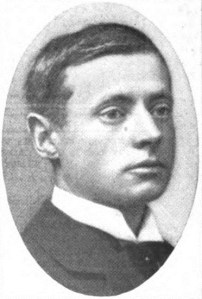
W.W. Jacobs (1903 or before)
“Mate,” replied the son.
“That’s the worst of living so far out,” bawled Mr. White, with sudden and unlooked-for violence; “of all the beastly, slushy, out-of-the-way places to live in, this is the worst. Pathway’s a bog, and the road’s a torrent. I don’t know what people are thinking about. I suppose because only two houses in the road are let, they think it doesn’t matter.”
“Never mind, dear,” said his wife, soothingly; “perhaps you’ll win the next one.”
Mr. White looked up sharply, just in time to intercept a knowing glance between mother and son. The words died away on his lips, and he hid a guilty grin in his thin grey beard.
“There he is,” said Herbert White, as the gate banged to loudly and heavy footsteps came toward the door.
The old man rose with hospitable haste, and opening the door, was heard condoling with the new arrival. The new arrival also condoled with himself, so that Mrs. White said, “Tut, tut!” and coughed gently as her husband entered the room, followed by a tall, burly man, beady of eye and rubicund of visage.
“Sergeant-Major Morris,” he said, introducing him.
The sergeant-major shook hands, and taking the proffered seat by the fire, watched contentedly while his host got out whiskey and tumblers and stood a small copper kettle on the fire.
At the third glass his eyes got brighter, and he began to talk, the little family circle regarding with eager interest this visitor from distant parts, as he squared his broad shoulders in the chair and spoke of wild scenes and doughty deeds; of wars and plagues and strange peoples.
“Twenty-one years of it,” said Mr. White, nodding at his wife and son. “When he went away he was a slip of a youth in the warehouse. Now look at him.”
“He don’t look to have taken much harm,” said Mrs. White, politely.
“I’d like to go to India myself,” said the old man, “just to look round a bit, you know.”
“Better where you are,” said the sergeant-major, shaking his head. He put down the empty glass, and sighing softly, shook it again.
“I should like to see those old temples and fakirs and jugglers,” said the old man. “What was that you started telling me the other day about a monkey’s paw or something, Morris?”
“Nothing,” said the soldier, hastily. “Leastways nothing worth hearing.”
“Monkey’s paw?” said Mrs. White, curiously.
“Well, it’s just a bit of what you might call magic, perhaps,” said the sergeant-major, offhandedly.
His three listeners leaned forward eagerly. The visitor absent-mindedly put his empty glass to his lips and then set it down again. His host filled it for him.
“To look at,” said the sergeant-major, fumbling in his pocket, “it’s just an ordinary little paw, dried to a mummy.”
He took something out of his pocket and proffered it. Mrs. White drew back with a grimace, but her son, taking it, examined it curiously.
“And what is there special about it?” inquired Mr. White as he took it from his son, and having examined it, placed it upon the table.
“It had a spell put on it by an old fakir,” said the sergeant-major, “a very holy man. He wanted to show that fate ruled people’s lives, and that those who interfered with it did so to their sorrow. He put a spell on it so that three separate men could each have three wishes from it.”
His manner was so impressive that his hearers were conscious that their light laughter jarred somewhat.
“Well, why don’t you have three, sir?” said Herbert White, cleverly.
The soldier regarded him in the way that middle age is wont to regard presumptuous youth. “I have,” he said, quietly, and his blotchy face whitened.
“And did you really have the three wishes granted?” asked Mrs. White.
“I did,” said the sergeant-major, and his glass tapped against his strong teeth.
“And has anybody else wished?” persisted the old lady.
“The first man had his three wishes. Yes,” was the reply; “I don’t know what the first two were, but the third was for death. That’s how I got the paw.”
His tones were so grave that a hush fell upon the group.
“If you’ve had your three wishes, it’s no good to you now, then, Morris,” said the old man at last. “What do you keep it for?”
The soldier shook his head. “Fancy, I suppose,” he said, slowly. “I did have some idea of selling it, but I don’t think I will. It has caused enough mischief already. Besides, people won’t buy. They think it’s a fairy tale; some of them, and those who do think anything of it want to try it first and pay me afterward.”
“If you could have another three wishes,” said the old man, eyeing him keenly, “would you have them?”
“I don’t know,” said the other. “I don’t know.”
He took the paw, and dangling it between his forefinger and thumb, suddenly threw it upon the fire. White, with a slight cry, stooped down and snatched it off.
“Better let it burn,” said the soldier, solemnly.
“If you don’t want it, Morris,” said the other, “give it to me.”
“I won’t,” said his friend, doggedly. “I threw it on the fire. If you keep it, don’t blame me for what happens. Pitch it on the fire again like a sensible man.”
The other shook his head and examined his new possession closely. “How do you do it?” he inquired.
“Hold it up in your right hand and wish aloud,” said the sergeant-major, “but I warn you of the consequences.”
“Sounds like the Arabian Nights,” said Mrs. White, as she rose and began to set the supper. “Don’t you think you might wish for four pairs of hands for me?”
Her husband drew the talisman from pocket, and then all three burst into laughter as the sergeant-major, with a look of alarm on his face, caught him by the arm.
“If you must wish,” he said, gruffly, “wish for something sensible.”
Mr. White dropped it back in his pocket, and placing chairs, motioned his friend to the table. In the business of supper the talisman was partly forgotten, and afterward the three sat listening in an enthralled fashion to a second instalment of the soldier’s adventures in India.
“If the tale about the monkey’s paw is not more truthful than those he has been telling us,” said Herbert, as the door closed behind their guest, just in time for him to catch the last train, “we sha’nt make much out of it.”
“Did you give him anything for it, father?” inquired Mrs. White, regarding her husband closely.
“A trifle,” said he, colouring slightly. “He didn’t want it, but I made him take it. And he pressed me again to throw it away.”
“Likely,” said Herbert, with pretended horror. “Why, we’re going to be rich, and famous and happy. Wish to be an emperor, father, to begin with; then you can’t be henpecked.”
He darted round the table, pursued by the maligned Mrs. White armed with an antimacassar.
Mr. White took the paw from his pocket and eyed it dubiously. “I don’t know what to wish for, and that’s a fact,” he said, slowly. “It seems to me I’ve got all I want.”
“If you only cleared the house, you’d be quite happy, wouldn’t you?” said Herbert, with his hand on his shoulder. “Well, wish for two hundred pounds, then; that ‘ll just do it.”
His father, smiling shamefacedly at his own credulity, held up the talisman, as his son, with a solemn face, somewhat marred by a wink at his mother, sat down at the piano and struck a few impressive chords.
“I wish for two hundred pounds,” said the old man distinctly.
A fine crash from the piano greeted the words, interrupted by a shuddering cry from the old man. His wife and son ran toward him.
“It moved,” he cried, with a glance of disgust at the object as it lay on the floor.
“As I wished, it twisted in my hand like a snake.”
“Well, I don’t see the money,” said his son as he picked it up and placed it on the table, “and I bet I never shall.”
“It must have been your fancy, father,” said his wife, regarding him anxiously.
He shook his head. “Never mind, though; there’s no harm done, but it gave me a shock all the same.”
They sat down by the fire again while the two men finished their pipes. Outside, the wind was higher than ever, and the old man started nervously at the sound of a door banging upstairs. A silence unusual and depressing settled upon all three, which lasted until the old couple rose to retire for the night.
“I expect you’ll find the cash tied up in a big bag in the middle of your bed,” said Herbert, as he bade them good-night, “and something horrible squatting up on top of the wardrobe watching you as you pocket your ill-gotten gains.”
He sat alone in the darkness, gazing at the dying fire, and seeing faces in it. The last face was so horrible and so simian that he gazed at it in amazement. It got so vivid that, with a little uneasy laugh, he felt on the table for a glass containing a little water to throw over it. His hand grasped the monkey’s paw, and with a little shiver he wiped his hand on his coat and went up to bed.
II.
In the brightness of the wintry sun next morning as it streamed over the breakfast table he laughed at his fears. There was an air of prosaic wholesomeness about the room which it had lacked on the previous night, and the dirty, shrivelled little paw was pitched on the sideboard with a carelessness which betokened no great belief in its virtues.
“I suppose all old soldiers are the same,” said Mrs. White. “The idea of our listening to such nonsense! How could wishes be granted in these days? And if they could, how could two hundred pounds hurt you, father?”
“Might drop on his head from the sky,” said the frivolous Herbert.
“Morris said the things happened so naturally,” said his father, “that you might if you so wished attribute it to coincidence.”
“Well, don’t break into the money before I come back,” said Herbert as he rose from the table. “I’m afraid it’ll turn you into a mean, avaricious man, and we shall have to disown you.”
His mother laughed, and following him to the door, watched him down the road; and returning to the breakfast table, was very happy at the expense of her husband’s credulity. All of which did not prevent her from scurrying to the door at the postman’s knock, nor prevent her from referring somewhat shortly to retired sergeant-majors of bibulous habits when she found that the post brought a tailor’s bill.
“Herbert will have some more of his funny remarks, I expect, when he comes home,” she said, as they sat at dinner.
“I dare say,” said Mr. White, pouring himself out some beer; “but for all that, the thing moved in my hand; that I’ll swear to.”
“You thought it did,” said the old lady soothingly.
“I say it did,” replied the other. “There was no thought about it; I had just—- What’s the matter?”
His wife made no reply. She was watching the mysterious movements of a man outside, who, peering in an undecided fashion at the house, appeared to be trying to make up his mind to enter. In mental connection with the two hundred pounds, she noticed that the stranger was well dressed, and wore a silk hat of glossy newness. Three times he paused at the gate, and then walked on again. The fourth time he stood with his hand upon it, and then with sudden resolution flung it open and walked up the path. Mrs. White at the same moment placed her hands behind her, and hurriedly unfastening the strings of her apron, put that useful article of apparel beneath the cushion of her chair.
She brought the stranger, who seemed ill at ease, into the room. He gazed at her furtively, and listened in a preoccupied fashion as the old lady apologized for the appearance of the room, and her husband’s coat, a garment which he usually reserved for the garden. She then waited as patiently as her sex would permit, for him to broach his business, but he was at first strangely silent.
“I—was asked to call,” he said at last, and stooped and picked a piece of cotton from his trousers. “I come from ‘Maw and Meggins.'”
The old lady started. “Is anything the matter?” she asked, breathlessly. “Has anything happened to Herbert? What is it? What is it?”
Her husband interposed. “There, there, mother,” he said, hastily. “Sit down, and don’t jump to conclusions. You’ve not brought bad news, I’m sure, sir;” and he eyed the other wistfully.
“I’m sorry—” began the visitor.
“Is he hurt?” demanded the mother, wildly.
The visitor bowed in assent. “Badly hurt,” he said, quietly, “but he is not in any pain.”
“Oh, thank God!” said the old woman, clasping her hands. “Thank God for that! Thank—”
She broke off suddenly as the sinister meaning of the assurance dawned upon her and she saw the awful confirmation of her fears in the other’s averted face. She caught her breath, and turning to her slower-witted husband, laid her trembling old hand upon his. There was a long silence.
“He was caught in the machinery,” said the visitor at length in a low voice.
“Caught in the machinery,” repeated Mr. White, in a dazed fashion, “yes.”
He sat staring blankly out at the window, and taking his wife’s hand between his own, pressed it as he had been wont to do in their old courting-days nearly forty years before.
“He was the only one left to us,” he said, turning gently to the visitor. “It is hard.”
The other coughed, and rising, walked slowly to the window. “The firm wished me to convey their sincere sympathy with you in your great loss,” he said, without looking round. “I beg that you will understand I am only their servant and merely obeying orders.”
There was no reply; the old woman’s face was white, her eyes staring, and her breath inaudible; on the husband’s face was a look such as his friend the sergeant might have carried into his first action.
“I was to say that ‘Maw and Meggins’ disclaim all responsibility,” continued the other. “They admit no liability at all, but in consideration of your son’s services, they wish to present you with a certain sum as compensation.”
Mr. White dropped his wife’s hand, and rising to his feet, gazed with a look of horror at his visitor. His dry lips shaped the words, “How much?”
“Two hundred pounds,” was the answer.
Unconscious of his wife’s shriek, the old man smiled faintly, put out his hands like a sightless man, and dropped, a senseless heap, to the floor.
III.
In the huge new cemetery, some two miles distant, the old people buried their dead, and came back to a house steeped in shadow and silence. It was all over so quickly that at first they could hardly realize it, and remained in a state of expectation as though of something else to happen —something else which was to lighten this load, too heavy for old hearts to bear.
But the days passed, and expectation gave place to resignation—the hopeless resignation of the old, sometimes miscalled, apathy. Sometimes they hardly exchanged a word, for now they had nothing to talk about, and their days were long to weariness.
It was about a week after that the old man, waking suddenly in the night, stretched out his hand and found himself alone. The room was in darkness, and the sound of subdued weeping came from the window. He raised himself in bed and listened.
“Come back,” he said, tenderly. “You will be cold.”
“It is colder for my son,” said the old woman, and wept afresh.
The sound of her sobs died away on his ears. The bed was warm, and his eyes heavy with sleep. He dozed fitfully, and then slept until a sudden wild cry from his wife awoke him with a start.
“The paw!” she cried wildly. “The monkey’s paw!”
He started up in alarm. “Where? Where is it? What’s the matter?”
She came stumbling across the room toward him. “I want it,” she said, quietly. “You’ve not destroyed it?”
“It’s in the parlour, on the bracket,” he replied, marvelling. “Why?”
She cried and laughed together, and bending over, kissed his cheek.
“I only just thought of it,” she said, hysterically. “Why didn’t I think of it before? Why didn’t you think of it?”
“Think of what?” he questioned.
“The other two wishes,” she replied, rapidly. “We’ve only had one.”
“Was not that enough?” he demanded, fiercely.
“No,” she cried, triumphantly; “we’ll have one more. Go down and get it quickly, and wish our boy alive again.”
The man sat up in bed and flung the bedclothes from his quaking limbs. “Good God, you are mad!” he cried, aghast.
“Get it,” she panted; “get it quickly, and wish—Oh, my boy, my boy!”
Her husband struck a match and lit the candle. “Get back to bed,” he said, unsteadily. “You don’t know what you are saying.”
“We had the first wish granted,” said the old woman, feverishly; “why not the second?”
“A coincidence,” stammered the old man.
“Go and get it and wish,” cried his wife, quivering with excitement.
The old man turned and regarded her, and his voice shook. “He has been dead ten days, and besides he—I would not tell you else, but—I could only recognize him by his clothing. If he was too terrible for you to see then, how now?”
“Bring him back,” cried the old woman, and dragged him toward the door. “Do you think I fear the child I have nursed?”
He went down in the darkness, and felt his way to the parlour, and then to the mantelpiece. The talisman was in its place, and a horrible fear that the unspoken wish might bring his mutilated son before him ere he could escape from the room seized upon him, and he caught his breath as he found that he had lost the direction of the door. His brow cold with sweat, he felt his way round the table, and groped along the wall until he found himself in the small passage with the unwholesome thing in his hand.
Even his wife’s face seemed changed as he entered the room. It was white and expectant, and to his fears seemed to have an unnatural look upon it. He was afraid of her.
“Wish!” she cried, in a strong voice.
“It is foolish and wicked,” he faltered.
“Wish!” repeated his wife.
He raised his hand. “I wish my son alive again.”
The talisman fell to the floor, and he regarded it fearfully. Then he sank trembling into a chair as the old woman, with burning eyes, walked to the window and raised the blind.
He sat until he was chilled with the cold, glancing occasionally at the figure of the old woman peering through the window. The candle-end, which had burned below the rim of the china candlestick, was throwing pulsating shadows on the ceiling and walls, until, with a flicker larger than the rest, it expired. The old man, with an unspeakable sense of relief at the failure of the talisman, crept back to his bed, and a minute or two afterward the old woman came silently and apathetically beside him.
Neither spoke, but lay silently listening to the ticking of the clock. A stair creaked, and a squeaky mouse scurried noisily through the wall. The darkness was oppressive, and after lying for some time screwing up his courage, he took the box of matches, and striking one, went downstairs for a candle.
At the foot of the stairs the match went out, and he paused to strike another; and at the same moment a knock, so quiet and stealthy as to be scarcely audible, sounded on the front door.
The matches fell from his hand and spilled in the passage. He stood motionless, his breath suspended until the knock was repeated. Then he turned and fled swiftly back to his room, and closed the door behind him. A third knock sounded through the house.
“What’s that?” cried the old woman, starting up.
“A rat,” said the old man in shaking tones—”a rat. It passed me on the stairs.”
His wife sat up in bed listening. A loud knock resounded through the house.
“It’s Herbert!” she screamed. “It’s Herbert!”
She ran to the door, but her husband was before her, and catching her by the arm, held her tightly.
“What are you going to do?” he whispered hoarsely.
“It’s my boy; it’s Herbert!” she cried, struggling mechanically. “I forgot it was two miles away. What are you holding me for? Let go. I must open the door.”
“For God’s sake don’t let it in,” cried the old man, trembling.
“You’re afraid of your own son,” she cried, struggling. “Let me go. I’m coming, Herbert; I’m coming.”
There was another knock, and another. The old woman with a sudden wrench broke free and ran from the room. Her husband followed to the landing, and called after her appealingly as she hurried downstairs. He heard the chain rattle back and the bottom bolt drawn slowly and stiffly from the socket. Then the old woman’s voice, strained and panting.
“The bolt,” she cried, loudly. “Come down. I can’t reach it.”
But her husband was on his hands and knees groping wildly on the floor in search of the paw. If he could only find it before the thing outside got in. A perfect fusillade of knocks reverberated through the house, and he heard the scraping of a chair as his wife put it down in the passage against the door. He heard the creaking of the bolt as it came slowly back, and at the same moment he found the monkey’s paw, and frantically breathed his third and last wish.
The knocking ceased suddenly, although the echoes of it were still in the house. He heard the chair drawn back, and the door opened. A cold wind rushed up the staircase, and a long loud wail of disappointment and misery from his wife gave him courage to run down to her side, and then to the gate beyond. The street lamp flickering opposite shone on a quiet and deserted road.
The Farmington Writers Circle will meet tonight, December 10, at 7:00 p.m. at Hastings Hardback Café on 20th Street. The topic of the evening will be query letters and will be led by Roberta Summers, author of Pele’s Realm. The meeting is open to the general public. Feel free to read up on the topic before coming (though this is not required) and contribute to the discussion.
The Farmington Writers Circle is a nascent organization of authors and writers, who are interested in publishing and marketing their works.
Please contact Phil Slattery via this website with any questions or comments.
The next meeting of the Farmington Writers Circle will be at 7:00 p.m. on December 10 at Hastings Hardback Café on 20th Street. The topic of the evening will be query letters and will be led by Roberta Summers, author of Pele’s Realm. The meeting is open to the general public. Feel free to read up on the topic before coming (though this is not required) and contribute to the discussion.
The Farmington Writers Circle is a nascent organization of authors and writers, who are interested in publishing and marketing their works.
Please contact Phil Slattery via this website with any questions or comments.
The next meeting of the Farmington Writers Circle will be at 7:00 p.m. on December 10 at Hastings Hardback Café on 20th Street. The topic of the evening will be query letters and will be led by Roberta Summers, author of Pele’s Realm. The meeting is open to the general public. Feel free to read up on the topic before coming (though this is not required) and contribute to the discussion.
The Farmington Writers Circle is a nascent organization of authors and writers, who are interested in publishing and marketing their works.
Please contact Phil Slattery via this website with any questions or comments.

 The next meeting of the Farmington Writers Circle will be on Thursday, January 7, 2016 at 7:00 p.m.. Traci HalesVass, assistant professor of English at San Juan College, will lead a discussion on writing pitches and hooks. Everyone is welcome to attend. The meeting will be held in the Farmington (NM) Hastings Hardback Café on 20th Street. Please contact me via this website if you have questions.
 Source:
 On Thursday, December 10, the Farmington Writers Circle had another productive meeting. Attending were myself, Linda Frederick, Yvonne Ravenwood, Vicki Holmsten, Cluff Eliott, Traci Hales-Vass (professor of creative writing at San Juan College), and Roberta Summers, who gave an informal talk on writing professional query letters. The next meeting will be on January 7, at 7:00 p.m. at Hastings Hardback Café, when Traci Hales-Vass will give an informal talk on writing pitches and hooks for novels. The date of the February meeting is yet to be determined, but at that one I will present a talk on establishing a blog.



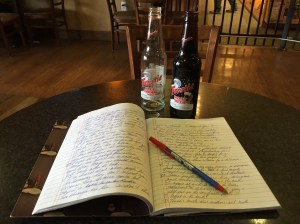 The next meeting of the Farmington Writers Circle will be at 7:00 p.m. on December 10 at Hastings Hardback Café on 20th Street. The topic of the evening will be query letters and will be led by

 Phil Slattery, Writer, Publisher