The Farmington Writers Circle will meet again on September 8, 2016 at 7:00 p.m. Because of the closing of Hasting’s Hardback Cafe, the Writers Circle will now meet at Starbuck’s at 4337 East Main, #101 (near the intersection with 30th Street) until further notice. The evening’s topic has not been determined.
The Farmington Writers Circle is nascent organization of Farmington-area writers who are interested in finding or developing innovative ways of publicizing and marketing their works. Meetings are usually round-table discussions, although occasionally a member will lead the discussion when it deals with an area of the member’s expertise. There are no fees or requirements to attend meetings. Writers of any and all genres, regardless of writing experience, and non-writers with an interest in the art are welcome. Previous topics have included establishing a website to maximize the use of social media in publicizing works, writers’ conferences, and finding an agent among other topics. Meetings generally run for two hours. For more information, contact me via this website.
The Farmington Writers Circle meets tonight at 7:00 p.m. at Hastings Hardback Café in Farmington, NM. The topic for the night will be how to generate reviews for your work.
The July meeting was attended by Gloria, Yvonne, Vicki, myself, and by author Delsheree Gladden (delshereegladden.com), whose website describes her as “USA Today Bestselling Young Adult and Romance Author”. Delsheree provided some valuable insights into the world of publishing.
The Farmington Writers Circle is nascent organization of Farmington-area writers who are interested in finding or developing innovative ways of publicizing and marketing their works. Meetings are usually round-table discussions, although occasionally a member will lead the discussion when it deals with an area of the member’s expertise. The public is invited to attend. There are no fees or requirements to attend meetings, which are usually held on the second Thursday of each month at 7:00 p.m. at the Hardback Café. Writers of any and all genres or non-writers with an interest in the art are welcome. For more information, contact me via this website.
The Farmington Writers Circle will meet next on Thursday, August 11, 2016, at 7:00 p.m. at Hastings Hardback Café in Farmington, NM. The topic for the night will be how to generate reviews for your work.
The July meeting was attended by Gloria, Yvonne, Vicki, myself, and by author Delsheree Gladden (delshereegladden.com), whose website describes her as “USA Today Bestselling Young Adult and Romance Author”. Delsheree provided some valuable insights into the world of publishing.
The Farmington Writers Circle is nascent organization of Farmington-area writers who are interested in finding or developing innovative ways of publicizing and marketing their works. Meetings are usually round-table discussions, although occasionally a member will lead the discussion when it deals with an area of the member’s expertise. The public is invited to attend. There are no fees or requirements to attend meetings, which are usually held on the second Thursday of each month at 7:00 p.m. at the Hardback Café. Writers of any and all genres or non-writers with an interest in the art are welcome. For more information, contact me via this website.
Amy tugs impatiently at her mum’s sleeve, while Janey taps on her iPhone. ‘In a minute. Just let me finish.’
Amy shrugs, skips back to her ‘discovery’, pokes it then pulls at the filthy trousered leg. It jerks. The
white plastic bag, wrapped around the bony fingers, floats upwards. Tugging to escape, in the skin
slicing January winds. Amy, pink cheeked, rearranges the man’s fingers, so he can better hold the cup of tea she pretends to present to her ‘guest.’
‘Nice cup of tea Mister, that’ll warm you up.’
She’s noticed how cold the man’s hand feels. ‘Proper chilled.’ As her Nan would say.
‘Nippy at this time of year Mister.’ Amy parrots the words Janey had tossed at the neighbour earlier. ‘Here’s my scarf.’
She unwraps her fleecy scarf, carefully wrapping it around the man’s neck, like her mum does for
her. Amy pats his shoulder. ‘That’ll warm you up.’
She wonders what else she might do to help. Regretfully she peels off her furry red mittens, a gift
from her Nan. Nan’s always saying it’s good to help others.
Amy gently pulls the man’s dirty fingers into her mittens. Her eye falls on the undone laces of his
solo trainer.
‘I’m not very good at laces, but Mummy says I need to practise more.’
Amy pokes out her tongue, concentrating. ‘…over and under..one loop….oops, nearly..’ she mutters.
Her guest wears a cap which covers the top half of his face. Amy can only see his lips. They look
blue. It seems rude to lift his cap when he’s having a sleep, but she really wants to see his eyes. He
hasn’t moved at all. Trying to be bold, Amy reaches out towards the cap’s brim.
‘Come on Amy it’s time to go.’ Janey shouts.
Amy hovers, uncertain, then pats his shoulder instead.
‘Bye Mister. See you tomorrow.’
She crawls out from under the slide, turning her face towards her Mummy, she waves happily.
Mitten less.
Only the plastic bag bobs a goodbye.
###
“The Doll Man” was previously published by The Casket of Fictional Delights.
As noted by The Casket of Fictional Delights: “Alyson is an ex teacher, from Norwich via Birmingham now living in West Yorkshire, with a son and 3 cats. She writes in her spare time when she’s not singing or swimming.”
Alyson has appeared a couple times previously on this website, when I have re-blogged works of hers from The Drabble.
Portrait of Nikolai Gogol circa 1840 from Wikipedia
The Farmington Writers Circle will meet next on August 11, 2016, at 7:00 p.m. at Hastings Hardback Café in Farmington, NM. The topic for the night will be how to generate reviews for your work.
The July meeting was attended by Gloria, Yvonne, Vicki, myself, and by author Delsheree Gladden (delshereegladden.com), whose website describes her as “USA Today Bestselling Young Adult and Romance Author”. Delsheree provided some valuable insights into the world of publishing.
The Farmington Writers Circle is nascent organization of Farmington-area writers who are interested in finding or developing innovative ways of publicizing and marketing their works. Meetings are usually round-table discussions, although occasionally a member will lead the discussion when it deals with an area of the member’s expertise. The public is invited to attend. There are no fees or requirements to attend meetings, which are usually held on the second Thursday of each month at 7:00 p.m. at the Hardback Café. Writers of any and all genres or non-writers with an interest in the art are welcome. For more information, contact me via this website.
The Farmington Writers Circle will meet next on August 11, 2016, at 7:00 p.m. at Hastings Hardback Café in Farmington, NM. The topic for the night will be how to generate reviews for your work.
The July meeting was attended by Gloria, Yvonne, Vicki, myself, and by author Delsheree Gladden (delshereegladden.com), whose website describes her as “USA Today Bestselling Young Adult and Romance Author”. Delsheree provided some valuable insights into the world of publishing.
The Farmington Writers Circle is nascent organization of Farmington-area writers who are interested in finding or developing innovative ways of publicizing and marketing their works. Meetings are usually round-table discussions, although occasionally a member will lead the discussion when it deals with an area of the member’s expertise. The public is invited to attend. There are no fees or requirements to attend meetings, which are usually held on the second Thursday of each month at 7:00 p.m. at the Hardback Café. Writers of any and all genres or non-writers with an interest in the art are welcome. For more information, contact me via this website.
Today, my short horror story “Sorcerer” is slated to appear in Creepy Campfire Quarterly. Many thanks to the CCQ staff for publishing this story, its first time in print.
“Sorcerer” is about a modern-day wizard who comes out of retirement to take a unique vengeance on the boy he holds responsible for abandoning and killing his daughter when she was most vulnerable.
Watch for Creepy Campfire Quarterly at your local newsstand or bookstore.
Phil Slattery hiking in the Bisti Wilderness near Farmington, NM, circa 2013
Drop by, check it out, and give me a “like” to get things rolling.
My Facebook Art of Horror address (https://www.facebook.com/slatterysartofhorror) remains the same, but the title is now “Phil Slattery, Author of Horror and Dark Fiction”. I intend to give it a more personal focus rather than have it serve as a facebook-formatted version of this blog. Please ask your friends and acquaintances to “like” and “friend” me as well.
From Southwater, where he left the train, the road led due west. That he knew; for the rest he trusted to luck, being one of those born walkers who dislike asking the way. He had that instinct, and as a rule it served him well. “A mile or so due west along the sandy road till you come to a stile on the right; then across the fields. You’ll see the red house straight before you.” He glanced at the post-card’s instructions once again, and once again he tried to decipher the scratched-out sentence—without success. It had been so elaborately inked over that no word was legible. Inked-out sentences in a letter were always enticing. He wondered what it was that had to be so very carefully obliterated.
The afternoon was boisterous, with a tearing, shouting wind that blew from the sea, across the Sussex weald. Massive clouds with
Algernon Blackwood 1869-1951
rounded, piled-up edges, cannoned across gaping spaces of blue sky. Far away the line of Downs swept the horizon, like an arriving wave. Chanctonbury Ring rode their crest—a scudding ship, hull down before the wind. He took his hat off and walked rapidly, breathing great draughts of air with delight and exhilaration. The road was deserted; no horsemen, bicycles, or motors; not even a tradesman’s cart; no single walker. But anyhow he would never have asked the way. Keeping a sharp eye for the stile, he pounded along, while the wind tossed the cloak against his face, and made waves across the blue puddles in the yellow road. The trees showed their under leaves of white. The bracken and the high new grass bent all one way. Great life was in the day, high spirits and dancing everywhere. And for a Croydon surveyor’s clerk just out of an office this was like a holiday at the sea.
It was a day for high adventure, and his heart rose up to meet the mood of Nature. His umbrella with the silver ring ought to have been a sword, and his brown shoes should have been top-boots with spurs upon the heels. Where hid the enchanted Castle and the princess with the hair of sunny gold? His horse…
The stile came suddenly into view and nipped adventure in the bud. Everyday clothes took him prisoner again. He was a surveyor’s clerk, middle-aged, earning three pounds a week, coming from Croydon to see about a client’s proposed alterations in a wood—something to ensure a better view from the dining-room window. Across the fields, perhaps a mile away, he saw the red house gleaming in the sunshine; and resting on the stile a moment to get his breath he noticed a copse of oak and hornbeam on the right. “Aha,” he told himself “so that must be the wood he wants to cut down to improve the view? I’ll ’ave a look at it.” There were boards up, of course, but there was an inviting little path as well. “I’m not a trespasser,” he said; “it’s part of my business, this is.” He scrambled awkwardly over the gate and entered the copse. A little round would bring him to the field again.
But the moment he passed among the trees the wind ceased shouting and a stillness dropped upon the world. So dense was the growth that the sunshine only came through in isolated patches. The air was close. He mopped his forehead and put his green felt hat on, but a low branch knocked it off again at once, and as he stooped an elastic twig swung back and stung his face. There were flowers along both edges of the little path; glades opened on either side; ferns curved about in damper corners, and the smell of earth and foliage was rich and sweet. It was cooler here. What an enchanting little wood, he thought, turning down a small green glade where the sunshine flickered like silver wings. How it danced and fluttered and moved about! He put a dark blue flower in his buttonhole. Again his hat, caught by an oak branch as he rose, was knocked from his head, falling across his eyes. And this time he did not put it on again. Swinging his umbrella, he walked on with uncovered head, whistling rather loudly as he went. But the thickness of the trees hardly encouraged whistling, and something of his gaiety and high spirits seemed to leave him. He suddenly found himself treading circumspectly and with caution. The stillness in the wood was so peculiar.
There was a rustle among the ferns and leaves and something shot across the path ten yards ahead, stopped abruptly an instant with head cocked sideways to stare, then dived again beneath the underbrush with the speed of a shadow. He started like a frightened child, laughing the next second that a mere pheasant could have made him jump. In the distance he heard wheels upon the road, and wondered why the sound was pleasant. “Good old butcher’s cart,” he said to himself—then realised that he was going in the wrong direction and had somehow got turned round. For the road should be behind him, not in front.
And he hurriedly took another narrow glade that lost itself in greenness to the right. “That’s my direction, of course,” he said; “the trees has mixed me up a bit, it seems”—then found himself abruptly by the gate he had first climbed over. He had merely made a circle. Surprise became almost discomfiture then. And a man, dressed like a gamekeeper in browny green, leaned against the gate, hitting his legs with a switch. “I’m making for Mr. Lumley’s farm,” explained the walker. “This is his wood, I believe—” then stopped dead, because it was no man at all, but merely an effect of light and shade and foliage. He stepped back to reconstruct the singular illusion, but the wind shook the branches roughly here on the edge of the wood and the foliage refused to reconstruct the figure. The leaves all rustled strangely. And just then the sun went behind a cloud, making the whole wood look otherwise. Yet how the mind could be thus doubly deceived was indeed remarkable, for it almost seemed to him the man had answered, spoken—or was this the shuffling noise the branches made ?—and had pointed with his switch to the notice-board upon the nearest tree. The words rang on in his head, but of course he had imagined them: “No, it’s not his wood. It’s ours.” And some village wit, moreover, had changed the lettering on the weather-beaten board, for it read quite plainly, “Trespassers will be persecuted.”
And while the astonished clerk read the words and chuckled, he said to himself, thinking what a tale he’d have to tell his wife and children later—“The blooming wood has tried to chuck me out. But I’ll go in again. Why, it’s only a matter of a square acre at most. I’m bound to reach the fields on the other side if I keep straight on.” He remembered his position in the office. He had a certain dignity to maintain.
The cloud passed from below the sun, and light splashed suddenly in all manner of unlikely places. The man went straight on. He felt a touch of puzzling confusion somewhere; this way the copse had of shifting from sunshine into shadow doubtless troubled sight a little. To his relief at last, a new glade opened through the trees and disclosed the fields with a glimpse of the red house in the distance at the far end. But a little wicket gate that stood across the path had first to be climbed, and as he scrambled heavily over—for it would not open—he got the astonishing feeling that it slid off sideways beneath his weight, and towards the wood. Like the moving staircases at Harrod’s and Earl’s Court, it began to glide off with him. It was quite horrible. He made a violent effort to get down before it carried him into the trees, but his feet became entangled with the bars and umbrella, so that he fell heavily upon the farther side, arms spread across the grass and nettles, boots clutched between the first and second bars. He lay there a moment like a man crucified upside down, and while he struggled to get disentangled—feet, bars, and umbrella formed a regular net—he saw the little man in browny green go past him with extreme rapidity through the wood. The man was laughing. He passed across the glade some fifty yards away, and he was not alone this time. A companion like himself went with him. The clerk, now upon his feet again, watched them disappear into the gloom of green beyond. “They’re tramps, not gamekeepers,” he said to himself, half mortified, half angry. But his heart was thumping dreadfully, and he dared not utter all his thought.
He examined the wicket gate, convinced it was a trick gate somehow—then went hurriedly on again, disturbed beyond belief to see that the glade no longer opened into fields, but curved away to the right. What in the world had happened to him? His sight was so utterly at fault. Again the sun flamed out abruptly and lit the floor of the wood with pools of silver, and at the same moment a violent gust of wind passed shouting overhead. Drops fell clattering everywhere upon the leaves, making a sharp pattering as of many footsteps. The whole copse shuddered and went moving.
“Rain, by George,” thought the clerk, and feeling for his umbrella, discovered he had lost it. He turned back to the gate and found it lying on the farther side. To his amazement he saw the fields at the far end of the glade, the red house, too, ashine in the sunset. He laughed then, for, of course, in his struggle with the gate, he had somehow got turned round—had fallen back instead of forwards. Climbing over, this time quite easily, he retraced his steps. The silver band, he saw, had been torn from the umbrella. No doubt his foot, a nail, or something had caught in it and ripped it off. The clerk began to run; he felt extraordinarily dismayed.
But, while he ran, the entire wood ran with him, round him, to and fro, trees shifting like living things, leaves folding and unfolding, trunks darting backwards and forwards, and branches disclosing enormous empty spaces, then closing up again before he could look into them. There were footsteps everywhere, and laughing, crying voices, and crowds of figures gathering just behind his back till the glade, he knew, was thick with moving life. The wind in his ears, of course, produced the voices and the laughter, while sun and clouds, plunging the copse alternately in shadow and bright dazzling light, created the figures. But he did not like it, and went as fast as ever his sturdy legs could take him. He was frightened now. This was no story for his wife and children. He ran like the wind. But his feet made no sound upon the soft mossy turf.
Then, to his horror, he saw that the glade grew narrow, nettles and weeds stood thick across it, it dwindled down into a tiny path, and twenty yards ahead it stopped finally and melted off among the trees. What the trick gate had failed to achieve, this twisting glade accomplished easily—carried him in bodily among the dense and crowding trees.
There was only one thing to do—turn sharply and dash back again, run headlong into the life that followed at his back, followed so closely too that now it almost touched him, pushing him in. And with reckless courage this was what he did. It seemed a fearful thing to do. He turned with a sort of violent spring, head down and shoulders forward, hands stretched before his face. He made the plunge; like a hunted creature he charged full tilt the other way, meeting the wind now in his face.
Good Lord! The glade behind him had closed up as well; there was no longer any path at all. Turning round and round, like an animal at bay, he searched for an opening, a way of escape, searched frantically, breathlessly, terrified now in his bones. But foliage surrounded him, branches blocked the way; the trees stood close and still, unshaken by a breath of wind; and the sun dipped that moment behind a great black cloud. The entire wood turned dark and silent. It watched him.
Perhaps it was this final touch of sudden blackness that made him act so foolishly, as though he had really lost his head. At any rate, without pausing to think, he dashed headlong in among the trees again. There was a sensation of being stiflingly surrounded and entangled, and that he must break out at all costs—out and away into the open of the blessed fields and air. He did this ill-considered thing, and apparently charged straight into an oak that deliberately moved into his path to stop him. He saw it shift across a good full yard, and being a measuring man, accustomed to theodolite and chain, he ought to know. He fell, saw stars, and felt a thousand tiny fingers tugging and pulling at his hands and neck and ankles. The stinging nettles, no doubt, were responsible for this. He thought of it later. At the moment it felt diabolically calculated.
But another remarkable illusion was not so easily explained. For all in a moment, it seemed, the entire wood went sliding past him with a thick deep rustling of leaves and laughter, myriad footsteps, and tiny little active, energetic shapes; two men in browny green gave him a mighty hoist—and he opened his eyes to find himself lying in the meadow beside the stile where first his incredible adventure had begun. The wood stood in its usual place and stared down upon him in the sunlight. There was the red house in the distance as before. Above him grinned the weather-beaten notice-board: “Trespassers will be prosecuted.”
Dishevelled in mind and body, and a good deal shaken in his official soul, the clerk walked slowly across the fields. But on the way he glanced once more at the postcard of instructions, and saw with dull amazement that the inked-out sentence was quite legible after all beneath the scratches made across it: “There is a short cut through the wood—the wood I want cut down—if you care to take it.” Only “care” was so badly written, it looked more like another word; the “c” was uncommonly like “d.”
“That’s the copse that spoils my view of the Downs, you see,” his client explained to him later, pointing across the fields, and referring to the ordnance map beside him. “I want it cut down and a path made so and so.” His finger indicated direction on the map. “The Fairy Wood—it’s still called, and it’s far older than this house. Come now, if you’re ready, Mr. Thomas, we might go out and have a look at it. . .”
I have two anthologies that I want to talk about and they have one thing in common. They both include a story from Horror Addicts hostess Emerian Rich. The First book is Shadow People and Cursed Ob…
THE “Red Death” had long devastated the country. No pestilence had ever been so fatal, or so hideous. Blood was its Avator and its seal — the redness and the horror of blood. There were sharp pains, and sudden dizziness, and then profuse bleeding at the pores, with dissolution. The scarlet stains upon the body and especially upon the face of the victim, were the pest ban which shut him out from the aid and from the sympathy of his fellow-men. And the whole seizure, progress and termination of the disease, were the incidents of half an hour.
But the Prince Prospero was happy and dauntless and sagacious. When his dominions were half depopulated, he
Edgar Allan Poe, 1848
summoned to his presence a thousand hale and light-hearted friends from among the knights and dames of his court, and with these retired to the deep seclusion of one of his castellated abbeys. This was an extensive and magnificent structure, the creation of the prince’s own eccentric yet august taste. A strong and lofty wall girdled it in. This wall had gates of iron. The courtiers, having entered, brought furnaces and massy hammers and welded the bolts. They resolved to leave means neither of ingress or egress to the sudden impulses of despair or of frenzy from within. The abbey was amply provisioned. With such precautions the courtiers might bid defiance to contagion. The external world could take care of itself. In the meantime it was folly to grieve, or to think. The prince had provided all the appliances of pleasure. There were buffoons, there were improvisatori, there were ballet-dancers, there were musicians, there was Beauty, there was wine. All these and security were within. Without was the “Red Death.”
It was toward the close of the fifth or sixth month of his seclusion, and while the pestilence raged most furiously abroad, that the Prince Prospero entertained his thousand friends at a masked ball of the most unusual magnificence.
It was a voluptuous scene, that masquerade. But first let me tell of the rooms in which it was held. There were seven — an imperial suite. In many palaces, however, such suites form a long and straight vista, while the folding doors slide back nearly to the walls on either hand, so that the view of the whole extent is scarcely impeded. Here the case was very different; as might have been expected from the duke’s love of the bizarre. The apartments were so irregularly disposed that the vision embraced but little more than one at a time. There was a sharp turn at every twenty or thirty yards, and at each turn a novel effect. To the right and left, in the middle of each wall, a tall and narrow Gothic window looked out upon a closed corridor which pursued the windings of the suite. These windows were of stained glass whose color varied in accordance with the prevailing hue of the decorations of the chamber into which it opened. That at the eastern extremity was hung, for example, in blue — and vividly blue were its windows. The second chamber was purple in its ornaments and tapestries, and here the panes were purple. The third was green throughout, and so were the casements. The fourth was furnished and lighted with orange — the fifth with white — the sixth with violet. The seventh apartment was closely shrouded in black velvet tapestries that hung all over the ceiling and down the walls, falling in heavy folds upon a carpet of the same material and hue. But in this chamber only, the color of the windows failed to correspond with the decorations. The panes here were scarlet — a deep blood color. Now in no one of the seven apartments was there any lamp or candelabrum, amid the profusion of golden ornaments that lay scattered to and fro or depended from the roof. There was no light of any kind emanating from lamp or candle within the suite of chambers. But in the corridors that followed the suite, there stood, opposite to each window, a heavy tripod, bearing a brazier of fire, that projected its rays through the tinted glass and so glaringly illumined the room. And thus were produced a multitude of gaudy and fantastic appearances. But in the western or black chamber the effect of the fire-light that streamed upon the dark hangings through the blood-tinted panes, was ghastly in the extreme, and produced so wild a look upon the countenances of those who entered, that there were few of the company bold enough to set foot within its precincts at all.
It was in this apartment, also, that there stood against the western wall, a gigantic clock of ebony. Its pendulum swung to and fro with a dull, heavy, monotonous clang; and when the minute-hand made the circuit of the face, and the hour was to be stricken, there came from the brazen lungs of the clock a sound which was clear and loud and deep and exceedingly musical, but of so peculiar a note and emphasis that, at each lapse of an hour, the musicians of the orchestra were constrained to pause, momentarily, in their performance, to harken to the sound; and thus the waltzers perforce ceased their evolutions; and there was a brief disconcert of the whole gay company; and, while the chimes of the clock yet rang, it was observed that the giddiest grew pale, and the more aged and sedate passed their hands over their brows as if in confused revery or meditation. But when the echoes had fully ceased, a light laughter at once pervaded the assembly; the musicians looked at each other and smiled as if at their own nervousness and folly, and made whispering vows, each to the other, that the next chiming of the clock should produce in them no similar emotion; and then, after the lapse of sixty minutes, (which embrace three thousand and six hundred seconds of the Time that flies,) there came yet another chiming of the clock, and then were the same disconcert and tremulousness and meditation as before.
But, in spite of these things, it was a gay and magnificent revel. The tastes of the duke were peculiar. He had a fine eye for colors and effects. He disregarded the decora of mere fashion. His plans were bold and fiery, and his conceptions glowed with barbaric lustre. There are some who would have thought him mad. His followers felt that he was not. It was necessary to hear and see and touch him to be sure that he was not.
He had directed, in great part, the moveable embellishments of the seven chambers, upon occasion of this great fete; and it was his own guiding taste which had given character to the masqueraders. Be sure they were grotesque. There were much glare and glitter and piquancy and phantasm — much of what has been since seen in “Hernani.” There were arabesque figures with unsuited limbs and appointments. There were delirious fancies such as the madman fashions. There were much of the beautiful, much of the wanton, much of the bizarre, something of the terrible, and not a little of that which might have excited disgust. To and fro in the seven chambers there stalked, in fact, a multitude of dreams. And these — the dreams — writhed in and about, taking hue from the rooms, and causing the wild music of the orchestra to seem as the echo of their steps. And, anon, there strikes the ebony clock which stands in the hall of the velvet. And then, for a moment, all is still, and all is silent save the voice of the clock. The dreams are stiff-frozen as they stand. But the echoes of the chime die away — they have endured but an instant — and a light, half-subdued laughter floats after them as they depart. And now again the music swells, and the dreams live, and writhe to and fro more merrily than ever, taking hue from the many tinted windows through which stream the rays from the tripods. But to the chamber which lies most westwardly of the seven, there are now none of the maskers who venture; for the night is waning away; and there flows a ruddier light through the blood-colored panes; and the blackness of the sable drapery appals; and to him whose foot falls upon the sable carpet, there comes from the near clock of ebony a muffled peal more solemnly emphatic than any which reaches their ears who indulge in the more remote gaieties of the other apartments.
But these other apartments were densely crowded, and in them beat feverishly the heart of life. And the revel went whirlingly on, until at length there commenced the sounding of midnight upon the clock. And then the music ceased, as I have told; and the evolutions of the waltzers were quieted; and there was an uneasy cessation of all things as before. But now there were twelve strokes to be sounded by the bell of the clock; and thus it happened, perhaps that more of thought crept, with more of time, into the meditations of the thoughtful among those who revelled. And thus too, it happened, perhaps, that before the last echoes of the last chime had utterly sunk into silence, there were many individuals in the crowd who had found leisure to become aware of the presence of a masked figure which had arrested the attention of no single individual before. And the rumor of this new presence having spread itself whisperingly around, there arose at length from the whole company a buzz, or murmur, expressive of disapprobation and surprise — then, finally, of terror, of horror, and of disgust.
In an assembly of phantasms such as I have painted, it may well be supposed that no ordinary appearance could have excited such sensation. In truth the masquerade license of the night was nearly unlimited; but the figure in question had out-Heroded Herod, and gone beyond the bounds of even the prince’s indefinite decorum. There are chords in the hearts of the most reckless which cannot be touched without emotion. Even with the utterly lost, to whom life and death are equally jests, there are matters of which no jest can be made. The whole company, indeed, seemed now deeply to feel that in the costume and bearing of the stranger neither wit nor propriety existed. The figure was tall and gaunt, and shrouded from head to foot in the habiliments of the grave. The mask which concealed the visage was made so nearly to resemble the countenance of a stiffened corpse that the closest scrutiny must have had difficulty in detecting the cheat. And yet all this might have been endured, if not approved, by the mad revellers around. But the mummer had gone so far as to assume the type of the Red Death. His vesture was dabbled in blood — and his broad brow, with all the features of the face, was besprinkled with the scarlet horror.
When the eyes of Prince Prospero fell upon this spectral image (which with a slow and solemn movement, as if more fully to sustain its role, stalked to and fro among the waltzers) he was seen to be convulsed, in the first moment with a strong shudder either of terror or distaste; but, in the next, his brow reddened with rage.
“Who dares?” he demanded hoarsely of the courtiers who stood near him — “who dares insult us with this blasphemous mockery? Seize him and unmask him — that we may know whom we have to hang at sunrise, from the battlements!”
It was in the eastern or blue chamber in which stood the Prince Prospero as he uttered these words. They rang throughout the seven rooms loudly and clearly — for the prince was a bold and robust man, and the music had become hushed at the waving of his hand.
It was in the blue room where stood the prince, with a group of pale courtiers by his side. At first, as he spoke, there was a slight rushing movement of this group in the direction of the intruder, who, at the moment was also near at hand, and now, with deliberate and stately step, made closer approach to the speaker. But from a certain nameless awe with which the mad assumptions of the mummer had inspired the whole party, there were found none who put forth hand to seize him; so that, unimpeded, he passed within a yard of the prince’s person; and, while the vast assembly, as if with one impulse, shrank from the centres of the rooms to the walls, he made his way uninterruptedly, but with the same solemn and measured step which had distinguished him from the first, through the blue chamber to the purple — through the purple to the green — through the green to the orange — through this again to the white — and even thence to the violet, ere a decided movement had been made to arrest him. It was then, however, that the Prince Prospero, maddening with rage and the shame of his own momentary cowardice, rushed hurriedly through the six chambers, while none followed him on account of a deadly terror that had seized upon all. He bore aloft a drawn dagger, and had approached, in rapid impetuosity, to within three or four feet of the retreating figure, when the latter, having attained the extremity of the velvet apartment, turned suddenly and confronted his pursuer. There was a sharp cry — and the dagger dropped gleaming upon the sable carpet, upon which, instantly afterwards, fell prostrate in death the Prince Prospero. Then, summoning the wild courage of despair, a throng of the revellers at once threw themselves into the black apartment, and, seizing the mummer, whose tall figure stood erect and motionless within the shadow of the ebony clock, gasped in unutterable horror at finding the grave cerements and corpse-like mask which they handled with so violent a rudeness, untenanted by any tangible form.
And now was acknowledged the presence of the Red Death. He had come like a thief in the night. And one by one dropped the revellers in the blood-bedewed halls of their revel, and died each in the despairing posture of his fall. And the life of the ebony clock went out with that of the last of the gay. And the flames of the tripods expired. And Darkness and Decay and the Red Death held illimitable dominion over all.
It was, as far as I can ascertain, in September of the year 1811 that a post-chaise drew up before the door of Aswarby Hall, in the heart of Lincolnshire. The little boy who was the only passenger in the chaise, and who jumped out as soon as it had stopped, looked about him with the keenest curiosity during the short interval that elapsed between the ringing of the bell and the opening of the hall door. He saw a tall, square, red-brick house, built in the reign of Anne; a stone-pillared porch had been added in the purer classical style of 1790; the windows of the house were many, tall and narrow, with small panes and thick white woodwork. A pediment, pierced with a round window, crowned the front. There were wings to right and left, connected by curious glazed galleries, supported by colonnades, with the central block. These wings plainly contained the stables and offices of the house. Each was surmounted by an ornamental cupola with a gilded vane.
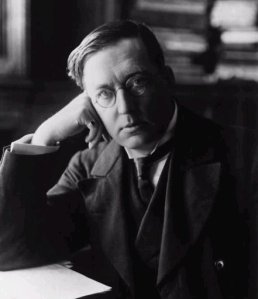
M.R. James 1900
An evening light shone on the building, making the window-panes glow like so many fires. Away from the Hall in front stretched a flat park studded with oaks and fringed with firs, which stood out against the sky. The clock in the church-tower, buried in trees on the edge of the park, only its golden weather-cock catching the light, was striking six, and the sound came gently beating down the wind. It was altogether a pleasant impression, though tinged with the sort of melancholy appropriate to an evening in early autumn, that was conveyed to the mind of the boy who was standing in the porch waiting for the door to open to him.
The post-chaise had brought him from Warwickshire, where, some six months before, he had been left an orphan. Now, owing to the generous offer of his elderly cousin, Mr Abney, he had come to live at Aswarby. The offer was unexpected, because all who knew anything of Mr Abney looked upon him as a somewhat austere recluse, into whose steady-going household the advent of a small boy would import a new and, it seemed, incongruous element. The truth is that very little was known of Mr Abney’s pursuits or temper. The Professor of Greek at Cambridge had been heard to say that no one knew more of the religious beliefs of the later pagans than did the owner of Aswarby. Certainly his library contained all the then available books bearing on the Mysteries, the Orphic poems, the worship of Mithras, and the Neo–Platonists. In the marble-paved hall stood a fine group of Mithras slaying a bull, which had been imported from the Levant at great expense by the owner. He had contributed a description of it to the Gentleman’s Magazine , and he had written a remarkable series of articles in the Critical Museum on the superstitions of the Romans of the Lower Empire. He was looked upon, in fine, as a man wrapped up in his books, and it was a matter of great surprise among his neighbours that he should ever have heard of his orphan cousin, Stephen Elliott, much more that he should have volunteered to make him an inmate of Aswarby Hall.
Whatever may have been expected by his neighbours, it is certain that Mr Abney — the tall, the thin, the austere — seemed inclined to give his young cousin a kindly reception. The moment the front-door was opened he darted out of his study, rubbing his hands with delight.
‘How are you, my boy?— how are you? How old are you?’ said he —‘that is, you are not too much tired, I hope, by your journey to eat your supper?’
‘No, thank you, sir,’ said Master Elliott; ‘I am pretty well.’
‘That’s a good lad,’ said Mr Abney. ‘And how old are you, my boy?’
It seemed a little odd that he should have asked the question twice in the first two minutes of their acquaintance.
‘I’m twelve years old next birthday, sir,’ said Stephen.
‘And when is your birthday, my dear boy? Eleventh of September, eh? That’s well — that’s very well. Nearly a year hence, isn’t it? I like — ha, ha!— I like to get these things down in my book. Sure it’s twelve? Certain?’
‘Yes, quite sure, sir.’
‘Well, well! Take him to Mrs Bunch’s room, Parkes, and let him have his tea — supper — whatever it is.’
‘Yes, sir,’ answered the staid Mr Parkes; and conducted Stephen to the lower regions.
Mrs Bunch was the most comfortable and human person whom Stephen had as yet met at Aswarby. She made him completely at home; they were great friends in a quarter of an hour: and great friends they remained. Mrs Bunch had been born in the neighbourhood some fifty-five years before the date of Stephen’s arrival, and her residence at the Hall was of twenty years’ standing. Consequently, if anyone knew the ins and outs of the house and the district, Mrs Bunch knew them; and she was by no means disinclined to communicate her information.
Certainly there were plenty of things about the Hall and the Hall gardens which Stephen, who was of an adventurous and inquiring turn, was anxious to have explained to him. ‘Who built the temple at the end of the laurel walk? Who was the old man whose picture hung on the staircase, sitting at a table, with a skull under his hand?’ These and many similar points were cleared up by the resources of Mrs Bunch’s powerful intellect. There were others, however, of which the explanations furnished were less satisfactory.
One November evening Stephen was sitting by the fire in the housekeeper’s room reflecting on his surroundings.
‘Is Mr Abney a good man, and will he go to heaven?’ he suddenly asked, with the peculiar confidence which children possess in the ability of their elders to settle these questions, the decision of which is believed to be reserved for other tribunals.
‘Good?— bless the child!’ said Mrs Bunch. ‘Master’s as kind a soul as ever I see! Didn’t I never tell you of the little boy as he took in out of the street, as you may say, this seven years back? and the little girl, two years after I first come here?’
‘No. Do tell me all about them, Mrs Bunch — now, this minute!’
‘Well,’ said Mrs Bunch, ‘the little girl I don’t seem to recollect so much about. I know master brought her back with him from his walk one day, and give orders to Mrs Ellis, as was housekeeper then, as she should be took every care with. And the pore child hadn’t no one belonging to her — she telled me so her own self — and here she lived with us a matter of three weeks it might be; and then, whether she were somethink of a gipsy in her blood or what not, but one morning she out of her bed afore any of us had opened a eye, and neither track nor yet trace of her have I set eyes on since. Master was wonderful put about, and had all the ponds dragged; but it’s my belief she was had away by them gipsies, for there was singing round the house for as much as an hour the night she went, and Parkes, he declare as he heard them a-calling in the woods all that afternoon. Dear, dear! a hodd child she was, so silent in her ways and all, but I was wonderful taken up with her, so domesticated she was — surprising.’
‘And what about the little boy?’ said Stephen.
‘Ah, that pore boy!’ sighed Mrs Bunch. ‘He were a foreigner — Jevanny he called hisself — and he come a-tweaking his ‘urdy-gurdy round and about the drive one winter day, and master ‘ad him in that minute, and ast all about where he came from, and how old he was, and how he made his way, and where was his relatives, and all as kind as heart could wish. But it went the same way with him. They’re a hunruly lot, them foreign nations, I do suppose, and he was off one fine morning just the same as the girl. Why he went and what he done was our question for as much as a year after; for he never took his ‘urdy-gurdy, and there it lays on the shelf.’
The remainder of the evening was spent by Stephen in miscellaneous cross-examination of Mrs Bunch and in efforts to extract a tune from the hurdy-gurdy.
That night he had a curious dream. At the end of the passage at the top of the house, in which his bedroom was situated, there was an old disused bathroom. It was kept locked, but the upper half of the door was glazed, and, since the muslin curtains which used to hang there had long been gone, you could look in and see the lead-lined bath affixed to the wall on the right hand, with its head towards the window.
On the night of which I am speaking, Stephen Elliott found himself, as he thought, looking through the glazed door. The moon was shining through the window, and he was gazing at a figure which lay in the bath.
His description of what he saw reminds me of what I once beheld myself in the famous vaults of St Michan’s Church in Dublin, which possesses the horrid property of preserving corpses from decay for centuries. A figure inexpressibly thin and pathetic, of a dusty leaden colour, enveloped in a shroud-like garment, the thin lips crooked into a faint and dreadful smile, the hands pressed tightly over the region of the heart.
As he looked upon it, a distant, almost inaudible moan seemed to issue from its lips, and the arms began to stir. The terror of the sight forced Stephen backwards and he awoke to the fact that he was indeed standing on the cold boarded floor of the passage in the full light of the moon. With a courage which I do not think can be common among boys of his age, he went to the door of the bathroom to ascertain if the figure of his dreams were really there. It was not, and he went back to bed.
Mrs Bunch was much impressed next morning by his story, and went so far as to replace the muslin curtain over the glazed door of the bathroom. Mr Abney, moreover, to whom he confided his experiences at breakfast, was greatly interested and made notes of the matter in what he called ‘his book’.
The spring equinox was approaching, as Mr Abney frequently reminded his cousin, adding that this had been always considered by the ancients to be a critical time for the young: that Stephen would do well to take care of himself, and to shut his bedroom window at night; and that Censorinus had some valuable remarks on the subject. Two incidents that occurred about this time made an impression upon Stephen’s mind.
The first was after an unusually uneasy and oppressed night that he had passed — though he could not recall any particular dream that he had had.
The following evening Mrs Bunch was occupying herself in mending his nightgown.
‘Gracious me, Master Stephen!’ she broke forth rather irritably, ‘how do you manage to tear your nightdress all to flinders this way? Look here, sir, what trouble you do give to poor servants that have to darn and mend after you!’
There was indeed a most destructive and apparently wanton series of slits or scorings in the garment, which would undoubtedly require a skilful needle to make good. They were confined to the left side of the chest — long, parallel slits about six inches in length, some of them not quite piercing the texture of the linen. Stephen could only express his entire ignorance of their origin: he was sure they were not there the night before.
‘But,’ he said, ‘Mrs Bunch, they are just the same as the scratches on the outside of my bedroom door: and I’m sure I never had anything to do with making them .’
Mrs Bunch gazed at him open-mouthed, then snatched up a candle, departed hastily from the room, and was heard making her way upstairs. In a few minutes she came down.
‘Well,’ she said, ‘Master Stephen, it’s a funny thing to me how them marks and scratches can ‘a’ come there — too high up for any cat or dog to ‘ave made ’em, much less a rat: for all the world like a Chinaman’s finger-nails, as my uncle in the tea-trade used to tell us of when we was girls together. I wouldn’t say nothing to master, not if I was you, Master Stephen, my dear; and just turn the key of the door when you go to your bed.’
‘I always do, Mrs Bunch, as soon as I’ve said my prayers.’
‘Ah, that’s a good child: always say your prayers, and then no one can’t hurt you.’
Herewith Mrs Bunch addressed herself to mending the injured nightgown, with intervals of meditation, until bed-time. This was on a Friday night in March, 1812.
On the following evening the usual duet of Stephen and Mrs Bunch was augmented by the sudden arrival of Mr Parkes, the butler, who as a rule kept himself rather to himself in his own pantry. He did not see that Stephen was there: he was, moreover, flustered and less slow of speech than was his wont.
‘Master may get up his own wine, if he likes, of an evening,’ was his first remark. ‘Either I do it in the daytime or not at all, Mrs Bunch. I don’t know what it may be: very like it’s the rats, or the wind got into the cellars; but I’m not so young as I was, and I can’t go through with it as I have done.’
‘Well, Mr Parkes, you know it is a surprising place for the rats, is the Hall.’
‘I’m not denying that, Mrs Bunch; and, to be sure, many a time I’ve heard the tale from the men in the shipyards about the rat that could speak. I never laid no confidence in that before; but tonight, if I’d demeaned myself to lay my ear to the door of the further bin, I could pretty much have heard what they was saying.’
‘Oh, there, Mr Parkes, I’ve no patience with your fancies! Rats talking in the wine-cellar indeed!’
‘Well, Mrs Bunch, I’ve no wish to argue with you: all I say is, if you choose to go to the far bin, and lay your ear to the door, you may prove my words this minute.’
‘What nonsense you do talk, Mr Parkes — not fit for children to listen to! Why, you’ll be frightening Master Stephen there out of his wits.’
‘What! Master Stephen?’ said Parkes, awaking to the consciousness of the boy’s presence. ‘Master Stephen knows well enough when I’m a-playing a joke with you, Mrs Bunch.’
In fact, Master Stephen knew much too well to suppose that Mr Parkes had in the first instance intended a joke. He was interested, not altogether pleasantly, in the situation; but all his questions were unsuccessful in inducing the butler to give any more detailed account of his experiences in the wine-cellar.
* * * * *
We have now arrived at March 24, 1812. It was a day of curious experiences for Stephen: a windy, noisy day, which filled the house and the gardens with a restless impression. As Stephen stood by the fence of the grounds, and looked out into the park, he felt as if an endless procession of unseen people were sweeping past him on the wind, borne on resistlessly and aimlessly, vainly striving to stop themselves, to catch at something that might arrest their flight and bring them once again into contact with the living world of which they had formed a part. After luncheon that day Mr Abney said:
‘Stephen, my boy, do you think you could manage to come to me tonight as late as eleven o’clock in my study? I shall be busy until that time, and I wish to show you something connected with your future life which it is most important that you should know. You are not to mention this matter to Mrs Bunch nor to anyone else in the house; and you had better go to your room at the usual time.’
Here was a new excitement added to life: Stephen eagerly grasped at the opportunity of sitting up till eleven o’clock. He looked in at the library door on his way upstairs that evening, and saw a brazier, which he had often noticed in the corner of the room, moved out before the fire; an old silver-gilt cup stood on the table, filled with red wine, and some written sheets of paper lay near it. Mr Abney was sprinkling some incense on the brazier from a round silver box as Stephen passed, but did not seem to notice his step.
The wind had fallen, and there was a still night and a full moon. At about ten o’clock Stephen was standing at the open window of his bedroom, looking out over the country. Still as the night was, the mysterious population of the distant moon-lit woods was not yet lulled to rest. From time to time strange cries as of lost and despairing wanderers sounded from across the mere. They might be the notes of owls or water-birds, yet they did not quite resemble either sound. Were not they coming nearer? Now they sounded from the nearer side of the water, and in a few moments they seemed to be floating about among the shrubberies. Then they ceased; but just as Stephen was thinking of shutting the window and resuming his reading of Robinson Crusoe , he caught sight of two figures standing on the gravelled terrace that ran along the garden side of the Hall — the figures of a boy and girl, as it seemed; they stood side by side, looking up at the windows. Something in the form of the girl recalled irresistibly his dream of the figure in the bath. The boy inspired him with more acute fear.
Whilst the girl stood still, half smiling, with her hands clasped over her heart, the boy, a thin shape, with black hair and ragged clothing, raised his arms in the air with an appearance of menace and of unappeasable hunger and longing. The moon shone upon his almost transparent hands, and Stephen saw that the nails were fearfully long and that the light shone through them. As he stood with his arms thus raised, he disclosed a terrifying spectacle. On the left side of his chest there opened a black and gaping rent; and there fell upon Stephen’s brain, rather than upon his ear, the impression of one of those hungry and desolate cries that he had heard resounding over the woods of Aswarby all that evening. In another moment this dreadful pair had moved swiftly and noiselessly over the dry gravel, and he saw them no more.
Inexpressibly frightened as he was, he determined to take his candle and go down to Mr Abney’s study, for the hour appointed for their meeting was near at hand. The study or library opened out of the front-hall on one side, and Stephen, urged on by his terrors, did not take long in getting there. To effect an entrance was not so easy. It was not locked, he felt sure, for the key was on the outside of the door as usual. His repeated knocks produced no answer. Mr Abney was engaged: he was speaking. What! why did he try to cry out? and why was the cry choked in his throat? Had he, too, seen the mysterious children? But now everything was quiet, and the door yielded to Stephen’s terrified and frantic pushing.
* * * * *
On the table in Mr Abney’s study certain papers were found which explained the situation to Stephen Elliott when he was of an age to understand them. The most important sentences were as follows:
‘It was a belief very strongly and generally held by the ancients — of whose wisdom in these matters I have had such experience as induces me to place confidence in their assertions — that by enacting certain processes, which to us moderns have something of a barbaric complexion, a very remarkable enlightenment of the spiritual faculties in man may be attained: that, for example, by absorbing the personalities of a certain number of his fellow-creatures, an individual may gain a complete ascendancy over those orders of spiritual beings which control the elemental forces of our universe.
‘It is recorded of Simon Magus that he was able to fly in the air, to become invisible, or to assume any form he pleased, by the agency of the soul of a boy whom, to use the libellous phrase employed by the author of the Clementine Recognitions , he had “murdered”. I find it set down, moreover, with considerable detail in the writings of Hermes Trismegistus, that similar happy results may be produced by the absorption of the hearts of not less than three human beings below the age of twenty-one years. To the testing of the truth of this receipt I have devoted the greater part of the last twenty years, selecting as the corpora vilia of my experiment such persons as could conveniently be removed without occasioning a sensible gap in society. The first step I effected by the removal of one Phoebe Stanley, a girl of gipsy extraction, on March 24, 1792. The second, by the removal of a wandering Italian lad, named Giovanni Paoli, on the night of March 23, 1805. The final “victim”— to employ a word repugnant in the highest degree to my feelings — must be my cousin, Stephen Elliott. His day must be this March 24, 1812.
‘The best means of effecting the required absorption is to remove the heart from the living subject, to reduce it to ashes, and to mingle them with about a pint of some red wine, preferably port. The remains of the first two subjects, at least, it will be well to conceal: a disused bathroom or wine-cellar will be found convenient for such a purpose. Some annoyance may be experienced from the psychic portion of the subjects, which popular language dignifies with the name of ghosts. But the man of philosophic temperament — to whom alone the experiment is appropriate — will be little prone to attach importance to the feeble efforts of these beings to wreak their vengeance on him. I contemplate with the liveliest satisfaction the enlarged and emancipated existence which the experiment, if successful, will confer on me; not only placing me beyond the reach of human justice (so-called), but eliminating to a great extent the prospect of death itself.’
* * * * *
Mr Abney was found in his chair, his head thrown back, his face stamped with an expression of rage, fright, and mortal pain. In his left side was a terrible lacerated wound, exposing the heart. There was no blood on his hands, and a long knife that lay on the table was perfectly clean. A savage wild-cat might have inflicted the injuries. The window of the study was open, and it was the opinion of the coroner that Mr Abney had met his death by the agency of some wild creature. But Stephen Elliott’s study of the papers I have quoted led him to a very different conclusion
By Jennifer Terry “You’re so sweet to always volunteer to close the store.” Madison poked her bottom lip out in a bizarre show of solidarity. Bree straightened an antique clock. “You’ll make it u…
David J. Wilson, a middle-aged secretary of a Southern Californian insurance company, slowly typed the agenda for his boss’ following day. His fingers — because of both his ailments and fri…


 The Farmington Writers Circle meets tonight at 7:00 p.m. at Hastings Hardback Café in Farmington, NM. The topic for the night will be how to generate reviews for your work.
 The July meeting was attended by Gloria, Yvonne, Vicki, myself, and by author Delsheree Gladden (

 Today, my short horror story “Sorcerer” is slated to appear in

 How to Write a Book In Your Spare Time – StumbleUpon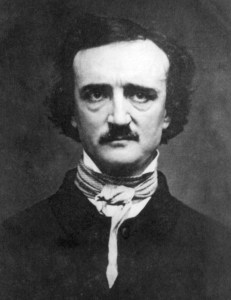
 Phil Slattery, Writer, Publisher