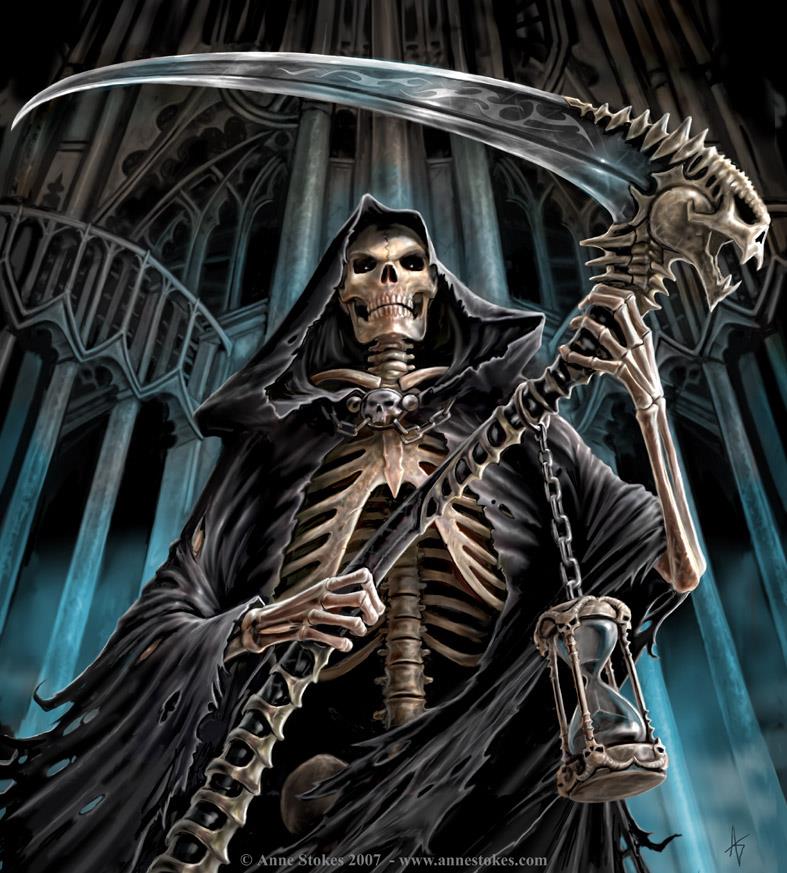
I just saw this on Facebook and had to share it. Good horror stuff. It is so cool. It is by Christophe Lefevre. Check out his page on Facebook.

I just saw this on Facebook and had to share it. Good horror stuff. It is so cool. It is by Christophe Lefevre. Check out his page on Facebook.

Carl Gustav Jung, 1912
Someone told me recently that the pyschologist Carl Jung believed the work reveals something about the author. We discussed this idea for a few minutes before it hit home in a very scary fashion, because we were discussing my works of horror. I realized that at least sometimes my own subconscious fears may influence, if not determine, the course of my stories. Storylines reflecting the subconscious fears of the author makes a lot of sense, because, to my mind at least, dreams and nightmares also originate in and reflect the undercurrents of the subconscious.
So, what do you think? Is the subconscious wellspring responsible for the creation of dreams the same one responsible for creative works? What does this say about authors like Yann Martel who wrote “Life of Pi”? What does it say about authors like Clive Barker and H.P. Lovecraft and even myself?
While we are at it, here are three quotes from Jung to provide additional food for thought. What do they say about writers of horror? I found them at The Painter’s Keys: Art Quotes from Carl Gustav Jung.
“Often the hands will solve a mystery that the intellect has struggled with in vain.”
“The secret of artistic creation and the effectiveness of art is to be found in a return to the state of ‘participation mystique’ – to that level of experience at which it is man who lives, and not the individual…”
“The creation of something new is not accomplished by the intellect but by the play instinct acting from inner necessity. The creative mind plays with the objects it loves.”
Here is an interesting section/stanza from the ancient Chinese work Wen Fu (The Art of Writing). It is entitled “The Terror”.
I worry that my ink well will run dry, that right words cannot be found ; I want to respond to the moment’s inspiration.
I work with what is given ; that which passes cannot be detained.
Things move into shadows & they vanish ; things return in the shape of an echo.
When Spring arrives, we understand that Nature has its own reason.
Thoughts are lifted from the heart on breezes, and language finds its speaker.
Yesterday’s buds are this morning’s blossoms which we draw with a brush on silk.
Every eye knows a pattern, every ear hears a distant music.
Wen Fu was written by Lu Chi (261 AD – 300 AD), who was a scholar, a military leader, and the the Literary Secretary in the the Emperor’s court. It is very short and may take an average reader 15-20 minutes to complete. The hardcopy translation I have was written by Sam Hamill and published by Breitenbush Books in 1987. A far more poetic version can be found at http://web.mnstate.edu/gracyk/courses/web%20publishing/LuChi.htm.
I like to peruse Wen Fu occasionally, because the language is simple yet mystical while the ideas are straightforward yet metaphorical. What fascinates me most about the work is that the principles it expresses are eternal and universal. The underlying principles that guided Lu Chi’s art are the same ones that underlie ours nearly two thousand years later and in a society (and language!) that would have been completely alien to Lu Chi. What’s more, Lu Chi describes the experience of writing from a very intimate standpoint to which any author who is passionate about his art could relate.
What are your thoughts? What principles of writing are eternal and universal? What do you see in the stanza above?
 Phil Slattery, Writer, Publisher