
(original work by Phil Slattery)
Tonight I updated my page “The Lexicon of Horror” with ghoul, goblin, horror, Malleus Maleficarum, and oppression.
Comments about writing horror in general.
Tonight I updated my page “The Lexicon of Horror” with ghoul, goblin, horror, Malleus Maleficarum, and oppression.
For a change of pace I thought that for tonight’s blog, I would simply post a few digital images I created from photos using Photoshop a few

years back One is called “Death Calls the Tune”. I made it from a photo I took of a fiddler at a Renaissance fair. The second is called “Dancing Through Hell” and I took the photo on which it is based at the same fair. If I ever get the time again, I may make some more.
The last is more suspense than horror, though I can imagine it could be the setting for something horrible going on inside the bar. It is derived from a photo I took of a bar in Tokyo in 1995. The woman is a silhouette of a statue into which I inserted a public doman photo of a woman’s face, reversed it, and then did some more Photoshop magic.
I am selling these on a few products you can find in the Little Shop of Horror, but I don’t mind if you use these downloaded from this site so long as I get credit for the original image, and, if you would be so kind, please tell me where you use it. I just like to see what uses people put my works to and how they are received.
Comments? Thoughts?

I was searching for a market for one of my stories today, when I came across “Strange Horizons”‘s list of stories they see too often (http://www.strangehorizons.com/guidelines/fiction-common.shtml). This is an interesting and entertaining article on (in my humble opinion) not only the types of fiction that “Strange Horizons” prefers not to see, but also the types of stories not to submit to any quality magazine: the tired, the clichéd, the preaching, the didactic, the sugary-sweet, the unprofessional, the polemic, the ranting, and the diatribes among a host of others. The list is so extensive, one could almost create a list of the characteristics of good literature by simply listing the antitheses of the types listed here. Yes, this list is oriented toward sci-fi writers, but if one were to replace the sci-fi specific terms with those of another genre, one would have a list of examples of mediocre to poor writing for that genre. Of course, neither this list nor any other can be completely exhaustive of all examples of either good or bad writing, but it would be an interesting mental exercise.
Thoughts? Comments?

Here are some terrific guidelines from writer William Shunn for formatting a manuscript for magazine publication: http://www.shunn.net/format/story.html.
 I happened across an excellent roundtable on Horror History 101 at the Horror Writer’s Association (http://horror.org/horror-roundtable-16-horror-history-101/) today while at lunch. Check it out. It has a great panel of experts and a wide-ranging discussion of the great horror writers of the past from the beginning of horror with Horace Walpole up to Lovecraft and more.
If you are an avid reader (of anything) and are not familiar with Project Gutenberg (http://www.gutenberg.org/wiki/Main_Page), you are doing yourself a great disservice. As they state on their homepage:
“Project Gutenberg offers over 46,000 free ebooks: choose among free epub books, free kindle books, download them or read them online.
We carry high quality ebooks: All our ebooks were previously published by bona fide publishers. We digitized and diligently proofread them with the help of thousands of volunteers.
No fee or registration is required, but if you find Project Gutenberg useful, we kindly ask you to donate a small amount so we can buy and digitize more books. Other ways to help include digitizing more books,recording audio books, or reporting errors.
Over 100,000 free ebooks are available through our Partners, Affiliates and Resources…Our ebooks may be freely used in the United States because most are not protected by U.S. copyright law, usually because their copyrights have expired. They may not be free of copyright in other countries. Readers outside of the United States must check the copyright laws of their countries before downloading or redistributing our ebooks. We also have a number of copyrighted titles, for which the copyright holder has given permission for unlimited non-commercial worldwide use.”
As they state, most of these books are available because their copyrights have expired, making them usually quite dated. However, for anyone with a bent for the historical, Project Gutenberg is a gold mine. I did a quick search for “horror” on their website and received 169 titles in response. For a few, the only relation to the horror genre was the word “horror” in the title (such as “Southern Horrors: Lynch Law in All its Phases–which is a horrible subject, but is non-fiction vs. horror fiction). However, many are the classics or founding works of the horror genre, such as Frankenstein by Mary Shelley, Dracula by Bram Stoker, The Vampyre: a Tale by John William Polidori, The Castle of Otranto by Horace Walpole, The Strange Case of Dr. Jekyll and Mr. Hyde by Robert Louis Stevenson, Fantome de’l Opera (Phantom of the Opera) by Gaston Leroux, many works by Edgar Allan Poe, The Great God Pan by Arthur Machen, The King in Yellow by Robert W. Chambers, The Shunned House by H.P. Lovecraft, and many others.
Please take the time to visit this treasure trove of literature and of the horror genre, and if you are so inclined, please consider making a donation (via their website) to support their worthy cause.
Thoughts? Comments?

After I lay down in bed last night, I had one of those thoughts that just pops up in the middle of the night, particularly after writing for a while in the evening (which I had been). I write this now more for my own memory than anything, but I hope it will be of some use to someone else out there.
The thought was that the purpose of every word in a horror story should be to make that story scarier.
This is a very simple idea that may be patently obvious to most of you, but it may not be to some. In any case, my intuition suggested that I publish it.
Thoughts? Comments?
Perhaps this is patently obvious to everyone except me, but it seems to me that one of the keys of showing a character’s inner workings is by placing him/her in difficult situation and showing how they either solve the problem or extricate themselves from it. After all, this is one of the critical ways we learn about a person’s true nature in real life. The classic example of this of probably all English literature is Hamlet. A more recent example is that of Captain Kirk n the Kobayashi Maru scenario at Starfleet Academy (the simulation was programmed as a no-win scenario to test a cadet’s character, but the night before his test Kirk secretly re-programmed the simulation so that he could win). When I have tried writing this type, I have found it much more difficult than simply getting the character out of a sticky situation by a stroke or luck or something deus ex machina. It becomes a test of my own genius and my own character, because I find I can often much more easily land a character in an impossible situation than I can extricate him from it.
Thoughts? Comments?
About 2:00 a.m. on December 6, on the drive home after visiting my sister and her husband, I was contemplating where I want to go with my current work-in-progress. I am loathe to give away the plot, so suffice it to say that it involves a scientist that travels to another planet and tours it with a fellow scientist from that planet. I have come to realize over the last few days that the original plot concept is boring, although in terms of literature it would be fairly intriguing, because of the internal struggles the main character would face and some social issues it would raise.
It occurred to me is that the critical question was not where to take the plot of the story, but where do I want the book to go in terms of its impact on the society/world. I am not so naïve as to think that it would have a earth-shattering impact like Dan Brown’s Da Vinci Code or be controversial like Henry Miller’s Tropic of Cancer or Aldous Huxley’s Brave New World or even break out like Stephen King’s Carrie, but no matter how it is received publically or critically, it will make an impact, even if it is negligible one. The best I reason that I can do, is to try to make as big a splash as possible on its release and hope that it brings me some measure of success or at least puts me on the road to success. But what can I do to create that splash? What have been the characteristics of other initial successes?
I don’t know how the analogy suddenly popped into my mind, but I realized that what the story needs is thunder. Perhaps it was that a light rain had fallen sporadically over the last few days and the land was still wet with shallow puddles still lingering on the road in spots on this near-freezing night. Somehow this struck a chord in my subconscious that stirred echoes of similar post-thunderstorm summer nights. As I look back on that moment, though I wasn’t even thinking of those novels, it occurs to me now that they each have an element I would describe as “thunder”, something that resounds across the land striking a nerve in the public consciousness.
For some novels, like The Da Vinci Code, the thunder is an aspect that touches on a sensitive nerve within a large number of the public. In The Da Vinci Code‘s instance, this was deeply ingrained religious beliefs that, like the foundation of a house, if disturbed, shake the entire house.
For novels like The Tropic of Cancer, the thunder is something that disturbs the public’s sense of decency, which could be argued to be the image of itself that the public wishes to project.
Brave New World did not make as great an impact on its initial reception as it did later, when many of the technologies and issues it describes actually started to come into being. Then it thundered greatly.
Carrie did not rock the literary or moral or religious foundations of society, but it was a great personal thunder for Stephen King and brought him suddenly into the public view.
There are undoubtedly other forms of thunder, but these are the ones that spring into mind initially.
Once I recognized that my goal as a writer is to thunder, the next question became what type of thunder do I want to have?
For me, I want to ask a profound question (or questions) that demand answers. As stated, I don’t want to give away the plot of the novel(la), so I will unfortunately have to leave you in suspense for now, but check back with my blog periodically and let’s see if I can achieve this. Wish me luck.
Thoughts? Comments?
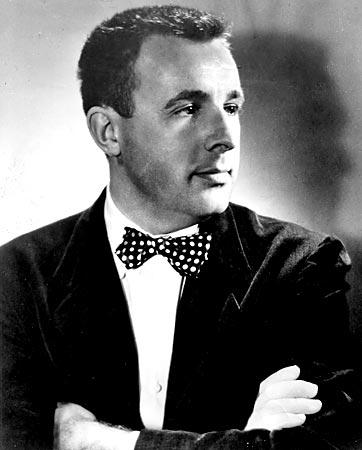
Someone once told Ray Bradbury that “The Martian Chronicles” was not prose, but poetry. Technically, he was probably wrong, but in spirit truer words were probably never spoken.
I have a habit of reading several books at once. I will pick up one, read a few pages (unless it is so engrossing that I cannot put it down), then later pick up another and read a few pages or so of it, then still later read a few pages of another and so forth until I may be reading half a dozen books a few pages at a time. Then I may finish one and pick up another, something like the juggler who keeps the china plates spinning on sticks.
I picked up “The Martian Chronicles” while on a trip to Santa Fe in December, 2012 at The Collected Works bookstore. Since then it has stayed in my suitcase and I pick it up and read more every time I travel.
I have not read much of late and have written less, but on trip last week, I made use of my relatively new Kindle for the first time and read three stories of Poe’s (“A Descent into the Maelstrom”, “The Facts in the Case of M. Valdemar”, and “The Imp of the Perverse”) along with the original German version of “Little Red Riding Hood” by the Brothers Grimm. This has started my interest in literature and writing to smoulder once again. After I returned home, I decided to take “The Martian Chronicles” out of the suitcase and reluctantly finish it.
I say “reluctantly” because, while reading it, it is one of those beautifully eloquent novels that you don’t want to put down much less ever see come to an end. On those nights I read a few chapters at a time in the comfort of a well-kept hotel, I never really wanted to put it down and only did so when the hour was late and I was struggling to stay awake after a long day, a good suppper, and a few glasses of wine.
The stories are always poignant, captivating, and sometimes heart-rending. The characters have a depth that draws you in as if you could step inside their bodies and see their world from their perspectives. Of course, your tendency is to side with the humans as they colonize the red planet, but at the same time you sympathize with the Martians as they watch their civilization dwindle and gradually vanish under the onslaught of alien explorers and settlers. However, what is the most beautiful facet of the novel is its use of English.
Bradbury’s nascent style (as I understand from one website, he had been writing seriously only seven years when he

published this, his first novel) uses simple, clear, easy-to-understand prose that highlights only enough important details to enable the reader to vicariously experience the story. The fact that the prose is very simple and lacking in needlessly ostentatious words helps the reader to see clearly the interaction of the characters and their mindsets and the underlying motivations and plots. For me, if a work is full of big words, I spend too much time either trying to decipher them or running to the dictionary that I lose the tenuous feeling for what is happening in the story. His use of language clarifies rather than obscures. The sentences are generally of medium length and this helps the story to flow without becoming monotonous.
The plots of the stories are deceptively simple in design, but most still manage to have an unexpected denouement that leaves the reader feeling like a simpleton that he did not see it coming. Some, though, have such completely unexpected endings that there is no way they could be anticipated but in retrospect the denouement is incredibly logical. The first chapters describing explorer’s first encounters with the Martians are wonderful examples of this while the story I read only last night, “The Off Season”, has such a brilliantly ironic twist that it has to be a prime example of Bradbury’s genius.
I suppose I could continue on for a while raving about Bradbury’s art, but it is getting late and I have had a long day and still have dinner and drinks awaiting my arrival at home.
But what has any of this admiration for a science-fiction writer’s skill have to do with the art of writing?
Beauty is beauty no matter what the genre. Skill in writing is skill in writing.
I wish I had at least a smidgen of Bradbury’s talent so that I could make use of it in the field of horror. What depths of emotion and terror could I then reach?
Having read “Fahrenheit 451” many years ago, next on my list of Bradbury works is “The Illustrated Man”. I can hardly wait, but will probably have to–having five or six other books that I am currently reading. Still…that hasn’t stopped me yet from picking up a novel to be explored.
Please, even if you are a diehard horror aficianado, read “The Martian Chronicles” to learn something about writing as an art that you can apply to your own endeavors. The experience will definitely be rewarding and perhaps even enlightening.
Thoughts? Comments?
 I was just sitting down to do some work, when the following horrifying thought suddenly surfaced in the back of my mind: what if you found out that your girlfriend/significant other was once known in medical circles as “Patient Zero”?
Here is another interesting bit of trivia for Halloween. Maybe one of these is in your neighborhood: 11 “Real” Haunted Houses to Visit—If You Dare! | 11 “Real” Haunted Houses to Visit—If You Dare! – Yahoo Homes.

I just have to put in a plug for the Zombie Walk of the city where I lived for eighteen terrific years.
I was looking for a place to submit a flash fiction story today, when I ran across an interesting contest I thought I would share with you just because it would be a true challenge of one’s writing skills. “Flash Fiction World” has several contests, one of which (on the right side of the page to which the link leads) is to text a story to them of 160 characters or less. Here are the details:
TXTLIT
Wordcount:up to 160 characters
Mobile phone entry
Prize: At least £50
Closing date: Monthly
Website
I feel confident that the editors will not mind if I encourage any many of you as possible to partake of the challenge.
Near the bottom of the page, they also provide some interesting comments on writing flash fiction for those who are used to writing other literary forms:
Experienced writers
If you have been writing short stories or novels then switching to flash fiction for a change can be a steep but rewarding learning curve. Make no mistake, flash fiction is unique in style and technique. An FF story is not a mini novella or any other traditional style of literature.
At the same time, your skills in dialogue, character, exposition etc. will stand you in good stead. Knowing how to set mood, pace and other elements needed to sell a story to the reader will, of course. give you a head start.
If you are suffering from the dreaded writer’s block, then attempting a 300 word story based around a single idea can be just the thing to unblock your creative flow. Sometimes the enormity of starting a novel or even a short story of traditional size can bring you to a halt. A small FF piece focussed on the look someone gave you at the busstop, a flat tyre on the motorway, or the letter to someone you don’t know that you found in the street, may well seem far more doable.
Thoughts? Comments?

For the first time in a long time, I was listening to CDs on the car stereo as I drove back from Farmington (New Mexico) on the 14th, when I started feeling once again the latent but powerful emotions I associate with certain songs. The songs in question were Puddle of Mudd’s “Spaceship” from Songs in the Key of Love and Hate and “Would?” from Alice in Chains’s Dirt. When I was not that much younger than I am now, I used to listen to a broad range of music (from classical to hard rock to New Age and more) almost constantly. Therefore it will not be surprising if I state that others that stir me range from ACDC’s “Back in Black” and Nirvana’s “Smells Like Teen Spirit” to Mussorgsky’s “Night on Bald Mountain” and Beethoven’s Ninth Symphony, and, for a complete change of pace, to Enya’s “Orinoco Flow” and Michael Gettel’s San Juan Suite, both of which seem to stir not a tumult of emotions, but instead have the opposite effect and cause me to almost drift away on a sea of tranquility.
As I am sure is the case with most people, I find all my favorite songs enjoyable, but there were, and still are, some that stir me deeply and can even now resurrect feelings of intense excitement and passion as if I were reliving my “Glory Days” (which, by the way, is an excellent Springsteen tune that really hits home these days).
Out of those that stir my emotions the most, are a select group that have a certain je ne sais quois, a combination of primal rhythm, deep-toned vocalization, and soul-stirring guitar riffs, that do not stimulate the intellect as much as they instigate remote, subconscious parts of the mind to coalesce into a riot of images shaping themselves into the essential kernel of some grim tale that I know I can nurture, expand, and carefully, painstakingly mold into a narrative that would enthrall Dante or Milton–had I the time or unswerving diligence to concentrate on its writing.
“Enter Sandman” by Metallica is an excellent example of this. Even though the song is about the destruction of a family (according to Wikipedia), something about it compels me to write an intricate novel of espionage, assassination, betrayal, deception, and the inner horrors of the human psyche that paces back and forth in the recesses of my mind like a tiger in a cage, watching for an opportunity to spring forth into the light of day upon an unsuspecting yet willing audience. I have probably 20,000-30,000 or more words in the current draft of this story and I will probably trash most of these the next time I sit down to tackle this task. One day I will have to dedicate myself to finishing the story, because this is the only way I know I will be able to rid myself of the tiger’s pacing and of his relentless stare that bores into the back of my neocortex. As my life stands now, between chores at home and working 50-60 hours per week at my day job, I can find little time during an average week to work on the various short stories, novelettes, and novellas I have started over the past year.
Sad to say, I have two or three good novels that have been waiting over a decade or more for their genesis. Probably with each of them I associate some tune from my more turbulent past, if not with the entire work, then with at least some scene that plays over and over in my head like a teaser clip from a movie trailer.
For me, this is one of the delicious agonies of being a writer. I have so many fascinating concepts whirling through my head that I just know instinctively can be great works and that I enjoy revisiting whenever I have a few seconds to daydream but the lack of time in my daily life stymies their creation.
My question to you tonight, is are there musical works that inspire you to create works of horror and terror?
 Phil Slattery, Writer, Publisher