Publisher, Rural Fiction Magazine; publisher, The Chamber Magazine; founder, the Farmington Writers Circle. I have written short stories and poetry for many years. In my careers as a Naval officer and in the federal government, I have written thousands of documents of many types. I am currently working on a second edition for my poetry collection and a few novels.
Beginning in January 1, 2017, this will be the location of a new on-line quarterly magazine for short stories, poetry, and other short works of the horror genre. You can find the guidelines for submissions on my current Submissions and Announcements page, which will remain the same, with the only exception being that the word limit for submissions for “The Chamber” will increase from 1,000 to 2,000 words.
I am creating this magazine primarily because it is not fair to my contributors to submit a work for publication, when that work will be at the top of my blog posts for only a day, and then that author and his readers will have to wade through a morass of unrelated blogs to find that one post. To remedy this, I will create a separate page on my blog for my new magazine, “The Chamber”, where each quarter’s selections will appear on a separate page for eternity (or until WordPress folds, or until I give it all up and wander off to buy a bar in Key West or etc.) Issue 1 will appear on January 1st. Cut-off date for submissions will be November 30 (I don’t want to work over Christmas). Selections will probably be made by December 15. Send submissions per the Submissions and Announcements guidelines, but specify Submission for “The Chamber” in the subject line, if you want your work published in The Chamber, or Submission for The Blog, if you want to be published in the regular blog. I will continue to publish submissions in my regular blog until December 31.
Why call it “The Chamber”? The word chamber has numerous sinister and macabre connotations: a chamber of horrors, a torture chamber, one chambers a round into a rifle, etc. A chamber can also be where a sorcerer, an alchemist, or a member of the Inquisition stores his library. It is with this last connotation in mind that I am developing my Chamber for the storage of my selection of sinister and macabre works from the best up and coming authors that seek to contribute to my blog.
So, start editing your best, most powerful material and see where this new venture takes us! I want powerful, hard-hitting material that leaves its readers gasping and awe-struck at the end.
By Rufus Woodward My Grandfather had a haunted mirror. He said, “If you look into the mirror very closely, so very closely, you can see the ghost and the ghost can see you.” “Did you ever see the g…
Lo! ’tis a gala night
Within the lonesome latter years!
An angel throng, bewinged, bedight
In veils, and drowned in tears,
Sit in a theatre, to see
A play of hopes and fears,
While the orchestra breathes fitfully
The music of the spheres.
Mimes, in the form of God on high,
Mutter and mumble low,
And hither and thither fly-
Mere puppets they, who come and go
At bidding of vast formless things
That shift the scenery to and fro,
Flapping from out their Condor wings
Invisible Woe!
That motley drama- oh, be sure
It shall not be forgot!
With its Phantom chased for evermore,
By a crowd that seize it not,
Through a circle that ever returneth in
To the self-same spot,
And much of Madness, and more of Sin,
And Horror the soul of the plot.
But see, amid the mimic rout
A crawling shape intrude!
A blood-red thing that writhes from out
The scenic solitude!
It writhes!- it writhes!- with mortal pangs
The mimes become its food,
And seraphs sob at vermin fangs
In human gore imbued.
Out- out are the lights- out all!
And, over each quivering form,
The curtain, a funeral pall,
Comes down with the rush of a storm,
While the angels, all pallid and wan,
Uprising, unveiling, affirm
That the play is the tragedy, “Man,”
And its hero the Conqueror Worm.
I went to bed alone; that much I know for certain, despite the bottles emptied, the junk injected, the glass smoked, locked within my apartment for days, abhorring the light, avoiding the sun, embracing the permanent midnight fighting with the page during the waking hours, battling with the numbness of the soul, the desolation.
I woke up next to her; the cold, pale corpse of my childhood’s love.
In the substance-induced dreams I was back at junior high, when my heart was still unbruised, my liver virgin. With the whole world ahead of me, all roads wide open, all I had to do was pick the path and follow it to the end. It’s too late now, yet in my sleep I smiled broadly, for I recalled how it feels to be outside the pit of shit. And there she was, too, smiling at the beach, when the question was popped and the first dagger was driven through a heart that was destined to be broken into millions of pieces oh so many times. Yet, I didn’t know at the time and even the pain of love felt real and delightful, for it ignited a fire in the soul; a fire that was never meant to be extinguished.
And as I slowly opened my exhausted eyes, I stared at the decomposing body lying next to me; my arm around her waist, my body pressing up against hers, and I wanted to move, to jump, to disappear, but I couldn’t; chained to the bed, the substances still in control and all my muscles too heavy to obey the desperate commands of my panicking mind.
Suddenly she moved, turned to look at me, and the cold, dark eyes pierced through mine, staring straight into my soul. I couldn’t move, yet I saw a future that never unfolded taking place inside my head; a future that didn’t involve countless empty bottles of bourbon, cooking crack-cocaine, smoking meth, shooting junk. In the cold, dead eyes I witnessed warmth, safety, sanity. I smiled, despite the fear that overwhelmed my barely beating heart, and I wished to close my eyes and disappear into the fictional future reflecting in those dark eyes I hadn’t had the chance to stare into because of wrong decisions.
Her mouth opened slightly, exposing the falling teeth, the rotting gums, the green tongue. An invitation for a kiss and I was still not ready to kiss the devil, even though I had sold my soul years ago. Her hand reached for my cheek and the blood froze in my veins, a chill traversed all of my bones. Numb, I wished to jump out the window and disappear into the night, but couldn’t move.
She pressed her body closer to mine, and once more I could see a future in another city, with brighter prospects. I also saw the mediocrity of that future, the lack of the one thing that has maintained my sanity throughout years of abuses. And I couldn’t decide, couldn’t pick the right choice. It didn’t matter, either, because she was right there, next to me, rotting away with every passing minute and all I could do was accept her touches, her embrace, her forceful kisses.
With no end in sight my mind was too exhausted after a week of sleeplessness and of abusing every drug known to man. She smiled and despite the rotting teeth and gums I saw the hidden beauty, a beauty which I lost due to wine decisions, and a single tear rolled down my eye.
Abruptly, her face was replaced, and others took her place in my bed; I was surrounded by corpses and ghosts and I couldn’t run away. Standing accused in front of those I hurt, and those I lost, I could only accept the jury’s verdict and I was condemned to a slow, painful death and I smiled at the idea of the grave.
The ghosts evaporated, the sentence had been dealt, and the jury was therefore disbanded. Yet, she remained, her empty eyes still reminding me of a life never lived, of moments never experienced; was it for the best? I asked myself, and there was no place where I could find an answer.
From within the darkness the eternal flames appeared a preview of what’s to come and I smiled, barely, at the future waiting around the corner. A final kiss from the frozen lips and warmth flooded my numb body; it lasted only a second. She was suddenly gone, I was still there, and the flames were extinguished. With nowhere to run, with no dreams in which I could find refuge, I got up.
I sat heavily on the couch, stared about the dark room and breathed in the perfect stillness of the night. All alone, once more, and my sole companion were my memories, those of the past lived and those of the future that remained a stillborn.
And as I filled my glass pipe, getting ready for yet another week of staying awake amidst the binges, I heard a loud, complaining sigh from my bed and the blanket was raised.
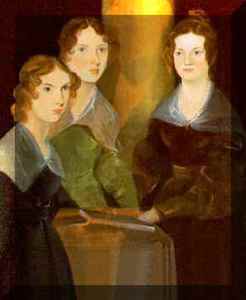
Anne, Emily, and Charlotte Bronte by Patrick Branwell Bronte circa 1834
The Farmington Writers Circle will meet again on October 13, 2016 at 7:00 p.m. at Starbuck’s at 4337 East Main, #101 (near the intersection with 30th Street). The evening’s topic has not been determined.
The Farmington Writers Circle is nascent organization of Farmington-area writers who are interested in finding or developing innovative ways of publicizing and marketing their works. Meetings are usually round-table discussions, although occasionally a member will lead the discussion when it deals with an area of the member’s expertise. There are no fees or requirements to attend meetings. Writers of any and all genres, regardless of writing experience, and non-writers with an interest in the art are welcome. Previous topics have included establishing a website to maximize the use of social media in publicizing works, writers’ conferences, and finding an agent among other topics. Meetings generally run for two hours. For more information, contact me via this website.
There’s nothing extraordinary about hearing the toilet flushing in the middle of the night; unless, of course, if you live alone.
At 3 am, the flushing startled me. It had been a long time since anyone had slept over at my place. I was trying to sleep off three bottles of wine. My head was heavy and my body numb. I didn’t jump off the sofa, as perhaps I should have, instead I raised my head from the soft pillow and peered into the darkness.
The darkness looked back. I saw the familiar ghosts that have been surrounding me for years and the known whispers still lingered in the air. There was, at the same time, something new, a fresh breeze of evil that froze everything in the room. If I could have, I would have run, but in my hazy state all I could do was observe. The bathroom door creaked as it opened and closed. I saw the shadow standing in the kitchen.
I was still trying to figure out whether I was dreaming, while still staring befuddled at the shadow lighting a cigarette in the kitchen; the blue smoke arose quickly and evaporated. There was no other sound but of the crackling of the burning cigarette while the clouds did not allow the pale light of the moon to illuminate the room.
The shadow seemed all too familiar. I froze, lying face down on the couch, glaring intensely at it from underneath the blanket. The shadow began talking, but despite the perfect stillness I could not hear its voice. Alas, I recognized the words used, as they were the same words I often uttered while standing at the kitchen having a quick smoke: “just one more sip, just one more drag, and I’m coming to bed”.
A pile of dirty clothes hid the bed, not having being used in months; not since the final whispering ghost exited my life for good. Still on the couch, safe underneath the heavy covers, I heard the words of the shadow echoing in my head, even though no sound reached my ears.
The empty bottles laid on the floor, amidst the layers of dust, stale tobacco, and wasted blow, and yet, there was nothing I could do. The faintest light penetrating the loosely sitting blinds on the window reflected on the glass and hit my eyes, bringing forth memories of better times; of nights, where my bed was occupied and I drank and smoked my life away in the kitchen, wishing to be alone.
Suddenly, I was all alone, with no one to call and ask how I am doing, and I wished for the past to become the present and for the future to be different than the blanket made of snow that was waiting for me in the corner. The shadow in the kitchen put out the cigarette in an ashtray that shouldn’t be on the counter and walked in the main room with confident steps.
I still could not discern its features; I could not tell the identity of the night intruder. I couldn’t move, I was numb, both from the drink and the fear, and the shadow idly sat at my desk chair, its fingers hovering over the keyboard. A shiver ran through my spine, I wanted to react but was helpless.
I heard the keys being pressed rhythmically creating music I had long forgotten, and my heart sank. The shadow had taken my place, while I was still suffering from a headache that could kill even the most savage dinosaur. More voices echoed in my head, words long ago uttered by lips, memories erased by drink.
It all came back, as the shadow typed purposelessly, the keyboard suffering under the brutal writing and smoke began filling the small room. There was no oxygen and I was suffocating slowly, while the shadow seemed unfazed by the ever-changing environment. I sat up, finally, ignoring the tremendously violent jolts of pain that shot through my body. My head on the verge of exploding, barely able to hold my eyes open, I looked around and I was all alone. The smoke had evaporated, the shadow vanished.
Only the bottles on the floor indicated the reality of the situation, and I looked about in complete bewilderment. Once more alone, the voices in my head had ceased and the perfect quietness of the night was reigning. It didn’t feel good, even the shadow was a pleasant change of rhythm and I laid back on the soft pillow, as I observed the room spin around me while fighting my urge to vomit.
I was determined to start afresh; quit the bad habits and become a new person. I sat up, struggling to ignore the horrific pain that arose in every inch of my suffering body, and filled my glass pipe with some freshly-cooked ice. It was time to stay awake, fight for the dreams I had betrayed.
The first cloud of blue smoke arose in front of me and I saw thousands of faces arising from within it; faces long forgotten, eyes once adored, lips once tasted.
Another puff was dragged and the crackling of the pipe was the only sound that violated the peace of the night, overshadowed abruptly by the flushing of the toilet.
Fritters are a great way to use up some of the leftover meats you have from previous meals, or from any stash you might have lying around. Farmer Vincent’s Fritters were very special indeed, as he used some of his famous smoked meats. Don’t bother asking what kind of meats they were, however. His slogan was “it takes all kinds of critters to make Farmer Vincent’s Fritters.” If you do ever venture down to try his fritters, I would recommend not staying at the nearby MOTEL HELLO. In fact, it is probably much safer all around to make these yourself.
ANALYSIS
Yield: 8 to 10 fritters
Ingredients
Filling
1 1/2 lb cooked and shredded meats of your choice
1 Tbsp smoked paprika
1 tsp ground cumin
salt and pepper, to taste
4 strips of bacon
1/4 cup onion, finely chopped, or 1 tsp onion powder 2 garlic cloves, minced…
The Farmington Writers Circle will meet again on October 13, 2016 at 7:00 p.m. at Starbuck’s at 4337 East Main, #101 (near the intersection with 30th Street). The evening’s topic has not been determined.
The Farmington Writers Circle is nascent organization of Farmington-area writers who are interested in finding or developing innovative ways of publicizing and marketing their works. Meetings are usually round-table discussions, although occasionally a member will lead the discussion when it deals with an area of the member’s expertise. There are no fees or requirements to attend meetings. Writers of any and all genres, regardless of writing experience, and non-writers with an interest in the art are welcome. Previous topics have included establishing a website to maximize the use of social media in publicizing works, writers’ conferences, and finding an agent among other topics. Meetings generally run for two hours. For more information, contact me via this website.
[Phil Slattery’s Note: One of the interesting aspects of this story is the discussion on the types of stories passed down by school boys. They sound very much like the same motifs circulating through horror fiction and movies today.]
###
Two men in a smoking-room were talking of their private-school days. ‘At our school,’ said A., ‘we had a ghost’s footmark on the staircase. What was it like? Oh, very unconvincing. Just the shape of a shoe, with a square toe, if I remember right. The staircase was a stone one. I never heard any story about the thing. That seems odd, when you come to think of it. Why didn’t somebody invent one, I wonder?’
‘You never can tell with little boys. They have a mythology of their own.
There’s a subject for you, by the way—”The Folklore of Private
Schools”.’
‘Yes; the crop is rather scanty, though. I imagine, if you were to investigate the cycle of ghost stories, for instance, which the boys at private schools tell each other, they would all turn out to be highly-compressed versions of stories out of books.’
‘Nowadays the Strand and Pearson’s, and so on, would be extensively drawn upon.’
‘No doubt: they weren’t born or thought of in my time. Let’s see. I wonder if I can remember the staple ones that I was told. First, there was the house with a room in which a series of people insisted on passing a night; and each of them in the morning was found kneeling in a corner, and had just time to say, “I’ve seen it,” and died.’
‘Wasn’t that the house in Berkeley Square?’
‘I dare say it was. Then there was the man who heard a noise in the passage at night, opened his door, and saw someone crawling
M.R. James 1900
towards him on all fours with his eye hanging out on his cheek. There was besides, let me think—Yes! the room where a man was found dead in bed with a horseshoe mark on his forehead, and the floor under the bed was covered with marks of horseshoes also; I don’t know why. Also there was the lady who, on locking her bedroom door in a strange house, heard a thin voice among the bed-curtains say, “Now we’re shut in for the night.” None of those had any explanation or sequel. I wonder if they go on still, those stories.’
‘Oh, likely enough—with additions from the magazines, as I said. You never heard, did you, of a real ghost at a private school? I thought not; nobody has that ever I came across.’
‘From the way in which you said that, I gather that you have.’
‘I really don’t know; but this is what was in my mind. It happened at my private school thirty odd years ago, and I haven’t any explanation of it.
‘The school I mean was near London. It was established in a large and fairly old house—a great white building with very fine grounds about it; there were large cedars in the garden, as there are in so many of the older gardens in the Thames valley, and ancient elms in the three or four fields which we used for our games. I think probably it was quite an attractive place, but boys seldom allow that their schools possess any tolerable features.
‘I came to the school in a September, soon after the year 1870; and among the boys who arrived on the same day was one whom I took to: a Highland boy, whom I will call McLeod. I needn’t spend time in describing him: the main thing is that I got to know him very well. He was not an exceptional boy in any way—not particularly good at books or games—but he suited me.
‘The school was a large one: there must have been from 120 to 130 boys there as a rule, and so a considerable staff of masters was required, and there were rather frequent changes among them.
‘One term—perhaps it was my third or fourth—a new master made his appearance. His name was Sampson. He was a tallish, stoutish, pale, black-bearded man. I think we liked him: he had travelled a good deal, and had stories which amused us on our school walks, so that there was some competition among us to get within earshot of him. I remember too—dear me, I have hardly thought of it since then!—that he had a charm on his watch-chain that attracted my attention one day, and he let me examine it. It was, I now suppose, a gold Byzantine coin; there was an effigy of some absurd emperor on one side; the other side had been worn practically smooth, and he had had cut on it—rather barbarously—his own initials, G.W.S., and a date, 24 July, 1865. Yes, I can see it now: he told me he had picked it up in Constantinople: it was about the size of a florin, perhaps rather smaller.
‘Well, the first odd thing that happened was this. Sampson was doing Latin grammar with us. One of his favourite methods—perhaps it is rather a good one—was to make us construct sentences out of our own heads to illustrate the rules he was trying to make us learn. Of course that is a thing which gives a silly boy a chance of being impertinent: there are lots of school stories in which that happens—or anyhow there might be. But Sampson was too good a disciplinarian for us to think of trying that on with him. Now, on this occasion he was telling us how to express remembering in Latin: and he ordered us each to make a sentence bringing in the verb memini, “I remember.” Well, most of us made up some ordinary sentence such as “I remember my father,” or “He remembers his book,” or something equally uninteresting: and I dare say a good many put down memino librum meum, and so forth: but the boy I mentioned—McLeod—was evidently thinking of something more elaborate than that. The rest of us wanted to have our sentences passed, and get on to something else, so some kicked him under the desk, and I, who was next to him, poked him and whispered to him to look sharp. But he didn’t seem to attend. I looked at his paper and saw he had put down nothing at all. So I jogged him again harder than before and upbraided him sharply for keeping us all waiting. That did have some effect. He started and seemed to wake up, and then very quickly he scribbled about a couple of lines on his paper, and showed it up with the rest. As it was the last, or nearly the last, to come in, and as Sampson had a good deal to say to the boys who had writtenmeminiscimus patri meo and the rest of it, it turned out that the clock struck twelve before he had got to McLeod, and McLeod had to wait afterwards to have his sentence corrected. There was nothing much going on outside when I got out, so I waited for him to come. He came very slowly when he did arrive, and I guessed there had been some sort of trouble. “Well,” I said, “what did you get?” “Oh, I don’t know,” said McLeod, “nothing much: but I think Sampson’s rather sick with me.” “Why, did you show him up some rot?” “No fear,” he said. “It was all right as far as I could see: it was like this: Memento—that’s right enough for remember, and it takes a genitive,—memento putei inter quatuor taxos.” “What silly rot!” I said. “What made you shove that down? What does it mean?” “That’s the funny part,” said McLeod. “I’m not quite sure what it does mean. All I know is, it just came into my head and I corked it down. I know what I think it means, because just before I wrote it down I had a sort of picture of it in my head: I believe it means ‘Remember the well among the four’—what are those dark sort of trees that have red berries on them?” “Mountain ashes, I s’pose you mean.” “I never heard of them,” said McLeod; “no, I’ll tell you—yews.” “Well, and what did Sampson say?” “Why, he was jolly odd about it. When he read it he got up and went to the mantelpiece and stopped quite a long time without saying anything, with his back to me. And then he said, without turning round, and rather quiet, ‘What do you suppose that means?’ I told him what I thought; only I couldn’t remember the name of the silly tree: and then he wanted to know why I put it down, and I had to say something or other. And after that he left off talking about it, and asked me how long I’d been here, and where my people lived, and things like that: and then I came away: but he wasn’t looking a bit well.”
‘I don’t remember any more that was said by either of us about this. Next day McLeod took to his bed with a chill or something of the kind, and it was a week or more before he was in school again. And as much as a month went by without anything happening that was noticeable. Whether or not Mr Sampson was really startled, as McLeod had thought, he didn’t show it. I am pretty sure, of course, now, that there was something very curious in his past history, but I’m not going to pretend that we boys were sharp enough to guess any such thing.
‘There was one other incident of the same kind as the last which I told you. Several times since that day we had had to make up examples in school to illustrate different rules, but there had never been any row except when we did them wrong. At last there came a day when we were going through those dismal things which people call Conditional Sentences, and we were told to make a conditional sentence, expressing a future consequence. We did it, right or wrong, and showed up our bits of paper, and Sampson began looking through them. All at once he got up, made some odd sort of noise in his throat, and rushed out by a door that was just by his desk. We sat there for a minute or two, and then—I suppose it was incorrect—but we went up, I and one or two others, to look at the papers on his desk. Of course I thought someone must have put down some nonsense or other, and Sampson had gone off to report him. All the same, I noticed that he hadn’t taken any of the papers with him when he ran out. Well, the top paper on the desk was written in red ink—which no one used—and it wasn’t in anyone’s hand who was in the class. They all looked at it—McLeod and all—and took their dying oaths that it wasn’t theirs. Then I thought of counting the bits of paper. And of this I made quite certain: that there were seventeen bits of paper on the desk, and sixteen boys in the form. Well, I bagged the extra paper, and kept it, and I believe I have it now. And now you will want to know what was written on it. It was simple enough, and harmless enough, I should have said.
‘”Si tu non veneris ad me, ego veniam ad te,” which means, I suppose, “If you don’t come to me, I’ll come to you.”‘
‘Could you show me the paper?’ interrupted the listener.
‘Yes, I could: but there’s another odd thing about it. That same afternoon I took it out of my locker—I know for certain it was the same bit, for I made a finger-mark on it—and no single trace of writing of any kind was there on it. I kept it, as I said, and since that time I have tried various experiments to see whether sympathetic ink had been used, but absolutely without result.
‘So much for that. After about half an hour Sampson looked in again: said he had felt very unwell, and told us we might go. He came rather gingerly to his desk and gave just one look at the uppermost paper: and I suppose he thought he must have been dreaming: anyhow, he asked no questions.
‘That day was a half-holiday, and next day Sampson was in school again, much as usual. That night the third and last incident in my story happened.
‘We—McLeod and I—slept in a dormitory at right angles to the main building. Sampson slept in the main building on the first floor. There was a very bright full moon. At an hour which I can’t tell exactly, but some time between one and two, I was woken up by somebody shaking me. It was McLeod; and a nice state of mind he seemed to be in. “Come,” he said,—”come! there’s a burglar getting in through Sampson’s window.” As soon as I could speak, I said, “Well, why not call out and wake everybody up?” “No, no,” he said, “I’m not sure who it is: don’t make a row: come and look.” Naturally I came and looked, and naturally there was no one there. I was cross enough, and should have called McLeod plenty of names: only—I couldn’t tell why—it seemed to me that there was something wrong—something that made me very glad I wasn’t alone to face it. We were still at the window looking out, and as soon as I could, I asked him what he had heard or seen. “I didn’t hear anything at all,” he said, “but about five minutes before I woke you, I found myself looking out of this window here, and there was a man sitting or kneeling on Sampson’s window-sill, and looking in, and I thought he was beckoning.” “What sort of man?” McLeod wriggled. “I don’t know,” he said, “but I can tell you one thing—he was beastly thin: and he looked as if he was wet all over: and,” he said, looking round and whispering as if he hardly liked to hear himself, “I’m not at all sure that he was alive.”
‘We went on talking in whispers some time longer, and eventually crept back to bed. No one else in the room woke or stirred the whole time. I believe we did sleep a bit afterwards, but we were very cheap next day.
‘And next day Mr Sampson was gone: not to be found: and I believe no trace of him has ever come to light since. In thinking it over, one of the oddest things about it all has seemed to me to be the fact that neither McLeod nor I ever mentioned what we had seen to any third person whatever. Of course no questions were asked on the subject, and if they had been, I am inclined to believe that we could not have made any answer: we seemed unable to speak about it.
‘That is my story,’ said the narrator. ‘The only approach to a ghost story connected with a school that I know, but still, I think, an approach to such a thing.’
* * * * *
The sequel to this may perhaps be reckoned highly conventional; but a sequel there is, and so it must be produced. There had been more than one listener to the story, and, in the latter part of that same year, or of the next, one such listener was staying at a country house in Ireland.
One evening his host was turning over a drawer full of odds and ends in the smoking-room. Suddenly he put his hand upon a little box. ‘Now,’ he said, ‘you know about old things; tell me what that is.’ My friend opened the little box, and found in it a thin gold chain with an object attached to it. He glanced at the object and then took off his spectacles to examine it more narrowly. ‘What’s the history of this?’ he asked. ‘Odd enough,’ was the answer. ‘You know the yew thicket in the shrubbery: well, a year or two back we were cleaning out the old well that used to be in the clearing here, and what do you suppose we found?’
‘Is it possible that you found a body?’ said the visitor, with an odd feeling of nervousness.
‘We did that: but what’s more, in every sense of the word, we found two.’
‘Good Heavens! Two? Was there anything to show how they got there? Was this thing found with them?’
‘It was. Amongst the rags of the clothes that were on one of the bodies. A bad business, whatever the story of it may have been. One body had the arms tight round the other. They must have been there thirty years or more—long enough before we came to this place. You may judge we filled the well up fast enough. Do you make anything of what’s cut on that gold coin you have there?’
‘I think I can,’ said my friend, holding it to the light (but he read it without much difficulty); ‘it seems to be G.W.S., 24 July, 1865.’
###
This eBook is for the use of anyone anywhere at no cost and with almost no restrictions whatsoever. You may copy it, give it away or re-use it under the terms of the Project Gutenberg License included with this eBook or online at http://www.gutenberg.net. This story is part of the collection Ghost Stories of an Antiquary by M.R. James available at www.gutenberg.org.
Beginning in January 1, 2017, this will be the location of a new on-line quarterly magazine for short stories, poetry, and other short works of the horror genre. You can find the guidelines for submissions on my current Submissions and Announcements page, which will remain the same, with the only exception being that the word limit for submissions for “The Chamber” will increase from 1,000 to 2,000 words.
I am creating this magazine primarily because it is not fair to my contributors to submit a work for publication, when that work will be at the top of my blog posts for only a day, and then that author and his readers will have to wade through a morass of unrelated blogs to find that one post. To remedy this, I will create a separate page on my blog for my new magazine, “The Chamber”, where each quarter’s selections will appear on a separate page for eternity (or until WordPress folds, or until I give it all up and wander off to buy a bar in Key West or etc.) Issue 1 will appear on January 1st. Cut-off date for submissions will be November 30 (I don’t want to work over Christmas). Selections will probably be made by December 15. Send submissions per the Submissions and Announcements guidelines, but specify Submission for “The Chamber” in the subject line, if you want your work published in The Chamber, or Submission for The Blog, if you want to be published in the regular blog. I will continue to publish submissions in my regular blog until December 31.
Why call it “The Chamber”? The word chamber has numerous sinister and macabre connotations: a chamber of horrors, a torture chamber, one chambers a round into a rifle, etc. A chamber can also be where a sorcerer, an alchemist, or a member of the Inquisition stores his library. It is with this last connotation in mind that I am developing my Chamber for the storage of my selection of sinister and macabre works from the best up and coming authors that seek to contribute to my blog.
So, start editing your best, most powerful material and see where this new venture takes us! I want powerful, hard-hitting material that leaves its readers gasping and awe-struck at the end.
The Farmington Writers Circle will meet again on October 13, 2016 at 7:00 p.m. at Starbuck’s at 4337 East Main, #101 (near the intersection with 30th Street). The evening’s topic has not been determined.
The Farmington Writers Circle is nascent organization of Farmington-area writers who are interested in finding or developing innovative ways of publicizing and marketing their works. Meetings are usually round-table discussions, although occasionally a member will lead the discussion when it deals with an area of the member’s expertise. There are no fees or requirements to attend meetings. Writers of any and all genres, regardless of writing experience, and non-writers with an interest in the art are welcome. Previous topics have included establishing a website to maximize the use of social media in publicizing works, writers’ conferences, and finding an agent among other topics. Meetings generally run for two hours. For more information, contact me via this website.
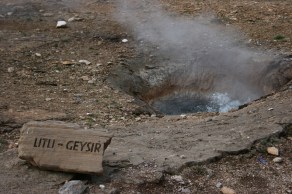
Iceland may only have a population of roughly 300,000 but, as a nation, it punches well above its weight in many things: in terms of its scenery, its musical output and, most recently, in its footballing achievements.
For naturalists and ornithologists, Iceland has puffins and arctic terns. For musicologists, it has Sigur Rós and Björk. For geologists, positioned as it is where the continents of Europe and North America rub up against each other, Iceland is something of a mecca. It is a country of glaciers and fjords, of mountains and volcanoes, lava fields and basalt columns, of hot springs and fumaroles and geysers gushing forth gas and liquid from the depths. If Jules Verne is to be trusted, the very centre of the Earth can be reached via one of the craters of Snæfellsjökull, a snow-capped volcano on Iceland’s Western peninsular.
It would be a deadly sin to stuff your face with box pasta and canned sauce. Or worse—canned spaghetti—like that poor bastard in the thriller, Se7en. Besides, I think we’ve had enough tomato recipes for now.
What I love about Carbonara is that I can avoid the usual acidic tomato sauces and also not go down the Alfredo route that can give lactose-intolerant folks grief. Like most Italian dishes, there are many ways to prepare this dish. Carbonara is an Italian-American creation dating back to WWII, and as such, recipes vary wildly. This recipe makes the preparation a great deal simpler than the “traditional” method but it is still delicious and different than the usual pasta night.
ANALYSIS
Yield: 4 to 6 servings
Ingredients
1 lb spaghetti, cooked – reserve 1/4 cup of the water
3 large eggs 1 cup freshly grated Parmesan cheese, plus more for…
 Beginning in January 1, 2017, this will be the location of a new on-line quarterly magazine for short stories, poetry, and other short works of the horror genre. You can find the guidelines for submissions on my current Submissions and Announcements page, which will remain the same, with the only exception being that the word limit for submissions for “The Chamber” will increase from 1,000 to 2,000 words.



 The Farmington Writers Circle will meet again on October 13, 2016 at 7:00 p.m. at Starbuck’s at 4337 East Main, #101 (near the intersection with 30th Street). The evening’s topic has not been determined.


 Iceland may only have a population of roughly 300,000 but, as a nation, it punches well above its weight in many things: in terms of its scenery, its

 Phil Slattery, Writer, Publisher