
Microfiction: The dreaded question
https://janedougherty.wordpress.com/2019/03/09/microfiction-the-dreaded-question/
— Read on janedougherty.wordpress.com/2019/03/09/microfiction-the-dreaded-question/
Tag: The Art of Writing
Information on the art of writing in general
Experimenting with Photoshop Express

Tonight I am experimenting with tailoring photos for publicizing my world on Facebook and Twitter using Photoshop Express. Here is an example. Let me know what you think.
”Diabolical” is Free on March 30
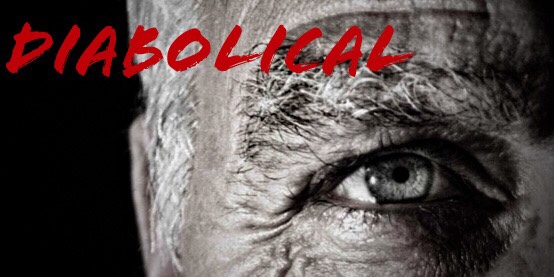
My collection of three tales of Jack Thurston, retired professor of medieval studies and practitioner of the black arts is free on March 30. It is available on Kindle and in paperback. Go to my Amazon author’s page for more info.
The Art of Writing an Amazing Blog Post
The Art of Writing an Amazing Blog Post
http://artofblogging.net/2019/03/08/the-art-of-writing-an-amazing-blog-post/
— Read on artofblogging.net/2019/03/08/the-art-of-writing-an-amazing-blog-post/
As Earth Sleeps Beneath Her Blanket Of Snow
As Earth Sleeps Beneath Her Blanket Of Snow
https://leafandtwig.wordpress.com/2019/03/09/as-earth-sleeps-beneath-her-blanket-of-snow/
— Read on leafandtwig.wordpress.com/2019/03/09/as-earth-sleeps-beneath-her-blanket-of-snow/
Phil Slattery’s Sci-Fi Novelette “Alien Embrace” Is Free on Amazon Kindle on March 8
 My novelette Alien Embrace will be free on Amazon Kindle on March 8.
Logan Rickover, owner of a hardware store in a small town in Kentucky, has lucid dreams of life as an astronaut that intrude upon his life at any moment. Which of his lives is real? The quiet paradise of Danville or the terrifying jungle world of Stheno D?
Ron Baker commented, “This short has exactly what I like in science fiction: planet exploration and bizarre otherworldly aliens, in this case insectoid. The horrendous purpose the aliens have for the hapless astronauts who make planetfall to find the numerous previous missing exploration teams is grisly. I love the mystery of the planet and the authors device of alternating from the aliens bizarre perspective then switching to the astronauts point of view.”
I will be offering more of my works for free in the upcoming weeks. Check back often.
Don’t forget to leave a review on Amazon, Goodreads, or other social media.
From Newsweek: Netflix will turn “One Hundred Years of Solitude” by Gabriel García Márquez into a limited series.
By Andrew Whalen
March 07, 2019
Netflix will turn Gabriel GarcÃa Márquez novel One Hundred Years of Solitude into a limited series, the first time the landmark novel has been adapted for the screen.
The new adaptation, which Netflix announced Wednesday, will be executive produced by the novelist’s sons, Gonzalo and Rodrigo GarcÃa. GarcÃa Márquez had many offers to adapt the novel during his lifetime, but was concerned that One Hundred Years of Solitude would not translate well to screen, especially within the confines of a movie. GarcÃa Márquez was also determined that any adaptation of One Hundred Years of Solitude be produced in Spanish, which the Netflix series will be.
“Netflix was among the first to prove that people are more willing than ever to see series that are produced in foreign languages with subtitles. All that seems to be a problem that is no longer a problem,” Garcia said in the Netflix announcement.
One Hundred Years of Solitude is a tricky adaptation because of the astonishing breadth of its narrative. Rather than following a handful of characters, One Hundred Years of Solitude is about the grand sweep of history, following multiple generations of the Buendia family—beginning with the founding of the fictional town of Macondo by family patriarch José Arcadio Buendia—over a century. Along the way they encounter civil wars, the coming of the railroads and seemingly divine interventions, all spread over seven generations.
“I’ve been hearing the discussion about whether or not to sell the rights to One Hundred Years of Solitude since I was eight,” Garcia said. “It was not an uncomplicated decision to make, for myself and my brother and my mom.”
The new deal isn’t the first time Netflix has tried to acquire rights to the landmark novel, but recent Spanish-language successes like Narcos and Roma have demonstrated the streaming service’s ability to, according to Netflix’s vice president for Spanish language Originals, “make Spanish-language content for the world.”
Originally published in 1967, Márquez’s novel is, according to UNESCO, the third most translated Spanish-language book and the foundational text of magical realism, a genre marked by both its modernity and fabulism, portraying seemingly real-world events intersecting with the profoundly paranormal or allegorical.
One Hundred Years of Solitude on Netflix doesn’t yet have a release date. It will be set and filmed in Colombia.
Follow this link to the original article:. apple.news/ADa9KxKMlRhmWosLej1coRQ
“Diabolical: Three Tales of Jack Thurston and Revenge” is Available on Kindle

Jack Thurston is a retired professor of medieval literature and history. He is also a widower and father and a retired sorcerer who has returned to the black arts to exact revenge for the death of his wife, daughter, and brother. He has an intriguing position in the universe at a focal point of life, the afterlife, logic and reason, anger and hatred, the ancient and the modern worlds, grief and his attempts to escape grief through self-destruction. Though he wants to have the peace he once found with his wife, Agatha, he is pulled in many directions by circumstance and by his powerful negative emotions.
I am a fan of the old school horror practiced by such authors as H.P. Lovecraft, Poe, Edward Lucas White, and Arthur Machen. I endeavor to make a story as terrifying and suspenseful for the reader as possible without resorting to gratuitous blood and gore for a simple shock or quick feeling of disgust.
This collection of three short tales is perfect for those who have only a few short breaks to escape into the hidden world of horror, black magic, sorcery, and anger-fueled revenge.
You can find this and other works at my Amazon author’s page: www.amazon.com/author/philslattery.
Currently, Jack has a Twitter account (@jthurston666), where he has attracted a small following and where it has only recently been revealed that he is fictional. Jack has his own blog at jackthurstonblog.wordpress.com (a work in progress) and his own e-mail at jackthurston666@gmail.com.
Information on more social media accounts and other characters (as they are developed) can be found at: philslattery.wordpress.com. Please interact with him at any of his social media accounts as you would with a real person.
Show your appreciation for these stories by leaving a review on Amazon, Goodreads, or other social media.
If you enjoy horror, check out my collection of horror short stories A Tale of Hell and Other Works of Horror: Stories of wizards, werewolves, serial killers, alien worlds, and the damned, which includes these stories.
“Diabolical: Three Tales of Jack Thurston and Revenge” is Available on Amazon Kindle
Jack Thurston is a retired professor of medieval literature and history. He is also a widower and father and a retired sorcerer who has returned to the black arts to exact revenge for the death of his wife, daughter, and brother. He has an intriguing position in the universe at a focal point of life, the afterlife, logic and reason, anger and hatred, the ancient and the modern worlds, grief and his attempts to escape grief through self-destruction. Though he wants to have the peace he once found with his wife, Agatha, he is pulled in many directions by circumstance and by his powerful negative emotions.
I am a fan of the old school horror practiced by such authors as H.P. Lovecraft, Poe, Edward Lucas White, and Arthur Machen. I endeavor to make a story as terrifying and suspenseful for the reader as possible without resorting to gratuitous blood and gore for a simple shock or quick feeling of disgust.
This collection of three short tales is perfect for those who have only a few short breaks to escape into the hidden world of horror, black magic, sorcery, and anger-fueled revenge.
You can find this and other works at my Amazon author’s page: www.amazon.com/author/philslattery.
Currently, Jack has a Twitter account (@jthurston666), where he has attracted a small following and where it has only recently been revealed that he is fictional. Jack has his own blog at jackthurstonblog.wordpress.com (a work in progress) and his own e-mail at jackthurston666@gmail.com.
Information on more social media accounts and other characters (as they are developed) can be found at: philslattery.wordpress.com. Please interact with him at any of his social media accounts as you would with a real person.
Show your appreciation for these stories by leaving a review on Amazon, Goodreads, or other social media.
“Diabolical: Three Tales of Jack Thurston and Revenge” is Available on Amazon Kindle
Jack Thurston is a retired professor of medieval literature and history. He is also a widower and father and a retired sorcerer who has returned to the black arts to exact revenge for the death of his wife, daughter, and brother. He has an intriguing position in the universe at a focal point of life, the afterlife, logic and reason, anger and hatred, the ancient and the modern worlds, grief and his attempts to escape grief through self-destruction. Though he wants to have the peace he once found with his wife, Agatha, he is pulled in many directions by circumstance and by his powerful negative emotions.
I am a fan of the old school horror practiced by such authors as H.P. Lovecraft, Poe, Edward Lucas White, and Arthur Machen. I endeavor to make a story as terrifying and suspenseful for the reader as possible without resorting to gratuitous blood and gore for a simple shock or quick feeling of disgust.
This collection of three short tales is perfect for those who have only a few short breaks to escape into the hidden world of horror, black magic, sorcery, and anger-fueled revenge.
You can find this and other works at my Amazon author’s page: www.amazon.com/author/philslattery.
Currently, Jack has a Twitter account (@jthurston666), where he has attracted a small following and where it has only recently been revealed that he is fictional. Jack has his own blog at jackthurstonblog.wordpress.com (a work in progress) and his own e-mail at jackthurston666@gmail.com.
Information on more social media accounts and other characters (as they are developed) can be found at: philslattery.wordpress.com. Please interact with him at any of his social media accounts as you would with a real person.
9 Novels You Probably Didn’t Know Are Inspired By Real Crimes by Sadie Trombetta
Anthony Hopkins as King Lear
apple.news/AiIndRXN0TS2WG1RoJszjIg
Brow Beat
Anthony Hopkins’ King Lear Is Cracking Good Entertainment
A truly great version might be impossible, but this streamlined take is exquisitely acted.
September 28 2018
Here’s a theory for you: Maybe a truly great rendition of King Lear is impossible. Beyond the unwieldiness of the play itself, with its multiple plots, incomprehensible Fool, and four-hour running time, there’s the great man at its center who must move through the psychic terrain of the all-powerful warlord, declining patriarch, raging madman, and child-like jester. Even if you actually managed to nail all of that, you’re left with a play that, were it actually performed with true greatness, would be unbearable, perhaps unwatchable.
King Lear is a play in which things fall apart, and there’s not even the slightest glimmer of hope that they can be put back together again. It’s the story of a family and nation coming apart at the seams, first because the titular monarch makes a colossal error in proposing to divide his kingdom between his three daughters, Goneril, Regan, and Cordelia. He compounds this error by disowning Cordelia, the youngest and truest of his children, when she refuses to flatter him. Deprived of power by his own hand, and then of respect by his daughters, Lear goes mad, but his madness is only a harbinger of worse things to come for the nation he once ruled. England splits apart further due to the machinations of Edmund the bastard, one of Shakespeare’s great psychopathic schemers, who betrays his good brother Edgar, and then his father Gloucester, and then sets Regan and Goneril against each other as they compete for his love.
In King Lear, life is a never-ending cascade of miseries, and the only comfort to be found is the promise that it will end. The play’s central motif is the torture of the human body. By its conclusion, a character is offered the crown and chooses suicide instead. Given everything that’s come before, you’re inclined to think he’s making the rational choice. Who would actually want to experience that delivered with consistent, persuasive, greatness?
In 1971, Peter Brook made a mad attempt to scale that bleak mountain in a film version of King Lear starring Paul Scofield. Set in ancient Britain, swathed in smoke and fog, Brook’s film is at times soporific, the performances frequently stuck in the stentorian rut carved decades earlier by Lawrence Olivier’s love of his own voice, yet there’s a kind of madness to it that peeks out again and again. Few films of Shakespeare’s plays contain anything as memorable or terrifying as the sequence in Brook’s Lear where Goneril, having just received the news that her plot to poison her younger sister Regan has succeeded, sways to and fro, in and out of frame with ever-increasing speed until she dashes her brains out on a rock, followed by a quick cut to Cordelia’s death by hanging.
Nothing so mad or so brilliant appears in the new film of King Lear, directed by Sir Richard Eyre, which arrives on Amazon streaming this Friday. Indeed, Eyre’s Lear feels almost like a pointed response to Brook’s classic, an attempt to do everything it possibly can to offer an alternative vision. If the ’70s film is like Edmund, whose respectable exterior hides a nature-worshipping madman with a mean streak a mile wide, Eyre’s versionis Edgar, the lawful good brother, capable of feigning insanity but incapable of hiding his essential normieness. Eyre’s ambitions are far more modest than Brook’s: to give viewers a modern-day King Lear as crackling entertainment, filled with big performances, recognizable faces, propulsive editing, and a contemporary setting. Brook’s Lear begins with a long, silent pan across a crowd of medieval common folk, frozen in anticipation of who will be their next ruler. Eyre’s begins with crisp helicopter shots of a capital city at night—an image that, thanks to House of Cards, screams “political skullduggery.” Where Brook reached for the cosmic, Eyre’s King Lear remains deliberately on planet Earth, taking us through the inner sanctums of power as a nation falls apart.
I was deeply skeptical of Eyre’s decision to set King Lear in the present day. The mythical Lear supposedly lived sometime around the 5th century BCE. The lack of any meaningful institutions other than the monarchy is why the fortunes of England can rise and fall on the dysfunctions of one family. Yet the film is such a cracking good entertainment I barely even noticed that its world makes no sense. Unlike many stage directors who turn to film, Eyre has grasped that while theater is a medium of argument and language, film is the medium of action. His streamlined King Lear—shockingly, it runs just under two hours—never slows down, not even to signpost the Mad King’s journey towards self-awareness. When Anthony Hopkins laments:
it’s part of a torrent of words, cascading as the king, now a homeless beggar, pushes a shopping cart around a town square.
One of the great pleasures of the film is to watch Hopkins, a brilliant actor with a side of ham, get to cut loose because the extravagance of Shakespeare requires it. Given his stature and the dexterous beauty of his speaking voice, Hopkins could have easily churned out a lazy, showboating Lear, but his turn at the role is fully realized. His rendition of the paterfamilias has a tenderness that can, at any moment, turn steely and vicious. If the early scenes are a delicate dance between Lear, his children (Emma Thompson, Emily Watson, and Florence Pugh as Goneril, Regan, and Cordelia), and his lieutenants (Jims Carter and Broadbent as Kent and Gloucester), it’s a dance where the time signature and steps keep changing at the King’s whims, and the consequences for putting a foot wrong are severe.
Particularly wonderful is the way Hopkins uses props. Through a handful of objects, he charts the vastly different modes that the character passes through, using a rain-dampened copy of the proclamation dividing his kingdom when he discusses filial duty, gripping a horseshoe to keep his rage in check, and donning the rumpled hat of his dead Fool for when he wants to play the comedian. It’s a neat trick that helps make the hairpin turns of the character coherent and manageable, while also feeling like a natural part of Lear’s madness. Of course he would focus on these fetishes as his world turns from the solidity of rule to the torrent of the storm.
Across the board, the acting in this adaptation is exquisite, a reminder that one of the reasons Shakespeare has persisted through the centuries is that he provides great actors with parts worthy of their gifts. Broadbent is unafraid of the oleaginous side of Gloucester, the way his mistreatment of his bastard son signals a smug complacency, which he then must break through to help his former king in secret. Best known stateside as Carson, the fastidious head butler of Downton Abbey, Carter plays Kent as an aging soldier heartbroken over his leader’s decline, but powerless to do anything about it but remain loyal. Productions of Lear can often treat Goneril and Regan interchangeably, but in Thompson and Watson’s hands they stand out as complete and distinct—the former hiding her need for her father’s approval behind a steely façade, the latter a creature of pure id discovering the pleasures of absolute power. Tobias Menzies, the prolific “that guy” of the BBC, sinks his teeth into a devilish, sadistic version of Cornwall. And if John Macmillan’s can’t quite find Edmund’s charm, the bastard is still a scorpion, nursing a barely concealed sense of rage and grievance, waiting to strike anyone who gets in his way. The cast’s sole weak spot is Andrew Scott, who plays Edgar. Like many of Shakespeare’s goody-goodies, Edgar is a dull role, even when he in disguise as the mad Poor Tom, and Scott, a gifted stage actor, overcompensates wildly, playing to the cheap seats no matter how close the camera gets.
As he’s demonstrated in earlier films like Iris and Notes on a Scandal, Eyre is a keen anatomist of domestic conflict, more drawn to pointing his camera at the nuances of human behavior than pulling back for big conceptual statements. Beyond the contemporary setting, he deploys a similar approach here, trapping the characters indoors whenever possible, like a knot of snakes in a bag. As the film progresses and England tumbles into civil war, the color leaches out of cinematographer Ben Smithard’s frames. By its end, King Lear is shot in shades of muted gray and beige, as if all vibrancy had fled the world. And why wouldn’t it flee? The world of King Lear isn’t one in which anyone should want to live, even if this film makes it a captivating place to visit for a time.
23 Book Jokes You’re Gonna Laugh At Even If You Haven’t Read In A While — from Buzzfeed
Phil Slattery’s Sci-Fi Novelette “Alien Embrace” Is Free on Amazon Kindle on September 23.

My novelette Alien Embrace will be free on Amazon Kindle on September 23.
Logan Rickover, owner of a hardware store in a small town in Kentucky, has lucid dreams of life as an astronaut that intrude upon his life at any moment. Which of his lives is real? The quiet paradise of Danville or the terrifying jungle world of Stheno D?
Ron Baker commented, “This short has exactly what I like in science fiction: planet exploration and bizarre otherworldly aliens, in this case insectoid. The horrendous purpose the aliens have for the hapless astronauts who make planetfall to find the numerous previous missing exploration teams is grisly. I love the mystery of the planet and the authors device of alternating from the aliens bizarre perspective then switching to the astronauts point of view.”
I will be offering more of my works for free in the upcoming weeks. Check back often.
Don’t forget to leave a review on Amazon, Goodreads, or other social media.
Quote of the Day
As a writer, I’m more interested in what people tell themselves happened rather than what actually happened. ~Kazuo Ishiguro #quote @quotlr
— Read on quotlr.com/archive/quote/116388
 Phil Slattery, Writer, Publisher