My e-book collection of horror shorts A Tale of Hell and Other Works of Horror” is available on Amazon Kindle. For your copy, go to my Amazon author’s page (amazon.com/author/philslattery) where you can find links to my other works as well.
In this collection of published and previously unpublished stories of horror, I offer a look into the minds of people who perpetrate horrors, from acts of stupidity with unintended results to cold-hearted revenge to pure enjoyment to complete indifference. Settings range from 17th-century France in the heart of the werewolf trials to the resurrection of the Aztec black arts to a medicine man’s revenge in the Old West to the depths of Hell to mob vengeance and modern day necromancy to sociopathic serial killers and on to alien worlds in the distant future.
Don’t forget to show your appreciation for these tales by leaving a review on Amazon, Goodreads, or other social media.
P.S. Winn gave the collection four stars on Amazon, calling it “Great variety”, and commented: “The author has given readers a fantastic collection of varied horror stories. Short stories, flash fiction and even shorter micro fiction tales are included in a collection that might have readers keeping their lights on. I have read other books by this author and love the writing style and the way his words draw one into the tales.”
Comments on previously published stories (which are only a part of those in this collection) include:
Jay Manning, editor of Midnight Times commented in its Spring, 2006 issue: “Wolfsheim” is basically a traditional horror story that tells the tale of a small European village confronted by the threat of werewolves. If you like stories about lycans, you definitely need to check this one out. Great stuff.”
Publisher Charlie Fish of Fiction on the Web summarizes A “Tale of Hell” as a “… chilling vision of hell”. Other comments on “A Tale of Hell” from readers of Fiction on the Web:
“An intense and well paced story, cleverly leading the reader up a number of garden paths before Jack’s reality finally clarifies and appears in all its horror. The writing is focused and spare as Jack’s malevolent characteristics and idiosyncrasies manifest themselves…Overall a strong tale that lingers in the imagination…”
“brilliantly descriptive piece on man´s apparently unstoppable descent, literally into hell,…”
” Enjoyed this story. I thought it was nicely written. Started with a familiar vision of hell, but added several unique treatments; kept me interested in how it all would end. Thanks”
Publisher Charlie Fish of Fiction on the Web summarizes “Dream Warrior” as a “…powerful revenge epic about a man who visits his Mexican grandfather for spiritual guidance after a violent crime results in the death if his fiancée”. Fiction on the Web readers commented:
“quite literally a rite of passage, mystical and with an interesting payoff, one which Miguel may have to reckon with in time. some very good writing and characterisation. well done”
“…this is a rite of passage, complex and rich with significance. The cultural invocations are vivid and intense, the work of a writer in his/her full stride. The future for Miguel, who knows? The readers interest is fully engaged with what is to come…”
“Really enjoyed the story-kept me up past my bedtime reading it!”
“I loved the concept, was fascinated by the almost hallucinatory detail of legend with its fatal shadowlands.”
Reader comments on “Murder by Plastic” include:
“Chilling and brilliantly economical”
“Very well-paced and intriguing”
“Fabulous story! Five stars!”
Follow me using the link on the homepage or check back frequently for updates.
Don’t forget to leave a review on Amazon, Goodreads, or on other social media.
In this collection of short stories, I explore the dark, sometimes violent, sometimes twisted, sometimes touching side of love, the side kept not only from public view, but sometimes from our mates. Set in the modern era, these stories range from regretting losing a lover to forbidden interracial love in the hills of 1970’s Kentucky to a mother’s deathbed confession in present-day New Mexico to debating pursuing a hateful man’s wife to the callous manipulation of a lover in Texas.
Praise for Stories Contained in “The Scent and Other Stories”:
The Scent
“This story has a lovely dreamy quality whilst being unsettling too. It lingers on half processed emotional experiences and leaves the reader asking ‘what if’ and ‘if only’ – feelings that are familiar for so many people.”
“You wrote about something we can all relate to – how, out of the blue, the scent of something evokes a memory of something long past; and the emotions we felt at the time! A clever story …”
“This descriptive piece about remembrance, the thought of what might have been, is a common sad thread that will resonate with those have experienced the pain of that one love lost. Slattery’s use of scent was exquisite as we feel Quinn’s pain and hope that he finds his peace, at last.”
Decision
“Fantastic writing – I held my breath for most of the story. The descriptions of the countryside and the people were beautiful and the tension compelling. This could possibly be the start of a novel or a suite of stories. Thank you very much and good luck with your writing in the future”
“Suspenseful and engaging. The dialogue and descriptions kept pace with the action. Well done.”
A Good Man
“Lots of detail examining an old question of how do you judge a person’s life. It left me wondering.”
“Great job capturing the social climate of the sixties. Good choice for how to present the story – deathbed “confession” by the mother. I enjoyed it.”
The Slightest of Indiscretions
“Excellent writing brings this poignant story to life and makes the reader work to understand more of what might be. Very many thanks for a satisfying, emotionally intelligent read…”
If you enjoy poems about love, check out my poetry collection Nocturne: Poems of Love, Distance, and the Night, a callous and disinterested lover.
“Tell me again why we have to kill this guy and take his island,” said T.J., looking across the saltwater to a flat island a little over a hundred yards long and less than a hundred wide. Bushes and a few palms sheltered a small cabin and pier from the wind in all directions, except on the north side, where the shore was barren sand.
T.J. licked his lips and tasted the salt from the spray the small powerboat had kicked up on its trip down the Laguna Madre. He wanted to head back to Corpus Christi soon. He liked the taste of the salt, because it reminded him of the taste of a margarita, but that was all he liked about this day. He had no love for the Texas heat or for the oppressive humidity or for the roll of the boat in the slight chop or for the bright sunlight filtering through the haze. He hated these more than he hated killing, but he did what he had to to make a living.
So begins my novelette Click, the story of Frank Martinez and the two drugrunners that want the island where he is staying.
Frank Martinez, a policeman with the Corpus Christi Police Department, has unintentionally shot and killed an unarmed man when called to intercede in a domestic violence case. To recover from the guilt while the incident is under investigation by the CCPD, Frank’s fiancée arranges for him to stay on a secluded island owned by her father’s former law partner. While dozing one night on a lounge chair in the yard, he awakes to find two hitmen slipping onto the island and breaking into the cabin. Are they after him? Are they after the cabin’s owner? Most importantly, how is he going to reach his pistol in his luggage in the bedroom?
My action-adventure/crime novelette, Click, is available on Kindle and in paperback. For either version and to read a sample, go to my Amazon author’s page: Amazon.com/author/philslattery.
My concept of Frank Martinez as portrayed by a photo from the public domain.
Reader Charles Stacey gave “Click” five stars, calls it “A great suspenseful read and then a twist”, and comments: “Author has a wonderful ability to develop the characters using few words. Great foreshadowing to build suspense. And then a really outstanding twist at the end that left me smiling.”
An anonymous Amazon customer gave it five stars, called it “strong storytelling”, and commented, “This novelette is a quick and very entertaining read. It opened with a grabber (“Tell me again whey we have to kill this guy…”) and kept pulling me in from there. Frank Martinez is a cop trying to recover from a shooting incident in solitude on an island off the Texas gulf coast. T.J. and Benny are the bad guys. Their hunt and chase on the small island kept me in suspense. It ends with a surprise twist. Slattery proves here he is a good storyteller.”
While on my author’s page, check out my other works.
Cover of the original Kindle edition
Don’t forget to leave a review on Amazon, Goodreads, or other social media.
Check back frequently for updates or follow me (on the homepage).
Jack Thurston is a retired professor of medieval literature and history. He is also a widower and father and a retired sorcerer who has returned to the black arts to exact revenge for the death of his wife, daughter, and brother. He has an intriguing position in the universe at a focal point of life, the afterlife, logic and reason, anger and hatred, the ancient and the modern worlds, grief and his attempts to escape grief through self-destruction. Though he wants to have the peace he once found with his wife, Agatha, he is pulled in many directions by circumstance and by his powerful negative emotions.
I am a fan of the old school horror practiced by such authors as H.P. Lovecraft, Poe, Edward Lucas White, and Arthur Machen. I endeavor to make a story as terrifying and suspenseful for the reader as possible without resorting to gratuitous blood and gore for a simple shock or quick feeling of disgust.
This collection of three short tales is perfect for those who have only a few short breaks to escape into the hidden world of horror, black magic, sorcery, and anger-fueled revenge.
Currently, Jack has a Twitter account (@jthurston666), where he has attracted a small following and where it has only recently been revealed that he is fictional. Jack has his own blog at jackthurstonblog.wordpress.com (a work in progress) and his own e-mail at jackthurston666@gmail.com.
Information on more social media accounts and other characters (as they are developed) can be found at: philslattery.wordpress.com. Please interact with him at any of his social media accounts as you would with a real person.
Show your appreciation for these stories by leaving a review on Amazon, Goodreads, or other social media.
If you enjoy horror, check out my collection of horror short stories A Tale of Hell and Other Works of Horror: Stories of wizards, werewolves, serial killers, alien worlds, and the damned, which includes these stories.
My e-book collection of horror shorts A Tale of Hell and Other Works of Horror” is available on Amazon Kindle. For your copy, go to my Amazon author’s page (amazon.com/author/philslattery) where you can find links to my other works as well.
In this collection of published and previously unpublished stories of horror, I offer a look into the minds of people who perpetrate horrors, from acts of stupidity with unintended results to cold-hearted revenge to pure enjoyment to complete indifference. Settings range from 17th-century France in the heart of the werewolf trials to the resurrection of the Aztec black arts to a medicine man’s revenge in the Old West to the depths of Hell to mob vengeance and modern day necromancy to sociopathic serial killers and on to alien worlds in the distant future.
Don’t forget to show your appreciation for these tales by leaving a review on Amazon, Goodreads, or other social media.
P.S. Winn gave the collection four stars on Amazon, calling it “Great variety”, and commented: “The author has given readers a fantastic collection of varied horror stories. Short stories, flash fiction and even shorter micro fiction tales are included in a collection that might have readers keeping their lights on. I have read other books by this author and love the writing style and the way his words draw one into the tales.”
Comments on previously published stories (which are only a part of those in this collection) include:
Jay Manning, editor of Midnight Times commented in its Spring, 2006 issue: “Wolfsheim” is basically a traditional horror story that tells the tale of a small European village confronted by the threat of werewolves. If you like stories about lycans, you definitely need to check this one out. Great stuff.”
Publisher Charlie Fish of Fiction on the Web summarizes A “Tale of Hell” as a “… chilling vision of hell”. Other comments on “A Tale of Hell” from readers of Fiction on the Web:
“An intense and well paced story, cleverly leading the reader up a number of garden paths before Jack’s reality finally clarifies and appears in all its horror. The writing is focused and spare as Jack’s malevolent characteristics and idiosyncrasies manifest themselves…Overall a strong tale that lingers in the imagination…”
“brilliantly descriptive piece on man´s apparently unstoppable descent, literally into hell,…”
” Enjoyed this story. I thought it was nicely written. Started with a familiar vision of hell, but added several unique treatments; kept me interested in how it all would end. Thanks”
Publisher Charlie Fish of Fiction on the Web summarizes “Dream Warrior” as a “…powerful revenge epic about a man who visits his Mexican grandfather for spiritual guidance after a violent crime results in the death if his fiancée”. Fiction on the Web readers commented:
“quite literally a rite of passage, mystical and with an interesting payoff, one which Miguel may have to reckon with in time. some very good writing and characterisation. well done”
“…this is a rite of passage, complex and rich with significance. The cultural invocations are vivid and intense, the work of a writer in his/her full stride. The future for Miguel, who knows? The readers interest is fully engaged with what is to come…”
“Really enjoyed the story-kept me up past my bedtime reading it!”
“I loved the concept, was fascinated by the almost hallucinatory detail of legend with its fatal shadowlands.”
Reader comments on “Murder by Plastic” include:
“Chilling and brilliantly economical”
“Very well-paced and intriguing”
“Fabulous story! Five stars!”
Follow me using the link on the homepage or check back frequently for updates.
Don’t forget to leave a review on Amazon, Goodreads, or on other social media.
In this collection of short stories, I explore the dark, sometimes violent, sometimes twisted, sometimes touching side of love, the side kept not only from public view, but sometimes from our mates. Set in the modern era, these stories range from regretting losing a lover to forbidden interracial love in the hills of 1970’s Kentucky to a mother’s deathbed confession in present-day New Mexico to debating pursuing a hateful man’s wife to the callous manipulation of a lover in Texas.
Praise for Stories Contained in “The Scent and Other Stories”:
The Scent
“This story has a lovely dreamy quality whilst being unsettling too. It lingers on half processed emotional experiences and leaves the reader asking ‘what if’ and ‘if only’ – feelings that are familiar for so many people.”
“You wrote about something we can all relate to – how, out of the blue, the scent of something evokes a memory of something long past; and the emotions we felt at the time! A clever story …”
“This descriptive piece about remembrance, the thought of what might have been, is a common sad thread that will resonate with those have experienced the pain of that one love lost. Slattery’s use of scent was exquisite as we feel Quinn’s pain and hope that he finds his peace, at last.”
Decision
“Fantastic writing – I held my breath for most of the story. The descriptions of the countryside and the people were beautiful and the tension compelling. This could possibly be the start of a novel or a suite of stories. Thank you very much and good luck with your writing in the future”
“Suspenseful and engaging. The dialogue and descriptions kept pace with the action. Well done.”
A Good Man
“Lots of detail examining an old question of how do you judge a person’s life. It left me wondering.”
“Great job capturing the social climate of the sixties. Good choice for how to present the story – deathbed “confession” by the mother. I enjoyed it.”
The Slightest of Indiscretions
“Excellent writing brings this poignant story to life and makes the reader work to understand more of what might be. Very many thanks for a satisfying, emotionally intelligent read…”
If you enjoy poems about love, check out my poetry collection Nocturne: Poems of Love, Distance, and the Night, a callous and disinterested lover.
“Tell me again why we have to kill this guy and take his island,” said T.J., looking across the saltwater to a flat island a little over a hundred yards long and less than a hundred wide. Bushes and a few palms sheltered a small cabin and pier from the wind in all directions, except on the north side, where the shore was barren sand.
T.J. licked his lips and tasted the salt from the spray the small powerboat had kicked up on its trip down the Laguna Madre. He wanted to head back to Corpus Christi soon. He liked the taste of the salt, because it reminded him of the taste of a margarita, but that was all he liked about this day. He had no love for the Texas heat or for the oppressive humidity or for the roll of the boat in the slight chop or for the bright sunlight filtering through the haze. He hated these more than he hated killing, but he did what he had to to make a living.
So begins my novelette Click, the story of Frank Martinez and the two drugrunners that want the island where he is staying.
Frank Martinez, a policeman with the Corpus Christi Police Department, has unintentionally shot and killed an unarmed man when called to intercede in a domestic violence case. To recover from the guilt while the incident is under investigation by the CCPD, Frank’s fiancée arranges for him to stay on a secluded island owned by her father’s former law partner. While dozing one night on a lounge chair in the yard, he awakes to find two hitmen slipping onto the island and breaking into the cabin. Are they after him? Are they after the cabin’s owner? Most importantly, how is he going to reach his pistol in his luggage in the bedroom?
My action-adventure/crime novelette, Click, is available on Kindle and in paperback. For either version and to read a sample, go to my Amazon author’s page: Amazon.com/author/philslattery.
My concept of Frank Martinez as portrayed by a photo from the public domain.
Reader Charles Stacey gave “Click” five stars, calls it “A great suspenseful read and then a twist”, and comments: “Author has a wonderful ability to develop the characters using few words. Great foreshadowing to build suspense. And then a really outstanding twist at the end that left me smiling.”
An anonymous Amazon customer gave it five stars, called it “strong storytelling”, and commented, “This novelette is a quick and very entertaining read. It opened with a grabber (“Tell me again whey we have to kill this guy…”) and kept pulling me in from there. Frank Martinez is a cop trying to recover from a shooting incident in solitude on an island off the Texas gulf coast. T.J. and Benny are the bad guys. Their hunt and chase on the small island kept me in suspense. It ends with a surprise twist. Slattery proves here he is a good storyteller.”
While on my author’s page, check out my other works.
Cover of the original Kindle edition
Don’t forget to leave a review on Amazon, Goodreads, or other social media.
Check back frequently for updates or follow me (on the homepage).
Jack Thurston is a retired professor of medieval literature and history. He is also a widower and father and a retired sorcerer who has returned to the black arts to exact revenge for the death of his wife, daughter, and brother. He has an intriguing position in the universe at a focal point of life, the afterlife, logic and reason, anger and hatred, the ancient and the modern worlds, grief and his attempts to escape grief through self-destruction. Though he wants to have the peace he once found with his wife, Agatha, he is pulled in many directions by circumstance and by his powerful negative emotions.
I am a fan of the old school horror practiced by such authors as H.P. Lovecraft, Poe, Edward Lucas White, and Arthur Machen. I endeavor to make a story as terrifying and suspenseful for the reader as possible without resorting to gratuitous blood and gore for a simple shock or quick feeling of disgust.
This collection of three short tales is perfect for those who have only a few short breaks to escape into the hidden world of horror, black magic, sorcery, and anger-fueled revenge.
Currently, Jack has a Twitter account (@jthurston666), where he has attracted a small following and where it has only recently been revealed that he is fictional. Jack has his own blog at jackthurstonblog.wordpress.com (a work in progress) and his own e-mail at jackthurston666@gmail.com.
Information on more social media accounts and other characters (as they are developed) can be found at: philslattery.wordpress.com. Please interact with him at any of his social media accounts as you would with a real person.
Show your appreciation for these stories by leaving a review on Amazon, Goodreads, or other social media.
If you enjoy horror, check out my collection of horror short stories A Tale of Hell and Other Works of Horror: Stories of wizards, werewolves, serial killers, alien worlds, and the damned, which includes these stories.
My e-book collection of horror shorts A Tale of Hell and Other Works of Horror” is available on Amazon Kindle. For your copy, go to my Amazon author’s page (amazon.com/author/philslattery) where you can find links to my other works as well.
In this collection of published and previously unpublished stories of horror, I offer a look into the minds of people who perpetrate horrors, from acts of stupidity with unintended results to cold-hearted revenge to pure enjoyment to complete indifference. Settings range from 17th-century France in the heart of the werewolf trials to the resurrection of the Aztec black arts to a medicine man’s revenge in the Old West to the depths of Hell to mob vengeance and modern day necromancy to sociopathic serial killers and on to alien worlds in the distant future.
Don’t forget to show your appreciation for these tales by leaving a review on Amazon, Goodreads, or other social media.
P.S. Winn gave the collection four stars on Amazon, calling it “Great variety”, and commented: “The author has given readers a fantastic collection of varied horror stories. Short stories, flash fiction and even shorter micro fiction tales are included in a collection that might have readers keeping their lights on. I have read other books by this author and love the writing style and the way his words draw one into the tales.”
Comments on previously published stories (which are only a part of those in this collection) include:
Jay Manning, editor of Midnight Times commented in its Spring, 2006 issue: “Wolfsheim” is basically a traditional horror story that tells the tale of a small European village confronted by the threat of werewolves. If you like stories about lycans, you definitely need to check this one out. Great stuff.”
Publisher Charlie Fish of Fiction on the Web summarizes A “Tale of Hell” as a “… chilling vision of hell”. Other comments on “A Tale of Hell” from readers of Fiction on the Web:
“An intense and well paced story, cleverly leading the reader up a number of garden paths before Jack’s reality finally clarifies and appears in all its horror. The writing is focused and spare as Jack’s malevolent characteristics and idiosyncrasies manifest themselves…Overall a strong tale that lingers in the imagination…”
“brilliantly descriptive piece on man´s apparently unstoppable descent, literally into hell,…”
” Enjoyed this story. I thought it was nicely written. Started with a familiar vision of hell, but added several unique treatments; kept me interested in how it all would end. Thanks”
Publisher Charlie Fish of Fiction on the Web summarizes “Dream Warrior” as a “…powerful revenge epic about a man who visits his Mexican grandfather for spiritual guidance after a violent crime results in the death if his fiancée”. Fiction on the Web readers commented:
“quite literally a rite of passage, mystical and with an interesting payoff, one which Miguel may have to reckon with in time. some very good writing and characterisation. well done”
“…this is a rite of passage, complex and rich with significance. The cultural invocations are vivid and intense, the work of a writer in his/her full stride. The future for Miguel, who knows? The readers interest is fully engaged with what is to come…”
“Really enjoyed the story-kept me up past my bedtime reading it!”
“I loved the concept, was fascinated by the almost hallucinatory detail of legend with its fatal shadowlands.”
Reader comments on “Murder by Plastic” include:
“Chilling and brilliantly economical”
“Very well-paced and intriguing”
“Fabulous story! Five stars!”
Follow me using the link on the homepage or check back frequently for updates.
Don’t forget to leave a review on Amazon, Goodreads, or on other social media.
In this collection of short stories, I explore the dark, sometimes violent, sometimes twisted, sometimes touching side of love, the side kept not only from public view, but sometimes from our mates. Set in the modern era, these stories range from regretting losing a lover to forbidden interracial love in the hills of 1970’s Kentucky to a mother’s deathbed confession in present-day New Mexico to debating pursuing a hateful man’s wife to the callous manipulation of a lover in Texas.
Praise for Stories Contained in “The Scent and Other Stories”:
The Scent
“This story has a lovely dreamy quality whilst being unsettling too. It lingers on half processed emotional experiences and leaves the reader asking ‘what if’ and ‘if only’ – feelings that are familiar for so many people.”
“You wrote about something we can all relate to – how, out of the blue, the scent of something evokes a memory of something long past; and the emotions we felt at the time! A clever story …”
“This descriptive piece about remembrance, the thought of what might have been, is a common sad thread that will resonate with those have experienced the pain of that one love lost. Slattery’s use of scent was exquisite as we feel Quinn’s pain and hope that he finds his peace, at last.”
Decision
“Fantastic writing – I held my breath for most of the story. The descriptions of the countryside and the people were beautiful and the tension compelling. This could possibly be the start of a novel or a suite of stories. Thank you very much and good luck with your writing in the future”
“Suspenseful and engaging. The dialogue and descriptions kept pace with the action. Well done.”
A Good Man
“Lots of detail examining an old question of how do you judge a person’s life. It left me wondering.”
“Great job capturing the social climate of the sixties. Good choice for how to present the story – deathbed “confession” by the mother. I enjoyed it.”
The Slightest of Indiscretions
“Excellent writing brings this poignant story to life and makes the reader work to understand more of what might be. Very many thanks for a satisfying, emotionally intelligent read…”
If you enjoy poems about love, check out my poetry collection Nocturne: Poems of Love, Distance, and the Night, a callous and disinterested lover.
“Tell me again why we have to kill this guy and take his island,” said T.J., looking across the saltwater to a flat island a little over a hundred yards long and less than a hundred wide. Bushes and a few palms sheltered a small cabin and pier from the wind in all directions, except on the north side, where the shore was barren sand.
T.J. licked his lips and tasted the salt from the spray the small powerboat had kicked up on its trip down the Laguna Madre. He wanted to head back to Corpus Christi soon. He liked the taste of the salt, because it reminded him of the taste of a margarita, but that was all he liked about this day. He had no love for the Texas heat or for the oppressive humidity or for the roll of the boat in the slight chop or for the bright sunlight filtering through the haze. He hated these more than he hated killing, but he did what he had to to make a living.
So begins my novelette Click, the story of Frank Martinez and the two drugrunners that want the island where he is staying.
Frank Martinez, a policeman with the Corpus Christi Police Department, has unintentionally shot and killed an unarmed man when called to intercede in a domestic violence case. To recover from the guilt while the incident is under investigation by the CCPD, Frank’s fiancée arranges for him to stay on a secluded island owned by her father’s former law partner. While dozing one night on a lounge chair in the yard, he awakes to find two hitmen slipping onto the island and breaking into the cabin. Are they after him? Are they after the cabin’s owner? Most importantly, how is he going to reach his pistol in his luggage in the bedroom?
My action-adventure/crime novelette, Click, is available on Kindle and in paperback. For either version and to read a sample, go to my Amazon author’s page: Amazon.com/author/philslattery.
My concept of Frank Martinez as portrayed by a photo from the public domain.
Reader Charles Stacey gave “Click” five stars, calls it “A great suspenseful read and then a twist”, and comments: “Author has a wonderful ability to develop the characters using few words. Great foreshadowing to build suspense. And then a really outstanding twist at the end that left me smiling.”
An anonymous Amazon customer gave it five stars, called it “strong storytelling”, and commented, “This novelette is a quick and very entertaining read. It opened with a grabber (“Tell me again whey we have to kill this guy…”) and kept pulling me in from there. Frank Martinez is a cop trying to recover from a shooting incident in solitude on an island off the Texas gulf coast. T.J. and Benny are the bad guys. Their hunt and chase on the small island kept me in suspense. It ends with a surprise twist. Slattery proves here he is a good storyteller.”
While on my author’s page, check out my other works.
Cover of the original Kindle edition
Don’t forget to leave a review on Amazon, Goodreads, or other social media.
Check back frequently for updates or follow me (on the homepage).
I am seeking people to review my works and who post their reviews to markets in the US, Australia, New Zealand, or Canada. I offer my Kindle e-books for free periodically according to Amazon policy. You can find my works on my Amazon author’s page. Let me know which you would like to review and I will let you know when it available for free or set up a date that you can have it for fee. I am most interested in having reviewed either my short horror (A Tale of Hell and Other Works of Horror), my collected poetry (Nocturne: Poems of Love, Distance, and the Night, a callous and disinterested lover), my short fiction on relationships (The Scent and Other Stories), or my action-adventure novelette (Click). The other two works are contained in A Tale of Hell and Other Works of Horror.
Through the ghoul-guarded gateways of slumber,
Past the wan-mooned abysses of night,
I have lived o’er my lives without number,
I have sounded all things with my sight;
And I struggle and shriek ere the daybreak, being driven to madness with fright.
I have whirled with the earth at the dawning,
When the sky was a vaporous flame;
I have seen the dark universe yawning
Where the black planets roll without aim,
Where they roll in their horror unheeded, without knowledge or lustre or name.
I had drifted o’er seas without ending,
Under sinister grey-clouded skies,
That the many-forked lightning is rending,
That resound with hysterical cries;
With the moans of invisible daemons, that out of the green waters rise.
I have plunged like a deer through the arches
Of the hoary primoridal grove,
Where the oaks feel the presence that marches,
And stalks on where no spirit dares rove,
And I flee from a thing that surrounds me, and leers through dead branches above.
I have stumbled by cave-ridden mountains
That rise barren and bleak from the plain,
I have drunk of the fog-foetid fountains
That ooze down to the marsh and the main;
And in hot cursed tarns I have seen things, I care not to gaze on again.
I have scanned the vast ivy-clad palace,
I have trod its untenanted hall,
Where the moon rising up from the valleys
Shows the tapestried things on the wall;
Strange figures discordantly woven, that I cannot endure to recall.
I have peered from the casements in wonder
At the mouldering meadows around,
At the many-roofed village laid under
The curse of a grave-girdled ground;
And from rows of white urn-carven marble, I listen intently for sound.
I have haunted the tombs of the ages,
I have flown on the pinions of fear,
Where the smoke-belching Erebus rages;
Where the jokulls loom snow-clad and drear:
And in realms where the sun of the desert consumes what it never can cheer.
I was old when the pharaohs first mounted
The jewel-decked throne by the Nile;
I was old in those epochs uncounted
When I, and I only, was vile;
And Man, yet untainted and happy, dwelt in bliss on the far Arctic isle.
Oh, great was the sin of my spirit,
And great is the reach of its doom;
Not the pity of Heaven can cheer it,
Nor can respite be found in the tomb:
Down the infinite aeons come beating the wings of unmerciful gloom.
Through the ghoul-guarded gateways of slumber,
Past the wan-mooned abysses of night,
I have lived o’er my lives without number,
I have sounded all things with my sight;
And I struggle and shriek ere the daybreak, being driven to madness with fright.
The sky is lead and our faces are red,
And the gates of Hell are opened and riven,
And the winds of Hell are loosened and driven,
And the dust flies up in the face of Heaven,
And the clouds come down in a fiery sheet,
Heavy to raise and hard to be borne.
And the soul of man is turned from his meat,
Turned from the trifles for which he has striven
Sick in his body, and heavy hearted,
And his soul flies up like the dust in the sheet
Breaks from his flesh and is gone and departed,
As the blasts they blow on the cholera-horn.
Himalayan
Four men, each entitled to ‘life, liberty, and the pursuit of happiness’, sat at a table playing whist. The thermometer marked—for them—one hundred and one degrees of heat. The room was darkened till it was only just possible to distinguish the pips of the cards and the very white faces of the players. A tattered, rotten punkah of whitewashed calico was puddling the hot air and whining dolefully at each stroke. Outside lay gloom of a November day in London. There was neither sky, sun, nor horizon—nothing but a brown purple haze of heat. It was as though the earth were dying of apoplexy.From time to time clouds of tawny dust rose from the ground without wind or warning, flung themselves tablecloth-wise among the tops of the parched trees, and came down again. Then a-whirling dust-devil would scutter across the plain for a couple of miles, break, and fall outward, though there was nothing to check its flight save a long low line of piled railway-sleepers white with the dust, a cluster of huts made of mud, condemned rails, and canvas, and the one squat four-roomed bungalow that belonged to the assistant engineer in charge of a section of the Gaudhari State line then under construction.
Rudyard Kipling, circa 1915
The four, stripped to the thinnest of sleeping-suits, played whist crossly, with wranglings as to leads and returns. It was not the best kind of whist, but they had taken some trouble to arrive at it. Mottram of the Indian Survey had ridden thirty and railed one hundred miles from his lonely post in the desert since the night before; Lowndes of the Civil Service, on special duty in the political department, had come as far to escape for an instant the miserable intrigues of an impoverished native State whose king alternately fawned and blustered for more money from the pitiful revenues contributed by hard-wrung peasants and despairing camel-breeders; Spurstow, the doctor of the line, had left a cholera-stricken camp of coolies to look after itself for forty-eight hours while he associated with white men once more. Hummil, the assistant engineer, was the host. He stood fast and received his friends thus every Sunday if they could come in. When one of them failed to appear, he would send a telegram to his last address, in order that he might know whether the defaulter were dead or alive. There are very many places in the East where it is not good or kind to let your acquaintances drop out of sight even for one short week.
The players were not conscious of any special regard for each other. They squabbled whenever they met; but they ardently desired to meet, as men without water desire to drink. They were lonely folk who understood the dread meaning of loneliness. They were all under thirty years of age—which is too soon for any man to possess that knowledge.
‘Pilsener?’ said Spurstow, after the second rubber, mopping his forehead.
‘Beer’s out, I’m sorry to say, and there’s hardly enough soda-water for tonight,’ said Hummil.
‘What filthy bad management!’ Spurstow snarled.
‘Can’t help it. I’ve written and wired; but the trains don’t come through regularly yet. Last week the ice ran out—as Lowndes knows.’
‘Glad I didn’t come. I could ha’ sent you some if I had known, though. Phew! it’s too hot to go on playing bumblepuppy.’ This with a savage scowl at Lowndes, who only laughed. He was a hardened offender.
Mottram rose from the table and looked out of a chink in the shutters.
‘What a sweet day!’ said he.
The company yawned all together and betook themselves to an aimless investigation of all Hummil’s possessions—guns, tattered novels, saddlery, spurs, and the like. They had fingered them a score of times before, but there was really nothing else to do.
‘Got anything fresh?’ said Lowndes.
‘Last week’s Gazette of India, and a cutting from a home paper. My father sent it out. It’s rather amusing.’
‘One of those vestrymen that call ’emselves M.P.s again, is it?’ said Spurstow, who read his newspapers when he could get them.
‘Yes. Listen to this. It’s to your address, Lowndes. The man was making a speech to his constituents, and he piled it on. Here’s a sample, “And I assert unhesitatingly that the Civil Service in India is the preserve—the pet preserve—of the aristocracy of England. What does the democracy—what do the masses—get from that country, which we have step by step fraudulently annexed? I answer, nothing whatever. It is farmed with a single eye to their own interests by the scions of the aristocracy. They take good care to maintain their lavish scale of incomes, to avoid or stifle any inquiries into the nature and conduct of their administration, while they themselves force the unhappy peasant to pay with the sweat of his brow for all the luxuries in which they are lapped.”’ Hummil waved the cutting above his head. ‘’Ear! ’ear!’ said his audience.
Then Lowndes, meditatively, ‘I’d give—I’d give three months’ pay to have that gentleman spend one month with me and see how the free and independent native prince works things. Old Timbersides’—this was his flippant title for an honoured and decorated feudatory prince—‘has been wearing my life out this week past for money. By Jove, his latest performance was to send me one of his women as a bribe!’
‘Good for you! Did you accept it?’ said Mottram.
‘No. I rather wish I had, now. She was a pretty little person, and she yarned away to me about the horrible destitution among the king’s women-folk. The darlings haven’t had any new clothes for nearly a month, and the old man wants to buy a new drag from Calcutta—solid silver railings and silver lamps, and trifles of that kind. I’ve tried to make him understand that he has played the deuce with the revenues for the last twenty years and must go slow. He can’t see it.’
‘But he has the ancestral treasure-vaults to draw on. There must be three millions at least in jewels and coin under his palace,’ said Hummil.
‘Catch a native king disturbing the family treasure! The priests forbid it except as the last resort. Old Timbersides has added something like a quarter of a million to the deposit in his reign.’
‘Where the mischief does it all come from?’ said Mottram.
‘The country. The state of the people is enough to make you sick. I’ve known the taxmen wait by a milch-camel till the foal was born and then hurry off the mother for arrears. And what can I do? I can’t get the court clerks to give me any accounts; I can’t raise anything more than a fat smile from the commander-in-chief when I find out the troops are three months in arrears; and old Timbersides begins to weep when I speak to him. He has taken to the King’s Peg heavily, liqueur brandy for whisky, and Heidsieck for soda-water.’
‘That’s what the Rao of Jubela took to. Even a native can’t last long at that,’ said Spurstow. ‘He’ll go out.’
‘And a good thing, too. Then I suppose we’ll have a council of regency, and a tutor for the young prince, and hand him back his kingdom with ten years’ accumulations.’
‘Whereupon that young prince, having been taught all the vices of the English, will play ducks and drakes with the money and undo ten years’ work in eighteen months. I’ve seen that business before,’ said Spurstow. ‘I should tackle the king with a light hand if I were you, Lowndes. They’ll hate you quite enough under any circumstances.
‘That’s all very well. The man who looks on can talk about the light hand; but you can’t clean a pig-sty with a pen dipped in rose-water. I know my risks; but nothing has happened yet. My servant’s an old Pathan, and he cooks for me. They are hardly likely to bribe him, and I don’t accept food from my true friends, as they call themselves. Oh, but it’s weary work! I’d sooner be with you, Spurstow. There’s shooting near your camp.’
‘Would you? I don’t think it. About fifteen deaths a day don’t incite a man to shoot anything but himself. And the worst of it is that the poor devils look at you as though you ought to save them. Lord knows, I’ve tried everything. My last attempt was empirical, but it pulled an old man through. He was brought to me apparently past hope, and I gave him gin and Worcester sauce with cayenne. It cured him; but I don’t recommend it.’
‘How do the cases run generally?’ said Hummil.
‘Very simply indeed. Chlorodyne, opium pill, chlorodyne, collapse, nitre, bricks to the feet, and then—the burning-ghaut. The last seems to be the only thing that stops the trouble. It’s black cholera, you know. Poor devils! But, I will say, little Bunsee Lal, my apothecary, works like a demon. I’ve recommended him for promotion if he comes through it all alive.’
‘And what are your chances, old man?’ said Mottram.
‘Don’t know; don’t care much; but I’ve sent the letter in. What are you doing with yourself generally?’
‘Sitting under a table in the tent and spitting on the sextant to keep it cool,’ said the man of the survey. ‘Washing my eyes to avoid ophthalmia, which I shall certainly get, and trying to make a sub-surveyor understand that an error of five degrees in an angle isn’t quite so small as it looks. I’m altogether alone, y’ know, and shall be till the end of the hot weather.’
‘Hummil’s the lucky man,’ said Lowndes, flinging himself into a long chair. ‘He has an actual roof-torn as to the ceiling-cloth, but still a roof-over his head. He sees one train daily. He can get beer and soda-water and ice ’em when God is good. He has books, pictures—they were torn from the Graphic—and the society of the excellent sub-contractor Jevins, besides the pleasure of receiving us weekly.’
Hummil smiled grimly. ‘Yes, I’m the lucky man, I suppose. Jevins is luckier.’
‘How? Not——’
‘Yes. Went out. Last Monday.’
‘By his own hand?’ said Spurstow quickly, hinting the suspicion that was in everybody’s mind. There was no cholera near Hummil’s section. Even fever gives a man at least a week’s grace, and sudden death generally implied self-slaughter.
‘I judge no man this weather,’ said Hummil. ‘He had a touch of the sun, I fancy; for last week, after you fellows had left, he came into the verandah and told me that he was going home to see his wife, in Market Street, Liverpool, that evening.
‘I got the apothecary in to look at him, and we tried to make him lie down. After an hour or two he rubbed his eyes and said he believed he had had a fit, hoped he hadn’t said anything rude. Jevins had a great idea of bettering himself socially. He was very like Chucks in his language.’
‘Well?’
‘Then he went to his own bungalow and began cleaning a rifle. He told the servant that he was going to shoot buck in the morning. Naturally he fumbled with the trigger, and shot himself through the head—accidentally. The apothecary sent in a report to my chief; and Jevins is buried somewhere out there. I’d have wired to you, Spurstow, if you could have done anything.’
‘You’re a queer chap,’ said Mottram. ‘If you’d killed the man yourself you couldn’t have been more quiet about the business.’
‘Good Lord! what does it matter?’ said Hummil calmly. ‘I’ve got to do a lot of his overseeing work in addition to my own. I’m the only person that suffers. Jevins is out of it, by pure accident, of course, but out of it. The apothecary was going to write a long screed on suicide. Trust a babu to drivel when he gets the chance.’
‘Why didn’t you let it go in as suicide?’ said Lowndes.
‘No direct proof. A man hasn’t many privileges in his country, but he might at least be allowed to mishandle his own rifle. Besides, some day I may need a man to smother up an accident to myself. Live and let live. Die and let die.’
‘You take a pill,’ said Spurstow, who had been watching Hummil’s white face narrowly. ‘Take a pill, and don’t be an ass. That sort of talk is skittles. Anyhow, suicide is shirking your work. If I were Job ten times over, I should be so interested in what was going to happen next that I’d stay on and watch.’
‘Ah! I’ve lost that curiosity,’ said Hummil.
‘Liver out of order?’ said Lowndes feelingly.
‘No. Can’t sleep. That’s worse.’
‘By Jove, it is!’ said Mottram. ‘I’m that way every now and then, and the fit has to wear itself out. What do you take for it?’
‘Nothing. What’s the use? I haven’t had ten minutes’ sleep since Friday morning.’
‘Poor chap! Spurstow, you ought to attend to this,’ said Mottram. ‘Now you mention it, your eyes are rather gummy and swollen.’
Spurstow, still watching Hummil, laughed lightly. ‘I’ll patch him up, later on. Is it too hot, do you think, to go for a ride?’
‘Where to?’ said Lowndes wearily. ‘We shall have to go away at eight, and there’ll be riding enough for us then. I hate a horse when I have to use him as a necessity. Oh, heavens! what is there to do?’
‘Begin whist again, at chick points [‘a chick’ is supposed to be eight shillings] and a gold mohur on the rub,’ said Spurstow promptly.
‘Poker. A month’s pay all round for the pool—no limit—and fifty-rupee raises. Somebody would be broken before we got up,’ said Lowndes.
‘Can’t say that it would give me any pleasure to break any man in this company,’ said Mottram. ‘There isn’t enough excitement in it, and it’s foolish.’ He crossed over to the worn and battered little camp-piano—wreckage of a married household that had once held the bungalow—and opened the case.
‘It’s used up long ago,’ said Hummil. ‘The servants have picked it to pieces.’
The piano was indeed hopelessly out of order, but Mottram managed to bring the rebellious notes into a sort of agreement, and there rose from the ragged keyboard something that might once have been the ghost of a popular music-hall song. The men in the long chairs turned with evident interest as Mottram banged the more lustily.
‘That’s good!’ said Lowndes. ‘By Jove! the last time I heard that song was in ’79, or thereabouts, just before I came out.’
‘Ah!’ said Spurstow with pride, ‘I was home in ‘80.’ And he mentioned a song of the streets popular at that date.
Mottram executed it roughly. Lowndes criticized and volunteered emendations. Mottram dashed into another ditty, not of the music-hall character, and made as if to rise.
‘Sit down,’ said Hummil. ‘I didn’t know that you had any music in your composition. Go on playing until you can’t think of anything more. I’ll have that piano tuned up before you come again. Play something festive.’
Very simple indeed were the tunes to which Mottram’s art and the limitations of the piano could give effect, but the men listened with pleasure, and in the pauses talked all together of what they had seen or heard when they were last at home. A dense dust-storm sprung up outside, and swept roaring over the house, enveloping it in the choking darkness of midnight, but Mottram continued unheeding, and the crazy tinkle reached the ears of the listeners above the flapping of the tattered ceiling-cloth.
In the silence after the storm he glided from the more directly personal songs of Scotland, half humming them as he played, into the Evening Hymn.
‘Sunday,’ said he, nodding his head.
‘Go on. Don’t apologize for it,’ said Spurstow.
Hummil laughed long and riotously. ‘Play it, by all means. You’re full of surprises today. I didn’t know you had such a gift of finished sarcasm. How does that thing go?’
Mottram took up the tune.
‘Too slow by half. You miss the note of gratitude,’ said Hummil. ‘It ought to go to the “Grasshopper’s Polka”—this way.’ And he chanted, prestissimo,
‘Glory to thee, my God, this night, For all the blessings of the light.
That shows we really feel our blessings. How does it go on?—
If in the night I sleepless lie, My soul with sacred thoughts supply; May no ill dreams disturb my rest,—
Quicker, Mottram!—
Or powers of darkness me molest!’
‘Bah! what an old hypocrite you are!’
‘Don’t be an ass,’ said Lowndes. ‘You are at full liberty to make fun of anything else you like, but leave that hymn alone. It’s associated in my mind with the most sacred recollections——’
‘Summer evenings in the country, stained-glass window, light going out, and you and she jamming your heads together over one hymnbook,’ said Mottram.
‘Yes, and a fat old cockchafer hitting you in the eye when you walked home. Smell of hay, and a moon as big as a bandbox sitting on the top of a haycock; bats, roses, milk and midges,’ said Lowndes.
‘Also mothers. I can just recollect my mother singing me to sleep with that when I was a little chap,’ said Spurstow.
The darkness had fallen on the room. They could hear Hummil squirming in his chair.
‘Consequently,’ said he testily, ‘you sing it when you are seven fathom deep in Hell! It’s an insult to the intelligence of the Deity to pretend we’re anything but tortured rebels.’
‘Take two pills,’ said Spurstow; ‘that’s tortured liver.’
‘The usually placid Hummil is in a vile bad temper. I’m sorry for his coolies tomorrow,’ said Lowndes, as the servants brought in the lights and prepared the table for dinner.
As they were settling into their places about the miserable goat-chops, and the smoked tapioca pudding, Spurstow took occasion to whisper to Mottram, ‘Well done, David!’
‘Look after Saul, then,’ was the reply.
‘What are you two whispering about?’ said Hummil suspiciously.
‘Only saying that you are a damned poor host. This fowl can’t be cut,’ returned Spurstow with a sweet smile. ‘Call this a dinner?’
‘I can’t help it. You don’t expect a banquet, do you?’
Throughout that meal Hummil contrived laboriously to insult directly and pointedly all his guests in succession, and at each insult Spurstow kicked the aggrieved persons under the table; but he dared not exchange a glance of intelligence with either of them. Hummil’s face was white and pinched, while his eyes were unnaturally large. No man dreamed for a moment of resenting his savage personalities, but as soon as the meal was over they made haste to get away.
‘Don’t go. You’re just getting amusing, you fellows. I hope I haven’t said anything that annoyed you. You’re such touchy devils.’ Then, changing the note into one of almost abject entreaty, Hummil added, ‘I say, you surely aren’t going?’
‘In the language of the blessed Jorrocks, where I dines I sleeps,’ said Spurstow. ‘I want to have a look at your coolies tomorrow, if you don’t mind. You can give me a place to lie down in, I suppose?’
The others pleaded the urgency of their several duties next day, and, saddling up, departed together, Hummil begging them to come next Sunday. As they jogged off, Lowndes unbosomed himself to Mottram—
‘. . . And I never felt so like kicking a man at his own table in my life. He said I cheated at whist, and reminded me I was in debt! ’Told you you were as good as a liar to your face! You aren’t half indignant enough over it.’
‘Not I,’ said Mottram. ‘Poor devil! Did you ever know old Hummy behave like that before or within a hundred miles of it?’
‘That’s no excuse. Spurstow was hacking my shin all the time, so I kept a hand on myself. Else I should have—’
‘No, you wouldn’t. You’d have done as Hummy did about Jevins; judge no man this weather. By Jove! the buckle of my bridle is hot in my hand! Trot out a bit, and ‘ware rat-holes.’ Ten minutes’ trotting jerked out of Lowndes one very sage remark when he pulled up, sweating from every pore—
“Good thing Spurstow’s with him tonight.’
‘Ye-es. Good man, Spurstow. Our roads turn here. See you again next Sunday, if the sun doesn’t bowl me over.’
‘S’pose so, unless old Timbersides’ finance minister manages to dress some of my food. Goodnight, and—God bless you!’
‘What’s wrong now?’
‘Oh, nothing.’ Lowndes gathered up his whip, and, as he flicked Mottram’s mare on the flank, added, ‘You’re not a bad little chap, that’s all.’ And the mare bolted half a mile across the sand, on the word.
In the assistant engineer’s bungalow Spurstow and Hummil smoked the pipe of silence together, each narrowly watching the other. The capacity of a bachelor’s establishment is as elastic as its arrangements are simple. A servant cleared away the dining-room table, brought in a couple of rude native bedsteads made of tape strung on a light wood frame, flung a square of cool Calcutta matting over each, set them side by side, pinned two towels to the punkah so that their fringes should just sweep clear of the sleeper’s nose and mouth, and announced that the couches were ready.
The men flung themselves down, ordering the punkah-coolies by all the powers of Hell to pull. Every door and window was shut, for the outside air was that of an oven. The atmosphere within was only 104 degrees, as the thermometer bore witness, and heavy with the foul smell of badly-trimmed kerosene lamps; and this stench, combined with that of native tobacco, baked brick, and dried earth, sends the heart of many a strong man down to his boots, for it is the smell of the Great Indian Empire when she turns herself for six months into a house of torment. Spurstow packed his pillows craftily so that he reclined rather than lay, his head at a safe elevation above his feet. It is not good to sleep on a low pillow in the hot weather if you happen to be of thick-necked build, for you may pass with lively snores and gugglings from natural sleep into the deep slumber of heat-apoplexy.
‘Pack your pillows,’ said the doctor sharply, as he saw Hummil preparing to lie down at full length.
The night-light was trimmed; the shadow of the punkah wavered across the room, and the ‘flick ‘ of the punkah-towel and the soft whine of the rope through the wall-hole followed it. Then the punkah flagged, almost ceased. The sweat poured from Spurstow’s brow. Should he go out and harangue the coolie? It started forward again with a savage jerk, and a pin came out of the towels. When this was replaced, a tomtom in the coolie-lines began to beat with the steady throb of a swollen artery inside some brain-fevered skull. Spurstow turned on his side and swore gently. There was no movement on Hummil’s part. The man had composed himself as rigidly as a corpse, his hands clinched at his sides. The respiration was too hurried for any suspicion of sleep. Spurstow looked at the set face. The jaws were clinched, and there was a pucker round the quivering eyelids.
‘He’s holding himself as tightly as ever he can,’ thought Spurstow. ‘What in the world is the matter with him?—Hummil!’
‘Yes,’ in a thick constrained voice.
‘Can’t you get to sleep?’
‘No.’
‘Head hot? Throat feeling bulgy? or how?’
‘Neither, thanks. I don’t sleep much, you know.’
‘’Feel pretty bad?’
‘Pretty bad, thanks. There is a tomtom outside, isn’t there? I thought it was my head at first…. Oh, Spurstow, for pity’s sake give me something that will put me asleep, sound asleep, if it’s only for six hours!’ He sprang up, trembling from head to foot. ‘I haven’t been able to sleep naturally for days, and I can’t stand it! I can’t stand it!’
‘Poor old chap!’
‘That’s no use. Give me something to make me sleep. I tell you I’m nearly mad. I don’t know what I say half my time. For three weeks I’ve had to think and spell out every word that has come through my lips before I dared say it. Isn’t that enough to drive a man mad? I can’t see things correctly now, and I’ve lost my sense of touch. My skin aches—my skin aches! Make me sleep. Oh, Spurstow, for the love of God make me sleep sound. It isn’t enough merely to let me dream. Let me sleep!’
‘All right, old man, all right. Go slow; you aren’t half as bad as you think.’
The flood-gates of reserve once broken, Hummil was clinging to him like a frightened child. ‘You’re pinching my arm to pieces.’
‘I’ll break your neck if you don’t do something for me. No, I didn’t mean that. Don’t be angry, old fellow.’ He wiped the sweat off himself as he fought to regain composure. ‘I’m a bit restless and off my oats, and perhaps you could recommend some sort of sleeping mixture—bromide of potassium.’
‘Bromide of skittles! Why didn’t you tell me this before? Let go of my arm, and I’ll see if there’s anything in my cigarette-case to suit your complaint.’ Spurstow hunted among his day-clothes, turned up the lamp, opened a little silver cigarette-case, and advanced on the expectant Hummil with the daintiest of fairy squirts.
‘The last appeal of civilization,’ said he, ’and a thing I hate to use. Hold out your arm. Well, your sleeplessness hasn’t ruined your muscle; and what a thick hide it is! Might as well inject a buffalo subcutaneously. Now in a few minutes the morphia will begin working. Lie down and wait.’
A smile of unalloyed and idiotic delight began to creep over Hummil’s face. ‘I think,’ he whispered,—‘I think I’m going off now. Gad! it’s positively heavenly! Spurstow, you must give me that case to keep; you——’ The voice ceased as the head fell back.
‘Not for a good deal,’ said Spurstow to the unconscious form. ‘And now, my friend, sleeplessness of your kind being very apt to relax the moral fibre in little matters of life and death, I’ll just take the liberty of spiking your guns.’
He paddled into Hummil’s saddle-room in his bare feet and uncased a twelve-bore rifle, an express, and a revolver. Of the first he unscrewed the nipples and hid them in the bottom of a saddlery-case; of the second he abstracted the lever, kicking it behind a big wardrobe. The third he merely opened, and knocked the doll-head bolt of the grip up with the heel of a riding-boot.
‘That’s settled,’ he said, as he shook the sweat off his hands. ‘These little precautions will at least give you time to turn. You have too much sympathy with gun-room accidents.’
And as he rose from his knees, the thick muffled voice of Hummil cried in the doorway, ‘You fool!’
Such tones they use who speak in the lucid intervals of delirium to their friends a little before they die.
Spurstow started, dropping the pistol. Hummil stood in the doorway, rocking with helpless laughter.
‘That was awf’ly good of you, I’m sure,’ he said, very slowly, feeling for his words. ‘I don’t intend to go out by my own hand at present. I say, Spurstow, that stuff won’t work. What shall I do? What shall I do?’ And panic terror stood in his eyes.
‘Lie down and give it a chance. Lie down at once.’
‘I daren’t. It will only take me half-way again, and I shan’t be able to get away this time. Do you know it was all I could do to come out just now? Generally I am as quick as lightning; but you had clogged my feet. I was nearly caught.’
‘Oh yes, I understand. Go and lie down.’
‘No, it isn’t delirium; but it was an awfully mean trick to play on me. Do you know I might have died?’
As a sponge rubs a slate clean, so some power unknown to Spurstow had wiped out of Hummil’s face all that stamped it for the face of a man, and he stood at the doorway in the expression of his lost innocence. He had slept back into terrified childhood.
‘Is he going to die on the spot?’ thought Spurstow. Then, aloud, ‘All right, my son. Come back to bed, and tell me all about it. You couldn’t sleep; but what was all the rest of the nonsense?’
‘A place, a place down there,’ said Hummil, with simple sincerity. The drug was acting on him by waves, and he was flung from the fear of a strong man to the fright of a child as his nerves gathered sense or were dulled.
‘Good God! I’ve been afraid of it for months past, Spurstow. It has made every night hell to me; and yet I’m not conscious of having done anything wrong.’
‘Be still, and I’ll give you another dose. We’ll stop your nightmares, you unutterable idiot!’
‘Yes, but you must give me so much that I can’t get away. You must make me quite sleepy, not just a little sleepy. It’s so hard to run then.’
‘I know it; I know it. I’ve felt it myself. The symptoms are exactly as you describe.’
‘Oh, don’t laugh at me, confound you! Before this awful sleeplessness came to me I’ve tried to rest on my elbow and put a spur in the bed to sting me when I fell back. Look!’
‘By Jove! the man has been rowelled like a horse! Ridden by the nightmare with a vengeance! And we all thought him sensible enough. Heaven send us understanding! You like to talk, don’t you?’
‘Yes, sometimes. Not when I’m frightened. Then I want to run. Don’t you?’
‘Always. Before I give you your second dose try to tell me exactly what your trouble is.’
Hummil spoke in broken whispers for nearly ten minutes, whilst Spurstow looked into the pupils of his eyes and passed his hand before them once or twice.
At the end of the narrative the silver cigarette-case was produced, and the last words that Hummil said as he fell back for the second time were, ‘Put me quite to sleep; for if I’m caught I die, I die!’
‘Yes, yes; we all do that sooner or later, thank Heaven who has set a term to our miseries,’ said Spurstow, settling the cushions under the head. ‘It occurs to me that unless I drink something I shall go out before my time. I’ve stopped sweating, and—I wear a seventeen-inch collar.’ He brewed himself scalding hot tea, which is an excellent remedy against heat-apoplexy if you take three or four cups of it in time. Then he watched the sleeper.
‘A blind face that cries and can’t wipe its eyes, a blind face that chases him down corridors! H’m! Decidedly, Hummil ought to go on leave as soon as possible; and, sane or otherwise, he undoubtedly did rowel himself most cruelly. Well, Heaven send us understanding!’
At mid-day Hummil rose, with an evil taste in his mouth, but an unclouded eye and a joyful heart.
‘I was pretty bad last night, wasn’t I?’ said he.
‘I have seen healthier men. You must have had a touch of the sun. Look here: if I write you a swinging medical certificate, will you apply for leave on the spot?’
‘No.’
‘Why not? You want it.’
‘Yes, but I can hold on till the weather’s a little cooler.’
‘Why should you, if you can get relieved on the spot?’
‘Burkett is the only man who could be sent; and he’s a born fool.’
‘Oh, never mind about the line. You aren’t so important as all that. Wire for leave, if necessary.’
Hummil looked very uncomfortable.
‘I can hold on till the Rains,’ he said evasively.
‘You can’t. Wire to headquarters for Burkett.’
‘I won’t. If you want to know why, particularly, Burkett is married, and his wife’s just had a kid, and she’s up at Simla, in the cool, and Burkett has a very nice billet that takes him into Simla from Saturday to Monday. That little woman isn’t at all well. If Burkett was transferred she’d try to follow him. If she left the baby behind she’d fret herself to death. If she came—and Burkett’s one of those selfish little beasts who are always talking about a wife’s place being with her husband—she’d die. It’s murder to bring a woman here just now. Burkett hasn’t the physique of a rat. If he came here he’d go out; and I know she hasn’t any money, and I’m pretty sure she’d go out too. I’m salted in a sort of way, and I’m not married. Wait till the Rains, and then Burkett can get thin down here. It’ll do him heaps of good.’
‘Do you mean to say that you intend to face—what you have faced, till the Rains break?’
‘Oh, it won’t be so bad, now you’ve shown me a way out of it. I can always wire to you. Besides, now I’ve once got into the way of sleeping, it’ll be all right. Anyhow, I shan’t put in for leave. That’s the long and the short of it.’
‘My great Scott! I thought all that sort of thing was dead and done with.’
‘Bosh! You’d do the same yourself. I feel a new man, thanks to that cigarette-case. You’re going over to camp now, aren’t you?’
‘Yes; but I’ll try to look you up every other day, if I can.’
‘I’m not bad enough for that. I don’t want you to bother. Give the coolies gin and ketchup.’
‘Then you feel all right?’
‘Fit to fight for my life, but not to stand out in the sun talking to you. Go along, old man, and bless you!’
Hummil turned on his heel to face the echoing desolation of his bungalow, and the first thing he saw standing in the verandah was the figure of himself. He had met a similar apparition once before, when he was suffering from overwork and the strain of the hot weather.
‘This is bad—already,’ he said, rubbing his eyes. ‘If the thing slides away from me all in one piece, like a ghost, I shall know it is only my eyes and stomach that are out of order. If it walks—my head is going.’
He approached the figure, which naturally kept at an unvarying distance from him, as is the use of all spectres that are born of overwork. It slid through the house and dissolved into swimming specks within the eyeball as soon as it reached the burning light of the garden. Hummil went about his business till even. When he came in to dinner he found himself sitting at the table. The vision rose and walked out hastily. Except that it cast no shadow it was in all respects real.
No living man knows what that week held for Hummil. An increase of the epidemic kept Spurstow in camp among the coolies, and all he could do was to telegraph to Mottram, bidding him go to the bungalow and sleep there. But Mottram was forty miles away from the nearest telegraph, and knew nothing of anything save the needs of the survey till he met, early on Sunday morning, Lowndes and Spurstow heading towards Hummil’s for the weekly gathering.
‘Hope the poor chap’s in a better temper,’ said the former, swinging himself off his horse at the door. ‘I suppose he isn’t up yet.’
‘I’ll just have a look at him,’ said the doctor. ‘If he’s asleep there’s no need to wake him.’
And an instant later, by the tone of Spurstow’s voice calling upon them to enter, the men knew what had happened. There was no need to wake him.
The punkah was still being pulled over the bed, but Hummil had departed this life at least three hours.
The body lay on its back, hands clinched by the side, as Spurstow had seen it lying seven nights previously. In the staring eyes was written terror beyond the expression of any pen.
Mottram, who had entered behind Lowndes, bent over the dead and touched the forehead lightly with his lips. ‘Oh, you lucky, lucky devil!’ he whispered.
But Lowndes had seen the eyes, and withdrew shuddering to the other side of the room.
‘Poor chap! poor old chap! And the last time I met him I was angry. Spurstow, we should have watched him. Has he——?’
Deftly Spurstow continued his investigations, ending by a search round the room.
‘No, he hasn’t,’ he snapped. ‘There’s no trace of anything. Call the servants.’
They came, eight or ten of them, whispering and peering over each other’s shoulders.
‘When did your Sahib go to bed?’ said Spurstow.
‘At eleven or ten, we think,’ said Hummil’s personal servant.
‘He was well then? But how should you know?’
‘He was not ill, as far as our comprehension extended. But he had slept very little for three nights. This I know, because I saw him walking much, and specially in the heart of the night.’
As Spurstow was arranging the sheet, a big straight-necked hunting-spur tumbled on the ground. The doctor groaned. The personal servant peeped at the body.
‘What do you think, Chuma?’ said Spurstow, catching the look on the dark face.
‘Heaven-born, in my poor opinion, this that was my master has descended into the Dark Places, and there has been caught because he was not able to escape with sufficient speed. We have the spur for evidence that he fought with Fear. Thus have I seen men of my race do with thorns when a spell was laid upon them to overtake them in their sleeping hours and they dared not sleep.’
‘Chuma, you’re a mud-head. Go out and prepare seals to be set on the Sahib’s property.’
‘God has made the Heaven-born. God has made me. Who are we, to enquire into the dispensations of God? I will bid the other servants hold aloof while you are reckoning the tale of the Sahib’s property. They are all thieves, and would steal.’
‘As far as I can make out, he died from—oh, anything; stoppage of the heart’s action, heat-apoplexy, or some other visitation,’ said Spurstow to his companions. ‘We must make an inventory of his effects, and so on.’
‘He was scared to death,’ insisted Lowndes. ‘Look at those eyes! For pity’s sake don’t let him be buried with them open!’
‘Whatever it was, he’s clear of all the trouble now,’ said Mottram softly.
Spurstow was peering into the open eyes.
‘Come here,’ said he. ‘Can you see anything there?’
‘I can’t face it!’ whimpered Lowndes. ‘Cover up the face! Is there any fear on earth that can turn a man into that likeness? It’s ghastly. Oh, Spurstow, cover it up!’
‘No fear—on earth,’ said Spurstow. Mottram leaned over his shoulder and looked intently.
‘I see nothing except some grey blurs in the pupil. There can be nothing there, you know.’
‘Even so. Well, let’s think. It’ll take half a day to knock up any sort of coffin; and he must have died at midnight. Lowndes, old man, go out and tell the coolies to break ground next to Jevins’s grave. Mottram, go round the house with Chuma and see that the seals are put on things. Send a couple of men to me here, and I’ll arrange.’
The strong-armed servants when they returned to their own kind told a strange story of the doctor Sahib vainly trying to call their master back to life by magic arts—to wit, the holding of a little green box that clicked to each of the dead man’s eyes, and of a bewildered muttering on the part of the doctor Sahib, who took the little green box away with him.
The resonant hammering of a coffin-lid is no pleasant thing to hear, but those who have experience maintain that much more terrible is the soft swish of the bed-linen, the reeving and unreeving of the bed-tapes, when he who has fallen by the roadside is apparelled for burial, sinking gradually as the tapes are tied over, till the swaddled shape touches the floor and there is no protest against the indignity of hasty disposal.
At the last moment Lowndes was seized with scruples of conscience. ‘Ought you to read the service, from beginning to end?’ said he to Spurstow.
‘I intend to. You’re my senior as a civilian. You can take it if you like.’
‘I didn’t mean that for a moment. I only thought if we could get a chaplain from somewhere, I’m willing to ride anywhere, and give poor Hummil a better chance. That’s all.’
‘Bosh!’ said Spurstow, as he framed his lips to the tremendous words that stand at the head of the burial service.
After breakfast they smoked a pipe in silence to the memory of the dead. Then Spurstow said absently—
‘Tisn’t medical science.’
‘What?’
‘Things in a dead man’s eye.’
‘For goodness’ sake leave that horror alone!’ said Lowndes. ‘I’ve seen a native die of pure fright when a tiger chivied him. I know what killed Hummil.’
‘The deuce you do! I’m going to try to see.’ And the doctor retreated into the bathroom with a Kodak camera. After a few minutes there was the sound of something being hammered to pieces, and he emerged, very white indeed.
‘Have you got a picture?’ said Mottram. ‘What does the thing look like?’
‘It was impossible, of course. You needn’t look, Mottram. I’ve torn up the films. There was nothing there. It was impossible.’
‘That,’ said Lowndes, very distinctly, watching the shaking hand striving to relight the pipe, ‘is a damned lie.’
Mottram laughed uneasily. ‘Spurstow’s right,’ he said. ‘We’re all in such a state now that we’d believe anything. For pity’s sake let’s try to be rational.’
There was no further speech for a long time. The hot wind whistled without, and the dry trees sobbed. Presently the daily train, winking brass, burnished steel, and spouting steam, pulled up panting in the intense glare. ‘We’d better go on that,’ said Spurstow. ‘Go back to work. I’ve written my certificate. We can’t do any more good here, and work’ll keep our wits together. Come on.’
No one moved. It is not pleasant to face railway journeys at mid-day in June. Spurstow gathered up his hat and whip, and, turning in the doorway, said—
‘There may be Heaven—there must be Hell.Meantime, there is our life here. We-ell?’
Neither Mottram nor Lowndes had any answer to the question.
North Richmond Street, being blind, was a quiet street except at the hour when the Christian Brothers’ School set the boys free. An uninhabited house of two storeys stood at the blind end, detached from its neighbours in a square ground. The other houses of the street, conscious of decent lives within them, gazed at one another with brown imperturbable faces.
The former tenant of our house, a priest, had died in the back drawing-room. Air, musty from having been long enclosed, hung in all the rooms, and the waste room behind the kitchen was littered with old useless papers. Among these I found a few paper-covered books, the pages of which were curled and damp: The Abbot, by Walter Scott, The Devout Communicant, and The Memoirs of Vidocq. I liked the last best because its leaves were yellow. The wild garden behind the house contained a central apple-tree and a few straggling bushes, under one of which I found the late tenant’s rusty bicycle-pump. He had been a very charitable priest; in his will he had left all his money to institutions and the furniture of his house to his sister.
When the short days of winter came, dusk fell before we had well eaten our dinners. When we met in the street the houses had grown sombre. The space of sky above us was the colour of ever-changing violet and towards it the lamps of the street lifted their feeble lanterns. The cold air stung us and we played till our bodies glowed. Our shouts echoed in the silent street. The career of our play brought us through the dark muddy lanes behind the houses, where we ran the gauntlet of the rough tribes from the cottages, to the back doors of the dark dripping gardens where odours arose from the ashpits, to the dark odorous stables where a coachman smoothed and combed the horse or shook music from the buckled harness. When we returned to the street, light from the kitchen windows had filled the areas. If my uncle was seen turning the corner, we hid in the shadow until we had seen him safely housed. Or if Mangan’s sister came out on the doorstep to call her brother in to his tea, we watched her from our shadow peer up and down the street. We waited to see whether she would remain or go in and, if she remained, we left our shadow and walked up to Mangan’s steps resignedly. She was waiting for us, her figure defined by the light from the half-opened door. Her brother always teased her before he obeyed, and I stood by the railings looking at her. Her dress swung as she moved her body, and the soft rope of her hair tossed from side to side.
Every morning I lay on the floor in the front parlour watching her door. The blind was pulled down to within an inch of the sash so that I could not be seen. When she came out on the doorstep my heart leaped. I ran to the hall, seized my books and followed her. I kept her brown figure always in my eye and, when we came near the point at which our ways diverged, I quickened my pace and passed her. This happened morning after morning. I had never spoken to her, except for a few casual words, and yet her name was like a summons to all my foolish blood.
Her image accompanied me even in places the most hostile to romance. On Saturday evenings when my aunt went marketing I had to go to carry some of the parcels. We walked through the flaring streets, jostled by drunken men and bargaining women, amid the curses of labourers, the shrill litanies of shop-boys who stood on guard by the barrels of pigs’ cheeks, the nasal chanting of street-singers, who sang a come-all-you about O’Donovan Rossa, or a ballad about the troubles in our native land. These noises converged in a single sensation of life for me: I imagined that I bore my chalice safely through a throng of foes. Her name sprang to my lips at moments in strange prayers and praises which I myself did not understand. My eyes were often full of tears (I could not tell why) and at times a flood from my heart seemed to pour itself out into my bosom. I thought little of the future. I did not know whether I would ever speak to her or not or, if I spoke to her, how I could tell her of my confused adoration. But my body was like a harp and her words and gestures were like fingers running upon the wires.
One evening I went into the back drawing-room in which the priest had died. It was a dark rainy evening and there was no sound in the house. Through one of the broken panes I heard the rain impinge upon the earth, the fine incessant needles of water playing in the sodden beds. Some distant lamp or lighted window gleamed below me. I was thankful that I could see so little. All my senses seemed to desire to veil themselves and, feeling that I was about to slip from them, I pressed the palms of my hands together until they trembled, murmuring: ‘O love! O love!’ many times.
At last she spoke to me. When she addressed the first words to me I was so confused that I did not know what to answer. She asked me was I going to Araby. I forgot whether I answered yes or no. It would be a splendid bazaar; she said she would love to go.
‘And why can’t you?’ I asked.
While she spoke she turned a silver bracelet round and round her wrist. She could not go, she said, because there would be a retreat that week in her convent. Her brother and two other boys were fighting for their caps, and I was alone at the railings. She held one of the spikes, bowing her head towards me. The light from the lamp opposite our door caught the white curve of her neck, lit up her hair that rested there and, falling, lit up the hand upon the railing. It fell over one side of her dress and caught the white border of a petticoat, just visible as she stood at ease.
‘It’s well for you,’ she said.
‘If I go,’ I said, ‘I will bring you something.’
What innumerable follies laid waste my waking and sleeping thoughts after that evening! I wished to annihilate the tedious intervening days. I chafed against the work of school. At night in my bedroom and by day in the classroom her image came between me and the page I strove to read. The syllables of the word Araby were called to me through the silence in which my soul luxuriated and cast an Eastern enchantment over me. I asked for leave to go to the bazaar on Saturday night. My aunt was surprised, and hoped it was not some Freemason affair. I answered few questions in class. I watched my master’s face pass from amiability to sternness; he hoped I was not beginning to idle. I could not call my wandering thoughts together. I had hardly any patience with the serious work of life which, now that it stood between me and my desire, seemed to me child’s play, ugly monotonous child’s play.
On Saturday morning I reminded my uncle that I wished to go to the bazaar in the evening. He was fussing at the hallstand, looking for the hat-brush, and answered me curtly:
‘Yes, boy, I know.’
As he was in the hall I could not go into the front parlour and lie at the window. I left the house in bad humour and walked slowly towards the school. The air was pitilessly raw and already my heart misgave me.
When I came home to dinner my uncle had not yet been home. Still it was early. I sat staring at the clock for some time and, when its ticking began to irritate me, I left the room. I mounted the staircase and gained the upper part of the house. The high, cold, empty, gloomy rooms liberated me and I went from room to room singing. From the front window I saw my companions playing below in the street. Their cries reached me weakened and indistinct and, leaning my forehead against the cool glass, I looked over at the dark house where she lived. I may have stood there for an hour, seeing nothing but the brown-clad figure cast by my imagination, touched discreetly by the lamplight at the curved neck, at the hand upon the railings and at the border below the dress.
When I came downstairs again I found Mrs Mercer sitting at the fire. She was an old, garrulous woman, a pawnbroker’s widow, who collected used stamps for some pious purpose. I had to endure the gossip of the tea-table. The meal was prolonged beyond an hour and still my uncle did not come. Mrs Mercer stood up to go: she was sorry she couldn’t wait any longer, but it was after eight o’clock and she did not like to be out late, as the night air was bad for her. When she had gone I began to walk up and down the room, clenching my fists. My aunt said:
‘I’m afraid you may put off your bazaar for this night of Our Lord.’
At nine o’clock I heard my uncle’s latchkey in the hall door. I heard him talking to himself and heard the hallstand rocking when it had received the weight of his overcoat. I could interpret these signs. When he was midway through his dinner I asked him to give me the money to go to the bazaar. He had forgotten.
‘The people are in bed and after their first sleep now,’ he said.
I did not smile. My aunt said to him energetically:
‘Can’t you give him the money and let him go? You’ve kept him late enough as it is.’
My uncle said he was very sorry he had forgotten. He said he believed in the old saying: ‘All work and no play makes Jack a dull boy.’ He asked me where I was going and, when I told him a second time, he asked me did I know The Arab’s Farewell to His Steed. When I left the kitchen he was about to recite the opening lines of the piece to my aunt.
I held a florin tightly in my hand as I strode down Buckingham Street towards the station. The sight of the streets thronged with buyers and glaring with gas recalled to me the purpose of my journey. I took my seat in a third-class carriage of a deserted train. After an intolerable delay the train moved out of the station slowly. It crept onward among ruinous houses and over the twinkling river. At Westland Row Station a crowd of people pressed to the carriage doors; but the porters moved them back, saying that it was a special train for the bazaar. I remained alone in the bare carriage. In a few minutes the train drew up beside an improvised wooden platform. I passed out on to the road and saw by the lighted dial of a clock that it was ten minutes to ten. In front of me was a large building which displayed the magical name.
I could not find any sixpenny entrance and, fearing that the bazaar would be closed, I passed in quickly through a turnstile, handing a shilling to a weary-looking man. I found myself in a big hall girded at half its height by a gallery. Nearly all the stalls were closed and the greater part of the hall was in darkness. I recognized a silence like that which pervades a church after a service. I walked into the centre of the bazaar timidly. A few people were gathered about the stalls which were still open. Before a curtain, over which the words Caf Chantant were written in coloured lamps, two men were counting money on a salver. I listened to the fall of the coins.
Remembering with difficulty why I had come, I went over to one of the stalls and examined porcelain vases and flowered tea-sets. At the door of the stall a young lady was talking and laughing with two young gentlemen. I remarked their English accents and listened vaguely to their conversation.
‘O, I never said such a thing!’
‘O, but you did!’
‘O, but I didn’t!’
‘Didn’t she say that?’
‘Yes. I heard her.’
‘O, there’s a… fib!’
Observing me, the young lady came over and asked me did I wish to buy anything. The tone of her voice was not encouraging; she seemed to have spoken to me out of a sense of duty. I looked humbly at the great jars that stood like eastern guards at either side of the dark entrance to the stall and murmured:
‘No, thank you.’
The young lady changed the position of one of the vases and went back to the two young men. They began to talk of the same subject. Once or twice the young lady glanced at me over her shoulder.
I lingered before her stall, though I knew my stay was useless, to make my interest in her wares seem the more real. Then I turned away slowly and walked down the middle of the bazaar. I allowed the two pennies to fall against the sixpence in my pocket. I heard a voice call from one end of the gallery that the light was out. The upper part of the hall was now completely dark.
Gazing up into the darkness I saw myself as a creature driven and derided by vanity; and my eyes burned with anguish and anger.

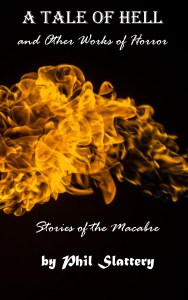 My e-book collection of horror shorts A Tale of Hell and Other Works of Horror” is available on Amazon Kindle. For your copy, go to my Amazon author’s page (amazon.com/author/philslattery) where you can find links to my other works as well.
 In this collection of short stories, I explore the dark, sometimes violent, sometimes twisted, sometimes touching side of love, the side kept not only from public view, but sometimes from our mates. Set in the modern era, these stories range from regretting losing a lover to forbidden interracial love in the hills of 1970’s Kentucky to a mother’s deathbed confession in present-day New Mexico to debating pursuing a hateful man’s wife to the callous manipulation of a lover in Texas.


 I am seeking people to review my works and who post their reviews to markets in the US, Australia, New Zealand, or Canada. I offer my Kindle e-books for free periodically according to Amazon policy. You can find my works on my
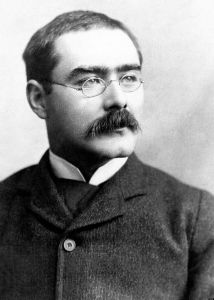

 Phil Slattery, Writer, Publisher