 Source: Interview: Glenn Rolfe
Follow the link to David Sharp’s interview with Glenn Rolfe at Horror Underground. Interesting article.

Source: Interview: Glenn Rolfe
Follow the link to David Sharp’s interview with Glenn Rolfe at Horror Underground. Interesting article.
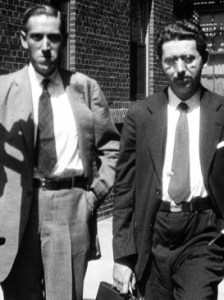
Source: Frank Belknap Long
Here’s a glimpse into the life and works of horror great Frank Belknap Long.
 Source: The Russian Sleep Experiment
Good review of a book that while a good concept, according to the reviewer, could have been carried out better.
 Source: Top 5 Christmas Horror Novels
Here are five suggestions for either your holiday reading or for Christmas gifts.
from Nouveux Contes Cruels, 1893
(the Gaslight etext)
BELOW the vaults of the Official of Saragossa one night-fall long ago, the venerable Pedro Arbuez d’Espila, sixth Prior of the Dominicans of Segovia, third Grand Inquisitor of Spain–followed by a fra redemptor (master-torturer), and preceded by two familiars of the Holy Office holding lanterns–descended towards a secret dungeon. The lock of a massive door creaked; they entered a stifling in pace, where the little light that came from above revealed an instrument of torture blackened with blood, a chafing-dish, and a pitcher. Fastened to the wall by heavy iron rings, on a mass of filthy straw, secured by fetters, an iron circlet about his neck, sat a man in rags: it was impossible to guess at his age.

This prisoner was no other than Rabbi Aser Abarbanel, a Jew of Aragon, who, on an accusation of usury and pitiless contempt of the poor, had for more than a year undergone daily torture. In spite of all, “his blind obstinacy being as tough as his skin,” he had refused to abjure.
Proud of his descent and his ancestors–for all Jews worthy of the name are jealous of their race–he was descended, according to the Talmud, from Othoniel, and consequently from Ipsiboe, wife of this last Judge of Israel, a circumstance which had sustained his courage under the severest of the incessant tortures.
It was, then, with tears in his eyes at the thought that so stedfast a soul was excluded from salvation, that the venerable Pedro Arbuez d’Espila, approaching the quivering Rabbi, pronounced the following words:–
“My son, be of good cheer; your trials here below are about to cease. If, in presence of such obstinacy, I have had to permit, though with sighs, the employment of severe measures, my task of paternal correction has its limits. You are the barren fig-tree, that, found so oft without fruit, incurs the danger of being dried up by the roots… but it is for God alone to decree concerning your soul. Perhaps the Infinite Mercy will shine upon you at the last moment! Let us hope so. There are instances. May it be so! Sleep, then, this evening in peace. To-morrow you will take part in the auto da fé, that is to say, you will be exposed to the quemadero, the brazier premonitory of the eternal flame. It burns, you are aware, at a certain distance, my son; and death takes, in coming, two hours at least, often three, thanks to the moistened and frozen clothes with which we take care to preserve the forehead and the heart of the holocausts. You will be only forty-three. Consider; then, that, placed in the last rank, you will have the time needful to invoke God, to offer unto Him that baptism of fire which is of the Holy Spirit. Hope, then, in the Light, and sleep.”
As he ended this discourse, Dom Arbuez–who had motioned the wretched man’s fetters to be removed–embraced him tenderly. Then came the turn of the fra redemptor, who, in a low voice, prayed the Jew to pardon what he had made him endure in the effort to redeem him; then the two familiars clasped him in their arms: their kiss, through their cowls, was as unheard. The ceremony at an end, the captive was left alone in the darkness.
Rabbi Aser Abarbanel, his lips parched, his face stupefied by suffering, stared, without any particular attention, at the closed door. Closed? The word, half unknown to himself, awoke a strange delusion in his confused thoughts. He fancied he had seen, for one second, the light of the lanterns through the fissure between the sides of this door. A morbid idea of hope, due to the enfeeblement of his brain, took hold on him. He dragged himself towards this strange thing he had seen; and, slowly inserting a finger, with infinite precautions, into the crack, he pulled the door towards him. Wonder of wonders! By some extraordinary chance the familiar who had closed it had turned the great key a little before it had closed upon its jambs of stone. So, the rusty bolt not having entered its socket, the door rolled back into the cell.
The Rabbi ventured to look out.
By means of a sort of livid obscurity he distinguished, first of all, a half-circle of earthy walls, pierced by spiral stairways, and, opposite to him, five or six stone steps, dominated by a sort of black porch, giving access to a vast corridor, of which he could only see, from below, the nearest arches.
Stretching himself along, he crawled to the level of this threshold. Yes, it was indeed a corridor, but of boundless length. A faint light–a sort of dream-light was cast over it; lamps suspended to the arched roof, turned, by intervals, the wan air blue; the far distance was lost in shadow. Not a door visible along all this length! On one side only, to the left, small holes, covered with a network of bars, let a feeble twilight through the depths of the wall–the light of sunset apparently, for red gleams fell at long intervals on the flag-stones. And how fearful a silence!… Yet there–there in the depths of the dim distance–the way might lead to liberty! The wavering hope of the Jew was dogged, for it was the last.
Without hesitation he ventured forth, keeping close to the side of the light-holes, hoping to render himself indistinguishable from the darksomc colour of the long walls. He advanced slowly, dragging himself along the ground, forcing himself not to cry out when one of his wounds, recently opened, sent a sharp pang through him.
All of a sudden the beat of a sandal, coming in his direction, echoed along the stone passage. A trembling fit seized him, he choked with anguish, his sight grew dim. So this, no doubt, was to be the end! He squeezed himself, doubled upon his hands and knees, into a recess, and half dead with terror, waited.
It was a familiar hurrying along. He passed rapidly, carrying an instrument for tearing out the muscles, his cowl lowered; he disappeared. The violent shock which the Rabbi had received had half suspended the functions of life; he remained for nearly an hour unable to make a single movement. In the fear of an increase of torments if he were caught, the idea came to him of returning to his cell. But the old hope chirped in his soul–the divine “Perhaps,” in the worst of distresses. A miracle had taken place! There was no more room for doubt. He began again to crawl towards the possible escape. Worn out with suffering and with hunger, trembling with anguish, he advanced. The sepulchral corridor seemed to lengthen out mysteriously. And he, never ceasing his slow advance gazed forward through the darkness, on, on, where there must be an outlet that should save him.
But, oh! steps sounding again; steps, this time, slower, more sombre. The forms of two Inquisitors, robed in black and white, and wearing their large hats with rounded brims, etnerged into the faint light. They talked in low voices, and seemed to be in controversy on some important point, for their hands gesticulated.
At this sight Rabbi Aser Abarbanel closed his eyes, his heart beat as if it would kill him, his rags were drenched with the cold sweat of agony; motionless, gasping, he lay stretched along the wall, under the light of one of the lamps–motionless, imploring the God of David.
As they came opposite to him the two Inquisitors stopped under the light of the lamp, through a mere chance, no doubt, in their discussion. One of them, listening to his interlocutor, looked straight at the Rabbi. Under this gaze–of which he did not at first notice the vacant expression–the wretched man seemed to feel the hot pincers biting into his poor flesh so he was again to become a living wound, a living woe! Fainting, scarce able to breathe, his eyelids quivering, he shuddered as the robe grazed him. But strange at once and natural–the eyes of the Inquistor were evidently the eyes of a man profoundly preoccupied with what he was going to say in reply, absorbed by what he was listening to; they were fixed, and seemed to look at the Jew without seeing him.
And indeed, in a few minutes, the two sinister talkers went on their way, slowly, still speaking in low voices, in the direction from which the prisoner had come. They had not seen him! And it was so, that, in the horrible disarray of his sensations, his brain was traversed by this thought: “Am I already dead, so that no one sees me?” A hideous impression drew him from his lethargy. On gazing at the wall, exactly opposite to his face, he fancied he saw, over against his, two ferocious eyes observing him! He flung back his head in a blind and sudden terror; the hair started upright upon his head. But no, no. He put out his hand, and felt along the stones. What he saw was the reflection of the eyes of the Inquisitor still left upon his pupils, and which he had refracted upon two spots of the wall.
Forward! He must hasten towards that end that he imagined (fondly, no doubt) to mean deliverance; towards those shadows from which he was no more than thirty paces, or so, distant. He started once more crawling on hands and knees and stomach–upon his dolorous way, and he was soon within the dark part of the fearful corridor.
All at once the wretched man felt the sensation of cold upon his hands that he placed on the flag-stones; it was a strong current which came from under a little door at the end of the passage. O God, if this door opened on the outer world! The whole being of the poor prisoner was overcome by a sort of vertigo of hope. He examined the door from top to bottom without: being able to distinguish it completely on account of the dimness around him. He felt over it. No lock, not a bolt! A latch! He rose to his feet: the latch yielded beneath his finger; the silent door opened before him.
“Hallelujah!” murrnured the Rabbi, in an immense sigh, as he gazed at what stood revealed to him from the threshold
The door opened upon gardens, under a night of star–upon spring, liberty, life! The gardens gave access to the neighhouring country that stretched away to the sierra!” Those sinuous white lines stood out in profile on the horizon. There lay liberty! Oh, to fly! He would run all night under those woods of citrons, whose perfume intoxicated him. Once among the mountains, he would be saved. He breathed the dear, holy air; the wind re-animated him, his lungs found free play. He heard, in his expanding heart, the “Lazarus, come forth!” And, to give thanks to God who had granted him this mercy, he stretched forth his arms before him, lifting his eyes to the firmament in an ecstasy.
And then he seemed to see the shadow of his arms returning upon himself; he seemed to feel those shadow-arms surround, enlace him, and himself pressed tenderly against some breast. A tall figure, indeed, was opposite to him. Confidently he lowered his eyes upon this figure, and remained gasping, stupefied, with staring eyes and mouth drivelling with fright.
Horror! He was in the arms of the Grand Inquisitor himself, the venerable Pedro Arbuez d’Espila, who gazed at him with eyes full of tears, like a good shepherd who has found the lost sheep.
The sombre priest clasped the wretched Jew against his heart with so fervent a transport of charity that the points of the monacal hair-cloth rasped against the chest of the Dominican. And, while the Rabbi Aser Abarbanel, his eyes convulsed beneath his eyelids, choked with anguish between the arms of the ascetic Dom Arbuez, realising confusedly that all the phases of the fatal evening had been only a calculated torture, that of Hope! the Grand Inquisitor, with a look of distress, an accent of poignant reproach, murmured in his ear, with the burning breath of much fasting:–“What! my child! on the eve, perhaps, of salvation…. you would then leave us?”
 Source: With your heart fixed on the Supreme Lord: Foreword, issue the 11th
Do not judge this article by its title; it’s not what you expect. Check out this neat article from The Stockholm Review of Literature on publication, rejection, and J.D. Salinger (pictured).
Thoughts? Comments?
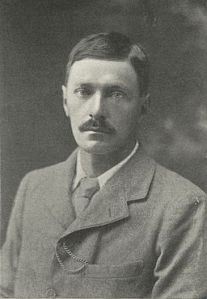
Source: 13 Haunting Tales by E.F. Benson
Follow the link to a selection of horror works by horror master E.F. Benson.

Source: “AT LORN HALL” BY RAMSEY CAMPBELL
Good story by one of the current masters of horror.
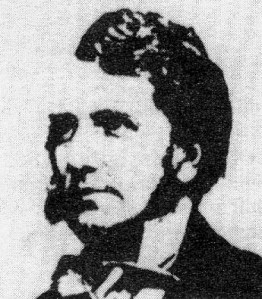
Source: J SHERIDAN LE FANU
Good article from Horrordelve.com on Sheridan Le Fanu, Irish author of the mid-nineteenth century. In his day, he was well-known for his ghost stories, some of which are described in this article.
I endeavor each Saturday to post a work of horror from its long past. Horror, as a recognized genre, has existed less than a century. Before that, it was known by several names or vague references, such asv”weird fiction” or “ghost stories” or “gothic tales”. Many tales from these earlier eras are forgotten, but many are still well-known, having withstood the test of time, because they contained some element(s) that made them worthy of being remembered. It is to our advantage to study these memorable works and to discern what it is about them that speaks to the human psyche so intensely that they are remembered. However, just because a work is not well-known today, does not mean it does not merit study. There are many tales that were popular or highly acclaimed in their time, that should be remembered today, but sadly are not. We can learn much from these as well.
My intent is to bring to the world’s attention once again, stories that warrant study and remembrance. Too often in our modern world we become so lost among fads, trends, sound bytes, and the often ill-advised advice of pundits and critics, that we lose sight of the entirety of our lives and of our art. As someone once said, “when you’re up to your ass in alligators, it’s hard to remember your mission was to drain the swamp.” Maintaining a good, solid overview of one’s art is one means of maintaining a good, solid perspective, and probably the most basic overview is the historical perspective.
For these reasons, every Saturday I would like to bring you a story from horror’s long past, one that is worthy of study and remembrance. I shall try to keep them brief, but I will have to balance that with each one’s own merits. I hope you enjoy them all. This Saturday’s selection is:
1911
(the Gaslight e-text)

IT GOES past the powers of my pen to try to describe Reelfoot Lake for you so that you, reading this, will get the picture of it in your mind as I have it in mine.
For Reelfoot Lake is like no other lake that I know anything about. It is an after-thought of Creation.
The rest of this continent was made and had dried in the sun for thousands of years-millions of years, for all I know-before Reelfoot came to be. It’s the newest big thing in nature on this hemisphere, probably, for it was formed by the great earthquake of 1811.
That earthquake of 1811 surely altered the face of the earth on the then far frontier of this country.
It changed the course of rivers, it converted hills into what are now the sunk lands of three states, and it turned the solid ground to jelly and made it roll in waves like the sea.
And in the midst of the retching of the land and the vomiting of the waters it depressed to varying depths a section of the earth crust sixty miles long, taking it down — trees, hills, hollows, and all, and a crack broke through to the Mississippi River so that for three days the river ran up stream, filling the hole.
The result was the largest lake south of the Ohio, lying mostly in Tennessee, but extending up across what is now the Kentucky line, and taking its name from a fancied resemblance in its outline to the splay, reeled foot of a cornfield negro. Niggerwool Swamp, not so far away, may have got its name from the same man who christened Reelfoot: at least so it sounds.
Reelfoot is, and has always been, a lake of mystery.
In places it is bottomless. Other places the skeletons of the cypress-trees that went down when the earth sank, still stand upright so that if the sun shines from the right quarter, and the water is less muddy than common, a man, peering face downward into its depths, sees, or thinks he sees, down below him the bare top-limbs upstretching like drowned men’s fingers, all coated with the mud of years and bandaged with pennons of the green lake slime.
In still other places the lake is shallow for long stretches, no deeper than breast high to a man, but dangerous because of the weed growths and the sunken drifts which entangle a swimmer’s limbs. Its banks are mainly mud, its waters are *muddled, too, being a rich coffee color in the spring and a copperish yellow in the summer, and the trees along its shore are mud colored clear up their lower limbs after the spring floods, when the dried sediment covers their trunks with a thick, scrofulous-looking coat.
There are stretches of unbroken woodland around it, and slashes where the cypress knees rise countlessly like headstones and footstones for the dead snags that rot in the soft ooze.
There are deadenings with the lowland corn growing high and rank below and the bleached, fire-blackened girdled trees rising above, barren of leaf and limb.
There are long, dismal flats where in the spring the clotted frog- spawn cling like patches of white mucus among the weed-stalks, and at night the turtles crawl out to lay clutches of perfectly, round, white eggs with tough, rubbery shells in the sand.
There are bayous leading off to nowhere, and sloughs that wind aimlessly, like great, blind worms, to finally join the big river that rolls its semi-liquid torrents a few miles to the westward.
So Reelfoot lies there, flat in the bottoms, freezing lightly in the winter, steaming torridly in the summer, swollen in the spring when the woods have turned a vivid green and the buffalo-gnats by the million and the billion fill the flooded hollows with their pestilential buzzing, and in the fall, ringed about gloriously with all the colors which the first frost brings-gold of hickory, yellow-russet of sycamore, red of dogwood and ash, and purple-black of sweet-gum.
But the Reelfoot country has its uses. It is the best game and fish country, natural or artificial, that is left in the South today.
In their appointed seasons the duck and the geese flock in, and even semi-tropical birds, like the brown pelican and the Florida snake-bird, have been known to come there to nest.
Pigs, gone back to wildness, range the ridges, each razor-backed drove captained by a gaunt, savage, slab-sided old boar. By night the bullfrogs, inconceivably big and tremendously vocal, bellow under the banks.
It is a wonderful place for fish — bass and crappie, and perch, and the snouted buffalo fish.
How these edible sorts live to spawn, and how their spawn in turn live to spawn again is a marvel, seeing how many of the big fish-eating cannibal-fish there are in Reelfoot.
Here, bigger than anywhere else, you find the garfish, all bones and appetite and horny plates, with a snout like an alligator, the nearest link, naturalists say, between the animal life of today and the animal life of the Reptilian Period.
The shovel-nose cat, really a deformed kind of fresh-water sturgeon, with a great fan-shaped membranous plate jutting out from his nose like a bowsprit, jumps all day in the quiet places with mighty splashing sounds, as though a horse had fallen into the water.
On every stranded log the huge snapping turtles lie on sunny days in groups of four and six, baking their shells black in the sun, with their little snaky heads raised watchfully, ready to slip noiselessly off at the first sound of oars grating in the row-locks. But the biggest of them all are the catfish!
These are monstrous creatures, these catfish of Reelfoot — scaleless,slick things, with corpsy, dead eyes and poisonous fins, like javelins, and huge whiskers dangling from the sides of their cavernous heads.
Six and seven feet long they grow to be, and weigh 200 pounds or more, and they have mouths wide enough to take in a man’s foot or a man’s fist, and strong enough to break any hook save the strongest, and greedy enough to eat anything, living or dead or putrid, that the horny jaws can master.
Oh, but they are wicked things, and they tell wicked tales of them down there. They call them man-eaters, and compare them, in certain of their habits, to sharks.
Fishhead was of a piece with this setting.
He fitted into it as an acorn fits its cup. All his life he had lived on Reelfoot, always in the one place, at the mouth of a certain slough.
He had been born there, of a negro father and a half-breed Indian mother, both of them now dead, and the story was that before his birth his mother was frightened by one of the big fish, so that the child came into the world most hideously marked.
Anyhow, Fishhead was a human monstrosity, the veritable embodiment of nightmare!
He had the body of a man — a short, stocky sinewy body — but his face was as near to being the face of a great fish as any face could be and yet retain some trace of human aspect.
His skull sloped back so abruptly that he could hardly be said to have a have a forehead at all; his chin slanted off right into nothing. His eyes were small and round with shallow, glazed, pale-yellow pupils, and they were set wide apart in his head, and they were unwinking and staring, like a fish’s eyes.
His nose was no more than a pair of tiny slits in the middle of the yellow mask. His mouth was the worst of all. It was the awful mouth of a catfish, lipless and almost inconceivably wide, stretching from side to side.
Also when Fishhead became a man grown his likeness to a fish increased, for the hair upon his face grew out into two tightly kinked slender pendants that drooped down either side of the mouth like the beards of a fish!
If he had another name than Fishhead, none excepting he knew it. As Fishhead he was known, and as Fishhead he answered. Because he knew the waters and the woods of Reelfoot better than any other man there, he was valued as a guide by the city men who came every year to hunt or fish; but there were few such jobs that Fishhead would take.
Mainly he kept to himself, tending his corn patch, netting the lake, trapping a little, and in season pot hunting for the city markets. His neighbors, ague-bitten whites and malaria-proof negroes alike, left him to himself
Indeed, for the most part they had a superstitious fear of him. So he lived alone, with no kith nor kin, nor even a friend, shunning his kind and shunned by them.
His cabin stood just below the State line, where Mud Slough runs into the lake. It was a shack of logs, the only human habitation for four miles up or down.
Behind it the thick timber came shouldering right up to the edge of Fishhead’s small truck patch, enclosing it in thick shade except when the sun stood just overhead.
He cooked his food in a primitive fashion, outdoors, over a hole in the soggy earth or upon the rusted red ruin of an old cookstove, and he drank the saffron water of the lake out of a dipper made of a gourd, faring and fending for himself, a master hand at skiff and net, competent with duck gun and fishspear, yet a creature of affliction and loneliness, part savage, almost amphibious, set apart from his fellows, silent and suspicious.
In front of his cabin jutted out a long fallen cottonwood trunk, lying half in and half out of the water, its top side burnt by the sun and worn by the friction of Fishhead’s bare feet until it showed countless patterns of tiny scrolled lines, its underside black and rotted, and lapped at unceasingly by little waves like tiny licking tongues.
Its farther end reached deep water. And it was a part of Fishhead, for no matter how far his fishing and trapping might take him in the daytime, sunset would find him back there, his boat drawn up on the bank, and he on the other end of this log.
From a distance men had seen him there many times, sometimes squatted motionless as the big turtles that would crawl upon its dipping tip in his absence, sometimes erect and motionless like a creek crane, his misshapen yellow form outlined against the yellow sun, the yellow water, the yellow banks — all of them yellow together.
If the Reelfooters shunned Fishhead by day they feared him by night and avoided him as a plague, dreading even the chance of a casual meeting. For there were ugly stories about Fishhead — stories which all the negroes and some of the whites believed.
They said that a cry which had been heard just before dusk and just after, skittering across the darkened waters, was his calling cry to the big cats, and at his bidding they came trooping in, and that in their company he swam in the lake on moonlight nights, sporting with them, diving with them, even feeding with them on what manner of unclean things they fed.
The cry had been heard many times, that much was certain, and it was certain also that the big fish were noticeably thick at the mouth of Fishhead’s slough. No native Reelfooter, white or black, would willingly wet a leg or an arm there.
Here Fishhead had lived, and here he was going to die. The Baxters were going to kill him, and this day in late summer was to be the time of the killing.
The two Baxters — Jake and Joel — were coming in their dugout to do it!
This murder had been a long time in the making. The Baxters had to brew their hate over a slow fire for months before it reached the pitch of action.
They were poor whites, poor in everything, repute, and worldly goods, and standing — a pair of fever-ridden squatters who lived on whiskey and tobacco when they could get it, and on fish and cornbread when they couldn’t.
The feud itself was of months’ standing. Meeting Fishhead one day, in the spring on the spindly scaffolding of the skiff landing at Walnut Log, and being themselves far overtaken in liquor and vainglorious with a bogus alcoholic substitute for courage, the brothers had accused him, wantonly and without proof, of running their trout-line and stripping it of the hooked catch — an unforgivable sin among the water dwellers and the shanty boaters of the South.
Seeing that he bore this accusation in silence, only eyeing them steadfastly, they had been emboldened then to slap his face, whereupon he turned and gave them both the beating of their lives — bloodying their noses and bruising their lips with hard blows against their front teeth, and finally leaving them, mauled and prone, in the dirt.
Moreover, in the onlookers a sense of the everlasting fitness of things had triumphed over race prejudice and allowed them — two freeborn, sovereign whites — to be licked *by, a nigger! Therefore they were going to get the nigger!
The whole thing had been planned out amply. They were going to kill him on his log at sundown. There would be no witnesses to see it, no retribution to follow after it. The very ease of the undertaking made them forget even their inborn fear of the place of Fishhead’s habitation.
For more than an hour they had been coming from their shack across a deeply indented arm of the lake.
Their dugout, fashioned by fire and adz and draw-knife from the bole of a gum-tree, moved through the water as noiselessly as a swimming mallard, leaving behind it a long, wavy trail on the stilled waters.
Jake, the better oarsman, sat flat in the stern of the round-bottomed craft, paddling with quick, splashless strokes, Joel, the better shot, was squatted forward. There was a heavy, rusted duck gun between his knees.
Though their spying upon the victim had made them certain sure he would not be about the shore for hours, a doubled sense of caution led them to hug closely the weedy banks. They slid along the shore like shadows, moving so swiftly and in such silence that the watchful mudturtles barely turned their snaky heads as they passed.
So, a full hour before the time, they came slipping around the mouth of the slough and made for a natural ambuscade which the mixed-breed had left within a stone’s jerk of his cabin to his own undoing.
Where the slough’s flow joined deeper water a partly uprooted tree was stretched, prone from shore, at the top still thick and green with leaves that drew nourishment from the earth in which the half uncovered roots yet held, and twined about with an exuberance of trumpet vines and wild fox-grapes. All about was a huddle of drift — last year’s cornstalks, shreddy strips of bark, chunks of rotted weed, all the riffle and dunnage of a quiet eddy.
Straight into this green clump glided the dugout and swung, broadside on, against the protecting trunk of the tree, hidden from the inner side by the intervening curtains of rank growth, just as the Baxters had intended it should be hidden when days before in their scouting they marked this masked place of waiting and included it, then and there, in the scope of their plans.
There had been no hitch or mishap. No one had been abroad in the late afternoon to mark their movements — and in a little while Fishhead ought to be due. Jake’s woodman’s eye followed the downward swing of the sun speculatively.
The shadows, thrown shoreward, lengthened and slithered on the small ripples. The small noises of the day died out; the small noises of the coming night began to multiply.
The green-bodied flies went away and big mosquitoes with speckled gray legs, came to take the places of the flies.
The sleepy lake sucked at the mud banks with small mouthing sounds, as though it found the taste of the raw mud agreeable. A monster crawfish, big as a chicken lobster, crawled out of the top of his dried mud chimney and perched himself there, an armored sentinel on the watchtower.
Bull bats began to flitter back and forth, above the tops of the trees. A pudgy muskrat, swimming with head up, was moved to sidle off briskly as he met a cotton-mouth moccasin snake, so fat and swollen with summer poison that it looked almost like a legless lizard as it moved along the surface of the water in a series of slow torpid S’s. Directly above the head of either of the waiting assassins a compact little swarm of midges hung, holding to a sort of kite-shaped formation.
A little more time passed and Fishhead came out of the woods at the back, walking swiftly, with a sack over his shoulder.
For a few seconds his deformities showed in the clearing, then the black inside of the cabin swallowed him up.
By now the sun was almost down. Only the red nub of it showed above the timber line across the lake, and the shadows lay inland a long way. Out beyond, the big cats were stirring, and the great smacking sounds as their twisting bodies leaped clear and fell back in the water, came shoreward in a chorus.
But the two brothers, in their green covert, gave heed to nothing except the one thing upon which their hearts were set and their nerves tensed. Joel gently shoved his gun barrels across the log, cuddling the stock to his shoulder and slipping two fingers caressingly back and forth upon the triggers. Jake held the narrow dugout steady by a grip upon a fox-grape tendril.
A little wait and then the finish came!
Fishhead emerged from the cabin door and came down the narrow footpath to the water and out upon the water on his log.
He was barefooted and bareheaded, his cotton shirt open down the front to show his yellow neck and breast, his dungaree trousers held about his waist by a twisted tow string.
His broad splay feet, with the prehensile toes outspread, gripped the polished curve of the log as he moved along its swaying, dipping surface until he came to its outer end, and stood there erect, his chest filling, his chinless face lifted up, and something of mastership and dominion in his poise.
And then — his eye caught what another’s eyes might have missed — the round, twin ends of the gun barrels, the fixed gleam of Joel’s eyes, aimed at him through the green tracery! In that swift passage of time, too swift almost to be measured by seconds, realization flashed all through him, and he threw his head still higher and opened wide his shapeless trap of a mouth, and out across the lake he sent skittering and rolling his cry.
And in his cry was the laugh of a loon, and the croaking bellow of a frog, and the bay of a hound, all the compounded night noises of the lake. And in it, too, was a farewell, and a defiance, and an appeal!
The heavy roar of the duck gun came!
At twenty yards the double charge tore the throat out of him. He came down, face forward, upon the log and clung there, his trunk twisting distortedly, his legs twitching and kicking like the legs of a speared frog; his shoulders hunching and lifting spasmodically as the life ran out of him all in one swift coursing flow.
His head canted up between the heaving shoulders, his eyes looked full on the staring face of his murderer, and then the blood came out of his mouth, and Fishhead, in death still as much fish as man, slid, flopping, head first, off the end of the log, and sank, face downward slowly, his limbs all extended out.
One after another a string of big bubbles came up to burst in the middle of a widening reddish stain on the coffee-colored water.
The brothers watched this, held by the horror of the thing they had done, and the cranky dugout, having been tipped far over by the recoil of the gun, took water steadily across its gunwale; and now there was a sudden stroke from below upon its careening bottom and it went over and they were in the lake.
But shore was only twenty feet away, the trunk of the uprooted tree only five. Joel, still holding fast to his shot gun, made for the log, gaining it with one stroke. He threw his free arm over it and clung there, treading water, as he shook his eyes free.
Something gripped him — some great, sinewy, unseen thing gripped him fast by the thigh, crushing down on his flesh!
He uttered no cry, but his eyes popped out, and his mouth set in a square shape of agony, and his fingers gripped into the bark of the tree like grapples. He was pulled down and down, by steady jerks, not rapidly but steadily, so steadily, and as he went his fingernails tore four little white strips in the tree-bark. His mouth went under, next his popping eyes, then his erect hair, and finally his clawing, clutching hand, and that was the end of him.
Jake’s fate was harder still, for he lived longer — long enough to see Joel’s finish. He saw it through the water that ran down his face, and with a great surge of his whole body, he literally flung himself across the log and jerked his legs up high into the air to save them. He flung himself too far, though, for his face and chest hit the water on the far side.
And out of this water rose the head of a great fish, with the lake slime of years on its flat, black head, its whiskers bristling, its corpsy eyes alight. Its horny jaws closed and clamped in the front of Jake’s flannel shirt. His hand struck out wildly and was speared on a poisoned fin, and, unlike Joel, he went from sight with a great yell, and a whirling and churning of the water that made the cornstalks circle on the edges of a small whirlpool.
But the whirlpool soon thinned away, into widening rings of ripples, and the corn stalks quit circling and became still again, and only the multiplying night noises sounded about the mouth of the slough.
The bodies of all three came ashore on the same day near the same place. Except for the gaping gunshot wound where the neck met the chest, Fishhead’s body was unmarked.
But the bodies of the two Baxters were so marred and mauled that the Reelfooters buried them together on the bank without ever knowing which might be Jake’s and which might be Joel’s

Source: 13 Short Horror Stories that Blew My Mind Follow this link to an excellent selection of short stories by a librarian passionate for horror.
“The Jar” Follow the link to the flash horror “The Jar” by Olivia Wilding. This is an interesting tale, primarily for its point of view: frominside the narrator’s head that describes his emotions to the events around him and to the actions he takes. This is not unusual in itself, but here it is done very well and it manages to transmit what Henry James called “the atmosphere of the mind” to the reader. The voice has a haunting quality. I wish I had the time to write a thesis on what makes for a haunting narration such as this one, but I don’t.
There is something in the combined sequence of actions and emotions that stirs certain dark emotions in the readers psyche, perhaps it’s something archetypal, Jungian. For me, this has always been the most effective means of instilling horror into a readership. If it didn’t start with Poe, it must have started in his era.
Second, it has an interesting twist at the end, which the author never gives away or hints at in the story. This is hard to do and it is done here well.
Lastly, the story is a combination of two different types of horror: the physical act of violence and the moral disgust it generates (when revealed) and the twisted relationship revealed at the end. All in all, this story has a very good denouement.
Please take the time to read “The Jar”. You won’t regret it.
Don’t read it, if you have something against well-chosen, strong language.
Thoughts? Comments?
 Visit Top 10 Horror Stories at Publisher’s Weekly to find ten chilling stories recommended by respected anthologist Stephen Jones.
I endeavor each Saturday to post a work of horror from its long past. Horror, as a recognized genre, has existed less than a century. Before that, it was known by several names or vague references, such asv”weird fiction” or “ghost stories” or “gothic tales”. Many tales from these earlier eras are forgotten, but many are still well-known, having withstood the test of time, because they contained some element(s) that made them worthy of being remembered. It is to our advantage to study these memorable works and to discern what it is about them that speaks to the human psyche so intensely that they are remembered. However, just because a work is not well-known today, does not mean it does not merit study. There are many tales that were popular or highly acclaimed in their time, that should be remembered today, but sadly are not. We can learn much from these as well.
My intent is to bring to the world’s attention once again, stories that warrant study and remembrance. Too often in our modern world we become so lost among fads, trends, sound bytes, and the often ill-advised advice of pundits and critics, that we lose sight of the entirety of our lives and of our art. As someone once said, “when you’re up to your ass in alligators, it’s hard to remember your mission was to drain the swamp.” Maintaining a good, solid overview of one’s art is one means of maintaining a good, solid perspective, and probably the most basic overview is the historical perspective.
For these reasons, every Saturday I would like to bring you a story from horror’s long past, one that is worthy of study and remembrance. I shall try to keep them brief, but I will have to balance that with each one’s own merits. I hope you enjoy them all. This Saturday’s selection is:
1907
(the Project Gutenberg Australia text)
“It stands to reason,” said Twombly, “that a man must accept of his own eyes, and when eyes and ears agree, there can be no doubt. He has to believe what he has both seen and heard.”
“Not always,” put in Singleton, softly.
Every man turned toward Singleton. Twombly was standing on hearthrug, his back to the grate, his legs spread out, with his habitual air of dominating the room. Singleton, as usual, was as much as possible effaced in a corner. But when Singleton spoke he said something. We faced him in that flattering spontaneity of expectant silence which invites utterance.
“I was thinking,” he said, after an interval, “of something I both saw and heard in Africa.”
Now, if there was one thing we had found impossible, it had been to elicit from Singleton anything definite about his African experiences. As with the Alpinist in the story, who could tell only that he went up and came down, the sum of Singleton’s revelations had been that he went there and came away. His words now riveted our attention at once. Twombly faded from the hearthrug, but not one of us could ever recall having seen him go. The room readjusted itself, focused on Singleton, and there was some hasty and furtive lighting of fresh cigars. Singleton lit one also, but it went out immediately, and he never relit it.
We were in the Great Forest, exploring for pigmies. Van Rieten had a theory that the dwarfs found by Stanley and others were a mere cross-breed between ordinary negroes and the real pigmies. He hoped to discover a race of men three feet tall at most, or shorter. We had found no trace of any such beings.
Natives were few, game scarce; food, except game, there was none; and the deepest, dankest, drippingest forest all about. We were the only novelty in the country, no native we met had ever seen a white man before, most had never heard of white men. All of a sudden, late one afternoon, there came into our camp an Englishman, and pretty well used up he was, too. We had heard no rumor of him; he had not only heard of us but had made an amazing five-day march to reach us. His guide and two bearers were nearly as done up as he. Even though he was in tatters and had five days’ beard on, you could see he was naturally dapper and neat and the sort of man to shave daily. He was small, but wiry. His face was the sort of British face from which emotion has been so carefully banished that a foreigner is apt to think the wearer of the face incapable of any sort of feeling; the kind of face which, if it has any expression at all, expresses principally the resolution to go through the world decorously, without intruding upon or annoying anyone.
His name was Etcham. He introduced himself modestly, and ate with us so deliberately that we should never have suspected, if our bearers had not had it from his bearers, that he had had but three meals in the five days, and those small. After we had lit up he told us why he had come.
“My chief is ve’y seedy,” he said between puffs. “He is bound to go out if he keeps this way. I thought perhaps…”
He spoke quietly in a soft, even tone, but I could see little beads of sweat oozing out on his upper lip under his stubby mustache, and there was a tingle of repressed emotion in his tone, a veiled eagerness in his eye, a palpitating inward solicitude in his demeanor that moved me at once. Van Rieten had no sentiment in him; if he was moved he did not show it. But he listened. I was surprised at that. He was just the man to refuse at once. But he listened to Etcham’s halting, difficult hints. He even asked questions.
“Who is your chief?”
“Stone,” Etcham lisped.
That electrified both of us.
“Ralph Stone?” we ejaculated together.
Etcham nodded.
For some minutes Van Rieten and I were silent. Van Rieten had never seen him, but I had been a classmate of Stone’s, and Van Rieten and I had discussed him over many a campfire. We had heard of him two years before, south of Luebo in the Balunda country, which had been ringing with his theatrical strife against a Balunda witch-doctor, ending in the sorcerer’s complete discomfiture and the abasement of his tribe before Stone. They had even broken the fetish-man’s whistle and given Stone the pieces. It had been like the triumph of Elijah over the prophets of Baal, only more real to the Balunda.
We had thought of Stone as far off, if still in Africa at all, and here he turned up ahead of us and probably forestalling our quest.
Etcham’s naming of Stone brought back to us all his tantalizing story, his fascinating parents, their tragic death; the brilliance of his college days; the dazzle of his millions; the promise of his young manhood; his wide notoriety, so nearly real fame; his romantic elopement with the meteoric authoress whose sudden cascade of fiction had made her so great a name so young, whose beauty and charm were so much heralded; the frightful scandal of the breach-of-promise suit that followed; his bride’s devotion through it all; their sudden quarrel after it was all over; their divorce; the too much advertised announcement of his approaching marriage to the plaintiff in the breach-of-promise suit; his precipitate remarriage to his divorced bride; their second quarrel and second divorce; his departure from his native land; his advent in the dark continent. The sense of all this rushed over me and I believe Van Rieten felt it, too, as he sat silent.
Then he asked:
“Where is Werner?”
“Dead,” said Etcham. “He died before I joined Stone.”
“You were not with Stone above Luebo?”
“No,” said Etcham, “I joined him at Stanley Falls.”
“Who is with him?” Van Rieten asked.
“Only his Zanzibar servants and the bearers,” Etcham replied.
“What sort of bearers?” Van Rieten demanded.
“Mang-Battu men,” Etcham responded simply.
Now that impressed both Van Rieten and myself greatly. It bore out Stone’s reputation as a notable leader of men. For up to that time no one had been able to use Mang-Battu as bearers outside of their own country, or to hold them for long or difficult expeditions.
“Were you long among the Mang-Battu?” was Van Rieten’s next question.
“Some weeks,” said Etcham. “Stone was interested in them and made up a fair-sized vocabulary of their words and phrases. He had a theory that they are an offshoot of the Balunda and he found much confirmation in their customs.”
“What do you live on?” Van Rieten enquired.
“Game, mostly,” Etcham lisped.
“How long has Stone been laid up?” Van Rieten next asked.
“More than a month,” Etcham answered.
“And you have been hunting for the camp?” Van Rieten exclaimed.
Etcham’s face, burnt and flayed as it was, showed a flush.
“I missed some easy shots,” he admitted ruefully. “I’ve not felt ve’y fit myself.”
“What’s the matter with your chief?” Van Rieten enquired.
“Something like carbuncles,” Etcham replied.
“He ought to get over a carbuncle or two,” Van Rieten declared.
“They are not carbuncles,” Etcham explained. “Nor one or two. He has had dozens, sometimes five at once. If they had been carbuncles he would have been dead long ago. But in some ways they are not so bad, though in others they are worse.”
“How do you mean?” Van Rieten queried.
“Well,” Etcham hesitated, “they do not seem to inflame so deep nor so wide as carbuncles, nor to be so painful, nor to cause so much fever. But then they seem to be part of a disease that affects his mind. He let me help him dress the first, but the others he has hidden most carefully, from me and from the men. He keeps his tent when they puff up, and will not let me change the dressings or be with him at all.”
“Have you plenty of dressings?” Van Rieten asked.
“We have some,” said Etcham doubtfully. “But he won’t use them; he washes out the dressings and uses them over and over.”
“How is he treating the swellings?” Van Rieten enquired.
“He slices them off clean down to flesh level, with his razor.”
“What?” Van Rieten shouted.
Etcham made no answer but looked him steadily in the eyes.
“I beg pardon,” Van Rieten hastened to say. “You startled me. They can’t be carbuncles. He’d have been dead long ago.”
“I thought I had said they are not carbuncles,” Etcham lisped.
“But the man must be crazy!” Van Rieten exclaimed.
“Just so,” said Etcham. “He is beyond my advice or control.”
“How many has he treated that way?” Van Rieten demanded.
“Two, to my knowledge,” Etcham said.
“Two?” Van Rieten queried.
Etcham flushed again.
“I saw him,” he confessed, “through a crack in the hut. I felt impelled to keep a watch on him, as if he was not responsible.”
“I should think not,” Van Rieten agreed. “And you saw him do that twice?”
“I conjecture,” said Etcham, “that he did the like with all the rest.”
“How many has he had?” Van Rieten asked.
“Dozens,” Etcham lisped.
“Does he eat?” Van Rieten enquired.
“Like a wolf,” said Etcham. “More than any two bearers.”
“Can he walk?” Van Rieten asked.
“He crawls a bit, groaning,” said Etcham simply.
“Little fever, you say,” Van Rieten ruminated.
“Enough and too much,” Etcham declared.
“Has he been delirious?” Van Rieten asked.
“Only twice,” Etcham replied; “once when the first swelling broke, and once later. He would not let anyone come near him then. But we could hear him talking, talking steadily, and it scared the natives.
“Was he talking their patter in delirium?” Van Rieten demanded.
“No,” said Etcham, “but he was talking some similar lingo. Hamed Burghash said he was talking Balunda. I know too little Balunda. I do not learn languages readily. Stone learned more Mang-Battu in a week than I could have learned in a year. But I seemed to hear words like Mang-Battu words. Anyhow, the Mang-Battu bearers were scared.”
“Scared?” Van Rieten repeated, questioningly.
“So were the Zanzibar men, even Hamed Burghash, and so was I,” said Etcham, “only for a different reason. He talked in two voices.”
“In two voices,” Van Rieten reflected.
“Yes,” said Etcham, more excitedly than he had yet spoken. “In two voices, like a conversation. One was his own, one a small, thin, bleaty voice like nothing I ever heard. I seemed to make out, among the sounds the deep voice made, something like Mang-Battu words I knew, as nedru, metababa, and nedo, their terms for ‘head,’ ‘shoulder,’ ‘thigh,’ and perhaps kudra and nekere (‘speak’ and ‘whistle’); and among the noises of the shrill voice matomipa, angunzi, and kamomami (‘kill,’ ‘death,’ and ‘hate’). Hamed Burghash said he also heard those words. He knew Mang-Battu far better than I.”
“What did the bearers say?” Van Rieten asked.
“They said, ‘, Lukundoo!'” Etcham replied. “I did not know the word; Hamed Burghash said it was Mang-Battu for ‘leopard.'”
“It’s Mang-Battu for ‘witchcraft,'” said Van Rieten.
“I don’t wonder they thought so,” said Etcham. “It was enough to make one believe in sorcery to listen to those two voices.”
“One voice answering the other?” Van Rieten asked perfunctorily.
Etcham’s face went gray under his tan.
“Sometimes both at once,” he answered huskily.
“Both at once!” Van Rieten ejaculated.
“It sounded that way to the men, too,” said Etcham. “And that was not all.”
He stopped and looked helplessly at us for a moment.
“Could a man talk and whistle at the same time?” he asked.
“How do you mean?” Van Rieten queried.
“We could hear Stone talking away, his big, deep-cheated baritone rumbling along, and through it all we could hear a high, shrill whistle, the oddest, wheezy sound. You know, no matter how shrilly a grown man may whistle, the note has a different quality from the whistle of a boy or a woman or a little girl. They sound more treble, somehow. Well, if you can imagine the smallest girl who could whistle keeping it up tunelessly right along, that whistle was like that, only even more piercing, and it sounded right through Stone’s bass tones.”
“And you didn’t go to him?” Van Rieten cried.
“He is not given to threats,” Etcham disclaimed. “But he had threatened, not volubly, nor like a sick man, but quietly and firmly, that if any man of us (he lumped me in with the men) came near him while he was in his trouble, that man should die. And it was not so much his words as his manner. It was like a monarch commanding respected privacy for a deathbed. One simply could not transgress.”
“I see,” said Van Rieten shortly.
“He’s ve’y seedy,” Etcham repeated helplessly. “I thought perhaps….”
His absorbing affection for Stone, his real love for him, shone out through his envelope of conventional training. Worship of Stone was plainly his master passion.
Like many competent men, Van Rieten had a streak of hard selfishness in him. It came to the surface then. He said we carried our lives in our hands from day to day just as genuinely as Stone; that he did not forget the ties of blood and calling between any two explorers, but that there was no sense in imperiling one party for a very problematical benefit to a man probably beyond any help; that it was enough of a task to hunt for one party; that if two were united, providing food would be more than doubly difficult; that the risk of starvation was too great. Deflecting our march seven full days’ journey (he complimented Etcham on his marching powers) might ruin our expedition entirely.
Van Rieten had logic on his side and he had a way with him. Etcham sat there apologetic and deferential, like a fourth-form schoolboy before a head master. Van Rieten wound up.
“I am after pigmies, at the risk of my life. After pigmies I go.”
“Perhaps, then, these will interest you,” said Etcham, very quietly.
He took two objects out of the sidepocket of his blouse, and handed them to Van Rieten. They were round, bigger than big plums, and smaller than small peaches, about the right size to enclose in an average hand. They were black, and at first I did not see what they were.
“Pigmies!” Van Rieten exclaimed. “Pigmies, indeed! Why, they wouldn’t be two feet high! Do you mean to claim that these are adult heads?”
“I claim nothing,” Etcham answered evenly. “You can see for yourself.”
Van Rieten passed one of the heads to me. The sun was just setting and I examined it closely. A dried head it was, perfectly preserved, and the flesh as hard as Argentine jerked beef. A bit of a vertebra stuck out where the muscles of the vanished neck had shriveled into folds. The puny chin was sharp on a projecting jaw, the minute teeth white and even between the retracted lips, the tiny nose was flat, the little forehead retreating, there were inconsiderable clumps of stunted wool on the Lilliputian cranium. There was nothing babyish, childish or youthful about the head; rather it was mature to senility.
“Where did these come from?” Van Rieten enquired.
“I do not know,” Etcham replied precisely. “I found them among Stone’s effects while rummaging for medicines or drugs or anything that could help me to help him. I do not know where he got them. But I’ll swear he did not have them when we entered this district.”
“Are you sure?” Van Rieten queried, his eyes big and fixed on Etcham’s.
“Ve’y sure,” lisped Etcham.
“But how could he have come by them without your knowledge?” Van Rieten demurred.
“Sometimes we were apart ten days at a time hunting,” said Etcham. “Stone is not a talking man. He gave me no account of his doings, and Hamed Burghash keeps a still tongue and a tight hold on the men.”
“You have examined these heads?” Van Rieten asked.
“Minutely,” said Etcham.
Van Rieten took out his notebook. He was a methodical chap. He tore out a leaf, folded it and divided it equally into three pieces. He gave one to me and one to Etcham.
“Just for a test of my impressions,” he said, “I want each of us to write separately just what he is most reminded of by these heads. Then I want to compare the writings.”
I handed Etcham a pencil and he wrote. Then he handed the pencil back to me and I wrote.
“Read the three,” said Van Rieten, handing me his piece.
Van Rieten had written:
“An old Balunda witch-doctor.”
Etcham had written:
“An old Mang-Battu fetish-man.”
I had written:
“An old Katongo magician.”
“There!” Van Rieten exclaimed. “Look at that! There is nothing Wagabi or Batwa or Wambuttu or Wabotu about these heads. Nor anything pigmy either.”
“I thought as much,” said Etcham.
“And you say he did not have them before?”
“To a certainty he did not,” Etcham asserted.
“It is worth following up,” said Van Rieten. “I’ll go with you. And first of all, I’ll do my best to save Stone.”
He put out his hand and Etcham clasped it silently. He was grateful all over.
Nothing but Etcham’s fever of solicitude could have taken him in five days over the track. It took him eight days to retrace with full knowledge of it and our party to help. We could not have done it in seven, and Etcham urged us on, in a repressed fury of anxiety, no mere fever of duty to his chief, but a real ardor of devotion, a glow of personal adoration for Stone which blazed under his dry conventional exterior and showed in spite of him.
We found Stone well cared for. Etcham had seen to a good, high thorn zareeba round the camp, the huts were well built, and thatched and Stone’s was as good as their resources would permit. Hamed Burghash was not named after two Seyyids for nothing. He had in him the making of a sultan. He had kept the Mang-Battu together, not a man had slipped off, and he had kept them in order. Also he was a deft nurse and a faithful servant.
The two other Zanzibaris had done some creditable hunting. Though all were hungry, the camp was far from starvation.
Stone was on a canvas cot and there was a sort of collapsible camp-stool-table, like a Turkish tabouret, by the cot. It had a water-bottle and some vials on it and Stone’s watch, also his razor in its case.
Stone was clean and not emaciated, but he was far gone; not unconscious, but in a daze; past commanding or resisting anyone. He did not seem to see us enter or to know we were there. I should have recognized him anywhere. His boyish dash and grace had vanished utterly, of course. But his head was even more leonine; his hair was still abundant, yellow and wavy; the close, crisped blond beard he had grown during his illness did not alter him. He was big and big-cheated yet. His eyes were dull and he mumbled and babbled mere meaningless syllables, not words.
Etcham helped Van Rieten to uncover him and look him over. He was in good muscle for a man so long bedridden. There were no scars on him except about his knees, shoulders and chest. On each knee and above it he had a full score of roundish cicatrices, and a dozen or more on each shoulder, all in front. Two or three were open wounds and four or five barely healed. He had no fresh swellings, except two, one on each side, on his pectoral muscles, the one on the left being higher up and farther out than the other. They did not look like boils or carbuncles, but as if something blunt and hard were being pushed up through the fairly healthy flesh and skin, not much inflamed.
“I should not lance those,” said Van Rieten, and Etcham assented.
They made Stone as comfortable as they could, and just before sunset we looked in at him again. He was lying on his back, and his chest showed big and massive yet, but he lay as if in a stupor. We left Etcham with him and went into the next hut, which Etcham had resigned to us. The jungle noises were no different than anywhere else for months past, and I was soon fast asleep.
Sometime in the pitch dark I found myself awake and listening. I could hear two voices, one Stone’s, the other sibilant and wheezy. I knew Stone’s voice after all the years that had passed since I heard it last. The other was like nothing I remembered. It had less volume than the wail of a new-born baby, yet there was an insistent carrying power to it, like the shrilling of an insect. As I listened I heard Van Rieten breathing near me in the dark; then he heard me and realized that I was listening, too. Like Etcham I knew little Balunda, but I could make out a word or two. The voices alternated, with intervals of silence between.
Then suddenly both sounded at once and fast. Stone’s baritone basso, full as if he were in perfect health, and that incredibly stridulous falsetto, both jabbering at once like the voices of two people quarreling and trying to talk each other down.
“I can’t stand this,” said Van Rieten. “Let’s have a look at him.”
He had one of those cylindrical electric night-candles. He fumbled about for it, touched the button and beckoned me to come with him. Outside the hut he motioned me to stand still, and instinctively turned off the light, as if seeing made listening difficult.
Except for a faint glow from the embers of the bearers’ fire we were in complete darkness, little starlight struggled through the trees, the river made but a faint murmur. We could hear the two voices together and then suddenly the creaking voice changed into a razor-edged, slicing whistle, indescribably cutting, continuing right through Stone’s grumbling torrent of croaking words.
“Good God!” exclaimed Van Rieten.
Abruptly he turned on the light.
We found Etcham utterly asleep, exhausted by his long anxiety and the exertions of his phenomenal march, and relaxed completely now that the load was in a sense shifted from his shoulders to Van Rieten’s. Even the light on his face did not wake him.
The whistle had ceased and the two voices now sounded together. Both came from Stone’s cot, where the concentrated white ray showed him lying just as we had left him, except that he had tossed his arms above his head and had torn the coverings and bandages from his chest.
The swelling on his right breast had broken. Van Rieten aimed the center line of the light at it and we saw it plainly. From his flesh, grown out of it, there protruded a head, such a head as the dried specimens Etcham had shown us, as if it were a miniature of the head of a Balunda fetish-man. It was black, shining black as the blackest African skin; it rolled the whites of its wicked, wee eyes and showed its microscopic teeth between lips repulsively negroid in their red fullness, even in so diminutive a face. It had crisp, fuzzy wool on its minikin skull, it turned malignantly from side to side and chittered incessantly in that inconceivable falsetto. Stone babbled brokenly against its patter.
Van Rieten turned from Stone and waked Etcham, with some difficulty. When he was awake and saw it all, Etcham stared and said not one word.
“You saw him slice off two swellings?” Van Rieten asked.
Etcham nodded, chokingly.
“Did he bleed much?” Van Rieten demanded.
“Ve’y little,” Etcham replied.
“You hold his arms,” said Van Rieten to Etcham.
He took up Stone’s razor and handed me the light. Stone showed no sign of seeing the light or of knowing we were there. But the little head mewled and screeched at us.
Van Rieten’s hand was steady, and the sweep of the razor even and true. Stone bled amazingly little and Van Rieten dressed the wound as if it had been a bruise or scrape.
Stone had stopped talking the instant the excrescent head was severed. Van Rieten did all that could be done for Stone and then fairly grabbed the light from me. Snatching up a gun he scanned the ground by the cot and brought the butt down once and twice, viciously.
We went back to our hut, but I doubt if I slept.
Next day, near noon, in broad daylight, we heard the two voices from Stone’s hut. We found Etcham dropped asleep by his charge. The swelling on the left had broken, and just such another head was there miauling and spluttering. Etcham woke up and the three of us stood there and glared. Stone interjected hoarse vocables into the tinkling gurgle of the portent’s utterance.
Van Rieten stepped forward, took up Stone’s razor and knelt down by the cot. The atomy of a head squealed a wheezy snarl at him.
Then suddenly Stone spoke English.
“Who are you with my razor?”
Van Rieten started back and stood up.
Stone’s eyes were clear now and bright, they roved about the hut.
“The end,” he said; “I recognize the end. I seem to see Etcham, as if in life. But Singleton! Ah, Singleton! Ghosts of my boyhood come to watch me pass! And you, strange specter with the black beard and my razor! Aroint ye all!”
“I’m no ghost, Stone,” I managed to say. “I’m alive. So are Etcham and Van Rieten. We are here to help you.”
“Van Rieten!” he exclaimed. “My work passes on to a better man. Luck go with you, Van Rieten.”
Van Rieten went nearer to him.
“Just hold still a moment, old man,” he said soothingly. “It will be only one twinge.”
“I’ve held still for many such twinges,” Stone answered quite distinctly. “Let me be. Let me die in my own way. The hydra was nothing to this. You can cut off ten, a hundred, a thousand heads, but the curse you can not cut off, or take off. What’s soaked into the bone won’t come out of the flesh, any more than what’s bred there. Don’t hack me any more. Promise!”
His voice had all the old commanding tone of his boyhood and it swayed Van Rieten as it always had swayed everybody.
“I promise,” said Van Rieten.
Almost as he said the word Stone’s eyes filmed again.
Then we three sat about Stone and watched that hideous, gibbering prodigy grow up out of Stone’s flesh, till two horrid, spindling little black arms disengaged themselves. The infinitesimal nails were perfect to the barely perceptible moon at the quick, the pink spot on the palm was horridly natural. These arms gesticulated and the right plucked toward Stone’s blond beard.
“I can’t stand this,” Van Rieten exclaimed and took up the razor again.
Instantly Stone’s eyes opened, hard and glittering.
“Van Rieten break his word?” he enunciated slowly. “Never!”
“But we must help you,” Van Rieten gasped.
“I am past all help and all hurting,” said Stone. “This is my hour. This curse is not put on me; it grew out of me, like this horror here. Even now I go.”
His eyes closed and we stood helpless, the adherent figure spouting shrill sentences.
In a moment Stone spoke again.
“You speak all tongues?” he asked quickly.
And the mergent minikin replied in sudden English:
“Yea, verily, all that you speak,” putting out its microscopic tongue, writhing its lips and wagging its head from side to side. We could see the thready ribs on its exiguous flanks heave as if the thing breathed.
“Has she forgiven me?” Stone asked in a muffled strangle.
“Not while the moss hangs from the cypresses,” the head squeaked. “Not while the stars shine on Lake Pontchartrain will she forgive.”
And then Stone, all with one motion, wrenched himself over on his side. The next instant he was dead.
When Singleton’s voice ceased the room was hushed for a space. We could hear each other breathing. Twombly, the tactless, broke the silence.
“I presume,” he said, “you cut off the little minikin and brought it home in alcohol.”
Singleton turned on him a stern countenance.
“We buried Stone,” he said, “unmutilated as he died.”
“But,” said the unconscionable Twombly, “the whole thing is incredible.”
Singleton stiffened.
“I did not expect you to believe it,” he said; “I began by saying that although I heard and saw it, when I look back on it I cannot credit it myself.”
Source: FRITZ LEIBER HORROR STORIES
Here’s good overview of the work of horror great Fritz Leiber from the folks at Horrordelve.com.
 Phil Slattery, Writer, Publisher