Award-winning screenwriter releases his mind-bending first short story collection Offered for the first time in a collected format, this selection features ten gripping and darkly imaginative stories by Taylor Grant, a Bram Stoker Award ® nominated author and rising star in the suspense and horror genres.
Discover what happens when:
– A wealthy industrialist awakens after ten years in suspended animation, and finds out that the horrors of the past can never be left behind.
– A lonely man realizes that he’s gradually vanishing from existence, into a nightmarish limbo of his own making.
– An author stumbles upon an incomplete manuscript by his deceased father, and makes the grave mistake of trying to complete the story.
– A woman learns that the imaginary voices that haunt the delusional and criminally insane are, in fact, real.
This remarkable collection of short fiction exposes the terrors that hide beneath the surface…
The Masque of The Red Death and The Premature Burial Make for a Spooky, Smart Double Feature
By Kristin Battestella
In my never-ending search for quality horror, I often turn to the classics. I was pleased to find that two of my favorites The Masque of Red Death and The Premature Burial were available on one DVD. Corman, Poe, Price- Horror Heaven!
Ruthless and satanic Prince Prospero (Price) takes crops from the local villages and burns those carrying the dreaded Red Death plague. He abducts the lovely, devout peasant girl Francesca (Jane Asher) and takes her back to his castle. Other nobles are also gathering at the castle under Prospero’s offer to wait out the Red Death with evenings of pleasure, masquerades, and debauchery. Part of his entertainment includes the diminutive Hop Toad (Skip Martin, Circus of Fear) and his little ballerina Esmeralda (Verina Greenlaw, The Six Wives of…
This is a quirky story, with no obvious horror element, but when you start thinking about the psychological machinations in the protagonist’s head, it’s quite fascinating.
This eBook is for the use of anyone anywhere at no cost and with
almost no restrictions whatsoever. You may copy it, give it away or
re-use it under the terms of the Project Gutenberg License included
with this eBook or online at http://www.gutenberg.net
I.
Without, the night was cold and wet, but in the small parlour of Laburnam Villa the blinds were drawn and the fire burned brightly. Father and son were at chess, the former, who possessed ideas about the game involving radical changes, putting his king into such sharp and unnecessary perils that it even provoked comment from the white-haired old lady knitting placidly by the fire.
“Hark at the wind,” said Mr. White, who, having seen a fatal mistake after it was too late, was amiably desirous of preventing his son from seeing it.
“I’m listening,” said the latter, grimly surveying the board as he stretched out his hand. “Check.”
“I should hardly think that he’d come to-night,” said his father, with his hand poised over the board.
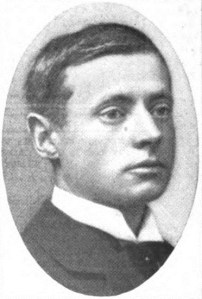
W.W. Jacobs (1903 or before)
“Mate,” replied the son.
“That’s the worst of living so far out,” bawled Mr. White, with sudden and unlooked-for violence; “of all the beastly, slushy, out-of-the-way places to live in, this is the worst. Pathway’s a bog, and the road’s a torrent. I don’t know what people are thinking about. I suppose because only two houses in the road are let, they think it doesn’t matter.”
“Never mind, dear,” said his wife, soothingly; “perhaps you’ll win the next one.”
Mr. White looked up sharply, just in time to intercept a knowing glance between mother and son. The words died away on his lips, and he hid a guilty grin in his thin grey beard.
“There he is,” said Herbert White, as the gate banged to loudly and heavy footsteps came toward the door.
The old man rose with hospitable haste, and opening the door, was heard condoling with the new arrival. The new arrival also condoled with himself, so that Mrs. White said, “Tut, tut!” and coughed gently as her husband entered the room, followed by a tall, burly man, beady of eye and rubicund of visage.
“Sergeant-Major Morris,” he said, introducing him.
The sergeant-major shook hands, and taking the proffered seat by the fire, watched contentedly while his host got out whiskey and tumblers and stood a small copper kettle on the fire.
At the third glass his eyes got brighter, and he began to talk, the little family circle regarding with eager interest this visitor from distant parts, as he squared his broad shoulders in the chair and spoke of wild scenes and doughty deeds; of wars and plagues and strange peoples.
“Twenty-one years of it,” said Mr. White, nodding at his wife and son. “When he went away he was a slip of a youth in the warehouse. Now look at him.”
“He don’t look to have taken much harm,” said Mrs. White, politely.
“I’d like to go to India myself,” said the old man, “just to look round a bit, you know.”
“Better where you are,” said the sergeant-major, shaking his head. He put down the empty glass, and sighing softly, shook it again.
“I should like to see those old temples and fakirs and jugglers,” said the old man. “What was that you started telling me the other day about a monkey’s paw or something, Morris?”
“Nothing,” said the soldier, hastily. “Leastways nothing worth hearing.”
“Monkey’s paw?” said Mrs. White, curiously.
“Well, it’s just a bit of what you might call magic, perhaps,” said the sergeant-major, offhandedly.
His three listeners leaned forward eagerly. The visitor absent-mindedly put his empty glass to his lips and then set it down again. His host filled it for him.
“To look at,” said the sergeant-major, fumbling in his pocket, “it’s just an ordinary little paw, dried to a mummy.”
He took something out of his pocket and proffered it. Mrs. White drew back with a grimace, but her son, taking it, examined it curiously.
“And what is there special about it?” inquired Mr. White as he took it from his son, and having examined it, placed it upon the table.
“It had a spell put on it by an old fakir,” said the sergeant-major, “a very holy man. He wanted to show that fate ruled people’s lives, and that those who interfered with it did so to their sorrow. He put a spell on it so that three separate men could each have three wishes from it.”
His manner was so impressive that his hearers were conscious that their light laughter jarred somewhat.
“Well, why don’t you have three, sir?” said Herbert White, cleverly.
The soldier regarded him in the way that middle age is wont to regard presumptuous youth. “I have,” he said, quietly, and his blotchy face whitened.
“And did you really have the three wishes granted?” asked Mrs. White.
“I did,” said the sergeant-major, and his glass tapped against his strong teeth.
“And has anybody else wished?” persisted the old lady.
“The first man had his three wishes. Yes,” was the reply; “I don’t know what the first two were, but the third was for death. That’s how I got the paw.”
His tones were so grave that a hush fell upon the group.
“If you’ve had your three wishes, it’s no good to you now, then, Morris,” said the old man at last. “What do you keep it for?”
The soldier shook his head. “Fancy, I suppose,” he said, slowly. “I did have some idea of selling it, but I don’t think I will. It has caused enough mischief already. Besides, people won’t buy. They think it’s a fairy tale; some of them, and those who do think anything of it want to try it first and pay me afterward.”
“If you could have another three wishes,” said the old man, eyeing him keenly, “would you have them?”
“I don’t know,” said the other. “I don’t know.”
He took the paw, and dangling it between his forefinger and thumb, suddenly threw it upon the fire. White, with a slight cry, stooped down and snatched it off.
“Better let it burn,” said the soldier, solemnly.
“If you don’t want it, Morris,” said the other, “give it to me.”
“I won’t,” said his friend, doggedly. “I threw it on the fire. If you keep it, don’t blame me for what happens. Pitch it on the fire again like a sensible man.”
The other shook his head and examined his new possession closely. “How do you do it?” he inquired.
“Hold it up in your right hand and wish aloud,” said the sergeant-major, “but I warn you of the consequences.”
“Sounds like the Arabian Nights,” said Mrs. White, as she rose and began to set the supper. “Don’t you think you might wish for four pairs of hands for me?”
Her husband drew the talisman from pocket, and then all three burst into laughter as the sergeant-major, with a look of alarm on his face, caught him by the arm.
“If you must wish,” he said, gruffly, “wish for something sensible.”
Mr. White dropped it back in his pocket, and placing chairs, motioned his friend to the table. In the business of supper the talisman was partly forgotten, and afterward the three sat listening in an enthralled fashion to a second instalment of the soldier’s adventures in India.
“If the tale about the monkey’s paw is not more truthful than those he has been telling us,” said Herbert, as the door closed behind their guest, just in time for him to catch the last train, “we sha’nt make much out of it.”
“Did you give him anything for it, father?” inquired Mrs. White, regarding her husband closely.
“A trifle,” said he, colouring slightly. “He didn’t want it, but I made him take it. And he pressed me again to throw it away.”
“Likely,” said Herbert, with pretended horror. “Why, we’re going to be rich, and famous and happy. Wish to be an emperor, father, to begin with; then you can’t be henpecked.”
He darted round the table, pursued by the maligned Mrs. White armed with an antimacassar.
Mr. White took the paw from his pocket and eyed it dubiously. “I don’t know what to wish for, and that’s a fact,” he said, slowly. “It seems to me I’ve got all I want.”
“If you only cleared the house, you’d be quite happy, wouldn’t you?” said Herbert, with his hand on his shoulder. “Well, wish for two hundred pounds, then; that ‘ll just do it.”
His father, smiling shamefacedly at his own credulity, held up the talisman, as his son, with a solemn face, somewhat marred by a wink at his mother, sat down at the piano and struck a few impressive chords.
“I wish for two hundred pounds,” said the old man distinctly.
A fine crash from the piano greeted the words, interrupted by a shuddering cry from the old man. His wife and son ran toward him.
“It moved,” he cried, with a glance of disgust at the object as it lay on the floor.
“As I wished, it twisted in my hand like a snake.”
“Well, I don’t see the money,” said his son as he picked it up and placed it on the table, “and I bet I never shall.”
“It must have been your fancy, father,” said his wife, regarding him anxiously.
He shook his head. “Never mind, though; there’s no harm done, but it gave me a shock all the same.”
They sat down by the fire again while the two men finished their pipes. Outside, the wind was higher than ever, and the old man started nervously at the sound of a door banging upstairs. A silence unusual and depressing settled upon all three, which lasted until the old couple rose to retire for the night.
“I expect you’ll find the cash tied up in a big bag in the middle of your bed,” said Herbert, as he bade them good-night, “and something horrible squatting up on top of the wardrobe watching you as you pocket your ill-gotten gains.”
He sat alone in the darkness, gazing at the dying fire, and seeing faces in it. The last face was so horrible and so simian that he gazed at it in amazement. It got so vivid that, with a little uneasy laugh, he felt on the table for a glass containing a little water to throw over it. His hand grasped the monkey’s paw, and with a little shiver he wiped his hand on his coat and went up to bed.
II.
In the brightness of the wintry sun next morning as it streamed over the breakfast table he laughed at his fears. There was an air of prosaic wholesomeness about the room which it had lacked on the previous night, and the dirty, shrivelled little paw was pitched on the sideboard with a carelessness which betokened no great belief in its virtues.
“I suppose all old soldiers are the same,” said Mrs. White. “The idea of our listening to such nonsense! How could wishes be granted in these days? And if they could, how could two hundred pounds hurt you, father?”
“Might drop on his head from the sky,” said the frivolous Herbert.
“Morris said the things happened so naturally,” said his father, “that you might if you so wished attribute it to coincidence.”
“Well, don’t break into the money before I come back,” said Herbert as he rose from the table. “I’m afraid it’ll turn you into a mean, avaricious man, and we shall have to disown you.”
His mother laughed, and following him to the door, watched him down the road; and returning to the breakfast table, was very happy at the expense of her husband’s credulity. All of which did not prevent her from scurrying to the door at the postman’s knock, nor prevent her from referring somewhat shortly to retired sergeant-majors of bibulous habits when she found that the post brought a tailor’s bill.
“Herbert will have some more of his funny remarks, I expect, when he comes home,” she said, as they sat at dinner.
“I dare say,” said Mr. White, pouring himself out some beer; “but for all that, the thing moved in my hand; that I’ll swear to.”
“You thought it did,” said the old lady soothingly.
“I say it did,” replied the other. “There was no thought about it; I had just—- What’s the matter?”
His wife made no reply. She was watching the mysterious movements of a man outside, who, peering in an undecided fashion at the house, appeared to be trying to make up his mind to enter. In mental connection with the two hundred pounds, she noticed that the stranger was well dressed, and wore a silk hat of glossy newness. Three times he paused at the gate, and then walked on again. The fourth time he stood with his hand upon it, and then with sudden resolution flung it open and walked up the path. Mrs. White at the same moment placed her hands behind her, and hurriedly unfastening the strings of her apron, put that useful article of apparel beneath the cushion of her chair.
She brought the stranger, who seemed ill at ease, into the room. He gazed at her furtively, and listened in a preoccupied fashion as the old lady apologized for the appearance of the room, and her husband’s coat, a garment which he usually reserved for the garden. She then waited as patiently as her sex would permit, for him to broach his business, but he was at first strangely silent.
“I—was asked to call,” he said at last, and stooped and picked a piece of cotton from his trousers. “I come from ‘Maw and Meggins.'”
The old lady started. “Is anything the matter?” she asked, breathlessly. “Has anything happened to Herbert? What is it? What is it?”
Her husband interposed. “There, there, mother,” he said, hastily. “Sit down, and don’t jump to conclusions. You’ve not brought bad news, I’m sure, sir;” and he eyed the other wistfully.
“I’m sorry—” began the visitor.
“Is he hurt?” demanded the mother, wildly.
The visitor bowed in assent. “Badly hurt,” he said, quietly, “but he is not in any pain.”
“Oh, thank God!” said the old woman, clasping her hands. “Thank God for that! Thank—”
She broke off suddenly as the sinister meaning of the assurance dawned upon her and she saw the awful confirmation of her fears in the other’s averted face. She caught her breath, and turning to her slower-witted husband, laid her trembling old hand upon his. There was a long silence.
“He was caught in the machinery,” said the visitor at length in a low voice.
“Caught in the machinery,” repeated Mr. White, in a dazed fashion, “yes.”
He sat staring blankly out at the window, and taking his wife’s hand between his own, pressed it as he had been wont to do in their old courting-days nearly forty years before.
“He was the only one left to us,” he said, turning gently to the visitor. “It is hard.”
The other coughed, and rising, walked slowly to the window. “The firm wished me to convey their sincere sympathy with you in your great loss,” he said, without looking round. “I beg that you will understand I am only their servant and merely obeying orders.”
There was no reply; the old woman’s face was white, her eyes staring, and her breath inaudible; on the husband’s face was a look such as his friend the sergeant might have carried into his first action.
“I was to say that ‘Maw and Meggins’ disclaim all responsibility,” continued the other. “They admit no liability at all, but in consideration of your son’s services, they wish to present you with a certain sum as compensation.”
Mr. White dropped his wife’s hand, and rising to his feet, gazed with a look of horror at his visitor. His dry lips shaped the words, “How much?”
“Two hundred pounds,” was the answer.
Unconscious of his wife’s shriek, the old man smiled faintly, put out his hands like a sightless man, and dropped, a senseless heap, to the floor.
III.
In the huge new cemetery, some two miles distant, the old people buried their dead, and came back to a house steeped in shadow and silence. It was all over so quickly that at first they could hardly realize it, and remained in a state of expectation as though of something else to happen —something else which was to lighten this load, too heavy for old hearts to bear.
But the days passed, and expectation gave place to resignation—the hopeless resignation of the old, sometimes miscalled, apathy. Sometimes they hardly exchanged a word, for now they had nothing to talk about, and their days were long to weariness.
It was about a week after that the old man, waking suddenly in the night, stretched out his hand and found himself alone. The room was in darkness, and the sound of subdued weeping came from the window. He raised himself in bed and listened.
“Come back,” he said, tenderly. “You will be cold.”
“It is colder for my son,” said the old woman, and wept afresh.
The sound of her sobs died away on his ears. The bed was warm, and his eyes heavy with sleep. He dozed fitfully, and then slept until a sudden wild cry from his wife awoke him with a start.
“The paw!” she cried wildly. “The monkey’s paw!”
He started up in alarm. “Where? Where is it? What’s the matter?”
She came stumbling across the room toward him. “I want it,” she said, quietly. “You’ve not destroyed it?”
“It’s in the parlour, on the bracket,” he replied, marvelling. “Why?”
She cried and laughed together, and bending over, kissed his cheek.
“I only just thought of it,” she said, hysterically. “Why didn’t I think of it before? Why didn’t you think of it?”
“Think of what?” he questioned.
“The other two wishes,” she replied, rapidly. “We’ve only had one.”
“Was not that enough?” he demanded, fiercely.
“No,” she cried, triumphantly; “we’ll have one more. Go down and get it quickly, and wish our boy alive again.”
The man sat up in bed and flung the bedclothes from his quaking limbs. “Good God, you are mad!” he cried, aghast.
“Get it,” she panted; “get it quickly, and wish—Oh, my boy, my boy!”
Her husband struck a match and lit the candle. “Get back to bed,” he said, unsteadily. “You don’t know what you are saying.”
“We had the first wish granted,” said the old woman, feverishly; “why not the second?”
“A coincidence,” stammered the old man.
“Go and get it and wish,” cried his wife, quivering with excitement.
The old man turned and regarded her, and his voice shook. “He has been dead ten days, and besides he—I would not tell you else, but—I could only recognize him by his clothing. If he was too terrible for you to see then, how now?”
“Bring him back,” cried the old woman, and dragged him toward the door. “Do you think I fear the child I have nursed?”
He went down in the darkness, and felt his way to the parlour, and then to the mantelpiece. The talisman was in its place, and a horrible fear that the unspoken wish might bring his mutilated son before him ere he could escape from the room seized upon him, and he caught his breath as he found that he had lost the direction of the door. His brow cold with sweat, he felt his way round the table, and groped along the wall until he found himself in the small passage with the unwholesome thing in his hand.
Even his wife’s face seemed changed as he entered the room. It was white and expectant, and to his fears seemed to have an unnatural look upon it. He was afraid of her.
“Wish!” she cried, in a strong voice.
“It is foolish and wicked,” he faltered.
“Wish!” repeated his wife.
He raised his hand. “I wish my son alive again.”
The talisman fell to the floor, and he regarded it fearfully. Then he sank trembling into a chair as the old woman, with burning eyes, walked to the window and raised the blind.
He sat until he was chilled with the cold, glancing occasionally at the figure of the old woman peering through the window. The candle-end, which had burned below the rim of the china candlestick, was throwing pulsating shadows on the ceiling and walls, until, with a flicker larger than the rest, it expired. The old man, with an unspeakable sense of relief at the failure of the talisman, crept back to his bed, and a minute or two afterward the old woman came silently and apathetically beside him.
Neither spoke, but lay silently listening to the ticking of the clock. A stair creaked, and a squeaky mouse scurried noisily through the wall. The darkness was oppressive, and after lying for some time screwing up his courage, he took the box of matches, and striking one, went downstairs for a candle.
At the foot of the stairs the match went out, and he paused to strike another; and at the same moment a knock, so quiet and stealthy as to be scarcely audible, sounded on the front door.
The matches fell from his hand and spilled in the passage. He stood motionless, his breath suspended until the knock was repeated. Then he turned and fled swiftly back to his room, and closed the door behind him. A third knock sounded through the house.
“What’s that?” cried the old woman, starting up.
“A rat,” said the old man in shaking tones—”a rat. It passed me on the stairs.”
His wife sat up in bed listening. A loud knock resounded through the house.
“It’s Herbert!” she screamed. “It’s Herbert!”
She ran to the door, but her husband was before her, and catching her by the arm, held her tightly.
“What are you going to do?” he whispered hoarsely.
“It’s my boy; it’s Herbert!” she cried, struggling mechanically. “I forgot it was two miles away. What are you holding me for? Let go. I must open the door.”
“For God’s sake don’t let it in,” cried the old man, trembling.
“You’re afraid of your own son,” she cried, struggling. “Let me go. I’m coming, Herbert; I’m coming.”
There was another knock, and another. The old woman with a sudden wrench broke free and ran from the room. Her husband followed to the landing, and called after her appealingly as she hurried downstairs. He heard the chain rattle back and the bottom bolt drawn slowly and stiffly from the socket. Then the old woman’s voice, strained and panting.
“The bolt,” she cried, loudly. “Come down. I can’t reach it.”
But her husband was on his hands and knees groping wildly on the floor in search of the paw. If he could only find it before the thing outside got in. A perfect fusillade of knocks reverberated through the house, and he heard the scraping of a chair as his wife put it down in the passage against the door. He heard the creaking of the bolt as it came slowly back, and at the same moment he found the monkey’s paw, and frantically breathed his third and last wish.
The knocking ceased suddenly, although the echoes of it were still in the house. He heard the chair drawn back, and the door opened. A cold wind rushed up the staircase, and a long loud wail of disappointment and misery from his wife gave him courage to run down to her side, and then to the gate beyond. The street lamp flickering opposite shone on a quiet and deserted road.
The Horror Writers Association (HWA), the premier organization of writers and publishers of horror and dark fantasy, today announced it has signed with Writers House, one of the world’s largest literary agencies. Based in New York City, Writers House has a history of representing a diverse list of authors, including winners of the National Book […]
It’s hard to believe that we’ve had to wait this long for a new Michael Dougherty-directed feature film, marking Krampus as his first movie since 2007’s Halloween classic Trick ‘R Treat. And just like Trick ‘R Treat, Krampus explores holiday horror in terrifying fashion, cementing his new film as an instant Christmas-horror classic. In it, after his dysfunctional family clashes over the holidays, young Max turns his back on Christmas, unknowingly summoning the wrath of Krampus: a demonic force of ancient evil intent on punishing non-believers.
BELOW the vaults of the Official of Saragossa one night-fall long ago, the venerable Pedro Arbuez d’Espila, sixth Prior of the Dominicans of Segovia, third Grand Inquisitor of Spain–followed by a fra redemptor (master-torturer), and preceded by two familiars of the Holy Office holding lanterns–descended towards a secret dungeon. The lock of a massive door creaked; they entered a stifling in pace, where the little light that came from above revealed an instrument of torture blackened with blood, a chafing-dish, and a pitcher. Fastened to the wall by heavy iron rings, on a mass of filthy straw, secured by fetters, an iron circlet about his neck, sat a man in rags: it was impossible to guess at his age.
Portrait d’Auguste de Villers de L’Isle-Adam (1838-1889) par Loÿs Delteil (1869-1927). Gravure d’après une photographie de 1886
This prisoner was no other than Rabbi Aser Abarbanel, a Jew of Aragon, who, on an accusation of usury and pitiless contempt of the poor, had for more than a year undergone daily torture. In spite of all, “his blind obstinacy being as tough as his skin,” he had refused to abjure.
Proud of his descent and his ancestors–for all Jews worthy of the name are jealous of their race–he was descended, according to the Talmud, from Othoniel, and consequently from Ipsiboe, wife of this last Judge of Israel, a circumstance which had sustained his courage under the severest of the incessant tortures.
It was, then, with tears in his eyes at the thought that so stedfast a soul was excluded from salvation, that the venerable Pedro Arbuez d’Espila, approaching the quivering Rabbi, pronounced the following words:–
“My son, be of good cheer; your trials here below are about to cease. If, in presence of such obstinacy, I have had to permit, though with sighs, the employment of severe measures, my task of paternal correction has its limits. You are the barren fig-tree, that, found so oft without fruit, incurs the danger of being dried up by the roots… but it is for God alone to decree concerning your soul. Perhaps the Infinite Mercy will shine upon you at the last moment! Let us hope so. There are instances. May it be so! Sleep, then, this evening in peace. To-morrow you will take part in the auto da fé, that is to say, you will be exposed to the quemadero, the brazier premonitory of the eternal flame. It burns, you are aware, at a certain distance, my son; and death takes, in coming, two hours at least, often three, thanks to the moistened and frozen clothes with which we take care to preserve the forehead and the heart of the holocausts. You will be only forty-three. Consider; then, that, placed in the last rank, you will have the time needful to invoke God, to offer unto Him that baptism of fire which is of the Holy Spirit. Hope, then, in the Light, and sleep.”
As he ended this discourse, Dom Arbuez–who had motioned the wretched man’s fetters to be removed–embraced him tenderly. Then came the turn of the fra redemptor, who, in a low voice, prayed the Jew to pardon what he had made him endure in the effort to redeem him; then the two familiars clasped him in their arms: their kiss, through their cowls, was as unheard. The ceremony at an end, the captive was left alone in the darkness.
Rabbi Aser Abarbanel, his lips parched, his face stupefied by suffering, stared, without any particular attention, at the closed door. Closed? The word, half unknown to himself, awoke a strange delusion in his confused thoughts. He fancied he had seen, for one second, the light of the lanterns through the fissure between the sides of this door. A morbid idea of hope, due to the enfeeblement of his brain, took hold on him. He dragged himself towards this strange thing he had seen; and, slowly inserting a finger, with infinite precautions, into the crack, he pulled the door towards him. Wonder of wonders! By some extraordinary chance the familiar who had closed it had turned the great key a little before it had closed upon its jambs of stone. So, the rusty bolt not having entered its socket, the door rolled back into the cell.
The Rabbi ventured to look out.
By means of a sort of livid obscurity he distinguished, first of all, a half-circle of earthy walls, pierced by spiral stairways, and, opposite to him, five or six stone steps, dominated by a sort of black porch, giving access to a vast corridor, of which he could only see, from below, the nearest arches.
Stretching himself along, he crawled to the level of this threshold. Yes, it was indeed a corridor, but of boundless length. A faint light–a sort of dream-light was cast over it; lamps suspended to the arched roof, turned, by intervals, the wan air blue; the far distance was lost in shadow. Not a door visible along all this length! On one side only, to the left, small holes, covered with a network of bars, let a feeble twilight through the depths of the wall–the light of sunset apparently, for red gleams fell at long intervals on the flag-stones. And how fearful a silence!… Yet there–there in the depths of the dim distance–the way might lead to liberty! The wavering hope of the Jew was dogged, for it was the last.
Without hesitation he ventured forth, keeping close to the side of the light-holes, hoping to render himself indistinguishable from the darksomc colour of the long walls. He advanced slowly, dragging himself along the ground, forcing himself not to cry out when one of his wounds, recently opened, sent a sharp pang through him.
All of a sudden the beat of a sandal, coming in his direction, echoed along the stone passage. A trembling fit seized him, he choked with anguish, his sight grew dim. So this, no doubt, was to be the end! He squeezed himself, doubled upon his hands and knees, into a recess, and half dead with terror, waited.
It was a familiar hurrying along. He passed rapidly, carrying an instrument for tearing out the muscles, his cowl lowered; he disappeared. The violent shock which the Rabbi had received had half suspended the functions of life; he remained for nearly an hour unable to make a single movement. In the fear of an increase of torments if he were caught, the idea came to him of returning to his cell. But the old hope chirped in his soul–the divine “Perhaps,” in the worst of distresses. A miracle had taken place! There was no more room for doubt. He began again to crawl towards the possible escape. Worn out with suffering and with hunger, trembling with anguish, he advanced. The sepulchral corridor seemed to lengthen out mysteriously. And he, never ceasing his slow advance gazed forward through the darkness, on, on, where there must be an outlet that should save him.
But, oh! steps sounding again; steps, this time, slower, more sombre. The forms of two Inquisitors, robed in black and white, and wearing their large hats with rounded brims, etnerged into the faint light. They talked in low voices, and seemed to be in controversy on some important point, for their hands gesticulated.
At this sight Rabbi Aser Abarbanel closed his eyes, his heart beat as if it would kill him, his rags were drenched with the cold sweat of agony; motionless, gasping, he lay stretched along the wall, under the light of one of the lamps–motionless, imploring the God of David.
As they came opposite to him the two Inquisitors stopped under the light of the lamp, through a mere chance, no doubt, in their discussion. One of them, listening to his interlocutor, looked straight at the Rabbi. Under this gaze–of which he did not at first notice the vacant expression–the wretched man seemed to feel the hot pincers biting into his poor flesh so he was again to become a living wound, a living woe! Fainting, scarce able to breathe, his eyelids quivering, he shuddered as the robe grazed him. But strange at once and natural–the eyes of the Inquistor were evidently the eyes of a man profoundly preoccupied with what he was going to say in reply, absorbed by what he was listening to; they were fixed, and seemed to look at the Jew without seeing him.
And indeed, in a few minutes, the two sinister talkers went on their way, slowly, still speaking in low voices, in the direction from which the prisoner had come. They had not seen him! And it was so, that, in the horrible disarray of his sensations, his brain was traversed by this thought: “Am I already dead, so that no one sees me?” A hideous impression drew him from his lethargy. On gazing at the wall, exactly opposite to his face, he fancied he saw, over against his, two ferocious eyes observing him! He flung back his head in a blind and sudden terror; the hair started upright upon his head. But no, no. He put out his hand, and felt along the stones. What he saw was the reflection of the eyes of the Inquisitor still left upon his pupils, and which he had refracted upon two spots of the wall.
Forward! He must hasten towards that end that he imagined (fondly, no doubt) to mean deliverance; towards those shadows from which he was no more than thirty paces, or so, distant. He started once more crawling on hands and knees and stomach–upon his dolorous way, and he was soon within the dark part of the fearful corridor.
All at once the wretched man felt the sensation of cold upon his hands that he placed on the flag-stones; it was a strong current which came from under a little door at the end of the passage. O God, if this door opened on the outer world! The whole being of the poor prisoner was overcome by a sort of vertigo of hope. He examined the door from top to bottom without: being able to distinguish it completely on account of the dimness around him. He felt over it. No lock, not a bolt! A latch! He rose to his feet: the latch yielded beneath his finger; the silent door opened before him.
“Hallelujah!” murrnured the Rabbi, in an immense sigh, as he gazed at what stood revealed to him from the threshold
The door opened upon gardens, under a night of star–upon spring, liberty, life! The gardens gave access to the neighhouring country that stretched away to the sierra!” Those sinuous white lines stood out in profile on the horizon. There lay liberty! Oh, to fly! He would run all night under those woods of citrons, whose perfume intoxicated him. Once among the mountains, he would be saved. He breathed the dear, holy air; the wind re-animated him, his lungs found free play. He heard, in his expanding heart, the “Lazarus, come forth!” And, to give thanks to God who had granted him this mercy, he stretched forth his arms before him, lifting his eyes to the firmament in an ecstasy.
And then he seemed to see the shadow of his arms returning upon himself; he seemed to feel those shadow-arms surround, enlace him, and himself pressed tenderly against some breast. A tall figure, indeed, was opposite to him. Confidently he lowered his eyes upon this figure, and remained gasping, stupefied, with staring eyes and mouth drivelling with fright.
Horror! He was in the arms of the Grand Inquisitor himself, the venerable Pedro Arbuez d’Espila, who gazed at him with eyes full of tears, like a good shepherd who has found the lost sheep.
The sombre priest clasped the wretched Jew against his heart with so fervent a transport of charity that the points of the monacal hair-cloth rasped against the chest of the Dominican. And, while the Rabbi Aser Abarbanel, his eyes convulsed beneath his eyelids, choked with anguish between the arms of the ascetic Dom Arbuez, realising confusedly that all the phases of the fatal evening had been only a calculated torture, that of Hope! the Grand Inquisitor, with a look of distress, an accent of poignant reproach, murmured in his ear, with the burning breath of much fasting:–“What! my child! on the eve, perhaps, of salvation…. you would then leave us?”
OPENS: October 1st, 2015, 11:59pm PST
Deadline: December 31st, 2015, 11:59pm PST.
This is an opportunity for aspiring horror or like-genre writers to have their work critiqued by professional writers based on story structure, plot, style, and character development. One lucky writer will have their work produced for a HorrorAddicts.net show for Season 11 in 2016.
Submission criteria:
1) This workshop is free
2) You must state you if you are under 18 at the time of submission. We will not accept stories from children younger than 15.
3) By submitting to the workshop, you are stating this work is yours and yours alone and that you may submit it legally without publication ties. The work cannot be previously published in any form.
4) Stories must be Gothic, Horror, Steampunk, Clockpunk, Fetish, Dark Fantasy, Horror Romance, or have a horror element of some…
At four o’clock in the afternoon on Oct 17th, 2015, Crystal Connor, climbed into her sleeping bag on the couch with a large plate of nachos and picked up her remote. For the next hour and a half her poor little dog and neighbors were subjected to screaming, crying, and expletive outburst…
This is the unedited journal chronicling the harrowing experience her neighbors were forced to endure as she watched, Daniel Krige’s 2012 Inhuman Resources
Reader discretion is Advised
Entry 1: How did he get in?
Entry 2: He doesn’t look dead to me
Entry 3: No you won’t
Entry 4: And that’s exactly what he’s doing to!
Entry 5: Please don’t try anything stupid
Entry 6: What did I just say to you?!
Entry 7: What a twist! Love it!
Entry 8: Your supposed to uphold the law but you sent…
Writing habits can explain a lot about your personality. Take the quiz below, keep track of the points as you go, and see what kind of writer (and human being) you really are!
A. When a commenter on your blog tells you that you suck, what do you do?
Feel bad that the commenter didn’t like your writing.
Feel proud that somebody cared enough to tell you that you sucked.
You enjoy comments, but they don’t have any effect on you.
Get mad and leave a “You suck!” comment on the commenter’s blog.
*****
B. When you get writer’s block, what do you do?
Stare at the screen until you fall asleep.
Write “I don’t know what to write” until you think of what to write
Shrug your shoulders and go do something unrelated to writing.
I love James’s beautifully poetic voice in this article as well as the wonderfully artistic points he makes, but from a writer’s viewpoint see what happens when you substitute the word “dialog” for “conversation”. You’ll need to change a few other minor words as well (like “participated in” to “wrote”), but then the article becomes even more enlightening and is, I believe, just as true.
I was shocked recently when I was at a table of horror addicts and found out none of them had heard of these hilarious videos. We, of course, pulled out the phone and watched them immediately. I am especially fond of the “Carl Poppa” bit in this first Walking Dead one. Although, the dolphin part is pretty funny too.
If you haven’t got enough of Carl Poppa, the whole video can be seen in this next one.
dur dur dur dee dur…
If you’re more into Twilight (or making fun of it) there are several to watch. My favorite is this one, which spoofs Eclipse.
However, you can’t miss dad breaking up the two boys in the vid below, “Teen-Wolf, Lestat. Just chill.”
You can watch several other Walking Dead and Twilight vids at the Bad Lip Reading YouTube page.
New Zealand-born writer/actress/ filmmaker Pandie James (Massacre) recently rediscovered a treasure trove of old works she’d written as a teenager and in her early 20’s on an old hard drive. One of these treasures was ‘Vampire Summer’, a short vampire story set in her hometown of Wellington, New Zealand.
Deciding to release the short story on Amazon.com for 99c US on November 19, James was astounded by the response. By the next day the short story has sky rocketed up the charts to #26 on the scifi and fantasy short reads bestsellers and #80 on the horror short story bestsellers list, keeping company with the likes of Stephen King, Dean Koontz, Edgar Allen Poe and H.P. Lovecraft, and all with zero promotion of any kind.

 Offered for the first time in a collected format, this selection features ten gripping and darkly imaginative stories by Taylor Grant, a Bram Stoker Award ® nominated author and rising star in the suspense and horror genres.




 New Zealand-born writer/actress/ filmmaker Pandie James (Massacre) recently rediscovered a treasure trove of old works she’d written as a teenager and in her early 20’s on an old hard drive. One of these treasures was ‘Vampire Summer’, a short vampire story set in her hometown of Wellington, New Zealand.
 Phil Slattery, Writer, Publisher