The Saturday Night Special: “The Drunkard’s Dream” by Joseph Sheridan Le Fanu (1838)

Being a Fourth Extract from the Legacy of the Late F. Purcell, P. P. of Drumcoolagh

“All this he told with some confusion and
Dismay, the usual consequence of dreams
Of the unpleasant kind, with none at hand
To expound their vain and visionary gleams.
I’ve known some odd ones which seemed really planned
Prophetically, as that which one deems
‘A strange coincidence,’ to use a phrase
By which such things are settled now-a-days.”

BYRON.


Dreams–What age, or what country of the world has not felt and acknowledged the mystery of their origin and end? I have thought not a little upon the subject, seeing it is one which has been often forced upon my attention, and sometimes strangely enough; and yet I have never arrived at any thing which at all appeared a satisfactory conclusion. It does appear that a mental phenomenon so extraordinary cannot be wholly without its use. We know, indeed, that in the olden times it has been made the organ of communication between the Deity and his creatures; and when, as I have seen, a dream produces upon a mind, to all appearance hopelessly reprobate and depraved, an effect so powerful and so lasting as to break down the

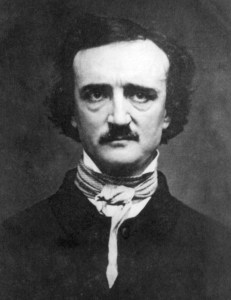
Joseph Thomas Sheridan Le Fanu 1814-1873
Joseph Thomas Sheridan Le Fanu
1814-1873

inveterate habits, and to reform the life of an abandoned sinner. We see in the result, in the reformation of morals, which appeared incorrigible in the reclamation of a human soul which seemed to be irretrievably lost, something more than could be produced by a mere chimaera of the slumbering fancy, something more than could arise from the capricious images of a terrified imagination; but once prevented, we behold in all these things, in the tremendous and mysterious results, the operation of the hand of God. And while Reason rejects as absurd the superstition which will read a prophecy in every dream, she may, without violence to herself, recognize, even in the wildest and most incongruous of the wanderings of a slumbering intellect, the evidences and the fragments of a language which may be spoken, which has been spoken to terrify, to warn, and to command. We have reason to believe too, by the promptness of action, which in the age of the prophets, followed all intimations of this kind, and by the strength of conviction and strange permanence of the effects resulting from certain dreams in latter times, which effects ourselves may have witnessed, that when this medium of communication has been employed by the Deity, the evidences of his presence have been unequivocal. My thoughts were directed to this subject, in a manner to leave a lasting impression upon my mind, by the events which I shall now relate, the statement of which, however extraordinary, is nevertheless accurately correct.

About the year l7– having been appointed to the living of C—-h, I rented a small house in the town, which bears the same name: one morning, in the month of November, I was awakened before my usual time, by my servant, who bustled into my bedroom for the purpose of announcing a sick call. As the Catholic Church holds her last rites to be totally indispensable to the safety of the departing sinner, no conscientious clergyman can afford a moment’s unnecessary delay, and in little more than five minutes I stood ready cloaked and booted for the road in the small front parlour, in which the messenger, who was to act as my guide, awaited my coming. I found a poor little girl crying piteously near the door, and after some slight difficulty I ascertained that her father was either dead, or just dying.

“And what may be your father’s name, my poor child?” said I. She held down her head, as if ashamed. I repeated the question, and the wretched little creature burst into floods of tears, still more bitter than she had shed before. At length, almost provoked by conduct which appeared to me so unreasonable, I began to lose patience, spite of the pity which I could not help feeling towards her, and I said rather harshly, “If you will not tell me the name of the person to whom you would lead me, your silence can arise from no good motive, and I might be justified in refusing to go with you at all.”

“Oh! don’t say that, don’t say that,” cried she. “Oh! sir, it was that I was afeard of when I would not tell you–I was afeard when you heard his name you would not come with me; but it is no use hidin’ it now–it’s Pat Connell, the carpenter, your honour.”

She looked in my face with the most earnest anxiety, as if her very existence depended upon what she should read there; but I relieved her at once. The name, indeed, was most unpleasantly familiar to me; but, however fruitless my visits and advice might have been at another time, the present was too fearful an occasion to suffer my doubts of their utility as my reluctance to re-attempting what appeared a hopeless task to weigh even against the lightest chance, that a consciousness of his imminent danger might produce in him a more docile and tractable disposition. Accordingly I told the child to lead the way, and followed her in silence. She hurried rapidly through the long narrow street which forms the great thoroughfare of the town. The darkness of the hour, rendered still deeper by the close approach of the old fashioned houses, which lowered in tall obscurity on either side of the way; the damp dreary chill which renders the advance of morning peculiarly cheerless, combined with the object of my walk, to visit the death-bed of a presumptuous sinner, to endeavour, almost against my own conviction, to infuse a hope into the heart of a dying reprobate–a drunkard, but too probably perishing under the consequences of some mad fit of intoxication; all these circumstances united served to enhance the gloom and solemnity of my feelings, as I silently followed my little guide, who with quick steps traversed the uneven pavement of the main street. After a walk of about five minutes she turned off into a narrow lane, of that obscure and comfortless class which are to be found in almost all small old fashioned towns, chill without ventilation, reeking with all manner of offensive effluviae, dingy, smoky, sickly and pent-up buildings, frequently not only in a wretched but in a dangerous condition.

“Your father has changed his abode since I last visited him, and, I am afraid, much for the worse,” said I.

“Indeed he has, sir, but we must not complain,” replied she; “we have to thank God that we have lodging and food, though it’s poor enough, it is, your honour.”

Poor child! thought I, how many an older head might learn wisdom from thee–how many a luxurious philosopher, who is skilled to preach but not to suffer, might not thy patient words put to the blush! The manner and language of this child were alike above her years and station; and, indeed, in all cases in which the cares and sorrows of life have anticipated their usual date, and have fallen, as they sometimes do, with melancholy prematurity to the lot of childhood, I have observed the result to have proved uniformly the same. A young mind, to which joy and indulgence have been strangers, and to which suffering and self-denial have been familiarised from the first, acquires a solidity and an elevation which no other discipline could have bestowed, and which, in the present case, communicated a striking but mournful peculiarity to the manners, even to the voice of the child. We paused before a narrow, crazy door, which she opened by means of a latch, and we forthwith began to ascend the steep and broken stairs, which led upwards to the sick man’s room. As we mounted flight after flight towards the garret floor, I heard more and more distinctly the hurried talking of many voices. I could also distinguish the low sobbing of a female. On arriving upon the uppermost lobby, these sounds became fully audible.

“This way, your honor,” said my little conductress, at the same time pushing open a door of patched and half rotten plank, she admitted me into the squalid chamber of death and misery. But one candle, held in the fingers of a scared and haggard-looking child, was burning in the room, and that so dim that all was twilight or darkness except within its immediate influence. The general obscurity, however, served to throw into prominent and startling relief the death-bed and its occupant. The light was nearly approximated to, and fell with horrible clearness upon, the blue and swollen features of the drunkard. I did not think it possible that a human countenance could look so terrific. The lips were black and drawn apart–the teeth were firmly set–the eyes a little unclosed, and nothing but the whites appearing–every feature was fixed and livid, and the whole face wore a ghastly and rigid expression of despairing terror such as I never saw equalled; his hands were crossed upon his breast, and firmly clenched, while, as if to add to the corpse-like effect of the whole, some white cloths, dipped in water, were wound about the forehead and temples. As soon as I could remove my eyes from this horrible spectacle, I observed my friend Dr. D—-, one of the most humane of a humane profession, standing by the bedside. He had been attempting, but unsuccessfully, to bleed the patient, and had now applied his finger to the pulse.

“Is there any hope?” I inquired in a whisper.

A shake of the head was the reply. There was a pause while he continued to hold the wrist; but he waited in vain for the throb of life, it was not there, and when he let go the hand it fell stiffly back into its former position upon the other.

“The man is dead,” said the physician, as he turned from the bed where the terrible figure lay.

Dead! thought I, scarcely venturing to look upon the tremendous and revolting spectacle–dead! without an hour for repentance, even a moment for reflection–dead! without the rites which even the best should have. Is there a hope for him? The glaring eyeball, the grinning mouth, the distorted brow–that unutterable look in which a painter would have sought to embody the fixed despair of the nethermost hell–these were my answer.

The poor wife sat at a little distance, crying as if her heart would break–the younger children clustered round the bed, looking, with wondering curiosity, upon the form of death, never seen before. When the first tumult of uncontrollable sorrow had passed away, availing myself of the solemnity and impressiveness of the scene, I desired the heart-stricken family to accompany me in prayer, and all knelt down, while I solemnly and fervently repeated some of those prayers which appeared most applicable to the occasion. I employed myself thus in a manner which, I trusted, was not unprofitable, at least to the living, for about ten minutes, and having accomplished my task, I was the first to arise. I looked upon the poor, sobbing, helpless creatures who knelt so humbly around me, and my heart bled for them. With a natural transition, I turned my eyes from them to the bed in which the body lay, and, great God! what was the revulsion, the horror which I experienced on seeing the corpse-like, terrific thing seated half upright before me–the white cloths, which had been wound about the head, had now partly slipped from their position, and were hanging in grotesque festoons about the face and shoulders, while the distorted eyes leered from amid them–

“A sight to dream of, not to tell.”

I stood actually rivetted to the spot. The figure nodded its head and lifted its arm, I thought with a menacing gesture. A thousand confused and horrible thoughts at once rushed upon my mind. I had often read that the body of a presumptuous sinner, who, during life, had been the willing creature of every satanic impulse, after the human tenant had deserted it, had been known to become the horrible sport of demoniac possession. I was roused from the stupefaction of terror in which I stood, by the piercing scream of the mother, who now, for the first time, perceived the change which had taken place. She rushed towards the bed, but, stunned by the shock and overcome by the conflict of violent emotions, before she reached it, she fell prostrate upon the floor. I am perfectly convinced that had I not been startled from the torpidity of horror in which I was bound, by some powerful and arousing stimulant, I should have gazed upon this unearthly apparition until I had fairly lost my senses. As it was, however, the spell was broken, superstition gave way to reason: the man whom all believed to have been actually dead, was living! Dr. D—- was instantly standing by the bedside, and, upon examination, he found that a sudden and copious flow of blood had taken place from the wound which the lancet had left, and this, no doubt, had effected his sudden and almost preternatural restoration to an existence from which all thought he had been for ever removed. The man was still speechless, but he seemed to understand the physician when he forbid his repeating the painful and fruitless attempts which he made to articulate, and he at once resigned himself quietly into his hands.

I left the patient with leeches upon his temples, and bleeding freely–apparently with little of the drowsiness which accompanies apoplexy; indeed, Dr. D—- told me that he had never before witnessed a seizure which seemed to combine the symptoms of so many kinds, and yet which belonged to none of the recognized classes; it certainly was not apoplexy, catalepsy, nor delirium tremens, and yet it seemed, in some degree, to partake of the properties of all–it was strange, but stranger things are coming.

During two or three days Dr. D—- would not allow his patient to converse in a manner which could excite or exhaust him, with any one; he suffered him merely, as briefly as possible, to express his immediate wants, and it was not until the fourth day after my early visit, the particulars of which I have just detailed, that it was thought expedient that I should see him, and then only because it appeared that his extreme importunity and impatience were likely to retard his recovery more than the mere exhaustion attendant upon a short conversation could possibly do; perhaps, too, my friend entertained some hope that if by holy confession his patient’s bosom were eased of the perilous stuff, which no doubt, oppressed it, his recovery would be more assured and rapid. It was, then, as I have said, upon the fourth day after my first professional call, that I found myself once more in the dreary chamber of want and sickness. The man was in bed, and appeared low and restless. On my entering the room he raised himself in the bed, and muttered twice or thrice–“Thank God! thank God.” I signed to those of his family who stood by, to leave the room, and took a chair beside the bed. So soon as we were alone, he said, rather doggedly–“There’s no use now in telling me of the sinfulness of bad ways–I know it all–I know where they lead to–I seen everything about it with my own eyesight, as plain as I see you.” He rolled himself in the bed, as if to hide his face in the clothes, and then suddenly raising himself, he exclaimed with startling vehemence–“Look, sir, there is no use in mincing the matter; I’m blasted with the fires of hell; I have been in hell; what do you think of that?–in hell–I’m lost for ever–I have not a chance–I am damned already–damned–damned–.” The end of this sentence he actually shouted; his vehemence was perfectly terrific; he threw himself back, and laughed, and sobbed hysterically. I poured some water into a tea-cup, and gave it to him. After he had swallowed it, I told him if he had anything to communicate, to do so as briefly as he could, and in a manner as little agitating to himself as possible; threatening at the same time, though I had no intention of doing so, to leave him at once, in case he again gave way to such passionate excitement. “It’s only foolishness,” he continued, “for me to try to thank you for coming to such a villain as myself at all; it’s no use for me to wish good to you, or to bless you; for such as me has no blessings to give.” I told him that I had but done my duty, and urged him to proceed to the matter which weighed upon his mind; he then spoke nearly as follows:–“I came in drunk on Friday night last, and got to my bed here, I don’t remember how; sometime in the night, it seemed to me, I wakened, and feeling unasy in myself, I got up out of the bed. I wanted the fresh air, but I would not make a noise to open the window, for fear I’d waken the crathurs. It was very dark, and throublesome to find the door; but at last I did get it, and I groped my way out, and went down as asy as I could. I felt quite sober, and I counted the steps one after another, as I was going down, that I might not stumble at the bottom. When I came to the first landing-place, God be about us always! the floor of it sunk under me, and I went down, down, down, till the senses almost left me. I do not know how long I was falling, but it seemed to me a great while. When I came rightly to myself at last, I was sitting at a great table, near the top of it; and I could not see the end of it, if it had any, it was so far off; and there was men beyond reckoning, sitting down, all along by it, at each side, as far as I could see at all. I did not know at first was it in the open air; but there was a close smothering feel in it, that was not natural, and there was a kind of light that my eyesight never saw before, red and unsteady, and I did not see for a long time where it was coming from, until I looked straight up, and then I seen that it came from great balls of blood-coloured fire, that were rolling high over head with a sort of rushing, trembling sound, and I perceived that they shone on the ribs of a great roof of rock that was arched overhead instead of the sky. When I seen this, scarce knowing what I did, I got up, and I said, ‘I have no right to be here; I must go,’ and the man that was sitting at my left hand, only smiled, and said, ‘sit down again, you can never leave this place,’ and his voice was weaker than any child’s voice I ever heerd, and when he was done speaking he smiled again. Then I spoke out very loud and bold, and I said–‘in the name of God, let me out of this bad place.’ And there was a great man, that I did not see before, sitting at the end of the table that I was near, and he was taller than twelve men, and his face was very proud and terrible to look at, and he stood up and stretched out his hand before him, and when he stood up, all that was there, great and small, bowed down with a sighing sound, and a dread came on my heart, and he looked at me, and I could not speak. I felt I was his own, to do what he liked with, for I knew at once who he was, and he said, ‘if you promise to return, you may depart for a season’; and the voice he spoke with was terrible and mournful, and the echoes of it went rolling and swelling down the endless cave, and mixing with the trembling of the fire overhead; so that, when he sate down, there was a sound after him, all through the place like the roaring of a furnace, and I said, with all the strength I had, ‘I promise to come back; in God’s name let me go,’ and with that I lost the sight and the hearing of all that was there, and when my senses came to me again, I was sitting in the bed with the blood all over me, and you and the rest praying around the room.” Here he paused and wiped away the chill drops of horror which hung upon his forehead.

I remained silent for some moments. The vision which he had just described struck my imagination not a little, for this was long before Vathek and the “Hall of Iblis” had delighted the world; and the description which he gave had, as I received it, all the attractions of novelty beside the impressiveness which always belongs to the narration of an eye-witness, whether in the body or in the spirit, of the scenes which he describes. There was something, too, in the stern horror with which the man related these things, and in the incongruity of his description, with the vulgarly received notions of the great place of punishment, and of its presiding spirit, which struck my mind with awe, almost with fear. At length he said, with an expression of horrible, imploring earnestness, which I shall never forget–“Well, sir, is there any hope; is there any chance at all? or, is my soul pledged and promised away for ever? is it gone out of my power? must I go back to the place?”

In answering him I had no easy task to perform; for however clear might be my internal conviction of the groundlessness of his fears, and however strong my scepticism respecting the reality of what he had described, I nevertheless felt that his impression to the contrary, and his humility and terror resulting from it, might be made available as no mean engines in the work of his conversion from profligacy, and of his restoration to decent habits, and to religious feeling. I therefore told him that he was to regard his dream rather in the light of a warning than in that of a prophecy; that our salvation depended not upon the word or deed of a moment, but upon the habits of a life; that, in fine, if he at once discarded his idle companions and evil habits, and firmly adhered to a sober, industrious, and religious course of life, the powers of darkness might claim his soul in vain, for that there were higher and firmer pledges than human tongue could utter, which promised salvation to him who should repent and lead a new life.

I left him much comforted, and with a promise to return upon the next day. I did so, and found him much more cheerful, and without any remains of the dogged sullenness which I suppose had arisen from his despair. His promises of amendment were given in that tone of deliberate earnestness, which belongs to deep and solemn determination; and it was with no small delight that I observed, after repeated visits, that his good resolutions, so far from failing, did but gather strength by time; and when I saw that man shake off the idle and debauched companions, whose society had for years formed alike his amusement and his ruin, and revive his long discarded habits of industry and sobriety, I said within myself, there is something more in all this than the operation of an idle dream. One day, sometime after his perfect restoration to health, I was surprised on ascending the stairs, for the purpose of visiting this man, to find him busily employed in nailing down some planks upon the landing place, through which, at the commencement of his mysterious vision, it seemed to him that he had sunk. I perceived at once that he was strengthening the floor with a view to securing himself against such a catastrophe, and could scarcely forbear a smile as I bid “God bless his work.”

He perceived my thoughts, I suppose, for he immediately said,

“I can never pass over that floor without trembling. I’d leave this house if I could, but I can’t find another lodging in the town so cheap, and I’ll not take a better till I’ve paid off all my debts, please God; but I could not be asy in my mind till I made it as safe as I could. You’ll hardly believe me, your honor, that while I’m working, maybe a mile away, my heart is in a flutter the whole way back, with the bare thoughts of the two little steps I have to walk upon this bit of a floor. So it’s no wonder, sir, I’d thry to make it sound and firm with any idle timber I have.”

I applauded his resolution to pay off his debts, and the steadiness with which he pursued his plans of conscientious economy, and passed on.

Many months elapsed, and still there appeared no alteration in his resolutions of amendment. He was a good workman, and with his better habits he recovered his former extensive and profitable employment. Every thing seemed to promise comfort and respectability. I have little more to add, and that shall be told quickly. I had one evening met Pat Connell, as he returned from his work, and as usual, after a mutual, and on his side respectful salutation, I spoke a few words of encouragement and approval. I left him industrious, active, healthy–when next I saw him, not three days after, he was a corpse. The circumstances which marked the event of his death were somewhat strange–I might say fearful. The unfortunate man had accidentally met an early friend, just returned, after a long absence, and in a moment of excitement, forgetting everything in the warmth of his joy, he yielded to his urgent invitation to accompany him into a public house, which lay close by the spot where the encounter had taken place. Connell, however, previously to entering the room, had announced his determination to take nothing more than the strictest temperance would warrant. But oh! who can describe the inveterate tenacity with which a drunkard’s habits cling to him through life. He may repent–he may reform–he may look with actual abhorrence upon his past profligacy; but amid all this reformation and compunction, who can tell the moment in which the base and ruinous propensity may not recur, triumphing over resolution, remorse, shame, everything, and prostrating its victim once more in all that is destructive and revolting in that fatal vice.

The wretched man left the place in a state of utter intoxication. He was brought home nearly insensible, and placed in his bed, where he lay in the deep calm lethargy of drunkenness. The younger part of the family retired to rest much after their usual hour; but the poor wife remained up sitting by the fire, too much grieved and shocked at the recurrence of what she had so little expected, to settle to rest; fatigue, however, at length overcame her, and she sunk gradually into an uneasy slumber. She could not tell how long she had remained in this state, when she awakened, and immediately on opening her eyes, she perceived by the faint red light of the smouldering turf embers, two persons, one of whom she recognized as her husband noiselessly gliding out of the room.

“Pat, darling, where are you going?” said she. There was no answer–the door closed after them; but in a moment she was startled and terrified by a loud and heavy crash, as if some ponderous body had been hurled down the stair. Much alarmed, she started up, and going to the head of the staircase, she called repeatedly upon her husband, but in vain. She returned to the room, and with the assistance of her daughter, whom I had occasion to mention before, she succeeded in finding and lighting a candle, with which she hurried again to the head of the staircase. At the bottom lay what seemed to be a bundle of clothes, heaped together, motionless, lifeless–it was her husband. In going down the stairs, for what purpose can never now be known, he had fallen helplessly and violently to the bottom, and coming head foremost, the spine at the neck had been dislocated by the shock, and instant death must have ensued. The body lay upon that landing-place to which his dream had referred. It is scarcely worth endeavouring to clear up a single point in a narrative where all is mystery; yet I could not help suspecting that the second figure which had been seen in the room by Connell’s wife on the night of his death, might have been no other than his own shadow. I suggested this solution of the difficulty; but she told me that the unknown person had been considerably in advance of the other, and on reaching the door, had turned back as if to communicate something to his companion–it was then a mystery. Was the dream verified?–whither had the disembodied spirit sped?–who can say? We know not. But I left the house of death that day in a state of horror which I could not describe. It seemed to me that I was scarce awake. I heard and saw everything as if under the spell of a nightmare. The coincidence was terrible.

The Saturday Night Special: “Lost in a Pyramid or The Mummy’s Curse” by Louisa May Alcott (1869)

I

“And what are these, Paul?” asked Evelyn, opening a tarnished gold box
and examining its contents curiously.

“Seeds of some unknown Egyptian plant,” replied Forsyth, with a sudden
shadow on his dark face, as he looked down at the three scarlet grains
lying in the white hand lifted to him.

“Where did you get them?” asked the girl.

“That is a weird story, which will only haunt you if I tell it,” said
Forsyth, with an absent expression that strongly excited the girl’s
curiosity.

Piramida Cheopsa Photo by Janusz Reclaw, 2000
Piramida Cheopsa
Photo by
Janusz Reclaw, 2000

“Please tell it, I like weird tales, and they never trouble me. Ah, do  tell it; your stories are always so interesting,” she cried, looking up with such a pretty blending of entreaty and command in her charming face, that refusal was impossible.

“You’ll be sorry for it, and so shall I, perhaps; I warn you
beforehand, that harm is foretold to the possessor of those mysterious seeds,” said Forsyth, smiling, even while he knit his black brows, and regarded the blooming creature before him with a fond yet foreboding glance.

“Tell on, I’m not afraid of these pretty atoms,” she answered, with an
imperious nod.

“To hear is to obey. Let me read the facts, and then I will begin,”
returned Forsyth, pacing to and fro with the far-off look of one who
turns the pages of the past.

Evelyn watched him a moment, and then returned to her work, or play,
rather, for the task seemed well suited to the vivacious little
creature, half-child, half-woman.

“While in Egypt,” commenced Forsyth, slowly, “I went one day with my
guide and Professor Niles, to explore the Cheops. Niles had a mania
for antiquities of all sorts, and forgot time, danger and fatigue in
the ardor of his pursuit. We rummaged up and down the narrow passages,
half choked with dust and close air; reading inscriptions on the
walls, stumbling over shattered mummy-cases, or coming face to face
with some shriveled specimen perched like a hobgoblin on the little
shelves where the dead used to be stowed away for ages. I was
desperately tired after a few hours of it, and begged the professor to
return. But he was bent on exploring certain places, and would not
desist. We had but one guide, so I was forced to stay; but Jumal, my
man, seeing how weary I was, proposed to us to rest in one of the
larger passages, while he went to procure another guide for Niles. We
consented, and assuring us that we were perfectly safe, if we did not
quit the spot, Jumal left us, promising to return speedily. The
professor sat down to take notes of his researches, and stretching my
self on the soft sand, I fell asleep.

“I was roused by that indescribable thrill which instinctively warns
us of danger, and springing up, I found myself alone. One torch burned
faintly where Jumal had struck it, but Niles and the other light were
gone. A dreadful sense of loneliness oppressed me for a moment; then I
collected myself and looked well about me. A bit of paper was pinned
to my hat, which lay near me, and on it, in the professor’s writing
were these words:

“‘I’ve gone back a little to refresh my memory on certain points.
Don’t follow me till Jumal comes. I can find my way back to you, for I
have a clue. Sleep well, and dream gloriously of the Pharaohs. N N.’

“I laughed at first over the old enthusiast, then felt anxious then
restless, and finally resolved to follow him, for I discovered a
strong cord fastened to a fallen stone, and knew that this was the
clue he spoke of. Leaving a line for Jumal, I took my torch and
retraced my steps, following the cord along the winding ways. I often
shouted, but received no reply, and pressed on, hoping at each turn to
see the old man poring over some musty relic of antiquity. Suddenly
the cord ended, and lowering my torch, I saw that the footsteps had
gone on.

“‘Rash fellow, he’ll lose himself, to a certainty,’ I thought, really
alarmed now.

“As I paused, a faint call reached me, and I answered it, waited,
shouted again, and a still fainter echo replied.

“Niles was evidently going on, misled by the reverberations of the low
passages. No time was to be lost, and, forgetting myself, I stuck my
torch in the deep sand to guide me back to the clue, and ran down the
straight path before me, whooping like a madman as I went. I did not
mean to lose sight of the light, but in my eagerness to find Niles I
turned from the main passage, and, guided by his voice, hastened on.
His torch soon gladdened my eyes, and the clutch of his trembling
hands told me what agony he had suffered.

“‘Let us get out of this horrible place at once,’ he said, wiping the
great drops off his forehead.

“‘Come, we’re not far from the clue. I can soon reach it, and then we
are safe’; but as I spoke, a chill passed over me, for a perfect
labyrinth of narrow paths lay before us.

“Trying to guide myself by such land-marks as I had observed in my
hasty passage, I followed the tracks in the sand till I fancied we
must be near my light. No glimmer appeared, however, and kneeling down
to examine the footprints nearer, I discovered, to my dismay, that I
had been following the wrong ones, for among those marked by a deep
boot-heel, were prints of bare feet; we had had no guide there, and
Jumal wore sandals.

“Rising, I confronted Niles, with the one despairing word, ‘Lost!’ as
I pointed from the treacherous sand to the fast-waning light.

“I thought the old man would be overwhelmed but, to my surprise, he
grew quite calm and steady, thought a moment, and then went on,
saying, quietly:

“‘Other men have passed here before us; let us follow their steps,
for, if I do not greatly err, they lead toward great passages, where
one’s way is easily found.’

“On we went, bravely, till a misstep threw the professor violently to
the ground with a broken leg, and nearly extinguished the torch. It
was a horrible predicament, and I gave up all hope as I sat beside the
poor fellow, who lay exhausted with fatigue, remorse and pain, for I
would not leave him.

“‘Paul,’ he said suddenly, ‘if you will not go on, there is one more
effort we can make. I remember hearing that a party lost as we are,
saved themselves by building a fire. The smoke penetrated further than
sound or light, and the guide’s quick wit understood the unusual mist;
he followed it, and rescued the party. Make a fire and trust to
Jumal.’

“‘A fire without wood?’ I began; but he pointed to a shelf behind me,
which had escaped me in the gloom; and on it I saw a slender mummy-
case. I understood him, for these dry cases, which lie about in
hundreds, are freely used as firewood. Reaching up, I pulled it down,
believing it to be empty, but as it fell, it burst open, and out
rolled a mummy. Accustomed as I was to such sights, it startled me a
little, for danger had unstrung my nerves. Laying the little brown
chrysalis aside, I smashed the case, lit the pile with my torch, and
soon a light cloud of smoke drifted down the three passages which
diverged from the cell-like place where we had paused.

“While busied with the fire, Niles, forgetful of pain and peril, had
dragged the mummy nearer, and was examining it with the interest of a
man whose ruling passion was strong even in death.

“‘Come and help me unroll this. I have always longed to be the first
to see and secure the curious treasures put away among the folds of
these uncanny winding-sheets. This is a woman, and we may find
something rare and precious here,’ he said, beginning to unfold the
outer coverings, from which a strange aromatic odor came.

“Reluctantly I obeyed, for to me there was something sacred in the
bones of this unknown woman. But to beguile the time and amuse the
poor fellow, I lent a hand, wondering as I worked, if this dark, ugly
thing had ever been a lovely, soft-eyed Egyptian girl.

“From the fibrous folds of the wrappings dropped precious gums and
spices, which half intoxicated us with their potent breath, antique
coins, and a curious jewel or two, which Niles eagerly examined.

“All the bandages but one were cut off at last, and a small head laid
bare, round which still hung great plaits of what had once been
luxuriant hair. The shriveled hands were folded on the breast, and
clasped in them lay that gold box.”

“Ah!” cried Evelyn, dropping it from her rosy palm with a shudder.

“Nay; don’t reject the poor little mummy’s treasure. I never have
quite forgiven myself for stealing it, or for burning her,” said
Forsyth, painting rapidly, as if the recollection of that experience
lent energy to his hand.

“Burning her! Oh, Paul, what do you mean?” asked the girl, sitting up
with a face full of excitement.

“I’ll tell you. While busied with Madame la Momie, our fire had burned
low, for the dry case went like tinder. A faint, far-off sound made
our hearts leap, and Niles cried out: ‘Pile on the wood; Jumal is
tracking us; don’t let the smoke fail now or we are lost!’

“‘There is no more wood; the case was very small, and is all gone,’ I
answered, tearing off such of my garments as would burn readily, and
piling them upon the embers.

“Niles did the same, but the light fabrics were quickly consumed, and
made no smoke.

“‘Burn that!’ commanded the professor, pointing to the mummy.

“I hesitated a moment. Again came the faint echo of a horn. Life was
dear to me. A few dry bones might save us, and I obeyed him in
silence.

“A dull blaze sprung up, and a heavy smoke rose from the burning
mummy, rolling in volumes through the low passages, and threatening to
suffocate us with its fragrant mist. My brain grew dizzy, the light
danced before my eyes, strange phantoms seemed to people the air, and,
in the act of asking Niles why he gasped and looked so pale, I lost
consciousness.”

Evelyn drew a long breath, and put away the scented toys from her lap
as if their odor oppressed her.

Forsyth’s swarthy face was all aglow with the excitement of his story,
and his black eyes glittered as he added, with a quick laugh:

“That’s all; Jumal found and got us out, and we both forswore pyramids
for the rest of our days.”

“But the box: how came you to keep it?” asked Evelyn, eyeing it
askance as it lay gleaming in a streak of sunshine.

“Oh, I brought it away as a souvenir, and Niles kept the other
trinkets.”

“But you said harm was foretold to the possessor of those scarlet
seeds,” persisted the girl, whose fancy was excited by the tale, and
who fancied all was not told.

“Among his spoils, Niles found a bit of parchment, which he
deciphered, and this inscription said that the mummy we had so
ungallantly burned was that of a famous sorceress who bequeathed her
curse to whoever should disturb her rest. Of course I don’t believe
that curse has anything to do with it, but it’s a fact that Niles
never prospered from that day. He says it’s because he has never
recovered from the fall and fright and I dare say it is so; but I
sometimes wonder if I am to share the curse, for I’ve a vein of
superstition in me, and that poor little mummy haunts my dreams
still.”

A long silence followed these words. Paul painted mechanically and
Evelyn lay regarding him with a thoughtful face. But gloomy fancies
were as foreign to her nature as shadows are to noonday, and presently
she laughed a cheery laugh, saying as she took up the box again:

“Why don’t you plant them, and see what wondrous flower they will
bear?”

“I doubt if they would bear anything after lying in a mummy’s hand for
centuries,” replied Forsyth, gravely.

“Let me plant them and try. You know wheat has sprouted and grown that
was taken from a mummy’s coffin; why should not these pretty seeds? I
should so like to watch them grow; may I, Paul?”

“No, I’d rather leave that experiment untried. I have a queer feeling
about the matter, and don’t want to meddle myself or let anyone I love
meddle with these seeds. They may be some horrible poison, or possess
some evil power, for the sorceress evidently valued them, since she
clutched them fast even in her tomb.”

“Now, you are foolishly superstitious, and I laugh at you. Be
generous; give me one seed, just to learn if it will grow. See I’ll
pay for it,” and Evelyn, who now stood beside him, dropped a kiss on
his forehead as she made her request, with the most engaging air.

But Forsyth would not yield. He smiled and returned the embrace with
lover-like warmth, then flung the seeds into the fire, and gave her
back the golden box, saying, tenderly:

“My darling, I’ll fill it with diamonds or bonbons, if you please, but
I will not let you play with that witch’s spells. You’ve enough of
your own, so forget the ‘pretty seeds’ and see what a Light of the
Harem I’ve made of you.”

Evelyn frowned, and smiled, and presently the lovers were out in the
spring sunshine reveling in their own happy hopes, untroubled by one
foreboding fear.

II

“I have a little surprise for you, love,” said Forsyth, as he greeted
his cousin three months later on the morning of his wedding day.

“And I have one for you,” she answered, smiling faintly.

“How pale you are, and how thin you grow! All this bridal bustle is
too much for you, Evelyn.” he said, with fond anxiety, as he watched
the strange pallor of her face, and pressed the wasted little hand in his.

“I am so tired,” she said, and leaned her head wearily on her lover’s
breast. “Neither sleep, food, nor air gives me strength, and a curious
mist seems to cloud my mind at times. Mamma says it is the heat, but I
shiver even in the sun, while at night I burn with fever. Paul, dear,
I’m glad you are going to take me away to lead a quiet, happy life
with you, but I’m afraid it will be a very short one.”

“My fanciful little wife! You are tired and nervous with all this
worry, but a few weeks of rest in the country will give us back our
blooming Eve again. Have you no curiosity to learn my surprise?” he
asked, to change her thoughts.

The vacant look stealing over the girl’s face gave place to one of
interest, but as she listened it seemed to require an effort to fix
her mind on her lover’s words.

“You remember the day we rummaged in the old cabinet?”

“Yes,” and a smile touched her lips for a moment.

“And how you wanted to plant those queer red seeds I stole from the
mummy?”

“I remember,” and her eyes kindled with sudden fire.

“Well, I tossed them into the fire, as I thought, and gave you the
box. But when I went back to cover up my picture, and found one of
those seeds on the rug, a sudden fancy to gratify your whim led me to
send it to Niles and ask him to plant and report on its progress.
Today I hear from him for the first time, and he reports that the seed
has grown marvelously, has budded, and that he intends to take the
first flower, if it blooms in time, to a meeting of famous scientific
men, after which he will send me its true name and the plant itself.
From his description, it must be very curious, and I’m impatient to
see it.”

“You need not wait; I can show you the flower in its bloom,” and
Evelyn beckoned with the mechante smile so long a stranger to her
lips.

Much amazed, Forsyth followed her to her own little boudoir, and
there, standing in the sunshine, was the unknown plant. Almost rank in
their luxuriance were the vivid green leaves on the slender purple
stems, and rising from the midst, one ghostly-white flower, shaped
like the head of a hooded snake, with scarlet stamens like forked
tongues, and on the petals glittered spots like dew.

“A strange, uncanny flower! Has it any odor?” asked Forsyth, bending
to examine it, and forgetting, in his interest, to ask how it came
there.

“None, and that disappoints me, I am so fond of perfumes,” answered
the girl, caressing the green leaves which trembled at her touch,
while the purple stems deepened their tint.

“Now tell me about it,” said Forsyth, after standing silent for
several minutes.

“I had been before you, and secured one of the seeds, for two fell on
the rug. I planted it under a glass in the richest soil I could find,
watered it faithfully, and was amazed at the rapidity with which it
grew when once it appeared above the earth. I told no-one, for I meant
to surprise you with it; but this bud has been so long in blooming, I
have had to wait. It is a good omen that it blossoms today, and as it
is nearly white, I mean to wear it, for I’ve learned to love it,
having been my pet for so long.”

“I would not wear it, for, in spite of its innocent color, it is an
evil-looking plant, with its adder’s tongue and unnatural dew. Wait
till Niles tells us what it is, then pet it if it is harmless.”

“Perhaps my sorceress cherished it for some symbolic beauty–those old
Egyptians were full of fancies. It was very sly of you to turn the
tables on me in this way. But I forgive you, since in a few hours, I
shall chain this mysterious hand forever. How cold it is! Come out
into the garden and get some warmth and color for tonight, my love.”

But when night came, no-one could reproach the girl with her pallor,
for she glowed like a pomegranate-flower, her eyes were full of fire,
her lips scarlet, and all her old vivacity seemed to have returned. A
more brilliant bride never blushed under a misty veil, and when her
lover saw her, he was absolutely startled by the almost unearthly
beauty which transformed the pale, languid creature of the morning
into this radiant woman.

They were married, and if love, many blessings, and all good gifts
lavishly showered upon them could make them happy, then this young
pair were truly blest. But even in the rapture of the moment that made
her his, Forsyth observed how icy cold was the little hand he held,
how feverish the deep color on the soft cheek he kissed, and what a
strange fire burned in the tender eyes that looked so wistfully at
him.

Blithe and beautiful as a spirit, the smiling bride played her part in
all the festivities of that long evening, and when at last light, life
and color began to fade, the loving eyes that watched her thought it
but the natural weariness of the hour. As the last guest departed,
Forsyth was met by a servant, who gave him a letter marked “Haste.”
Tearing it open, he read these lines, from a friend of the
professor’s:

“DEAR SIR–Poor Niles died suddenly two days ago, while at the
Scientific Club, and his last words were: ‘Tell Paul Forsyth to beware
of the Mummy’s Curse, for this fatal flower has killed me.’ The
circumstances of his death were so peculiar, that I add them as a
sequel to this message. For several months, as he told us, he had been
watching an unknown plant, and that evening he brought us the flower
to examine. Other matters of interest absorbed us till a late hour,
and the plant was forgotten. The professor wore it in his buttonhole–
a strange white, serpent-headed blossom, with pale glittering spots,
which slowly changed to a glittering scarlet, till the leaves looked
as if sprinkled with blood. It was observed that instead of the pallor
and feebleness which had recently come over him, that the professor
was unusually animated, and seemed in an almost unnatural state of
high spirits. Near the close of the meeting, in the midst of a lively
discussion, he suddenly dropped, as if smitten with apoplexy. He was
conveyed home insensible, and after one lucid interval, in which he
gave me the message I have recorded above, he died in great agony,
raving of mummies, pyramids, serpents, and some fatal curse which had
fallen upon him.

“After his death, livid scarlet spots, like those on the flower,
appeared upon his skin, and he shriveled like a withered leaf. At my
desire, the mysterious plant was examined, and pronounced by the best
authority one of the most deadly poisons known to the Egyptian
sorceresses. The plant slowly absorbs the vitality of whoever
cultivates it, and the blossom, worn for two or three hours, produces
either madness or death.”

Down dropped the paper from Forsyth’s hand; he read no further, but
hurried back into the room where he had left his young wife. As if
worn out with fatigue, she had thrown herself upon a couch, and lay
there motionless, her face half-hidden by the light folds of the veil,
which had blown over it.

“Evelyn, my dearest! Wake up and answer me. Did you wear that strange
flower today?” whispered Forsyth, putting the misty screen away.

There was no need for her to answer, for there, gleaming spectrally on
her bosom, was the evil blossom, its white petals spotted now with
flecks of scarlet, vivid as drops of newly spilt blood.

But the unhappy bridegroom scarcely saw it, for the face above it
appalled him by its utter vacancy. Drawn and pallid, as if with some
wasting malady, the young face, so lovely an hour ago, lay before him
aged and blighted by the baleful influence of the plant which had
drunk up her life. No recognition in the eyes, no word upon the lips,
no motion of the hand–only the faint breath, the fluttering pulse,
and wide-opened eyes, betrayed that she was alive.

Alas for the young wife! The superstitious fear at which she had
smiled had proved true: the curse that had bided its time for ages was
fulfilled at last, and her own hand wrecked her happiness for ever.
Death in life was her doom, and for years Forsyth secluded himself to
tend with pathetic devotion the pale ghost, who never, by word or
look, could thank him for the love that outlived even such a fate as
this.

###

This eBook is made available at no cost and with almost no restrictions
whatsoever. You may copy it, give it away or re-use it under the terms
of the Project Gutenberg of Australia License which may be viewed online at
http://gutenberg.net.au/licence.html

The Saturday Night Special: “Man Overboard” by Winston Churchill (1898)

It was a little after half-past nine when the man fell overboard. The mail steamer was hurrying through the Red Sea in the hope of making up the time which the currents of the Indian Ocean had stolen.

The night was clear, though the moon was hidden behind clouds. The warm air was laden with

Winston Churchill in 1898 Age 24
Winston Churchill in 1898
Age: 24

moisture. The still surface of the waters was only broken by the movement of the great ship, from whose quarter the long, slanting undulations struck out like the feathers from an arrow shaft, and in whose wake the froth and air bubbles churned up by the propeller trailed in a narrowing line to the darkness of the horizon.

There was a concert on board. All the passengers were glad to break the monotony of the voyage and gathered around the piano in the companion-house. The decks were deserted. The man had been listening to the music and joining in the songs, but the room was hot and he came out to smoke a cigarette and enjoy a breath of the wind which the speedy passage of the liner created. It was the only wind in the Red Sea that night.

The accommodation-ladder had not been unshipped since leaving Aden and the man walked out on to the platform, as on to a balcony. He leaned his back against the rail and blew a puff of smoke into the air reflectively. The piano struck up a lively tune and a voice began to sing the first verse of “The Rowdy Dowdy Boys.” The measured pulsations of the screw were a subdued but additional accompaniment.

The man knew the song, it had been the rage at all the music halls when he had started for India seven years before. It reminded him of the brilliant and busy streets he had not seen for so long, but was soon to see again. He was just going to join in the chorus when the railing, which had been insecurely fastened, gave way suddenly with a snap and he fell backwards into the warm water of the sea amid a great splash.

For a moment he was physically too much astonished to think. Then he realized he must shout. He began to do this even before he rose to the surface. He achieved a hoarse, inarticulate, half-choked scream. A startled brain suggested the word, “Help!” and he bawled this out lustily and with frantic effort six or seven times without stopping. Then he listened.

“Hi! hi! clear the way For the Rowdy Dowdy Boys.” The chorus floated back to him across the smooth water for the ship had already completely passed by. And as he heard the music, a long stab of terror drove through his heart. The possibility that he would not be picked up dawned for the first time on his consciousness. The chorus started again:

“Then–I–say–boys, Who’s for a jolly spree? Rum–tum–tiddley–um, Who’ll have a drink with me?” “Help! Help! Help!” shrieked the man, now in desperate fear.

“Fond of a glass now and then, Fond of a row or noise; Hi! hi! clear the way For the Rowdy Dowdy Boys!”

The last words drawled out fainter and fainter. The vessel was steaming fast. The beginning of the second verse was confused and broken by the ever-growing distance. The dark outline of the great hull was getting blurred. The stern light dwindled.

Then he set out to swim after it with furious energy, pausing every dozen strokes to shout long wild shouts. The disturbed waters of the sea began to settle again to their rest and widening undulations became ripples. The aerated confusion of the screw fizzed itself upwards and out. The noise of motion and the sounds of life and music died away.

The liner was but a single fading light on the blackness of the waters and a dark shadow against the paler sky.

At length full realization came to the man and he stopped swimming. He was alone — abandoned. With the understanding the brain reeled. He began again to swim, only now instead of shouting he prayed — mad, incoherent prayers, the words stumbling into one another.

Suddenly a distant light seemed to flicker and brighten.

A surge of joy and hope rushed through his mind. They were going to stop — to turn the ship and come back. And with the hope came gratitude. His prayer was answered. Broken words of thanksgiving rose to his lips. He stopped and stared after the light — his soul in his eyes. As he watched it, it grew gradually but steadily smaller. Then the man knew that his fate was certain. Despair succeeded hope; gratitude gave place to curses. Beating the water with his arms, he raved impotently. Foul oaths burst from him, as broken as his prayers — and as unheeded.

The fit of passion passed, hurried by increasing fatigue. He became silent — silent as was the sea, for even the ripples were subsiding into the glassy smoothness of the surface. He swam on mechanically along the track of the ship, sobbing quietly to himself in the misery of fear. And the stern light became a tiny speck, yellower but scarcely bigger than some of the stars, which here and there shone between the clouds.

Nearly twenty minutes passed and the man’s fatigue began to change to exhaustion. The overpowering sense of the inevitable pressed upon him. With the weariness came a strange comfort — he need not swim all the long way to Suez. There was another course. He would die. He would resign his existence since he was thus abandoned. He threw up his hands impulsively and sank.

Down, down he went through the warm water. The physical death took hold of him and he began to drown. The pain of that savage grip recalled his anger. He fought with it furiously. Striking out with arms and legs he sought to get back to the air. It was a hard struggle, but he escaped victorious and gasping to the surface. Despair awaited him. Feebly splashing with his hands, he moaned in bitter misery:

“I can’t — I must. O God! Let me die.”

The moon, then in her third quarter, pushed out from behind the concealing clouds and shed a pale, soft glitter upon the sea. Upright in the water, fifty yards away, was a black triangular object. It was a fin. It approached him slowly.

His last appeal had been heard.

The Saturday Night Special: “The Mezzotint” by M.R. James (1904)

SOME time ago I believe I had the pleasure of telling you the story of an adventure which happened to a friend of mine by the name of Dennistoun, during his pursuit of objects of art for the museum at Cambridge.

He did not publish his experiences very widely upon his return to England; but they could not fail

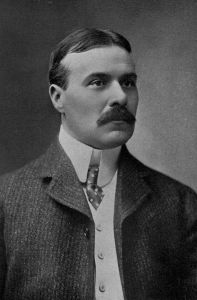
M.R. James 1900
M.R. James
1900

to become known to a good many of his friends, and among others to the gentleman who at that time presided over an art museum at another University. It was to be expected that the story should make a considerable impression on the mind of a man whose vocation lay in lines similar to Dennistoun’s, and that he should be eager to catch at any explanation of the matter which tended to make it seem improbable that he should ever be called upon to deal with so agitating an emergency. It was, indeed, somewhat consoling to him to reflect that he was not expected to acquire ancient MSS. for his institution; that was the business of the Shelburnian Library. The authorities of that might, if they pleased, ransack obscure corners of the Continent for such matters. He was glad to be obliged at the moment to confine his attention to enlarging the already unsurpassed collection of English topographical drawings and engravings possessed by his museum. Yet, as it turned out, even a department so homely and familiar as this may have its dark corners, and to one of these Mr. Williams was unexpectedly introduced.

Those who have taken even the most limited interest in the acquisition of topographical pictures are aware that there is one London dealer whose aid is indispensable to their researches. Mr. J.W. Britnell publishes at short intervals very admirable catalogues of a large and constantly changing stock of engravings, plans, and old sketches of mansions, churches, and towns in England and Wales. These catalogues were, of course, the ABC of his subject to Mr. Williams: but as his museum already contained an enormous accumulation of topographical pictures, he was a regular, rather than a copious, buyer; and he rather looked to Mr. Britnell to fill up gaps in the rank and file of his collection than to supply him with rarities.

Now, in February of last year there appeared upon Mr. Williams’s desk at the museum a catalogue from Mr. Britnell’s emporium, and accompanying it was a typewritten communication from the dealer himself. This latter ran as follows:

DEAR SIR,–

We beg to call your attention to No. 978 in our accompanying catalogue, which we shall be glad to send on approval.

Yours faithfully,

J. W. BRITNELL.

To turn to No. 978 in the accompanying catalogue was with Mr. Williams (as he observed to himself) the work of a moment, and in the place indicated he found the following entry:

“978.–Unknown. Interesting mezzotint: View of a manor-house, early part of the century. 15 by 10 inches; black frame. £2 2s.

It was not specially exciting, and the price seemed high. However, as Mr. Britnell, who knew his business and his customer, seemed to set store by it, Mr. Williams wrote a postcard asking for the article to be sent on approval, along with some other engravings and sketches which appeared in the same catalogue. And so he passed without much excitement of anticipation to the ordinary labours of the day.

A parcel of any kind always arrives a day later than you expect it, and that of Mr. Britnell proved, as I believe the right phrase goes, no exception to the rule. It was delivered at the museum by the afternoon post of Saturday, after Mr. Williams had left his work, and it was accordingly brought round to his rooms in college by the attendant, in order that he might not have to wait over Sunday before looking through it and returning such of the contents as he did not propose to keep. And here he found it when he came in to tea, with a friend.

The only item with which I am concerned was the rather large, black-framed mezzotint of which I have already quoted the short description given in Mr. Britnell’s catalogue. Some more details of it will have to be given, though I cannot hope to put before you the look of the picture as clearly as it is present to my own eye. Very nearly the exact duplicate of it may be seen in a good many old inn parlours, or in the passages of undisturbed country mansions at the present moment. It was a rather indifferent mezzotint, and an indifferent mezzotint is, perhaps, the worst form of engraving known. It presented a full-face view of a not very large manor-house of the last century, with three rows of plain sashed windows with rusticated masonry about them, a parapet with balls or vases at the angles, and a small portico in the centre. On either side were trees, and in front a considerable expanse of lawn. The legend “A.W.F. sculpsit” was engraved on the narrow margin; and there was no further inscription. The whole thing gave the impression that it was the work of an amateur. What in the world Mr. Britnell could mean by affixing the price of £2 2s. to such an object was more than Mr. Williams could imagine. He turned it over with a good deal of contempt; upon the back was a paper label, the left-hand half of which had been torn off. All that remained were the ends of two lines of writing: the first had the letters –ngley Hall; the second, –ssex.

It would, perhaps, be just worth while to identify the place represented, which he could easily do with the help of a gazetteer, and then he would send it back to Mr. Britnell, with some remarks reflecting upon the judgment of that gentleman.

He lighted the candles, for it was now dark, made the tea, and supplied the friend with whom he had been playing golf (for I believe the authorities of the University I write of indulge in that pursuit by way of relaxation); and tea was taken to the accompaniment of a discussion which golfing persons can imagine for themselves, but which the conscientious writer has no right to inflict upon any non-golfing persons.

The conclusion arrived at was that certain strokes might have been better, and that in certain emergencies neither player had experienced that amount of luck which a human being has a right to expect. It was now that the friend–let us call him Professor Binks–took up the framed engraving, and said:

“What’s this place, Williams?”

“Just what I am going to try to find out,” said Williams, going to the shelf for a gazetteer. “Look at the back. Somethingley Hall, either in Sussex or Essex. Half the name’s gone, you see. You don’t happen to know it, I suppose?”

“It’s from that man Britnell, I suppose, isn’t it?” said Binks. “Is it for the museum?”

“Well, I think I should buy it if the price was five shillings,” said Williams; “but for some unearthly reason he wants two guineas for it. I can’t conceive why. It’s a wretched engraving, and there aren’t even any figures to give it life.”

“It’s not worth two guineas, I should think,” said Binks; “but I don’t think it’s so badly done. The moonlight seems rather good to me; and I should have thought there were figures, or at least a figure just on the edge in front.”

“Let’s look,” said Williams. “Well, it’s true the light is rather cleverly given. Where’s your figure? Oh yes! Just the head, in the very front of the picture.”

And indeed there was–hardly more than a black blot on the extreme edge of the engraving–the head of a man or woman, a good deal muffled up, the back turned to the spectator, and looking towards the house.

Williams had not noticed it before.

“Still,” he said, “though it’s a cleverer thing than I thought, I can’t spend two guineas of museum money on a picture of a place I don’t know.”

Professor Binks had his work to do, and soon went; and very nearly up to Hall time Williams was engaged in a vain attempt to identify the subject of his picture. “If the vowel before the ng had only been left, it would have been easy enough,” he thought; “but as it is, the name may be anything from Guestingley to Langley, and there are many more names ending like this than I thought; and this rotten book has no index of terminations.”

Hall in Mr. Williams’s college was at seven. It need not be dwelt upon; the less so as he met there colleagues who had been playing golf during the afternoon, and words with which we have no concern were freely bandied across the table–merely golfing words, I would hasten to explain.

I suppose an hour or more to have been spent in what is called common-room after dinner. Later in the evening some few retired to Williams’s rooms, and I have little doubt that whist was played and tobacco smoked. During a lull in these operations Williams picked up the mezzotint from the table without looking at it, and handed it to a person mildly interested in art, telling him where it had come from, and the other particulars which we already know.

The gentleman took it carelessly, looked at it, then said, in a tone of some interest:

“It’s really a very good piece of work, Williams; it has quite a feeling of the romantic period. The light is admirably managed, it seems to me, and the figure, though it’s rather too grotesque, is somehow very impressive.”

“Yes, isn’t it?” said Williams, who was just then busy giving whisky-and-soda to others of the company, and was unable to come across the room to look at the view again.

It was by this time rather late in the evening, and the visitors were on the move. After they went Williams was obliged to write a letter or two and clear up some odd bits of work. At last, some time past midnight, he was disposed to turn in, and he put out his lamp after lighting his bedroom candle. The picture lay face upwards on the table where the last man who looked at it had put it, and it caught his eye as he turned the lamp down. What he saw made him very nearly drop the candle on the floor, and he declares now that if he had been left in the dark at that moment he would have had a fit. But, as that did not happen he was able to put down the light on the table and take a good look at the picture. It was indubitable–rankly impossible, no doubt, but absolutely certain. In the middle of the lawn in front of the unknown house there was a figure where no figure had been at five o’clock that afternoon. It was crawling on all-fours towards the house, and it was muffled in a strange black garment with a white cross on the back.

I do not know what is the ideal course to pursue in a situation of this kind. I can only tell you what Mr. Williams did. He took the picture by one corner and carried it across the passage to a second set of rooms which he possessed. There he locked it up in a drawer, sported the doors of both sets of rooms, and retired to bed; but first he wrote out and signed an account of the extraordinary change which the picture had undergone since it had come into his possession.

Sleep visited him rather late; but it was consoling to reflect that the behaviour of the picture did not depend upon his own unsupported testimony. Evidently the man who had looked at it the night before had seen something of the same kind as he had, otherwise he might have been tempted to think that something gravely wrong was happening either to his eyes or his mind. This possibility being fortunately precluded, two matters awaited him on the morrow. He must take stock of the picture very carefully, and call in a witness for the purpose, and he must make a determined effort to ascertain what house it was that was represented. He would therefore ask his neighbour Nisbet to breakfast with him, and he would subsequently spend a morning over the gazetteer.

Nisbet was disengaged, and arrived about 9.30. His host was not quite dressed, I am sorry to say, even at this late hour. During breakfast nothing was said about the mezzotint by Williams, save that he had a picture on which he wished for Nisbet’s opinion. But those who are familiar with University life can picture for themselves the wide and delightful range of subjects over which the conversation of two Fellows of Canterbury College is likely to extend during a Sunday morning breakfast. Hardly a topic was left unchallenged, from golf to lawn-tennis. Yet I am bound to say that Williams was rather distraught; for his interest naturally centred in that very strange picture which was now reposing, face downwards, in the drawer in the room opposite.

The morning pipe was at last lighted, and the moment had arrived for which he looked. With very considerable–almost tremulous–excitement, he ran across, unlocked the drawer, and, extracting the picture–still face downwards–ran back, and put it into Nisbet’s hands.

“Now,” he said, “Nisbet, I want you to tell me exactly what you see in that picture. Describe it, if you don’t mind, rather minutely. I’ll tell you why afterwards.”

“Well,” said Nisbet, “I have here a view of a country-house–English, I presume–by moonlight.

“Moonlight? You’re sure of that?”

“Certainly. The moon appears to be on the wane, if you wish for details, and there are clouds in the sky.”

“All right. Go on. I’ll swear,” added Williams in an aside, “there was no moon when I saw it first.”

“Well, there’s not much more to be said,” Nisbet continued. “The house has one–two–three rows of windows, five in each row, except at the bottom, where there’s a porch instead of the middle one, and—-”

“But what about figures?” said Williams, with marked interest.

“There aren’t any,” said Nisbet; “but—-”

“What! No figure on the grass in front?”

“Not a thing.”

“You’ll swear to that?”

“Certainly I will. But there’s just one other thing.”

“What?”

“Why, one of the windows on the ground-floor–left of the door–is open.”

“Is it really? My goodness! he must have got in,” said Williams, with great excitement; and he hurried to the back of the sofa on which Nisbet was sitting, and, catching the picture from him, verified the matter for himself.

It was quite true. There was no figure, and there was the open window. Williams, after a moment of speechless surprise, went to the writing-table and scribbled for a short time. Then he brought two papers to Nisbet, and asked him first to sign one–it was his own description of the picture, which you have just heard–and then to read the other which was Williams’s statement written the night before.

“What can it all mean?” said Nisbet.

“Exactly,” said Williams. “Well, one thing I must do–or three things, now I think of it. I must find out from Garwood”–this was his last night’s visitor–“what he saw, and then I must get the thing photographed before it goes further, and then I must find out what the place is.”

“I can do the photographing myself,” said Nisbet, “and I will. But, you know, it looks very much as if we were assisting at the working out of a tragedy somewhere. The question is, Has it happened already, or is it going to come off? You must find out what the place is. Yes,” he said, looking at the picture again, “I expect you’re right: he has got in. And if I don’t mistake there’ll be the devil to pay in one of the rooms upstairs.”

“I’ll tell you what,” said Williams: “I’ll take the picture across to old Green” (this was the senior Fellow of the College, who had been Bursar for many years). “It’s quite likely he’ll know it. We have property in Essex and Sussex, and he must have been over the two counties a lot in his time.”

“Quite likely he will,” said Nisbet; “but just let me take my photograph first. But look here, I rather think Green isn’t up to-day. He wasn’t in Hall last night, and I think I heard him say he was going down for the Sunday.”

“That’s true, too,” said Williams; “I know he’s gone to Brighton. Well, if you’ll photograph it now, I’ll go across to Garwood and get his statement, and you keep an eye on it while I’m gone. I’m beginning to think two guineas is not a very exorbitant price for it now.”

In a short time he had returned, and brought Mr. Garwood with him. Garwood’s statement was to the effect that the figure, when he had seen it, was clear of the edge of the picture, but had not got far across the lawn. He remembered a white mark on the back of its drapery, but could not have been sure it was a cross. A document to this effect was then drawn up and signed, and Nisbet proceeded to photograph the picture.

“Now what do you mean to do?” he said. “Are you going to sit and watch it all day?”

“Well, no, I think not,” said Williams. “I rather imagine we’re meant to see the whole thing. You see, between the time I saw it last night and this morning there was time for lots of things to happen, but the creature only got into the house. It could easily have got through its business in the time and gone to its own place again; but the fact of the window being open, I think, must mean that it’s in there now. So I feel quite easy about leaving it. And, besides, I have a kind of idea that it wouldn’t change much, if at all, in the daytime. We might go out for a walk this afternoon, and come in to tea, or whenever it gets dark. I shall leave it out on the table here, and sport the door. My skip can get in, but no one else.”

The three agreed that this would be a good plan; and, further, that if they spent the afternoon together they would be less likely to talk about the business to other people; for any rumour of such a transaction as was going on would bring the whole of the Phasmatological Society about their ears.

We may give them a respite until five o’clock.

At or near that hour the three were entering Williams’s staircase. They were at first slightly annoyed to see that the door of his rooms was unsported; but in a moment it was remembered that on Sunday the skips came for orders an hour or so earlier than on week-days. However, a surprise was awaiting them. The first thing they saw was the picture leaning up against a pile of books on the table, as it had been left, and the next thing was Williams’s skip, seated on a chair opposite, gazing at it with undisguised horror. How was this? Mr. Filcher (the name is not my own invention) was a servant of considerable standing, and set the standard of etiquette to all his own college and to several neighbouring ones, and nothing could be more alien to his practice than to be found sitting on his master’s chair, or appearing to take any particular notice of his master’s furniture or pictures. Indeed, he seemed to feel this himself. He started violently when the three men came into the room, and got up with a marked effort. Then he said:

“I ask your pardon, sir, for taking such a freedom as to set down.”

“Not at all, Robert,” interposed Mr. Williams. “I was meaning to ask you some time what you thought of that picture.”

“Well, sir, of course I don’t set up my opinion again yours, but it ain’t the pictur I should ‘ang where my little girl could see it, sir.”

“Wouldn’t you, Robert? Why not?”

“No, sir. Why, the pore child, I recollect once she see a Door Bible, with pictures not ‘alf what that is, and we ‘ad to set up with her three or four nights afterwards, if you’ll believe me; and if she was to ketch a sight of this skelinton here, or whatever it is, carrying off the pore baby, she would be in a taking. You know ‘ow it is with children; ‘ow nervish they git with a little thing and all. But what I should say, it don’t seem a right pictur to be laying about, sir, not where anyone that’s liable to be startled could come on it. Should you be wanting anything this evening sir? Thank you, sir.”

With these words the excellent man went to continue the round of his masters, and you may be sure the gentlemen whom he left lost no time in gathering round the engraving. There was the house, as before, under the waning moon and the drifting clouds. The window that had been open was shut, and the figure was once more on the lawn: but not this time crawling cautiously on hands and knees. Now it was erect and stepping swiftly, with long strides, towards the front of the picture. The moon was behind it, and the black drapery hung down over its face so that only hints of that could be seen, and what was visible made the spectators profoundly thankful that they could see no more than a white dome-like forehead and a few straggling hairs. The head was bent down, and the arms were tightly clasped over an object which could be dimly seen and identified as a child, whether dead or living it was not possible to say. The legs of the appearance alone could be plainly discerned, and they were horribly thin.

From five to seven the three companions sat and watched the picture by turns. But it never changed. They agreed at last that it would be safe to leave it, and that they would return after Hall and await further developments.

When they assembled again, at the earliest possible moment, the engraving was there, but the figure was gone, and the house was quiet under the moonbeams. There was nothing for it but to spend the evening over gazetteers and guide-books. Williams was the lucky one at last, and perhaps he deserved it. At 11.30 p.m. he read from Murray’s Guide to Essex the following lines:

“16½ miles, Anningley. The church has been an interesting building of Norman date, but was extensively classicized in the last century. It contains the tombs of the family of Francis, whose mansion, Anningley Hall, a solid Queen Anne house, stands immediately beyond the churchyard in a park of about 80 acres. The family is now extinct, the last heir having disappeared mysteriously in infancy in the year 1802. The father, Mr. Arthur Francis, was locally known as a talented amateur engraver in mezzotint. After his son’s disappearance he lived in complete retirement at the Hall, and was found dead in his studio on the third anniversary of the disaster, having just completed an engraving of the house, impressions of which are of considerable rarity.”

This looked like business, and, indeed, Mr. Green on his return at once identified the house as Anningley Hall.

“Is there any kind of explanation of the figure Green?” was the question which Williams naturally asked.

“I don’t know, I’m sure, Williams. What used to be said in the place when I first knew it, which was before I came up here, was just this: old Francis was always very much down on these poaching fellows, and whenever he got a chance he used to get a man whom he suspected of it turned off the estate, and by degrees he got rid of them all but one. Squires could do a lot of things then that they daren’t think of now. Well, this man that was left was what you find pretty often in that country–the last remains of a very old family. I believe they were Lords of the Manor at one time. I recollect just the same thing in my own parish.”

“What, like the man in Tess of the D’Urbervilles?” Williams put in.

“Yes, I dare say; it’s not a book I could ever read myself. But this fellow could show a row of tombs in the church there that belonged to his ancestors, and all that went to sour him a bit; but Francis, they said, could never get at him–he always kept just on the right side of the law–until one night the keepers found him at it in a wood right at the end of the estate. I could show you the place now; it marches with some land that used to belong to an uncle of mine. And you can imagine there was a row; and this man Gawdy (that was the name, to be sure–Gawdy; I thought I should get it–Gawdy), he was unlucky enough, poor chap! to shoot a keeper. Well, that was what Francis wanted, and grand juries–you know what they would have been then–and poor Gawdy was strung up in double-quick time; and I’ve been shown the place he was buried in, on the north side of the church–you know the way in that part of the world: anyone that’s been hanged or made away with themselves, they bury them that side. And the idea was that some friend of Gawdy’s–not a relation, because he had none, poor devil! he was the last of his line: kind of spes ultima gentis–must have planned to get hold of Francis’s boy and put an end to his line, too. I don’t know–it’s rather an out-of-the-way thing for an Essex poacher to think of–but, you know, I should say now it looks more as if old Gawdy had managed the job himself. Booh! I hate to think of it! have some whisky, Williams!”

The facts were communicated by Williams to Dennistoun, and by him to a mixed company, of which I was one, and the Sadducean Professor of Ophiology another. I am sorry to say that the latter when asked what he thought of it, only remarked: “Oh, those Bridgeford people will say anything”– a sentiment which met with the reception it deserved.

I have only to add that the picture is now in the Ashleian Museum; that it has been treated with a view to discovering whether sympathetic ink has been used in it, but without effect; that Mr. Britnell knew nothing of it save that he was sure it was uncommon; and that, though carefully watched, it has never been known to change again.

The Saturday Night Special: “The Double Shadow” by Clark Ashton Smith (1933)

MY NAME is Pharpetron, among those who have known me in Poseidonis; but even I, the last and most forward pupil of the wise Avyctes, know not the name of that which I am fated to become ere to-morrow. Therefore, by the ebbing silver lamps, in my master’s marble house above the loud, ever-ravening sea, I write this tale with a hasty hand, scrawling an ink of wizard virtue on the grey, priceless, antique parchment of dragons. And having written, I shall enclose the pages in a sealed cylinder of orichalchum, and shall cast the cylinder from a high window into the sea, lest that which I am doomed to become should haply destroy the writing. And it may be that mariners from Lephara, passing to Umb and Pneor in their tall triremes, will find the cylinder; or fishers will draw it from the wave in their seines of byssus; and having read my story, men will learn the truth and take warning; and no man’s feet, henceforward, will approach the pale and demon- haunted house of Avyctes.

Clark Ashton Smith from Wonder Stories October, 1930
Clark Ashton Smith
from Wonder Stories
October, 1930

For six years, I have dwelt apart with the aged master, forgetting youth and its wonted desires in the study of arcanic things. Together, we have delved more deeply than all others before us in an interdicted lore; we have solved the keyless hieroglyphs that guard ante-human formulae; we have talked with the prehistoric dead; we have called up the dwellers in sealed crypts, in fearful abysses beyond space. Few are the sons of mankind who have cared to seek us out among the desolate, wind-worn crags; and many, but nameless, are the visitants who have come to us from further bourns of place and time.

Stern and white as a tomb, older than the memory of the dead, and built by men or devils beyond the recording of myth, is the mansion in which we dwell. Far below, on black, naked reefs, the northern sea climbs and roars indomitably, or ebbs with a ceaseless murmur as of armies of baffled demons; and the house is filled evermore, like a hollow-sounding sepulcher, with the drear echo of its tumultuous voices; and the winds wail in dismal wrath around the high towers, but shake them not. On the seaward side, the mansion rises sheerly from the straight-falling cliff; but on the other sides there are narrow terraces, grown with dwarfish, crooked cedars that bow always beneath the gale. Giant marble monsters guard the landward portals; and huge marble women ward the strait porticoes above the sea; and mighty statues and mummies stand everywhere in the chambers and along the halls. But, saving these, and the spirits we have summoned, there is none to companion us; and liches and shadows have been the servitors of our daily needs.

All men have heard the fame of Avyctes, the sole surviving pupil of that Malygris who tyrannized in his necromancy over Susran from a tower of sable stone; Malygris, who lay dead for years while men believed him living; who, lying thus, still uttered potent spells and dire oracles with decaying lips. But Avyctes lusted not for temporal power in the manner of Malygris; and having learned all that the elder sorcerer could teach him, withdrew from the cities of Poseidonis to seek another and vaster dominion; and I, the youth Pharpetron, in the latter years of Avyctes, was permitted to join him in this solitude; and since then, I have shared his austerities and vigils and evocations . . . and now, likewise, I must share the weird doom that has come in answer to his summoning.

Not without terror (since man is but mortal) did I, the neophyte, behold at first the abhorrent and tremendous faces of them that obeyed Avyctes: the genii of the sea and earth, of the stars and the heavens, who passed to and fro in his marmorean halls. I shuddered at the black writhing of submundane things from the many-volumed smoke of the braziers; I cried in horror at the grey foulnesses, colossal, without form, that crowded malignly about the drawn circle of seven colors, threatening unspeakable trespass on us that stood at the center. Not without revulsion did I drink wine that was poured by cadavers, and eat bread that was purveyed by phantoms. But use and custom dulled the strangeness, destroyed the fear; and in time I believed implicitly that Avyctes was the lord of all incantations and exorcisms, with infallible power to dismiss the beings he evoked.

Well had it had been for Avyctes– and for me– if the master had contented himself with the lore preserved from Atlantis and Thule, or brought over from Mu and Mayapan. Surely this should have been enough: for in the ivory-sheeted books of Thule there were blood-writ runes that would call the demons of the fifth and seventh planets, if spoken aloud at the hour of their ascent; and the sorcerers of Mu had left record of a process whereby the doors of far-future time could be unlocked; and our fathers, the Atlanteans, had known the road between the atoms and the path into far stars, and had held speech with the spirits of the sun. But Avyctes thirsted for a darker knowledge, a deeper empery; and into his hands, in the third year of my novitiate, there came the mirror-bright tablet of the lost serpent-people.

Strange, and apparently fortuitous, was our finding of the tablet. At certain hours, when the tide had fallen from the steep rocks, we were wont to descend by cavern-hidden stairs to a cliff-walled crescent beach behind the promontory on which stood the house of Avyctes. There, on the dun, wet sands, beyond the foamy tongues of the surf, would lie the worn and curious driftage of alien shores, and trove that hurricanes had cast up from unsounded deeps. And there we had found the purple and sanguine volutes of great shells, and rude lumps of ambergris, and white flowers of perpetually blooming coral; and once, the barbaric idol of green brass that had been the figurehead of a galley from far hyperboreal isles.

There had been a great storm, such as must have riven the sea to its nethermost profound; but the tempest had gone by with morning, and the heavens were cloudless on that fatal day when we found the tablet, and the demon winds were hushed among the high crags and chasms; and the sea lisped with a low whisper, like the rustle of gowns of samite trailed by fleeing maidens on the sand. And just beyond the ebbing wave, in a tangle of russet sea-weed, we beheld a thing that glittered with blinding sun-like brilliance. And running forward, I plucked it from the wrack before the wave’s return, and bore it to Avyctes.

The tablet was wrought of some nameless metal, like never-rusting iron, but heavier. It had the form of a triangle and was broader at the widest than a man’s heart. On one side it was wholly blank; and Avyctes and I, in turn, beheld our features mirrored strangely, like the drawn, pallid features of the dead, in its burnished surface. On the other side many rows of small crooked ciphers were incised deeply in the metal, as if by the action of some mordant acid; and these ciphers were not the pictorial symbols or alphabetic characters of any language known to the master or to me.

Of the tablet’s age and origin, likewise, we could form no conjecture; and our erudition was altogether baffled. For many days thereafter we studied the writing and held argument that came to no issue. And night by night, in a high chamber closed against the perennial winds, we pondered over the dazzling triangle by the tall straight flames of silver lamps. For Avyctes deemed that knowledge of rare value (or haply some secret of an alien or elder magic) was holden by the clueless crooked ciphers. Then, since all our scholarship was in vain, the master sought another divination, and had recourse to wizardy and necromancy. But at first, among the devils and phantoms that answered our interrogation, none could tell us aught concerning the tablet. And any other than Avyctes would have despaired in the end . . . and well would it have been if he had despaired, and had sought no longer to decipher the writing ….

The months and years went by with a slow thundering of seas on the dark rocks, and a headlong clamor of winds around the white towers. Still we continued our delvings and evocations; and further, always further we went into lampless realms of space and spirit; learning, perchance, to unlock the hithermost of the manifold infinities. And at whiles, Avyctes would resume his pondering of the sea-found tablet; or would question some visitant from other spheres of time and place regarding its interpretation.

At last, by the use of a chance formula, in idle experiment, he summoned up the dim, tenuous ghost of a sorcerer from prehistoric years; and the ghost, in a thin whisper of uncouth, forgotten speech, informed us that the letters on the tablet were those of a language of the serpent-men, whose primordial continent had sunk aeons before the lifting of Hyperborea from the ooze. But the ghost could tell us naught of their significance; for, even in his time, the serpent-people had become a dubious legend; and their deep, ante- human lore and sorcery were things irretrievable by man.

Now, in all the books of conjuration owned by Avyctes, there was no spell whereby we could call the lost serpent-men from their fabulous epoch. But there was an old Lemurian formula, recondite and uncertain, by which the shadow of a dead man could be sent into years posterior to those of his own life-time, and could be recalled after an interim by the wizard. And the shade, being wholly insubstantial, would suffer no harm from the temporal transition, and would remember, for the information of the wizard, that which he had been instructed to learn during the journey.

So, having called again the ghost of the prehistoric sorcerer, wnose name was Ybith, Avyctes made a singular use of several very ardent gums and combustible fragments of fossil wood; and he and I, reciting the responses to the formula, sent the thin spirit of Ybith into the far ages of the serpent-men. And after a time which the master deemed sufficient, we performed the curious rites of incantation that would recall Ybith from his alienage. And the rites were successful; and Ybith stood before us again, like a blown vapor that is nigh to vanishing. And in words that were faint as the last echo of perishing memories, the specter told us the key to the meaning of the letters, which he had learned in the primeval past; and after this, we questioned Ybith no more, but suffered him to return unto slumber and oblivion.

Then, knowing the import of the tiny, twisted ciphers, we read the writing on the tablet and made thereof a transliteration, though not without labor and difficulty, since the very phonetics of the serpent tongue, and the symbols and ideas expressed in the writing, were somewhat alien to those of mankind. And when we had mastered the inscription, we found that it contained the formula for a certain evocation which, no doubt, had been used by the serpent sorcerers. But the object of the evocation was not named; nor was there any clue to the nature or identity of that which would come in answer to the rites. And moreover there was no corresponding rite of exorcism nor spell of dismissal.

Great was the jubilation of Avyctes, deeming that we had learned a lore beyond the memory or prevision of man. And though I sought to dissuade him, he resolved to employ the evocation, arguing that our discovery was no chance thing but was fatefully predestined from the beginning. And he seemed to think lightly of the menace that might be brought upon us by the conjuration of things whose nativity and attributes were wholly obscure. “For,” said Avyctes, “I have called up, in all the years of my sorcery, no god or devil, no demon or lich or shadow, which I could not control and dismiss at will. And I am loath to believe that any power or spirit beyond the subversion of my spells could have been summoned by a race of serpents, whatever their skill in demonism and necromancy.”

So, seeing that he was obstinate, and aeknowledging him for my master in all ways, I consented to aid Avyctes in the experiment, though not without dire misgivings. And then we gathered together, in the chamber of conjuration, at the specified hour and configuration of the stars, the equivalents of sundry rare materials that the tablet had instructed us to use in the ritual.

Of much that we did, and of certain agents that we employed, it were better not to tell; nor shall I record the shrill, sibilant words, difficult for beings not born of serpents to articulate, whose intonation formed a signal part of the ceremony. Toward the last, we drew a triangle on the marble floor with the fresh blood of birds; and Avyctes stood at one angle, and I at another; and the gaunt umber mummy of an Atlantean warrior, whose name had been Oigos, was stationed at the third angle. And standing thus, Avyctes and I held tapers of corpse-tallow in our hands, till the tapers had burned down between our fingers as into a socket. And in the outstretched palms of the mummy of Oigos, as if in shallow thuribles, talc and asbestos burned, ignited by a strange fire whereof we knew the secret. At one side we had traced on the floor an infrangible ellipse, made by an endless linked repetition of the twelve unspeakable Signs of Oumor, to which we could retire if the visitant should prove inimical or rebellious. We waited while the pole-circling stars went over, as had been prescribed. Then, when the tapers had gone out between our seared fingers, and the talc and asbestos were wholly consumed in the mummy’s eaten palms, Avyctes uttered a single word whose sense was obscure to us; and Oigos, being animated by sorcery and subject to our will, repeated the word after a given interval, in tones that were hollow as a tomb-born echo; and I in my turn also repeated it.

Now, in the chamber of evocation, before beginning the ritual, we had opened a small window giving upon the sea, and had likewise left open a high door on the hall to landward, lest that which came in answer to us should require a spatial mode of entrance. And during the ceremony, the sea became still and there was no wind, and it seemed that all things were hushed in awful expectation of the nameless visitor. But after all was done, and the last word had been repeated by Oigos and me, we stood and waited vainly for a visible sign or other manifestation. The lamps burned stilly in the midnight room; and no shadows fell, other than were cast by ourselves and Oigos and by the great marble women along the walls. And in the magic mirrors we had placed cunningly, to reflect those that were otherwise unseen, we beheld no breath or trace of any image.

At this, after a reasonable interim, Avyctes was sorely disappointed, deeming that the evocation had failed of its purpose; and I, having the same thought, was secretly relieved. And we questioned the mummy of Oigos, to learn if he had perceived in the room, with such senses as are peculiar to the dead, the sure token or doubtful proof of a presence undescried by us the living. And the mummy gave a necromantic answer, saying that there was nothing.

“Verily,” said Avyctes, “it were useless to wait longer. For surely in some way we have misunderstood the purport of the writing, or have failed to duplicate the matters used in the evocation, or the correct intonement of the words. Or it may be that in the lapse of so many aeons, the thing that was formerly wont to respond has long ceased to exist, or has altered in its attributes so that the spell is now void and valueless.” To this I assented readily, hoping that the matter was at an end. So, after erasing the blood-marked triangle and the sacred ellipse of the linked Signs of Oumor, and after dismissing Oigos to his wonted place among other mummies, we retired to sleep. And in the days that followed, we resumed our habitual studies, but made no mention to each other of the strange triangular tablet or the vain formula.

Even as before, our days went on; and the sea climbed and roared in white fury on the cliffs, and the winds wailed by in their unseen, sullen wrath, bowing the dark cedars as witches are bowed by the breath of Taaran, god of evil. Almost, in the marvel of new tests and cantraips, I forgot the ineffectual conjuration, and I deemed that Avyctes had also forgotten it.

All things were as of yore, to our sorcerous perception; and there was naught to trouble us in our wisdom and power and serenity, which we deemed secure above the sovereignty of kings. Reading the horoscopic stars, we found no future ill in their aspect; nor was any shadow of bale foreshown to us through geomancy, or other modes of divination such as we employed. And our familiars, though grisly and dreadful to mortal gaze, were wholly obedient to us the masters.

Then, on a clear summer afternoon, we walked, as was often our custom, on the marble terrace behind the house. In robes of ocean-purple, we paced among the windy trees with their blown, crooked shadows; and there, following us as we went to and fro, I saw the blue shadow of Avyctes and my own shadow on the marble; and between them, an adumbration that was not wrought by any of the cedars. And I was greatly startled, but spoke not of the matter to Avyctes, and observed the unknown shadow with covert care.

I saw that it followed closely the shadow of Avyctes, keeping ever the same distance. And it fluttered not in the wind, but moved with a flowing as of some heavy, thick, putrescent liquid; and its color was not blue nor purple nor black, nor any other hue to which man’s eyes are habituated, but a hue as of some unearthly purulence; and its form was altogether monstrous, having a squat head and a long, undulant body, without similitude to beast or devil.

Avyctes heeded not the shadow; and still I feared to speak, though I thought it an ill thing for the master to be companioned thus. And I moved closer to him, in order to detect by touch or other perception the invisible presence that had cast the adumbration. But the air was void to sunward of the shadow; and I found nothing opposite the sun nor in any oblique direction, though I searched closely, knowing that certain beings cast their shadows thus.

After a while, at the customary hour, we returned by the coiling stairs and monster-flanked portals into the high house. And I saw that the strange adumbration moved ever behind the shadow of Avyctes, falling horrible and unbroken on the steps and passing clearly separate and distinct amid the long umbrages of the towering monsters. And in the dim halls beyond the sun, where shadows should not have been, I beheld with terror the distorted loathly blot, having a pestilent, unnamable hue, that followed Avyctes as if in lieu of his own extinguished shadow. And all that day, everywhere that we went, at the table served by specters, or in the mummy-warded room of volumes and books, the thing pursued Avyctes, clinging to him even as leprosy to the leper. And still the master had perceived it not; and still I forbore to warn him, hoping that the visitant would withdraw in its own time, going obscurely as it had come.

But at midnight, when we sat together by the silver lamps, pondering the blood-writ runes of Hyperborea, I saw that the shadow had drawn closer to the shadow of Avyctes, towering behind his chair on the wall between the huge sculptured women and the mummies. And the thing was a streaming ooze of charnel pollution, a foulness beyond the black leprosies of hell; and I could bear it no more; and I cried out in my fear and loathing, and informed the master of its presence.

Beholding now the shadow, Avyctes considered it closesly and in silence; and there was neither fear nor awe nor abhorrence in the deep, graven wrinkles of his visage. And he said to me at last:

“This thing is a mystery beyond my lore; but never, in all the practice of my art, has any shadow come to me unbidden. And since all others of our evocations have found answer ere this, I must deem that the shadow is a veritable entity, or the sign of an entity, that has come in belated response to the formula of the serpent-sorcerers, which we thought powerless and void. And I think it well that we should now repair to the chamber of conjuration, and interrogate the shadow in such manner as we may, to inquire its nativity and purpose.”

We went forthwith into the chamber of conjuration, and made such preparations as were both necessary and possible. And when we were prepared to question it, the unknown shadow had drawn closer still to the shadow of Avyctes, so that the clear space between the two was no wider than the thickness of a necromancer’s rod.

Now, in all ways that were feasible, we interrogated the shadow, speaking through our own lips and the lips of mummies and statues. But there was no determinable answer; and calling certain of the devils and phantoms that were our familiars, we made question through the mouths of these, but without result. And all the while, our magic mirrors were void of any reflection of a presence that might have cast the shadow; and they that had been our spokesmen could detect nothing in the room. And there was no spell, it seemed, that had power upon the visitant. So Avyctes became troubled; and drawing on the floor with blood and ashes the ellipse of Oumor, wherein no demon nor spirit may intrude, he retired to its center. But still within the ellipse, like a flowing taint of liquid corruption, the shadow followed his shadow; and the space between the two was no wider than the thickness of a wizard’s pen.

Now, on the face of Avyctes, horror had graven new wrinkles; and his brow was beaded with a deathly sweat. For he knew, even as I, that this was a thing beyond all laws, and foreboding naught but disaster and evil. And he cried to me in a shaken voice, and said:

“I have no knowledge of this thing nor its intention toward me, and no power to stay its progress. Go forth and leave me now; for I would not that any man should witness the defeat of my sorcery and the doom that may follow thereupon. Also, it were well to depart while there is time, lest you too should become the quarry of the shadow and be compelled to share its menace.”

Though terror had fastened upon my inmost soul, I was loath to leave Avyctes. But I had sworn to obey his will at all times and in every respect; and moreover I knew myself doubly powerless against the adumbration, since Avyctes himself was impotent.

So, bidding him farewell, I went forth with trembling limbs from the haunted chamber; and peering back from the threshold, I saw that the alien umbrage, creeping like a noisome blotch on the floor, had touched the shadow of Avyctes. And at that moment the master shrieked aloud like one in nightmare; and his face was no longer the face of Avyctes but was contorted and convulsed like that of some helpless madman who wrestles with an unseen incubus. And I looked no more, but fled along the dim outer hall and through the high portals giving upon the terrace.

A red moon, ominous and gibbous, had declined above the terrace and the crags; and the shadows of the cedars were elongated in the moon; and they wavered in the gale like the blown cloaks of enchanters. And stooping against the gale, I fled across the terrace toward the outer stairs that led to a steep path in the riven waste of rocks and chasms behind Avyctes’ house. I neared the terrace edge, running with the speed of fear; but I could not reach the topmost outer stair; for at every step the marble flowed beneath me, fleeing like a pale horizon before the seeker. And though I raced and panted without pause, I could draw no nearer to the terrace edge.

At length I desisted, seeing that an unknown spell had altered the very space about the house of Avyctes, so that none could escape therefrom to landward. So, resigning myself in despair to whatever might befall, I returned toward the house. And climbing the white stairs in the low, level beams of the crag-caught moon, I saw a figure that awaited me in the portals. And I knew by the trailing robe of sea-purple, but by no other token, that the figure was Avyctes. For the face was no longer in its entirety the face of man, but was become a loathly fluid amalgam of human features with a thing not to be identified on earth. The transfiguration was ghastlier than death or the changes of decay; and the face was already hued with the nameless, corrupt and purulent color of the strange shadow, and had taken on, in respect to its outlines, a partial likeness to the squat profile of the shadow. The hands of the figure were not those of any terrene being; and the shape beneath the robe had lengthened with a nauseous undulant pliancy; and the face and fingers seemed to drip in the moon- light with a deliquescent corruption. And the pursuing umbrage, like a thickly flowing blight, had corroded and distorted the very shadow of Avyctes, which was now double in a manner not to be narrated here.

Fain would I have cried or spoken aloud; but horror had dried up the fount of speech. And the thing that had been Avyctes beckoned me in silence, uttering no word from its living and putrescent lips. And with eyes that were no longer eyes, but had become an oozing abomination, it peered steadily upon me. And it clutched my shoulder closely with the soft leprosy of its fingers, and led me half-swooning with revulsion along the hall, and into that room where the mummy of Oigos, who had assisted us in the threefold incantation of the serpent-men, was stationed with several of his fellows.

By the lamps which illumed the chamber, burning with pale, still, perpetual flames, I saw that the mummies stood erect along the wall in their exanimate repose, each in his wonted place with his tall shadow beside him. But the great, gaunt shadow of Oigos on the marble wall was companioned by an adumbration similar in all respects to the evil thing that had followed the master and was now incorporate with him. I remembered that Oigos had performed his share of the ritual, and had repeated an unknown stated word in turn after Avyctes; and so I knew that the horror had come to Oigos in turn, and would wreak itself upon the dead even as on the living. For the foul, anonymous thing that we had called in our presumption could manifest itself to mortal ken in no other way than this. We had drawn it from unfathomable depths of time and space, using ignorantly a dire formula; and the thing had come at its own chosen hour, to stamp itself in abomination uttermost on the evocators.

Since then, the night has ebbed away, and a second day has gone by like a sluggish ooze of horror. . . . I have seen the complete identification of the shadow with the flesh and the shadow of Avyctes . . . and also I have seen the slow encroachment of that other umbrage, mingling itself with the lank shadow and the sere, bituminous body of Oigos, and turning them to a similitude of the thing which Avyctes has become. And I have heard the mummy cry out like a living man in great pain and fear, as with the throes of a second dissolution, at the impingement of the shadow. And long since it has grown silent, like the other horror, and I know not its thoughts or its intent. . . . And verily I know not if the thing that has come to us be one or several; nor if its avatar will rest complete with the three that summoned it forth into time, or be extended to others.

But these things, and much else, I shall soon know; for now, in turn, there is a shadow that follows mine, drawing ever closer. The air congeals and curdles with an unseen fear; and they that were our familiars have fled from the mansion; and the great marble women seem to tremble where they stand along the walls. But the horror that was Avyctes, and the second horror that was Oigos, have left me not, and neither do they tremble. And with eyes that are not eyes, they seem to brood and watch, waiting till I too shall become as they. And their stillness is more terrible than if they had rended me limb from limb. And there are strange voices in the wind, and alien roarings upon the sea; and the walls quiver like a thin veil in the black breath of remote abysses.

So, knowing that the time is brief, I have shut myself in the room of volumes and books and have written this account. And I have taken the bright triangular tablet, whose solution was our undoing, and have cast it from the window into the sea, hoping that none will find it after us. And now I must make an end, and enclose this writing in the sealed cylinder of orichalchum, and fling it forth to drift upon the wave. For the space between my shadow and the shadow of the horror is straitened momently. . . . and the space is no wider than the thickness of a wizard’s pen.

###

Story text from Eldritchdark.com.

First published by Clark Ashton Smith in The Double Shadow and Other Tales of Fantasy in 1933, later published in Weird Tales in 1939.

The Saturday Night Special: “The Facts in the Case of M. Valdemar” by E.A. Poe (1845)

OF course I shall not pretend to consider it any matter for wonder, that the extraordinary case of M. Valdemar has excited discussion. It would have been a miracle had it not — especially under the circumstances. Through the desire of all parties concerned, to keep the affair from the public, at least for the present, or until we had farther opportunities for investigation — through our endeavors to effect this — a garbled or exaggerated account made its way into society, and became the source of many unpleasant misrepresentations; and, very naturally, of a great deal of disbelief.

It is now rendered necessary that I give the facts — as far as I comprehend them myself. They are, succinctly, these:

My attention, for the last three years, had been repeatedly drawn to the subject of Mesmerism; and, about nine months ago, it occurred to me, quite suddenly, that in the series of experiments made hitherto, there had been a very remarkable and most unaccountable omission: — no person had as yet been mesmerized in articulo mortis. It remained to be seen, first, whether, in such condition, there existed in the patient any susceptibility to the magnetic influence; secondly, whether, if any existed, it was impaired or increased by the condition; thirdly, to what extent, or for how long a period, the encroachments of Death might be arrested by the process. There were other points to be ascertained, but these most excited my curiosity — the last in especial, from the immensely important character of its consequences.

Edgar Allan Poe, 1848

In looking around me for some subject by whose means I might test these particulars, I was brought to think of my friend, M. Ernest Valdemar, the well-known compiler of the “Bibliotheca Forensica,” and author (under the nom de plume of Issachar Marx) of the Polish versions of “Wallenstein” and “Gargantua.” M. Valdemar, who has resided principally at Harlem, N. Y., since the year 1839, is (or was) particularly noticeable for the extreme spareness of his person — his lower limbs much resembling those of John Randolph; and, also, for the whiteness of his whiskers, in violent contrast to the blackness of his hair — the latter, in consequence, being very generally mistaken for a wig. His temperament was markedly nervous, and rendered him a good subject for mesmeric experiment. On two or three occasions I had put him to sleep with little difficulty, but was disappointed in other results which his peculiar constitution had naturally led me to anticipate. His will was at no period positively, or thoroughly, under my control, and in regard to clairvoyance, I could accomplish with him nothing to be relied upon. I always attributed my failure at these points to the disordered state of his health. For some months previous to my becoming acquainted with him, his physicians had declared him in a confirmed phthisis. It was his custom, indeed, to speak calmly of his approaching dissolution, as of a matter neither to be avoided nor regretted.

When the ideas to which I have alluded first occurred to me, it was of course very natural that I should think of M. Valdemar. I knew the steady philosophy of the man too well to apprehend any scruples from him; and he had no relatives in America who would be likely to interfere. I spoke to him frankly upon the subject; and, to my surprise, his interest seemed vividly excited. I say to my surprise; for, although he had always yielded his person freely to my experiments, he had never before given me any tokens of sympathy with what I did. His disease was of that character which would admit of exact calculation in respect to the epoch of its termination in death; and it was finally arranged between us that he would send for me about twenty-four hours before the period announced by his physicians as that of his decease.

It is now rather more than seven months since I received, from M. Valdemar himself, the subjoined note:

“MY DEAR P——,

“You may as well come now. D—— and F—— are agreed that I cannot hold out beyond to-morrow midnight; and I think they have hit the time very nearly.

“VALDEMAR.”

I received this note within half an hour after it was written, and in fifteen minutes more I was in the dying man’s chamber. I had not seen him for ten days, and was appalled by the fearful alteration which the brief interval had wrought in him. His face wore a leaden hue; the eyes were utterly lustreless; and the emaciation was so extreme, that the skin had been broken through by the cheek-bones. His expectoration was excessive. The pulse was barely perceptible. He retained, nevertheless, in a very remarkable manner, both his mental power and a certain degree of physical strength. He spoke with distinctness — took some palliative medicines without aid — and, when I entered the room, was occupied in penciling memoranda in a pocket-book. He was propped up in the bed by pillows. Doctors D—— and F—— were in attendance.

After pressing Valdemar’s hand, I took these gentlemen aside, and obtained from them a minute account of the patient’s condition. The left lung had been for eighteen months in a semi-osseous or cartilaginous state, and was, of course, entirely useless for all purposes of vitality. The right, in its upper portion, was also partially, if not thoroughly, ossified, while the lower region was merely a mass of purulent tubercles, running one into another. Several extensive perforations existed; and, at one point, permanent adhesion to the ribs had taken place. These appearances in the right lobe were of comparatively recent date. The ossification had proceeded with very unusual rapidity; no sign of it had been discovered a month before, and the adhesion had only been observed during the three previous days. Independently of the phthisis, the patient was suspected of aneurism of the aorta; but on this point the osseous symptoms rendered an exact diagnosis impossible. It was the opinion of both physicians that M. Valdemar would die about midnight on the morrow (Sunday.) It was then seven o’clock on Saturday evening.

On quitting the invalid’s bed-side to hold conversation with myself, Doctors D—— and F —— had bidden him a final farewell. It had not been their intention to return; but, at my request, they agreed to look in upon the patient about ten the next night.

When they had gone, I spoke freely with M. Valdemar on the subject of his approaching dissolution, as well as, more particularly, of the experiment proposed. He still professed himself quite willing and even anxious to have it made, and urged me to commence it at once. A male and a female nurse were in attendance; but I did not feel myself altogether at liberty to engage in a task of this character with no more reliable witnesses than these people, in case of sudden accident, might prove. I therefore postponed operations until about eight the next night, when the arrival of a medical student, with whom I had some acquaintance, (Mr. Theodore L —— l,) relieved me from farther embarrassment. It had been my design, originally, to wait for the physicians; but I was induced to proceed, first, by the urgent entreaties of M. Valdemar, and secondly, by my conviction that I had not a moment to lose, as he was evidently sinking fast.

Mr. L —— l was so kind as to accede to my desire that he would take notes of all that occurred; and it is from his memoranda that what I now have to relate is, for the most part, either condensed or copied verbatim.

It wanted about five minutes of eight when, taking the patient’s hand, I begged him to state, as distinctly as he could, to Mr. L —— l, whether he (M. Valdemar,) was entirely willing that I should make the experiment of mesmerizing him in his then condition.

He replied feebly, yet quite audibly, “Yes, I wish to be mesmerized” — adding immediately afterwards, “I fear you have deferred it too long.”

While he spoke thus, I commenced the passes which I had already found most effectual in subduing him. He was evidently influenced with the first lateral stroke of my hand across his forehead; but although I exerted all my powers, no farther perceptible effect was induced until some minutes after ten o’clock, when Doctors D—— and F—— called, according to appointment. I explained to them, in a few words, what I designed, and as they opposed no objection, saying that the patient was already in the death agony, I proceeded without hesitation — exchanging, however, the lateral passes for downward ones, and directing my gaze entirely into the right eye of the sufferer.

By this time his pulse was imperceptible and his breathing was stertorious, and at intervals of half a minute.

This condition was nearly unaltered for a quarter of an hour. At the expiration of this period, however, a natural although a very deep sigh escaped the bosom of the dying man, and the stertorious breathing ceased — that is to say, its stertoriousness was no longer apparent; the intervals were undiminished. The patient’s extremities were of an icy coldness.

At five minutes before eleven, I perceived unequivocal signs of the mesmeric influence. The glassy roll of the eye was changed for that expression of uneasy inward examination which is never seen except in cases of sleep-waking, and which it is quite impossible to mistake. With a few rapid lateral passes I made the lids quiver, as in incipient sleep, and with a few more I closed them altogether. I was not satisfied, however, with this, but continued the manipulations vigorously, and with the fullest exertion of the will, until I had completely stiffened the limbs of the slumberer, after placing them in a seemingly easy position. The legs were at full length; the arms were nearly so, and reposed on the bed at a moderate distance from the loins. The head was very slightly elevated.

When I had accomplished this, it was fully midnight, and I requested the gentlemen present to examine M. Valdemar’s condition. After a few experiments, they admitted him to be in an unusually perfect state of mesmeric trance. The curiosity of both the physicians was greatly excited. Dr. D—— resolved at once to remain with the patient all night, while Dr. F—— took leave with a promise to return at daybreak. Mr. L —— l and the nurses remained.

We left M. Valdemar entirely undisturbed until about three o’clock in the morning, when I approached him and found him in precisely the same condition as when Dr. F—— went away — that is to say, he lay in the same position; the pulse was imperceptible; the breathing was gentle (scarcely noticeable, unless through the application of a mirror to the lips;) the eyes were closed naturally; and the limbs were as rigid and as cold as marble. Still, the general appearance was certainly not that of death.

As I approached M. Valdemar I made a kind of half effort to influence his right arm into pursuit of my own, as I passed the latter gently to and fro above his person. In such experiments with this patient, I had never perfectly succeeded before, and assuredly I had little thought of succeeding now; but to my astonishment, his arm very readily, although feebly, followed every direction I assigned it with mine. I determined to hazard a few words of conversation.

“M. Valdemar,” I said, “are you asleep?” He made no answer, but I perceived a tremor about the lips, and was thus induced to repeat the question, again and again. At its third repetition, his whole frame was agitated by a very slight shivering; the eye-lids unclosed themselves so far as to display a white line of a ball; the lips moved sluggishly, and from between them, in a barely audible whisper, issued the words:

“Yes; — asleep now. Do not wake me! — let me die so!”

I here felt the limbs and found them as rigid as ever. The right arm, as before, obeyed the direction of my hand. I questioned the sleep-waker again:

“Do you still feel pain in the breast, M. Valdemar?”

The answer now was immediate, but even less audible than before:

“No pain — I am dying.”

I did not think it advisable to disturb him farther just then, and nothing more was said or done until the arrival of Dr. F—— , who came a little before sunrise, and expressed unbounded astonishment at finding the patient still alive. After feeling the pulse and applying a mirror to the lips, he requested me to speak to the sleep-waker again. I did so, saying:

“M. Valdemar, do you still sleep?”

As before, some minutes elapsed ere a reply was made; and during the interval the dying man seemed to be collecting his energies to speak. At my fourth repetition of the question, he said very faintly, almost inaudibly:

“Yes; still asleep — dying.”

It was now the opinion, or rather the wish, of the physicians, that M. Valdemar should be suffered to remain undisturbed in his present apparently tranquil condition, until death should supervene — and this, it was generally agreed, must now take place within a few minutes. I concluded, however, to speak to him once more, and merely repeated my previous question.

While I spoke, there came a marked change over the countenance of the sleep-waker. The eyes rolled themselves slowly open, the pupils disappearing upwardly; the skin generally assumed a cadaverous hue, resembling not so much parchment as white paper; and the circular hectic spots which, hitherto, had been strongly defined in the centre of each cheek, went out at once. I use this expression, because the suddenness of their departure put me in mind of nothing so much as the extinguishment of a candle by a puff of the breath. The upper lip, at the same time, writhed itself away from the teeth, which it had previously covered completely; while the lower jaw fell with an audible jerk, leaving the mouth widely extended, and disclosing in full view the swollen and blackened tongue. I presume that no member of the party then present had been unaccustomed to death-bed horrors; but so hideous beyond conception was the appearance of M. Valdemar at this moment, that there was a general shrinking back from the region of the bed.

I now feel that I have reached a point of this narrative at which every reader will be startled into positive disbelief. It is my business, however, simply to proceed.

There was no longer the faintest sign of vitality in M. Valdemar; and concluding him to be dead, we were consigning him to the charge of the nurses, when a strong vibratory motion was observable in the tongue. This continued for perhaps a minute. At the expiration of this period, there issued from the distended and motionless jaws a voice — such as it would be madness in me to attempt describing. There are, indeed, two or three epithets which might be considered as applicable to it in part; I might say, for example, that the sound was harsh, and broken and hollow; but the hideous whole is indescribable, for the simple reason that no similar sounds have ever jarred upon the ear of humanity. There were two particulars, nevertheless, which I thought then, and still think, might fairly be stated as characteristic of the intonation — as well adapted to convey some idea of its unearthly peculiarity. In the first place, the voice seemed to reach our ears — at least mine — from a vast distance, or from some deep cavern within the earth. In the second place, it impressed me (I fear, indeed, that it will be impossible to make myself comprehended) as gelatinous or glutinous matters impress the sense of touch.

I have spoken both of “sound” and of “voice.” I mean to say that the sound was one of distinct — of even wonderfully, thrillingly distinct — syllibification. M. Valdemar spoke — obviously in reply to the question I had propounded to him a few minutes before. I had asked him, it will be remembered, if he still slept. He now said:

“Yes; — no; — I have been sleeping — and now — now — I am dead.”

No person present even affected to deny, or attempted to repress, the unutterable, shuddering horror which these few words, thus uttered, were so well calculated to convey. Mr. L —— l (the student) swooned. The nurses immediately left the chamber, and could not be induced to return. My own impressions I would not pretend to render intelligible to the reader. For nearly an hour, we busied ourselves, silently — without the utterance of a word — in endeavors to revive Mr. L —— l. When he came to himself, we addressed ourselves again to an investigation of M. Valdemar’s condition.

It remained in all respects as I have last described it, with the exception that the mirror no longer afforded evidence of respiration. An attempt to draw blood from the arm failed. I should mention, too, that this limb was no farther subject to my will. I endeavored in vain to make it follow the direction of my hand. The only real indication, indeed, of the mesmeric influence, was now found in the vibratory movement of the tongue, whenever I addressed M. Valdemar a question. He seemed to be making an effort to reply, but had no longer sufficient volition. To queries put to him by any other person than myself he seemed utterly insensible — although I endeavored to place each member of the company in mesmeric rapport with him. I believe that I have now related all that is necessary to an understanding of the sleep-waker’s state at this epoch. Other nurses were procured; and at ten o’clock I left the house in company with the two physicians and Mr. L —— l.

In the afternoon we all called again to see the patient. His condition remained precisely the same. We had now some discussion as to the propriety and feasibility of awakening him; but we had little difficulty in agreeing that no good purpose would be served by so doing. It was evident that, so far, death (or what is usually termed death) had been arrested by the mesmeric process. It seemed clear to us all that to awaken M. Valdemar would be merely to insure his instant, or at least his speedy dissolution.

From this period until the close of last week — an interval of nearly seven months — we continued to make daily calls at M. Valdemar’s house, accompanied, now and then, by medical and other friends. All this time the sleeper-waker remained exactly as I have last described him. The nurses’ attentions were continual.

It was on Friday last that we finally resolved to make the experiment of awakening, or attempting to awaken him; and it is the (perhaps) unfortunate result of this latter experiment which has given rise to so much discussion in private circles — to so much of what I cannot help thinking unwarranted popular feeling.

For the purpose of relieving M. Valdemar from the mesmeric trance, I made use of the customary passes. These, for a time, were unsuccessful. The first indication of revival was afforded by a partial descent of the iris. It was observed, as especially remarkable, that this lowering of the pupil was accompanied by the profuse out-flowing of a yellowish ichor (from beneath the lids) of a pungent and highly offensive odor.

It was now suggested that I should attempt to influence the patient’s arm, as heretofore. I made the attempt and failed. Dr. F—— then intimated a desire to have me put a question. I did so, as follows:

“M. Valdemar, can you explain to us what are your feelings or wishes now?”

There was an instant return of the hectic circles on the cheeks; the tongue quivered, or rather rolled violently in the mouth (although the jaws and lips remained rigid as before;) and at length the same hideous voice which I have already described, broke forth:

“For God’s sake! — quick! — quick! — put me to sleep — or, quick! — waken me! — quick! — I say to you that I am dead!

I was thoroughly unnerved, and for an instant remained undecided what to do. At first I made an endeavor to re-compose the patient; but, failing in this through total abeyance of the will, I retraced my steps and as earnestly struggled to awaken him. In this attempt I soon saw that I should be successful — or at least I soon fancied that my success would be complete — and I am sure that all in the room were prepared to see the patient awaken.

For what really occurred, however, it is quite impossible that any human being could have been prepared.

As I rapidly made the mesmeric passes, amid ejaculations of “dead! dead!” absolutely bursting from the tongue and not from the lips of the sufferer, his whole frame at once — within the space of a single minute, or even less, shrunk — crumbled — absolutely rotted away beneath my hands. Upon the bed, before that whole company, there lay a nearly liquid mass of loathsome — of detestable putrescence.

###

This text is taken from http://www.eapoe.org/works/info/pt061.htm#worksg.

The Saturday Night Special: “The Inn” by Guy de Maupassant

Guy de Maupassant

Resembling in appearance all the wooden hostelries of the High Alps situated at the foot of glaciers in the barren rocky gorges that intersect the summits of the mountains, the Inn of Schwarenbach serves as a resting place for travellers crossing the Gemini Pass.

It remains open for six months in the year and is inhabited by the family of Jean Hauser; then, as soon as the snow begins to fall and to fill the valley so as to make the road down to Loeche impassable, the father and his three sons go away and leave the house in charge of the old guide, Gaspard Hari, with the young guide, Ulrich Kunsi, and Sam, the great mountain dog.

The two men and the dog remain till the spring in their snowy prison, with nothing before their eyes except the immense white slopes of the Balmhorn, surrounded by light, glistening summits, and are shut in, blocked up and buried by the snow which rises around them and which envelops, binds and crushes the little house, which lies piled on the roof, covering the windows and blocking up the door.

It was the day on which the Hauser family were going to return to Loeche, as winter was approaching, and the descent was becoming dangerous. Three mules started first, laden with baggage and led by the three sons. Then the mother, Jeanne Hauser, and her daughter Louise mounted a fourth mule and set off in their turn and the father followed them, accompanied by the two men in charge, who were to escort the family as far as the brow of the descent. First of all they passed round the small lake, which was now frozen over, at the bottom of the mass of rocks which stretched in front of the inn, and then they followed the valley, which was dominated on all sides by the snow-covered summits.

A ray of sunlight fell into that little white, glistening, frozen desert and illuminated it with a cold and dazzling flame. No living thing appeared among this ocean of mountains. There was no motion in this immeasurable solitude and no noise disturbed the profound silence.

By degrees the young guide, Ulrich Kunsi, a tall, long-legged Swiss, left old man Hauser and old Gaspard behind, in order to catch up the mule which bore the two women. The younger one looked at him as he approached and appeared to be calling him with her sad eyes. She was a young, fairhaired little peasant girl, whose milk-white cheeks and pale hair looked as if they had lost their color by their long abode amid the ice. When he had got up to the animal she was riding he put his hand on the crupper and relaxed his speed. Mother Hauser began to talk to him, enumerating with the minutest details all that he would have to attend to during the winter. It was the first time that he was going to stay up there, while old Hari had already spent fourteen winters amid the snow, at the inn of Schwarenbach.

Ulrich Kunsi listened, without appearing to understand and looked incessantly at the girl. From time to time he replied: “Yes, Madame Hauser,” but his thoughts seemed far away and his calm features remained unmoved.

Baeregg Inn, Switzerland
Baeregg Inn, Bernese Oberland, Switzerland circa 1890-1900 Source: Snapshots from the Past

They reached Lake Daube, whose broad, frozen surface extended to the end of the valley. On the right one saw the black, pointed, rocky summits of the Daubenhorn beside the enormous moraines of the Lommern glacier, above which rose the Wildstrubel. As they approached the Gemmi pass, where the descent of Loeche begins, they suddenly beheld the immense horizon of the Alps of the Valais, from which the broad, deep valley of the Rhone separated them.

In the distance there was a group of white, unequal, flat, or pointed mountain summits, which glistened in the sun; the Mischabel with its two peaks, the huge group of the Weisshorn, the heavy Brunegghorn, the lofty and formidable pyramid of Mount Cervin, that slayer of men, and the Dent- Blanche, that monstrous coquette.

Then beneath them, in a tremendous hole, at the bottom of a terrific abyss, they perceived Loeche, where houses looked as grains of sand which had been thrown into that enormous crevice that is ended and closed by the Gemmi and which opens, down below, on the Rhone.

The mule stopped at the edge of the path, which winds and turns continually, doubling backward, then, fantastically and strangely, along the side of the mountain as far as the almost invisible little village at its feet. The women jumped into the snow and the two old men joined them. “Well,” father Hauser said, “good-by, and keep up your spirits till next year, my friends,” and old Hari replied: “Till next year.”

They embraced each other and then Madame Hauser in her turn offered her cheek, and the girl did the same.

When Ulrich Kunsi’s turn came, he whispered in Louise’s ear, “Do not forget those up yonder,” and she replied, “No,” in such a low voice that he guessed what she had said without hearing it. “Well, adieu,” Jean Hauser repeated, “and don’t fall ill.” And going before the two women, he commenced the descent, and soon all three disappeared at the first turn in the road, while the two men returned to the inn at Schwarenbach.

They walked slowly, side by side, without speaking. It was over, and they would be alone together for four or five months. Then Gaspard Hari began to relate his life last winter. He had remained with Michael Canol, who was too old now to stand it, for an accident might happen during that long solitude. They had not been dull, however; the only thing was to make up one’s mind to it from the first, and in the end one would find plenty of distraction, games and other means of whiling away the time.

Ulrich Kunsi listened to him with his eyes on the ground, for in his thoughts he was following those who were descending to the village. They soon came in sight of the inn, which was, however, scarcely visible, so small did it look, a black speck at the foot of that enormous billow of snow, and when they opened the door Sam, the great curly dog, began to romp round them.

“Come, my boy,” old Gaspard said, “we have no women now, so we must get our own dinner ready. Go and peel the potatoes.” And they both sat down on wooden stools and began to prepare the

Photo of Loeche Les Bains, 2007
Loeche-les-Bains, Canton de Vallais, Switzerland, March, 2007 Photo by Rama

The next morning seemed very long to Kunsi. Old Hari smoked and spat on the hearth, while the young man looked out of the window at the snow- covered mountain opposite the house.

In the afternoon he went out, and going over yesterday’s ground again, he looked for the traces of the mule that had carried the two women. Then when he had reached the Gemmi Pass, he laid himself down on his stomach and looked at Loeche.

The village, in its rocky pit, was not yet buried under the snow, from which it was sheltered by the pine woods which protected it on all sides. Its low houses looked like paving stones in a large meadow from above. Hauser’s little daughter was there now in one of those gray-colored houses. In which? Ulrich Kunsi was too far away to be able to make them out separately. How he would have liked to go down while he was yet able!

But the sun had disappeared behind the lofty crest of the Wildstrubel and the young man returned to the chalet. Daddy Hari was smoking, and when he saw his mate come in he proposed a game of cards to him, and they sat down opposite each other, on either side of the table. They played for a long time a simple game called brisque and then they had supper and went to bed.

The following days were like the first, bright and cold, without any fresh snow. Old Gaspard spent his afternoons in watching the eagles and other rare birds which ventured on those frozen heights, while Ulrich returned regularly to the Gemmi Pass to look at the village. Then they played cards, dice or dominoes and lost and won a trifle, just to create an interest in the game.

One morning Hari, who was up first, called his companion. A moving, deep and light cloud of white spray was falling on them noiselessly and was by degrees burying them under a thick, heavy coverlet of foam. That lasted four days and four nights. It was necessary to free the door and the windows, to dig out a passage and to cut steps to get over this frozen powder, which a twelve hours’ frost had made as hard as the granite of the moraines.

They lived like prisoners and did not venture outside their abode. They had divided their duties, which they performed regularly. Ulrich Kunsi undertook the scouring, washing and everything that belonged to cleanliness. He also chopped up the wood while Gaspard Hari did the cooking and attended to the fire. Their regular and monotonous work was interrupted by long games at cards or dice, and they never quarrelled, but were always calm and placid. They were never seen impatient or ill- humored, nor did they ever use hard words, for they had laid in a stock of patience for their wintering on the top of the mountain.
Chamois antelope (from Brehm’s Life of Animals, 1895)


Sometimes old Gaspard took his rifle and went after chamois, and occasionally he killed one. Then there was a feast in the inn at Schwarenbach and they revelled in fresh meat. One morning he went out as usual. The thermometer outside marked eighteen degrees of frost, and as the sun had not yet risen, the hunter hoped to surprise the animals at the approaches to the Wildstrubel, and Ulrich, being alone, remained in bed until ten o’clock. He was of a sleepy nature, but he would not have dared to give way like that to his inclination in the presence of the old guide, who was ever an early riser. He breakfasted leisurely with Sam, who also spent his days and nights in sleeping in front of the fire; then he felt low-spirited and even frightened at the solitude, and was-seized by a longing for his daily game of cards, as one is by the craving of a confirmed habit, and so he went out to meet his companion, who was to return at four o’clock.

The snow had levelled the whole deep valley, filled up the crevasses, obliterated all signs of the two lakes and covered the rocks, so that between the high summits there was nothing but an immense, white, regular, dazzling and frozen surface. For three weeks Ulrich had not been to the edge of the precipice from which he had looked down on the village, and he wanted to go there before climbing the slopes which led to Wildstrubel. Loeche was now also covered by the snow and the houses could scarcely be distinguished, covered as they were by that white cloak.

Then, turning to the right, he reached the Loemmern glacier. He went along with a mountaineer’s long strides, striking the snow, which was as hard as a rock, with his ironpointed stick, and with his piercing eyes he looked for the little black, moving speck in the distance, on that enormous, white expanse.

When he reached the end of the glacier he stopped and asked himself whether the old man had taken that road, and then he began to walk along the moraines with rapid and uneasy steps. The day was declining, the snow was assuming a rosy tint, and a dry, frozen wind blew in rough gusts over its crystal surface. Ulrich uttered a long, shrill, vibrating call. His voice sped through the deathlike silence in which the mountains were sleeping; it reached the distance, across profound and motionless waves of glacial foam, like the cry of a bird across the waves of the sea. Then it died away and nothing answered him.

He began to walk again. The sun had sunk yonder behind the mountain tops, which were still purple with the reflection from the sky, but the depths of the valley were becoming gray, and suddenly the young man felt frightened. It seemed to him as if the silence, the cold, the solitude, the winter death of these mountains were taking possession of him, were going to stop and to freeze his blood, to make his limbs grow stiff and to turn him into a motionless and frozen object, and he set off running, fleeing toward his dwelling. The old man, he thought, would have returned during his absence. He had taken another road; he would, no doubt, be sitting before the fire, with a dead chamois at his feet. He soon came in sight of the inn, but no smoke rose from it. Ulrich walked faster and opened the door. Sam ran up to him to greet him, but Gaspard Hari had not returned. Kunsi, in his alarm, turned round suddenly, as if he had expected to find his comrade hidden in a corner. Then he relighted the fire and made the soup, hoping every moment to see the old man come in. From time to time he went out to see if he were not coming. It was quite night now, that wan, livid night of the mountains, lighted by a thin, yellow crescent moon, just disappearing behind the mountain tops.

Then the young man went in and sat down to warm his hands and feet, while he pictured to himself every possible accident. Gaspard might have broken a leg, have fallen into a crevasse, taken a false step and dislocated his ankle. And, perhaps, he was lying on the snow, overcome and stiff with the cold, in agony of mind, lost and, perhaps, shouting for help, calling with all his might in the silence of the night.. But where? The mountain was so vast, so rugged, so dangerous in places, especially at that time of the year, that it would have required ten or twenty guides to walk for a week in all directions to find a man in that immense space. Ulrich Kunsi, however, made up his mind to set out with Sam if Gaspard did not return by one in the morning, and he made his preparations.

He put provisions for two days into a bag, took his steel climbing iron, tied a long, thin, strong rope round his waist, and looked to see that his ironshod stick and his axe, which served to cut steps in the ice, were in order. Then he waited. The fire was burning on the hearth, the great dog was snoring in front of it, and the clock was ticking, as regularly as a heart beating, in its resounding wooden case. He waited, with his ears on the alert for distant sounds, and he shivered when the wind blew against the roof and the walls. It struck twelve and he trembled: Then, frightened and shivering, he put some water on the fire, so that he might have some hot coffee before starting, and when the clock struck one he got up, woke Sam, opened the door and went off in the direction of the Wildstrubel. For five hours he mounted, scaling the rocks by means of his climbing irons, cutting into the ice, advancing continually, and occasionally hauling up the dog, who remained below at the foot of some slope that was too steep for him, by means of the rope. It was about six o’clock when he reached one of the summits to which old Gaspard often came after chamois, and he waited till it should be daylight.

The sky was growing pale overhead, and a strange light, springing nobody could tell whence, suddenly illuminated the immense ocean of pale mountain summits, which extended for a hundred leagues around him. One might have said that this vague brightness arose from the snow itself and spread abroad in space. By degrees the highest distant summits assumed a delicate, pink flesh color, and the red sun appeared behind the ponderous giants of the Bernese Alps.

Ulrich Kunsi set off again, walking like a hunter, bent over, looking for tracks, and saying to his dog: “Seek, old fellow, seek!”

He was descending the mountain now, scanning the depths closely, and from time to time shouting, uttering aloud, prolonged cry, which soon died away in that silent vastness. Then he put his ear to the ground to listen. He thought he could distinguish a voice, and he began to run and shouted again, but he heard nothing more and sat down, exhausted and in despair. Toward midday he breakfasted and gave Sam, who was as tired as himself, something to eat also, and then he recommenced his search.

When evening came he was still walking, and he had walked more than thirty miles over the mountains. As he was too far away to return home and too tired to drag himself along any further, he dug a hole in the snow and crouched in it with his dog under a blanket which he had brought with him. And the man and the dog lay side by side, trying to keep warm, but frozen to the marrow nevertheless. Ulrich scarcely slept, his mind haunted by visions and his limbs shaking with cold.

Day was breaking when he got up. His legs were as stiff as iron bars and his spirits so low that he was ready to cry with anguish, while his heart was beating so that he almost fell over with agitation, when he thought he heard a noise.

Suddenly he imagined that he also was going to die of cold in the midst of this vast solitude, and the terror of such a death roused his energies and gave him renewed vigor. He was descending toward the inn, falling down and getting up again, and followed at a distance by Sam, who was limping on three legs, and they did not reach Schwarenbach until four o’clock in the afternoon. The house was empty and the young man made a fire, had something to eat and went to sleep, so worn out that he did not think of anything more.

He slept for a long time, for a very long time, an irresistible sleep. But suddenly a voice, a cry, a name, “Ulrich!” aroused him from his profound torpor and made him sit up in bed. Had he been dreaming? Was it one of those strange appeals which cross the dreams of disquieted minds? No, he heard it still, that reverberating cry-which had entered his ears and remained in his flesh-to the tips of his sinewy fingers. Certainly somebody had cried out and called “Ulrich!” There was somebody there near the house, there could be no doubt of that, and he opened the door and shouted, “Is it you, Gaspard?” with all the strength of his lungs. But there was no reply, no murmur, no groan, nothing. It was quite dark and the snow looked wan.

The wind had risen, that icy wind that cracks the rocks and leaves nothing alive on those deserted heights, and it came in sudden gusts, which were more parching and more deadly than the burning wind of the desert, and again Ulrich shouted: “Gaspard! Gaspard! Gaspard.” And then he waited again. Everything was silent on the mountain.

Then he shook with terror and with a bound he was inside the inn, when he shut and bolted the door, and then he fell into a chair trembling all over, for he felt certain that his comrade had called him at the moment he was expiring.

He was sure of that, as sure as one is of being alive or of eating a piece of bread. Old Gaspard Hari had been dying for two days and three nights somewhere, in some hole, in one of those deep, untrodden ravines whose whiteness is more sinister than subterranean darkness. He had been dying for two days and three nights and be had just then died, thinking of his comrade. His soul, almost before it was released, had taken its flight to the inn where Ulrich was sleeping, and it had called him by that terrible and mysterious power which the spirits of the dead have to haunt the living. That voiceless soul had cried to the worn-out soul of the sleeper; it had uttered its last farewell, or its reproach, or its curse on the man who had not searched carefully enough.

And Ulrich felt that it was there, quite close to him, behind the wall, behind the door which be had just fastened. It was wandering about, like a night bird which lightly touches a lighted window with his wings, and the terrified young man was ready to scream with horror. He wanted to run away, but did not dare to go out; he did not dare, and he should never dare to do it in the future, for that phantom would remain there day and night, round the inn, as long as the old man’s body was not recovered and had not been deposited in the consecrated earth of a churchyard.

When it was daylight Kunsi recovered some of his courage at the return of the bright sun. He prepared his meal, gave his dog some food and then remained motionless on a chair, tortured at heart as he thought of the old man lying on the snow, and then, as soon as night once more covered the mountains, new terrors assailed him. He now walked up and down the dark kitchen, which was scarcely lighted by the flame of one candle, and he walked from one end of it to the other with great strides, listening, listening whether the terrible cry of the other night would again break the dreary silence outside. He felt himself alone, unhappy man, as no man had ever been alone before! He was alone in this immense desert of Snow, alone five thousand feet above the inhabited earth, above human habitation, above that stirring, noisy, palpitating life, alone under an icy sky! A mad longing impelled him to run away, no matter where, to get down to Loeche by flinging himself over the precipice; but he did not even dare to open the door, as he felt sure that the other, the dead man, would bar his road, so that he might not be obliged to remain up there alone:

Toward midnight, tired with walking, worn out by grief and fear, he at last fell into a doze in his chair, for he was afraid of his bed as one is of a haunted spot. But suddenly the strident cry of the other evening pierced his ears, and it was so shrill that Ulrich stretched out his arms to repulse the ghost, and he fell backward with his chair.

Sam, who was awakened by the noise, began to howl as frightened dogs do howl, and he walked all about the house trying to find out where the danger came from. When he got to the door, he sniffed beneath it, smelling vigorously, with his coat bristling and his tail stiff, while he growled angrily. Kunsi, who was terrified, jumped up, and, holding his chair by one leg, he cried: “Don’t come in, don’t come in, or I shall kill you.” And the dog, excited by this threat, barked angrily at that invisible enemy who defied his master’s voice. By degrees, however, he quieted down and came back and stretched himself in front of the fire, but he was uneasy and kept his head up and growled between his teeth.

Ulrich, in turn, recovered his senses, but as he felt faint with terror, he went and got a bottle of brandy out of the sideboard, and he drank off several glasses, one after anther, at a gulp. His ideas became vague, his courage revived and a feverish glow ran through his veins.

He ate scarcely anything the next day and limited himself to alcohol, and so he lived for several days, like a drunken brute. As soon as he thought of Gaspard Hari, he began to drink again, and went on drinking until he fell to the ground, overcome by intoxication. And there he remained lying on his face, dead drunk, his limbs benumbed, and snoring loudly. But scarcely had he digested the maddening and burning liquor than the same cry, “Ulrich!” woke him like a bullet piercing his brain, and he got up, still staggering, stretching out his hands to save himself from falling, and calling to Sam to help him. And the dog, who appeared to be going mad like his master, rushed to the door, scratched it with his claws and gnawed it with his long white teeth, while the young man, with his head thrown back drank the brandy in draughts, as if it had been cold water, so that it might by and by send his thoughts, his frantic terror, and his memory to sleep again.

In three weeks he had consumed all his stock of ardent spirits. But his continual drunkenness only lulled his terror, which awoke more furiously than ever as soon as it was impossible for him to calm it. His fixed idea then, which had been intensified by a month of drunkenness, and which was continually increasing in his absolute solitude, penetrated him like a gimlet. He now walked about the house like a wild beast in its cage, putting his ear to the door to listen if the other were there and defying him through the wall. Then, as soon as he dozed, overcome by fatigue, he heard the voice which made him leap to his feet.

At last one night, as cowards do when driven to extremities, he sprang to the door and opened it, to see who was calling him and to force him to keep quiet, but such a gust of cold wind blew into his face that it chilled him to the bone, and he closed and bolted the door again immediately, without noticing that Sam had rushed out. Then, as he was shivering with cold, he threw some wood on the fire and sat down in front of it to warm himself, but suddenly he started, for somebody was scratching at the wall and crying. In desperation he called out: “Go away!” but was answered by another long, sorrowful wail.

Then all his remaining senses forsook him from sheer fright. He repeated: “Go away!” and turned round to try to find some corner in which to hide, while the other person went round the house still crying and rubbing against the wall. Ulrich went to the oak sideboard, which was full of plates and dishes and of provisions, and lifting it up with superhuman strength, he dragged it to the door, so as to form a barricade. Then piling up all the rest of the furniture, the mattresses, palliasses and chairs, he stopped up the windows as one does when assailed by an enemy.

But the person outside now uttered long, plaintive, mournful groans, to which the young man replied by similar groans, and thus days and nights passed without their ceasing to howl at each other. The one was continually walking round the house and scraped the walls with his nails so vigorously that it seemed as if he wished to destroy them, while the other, inside, followed all his movements, stooping down and holding his ear to the walls and replying to all his appeals with terrible cries. One evening, however, Ulrich heard nothing more, and he sat down, so overcome by fatigue, that he went to sleep immediately and awoke in the morning without a thought, without any recollection of what had happened, just as if his head had been emptied during his heavy sleep, but he felt hungry, and he ate.

The winter was over and the Gemmi Pass was practicable again, so the Hauser family started off to return to their inn. As soon as they had reached the top of the ascent the women mounted their mule and spoke about the two men whom they would meet again shortly. They were, indeed, rather surprised that neither of them had come down a few days before, as soon as the road was open, in order to tell them all about their long winter sojourn. At last, however, they saw the inn, still covered with snow, like a quilt. The door and the window were closed, but a little smoke was coming out of the chimney, which reassured old Hauser. On going up to the door, however, he saw the skeleton of an animal which had been torn to pieces by the eagles, a large skeleton lying on its side.

They all looked close at it and the mother said:

“That must be Sam,” and then she shouted: “Hi, Gaspard!” A cry from the interior of the house answered her and a sharp cry that one might have thought some animal had uttered it. Old Hauser repeated, “Hi, Gaspard!” and they heard another cry similar to the first.

Then the three men, the father and the two sons, tried to open the door, but it resisted their efforts. From the empty cow-stall they took a beam to serve as a battering-ram and hurled it against the door with all their might. The wood gave way and the boards flew into splinters. Then the house was shaken by a loud voice, and inside, behind the side board which was overturned, they saw a man standing upright, with his hair falling on his shoulders and a beard descending to his breast, with shining eyes, and nothing but rags to cover him. They did not recognize him, but Louise Hauser exclaimed:

“It is Ulrich, mother.” And her mother declared that it was Ulrich, although his hair was white.

He allowed them to go up to him and to touch him, but he did not reply to any of their questions, and they were obliged to take him to Loeche, where the doctors found that he was mad, and nobody ever found out what had become of his companion.

Little Louise Hauser nearly died that summer of decline, which the physicians attributed to the cold air of the mountains.
###
Text from http://www.eastoftheweb.com accessed on Feb. 14, 2016.

The Saturday Night Special: “In the Court of the Dragon” by Robert W. Chambers (1895)

“Oh, thou who burn’st in heart for those who burn
In Hell, whose fires thyself shall feed in turn;
How long be crying—’Mercy on them.’ God!
Why, who art thou to teach and He to learn?”

In the Church of St. Barnabé vespers were over; the clergy left the altar; the little choir-boys flocked across the chancel and settled in the stalls. A Suisse in rich uniform marched down the south aisle, sounding his staff at every fourth step on the stone pavement; behind him came that eloquent preacher and good man, Monseigneur C——.

My chair was near the chancel rail, I now turned toward the west end of the church. The other people between the altar and the pulpit turned too. There was a little scraping and rustling while the congregation seated itself again; the preacher mounted the pulpit stairs, and the organ voluntary ceased.

I had always found the organ-playing at St. Barnabé highly interesting. Learned and scientific it was, too much so for my small knowledge, but expressing a vivid if cold intelligence. Moreover, it possessed the French quality of taste: taste reigned supreme, self-controlled, dignified and reticent.

To-day, however, from the first chord I had felt a change for the worse, a sinister change. During vespers it had been chiefly the chancel organ which supported the beautiful choir, but now and again, quite wantonly as it seemed, from the west gallery where the great organ stands, a heavy hand had struck across the church at the serene peace of those clear voices. It was something more than harsh and dissonant, and it betrayed no lack of skill. As it recurred again and again, it set me thinking of what my architect’s books say about the custom in early times to consecrate the choir as soon as it was built, and that the nave, being finished sometimes half a century later, often did not get any blessing at all: I wondered idly if that had been the case at St. Barnabé, and whether something not usually supposed to be at home in a Christian church might have entered undetected and taken possession of the west gallery. I had read of such things happening, too, but not in works on architecture.

Robert W. Chambers 1903
Robert W. Chambers
1903

Then I remembered that St. Barnabé was not much more than a hundred years old, and smiled at the incongruous association of mediaeval superstitions with that cheerful little piece of eighteenth-century rococo.

But now vespers were over, and there should have followed a few quiet chords, fit to accompany meditation, while we waited for the sermon. Instead of that, the discord at the lower end of the church broke out with the departure of the clergy, as if now nothing could control it.

I belong to those children of an older and simpler generation who do not love to seek for psychological subtleties in art; and I have ever refused to find in music anything more than melody and harmony, but I felt that in the labyrinth of sounds now issuing from that instrument there was something being hunted. Up and down the pedals chased him, while the manuals blared approval. Poor devil! whoever he was, there seemed small hope of escape!

My nervous annoyance changed to anger. Who was doing this? How dare he play like that in the midst of divine service? I glanced at the people near me: not one appeared to be in the least disturbed. The placid brows of the kneeling nuns, still turned towards the altar, lost none of their devout abstraction under the pale shadow of their white head-dress. The fashionable lady beside me was looking expectantly at Monseigneur C——. For all her face betrayed, the organ might have been singing an Ave Maria.
But now, at last, the preacher had made the sign of the cross, and commanded silence. I turned to him gladly. Thus far I had not found the rest I had counted on when I entered St. Barnabé that afternoon.

I was worn out by three nights of physical suffering and mental trouble: the last had been the worst, and it was an exhausted body, and a mind benumbed and yet acutely sensitive, which I had brought to my favourite church for healing. For I had been reading The King in Yellow.

“The sun ariseth; they gather themselves together and lay them down in their dens.” Monseigneur C—— delivered his text in a calm voice, glancing quietly over the congregation. My eyes turned, I knew not why, toward the lower end of the church. The organist was coming from behind his pipes, and passing along the gallery on his way out, I saw him disappear by a small door that leads to some stairs which descend directly to the street. He was a slender man, and his face was as white as his coat was black. “Good riddance!” I thought, “with your wicked music! I hope your assistant will play the closing voluntary.”

With a feeling of relief—with a deep, calm feeling of relief, I turned back to the mild face in the pulpit and settled myself to listen. Here, at last, was the ease of mind I longed for.

“My children,” said the preacher, “one truth the human soul finds hardest of all to learn: that it has nothing to fear. It can never be made to see that nothing can really harm it.”

“Curious doctrine!” I thought, “for a Catholic priest. Let us see how he will reconcile that with the Fathers.”

“Nothing can really harm the soul,” he went on, in, his coolest, clearest tones, “because——”

But I never heard the rest; my eye left his face, I knew not for what reason, and sought the lower end of the church. The same man was coming out from behind the organ, and was passing along the gallery the same way. But there had not been time for him to return, and if he had returned, I must have seen him. I felt a faint chill, and my heart sank; and yet, his going and coming were no affair of mine. I looked at him: I could not look away from his black figure and his white face. When he was exactly opposite to me, he turned and sent across the church straight into my eyes, a look of hate, intense and deadly: I have never seen any other like it; would to God I might never see it again! Then he disappeared by the same door through which I had watched him depart less than sixty seconds before.

I sat and tried to collect my thoughts. My first sensation was like that of a very young child badly hurt, when it catches its breath before crying out.

To suddenly find myself the object of such hatred was exquisitely painful: and this man was an utter stranger. Why should he hate me so?—me, whom he had never seen before? For the moment all other sensation was merged in this one pang: even fear was subordinate to grief, and for that moment I never doubted; but in the next I began to reason, and a sense of the incongruous came to my aid.

As I have said, St. Barnabé is a modern church. It is small and well lighted; one sees all over it almost at a glance. The organ gallery gets a strong white light from a row of long windows in the clerestory, which have not even coloured glass.

The pulpit being in the middle of the church, it followed that, when I was turned toward it, whatever moved at the west end could not fail to attract my eye. When the organist passed it was no wonder that I saw him: I had simply miscalculated the interval between his first and his second passing. He had come in that last time by the other side-door. As for the look which had so upset me, there had been no such thing, and I was a nervous fool.

I looked about. This was a likely place to harbour supernatural horrors! That clear-cut, reasonable face of Monseigneur C——, his collected manner and easy, graceful gestures, were they not just a little discouraging to the notion of a gruesome mystery? I glanced above his head, and almost laughed. That flyaway lady supporting one corner of the pulpit canopy, which looked like a fringed damask table-cloth in a high wind, at the first attempt of a basilisk to pose up there in the organ loft, she would point her gold trumpet at him, and puff him out of existence! I laughed to myself over this conceit, which, at the time, I thought very amusing, and sat and chaffed myself and everything else, from the old harpy outside the railing, who had made me pay ten centimes for my chair, before she would let me in (she was more like a basilisk, I told myself, than was my organist with the anaemic complexion): from that grim old dame, to, yes, alas! Monseigneur C—— himself. For all devoutness had fled. I had never yet done such a thing in my life, but now I felt a desire to mock.

As for the sermon, I could not hear a word of it for the jingle in my ears of

“The skirts of St. Paul has reached.
Having preached us those six Lent lectures,
More unctuous than ever he preached,”

keeping time to the most fantastic and irreverent thoughts.

It was no use to sit there any longer: I must get out of doors and shake myself free from this hateful mood. I knew the rudeness I was committing, but still I rose and left the church.

A spring sun was shining on the Rue St. Honoré, as I ran down the church steps. On one corner stood a barrow full of yellow jonquils, pale violets from the Riviera, dark Russian violets, and white Roman hyacinths in a golden cloud of mimosa. The street was full of Sunday pleasure-seekers. I swung my cane and laughed with the rest. Some one overtook and passed me. He never turned, but there was the same deadly malignity in his white profile that there had been in his eyes. I watched him as long as I could see him. His lithe back expressed the same menace; every step that carried him away from me seemed to bear him on some errand connected with my destruction.

I was creeping along, my feet almost refusing to move. There began to dawn in me a sense of responsibility for something long forgotten. It began to seem as if I deserved that which he threatened: it reached a long way back—a long, long way back. It had lain dormant all these years: it was there, though, and presently it would rise and confront me. But I would try to escape; and I stumbled as best I could into the Rue de Rivoli, across the Place de la Concorde and on to the Quai. I looked with sick eyes upon the sun, shining through the white foam of the fountain, pouring over the backs of the dusky bronze river-gods, on the far-away Arc, a structure of amethyst mist, on the countless vistas of grey stems and bare branches faintly green. Then I saw him again coming down one of the chestnut alleys of the Cours la Reine.

I left the river-side, plunged blindly across to the Champs Elysées and turned toward the Arc. The setting sun was sending its rays along the green sward of the Rond-point: in the full glow he sat on a bench, children and young mothers all about him. He was nothing but a Sunday lounger, like the others, like myself. I said the words almost aloud, and all the while I gazed on the malignant hatred of his face. But he was not looking at me. I crept past and dragged my leaden feet up the Avenue. I knew that every time I met him brought him nearer to the accomplishment of his purpose and my fate. And still I tried to save myself.

The last rays of sunset were pouring through the great Arc. I passed under it, and met him face to face. I had left him far down the Champs Elysées, and yet he came in with a stream of people who were returning from the Bois de Boulogne. He came so close that he brushed me. His slender frame felt like iron inside its loose black covering. He showed no signs of haste, nor of fatigue, nor of any human feeling. His whole being expressed one thing: the will, and the power to work me evil.

In anguish I watched him where he went down the broad crowded Avenue, that was all flashing with wheels and the trappings of horses and the helmets of the Garde Republicaine.

He was soon lost to sight; then I turned and fled. Into the Bois, and far out beyond it—I know not where I went, but after a long while as it seemed to me, night had fallen, and I found myself sitting at a table before a small café. I had wandered back into the Bois. It was hours now since I had seen him. Physical fatigue and mental suffering had left me no power to think or feel. I was tired, so tired! I longed to hide away in my own den. I resolved to go home. But that was a long way off.

I live in the Court of the Dragon, a narrow passage that leads from the Rue de Rennes to the Rue du Dragon.

It is an “impasse”; traversable only for foot passengers. Over the entrance on the Rue de Rennes is a balcony, supported by an iron dragon. Within the court tall old houses rise on either side, and close the ends that give on the two streets. Huge gates, swung back during the day into the walls of the deep archways, close this court, after midnight, and one must enter then by ringing at certain small doors on the side. The sunken pavement collects unsavoury pools. Steep stairways pitch down to doors that open on the court. The ground floors are occupied by shops of second-hand dealers, and by iron workers. All day long the place rings with the clink of hammers and the clang of metal bars.

Unsavoury as it is below, there is cheerfulness, and comfort, and hard, honest work above.

Five flights up are the ateliers of architects and painters, and the hiding-places of middle-aged students like myself who want to live alone. When I first came here to live I was young, and not alone.

I had to walk a while before any conveyance appeared, but at last, when I had almost reached the Arc de Triomphe again, an empty cab came along and I took it.

From the Arc to the Rue de Rennes is a drive of more than half an hour, especially when one is conveyed by a tired cab horse that has been at the mercy of Sunday fête-makers.

There had been time before I passed under the Dragon’s wings to meet my enemy over and over again, but I never saw him once, and now refuge was close at hand.

Before the wide gateway a small mob of children were playing. Our concierge and his wife walked among them, with their black poodle, keeping order; some couples were waltzing on the sidewalk. I returned their greetings and hurried in.
All the inhabitants of the court had trooped out into the street. The place was quite deserted, lighted by a few lanterns hung high up, in which the gas burned dimly.

My apartment was at the top of a house, halfway down the court, reached by a staircase that descended almost into the street, with only a bit of passage-way intervening, I set my foot on the threshold of the open door, the friendly old ruinous stairs rose before me, leading up to rest and shelter. Looking back over my right shoulder, I saw him, ten paces off. He must have entered the court with me.

He was coming straight on, neither slowly, nor swiftly, but straight on to me. And now he was looking at me. For the first time since our eyes encountered across the church they met now again, and I knew that the time had come.
Retreating backward, down the court, I faced him. I meant to escape by the entrance on the Rue du Dragon. His eyes told me that I never should escape.

It seemed ages while we were going, I retreating, he advancing, down the court in perfect silence; but at last I felt the shadow of the archway, and the next step brought me within it. I had meant to turn here and spring through into the street. But the shadow was not that of an archway; it was that of a vault. The great doors on the Rue du Dragon were closed. I felt this by the blackness which surrounded me, and at the same instant I read it in his face. How his face gleamed in the darkness, drawing swiftly nearer! The deep vaults, the huge closed doors, their cold iron clamps were all on his side. The thing which he had threatened had arrived: it gathered and bore down on me from the fathomless shadows; the point from which it would strike was his infernal eyes. Hopeless, I set my back against the barred doors and defied him.

There was a scraping of chairs on the stone floor, and a rustling as the congregation rose. I could hear the Suisse’s staff in the south aisle, preceding Monseigneur C—— to the sacristy.

The kneeling nuns, roused from their devout abstraction, made their reverence and went away. The fashionable lady, my neighbour, rose also, with graceful reserve. As she departed her glance just flitted over my face in disapproval.

Half dead, or so it seemed to me, yet intensely alive to every trifle, I sat among the leisurely moving crowd, then rose too and went toward the door.

I had slept through the sermon. Had I slept through the sermon? I looked up and saw him passing along the gallery to his place. Only his side I saw; the thin bent arm in its black covering looked like one of those devilish, nameless instruments which lie in the disused torture-chambers of mediaeval castles.

But I had escaped him, though his eyes had said I should not. Had I escaped him? That which gave him the power over me came back out of oblivion, where I had hoped to keep it. For I knew him now. Death and the awful abode of lost souls, whither my weakness long ago had sent him—they had changed him for every other eye, but not for mine. I had recognized him almost from the first; I had never doubted what he was come to do; and now I knew while my body sat safe in the cheerful little church, he had been hunting my soul in the Court of the Dragon.

I crept to the door: the organ broke out overhead with a blare. A dazzling light filled the church, blotting the altar from my eyes. The people faded away, the arches, the vaulted roof vanished. I raised my seared eyes to the fathomless glare, and I saw the black stars hanging in the heavens: and the wet winds from the lake of Hali chilled my face.

And now, far away, over leagues of tossing cloud-waves, I saw the moon dripping with spray; and beyond, the towers of Carcosa rose behind the moon.

Death and the awful abode of lost souls, whither my weakness long ago had sent him, had changed him for every other eye but mine. And now I heard his voice, rising, swelling, thundering through the flaring light, and as I fell, the radiance increasing, increasing, poured over me in waves of flame. Then I sank into the depths, and I heard the King in Yellow whispering to my soul: “It is a fearful thing to fall into the hands of the living God!”

The Saturday Night Special: “The Open Window” by Saki

Saki (Hector Hugh Munro) 1870-1916
Saki
(Hector Hugh Munro)
1870-1916

“My aunt will be down presently, Mr. Nuttel,” said a very self-possessed young lady of fifteen; “in the meantime you must try and put up with me.”

Framton Nuttel endeavoured to say the correct something which should duly flatter the niece of the moment without unduly discounting the aunt that was to come. Privately he doubted more than ever whether these formal visits on a succession of total strangers would do much towards helping the nerve cure which he was supposed to be undergoing.

“I know how it will be,” his sister had said when he was preparing to migrate to this rural retreat; “you will bury yourself down there and not speak to a living soul, and your nerves will be worse than ever from moping. I shall just give you letters of introduction to all the people I know there. Some of them, as far as I can remember, were quite nice.”

Framton wondered whether Mrs. Sappleton, the lady to whom he was presenting one of the letters of introduction came into the nice division.

“Do you know many of the people round here?” asked the niece, when she judged that they had had sufficient silent communion.

“Hardly a soul,” said Framton. “My sister was staying here, at the rectory, you know, some four years ago, and she gave me letters of introduction to some of the people here.”

He made the last statement in a tone of distinct regret.

“Then you know practically nothing about my aunt?” pursued the self-possessed young lady.

“Only her name and address,” admitted the caller. He was wondering whether Mrs. Sappleton was in the married or widowed state. An undefinable something about the room seemed to suggest masculine habitation.

“Her great tragedy happened just three years ago,” said the child; “that would be since your sister’s time.”

“Her tragedy?” asked Framton; somehow in this restful country spot tragedies seemed out of place.

“You may wonder why we keep that window wide open on an October afternoon,” said the niece, indicating a large French window that opened on to a lawn.

“It is quite warm for the time of the year,” said Framton; “but has that window got anything to do with the tragedy?”

“Out through that window, three years ago to a day, her husband and her two young brothers went off for their day’s shooting. They never came back. In crossing the moor to their favourite snipe-shooting ground they were all three engulfed in a treacherous piece of bog. It had been that dreadful wet summer, you know, and places that were safe in other years gave way suddenly without warning. Their bodies were never recovered. That was the dreadful part of it.” Here the child’s voice lost its self-possessed note and became falteringly human. “Poor aunt always thinks that they will come back someday, they and the little brown spaniel that was lost with them, and walk in at that window just as they used to do. That is why the window is kept open every evening till it is quite dusk. Poor dear aunt, she has often told me how they went out, her husband with his white waterproof coat over his arm, and Ronnie, her youngest brother, singing ‘Bertie, why do you bound?’ as he always did to tease her, because she said it got on her nerves. Do you know, sometimes on still, quiet evenings like this, I almost get a creepy feeling that they will all walk in through that window – ”

She broke off with a little shudder. It was a relief to Framton when the aunt bustled into the room with a whirl of apologies for being late in making her appearance.

“I hope Vera has been amusing you?” she said.

“She has been very interesting,” said Framton.

“I hope you don’t mind the open window,” said Mrs. Sappleton briskly; “my husband and brothers will be home directly from shooting, and they always come in this way. They’ve been out for snipe in the marshes today, so they’ll make a fine mess over my poor carpets. So like you menfolk, isn’t it?”

She rattled on cheerfully about the shooting and the scarcity of birds, and the prospects for duck in the winter. To Framton it was all purely horrible. He made a desperate but only partially successful effort to turn the talk on to a less ghastly topic, he was conscious that his hostess was giving him only a fragment of her attention, and her eyes were constantly straying past him to the open window and the lawn beyond. It was certainly an unfortunate coincidence that he should have paid his visit on this tragic anniversary.

“The doctors agree in ordering me complete rest, an absence of mental excitement, and avoidance of anything in the nature of violent physical exercise,” announced Framton, who laboured under the tolerably widespread delusion that total strangers and chance acquaintances are hungry for the least detail of one’s ailments and infirmities, their cause and cure. “On the matter of diet they are not so much in agreement,” he continued.

“No?” said Mrs. Sappleton, in a voice which only replaced a yawn at the last moment. Then she suddenly brightened into alert attention – but not to what Framton was saying.

“Here they are at last!” she cried. “Just in time for tea, and don’t they look as if they were muddy up to the eyes!”

Framton shivered slightly and turned towards the niece with a look intended to convey sympathetic comprehension. The child was staring out through the open window with a dazed horror in her eyes. In a chill shock of nameless fear Framton swung round in his seat and looked in the same direction.

In the deepening twilight three figures were walking across the lawn towards the window, they all carried guns under their arms, and one of them was additionally burdened with a white coat hung over his shoulders. A tired brown spaniel kept close at their heels. Noiselessly they neared the house, and then a hoarse young voice chanted out of the dusk: “I said, Bertie, why do you bound?”

Framton grabbed wildly at his stick and hat; the hall door, the gravel drive, and the front gate were dimly noted stages in his headlong retreat. A cyclist coming along the road had to run into the hedge to avoid imminent collision.

“Here we are, my dear,” said the bearer of the white mackintosh, coming in through the window, “fairly muddy, but most of it’s dry. Who was that who bolted out as we came up?”

 “A most extraordinary man, a Mr. Nuttel,” said Mrs. Sappleton; “could only talk about his illnesses, and dashed off without a word of goodby or apology when you arrived. One would think he had seen a ghost.”

“I expect it was the spaniel,” said the niece calmly; “he told me he had a horror of dogs. He was once hunted into a cemetery somewhere on the banks of the Ganges by a pack of pariah dogs, and had to spend the night in a newly dug grave with the creatures snarling and grinning and foaming just above him. Enough to make anyone lose their nerve.”

Romance at short notice was her speciality.

###

Text from www.eastoftheweb.com

For your added enjoyment, follow this link to a film adaptation of “The Open Window” on youtube starring a young Michael Sheen.

The Saturday Night Special: “One Summer Night” by Ambrose Bierce

The fact that Henry Armstrong was buried did not seem to him to prove that he was dead: he had always been a hard man to convince. That he really was buried, the testimony of his senses compelled him to admit. His posture — flat upon his back, with his hands crossed upon his stomach and tied with something that he easily broke without profitably altering the situation — the strict confinement of his entire person, the black darkness and profound silence, made a body of evidence impossible to controvert and he accepted it without cavil.

But dead — no; he was only very, very ill. He had, withal, the invalid’s apathy and did not greatly concern himself about the uncommon

Ambrose Bierce October 7, 1892
Ambrose Bierce
October 7, 1892

fate that had been allotted to him. No philosopher was he — just a plain, commonplace person gifted, for the time being, with a pathological indifference: the organ that he feared consequences with was torpid. So, with no particular apprehension for his immediate future, he fell asleep and all was peace with Henry Armstrong.

But something was going on overhead. It was a dark summer night, shot through with infrequent shimmers of lightning silently firing a cloud lying low in the west and portending a storm. These brief, stammering illuminations brought out with ghastly distinctness the monuments and headstones of the cemetery and seemed to set them dancing. It was not a night in which any credible witness was likely to be straying about a cemetery, so the three men who were there, digging into the grave of Henry Armstrong, felt reasonably secure.

Two of them were young students from a medical college a few miles away; the third was a gigantic negro known as Jess. For many years Jess had been employed about the cemetery as a man-of-all-work and it was his favourite pleasantry that he knew ‘every soul in the place.’ From the nature of what he was now doing it was inferable that the place was not so populous as its register may have shown it to be.

Outside the wall, at the part of the grounds farthest from the public road, were a horse and a light wagon, waiting.

The work of excavation was not difficult: the earth with which the grave had been loosely filled a few hours before offered little resistance and was soon thrown out. Removal of the casket from its box was less easy, but it was taken out, for it was a perquisite of Jess, who carefully unscrewed the cover and laid it aside, exposing the body in black trousers and white shirt. At that instant the air sprang to flame, a cracking shock of thunder shook the stunned world and Henry Armstrong tranquilly sat up. With inarticulate cries the men fled in terror, each in a different direction. For nothing on earth could two of them have been persuaded to return. But Jess was of another breed.

In the grey of the morning the two students, pallid and haggard from anxiety and with the terror of their adventure still beating tumultuously in their blood, met at the medical college.

‘You saw it?’ cried one.

‘God! yes — what are we to do?’

They went around to the rear of the building, where they saw a horse, attached to a light wagon, hitched to a gatepost near the door of the dissecting-room. Mechanically they entered the room. On a bench in the obscurity sat the negro Jess. He rose, grinning, all eyes and teeth.

‘I’m waiting for my pay,’ he said.

Stretched naked on a long table lay the body of Henry Armstrong, the head defiled with blood and clay from a blow with a spade.

###

Text from www.eastoftheweb.com

The Saturday Night Special: “The Tree” by H.P. Lovecraft

The Tree

by Howard Philips Lovecraft

(1920)

from www.hplovecraft.com


On a verdant slope of Mount Maenalus, in Arcadia, there stands an olive grove about the ruins of a villa. Close by is a tomb, once beautiful with the sublimest sculptures, but now fallen into as great decay as the house. At one end of that tomb, its curious roots displacing the time-stained blocks of Pentelic marble, grows an unnaturally large olive tree of oddly repellent shape; so like to some grotesque man, or death-distorted body of a man, that the country folk fear to pass it at night when the moon shines faintly through the crooked boughs. Mount Maenalus is a chosen haunt of dreaded Pan, whose queer companions are many, and simple swains believe that the tree must have some hideous kinship to these weird Panisci; but an old bee-keeper who lives in the neighbouring cottage told me a different story.

H.P. Lovecraft, 1915

Many years ago, when the hillside villa was new and resplendent, there dwelt within it the two sculptors Kalos and Musides. From Lydia to Neapolis the beauty of their work was praised, and none dared say that the one excelled the other in skill. The Hermes of Kalos stood in a marble shrine in Corinth, and the Pallas of Musides surmounted a pillar in Athens, near the Parthenon. All men paid homage to Kalos and Musides, and marvelled that no shadow of artistic jealousy cooled the warmth of their brotherly friendship.
 But though Kalos and Musides dwelt in unbroken harmony, their natures were not alike. Whilst Musides revelled by night amidst the urban gaieties of Tegea, Kalos would remain at home; stealing away from the sight of his slaves into the cool recesses of the olive grove. There he would meditate upon the visions that filled his mind, and there devise the forms of beauty which later became immortal in breathing marble. Idle folk, indeed, said that Kalos conversed with the spirits of the grove, and that his statues were but images of the fauns and dryads he met there—for he patterned his work after no living model.
 So famous were Kalos and Musides, that none wondered when the Tyrant of Syracuse sent to them deputies to speak of the costly statue of Tyché which he had planned for his city. Of great size and cunning workmanship must the statue be, for it was to form a wonder of nations and a goal of travellers. Exalted beyond thought would be he whose work should gain acceptance, and for this honour Kalos and Musides were invited to compete. Their brotherly love was well known, and the crafty Tyrant surmised that each, instead of concealing his work from the other, would offer aid and advice; this charity producing two images of unheard-of beauty, the lovelier of which would eclipse even the dreams of poets.
 With joy the sculptors hailed the Tyrant’s offer, so that in the days that followed their slaves heard the ceaseless blows of chisels. Not from each other did Kalos and Musides conceal their work, but the sight was for them alone. Saving theirs, no eyes beheld the two divine figures released by skilful blows from the rough blocks that had imprisoned them since the world began.
 At night, as of yore, Musides sought the banquet halls of Tegea whilst Kalos wandered alone in the olive grove. But as time passed, men observed a want of gaiety in the once sparkling Musides. It was strange, they said amongst themselves, that depression should thus seize one with so great a chance to win art’s loftiest reward. Many months passed, yet in the sour face of Musides came nothing of the sharp expectancy which the situation should arouse.
 Then one day Musides spoke of the illness of Kalos, after which none marvelled again at his sadness, since the sculptors’ attachment was known to be deep and sacred. Subsequently many went to visit Kalos, and indeed noticed the pallor of his face; but there was about him a happy serenity which made his glance more magical than the glance of Musides—who was clearly distracted with anxiety, and who pushed aside all the slaves in his eagerness to feed and wait upon his friend with his own hands. Hidden behind heavy curtains stood the two unfinished figures of Tyché, little touched of late by the sick man and his faithful attendant.
 As Kalos grew inexplicably weaker and weaker despite the ministrations of puzzled physicians and of his assiduous friend, he desired to be carried often to the grove which he so loved. There he would ask to be left alone, as if wishing to speak with unseen things. Musides ever granted his requests, though his eyes filled with visible tears at the thought that Kalos should care more for the fauns and the dryads than for him. At last the end drew near, and Kalos discoursed of things beyond this life. Musides, weeping, promised him a sepulchre more lovely than the tomb of Mausolus; but Kalos bade him speak no more of marble glories. Only one wish now haunted the mind of the dying man; that twigs from certain olive trees in the grove be buried by his resting-place—close to his head. And one night, sitting alone in the darkness of the olive grove, Kalos died.
 Beautiful beyond words was the marble sepulchre which stricken Musides carved for his beloved friend. None but Kalos himself could have fashioned such bas-reliefs, wherein were displayed all the splendours of Elysium. Nor did Musides fail to bury close to Kalos’ head the olive twigs from the grove.
 As the first violence of Musides’ grief gave place to resignation, he laboured with diligence upon his figure of Tyché. All honour was now his, since the Tyrant of Syracuse would have the work of none save him or Kalos. His task proved a vent for his emotion, and he toiled more steadily each day, shunning the gaieties he once had relished. Meanwhile his evenings were spent beside the tomb of his friend, where a young olive tree had sprung up near the sleeper’s head. So swift was the growth of this tree, and so strange was its form, that all who beheld it exclaimed in surprise; and Musides seemed at once fascinated and repelled.
 Three years after the death of Kalos, Musides despatched a messenger to the Tyrant, and it was whispered in the agora at Tegea that the mighty statue was finished. By this time the tree by the tomb had attained amazing proportions, exceeding all other trees of its kind, and sending out a singularly heavy branch above the apartment in which Musides laboured. As many visitors came to view the prodigious tree, as to admire the art of the sculptor, so that Musides was seldom alone. But he did not mind his multitude of guests; indeed, he seemed to dread being alone now that his absorbing work was done. The bleak mountain wind, sighing through the olive grove and the tomb-tree, had an uncanny way of forming vaguely articulate sounds.
 The sky was dark on the evening that the Tyrant’s emissaries came to Tegea. It was definitely known that they had come to bear away the great image of Tyché and bring eternal honour to Musides, so their reception by the proxenoi was of great warmth. As the night wore on, a violent storm of wind broke over the crest of Maenalus, and the men from far Syracuse were glad that they rested snugly in the town. They talked of their illustrious Tyrant, and of the splendour of his capital; and exulted in the glory of the statue which Musides had wrought for him. And then the men of Tegea spoke of the goodness of Musides, and of his heavy grief for his friend; and how not even the coming laurels of art could console him in the absence of Kalos, who might have worn those laurels instead. Of the tree which grew by the tomb, near the head of Kalos, they also spoke. The wind shrieked more horribly, and both the Syracusans and the Arcadians prayed to Aiolos.
 In the sunshine of the morning the proxenoi led the Tyrant’s messengers up the slope to the abode of the sculptor, but the night-wind had done strange things. Slaves’ cries ascended from a scene of desolation, and no more amidst the olive grove rose the gleaming colonnades of that vast hall wherein Musides had dreamed and toiled. Lone and shaken mourned the humble courts and the lower walls, for upon the sumptuous greater peristyle had fallen squarely the heavy overhanging bough of the strange new tree, reducing the stately poem in marble with odd completeness to a mound of unsightly ruins. Strangers and Tegeans stood aghast, looking from the wreckage to the great, sinister tree whose aspect was so weirdly human and whose roots reached so queerly into the sculptured sepulchre of Kalos. And their fear and dismay increased when they searched the fallen apartment; for of the gentle Musides, and of the marvellously fashioned image of Tyché, no trace could be discovered. Amidst such stupendous ruin only chaos dwelt, and the representatives of two cities left disappointed; Syracusans that they had no statue to bear home, Tegeans that they had no artist to crown. However, the Syracusans obtained after a while a very splendid statue in Athens, and the Tegeans consoled themselves by erecting in the agora a marble temple commemorating the gifts, virtues, and brotherly piety of Musides.
 But the olive grove still stands, as does the tree growing out of the tomb of Kalos, and the old bee-keeper told me that sometimes the boughs whisper to one another in the night-wind, saying over and over again, “Οἶδα! Οἶδα!—I know! I know!”

The Saturday Night Special: “Present at a Hanging” by Ambrose Bierce

Present at a Hanging

by Ambrose Bierce

from Present at a Hanging and Other Ghost Stories

(1913)

The Project Gutenberg E-text

This eBook is made available at no cost and with almost no restrictions
whatsoever. You may copy it, give it away or re-use it under the terms
of the Project Gutenberg of Australia License which may be viewed online at
http://gutenberg.net.au/licence.html

An old man named Daniel Baker, living near Lebanon, Iowa, was suspected by his neighbors of having murdered a peddler who had obtained permission to pass the night at his house.  This was in 1853, when peddling was more common in the Western country than it is now, and was attended with considerable danger.  The peddler with his pack traversed the country by all manner of lonely roads, and was compelled to rely upon the country people for hospitality.  This brought him into relation with queer characters, some of whom

Ambrose Bierce October 7, 1892
Ambrose Bierce
October 7, 1892

were not altogether scrupulous in their methods of making a living, murder being an acceptable means to that end.  It occasionally occurred that a peddler with diminished pack and swollen purse would be traced to the lonely dwelling of some rough character and never could be traced beyond.  This was so in the case of “old man Baker,” as he was always called.  (Such names are given in the western “settlements” only to elderly persons who are not esteemed; to the general disrepute of social unworth is affixed the special reproach of age.)  A peddler came to his house and none went away – that is all that anybody knew.

Seven years later the Rev. Mr. Cummings, a Baptist minister well known in that part of the country, was driving by Baker’s farm one night.  It was not very dark: there was a bit of moon somewhere above the light veil of mist that lay along the earth.  Mr. Cummings, who was at all times a cheerful person, was whistling a tune, which he would occasionally interrupt to speak a word of friendly encouragement to his horse.  As he came to a little bridge across a dry ravine he saw the figure of a man standing upon it, clearly outlined against the gray background of a misty forest.  The man had something strapped on his back and carried a heavy stick – obviously an itinerant peddler.  His attitude had in it a suggestion of abstraction, like that of a sleepwalker.  Mr. Cummings reined in his horse when he arrived in front of him, gave him a pleasant salutation and invited him to a seat in the vehicle – “if you are going my way,” he added.  The man raised his head, looked him full in the face, but neither answered nor made any further movement.  The minister, with good-natured persistence, repeated his invitation.  At this the man threw his right hand forward from his side and pointed downward as he stood on the extreme edge of the bridge.  Mr. Cummings looked past him, over into the ravine, saw nothing unusual and withdrew his eyes to address the man again.  He had disappeared.  The horse, which all this time had been uncommonly restless, gave at the same moment a snort of terror and started to run away.  Before he had regained control of the animal the minister was at the crest of the hill a hundred yards along.  He looked back and saw the figure again, at the same place and in the same attitude as when he had first observed it.  Then for the first time he was conscious of a sense of the supernatural and drove home as rapidly as his willing horse would go.

On arriving at home he related his adventure to his family, and early the next morning, accompanied by two neighbors, John White Corwell and Abner Raiser, returned to the spot.  They found the body of old man Baker hanging by the neck from one of the beams of the bridge, immediately beneath the spot where the apparition had stood.  A thick coating of dust, slightly dampened by the mist, covered the floor of the bridge, but the only footprints were those of Mr. Cummings’ horse.

In taking down the body the men disturbed the loose, friable earth of the slope below it, disclosing human bones already nearly uncovered by the action of water and frost.  They were identified as those of the lost peddler.  At the double inquest the coroner’s jury found that Daniel Baker died by his own hand while suffering from temporary insanity, and that Samuel Morritz was murdered by some person or persons to the jury unknown

The Saturday Night Special: “Miriam” by Truman Capote

Miriam

by Truman Capote

(1945)

For several years, Mrs. H. T. Miller lived alone in a pleasant apartment (two rooms with kitchenette) in a remodeled brownstone near the East River. She was a widow: Mr. H. T. Miller had left a reasonable amount of insurance. Her interests were narrow, she had no friends to speak of, and she rarely journeyed farther than the corner grocery. The other people in the house never seemed to notice her: her clothes were matter-of-fact, her hair iron-gray, clipped and casually waved; she did not use cosmetics, her features were plain and inconspicuous, and on her last birthday she was sixty-one. Her activities were seldom spontaneous: she kept the two rooms immaculate, smoked an occasional cigarette, prepared her own meals and tended a canary.

Then she met Miriam. It was snowing that night. Mrs. Miller had finished drying the supper dishes and was thumbing through an afternoon paper when she saw an advertisement of a picture playing at a neighborhood theatre. The title sounded good, so she struggled into her beaver coat, laced her galoshes and left the apartment, leaving one light burning in the foyer: she found nothing more disturbing than a sensation of darkness.

The snow was fine, falling gently, not yet making an impression on the pavement. The wind from the river cut only at street crossings.

Truman Capote Photo by Carl Van Vechten 1948 Van Vechten Collection, Library of Congress
Truman Capote
Photo by Carl Van Vechten
1948
Van Vechten Collection, Library of Congress

Mrs. Miller hurried, her head bowed, oblivious as a mole burrowing a blind path. She stopped at a drugstore and bought a package of peppermints.

A long line stretched in front of the box office; she took her place at the end. There would be (a tired voice groaned) a short wait for all seats. Mrs. Miller rummaged in her leather handbag till she collected exactly the correct change for admission. The line seemed to be taking its own time and, looking around for some distractions, she suddenly became conscious of a little girl standing under the edge of the marquee.

Her hair was the longest and strangest Mrs. Miller had ever seen: absolutely silver-white, like an albino’s. It flowed waist-length in smooth, loose lines. She was thin and fragilely constructed. There was a simple, special elegance in the way she stood with her thumbs in the pockets of a tailored plum-velvet coat.

Mrs. Miller felt oddly excited, and when the little girl glanced toward her, she smiled warmly. The little girl walked over and said, “Would you care to do me a favor?”

“I’d be glad to if I can,” said Mrs. Miller.

“Oh, it’s quite easy. I merely want you to buy a ticket for me; they won’t let me in otherwise. Here, I have the money.” And gracefully she handed Mrs. Miller two dimes and a nickel.

They went over to the theatre together. An usherette directed them to a lounge; in twenty minutes the picture would be over.

“I feel just like a genuine criminal,” said Mrs. Miller gaily, as she sat down. “I mean that sort of thing’s against the law, isn’t it? I do hope I haven’t done the wrong thing. You mother knows where you are, dear? I mean she does, doesn’t she?

The little girl said nothing. She unbuttoned her coat and folded it across her lap. Her dress underneath was prim and dark blue. A gold chain dangled about her neck, and her fingers, sensitive and musical looking, toyed with it. Examining her more attentively, Mrs. Miller decided the truly distinctive feature was not her hair, but her eyes; they were hazel, steady, lacking any childlike quality whatsoever and, because of their size, seemed to consume her small face.

Mrs. Miller offered a peppermint. “What’s your name, dear?”

“Miriam,” she said, as though, in some curious way, it were information already familiar.

“Why, isn’t that funny—my name’s Miriam, too. And it’s not a terribly common name either. Now, don’t tell me your last name’s Miller!”

“Just Miriam.”

“But isn’t that funny?”

“Moderately,” said Miriam, and rolled a peppermint on her tongue.

Mrs. Miller flushed and shifted uncomfortably. “You have such a large vocabulary for such a young girl?”

“Do I?”

“Well, yes,” said Mrs. Miller, hastily changing the topic to: “Do you like the movies?”

“I really wouldn’t know,” said Miriam. “I’ve never been before.”

Women began filling the lounge; the rumble of the newsreel bombs exploded in the distance. Mrs. Miller rose, tucking her purse under her arm. “I guess I’d better be running now if I want to get a seat,” she said. “It was nice to have met you.”

Miriam nodded ever so slightly.

It snowed all week. Wheels and footsteps moved soundlessly on the street, as if the business of living continued secretly behind a pale but impenetrable curtain. In the falling quiet there was no sky or earth, only snow lifting in the wind, frosting the window glass, chilling the rooms, deadening and hushing the city. At all hours it was necessary to keep a lamp lighted, and Mrs. Miller lost track of the days: Friday was no different from Saturday and on Sunday she went to the grocery story; closed, of course.

That evening she scrambled eggs and fixed a bowl of tomato soup. Then, after putting on a flannel robe and cold-creaming her face, she propped herself up in bed with a hot-water bottle under her feet. She was reading the Times when the doorbell rang. At first she thought it must be a mistake and whoever it was would go away. But it rang and rang and settled to a persistent buzz. She looked at the clock: a little after eleven; it did not seem possible, she was always asleep by ten.

Climbing out of bed, she trotted barefoot across the living room. “I’m coming, please be patient.” The latch was caught; she turned it this way and that way and the bell never stopped for an instant. “Stop it,” she cried. The bolt gave way and she opened the door an inch. “What in heaven’s name?”

“Hello,” said Miriam.

“Oh…why, hello,” said Mrs. Miller, stepping hesitantly into the hall. “You’re that little girl.”

“I thought you’d never answer, but I kept my finger on the button; I knew you were home. Aren’t you glad to see me?”

Mrs. Miller did not know what to say. Miriam, she saw, wore the same plum velvet coat and now she had also a beret to match; her white hair was braided in two shining plaits and looped at the ends with enormous white ribbons.

“Since I’ve waited so long, you could at least let me in,” she said.

“It’s awfully late….”

Miriam regarded her blankly. “What difference does that make? Let me in. It’s cold out here and I have on a silk dress.” Then, with a gentle gesture, she urged Mrs. Miller aside and passed into the apartment.

She dropped her coat and beret on a chair. She was indeed wearing a silk dress. White silk. White silk in February. The skirt was beautifully pleated and the sleeves long; it made a faint rustle as she strode about the room. “I like your place,” she said. “I like the rug, blue’s my favorite color.” She touched a paper rose in a vase on the coffee table. “Imitation,” she commented wanly. “How sad. Aren’t imitations sad?” She seated herself on the sofa, daintily spreading her skirt.

“What do you want?” Mrs. Miller asked.

“Sit down,” said Miriam. “It makes me nervous to see people stand.”

Mrs. Miller sank to a hassock. “What do you want?” she repeated.

“You know, I don’t think you’re glad I came.”

For a second Mrs. Miller was without an answer; her hand motioned vaguely. Miriam giggled and pressed back on a mound of chintz pillows. Mrs. Miller noticed that the girl was less pale than she remembered; her cheeks were flushed.

“How did you know where I lived?”

Miriam frowned. “That’s no question at all. What’s your name? What’s mine?”

“But I’m not listed in the phone book.”

“Oh, let’s talk about something else.”

Mrs. Miller said, “Your mother must be insane to let a child like you wander around at all hours of the night—and in such ridiculous clothes. She must be out of her mind.”

Miriam got up and moved to a corner where a covered bird cage hung from a ceiling chain. She peeked under the cover. “It’s a canary,” she said. “Would you mind if I woke him? I’d like to hear him sing.”

“Leave Tommy alone,” Mrs. Miller said, anxiously. “Don’t you dare wake him.”

“Certainly,” said Miriam. “But I don’t see why I can’t hear him sing.” And then, “Have you anything to eat? I’m starving! Even milk and a jam sandwich would be fine.”

“Look,” said Mrs. Miller, arising from the hassock, “look—if I make some nice sandwiches will you be a good child and run along home? It’s past midnight, I’m sure.”

“It’s snowing,” reproached Miriam. “And cold and dark.”

“Well, you shouldn’t have come here to begin with,” said Mrs. Miller, struggling to control her voice. “I can’t help the weather. If you want anything to eat you’ll have to promise to leave.”

Miriam brushed a braid against her cheek. Her eyes were thoughtful, as if weighing the proposition. She turned toward the bird cage. “Very well, she said, “I promise.”

How old is she? Ten? Eleven? Mrs. Miller, in the kitchen, unsealed a jar of strawberry preserves and cut four slices of bread. She poured a glass of milk and paused to light a cigarette. And why has she come? Her hand shook as she held the match, fascinated, till it burned her finger. The canary was singing; singing as he did in the morning and at no other time. “Miriam,” she called, “Miriam, I told you not to disturb Tommy.” There was no answer. She called again; all she heard was the canary. She inhaled the cigarette and discovered she had lighted the cork-tip end and—oh, really, she mustn’t lose her temper.

She carried the food in on a tray and set it on the coffee table. She saw first that the bird cage still wore its night cover. And Tommy was singing. It gave her a queer sensation. And no one was in the room. Mrs. Miller went through an alcove leading to her bedroom; at the door she caught her breath.

“What are you doing?” she asked.

Miriam glanced up and in her eyes was a look that was not ordinary. She was standing by the bureau, a jewel case opened before her. For a minute she studied Mrs. Miller, forcing their eyes to meet, and she smiled. “There’s nothing good here,” she said. “But I like this.” Her hand held a cameo brooch. “It’s charming.”

“Suppose—perhaps you’d better put it back,” said Mrs. Miller, feeling suddenly the need of some support. She leaned against the door frame; her head was unbearably heavy; a pressure weighted the rhythm of her heartbeat. The light seemed to flutter defectively. “Please, child…a gift from my husband.”

“But it’s beautiful and I want it,” said Miriam. “Give it to me.”

As she stood, striving to shape a sentence which would somehow save the brooch, it came to Mrs. Miller there was no one to whom she might turn; she was alone; a fact that had not been among her thoughts for a long time. Its sheer emphasis was stunning. But here in her own room in the hushed show-city were evidences she could not ignore or, she knew with startling clarity, resist.

Miriam ate ravenously, and when the sandwiches and milk were gone, her fingers made cobweb movements over the plate, gathering crumbs. The cameo gleamed on her blouse, the blond profile like a trick reflection on its wearer. “That was very nice,” she sighed, “though now an almond cake or a cherry would be ideal. Sweets are lovely, don’t you think?”

Mrs. Miller was perched precariously on the hassock, smoking a cigarette. Her hairnet had slipped lopsided and loose strands straggled down her face. Her eyes were stupidly concentrated on nothing and her cheeks were mottled in red patches, as though a fierce slap had left permanent marks.

“Is there a candy—a cake?”

Mrs. Miller tapped ash on the rug. Her head swayed slightly as she tried to focus her eyes. “You promised to leave if I made the sandwiches,” she said.

“Dear me, did I?”

“It was a promise and I’m tired and I don’t feel well at all.”

“Mustn’t fret,” said Miriam. “I’m only teasing.”

She picked up her coat, slung it over her arm, and arranged her beret in front of a mirror. Presently she bent close to Mrs. Miller and whispered, “Kiss me good night.”

“Please—I’d rather not,” said Mrs. Miller.

Miriam lifted a shoulder, arched an eyebrow. “As you like,” she said, and went directly to the coffee table, seized the vase containing the paper roses, carried it to where the hard surface of the floor lay bare, and hurled it downward. Glass sprayed in all directions and she stamped her foot on the bouquet.

Then slowly she walked to the door, but before closing it she looked back at Mrs. Miller with a slyly innocent curiosity.

Mrs. Miller spent the next day in bed, rising once to feed the canary and drink a cup of tea; she took her temperature and had none, yet her dreams were feverishly agitated; their unbalanced mood lingered even as she lay staring wide-eyed at the ceiling. One dream threaded through the others like an elusively mysterious theme in a complicated symphony, and the scenes it depicted were sharply outlined, as though sketched by a hand of gifted intensity: a small girl, wearing a bridal gown and a wreath of leaves, led a gray procession down a mountain path, and among them there was unusual silence till a woman at the rear asked, “Where is she taking us?” ”No one knows,” said an old man marching in front. “But isn’t she pretty?” volunteered a third voice. “Isn’t she like a frost flower…so shining and white?”

Tuesday morning she woke up feeling better; harsh slats of sunlight, slanting through the Venetian blinds, shed a disrupting light on her unwholesome fancies. She opened the window to discover a thawed, mild-as-spring day; a sweep of clean new clouds crumpled against a vastly blue, out-of-season sky; and across the low line of rooftops she could see the river and smoke curving from tugboat stacks in a warm wind. A great silver truck plowed the snow-banked street, its machine sound humming on the air.

After straightening the apartment, she went to the grocer’s, cashed a check and continued to Schrafft’s, where she ate breakfast and chatted happily with the waitress. Oh, it was a wonderful day more like a holiday—and it would be so foolish to go home.

She boarded a Lexington Avenue bus and rose up to Eighty-sixth Street; it was here that she decided to do a little shopping.

She had no idea what she wanted or needed, but she idled along, intent only upon the passers-by, brisk and preoccupied, who gave her a disturbing sense of separateness.

It was while waiting at the corner of Third Avenue that she saw the man: an old man, bowlegged and stooped under an armload of bulging packages; he wore a shabby brown coat and a checkered cap. Suddenly she realized they were exchanging a smile: there was nothing friendly about this smile, it was merely two cold flickers of recognition. But she was certain she had never seen him before.

He was standing next to an El pillar, and as she crossed the street he turned and followed. He kept quite close; from the corner of her eyes she watched his reflection wavering on the shop windows.

Then in the middle of the block she stopped and faced him. He stopped also and cocked his head, grinning. But what could she say? Do? Here, in broad daylight, on Eighty-sixth Street? It was useless and, despising her own helplessness, she quickened her steps.

Now Second Avenue is a dismal street, made from scraps and ends; part cobblestone, part asphalt, part cement; and its atmosphere of desertion is permanent. Mrs. Miller walked five blocks without meeting anyone, and all the while the steady crunch of his footfalls in the snow stayed near. And when she came to a florist’s shop, the sound was still with her. She hurried inside and watched through the glass door as the old man passed; he kept his eyes straight ahead and didn’t slow his pace, but he did one strange, telling thing: he tipped his cap.

“Six white ones, did you say?” asked the florist. “Yes,” she told him, “white roses.” From there she went to a glassware store and selected a vase, presumably a replacement for the one Miriam had broken, thought the price was intolerable and the vase itself (she thought) grotesquely vulgar. But a series of unaccountable purchases had begun, as if by prearranged plan: a plan of which she had not the least knowledge or control.

She bought a bag of glazed cherries, and at a place called the Knickerbocker Bakery she paid forty cents for six almond cakes.

Within the last hour the weather had turned cold again; like blurred lenses, winter clouds cast a shade over the sun, and the skeleton of an early dusk colored the sky; a damp mist mixed with the wind and the voices of a few children who romped high on mountains of gutter snow seemed lonely and cheerless. Soon the first flake fell, and when Mrs. Miller reached the brownstone house, snow was falling in a swift screen and foot tracks vanished as they were printed.

The white roses were arranged decoratively in the vase. The glazed cherries shone on a ceramic plate. The almond cakes, dusted with sugar, awaited a hand. The canary fluttered on its swing and picked at a bar of seed.

At precisely five the doorbell rang. Mrs. Miller knew who it was. The hem of her housecoat trailed as she crossed the floor. “Is that you?” she called.

“Naturally,” said Miriam, the word resounding shrilly from the hall. “Open this door.”

“Go away,” said Mrs. Miller.

“Please hurry…I have a heavy package.”

“Go away,” said Mrs. Miller. She returned to the living room, lighted a cigarette, sat down and calmly listened to the buzzer; on and on and on. “You might as well leave. I have no intention of letting you in.”

Shortly the bell stopped. For possibly ten minutes Mrs. Miller did not move. Then, hearing no sound, she concluded Miriam had gone. She tiptoed to the door and opened it a sliver; Miriam was half-reclining atop a cardboard box with a beautiful French doll cradled in her arms.

“Really, I thought you were never coming,” she said peevishly. “Here, help me get this in, it’s awfully heavy.”

It was no spell-like compulsion that Mrs. Miller felt, but rather a curious passivity; she brought in the box, Miriam the doll. Miriam curled up on the sofa, not troubling to remove her coat or beret, and watched disinterestedly as Mrs. Miller dropped the box and stood trembling, trying to catch her breath.

“Thank you,” she said. In the daylight she looked pinched and drawn, her hair less luminous. The French doll she was loving wore an exquisite powdered wig and its idiot glass eyes sought solace in Miriam’s. “I have a surprise,” she continued. “Look into my box.”

Kneeling, Mrs. Miller parted the flaps and lifted out another doll; then a blue dress which she recalled as the one Miriam had worn that first night at the theatre; and of the reminder she said, “It’s all clothes. Why?”

“Because I’ve come to live with you,” said Miriam, twisting a cherry stem. “Wasn’t it nice of you to buy me the cherries…?”

“But you can’t! For God’s sake go away—go away and leave me alone!”

“…and the roses and the almond cakes? How really wonderfully generous. You know, these cherries are delicious. The last place I lived was with an old man; he was terribly poor and we never had good things to eat. But I think I’ll be happy here.” She paused to snuggle her doll closer. “Now, if you’ll just show me where to put my things…”

Mrs. Miller’s face dissolved into a mask of ugly red lines; she began to cry, and it was an unnatural, tearless sort of weeping, as though, not having wept for a long time, she had forgotten how. Carefully she edged backward till she touched the door.

She fumbled through the hall and down the stairs to a landing below. She pounded frantically on the door of the first apartment she came to; a short, redheaded man answered and she pushed past him. “Say, what the hell is this?” he said. “Anything wrong, lover?” asked a young woman who appeared from the kitchen, drying her hands. And it was to her that Mrs. Miller turned.

“Listen,” she cried, “I’m ashamed behaving this way but—well, I’m Mrs. H. T. Miller and I live upstairs and…” She pressed her hands over her face. “It sounds so absurd…”

The woman guided her to a chair, while the man excitedly rattled pocket change. “Yeah?”

“I live upstairs and there’s a little girl visiting me, and I suppose that I’m afraid of her. She won’t leave and I can’t make her and—she’s going to do something terrible. She’s already stolen my cameo, but she’s about to do something worse—more terrible.”

The man asked, “Is she a relative, huh?”

Mrs. Miller shook her head. “I don’t know who she is. Her name’s Miriam, but I don’t know for certain who she is.

“You gotta calm down, honey,” said the woman, stroking Mrs. Miller’s arm. “Harry here will tend to this kid. Go on, lover.” And Mrs. Miller said, “The door’s open—5A.”

After the man left, the woman brought a towel and bathed Mrs. Miller’s face. “You’re very kind,” Mrs. Miller said. “I’m sorry to act like such a fool, only this wicked child.”

“Sure, honey,” consoled the woman. “Now, you better take it easy.”

Mrs. Miller rested her head in the crook of her arm; she was quiet enough to be asleep. The woman turned a radio dial; a piano and a husky voice filled the silence and the woman, tapping her foot, kept excellent time. “Maybe we oughta go up too,” she said.

“I don’t want to see her again. I don’t want to be anywhere near her.”

“Uh-huh, but what you shoulda done, you shoulda called a cop.”

Presently they heard the man on the stairs. He strode into the room frowning and scratching the back of his neck. “Nobody there,” he said, honestly embarrassed. “She musta beat it.”

“Harry, you’re a jerk,” announced the woman. “We been sitting here the whole time and we woulda seen…” She stopped abruptly, for the man’s glance was sharp.

“I looked all over,” he said, “and there just ain’t nobody there. Nobody, understand?”

“Tell me,” said Mrs. Miller, rising, “tell me, did you see a large box? Or a doll?”

“No, ma’am, I didn’t.”

And the woman, as if delivering a verdict, said, “Well, for cryinoutloud…”

Mrs. Miller entered her apartment softly; she walked to the center of the room and stood quite still. No, in a sense it had not changed: the roses, the cakes, and the cherries were in place. But t his was an empty room, emptier than if the furnishings and familiars were not present, lifeless and petrified as a funeral parlor. The sofa loomed before her with a new strangeness: its vacancy had a meaning that would have been less penetrating and terrible had Miriam been curled on it. She gazed fixedly at the space where she remembered setting the and, for a moment, the hassock spun desperately. And she looked through the window; surely the river was real, surely snow was falling—but then, one could not be certain witness to anything: Miriam, so vividly there—and yet, where was she? Where? Where?

As though moving in a dream, she sank to a chair. The room was losing shape; it was dark and getting darker and there was nothing to be done about it; she could not life her hand to light a lamp.

Suddenly, closing her eyes, she felt an upward surge, like a diver emerging from some deeper, greener depth. In times of terror or immense distress, there are moments when the mind waits, as though for a revelation, while a skein of calm is woven over thought; it is like a sleep, or a supernatural trance; and during this lull one is aware of a force of quiet reasoning: well, what if she had never really known a girl named Miriam? That she had been foolishly frightened on the street? In the end, like everything else, it was of no importance. For the only thing she had lost to Miriam was her identity, but now she knew she had found again the person who lived in this room, who cooked her own meals, who owned a canary, who was someone she could trust and believe in: Mrs. H. T. Miller.

Listening in contentment, she became aware of a double sound: a bureau drawer opening and closing, she seemed to hear it long after completion—opening and closing. Then gradually, the harshness of it was replaced by the murmur of a silk dress and this, delicately faint, was moving nearer and swelling in intensity till the walls trembled with the vibration and the room was caving under a wave of whispers. Mrs. Miller stiffened and opened her eyes to a dull, direct stare.

“Hello,” said Miriam

A Wave of Whispers, Truman Capote Style

Source: A Wave of Whispers, Truman Capote Style

This week’s Saturday Night Special is “Miriam” by Truman Capote, which will post just after this article.  This post is reprinted from Paula Cappa’s blog, is to some background and insight into the story.  Please read and enjoy both and visit Paula’s site as often as you can.

The Saturday Night Special: “The Spider” by Hanns Heinz Ewers

The Spider

by Hanns Heinz Ewers

(1915)

The Project Gutenberg Australia E-Text

This eBook is made available at no cost and with almost no restrictions
whatsoever. You may copy it, give it away or re-use it under the terms
of the Project Gutenberg of Australia License which may be viewed online at
http://gutenberg.net.au/licence.html


When the student of medicine, Richard Bracquemont, decided to move
into room #7 of the small Hotel Stevens, Rue Alfred Stevens (Paris 6),
three persons had already hanged themselves from the cross-bar of the
window in that room on three successive Fridays.

The first was a Swiss traveling salesman. They found his corpse on
Saturday evening. The doctor determined that the death must have
occurred between five and six o’clock on Friday afternoon. The corpse
hung on a strong hook that had been driven into the window’s cross-bar
to serve as a hanger for articles of clothing. The window was closed,
and the dead man had used the curtain cord as a noose. Since the
window was very low, he hung with his knees practically touching the
floor-a sign of the great discipline the suicide must have exercised
in carrying out his design. Later, it was learned that he was a
married man, a father. He had been a man of a continually happy
disposition; a man who had achieved a secure place in life. There was
not one written word to be found that would have shed light on his

suicide…not even a will.

Furthermore, none of his acquaintances could recall hearing anything
at all from him that would have permitted anyone to predict his end.

The second case was not much different. The artist, Karl Krause, a
high wire cyclist in the nearby Medrano Circus, moved into room ¹7 two

Hanns Heinz Ewers 1871-1943
Hanns Heinz Ewers
1871-1943

days later. When he did not show up at Friday’s performance, the
director sent an employee to the hotel. There, he found Krause in the
unlocked room hanging from the window cross-bar in circumstances
exactly like those of the previous suicide. This death was as
perplexing as the first. Krause was popular. He earned a very high
salary, and had appeared to enjoy life at its fullest. Once again,
there was no suicide note; no sinister hints. Krause’s sole survivor
was his mother to whom the son had regularly sent 300 marks on the
first of the month.

For Madame Dubonnet, the owner of the small, cheap guesthouse whose
clientele was composed almost completely of employees in a nearby
Montmartre vaudeville theater, this second curious death in the same
room had very unpleasant consequences. Already several of her guests
had moved out, and other regular clients had not come back. She
appealed for help to her personal friend, the inspector of police of
the ninth precinct, who assured her that he would do everything in his
power to help her. He pushed zealously ahead not only with the
investigation into the grounds for the suicides of the two guests, but
he also placed an officer in the mysterious room.

This man, Charles-Maria Chaumié, actually volunteered for the task.
Chaumié was an old “Marsouin,” a marine sergeant with eleven years of
service, who had lain so many nights at posts in Tonkin and Annam, and
had greeted so many stealthily creeping river pirates with a shot from
his rifle that he seemed ideally suited to encounter the “ghost” that
everyone on Rue Alfred Stevens was talking about.

From then on, each morning and each evening, Chaumié paid a brief
visit to the police station to make his report, which, for the first
few days, consisted only of his statement that he had not noticed
anything unusual. On Wednesday evening, however, he hinted that he had
found a clue.

Pressed to say more, he asked to be allowed more time before making
any comment, since he was not sure that what he had discovered had any
relationship to the two deaths, and he was afraid he might say
something that would make him look foolish.

On Thursday, his behavior seemed a bit uncertain, but his mood was
noticeably more serious. Still, he had nothing to report. On Friday
morning, he came in very excited and spoke, half humorously, half
seriously, of the strangely attractive power that his window had. He
would not elaborate this notion and said that, in any case, it had
nothing to do with the suicides; and that it would be ridiculous of
him to say any more. When, on that same Friday, he failed to make his
regular evening report, someone went to his room and found him hanging
from the cross-bar of the window.

All the circumstances, down to the minutest detail, were the same here
as in the previous cases. Chaumié’s legs dragged along the ground. The
curtain cord had been used for a noose. The window was closed, the
door to the room had not been locked and death had occurred at six
o’clock. The dead man’s mouth was wide open, and his tongue protruded
from it.

Chaumié’s death, the third in as many weeks in room #7, had the
following consequences: all the guests, with the exception of a German
high-school teacher in room #16, moved out. The teacher took advantage
of the occasion to have his rent reduced by a third. The next day,
Mary Garden, the famous Opéra Comique singer, drove up to the Hotel
Stevens and paid two hundred francs for the red curtain cord, saying
it would bring her luck. The story, small consolation for Madame
Dubonnet, got into the papers.

If these events had occurred in summer, in July or August, Madame
Dubonnet would have secured three times that price for her cord, but
as it was in the middle of a troubled year, with elections, disorders
in the Balkans, bank crashes in New York, the visit of the King and
Queen of England, the result was that the affaire Rue Alfred Stevens
was talked of less than it deserved to be. As for the newspaper
accounts, they were brief, being essentially the police reports word
for word.

These reports were all that Richard Bracquemont, the medical student,
knew of the matter.

There was one detail about which he knew nothing because neither the
police inspector nor any of the eyewitnesses had mentioned it to the
press. It was only later, after what happened to the medical student,
that anyone remembered that when the police removed Sergeant Charles-
Maria Chaumié’s body from the window cross-bar a large black spider
crawled from the dead man’s open mouth. A hotel porter flicked it
away, exclaiming, “Ugh, another of those damned creatures.”

When in later investigations which concerned themselves mostly with
Bracquemont the servant was interrogated, he said that he had seen a
similar spider crawling on the Swiss traveling salesman’s shoulder
when his body was removed from the window cross-bar. But Richard
Bracquemont knew nothing of all this.

It was more than two weeks after the last suicide that Bracquemont
moved into the room. It was a Sunday. Bracquemont conscientiously
recorded everything that happened to him in his journal. That journal
now follows.

Monday, February 28 I moved in yesterday evening. I unpacked my two
wicker suitcases and straightened the room a little. Then I went to
bed. I slept so soundly that it was nine o’clock the next morning
before a knock at my door woke me. It was my hostess, bringing me
breakfast herself. One could read her concern for me in the eggs, the
bacon and the superb café au lait she brought me. I washed and
dressed, then smoked a pipe as I watched the servant make up the room.

So, here I am. I know well that the situation may prove dangerous, but
I think I may just be the one to solve the problem. If, once upon a
time, Paris was worth a mass (conquest comes at a dearer rate these
days), it is well worth risking my life pour un si bel enjeu. I have
at least one chance to win, and I mean to risk it. As it is, I’m not
the only one who has had this notion. Twenty-seven people have tried
for access to the room. Some went to the police, some went directly to
the hotel owner. There were even three women among the candidates.
There was plenty of competition. No doubt the others are poor devils
like me.

And yet, it was I who was chosen. Why? Because I was the only one who
hinted that I had some plan-or the semblance of a plan. Naturally, I
was bluffing.

These journal entries are intended for the police. I must say that it
amuses me to tell those gentlemen how neatly I fooled them. If the
Inspector has any sense, he’ll say, “Hm. This Bracquemont is just the
man we need.” In any case, it doesn’t matter what he’ll say. The point
is I’m here now, and I take it as a good sign that I’ve begun my task
by bamboozling the police.

I had gone first to Madame Dubonnet, and it was she who sent me to the
police. They put me off for a whole week-as they put off my rivals as
well. Most of them gave up in disgust, having something better to do
than hang around the musty squad room. The Inspector was beginning to
get irritated at my tenacity. At last, he told me I was wasting my
time. That the police had no use for bungling amateurs. “Ah, if only
you had a plan. Then…”

On the spot, I announced that I had such a plan, though naturally I
had no such thing. Still, I hinted that my plan was brilliant, but
dangerous, that it might lead to the same end as that which had
overtaken the police officer, Chaumié. Still, I promised to describe
it to him if he would give me his word that he would personally put it
into effect. He made excuses, claiming he was too busy but when he
asked me to give him at least a hint of my plan, I saw that I had
picqued his interest.

I rattled off some nonsense made up of whole cloth. God alone knows
where it all came from.

I told him that six o’clock of a Friday is an occult hour. It is the
last hour of the Jewish week; the hour when Christ disappeared from
his tomb and descended into hell. That he would do well to remember
that the three suicides had taken place at approximately that hour.
That was all I could tell him just then, I said, but I pointed him to
The Revelations of St. John.

The Inspector assumed the look of a man who understood all that I had
been saying, then he asked me to come back that evening.

I returned, precisely on time, and noted a copy of the New Testament
on the Inspector’s desk. I had, in the meantime, been at the
Revelations myself without however having understood a syllable.
Perhaps the Inspector was cleverer than I. Very politely-nay-
deferentially, he let me know that, despite my extremely vague
intimations, he believed he grasped my line of thought and was ready
to expedite my plan in every way.

And here, I must acknowledge that he has indeed been tremendously
helpful. It was he who made the arrangement with the owner that I was
to have anything I needed so long as I stayed in the room. The
Inspector gave me a pistol and a police whistle, and he ordered the
officers on the beat to pass through the Rue Alfred Stevens as often
as possible, and to watch my window for any signal. Most important of
all, he had a desk telephone installed which connects directly with
the police station. Since the station is only four minutes away, I see
no reason to be afraid.

Wednesday, March 1 Nothing has happened. Not yesterday. Not today.

Madame Dubonnet brought a new curtain cord from another room-the rooms
are mostly empty, of course. Madame Dubonnet takes every opportunity
to visit me, and each time she brings something with her. I have asked
her to tell me again everything that happened here, but I have learned
nothing new. She has her own opinion of the suicides. Her view is that
the music hall artist, Krause, killed himself because of an unhappy
love affair. During the last year that Krause lived in the hotel, a
young woman had made frequent visits to him. These visits had stopped,
just before his death. As for the Swiss gentleman, Madame Dubonnet
confessed herself baffled. On the other hand, the death of the
policeman was easy to explain. He had killed himself just to annoy
her.

These are sad enough explanations, to be sure, but I let her babble on
to take the edge off my boredom.

Thursday, March 3 Still nothing. The Inspector calls twice a day. Each
time, I tell him that all is well. Apparently, these words do not
reassure him.

I have taken out my medical books and I study, so that my self-imposed
confinement will have some purpose.

Friday. March 4 I ate uncommonly well at noon. The landlady brought me
half a bottle of champagne. It seemed a meal for a condemned man.
Madame Dubonnet looked at me as if I were already three-quarters dead.
As she was leaving, she begged me tearfully to come with her, fearing
no doubt that I would hang myself ‘just to annoy her.’

I studied the curtain cord once again. Would I hang myself with it?
Certainly, I felt little desire to do so. The cord is stiff and rough-
not the sort of cord one makes a noose of. One would need to be truly
determined before one could imitate the others.

I am seated now at my table. At my left, the telephone. At my right,
the revolver. I’m not frightened; but I am curious.

Six o’clock, the same evening Nothing has happened. I was about to
add, “Unfortunately.” The fatal hour has come-and has gone, like any
six o’clock on any evening. I won’t hide the fact that I occasionally
felt a certain impulse to go to the window, but for a quite different
reason than one might imagine.

The Inspector called me at least ten times between five and six
o’clock. He was as impatient as I was. Madame Dubonnet, on the other
hand, is happy. A week has passed without someone in #7 hanging
himself. Marvelous.

Monday, March 7 I have a growing conviction that I will learn nothing;
that the previous suicides are related to the circumstances
surrounding the lives of the three men. I have asked the Inspector to
investigate the cases further, convinced that someone will find their
motivations. As for me, I hope to stay here as long as possible. I may
not conquer Paris here, but I live very well and I’m fattening up
nicely. I’m also studying hard, and I am making real progress. There
is another reason, too, that keeps me here.

Wednesday, March 9 So! I have taken one step more. Clarimonda.

I haven’t yet said anything about Clarimonda. It is she who is my
“third” reason for staying here. She is also the reason I was tempted
to go to the window during the “fateful” hour last Friday. But of
course, not to hang myself.

Clarimonda. Why do I call her that? I have no idea what her name is,
but it ought to be Clarimonda. When finally I ask her name, I’m sure
it will turn out to be Clarimonda.

I noticed her almost at once…in the very first days. She lives
across the narrow street; and her window looks right into mine. She
sits there, behind her curtains.

I ought to say that she noticed me before I saw her; and that she was
obviously interested in me. And no wonder. The whole neighborhood
knows I am here, and why. Madame Dubonnet has seen to that.

I am not of a particularly amorous disposition. In fact, my relations
with women have been rather meager. When one comes from Verdun to
Paris to study medicine, and has hardly money enough for three meals a
day, one has something else to think about besides love. I am then not
very experienced with women, and I may have begun my adventure with
her stupidly. Never mind. It’s exciting just the same.

At first, the idea of establishing some relationship with her simply
did not occur to me. It was only that, since I was here to make
observations, and, since there was nothing in the room to observe, I
thought I might as well observe my neighbor-openly, professionally.
Anyhow, one can’t sit all day long just reading.

Clarimonda, I have concluded, lives alone in the small flat across the
way. The flat has three windows, but she sits only before the window
that looks into mine. She sits there, spinning on an old-fashioned
spindle, such as my grandmother inherited from a great aunt. I had no
idea anyone still used such spindles. Clarimonda’s spindle is a lovely
object. It appears to be made of ivory; and the thread she spins is of
an exceptional fineness. She works all day behind her curtains, and
stops spinning only as the sun goes down. Since darkness comes
abruptly here in this narrow street and in this season of fogs,
Clarimonda disappears from her place at five o’clock each evening.

I have never seen a light in her flat.

What does Clarimonda look like? I’m not quite sure. Her hair is black
and wavy; her face pale.

Her nose is short and finely shaped with delicate nostrils that seem
to quiver. Her lips, too, are pale: and when she smiles, it seems that
her small teeth are as keen as those of some beast of prey.

Her eyelashes are long and dark; and her huge dark eyes have an
intense glow. I guess all these details more than I know them. It is
hard to see clearly through the curtains.

Something else: she always wears a black dress embroidered with a
lilac motif; and black gloves, no doubt to protect her hands from the
effects of her work. It is a curious sight: her delicate hands moving
perpetually, swiftly grasping the thread, pulling it, releasing it,
taking it up again; as if one were watching the indefatigable motions
of an insect.

Our relationship? For the moment, still very superficial, though it
feels deeper. It began with a sudden exchange of glances in which each
of us noted the other. I must have pleased her, because one day she
studied me a while longer, then smiled tentatively. Naturally, I
smiled back. In this fashion, two days went by, each of us smiling
more frequently with the passage of time. Yet something kept me from
greeting her directly.

Until today. This afternoon, I did it. And Clarimonda returned my
greeting. It was done subtly enough, to be sure, but I saw her nod.

Thursday, March 10 Yesterday, I sat for a long time over my books,
though I can’t truthfully say that I studied much. I built castles in
the air and dreamed of Clarimonda.

I slept fitfully.

This morning, when I approached my window, Clarimonda was already in
her place. I waved, and she nodded back. She laughed and studied me
for a long time.

I tried to read, but I felt much too uneasy. Instead, I sat down at my
window and gazed at Clarimonda. She too had laid her work aside. Her
hands were folded in her lap. I drew my curtain wider with the window
cord, so that I might see better. At the same moment, Clarimonda did
the same with the curtains at her window. We exchanged smiles.

We must have spent a full hour gazing at each other.

Finally, she took up her spinning.

Saturday, March 12 The days pass. I eat and drink. I sit at the desk.
I light my pipe; I look down at my book but I don’t read a word,
though I try again and again. Then I go to the window where I wave to
Clarimonda. She nods. We smile. We stare at each other for hours.

Yesterday afternoon, at six o’clock, I grew anxious. The twilight came
early, bringing with it something like anguish. I sat at my desk. I
waited until I was invaded by an irresistible need to go to the
window-not to hang myself; but just to see Clarimonda. I sprang up and
stood beside the curtain where it seemed to me I had never been able
to see so clearly, though it was already dark.

Clarimonda was spinning, but her eyes looked into mine. I felt myself
strangely contented even as I experienced a light sensation of fear.

The telephone rang. It was the Inspector tearing me out of my trance
with his idiotic questions.

I was furious.

This morning, the Inspector and Madame Dubonnet visited me. She is
enchanted with how things are going. I have now lived for two weeks in
room #7. The Inspector, however, does not feel he is getting results.
I hinted mysteriously that I was on the trail of something most
unusual.

The jackass took me at my word and fulfilled my dearest wish. I’ve
been allowed to stay in the room for another week. God knows it isn’t
Madame Dubonnet’s cooking or wine-cellar that keeps me here. How
quickly one can be sated with such things. No. I want to stay because
of the window Madame Dubonnet fears and hates. That beloved window
that shows me Clarimonda.

I have stared out of my window, trying to discover whether she ever
leaves her room, but I’ve never seen her set foot on the street.

As for me, I have a large, comfortable armchair and a green shade over
the lamp whose glow envelopes me in warmth. The Inspector has left me
with a huge packet of fine tobacco-and yet I cannot work. I read two
or three pages only to discover that I haven’t understood a word. My
eyes see the letters, but my brain refuses to make any sense of them.
Absurd. As if my brain were posted: ‘No Trespassing.’ It is as if
there were no room in my head for any other thought than the one:
Clarimonda. I push my books away; I lean back deeply into my chair. I
dream.

Sunday, March 13 This morning I watched a tiny drama while the servant
was tidying my room. I was strolling in the corridor when I paused
before a small window in which a large garden spider had her web.

Madame Dubonnet will not have it removed because she believes spiders
bring luck, and she’s had enough misfortunes in her house lately.
Today, I saw a much smaller spider, a male, moving across the strong
threads towards the middle of the web, but when his movements alerted
the female, he drew back shyly to the edge of the web from which he
made a second attempt to cross it. Finally, the female in the middle
appeared attentive to his wooing, and stopped moving. The male tugged
at a strand gently, then more strongly till the whole web shook. The
female stayed motionless. The male moved quickly forward and the
female received him quietly, calmly, giving herself over completely to
his embraces. For a long minute, they hung together motionless at the
center of the huge web.

Then I saw the male slowly extricating himself, one leg over the
other. It was as if he wanted tactfully to leave his companion alone
in the dream of love, but as he started away, the female, overwhelmed
by a wild life, was after him, hunting him ruthlessly. The male let
himself drop from a thread; the female followed, and for a while the
lovers hung there, imitating a piece of art. Then they fell to the
window-sill where the male, summoning all his strength, tried again to
escape. Too late. The female already had him in her powerful grip, and
was carrying him back to the center of the web. There, the place that
had just served as the couch for their lascivious embraces took on
quite another aspect. The lover wriggled, trying to escape from the
female’s wild embrace, but she was too much for him. It was not long
before she had wrapped him completely in her thread, and he was
helpless. Then she dug her sharp pincers into his body, and sucked
full draughts of her young lover’s blood. Finally, she detached
herself from the pitiful and unrecognizable shell of his body and
threw it out of her web.

So that is what love is like among these creatures. Well for me that I
am not a spider.

Monday, March 14 I don’t look at my books any longer. I spend my days
at the window. When it is dark, Clarimonda is no longer there, but if
I close my eyes, I continue to see her.

This journal has become something other than I intended. I’ve spoken
about Madame Dubonnet, about the Inspector; about spiders and about
Clarimonda. But I’ve said nothing about the discoveries I undertook to
make. It can’t be helped.

Tuesday, March 15 We have invented a strange game, Clarimonda and I.
We play it all day long. I greet her; then she greets me. Then I tap
my fingers on the windowpanes. The moment she sees me doing that, she
too begins tapping. I wave to her; she waves back. I move my lips as
if speaking to her; she does the same. I run my hand through my sleep-
disheveled hair and instantly her hand is at her forehead. It is a
child’s game, and we both laugh over it. Actually, she doesn’t laugh.
She only smiles a gently contained smile. And I smile back in the same
way.

The game is not as trivial as it seems. It’s not as if we were grossly
imitating each other-that would weary us both. Rather, we are
communicating with each other. Sometimes, telepathically, it would
seem, since Clarimonda follows my movements instantaneously almost
before she has had time to see them. I find myself inventing new
movements, or new combinations of movements, but each time she repeats
them with disconcerting speed. Sometimes. I change the order of the
movements to surprise her, making whole series of gestures as rapidly
as possible; or I leave out some motions and weave in others, the way
children play “Simon Says.” What is amazing is that Clarimonda never
once makes a mistake, no matter how quickly I change gestures.

That’s how I spend my days…hut never for a moment do I feel that I’m
killing time. It seems, on the contrary, that never in my life have I
been better occupied.

Wednesday. March 16 Isn’t it strange that it hasn’t occurred to me to
put my relationship with Clarimonda on a more serious basis than these
endless games. Last night, I thought about this…I can, of course,
put on my hat and coat, walk down two flights of stairs, take five
steps across the street and mount two flights to her door which is
marked with a small sign that says “Clarimonda.” Clarimonda what? I
don’t know. Something. Then I can knock and…

Up to this point I imagine everything very clearly, but I cannot see
what should happen next. I know that the door opens. But then I stand
before it, looking into a dark void. Clarimonda doesn’t come. Nothing
comes. Nothing is there, only the black, impenetrable dark.

Sometimes, it seems to me that there can be no other Clarimonda but
the one I see in the window; the one who plays gesture-games with me.
I cannot imagine a Clarimonda wearing a hat, or a dress other than her
black dress with the lilac motif. Nor can I imagine a Clarimonda
without black gloves. The very notion that I might encounter
Clarimonda somewhere in the streets or in a restaurant eating,
drinking or chatting is so improbable that it makes me laugh.

Sometimes I ask myself whether I love her. It’s impossible to say,
since I have never loved before. However, if the feeling that I have
for Clarimonda is really-love, then love is something entirely
different from anything I have seen among my friends or read about in
novels.

It is hard for me to be sure of my feelings and harder still to think
of anything that doesn’t relate to Clarimonda or, what is more
important, to our game. Undeniably, it is our game that concerns me.
Nothing else-and this is what I understand least of all.

There is no doubt that I am drawn to Clarimonda, but with this
attraction there is mingled another feeling, fear. No. That’s not it
either. Say rather a vague apprehension in the presence of the
unknown. And this anxiety has a strangely voluptuous quality so that I
am at the same time drawn to her even as I am repelled by her. It is
as if I were moving in giant circles around her, sometimes coming
close, sometimes retreating…back and forth, back and forth.

Once, I am sure of it, it will happen, and I will join her.

Clarimonda sits at her window and spins her slender, eternally fine
thread, making a strange cloth whose purpose I do not understand. I am
amazed that she is able to keep from tangling her delicate thread.
Hers is surely a remarkable design, containing mythical beasts and
strange masks.

Thursday, March 17 I am curiously excited. I don’t talk to people any
more. I barely say “hello” to Madame Dubonnet or to the servant. I
hardly give myself time to eat. All I can do is sit at the window and
play the game with Clarimonda. It is an enthralling game.
Overwhelming.

I have the feeling something will happen tomorrow.

Friday, March 18 Yes. Yes. Something will happen today. I tell myself-
as loudly as I can–that that’s why I am here. And yet, horribly
enough, I am afraid. And in the fear that the same thing is going to
happen to me as happened to my predecessors, there is strangely
mingled another fear: a terror of Clarimonda. And I cannot separate
the two fears.

I am frightened. I want to scream.

Six o’clock, evening I have my hat and coat on. Just a couple of
words.

At five o’clock, I was at the end of my strength. I’m perfectly aware
now that there is a relationship between my despair and the “sixth
hour” that was so significant in the previous weeks. I no longer laugh
at the trick I played the Inspector.

I was sitting at the window, trying with all my might to stay in my
chair, but the window kept drawing me. I had to resume the game with
Clarimonda. And yet, the window horrified me. I saw the others hanging
there: the Swiss traveling salesman, fat, with a thick neck and a grey
stubbly beard; the thin artist; and the powerful police sergeant. I
saw them, one after the other, hanging from the same hook, their
mouths open, their tongues sticking out. And then, I saw myself among
them.

Oh, this unspeakable fear. It was clear to me that it was provoked as
much by Clarimonda as by the cross-bar and the horrible hook. May she
pardon me…but it is the truth. In my terror, I keep seeing the three
men hanging there, their legs dragging on the floor.

And yet, the fact is I had not felt the slightest desire to hang
myself; nor was I afraid that I would want to do so. No, it was the
window I feared; and Clarimonda. I was sure that something horrid was
going to happen. Then I was overwhelmed by the need to go to the
window-to stand before it. I had to…

The telephone rang. I picked up the receiver and before I could hear a
word, I screamed, “Come. Come at once.”

It was as if my shrill cry had in that instant dissipated the shadows
from my soul. I grew calm.

I wiped the sweat from my forehead. I drank a glass of water. Then I
considered what I should say to the Inspector when he arrived.
Finally, I went to the window. I waved and smiled. And Clarimonda too
waved and smiled.

Five minutes later, the Inspector was here. I told him that I was
getting to the bottom of the matter, but I begged him not to question
me just then. That very soon I would be in a position to make
important revelations. Strangely enough, though I was lying to him. I
myself had the feeling that I was telling the truth. Even now, against
my will, I have that same conviction.

The Inspector could not help noticing my agitated state of mind,
especially since I apologized for my anguished cry over the telephone.
Naturally, I tried to explain it to him, and yet I could not find a
single reason to give for it. He said affectionately that there was no
need ever to apologize to him; that he was always at my disposal; that
that was his duty. It was better that he should come a dozen times to
no effect rather than fail to be here when he was needed. He invited
me to go out with him for the evening. It would be a distraction for
me. It would do me good not to be alone for a while. I accepted the
invitation though I was very reluctant to leave the room.

Saturday, March 19 We went to the Gaieté Rochechouart, La Cigale, and
La Lune Rousse. The Inspector was right: It was good for me to get out
and breathe the fresh air. At first, I had an uncomfortable feeling,
as if I were doing something wrong; as if I were a deserter who had
turned his back on the flag. But that soon went away. We drank a lot,
laughed and chatted. This morning, when I went to my window,
Clarimonda gave me what I thought was a look of reproach, though I may
only have imagined it. How could she have known that I had gone out
last night? In any case, the look lasted only for an instant, then she
smiled again.

We played the game all day long.

Sunday, March 20 Only one thing to record: we played the game.

Monday, March 21 We played the game-all day long.

Tuesday, March 22 Yes, the game. We played it again. And nothing else.
Nothing at all.

Sometimes I wonder what is happening to me? What is it I want? Where
is all this leading? I know the answer: there is nothing else I want
except what is happening. It is what I want…what I long for. This
only.

Clarimonda and I have spoken with each other in the course of the last
few days, but very briefly; scarcely a word. Sometimes we moved our
lips, but more often we just looked at each other with deep
understanding.

I was right about Clarimonda’s reproachful look because I went out
with the Inspector last Friday. I asked her to forgive me. I said it
was stupid of me, and spiteful to have gone. She forgave me, and I
promised never to leave the window again. We kissed, pressing our lips
against each of our windowpanes.

Wednesday, March 23 I know now that I love Clarimonda. That she has
entered into the very fiber of my being. It may be that the loves of
other men are different. But does there exist one head, one ear, one
hand that is exactly like hundreds of millions of others? There are
always differences, and it must be so with love. My love is strange, I
know that, but is it any the less lovely because of that? Besides, my
love makes me happy.

If only I were not so frightened. Sometimes my terror slumbers and I
forget it for a few moments, then it wakes and does not leave me. The
fear is like a poor mouse trying to escape the grip of a powerful
serpent. Just wait a bit, poor sad terror. Very soon, the serpent love
will devour you.

Thursday, March 24 I have made a discovery: I don’t play with
Clarimonda. She plays with me.

Last night, thinking as always about our game, I wrote down five new
and intricate gesture patterns with which I intended to surprise
Clarimonda today. I gave each gesture a number. Then I practiced the
series, so I could do the motions as quickly as possible, forwards or
backwards. Or sometimes only the even-numbered ones, sometimes the
odd. Or the first and the last of the five patterns. It was tiring
work, but it made me happy and seemed to bring Clarimonda closer to
me. I practiced for hours until I got all the motions down pat, like
clockwork.

This morning, I went to the window. Clarimonda and I greeted each
other, then our game began. Back and forth! It was incredible how
quickly she understood what was to be done; how she kept pace with me.

There was a knock at the door. It was the servant bringing me my
shoes. I took them. On my way back to the window, my eye chanced to
fall on the slip of paper on which I had noted my gesture patterns. It
was then that I understood: in the game just finished, I had not made
use of a single one of my patterns.

I reeled back and had to hold on to the chair to keep from falling. It
was unbelievable. I read the paper again-and again. It was still true:
I had gone through a long series of gestures at the window, and not
one of the patterns had been mine.

I had the feeling, once more, that I was standing before Clarimonda’s
wide open door, through which, though I stared. I could see nothing
but a dark void. I knew, too, that if I chose to turn from that door
now. I might be saved; and that I still had the power to leave. And
yet, I did not leave—because I felt myself at the very edge of the
mystery: as if I were holding the secret in my hands.

“Paris! You will conquer Paris,” I thought. And in that instant, Paris
was more powerful than Clarimonda.

I don’t think about that any more. Now, I feel only love. Love, and a
delicious terror.

Still, the moment itself endowed me with strength. I read my notes
again, engraving the gestures on my mind. Then I went back to the
window only to become aware that there was not one of my patterns that
I wanted to use. Standing there, it occurred to me to rub the side of
my nose; instead I found myself pressing my lips to the windowpane. I
tried to drum with my fingers on the window sill; instead, I brushed
my fingers through my hair. And so I understood that it was not that
Clarimonda did what I did. Rather, my gestures followed her lead and
with such lightning rapidity that we seemed to be moving
simultaneously. I, who had been so proud because I thought I had been
influencing her, I was in fact being influenced by her. Her
influence…so gentle…so delightful.

I have tried another experiment. I clenched my hands and put them in
my pockets firmly intending not to move them one bit. Clarimonda
raised her hand and, smiling at me, made a scolding gesture with her
finger. I did not budge, and yet I could feel how my right hand wished
to leave my pocket. I shoved my fingers against the lining, but
against my will, my hand left the pocket; my arm rose into the air. In
my turn, I made a scolding gesture with my finger and smiled.

It seemed to me that it was not I who was doing all this. It was a
stranger whom I was watching.

But, of course, I was mistaken. It was I making the gesture, and the
person watching me was the stranger; that very same stranger who, not
long ago, was so sure that he was on the edge of a great discovery. In
any case, it was not I.

Of what use to me is this discovery? I am here to do Clarimonda’s
will. Clarimonda, whom I love with an anguished heart.

Friday, March 25 I have cut the telephone cord. I have no wish to be
continually disturbed by the idiotic inspector just as the mysterious
hour arrives.

God. Why did I write that? Not a word of it is true. It is as if
someone else were directing my pen.

But I want to…want to…to write the truth here…though it is
costing me great effort. But I want to…once more…do what I want.

I have cut the telephone cord…ah…

Because I had to…there it is. Had to…

We stood at our windows this morning and played the game, which is now
different from what it was yesterday. Clarimonda makes a movement and
I resist it for as long as I can. Then I give in and do what she wants
without further struggle. I can hardly express what a joy it is to be
so conquered; to surrender entirely to her will.

We played. All at once, she stood up and walked back into her room,
where I could not see her; she was so engulfed by the dark. Then she
came back with a desk telephone, like mine, in her hands. She smiled
and set the telephone on the window sill, after which she took a knife
and cut the cord. Then I carried my telephone to the window where I
cut the cord. After that, I returned my phone to its place.

That’s how it happened…

I sit at my desk where I have been drinking tea the servant brought
me. He has come for the empty teapot, and I ask him for the time,
since my watch isn’t running properly. He says it is five fifteen.
Five fifteen…

I know that if I look out of my window, Clarimonda will be there
making a gesture that I will have to imitate. I will look just the
same. Clarimonda is there, smiling. If only I could turn my eyes away
from hers.

Now she parts the curtain. She takes the cord. It is red, just like
the cord in my window. She ties a noose and hangs the cord on the hook
in the window cross–bar.

She sits down and smiles.

No. Fear is no longer what I feel. Rather, it is a sort of oppressive
terror which I would not want to avoid for anything in the world. Its
grip is irresistible, profoundly cruel, and voluptuous in its
attraction.

I could go to the window, and do what she wants me to do, but I wait.
I struggle. I resist though I feel a mounting fascination that becomes
more intense each minute.

Here I am once more. Rashly, I went to the window where I did what
Clarimonda wanted. I took the cord, tied a noose, and hung it on the
hook…

Now, I want to see nothing else-except to stare at this paper. Because
if I look. I know what she will do…now…at the sixth hour of the
last day of the week. If I see her, I will have to do what she wants.
Have to…

I won’t see her…

I laugh. Loudly. No. I’m not laughing. Something is laughing in me,
and I know why. It is because of my…I won’t…

I won’t, and yet I know very well that I have to…have to look at
her. I must…must…and then…all that follows.

If I still wait, it is only to prolong this exquisite torture. Yes,
that’s it. This breathless anguish is my supreme delight. I write
quickly, quickly…just so I can continue to sit here; so I can
attenuate these seconds of pain.

Again, terror. Again. I know that I will look toward her. That I will
stand up. That I will hang myself.

That doesn’t frighten me. That is beautiful…even precious.

There is something else. What will happen afterwards? I don’t know,
but since my torment is so delicious. I feel…feel that something
horrible must follow.

Think…think…Write something. Anything at all…to keep from
looking toward her…

My name…Richard Bracquemont. Richard Bracquemont…Richard
Bracquemont…

Richard…

I can’t…go on. I must…no…no…must look at her…Richard
Bracquemont…no . .

. no more…Richard…Richard Bracque–. . .

The inspector of the ninth precinct, after repeated and vain efforts
to telephone Richard, arrived at the Hotel Stevens at 6:05. He found
the body of the student Richard Bracquemont hanging from the cross-bar
of the window in room #7, in the same position as each of his three
predecessors.

The expression on the student’s face, however, was different,
reflecting an appalling fear.

Bracquemont’s eyes were wide open and bulging from their sockets. His
lips were drawn into a rictus, and his jaws were clamped together. A
huge black spider whose body was dotted with purple spots lay crushed
and nearly bitten in two between his teeth.

On the table, there lay the student’s journal. The inspector read it
and went immediately to investigate the house across the street. What
he learned was that the second floor of that building had not been
lived in for many months.