The circumstances I am about to relate to you have truth to recommend them. They happened to myself, and my recollection of them is as vivid as if they had taken place only yesterday. Twenty years, however, have gone by since that night. During those twenty years I have told the story to but one other person. I tell it now with a reluctance which I find it difficult to overcome. All I entreat, meanwhile, is that you will abstain from forcing your own conclusions upon me. I want nothing explained away. I desire no arguments. My mind on this subject is quite made up, and, having the testimony of my own senses to rely upon, I prefer to abide by it.
Amelia B. Edwards, 1890
Well! It was just twenty years ago, and within a day or two of the end of the grouse season. I had been out all day with my gun, and had had no sport to speak of. The wind was due east; the month, December; the place, a bleak wide moor in the far north of England. And I had lost my way. It was not a pleasant place in which to lose one’s way, with the first feathery flakes of a coming snowstorm just fluttering down upon the heather, and the leaden evening closing in all around. I shaded my eyes with my hand, and staled anxiously into the gathering darkness, where the purple moorland melted into a range of low hills, some ten or twelve miles distant. Not the faintest smoke-wreath, not the tiniest cultivated patch, or fence, or sheep-track, met my eyes in any direction. There was nothing for it but to walk on, and take my chance of finding what shelter I could, by the way. So I shouldered my gun again, and pushed wearily forward; for I had been on foot since an hour after daybreak, and had eaten nothing since breakfast.
Meanwhile, the snow began to come down with ominous steadiness, and the wind fell. After this, the cold became more intense, and the night came rapidly up. As for me, my prospects darkened with the darkening sky, and my heart grew heavy as I thought how my young wife was already watching for me through the window of our little inn parlour, and thought of all the suffering in store for her throughout this weary night. We had been married four months, and, having spent our autumn in the Highlands, were now lodging in a remote little village situated just on the verge of the great English moorlands. We were very much in love, and, of course, very happy. This morning, when we parted, she had implored me to return before dusk, and I had promised her that I would. What would I not have given to have kept my word!
Even now, weary as I was, I felt that with a supper, an hour’s rest, and a guide, I might still get back to her before midnight, if only guide and shelter could be found.
And all this time, the snow fell and the night thickened. I stopped and shouted every now and then, but my shouts seemed only to make the silence deeper. Then a vague sense of uneasiness came upon me, and I began to remember stories of travellers who had walked on and on in the falling snow until, wearied out, they were fain to lie down and sleep their lives away. Would it be possible, I asked myself, to keep on thus through all the long dark night? Would there not come a time when my limbs must fail, and my resolution give way? When I, too, must sleep the sleep of death. Death! I shuddered. How hard to die just now, when life lay all so bright before me! How hard for my darling, whose whole loving heart but that thought was not to be borne! To banish it, I shouted again, louder and longer, and then listened eagerly. Was my shout answered, or did I only fancy that I heard a far-off cry? I halloed again, and again the echo followed. Then a wavering speck of light came suddenly out of the dark, shifting, disappearing, growing momentarily nearer and brighter. Running towards it at full speed, I found myself, to my great joy, face to face with an old man and a lantern.
“Thank God!” was the exclamation that burst involuntarily from my lips.
Blinking and frowning, he lifted his lantern and peered into my face.
“What for?” growled he, sulkily.
“Well — for you. I began to fear I should be lost in the snow.”
“Eh, then, folks do get cast away hereabouts fra’ time to time, an’ what’s to hinder you from bein’ cast away likewise, if the Lord’s so minded?”
“If the Lord is so minded that you and I shall be lost together, friend, we must submit,” I replied; “but I don’t mean to be lost without you. How far am I now from Dwolding?”
“A gude twenty mile, more or less.”
“And the nearest village?”
“The nearest village is Wyke, an’ that’s twelve mile t’other side.”
“Where do you live, then?”
“Out yonder,” said he, with a vague jerk of the lantern.
“You’re going home, I presume?”
“Maybe I am.”
“Then I’m going with you.”
The old man shook his head, and rubbed his nose reflectively with the handle of the lantern.
“It ain’t o’ no use,” growled he. “He ‘ont let you in — not he.”
“We’ll see about that,” I replied, briskly. “Who is He?”
“The master.”
“Who is the master?”
“That’s nowt to you,” was the unceremonious reply.
“Well, well; you lead the way, and I’ll engage that the master shall give me shelter and a supper to-night.”
“Eh, you can try him!” muttered my reluctant guide; and, still shaking his head, he hobbled, gnome-like, away through the falling snow. A large mass loomed up presently out of the darkness, and a huge dog rushed out, barking furiously.
“Is this the house?” I asked.
“Ay, it’s the house. Down, Bey!” And he fumbled in his pocket for the key.
I drew up close behind him, prepared to lose no chance of entrance, and saw in the little circle of light shed by the lantern that the door was heavily studded with iron nails, like the door of a prison. In another minute he had turned the key and I had pushed past him into the house.
Once inside, I looked round with curiosity, and found myself in a great raftered hall, which served, apparently, a variety of uses. One end was piled to the roof with corn, like a barn. The other was stored with flour-sacks, agricultural implements, casks, and all kinds of miscellaneous lumber; while from the beams overhead hung rows of hams, flitches, and bunches of dried herbs for winter use. In the centre of the floor stood some huge object gauntly dressed in a dingy wrapping-cloth, and reaching half way to the rafters. Lifting a corner of this cloth, I saw, to my surprise, a telescope of very considerable size, mounted on a rude movable platform, with four small wheels. The tube was made of painted wood, bound round with bands of metal rudely fashioned; the speculum, so far as I could estimate its size in the dim light, measured at least fifteen inches in diameter. While I was yet examining the instrument, and asking myself whether it was not the work of some self-taught optician, a bell rang sharply.
“That’s for you,” said my guide, with a malicious grin. “Yonder’s his room.”
He pointed to a low black door at the opposite side of the hall. I crossed over, rapped somewhat loudly, and went in, without waiting for an invitation. A huge, white-haired old man rose from a table covered with books and papers, and confronted me sternly.
“Who are you?” said he. “How came you here? What do you want?”
“James Murray, barrister-at-law. On foot across the moor. Meat, drink, and sleep.”
He bent his bushy brows into a portentous frown.
“Mine is not a house of entertainment,” he said, haughtily. “Jacob, how dared you admit this stranger?”
“I didn’t admit him,” grumbled the old man. “He followed me over the muir, and shouldered his way in before me. I’m no match for six foot two.”
“And pray, sir, by what right have you forced an entrance into my house?”
“The same by which I should have clung to your boat, if I were drowning. The right of self-preservation.”
“Self-preservation?”
“There’s an inch of snow on the ground already,” I replied, briefly; “and it would be deep enough to cover my body before daybreak.”
He strode to the window, pulled aside a heavy black curtain, and looked out.
“It is true,” he said. “You can stay, if you choose, till morning. Jacob, serve the supper.”
With this he waved me to a seat, resumed his own, and became at once absorbed in the studies from which I had disturbed him.
I placed my gun in a corner, drew a chair to the hearth, and examined my quarters at leisure. Smaller and less incongruous in its arrangements than the hall, this room contained, nevertheless, much to awaken my curiosity. The floor was carpetless. The whitewashed walls were in parts scrawled over with strange diagrams, and in others covered with shelves crowded with philosophical instruments, the uses of many of which were unknown to me. On one side of the fireplace, stood a bookcase filled with dingy folios; on the other, a small organ, fantastically decorated with painted carvings of medieval saints and devils. Through the half-opened door of a cupboard at the further end of the room, I saw a long array of geological specimens, surgical preparations, crucibles, retorts, and jars of chemicals; while on the mantelshelf beside me, amid a number of small objects, stood a model of the solar system, a small galvanic battery, and a microscope. Every chair had its burden. Every corner was heaped high with books. The very floor was littered over with maps, casts, papers, tracings, and learned lumber of all conceivable kinds.
I stared about me with an amazement increased by every fresh object upon which my eyes chanced to rest. So strange a room I had never seen; yet seemed it stranger still, to find such a room in a lone farmhouse amid those wild and solitary moors! Over and over again, I looked from my host to his surroundings, and from his surroundings back to my host, asking myself who and what he could be? His head was singularly fine; but it was more the head of a poet than of a philosopher. Broad in the temples, prominent over the eyes, and clothed with a rough profusion of perfectly white hair, it had all the ideality and much of the ruggedness that characterises the head of Louis von Beethoven. There were the same deep lines about the mouth, and the same stern furrows in the brow. There was the same concentration of expression. While I was yet observing him, the door opened, and Jacob brought in the supper. His master then closed his book, rose, and with more courtesy of manner than he had yet shown, invited me to the table.
A dish of ham and eggs, a loaf of brown bread, and a bottle of admirable sherry, were placed before me.
“I have but the homeliest farmhouse fare to offer you, sir,” said my entertainer. “Your appetite, I trust, will make up for the deficiencies of our larder.”
I had already fallen upon the viands, and now protested, with the enthusiasm of a starving sportsman, that I had never eaten anything so delicious.
He bowed stiffly, and sat down to his own supper, which consisted, primitively, of a jug of milk and a basin of porridge. We ate in silence, and, when we had done, Jacob removed the tray. I then drew my chair back to the fireside. My host, somewhat to my surprise, did the same, and turning abruptly towards me, said:
“Sir, I have lived here in strict retirement for three-and-twenty years. During that time, I have not seen as many strange faces, and I have not read a single newspaper. You are the first stranger who has crossed my threshold for more than four years. Will you favour me with a few words of information respecting that outer world from which I have parted company so long?”
“Pray interrogate me,” I replied. “I am heartily at your service.”
He bent his head in acknowledgment; leaned forward, with his elbows resting on his knees and his chin supported in the palms of his hands; stared fixedly into the fire; and proceeded to question me.
His inquiries related chiefly to scientific matters, with the later progress of which, as applied to the practical purposes of life, he was almost wholly unacquainted. No student of science myself, I replied as well as my slight information permitted; but the task was far from easy, and I was much relieved when, passing from interrogation to discussion, he began pouring forth his own conclusions upon the facts which I had been attempting to place before him. He talked, and I listened spellbound. He talked till I believe he almost forgot my presence, and only thought aloud. I had never heard anything like it then; I have never heard anything like it since. Familiar with all systems of all philosophies, subtle in analysis, bold in generalisation, he poured forth his thoughts in an uninterrupted stream, and, still leaning forward in the same moody attitude with his eyes fixed upon the fire, wandered from topic to topic, from speculation to speculation, like an inspired dreamer. From practical science to mental philosophy; from electricity in the wire to electricity in the nerve; from Watts to Mesmer, from Mesmer to Reichenbach, from Reichenbach to Swedenborg, Spinoza, Condillac, Descartes, Berkeley, Aristotle, Plato, and the Magi and mystics of the East, were transitions which, however bewildering in their variety and scope, seemed easy and harmonious upon his lips as sequences in music. By-and-by — I forget now by what link of conjecture or illustration — he passed on to that field which lies beyond the boundary line of even conjectural philosophy, and reaches no man knows whither. He spoke of the soul and its aspirations; of the spirit and its powers; of second sight; of prophecy; of those phenomena which, under the names of ghosts, spectres, and supernatural appearances, have been denied by the sceptics and attested by the credulous, of all ages.
“The world,” he said, “grows hourly more and more sceptical of all that lies beyond its own narrow radius; and our men of science foster the fatal tendency. They condemn as fable all that resists experiment. They reject as false all that cannot be brought to the test of the laboratory or the dissecting-room. Against what superstition have they waged so long and obstinate a war, as against the belief in apparitions? And yet what superstition has maintained its hold upon the minds of men so long and so firmly? Show me any fact in physics, in history, in archæology, which is supported by testimony so wide and so various. Attested by all races of men, in all ages, and in all climates, by the soberest sages of antiquity, by the rudest savage of to-day, by the Christian, the Pagan, the Pantheist, the Materialist, this phenomenon is treated as a nursery tale by the philosophers of our century. Circumstantial evidence weighs with them as a feather in the balance. The comparison of causes with effects, however valuable in physical science, is put aside as worthless and unreliable. The evidence of competent witnesses, however conclusive in a court of justice, counts for nothing. He who pauses before he pronounces, is condemned as a trifler. He who believes, is a dreamer or a fool.”
He spoke with bitterness, and, having said thus, relapsed for some minutes into silence. Presently he raised his head from his hands, and added, with an altered voice and manner, “I, sir, paused, investigated, believed, and was not ashamed to state my convictions to the world. I, too, was branded as a visionary, held up to ridicule by my contemporaries, and hooted from that field of science in which I had laboured with honour during all the best years of my life. These things happened just three-and-twenty years ago. Since then, I have lived as you see me living now, and the world has forgotten me, as I have forgotten the world. You have my history.”
“It is a very sad one,” I murmured, scarcely knowing what to answer.
“It is a very common one,” he replied. “I have only suffered for the truth, as many a better and wiser man has suffered before me.”
He rose, as if desirous of ending the conversation, and went over to the window.
“It has ceased snowing,” he observed, as he dropped the curtain, and came back to the fireside.
“Ceased!” I exclaimed, starting eagerly to my feet. “Oh, if it were only possible — but no! it is hopeless. Even if I could find my way across the moor, I could not walk twenty miles to-night.”
“Walk twenty miles to-night!” repeated my host. “What are you thinking of?”
“Of my wife,” I replied, impatiently. “Of my young wife, who does not know that I have lost my way, and who is at this moment breaking her heart with suspense and terror.”
“Where is she?”
“At Dwolding, twenty miles away.”
“At Dwolding,” he echoed, thoughtfully. “Yes, the distance, it is true, is twenty miles; but — are you so very anxious to save the next six or eight hours?”
“So very, very anxious, that I would give ten guineas at this moment for a guide and a horse.”
“Your wish can be gratified at a less costly rate,” said he, smiling. “The night mail from the north, which changes horses at Dwolding, passes within five miles of this spot, and will be due at a certain cross-road in about an hour and a quarter. If Jacob were to go with you across the moor, and put you into the old coach-road, you could find your way, I suppose, to where it joins the new one?”
“Easily — gladly.”
He smiled again, rang the bell, gave the old servant his directions, and, taking a bottle of whisky and a wineglass from the cupboard in which he kept his chemicals, said:
“The snow lies deep, and it will be difficult walking to-night on the moor. A glass of usquebaugh before you start?”
I would have declined the spirit, but he pressed it on me, and I drank it. It went down my throat like liquid flame, and almost took my breath away.
“It is strong,” he said; “but it will help to keep out the cold. And now you have no moments to spare. Good night!”
I thanked him for his hospitality, and would have shaken hands, but that he had turned away before I could finish my sentence. In another minute I had traversed the hall, Jacob had locked the outer door behind me, and we were out on the wide white moor.
Although the wind had fallen, it was still bitterly cold. Not a star glimmered in the black vault overhead. Not a sound, save the rapid crunching of the snow beneath our feet, disturbed the heavy stillness of the night. Jacob, not too well pleased with his mission, shambled on before in sullen silence, his lantern in his hand, and his shadow at his feet. I followed, with my gun over my shoulder, as little inclined for conversation as himself. My thoughts were full of my late host. His voice yet rang in my ears. His eloquence yet held my imagination captive. I remember to this day, with surprise, how my over-excited brain retained whole sentences and parts of sentences, troops of brilliant images, and fragments of splendid reasoning, in the very words in which he had uttered them. Musing thus over what I had heard, and striving to recall a lost link here and there, I strode on at the heels of my guide, absorbed and unobservant. Presently — at the end, as it seemed to me, of only a few minutes — he came to a sudden halt, and said:
“Yon’s your road. Keep the stone fence to your right hand, and you can’t fail of the way.”
“This, then, is the old coach-road?”
“Ay, ’tis the old coach-road.”
“And how far do I go, before I reach the cross-roads?”
“Nigh upon three mile.”
I pulled out my purse, and he became more communicative.
“The road’s a fair road enough,” said he, “for foot passengers; but ’twas over steep and narrow for the northern traffic. You’ll mind where the parapet’s broken away, close again the sign-post. It’s never been mended since the accident.”
“What accident?”
“Eh, the night mail pitched right over into the valley below — a gude fifty feet an’ more — just at the worst bit o’ road in the whole county.”
“Horrible! Were many lives lost?”
“All. Four were found dead, and t’other two died next morning.”
“How long is it since this happened?”
“Just nine year.”
“Near the sign-post, you say? I will bear it in mind. Good night.”
“Gude night, sir, and thankee.” Jacob pocketed his half-crown, made a faint pretence of touching his hat, and trudged back by the way he had come.
I watched the light of his lantern till it quite disappeared, and then turned to pursue my way alone. This was no longer matter of the slightest difficulty, for, despite the dead darkness overhead, the line of stone fence showed distinctly enough against the pale gleam of the snow. How silent it seemed now, with only my footsteps to listen to; how silent and how solitary! A strange disagreeable sense of loneliness stole over me. I walked faster. I hummed a fragment of a tune. I cast up enormous sums in my head, and accumulated them at compound interest. I did my best, in short, to forget the startling speculations to which I had but just been listening, and, to some extent, I succeeded.
Meanwhile the night air seemed to become colder and colder, and though I walked fast I found it impossible to keep myself warm. My feet were like ice. I lost sensation in my hands, and grasped my gun mechanically. I even breathed with difficulty, as though, instead of traversing a quiet north country highway, I were scaling the uppermost heights of some gigantic Alp. This last symptom became presently so distressing, that I was forced to stop for a few minutes, and lean against the stone fence. As I did so, I chanced to look back up the road, and there, to my infinite relief, I saw a distant point of light, like the gleam of an approaching lantern. I at first concluded that Jacob had retraced his steps and followed me; but even as the conjecture presented itself, a second light flashed into sight — a light evidently parallel with the first, and approaching at the same rate of motion. It needed no second thought to show me that these must be the carriage-lamps of some private vehicle, though it seemed strange that any private vehicle should take a road professedly disused and dangerousThere could be no doubt, however, of the fact, for the lamps grew larger and brighter every moment, and I even fancied I could already see the dark outline of the carriage between them. It was coming up very fast, and quite noiselessly, the snow being nearly a foot deep under the wheels.
And now the body of the vehicle became distinctly visible behind the lamps. It looked strangely lofty. A sudden suspicion flashed upon me. Was it possible that I had passed the cross-roads in the dark without observing the sign-post, and could this be the very coach which I had come to meet?
No need to ask myself that question a second time, for here it came round the bend of the road, guard and driver, one outside passenger, and four steaming greys, all wrapped in a soft haze of light, through which the lamps blazed out, like a pair of fiery meteors.
I jumped forward, waved my hat, and shouted. The mail came down at full speed, and passed me. For a moment I feared that I had not been seen or heard, but it was only for a moment. The coachman pulled up; the guard, muffled to the eyes in capes and comforters, and apparently sound asleep in the rumble, neither answered my hail nor made the slightest effort to dismount; the outside passenger did not even turn his head. I opened the door for myself, and looked in. There were but three travellers inside, so I stepped in, shut the door, slipped into the vacant corner, and congratulated myself on my good fortune.
The atmosphere of the coach seemed, if possible, colder than that of the outer air, and was pervaded by a singularly damp and disagreeable smell. I looked round at my fellow-passengers. They were all three, men, and all silent. They did not seem to be asleep, but each leaned back in his corner of the vehicle, as if absorbed in his own reflections. I attempted to open a conversation.
“How intensely cold it is to-night,” I said, addressing my opposite neighbour.
He lifted his head, looked at me, but made no reply.
“The winter,” I added, “seems to have begun in earnest.”
Although the corner in which he sat was so dim that I could distinguish none of his features very clearly, I saw that his eyes were still turned full upon me. And yet he answered never a word.
At any other time I should have felt, and perhaps expressed, some annoyance, but at the moment I felt too ill to do either. The icy coldness of the night air had struck a chill to my very marrow, and the strange smell inside the coach was affecting me with an intolerable nausea. I shivered from head to foot, and, turning to my left-hand neighbour, asked if he had any objection to an open window?
He neither spoke nor stirred.
I repeated the question somewhat more loudly, but with the same result. Then I lost patience, and let the sash down. As I did so, the leather strap broke in my hand, and I observed that the glass was covered with a thick coat of mildew, the accumulation, apparently, of years. My attention being thus drawn to the condition of the coach, I examined it more narrowly, and saw by the uncertain light of the outer lamps that it was in the last stage of dilapidation. Every part of it was not only out of repair, but in a condition of decay. The sashes splintered at a touch. The leather fittings were crusted over with mould, and literally rotting from the woodwork. The floor was almost breaking away beneath my feet. The whole machine, in short, was foul with damp, and had evidently been dragged from some outhouse in which it had been mouldering away for years, to do another day or two of duty on the road.
I turned to the third passenger, whom I had not yet addressed, and hazarded one more remark.
“This coach,” I said, “is in a deplorable condition. The regular mail, I suppose, is under repair?”
He moved his head slowly, and looked me in the face, without speaking a word. I shall never forget that look while I live. I turned cold at heart under it. I turn cold at heart even now when I recall it. His eyes glowed with a fiery unnatural lustre. His face was livid as the face of a corpse. His bloodless lips were drawn back as if in the agony of death, and showed the gleaming teeth between.
The words that I was about to utter died upon my lips, and a strange horror — a dreadful horror — came upon me. My sight had by this time become used to the gloom of the coach, and I could see with tolerable distinctness. I turned to my opposite neighbour. He, too, was looking at me, with the same startling pallor in his face, and the same stony glitter in his eyes. I passed my hand across my brow. I turned to the passenger on the seat beside my own, and saw — oh Heaven! how shall I describe what I saw? I saw that he was no living man — that none of them were living men, like myself! A pale phosphorescent light — the light of putrefaction — played upon their awful faces; upon their hair, dank with the dews of the grave; upon their clothes, earth-stained and dropping to pieces; upon their hands, which were as the hands of corpses long buried. Only their eyes, their terrible eyes, were living; and those eyes were all turned menacingly upon me!
A shriek of terror, a wild unintelligible cry for help and mercy; burst from my lips as I flung myself against the door, and strove in vain to open it.
In that single instant, brief and vivid as a landscape beheld in the flash of summer lightning, I saw the moon shining down through a rift of stormy cloud — the ghastly sign-post rearing its warning finger by the wayside — the broken parapet — the plunging horses — the black gulf below. Then, the coach reeled like a ship at sea. Then, came a mighty crash — a sense of crushing pain — and then, darkness.
It seemed as if years had gone by when I awoke one morning from a deep sleep, and found my wife watching by my bedside I will pass over the scene that ensued, and give you, in half a dozen words, the tale she told me with tears of thanksgiving. I had fallen over a precipice, close against the junction of the old coach-road and the new, and had only been saved from certain death by lighting upon a deep snowdrift that had accumulated at the foot of the rock beneath. In this snowdrift I was discovered at daybreak, by a couple of shepherds, who carried me to the nearest shelter, and brought a surgeon to my aid. The surgeon found me in a state of raving delirium, with a broken arm and a compound fracture of the skull. The letters in my pocket-book showed my name and address; my wife was summoned to nurse me; and, thanks to youth and a fine constitution, I came out of danger at last. The place of my fall, I need scarcely say, was precisely that at which a frightful accident had happened to the north mail nine years before.
I never told my wife the fearful events which I have just related to you. I told the surgeon who attended me; but he treated the whole adventure as a mere dream born of the fever in my brain. We discussed the question over and over again, until we found that we could discuss it with temper no longer, and then we dropped it. Others may form what conclusions they please — I know that twenty years ago I was the fourth inside passenger in that Phantom Coach.
Falls cold and ceaseless, wore her heart away.” – Lalla Rookh
Perfectly overcome by the heat of an Italian evening at Venice, I quitted the bustling gaiety of St Mark’s Place for the quiet of a gondola, and directing the man to shape his course for the island of Lido, (a narrow strip of land dividing the “lagunes,” or shallows beyond the city, from the open sea,) I seated myself on the prow of the vessel, with a firm determination to make the most of the flimsy wafts of air that every now and then ruffled the surface of the still, dark waters.
Wilkie Collins circa 1871(?)
Nothing intercepted my view of the distant city, whose mighty buildings glowed beneath the long, red rays of the setting sun, save occasionally, when a market boat on its return floated lazily past us, or the hull of some tall merchantman shut out for an instant the dome of a magnificent church or the deep red brickwork of the Ducal Palace. Inexpressibly beautiful was the glimmering of the far off lights in the houses, as, one after another, they seemed to start out of the bosom of the deep; and at that quiet hour the repose – the peculiar repose of Venice – seemed mellowed into perfect harmony with the delicious languor of the atmosphere. The sounds of laughter, or snatches of rude songs that now and then came over the waves, instead of interupting [sic], invested with fresh charms the luxurious silence of the moment. We touched the narrow strip of sand that forms the beach of the little island, and stepping ashore, I enjoyed the only particle of green sward in all Venice.
I walked backward and forward for some time, thinking of England and English friends, (for at such hours the mind wanders to distant scenes and old customs,) without interruption, until a slight rustling among the bushes of the island reminded me that I was not the only tenant of the garden of the Lido, and looking through the fast gathering darkness, I discovered an aged female pacing the smooth walk near, apparently lost in contemplation.
My curiosity was rather excited by the presence of a lone old woman in such an unfrequented place; but the haze of the evening prevented my observing her with any degree of accuracy, and as I feared to disturb her by advancing too near, I could only guess at her features. At last the dwarf trees in the island “began to glitter with the climbing moon,” and I saw that she was weeping bitterly. Her thick gray tresses were braided over a face that had evidently once been beautiful, and there was a dignity and propriety in her demeanour, and a native nobleness of expression in her countenance, which told me that I looked on no common person. She continued her solitary walk for some time, occasionally pausing to look up to the stars that now gemmed the clear glowing firmament, or to pluck a few dead leaves from a little rose bush that grew in an obscure corner of the garden, until a thought seemed suddenly to strike her, and hastening to the shore she stepped into a small gondola that was in waiting and rapidly disappeared.
On my return to Venice, I mentioned the circumstance to my cicerone, or guide, a remarkably intelligent fellow; and much to my astonishment, he solved the mystery of the lonely lady to me immediately. As her history is one of great devotion and misfortune, it may perhaps merit repetition.
It appeared, then, from the statement of the cicerone, that the elderly lady was an English woman who had once been the beauty of the gay circles of Venice. She had there met with a student in astronomy; and whether it was his lonely mystic life, the charm of his conversation and person, or his scientific attainments, that won her, I know not, but he gained her affections, and it is still remembered by those acquainted with her at the time, that her attachment to him so intensely passive in its devotion as to seem almost unearthly, and that very Lido, now the scene of her affliction, was once the favourite spot for their early love greetings.
He was a strange, wild creature, that student – his family were natives of a distant land, and he had travelled to Italy to devote himself, body and mind, to his favourite pursuit. From the after testimony of one of his friends, it appeared that in childhood he had been attacked with fits of temporary derangement, and his extraordinary application to the mysterious, exciting study of astronomy had increased this infirmity in a most extraordinary and terrible manner. At times he was haunted by a vision of a woman of disgusting ugliness who seemed to pursue and torment him wherever he went. In a few hours, delirium, and sometimes raging madness, would ensue from this hallucination, and though he regularly recovered free from the terrible creation of his mind, it was with a constitution more and more decayed by each successive ravage of his disorder. As he advanced, however, to manhood, these violent and destructive fits became less and less frequent and at the time that he met with the beautiful English lady, though his conscience seemed to tell him that he was no companion for a delicate woman, he tried to persuade himself that his constitution had at last mastered his imagination and that he was as fit for society as his less excitable fellow men. And he thought there was much excuse for him, for who could withstand the quiet yet intense affection of the English woman? Who could resist the temptation of listening to her sweet musical voice, of watching her sad soft blue eyes, or of hearing her fascinating conversation? She was so devoted, so gentle, so enthusiastic on his favourite subject, so patient of his little fits of peevishness, and melancholy, so considerate of his enjoyments, so comforting in his afflictions, he must surely have been without heart or feeling to have been coldly calculating on possibilities at such a time. He schooled himself to think that it was his solitary life that had so affected his faculties, and that a companion – and such a companion as his betrothed – would drive out all remains of his disorder, even supposing it to be still existing. In short, the eloquent pleading of the heart prevailed over the still small whisper of conscience; the wedding day was fixed, and it was remarked with surprise that the nearer it approached, the more melancholy did Volpurno become. However, the ceremony was performed with great splendour, and the bridal party set out to spend the day on the mainland, where the friends of the bride were to say farewell before she proceeded with her husband on the wedding tour. They were chatting merrily in the little hotel at Mestri, on the mainland, when they were horrified by suddenly hearing sounds of frantic laughter, followed by wild shrieks of agony, and the student rushed into the room, his frame convulsed with horror, with a drawn sword in his hand, as if pursuing something a few yards before him, with an expression of mingled fury and despair. Before the horrified guests could interfere, he had jumped from the window, and with the same shrieks of laughter, sped across the country in pursuit of his phantom enemy.
Assistance was at hand; he was instantly followed; but with supernatural strength he held on his course for hours. He was occasionally seen, as he paused for an instant to strike furiously in the air, and his cries of anguish were sometimes borne by the wind to the ears of his pursuers; but they never gained on him, and unless he neared a village, and was stopped by the inhabitants, his capture seemed impracticable. At last, as night grew on, he sunk exhausted at a lone hovel by the way side, and the bride and her party came up with the maniac bridegroom. But the stern fit was past and gone, and he was lifted insensible upon a coarse pallet in the hut. The Englishwoman sat by his side and bathed his temples, and watched his deep, long slumber, from the rise of the moon to the bright advent of day. And thus passed the bridal night of the heiress and the beauty.
Towards the going down of the sun, Volpurno became conscious, and though the fit had left him, the agony of his situation allowed no repose to his jarred, disordered nerves. His remorse was terrible to behold: over and over again did he heap curses on his selfishness in drawing an innocent. Trusting woman into such a labyrinth of suffering. All her repeated assurances of her forgiveness, of her happiness at his recovery, of her hopes for the future, failed to quiet him; and so, between soothing his anguish and administering his remedies, three days passed, and on the third a material changed took place. The dim eye of the student brightened, and his wan cheek flushed with the hue of health. He commanded all to leave the room but his bride, and to her he made full confession of his terrible infirmity, and of its seizing him with tenfold violence at the inn at Mestri, and of the frightful forebodings he had felt as their wedding approached. And then he grew calmer, and the smile again came forth upon his lip, and the melody returned to his voice, and at his favourite hour of midnight, – in a peaceful quietude that had been unknown to him in his life, – Volpurno died.
The corpse was carried to Venice and interred by the Englishwoman by her former trysting-place on the Lido. People wondered at her calmness under such an affliction, for she lived on, but little changed – save that she was paler and thinner – from the quiet creature that had won the fatal affection of Volpurno.
By degrees her more immediate friends died, or were called into other countries, and she was left alone in Venice: and then her solitary pilgrimages to the Lido became more and more frequent. As years grew on, and the finger of time imprinted the first furrows on the fair, delicate cheek, and planted the grey among the rich beauties of her hair, these visits increased. While, from day to day, the powers of her body became older, the faculties of her heart grew greener and younger. Years dulled not the pristine delicacy of her feelings, and age seemed in her to nourish instead of impairing the silent growth of memory.
* * * * * * *
A few months afterwards I again visited the Lido at the same hour, but the Englishwoman did not appear. I walked towards the rose bush which I conjectured grew over the grave of Volpurno; its withered leaves were untrimmed, and the earth around it was newly heaped up. I asked no more questions; the freshness of the mould, and the neglect of the rose tree, were eloquent informers.
[Phil Slattery’s Note: One of the interesting aspects of this story is the discussion on the types of stories passed down by school boys. They sound very much like the same motifs circulating through horror fiction and movies today.]
###
Two men in a smoking-room were talking of their private-school days. ‘At our school,’ said A., ‘we had a ghost’s footmark on the staircase. What was it like? Oh, very unconvincing. Just the shape of a shoe, with a square toe, if I remember right. The staircase was a stone one. I never heard any story about the thing. That seems odd, when you come to think of it. Why didn’t somebody invent one, I wonder?’
‘You never can tell with little boys. They have a mythology of their own.
There’s a subject for you, by the way—”The Folklore of Private
Schools”.’
‘Yes; the crop is rather scanty, though. I imagine, if you were to investigate the cycle of ghost stories, for instance, which the boys at private schools tell each other, they would all turn out to be highly-compressed versions of stories out of books.’
‘Nowadays the Strand and Pearson’s, and so on, would be extensively drawn upon.’
‘No doubt: they weren’t born or thought of in my time. Let’s see. I wonder if I can remember the staple ones that I was told. First, there was the house with a room in which a series of people insisted on passing a night; and each of them in the morning was found kneeling in a corner, and had just time to say, “I’ve seen it,” and died.’
‘Wasn’t that the house in Berkeley Square?’
‘I dare say it was. Then there was the man who heard a noise in the passage at night, opened his door, and saw someone crawling
M.R. James 1900
towards him on all fours with his eye hanging out on his cheek. There was besides, let me think—Yes! the room where a man was found dead in bed with a horseshoe mark on his forehead, and the floor under the bed was covered with marks of horseshoes also; I don’t know why. Also there was the lady who, on locking her bedroom door in a strange house, heard a thin voice among the bed-curtains say, “Now we’re shut in for the night.” None of those had any explanation or sequel. I wonder if they go on still, those stories.’
‘Oh, likely enough—with additions from the magazines, as I said. You never heard, did you, of a real ghost at a private school? I thought not; nobody has that ever I came across.’
‘From the way in which you said that, I gather that you have.’
‘I really don’t know; but this is what was in my mind. It happened at my private school thirty odd years ago, and I haven’t any explanation of it.
‘The school I mean was near London. It was established in a large and fairly old house—a great white building with very fine grounds about it; there were large cedars in the garden, as there are in so many of the older gardens in the Thames valley, and ancient elms in the three or four fields which we used for our games. I think probably it was quite an attractive place, but boys seldom allow that their schools possess any tolerable features.
‘I came to the school in a September, soon after the year 1870; and among the boys who arrived on the same day was one whom I took to: a Highland boy, whom I will call McLeod. I needn’t spend time in describing him: the main thing is that I got to know him very well. He was not an exceptional boy in any way—not particularly good at books or games—but he suited me.
‘The school was a large one: there must have been from 120 to 130 boys there as a rule, and so a considerable staff of masters was required, and there were rather frequent changes among them.
‘One term—perhaps it was my third or fourth—a new master made his appearance. His name was Sampson. He was a tallish, stoutish, pale, black-bearded man. I think we liked him: he had travelled a good deal, and had stories which amused us on our school walks, so that there was some competition among us to get within earshot of him. I remember too—dear me, I have hardly thought of it since then!—that he had a charm on his watch-chain that attracted my attention one day, and he let me examine it. It was, I now suppose, a gold Byzantine coin; there was an effigy of some absurd emperor on one side; the other side had been worn practically smooth, and he had had cut on it—rather barbarously—his own initials, G.W.S., and a date, 24 July, 1865. Yes, I can see it now: he told me he had picked it up in Constantinople: it was about the size of a florin, perhaps rather smaller.
‘Well, the first odd thing that happened was this. Sampson was doing Latin grammar with us. One of his favourite methods—perhaps it is rather a good one—was to make us construct sentences out of our own heads to illustrate the rules he was trying to make us learn. Of course that is a thing which gives a silly boy a chance of being impertinent: there are lots of school stories in which that happens—or anyhow there might be. But Sampson was too good a disciplinarian for us to think of trying that on with him. Now, on this occasion he was telling us how to express remembering in Latin: and he ordered us each to make a sentence bringing in the verb memini, “I remember.” Well, most of us made up some ordinary sentence such as “I remember my father,” or “He remembers his book,” or something equally uninteresting: and I dare say a good many put down memino librum meum, and so forth: but the boy I mentioned—McLeod—was evidently thinking of something more elaborate than that. The rest of us wanted to have our sentences passed, and get on to something else, so some kicked him under the desk, and I, who was next to him, poked him and whispered to him to look sharp. But he didn’t seem to attend. I looked at his paper and saw he had put down nothing at all. So I jogged him again harder than before and upbraided him sharply for keeping us all waiting. That did have some effect. He started and seemed to wake up, and then very quickly he scribbled about a couple of lines on his paper, and showed it up with the rest. As it was the last, or nearly the last, to come in, and as Sampson had a good deal to say to the boys who had writtenmeminiscimus patri meo and the rest of it, it turned out that the clock struck twelve before he had got to McLeod, and McLeod had to wait afterwards to have his sentence corrected. There was nothing much going on outside when I got out, so I waited for him to come. He came very slowly when he did arrive, and I guessed there had been some sort of trouble. “Well,” I said, “what did you get?” “Oh, I don’t know,” said McLeod, “nothing much: but I think Sampson’s rather sick with me.” “Why, did you show him up some rot?” “No fear,” he said. “It was all right as far as I could see: it was like this: Memento—that’s right enough for remember, and it takes a genitive,—memento putei inter quatuor taxos.” “What silly rot!” I said. “What made you shove that down? What does it mean?” “That’s the funny part,” said McLeod. “I’m not quite sure what it does mean. All I know is, it just came into my head and I corked it down. I know what I think it means, because just before I wrote it down I had a sort of picture of it in my head: I believe it means ‘Remember the well among the four’—what are those dark sort of trees that have red berries on them?” “Mountain ashes, I s’pose you mean.” “I never heard of them,” said McLeod; “no, I’ll tell you—yews.” “Well, and what did Sampson say?” “Why, he was jolly odd about it. When he read it he got up and went to the mantelpiece and stopped quite a long time without saying anything, with his back to me. And then he said, without turning round, and rather quiet, ‘What do you suppose that means?’ I told him what I thought; only I couldn’t remember the name of the silly tree: and then he wanted to know why I put it down, and I had to say something or other. And after that he left off talking about it, and asked me how long I’d been here, and where my people lived, and things like that: and then I came away: but he wasn’t looking a bit well.”
‘I don’t remember any more that was said by either of us about this. Next day McLeod took to his bed with a chill or something of the kind, and it was a week or more before he was in school again. And as much as a month went by without anything happening that was noticeable. Whether or not Mr Sampson was really startled, as McLeod had thought, he didn’t show it. I am pretty sure, of course, now, that there was something very curious in his past history, but I’m not going to pretend that we boys were sharp enough to guess any such thing.
‘There was one other incident of the same kind as the last which I told you. Several times since that day we had had to make up examples in school to illustrate different rules, but there had never been any row except when we did them wrong. At last there came a day when we were going through those dismal things which people call Conditional Sentences, and we were told to make a conditional sentence, expressing a future consequence. We did it, right or wrong, and showed up our bits of paper, and Sampson began looking through them. All at once he got up, made some odd sort of noise in his throat, and rushed out by a door that was just by his desk. We sat there for a minute or two, and then—I suppose it was incorrect—but we went up, I and one or two others, to look at the papers on his desk. Of course I thought someone must have put down some nonsense or other, and Sampson had gone off to report him. All the same, I noticed that he hadn’t taken any of the papers with him when he ran out. Well, the top paper on the desk was written in red ink—which no one used—and it wasn’t in anyone’s hand who was in the class. They all looked at it—McLeod and all—and took their dying oaths that it wasn’t theirs. Then I thought of counting the bits of paper. And of this I made quite certain: that there were seventeen bits of paper on the desk, and sixteen boys in the form. Well, I bagged the extra paper, and kept it, and I believe I have it now. And now you will want to know what was written on it. It was simple enough, and harmless enough, I should have said.
‘”Si tu non veneris ad me, ego veniam ad te,” which means, I suppose, “If you don’t come to me, I’ll come to you.”‘
‘Could you show me the paper?’ interrupted the listener.
‘Yes, I could: but there’s another odd thing about it. That same afternoon I took it out of my locker—I know for certain it was the same bit, for I made a finger-mark on it—and no single trace of writing of any kind was there on it. I kept it, as I said, and since that time I have tried various experiments to see whether sympathetic ink had been used, but absolutely without result.
‘So much for that. After about half an hour Sampson looked in again: said he had felt very unwell, and told us we might go. He came rather gingerly to his desk and gave just one look at the uppermost paper: and I suppose he thought he must have been dreaming: anyhow, he asked no questions.
‘That day was a half-holiday, and next day Sampson was in school again, much as usual. That night the third and last incident in my story happened.
‘We—McLeod and I—slept in a dormitory at right angles to the main building. Sampson slept in the main building on the first floor. There was a very bright full moon. At an hour which I can’t tell exactly, but some time between one and two, I was woken up by somebody shaking me. It was McLeod; and a nice state of mind he seemed to be in. “Come,” he said,—”come! there’s a burglar getting in through Sampson’s window.” As soon as I could speak, I said, “Well, why not call out and wake everybody up?” “No, no,” he said, “I’m not sure who it is: don’t make a row: come and look.” Naturally I came and looked, and naturally there was no one there. I was cross enough, and should have called McLeod plenty of names: only—I couldn’t tell why—it seemed to me that there was something wrong—something that made me very glad I wasn’t alone to face it. We were still at the window looking out, and as soon as I could, I asked him what he had heard or seen. “I didn’t hear anything at all,” he said, “but about five minutes before I woke you, I found myself looking out of this window here, and there was a man sitting or kneeling on Sampson’s window-sill, and looking in, and I thought he was beckoning.” “What sort of man?” McLeod wriggled. “I don’t know,” he said, “but I can tell you one thing—he was beastly thin: and he looked as if he was wet all over: and,” he said, looking round and whispering as if he hardly liked to hear himself, “I’m not at all sure that he was alive.”
‘We went on talking in whispers some time longer, and eventually crept back to bed. No one else in the room woke or stirred the whole time. I believe we did sleep a bit afterwards, but we were very cheap next day.
‘And next day Mr Sampson was gone: not to be found: and I believe no trace of him has ever come to light since. In thinking it over, one of the oddest things about it all has seemed to me to be the fact that neither McLeod nor I ever mentioned what we had seen to any third person whatever. Of course no questions were asked on the subject, and if they had been, I am inclined to believe that we could not have made any answer: we seemed unable to speak about it.
‘That is my story,’ said the narrator. ‘The only approach to a ghost story connected with a school that I know, but still, I think, an approach to such a thing.’
* * * * *
The sequel to this may perhaps be reckoned highly conventional; but a sequel there is, and so it must be produced. There had been more than one listener to the story, and, in the latter part of that same year, or of the next, one such listener was staying at a country house in Ireland.
One evening his host was turning over a drawer full of odds and ends in the smoking-room. Suddenly he put his hand upon a little box. ‘Now,’ he said, ‘you know about old things; tell me what that is.’ My friend opened the little box, and found in it a thin gold chain with an object attached to it. He glanced at the object and then took off his spectacles to examine it more narrowly. ‘What’s the history of this?’ he asked. ‘Odd enough,’ was the answer. ‘You know the yew thicket in the shrubbery: well, a year or two back we were cleaning out the old well that used to be in the clearing here, and what do you suppose we found?’
‘Is it possible that you found a body?’ said the visitor, with an odd feeling of nervousness.
‘We did that: but what’s more, in every sense of the word, we found two.’
‘Good Heavens! Two? Was there anything to show how they got there? Was this thing found with them?’
‘It was. Amongst the rags of the clothes that were on one of the bodies. A bad business, whatever the story of it may have been. One body had the arms tight round the other. They must have been there thirty years or more—long enough before we came to this place. You may judge we filled the well up fast enough. Do you make anything of what’s cut on that gold coin you have there?’
‘I think I can,’ said my friend, holding it to the light (but he read it without much difficulty); ‘it seems to be G.W.S., 24 July, 1865.’
###
This eBook is for the use of anyone anywhere at no cost and with almost no restrictions whatsoever. You may copy it, give it away or re-use it under the terms of the Project Gutenberg License included with this eBook or online at http://www.gutenberg.net. This story is part of the collection Ghost Stories of an Antiquary by M.R. James available at www.gutenberg.org.
Lo! ’tis a gala night
Within the lonesome latter years!
An angel throng, bewinged, bedight
In veils, and drowned in tears,
Sit in a theatre, to see
A play of hopes and fears,
While the orchestra breathes fitfully
The music of the spheres.
Mimes, in the form of God on high,
Mutter and mumble low,
And hither and thither fly-
Mere puppets they, who come and go
At bidding of vast formless things
That shift the scenery to and fro,
Flapping from out their Condor wings
Invisible Woe!
That motley drama- oh, be sure
It shall not be forgot!
With its Phantom chased for evermore,
By a crowd that seize it not,
Through a circle that ever returneth in
To the self-same spot,
And much of Madness, and more of Sin,
And Horror the soul of the plot.
But see, amid the mimic rout
A crawling shape intrude!
A blood-red thing that writhes from out
The scenic solitude!
It writhes!- it writhes!- with mortal pangs
The mimes become its food,
And seraphs sob at vermin fangs
In human gore imbued.
Out- out are the lights- out all!
And, over each quivering form,
The curtain, a funeral pall,
Comes down with the rush of a storm,
While the angels, all pallid and wan,
Uprising, unveiling, affirm
That the play is the tragedy, “Man,”
And its hero the Conqueror Worm.
And the will therein lieth, which dieth not. Who knoweth the mysteries of the will, with its vigor? For God is but a great will pervading all things by nature of its intentness. Man doth not yield himself to the angels, nor unto death utterly, save only through the weakness of his feeble will.
– Joseph Glanvill
I CANNOT, for my soul, remember how, when, or even precisely where, I first became acquainted with the lady Ligeia. Long years have since elapsed, and my memory is feeble through much suffering. Or, perhaps, I cannot now bring these points to mind, because, in truth, the character of my beloved, her rare learning, her singular yet placid cast of beauty, and the thrilling and enthralling eloquence of her low musical language, made their way into my heart by paces so steadily and stealthily progressive that they have been unnoticed and unknown. Yet I believe that I
Edgar Allan Poe, 1848
met her first and most frequently in some large, old, decaying city near the Rhine. Of her family –I have surely heard her speak. That it is of a remotely ancient date cannot be doubted. Ligeia! Ligeia! in studies of a nature more than all else adapted to deaden impressions of the outward world, it is by that sweet word alone –by Ligeia –that I bring before mine eyes in fancy the image of her who is no more. And now, while I write, a recollection flashes upon me that I have never known the paternal name of her who was my friend and my betrothed, and who became the partner of my studies, and finally the wife of my bosom. Was it a playful charge on the part of my Ligeia? or was it a test of my strength of affection, that I should institute no inquiries upon this point? or was it rather a caprice of my own –a wildly romantic offering on the shrine of the most passionate devotion? I but indistinctly recall the fact itself –what wonder that I have utterly forgotten the circumstances which originated or attended it? And, indeed, if ever she, the wan and the misty-winged Ashtophet of idolatrous Egypt, presided, as they tell, over marriages ill-omened, then most surely she presided over mine.
There is one dear topic, however, on which my memory fails me not. It is the person of Ligeia. In stature she was tall, somewhat slender, and, in her latter days, even emaciated. I would in vain attempt to portray the majesty, the quiet ease, of her demeanor, or the incomprehensible lightness and elasticity of her footfall. She came and departed as a shadow. I was never made aware of her entrance into my closed study save by the dear music of her low sweet voice, as she placed her marble hand upon my shoulder. In beauty of face no maiden ever equalled her. It was the radiance of an opium-dream –an airy and spirit-lifting vision more wildly divine than the phantasies which hovered vision about the slumbering souls of the daughters of Delos. Yet her features were not of that regular mould which we have been falsely taught to worship in the classical labors of the heathen. “There is no exquisite beauty,” says Bacon, Lord Verulam, speaking truly of all the forms and genera of beauty, without some strangeness in the proportion.” Yet, although I saw that the features of Ligeia were not of a classic regularity –although I perceived that her loveliness was indeed “exquisite,” and felt that there was much of “strangeness” pervading it, yet I have tried in vain to detect the irregularity and to trace home my own perception of “the strange.” I examined the contour of the lofty and pale forehead –it was faultless –how cold indeed that word when applied to a majesty so divine! –the skin rivalling the purest ivory, the commanding extent and repose, the gentle prominence of the regions above the temples; and then the raven-black, the glossy, the luxuriant and naturally-curling tresses, setting forth the full force of the Homeric epithet, “hyacinthine!” I looked at the delicate outlines of the nose –and nowhere but in the graceful medallions of the Hebrews had I beheld a similar perfection. There were the same luxurious smoothness of surface, the same scarcely perceptible tendency to the aquiline, the same harmoniously curved nostrils speaking the free spirit. I regarded the sweet mouth. Here was indeed the triumph of all things heavenly –the magnificent turn of the short upper lip –the soft, voluptuous slumber of the under –the dimples which sported, and the color which spoke –the teeth glancing back, with a brilliancy almost startling, every ray of the holy light which fell upon them in her serene and placid, yet most exultingly radiant of all smiles. I scrutinized the formation of the chin –and here, too, I found the gentleness of breadth, the softness and the majesty, the fullness and the spirituality, of the Greek –the contour which the god Apollo revealed but in a dream, to Cleomenes, the son of the Athenian. And then I peered into the large eyes of Ligeia.
For eyes we have no models in the remotely antique. It might have been, too, that in these eves of my beloved lay the secret to which Lord Verulam alludes. They were, I must believe, far larger than the ordinary eyes of our own race. They were even fuller than the fullest of the gazelle eyes of the tribe of the valley of Nourjahad. Yet it was only at intervals –in moments of intense excitement –that this peculiarity became more than slightly noticeable in Ligeia. And at such moments was her beauty –in my heated fancy thus it appeared perhaps –the beauty of beings either above or apart from the earth –the beauty of the fabulous Houri of the Turk. The hue of the orbs was the most brilliant of black, and, far over them, hung jetty lashes of great length. The brows, slightly irregular in outline, had the same tint. The “strangeness,” however, which I found in the eyes, was of a nature distinct from the formation, or the color, or the brilliancy of the features, and must, after all, be referred to the expression. Ah, word of no meaning! behind whose vast latitude of mere sound we intrench our ignorance of so much of the spiritual. The expression of the eyes of Ligeia! How for long hours have I pondered upon it! How have I, through the whole of a midsummer night, struggled to fathom it! What was it –that something more profound than the well of Democritus –which lay far within the pupils of my beloved? What was it? I was possessed with a passion to discover. Those eyes! those large, those shining, those divine orbs! they became to me twin stars of Leda, and I to them devoutest of astrologers.
There is no point, among the many incomprehensible anomalies of the science of mind, more thrillingly exciting than the fact –never, I believe, noticed in the schools –that, in our endeavors to recall to memory something long forgotten, we often find ourselves upon the very verge of remembrance, without being able, in the end, to remember. And thus how frequently, in my intense scrutiny of Ligeia’s eyes, have I felt approaching the full knowledge of their expression –felt it approaching –yet not quite be mine –and so at length entirely depart! And (strange, oh strangest mystery of all!) I found, in the commonest objects of the universe, a circle of analogies to theat expression. I mean to say that, subsequently to the period when Ligeia’s beauty passed into my spirit, there dwelling as in a shrine, I derived, from many existences in the material world, a sentiment such as I felt always aroused within me by her large and luminous orbs. Yet not the more could I define that sentiment, or analyze, or even steadily view it. I recognized it, let me repeat, sometimes in the survey of a rapidly-growing vine –in the contemplation of a moth, a butterfly, a chrysalis, a stream of running water. I have felt it in the ocean; in the falling of a meteor. I have felt it in the glances of unusually aged people. And there are one or two stars in heaven –(one especially, a star of the sixth magnitude, double and changeable, to be found near the large star in Lyra) in a telescopic scrutiny of which I have been made aware of the feeling. I have been filled with it by certain sounds from stringed instruments, and not unfrequently by passages from books. Among innumerable other instances, I well remember something in a volume of Joseph Glanvill, which (perhaps merely from its quaintness –who shall say?) never failed to inspire me with the sentiment; –“And the will therein lieth, which dieth not. Who knoweth the mysteries of the will, with its vigor? For God is but a great will pervading all things by nature of its intentness. Man doth not yield him to the angels, nor unto death utterly, save only through the weakness of his feeble will.”
Length of years, and subsequent reflection, have enabled me to trace, indeed, some remote connection between this passage in the English moralist and a portion of the character of Ligeia. An intensity in thought, action, or speech, was possibly, in her, a result, or at least an index, of that gigantic volition which, during our long intercourse, failed to give other and more immediate evidence of its existence. Of all the women whom I have ever known, she, the outwardly calm, the ever-placid Ligeia, was the most violently a prey to the tumultuous vultures of stern passion. And of such passion I could form no estimate, save by the miraculous expansion of those eyes which at once so delighted and appalled me –by the almost magical melody, modulation, distinctness and placidity of her very low voice –and by the fierce energy (rendered doubly effective by contrast with her manner of utterance) of the wild words which she habitually uttered.
I have spoken of the learning of Ligeia: it was immense –such as I have never known in woman. In the classical tongues was she deeply proficient, and as far as my own acquaintance extended in regard to the modern dialects of Europe, I have never known her at fault. Indeed upon any theme of the most admired, because simply the most abstruse of the boasted erudition of the academy, have I ever found Ligeia at fault? How singularly –how thrillingly, this one point in the nature of my wife has forced itself, at this late period only, upon my attention! I said her knowledge was such as I have never known in woman –but where breathes the man who has traversed, and successfully, all the wide areas of moral, physical, and mathematical science? I saw not then what I now clearly perceive, that the acquisitions of Ligeia were gigantic, were astounding; yet I was sufficiently aware of her infinite supremacy to resign myself, with a child-like confidence, to her guidance through the chaotic world of metaphysical investigation at which I was most busily occupied during the earlier years of our marriage. With how vast a triumph –with how vivid a delight –with how much of all that is ethereal in hope –did I feel, as she bent over me in studies but little sought –but less known –that delicious vista by slow degrees expanding before me, down whose long, gorgeous, and all untrodden path, I might at length pass onward to the goal of a wisdom too divinely precious not to be forbidden!
How poignant, then, must have been the grief with which, after some years, I beheld my well-grounded expectations take wings to themselves and fly away! Without Ligeia I was but as a child groping benighted. Her presence, her readings alone, rendered vividly luminous the many mysteries of the transcendentalism in which we were immersed. Wanting the radiant lustre of her eyes, letters, lambent and golden, grew duller than Saturnian lead. And now those eyes shone less and less frequently upon the pages over which I pored. Ligeia grew ill. The wild eyes blazed with a too –too glorious effulgence; the pale fingers became of the transparent waxen hue of the grave, and the blue veins upon the lofty forehead swelled and sank impetuously with the tides of the gentle emotion. I saw that she must die –and I struggled desperately in spirit with the grim Azrael. And the struggles of the passionate wife were, to my astonishment, even more energetic than my own. There had been much in her stern nature to impress me with the belief that, to her, death would have come without its terrors; –but not so. Words are impotent to convey any just idea of the fierceness of resistance with which she wrestled with the Shadow. I groaned in anguish at the pitiable spectacle. would have soothed –I would have reasoned; but, in the intensity of her wild desire for life, –for life –but for life –solace and reason were the uttermost folly. Yet not until the last instance, amid the most convulsive writhings of her fierce spirit, was shaken the external placidity of her demeanor. Her voice grew more gentle –grew more low –yet I would not wish to dwell upon the wild meaning of the quietly uttered words. My brain reeled as I hearkened entranced, to a melody more than mortal –to assumptions and aspirations which mortality had never before known.
That she loved me I should not have doubted; and I might have been easily aware that, in a bosom such as hers, love would have reigned no ordinary passion. But in death only, was I fully impressed with the strength of her affection. For long hours, detaining my hand, would she pour out before me the overflowing of a heart whose more than passionate devotion amounted to idolatry. How had I deserved to be so blessed by such confessions? –how had I deserved to be so cursed with the removal of my beloved in the hour of her making them, But upon this subject I cannot bear to dilate. Let me say only, that in Ligeia’s more than womanly abandonment to a love, alas! all unmerited, all unworthily bestowed, I at length recognized the principle of her longing with so wildly earnest a desire for the life which was now fleeing so rapidly away. It is this wild longing –it is this eager vehemence of desire for life –but for life –that I have no power to portray –no utterance capable of expressing.
At high noon of the night in which she departed, beckoning me, peremptorily, to her side, she bade me repeat certain verses composed by herself not many days before. I obeyed her. –They were these:
Lo! ’tis a gala night
Within the lonesome latter years!
An angel throng, bewinged, bedight
In veils, and drowned in tears,
Sit in a theatre, to see
A play of hopes and fears,
While the orchestra breathes fitfully
The music of the spheres.
Mimes, in the form of God on high,
Mutter and mumble low,
And hither and thither fly —
Mere puppets they, who come and go
At bidding of vast formless things
That shift the scenery to and fro,
Flapping from out their Condor wings
Invisible Wo!
That motley drama! –oh, be sure
It shall not be forgot!
With its Phantom chased forever more,
By a crowd that seize it not,
Through a circle that ever returneth in
To the self-same spot,
And much of Madness and more of Sin
And Horror the soul of the plot.
But see, amid the mimic rout,
A crawling shape intrude!
A blood-red thing that writhes from out
The scenic solitude!
It writhes! –it writhes! –with mortal pangs
The mimes become its food,
And the seraphs sob at vermin fangs
In human gore imbued.
Out –out are the lights –out all!
And over each quivering form,
The curtain, a funeral pall,
Comes down with the rush of a storm,
And the angels, all pallid and wan,
Uprising, unveiling, affirm
That the play is the tragedy, “Man,”
And its hero the Conqueror Worm.
“O God!” half shrieked Ligeia, leaping to her feet and extending her arms aloft with a spasmodic movement, as I made an end of these lines –“O God! O Divine Father! –shall these things be undeviatingly so? –shall this Conqueror be not once conquered? Are we not part and parcel in Thee? Who –who knoweth the mysteries of the will with its vigor? Man doth not yield him to the angels, nor unto death utterly, save only through the weakness of his feeble will.”
And now, as if exhausted with emotion, she suffered her white arms to fall, and returned solemnly to her bed of death. And as she breathed her last sighs, there came mingled with them a low murmur from her lips. I bent to them my ear and distinguished, again, the concluding words of the passage in Glanvill –“Man doth not yield him to the angels, nor unto death utterly, save only through the weakness of his feeble will.”
She died; –and I, crushed into the very dust with sorrow, could no longer endure the lonely desolation of my dwelling in the dim and decaying city by the Rhine. I had no lack of what the world calls wealth. Ligeia had brought me far more, very far more than ordinarily falls to the lot of mortals. After a few months, therefore, of weary and aimless wandering, I purchased, and put in some repair, an abbey, which I shall not name, in one of the wildest and least frequented portions of fair England. The gloomy and dreary grandeur of the building, the almost savage aspect of the domain, the many melancholy and time-honored memories connected with both, had much in unison with the feelings of utter abandonment which had driven me into that remote and unsocial region of the country. Yet although the external abbey, with its verdant decay hanging about it, suffered but little alteration, I gave way, with a child-like perversity, and perchance with a faint hope of alleviating my sorrows, to a display of more than regal magnificence within. –For such follies, even in childhood, I had imbibed a taste and now they came back to me as if in the dotage of grief. Alas, I feel how much even of incipient madness might have been discovered in the gorgeous and fantastic draperies, in the solemn carvings of Egypt, in the wild cornices and furniture, in the Bedlam patterns of the carpets of tufted gold! I had become a bounden slave in the trammels of opium, and my labors and my orders had taken a coloring from my dreams. But these absurdities must not pause to detail. Let me speak only of that one chamber, ever accursed, whither in a moment of mental alienation, I led from the altar as my bride –as the successor of the unforgotten Ligeia –the fair-haired and blue-eyed Lady Rowena Trevanion, of Tremaine.
There is no individual portion of the architecture and decoration of that bridal chamber which is not now visibly before me. Where were the souls of the haughty family of the bride, when, through thirst of gold, they permitted to pass the threshold of an apartment so bedecked, a maiden and a daughter so beloved? I have said that I minutely remember the details of the chamber –yet I am sadly forgetful on topics of deep moment –and here there was no system, no keeping, in the fantastic display, to take hold upon the memory. The room lay in a high turret of the castellated abbey, was pentagonal in shape, and of capacious size. Occupying the whole southern face of the pentagon was the sole window –an immense sheet of unbroken glass from Venice –a single pane, and tinted of a leaden hue, so that the rays of either the sun or moon, passing through it, fell with a ghastly lustre on the objects within. Over the upper portion of this huge window, extended the trellice-work of an aged vine, which clambered up the massy walls of the turret. The ceiling, of gloomy-looking oak, was excessively lofty, vaulted, and elaborately fretted with the wildest and most grotesque specimens of a semi-Gothic, semi-Druidical device. From out the most central recess of this melancholy vaulting, depended, by a single chain of gold with long links, a huge censer of the same metal, Saracenic in pattern, and with many perforations so contrived that there writhed in and out of them, as if endued with a serpent vitality, a continual succession of parti-colored fires.
Some few ottomans and golden candelabra, of Eastern figure, were in various stations about –and there was the couch, too –bridal couch –of an Indian model, and low, and sculptured of solid ebony, with a pall-like canopy above. In each of the angles of the chamber stood on end a gigantic sarcophagus of black granite, from the tombs of the kings over against Luxor, with their aged lids full of immemorial sculpture. But in the draping of the apartment lay, alas! the chief phantasy of all. The lofty walls, gigantic in height –even unproportionably so –were hung from summit to foot, in vast folds, with a heavy and massive-looking tapestry –tapestry of a material which was found alike as a carpet on the floor, as a covering for the ottomans and the ebony bed, as a canopy for the bed, and as the gorgeous volutes of the curtains which partially shaded the window. The material was the richest cloth of gold. It was spotted all over, at irregular intervals, with arabesque figures, about a foot in diameter, and wrought upon the cloth in patterns of the most jetty black. But these figures partook of the true character of the arabesque only when regarded from a single point of view. By a contrivance now common, and indeed traceable to a very remote period of antiquity, they were made changeable in aspect. To one entering the room, they bore the appearance of simple monstrosities; but upon a farther advance, this appearance gradually departed; and step by step, as the visitor moved his station in the chamber, he saw himself surrounded by an endless succession of the ghastly forms which belong to the superstition of the Norman, or arise in the guilty slumbers of the monk. The phantasmagoric effect was vastly heightened by the artificial introduction of a strong continual current of wind behind the draperies –giving a hideous and uneasy animation to the whole.
In halls such as these –in a bridal chamber such as this –I passed, with the Lady of Tremaine, the unhallowed hours of the first month of our marriage –passed them with but little disquietude. That my wife dreaded the fierce moodiness of my temper –that she shunned me and loved me but little –I could not help perceiving; but it gave me rather pleasure than otherwise. I loathed her with a hatred belonging more to demon than to man. My memory flew back, (oh, with what intensity of regret!) to Ligeia, the beloved, the august, the beautiful, the entombed. I revelled in recollections of her purity, of her wisdom, of her lofty, her ethereal nature, of her passionate, her idolatrous love. Now, then, did my spirit fully and freely burn with more than all the fires of her own. In the excitement of my opium dreams (for I was habitually fettered in the shackles of the drug) I would call aloud upon her name, during the silence of the night, or among the sheltered recesses of the glens by day, as if, through the wild eagerness, the solemn passion, the consuming ardor of my longing for the departed, I could restore her to the pathway she had abandoned –ah, could it be forever? –upon the earth.
About the commencement of the second month of the marriage, the Lady Rowena was attacked with sudden illness, from which her recovery was slow. The fever which consumed her rendered her nights uneasy; and in her perturbed state of half-slumber, she spoke of sounds, and of motions, in and about the chamber of the turret, which I concluded had no origin save in the distemper of her fancy, or perhaps in the phantasmagoric influences of the chamber itself. She became at length convalescent –finally well. Yet but a brief period elapsed, ere a second more violent disorder again threw her upon a bed of suffering; and from this attack her frame, at all times feeble, never altogether recovered. Her illnesses were, after this epoch, of alarming character, and of more alarming recurrence, defying alike the knowledge and the great exertions of her physicians. With the increase of the chronic disease which had thus, apparently, taken too sure hold upon her constitution to be eradicated by human means, I could not fail to observe a similar increase in the nervous irritation of her temperament, and in her excitability by trivial causes of fear. She spoke again, and now more frequently and pertinaciously, of the sounds –of the slight sounds –and of the unusual motions among the tapestries, to which she had formerly alluded.
One night, near the closing in of September, she pressed this distressing subject with more than usual emphasis upon my attention. She had just awakened from an unquiet slumber, and I had been watching, with feelings half of anxiety, half of vague terror, the workings of her emaciated countenance. I sat by the side of her ebony bed, upon one of the ottomans of India. She partly arose, and spoke, in an earnest low whisper, of sounds which she then heard, but which I could not hear –of motions which she then saw, but which I could not perceive. The wind was rushing hurriedly behind the tapestries, and I wished to show her (what, let me confess it, I could not all believe) that those almost inarticulate breathings, and those very gentle variations of the figures upon the wall, were but the natural effects of that customary rushing of the wind. But a deadly pallor, overspreading her face, had proved to me that my exertions to reassure her would be fruitless. She appeared to be fainting, and no attendants were within call. I remembered where was deposited a decanter of light wine which had been ordered by her physicians, and hastened across the chamber to procure it. But, as I stepped beneath the light of the censer, two circumstances of a startling nature attracted my attention. I had felt that some palpable although invisible object had passed lightly by my person; and I saw that there lay upon the golden carpet, in the very middle of the rich lustre thrown from the censer, a shadow –a faint, indefinite shadow of angelic aspect –such as might be fancied for the shadow of a shade. But I was wild with the excitement of an immoderate dose of opium, and heeded these things but little, nor spoke of them to Rowena. Having found the wine, I recrossed the chamber, and poured out a gobletful, which I held to the lips of the fainting lady. She had now partially recovered, however, and took the vessel herself, while I sank upon an ottoman near me, with my eyes fastened upon her person. It was then that I became distinctly aware of a gentle footfall upon the carpet, and near the couch; and in a second thereafter, as Rowena was in the act of raising the wine to her lips, I saw, or may have dreamed that I saw, fall within the goblet, as if from some invisible spring in the atmosphere of the room, three or four large drops of a brilliant and ruby colored fluid. If this I saw –not so Rowena. She swallowed the wine unhesitatingly, and I forbore to speak to her of a circumstance which must, after all, I considered, have been but the suggestion of a vivid imagination, rendered morbidly active by the terror of the lady, by the opium, and by the hour.
Yet I cannot conceal it from my own perception that, immediately subsequent to the fall of the ruby-drops, a rapid change for the worse took place in the disorder of my wife; so that, on the third subsequent night, the hands of her menials prepared her for the tomb, and on the fourth, I sat alone, with her shrouded body, in that fantastic chamber which had received her as my bride. –Wild visions, opium-engendered, flitted, shadow-like, before me. I gazed with unquiet eye upon the sarcophagi in the angles of the room, upon the varying figures of the drapery, and upon the writhing of the parti-colored fires in the censer overhead. My eyes then fell, as I called to mind the circumstances of a former night, to the spot beneath the glare of the censer where I had seen the faint traces of the shadow. It was there, however, no longer; and breathing with greater freedom, I turned my glances to the pallid and rigid figure upon the bed. Then rushed upon me a thousand memories of Ligeia –and then came back upon my heart, with the turbulent violence of a flood, the whole of that unutterable wo with which I had regarded her thus enshrouded. The night waned; and still, with a bosom full of bitter thoughts of the one only and supremely beloved, I remained gazing upon the body of Rowena.
It might have been midnight, or perhaps earlier, or later, for I had taken no note of time, when a sob, low, gentle, but very distinct, startled me from my revery. –I felt that it came from the bed of ebony –the bed of death. I listened in an agony of superstitious terror –but there was no repetition of the sound. I strained my vision to detect any motion in the corpse –but there was not the slightest perceptible. Yet I could not have been deceived. I had heard the noise, however faint, and my soul was awakened within me. I resolutely and perseveringly kept my attention riveted upon the body. Many minutes elapsed before any circumstance occurred tending to throw light upon the mystery. At length it became evident that a slight, a very feeble, and barely noticeable tinge of color had flushed up within the cheeks, and along the sunken small veins of the eyelids. Through a species of unutterable horror and awe, for which the language of mortality has no sufficiently energetic expression, I felt my heart cease to beat, my limbs grow rigid where I sat. Yet a sense of duty finally operated to restore my self-possession. I could no longer doubt that we had been precipitate in our preparations –that Rowena still lived. It was necessary that some immediate exertion be made; yet the turret was altogether apart from the portion of the abbey tenanted by the servants –there were none within call –I had no means of summoning them to my aid without leaving the room for many minutes –and this I could not venture to do. I therefore struggled alone in my endeavors to call back the spirit ill hovering. In a short period it was certain, however, that a relapse had taken place; the color disappeared from both eyelid and cheek, leaving a wanness even more than that of marble; the lips became doubly shrivelled and pinched up in the ghastly expression of death; a repulsive clamminess and coldness overspread rapidly the surface of the body; and all the usual rigorous illness immediately supervened. I fell back with a shudder upon the couch from which I had been so startlingly aroused, and again gave myself up to passionate waking visions of Ligeia.
An hour thus elapsed when (could it be possible?) I was a second time aware of some vague sound issuing from the region of the bed. I listened –in extremity of horror. The sound came again –it was a sigh. Rushing to the corpse, I saw –distinctly saw –a tremor upon the lips. In a minute afterward they relaxed, disclosing a bright line of the pearly teeth. Amazement now struggled in my bosom with the profound awe which had hitherto reigned there alone. I felt that my vision grew dim, that my reason wandered; and it was only by a violent effort that I at length succeeded in nerving myself to the task which duty thus once more had pointed out. There was now a partial glow upon the forehead and upon the cheek and throat; a perceptible warmth pervaded the whole frame; there was even a slight pulsation at the heart. The lady lived; and with redoubled ardor I betook myself to the task of restoration. I chafed and bathed the temples and the hands, and used every exertion which experience, and no little medical reading, could suggest. But in vain. Suddenly, the color fled, the pulsation ceased, the lips resumed the expression of the dead, and, in an instant afterward, the whole body took upon itself the icy chilliness, the livid hue, the intense rigidity, the sunken outline, and all the loathsome peculiarities of that which has been, for many days, a tenant of the tomb.
And again I sunk into visions of Ligeia –and again, (what marvel that I shudder while I write,) again there reached my ears a low sob from the region of the ebony bed. But why shall I minutely detail the unspeakable horrors of that night? Why shall I pause to relate how, time after time, until near the period of the gray dawn, this hideous drama of revivification was repeated; how each terrific relapse was only into a sterner and apparently more irredeemable death; how each agony wore the aspect of a struggle with some invisible foe; and how each struggle was succeeded by I know not what of wild change in the personal appearance of the corpse? Let me hurry to a conclusion.
The greater part of the fearful night had worn away, and she who had been dead, once again stirred –and now more vigorously than hitherto, although arousing from a dissolution more appalling in its utter hopelessness than any. I had long ceased to struggle or to move, and remained sitting rigidly upon the ottoman, a helpless prey to a whirl of violent emotions, of which extreme awe was perhaps the least terrible, the least consuming. The corpse, I repeat, stirred, and now more vigorously than before. The hues of life flushed up with unwonted energy into the countenance –the limbs relaxed –and, save that the eyelids were yet pressed heavily together, and that the bandages and draperies of the grave still imparted their charnel character to the figure, I might have dreamed that Rowena had indeed shaken off, utterly, the fetters of Death. But if this idea was not, even then, altogether adopted, I could at least doubt no longer, when, arising from the bed, tottering, with feeble steps, with closed eyes, and with the manner of one bewildered in a dream, the thing that was enshrouded advanced boldly and palpably into the middle of the apartment.
I trembled not –I stirred not –for a crowd of unutterable fancies connected with the air, the stature, the demeanor of the figure, rushing hurriedly through my brain, had paralyzed –had chilled me into stone. I stirred not –but gazed upon the apparition. There was a mad disorder in my thoughts –a tumult unappeasable. Could it, indeed, be the living Rowena who confronted me? Could it indeed be Rowena at all –the fair-haired, the blue-eyed Lady Rowena Trevanion of Tremaine? Why, why should I doubt it? The bandage lay heavily about the mouth –but then might it not be the mouth of the breathing Lady of Tremaine? And the cheeks-there were the roses as in her noon of life –yes, these might indeed be the fair cheeks of the living Lady of Tremaine. And the chin, with its dimples, as in health, might it not be hers? –but had she then grown taller since her malady? What inexpressible madness seized me with that thought? One bound, and I had reached her feet! Shrinking from my touch, she let fall from her head, unloosened, the ghastly cerements which had confined it, and there streamed forth, into the rushing atmosphere of the chamber, huge masses of long and dishevelled hair; it was blacker than the raven wings of the midnight! And now slowly opened the eyes of the figure which stood before me. “Here then, at least,” I shrieked aloud, “can I never –can I never be mistaken –these are the full, and the black, and the wild eyes –of my lost love –of the lady –of the LADY LIGEIA.”
I am requested by the Council of the —— Association to return to you the draft of a paper on The Truth of Alchemy, which you have been good enough to offer to read at our forthcoming meeting, and to inform you that the Council do not see their way to including it in the programme.
I am,
Yours faithfully,
—— Secretary.
* * * * *
April 18th
Dear Sir,
I am sorry to say that my engagements do not permit of my affording you an interview on the subject of your proposed paper. Nor do our laws allow of your discussing the matter with a Committee of our Council, as you suggest. Please allow me to assure you that the fullest consideration was given to the draft which you submitted, and that it was not declined without having been referred to the judgement of a most competent authority. No personal question (it can hardly be necessary for me to add) can have had the slightest influence on the decision of the Council.
Believe me (ut supra).
* * * * *
April 20th
The Secretary of the —— Association begs respectfully to inform Mr Karswell that it is impossible for him to communicate the name of any person or persons to whom the draft of Mr Karswell’s paper may have been submitted; and further desires to intimate that he cannot undertake to reply to any further letters on this subject.
* * * * *
‘And who is Mr Karswell?’ inquired the Secretary’s wife. She had called at his office, and (perhaps unwarrantably) had picked up the last of these three letters, which the typist had just brought in.
‘Why, my dear, just at present Mr Karswell is a very angry man. But I don’t know much about him otherwise, except that he is a person of wealth, his address is Lufford Abbey, Warwickshire, and he’s an alchemist, apparently, and wants to tell us all about it; and that’s about all — except that I don’t want to meet him for the next week or two. Now, if you’re ready to leave this place, I am.’
‘What have you been doing to make him angry?’ asked Mrs Secretary.
‘The usual thing, my dear, the usual thing: he sent in a draft of a paper he wanted to read at the next meeting, and we referred it to Edward Dunning — almost the only man in England who knows about these things — and he said it was perfectly hopeless, so we declined it. So Karswell has been pelting me with letters ever since. The last thing he wanted was the name of the man we referred his nonsense to; you saw my answer to that. But don’t you say anything about it, for goodness’ sake.’
‘I should think not, indeed. Did I ever do such a thing? I do hope, though, he won’t get to know that it was poor Mr Dunning.’
‘Poor Mr Dunning? I don’t know why you call him that; he’s a very happy man, is Dunning. Lots of hobbies and a comfortable home, and all his time to himself.’
‘I only meant I should be sorry for him if this man got hold of his name, and came and bothered him.’
‘Oh, ah! yes. I dare say he would be poor Mr Dunning then.’
The Secretary and his wife were lunching out, and the friends to whose house they were bound were Warwickshire people. So Mrs Secretary had already settled it in her own mind that she would question them judiciously about Mr Karswell. But she was saved the trouble of leading up to the subject, for the hostess said to the host, before many minutes had passed, ‘I saw the Abbot of Lufford this morning.’ The host whistled. ‘Did you? What in the world brings him up to town?’ ‘Goodness knows; he was coming out of the British Museum gate as I drove past.’ It was not unnatural that Mrs Secretary should inquire whether this was a real Abbot who was being spoken of. ‘Oh no, my dear: only a neighbour of ours in the country who bought Lufford Abbey a few years ago. His real name is Karswell.’ ‘Is he a friend of yours?’ asked Mr Secretary, with a private wink to his wife. The question let loose a torrent of declamation. There was really nothing to be said for Mr Karswell. Nobody knew what he did with himself: his servants were a horrible set of people; he had invented a new religion for himself, and practised no one
M.R. James 1900
could tell what appalling rites; he was very easily offended, and never forgave anybody; he had a dreadful face (so the lady insisted, her husband somewhat demurring); he never did a kind action, and whatever influence he did exert was mischievous. ‘Do the poor man justice, dear,’ the husband interrupted. ‘You forget the treat he gave the school children.’ ‘Forget it, indeed! But I’m glad you mentioned it, because it gives an idea of the man. Now, Florence, listen to this. The first winter he was at Lufford this delightful neighbour of ours wrote to the clergyman of his parish (he’s not ours, but we know him very well) and offered to show the school children some magic-lantern slides. He said he had some new kinds, which he thought would interest them. Well, the clergyman was rather surprised, because Mr Karswell had shown himself inclined to be unpleasant to the children — complaining of their trespassing, or something of the sort; but of course he accepted, and the evening was fixed, and our friend went himself to see that everything went right. He said he never had been so thankful for anything as that his own children were all prevented from being there: they were at a children’s party at our house, as a matter of fact. Because this Mr Karswell had evidently set out with the intention of frightening these poor village children out of their wits, and I do believe, if he had been allowed to go on, he would actually have done so. He began with some comparatively mild things. Red Riding Hood was one, and even then, Mr Farrer said, the wolf was so dreadful that several of the smaller children had to be taken out: and he said Mr Karswell began the story by producing a noise like a wolf howling in the distance, which was the most gruesome thing he had ever heard. All the slides he showed, Mr Farrer said, were most clever; they were absolutely realistic, and where he had got them or how he worked them he could not imagine. Well, the show went on, and the stories kept on becoming a little more terrifying each time, and the children were mesmerized into complete silence. At last he produced a series which represented a little boy passing through his own park — Lufford, I mean — in the evening. Every child in the room could recognize the place from the pictures. And this poor boy was followed, and at last pursued and overtaken, and either torn to pieces or somehow made away with, by a horrible hopping creature in white, which you saw first dodging about among the trees, and gradually it appeared more and more plainly. Mr Farrer said it gave him one of the worst nightmares he ever remembered, and what it must have meant to the children doesn’t bear thinking of. Of course this was too much, and he spoke very sharply indeed to Mr Karswell, and said it couldn’t go on. All he said was: “Oh, you think it’s time to bring our little show to an end and send them home to their beds? Very well!” And then, if you please, he switched on another slide, which showed a great mass of snakes, centipedes, and disgusting creatures with wings, and somehow or other he made it seem as if they were climbing out of the picture and getting in amongst the audience; and this was accompanied by a sort of dry rustling noise which sent the children nearly mad, and of course they stampeded. A good many of them were rather hurt in getting out of the room, and I don’t suppose one of them closed an eye that night. There was the most dreadful trouble in the village afterwards. Of course the mothers threw a good part of the blame on poor Mr Farrer, and, if they could have got past the gates, I believe the fathers would have broken every window in the Abbey. Well, now, that’s Mr Karswell: that’s the Abbot of Lufford, my dear, and you can imagine how we covet his society.’
‘Yes, I think he has all the possibilities of a distinguished criminal, has Karswell,’ said the host. ‘I should be sorry for anyone who got into his bad books.’
‘Is he the man, or am I mixing him up with someone else?’ asked the Secretary (who for some minutes had been wearing the frown of the man who is trying to recollect something). ‘Is he the man who brought out a History of Witchcraft some time back — ten years or more?’
‘That’s the man; do you remember the reviews of it?’
‘Certainly I do; and what’s equally to the point, I knew the author of the most incisive of the lot. So did you: you must remember John Harrington; he was at John’s in our time.’
‘Oh, very well indeed, though I don’t think I saw or heard anything of him between the time I went down and the day I read the account of the inquest on him.’
‘Inquest?’ said one of the ladies. ‘What has happened to him?’
‘Why, what happened was that he fell out of a tree and broke his neck. But the puzzle was, what could have induced him to get up there. It was a mysterious business, I must say. Here was this man — not an athletic fellow, was he? and with no eccentric twist about him that was ever noticed — walking home along a country road late in the evening — no tramps about — well known and liked in the place — and he suddenly begins to run like mad, loses his hat and stick, and finally shins up a tree — quite a difficult tree — growing in the hedgerow: a dead branch gives way, and he comes down with it and breaks his neck, and there he’s found next morning with the most dreadful face of fear on him that could be imagined. It was pretty evident, of course, that he had been chased by something, and people talked of savage dogs, and beasts escaped out of menageries; but there was nothing to be made of that. That was in ‘89, and I believe his brother Henry (whom I remember as well at Cambridge, but you probably don’t) has been trying to get on the track of an explanation ever since. He, of course, insists there was malice in it, but I don’t know. It’s difficult to see how it could have come in.’
After a time the talk reverted to the History of Witchcraft. ‘Did you ever look into it?’ asked the host.
‘Yes, I did,’ said the Secretary. ‘I went so far as to read it.’
‘Was it as bad as it was made out to be?’
‘Oh, in point of style and form, quite hopeless. It deserved all the pulverizing it got. But, besides that, it was an evil book. The man believed every word of what he was saying, and I’m very much mistaken if he hadn’t tried the greater part of his receipts.’
‘Well, I only remember Harrington’s review of it, and I must say if I’d been the author it would have quenched my literary ambition for good. I should never have held up my head again.’
‘It hasn’t had that effect in the present case. But come, it’s half-past three; I must be off.’
On the way home the Secretary’s wife said, ‘I do hope that horrible man won’t find out that Mr Dunning had anything to do with the rejection of his paper.’ ‘I don’t think there’s much chance of that,’ said the Secretary. ‘Dunning won’t mention it himself, for these matters are confidential, and none of us will for the same reason. Karswell won’t know his name, for Dunning hasn’t published anything on the same subject yet. The only danger is that Karswell might find out, if he was to ask the British Museum people who was in the habit of consulting alchemical manuscripts: I can’t very well tell them not to mention Dunning, can I? It would set them talking at once. Let’s hope it won’t occur to him.’
However, Mr Karswell was an astute man.
* * * * *
This much is in the way of prologue. On an evening rather later in the same week, Mr Edward Dunning was returning from the British Museum, where he had been engaged in research, to the comfortable house in a suburb where he lived alone, tended by two excellent women who had been long with him. There is nothing to be added by way of description of him to what we have heard already. Let us follow him as he takes his sober course homewards.
* * * * *
A train took him to within a mile or two of his house, and an electric tram a stage farther. The line ended at a point some three hundred yards from his front door. He had had enough of reading when he got into the car, and indeed the light was not such as to allow him to do more than study the advertisements on the panes of glass that faced him as he sat. As was not unnatural, the advertisements in this particular line of cars were objects of his frequent contemplation, and, with the possible exception of the brilliant and convincing dialogue between Mr Lamplough and an eminent K.C. on the subject of Pyretic Saline, none of them afforded much scope to his imagination. I am wrong: there was one at the corner of the car farthest from him which did not seem familiar. It was in blue letters on a yellow ground, and all that he could read of it was a name — John Harrington — and something like a date. It could be of no interest to him to know more; but for all that, as the car emptied, he was just curious enough to move along the seat until he could read it well. He felt to a slight extent repaid for his trouble; the advertisement was not of the usual type. It ran thus: ‘In memory of John Harrington, F.S.A., of The Laurels, Ashbrooke. Died Sept. 18th, 1889. Three months were allowed.’
The car stopped. Mr Dunning, still contemplating the blue letters on the yellow ground, had to be stimulated to rise by a word from the conductor. ‘I beg your pardon,’ he said, ‘I was looking at that advertisement; it’s a very odd one, isn’t it?’ The conductor read it slowly. ‘Well, my word,’ he said, ‘I never see that one before. Well, that is a cure, ain’t it? Someone bin up to their jokes ’ere, I should think.’ He got out a duster and applied it, not without saliva, to the pane and then to the outside. ‘No,’ he said, returning, ‘that ain’t no transfer; seems to me as if it was reg’lar in the glass, what I mean in the substance, as you may say. Don’t you think so, sir?’ Mr Dunning examined it and rubbed it with his glove, and agreed. ‘Who looks after these advertisements, and gives leave for them to be put up? I wish you would inquire. I will just take a note of the words.’ At this moment there came a call from the driver: ‘Look alive, George, time’s up.’ ‘All right, all right; there’s something else what’s up at this end. You come and look at this ’ere glass.’ ‘What’s gorn with the glass?’ said the driver, approaching. ‘Well, and oo’s ‘Arrington? What’s it all about?’ ‘I was just asking who was responsible for putting the advertisements up in your cars, and saying it would be as well to make some inquiry about this one.’ ‘Well, sir, that’s all done at the Company’s office, that work is: it’s our Mr Timms, I believe, looks into that. When we put up tonight I’ll leave word, and per’aps I’ll be able to tell you tomorrer if you ‘appen to be coming this way.’
This was all that passed that evening. Mr Dunning did just go to the trouble of looking up Ashbrooke, and found that it was in Warwickshire.
Next day he went to town again. The car (it was the same car) was too full in the morning to allow of his getting a word with the conductor: he could only be sure that the curious advertisement had been made away with. The close of the day brought a further element of mystery into the transaction. He had missed the tram, or else preferred walking home, but at a rather late hour, while he was at work in his study, one of the maids came to say that two men from the tramways was very anxious to speak to him. This was a reminder of the advertisement, which he had, he says, nearly forgotten. He had the men in-they were the conductor and driver of the car — and when the matter of refreshment had been attended to, asked what Mr Timms had had to say about the advertisement. ‘Well, sir, that’s what we took the liberty to step round about,’ said the conductor. ‘Mr Timms ‘e give William ’ere the rough side of his tongue about that: ‘cordin’ to ’im there warn’t no advertisement of that description sent in, nor ordered, nor paid for, nor put up, nor nothink, let alone not bein’ there, and we was playing the fool takin’ up his time. “Well,” I says, “if that’s the case, all I ask of you, Mr Timms,” I says, “is to take and look at it for yourself,” I says. “Of course if it ain’t there,” I says, “you may take and call me what you like.” “Right,” he says, “I will”: and we went straight off. Now, I leave it to you, sir, if that ad., as we term ’em, with ‘Arrington on it warn’t as plain as ever you see anythink — blue letters on yeller glass, and as I says at the time, and you borne me out, reg’lar in the glass, because, if you remember, you recollect of me swabbing it with my duster.’ ‘To be sure I do, quite clearly — well?’ ‘You may say well, I don’t think. Mr Timms he gets in that car with a light — no, he telled William to ‘old the light outside. “Now,” he says, “where’s your precious ad. what we’ve ‘eard so much about?” “‘Ere it is,” I says, “Mr Timms,” and I laid my ‘and on it.’ The conductor paused.
‘Well,’ said Mr Dunning, ‘it was gone, I suppose. Broken?’
‘Broke! — not it. There warn’t, if you’ll believe me, no more trace of them letters — blue letters they was — on that piece o’ glass, than — well, it’s no good me talkin’. I never see such a thing. I leave it to William here if — but there, as I says, where’s the benefit in me going on about it?’
‘And what did Mr Timms say?’
‘Why ‘e did what I give ’im leave to — called us pretty much anythink he liked, and I don’t know as I blame him so much neither. But what we thought, William and me did, was as we seen you take down a bit of a note about that — well, that letterin’—’
‘I certainly did that, and I have it now. Did you wish me to speak to Mr Timms myself, and show it to him? Was that what you came in about?’
‘There, didn’t I say as much?’ said William. ‘Deal with a gent if you can get on the track of one, that’s my word. Now perhaps, George, you’ll allow as I ain’t took you very far wrong tonight.’
‘Very well, William, very well; no need for you to go on as if you’d ‘ad to frog’s-march me ’ere. I come quiet, didn’t I? All the same for that, we ‘adn’t ought to take up your time this way, sir; but if it so ‘appened you could find time to step round to the Company orfice in the morning and tell Mr Timms what you seen for yourself, we should lay under a very ‘igh obligation to you for the trouble. You see it ain’t bein’ called — well, one thing and another, as we mind, but if they got it into their ‘ead at the orfice as we seen things as warn’t there, why, one thing leads to another, and where we should be a twelvemunce ‘ence — well, you can understand what I mean.’
Amid further elucidations of the proposition, George, conducted by William, left the room.
The incredulity of Mr Timms (who had a nodding acquaintance with Mr Dunning) was greatly modified on the following day by what the latter could tell and show him; and any bad mark that might have been attached to the names of William and George was not suffered to remain on the Company’s books; but explanation there was none.
Mr Dunning’s interest in the matter was kept alive by an incident of the following afternoon. He was walking from his club to the train, and he noticed some way ahead a man with a handful of leaflets such as are distributed to passers-by by agents of enterprising firms. This agent had not chosen a very crowded street for his operations: in fact, Mr Dunning did not see him get rid of a single leaflet before he himself reached the spot. One was thrust into his hand as he passed: the hand that gave it touched his, and he experienced a sort of little shock as it did so. It seemed unnaturally rough and hot. He looked in passing at the giver, but the impression he got was so unclear that, however much he tried to reckon it up subsequently, nothing would come. He was walking quickly, and as he went on glanced at the paper. It was a blue one. The name of Harrington in large capitals caught his eye. He stopped, startled, and felt for his glasses. The next instant the leaflet was twitched out of his hand by a man who hurried past, and was irrecoverably gone. He ran back a few paces, but where was the passer-by? and where the distributor?
It was in a somewhat pensive frame of mind that Mr Dunning passed on the following day into the Select Manuscript Room of the British Museum, and filled up tickets for Harley 3586, and some other volumes. After a few minutes they were brought to him, and he was settling the one he wanted first upon the desk, when he thought he heard his own name whispered behind him. He turned round hastily, and in doing so, brushed his little portfolio of loose papers on to the floor. He saw no one he recognized except one of the staff in charge of the room, who nodded to him, and he proceeded to pick up his papers. He thought he had them all, and was turning to begin work, when a stout gentleman at the table behind him, who was just rising to leave, and had collected his own belongings, touched him on the shoulder, saying, ‘May I give you this? I think it should be yours,’ and handed him a missing quire. ‘It is mine, thank you,’ said Mr Dunning. In another moment the man had left the room. Upon finishing his work for the afternoon, Mr Dunning had some conversation with the assistant in charge, and took occasion to ask who the stout gentleman was. ‘Oh, he’s a man named Karswell,’ said the assistant; ‘he was asking me a week ago who were the great authorities on alchemy, and of course I told him you were the only one in the country. I’ll see if I can catch him: he’d like to meet you, I’m sure.’
‘For heaven’s sake don’t dream of it!’ said Mr Dunning, ‘I’m particularly anxious to avoid him.’
‘Oh! very well,’ said the assistant, ‘he doesn’t come here often: I dare say you won’t meet him.’
More than once on the way home that day Mr Dunning confessed to himself that he did not look forward with his usual cheerfulness to a solitary evening. It seemed to him that something ill-defined and impalpable had stepped in between him and his fellow-men — had taken him in charge, as it were. He wanted to sit close up to his neighbours in the train and in the tram, but as luck would have it both train and car were markedly empty. The conductor George was thoughtful, and appeared to be absorbed in calculations as to the number of passengers. On arriving at his house he found Dr Watson, his medical man, on his doorstep. ‘I’ve had to upset your household arrangements, I’m sorry to say, Dunning. Both your servants hors de combat. In fact, I’ve had to send them to the Nursing Home.’
‘Good heavens! what’s the matter?’
‘It’s something like ptomaine poisoning, I should think: you’ve not suffered yourself, I can see, or you wouldn’t be walking about. I think they’ll pull through all right.’
‘Dear, dear! Have you any idea what brought it on?’ ‘Well, they tell me they bought some shell-fish from a hawker at their dinner-time. It’s odd. I’ve made inquiries, but I can’t find that any hawker has been to other houses in the street. I couldn’t send word to you; they won’t be back for a bit yet. You come and dine with me tonight, anyhow, and we can make arrangements for going on. Eight o’clock. Don’t be too anxious.’ The solitary evening was thus obviated; at the expense of some distress and inconvenience, it is true. Mr Dunning spent the time pleasantly enough with the doctor (a rather recent settler), and returned to his lonely home at about 11.30. The night he passed is not one on which he looks back with any satisfaction. He was in bed and the light was out. He was wondering if the charwoman would come early enough to get him hot water next morning, when he heard the unmistakable sound of his study door opening. No step followed it on the passage floor, but the sound must mean mischief, for he knew that he had shut the door that evening after putting his papers away in his desk. It was rather shame than courage that induced him to slip out into the passage and lean over the banister in his nightgown, listening. No light was visible; no further sound came: only a gust of warm, or even hot air played for an instant round his shins. He went back and decided to lock himself into his room. There was more unpleasantness, however. Either an economical suburban company had decided that their light would not be required in the small hours, and had stopped working, or else something was wrong with the meter; the effect was in any case that the electric light was off. The obvious course was to find a match, and also to consult his watch: he might as well know how many hours of discomfort awaited him. So he put his hand into the well-known nook under the pillow: only, it did not get so far. What he touched was, according to his account, a mouth, with teeth, and with hair about it, and, he declares, not the mouth of a human being. I do not think it is any use to guess what he said or did; but he was in a spare room with the door locked and his ear to it before he was clearly conscious again. And there he spent the rest of a most miserable night, looking every moment for some fumbling at the door: but nothing came.
The venturing back to his own room in the morning was attended with many listenings and quiverings. The door stood open, fortunately, and the blinds were up (the servants had been out of the house before the hour of drawing them down); there was, to be short, no trace of an inhabitant. The watch, too, was in its usual place; nothing was disturbed, only the wardrobe door had swung open, in accordance with its confirmed habit. A ring at the back door now announced the charwoman, who had been ordered the night before, and nerved Mr Dunning, after letting her in, to continue his search in other parts of the house. It was equally fruitless.
The day thus begun went on dismally enough. He dared not go to the Museum: in spite of what the assistant had said, Karswell might turn up there, and Dunning felt he could not cope with a probably hostile stranger. His own house was odious; he hated sponging on the doctor. He spent some little time in a call at the Nursing Home, where he was slightly cheered by a good report of his housekeeper and maid. Towards lunch-time he betook himself to his club, again experiencing a gleam of satisfaction at seeing the Secretary of the Association. At luncheon Dunning told his friend the more material of his woes, but could not bring himself to speak of those that weighed most heavily on his spirits. ‘My poor dear man,’ said the Secretary, ‘what an upset! Look here: we’re alone at home, absolutely. You must put up with us. Yes! no excuse: send your things in this afternoon.’ Dunning was unable to stand out: he was, in truth, becoming acutely anxious, as the hours went on, as to what that night might have waiting for him. He was almost happy as he hurried home to pack up.
His friends, when they had time to take stock of him, were rather shocked at his lorn appearance, and did their best to keep him up to the mark. Not altogether without success: but, when the two men were smoking alone later, Dunning became dull again. Suddenly he said, ‘Gayton, I believe that alchemist man knows it was I who got his paper rejected.’ Gayton whistled. ‘What makes you think that?’ he said. Dunning told of his conversation with the Museum assistant, and Gayton could only agree that the guess seemed likely to be correct. ‘Not that I care much,’ Dunning went on, ‘only it might be a nuisance if we were to meet. He’s a bad-tempered party, I imagine.’ Conversation dropped again; Gayton became more and more strongly impressed with the desolateness that came over Dunning’s face and bearing, and finally — though with a considerable effort — he asked him point-blank whether something serious was not bothering him. Dunning gave an exclamation of relief. ‘I was perishing to get it off my mind,’ he said. ‘Do you know anything about a man named John Harrington?’ Gayton was thoroughly startled, and at the moment could only ask why. Then the complete story of Dunning’s experiences came out — what had happened in the tramcar, in his own house, and in the street, the troubling of spirit that had crept over him, and still held him; and he ended with the question he had begun with. Gayton was at a loss how to answer him. To tell the story of Harrington’s end would perhaps be right; only, Dunning was in a nervous state, the story was a grim one, and he could not help asking himself whether there were not a connecting link between these two cases, in the person of Karswell. It was a difficult concession for a scientific man, but it could be eased by the phrase ‘hypnotic suggestion’. In the end he decided that his answer tonight should be guarded; he would talk the situation over with his wife. So he said that he had known Harrington at Cambridge, and believed he had died suddenly in 1889, adding a few details about the man and his published work. He did talk over the matter with Mrs Gayton, and, as he had anticipated, she leapt at once to the conclusion which had been hovering before him. It was she who reminded him of the surviving brother, Henry Harrington, and she also who suggested that he might be got hold of by means of their hosts of the day before. ‘He might be a hopeless crank,’ objected Gayton. ‘That could be ascertained from the Bennetts, who knew him,’ Mrs Gayton retorted; and she undertook to see the Bennetts the very next day.
* * * * *
It is not necessary to tell in further detail the steps by which Henry Harrington and Dunning were brought together.
* * * * *
The next scene that does require to be narrated is a conversation that took place between the two. Dunning had told Harrington of the strange ways in which the dead man’s name had been brought before him, and had said something, besides, of his own subsequent experiences. Then he had asked if Harrington was disposed, in return, to recall any of the circumstances connected with his brother’s death. Harrington’s surprise at what he heard can be imagined: but his reply was readily given.
‘John,’ he said, ‘was in a very odd state, undeniably, from time to time, during some weeks before, though not immediately before, the catastrophe. There were several things; the principal notion he had was that he thought he was being followed. No doubt he was an impressionable man, but he never had had such fancies as this before. I cannot get it out of my mind that there was ill-will at work, and what you tell me about yourself reminds me very much of my brother. Can you think of any possible connecting link?’
‘There is just one that has been taking shape vaguely in my mind. I’ve been told that your brother reviewed a book very severely not long before he died, and just lately I have happened to cross the path of the man who wrote that book in a way he would resent.’
‘Don’t tell me the man was called Karswell.’
‘Why not? that is exactly his name.’
Henry Harrington leant back. ‘That is final to my mind. Now I must explain further. From something he said, I feel sure that my brother John was beginning to believe — very much against his will — that Karswell was at the bottom of his trouble. I want to tell you what seems to me to have a bearing on the situation. My brother was a great musician, and used to run up to concerts in town. He came back, three months before he died, from one of these, and gave me his programme to look at — an analytical programme: he always kept them. “I nearly missed this one,” he said. “I suppose I must have dropped it: anyhow, I was looking for it under my seat and in my pockets and so on, and my neighbour offered me his, said ‘might he give it me, he had no further use for it,’ and he went away just afterwards. I don’t know who he was — a stout, clean-shaven man. I should have been sorry to miss it; of course I could have bought another, but this cost me nothing.” At another time he told me that he had been very uncomfortable both on the way to his hotel and during the night. I piece things together now in thinking it over. Then, not very long after, he was going over these programmes, putting them in order to have them bound up, and in this particular one (which by the way I had hardly glanced at), he found quite near the beginning a strip of paper with some very odd writing on it in red and black — most carefully done — it looked to me more like Runic letters than anything else. “Why,” he said, “this must belong to my fat neighbour. It looks as if it might be worth returning to him; it may be a copy of something; evidently someone has taken trouble over it. How can I find his address?” We talked it over for a little and agreed that it wasn’t worth advertising about, and that my brother had better look out for the man at the next concert, to which he was going very soon. The paper was lying on the book and we were both by the fire; it was a cold, windy summer evening. I suppose the door blew open, though I didn’t notice it: at any rate a gust — a warm gust it was — came quite suddenly between us, took the paper and blew it straight into the fire: it was light, thin paper, and flared and went up the chimney in a single ash. “Well,” I said, “you can’t give it back now.” He said nothing for a minute: then rather crossly, “No, I can’t; but why you should keep on saying so I don’t know.” I remarked that I didn’t say it more than once. “Not more than four times, you mean,” was all he said. I remember all that very clearly, without any good reason; and now to come to the point. I don’t know if you looked at that book of Karswell’s which my unfortunate brother reviewed. It’s not likely that you should: but I did, both before his death and after it. The first time we made game of it together. It was written in no style at all — split infinitives, and every sort of thing that makes an Oxford gorge rise. Then there was nothing that the man didn’t swallow: mixing up classical myths, and stories out of the Golden Legend with reports of savage customs of today — all very proper, no doubt, if you know how to use them, but he didn’t: he seemed to put the Golden Legend and the Golden Bough exactly on a par, and to believe both: a pitiable exhibition, in short. Well, after the misfortune, I looked over the book again. It was no better than before, but the impression which it left this time on my mind was different. I suspected — as I told you — that Karswell had borne ill-will to my brother, even that he was in some way responsible for what had happened; and now his book seemed to me to be a very sinister performance indeed. One chapter in particular struck me, in which he spoke of “casting the Runes” on people, either for the purpose of gaining their affection or of getting them out of the way — perhaps more especially the latter: he spoke of all this in a way that really seemed to me to imply actual knowledge. I’ve not time to go into details, but the upshot is that I am pretty sure from information received that the civil man at the concert was Karswell: I suspect — I more than suspect — that the paper was of importance: and I do believe that if my brother had been able to give it back, he might have been alive now. Therefore, it occurs to me to ask you whether you have anything to put beside what I have told you.’
By way of answer, Dunning had the episode in the Manuscript Room at the British Museum to relate.
‘Then he did actually hand you some papers; have you examined them? No? because we must, if you’ll allow it, look at them at once, and very carefully.’
They went to the still empty house — empty, for the two servants were not yet able to return to work. Dunning’s portfolio of papers was gathering dust on the writing-table. In it were the quires of small-sized scribbling paper which he used for his transcripts: and from one of these, as he took it up, there slipped and fluttered out into the room with uncanny quickness, a strip of thin light paper. The window was open, but Harrington slammed it to, just in time to intercept the paper, which he caught. ‘I thought so,’ he said; ‘it might be the identical thing that was given to my brother. You’ll have to look out, Dunning; this may mean something quite serious for you.’
A long consultation took place. The paper was narrowly examined. As Harrington had said, the characters on it were more like Runes than anything else, but not decipherable by either man, and both hesitated to copy them, for fear, as they confessed, of perpetuating whatever evil purpose they might conceal. So it has remained impossible (if I may anticipate a little) to ascertain what was conveyed in this curious message or commission. Both Dunning and Harrington are firmly convinced that it had the effect of bringing its possessors into very undesirable company. That it must be returned to the source whence it came they were agreed, and further, that the only safe and certain way was that of personal service; and here contrivance would be necessary, for Dunning was known by sight to Karswell. He must, for one thing, alter his appearance by shaving his beard. But then might not the blow fall first? Harrington thought they could time it. He knew the date of the concert at which the ‘black spot’ had been put on his brother: it was June 18th. The death had followed on Sept. 18th. Dunning reminded him that three months had been mentioned on the inscription on the car-window. ‘Perhaps,’ he added, with a cheerless laugh, ‘mine may be a bill at three months too. I believe I can fix it by my diary. Yes, April 23rd was the day at the Museum; that brings us to July 23rd. Now, you know, it becomes extremely important to me to know anything you will tell me about the progress of your brother’s trouble, if it is possible for you to speak of it.’ ‘Of course. Well, the sense of being watched whenever he was alone was the most distressing thing to him. After a time I took to sleeping in his room, and he was the better for that: still, he talked a great deal in his sleep. What about? Is it wise to dwell on that, at least before things are straightened out? I think not, but I can tell you this: two things came for him by post during those weeks, both with a London postmark, and addressed in a commercial hand. One was a woodcut of Bewick’s, roughly torn out of the page: one which shows a moonlit road and a man walking along it, followed by an awful demon creature. Under it were written the lines out of the “Ancient Mariner” (which I suppose the cut illustrates) about one who, having once looked round —
walks on,
And turns no more his head,
Because he knows a frightful fiend
Doth close behind him tread.
The other was a calendar, such as tradesmen often send. My brother paid no attention to this, but I looked at it after his death, and found that everything after Sept. 18 had been torn out. You may be surprised at his having gone out alone the evening he was killed, but the fact is that during the last ten days or so of his life he had been quite free from the sense of being followed or watched.’
The end of the consultation was this. Harrington, who knew a neighbour of Karswell’s, thought he saw a way of keeping a watch on his movements. It would be Dunning’s part to be in readiness to try to cross Karswell’s path at any moment, to keep the paper safe and in a place of ready access.
They parted. The next weeks were no doubt a severe strain upon Dunning’s nerves: the intangible barrier which had seemed to rise about him on the day when he received the paper, gradually developed into a brooding blackness that cut him off from the means of escape to which one might have thought he might resort. No one was at hand who was likely to suggest them to him, and he seemed robbed of all initiative. He waited with inexpressible anxiety as May, June, and early July passed on, for a mandate from Harrington. But all this time Karswell remained immovable at Lufford.
At last, in less than a week before the date he had come to look upon as the end of his earthly activities, came a telegram: ‘Leaves Victoria by boat train Thursday night. Do not miss. I come to you to-night. Harrington.’
He arrived accordingly, and they concocted plans. The train left Victoria at nine and its last stop before Dover was Croydon West. Harrington would mark down Karswell at Victoria, and look out for Dunning at Croydon, calling to him if need were by a name agreed upon. Dunning, disguised as far as might be, was to have no label or initials on any hand luggage, and must at all costs have the paper with him.
Dunning’s suspense as he waited on the Croydon platform I need not attempt to describe. His sense of danger during the last days had only been sharpened by the fact that the cloud about him had perceptibly been lighter; but relief was an ominous symptom, and, if Karswell eluded him now, hope was gone: and there were so many chances of that. The rumour of the journey might be itself a device. The twenty minutes in which he paced the platform and persecuted every porter with inquiries as to the boat train were as bitter as any he had spent. Still, the train came, and Harrington was at the window. It was important, of course, that there should be no recognition: so Dunning got in at the farther end of the corridor carriage, and only gradually made his way to the compartment where Harrington and Karswell were. He was pleased, on the whole, to see that the train was far from full.
Karswell was on the alert, but gave no sign of recognition. Dunning took the seat not immediately facing him, and attempted, vainly at first, then with increasing command of his faculties, to reckon the possibilities of making the desired transfer. Opposite to Karswell, and next to Dunning, was a heap of Karswell’s coats on the seat. It would be of no use to slip the paper into these — he would not be safe, or would not feel so, unless in some way it could be proffered by him and accepted by the other. There was a handbag, open, and with papers in it. Could he manage to conceal this (so that perhaps Karswell might leave the carriage without it), and then find and give it to him? This was the plan that suggested itself. If he could only have counselled with Harrington! but that could not be. The minutes went on. More than once Karswell rose and went out into the corridor. The second time Dunning was on the point of attempting to make the bag fall off the seat, but he caught Harrington’s eye, and read in it a warning.
Karswell, from the corridor, was watching: probably to see if the two men recognized each other. He returned, but was evidently restless: and, when he rose the third time, hope dawned, for something did slip off his seat and fall with hardly a sound to the floor. Karswell went out once more, and passed out of range of the corridor window. Dunning picked up what had fallen, and saw that the key was in his hands in the form of one of Cook’s ticket-cases, with tickets in it. These cases have a pocket in the cover, and within very few seconds the paper of which we have heard was in the pocket of this one. To make the operation more secure, Harrington stood in the doorway of the compartment and fiddled with the blind. It was done, and done at the right time, for the train was now slowing down towards Dover.
In a moment more Karswell re-entered the compartment. As he did so, Dunning, managing, he knew not how, to suppress the tremble in his voice, handed him the ticket-case, saying, ‘May I give you this, sir? I believe it is yours.’ After a brief glance at the ticket inside, Karswell uttered the hoped-for response, ‘Yes, it is; much obliged to you, sir,’ and he placed it in his breast pocket.
Even in the few moments that remained — moments of tense anxiety, for they knew not to what a premature finding of the paper might lead — both men noticed that the carriage seemed to darken about them and to grow warmer; that Karswell was fidgety and oppressed; that he drew the heap of loose coats near to him and cast it back as if it repelled him; and that he then sat upright and glanced anxiously at both. They, with sickening anxiety, busied themselves in collecting their belongings; but they both thought that Karswell was on the point of speaking when the train stopped at Dover Town. It was natural that in the short space between town and pier they should both go into the corridor.
At the pier they got out, but so empty was the train that they were forced to linger on the platform until Karswell should have passed ahead of them with his porter on the way to the boat, and only then was it safe for them to exchange a pressure of the hand and a word of concentrated congratulation. The effect upon Dunning was to make him almost faint. Harrington made him lean up against the wall, while he himself went forward a few yards within sight of the gangway to the boat, at which Karswell had now arrived. The man at the head of it examined his ticket, and, laden with coats he passed down into the boat. Suddenly the official called after him, ‘You, sir, beg pardon, did the other gentleman show his ticket?’ ‘What the devil do you mean by the other gentleman?’ Karswell’s snarling voice called back from the deck. The man bent over and looked at him. ‘The devil? Well, I don’t know, I’m sure,’ Harrington heard him say to himself, and then aloud, ‘My mistake, sir; must have been your rugs! ask your pardon.’ And then, to a subordinate near him, ‘‘Ad he got a dog with him, or what? Funny thing: I could ‘a’ swore ‘e wasn’t alone. Well, whatever it was, they’ll ‘ave to see to it aboard. She’s off now. Another week and we shall be gettin’ the ‘oliday customers.’ In five minutes more there was nothing but the lessening lights of the boat, the long line of the Dover lamps, the night breeze, and the moon.
Long and long the two sat in their room at the ‘Lord Warden’. In spite of the removal of their greatest anxiety, they were oppressed with a doubt, not of the lightest. Had they been justified in sending a man to his death, as they believed they had? Ought they not to warn him, at least? ‘No,’ said Harrington; ‘if he is the murderer I think him, we have done no more than is just. Still, if you think it better — but how and where can you warn him?’ ‘He was booked to Abbeville only,’ said Dunning. ‘I saw that. If I wired to the hotels there in Joanne’s Guide, “Examine your ticket-case, Dunning,” I should feel happier. This is the 21st: he will have a day. But I am afraid he has gone into the dark.’ So telegrams were left at the hotel office.
It is not clear whether these reached their destination, or whether, if they did, they were understood. All that is known is that, on the afternoon of the 23rd, an English traveller, examining the front of St Wulfram’s Church at Abbeville, then under extensive repair, was struck on the head and instantly killed by a stone falling from the scaffold erected round the north-western tower, there being, as was clearly proved, no workman on the scaffold at that moment: and the traveller’s papers identified him as Mr Karswell.
Only one detail shall be added. At Karswell’s sale a set of Bewick, sold with all faults, was acquired by Harrington. The page with the woodcut of the traveller and the demon was, as he had expected, mutilated. Also, after a judicious interval, Harrington repeated to Dunning something of what he had heard his brother say in his sleep: but it was not long before Dunning stopped him.
Through the ghoul-guarded gateways of slumber,
Past the wan-mooned abysses of night,
I have lived o’er my lives without number,
I have sounded all things with my sight;
And I struggle and shriek ere the daybreak, being driven to madness with fright.
I have whirled with the earth at the dawning,
When the sky was a vaporous flame;
I have seen the dark universe yawning
Where the black planets roll without aim,
Where they roll in their horror unheeded, without knowledge or lustre or name.
I had drifted o’er seas without ending,
Under sinister grey-clouded skies,
That the many-forked lightning is rending,
That resound with hysterical cries;
With the moans of invisible daemons, that out of the green waters rise.
I have plunged like a deer through the arches
Of the hoary primoridal grove,
Where the oaks feel the presence that marches,
And stalks on where no spirit dares rove,
And I flee from a thing that surrounds me, and leers through dead branches above.
I have stumbled by cave-ridden mountains
That rise barren and bleak from the plain,
I have drunk of the fog-foetid fountains
That ooze down to the marsh and the main;
And in hot cursed tarns I have seen things, I care not to gaze on again.
I have scanned the vast ivy-clad palace,
I have trod its untenanted hall,
Where the moon rising up from the valleys
Shows the tapestried things on the wall;
Strange figures discordantly woven, that I cannot endure to recall.
I have peered from the casements in wonder
At the mouldering meadows around,
At the many-roofed village laid under
The curse of a grave-girdled ground;
And from rows of white urn-carven marble, I listen intently for sound.
I have haunted the tombs of the ages,
I have flown on the pinions of fear,
Where the smoke-belching Erebus rages;
Where the jokulls loom snow-clad and drear:
And in realms where the sun of the desert consumes what it never can cheer.
I was old when the pharaohs first mounted
The jewel-decked throne by the Nile;
I was old in those epochs uncounted
When I, and I only, was vile;
And Man, yet untainted and happy, dwelt in bliss on the far Arctic isle.
Oh, great was the sin of my spirit,
And great is the reach of its doom;
Not the pity of Heaven can cheer it,
Nor can respite be found in the tomb:
Down the infinite aeons come beating the wings of unmerciful gloom.
Through the ghoul-guarded gateways of slumber,
Past the wan-mooned abysses of night,
I have lived o’er my lives without number,
I have sounded all things with my sight;
And I struggle and shriek ere the daybreak, being driven to madness with fright.
The sky is lead and our faces are red,
And the gates of Hell are opened and riven,
And the winds of Hell are loosened and driven,
And the dust flies up in the face of Heaven,
And the clouds come down in a fiery sheet,
Heavy to raise and hard to be borne.
And the soul of man is turned from his meat,
Turned from the trifles for which he has striven
Sick in his body, and heavy hearted,
And his soul flies up like the dust in the sheet
Breaks from his flesh and is gone and departed,
As the blasts they blow on the cholera-horn.
Himalayan
Four men, each entitled to ‘life, liberty, and the pursuit of happiness’, sat at a table playing whist. The thermometer marked—for them—one hundred and one degrees of heat. The room was darkened till it was only just possible to distinguish the pips of the cards and the very white faces of the players. A tattered, rotten punkah of whitewashed calico was puddling the hot air and whining dolefully at each stroke. Outside lay gloom of a November day in London. There was neither sky, sun, nor horizon—nothing but a brown purple haze of heat. It was as though the earth were dying of apoplexy.From time to time clouds of tawny dust rose from the ground without wind or warning, flung themselves tablecloth-wise among the tops of the parched trees, and came down again. Then a-whirling dust-devil would scutter across the plain for a couple of miles, break, and fall outward, though there was nothing to check its flight save a long low line of piled railway-sleepers white with the dust, a cluster of huts made of mud, condemned rails, and canvas, and the one squat four-roomed bungalow that belonged to the assistant engineer in charge of a section of the Gaudhari State line then under construction.
Rudyard Kipling, circa 1915
The four, stripped to the thinnest of sleeping-suits, played whist crossly, with wranglings as to leads and returns. It was not the best kind of whist, but they had taken some trouble to arrive at it. Mottram of the Indian Survey had ridden thirty and railed one hundred miles from his lonely post in the desert since the night before; Lowndes of the Civil Service, on special duty in the political department, had come as far to escape for an instant the miserable intrigues of an impoverished native State whose king alternately fawned and blustered for more money from the pitiful revenues contributed by hard-wrung peasants and despairing camel-breeders; Spurstow, the doctor of the line, had left a cholera-stricken camp of coolies to look after itself for forty-eight hours while he associated with white men once more. Hummil, the assistant engineer, was the host. He stood fast and received his friends thus every Sunday if they could come in. When one of them failed to appear, he would send a telegram to his last address, in order that he might know whether the defaulter were dead or alive. There are very many places in the East where it is not good or kind to let your acquaintances drop out of sight even for one short week.
The players were not conscious of any special regard for each other. They squabbled whenever they met; but they ardently desired to meet, as men without water desire to drink. They were lonely folk who understood the dread meaning of loneliness. They were all under thirty years of age—which is too soon for any man to possess that knowledge.
‘Pilsener?’ said Spurstow, after the second rubber, mopping his forehead.
‘Beer’s out, I’m sorry to say, and there’s hardly enough soda-water for tonight,’ said Hummil.
‘What filthy bad management!’ Spurstow snarled.
‘Can’t help it. I’ve written and wired; but the trains don’t come through regularly yet. Last week the ice ran out—as Lowndes knows.’
‘Glad I didn’t come. I could ha’ sent you some if I had known, though. Phew! it’s too hot to go on playing bumblepuppy.’ This with a savage scowl at Lowndes, who only laughed. He was a hardened offender.
Mottram rose from the table and looked out of a chink in the shutters.
‘What a sweet day!’ said he.
The company yawned all together and betook themselves to an aimless investigation of all Hummil’s possessions—guns, tattered novels, saddlery, spurs, and the like. They had fingered them a score of times before, but there was really nothing else to do.
‘Got anything fresh?’ said Lowndes.
‘Last week’s Gazette of India, and a cutting from a home paper. My father sent it out. It’s rather amusing.’
‘One of those vestrymen that call ’emselves M.P.s again, is it?’ said Spurstow, who read his newspapers when he could get them.
‘Yes. Listen to this. It’s to your address, Lowndes. The man was making a speech to his constituents, and he piled it on. Here’s a sample, “And I assert unhesitatingly that the Civil Service in India is the preserve—the pet preserve—of the aristocracy of England. What does the democracy—what do the masses—get from that country, which we have step by step fraudulently annexed? I answer, nothing whatever. It is farmed with a single eye to their own interests by the scions of the aristocracy. They take good care to maintain their lavish scale of incomes, to avoid or stifle any inquiries into the nature and conduct of their administration, while they themselves force the unhappy peasant to pay with the sweat of his brow for all the luxuries in which they are lapped.”’ Hummil waved the cutting above his head. ‘’Ear! ’ear!’ said his audience.
Then Lowndes, meditatively, ‘I’d give—I’d give three months’ pay to have that gentleman spend one month with me and see how the free and independent native prince works things. Old Timbersides’—this was his flippant title for an honoured and decorated feudatory prince—‘has been wearing my life out this week past for money. By Jove, his latest performance was to send me one of his women as a bribe!’
‘Good for you! Did you accept it?’ said Mottram.
‘No. I rather wish I had, now. She was a pretty little person, and she yarned away to me about the horrible destitution among the king’s women-folk. The darlings haven’t had any new clothes for nearly a month, and the old man wants to buy a new drag from Calcutta—solid silver railings and silver lamps, and trifles of that kind. I’ve tried to make him understand that he has played the deuce with the revenues for the last twenty years and must go slow. He can’t see it.’
‘But he has the ancestral treasure-vaults to draw on. There must be three millions at least in jewels and coin under his palace,’ said Hummil.
‘Catch a native king disturbing the family treasure! The priests forbid it except as the last resort. Old Timbersides has added something like a quarter of a million to the deposit in his reign.’
‘Where the mischief does it all come from?’ said Mottram.
‘The country. The state of the people is enough to make you sick. I’ve known the taxmen wait by a milch-camel till the foal was born and then hurry off the mother for arrears. And what can I do? I can’t get the court clerks to give me any accounts; I can’t raise anything more than a fat smile from the commander-in-chief when I find out the troops are three months in arrears; and old Timbersides begins to weep when I speak to him. He has taken to the King’s Peg heavily, liqueur brandy for whisky, and Heidsieck for soda-water.’
‘That’s what the Rao of Jubela took to. Even a native can’t last long at that,’ said Spurstow. ‘He’ll go out.’
‘And a good thing, too. Then I suppose we’ll have a council of regency, and a tutor for the young prince, and hand him back his kingdom with ten years’ accumulations.’
‘Whereupon that young prince, having been taught all the vices of the English, will play ducks and drakes with the money and undo ten years’ work in eighteen months. I’ve seen that business before,’ said Spurstow. ‘I should tackle the king with a light hand if I were you, Lowndes. They’ll hate you quite enough under any circumstances.
‘That’s all very well. The man who looks on can talk about the light hand; but you can’t clean a pig-sty with a pen dipped in rose-water. I know my risks; but nothing has happened yet. My servant’s an old Pathan, and he cooks for me. They are hardly likely to bribe him, and I don’t accept food from my true friends, as they call themselves. Oh, but it’s weary work! I’d sooner be with you, Spurstow. There’s shooting near your camp.’
‘Would you? I don’t think it. About fifteen deaths a day don’t incite a man to shoot anything but himself. And the worst of it is that the poor devils look at you as though you ought to save them. Lord knows, I’ve tried everything. My last attempt was empirical, but it pulled an old man through. He was brought to me apparently past hope, and I gave him gin and Worcester sauce with cayenne. It cured him; but I don’t recommend it.’
‘How do the cases run generally?’ said Hummil.
‘Very simply indeed. Chlorodyne, opium pill, chlorodyne, collapse, nitre, bricks to the feet, and then—the burning-ghaut. The last seems to be the only thing that stops the trouble. It’s black cholera, you know. Poor devils! But, I will say, little Bunsee Lal, my apothecary, works like a demon. I’ve recommended him for promotion if he comes through it all alive.’
‘And what are your chances, old man?’ said Mottram.
‘Don’t know; don’t care much; but I’ve sent the letter in. What are you doing with yourself generally?’
‘Sitting under a table in the tent and spitting on the sextant to keep it cool,’ said the man of the survey. ‘Washing my eyes to avoid ophthalmia, which I shall certainly get, and trying to make a sub-surveyor understand that an error of five degrees in an angle isn’t quite so small as it looks. I’m altogether alone, y’ know, and shall be till the end of the hot weather.’
‘Hummil’s the lucky man,’ said Lowndes, flinging himself into a long chair. ‘He has an actual roof-torn as to the ceiling-cloth, but still a roof-over his head. He sees one train daily. He can get beer and soda-water and ice ’em when God is good. He has books, pictures—they were torn from the Graphic—and the society of the excellent sub-contractor Jevins, besides the pleasure of receiving us weekly.’
Hummil smiled grimly. ‘Yes, I’m the lucky man, I suppose. Jevins is luckier.’
‘How? Not——’
‘Yes. Went out. Last Monday.’
‘By his own hand?’ said Spurstow quickly, hinting the suspicion that was in everybody’s mind. There was no cholera near Hummil’s section. Even fever gives a man at least a week’s grace, and sudden death generally implied self-slaughter.
‘I judge no man this weather,’ said Hummil. ‘He had a touch of the sun, I fancy; for last week, after you fellows had left, he came into the verandah and told me that he was going home to see his wife, in Market Street, Liverpool, that evening.
‘I got the apothecary in to look at him, and we tried to make him lie down. After an hour or two he rubbed his eyes and said he believed he had had a fit, hoped he hadn’t said anything rude. Jevins had a great idea of bettering himself socially. He was very like Chucks in his language.’
‘Well?’
‘Then he went to his own bungalow and began cleaning a rifle. He told the servant that he was going to shoot buck in the morning. Naturally he fumbled with the trigger, and shot himself through the head—accidentally. The apothecary sent in a report to my chief; and Jevins is buried somewhere out there. I’d have wired to you, Spurstow, if you could have done anything.’
‘You’re a queer chap,’ said Mottram. ‘If you’d killed the man yourself you couldn’t have been more quiet about the business.’
‘Good Lord! what does it matter?’ said Hummil calmly. ‘I’ve got to do a lot of his overseeing work in addition to my own. I’m the only person that suffers. Jevins is out of it, by pure accident, of course, but out of it. The apothecary was going to write a long screed on suicide. Trust a babu to drivel when he gets the chance.’
‘Why didn’t you let it go in as suicide?’ said Lowndes.
‘No direct proof. A man hasn’t many privileges in his country, but he might at least be allowed to mishandle his own rifle. Besides, some day I may need a man to smother up an accident to myself. Live and let live. Die and let die.’
‘You take a pill,’ said Spurstow, who had been watching Hummil’s white face narrowly. ‘Take a pill, and don’t be an ass. That sort of talk is skittles. Anyhow, suicide is shirking your work. If I were Job ten times over, I should be so interested in what was going to happen next that I’d stay on and watch.’
‘Ah! I’ve lost that curiosity,’ said Hummil.
‘Liver out of order?’ said Lowndes feelingly.
‘No. Can’t sleep. That’s worse.’
‘By Jove, it is!’ said Mottram. ‘I’m that way every now and then, and the fit has to wear itself out. What do you take for it?’
‘Nothing. What’s the use? I haven’t had ten minutes’ sleep since Friday morning.’
‘Poor chap! Spurstow, you ought to attend to this,’ said Mottram. ‘Now you mention it, your eyes are rather gummy and swollen.’
Spurstow, still watching Hummil, laughed lightly. ‘I’ll patch him up, later on. Is it too hot, do you think, to go for a ride?’
‘Where to?’ said Lowndes wearily. ‘We shall have to go away at eight, and there’ll be riding enough for us then. I hate a horse when I have to use him as a necessity. Oh, heavens! what is there to do?’
‘Begin whist again, at chick points [‘a chick’ is supposed to be eight shillings] and a gold mohur on the rub,’ said Spurstow promptly.
‘Poker. A month’s pay all round for the pool—no limit—and fifty-rupee raises. Somebody would be broken before we got up,’ said Lowndes.
‘Can’t say that it would give me any pleasure to break any man in this company,’ said Mottram. ‘There isn’t enough excitement in it, and it’s foolish.’ He crossed over to the worn and battered little camp-piano—wreckage of a married household that had once held the bungalow—and opened the case.
‘It’s used up long ago,’ said Hummil. ‘The servants have picked it to pieces.’
The piano was indeed hopelessly out of order, but Mottram managed to bring the rebellious notes into a sort of agreement, and there rose from the ragged keyboard something that might once have been the ghost of a popular music-hall song. The men in the long chairs turned with evident interest as Mottram banged the more lustily.
‘That’s good!’ said Lowndes. ‘By Jove! the last time I heard that song was in ’79, or thereabouts, just before I came out.’
‘Ah!’ said Spurstow with pride, ‘I was home in ‘80.’ And he mentioned a song of the streets popular at that date.
Mottram executed it roughly. Lowndes criticized and volunteered emendations. Mottram dashed into another ditty, not of the music-hall character, and made as if to rise.
‘Sit down,’ said Hummil. ‘I didn’t know that you had any music in your composition. Go on playing until you can’t think of anything more. I’ll have that piano tuned up before you come again. Play something festive.’
Very simple indeed were the tunes to which Mottram’s art and the limitations of the piano could give effect, but the men listened with pleasure, and in the pauses talked all together of what they had seen or heard when they were last at home. A dense dust-storm sprung up outside, and swept roaring over the house, enveloping it in the choking darkness of midnight, but Mottram continued unheeding, and the crazy tinkle reached the ears of the listeners above the flapping of the tattered ceiling-cloth.
In the silence after the storm he glided from the more directly personal songs of Scotland, half humming them as he played, into the Evening Hymn.
‘Sunday,’ said he, nodding his head.
‘Go on. Don’t apologize for it,’ said Spurstow.
Hummil laughed long and riotously. ‘Play it, by all means. You’re full of surprises today. I didn’t know you had such a gift of finished sarcasm. How does that thing go?’
Mottram took up the tune.
‘Too slow by half. You miss the note of gratitude,’ said Hummil. ‘It ought to go to the “Grasshopper’s Polka”—this way.’ And he chanted, prestissimo,
‘Glory to thee, my God, this night, For all the blessings of the light.
That shows we really feel our blessings. How does it go on?—
If in the night I sleepless lie, My soul with sacred thoughts supply; May no ill dreams disturb my rest,—
Quicker, Mottram!—
Or powers of darkness me molest!’
‘Bah! what an old hypocrite you are!’
‘Don’t be an ass,’ said Lowndes. ‘You are at full liberty to make fun of anything else you like, but leave that hymn alone. It’s associated in my mind with the most sacred recollections——’
‘Summer evenings in the country, stained-glass window, light going out, and you and she jamming your heads together over one hymnbook,’ said Mottram.
‘Yes, and a fat old cockchafer hitting you in the eye when you walked home. Smell of hay, and a moon as big as a bandbox sitting on the top of a haycock; bats, roses, milk and midges,’ said Lowndes.
‘Also mothers. I can just recollect my mother singing me to sleep with that when I was a little chap,’ said Spurstow.
The darkness had fallen on the room. They could hear Hummil squirming in his chair.
‘Consequently,’ said he testily, ‘you sing it when you are seven fathom deep in Hell! It’s an insult to the intelligence of the Deity to pretend we’re anything but tortured rebels.’
‘Take two pills,’ said Spurstow; ‘that’s tortured liver.’
‘The usually placid Hummil is in a vile bad temper. I’m sorry for his coolies tomorrow,’ said Lowndes, as the servants brought in the lights and prepared the table for dinner.
As they were settling into their places about the miserable goat-chops, and the smoked tapioca pudding, Spurstow took occasion to whisper to Mottram, ‘Well done, David!’
‘Look after Saul, then,’ was the reply.
‘What are you two whispering about?’ said Hummil suspiciously.
‘Only saying that you are a damned poor host. This fowl can’t be cut,’ returned Spurstow with a sweet smile. ‘Call this a dinner?’
‘I can’t help it. You don’t expect a banquet, do you?’
Throughout that meal Hummil contrived laboriously to insult directly and pointedly all his guests in succession, and at each insult Spurstow kicked the aggrieved persons under the table; but he dared not exchange a glance of intelligence with either of them. Hummil’s face was white and pinched, while his eyes were unnaturally large. No man dreamed for a moment of resenting his savage personalities, but as soon as the meal was over they made haste to get away.
‘Don’t go. You’re just getting amusing, you fellows. I hope I haven’t said anything that annoyed you. You’re such touchy devils.’ Then, changing the note into one of almost abject entreaty, Hummil added, ‘I say, you surely aren’t going?’
‘In the language of the blessed Jorrocks, where I dines I sleeps,’ said Spurstow. ‘I want to have a look at your coolies tomorrow, if you don’t mind. You can give me a place to lie down in, I suppose?’
The others pleaded the urgency of their several duties next day, and, saddling up, departed together, Hummil begging them to come next Sunday. As they jogged off, Lowndes unbosomed himself to Mottram—
‘. . . And I never felt so like kicking a man at his own table in my life. He said I cheated at whist, and reminded me I was in debt! ’Told you you were as good as a liar to your face! You aren’t half indignant enough over it.’
‘Not I,’ said Mottram. ‘Poor devil! Did you ever know old Hummy behave like that before or within a hundred miles of it?’
‘That’s no excuse. Spurstow was hacking my shin all the time, so I kept a hand on myself. Else I should have—’
‘No, you wouldn’t. You’d have done as Hummy did about Jevins; judge no man this weather. By Jove! the buckle of my bridle is hot in my hand! Trot out a bit, and ‘ware rat-holes.’ Ten minutes’ trotting jerked out of Lowndes one very sage remark when he pulled up, sweating from every pore—
“Good thing Spurstow’s with him tonight.’
‘Ye-es. Good man, Spurstow. Our roads turn here. See you again next Sunday, if the sun doesn’t bowl me over.’
‘S’pose so, unless old Timbersides’ finance minister manages to dress some of my food. Goodnight, and—God bless you!’
‘What’s wrong now?’
‘Oh, nothing.’ Lowndes gathered up his whip, and, as he flicked Mottram’s mare on the flank, added, ‘You’re not a bad little chap, that’s all.’ And the mare bolted half a mile across the sand, on the word.
In the assistant engineer’s bungalow Spurstow and Hummil smoked the pipe of silence together, each narrowly watching the other. The capacity of a bachelor’s establishment is as elastic as its arrangements are simple. A servant cleared away the dining-room table, brought in a couple of rude native bedsteads made of tape strung on a light wood frame, flung a square of cool Calcutta matting over each, set them side by side, pinned two towels to the punkah so that their fringes should just sweep clear of the sleeper’s nose and mouth, and announced that the couches were ready.
The men flung themselves down, ordering the punkah-coolies by all the powers of Hell to pull. Every door and window was shut, for the outside air was that of an oven. The atmosphere within was only 104 degrees, as the thermometer bore witness, and heavy with the foul smell of badly-trimmed kerosene lamps; and this stench, combined with that of native tobacco, baked brick, and dried earth, sends the heart of many a strong man down to his boots, for it is the smell of the Great Indian Empire when she turns herself for six months into a house of torment. Spurstow packed his pillows craftily so that he reclined rather than lay, his head at a safe elevation above his feet. It is not good to sleep on a low pillow in the hot weather if you happen to be of thick-necked build, for you may pass with lively snores and gugglings from natural sleep into the deep slumber of heat-apoplexy.
‘Pack your pillows,’ said the doctor sharply, as he saw Hummil preparing to lie down at full length.
The night-light was trimmed; the shadow of the punkah wavered across the room, and the ‘flick ‘ of the punkah-towel and the soft whine of the rope through the wall-hole followed it. Then the punkah flagged, almost ceased. The sweat poured from Spurstow’s brow. Should he go out and harangue the coolie? It started forward again with a savage jerk, and a pin came out of the towels. When this was replaced, a tomtom in the coolie-lines began to beat with the steady throb of a swollen artery inside some brain-fevered skull. Spurstow turned on his side and swore gently. There was no movement on Hummil’s part. The man had composed himself as rigidly as a corpse, his hands clinched at his sides. The respiration was too hurried for any suspicion of sleep. Spurstow looked at the set face. The jaws were clinched, and there was a pucker round the quivering eyelids.
‘He’s holding himself as tightly as ever he can,’ thought Spurstow. ‘What in the world is the matter with him?—Hummil!’
‘Yes,’ in a thick constrained voice.
‘Can’t you get to sleep?’
‘No.’
‘Head hot? Throat feeling bulgy? or how?’
‘Neither, thanks. I don’t sleep much, you know.’
‘’Feel pretty bad?’
‘Pretty bad, thanks. There is a tomtom outside, isn’t there? I thought it was my head at first…. Oh, Spurstow, for pity’s sake give me something that will put me asleep, sound asleep, if it’s only for six hours!’ He sprang up, trembling from head to foot. ‘I haven’t been able to sleep naturally for days, and I can’t stand it! I can’t stand it!’
‘Poor old chap!’
‘That’s no use. Give me something to make me sleep. I tell you I’m nearly mad. I don’t know what I say half my time. For three weeks I’ve had to think and spell out every word that has come through my lips before I dared say it. Isn’t that enough to drive a man mad? I can’t see things correctly now, and I’ve lost my sense of touch. My skin aches—my skin aches! Make me sleep. Oh, Spurstow, for the love of God make me sleep sound. It isn’t enough merely to let me dream. Let me sleep!’
‘All right, old man, all right. Go slow; you aren’t half as bad as you think.’
The flood-gates of reserve once broken, Hummil was clinging to him like a frightened child. ‘You’re pinching my arm to pieces.’
‘I’ll break your neck if you don’t do something for me. No, I didn’t mean that. Don’t be angry, old fellow.’ He wiped the sweat off himself as he fought to regain composure. ‘I’m a bit restless and off my oats, and perhaps you could recommend some sort of sleeping mixture—bromide of potassium.’
‘Bromide of skittles! Why didn’t you tell me this before? Let go of my arm, and I’ll see if there’s anything in my cigarette-case to suit your complaint.’ Spurstow hunted among his day-clothes, turned up the lamp, opened a little silver cigarette-case, and advanced on the expectant Hummil with the daintiest of fairy squirts.
‘The last appeal of civilization,’ said he, ’and a thing I hate to use. Hold out your arm. Well, your sleeplessness hasn’t ruined your muscle; and what a thick hide it is! Might as well inject a buffalo subcutaneously. Now in a few minutes the morphia will begin working. Lie down and wait.’
A smile of unalloyed and idiotic delight began to creep over Hummil’s face. ‘I think,’ he whispered,—‘I think I’m going off now. Gad! it’s positively heavenly! Spurstow, you must give me that case to keep; you——’ The voice ceased as the head fell back.
‘Not for a good deal,’ said Spurstow to the unconscious form. ‘And now, my friend, sleeplessness of your kind being very apt to relax the moral fibre in little matters of life and death, I’ll just take the liberty of spiking your guns.’
He paddled into Hummil’s saddle-room in his bare feet and uncased a twelve-bore rifle, an express, and a revolver. Of the first he unscrewed the nipples and hid them in the bottom of a saddlery-case; of the second he abstracted the lever, kicking it behind a big wardrobe. The third he merely opened, and knocked the doll-head bolt of the grip up with the heel of a riding-boot.
‘That’s settled,’ he said, as he shook the sweat off his hands. ‘These little precautions will at least give you time to turn. You have too much sympathy with gun-room accidents.’
And as he rose from his knees, the thick muffled voice of Hummil cried in the doorway, ‘You fool!’
Such tones they use who speak in the lucid intervals of delirium to their friends a little before they die.
Spurstow started, dropping the pistol. Hummil stood in the doorway, rocking with helpless laughter.
‘That was awf’ly good of you, I’m sure,’ he said, very slowly, feeling for his words. ‘I don’t intend to go out by my own hand at present. I say, Spurstow, that stuff won’t work. What shall I do? What shall I do?’ And panic terror stood in his eyes.
‘Lie down and give it a chance. Lie down at once.’
‘I daren’t. It will only take me half-way again, and I shan’t be able to get away this time. Do you know it was all I could do to come out just now? Generally I am as quick as lightning; but you had clogged my feet. I was nearly caught.’
‘Oh yes, I understand. Go and lie down.’
‘No, it isn’t delirium; but it was an awfully mean trick to play on me. Do you know I might have died?’
As a sponge rubs a slate clean, so some power unknown to Spurstow had wiped out of Hummil’s face all that stamped it for the face of a man, and he stood at the doorway in the expression of his lost innocence. He had slept back into terrified childhood.
‘Is he going to die on the spot?’ thought Spurstow. Then, aloud, ‘All right, my son. Come back to bed, and tell me all about it. You couldn’t sleep; but what was all the rest of the nonsense?’
‘A place, a place down there,’ said Hummil, with simple sincerity. The drug was acting on him by waves, and he was flung from the fear of a strong man to the fright of a child as his nerves gathered sense or were dulled.
‘Good God! I’ve been afraid of it for months past, Spurstow. It has made every night hell to me; and yet I’m not conscious of having done anything wrong.’
‘Be still, and I’ll give you another dose. We’ll stop your nightmares, you unutterable idiot!’
‘Yes, but you must give me so much that I can’t get away. You must make me quite sleepy, not just a little sleepy. It’s so hard to run then.’
‘I know it; I know it. I’ve felt it myself. The symptoms are exactly as you describe.’
‘Oh, don’t laugh at me, confound you! Before this awful sleeplessness came to me I’ve tried to rest on my elbow and put a spur in the bed to sting me when I fell back. Look!’
‘By Jove! the man has been rowelled like a horse! Ridden by the nightmare with a vengeance! And we all thought him sensible enough. Heaven send us understanding! You like to talk, don’t you?’
‘Yes, sometimes. Not when I’m frightened. Then I want to run. Don’t you?’
‘Always. Before I give you your second dose try to tell me exactly what your trouble is.’
Hummil spoke in broken whispers for nearly ten minutes, whilst Spurstow looked into the pupils of his eyes and passed his hand before them once or twice.
At the end of the narrative the silver cigarette-case was produced, and the last words that Hummil said as he fell back for the second time were, ‘Put me quite to sleep; for if I’m caught I die, I die!’
‘Yes, yes; we all do that sooner or later, thank Heaven who has set a term to our miseries,’ said Spurstow, settling the cushions under the head. ‘It occurs to me that unless I drink something I shall go out before my time. I’ve stopped sweating, and—I wear a seventeen-inch collar.’ He brewed himself scalding hot tea, which is an excellent remedy against heat-apoplexy if you take three or four cups of it in time. Then he watched the sleeper.
‘A blind face that cries and can’t wipe its eyes, a blind face that chases him down corridors! H’m! Decidedly, Hummil ought to go on leave as soon as possible; and, sane or otherwise, he undoubtedly did rowel himself most cruelly. Well, Heaven send us understanding!’
At mid-day Hummil rose, with an evil taste in his mouth, but an unclouded eye and a joyful heart.
‘I was pretty bad last night, wasn’t I?’ said he.
‘I have seen healthier men. You must have had a touch of the sun. Look here: if I write you a swinging medical certificate, will you apply for leave on the spot?’
‘No.’
‘Why not? You want it.’
‘Yes, but I can hold on till the weather’s a little cooler.’
‘Why should you, if you can get relieved on the spot?’
‘Burkett is the only man who could be sent; and he’s a born fool.’
‘Oh, never mind about the line. You aren’t so important as all that. Wire for leave, if necessary.’
Hummil looked very uncomfortable.
‘I can hold on till the Rains,’ he said evasively.
‘You can’t. Wire to headquarters for Burkett.’
‘I won’t. If you want to know why, particularly, Burkett is married, and his wife’s just had a kid, and she’s up at Simla, in the cool, and Burkett has a very nice billet that takes him into Simla from Saturday to Monday. That little woman isn’t at all well. If Burkett was transferred she’d try to follow him. If she left the baby behind she’d fret herself to death. If she came—and Burkett’s one of those selfish little beasts who are always talking about a wife’s place being with her husband—she’d die. It’s murder to bring a woman here just now. Burkett hasn’t the physique of a rat. If he came here he’d go out; and I know she hasn’t any money, and I’m pretty sure she’d go out too. I’m salted in a sort of way, and I’m not married. Wait till the Rains, and then Burkett can get thin down here. It’ll do him heaps of good.’
‘Do you mean to say that you intend to face—what you have faced, till the Rains break?’
‘Oh, it won’t be so bad, now you’ve shown me a way out of it. I can always wire to you. Besides, now I’ve once got into the way of sleeping, it’ll be all right. Anyhow, I shan’t put in for leave. That’s the long and the short of it.’
‘My great Scott! I thought all that sort of thing was dead and done with.’
‘Bosh! You’d do the same yourself. I feel a new man, thanks to that cigarette-case. You’re going over to camp now, aren’t you?’
‘Yes; but I’ll try to look you up every other day, if I can.’
‘I’m not bad enough for that. I don’t want you to bother. Give the coolies gin and ketchup.’
‘Then you feel all right?’
‘Fit to fight for my life, but not to stand out in the sun talking to you. Go along, old man, and bless you!’
Hummil turned on his heel to face the echoing desolation of his bungalow, and the first thing he saw standing in the verandah was the figure of himself. He had met a similar apparition once before, when he was suffering from overwork and the strain of the hot weather.
‘This is bad—already,’ he said, rubbing his eyes. ‘If the thing slides away from me all in one piece, like a ghost, I shall know it is only my eyes and stomach that are out of order. If it walks—my head is going.’
He approached the figure, which naturally kept at an unvarying distance from him, as is the use of all spectres that are born of overwork. It slid through the house and dissolved into swimming specks within the eyeball as soon as it reached the burning light of the garden. Hummil went about his business till even. When he came in to dinner he found himself sitting at the table. The vision rose and walked out hastily. Except that it cast no shadow it was in all respects real.
No living man knows what that week held for Hummil. An increase of the epidemic kept Spurstow in camp among the coolies, and all he could do was to telegraph to Mottram, bidding him go to the bungalow and sleep there. But Mottram was forty miles away from the nearest telegraph, and knew nothing of anything save the needs of the survey till he met, early on Sunday morning, Lowndes and Spurstow heading towards Hummil’s for the weekly gathering.
‘Hope the poor chap’s in a better temper,’ said the former, swinging himself off his horse at the door. ‘I suppose he isn’t up yet.’
‘I’ll just have a look at him,’ said the doctor. ‘If he’s asleep there’s no need to wake him.’
And an instant later, by the tone of Spurstow’s voice calling upon them to enter, the men knew what had happened. There was no need to wake him.
The punkah was still being pulled over the bed, but Hummil had departed this life at least three hours.
The body lay on its back, hands clinched by the side, as Spurstow had seen it lying seven nights previously. In the staring eyes was written terror beyond the expression of any pen.
Mottram, who had entered behind Lowndes, bent over the dead and touched the forehead lightly with his lips. ‘Oh, you lucky, lucky devil!’ he whispered.
But Lowndes had seen the eyes, and withdrew shuddering to the other side of the room.
‘Poor chap! poor old chap! And the last time I met him I was angry. Spurstow, we should have watched him. Has he——?’
Deftly Spurstow continued his investigations, ending by a search round the room.
‘No, he hasn’t,’ he snapped. ‘There’s no trace of anything. Call the servants.’
They came, eight or ten of them, whispering and peering over each other’s shoulders.
‘When did your Sahib go to bed?’ said Spurstow.
‘At eleven or ten, we think,’ said Hummil’s personal servant.
‘He was well then? But how should you know?’
‘He was not ill, as far as our comprehension extended. But he had slept very little for three nights. This I know, because I saw him walking much, and specially in the heart of the night.’
As Spurstow was arranging the sheet, a big straight-necked hunting-spur tumbled on the ground. The doctor groaned. The personal servant peeped at the body.
‘What do you think, Chuma?’ said Spurstow, catching the look on the dark face.
‘Heaven-born, in my poor opinion, this that was my master has descended into the Dark Places, and there has been caught because he was not able to escape with sufficient speed. We have the spur for evidence that he fought with Fear. Thus have I seen men of my race do with thorns when a spell was laid upon them to overtake them in their sleeping hours and they dared not sleep.’
‘Chuma, you’re a mud-head. Go out and prepare seals to be set on the Sahib’s property.’
‘God has made the Heaven-born. God has made me. Who are we, to enquire into the dispensations of God? I will bid the other servants hold aloof while you are reckoning the tale of the Sahib’s property. They are all thieves, and would steal.’
‘As far as I can make out, he died from—oh, anything; stoppage of the heart’s action, heat-apoplexy, or some other visitation,’ said Spurstow to his companions. ‘We must make an inventory of his effects, and so on.’
‘He was scared to death,’ insisted Lowndes. ‘Look at those eyes! For pity’s sake don’t let him be buried with them open!’
‘Whatever it was, he’s clear of all the trouble now,’ said Mottram softly.
Spurstow was peering into the open eyes.
‘Come here,’ said he. ‘Can you see anything there?’
‘I can’t face it!’ whimpered Lowndes. ‘Cover up the face! Is there any fear on earth that can turn a man into that likeness? It’s ghastly. Oh, Spurstow, cover it up!’
‘No fear—on earth,’ said Spurstow. Mottram leaned over his shoulder and looked intently.
‘I see nothing except some grey blurs in the pupil. There can be nothing there, you know.’
‘Even so. Well, let’s think. It’ll take half a day to knock up any sort of coffin; and he must have died at midnight. Lowndes, old man, go out and tell the coolies to break ground next to Jevins’s grave. Mottram, go round the house with Chuma and see that the seals are put on things. Send a couple of men to me here, and I’ll arrange.’
The strong-armed servants when they returned to their own kind told a strange story of the doctor Sahib vainly trying to call their master back to life by magic arts—to wit, the holding of a little green box that clicked to each of the dead man’s eyes, and of a bewildered muttering on the part of the doctor Sahib, who took the little green box away with him.
The resonant hammering of a coffin-lid is no pleasant thing to hear, but those who have experience maintain that much more terrible is the soft swish of the bed-linen, the reeving and unreeving of the bed-tapes, when he who has fallen by the roadside is apparelled for burial, sinking gradually as the tapes are tied over, till the swaddled shape touches the floor and there is no protest against the indignity of hasty disposal.
At the last moment Lowndes was seized with scruples of conscience. ‘Ought you to read the service, from beginning to end?’ said he to Spurstow.
‘I intend to. You’re my senior as a civilian. You can take it if you like.’
‘I didn’t mean that for a moment. I only thought if we could get a chaplain from somewhere, I’m willing to ride anywhere, and give poor Hummil a better chance. That’s all.’
‘Bosh!’ said Spurstow, as he framed his lips to the tremendous words that stand at the head of the burial service.
After breakfast they smoked a pipe in silence to the memory of the dead. Then Spurstow said absently—
‘Tisn’t medical science.’
‘What?’
‘Things in a dead man’s eye.’
‘For goodness’ sake leave that horror alone!’ said Lowndes. ‘I’ve seen a native die of pure fright when a tiger chivied him. I know what killed Hummil.’
‘The deuce you do! I’m going to try to see.’ And the doctor retreated into the bathroom with a Kodak camera. After a few minutes there was the sound of something being hammered to pieces, and he emerged, very white indeed.
‘Have you got a picture?’ said Mottram. ‘What does the thing look like?’
‘It was impossible, of course. You needn’t look, Mottram. I’ve torn up the films. There was nothing there. It was impossible.’
‘That,’ said Lowndes, very distinctly, watching the shaking hand striving to relight the pipe, ‘is a damned lie.’
Mottram laughed uneasily. ‘Spurstow’s right,’ he said. ‘We’re all in such a state now that we’d believe anything. For pity’s sake let’s try to be rational.’
There was no further speech for a long time. The hot wind whistled without, and the dry trees sobbed. Presently the daily train, winking brass, burnished steel, and spouting steam, pulled up panting in the intense glare. ‘We’d better go on that,’ said Spurstow. ‘Go back to work. I’ve written my certificate. We can’t do any more good here, and work’ll keep our wits together. Come on.’
No one moved. It is not pleasant to face railway journeys at mid-day in June. Spurstow gathered up his hat and whip, and, turning in the doorway, said—
‘There may be Heaven—there must be Hell.Meantime, there is our life here. We-ell?’
Neither Mottram nor Lowndes had any answer to the question.
North Richmond Street, being blind, was a quiet street except at the hour when the Christian Brothers’ School set the boys free. An uninhabited house of two storeys stood at the blind end, detached from its neighbours in a square ground. The other houses of the street, conscious of decent lives within them, gazed at one another with brown imperturbable faces.
The former tenant of our house, a priest, had died in the back drawing-room. Air, musty from having been long enclosed, hung in all the rooms, and the waste room behind the kitchen was littered with old useless papers. Among these I found a few paper-covered books, the pages of which were curled and damp: The Abbot, by Walter Scott, The Devout Communicant, and The Memoirs of Vidocq. I liked the last best because its leaves were yellow. The wild garden behind the house contained a central apple-tree and a few straggling bushes, under one of which I found the late tenant’s rusty bicycle-pump. He had been a very charitable priest; in his will he had left all his money to institutions and the furniture of his house to his sister.
When the short days of winter came, dusk fell before we had well eaten our dinners. When we met in the street the houses had grown sombre. The space of sky above us was the colour of ever-changing violet and towards it the lamps of the street lifted their feeble lanterns. The cold air stung us and we played till our bodies glowed. Our shouts echoed in the silent street. The career of our play brought us through the dark muddy lanes behind the houses, where we ran the gauntlet of the rough tribes from the cottages, to the back doors of the dark dripping gardens where odours arose from the ashpits, to the dark odorous stables where a coachman smoothed and combed the horse or shook music from the buckled harness. When we returned to the street, light from the kitchen windows had filled the areas. If my uncle was seen turning the corner, we hid in the shadow until we had seen him safely housed. Or if Mangan’s sister came out on the doorstep to call her brother in to his tea, we watched her from our shadow peer up and down the street. We waited to see whether she would remain or go in and, if she remained, we left our shadow and walked up to Mangan’s steps resignedly. She was waiting for us, her figure defined by the light from the half-opened door. Her brother always teased her before he obeyed, and I stood by the railings looking at her. Her dress swung as she moved her body, and the soft rope of her hair tossed from side to side.
Every morning I lay on the floor in the front parlour watching her door. The blind was pulled down to within an inch of the sash so that I could not be seen. When she came out on the doorstep my heart leaped. I ran to the hall, seized my books and followed her. I kept her brown figure always in my eye and, when we came near the point at which our ways diverged, I quickened my pace and passed her. This happened morning after morning. I had never spoken to her, except for a few casual words, and yet her name was like a summons to all my foolish blood.
Her image accompanied me even in places the most hostile to romance. On Saturday evenings when my aunt went marketing I had to go to carry some of the parcels. We walked through the flaring streets, jostled by drunken men and bargaining women, amid the curses of labourers, the shrill litanies of shop-boys who stood on guard by the barrels of pigs’ cheeks, the nasal chanting of street-singers, who sang a come-all-you about O’Donovan Rossa, or a ballad about the troubles in our native land. These noises converged in a single sensation of life for me: I imagined that I bore my chalice safely through a throng of foes. Her name sprang to my lips at moments in strange prayers and praises which I myself did not understand. My eyes were often full of tears (I could not tell why) and at times a flood from my heart seemed to pour itself out into my bosom. I thought little of the future. I did not know whether I would ever speak to her or not or, if I spoke to her, how I could tell her of my confused adoration. But my body was like a harp and her words and gestures were like fingers running upon the wires.
One evening I went into the back drawing-room in which the priest had died. It was a dark rainy evening and there was no sound in the house. Through one of the broken panes I heard the rain impinge upon the earth, the fine incessant needles of water playing in the sodden beds. Some distant lamp or lighted window gleamed below me. I was thankful that I could see so little. All my senses seemed to desire to veil themselves and, feeling that I was about to slip from them, I pressed the palms of my hands together until they trembled, murmuring: ‘O love! O love!’ many times.
At last she spoke to me. When she addressed the first words to me I was so confused that I did not know what to answer. She asked me was I going to Araby. I forgot whether I answered yes or no. It would be a splendid bazaar; she said she would love to go.
‘And why can’t you?’ I asked.
While she spoke she turned a silver bracelet round and round her wrist. She could not go, she said, because there would be a retreat that week in her convent. Her brother and two other boys were fighting for their caps, and I was alone at the railings. She held one of the spikes, bowing her head towards me. The light from the lamp opposite our door caught the white curve of her neck, lit up her hair that rested there and, falling, lit up the hand upon the railing. It fell over one side of her dress and caught the white border of a petticoat, just visible as she stood at ease.
‘It’s well for you,’ she said.
‘If I go,’ I said, ‘I will bring you something.’
What innumerable follies laid waste my waking and sleeping thoughts after that evening! I wished to annihilate the tedious intervening days. I chafed against the work of school. At night in my bedroom and by day in the classroom her image came between me and the page I strove to read. The syllables of the word Araby were called to me through the silence in which my soul luxuriated and cast an Eastern enchantment over me. I asked for leave to go to the bazaar on Saturday night. My aunt was surprised, and hoped it was not some Freemason affair. I answered few questions in class. I watched my master’s face pass from amiability to sternness; he hoped I was not beginning to idle. I could not call my wandering thoughts together. I had hardly any patience with the serious work of life which, now that it stood between me and my desire, seemed to me child’s play, ugly monotonous child’s play.
On Saturday morning I reminded my uncle that I wished to go to the bazaar in the evening. He was fussing at the hallstand, looking for the hat-brush, and answered me curtly:
‘Yes, boy, I know.’
As he was in the hall I could not go into the front parlour and lie at the window. I left the house in bad humour and walked slowly towards the school. The air was pitilessly raw and already my heart misgave me.
When I came home to dinner my uncle had not yet been home. Still it was early. I sat staring at the clock for some time and, when its ticking began to irritate me, I left the room. I mounted the staircase and gained the upper part of the house. The high, cold, empty, gloomy rooms liberated me and I went from room to room singing. From the front window I saw my companions playing below in the street. Their cries reached me weakened and indistinct and, leaning my forehead against the cool glass, I looked over at the dark house where she lived. I may have stood there for an hour, seeing nothing but the brown-clad figure cast by my imagination, touched discreetly by the lamplight at the curved neck, at the hand upon the railings and at the border below the dress.
When I came downstairs again I found Mrs Mercer sitting at the fire. She was an old, garrulous woman, a pawnbroker’s widow, who collected used stamps for some pious purpose. I had to endure the gossip of the tea-table. The meal was prolonged beyond an hour and still my uncle did not come. Mrs Mercer stood up to go: she was sorry she couldn’t wait any longer, but it was after eight o’clock and she did not like to be out late, as the night air was bad for her. When she had gone I began to walk up and down the room, clenching my fists. My aunt said:
‘I’m afraid you may put off your bazaar for this night of Our Lord.’
At nine o’clock I heard my uncle’s latchkey in the hall door. I heard him talking to himself and heard the hallstand rocking when it had received the weight of his overcoat. I could interpret these signs. When he was midway through his dinner I asked him to give me the money to go to the bazaar. He had forgotten.
‘The people are in bed and after their first sleep now,’ he said.
I did not smile. My aunt said to him energetically:
‘Can’t you give him the money and let him go? You’ve kept him late enough as it is.’
My uncle said he was very sorry he had forgotten. He said he believed in the old saying: ‘All work and no play makes Jack a dull boy.’ He asked me where I was going and, when I told him a second time, he asked me did I know The Arab’s Farewell to His Steed. When I left the kitchen he was about to recite the opening lines of the piece to my aunt.
I held a florin tightly in my hand as I strode down Buckingham Street towards the station. The sight of the streets thronged with buyers and glaring with gas recalled to me the purpose of my journey. I took my seat in a third-class carriage of a deserted train. After an intolerable delay the train moved out of the station slowly. It crept onward among ruinous houses and over the twinkling river. At Westland Row Station a crowd of people pressed to the carriage doors; but the porters moved them back, saying that it was a special train for the bazaar. I remained alone in the bare carriage. In a few minutes the train drew up beside an improvised wooden platform. I passed out on to the road and saw by the lighted dial of a clock that it was ten minutes to ten. In front of me was a large building which displayed the magical name.
I could not find any sixpenny entrance and, fearing that the bazaar would be closed, I passed in quickly through a turnstile, handing a shilling to a weary-looking man. I found myself in a big hall girded at half its height by a gallery. Nearly all the stalls were closed and the greater part of the hall was in darkness. I recognized a silence like that which pervades a church after a service. I walked into the centre of the bazaar timidly. A few people were gathered about the stalls which were still open. Before a curtain, over which the words Caf Chantant were written in coloured lamps, two men were counting money on a salver. I listened to the fall of the coins.
Remembering with difficulty why I had come, I went over to one of the stalls and examined porcelain vases and flowered tea-sets. At the door of the stall a young lady was talking and laughing with two young gentlemen. I remarked their English accents and listened vaguely to their conversation.
‘O, I never said such a thing!’
‘O, but you did!’
‘O, but I didn’t!’
‘Didn’t she say that?’
‘Yes. I heard her.’
‘O, there’s a… fib!’
Observing me, the young lady came over and asked me did I wish to buy anything. The tone of her voice was not encouraging; she seemed to have spoken to me out of a sense of duty. I looked humbly at the great jars that stood like eastern guards at either side of the dark entrance to the stall and murmured:
‘No, thank you.’
The young lady changed the position of one of the vases and went back to the two young men. They began to talk of the same subject. Once or twice the young lady glanced at me over her shoulder.
I lingered before her stall, though I knew my stay was useless, to make my interest in her wares seem the more real. Then I turned away slowly and walked down the middle of the bazaar. I allowed the two pennies to fall against the sixpence in my pocket. I heard a voice call from one end of the gallery that the light was out. The upper part of the hall was now completely dark.
Gazing up into the darkness I saw myself as a creature driven and derided by vanity; and my eyes burned with anguish and anger.
It was the design of Angelo Ricci and Joe Czanek and Manuel Silva to call on the Terrible Old Man. This old man dwells all alone in a very ancient house on Water Street near the sea, and is reputed to be both exceedingly rich and exceedingly feeble; which forms a situation very attractive to men of the profession of Messrs. Ricci, Czanek, and Silva, for that profession was nothing less dignified than robbery. The inhabitants of Kingsport say and think many things about the Terrible Old Man which generally keep him safe from the attention of gentlemen like Mr. Ricci and his colleagues, despite the almost certain fact that he hides a fortune of
H.P. Lovecraft, 1915
indefinite magnitude somewhere about his musty and venerable abode. He is, in truth, a very strange person, believed to have been a captain of East India clipper ships in his day; so old that no one can remember when he was young, and so taciturn that few know his real name. Among the gnarled trees in the front yard of his aged and neglected place he maintains a strange collection of large stones, oddly grouped and painted so that they resemble the idols in some obscure Eastern temple. This collection frightens away most of the small boys who love to taunt the Terrible Old Man about his long white hair and beard, or to break the small-paned windows of his dwelling with wicked missiles; but there are other things which frighten the older and more curious folk who sometimes steal up to the house to peer in through the dusty panes. These folk say that on a table in a bare room on the ground floor are many peculiar bottles, in each a small piece of lead suspended pendulum-wise from a string. And they say that the Terrible Old Man talks to these bottles, addressing them by such names as Jack, Scar-Face, Long Tom, Spanish Joe, Peters, and Mate Ellis, and that whenever he speaks to a bottle the little lead pendulum within makes certain definite vibrations as if in answer. Those who have watched the tall, lean, Terrible Old Man in these peculiar conversations, do not watch him again. But Angelo Ricci and Joe Czanek and Manuel Silva were not of Kingsport blood; they were of that new and heterogeneous alien stock which lies outside the charmed circle of New England life and traditions, and they saw in the Terrible Old Man merely a tottering, almost helpless greybeard, who could not walk without the aid of his knotted cane, and whose thin, weak hands shook pitifully. They were really quite sorry in their way for the lonely, unpopular old fellow, whom everybody shunned, and at whom all the dogs barked singularly. But business is business, and to a robber whose soul is in his profession, there is a lure and a challenge about a very old and very feeble man who has no account at the bank, and who pays for his few necessities at the village store with Spanish gold and silver minted two centuries ago. Messrs. Ricci, Czanek, and Silva selected the night of April 11th for their call. Mr. Ricci and Mr. Silva were to interview the poor old gentleman, whilst Mr. Czanek waited for them and their presumable metallic burden with a covered motor-car in Ship Street, by the gate in the tall rear wall of their host’s grounds. Desire to avoid needless explanations in case of unexpected police intrusions prompted these plans for a quiet and unostentatious departure. As prearranged, the three adventurers started out separately in order to prevent any evil-minded suspicions afterward. Messrs. Ricci and Silva met in Water Street by the old man’s front gate, and although they did not like the way the moon shone down upon the painted stones through the budding branches of the gnarled trees, they had more important things to think about than mere idle superstition. They feared it might be unpleasant work making the Terrible Old Man loquacious concerning his hoarded gold and silver, for aged sea-captains are notably stubborn and perverse. Still, he was very old and very feeble, and there were two visitors. Messrs. Ricci and Silva were experienced in the art of making unwilling persons voluble, and the screams of a weak and exceptionally venerable man can be easily muffled. So they moved up to the one lighted window and heard the Terrible Old Man talking childishly to his bottles with pendulums. Then they donned masks and knocked politely at the weather-stained oaken door. Waiting seemed very long to Mr. Czanek as he fidgeted restlessly in the covered motor-car by the Terrible Old Man’s back gate in Ship Street. He was more than ordinarily tender-hearted, and he did not like the hideous screams he had heard in the ancient house just after the hour appointed for the deed. Had he not told his colleagues to be as gentle as possible with the pathetic old sea-captain? Very nervously he watched that narrow oaken gate in the high and ivy-clad stone wall. Frequently he consulted his watch, and wondered at the delay. Had the old man died before revealing where his treasure was hidden, and had a thorough search become necessary? Mr. Czanek did not like to wait so long in the dark in such a place. Then he sensed a soft tread or tapping on the walk inside the gate, heard a gentle fumbling at the rusty latch, and saw the narrow, heavy door swing inward. And in the pallid glow of the single dim street-lamp he strained his eyes to see what his colleagues had brought out of that sinister house which loomed so close behind. But when he looked, he did not see what he had expected; for his colleagues were not there at all, but only the Terrible Old Man leaning quietly on his knotted cane and smiling hideously. Mr. Czanek had never before noticed the colour of that man’s eyes; now he saw that they were yellow. Little things make considerable excitement in little towns, which is the reason that Kingsport people talked all that spring and summer about the three unidentifiable bodies, horribly slashed as with many cutlasses, and horribly mangled as by the tread of many cruel boot-heels, which the tide washed in. And some people even spoke of things as trivial as the deserted motor-car found in Ship Street, or certain especially inhuman cries, probably of a stray animal or migratory bird, heard in the night by wakeful citizens. But in this idle village gossip the Terrible Old Man took no interest at all. He was by nature reserved, and when one is aged and feeble one’s reserve is doubly strong. Besides, so ancient a sea-captain must have witnessed scores of things much more stirring in the far-off days of his unremembered youth.
###
A short, animated version of “The Terrible Old Man” can be found on Youtube at https://www.youtube.com/watch?v=XHpuAAnHdEc. Four minutes, eighteen seconds in length, it is an abbreviated version of Lovecraft’s 1,200 word story. It cuts out a lot of the descriptive text and adds a couple of minor touches of its own, but, as far as horror and Lovecraft go, it is a relatively charming tale. I find the story more enjoyable because of Lovecraft’s unique narrative style.
“Conrad Aiken came from a wealthy, and well known family who were from New England but moved to Savannah, Georgia. His father was a respected physician and surgeon however for no apparent reason Conrad’s father
Conrad Aiken October 3, 2013 (photographer unknown)
suddenly seemed to change his temperament and became difficult to get on with and violent. Then early in the morning of February 27, 1901, he murdered his wife and shot himself. Conrad (who was eleven years old) heard the gunshots and discovered the bodies. After this tragedy he was raised by his great-great-aunt in Massachusetts.
“To read more about the life of Conrad Aiken read his autobiographical novel Ushant (1952), one of his major works which is an excellent source of information. In this book he speaks candidly about his various affairs and marriages, his attempted suicide and fear of insanity.”
Through the ghoul-guarded gateways of slumber,
Past the wan-mooned abysses of night,
I have lived o’er my lives without number,
I have sounded all things with my sight;
And I struggle and shriek ere the daybreak, being driven to madness with fright.
I have whirled with the earth at the dawning,
When the sky was a vaporous flame;
I have seen the dark universe yawning
Where the black planets roll without aim,
Where they roll in their horror unheeded, without knowledge or lustre or name.
I had drifted o’er seas without ending,
Under sinister grey-clouded skies,
That the many-forked lightning is rending,
That resound with hysterical cries;
With the moans of invisible daemons, that out of the green waters rise.
I have plunged like a deer through the arches
Of the hoary primoridal grove,
Where the oaks feel the presence that marches,
And stalks on where no spirit dares rove,
And I flee from a thing that surrounds me, and leers through dead branches above.
I have stumbled by cave-ridden mountains
That rise barren and bleak from the plain,
I have drunk of the fog-foetid fountains
That ooze down to the marsh and the main;
And in hot cursed tarns I have seen things, I care not to gaze on again.
I have scanned the vast ivy-clad palace,
I have trod its untenanted hall,
Where the moon rising up from the valleys
Shows the tapestried things on the wall;
Strange figures discordantly woven, that I cannot endure to recall.
I have peered from the casements in wonder
At the mouldering meadows around,
At the many-roofed village laid under
The curse of a grave-girdled ground;
And from rows of white urn-carven marble, I listen intently for sound.
I have haunted the tombs of the ages,
I have flown on the pinions of fear,
Where the smoke-belching Erebus rages;
Where the jokulls loom snow-clad and drear:
And in realms where the sun of the desert consumes what it never can cheer.
I was old when the pharaohs first mounted
The jewel-decked throne by the Nile;
I was old in those epochs uncounted
When I, and I only, was vile;
And Man, yet untainted and happy, dwelt in bliss on the far Arctic isle.
Oh, great was the sin of my spirit,
And great is the reach of its doom;
Not the pity of Heaven can cheer it,
Nor can respite be found in the tomb:
Down the infinite aeons come beating the wings of unmerciful gloom.
Through the ghoul-guarded gateways of slumber,
Past the wan-mooned abysses of night,
I have lived o’er my lives without number,
I have sounded all things with my sight;
And I struggle and shriek ere the daybreak, being driven to madness with fright.
The sky is lead and our faces are red,
And the gates of Hell are opened and riven,
And the winds of Hell are loosened and driven,
And the dust flies up in the face of Heaven,
And the clouds come down in a fiery sheet,
Heavy to raise and hard to be borne.
And the soul of man is turned from his meat,
Turned from the trifles for which he has striven
Sick in his body, and heavy hearted,
And his soul flies up like the dust in the sheet
Breaks from his flesh and is gone and departed,
As the blasts they blow on the cholera-horn.
Himalayan
Four men, each entitled to ‘life, liberty, and the pursuit of happiness’, sat at a table playing whist. The thermometer marked—for them—one hundred and one degrees of heat. The room was darkened till it was only just possible to distinguish the pips of the cards and the very white faces of the players. A tattered, rotten punkah of whitewashed calico was puddling the hot air and whining dolefully at each stroke. Outside lay gloom of a November day in London. There was neither sky, sun, nor horizon—nothing but a brown purple haze of heat. It was as though the earth were dying of apoplexy.From time to time clouds of tawny dust rose from the ground without wind or warning, flung themselves tablecloth-wise among the tops of the parched trees, and came down again. Then a-whirling dust-devil would scutter across the plain for a couple of miles, break, and fall outward, though there was nothing to check its flight save a long low line of piled railway-sleepers white with the dust, a cluster of huts made of mud, condemned rails, and canvas, and the one squat four-roomed bungalow that belonged to the assistant engineer in charge of a section of the Gaudhari State line then under construction.
Rudyard Kipling, circa 1915
The four, stripped to the thinnest of sleeping-suits, played whist crossly, with wranglings as to leads and returns. It was not the best kind of whist, but they had taken some trouble to arrive at it. Mottram of the Indian Survey had ridden thirty and railed one hundred miles from his lonely post in the desert since the night before; Lowndes of the Civil Service, on special duty in the political department, had come as far to escape for an instant the miserable intrigues of an impoverished native State whose king alternately fawned and blustered for more money from the pitiful revenues contributed by hard-wrung peasants and despairing camel-breeders; Spurstow, the doctor of the line, had left a cholera-stricken camp of coolies to look after itself for forty-eight hours while he associated with white men once more. Hummil, the assistant engineer, was the host. He stood fast and received his friends thus every Sunday if they could come in. When one of them failed to appear, he would send a telegram to his last address, in order that he might know whether the defaulter were dead or alive. There are very many places in the East where it is not good or kind to let your acquaintances drop out of sight even for one short week.
The players were not conscious of any special regard for each other. They squabbled whenever they met; but they ardently desired to meet, as men without water desire to drink. They were lonely folk who understood the dread meaning of loneliness. They were all under thirty years of age—which is too soon for any man to possess that knowledge.
‘Pilsener?’ said Spurstow, after the second rubber, mopping his forehead.
‘Beer’s out, I’m sorry to say, and there’s hardly enough soda-water for tonight,’ said Hummil.
‘What filthy bad management!’ Spurstow snarled.
‘Can’t help it. I’ve written and wired; but the trains don’t come through regularly yet. Last week the ice ran out—as Lowndes knows.’
‘Glad I didn’t come. I could ha’ sent you some if I had known, though. Phew! it’s too hot to go on playing bumblepuppy.’ This with a savage scowl at Lowndes, who only laughed. He was a hardened offender.
Mottram rose from the table and looked out of a chink in the shutters.
‘What a sweet day!’ said he.
The company yawned all together and betook themselves to an aimless investigation of all Hummil’s possessions—guns, tattered novels, saddlery, spurs, and the like. They had fingered them a score of times before, but there was really nothing else to do.
‘Got anything fresh?’ said Lowndes.
‘Last week’s Gazette of India, and a cutting from a home paper. My father sent it out. It’s rather amusing.’
‘One of those vestrymen that call ’emselves M.P.s again, is it?’ said Spurstow, who read his newspapers when he could get them.
‘Yes. Listen to this. It’s to your address, Lowndes. The man was making a speech to his constituents, and he piled it on. Here’s a sample, “And I assert unhesitatingly that the Civil Service in India is the preserve—the pet preserve—of the aristocracy of England. What does the democracy—what do the masses—get from that country, which we have step by step fraudulently annexed? I answer, nothing whatever. It is farmed with a single eye to their own interests by the scions of the aristocracy. They take good care to maintain their lavish scale of incomes, to avoid or stifle any inquiries into the nature and conduct of their administration, while they themselves force the unhappy peasant to pay with the sweat of his brow for all the luxuries in which they are lapped.”’ Hummil waved the cutting above his head. ‘’Ear! ’ear!’ said his audience.
Then Lowndes, meditatively, ‘I’d give—I’d give three months’ pay to have that gentleman spend one month with me and see how the free and independent native prince works things. Old Timbersides’—this was his flippant title for an honoured and decorated feudatory prince—‘has been wearing my life out this week past for money. By Jove, his latest performance was to send me one of his women as a bribe!’
‘Good for you! Did you accept it?’ said Mottram.
‘No. I rather wish I had, now. She was a pretty little person, and she yarned away to me about the horrible destitution among the king’s women-folk. The darlings haven’t had any new clothes for nearly a month, and the old man wants to buy a new drag from Calcutta—solid silver railings and silver lamps, and trifles of that kind. I’ve tried to make him understand that he has played the deuce with the revenues for the last twenty years and must go slow. He can’t see it.’
‘But he has the ancestral treasure-vaults to draw on. There must be three millions at least in jewels and coin under his palace,’ said Hummil.
‘Catch a native king disturbing the family treasure! The priests forbid it except as the last resort. Old Timbersides has added something like a quarter of a million to the deposit in his reign.’
‘Where the mischief does it all come from?’ said Mottram.
‘The country. The state of the people is enough to make you sick. I’ve known the taxmen wait by a milch-camel till the foal was born and then hurry off the mother for arrears. And what can I do? I can’t get the court clerks to give me any accounts; I can’t raise anything more than a fat smile from the commander-in-chief when I find out the troops are three months in arrears; and old Timbersides begins to weep when I speak to him. He has taken to the King’s Peg heavily, liqueur brandy for whisky, and Heidsieck for soda-water.’
‘That’s what the Rao of Jubela took to. Even a native can’t last long at that,’ said Spurstow. ‘He’ll go out.’
‘And a good thing, too. Then I suppose we’ll have a council of regency, and a tutor for the young prince, and hand him back his kingdom with ten years’ accumulations.’
‘Whereupon that young prince, having been taught all the vices of the English, will play ducks and drakes with the money and undo ten years’ work in eighteen months. I’ve seen that business before,’ said Spurstow. ‘I should tackle the king with a light hand if I were you, Lowndes. They’ll hate you quite enough under any circumstances.
‘That’s all very well. The man who looks on can talk about the light hand; but you can’t clean a pig-sty with a pen dipped in rose-water. I know my risks; but nothing has happened yet. My servant’s an old Pathan, and he cooks for me. They are hardly likely to bribe him, and I don’t accept food from my true friends, as they call themselves. Oh, but it’s weary work! I’d sooner be with you, Spurstow. There’s shooting near your camp.’
‘Would you? I don’t think it. About fifteen deaths a day don’t incite a man to shoot anything but himself. And the worst of it is that the poor devils look at you as though you ought to save them. Lord knows, I’ve tried everything. My last attempt was empirical, but it pulled an old man through. He was brought to me apparently past hope, and I gave him gin and Worcester sauce with cayenne. It cured him; but I don’t recommend it.’
‘How do the cases run generally?’ said Hummil.
‘Very simply indeed. Chlorodyne, opium pill, chlorodyne, collapse, nitre, bricks to the feet, and then—the burning-ghaut. The last seems to be the only thing that stops the trouble. It’s black cholera, you know. Poor devils! But, I will say, little Bunsee Lal, my apothecary, works like a demon. I’ve recommended him for promotion if he comes through it all alive.’
‘And what are your chances, old man?’ said Mottram.
‘Don’t know; don’t care much; but I’ve sent the letter in. What are you doing with yourself generally?’
‘Sitting under a table in the tent and spitting on the sextant to keep it cool,’ said the man of the survey. ‘Washing my eyes to avoid ophthalmia, which I shall certainly get, and trying to make a sub-surveyor understand that an error of five degrees in an angle isn’t quite so small as it looks. I’m altogether alone, y’ know, and shall be till the end of the hot weather.’
‘Hummil’s the lucky man,’ said Lowndes, flinging himself into a long chair. ‘He has an actual roof-torn as to the ceiling-cloth, but still a roof-over his head. He sees one train daily. He can get beer and soda-water and ice ’em when God is good. He has books, pictures—they were torn from the Graphic—and the society of the excellent sub-contractor Jevins, besides the pleasure of receiving us weekly.’
Hummil smiled grimly. ‘Yes, I’m the lucky man, I suppose. Jevins is luckier.’
‘How? Not——’
‘Yes. Went out. Last Monday.’
‘By his own hand?’ said Spurstow quickly, hinting the suspicion that was in everybody’s mind. There was no cholera near Hummil’s section. Even fever gives a man at least a week’s grace, and sudden death generally implied self-slaughter.
‘I judge no man this weather,’ said Hummil. ‘He had a touch of the sun, I fancy; for last week, after you fellows had left, he came into the verandah and told me that he was going home to see his wife, in Market Street, Liverpool, that evening.
‘I got the apothecary in to look at him, and we tried to make him lie down. After an hour or two he rubbed his eyes and said he believed he had had a fit, hoped he hadn’t said anything rude. Jevins had a great idea of bettering himself socially. He was very like Chucks in his language.’
‘Well?’
‘Then he went to his own bungalow and began cleaning a rifle. He told the servant that he was going to shoot buck in the morning. Naturally he fumbled with the trigger, and shot himself through the head—accidentally. The apothecary sent in a report to my chief; and Jevins is buried somewhere out there. I’d have wired to you, Spurstow, if you could have done anything.’
‘You’re a queer chap,’ said Mottram. ‘If you’d killed the man yourself you couldn’t have been more quiet about the business.’
‘Good Lord! what does it matter?’ said Hummil calmly. ‘I’ve got to do a lot of his overseeing work in addition to my own. I’m the only person that suffers. Jevins is out of it, by pure accident, of course, but out of it. The apothecary was going to write a long screed on suicide. Trust a babu to drivel when he gets the chance.’
‘Why didn’t you let it go in as suicide?’ said Lowndes.
‘No direct proof. A man hasn’t many privileges in his country, but he might at least be allowed to mishandle his own rifle. Besides, some day I may need a man to smother up an accident to myself. Live and let live. Die and let die.’
‘You take a pill,’ said Spurstow, who had been watching Hummil’s white face narrowly. ‘Take a pill, and don’t be an ass. That sort of talk is skittles. Anyhow, suicide is shirking your work. If I were Job ten times over, I should be so interested in what was going to happen next that I’d stay on and watch.’
‘Ah! I’ve lost that curiosity,’ said Hummil.
‘Liver out of order?’ said Lowndes feelingly.
‘No. Can’t sleep. That’s worse.’
‘By Jove, it is!’ said Mottram. ‘I’m that way every now and then, and the fit has to wear itself out. What do you take for it?’
‘Nothing. What’s the use? I haven’t had ten minutes’ sleep since Friday morning.’
‘Poor chap! Spurstow, you ought to attend to this,’ said Mottram. ‘Now you mention it, your eyes are rather gummy and swollen.’
Spurstow, still watching Hummil, laughed lightly. ‘I’ll patch him up, later on. Is it too hot, do you think, to go for a ride?’
‘Where to?’ said Lowndes wearily. ‘We shall have to go away at eight, and there’ll be riding enough for us then. I hate a horse when I have to use him as a necessity. Oh, heavens! what is there to do?’
‘Begin whist again, at chick points [‘a chick’ is supposed to be eight shillings] and a gold mohur on the rub,’ said Spurstow promptly.
‘Poker. A month’s pay all round for the pool—no limit—and fifty-rupee raises. Somebody would be broken before we got up,’ said Lowndes.
‘Can’t say that it would give me any pleasure to break any man in this company,’ said Mottram. ‘There isn’t enough excitement in it, and it’s foolish.’ He crossed over to the worn and battered little camp-piano—wreckage of a married household that had once held the bungalow—and opened the case.
‘It’s used up long ago,’ said Hummil. ‘The servants have picked it to pieces.’
The piano was indeed hopelessly out of order, but Mottram managed to bring the rebellious notes into a sort of agreement, and there rose from the ragged keyboard something that might once have been the ghost of a popular music-hall song. The men in the long chairs turned with evident interest as Mottram banged the more lustily.
‘That’s good!’ said Lowndes. ‘By Jove! the last time I heard that song was in ’79, or thereabouts, just before I came out.’
‘Ah!’ said Spurstow with pride, ‘I was home in ‘80.’ And he mentioned a song of the streets popular at that date.
Mottram executed it roughly. Lowndes criticized and volunteered emendations. Mottram dashed into another ditty, not of the music-hall character, and made as if to rise.
‘Sit down,’ said Hummil. ‘I didn’t know that you had any music in your composition. Go on playing until you can’t think of anything more. I’ll have that piano tuned up before you come again. Play something festive.’
Very simple indeed were the tunes to which Mottram’s art and the limitations of the piano could give effect, but the men listened with pleasure, and in the pauses talked all together of what they had seen or heard when they were last at home. A dense dust-storm sprung up outside, and swept roaring over the house, enveloping it in the choking darkness of midnight, but Mottram continued unheeding, and the crazy tinkle reached the ears of the listeners above the flapping of the tattered ceiling-cloth.
In the silence after the storm he glided from the more directly personal songs of Scotland, half humming them as he played, into the Evening Hymn.
‘Sunday,’ said he, nodding his head.
‘Go on. Don’t apologize for it,’ said Spurstow.
Hummil laughed long and riotously. ‘Play it, by all means. You’re full of surprises today. I didn’t know you had such a gift of finished sarcasm. How does that thing go?’
Mottram took up the tune.
‘Too slow by half. You miss the note of gratitude,’ said Hummil. ‘It ought to go to the “Grasshopper’s Polka”—this way.’ And he chanted, prestissimo,
‘Glory to thee, my God, this night, For all the blessings of the light.
That shows we really feel our blessings. How does it go on?—
If in the night I sleepless lie, My soul with sacred thoughts supply; May no ill dreams disturb my rest,—
Quicker, Mottram!—
Or powers of darkness me molest!’
‘Bah! what an old hypocrite you are!’
‘Don’t be an ass,’ said Lowndes. ‘You are at full liberty to make fun of anything else you like, but leave that hymn alone. It’s associated in my mind with the most sacred recollections——’
‘Summer evenings in the country, stained-glass window, light going out, and you and she jamming your heads together over one hymnbook,’ said Mottram.
‘Yes, and a fat old cockchafer hitting you in the eye when you walked home. Smell of hay, and a moon as big as a bandbox sitting on the top of a haycock; bats, roses, milk and midges,’ said Lowndes.
‘Also mothers. I can just recollect my mother singing me to sleep with that when I was a little chap,’ said Spurstow.
The darkness had fallen on the room. They could hear Hummil squirming in his chair.
‘Consequently,’ said he testily, ‘you sing it when you are seven fathom deep in Hell! It’s an insult to the intelligence of the Deity to pretend we’re anything but tortured rebels.’
‘Take two pills,’ said Spurstow; ‘that’s tortured liver.’
‘The usually placid Hummil is in a vile bad temper. I’m sorry for his coolies tomorrow,’ said Lowndes, as the servants brought in the lights and prepared the table for dinner.
As they were settling into their places about the miserable goat-chops, and the smoked tapioca pudding, Spurstow took occasion to whisper to Mottram, ‘Well done, David!’
‘Look after Saul, then,’ was the reply.
‘What are you two whispering about?’ said Hummil suspiciously.
‘Only saying that you are a damned poor host. This fowl can’t be cut,’ returned Spurstow with a sweet smile. ‘Call this a dinner?’
‘I can’t help it. You don’t expect a banquet, do you?’
Throughout that meal Hummil contrived laboriously to insult directly and pointedly all his guests in succession, and at each insult Spurstow kicked the aggrieved persons under the table; but he dared not exchange a glance of intelligence with either of them. Hummil’s face was white and pinched, while his eyes were unnaturally large. No man dreamed for a moment of resenting his savage personalities, but as soon as the meal was over they made haste to get away.
‘Don’t go. You’re just getting amusing, you fellows. I hope I haven’t said anything that annoyed you. You’re such touchy devils.’ Then, changing the note into one of almost abject entreaty, Hummil added, ‘I say, you surely aren’t going?’
‘In the language of the blessed Jorrocks, where I dines I sleeps,’ said Spurstow. ‘I want to have a look at your coolies tomorrow, if you don’t mind. You can give me a place to lie down in, I suppose?’
The others pleaded the urgency of their several duties next day, and, saddling up, departed together, Hummil begging them to come next Sunday. As they jogged off, Lowndes unbosomed himself to Mottram—
‘. . . And I never felt so like kicking a man at his own table in my life. He said I cheated at whist, and reminded me I was in debt! ’Told you you were as good as a liar to your face! You aren’t half indignant enough over it.’
‘Not I,’ said Mottram. ‘Poor devil! Did you ever know old Hummy behave like that before or within a hundred miles of it?’
‘That’s no excuse. Spurstow was hacking my shin all the time, so I kept a hand on myself. Else I should have—’
‘No, you wouldn’t. You’d have done as Hummy did about Jevins; judge no man this weather. By Jove! the buckle of my bridle is hot in my hand! Trot out a bit, and ‘ware rat-holes.’ Ten minutes’ trotting jerked out of Lowndes one very sage remark when he pulled up, sweating from every pore—
“Good thing Spurstow’s with him tonight.’
‘Ye-es. Good man, Spurstow. Our roads turn here. See you again next Sunday, if the sun doesn’t bowl me over.’
‘S’pose so, unless old Timbersides’ finance minister manages to dress some of my food. Goodnight, and—God bless you!’
‘What’s wrong now?’
‘Oh, nothing.’ Lowndes gathered up his whip, and, as he flicked Mottram’s mare on the flank, added, ‘You’re not a bad little chap, that’s all.’ And the mare bolted half a mile across the sand, on the word.
In the assistant engineer’s bungalow Spurstow and Hummil smoked the pipe of silence together, each narrowly watching the other. The capacity of a bachelor’s establishment is as elastic as its arrangements are simple. A servant cleared away the dining-room table, brought in a couple of rude native bedsteads made of tape strung on a light wood frame, flung a square of cool Calcutta matting over each, set them side by side, pinned two towels to the punkah so that their fringes should just sweep clear of the sleeper’s nose and mouth, and announced that the couches were ready.
The men flung themselves down, ordering the punkah-coolies by all the powers of Hell to pull. Every door and window was shut, for the outside air was that of an oven. The atmosphere within was only 104 degrees, as the thermometer bore witness, and heavy with the foul smell of badly-trimmed kerosene lamps; and this stench, combined with that of native tobacco, baked brick, and dried earth, sends the heart of many a strong man down to his boots, for it is the smell of the Great Indian Empire when she turns herself for six months into a house of torment. Spurstow packed his pillows craftily so that he reclined rather than lay, his head at a safe elevation above his feet. It is not good to sleep on a low pillow in the hot weather if you happen to be of thick-necked build, for you may pass with lively snores and gugglings from natural sleep into the deep slumber of heat-apoplexy.
‘Pack your pillows,’ said the doctor sharply, as he saw Hummil preparing to lie down at full length.
The night-light was trimmed; the shadow of the punkah wavered across the room, and the ‘flick ‘ of the punkah-towel and the soft whine of the rope through the wall-hole followed it. Then the punkah flagged, almost ceased. The sweat poured from Spurstow’s brow. Should he go out and harangue the coolie? It started forward again with a savage jerk, and a pin came out of the towels. When this was replaced, a tomtom in the coolie-lines began to beat with the steady throb of a swollen artery inside some brain-fevered skull. Spurstow turned on his side and swore gently. There was no movement on Hummil’s part. The man had composed himself as rigidly as a corpse, his hands clinched at his sides. The respiration was too hurried for any suspicion of sleep. Spurstow looked at the set face. The jaws were clinched, and there was a pucker round the quivering eyelids.
‘He’s holding himself as tightly as ever he can,’ thought Spurstow. ‘What in the world is the matter with him?—Hummil!’
‘Yes,’ in a thick constrained voice.
‘Can’t you get to sleep?’
‘No.’
‘Head hot? Throat feeling bulgy? or how?’
‘Neither, thanks. I don’t sleep much, you know.’
‘’Feel pretty bad?’
‘Pretty bad, thanks. There is a tomtom outside, isn’t there? I thought it was my head at first…. Oh, Spurstow, for pity’s sake give me something that will put me asleep, sound asleep, if it’s only for six hours!’ He sprang up, trembling from head to foot. ‘I haven’t been able to sleep naturally for days, and I can’t stand it! I can’t stand it!’
‘Poor old chap!’
‘That’s no use. Give me something to make me sleep. I tell you I’m nearly mad. I don’t know what I say half my time. For three weeks I’ve had to think and spell out every word that has come through my lips before I dared say it. Isn’t that enough to drive a man mad? I can’t see things correctly now, and I’ve lost my sense of touch. My skin aches—my skin aches! Make me sleep. Oh, Spurstow, for the love of God make me sleep sound. It isn’t enough merely to let me dream. Let me sleep!’
‘All right, old man, all right. Go slow; you aren’t half as bad as you think.’
The flood-gates of reserve once broken, Hummil was clinging to him like a frightened child. ‘You’re pinching my arm to pieces.’
‘I’ll break your neck if you don’t do something for me. No, I didn’t mean that. Don’t be angry, old fellow.’ He wiped the sweat off himself as he fought to regain composure. ‘I’m a bit restless and off my oats, and perhaps you could recommend some sort of sleeping mixture—bromide of potassium.’
‘Bromide of skittles! Why didn’t you tell me this before? Let go of my arm, and I’ll see if there’s anything in my cigarette-case to suit your complaint.’ Spurstow hunted among his day-clothes, turned up the lamp, opened a little silver cigarette-case, and advanced on the expectant Hummil with the daintiest of fairy squirts.
‘The last appeal of civilization,’ said he, ’and a thing I hate to use. Hold out your arm. Well, your sleeplessness hasn’t ruined your muscle; and what a thick hide it is! Might as well inject a buffalo subcutaneously. Now in a few minutes the morphia will begin working. Lie down and wait.’
A smile of unalloyed and idiotic delight began to creep over Hummil’s face. ‘I think,’ he whispered,—‘I think I’m going off now. Gad! it’s positively heavenly! Spurstow, you must give me that case to keep; you——’ The voice ceased as the head fell back.
‘Not for a good deal,’ said Spurstow to the unconscious form. ‘And now, my friend, sleeplessness of your kind being very apt to relax the moral fibre in little matters of life and death, I’ll just take the liberty of spiking your guns.’
He paddled into Hummil’s saddle-room in his bare feet and uncased a twelve-bore rifle, an express, and a revolver. Of the first he unscrewed the nipples and hid them in the bottom of a saddlery-case; of the second he abstracted the lever, kicking it behind a big wardrobe. The third he merely opened, and knocked the doll-head bolt of the grip up with the heel of a riding-boot.
‘That’s settled,’ he said, as he shook the sweat off his hands. ‘These little precautions will at least give you time to turn. You have too much sympathy with gun-room accidents.’
And as he rose from his knees, the thick muffled voice of Hummil cried in the doorway, ‘You fool!’
Such tones they use who speak in the lucid intervals of delirium to their friends a little before they die.
Spurstow started, dropping the pistol. Hummil stood in the doorway, rocking with helpless laughter.
‘That was awf’ly good of you, I’m sure,’ he said, very slowly, feeling for his words. ‘I don’t intend to go out by my own hand at present. I say, Spurstow, that stuff won’t work. What shall I do? What shall I do?’ And panic terror stood in his eyes.
‘Lie down and give it a chance. Lie down at once.’
‘I daren’t. It will only take me half-way again, and I shan’t be able to get away this time. Do you know it was all I could do to come out just now? Generally I am as quick as lightning; but you had clogged my feet. I was nearly caught.’
‘Oh yes, I understand. Go and lie down.’
‘No, it isn’t delirium; but it was an awfully mean trick to play on me. Do you know I might have died?’
As a sponge rubs a slate clean, so some power unknown to Spurstow had wiped out of Hummil’s face all that stamped it for the face of a man, and he stood at the doorway in the expression of his lost innocence. He had slept back into terrified childhood.
‘Is he going to die on the spot?’ thought Spurstow. Then, aloud, ‘All right, my son. Come back to bed, and tell me all about it. You couldn’t sleep; but what was all the rest of the nonsense?’
‘A place, a place down there,’ said Hummil, with simple sincerity. The drug was acting on him by waves, and he was flung from the fear of a strong man to the fright of a child as his nerves gathered sense or were dulled.
‘Good God! I’ve been afraid of it for months past, Spurstow. It has made every night hell to me; and yet I’m not conscious of having done anything wrong.’
‘Be still, and I’ll give you another dose. We’ll stop your nightmares, you unutterable idiot!’
‘Yes, but you must give me so much that I can’t get away. You must make me quite sleepy, not just a little sleepy. It’s so hard to run then.’
‘I know it; I know it. I’ve felt it myself. The symptoms are exactly as you describe.’
‘Oh, don’t laugh at me, confound you! Before this awful sleeplessness came to me I’ve tried to rest on my elbow and put a spur in the bed to sting me when I fell back. Look!’
‘By Jove! the man has been rowelled like a horse! Ridden by the nightmare with a vengeance! And we all thought him sensible enough. Heaven send us understanding! You like to talk, don’t you?’
‘Yes, sometimes. Not when I’m frightened. Then I want to run. Don’t you?’
‘Always. Before I give you your second dose try to tell me exactly what your trouble is.’
Hummil spoke in broken whispers for nearly ten minutes, whilst Spurstow looked into the pupils of his eyes and passed his hand before them once or twice.
At the end of the narrative the silver cigarette-case was produced, and the last words that Hummil said as he fell back for the second time were, ‘Put me quite to sleep; for if I’m caught I die, I die!’
‘Yes, yes; we all do that sooner or later, thank Heaven who has set a term to our miseries,’ said Spurstow, settling the cushions under the head. ‘It occurs to me that unless I drink something I shall go out before my time. I’ve stopped sweating, and—I wear a seventeen-inch collar.’ He brewed himself scalding hot tea, which is an excellent remedy against heat-apoplexy if you take three or four cups of it in time. Then he watched the sleeper.
‘A blind face that cries and can’t wipe its eyes, a blind face that chases him down corridors! H’m! Decidedly, Hummil ought to go on leave as soon as possible; and, sane or otherwise, he undoubtedly did rowel himself most cruelly. Well, Heaven send us understanding!’
At mid-day Hummil rose, with an evil taste in his mouth, but an unclouded eye and a joyful heart.
‘I was pretty bad last night, wasn’t I?’ said he.
‘I have seen healthier men. You must have had a touch of the sun. Look here: if I write you a swinging medical certificate, will you apply for leave on the spot?’
‘No.’
‘Why not? You want it.’
‘Yes, but I can hold on till the weather’s a little cooler.’
‘Why should you, if you can get relieved on the spot?’
‘Burkett is the only man who could be sent; and he’s a born fool.’
‘Oh, never mind about the line. You aren’t so important as all that. Wire for leave, if necessary.’
Hummil looked very uncomfortable.
‘I can hold on till the Rains,’ he said evasively.
‘You can’t. Wire to headquarters for Burkett.’
‘I won’t. If you want to know why, particularly, Burkett is married, and his wife’s just had a kid, and she’s up at Simla, in the cool, and Burkett has a very nice billet that takes him into Simla from Saturday to Monday. That little woman isn’t at all well. If Burkett was transferred she’d try to follow him. If she left the baby behind she’d fret herself to death. If she came—and Burkett’s one of those selfish little beasts who are always talking about a wife’s place being with her husband—she’d die. It’s murder to bring a woman here just now. Burkett hasn’t the physique of a rat. If he came here he’d go out; and I know she hasn’t any money, and I’m pretty sure she’d go out too. I’m salted in a sort of way, and I’m not married. Wait till the Rains, and then Burkett can get thin down here. It’ll do him heaps of good.’
‘Do you mean to say that you intend to face—what you have faced, till the Rains break?’
‘Oh, it won’t be so bad, now you’ve shown me a way out of it. I can always wire to you. Besides, now I’ve once got into the way of sleeping, it’ll be all right. Anyhow, I shan’t put in for leave. That’s the long and the short of it.’
‘My great Scott! I thought all that sort of thing was dead and done with.’
‘Bosh! You’d do the same yourself. I feel a new man, thanks to that cigarette-case. You’re going over to camp now, aren’t you?’
‘Yes; but I’ll try to look you up every other day, if I can.’
‘I’m not bad enough for that. I don’t want you to bother. Give the coolies gin and ketchup.’
‘Then you feel all right?’
‘Fit to fight for my life, but not to stand out in the sun talking to you. Go along, old man, and bless you!’
Hummil turned on his heel to face the echoing desolation of his bungalow, and the first thing he saw standing in the verandah was the figure of himself. He had met a similar apparition once before, when he was suffering from overwork and the strain of the hot weather.
‘This is bad—already,’ he said, rubbing his eyes. ‘If the thing slides away from me all in one piece, like a ghost, I shall know it is only my eyes and stomach that are out of order. If it walks—my head is going.’
He approached the figure, which naturally kept at an unvarying distance from him, as is the use of all spectres that are born of overwork. It slid through the house and dissolved into swimming specks within the eyeball as soon as it reached the burning light of the garden. Hummil went about his business till even. When he came in to dinner he found himself sitting at the table. The vision rose and walked out hastily. Except that it cast no shadow it was in all respects real.
No living man knows what that week held for Hummil. An increase of the epidemic kept Spurstow in camp among the coolies, and all he could do was to telegraph to Mottram, bidding him go to the bungalow and sleep there. But Mottram was forty miles away from the nearest telegraph, and knew nothing of anything save the needs of the survey till he met, early on Sunday morning, Lowndes and Spurstow heading towards Hummil’s for the weekly gathering.
‘Hope the poor chap’s in a better temper,’ said the former, swinging himself off his horse at the door. ‘I suppose he isn’t up yet.’
‘I’ll just have a look at him,’ said the doctor. ‘If he’s asleep there’s no need to wake him.’
And an instant later, by the tone of Spurstow’s voice calling upon them to enter, the men knew what had happened. There was no need to wake him.
The punkah was still being pulled over the bed, but Hummil had departed this life at least three hours.
The body lay on its back, hands clinched by the side, as Spurstow had seen it lying seven nights previously. In the staring eyes was written terror beyond the expression of any pen.
Mottram, who had entered behind Lowndes, bent over the dead and touched the forehead lightly with his lips. ‘Oh, you lucky, lucky devil!’ he whispered.
But Lowndes had seen the eyes, and withdrew shuddering to the other side of the room.
‘Poor chap! poor old chap! And the last time I met him I was angry. Spurstow, we should have watched him. Has he——?’
Deftly Spurstow continued his investigations, ending by a search round the room.
‘No, he hasn’t,’ he snapped. ‘There’s no trace of anything. Call the servants.’
They came, eight or ten of them, whispering and peering over each other’s shoulders.
‘When did your Sahib go to bed?’ said Spurstow.
‘At eleven or ten, we think,’ said Hummil’s personal servant.
‘He was well then? But how should you know?’
‘He was not ill, as far as our comprehension extended. But he had slept very little for three nights. This I know, because I saw him walking much, and specially in the heart of the night.’
As Spurstow was arranging the sheet, a big straight-necked hunting-spur tumbled on the ground. The doctor groaned. The personal servant peeped at the body.
‘What do you think, Chuma?’ said Spurstow, catching the look on the dark face.
‘Heaven-born, in my poor opinion, this that was my master has descended into the Dark Places, and there has been caught because he was not able to escape with sufficient speed. We have the spur for evidence that he fought with Fear. Thus have I seen men of my race do with thorns when a spell was laid upon them to overtake them in their sleeping hours and they dared not sleep.’
‘Chuma, you’re a mud-head. Go out and prepare seals to be set on the Sahib’s property.’
‘God has made the Heaven-born. God has made me. Who are we, to enquire into the dispensations of God? I will bid the other servants hold aloof while you are reckoning the tale of the Sahib’s property. They are all thieves, and would steal.’
‘As far as I can make out, he died from—oh, anything; stoppage of the heart’s action, heat-apoplexy, or some other visitation,’ said Spurstow to his companions. ‘We must make an inventory of his effects, and so on.’
‘He was scared to death,’ insisted Lowndes. ‘Look at those eyes! For pity’s sake don’t let him be buried with them open!’
‘Whatever it was, he’s clear of all the trouble now,’ said Mottram softly.
Spurstow was peering into the open eyes.
‘Come here,’ said he. ‘Can you see anything there?’
‘I can’t face it!’ whimpered Lowndes. ‘Cover up the face! Is there any fear on earth that can turn a man into that likeness? It’s ghastly. Oh, Spurstow, cover it up!’
‘No fear—on earth,’ said Spurstow. Mottram leaned over his shoulder and looked intently.
‘I see nothing except some grey blurs in the pupil. There can be nothing there, you know.’
‘Even so. Well, let’s think. It’ll take half a day to knock up any sort of coffin; and he must have died at midnight. Lowndes, old man, go out and tell the coolies to break ground next to Jevins’s grave. Mottram, go round the house with Chuma and see that the seals are put on things. Send a couple of men to me here, and I’ll arrange.’
The strong-armed servants when they returned to their own kind told a strange story of the doctor Sahib vainly trying to call their master back to life by magic arts—to wit, the holding of a little green box that clicked to each of the dead man’s eyes, and of a bewildered muttering on the part of the doctor Sahib, who took the little green box away with him.
The resonant hammering of a coffin-lid is no pleasant thing to hear, but those who have experience maintain that much more terrible is the soft swish of the bed-linen, the reeving and unreeving of the bed-tapes, when he who has fallen by the roadside is apparelled for burial, sinking gradually as the tapes are tied over, till the swaddled shape touches the floor and there is no protest against the indignity of hasty disposal.
At the last moment Lowndes was seized with scruples of conscience. ‘Ought you to read the service, from beginning to end?’ said he to Spurstow.
‘I intend to. You’re my senior as a civilian. You can take it if you like.’
‘I didn’t mean that for a moment. I only thought if we could get a chaplain from somewhere, I’m willing to ride anywhere, and give poor Hummil a better chance. That’s all.’
‘Bosh!’ said Spurstow, as he framed his lips to the tremendous words that stand at the head of the burial service.
After breakfast they smoked a pipe in silence to the memory of the dead. Then Spurstow said absently—
‘Tisn’t medical science.’
‘What?’
‘Things in a dead man’s eye.’
‘For goodness’ sake leave that horror alone!’ said Lowndes. ‘I’ve seen a native die of pure fright when a tiger chivied him. I know what killed Hummil.’
‘The deuce you do! I’m going to try to see.’ And the doctor retreated into the bathroom with a Kodak camera. After a few minutes there was the sound of something being hammered to pieces, and he emerged, very white indeed.
‘Have you got a picture?’ said Mottram. ‘What does the thing look like?’
‘It was impossible, of course. You needn’t look, Mottram. I’ve torn up the films. There was nothing there. It was impossible.’
‘That,’ said Lowndes, very distinctly, watching the shaking hand striving to relight the pipe, ‘is a damned lie.’
Mottram laughed uneasily. ‘Spurstow’s right,’ he said. ‘We’re all in such a state now that we’d believe anything. For pity’s sake let’s try to be rational.’
There was no further speech for a long time. The hot wind whistled without, and the dry trees sobbed. Presently the daily train, winking brass, burnished steel, and spouting steam, pulled up panting in the intense glare. ‘We’d better go on that,’ said Spurstow. ‘Go back to work. I’ve written my certificate. We can’t do any more good here, and work’ll keep our wits together. Come on.’
No one moved. It is not pleasant to face railway journeys at mid-day in June. Spurstow gathered up his hat and whip, and, turning in the doorway, said—
‘There may be Heaven—there must be Hell.Meantime, there is our life here. We-ell?’
Neither Mottram nor Lowndes had any answer to the question.
It was the design of Angelo Ricci and Joe Czanek and Manuel Silva to call on the Terrible Old Man. This old man dwells all alone in a very ancient house on Water Street near the sea, and is reputed to be both exceedingly rich and exceedingly feeble; which forms a situation very attractive to men of the profession of Messrs. Ricci, Czanek, and Silva, for that profession was nothing less dignified than robbery. The inhabitants of Kingsport say and think many things about the Terrible Old Man which generally keep him safe from the attention of gentlemen like Mr. Ricci and his colleagues, despite the almost certain fact that he hides a fortune of
H.P. Lovecraft, 1915
indefinite magnitude somewhere about his musty and venerable abode. He is, in truth, a very strange person, believed to have been a captain of East India clipper ships in his day; so old that no one can remember when he was young, and so taciturn that few know his real name. Among the gnarled trees in the front yard of his aged and neglected place he maintains a strange collection of large stones, oddly grouped and painted so that they resemble the idols in some obscure Eastern temple. This collection frightens away most of the small boys who love to taunt the Terrible Old Man about his long white hair and beard, or to break the small-paned windows of his dwelling with wicked missiles; but there are other things which frighten the older and more curious folk who sometimes steal up to the house to peer in through the dusty panes. These folk say that on a table in a bare room on the ground floor are many peculiar bottles, in each a small piece of lead suspended pendulum-wise from a string. And they say that the Terrible Old Man talks to these bottles, addressing them by such names as Jack, Scar-Face, Long Tom, Spanish Joe, Peters, and Mate Ellis, and that whenever he speaks to a bottle the little lead pendulum within makes certain definite vibrations as if in answer. Those who have watched the tall, lean, Terrible Old Man in these peculiar conversations, do not watch him again. But Angelo Ricci and Joe Czanek and Manuel Silva were not of Kingsport blood; they were of that new and heterogeneous alien stock which lies outside the charmed circle of New England life and traditions, and they saw in the Terrible Old Man merely a tottering, almost helpless greybeard, who could not walk without the aid of his knotted cane, and whose thin, weak hands shook pitifully. They were really quite sorry in their way for the lonely, unpopular old fellow, whom everybody shunned, and at whom all the dogs barked singularly. But business is business, and to a robber whose soul is in his profession, there is a lure and a challenge about a very old and very feeble man who has no account at the bank, and who pays for his few necessities at the village store with Spanish gold and silver minted two centuries ago. Messrs. Ricci, Czanek, and Silva selected the night of April 11th for their call. Mr. Ricci and Mr. Silva were to interview the poor old gentleman, whilst Mr. Czanek waited for them and their presumable metallic burden with a covered motor-car in Ship Street, by the gate in the tall rear wall of their host’s grounds. Desire to avoid needless explanations in case of unexpected police intrusions prompted these plans for a quiet and unostentatious departure. As prearranged, the three adventurers started out separately in order to prevent any evil-minded suspicions afterward. Messrs. Ricci and Silva met in Water Street by the old man’s front gate, and although they did not like the way the moon shone down upon the painted stones through the budding branches of the gnarled trees, they had more important things to think about than mere idle superstition. They feared it might be unpleasant work making the Terrible Old Man loquacious concerning his hoarded gold and silver, for aged sea-captains are notably stubborn and perverse. Still, he was very old and very feeble, and there were two visitors. Messrs. Ricci and Silva were experienced in the art of making unwilling persons voluble, and the screams of a weak and exceptionally venerable man can be easily muffled. So they moved up to the one lighted window and heard the Terrible Old Man talking childishly to his bottles with pendulums. Then they donned masks and knocked politely at the weather-stained oaken door. Waiting seemed very long to Mr. Czanek as he fidgeted restlessly in the covered motor-car by the Terrible Old Man’s back gate in Ship Street. He was more than ordinarily tender-hearted, and he did not like the hideous screams he had heard in the ancient house just after the hour appointed for the deed. Had he not told his colleagues to be as gentle as possible with the pathetic old sea-captain? Very nervously he watched that narrow oaken gate in the high and ivy-clad stone wall. Frequently he consulted his watch, and wondered at the delay. Had the old man died before revealing where his treasure was hidden, and had a thorough search become necessary? Mr. Czanek did not like to wait so long in the dark in such a place. Then he sensed a soft tread or tapping on the walk inside the gate, heard a gentle fumbling at the rusty latch, and saw the narrow, heavy door swing inward. And in the pallid glow of the single dim street-lamp he strained his eyes to see what his colleagues had brought out of that sinister house which loomed so close behind. But when he looked, he did not see what he had expected; for his colleagues were not there at all, but only the Terrible Old Man leaning quietly on his knotted cane and smiling hideously. Mr. Czanek had never before noticed the colour of that man’s eyes; now he saw that they were yellow. Little things make considerable excitement in little towns, which is the reason that Kingsport people talked all that spring and summer about the three unidentifiable bodies, horribly slashed as with many cutlasses, and horribly mangled as by the tread of many cruel boot-heels, which the tide washed in. And some people even spoke of things as trivial as the deserted motor-car found in Ship Street, or certain especially inhuman cries, probably of a stray animal or migratory bird, heard in the night by wakeful citizens. But in this idle village gossip the Terrible Old Man took no interest at all. He was by nature reserved, and when one is aged and feeble one’s reserve is doubly strong. Besides, so ancient a sea-captain must have witnessed scores of things much more stirring in the far-off days of his unremembered youth.
###
A short, animated version of “The Terrible Old Man” can be found on Youtube at https://www.youtube.com/watch?v=XHpuAAnHdEc. Four minutes, eighteen seconds in length, it is an abbreviated version of Lovecraft’s 1,200 word story. It cuts out a lot of the descriptive text and adds a couple of minor touches of its own, but, as far as horror and Lovecraft go, it is a relatively charming tale. I find the story more enjoyable because of Lovecraft’s unique narrative style.

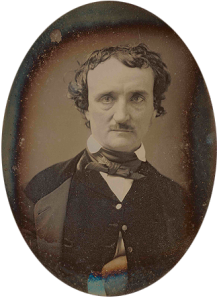
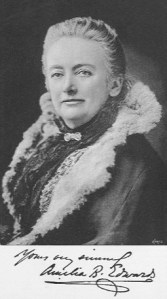
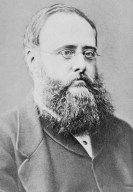



 The inhabitants of Kingsport say and think many things about the Terrible Old Man which generally keep him safe from the attention of gentlemen like Mr. Ricci and his colleagues, despite the almost certain fact that he hides a fortune of
 Phil Slattery, Writer, Publisher