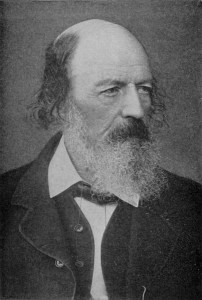
“Tithonus” by Alfred, Lord Tennyson

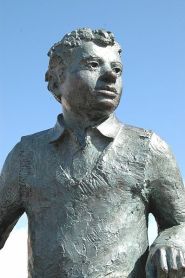
Alfred Tennyson, 1st Baron Tennyson

The woods decay, the woods decay and fall,
The vapours weep their burthen to the ground,
Man comes and tills the field and lies beneath,
And after many a summer dies the swan.

Me only cruel immortality
Consumes; I wither slowly in thine arms,
Here at the quiet limit of the world,
A white-hair’d shadow roaming like a dream
The ever-silent spaces of the East,
Far-folded mists, and gleaming halls of morn.

Alas! for this gray shadow, once a man–
So glorious in his beauty and thy choice,
Who madest him thy chosen, that he seem’d
To his great heart none other than a God!

I ask’d thee, “Give me immortality.”
Then didst thou grant mine asking with a smile,
Like wealthy men who care not how they give.
But thy strong Hours indignant work’d their wills,
And beat me down and marr’d and wasted me,
And tho’ they could not end me, left me maim’d
To dwell in presence of immortal youth,
Immortal age beside immortal youth,
And all I was in ashes. Can thy love
Thy beauty, make amends, tho’ even now,
Close over us, the silver star, thy guide,
Shines in those tremulous eyes that fill with tears
To hear me? Let me go: take back thy gift:
Why should a man desire in any way
To vary from the kindly race of men,
Or pass beyond the goal of ordinance
Where all should pause, as is most meet for all?

A soft air fans the cloud apart; there comes
A glimpse of that dark world where I was born.
Once more the old mysterious glimmer steals
From thy pure brows, and from thy shoulders pure,
And bosom beating with a heart renew’d.

Thy cheek begins to redden thro’ the gloom,
Thy sweet eyes brighten slowly close to mine,
Ere yet they blind the stars, and the wild team
Which love thee, yearning for thy yoke, arise,
And shake the darkness from their loosen’d manes,
And beat the twilight into flakes of fire.

Lo! ever thus thou growest beautiful
In silence, then before thine answer given
Departest, and thy tears are on my cheek

Poem: “Come with Me, My Love”

Phil Slattery, 2015

This is a poem I wrote in the late 80’s to early 90’s, most likely some time between 1988 and 1991, when I was living in Alexandria, Virginia, dating around and frequenting the bars in Old Town Alexandria.  I don’t recall the circumstances under which I wrote this, just the feeling of these being the emotions of walking home around 2:00 a.m. after closing time.

This is the opening poem of my first volume of verse, Nocturne:  Poems of Love, Distance, and the Night, a callous and disinterested lover.   Nocturne will be free on Amazon Kindle on February 23.  I published it on Valentine’s Day of this year.

Going through my computer files tonight, I believe I have discovered some poems unintentionally left out.  Stand by for a second edition.  I hope you enjoy this poem.


Come with me, my love
and I will show you
nights of love
full of life and laughter
as empty as an empty
bottle rattling down a cobblestone
street blown by a chill
wind

Come with me, my love
and I will show you
nights of love
full of lust and passion
as lonely as a lonely
man pacing off a deserted street
under the brisk October moon
its cold light muted
in the mists

As the fog embraces you
like a one-night stand in a town
of dying dreams where
hopes lie scattered on the barroom floor
with cigarette butts and the dust
of endless roads

Bring me to that ultimate pleasure
in your all-consuming eyes.
Let us become one
and share the horrors of this
world
as only
lovers can.


Poem: “Come with Me, My Love”

Phil Slattery, 2015

This is a poem I wrote in the late 80’s to early 90’s, most likely some time between 1988 and 1991, when I was living in Alexandria, Virginia, dating around and frequenting the bars in Old Town Alexandria.  I don’t recall the circumstances under which I wrote this, just the feeling of these being the emotions of walking home around 2:00 a.m. after closing time.

This is the opening poem of my first volume of verse, Nocturne:  Poems of Love, Distance, and the Night, a callous and disinterested lover.   Nocturne will be free on Amazon Kindle on February 23.  I published it on Valentine’s Day of this year.

Going through my computer files tonight, I believe I have discovered some poems unintentionally left out.  Stand by for a second edition.  I hope you enjoy this poem.


Come with me, my love
and I will show you
nights of love
full of life and laughter
as empty as an empty
bottle rattling down a cobblestone
street blown by a chill
wind

Come with me, my love
and I will show you
nights of love
full of lust and passion
as lonely as a lonely
man pacing off a deserted street
under the brisk October moon
its cold light muted
in the mists

As the fog embraces you
like a one-night stand in a town
of dying dreams where
hopes lie scattered on the barroom floor
with cigarette butts and the dust
of endless roads

Bring me to that ultimate pleasure
in your all-consuming eyes.
Let us become one
and share the horrors of this
world
as only
lovers can.


Poem: “Come with Me, My Love”

Phil Slattery, 2015

This is a poem I wrote in the late 80’s to early 90’s, most likely some time between 1988 and 1991, when I was living in Alexandria, Virginia, dating around and frequenting the bars in Old Town Alexandria.  I don’t recall the circumstances under which I wrote this, just the feeling of these being the emotions of walking home around 2:00 a.m. after closing time.

This is the opening poem of my first volume of verse, Nocturne:  Poems of Love, Distance, and the Night, a callous and disinterested lover.   Nocturne will be free on Amazon Kindle on February 23.  I published it on Valentine’s Day of this year.

Going through my computer files tonight, I believe I have discovered some poems unintentionally left out.  Stand by for a second edition.  I hope you enjoy this poem.


Come with me, my love
and I will show you
nights of love
full of life and laughter
as empty as an empty
bottle rattling down a cobblestone
street blown by a chill
wind

Come with me, my love
and I will show you
nights of love
full of lust and passion
as lonely as a lonely
man pacing off a deserted street
under the brisk October moon
its cold light muted
in the mists

As the fog embraces you
like a one-night stand in a town
of dying dreams where
hopes lie scattered on the barroom floor
with cigarette butts and the dust
of endless roads

Bring me to that ultimate pleasure
in your all-consuming eyes.
Let us become one
and share the horrors of this
world
as only
lovers can.


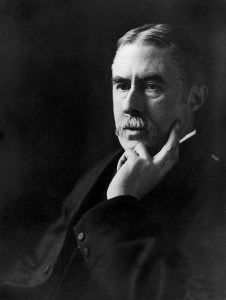
“Her Strong Enchantments Failing” by A.E. Housman

A.E. Housman

Her strong enchantments failing,
Her towers of fear in wreck,
Her limbecks dried of poisons
And the knife at her neck,

The Queen of air and darkness
Begins to shrill and cry,
“O young man, O my slayer,
To-morrow you shall die.”

O Queen of air and darkness,
I think ’tis truth you say,
And I shall die tomorrow;
But you will die to-day.

A Short Analysis of Dylan Thomas’s ‘Do Not Go Gentle Into That Good Night’

Powerful reading:  A reading of a classic poem ‘Do Not Go Gentle Into That Good Night’ is probably the best-known villanelle in English poetry. If you’re not sure what a villanelle is, don’t worry – it’s not importan…

Source: A Short Analysis of Dylan Thomas’s ‘Do Not Go Gentle Into That Good Night’

‘I am the master of my fate’: A Short Analysis of William Ernest Henley’s ‘Invictus’

A summary of a classic poem ‘Invictus’ is a famous poem, even to those who haven’t heard of it. This is because, although the title ‘Invictus’ may mean little to some (other than, perhaps, as the t…

Source: ‘I am the master of my fate’: A Short Analysis of William Ernest Henley’s ‘Invictus’

A Flash to the Past: “The Listeners” by Walter de la Mare (1912)

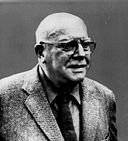
Walter de la Mare June, 1924 from the National Portrait Gallery
Walter de la Mare
June, 1924
from the National Portrait Gallery

‘Is there anybody there?’ said the Traveller,
Knocking on the moonlit door;
And his horse in the silence champed the grasses
Of the forest’s ferny floor:
And a bird flew up out of the turret,
Above the Traveller’s head
And he smote upon the door again a second time;
‘Is there anybody there?’ he said.
But no one descended to the Traveller;
No head from the leaf-fringed sill
Leaned over and looked into his grey eyes,
Where he stood perplexed and still.
But only a host of phantom listeners
That dwelt in the lone house then
Stood listening in the quiet of the moonlight
To that voice from the world of men:
Stood thronging the faint moonbeams on the dark stair,
That goes down to the empty hall,
Hearkening in an air stirred and shaken
By the lonely Traveller’s call.
And he felt in his heart their strangeness,
Their stillness answering his cry,
While his horse moved, cropping the dark turf,
‘Neath the starred and leafy sky;
For he suddenly smote on the door, even
Louder, and lifted his head:—
‘Tell them I came, and no one answered,
That I kept my word,’ he said.
Never the least stir made the listeners,
Though every word he spake
Fell echoing through the shadowiness of the still house
From the one man left awake:
Ay, they heard his foot upon the stirrup,
And the sound of iron on stone,
And how the silence surged softly backward,
When the plunging hoofs were gone.

The Saturday Night Special: “Red is the Color of Blood” by Conrad Aiken (1918)

RED is the color of blood, and I will seek it:

I have sought it in the grass.

It is the color of steep sun seen through eyelids.


It is hidden under the suave flesh of women–

Flows there, quietly flows.

It mounts from the heart to the temples, the singing

mouth–

As cold sap climbs to the rose.

I am confused in webs and knots of scarlet

Spun from the darkness;

Or shuttled from the mouths of thirsty spiders.


Madness for red! I devour the leaves of autumn.

I tire of the green of the world.

I am myself a mouth for blood …


Here, in the golden haze of the late slant sun,

Let us walk, with the light in our eyes,

To a single bench from the outset predetermined.

Look: there are seagulls in these city skies,

Kindled against the blue.

But I do not think of the seagulls, I think of you.


Your eyes, with the late sun in them,

Are like blue pools dazzled with yellow petals.

This pale green suits them well.


Here is your finger, with an emerald on it:

The one I gave you. I say these things politely–

But what I think beneath them, who can tell?


For I think of you, crumpled against a whiteness;

Flayed and torn, with a dulled face.

I think of you, writing, a thing of scarlet,

And myself, rising red from that embrace.


November sun is sunlight poured through honey:

Old things, in such a light, grow subtle and fine.

Bare oaks are like still fire.

Talk to me: now we drink the evening’s wine.

Look, how our shadows creep along the grave!–

And this way, how the gravel begins to shine!


This is the time of day for recollections,

For sentimental regrets, oblique allusions,

Rose-leaves, shrivelled in a musty jar.

Scatter them to the wind! There are tempests coming.

It is dark, with a windy star.


If human mouths were really roses, my dear,–

(Why must we link things so?–)

I would tear yours petal by petal with slow murder.

I would pluck the stamens, the pistils,

The gold and the green,–

Spreading the subtle sweetness that was your breath

On a cold wave of death….


Now let us walk back, slowly, as we came.

We will light the room with candles; they may shine

Like rows of yellow eyes.

Your hair is like spun fire, by candle-flame.

You smile at me–say nothing. You are wise.


For I think of you, flung down brutal darkness;

Crushed and red, with pale face.

I think of you, with your hair disordered and dripping.

And myself, rising red from that embrace.

###

This poem is from Gothic Romantic Poetry, which adds this note about Conrad Aiken:

“Conrad Aiken came from a  wealthy, and well known family who were from New England but moved to Savannah, Georgia. His father was a respected physician and surgeon however for no apparent reason Conrad’s father

Conrad Aiken October 3, 2013 (photographer unknown)
Conrad Aiken
October 3, 2013
(photographer unknown)

suddenly  seemed to change his temperament and became difficult to get on with and violent. Then early in the morning of February 27, 1901, he murdered his wife and shot himself. Conrad (who was eleven years old) heard the gunshots and discovered the bodies. After this tragedy he was raised by his great-great-aunt in Massachusetts.

“To read more about the life of Conrad Aiken read his autobiographical novel Ushant (1952), one of his major works which is an excellent source of information. In this book he speaks candidly about his various affairs and marriages, his attempted suicide and fear of insanity.”

The Saturday Night Special: “Annabel Lee” by Edgar Allan Poe (1849)

It was many and many a year ago,
   In a kingdom by the sea,
That a maiden there lived whom you may know
   By the name of Annabel Lee;
And this maiden she lived with no other thought
   Than to love and be loved by me.
I was a child and she was a child,
   In this kingdom by the sea,
But we loved with a love that was more than love—
   I and my Annabel Lee—
With a love that the wingèd seraphs of Heaven
   Coveted her and me.
And this was the reason that, long ago,
   In this kingdom by the sea,
A wind blew out of a cloud, chilling
   My beautiful Annabel Lee;
So that her highborn kinsmen came
   And bore her away from me,
To shut her up in a sepulchre
   In this kingdom by the sea.
The angels, not half so happy in Heaven,
   Went envying her and me—
Yes!—that was the reason (as all men know,
   In this kingdom by the sea)
That the wind came out of the cloud by night,
   Chilling and killing my Annabel Lee.
But our love it was stronger by far than the love
   Of those who were older than we—
   Of many far wiser than we—
And neither the angels in Heaven above
   Nor the demons down under the sea
Can ever dissever my soul from the soul
   Of the beautiful Annabel Lee;
For the moon never beams, without bringing me dreams
   Of the beautiful Annabel Lee;
And the stars never rise, but I feel the bright eyes
   Of the beautiful Annabel Lee;
And so, all the night-tide, I lie down by the side
   Of my darling—my darling—my life and my bride,
   In her sepulchre there by the sea—
   In her tomb by the sounding sea.
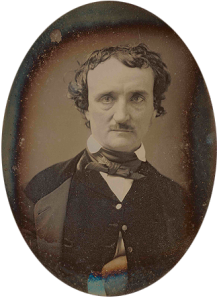
Edgar Allan Poe, circa 1849

New Poetry by Marieta Maglas: “Evil Earths” (third of three poems)

Screaming voices shattering the inner mirror of love
Clattering to nothingness, searching freedom in space,
Bloody songs tightly warping their blue heaven above
In the thin and chill air disappearing without a trace,
O’er sad whispers wind whipping through the wounds
In the symphony of demons’ dreams as a hot disguise,
Bloody voices needing to build up stomping grounds,
Buried danger sprouting out to keep growing in size,
The salty tears of liquid souls forming watery waves,
Beauties in the road waiting to face with their fear of death,
Still screaming while drowning in the cold watery graves,
Tearing the silence with their groan and bleeding breath.
###
Marieta Maglas
Marieta Maglas

Ardus Publications, Sybaritic Press, Prolific Press, and some others published the poems of Marieta Maglas in anthologies like Tanka Journal, edited by Glenn Lyvers, The Aquillrelle Wall of Poetry, edited by Yossi Faybish, A Divine Madness: An Anthology of Modern Love Poetry, edited by John Patrick Boutilier, Near Kin:A Collection of Words and Art Inspired by Octavia Estelle Butler, edited by Marie Lecrivain, Three Line Poetry #25, edited by Glenn Lyvers, ENCHANTED – Love Poems and Abstract Art, edited by Gabrielle de la Fair, and Intercontinental Anthology of Poetry on Universal Peace and Love, edited by Madan Gandhi

New Poetry by Marieta Maglas: “Blind Reality” (second of three poems)

Hollow-eyed shades
of human beings,
human beings
cogitating on jazz music,
jazz penetrating the silence
of the bleeding angels,
angels in a fight for
the awakening of this blind reality,
monetization of
the objects & spaces, asylums,
sexual harassments
for anxious women, prostitution,
deadly ocean waves,
terrorist attacks and
Islamist militancy,
racism,
multiple vortex tornadoes
to damage gas stations,
ISIS’s strategies,
public executions, crucifixions,
vegetation fires,
emblazoned clothes
and precious stones,
children murdered
in egregious crackdowns,
meteorite impacts,
wars,
illegal immigration,
exposed naked bodies,
powerful quakes striking
near the plate boundaries,
changes
in refugee policies,
kidnappings, sales of
stolen artifacts, drugs,
protests blocking roads, landslides,
macroeconomic policies,
casino culture,
silent strategies of democracies,
food securities
for starving people,
food price increases,
Monsoon rains
and flash floods,
nuclear disasters,
smiling volcanoes,
human cells mixed up with
animal embryos,
sphinxes, thermal shocks
caused by global warming,
dengue fever, songs,
warming parties, temporary work,
seasonal unemployment,
low wages,
alcoholic cocktails,
ill people not displaying symptoms,
Zika and Chikungunya viruses,
birth defects, theatrical triumphs,
crime watchers,
new hairstyles,
glacier calving,
different drivers having
different styles to run their cars,
cars blinking their headlights
while their motors scream,
screaming trees and revolvers
that shoot up walls to write lyrics,
lyrics of jazz penetrating the silence
of the bleeding angels,
angels in a fight for
the awakening of this new reality.
###

Ardus Publications, Sybaritic Press, Prolific Press, and some others published the poems of Marieta Maglas in anthologies like Tanka Journal, edited by Glenn Lyvers, The Aquillrelle Wall of Poetry, edited by Yossi Faybish, A Divine Madness: An Anthology of Modern Love Poetry, edited by

Marieta Maglas
Marieta Maglas

John Patrick Boutilier, Near Kin:A Collection of Words and Art Inspired by Octavia Estelle Butler, edited by Marie Lecrivain, Three Line Poetry #25, edited by Glenn Lyvers, ENCHANTED – Love Poems and Abstract Art, edited by Gabrielle de la Fair, and Intercontinental Anthology of Poetry on Universal Peace and Love, edited by Madan Gandhi.

New Poetry by Marieta Maglas: “Screaming Mannequins” (first of three poems)

Eyes huddled in fear,
that paralyzing fear in front of
the bullets mercilessly sprayed,
deeply sprayed by some cruelty,
which is fed up
with a lot of victims,
those defenseless victims of hate,
a dreadful hate,
which is fed up with a little love
as well as
a little pleasure can be fed up
with a lot of pain,
that extreme pain,
which embellishes the madness,
one round and seemingly
nonexistent madness being like
a strange cold having
many moisturized rosy-red,
rosy-red ring-shaped patches
associated with
a giant Quincke swelling
and with a boisterous cooling
noisy breath,
that snorting breath
like a groaning song,
a love song for a dance of death,
that painful death for all the hot puppets,
beautiful puppets becoming
cold wax mannequins,
those mannequins screaming
in their red rain
of feelings,
those red feelings coloring
a few sad moments,
cool moments of many winter fires
those burning fires
in the lost caves of shadows.
###

Ardus Publications, Sybaritic Press, Prolific Press, and some others published the poems of Marieta Maglas in anthologies like Tanka Journal,

Marieta Maglas
Marieta Maglas

edited by Glenn Lyvers, The Aquillrelle Wall of Poetry, edited by Yossi Faybish, A Divine Madness: An Anthology of Modern Love Poetry, edited by John Patrick Boutilier, Near Kin:A Collection of Words and Art Inspired by Octavia Estelle Butler, edited by Marie Lecrivain, Three Line Poetry #25, edited by Glenn Lyvers, ENCHANTED – Love Poems and Abstract Art, edited by Gabrielle de la Fair, and Intercontinental Anthology of Poetry on Universal Peace and Love, edited by Madan Gandhi.