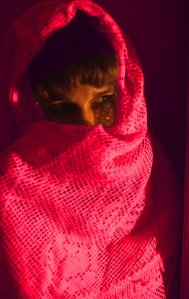
Photo by Phil Slattery
circa 1990


Just now, I finished pasting Stephen King’s famous quotation on the three types of terror into my page on “Thoughts on Horror from the Masters” and I remembered that yesterday I was trying to remember the quotation, but could only recall a vague impression of it. Thinking on that impression now, I think that it was just as valid and true a one as the one by Mr. King, but simpler, more compact, and easier to remember. The concept is (I’ll refine this a little for the sake of clarity):
The three most common types of horror are: suspense (knowing someone runs the risk of decapitation at any moment), terror (seeing him/her being decapitated), and disgust (watching the head roll down the stairs).
I don’t think this idea should replace Mr. King’s by any means, but should probably be viewed as a simplification of his rather lengthy statement.
There are also probably a hundred more different flavors (i.e. variations of the sensation) of horror but these are the three that seem to me to be the most common, at least in movies and other popular media.
Thoughts? Comments?

About. Here is an interesting blog on writing. As you can see by my comment on the About page, it delves into the essence of writing: communication, the clear transmission of an idea from one person to another.
 I just finished watching an episode of the X-Files entitled “Chinga” [note to Spanish-speakers out there: I don’t know who chose the title, so please forgive my language] from Season Five and I noticed that it was written by Stephen King and Chris Carter (the creator of the X-Files). The story’s antagonist is a talking doll that can force people to injure or kill themselves in gruesome ways. Like many, if not most, of King’s stories, there is no explanation of how the came to exist. All the viewer finds out about it is that a lobsterman pulled it up one night in a lobster trap and his daughter comes to possess it after he meets his own gruesome fate.
I find in my own writing that I like to provide an explanation or background as to how things originate. This is just my nature. I like to know the origins of things. However, I have come to believe of late that, in terms of horror, that is a very nineteenth century concept.
Lovecraft said in his essay “Supernatural Horror in Literature”:
“A certain atmosphere of breathless and unexplainable dread of outer, unknown forces must be present; and there must be a hint, expressed with a seriousness and protentiousness becoming its subject, of that most terrible conception of the human brain — a malign and particular suspension or defeat of those fixed laws of Nature which are our only daily safeguard against the assaults of chaos and the daemons of unplumbed space.”
For me, what Lovecraft is saying is that if the laws of nature are negated, then anything is possible and monsters like Cthulhu really could exist and are capable of doing us harm at any moment. Combine this with his statement that “The oldest and strongest emotion of mankind is fear and the oldest and strongest kind of fear is fear of the unknown” and it becomes apparent that stories like “Chinga” derive much of their horror effect from the fact that the origin of the threat to a story’s protagonist(s) is unknown or that there is no explanation for the threat.
This would mean that one of things that provides to “Chinga” the element of horror that it has, is the fact that origin of the doll is unknown. Therefore, any of us when we are fishing or scuba diving or swimming in any body of water, could discover a doll that would turn his/her life into a nightmare. That is a scary thought.
Of course, this means that Stephen King would be one of the greatest practitioners of this technique, which I believe he is.
I think I shall try to experiment with this in the near future.
Thoughts? Comments?
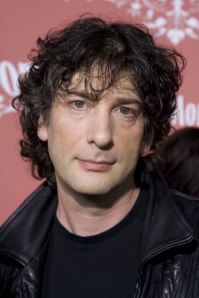
Here is a fascinating perspective on fiction by Neil Gaiman: ‘Face facts: we need fiction’ | Books | The Guardian.

Purely for your entertainment, here are 28 Totally Relatable Quotes About Books. I know I can relate to a lot of them. I’m sure you will find a few for yourself. One reason I find these interesting is because many of them show me how intensely involved readers will become with a book. As I have mentioned in previous posts, I believe that people live a vicarious existence through a story. When we write, we are not just writing a book or a story, we are creating a universe in which people will hopefully want to, not just visit, but dwell. All of the writer’s art should therefore focus on creating a virtual reality for one’s readers. To do that, we need a good grounding in, or at least a good feel for, human psychology, because we have to shape our creations to fit the human psyche. How do thoughts come into being? How do they lead from one to another? How do images form in the mind? No, I am not saying that we need Ph.D.’s in psychology to be good writers, but I think we need some sort of archetypal insight into human nature if we are to be the great writers we hope to be. Darn. I’m rambling again. 🙂
Today at Stumble Upon, I found a fascinating article entitled “10 Mind-Blowing Theories That Will Change Your Perception of the World”. Of the ten, the most fascinating for writers is #9, “Fictional Realism” which reads:
This is the most fascinating branch of multiverse theory. Superman is real. Yes, some of you would probably choose a different story, for argument’s sake, Harry Potter might be real too. This branch of the theory argues that given an infinite number of universes, everything must exist somewhere. So, all of our favorite fiction and fantasy may be descriptive of an alternate universe, one where all the right pieces came in to place to make it happen.
So, according to this, Cthulhu and all the rest of the Lovecraftian universe and the eldritch world may actually exist out there someplace just beyond our ken in a parallel universe. Somehow horror becomes scarier when it becomes possible at some level.
Thoughts? Comments?


I just wanted to share these tidbits from my compatriot Rebecca Lutrell Briley who posted them on Facebook.
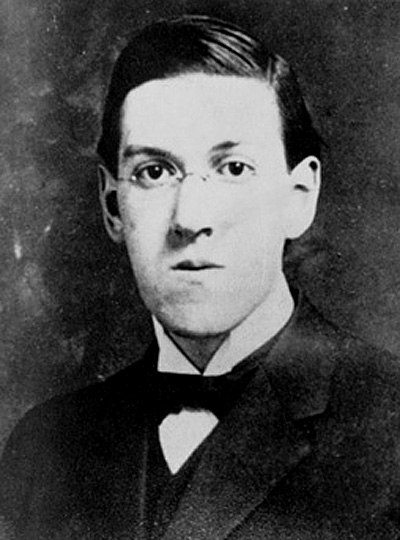
I was reading Lovecraft’s “Supernatural Horror in Literature” the other day when I came across this line concerning the nature of the “weird tale”:
“A certain atmosphere of breathless and unexplainable dread of outer, unknown forces must be present; and there must be a hint, expressed with a seriousness and protentiousness becoming its subject, of that most terrible conception of the human brain — a malign and particular suspension or defeat of those fixed laws of Nature which are our only daily safeguard against the assaults of chaos and the daemons of unplumbed space.”
With me, this idea hit home. I have always thought that the more realistic I could make a story, the more frightening it would be for the reader, because it could possibly happen. Lovecraft takes the complete opposite approach. In essence, he says let’s dispense with the chains of our preconceptions of reality then see what could happen. He is right. If anything can happen, the horrors that could happen to humanity are limitless and unimaginable.
Now let’s take this line of thought a step or two further philosophically. Perhaps our concept of reality is really a sort of protective shell, a defense mechanism created by our minds that shields us from being overwhelmed by the thousands of possible ways we could meet our ends. If a person tried to conceive of all the ways he/she might die at any moment, no matter how miniscule the odds, his/her mind might be overwhelmed and paralyzed by fear or destroyed by paranoia and madness. The only way the mind could survive would then be to limit the possibilities to only those with the greatest probability of happening at that moment, in essence, wrapping itself in a protective cocoon of denial.
If there are any philosophy majors out there reading this, please feel free to bring up this idea in class. I would love to hear the arguments for and against this.
Now, let’s go a step even further. If we start to see our perception of reality as only a concept, as only a protective shell in a much greater universe, as only one alternative among thousands or millions of possibilities, then the possibility of creatures like Cthulhu, Shoggoth, Nylarhotep, the “ancient ones”, and all the other monsters contained in Lovecraft’s vivid imagination becomes very real.
Lovecraft’s world of the “ancient ones” is frightening enough when we think it has no chance of happening, but it becomes truly terrifying if we think it has even the slightest chance of actually happening.
Thoughts? Comments?
 Phil Slattery, Writer, Publisher