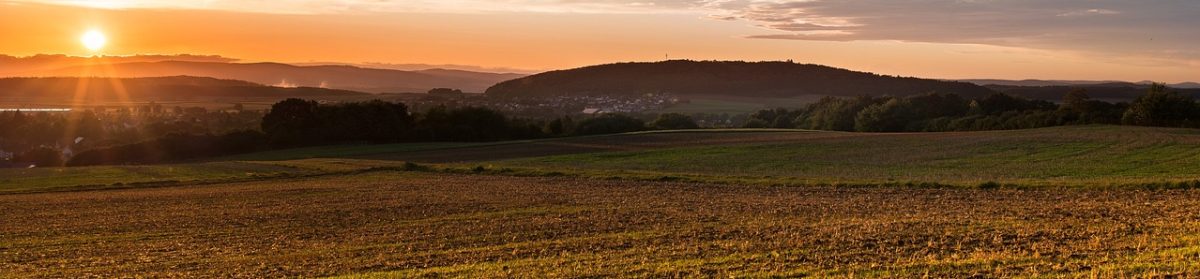

Full resolution photos of the current Rohwer Relocation Center National Historic Landmark were taken by Phil Slattery at Rohwer on July 5, 2020, and are downloadable from Wikimedia Commons. If that link doesn’t work, search in Wikimedia Commons for “rohwer relocation center slattery”.
For several months, a lot of people were visiting my article on returning to Rohwer War Relocation Camp. I am not complaining. I am simply mystified that there is so much interest in it, much more than my other articles. I do not know if it is something I said about the camp itself or about the photography set-up for a YouTube video or what. I am sincerely grateful that one article of mine is getting so much attention for whatever reason. I am glad to have supplied something that apparently benefits so many people.
Today, I want to set down some thoughts on the Rohwer camp.
The township of Rohwer is very small. Very little information is available on it. Arkansas Tourism has a brief but enjoyable article on it, but Densho has an extensive article with an incredible amount of information on the camp.
Having originally been there in July 2020, my first impression of the location is that it was hot, empty, and lonely. The camp sat in the center of what are now hundreds of acres of cotton fields with trees along their distant perimeters. During the time of the Relocation Camp, it was quite different, but the overall condition remains much the same today with hot, muggy summers filled with mosquitoes and other insects.
The land and climate of the two Arkansas camps were fundamentally different from the barren, desert-like settings of the other WRA sites, in that it had dense vegetation, boggy soil, and was surrounded by trees, some of which extended into the inmate sections of the camp. The weather was hot and sticky in the summer and mosquitoes swarmed. Calling the area “low and badly drained and … typical malaria country,” a Malaria Control Program had to be started in the spring of 1943 that resulted in the spraying of breeding areas inside and outside the camp. Winter and spring rains (and occasional snow) brought slippery conditions and sticky mud. A 1990 Rohwer Reunion Booklet recalled how the “soil of the area turned to dust in the summer and into a gooey stick muddy mess during the winter.” In a 2011 interview, Takeshi Nakayama recalled mud that “was almost like quicksand” in which one of his brothers “got stuck and he couldn’t get out.” In reaction to the mud, wooden walkways were built, which addressed the mud, but exacerbated the slipperiness. Yoshie Ogata wrote in her diary in December 1942, “[t]he wood slate for walks are very dangerous—slippery when wet.” A diarist writing in January 1944 noted that “today was by far the most slippery on record” and reported seeing women “crossing narrow bridges on hands and knees” while others “tied pieces of rope or sacks around their shoes as ‘skid chains,’ and many women wore socks over their shoes.” [2]
Densho.org
The camp was modified to interface with the environment to some extent.
While the general layout of Rohwer was similar to most other WRA camps, the unique conditions at the Arkansas camps led to some interesting aspects of the physical setting. While most of Rohwer had been cleared of trees and other vegetation, nine or ten blocks in the southwest portion of the camp were built on a forested area and thus included numerous shade trees, something not found at the non-Arkansas WRA camps. The swampy conditions also required that special attention be paid to drainage. Thus, drainage ditches ran between barracks and along the roads that separated each block. These ditches drained to the southwest corner of the camp, where they extended 1½ miles to empty into Coon Bayou. Waste water from the camp sewage system also drained there. Being the lower end of the camp, the forested southwest corner of the camp was also prone to flooding. Sandbags were deployed to keep the entrances to the mess hall and latrine buildings from flooding. Other unique environmental hazards included numerous flies and mosquitoes, as well as biting insects known as “chiggers” that bored into the skin. The camp’s water supply was also contaminated into the spring of 1943; inmates had to boil water before drinking it. [5]
Densho.org
According to the Densho article, inmates had some degree of freedom, being allowed to have jobs outside the camp and to go shopping in nearby McGehee. However, there were some restrictions as Arkansas law prohibited them from working in the local agricultural industry (nonetheless, some inmates did find agricultural work–albeit illegally). Inmates were also granted honorary “white status” and were prohibited from interacting with the local African-Americans, which made up most of the local population. Buses that took the inmates to McGehee could take them only to places owned or operated by white people.
Could internment in southern Arkansas have actually prevented someone from spying for Japan? Definitely-if any of the occupants were spies. For one thing, it would have been easy for camp authorities to monitor inmate activities. Plus, there were no real opportunities for espionage in the vicinity of Rohwer. Even the closest military installations were at least a couple of hours by car from Rohwer and someone of Asian descent would readily stand out among the vastly predominant Caucasians and African-Americans who inhabited southern Arkansas at the time. Rohwer’s remoteness protected the military installations in the area, much as Alcatraz’s remoteness protected the nation from its inmates.
According to The Encyclopedia of Arkansas, there were six ordnance plants in Arkansas. The two closest to Rohwer were at Camden and Pine Bluff. Other relatively nearby military installations included: an Army Airfield at Stuttgart (now Stuttgart Municipal Airport), Grider Field in Pine Bluff (a training facility now used at Pine Bluff Regional Airport), and Camp Magnolia (a work camp for religious conscientious objectors who performed manual labor as had the Civilian Conservation Corps of earlier years and who participated in government controlled medical experiments involving disease and malnutrition)
Most of the facilities anywhere near Rohwer were training facilities of probably little intelligence value to the Japanese, except for one: the Pine Bluff Arsenal.
The Pine Bluff Arsenal was established on November 2, 1941, for the manufacture of incendiary grenades and bombs. 5,000 acres, purchased from local physician James W. John, Sr, served as the foundation for the site. It was originally named the Chemical Warfare Arsenal but was renamed four months later.[2] The mission expanded to include production and storage of pyrotechnic, riot control, and chemical-filled munitions. At the height of World War II, the plant expanded from making magnesium and thermite incendiary munitions to a chemical warfare manufacturing facility as well, producing lethal gases and chemical compounds installed in artillery shells and specifically designed bombs.[3]
–From the Wikipedia entry on the Pine Bluff Arsenal
Per Google Earth, along today’s highways, the distance from Rohwer to White Hall (where the Pine Bluff arsenal is located) is about 72 miles. That’s easy to travel with today’s vehicles on today’s roads, but in the 1940’s, before there were freeways and most roads, if not dirt, would have probably been two-lane at best, it would have been a different matter.
But then, most of the inhabitants of Rohwer would have come from the west coast or other places outside Arkansas. Rohwer wasn’t established with the intent of protecting military facilities in Arkansas but in strategically valuable places like San Francisco or San Diego. Protecting military bases in Arkansas would have been a secondary aim, at best.
One question that I have not seen posed elsewhere is whether it was possible that some of the Rohwer inhabitants were actual spies? It is possible.
Wikipedia provides a list of Japanese spies during the Second World War. In it are noted the following intelligence organizations that operated in the US:
Since the 1920s, the intelligence services also used Doho or dokuku jin – (nikkei) cultural groups in the Pacific War as alternative secret agents. These were Japanese citizens with foreign nationality, with loyalty to the emperor and Japan; they lived around the world.
- The Black Dragon Society, the Kaigun Kyokai (Navy League), or the Hoirusha Kai (Military Service Man’s League), and other similar societies. These Japanese secret groups were well known to the US Naval Intelligence Service and the Federal Bureau of Investigation for the subversive actions in the United States among some elements of Doho communities.
- Other overseas Japanese agents of Black Dragon Society were the so-called “soshi” (Brave Knights). At the same time, referring to superior commander as the “Darkside Emperor” mentioned agents since the 1940s, operating worldwide, as far away as North America, South America, and Morocco. They formed covert ties with the Nazis.
However, spies can be expected to be a miniscule part of any populace. Do the odds of having a spy in a city justify rounding up everyone of a race, disrupting the innocents’ lives, and shipping them off to internment camps losing almost everything they have in the process?
We will never know. We don’t know what information one person might have collected. It might have been something of critical importance. Spies, even of those pre-satellite times, operate in different ways.
Some are given intelligence collection training and covertly inserted into a nation where they observe ports and bases and radio back to their agencies what they have seen or rumors that they have heard. Germany did this often in England and the US during the Second World War. One of the Rohwer inhabitants could have likewise been inserted into the US. Relocation to remote Arkansas could have interrupted such an operation.
Another way spies can collect information is not by observing it themselves, but by buying information from traitors in the country. It is not impossible that one of the Rohwer inhabitants might have operated in this fashion. Just as with spies who observe bases directly, relocation to Arkansas would have negated such an operation.
Another way spies can operate is by relaying information from an agent who collected it to the home agency. Again, relocation would have interrupted this type of operation.
We will never know the effect the relocation program had on Japanese intelligence collection operations.
However, I agree with what is probably the prevalent public opinion about the Rohwer, or any Japanese-American internment camp in the US, which is that it was an ugly chapter in American history, especially in the history of civil rights. The lives of thousands of innocents were needlessly ruined for the actions of a few and probably for the most part for what is termed today “optics”, known then simply as “appearances”, that the government was doing something to secure the nation against Japanese aggression.
Obviously, I do not know what opinions are held in private today. I feel certain that a few opinions might be in favor of such camps and probably a very few would like to have them for various races even today and very likely for immigrants (documented or not) from Central and South America.
The bottom line for any ugly issue is always the same: what can be done to rectify it or to prevent it from happening? I don’t know if anything has been done to compensate the Japanese-Americans who were interned at Rohwer or anywhere else in the US. I have yet to research that. But the bigger question in my mind is whether anything can be done to prevent it from happening again?
There are laws prohibiting this type of governmental action now. However, legislators can change laws on whatever they agree upon based upon the prevailing public opinion that elected them. If the prevailing public opinion is that a certain race should be interned, if enough legislators agree, that race will be interned though the arguments for it may be disingenuous or spurious. The critical element of such a situation is not that a government allowed it to happen, but that a section of humanity allowed it to happen. Rohwer Relocation Center is just another cold-blooded example of “man’s inhumanity to man”.
Can anything be done about humanity’s innate cruelty to those of its own species? I sincerely doubt it. Even if the nature of people allowed everyone to think reasonably as a mass, just as they can now be angry in great masses, people often need to control other people. This is not just a psychological quirk of humanity. Sometimes one segment of people needs to control another in a broad variety of ways out of the basic survival instinct or face extinction themselves.
Ostensibly, it seems these people were interned here out of that basic survival instinct. No one could be certain that any of these people were not spying for the new enemy of Japan. However, why weren’t people of German or Italian heritage interned? They had been enemies longer than the Japanese. Perhaps because it was easier to spot someone of Japanese descent in public than it was to spot someone of German or Italian descent. In those cases, it wouldn’t have been as easy for the government could make it appear as if they were doing something to root out spies and saboteurs.
Perhaps you have read about the scrap metal drives of the time. The government asked people to contribute their scrap pots and pans and other metal objects to scrap metal drives. The pots and pans would then be melted down and turned into bullets and other useful tools of war. Unfortunately, the technology to do that did not exist at the time. The pots and pans were simply hauled off to the nearest dump in secret. However, the drive’s value to the government was that it boosted national morale by making people feel as if they were contributing to the war effort. The benefit of Japanese-American internment camps to the government was probably along the same lines. It had no practical effect on the war, but it gave the public a good feeling that something was being done to root out potential saboteurs. No one would notice if someone of German descent was removed from the streets, but they would notice if someone of a different race was being hauled off.
 Phil Slattery, Writer, Publisher