While was writing “Backward, O Time”…I made an important discovery. Working my way through the scenes of the story in order, I came to one that would not write. I decided to skip it and come back to it later, and wrote the rest of the scenes in any order that occurred to me, leaving […]
‘Words can kill’ Muse is a 2017 English-language Spanish supernatural horror film directed by Jaume Balagueró (Sleep Tight; Fragile; [REC] and two sequels; The Nameless) from a screenplay co-written with Fernando Navarro. Samuel Salomon, a literature professor, has been off work for almost a year after the tragic death of his girlfriend. He has been suffering from a […]
‘Evil has chosen…’ Forsaken is a 2016 American supernatural horror film written, produced and directed by Justin Price (Dark Moon Rising; The Cloth). It should not be confused with The Forsaken by J. S. Cardone (2001). When a Priest discovers his wife is deathly ill, he decides to go against his faith and use his knowledge […]
I decided to take Krista at the Daily Post up on her challenge of writing a post inspired by the word “renewal”
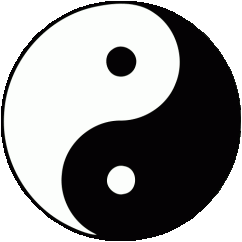
The Yin-Yang
Renewal is an ageless, universal process that people recognize around the world. It is the beginning of the creative/living process in the cycle of life and death. The Neo-Confucian Yin-yang is a well-known symbol of this cycle. Several religions have a central figure that dies and is reborn into a renewal of spirit and/or body. Undoubtedly, this is because in prehistoric days, people recognized the cycle of life. They would see leaves fall and plants die in the autumn, only to see new leaves and plants grow in the spring. Rivers (e.g. the Nile) would periodically dry up and then flood. Then they might see one animal die, but another would be born to take its place.
Probably because of this easily recognized, universal cycle combined with people’s innate fear of death and strong desire for life, early religions and beliefs assumed the same would happen with humans. Apparently, everything dies and is reborn, why shouldn’t the same be true with humans? In a world where death was omnipresent and easy and life was a constant struggle, the idea of a human renewal in the form of rebirth after death had to have been a great solace that life was not a constant battle against enemies, rampant diseases, and starvation followed by an infinity of non-existence, which would make all one’s labors meaningless. This was probably the initial stimulus for Hindu belief in reincarnation and the Christian belief in resurrection and an afterlife (I am a Christian myself) and the development of the yin-yang and the creation of the symbol of the phoenix.
It is ironic that eventually mankind developed tales of beings that instead of being blessed and being reborn into a better, living world, were reborn into a world of death or of being cursed in one way or the other. Vampires are the primary example. Recently, the media has developed another variation on this theme in the form of zombies.
So what happens if vampires or zombies are reborn after their deaths? Do zombies become zombie-vampires? Do vampires become vampire-zombies? If a vampire becomes infected with a zombie virus after he has been sealed in his coffin with a stake through his heart, does he become a super-zombie?
Anyway, what was originally mankind’s hope for a better existence has now developed an ugly, cursed offshoot (although it is only modern-day folklore).
This long process may say something about mankind’s mentality and the tendency of the universe to balance things out (though this may be apparent only to me because I tend to have a touch of Taoism in my personal philosophy). First, mankind is surrounded my death and suffering and, seeing that his existence will ultimately end in death, develops the idea that there is rebirth and renewal after death. Now, in the high-tech modern world, where death is not as pervasive at all stages of life as it once was (this does not include third-world countries where poverty, disease, and starvation are still rampant), death is more and more made sport of while our writers and media develop nastier and nastier forms of death and of the afterlife/damnation to follow. When death is abundant and feared, people look for life, but where life is abundant and easy people become fascinated with death.
Hopefully, it will be a long time before death is so pervasive once more that it forces us to develop new religions.
The quick “What’s up?” Life is one great big balancing act. Sometimes you can manage to juggle family with creative pursuits and paying you bills at the same time and other times things get dropped. Hopefully not for very long, but it happens. And that’s been happening for me lately. There’s been a lot of […]
A reading of a classic poem William Blake (1757-1827) wrote many great poems which remain widely read and studied. But ‘London’ is, along with ‘The Tyger’, possibly the most famous of all his poems. ‘London’ was first published in 1794 in his volume Songs of Experience, which was written to offer the flipside to the […]
If you have two dollars and even fewer brain cells, you may want to check out Horror Hotel: The Movie on Amazon. The film will surely appeal to your most basic instincts; so, it is definitely one that needs a certain type of viewer in a certain type of mindset going into it. This is an…
The Shining by Stephen King might not be a classic yet, but it probably will be. It was written in the 1970s, and people still read it today and it’s still relevent, so I’m guessing that people will still read it 50 years from now. Even though The Shining is a great book, it has […]
If there’s one thing the world doesn’t need more of, it’s new James Patterson books. Patterson, the prolific author with lots of help (meaning “lots of co-authors”), put out at least 15 new books in 2016, and that’s just the start. Now he has a new line of co-authored novellas called Bookshots. Bookshots are short […]
While on the subject of quotations, another of my favorites is from The Meditations of Marcus Aurelius, a Roman emperor and stoic philosopher, who lived around 100 AD. Most people now know him as the aging emperor played by Richard Harris in the movie Gladiator or as quoted by Hannibal Lector in Silence of the Lambs. Besides the one quoted by Hannibal, one of my favorites is:
“The mind is like a sponge and becomes dyed with the color of its thoughts.”
Again, great psychological insight centuries before the science of psychology was invented.
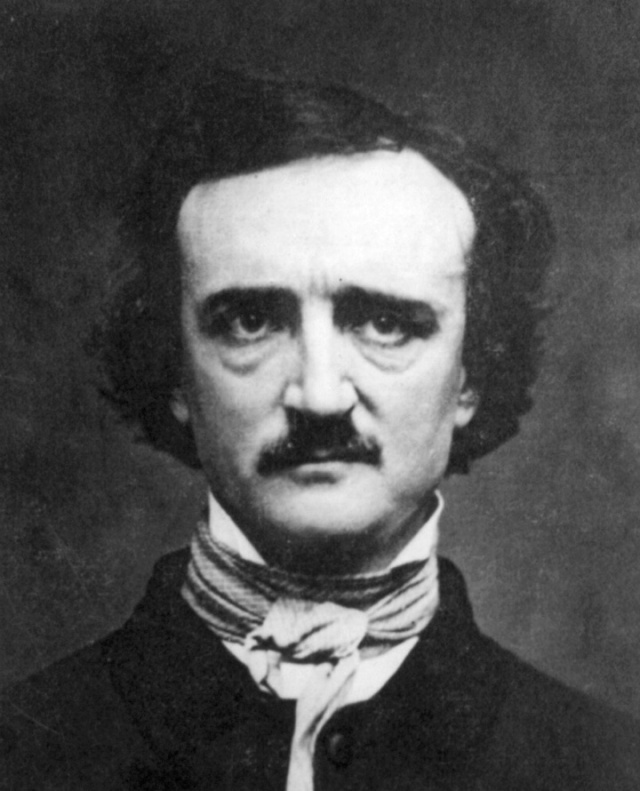
“Edgar Allan Poe opted to self-publish Tamerlane and Other Poems. He was able to sell only forty copies and made less than a dollar after expenses. Ironically, a century later, one of his self-published copies sold at auction for over $11,000.”
I hope you have a merry Christmas and incredibly happy new year!
Let me know what books you receive as gifts and which you’ll be reading them before you open the other gifts and which you will be putting on the shelf in the next day or two.


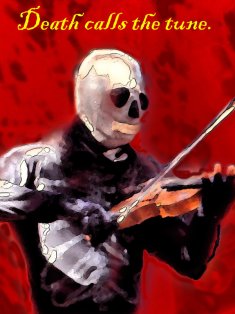 This long process may say something about mankind’s mentality and the tendency of the universe to balance things out (though this may be apparent only to me because I tend to have a touch of Taoism in my personal philosophy). First, mankind is surrounded my death and suffering and, seeing that his existence will ultimately end in death, develops the idea that there is rebirth and renewal after death. Now, in the high-tech modern world, where death is not as pervasive at all stages of life as it once was (this does not include third-world countries where poverty, disease, and starvation are still rampant), death is more and more made sport of while our writers and media develop nastier and nastier forms of death and of the afterlife/damnation to follow. When death is abundant and feared, people look for life, but where life is abundant and easy people become fascinated with death.

 [from The Writer’s Home Companion, 1987].
 Phil Slattery, Writer, Publisher